Knight Online (often called USKO) is a classic, click-to-move fantasy MMORPG set in Carnac, a world locked in a permanent conflict between El Morad and Karus. It is very much a PvP-first game, backed by a long-running community that still keeps servers busy even years after its original debut.
 | Publisher: NTTGame Playerbase: High Type: MMORPG Release Date: August 17, 2004 (NA) PvP: Duels, Siege War, Faction War, Battlefield Pros: +Plenty of PvP modes to rotate through. +Large, active community. +Frequent in-game events. Cons: -Outdated graphics and UI. -Weak English localization in places. -Very limited character appearance options. |

Knight Online Overview
Knight Online is a veteran fantasy MMORPG built around a simple, enduring hook: two nations, one battlefield. On every server you commit to either El Morad (humans) or Karus (orc-like Tuareks), and that choice defines who you fight alongside and who you fight against. While there is plenty of monster grinding and some questing along the way, the game’s identity has always been tied to faction conflict and player rivalry.
Despite its age, Knight Online remains notable for how populated it can feel. It was among the earlier free-to-play MMORPGs to achieve major traction, and its official servers still tend to be lively. Character growth is also straightforward in the old-school sense, you pick a class, level up through repetitive hunting, and hit milestone job advancements at Level 10 and again at Level 60. The leveling path is not about branching specializations, it is more about upgrading into stronger versions of your role and building toward PvP readiness.
Knight Online Key Features:
- Class and Race variety – choose from six classes (Warrior, Rogue, Magician, Priest, Kurian, and Portu), with job advancements at Levels 10 and 60.
- PvP-Focused Gameplay – the game’s endgame energy comes from PvP options such as Duels, Lunar Wars, Castle Sieges, and Battlefields.
- PvP Rewards – earn National Points and Leader Points through faction fighting, with monthly rankings that award premium currency to top performers.
- Huge Playerbase – the official servers remain busy for an MMO of this era, with multiple servers regularly filled with active players.
- Extensive Item Upgrading – gear enhancement is a major progression pillar, letting players push equipment stats higher through upgrades.
Knight Online Screenshots
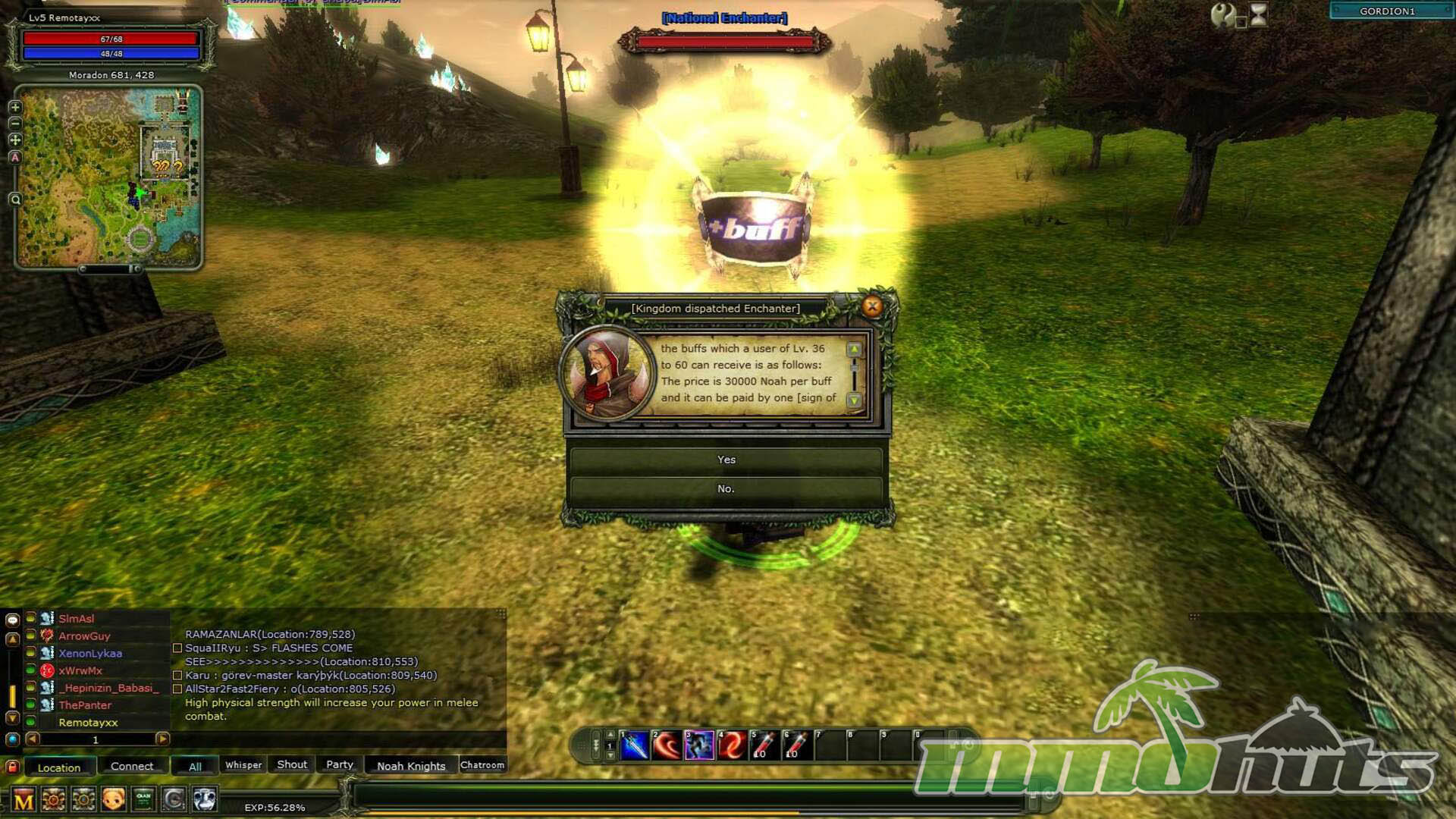
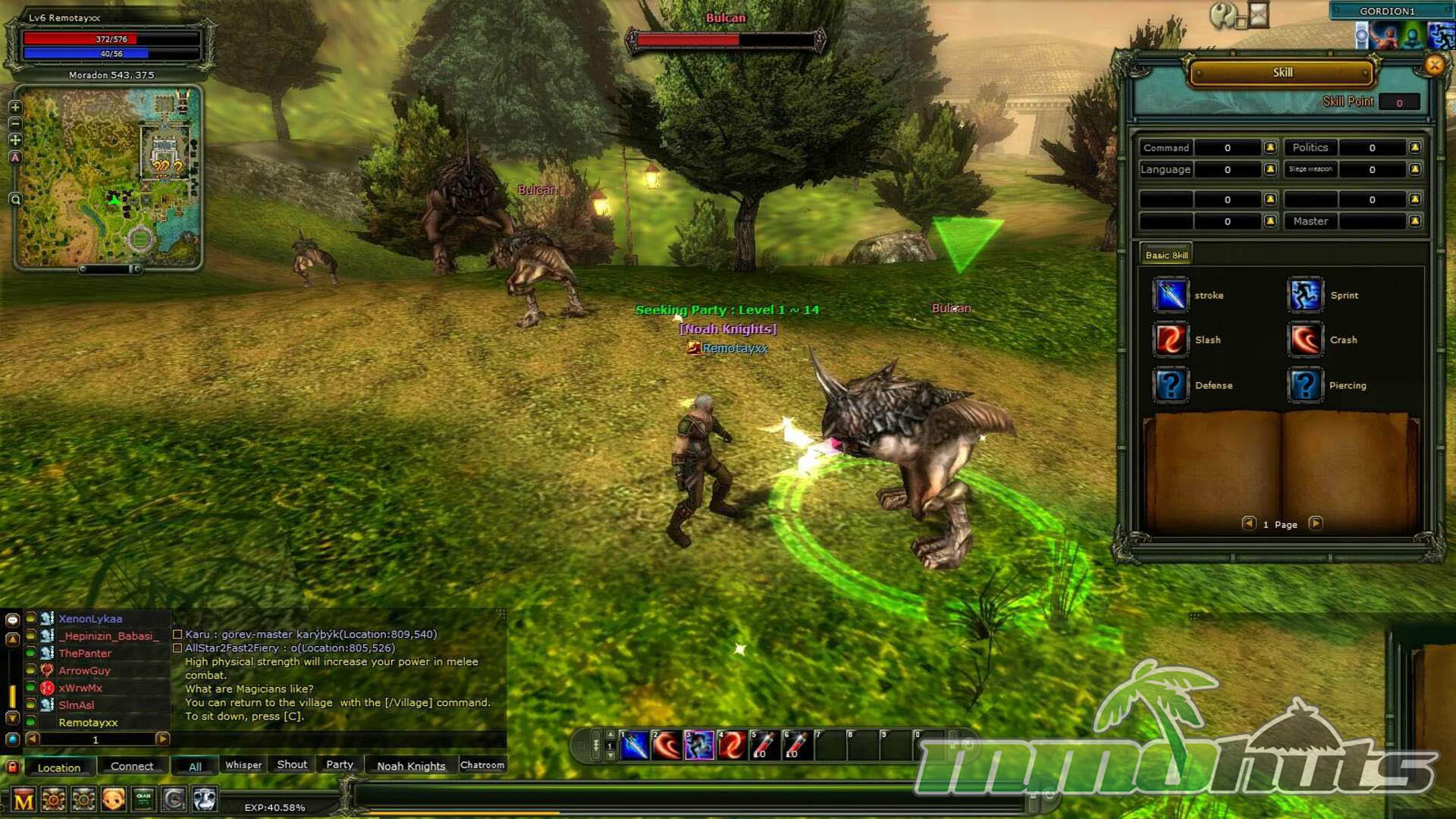
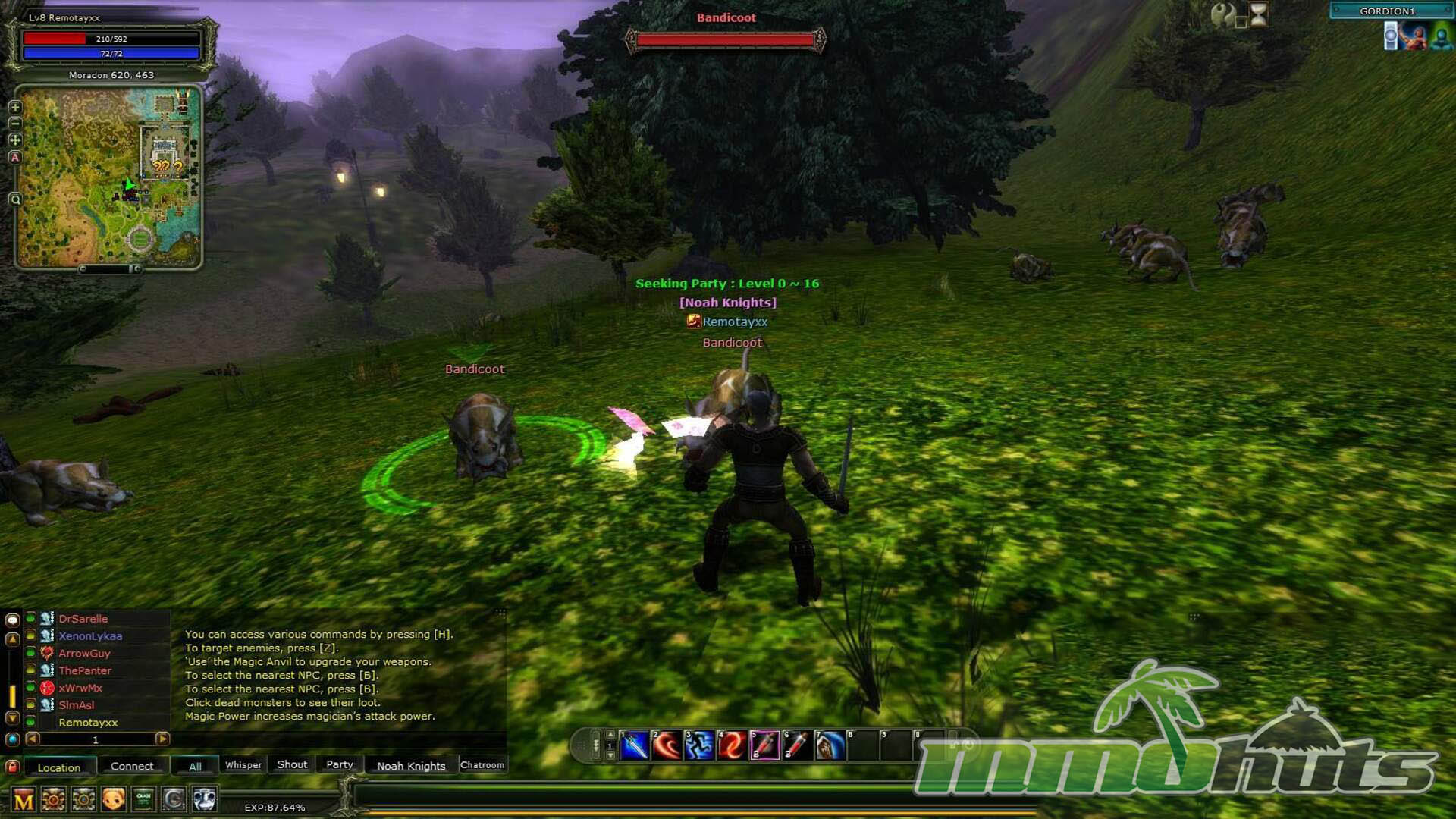
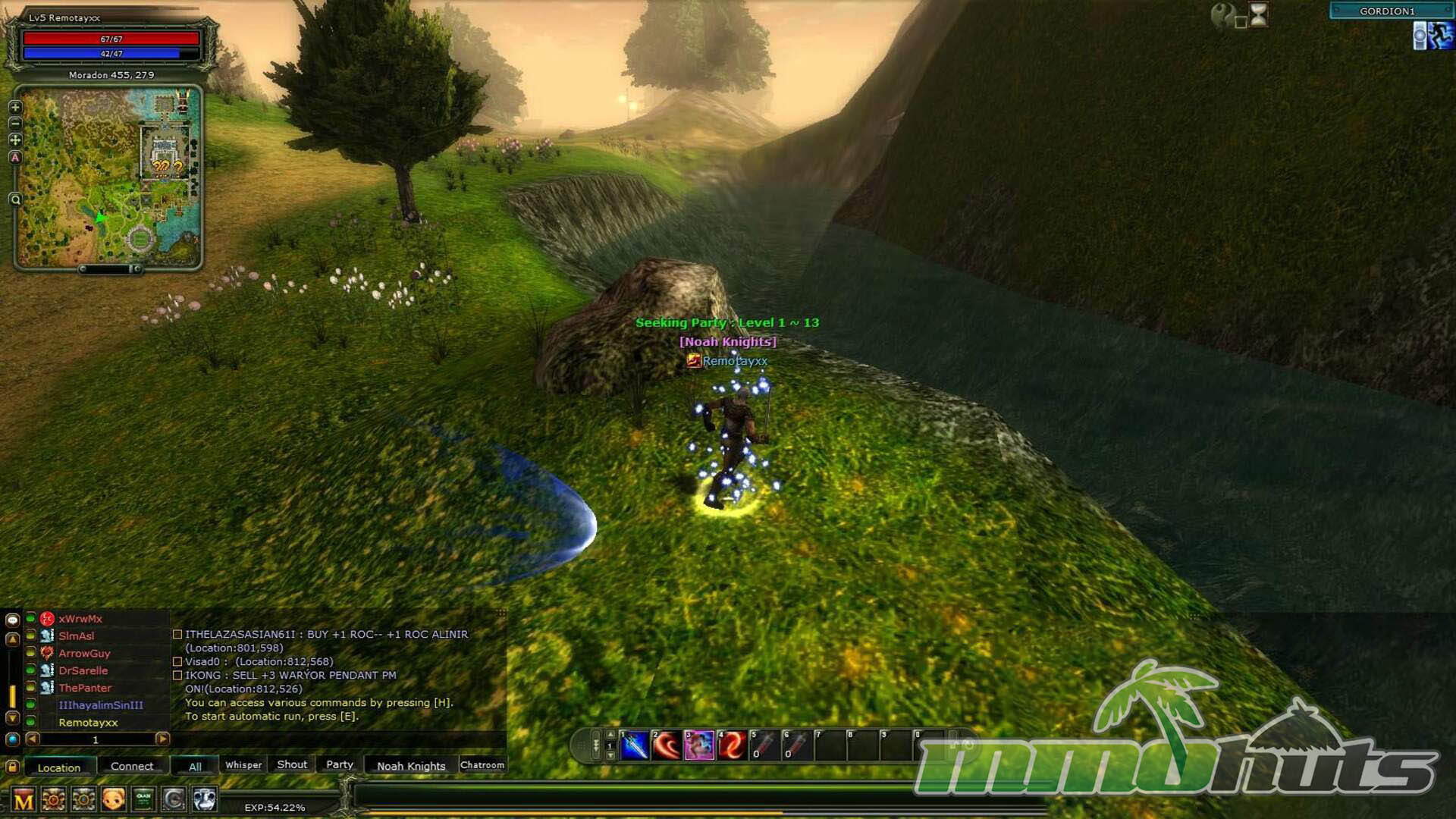
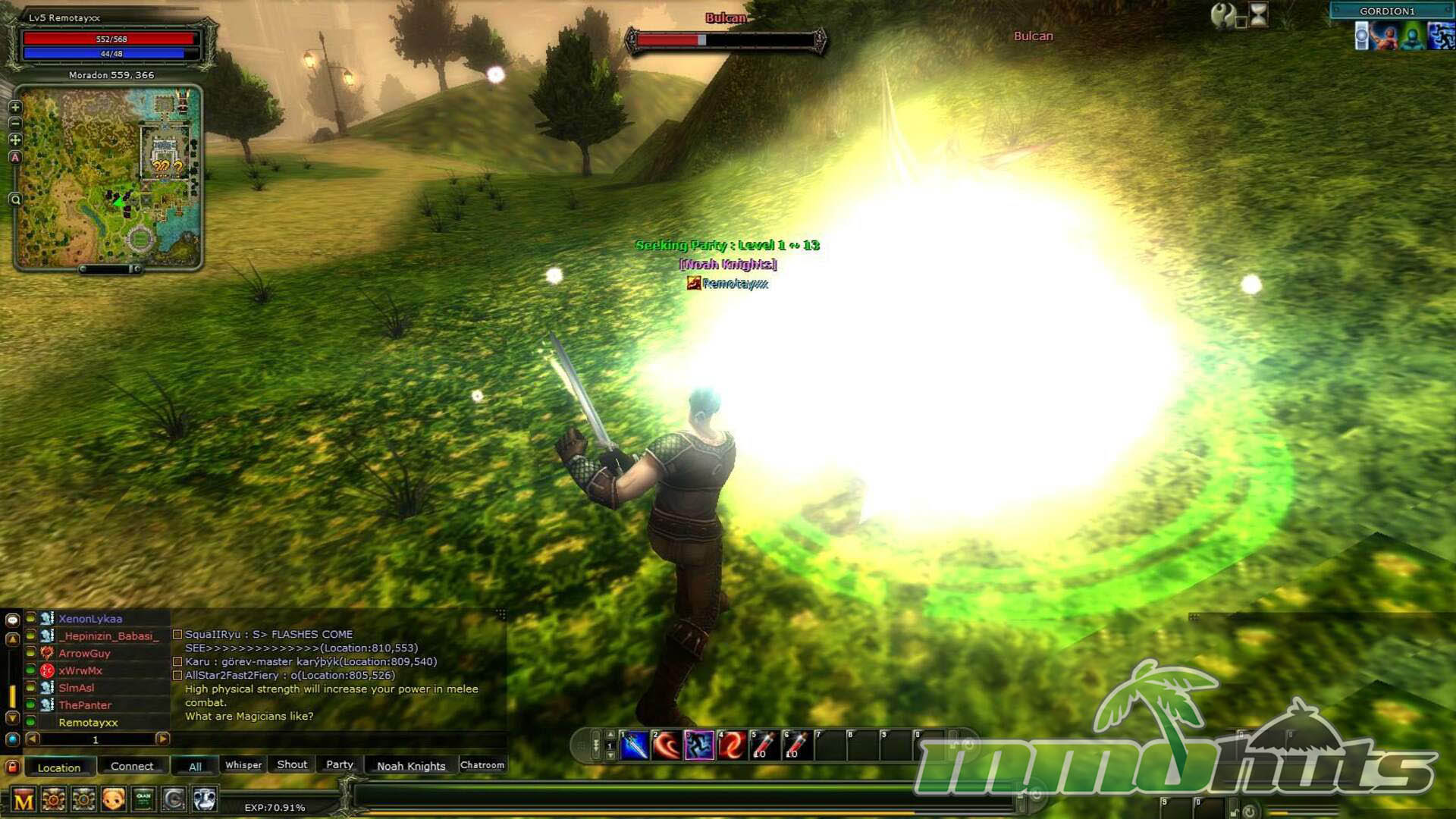
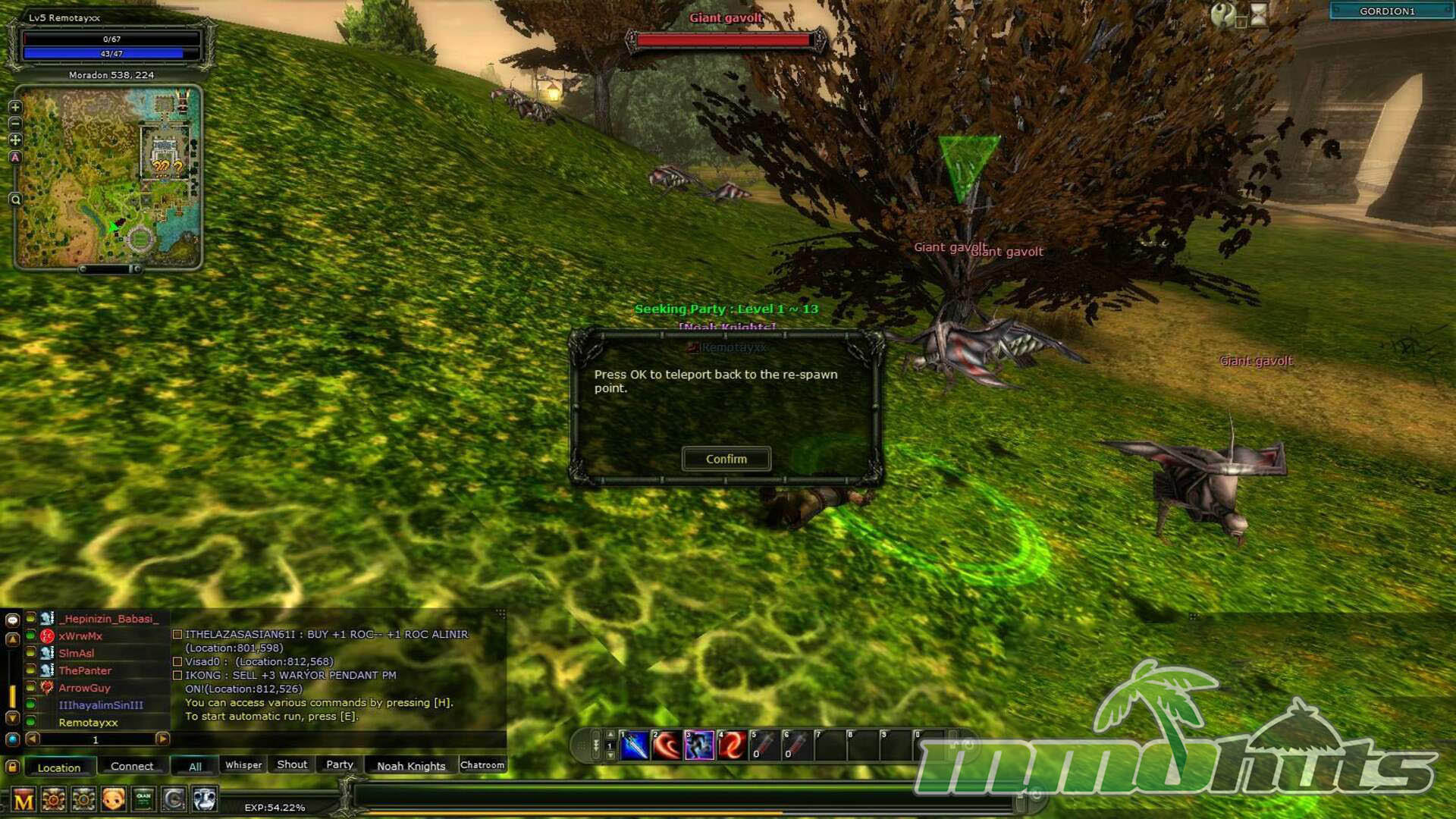
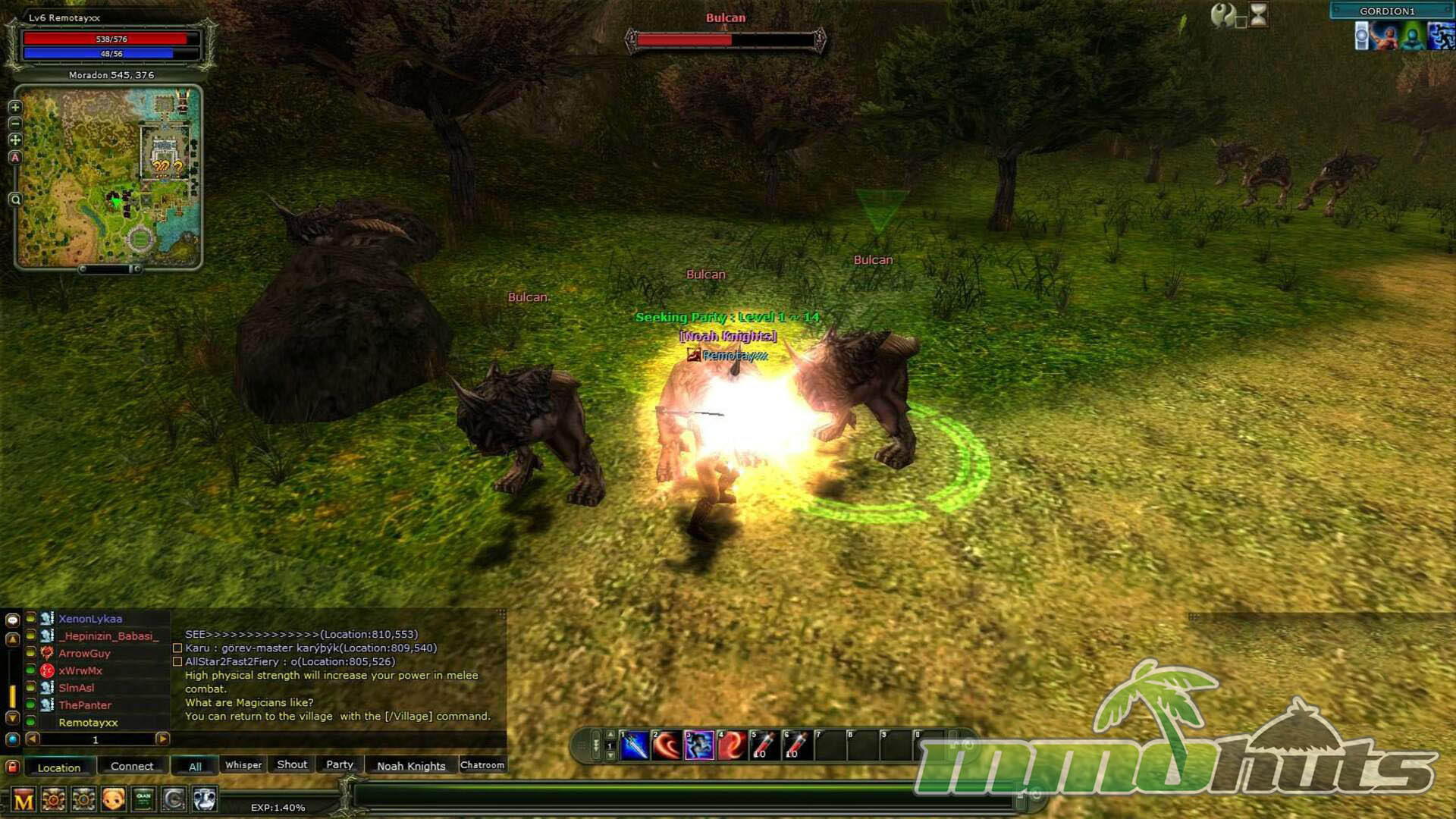
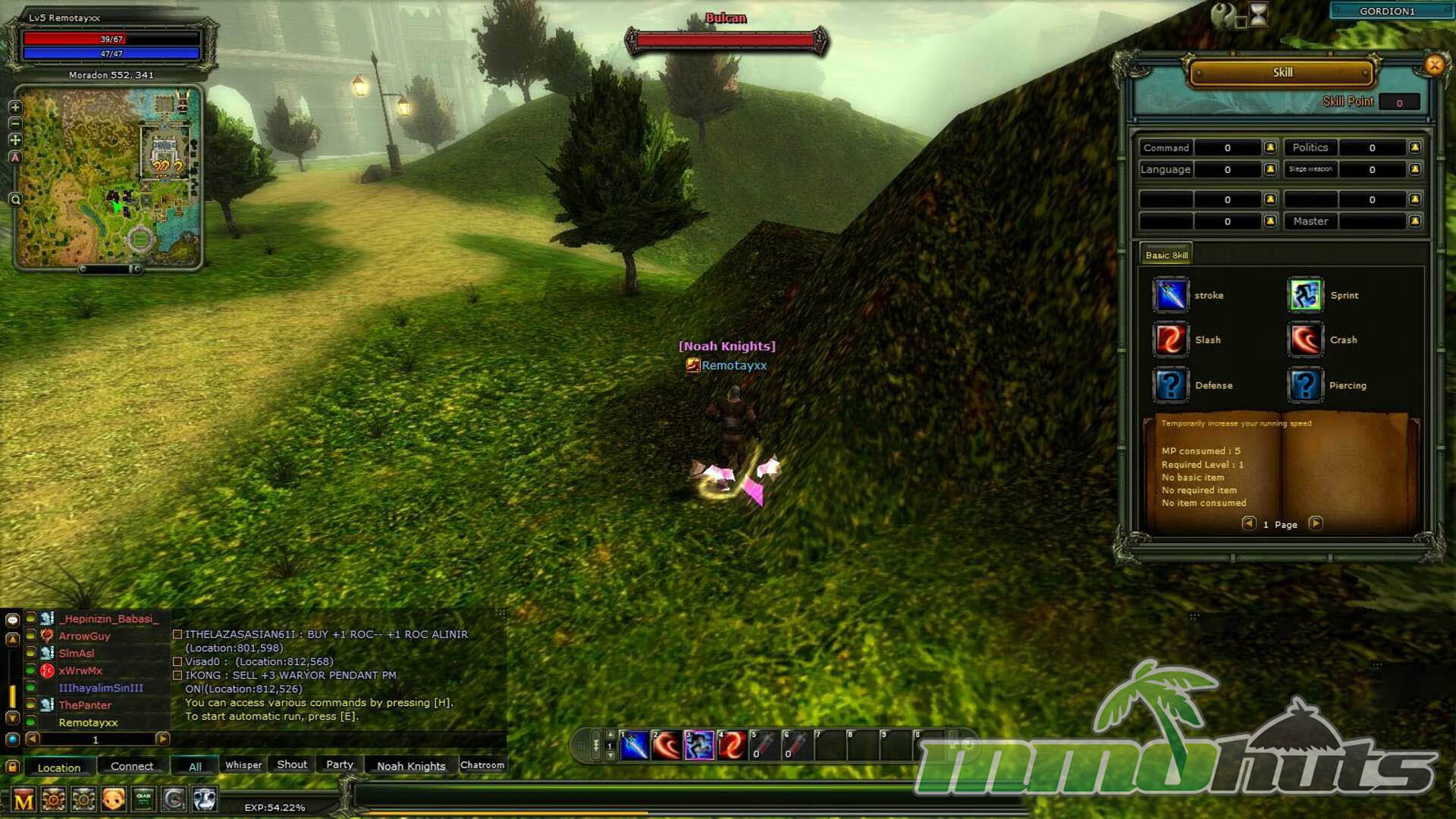
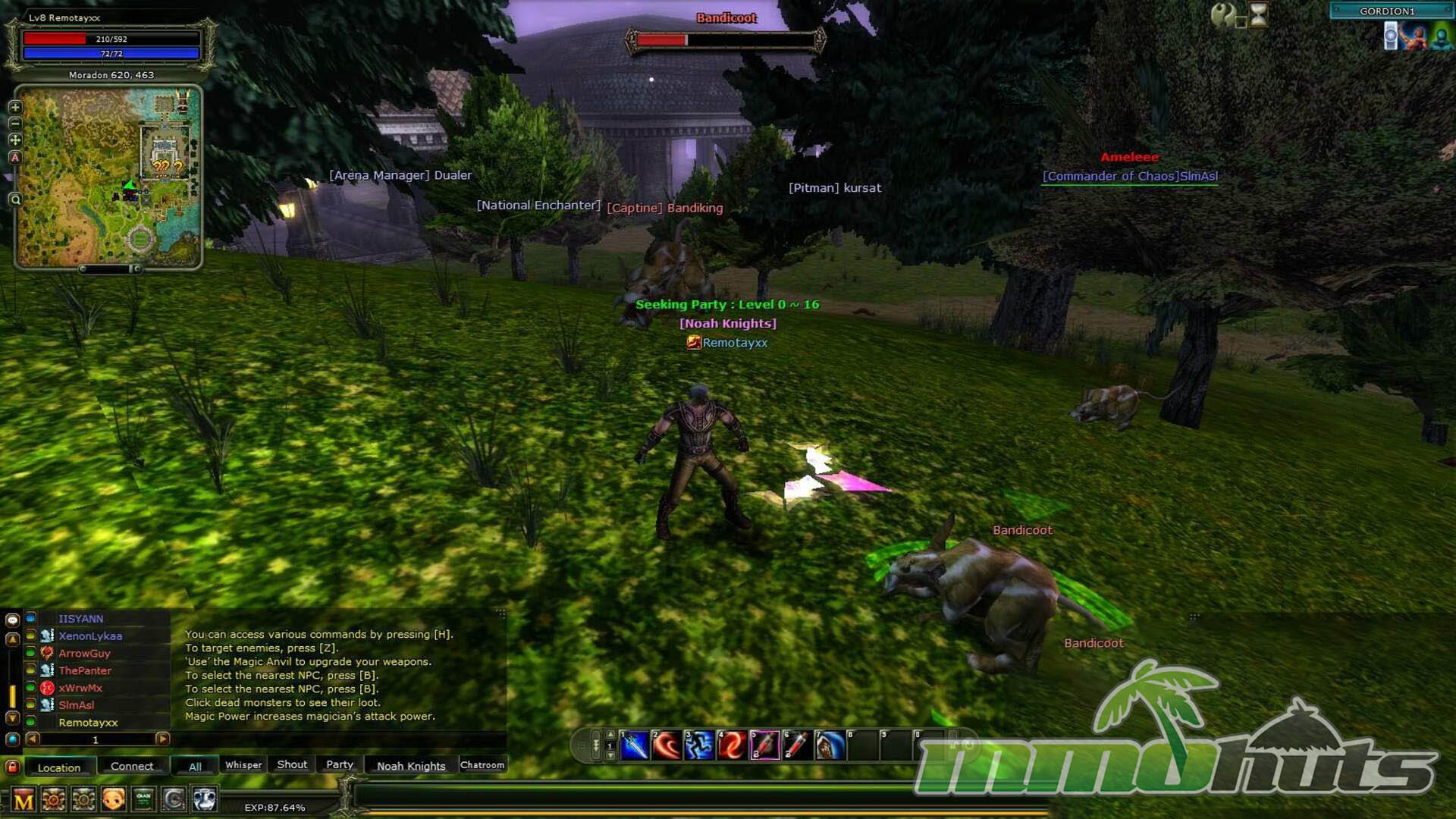
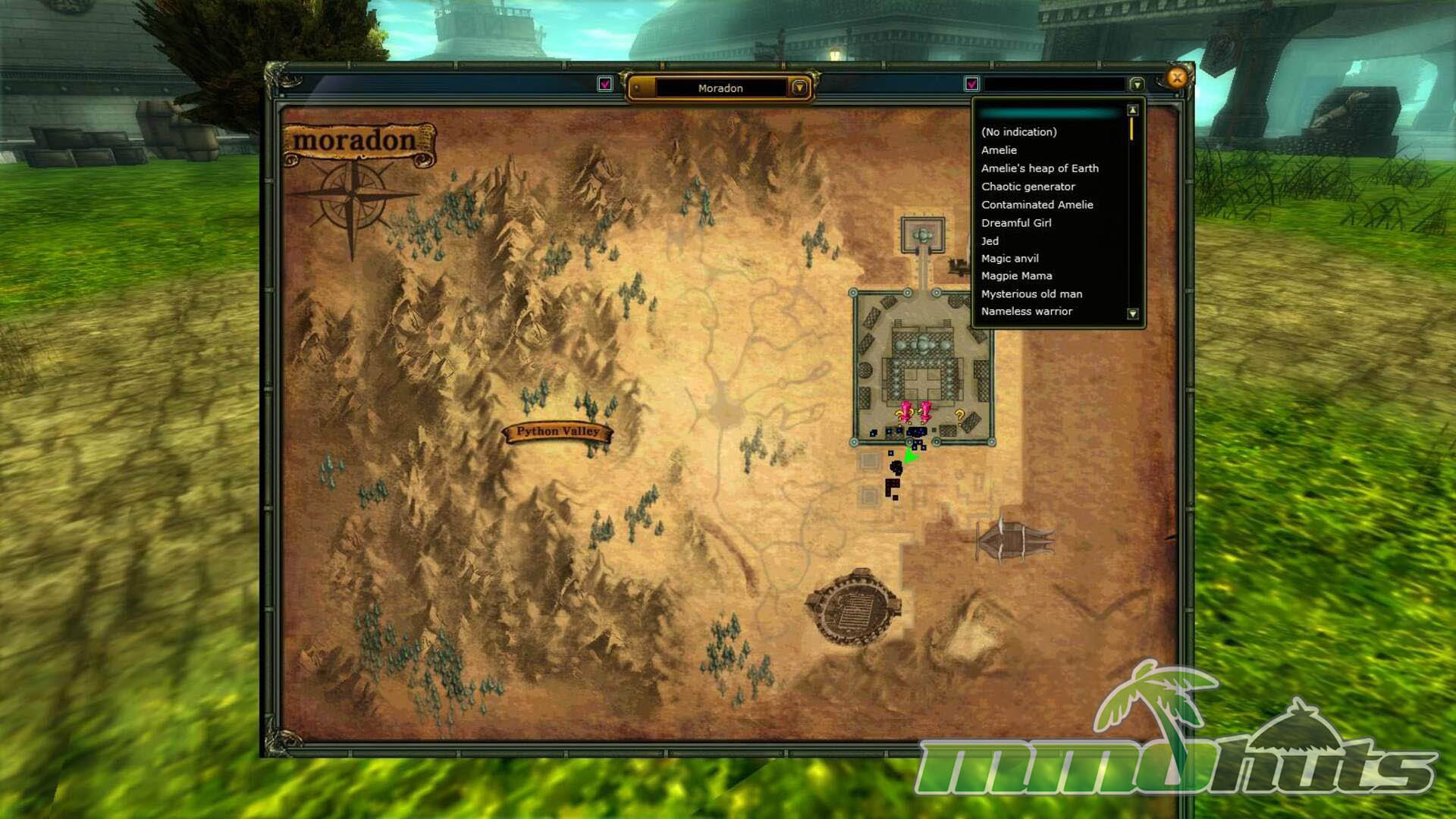
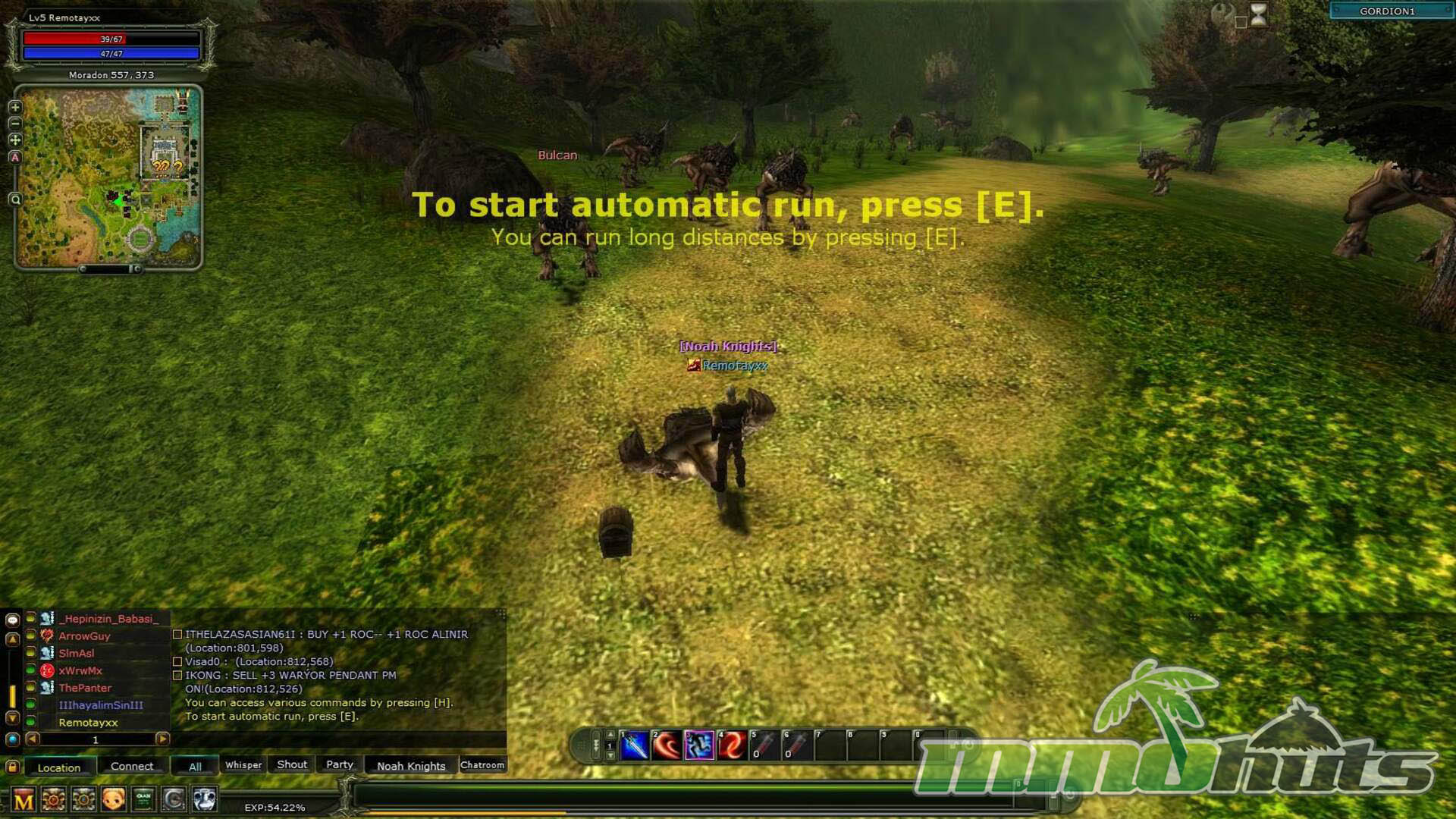
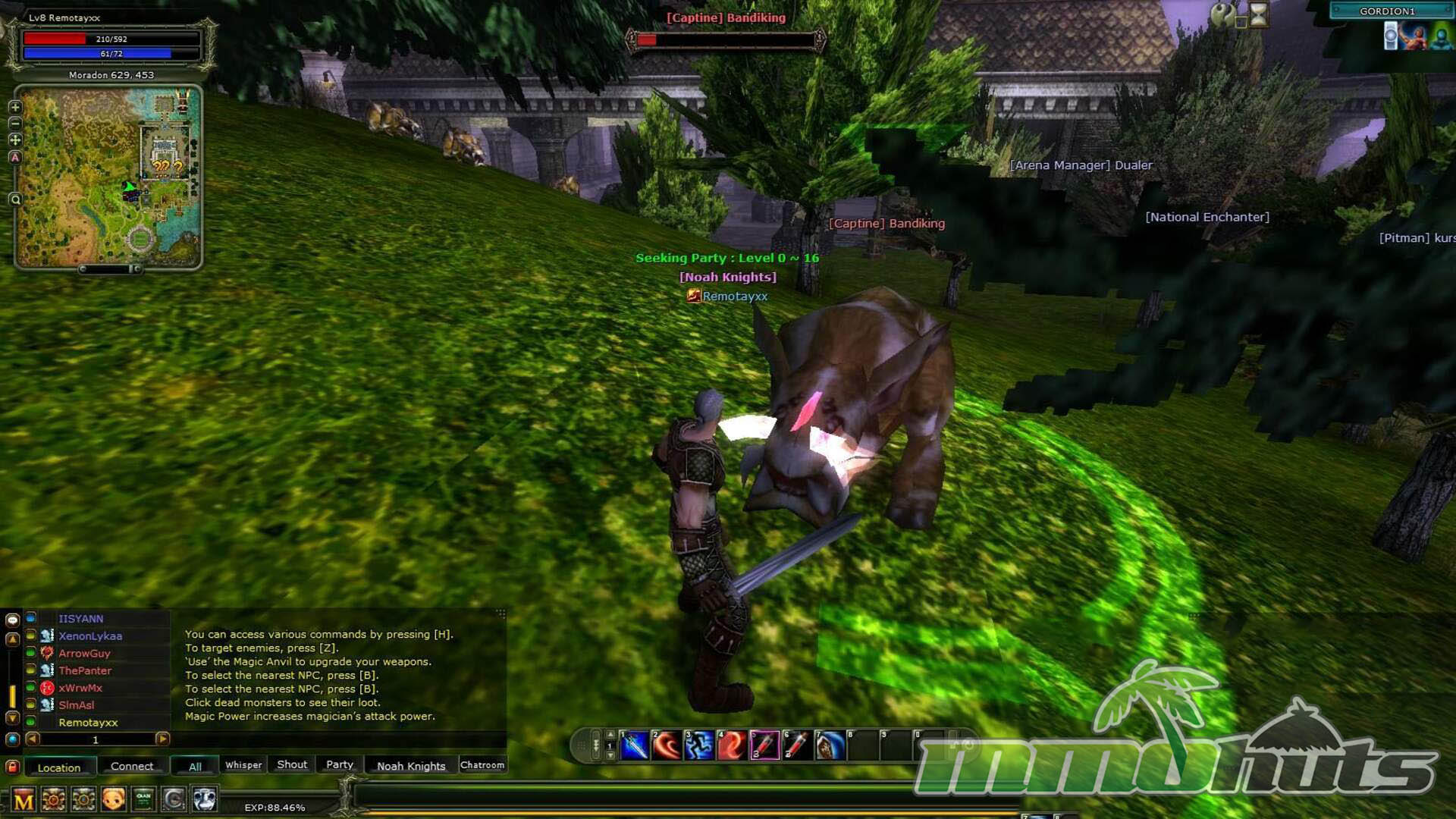
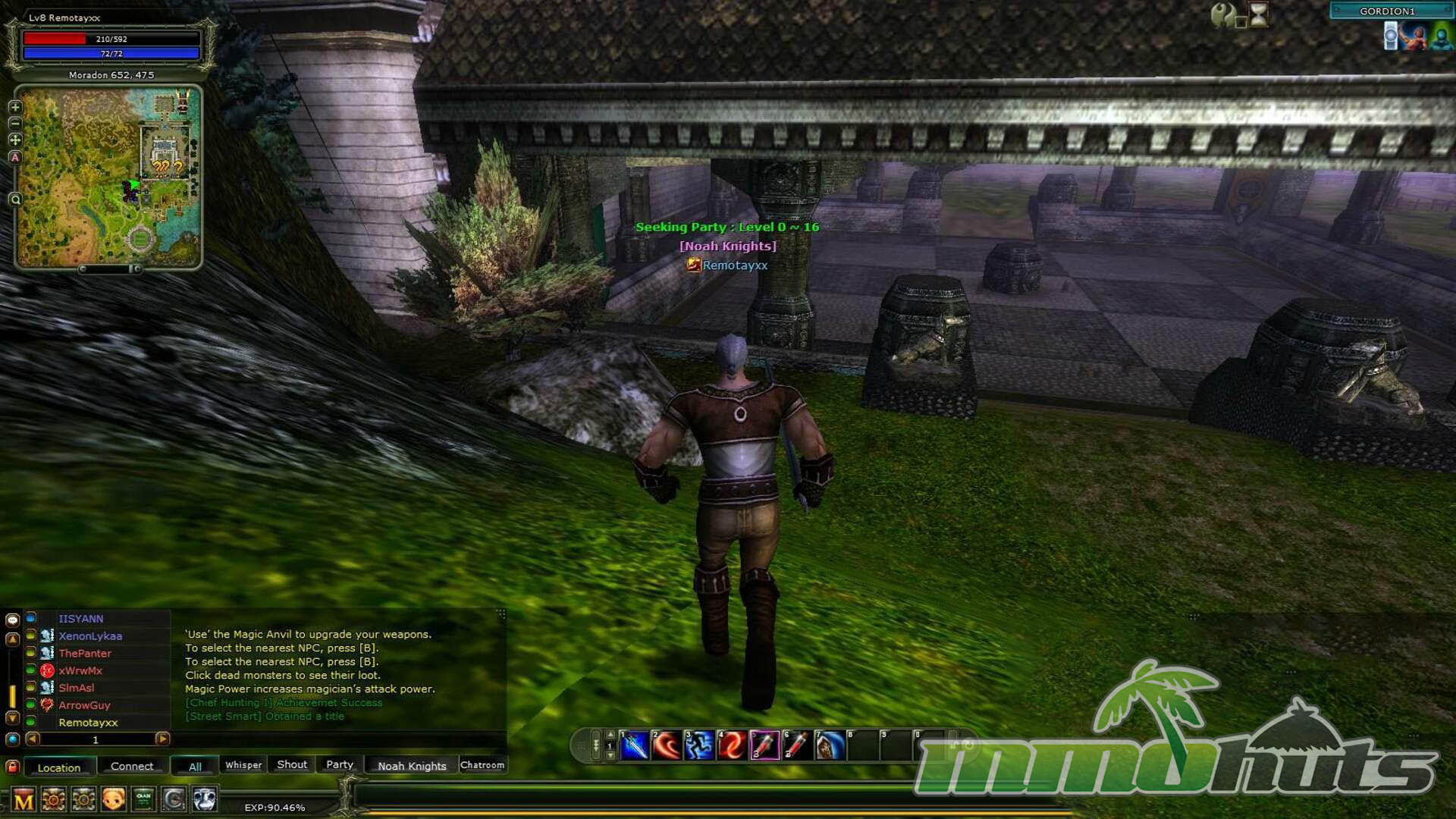

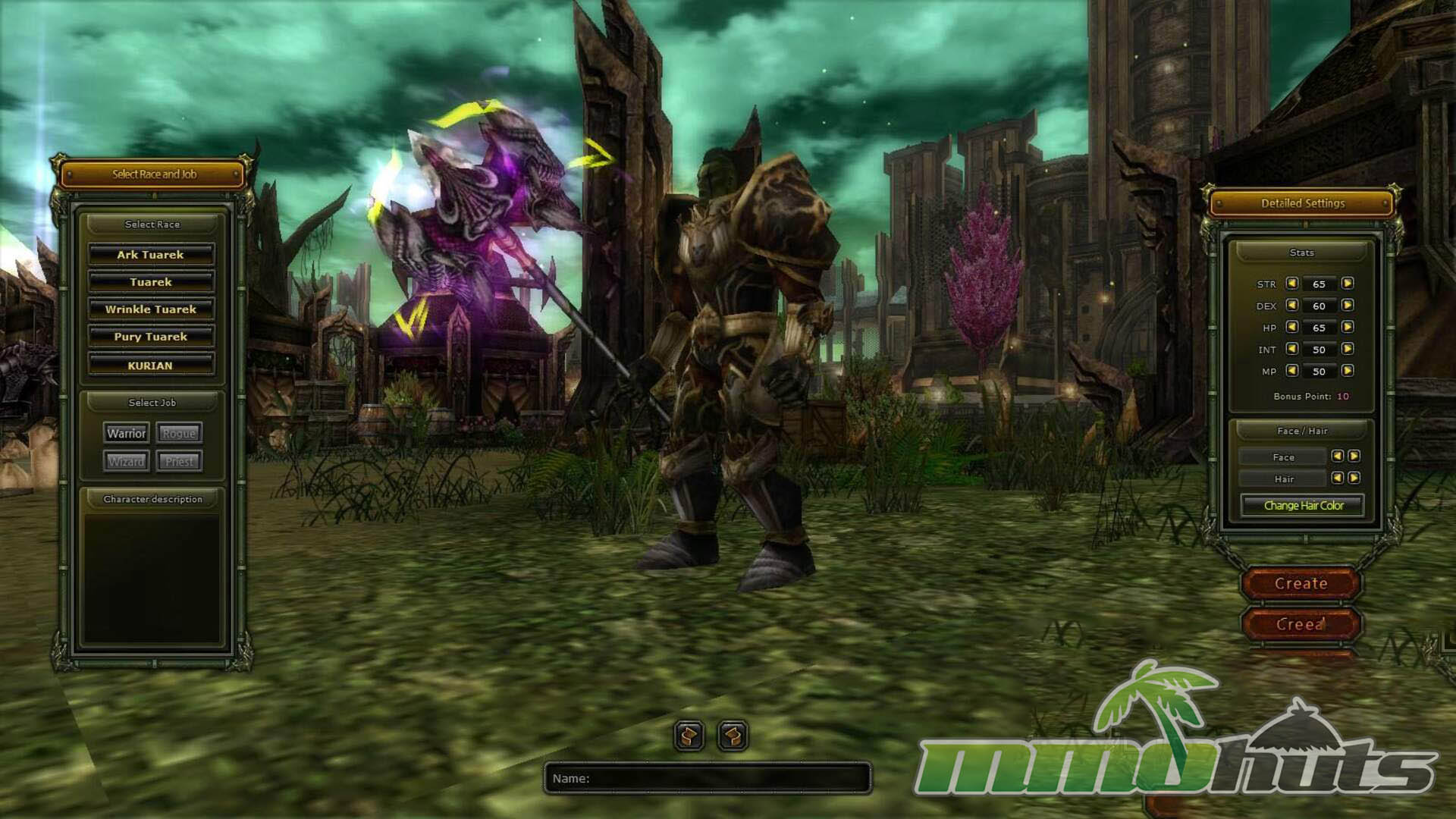
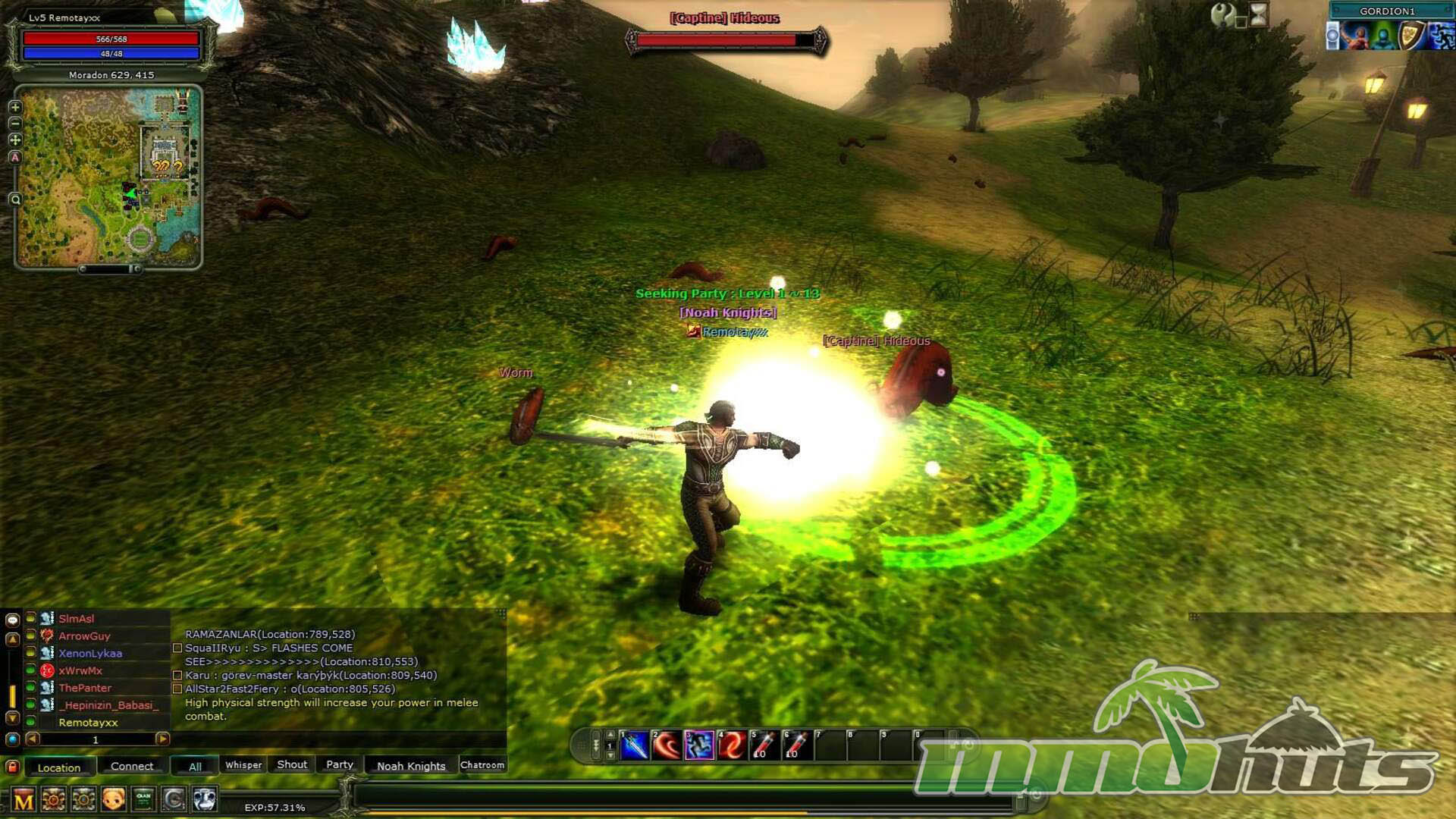
Knight Online Featured Video

Knight Online Classes
At Level 10 and 60 you unlock job advancements. Each nation uses different job titles, but the underlying roles are effectively equivalent.
- Warrior – the heavy frontliner built for close-range fighting, strong armor, and straightforward melee pressure. Warriors advance into Berserkers/Berserker Heroes on Karus and Blade/Blade Masters on El Morad.
- Rogue – a high damage class that trades durability for burst and mobility, commonly played for its offensive output in both PvE and PvP. Rogues become Hunters/Shadow Bane on Karus and Ranger/Kasar Hood on El Morad.
- Magician – the ranged damage dealer, capable of heavy spell damage but generally fragile when pressured. Magicians progress into Mages/Ark Mages on both Karus and El Morad.
- Priest – the support-oriented caster that anchors groups with healing and utility, and can be central to organized PvP. Priests become Shamans/Shadow Knights on Karus and Clerics/Paladins on El Morad.
- Kurian (Karus Only) – a Karus-exclusive bruiser style class designed around brawling, toughness, and strong melee presence. Kurians advance to Daphne/Daphne Heroes.
- Portu (El Morad only) – the El Morad counterpart to Kurian, focused on sturdy melee play and trading blows up close. Portus advance to Burkas/Burka Masters.
Knight Online Review
Knight Online is a Korean MMORPG that first arrived in 2003, then reached North America on August 17, 2004 as USKO (U.S. Knight Online). International publishing has changed hands over the years, with NTTGame now operating the global service after the earlier GamersFirst era ended. The current NTTGame version is broadly accessible worldwide with limited IP restrictions, and it still leans on the same core setup: an ongoing war between El Morad and Karus.
Getting Started
The first thing many players will notice is how clearly the game shows its age. Options are basic and the client is not generous with modern display support, so the presentation can feel immediately dated. On the other hand, once you get past the launcher and into the server list, Knight Online can still surprise you with how busy it is. Seeing numerous servers sitting near capacity is not common for a title from this era, and it signals that the game’s community and PvP culture remain a real draw.
Choosing a Character
After selecting a server, you lock in a nation, El Morad or Karus. The game enforces faction commitment per server, so you cannot casually swap sides on the same account without workarounds like using a different account. Both nations share the core four classes (Warrior, Rogue, Magician, Priest), plus a fifth option that is faction-specific (Portu for El Morad, Kurian for Karus). While the class roster is not huge, the two job advancements at Level 10 and Level 60 provide a sense of growth and identity as you move into higher-tier versions of your role. It is worth noting that these advancements are linear, you do not choose between multiple specializations, you simply upgrade into the next job tier.
Exploring Carnac
New characters funnel into Moradon, a hub that often feels more like a marketplace than a questing town. Player-run stalls and AFK merchants fill the streets, and browsing them can be overwhelming when the population is high. The system works, but it is not especially convenient, and the lack of an auction house style interface makes buying specific items a patience test. The upside is that this kind of bustling trade hub reinforces the feeling that Knight Online is still socially active, even if the tools are old-fashioned.
Movement is primarily point-and-click, with keyboard movement available but awkward compared to modern action MMOs. Progression is also rooted in the older free-to-play template: the game expects you to grind. Quests exist, but steady monster farming is the main route to experience and currency. Early leveling is smoothed out by starting equipment and a buff NPC near town that provides strong free boosts up to Level 35. That makes the opening stretch more approachable, although the pacing still feels deliberate, and early melee skills in particular can come across as underwhelming until you build out your kit.
Looting and basic economy matter right away. Picking up coins from enemies helps fund potions and other essentials, and small advantages in sustain translate directly into more efficient grinding sessions.
Character building is easy to understand but meaningful over time. From Levels 1 to 60 you receive three stat points per level to allocate across STR, HP, DEX, MP, and INT, along with two skill points. From Levels 61 to 83, the stat gain increases to five per level, giving later progression a noticeable boost. Beyond stats and skills, titles provide another layer of advancement. You unlock them through objectives such as killing large numbers of specific enemies or defeating bosses, and the bonuses can be significant enough to matter in both PvE and PvP. Players who plan to stick around usually benefit from looking into which titles align with their class and playstyle.
PvP as the Main Event
Knight Online’s long-term appeal is its PvP ecosystem. Duels are widely available, and the game also supports larger organized battles where nation pride and clan coordination take center stage.
Castle Siege is one of the marquee events, held on Sunday nights as clans fight for control of Castle Delos using siege mechanics. Holding the castle is not just cosmetic, it comes with ongoing benefits until the next siege, including the ability to set tax rates in Moradon and Delos. That kind of persistent reward structure is a big reason rivalries stay active.
Another key event is the nation-vs-nation fight known as “Lunar Gate,” which takes place every Friday night. Players earn National Points and Leader Points by defeating enemy players, and they lose points when they die. Grouping is strongly encouraged because coordinated parties survive longer and secure more kills, even if the points are shared. Monthly rankings then reward premium currency to top performers (top 50 for National Points and top 200 for Leader Points), which adds an extra competitive edge for players who enjoy chasing status.
For a less punishing experience, the arena-style battlegrounds offer PvP without the same National and Leader Point risk. In all modes, player skill matters, but gear matters a lot, and that reality shapes the game’s competitive feel.
Monetization and Power
The cash shop mixes convenience with items that can influence performance. Upgrade support items like Shadow Pieces raise the odds of successful equipment enhancement, and because upgrading is such a core part of progression, these purchases can translate into real power. The shop also includes strong consumables that restore large amounts of HP/MP, which can swing fights when used effectively. Dragons Wing is another notable purchase, adding wings and permanently boosting HP, DEF, or XP gain. Cosmetic outfits are also sold, but the shop’s impact is not purely visual, and the result can feel pay-to-win in competitive contexts.
Community and Communication
Knight Online has a distinctly international community, with a particularly large Turkish presence. You see it in names, in the activity on official forums, and even in player-made cloak emblems where national flags are common. This does not inherently harm the experience, but it can create friction for players who rely on English chat for coordination, especially during large PvP events where quick, clear communication is important.
Private Server Scene
Alongside the official service, Knight Online also has a sizable private server ecosystem. Much like other long-running MMORPGs with dedicated followings, there are many unofficial servers with different rates and custom features. Players who want faster leveling or altered itemization often explore these alternatives, while others prefer the stability and population of the official servers.
Final Verdict – Good
Knight Online is not an easy game to recommend purely on modern standards, its visuals, interface, and grind-heavy structure are firmly rooted in an earlier era. Still, the game continues to succeed at what it was built for: faction PvP with high stakes, strong rivalries, and an unusually durable community. Newcomers may feel outmatched by veterans and by the importance of gear, but players looking for a classic free-to-play MMO with active servers and constant nation conflict will find a lot to engage with. It is also a practical option for anyone on older hardware that struggles with newer MMORPGs.
Knight Online Links
Knight Online Official Site
Knight Online Wikipedia
Knight Online Kalai’s Library (Database / Guides)
Knight Online System Requirements
Minimum Requirements:
Operating System: Windows 98 / 2000 / XP / ME / Vista / 7 / 8
CPU: Pentium 3 600 MHz
Video Card: Any GPU
RAM: 512 MB
Hard Disk Space: 2.2 GB
Recommended Requirements:
Operating System: Windows 98 / 2000 / XP / ME / Vista / 7 / 8
CPU: Pentium 4 1.8 GHz
Video Card: Any GPU
RAM: 1 GB
Hard Disk Space: 2.2 GB
Knight Online Music & Soundtrack
Coming soon!
Knight Online Additional Information
Developer: MGame
Publisher: MGame (Korea), Sohu (China); GamersFirst (NA; retired); NTTGame (Global)
Platform(s): PC
South Korea Release: Q2 2003
US Release: August 17, 2004
China Release: 2004
Development History / Background:
Knight Online was created by Wizgate, a South Korean studio that later became MGame, and it grew into one of the early free-to-play MMORPG success stories in Korea. Across its official service it reached over five million players worldwide, and it also developed a notably active private server community. The game has been especially popular in Turkey, where it built a reputation as one of the most played free MMORPGs. In North America it originally operated under GamersFirst (K2 Networks), and after that license ended, NoahSystems/NTTGame took over the global publishing and service responsibilities.