Hearthstone: Heroes of Warcraft, often shortened to Hearthstone, is Blizzard Entertainment’s free-to-play collectible card game set in the Warcraft universe. It is built to be approachable on day one, with clean rules and quick matches, but it still rewards long-term mastery through deckbuilding, matchup knowledge, and careful resource management. Whether you are a casual player chasing daily quests on mobile or a competitive ladder climber, Hearthstone offers a polished, highly replayable CCG experience.
 | Publisher: Blizzard Entertainment Playerbase: High Type: CCG Release Date: Mar 11, 2014 (NA/EU) Pros: +Strong hero and class variety. +Excellent draft mode (Arena) for quick, skill-based runs. +Generally tight balance for a digital CCG. +Huge card pool (4,500+). +Smooth cross-platform play on PC and mobile. Cons: -A noticeable chunk of the collection is niche or rarely worth using. -Unlocking expansions through gold can feel grindy for free players. |



Hearthstone Overview
Hearthstone is a digital trading card game MMO designed to sit comfortably between “easy to learn” and “hard to perfect.” If you have experience with Magic: The Gathering or similar CCGs, many concepts will feel familiar, but Hearthstone trims away a lot of friction (no land management, fast turns, and clear card text) to keep matches flowing. The game now boasts 4,500+ cards with new additions arriving regularly, and it centers play around 10 heroes (based on the 9 original World of Warcraft classes plus Demon Hunter). One of its standout features is a drafting mode that gives players a competitive way to play without needing a fully built collection.
Cards generally fall into two broad buckets: hero-specific class cards and neutral options that any hero can use. Each hero also comes with a distinct hero power, which helps define class identity and shapes what strategies tend to work. With different win conditions, archetypes, and matchup considerations across the roster, there is a lot of room to experiment with deck styles. On top of that, Hearthstone’s presentation is among the cleanest in the genre, and its cross-platform support makes it easy to play on Windows, Mac OS X, Android, and iOS without feeling like you are using a stripped-down version.
Hearthstone Key Features
- Plenty of Playstyles – nine playable heroes, each with their own unique card sets. Combine class tools with shared neutral cards to build decks that match how you like to play.
- Build a Collection – balanced collectible card game with over 500+ cards
- Crafting System – turn unwanted cards into resources, then create specific cards you are missing.
- Competitive Ranked Ladder – ranked system with monthly resets. Progress from Rank 25 to Rank 1, then hit Legend to reveal your regional ladder position.
- Arena Draft Mode – draft from random card choices, then play until three losses. Rewards scale based on your win total.
- Cross-Platform – play with Mac OS X, Windows, Android, and Apple iOS.
Hearthstone Screenshots
Hearthstone Featured Video

Hearthstone Review
Hearthstone: Heroes of Warcraft is a free-to-play collectible card game MMO developed and published by Blizzard Entertainment. Even before launch, it drew attention simply because Blizzard was behind it, and demand for early access was intense during the closed beta period. By the time open beta arrived on January 21, 2014, the game had already amassed 9 million registered users, and it continued to grow quickly. By December 2014, Hearthstone had surpassed 25 million users, and it has remained a major name in digital card games. If you enjoy the deck construction and tactical back-and-forth of games like Magic: The Gathering or Yu-Gi-Oh!, Hearthstone delivers a more streamlined, video game-friendly take on the formula.
First Things First, What Kind of Game Is It?
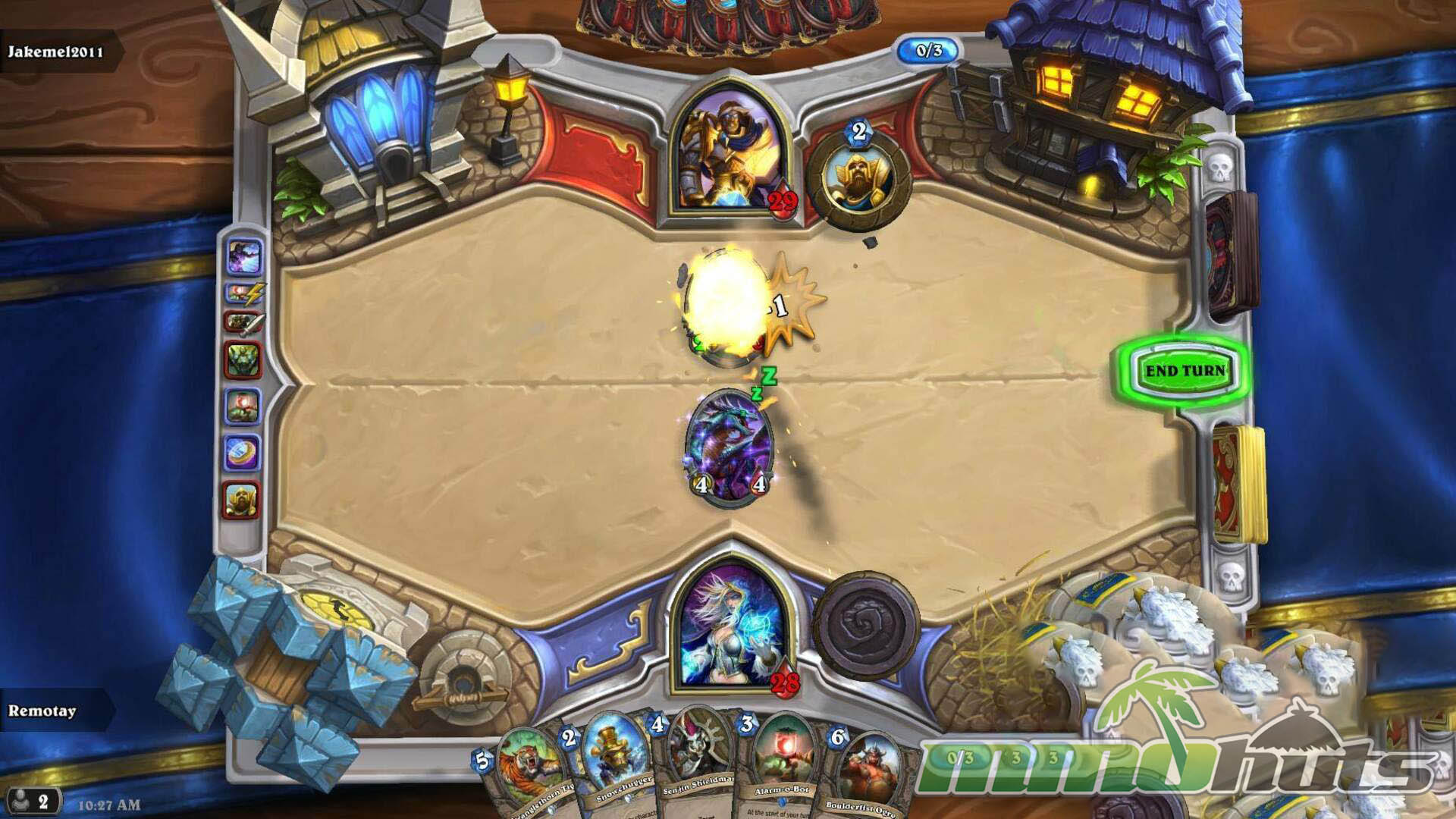
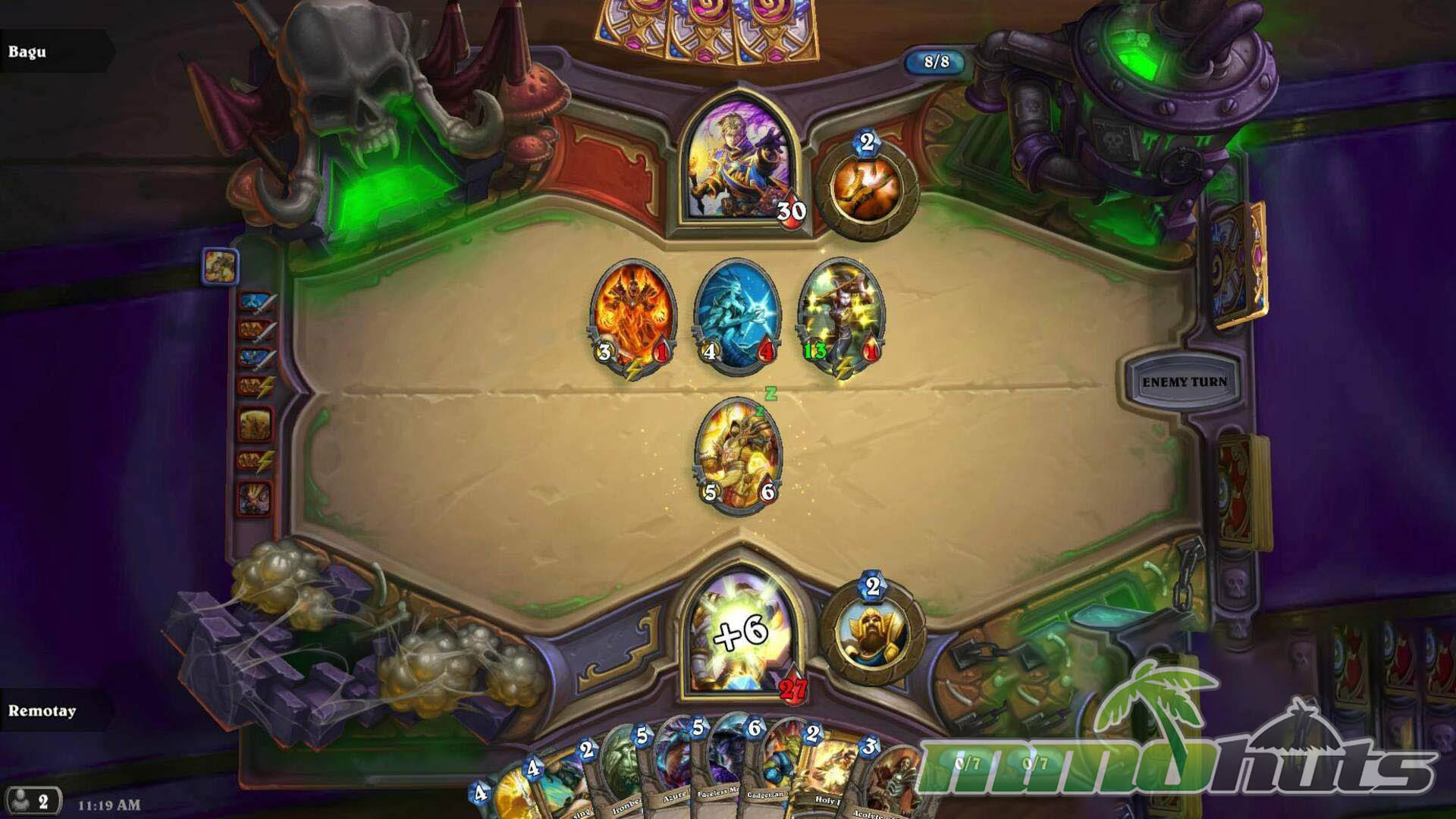
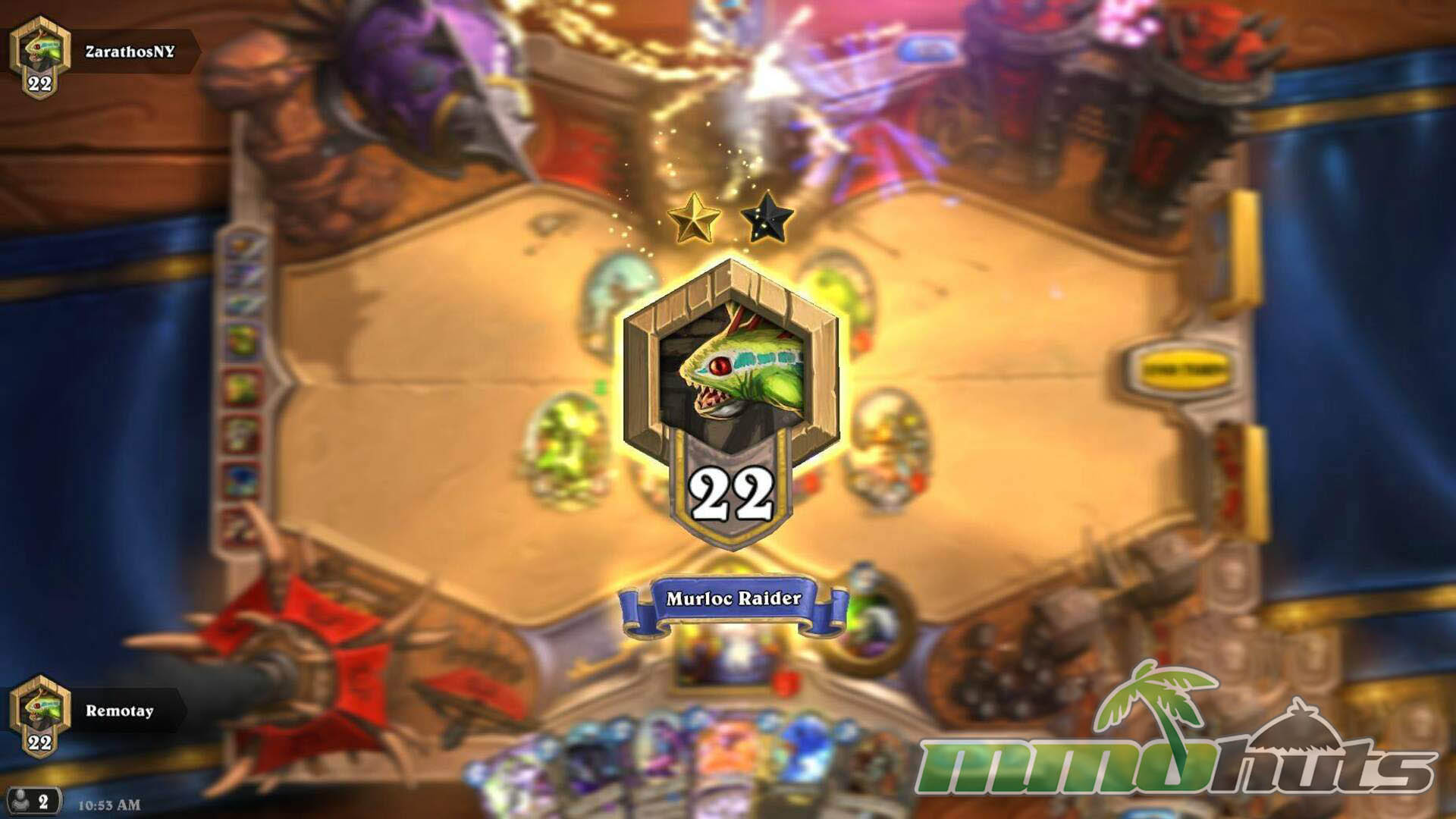
At its core, Hearthstone is a turn-based duel between two players using customized decks. The theme pulls heavily from Warcraft, so you will see familiar characters, spells, and creature types reimagined as cards. New players are guided through a short tutorial that explains the fundamentals (mana, minions, spells, and attacking), and it does a good job of teaching interactions without overwhelming you.
The early experience uses AI opponents to introduce the flow of a match, and you begin with Jaina Proudmoore (Mage) and a basic starter deck. Before you can fully expand your options, you unlock additional heroes by defeating them in practice mode. Hearthstone has nine playable heroes representing the original World of Warcraft classes, and each class comes with its own suite of cards and a signature hero power. Hero powers can be used once per turn for 2 mana, and they do a lot to define how each class plays, for example, Mage can deal 1 damage to any target, while Paladin can generate a 1/1 minion.
Gameplay
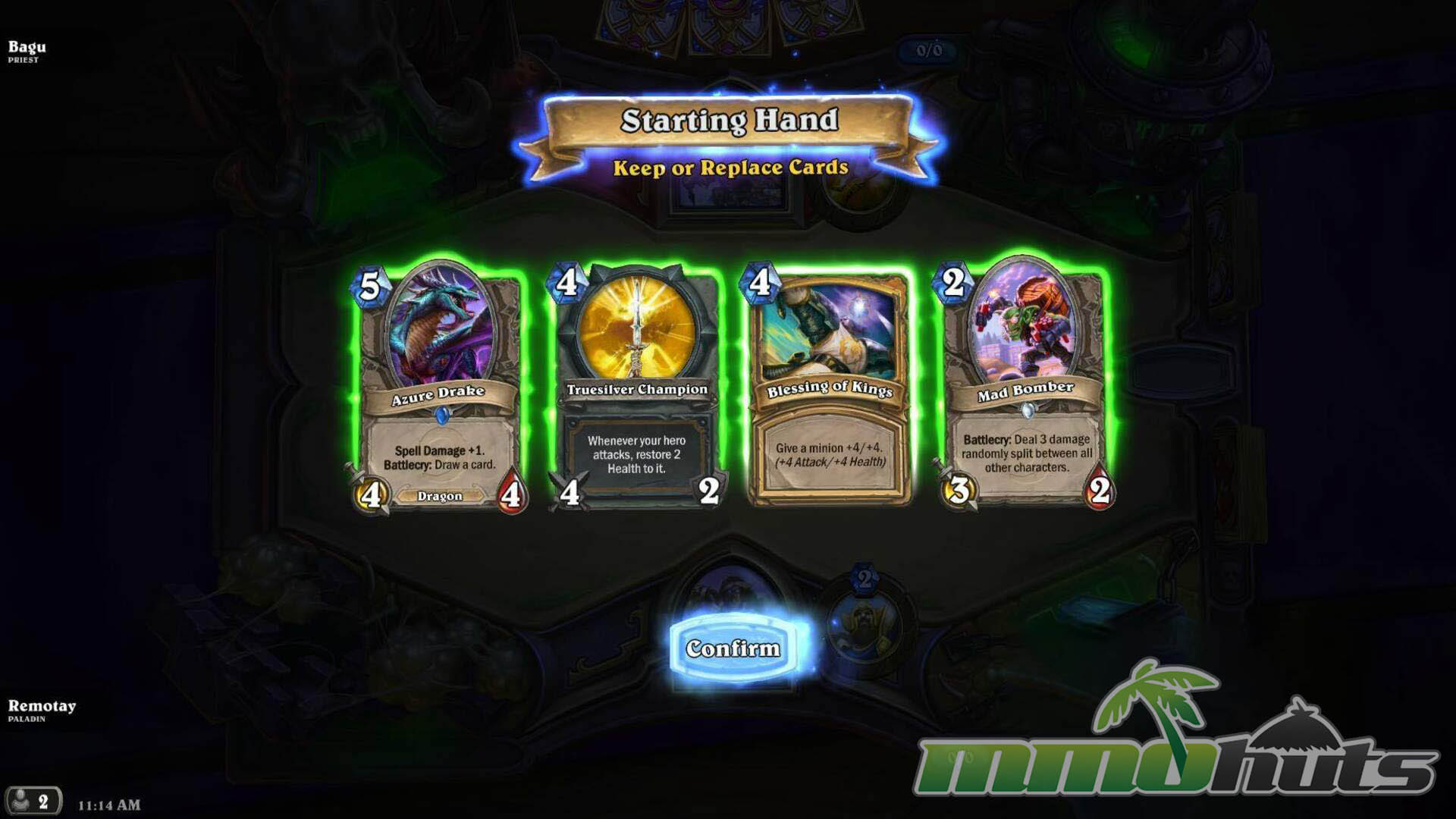
Hearthstone’s rules will feel familiar to CCG veterans, but they are intentionally simplified to keep decision-making focused on tempo and card timing. Each match begins with an opening hand, and the player going second gets an extra card plus “The Coin,” a one-time spell that grants 1 additional mana for a single turn. The mulligan system lets you replace any number of starting cards, which helps reduce the frustration of opening hands that do not match your game plan.
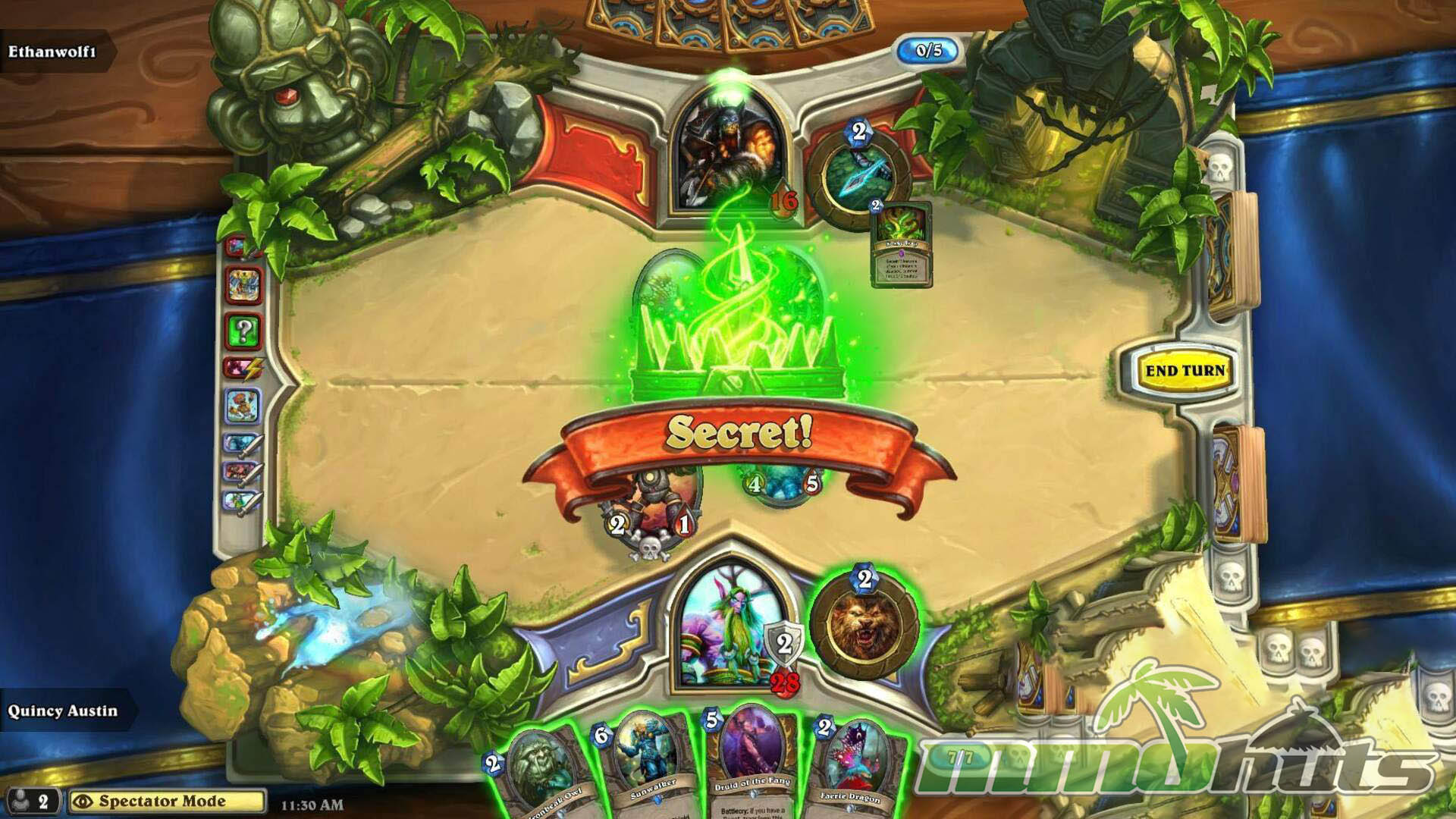
Instead of managing land cards, mana ramps automatically. You gain one additional mana crystal each turn, which means both players scale upward at the same pace. This design pushes deckbuilders toward a healthy mana curve, mixing low-cost plays for early stability with heavier cards that can swing the board later. The result is a game that is quick to read, but still deep in practice, especially once you start thinking in terms of resource trading, board control, and win conditions.
Deck Building
Deckbuilding is where Hearthstone’s long-term appeal really sits. The card pool is large, and expansions and adventure content have historically kept the meta changing, which encourages experimentation. With so many card interactions available, it is easy to find satisfying combos and archetypes to chase, whether you prefer aggressive pressure, control-oriented removal, or synergy-driven lists.
That said, Hearthstone shares a common issue with most collectible card games: not every card is equally practical. Some cards exist mainly for novelty, learning, or limited formats, and a portion of the collection rarely makes it into serious constructed decks.

Balance overall is one of Hearthstone’s strengths, especially compared to physical card games where problematic cards can linger for years. There are many viable decks at any given time, but there are also clearly underpowered cards that almost never justify a slot. Low-impact commons like Wisp and Magma Rager are classic examples of cards that struggle to compete with better options, and even some legendaries (such as Nozdormu and Millhouse Manastorm) are more collectible curiosities than competitive staples. The advantage of being digital is that Blizzard can adjust cards when something becomes too dominant. Nerfs are not constant, but they do happen when the meta becomes overly warped, and changes like the Goblin Auctioneer mana increase (from 5 to 6) show how even small tweaks can move a card from “everywhere” to “only in specific lists.”
Getting New Cards
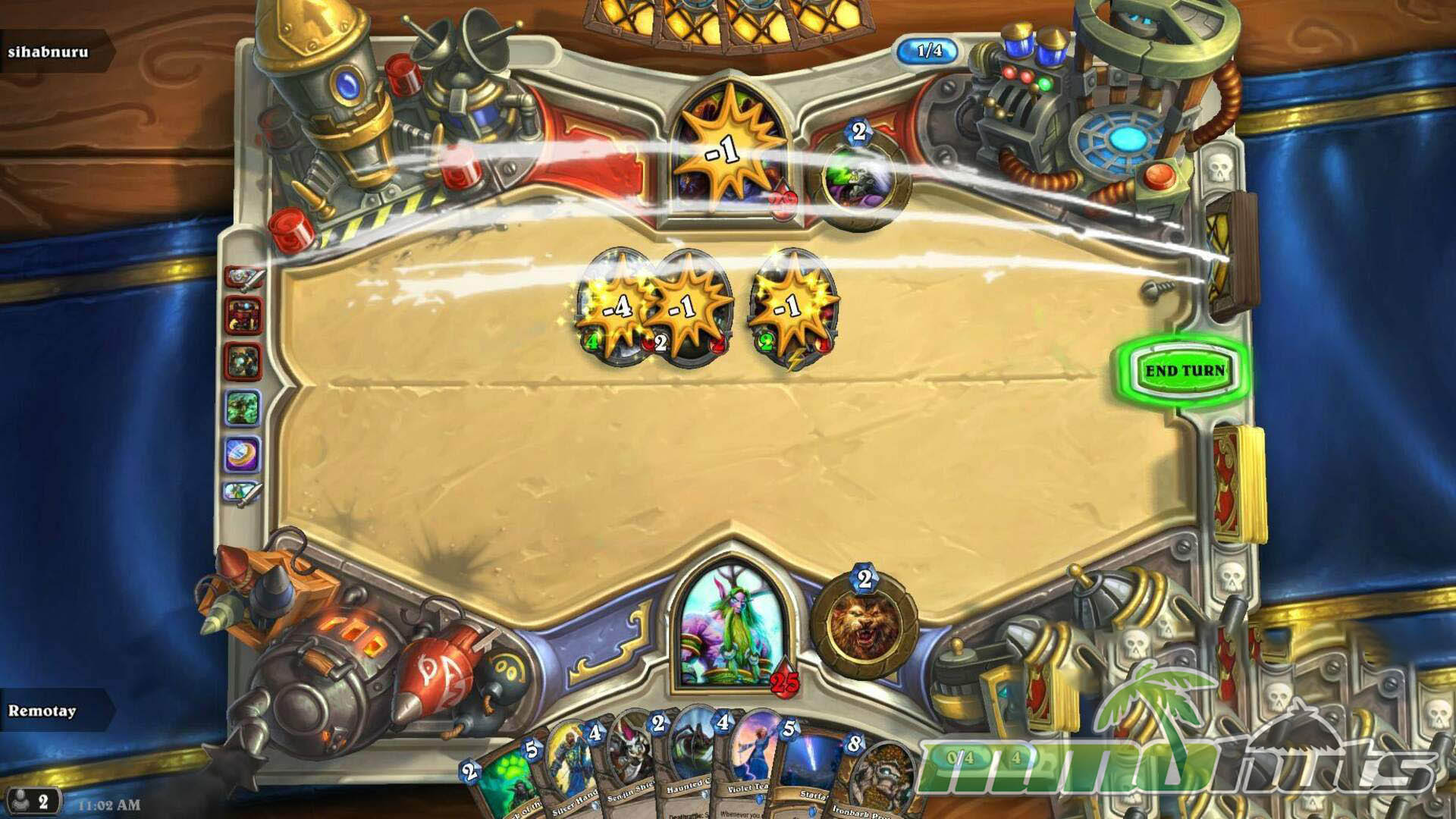
Card acquisition is split between playtime rewards and pack openings. You earn “basic” cards by leveling heroes, which happens through wins with that class. Beyond that, booster packs are the main source of new cards, priced at 100 gold each (or purchasable with real money) and containing five cards with at least one rare or higher.
Gold income mostly comes from daily quests and match wins. Quests range from class-based win requirements to objectives like defeating a certain number of minions. You can hold up to three quests at once, so it is worth clearing them regularly so new ones can appear. Achievements also provide some early boosts of gold (for example, milestone rewards for wins or completing expert AI), though they are one-time payouts and not a consistent long-term farm. Arena is another meaningful gold source if you can reliably earn wins.
Arena, The Draft Mode That Keeps Pulling You Back
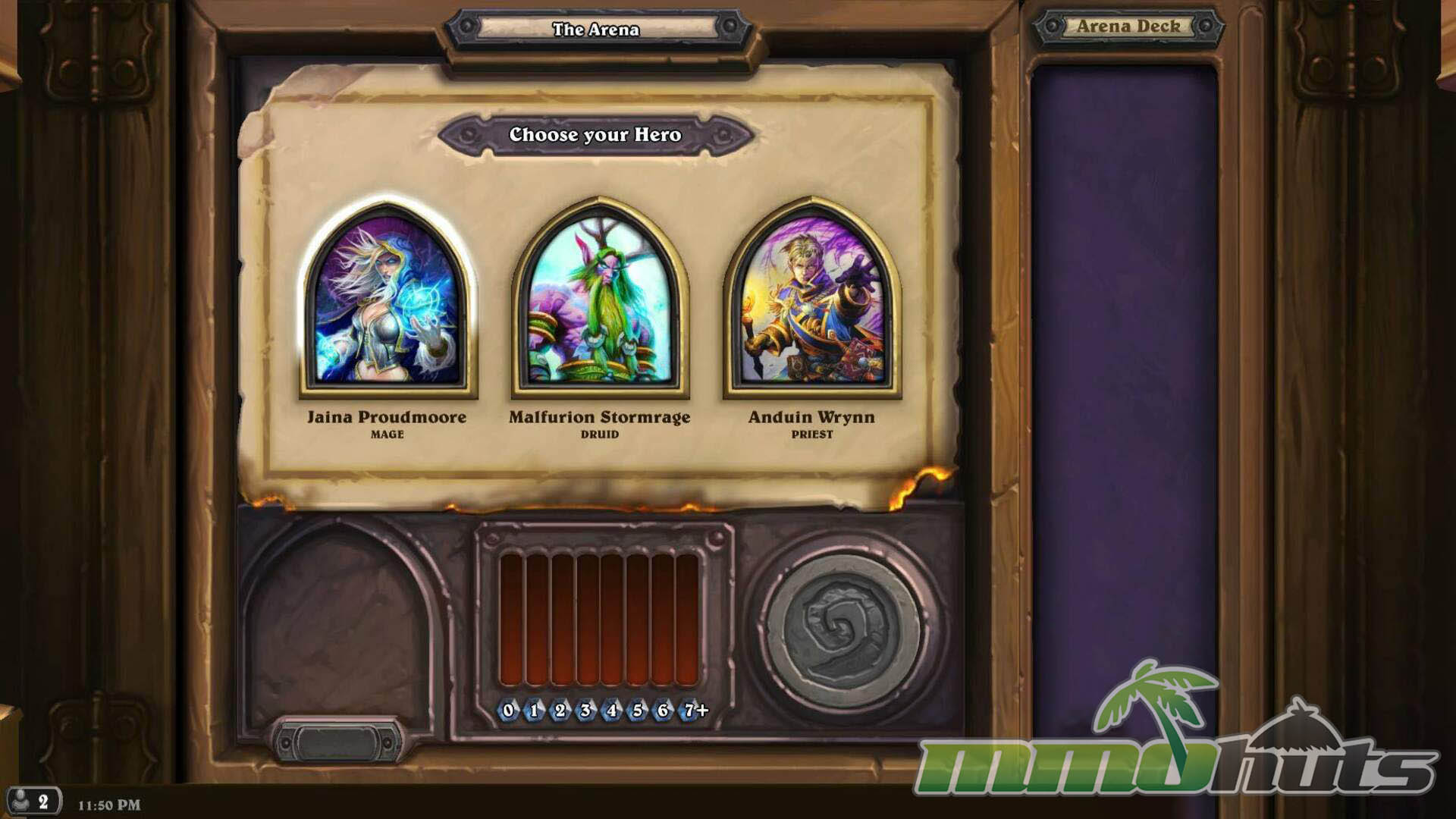
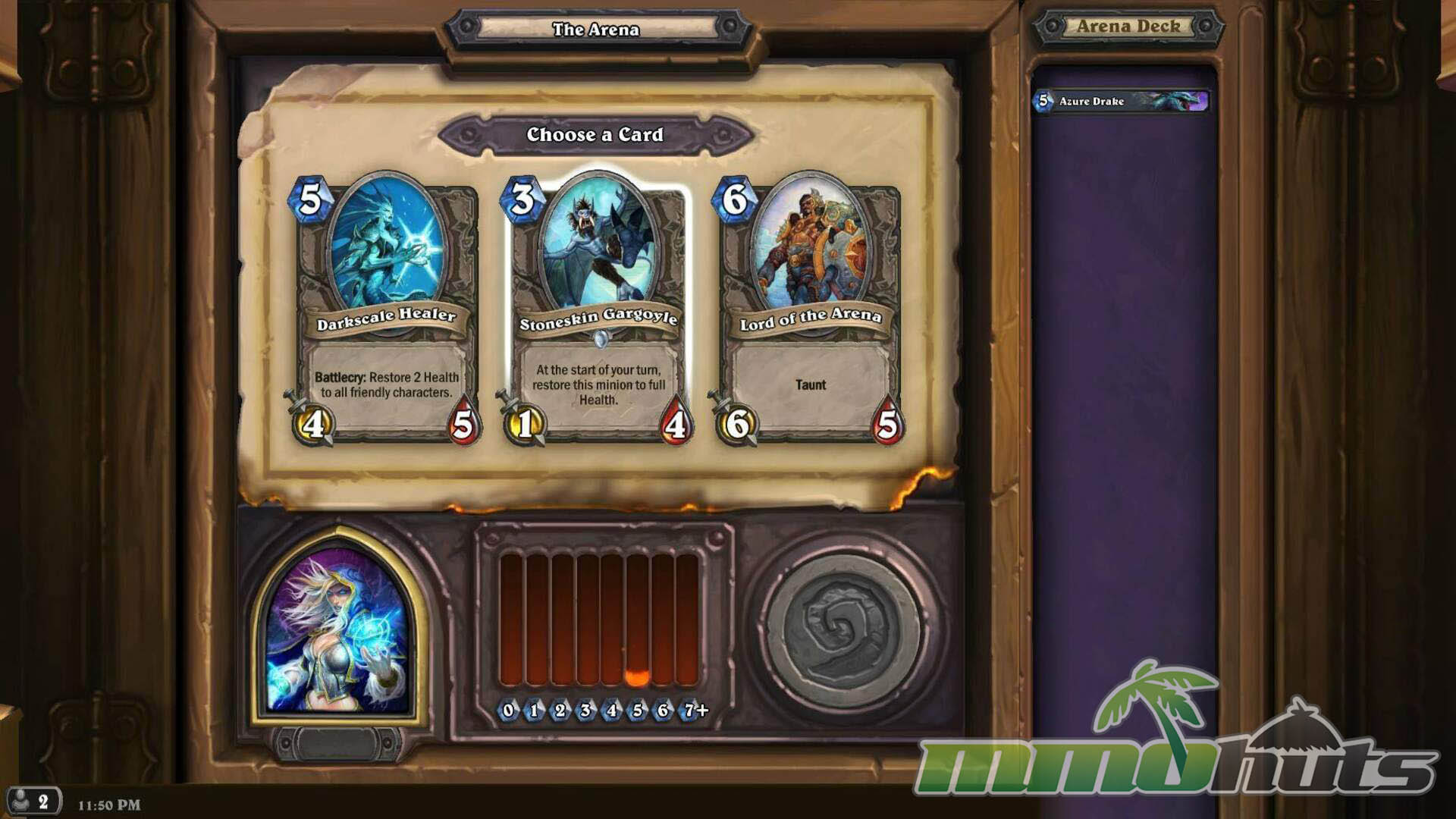
Arena is Hearthstone’s built-in draft format, and it remains one of the best ways to enjoy the game without owning a complete collection. You build a deck by repeatedly choosing one card from three options of the same rarity until the deck is complete. The run ends after three losses, and your rewards scale with how many wins you manage.
An Arena entry costs 150 gold (or $1.99USD). Every run awards at least one card pack, and strong performances can refund enough gold to chain entries, with seven wins or more guaranteeing 150+ gold. Reward items beyond the pack can include additional gold and individual cards, and high win totals can sometimes pay out rare or legendary cards, though the exact rewards are randomized.
Ranked Play and Progression
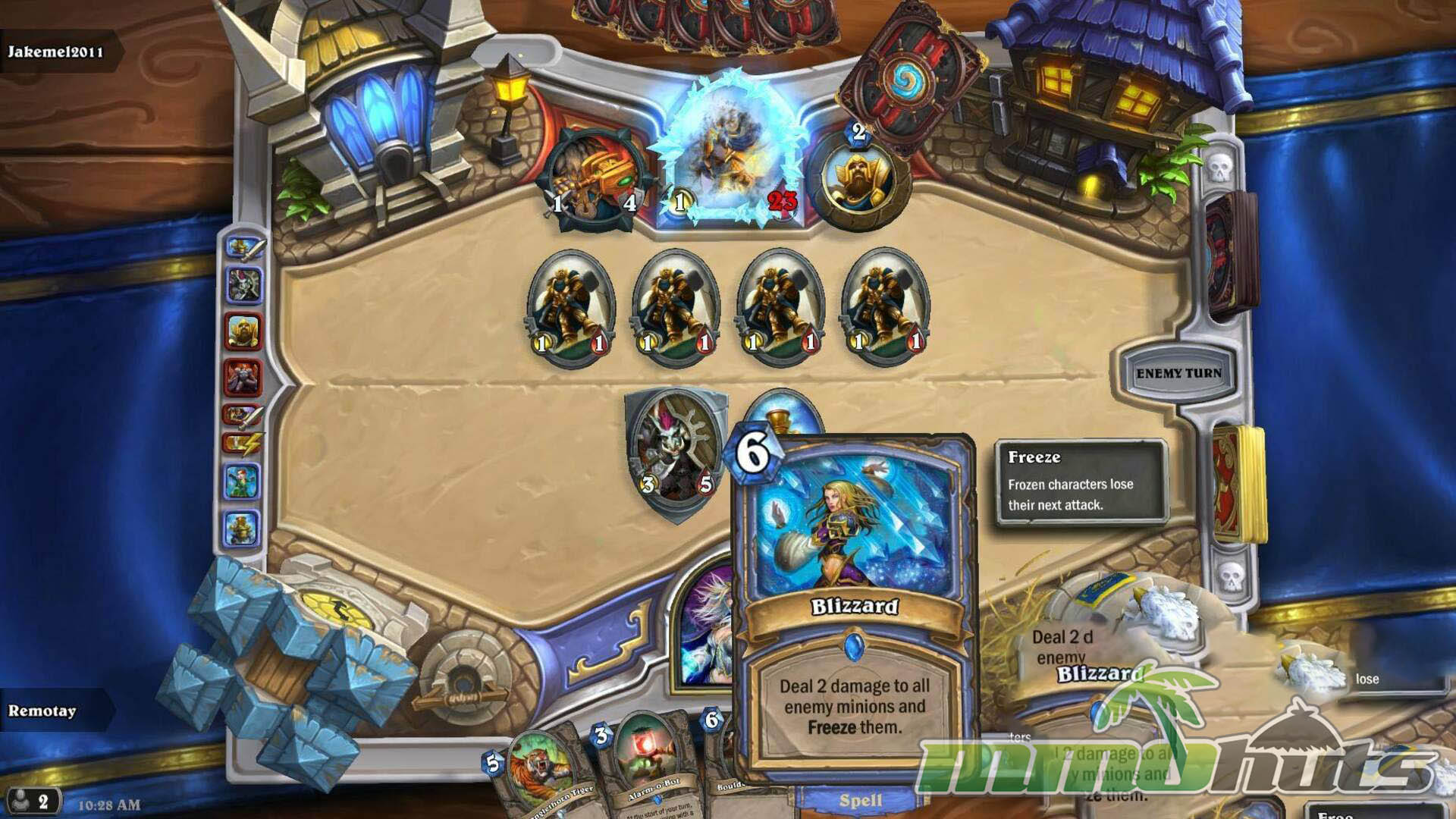
For standard matches, Hearthstone offers casual and ranked queues. Both can be used for quests, but ranked is where players typically bring more refined decks and play with a clearer focus on climbing. You begin at Rank 25 and work upward toward Rank 1, and after that you can enter Legend, which places you among the top players and reveals your numerical standing in your region (for example, Legend 300 indicates a rank position on the regional ladder). The ladder resets monthly, and reaching at least Rank 20 awards a seasonal card back.
Cross-Platform Play That Actually Feels Complete
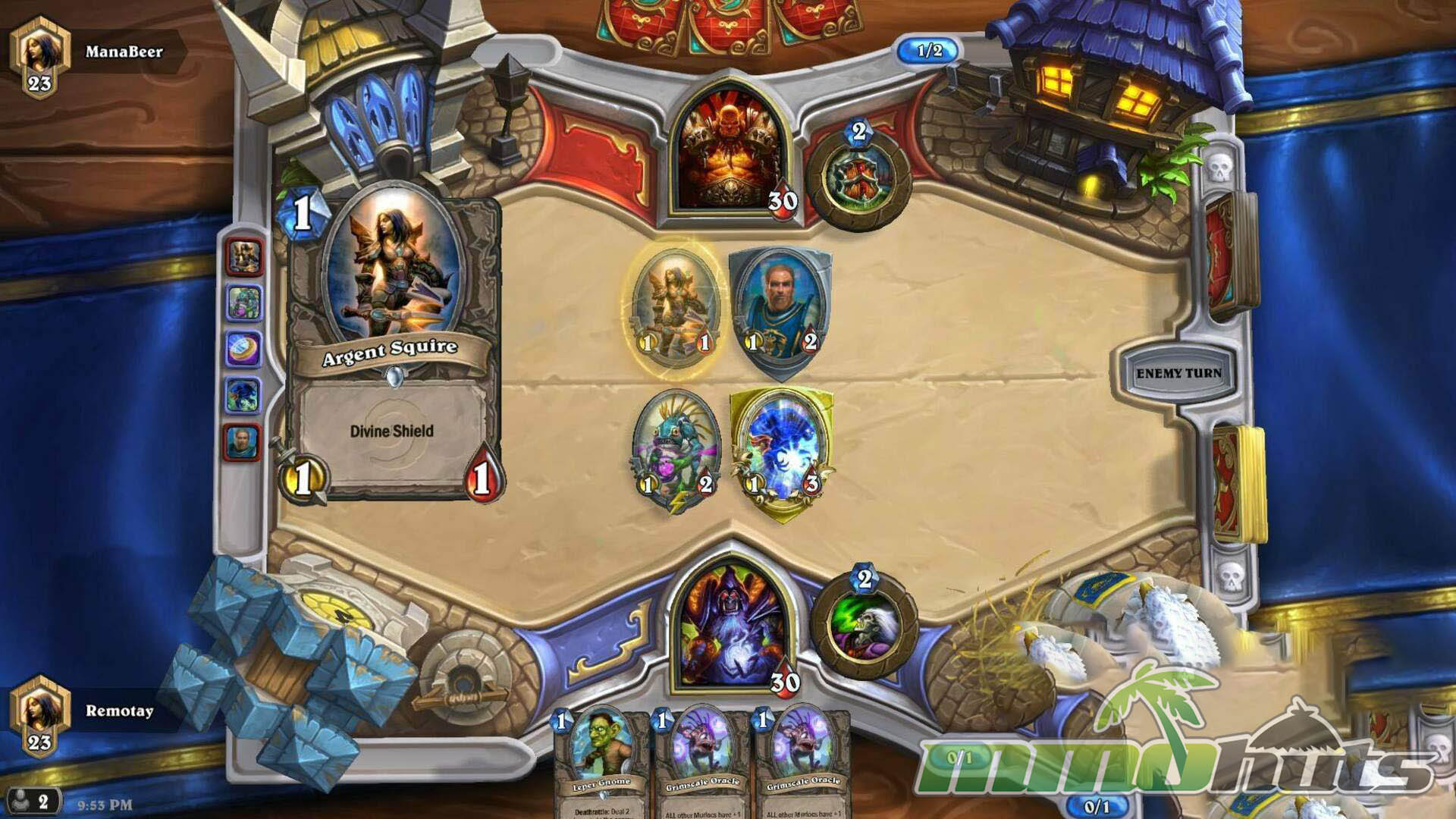
Hearthstone’s accessibility is a major reason it became so widely played. You can jump between PC and mobile (PC, Mac, Android, iOS) without feeling like you are switching to a lesser version. The interface translates well to touch controls, and matches remain readable even on smaller screens. The biggest practical drawback is typical of mobile gaming, the battery usage can be noticeable, but in terms of responsiveness and feature parity, Hearthstone’s mobile versions are among the stronger implementations in the genre.
No Trading, For Better or Worse
One of Hearthstone’s defining differences from many traditional CCGs is that you cannot trade cards. From a player perspective, this can be frustrating because it removes the ability to directly convert duplicates into specific missing pieces through community exchange. From Blizzard’s perspective, it also reduces the incentive for account theft and keeps the economy easier to control.
To compensate, Hearthstone includes a crafting system. You can disenchant unwanted cards into arcane dust, then spend dust to craft specific cards. The rarer the card, the more dust it provides and the more dust it costs to create. Disenchanting a common yields 5 dust, while disenchanting a legendary yields 400. Crafting a common costs 20 dust, and crafting a legendary costs 1600. It is not as flexible as trading, but it does give players a direct path toward completing key deck staples.
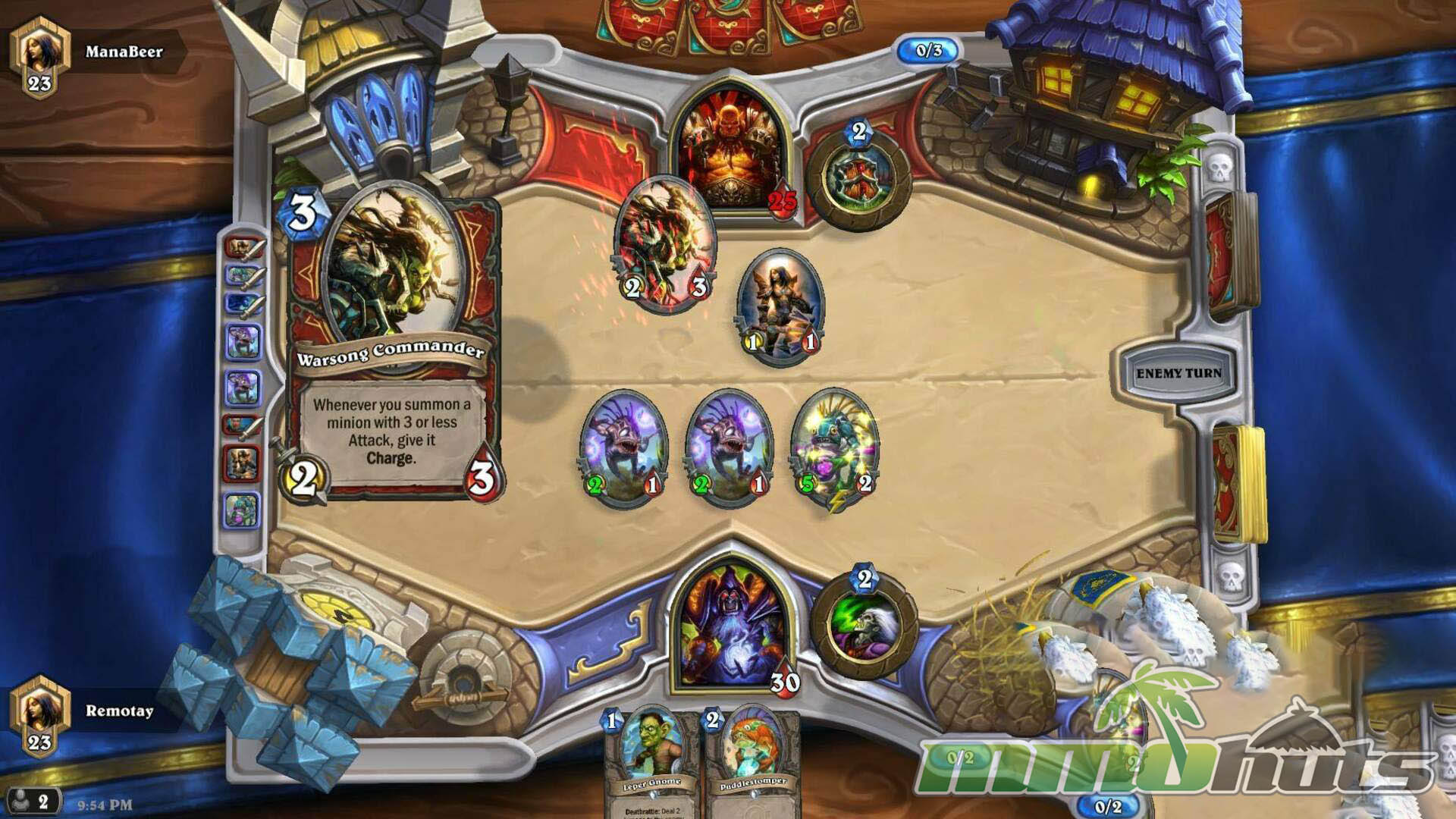
Cosmetics and Collection Goals
For collectors, Hearthstone adds extra chase items in the form of golden cards. Golden versions play exactly the same as normal cards, but feature animated visuals and a distinct border. They are significantly rarer than standard cards, and crafting them is expensive, common golden cards cost 400 dust, while golden legendaries cost 3600. Because they do not provide gameplay advantages, many new players choose to disenchant golden pulls to accelerate crafting for competitive decks.
There are also golden heroes, which add a visual upgrade to the hero portrait. These are earned by winning 500 ranked games with a specific hero, offering a long-term goal for players who stick with one class.
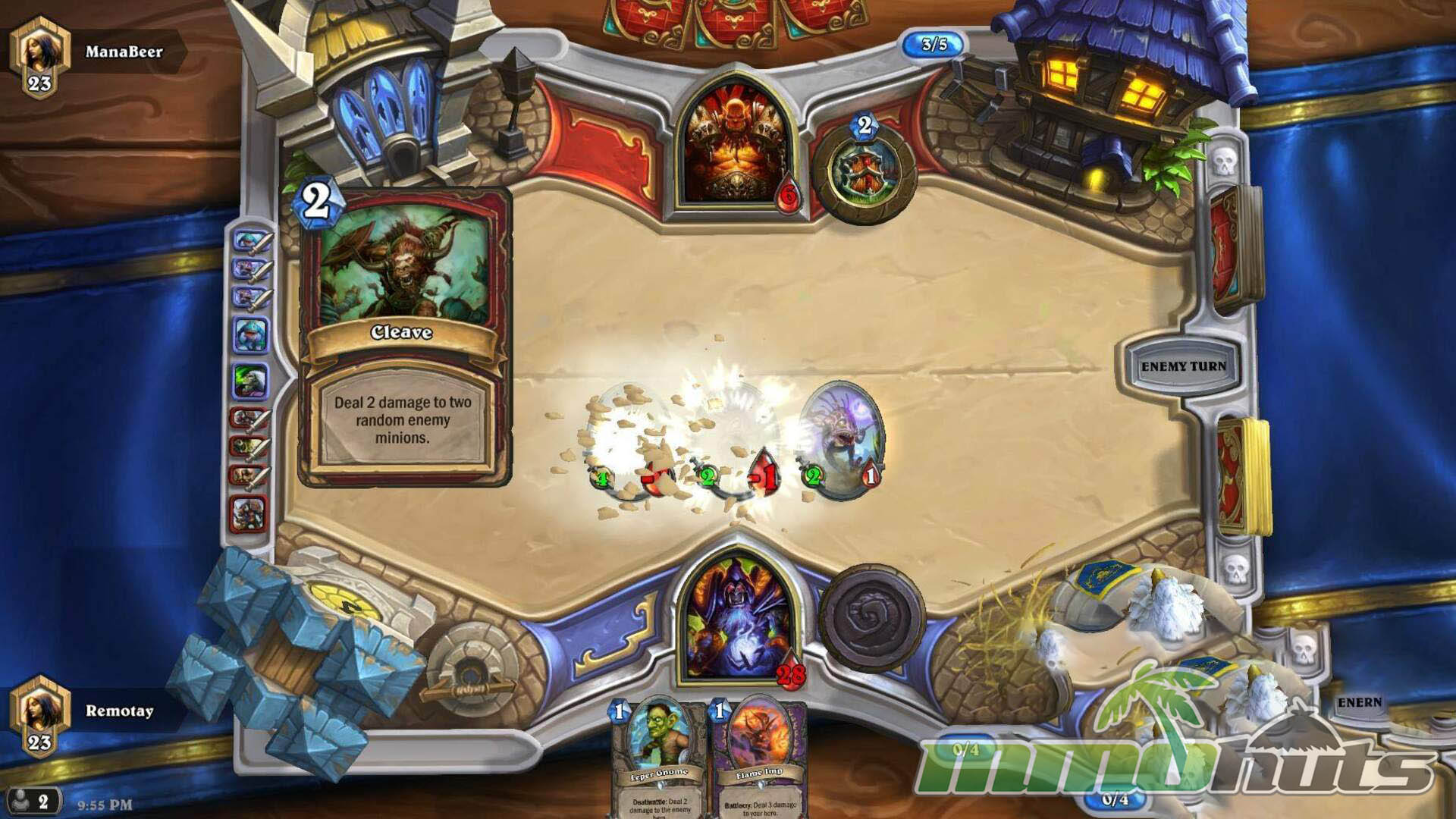
PvE Content
Hearthstone’s solo content is a pleasant surprise for players who prefer structured challenges over constant ladder play. Blizzard has released adventure packs that pit you against AI opponents with unusual hero powers and rule-bending mechanics, which keeps matches fresh in a way that standard PvP cannot always replicate. You access these missions through the “solo adventures” menu, and themes like Curse of Naxxramas lean into Warcraft locations and enemies.
The main downside is cost. Unlocking an individual wing typically costs 700 gold, and the full adventure can be purchased for $20. For free-to-play users, saving that amount of gold can take a long time, and some cards are tied to these adventures, which adds pressure to either grind or pay if you want specific tools for certain decks.
Final Verdict – Excellent
Hearthstone succeeds because it understands pacing and clarity. Matches are fast, the rules are intuitive, and the game still has enough strategic depth to reward serious practice. While the economy and the presence of underpowered cards can be discouraging for some players, the overall package remains one of the strongest digital CCGs available. If you want a card game you can learn quickly, play almost anywhere, and keep returning to as your collection grows, Hearthstone is easy to recommend.
Hearthstone Links
Hearthstone Official Site
Hearthstone Wikipedia Page
Hearthstone Gamepedia (Guides / Database)
Hearthpwn (Hearthstone Guides / Deck Ideas / Database)
Hearthstone Subreddit
Hearthstone System Requirements
Minimum Requirements:
Operating System: Windows XP / Vista / 7 / 8
CPU: Intel Pentium D / AMD Athlon 64 X2
Video Card: GeForce 6800 (256 MB Video Ram) or ATI Radeon X1600 Pro
RAM: 2 GB
Hard Disk Space: 3 GB
Recommended Requirements:
Operating System: Windows XP / Vista / 7 / 8
CPU: Core 2 Duo E6600 (2.2 GHz) or AMD Athlon 64 X2 5000+ (2.6 GHz)
Video Card: GeForce 8800 GT (512 MB Video Ram) or ATI Radeon HD 4850
RAM: 4 GB
Hard Disk Space: 3 GB
Mac OS X System Requirements
Operation System: MAC OS X 10.7 (Latest)
CPU: Intel Core 2 Duo
Video Card: Nvidia GeForce 8600M GT / ATI Radeon HD 2600 Pro
RAM: 2GB
Hard Disk: 3 GB
Hearthstone is compatible with Ipads and mobile Android devices with 6 inch screens or larger.
Hearthstone Music & Soundtrack
Hearthstone Additional Information
Developer: Blizzard Entertainment
Game Engine: Unity
Composer(s): Peter McConnell / Jason Hayes
Other Platforms: Mac OS X / Android / iOS / Windows 8 Touch
Closed Beta Date: August 16, 2013
Open Beta: January 21, 2014
Other Platform Release Dates
iPad Release Date: April 16, 2014
Android Tablets: December 15, 2014
Iphone / Android Smartphones: Mid-2015
Development History / Background:
Hearthstone was developed by renowned American game studio Blizzard Entertainment and is powered by the flexible Unity engine. From the beginning, the goal was to recreate the tactile charm of a tabletop card game in digital form, from the excitement of opening packs to the satisfying presentation of playing cards onto the board. Blizzard first revealed Hearthstone at the Penny Arcade Expo in March 2013 for Microsoft Windows, Mac, and iPad. Cross-platform matchmaking was not part of the initial release plan, but it was added later, allowing iPad players to queue into the same ecosystem as PC users. The closed beta began in August 2013, followed by open beta on January 21, 2014. Interest was enormous, with millions applying for access, and by the end of March 2014 (two weeks after launch) Hearthstone had already reached 10 million registered accounts. By Q4 2014, the total exceeded 25 million registered accounts, and the overall audience continued expanding after that.