Hawken is a lobby-based MMO first-person shooter that puts you in the cockpit of a hulking mech and throws you into short, explosive matches. With multiple modes and a roster of war machines built for distinct combat roles, it is a game that leans hard into teamwork, positioning, and learning how to move a heavy metal body under fire.
 | Publisher: K2 Network Playerbase: High Type: MMO Shooter Release Date: December 12, 2012 Pros: +Strong visuals paired with smooth, responsive combat. +A broad selection of mechs with clear roles. +Quick, high-energy matches. +Modes that support cooperative play Cons: -Matches can start to feel samey over time. -Matchmaking balance is not always consistent. -Unlocking new mechs can feel grind-heavy. |
Hawken Overview
Hawken is a mech-focused first-person shooter developed by Adhesive Games and later owned by Reloaded Games. Rather than an open world, it is structured around match-based lobbies where two teams collide on compact maps built to keep the action close. The core appeal is choosing a machine that fits how you like to fight, whether that means pushing objectives as a tough close-range brawler or taking angles from range with a more precision-oriented loadout.
Teamwork is not optional for long. Individual duels can happen, but most victories come from coordinated pressure, callouts, and collapsing on targets together. Each mech carries a fixed secondary weapon and a primary weapon slot that can be changed to support different tactics. Instead of a strict “best weapon” ladder, the game leans into tradeoffs, so your choices are more about style and role than raw power.
Movement is also part of Hawken’s identity. Your machine feels weighty and mechanical, and survival depends on learning the rhythm of boosting, jumping, and especially dodging. Once the controls click, piloting starts to feel less like a standard shooter and more like managing momentum and timing inside a walking weapons platform.
Hawken Key Features:
- Loadout Customization – tune your build with passive, offensive, and defensive upgrades that support different roles.
- Multiple Game Modes – including deathmatch, team deathmatch, missile assault, siege, co-op bot destruction, and co-op team deathmatch.
- Large Variety of Mechs – pick from machines designed for specific battlefield jobs and preferred engagement ranges.
- Fast-Paced Gameplay – short queue-to-combat pacing keeps matches moving and encourages “one more round” play.
- Unique Items – use tools like grenades and holograms to create openings, escape, or force opponents out of cover.
- Cosmetic Items – personalize your mech’s look with skins and other visual options.
Hawken Screenshots



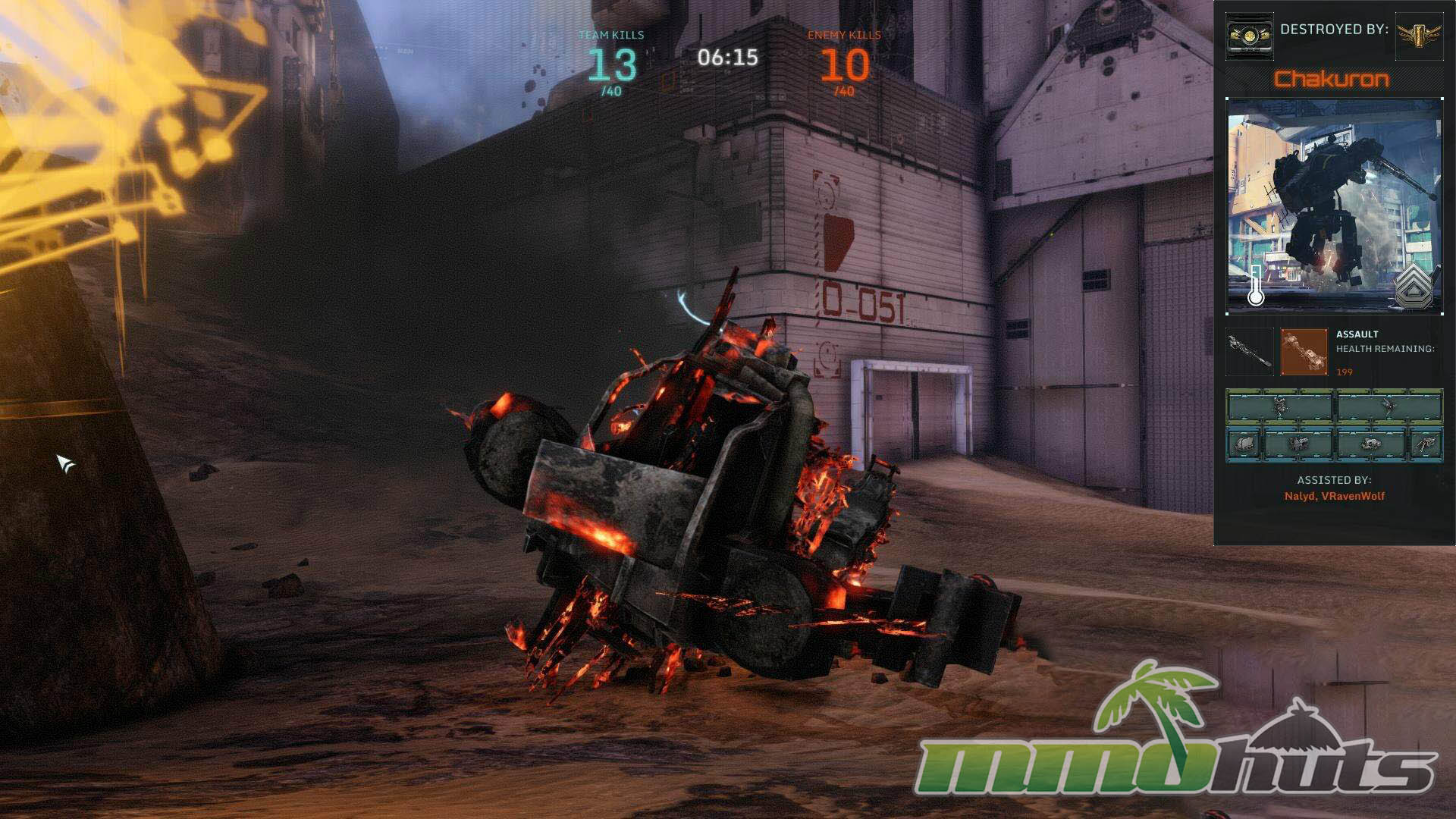
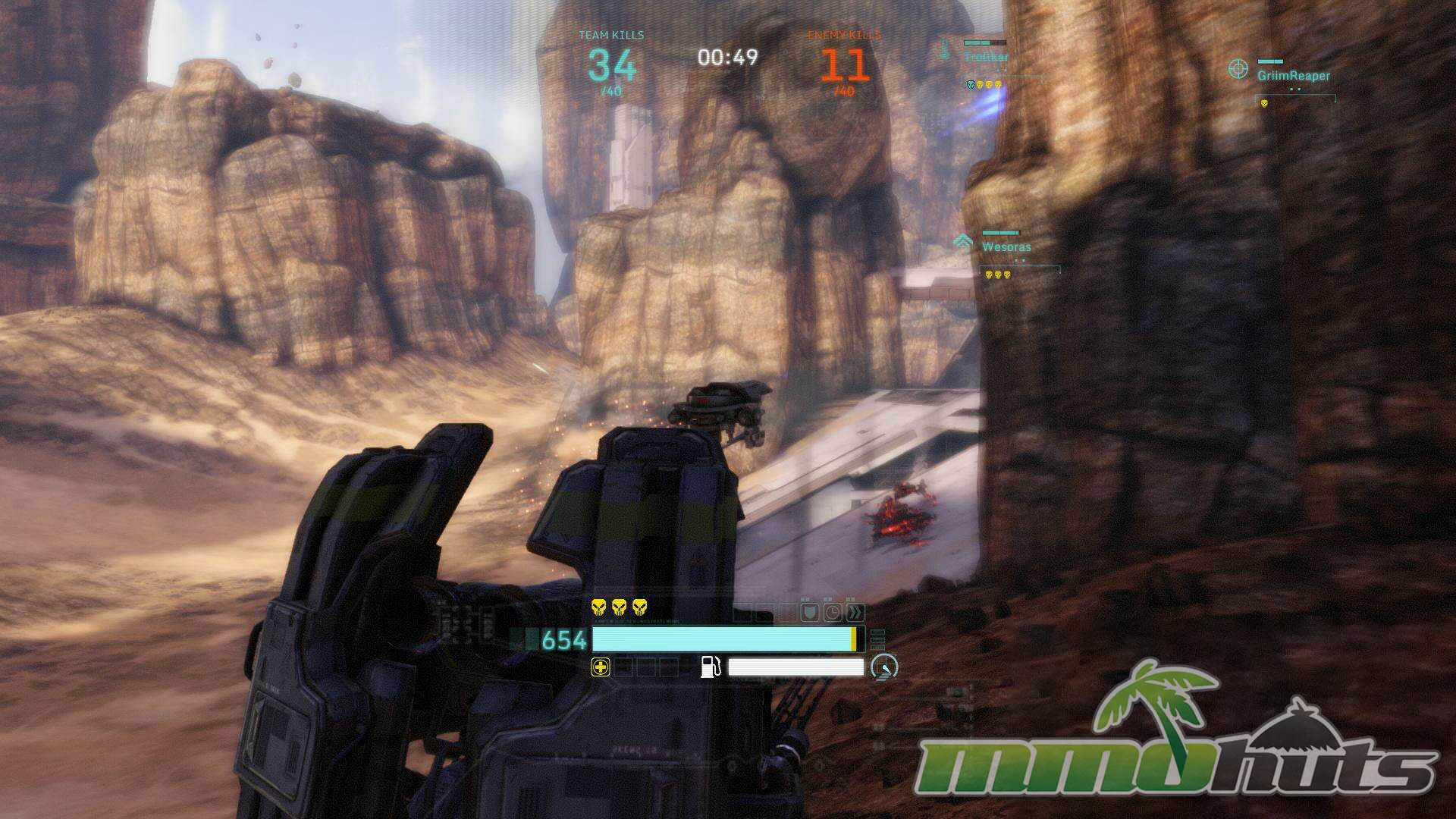
Hawken Featured Video

Hawken Review
Hawken frames its battles in a harsh science-fiction setting where conflict is driven by scarcity and control. The story dressing is mostly there to set the tone, but it works, everything looks worn-in, industrial, and hostile, like a place where cockpit glass and armor plating are always one bad decision away from failure.
The onboarding is straightforward. Early on, the game limits what you can queue for, starting you with Team Deathmatch and gradually opening additional modes as you gain experience. It is a sensible approach for a shooter with a distinctive movement model, because it gives you time to learn fundamentals before objectives and specialized roles start demanding more from you. You also begin with a limited selection of mechs, which encourages mastery of one chassis before branching out.
Weighty Controls That Still Feel Responsive
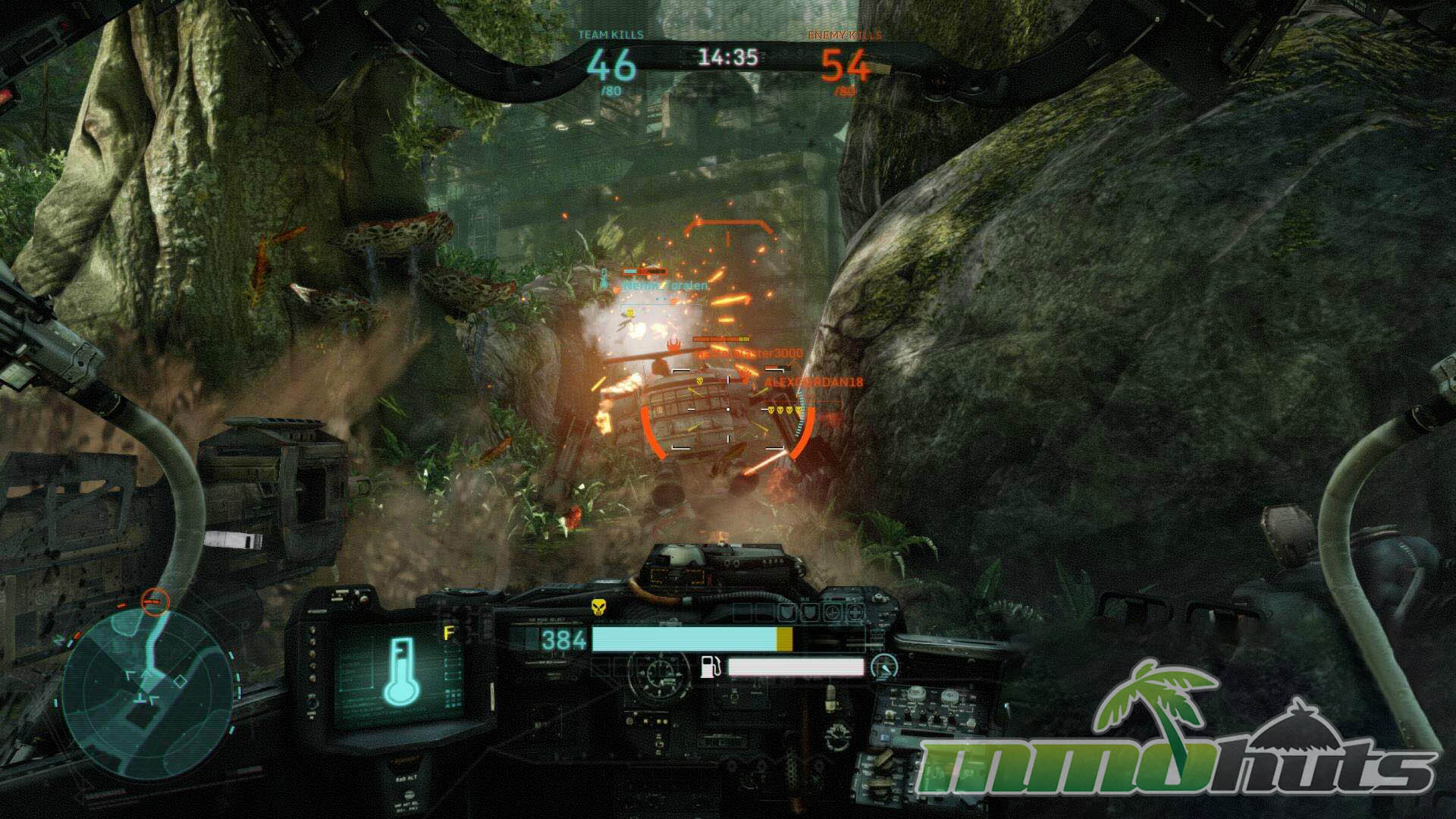
Hawken’s maps tend to be tight and layered, so you rarely spend long searching for action. Engagements start quickly, and the time-to-contact is short enough that you learn through repetition, sometimes the hard way. The important difference from many FPS games is how the mech movement communicates mass. You do not snap-turn or strafe like an infantry soldier. Your machine rotates with heft, and that changes how you peek corners, commit to pushes, and retreat when things go wrong.
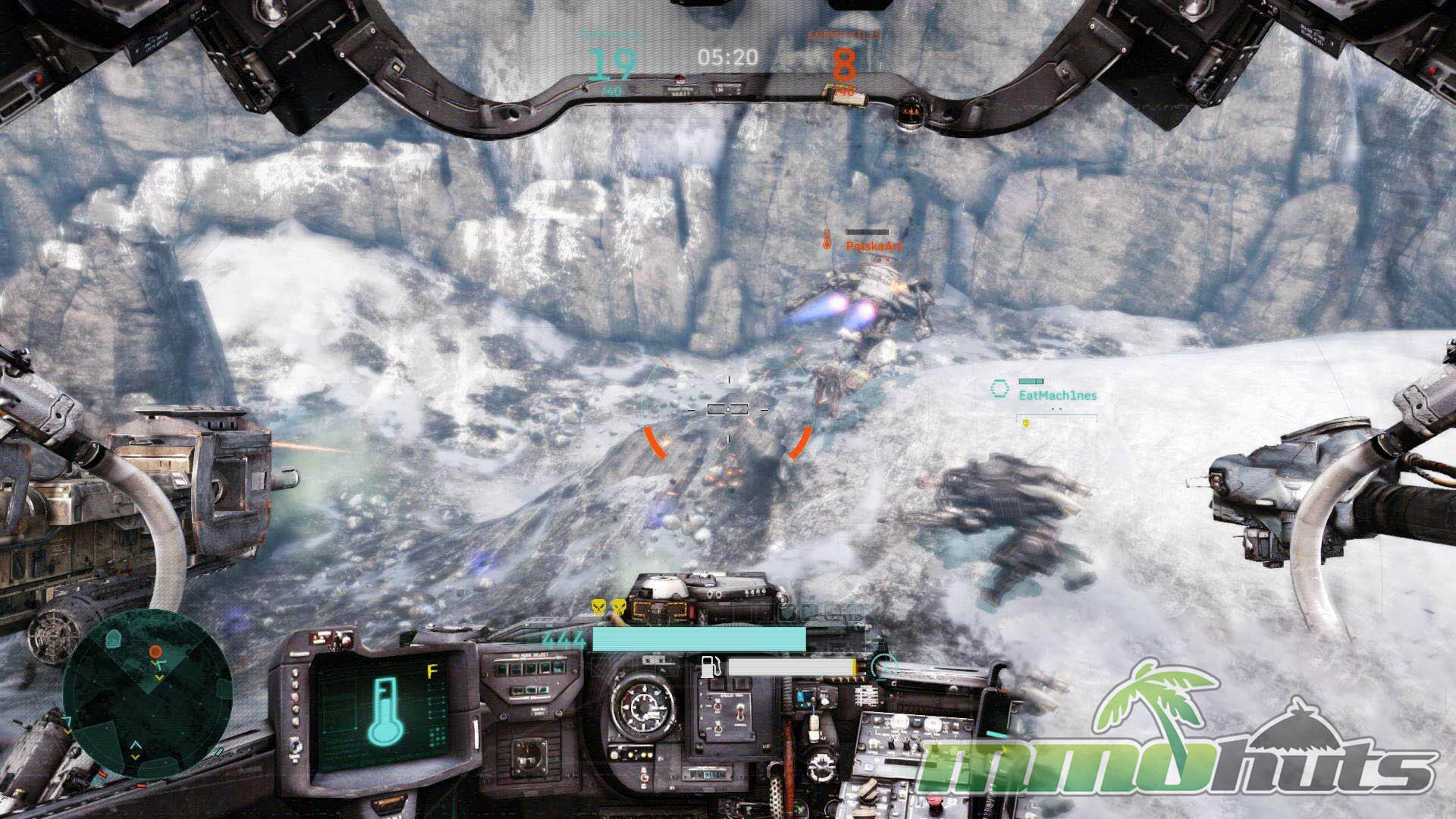
Basic movement uses the usual WASD scheme, with boosters giving you bursts of speed. Jump jets add brief vertical mobility, but fuel management keeps you from hovering endlessly or escaping every bad fight. The result is a pacing where you can reposition aggressively, but you must choose the moment. When you overextend, the cooldowns and fuel limits make the punishment feel earned.
Dodging Is the First Real Skill Check
To compensate for bulky locomotion, Hawken’s dodge boost is essential. A quick lateral burst (using shift with A or D) is often the difference between absorbing a rocket volley and slipping past it. There is a learning curve here, because you need to dodge with intention, not spam it. Using the dodge at the wrong time can leave you exposed and out of fuel when you actually need it.
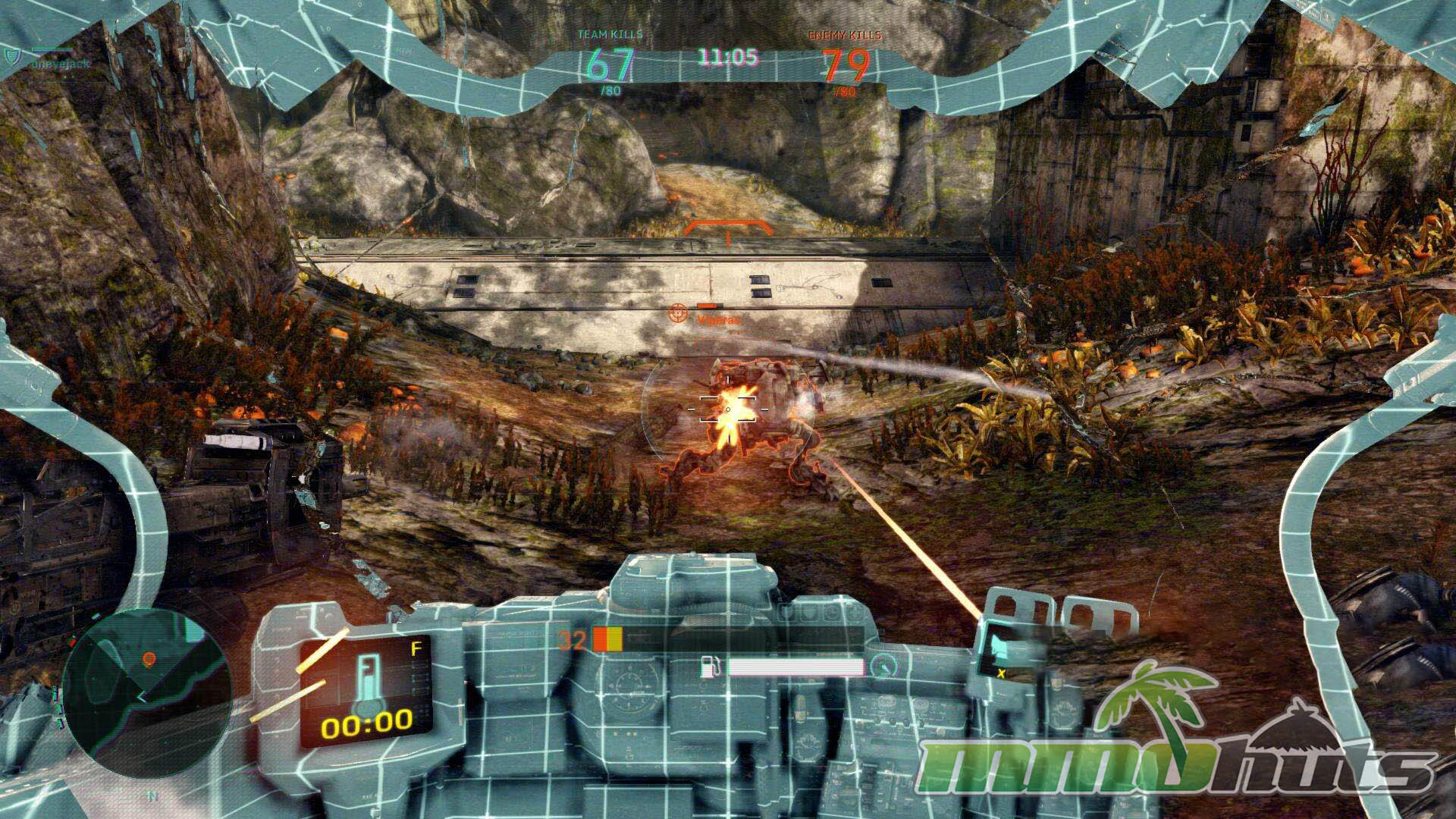
Damage management adds another layer. When your mech is battered, you can trigger repairs with C, but doing so removes your radar while you heal. That tradeoff encourages smart play, break line of sight, find cover, and repair when you can afford to lose awareness. It is a small system, but it supports the game’s tactical feel and makes careless healing a real risk.
Weapon design follows a similar philosophy. Your mech’s secondary weapon is fixed, while the primary slot can be swapped to match your preferred engagement range and tempo. These are not simply linear upgrades; they are alternate tools, and your success comes from picking something that complements your mech’s role and your team’s composition. The center crosshair and projectile behavior make accuracy feel readable, but positioning still matters more than raw aim.
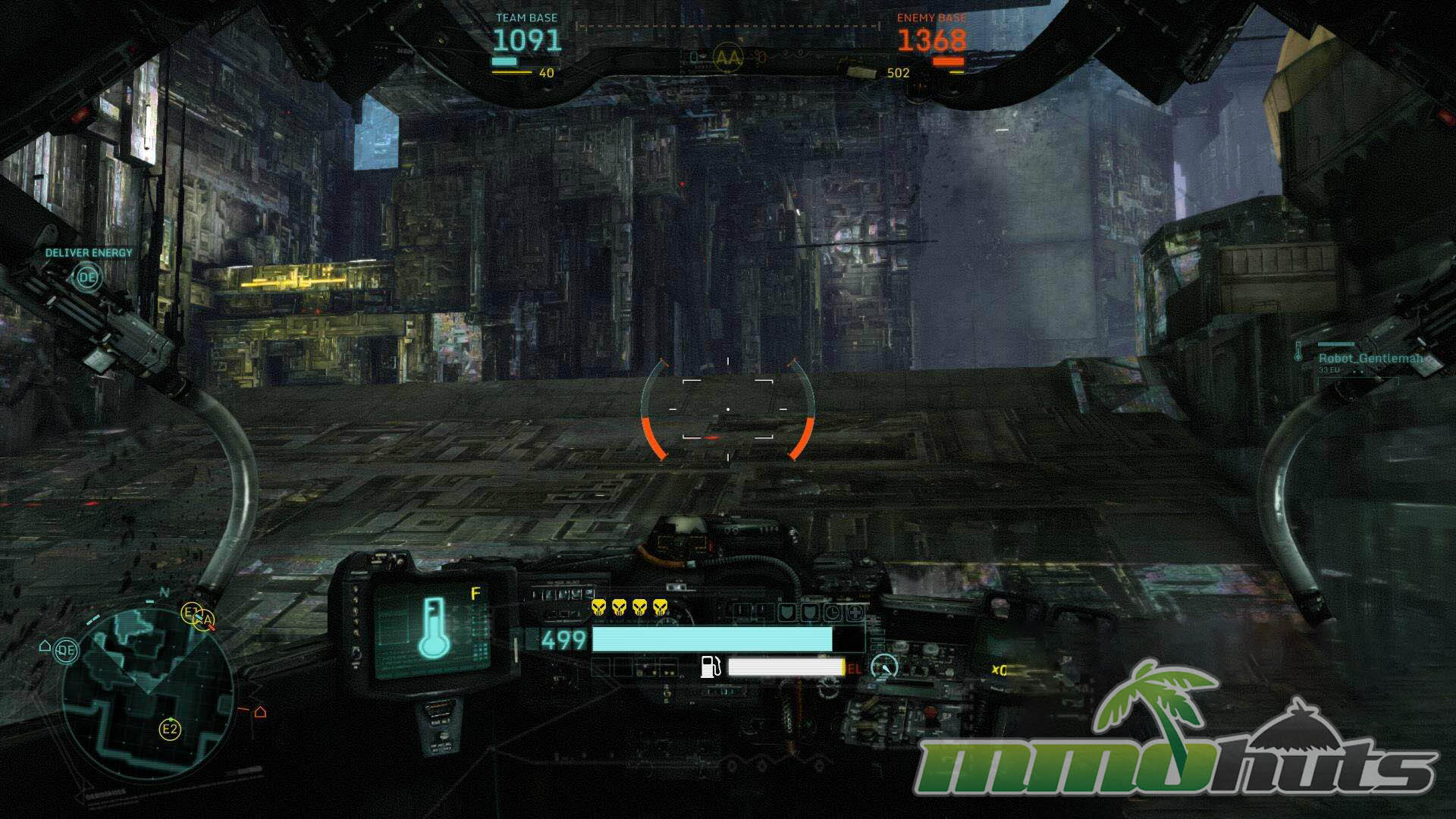
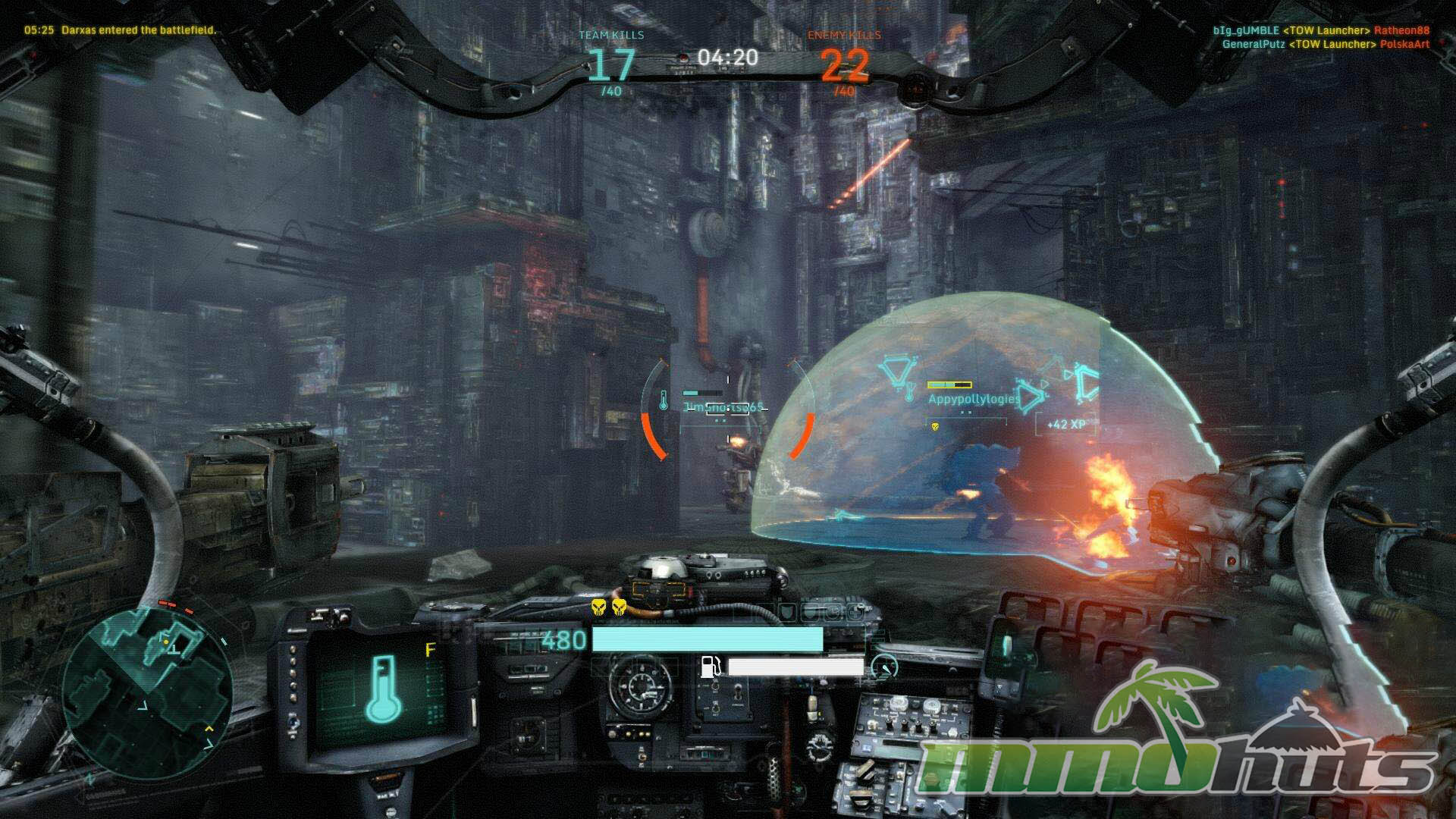
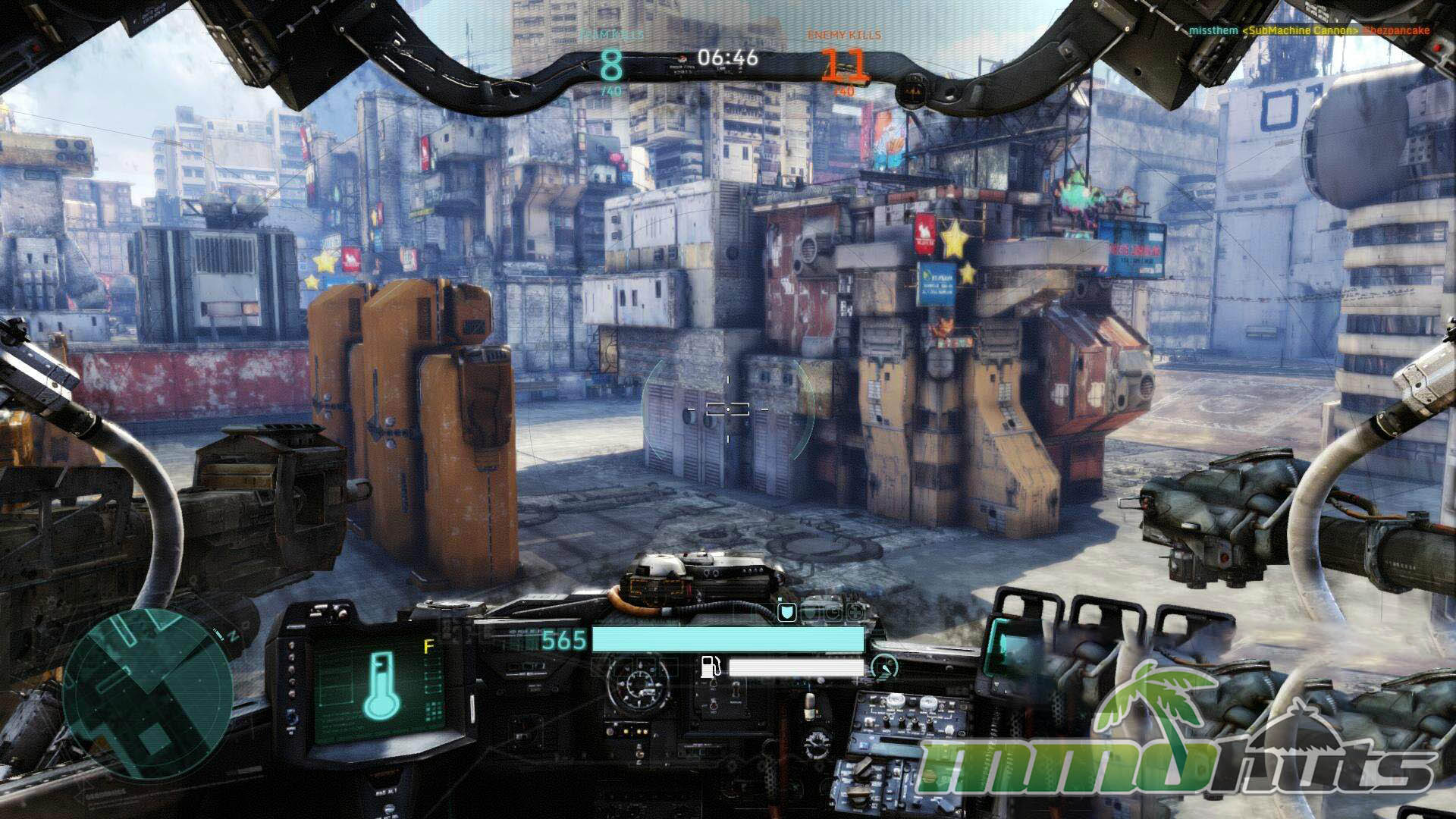
The radar in the lower left is a constant source of information, and Hawken expects players to use it. Enemy spotting with Q helps the whole team maintain pressure, and it is one of the fastest ways to improve match outcomes. When nobody marks targets, flanks become common, and the game turns into a string of avoidable deaths.
Team Fights Decide Most Matches
One of Hawken’s strengths is that mech-on-mech combat looks and sounds satisfying. Sparks, smoke, and heavy impacts sell the fantasy of armored machines tearing each other apart. But beneath the spectacle, the design strongly discourages lone-wolf play. In a fair 1v1, outcomes often come down to timing, movement, and ability usage. In a 2v1, even a well-played mech is usually in trouble.
That emphasis on grouping can be a positive, especially if you like shooters where coordination matters. Working with teammates to focus fire, bait dodges, and punish overextensions feels great. The downside is that when matchmaking places uneven teams together, the experience can spiral quickly. A coordinated squad can dominate a scattered team, and the maps are small enough that you will feel it immediately.
Strong Art Direction, Even Mid-Respawn
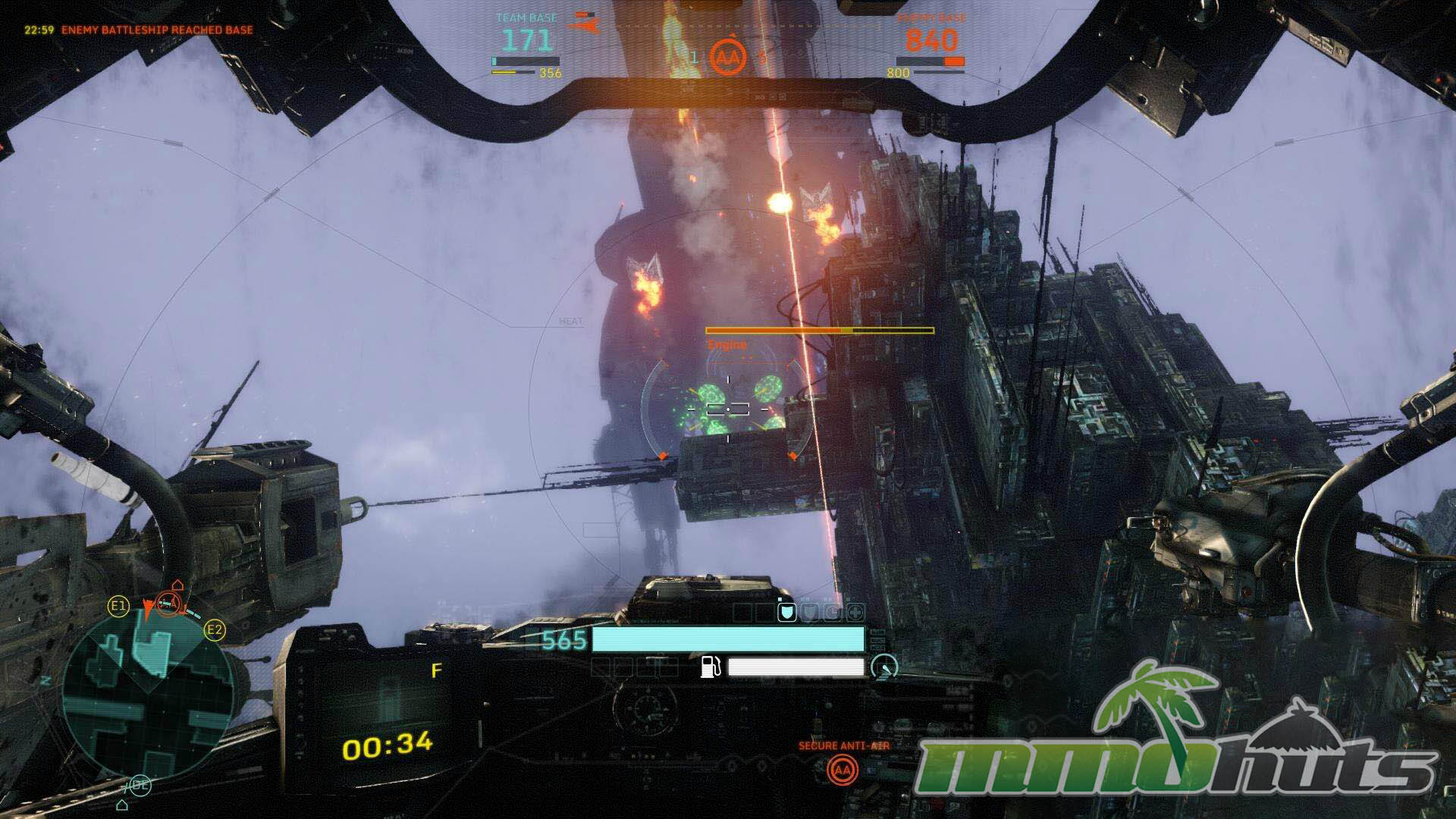
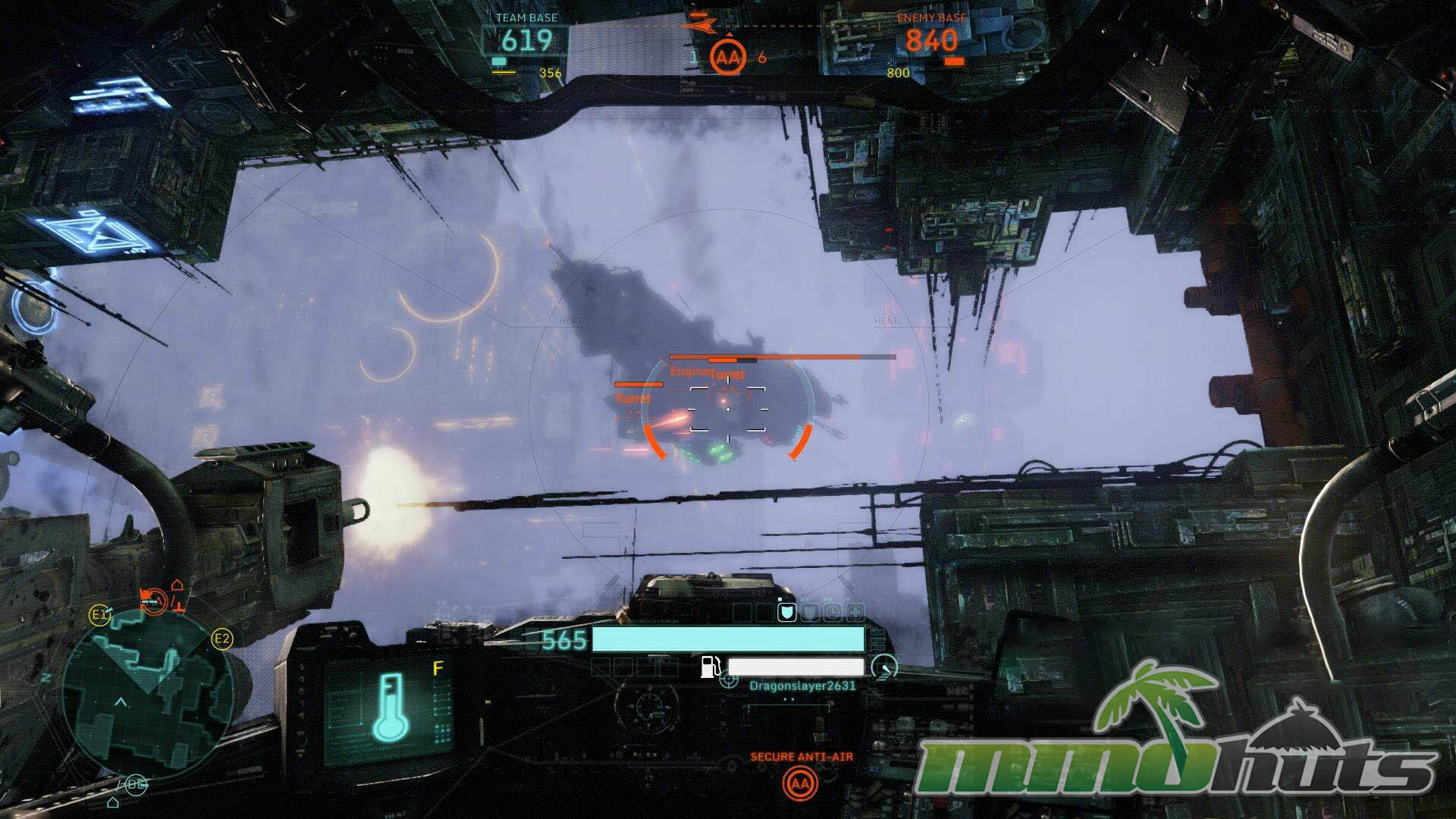
Hawken’s visual presentation is one of the things that stands out most. The environments lean into a gritty sci-fi aesthetic, with industrial cityscapes and moody natural areas that still feel hostile and unfamiliar. The cockpit view helps a lot here, because it frames the action through a mechanical HUD and battered glass, reinforcing the idea that you are piloting a machine, not just holding a gun.
Even after repeated matches, the atmosphere holds up well. It is not only “pretty for a free shooter,” it is cohesive and stylized in a way that supports the setting. The result is a game that can look striking even when you are losing, which is not something every competitive title manages.
Choosing a Chassis, Then Paying for the Next One
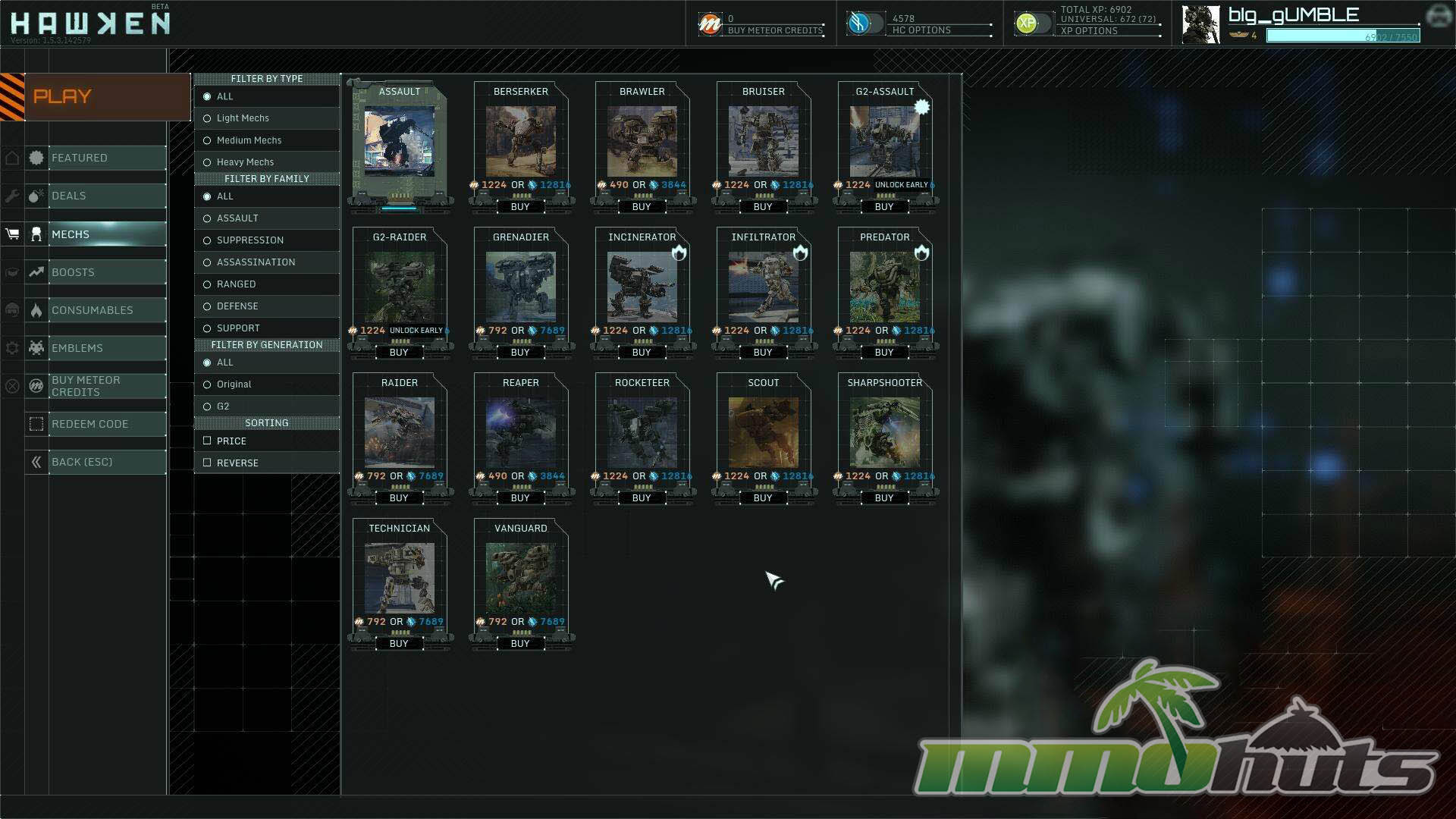
The mech roster is varied enough to support many playstyles, from agile skirmishers to heavier bruisers. Differences in armor, handling, and weapon options create meaningful tactical variety, and learning how each machine wants to engage is a big part of the long-term appeal.
Progression, however, is where some friction appears. Unlocking additional mechs can be a slow process if you rely purely on earned currency, and the game also offers options tied to boosts or premium currency. The pricing is not presented as outrageous, but the pacing can still feel like a grind, especially for players who want to experiment broadly rather than specialize. Being able to test more mechs before committing currency would make the system feel more welcoming, particularly for newcomers deciding what role they enjoy most.
Final Verdict – Great
Hawken delivers a distinct kind of shooter, one where movement has weight, dodging is a learned skill, and teamwork is the most reliable path to winning. The matches are quick, the cockpit perspective sells the fantasy, and the destruction of enemy machines remains satisfying thanks to strong visuals and sound design. The main drawbacks are that the loop can grow repetitive over long sessions, matchmaking can feel uneven, and unlocking mechs may test your patience if you want a large garage quickly.
For players who enjoy coordinated team play and a mech game that actually feels mechanical, Hawken is an easy recommendation. If you prefer solo carry potential or rapid, experimentation-friendly progression, it can be a tougher fit, but the core combat is polished enough to keep coming back for another round.
Hawken Links
Hawken Official Site
Hawken Steam Page
Hawken Wikipedia
Hawken Wikia [Database/Guides]
Hawken Requirements
Minimum Requirements:
Operating System: Windows XP, Windows Vista, Windows 7 (32bit or 64bit)
CPU: 2Ghz Dual Core
RAM: 3 GB RAM
Video Card: 512 MB Graphics Card Supporting DirectX 9.0c and Shader Model 3.0 (NVIDIA 9800 GTX or AMD HD 5670)
Hard Disk Space: 5 GB available space
Additional Info: 1280 x 720 or Higher Resolution
Recommended Requirements:
Operating System: Windows XP, Windows Vista, Windows 7 (64bit)
CPU: 3Ghz Dual Core
RAM: 4 GB RAM
Video Card: 1024MB Graphics Card Supporting DirectX 9.0c and Shader Model 3.0 (NVIDIA GTX 460 or AMD HD 6850)
Hard Disk Space: 5 GB available space
Hawken Music
Hawken Additional Information
Developer(s): Adhesive Games, Reloaded Games (acquisition)
Publisher(s): Meteor Entertainment, K2 Network (acquisition)
Producer(s): Joshua Clausen (acquisition)
Designer(s): Khang Le, Christoper Lalli, John Park
Game Engine: Unreal Engine 3
Game Director(s): Bill Munk
Game Artist(s): David Hensley
Announcement Date: March 9, 2011
Open Beta Date: December 12, 2012
Steam Release Date: February 14, 2014
Launch Date: December 12, 2012
Shut Down: January 02, 2018 (PC)
Development History / Background:
Hawken was revealed by Adhesive Games on March 9, 2011, notably after a relatively short development period of around nine months. Built with the Unreal Development Kit (UDK) on Unreal Engine 3, the project aimed to deliver a “big-budget” style of presentation within a leaner independent production. The title itself came from an internal joke that eventually became the official name, referencing a former 3D artist named James Hawkins.
On August 24, 2011, DJ2 Entertainment acquired the rights to a film adaptation of Hawken. The announced concept centered on two pilots from rival clans locked in escalating conflict, and no substantial updates have followed since that initial news. On March 16, 2015, Reloaded Games (known for APB Reloaded) acquired Hawken after a prolonged quiet period from the original development team. Hawken’s PC servers were shut down on January 02, 2018. The PlayStation 4 and Xbox One servers remain online, but with a tiny playerbase.