
Forge of Empires is a 2D, browser-first strategy MMO from InnoGames, best known for long-running titles like Tribal Wars. The core loop is city-building and careful resource management, with your settlement evolving across historical eras, from a rough Stone Age village into a much larger, more complex modern city. You can play it in a web browser, and it also has dedicated versions on iOS and Android.
 | Publisher: InnoGames Playerbase: Medium Type: Browser Strategy MMO Release Date: Apr 17, 2012 (International) Pros: +Meaty solo campaign with steady objectives. +Satisfying era-to-era growth from Bronze into industry. +Lots of systems to optimize and upgrade. Cons: -PvP is present but not the main focus. -Progression can feel deliberately slow. |



Forge of Empires Overview
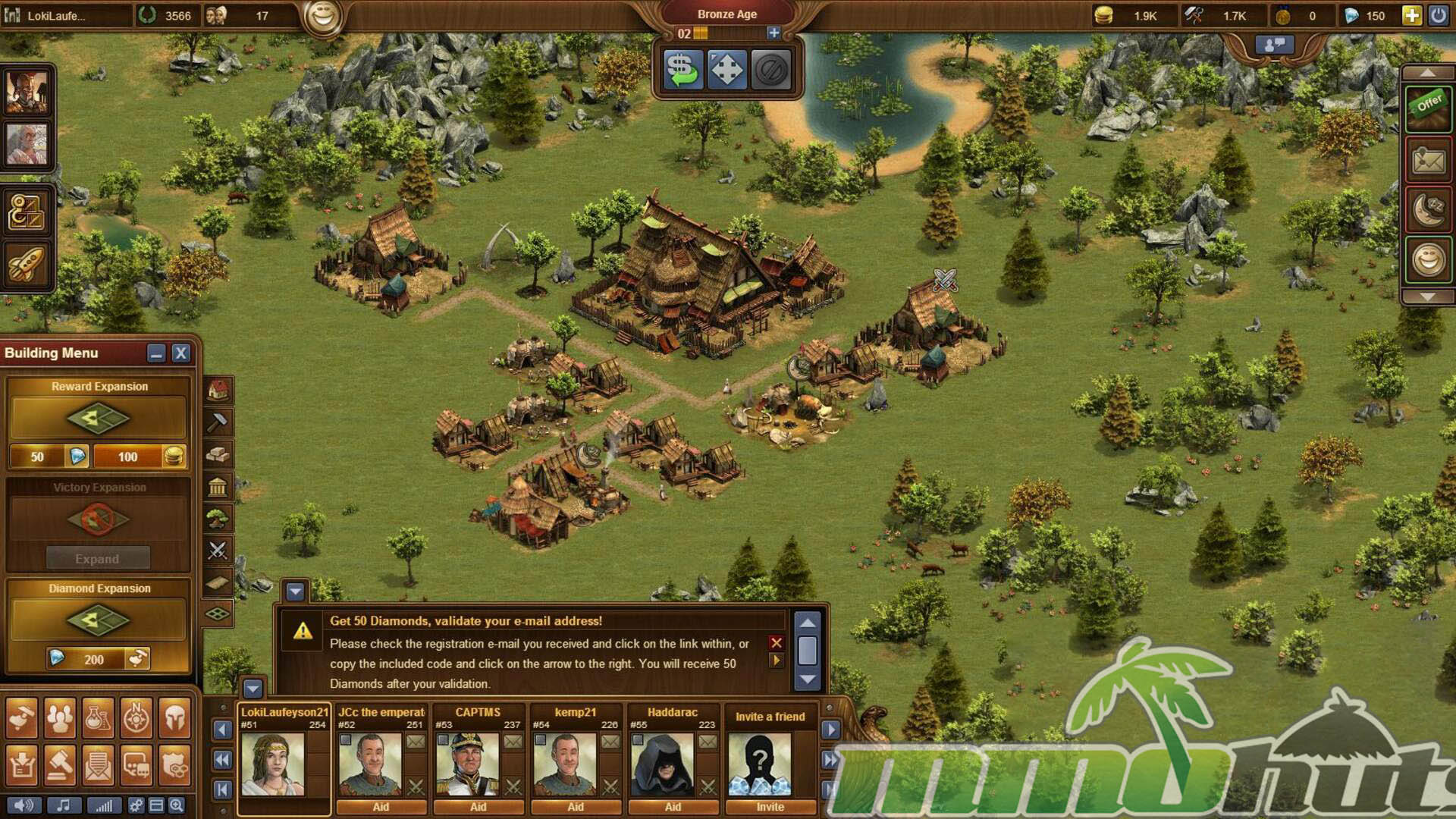
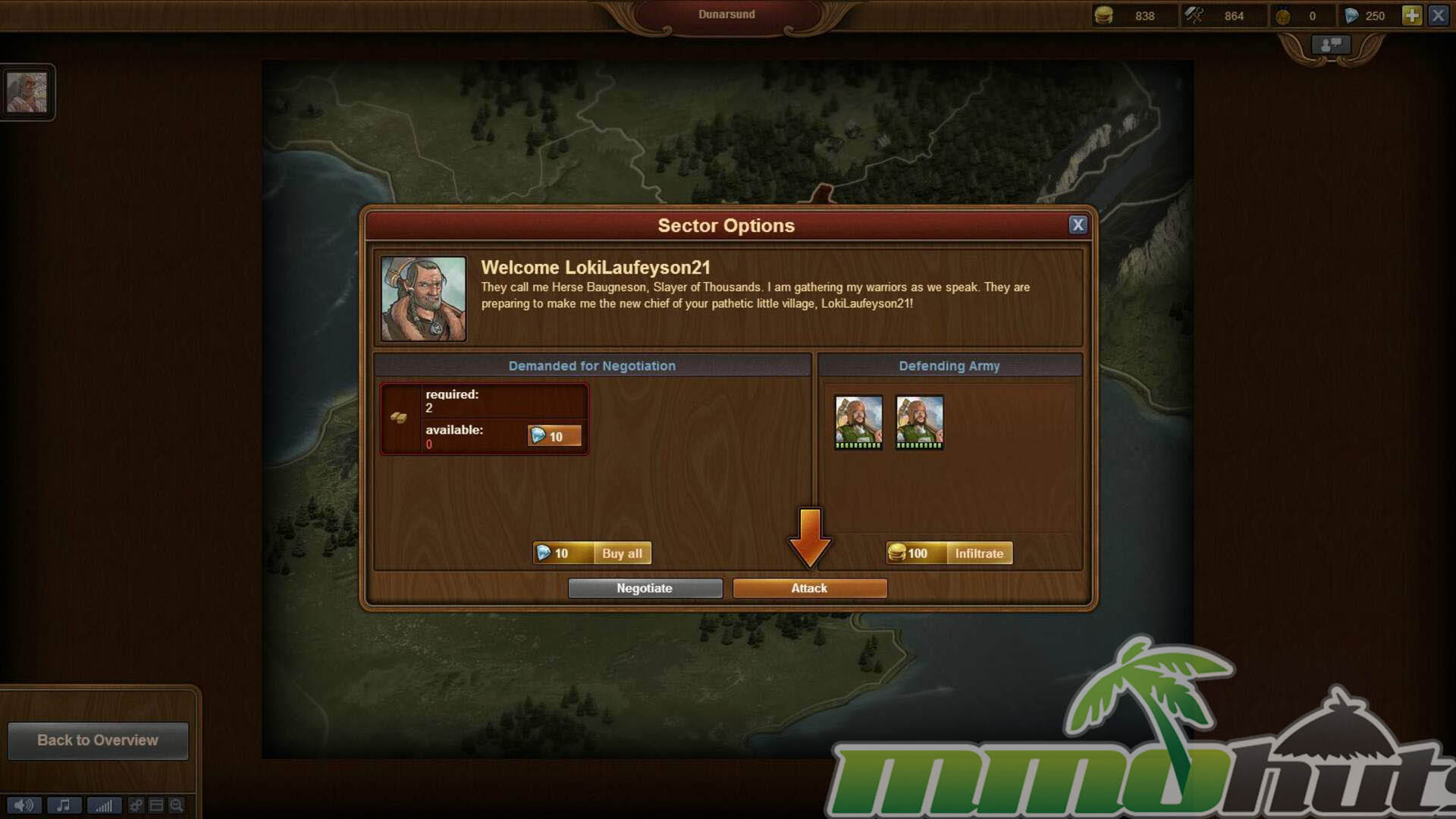
Forge of Empires is a turn-based strategy experience built for web browsers by InnoGames. You begin with a small settlement and gradually shape it into a sprawling city by balancing economy, culture, and military growth. Progress is driven by expanding your territory, researching new technologies, and completing a campaign-style world map where you negotiate or fight for control of provinces.
While the presentation is simple and clearly designed for accessibility, the underlying systems are the draw. Efficient layouts, timely collections, and smart tech choices matter, especially as your city advances through history, moving from early eras like the Stone Age and Bronze Age into later periods such as the Middle Ages and onward toward modern times.
Forge of Empires Key Features:
- Solo Campaign – a substantial single-player map with a steady stream of objectives.
- Plan Your City Your Way – place buildings manually and optimize roads, space, and adjacency.
- Plenty to Do Across Multiple Ages – start in the Stone Age and work your way through to the Industrial Age and beyond.
- Multi-Platform Support – playable on web browsers, Facebook, iOS, and Android.
Forge of Empires Screenshots


Forge of Empires Featured Video

Forge of Empires Review
Forge of Empires is InnoGames’ take on the classic browser strategy formula, combining city management with turn-based battles and a long tech-driven climb through historical eras. The game launched internationally on April 17, 2012, and later expanded to mobile devices, bringing the same core systems to iPhone, iPad, and Android in 2014.
At its best, Forge of Empires feels like a steady optimization puzzle. You are constantly deciding what to build next, what to research, and how to fit everything into limited space without stalling your economy. It is not a fast, reaction-heavy strategy title, it is a long-form planning game designed around check-ins and incremental growth.
From Tiny Settlement to Functioning City
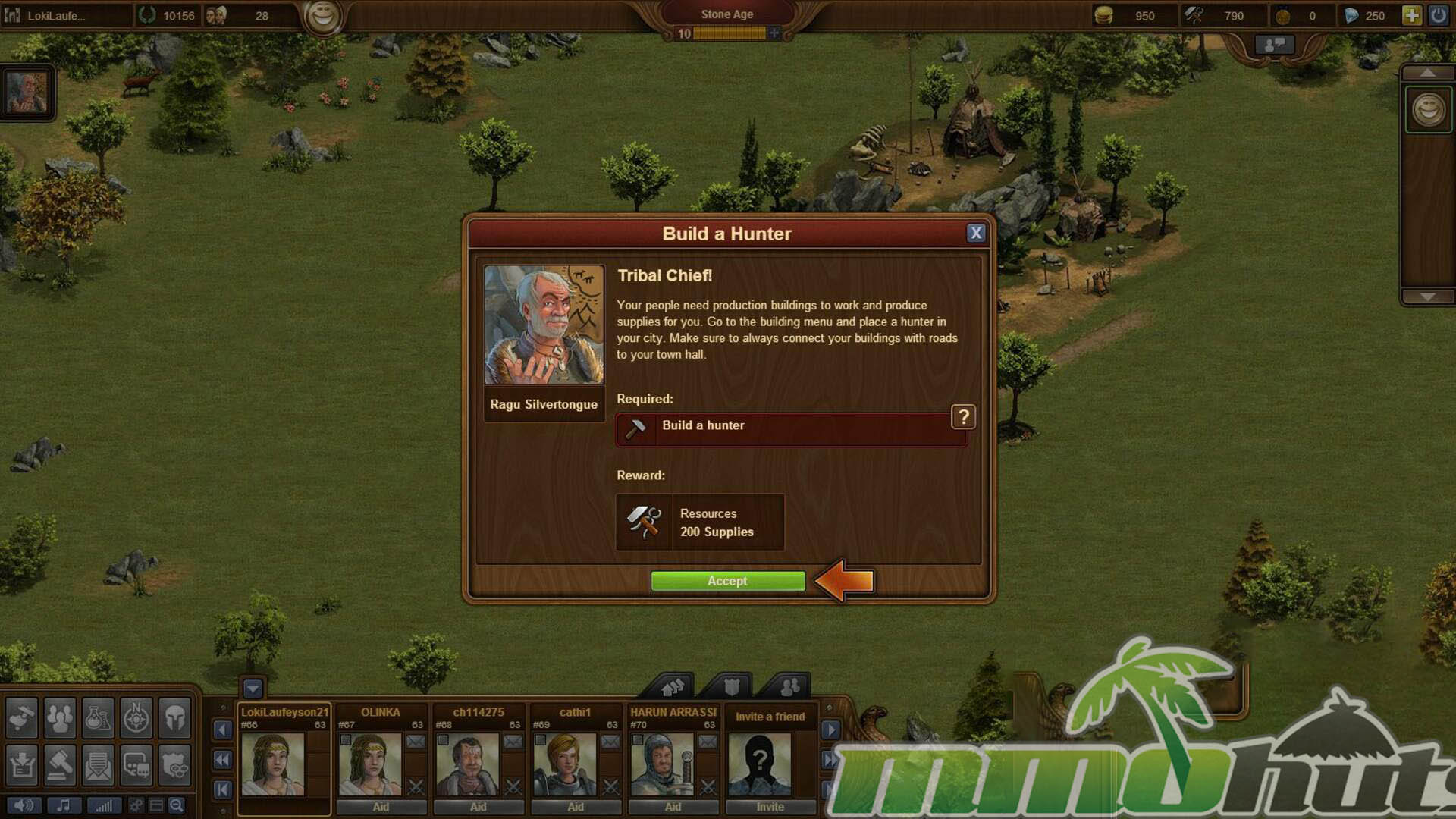
Your first steps are guided by a tutorial and a quest chain that introduces the main screens, the building categories, and the research system. The onboarding is fairly direct, and it does a decent job of showing how every system connects back to expansion and era progression.
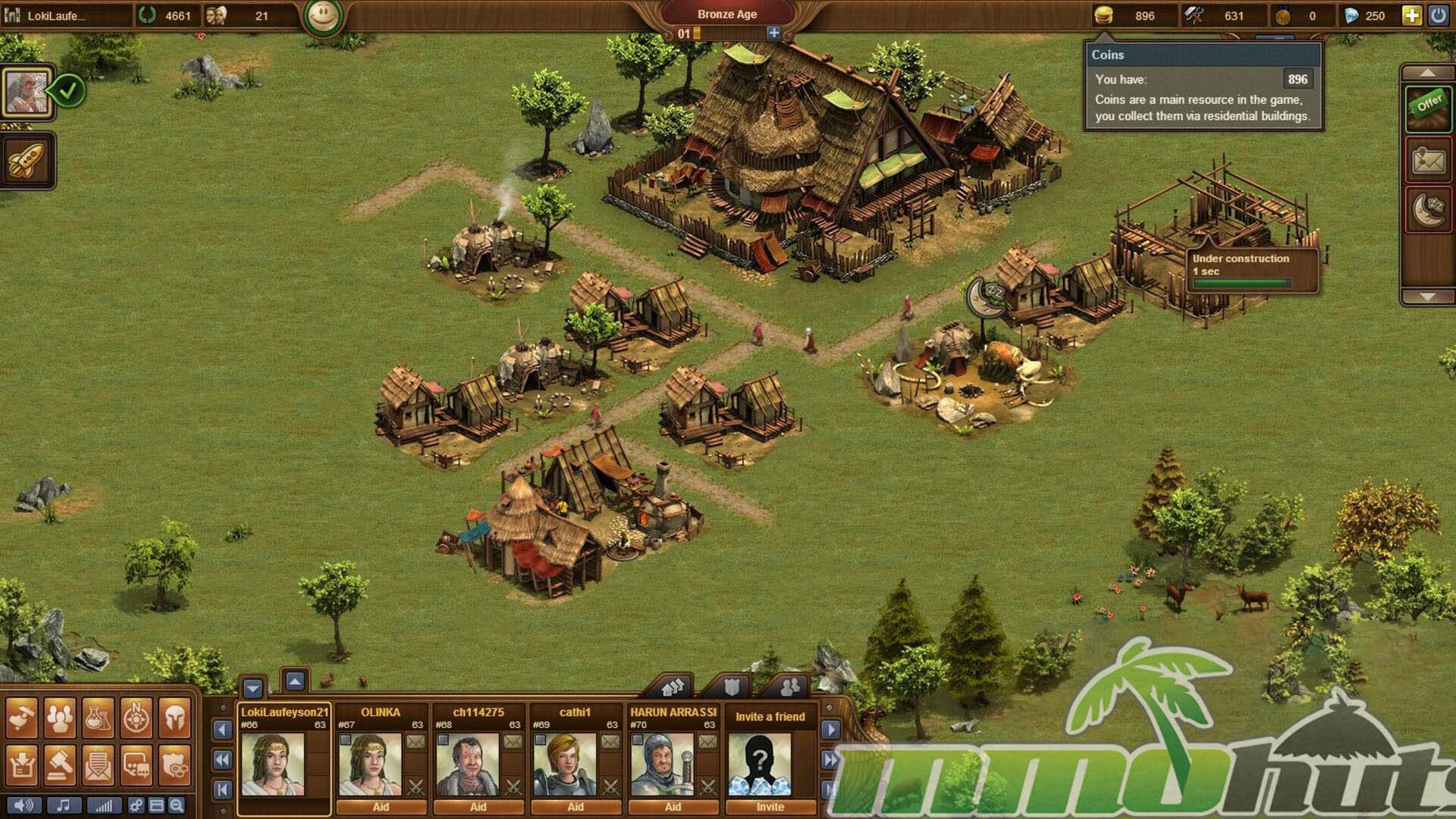
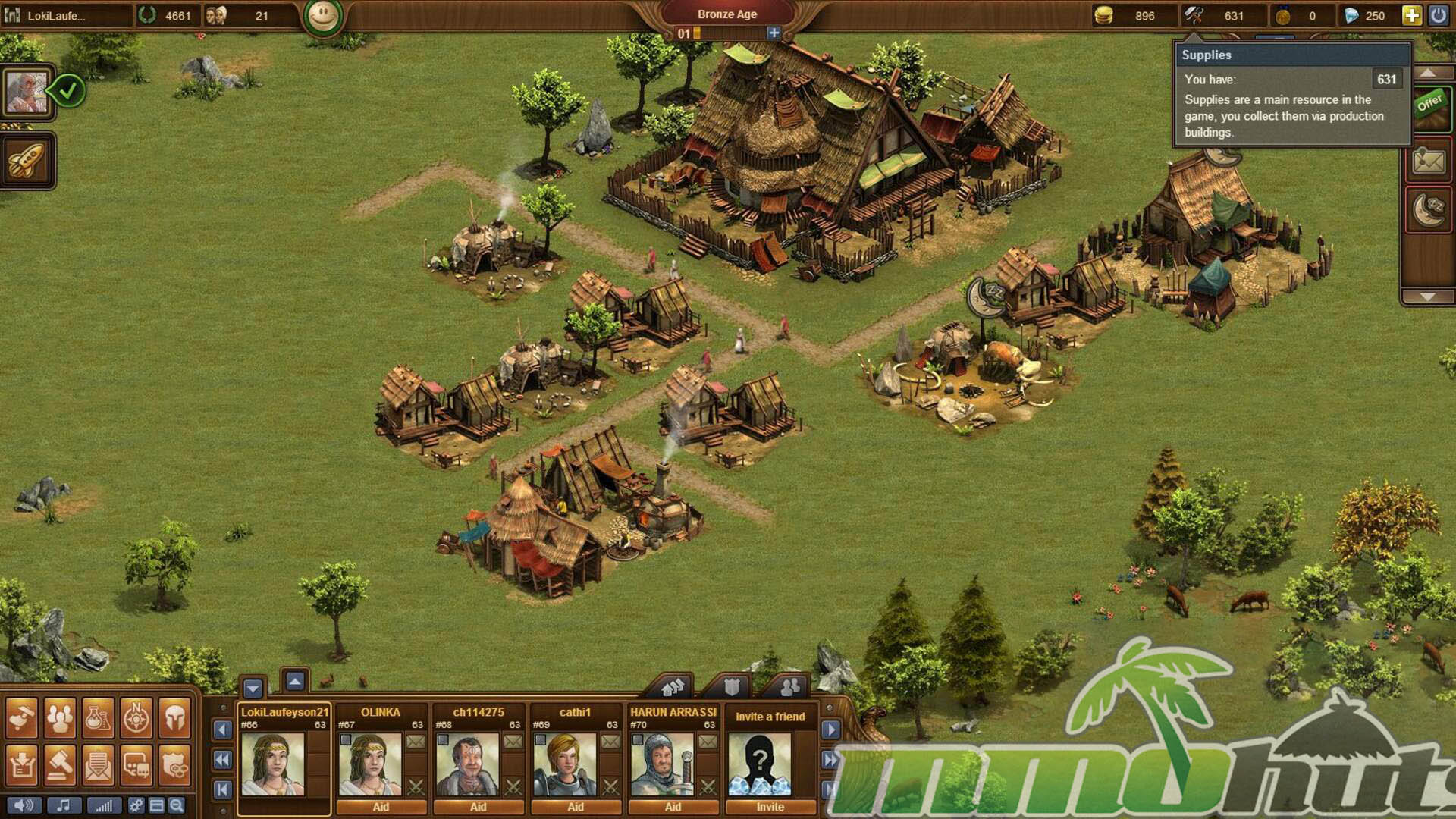
City growth revolves around a few core building types. Homes provide population and, more importantly, coins over time. Cultural and decoration structures contribute “Happiness,” which directly influences how effective your production is. When Happiness is healthy, your output improves, but if it drops too low, the whole economy starts to feel sluggish. In practice, this creates a constant tradeoff between space used for economy versus space spent keeping citizens satisfied.
On the military side, barracks-style buildings train units that you can use on the campaign map or for limited PvP actions. Production and goods buildings supply the materials you need to keep upgrading and unlocking. A big part of the daily routine is simply collecting on time, because unattended production can go to waste once it sits too long. It is a familiar browser-game pressure, but it also gives the city a rhythm that encourages regular play.
Another key detail is connectivity. Buildings need road access to the Town Hall to operate, which makes layout design more than just aesthetics. As you expand, you will frequently rearrange blocks of structures, rebuild roads, and squeeze efficiency out of every tile.
Research and the Role of Forge Points
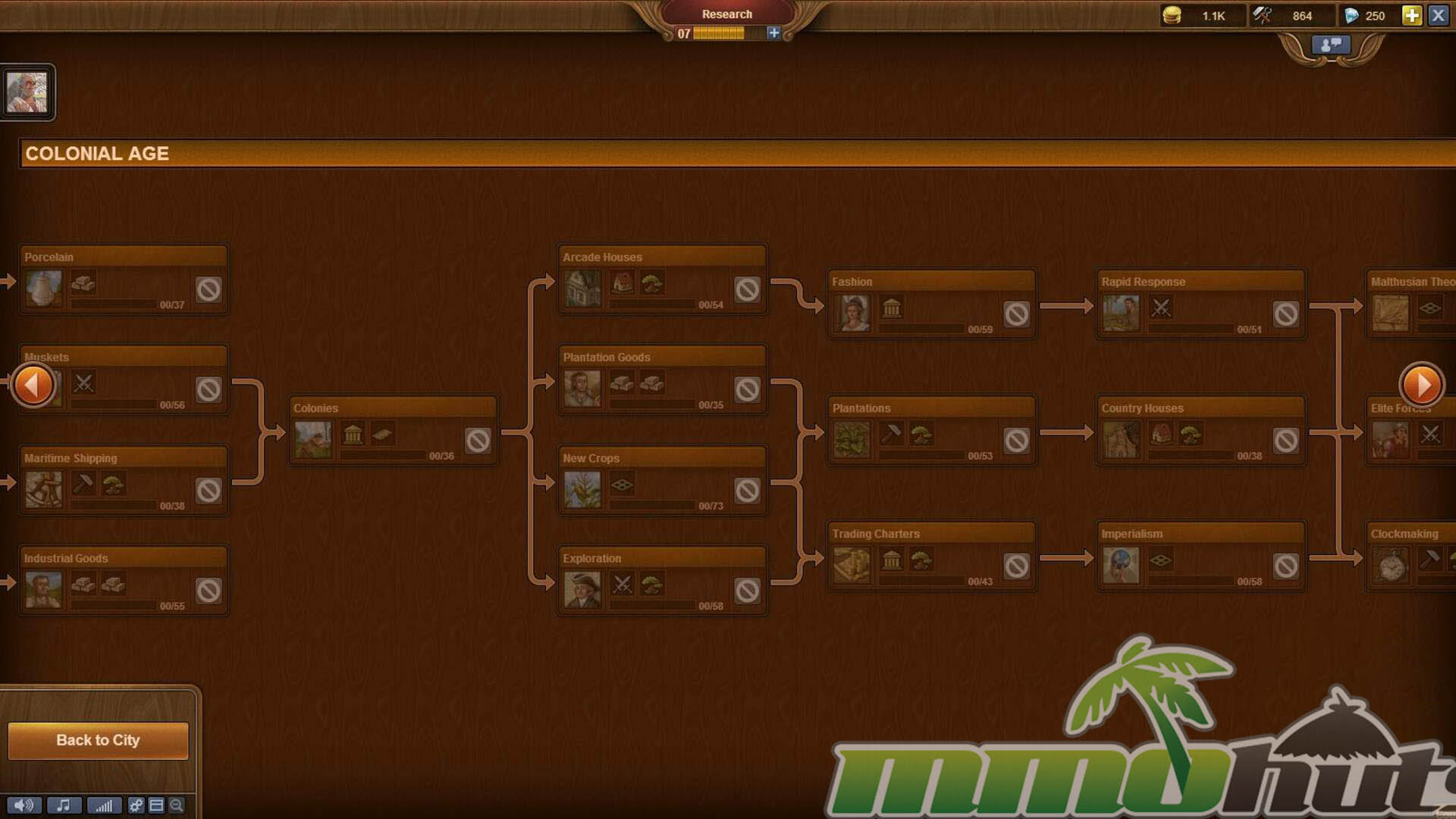
Technology progression is handled through a research tree, and Forge Points are the primary currency used to unlock new topics. Unlike most resources, Forge Points accumulate automatically, so even light players can still make steady research progress.
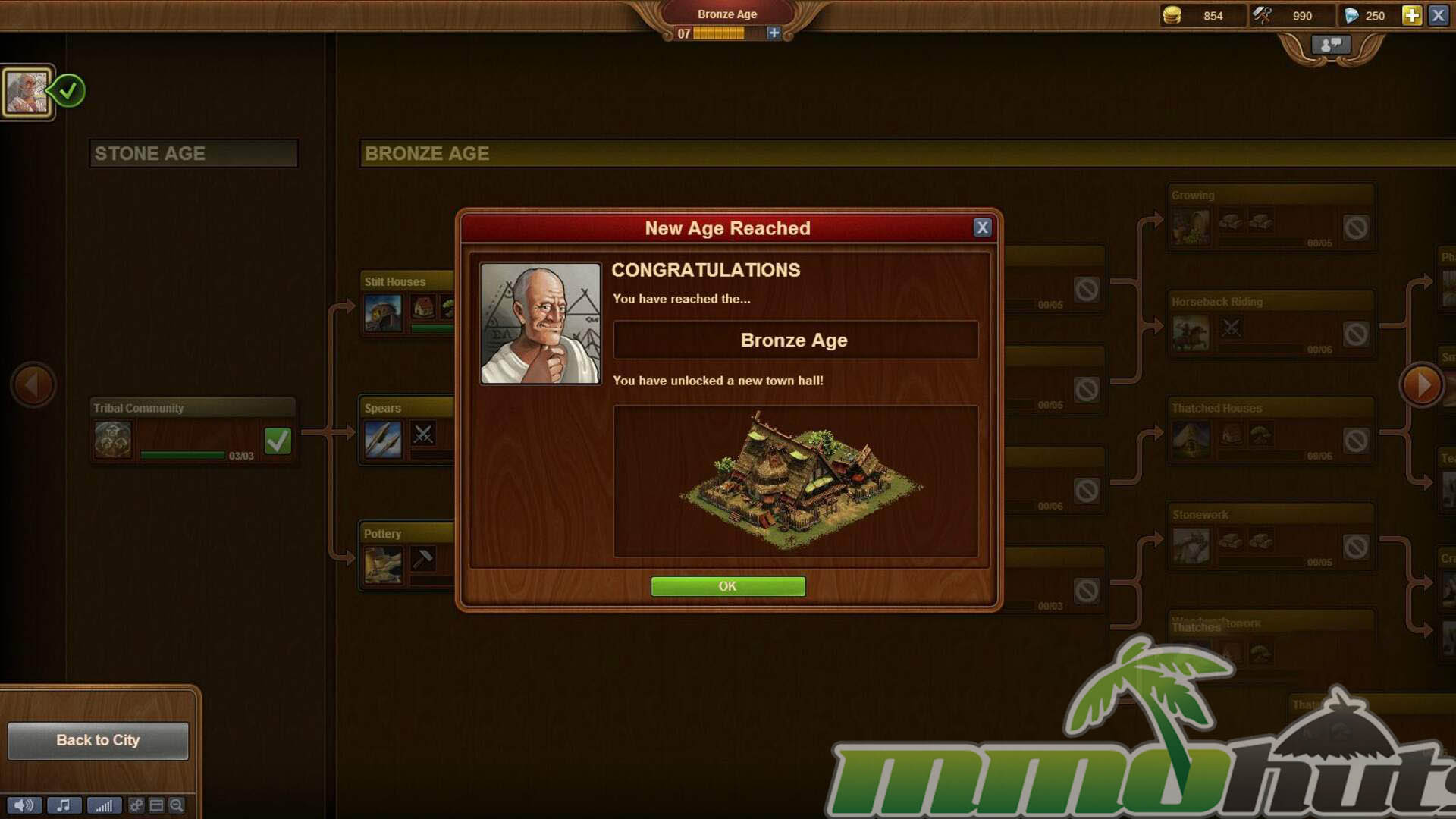
Early technologies tend to be inexpensive, but costs climb as you move forward through the ages and the tree branches into more specialized upgrades. The structure encourages planning, because later options often require earlier prerequisites, and a poor choice can slow you down if it delays important unlocks like new military units, goods production, or expansion opportunities.
Premium Currency and Convenience Power
Diamonds function as the premium currency. They can speed up many aspects of the game, including completing research immediately by filling Forge Point requirements, accelerating production, and cutting down timers for scouting and training. They also allow you to buy advantages like extra slots in military buildings, instant unit recovery after fights, and faster access to expansions.
Diamonds can appear through quests, but the amounts are typically small, and most meaningful use comes from purchasing them. As with many browser strategy MMOs, spending can translate into real momentum. Players willing to invest can smooth out bottlenecks and access stronger versions of buildings with better stats for the same general role. The result is not subtle, and it is something competitive-minded players should keep in mind.
Making Room, Expansions Matter
Space is one of the most important constraints in Forge of Empires. Expanding your city’s borders is essential for continued growth, because later eras demand more buildings, more roads, and more support infrastructure. Expansions also make it possible to slot in major structures (including Great Buildings) that provide powerful bonuses and help define your city’s long-term efficiency.
There are multiple ways to obtain expansions: via coins, medals, or diamonds. Some expansion slots are earned by researching technologies that grant them, but those still need to be purchased with coins before you can place them. Coins mainly come from homes, quest rewards, and assisting other cities.
Medals and diamonds provide alternative routes. Diamonds skip the grind by design, while medals are earned through tournament-style PvP activities tied to towers on the campaign map. Participating also awards leadership points that influence tournament rankings, giving regular fighters a measurable progression track even if they are not spending.
Campaign Conquest and Turn-Based Combat
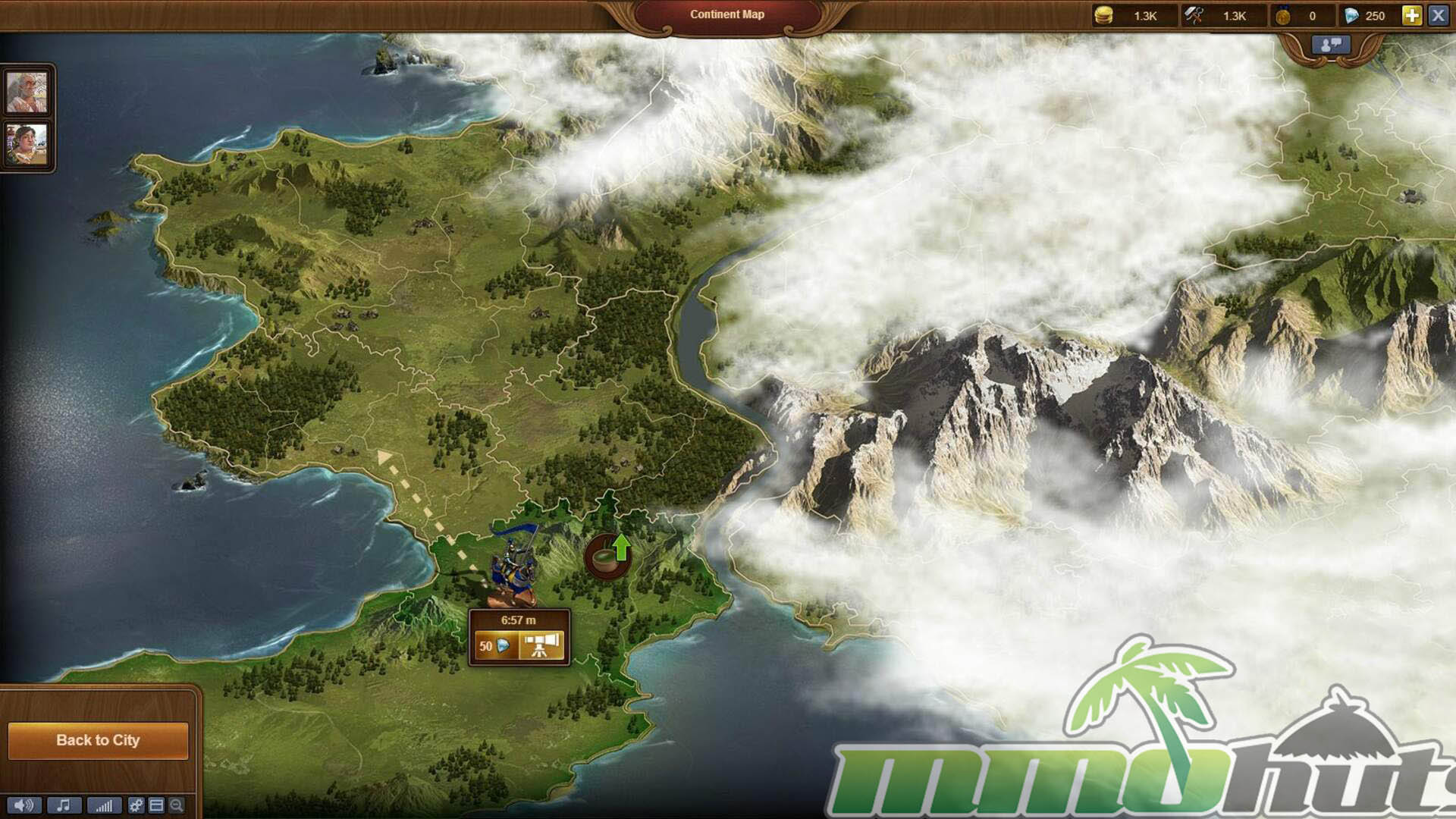
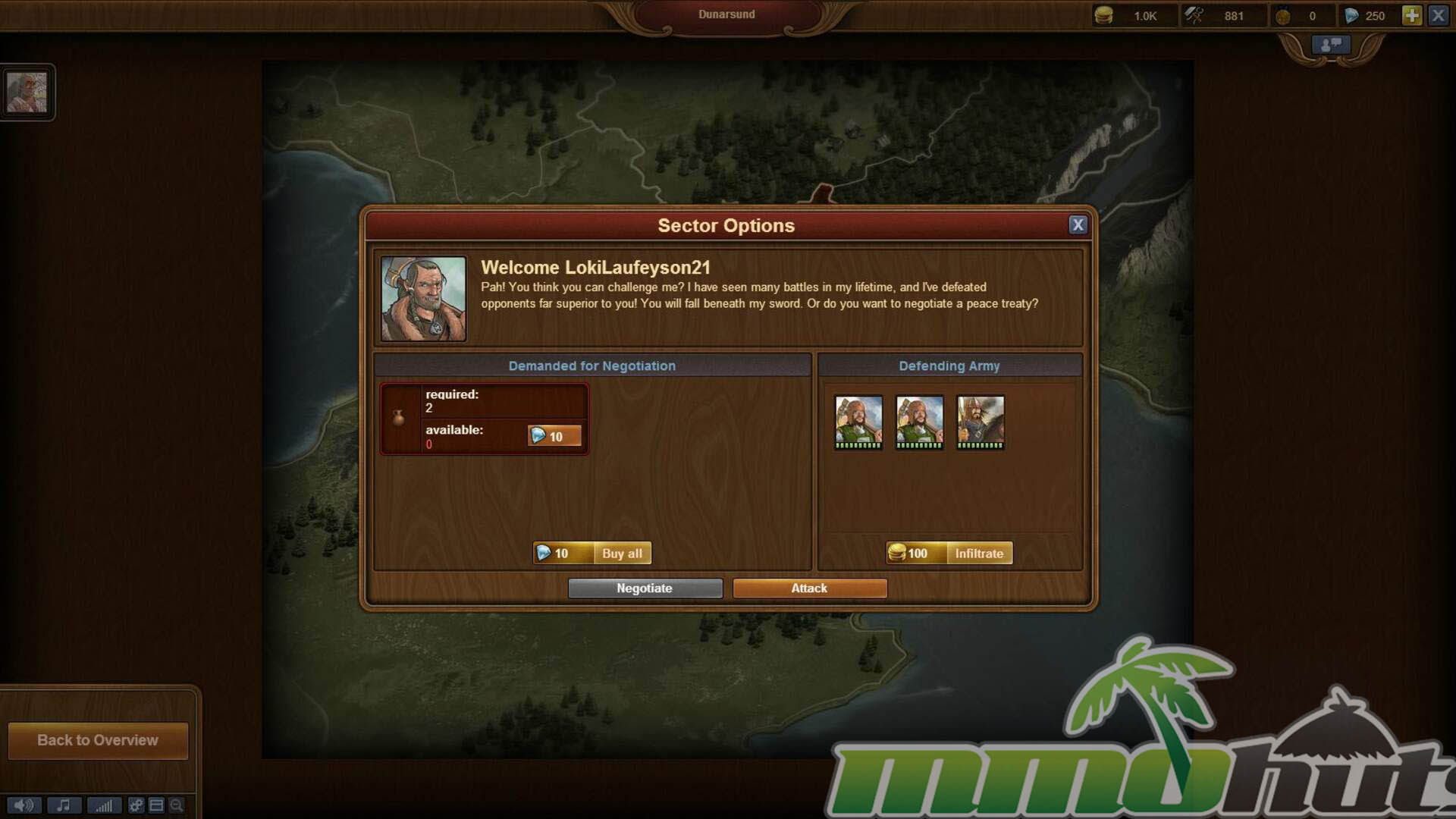
Forge of Empires does not lean heavily on narrative. Instead, it focuses on expansion, province control, and a steady chain of goals through quests and the world map. Rather than taking over other players’ cities outright, most conquest happens in an instanced campaign where you scout and secure provinces to gain resources and open new opportunities.
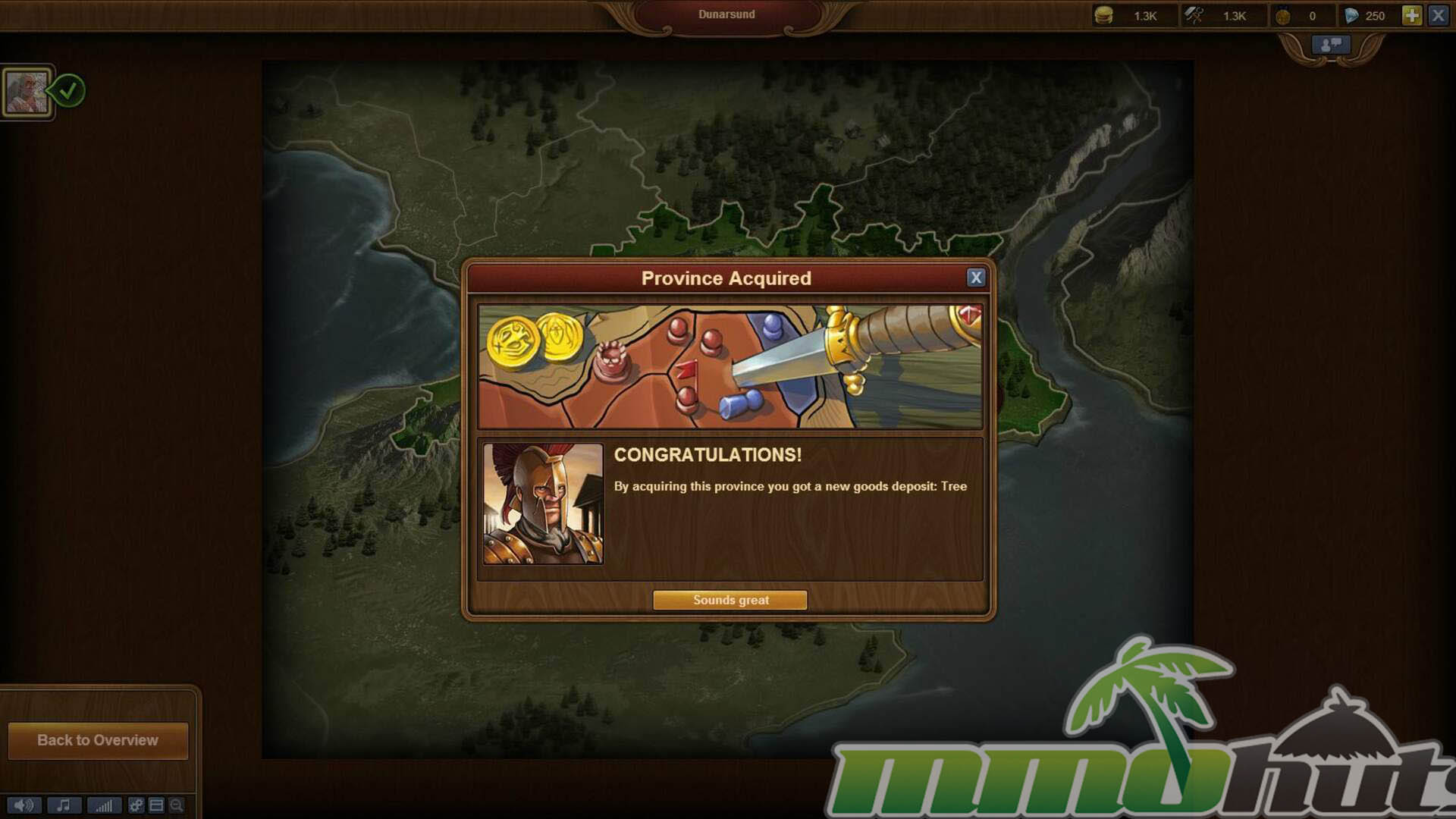
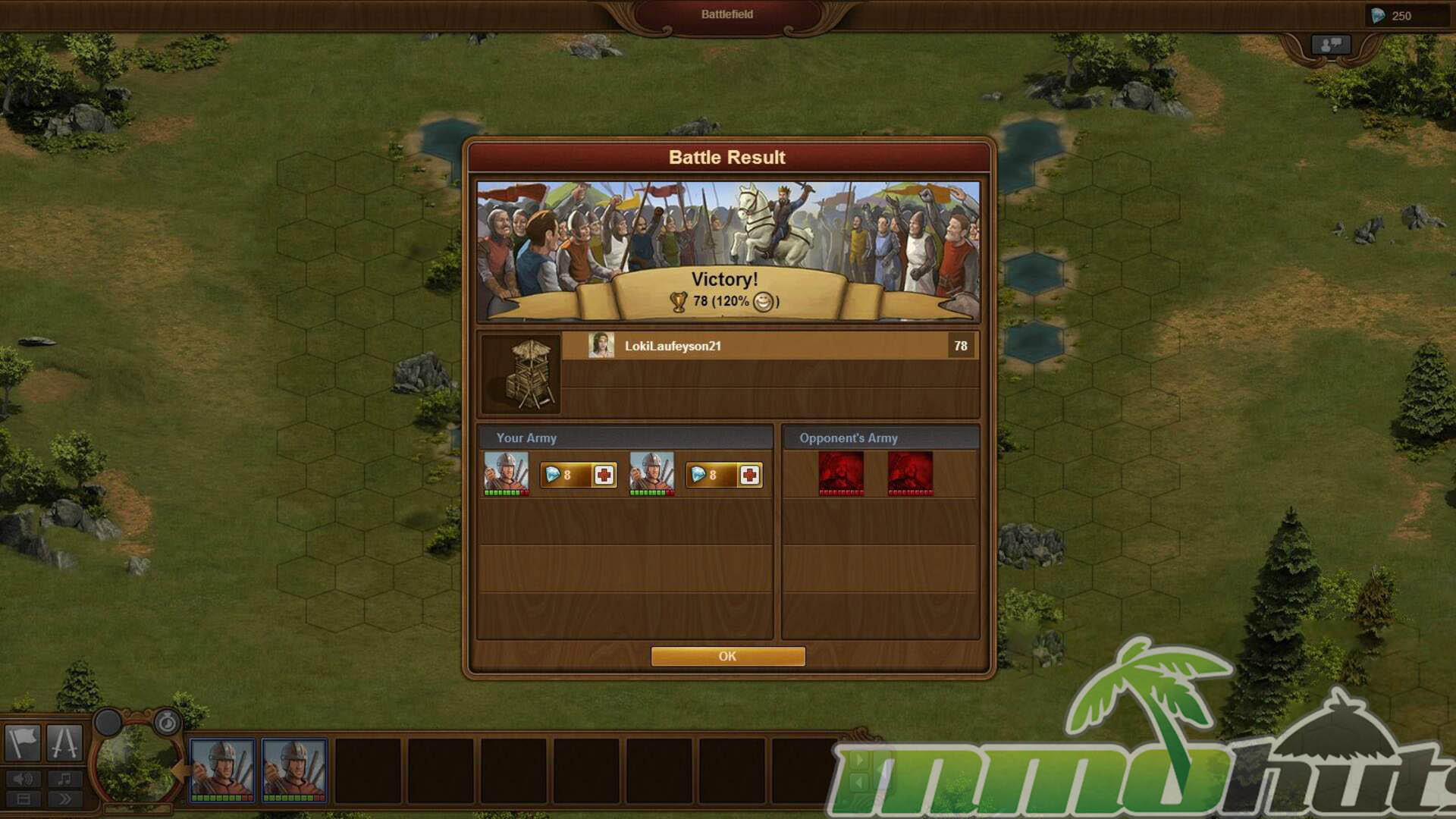
Scouting is its own step, and it costs coins. Once a province is revealed, you can push into individual segments, winning battles (or negotiating) to claim them. Completing all segments secures the province, and then you move on.
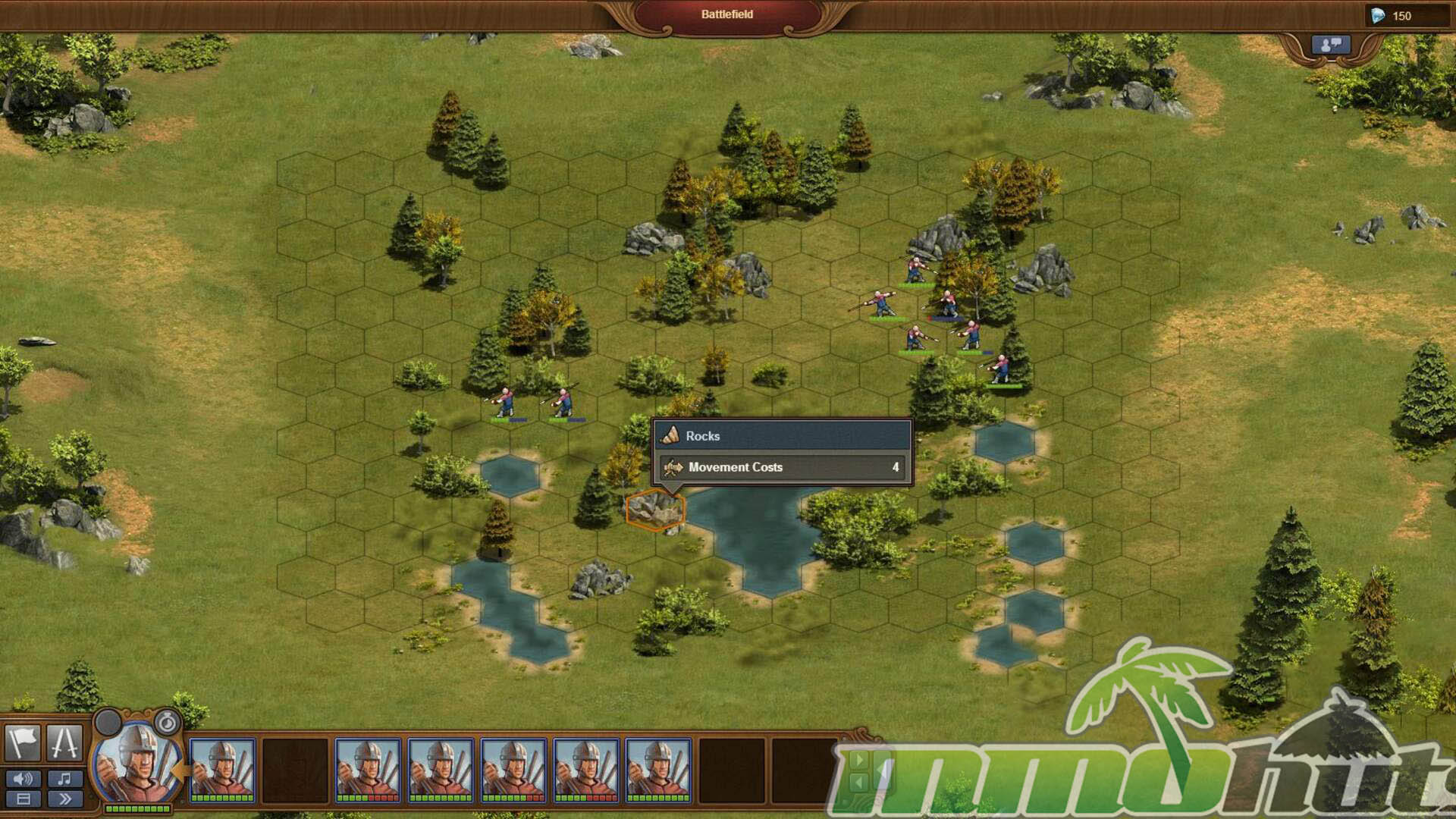
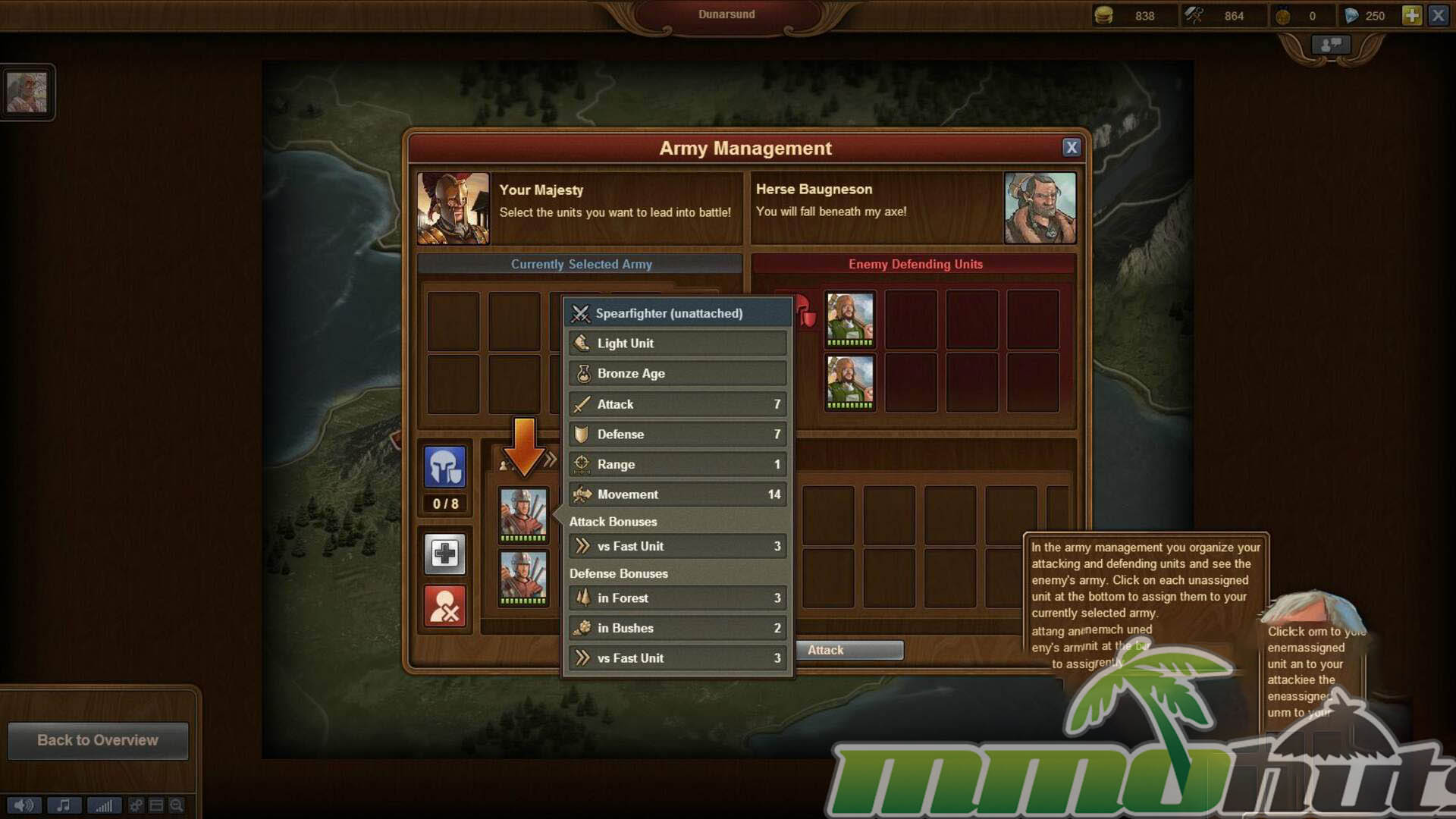
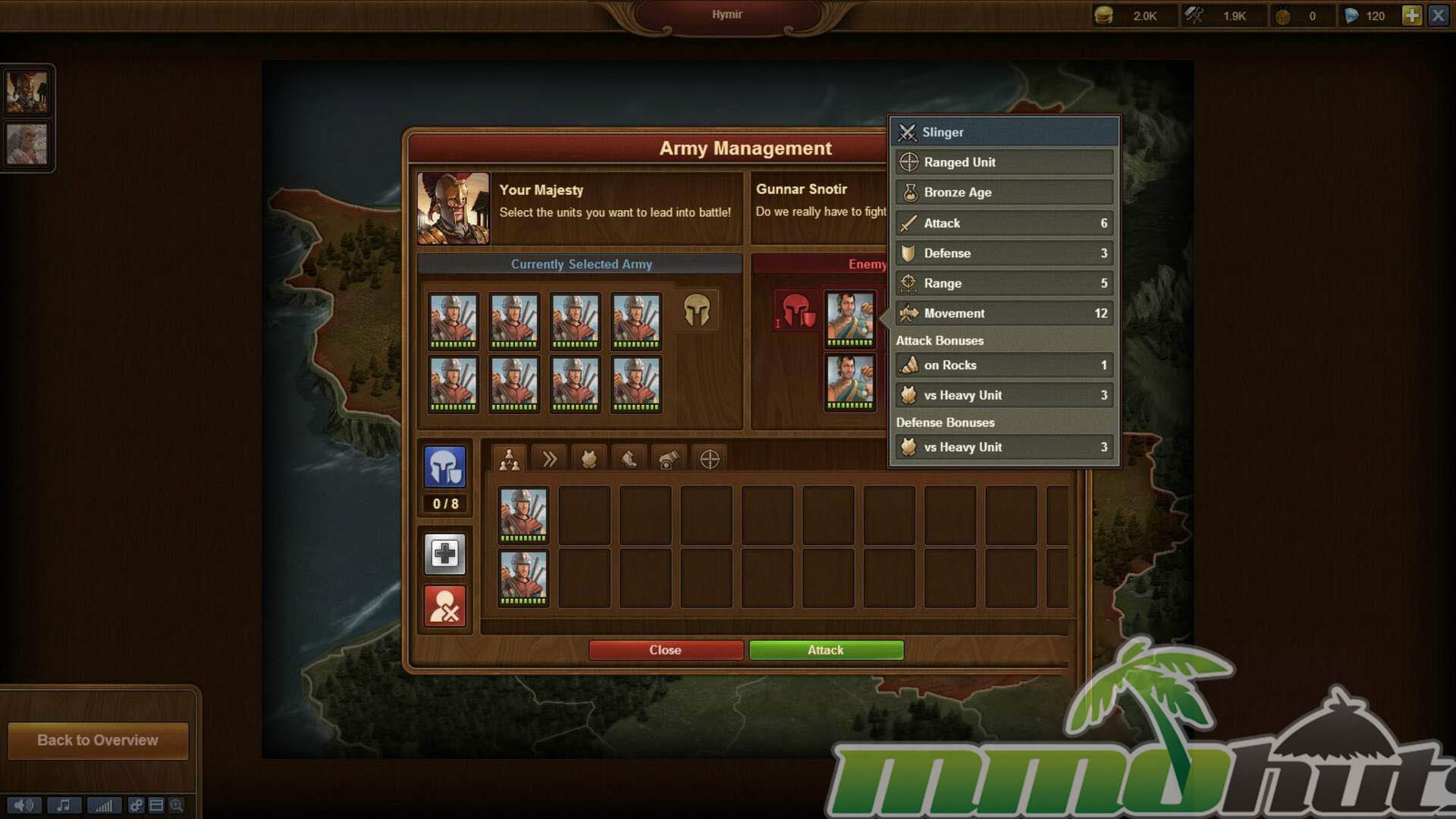
Combat itself is turn-based on a hex grid. Unit types have different ranges, movement, and matchups, so positioning and turn order matter more than raw numbers. Even early units can remain useful when deployed intelligently, which helps the battles stay readable rather than purely gear-driven.
Outside the campaign, you can attack other players for plunder. The scope is limited, you pick a single building to loot rather than wiping out a city, but it still adds tension to neighborhood interactions and gives aggressive players another way to supplement income.
Final Verdict – Good
Forge of Empires succeeds as a long-running browser strategy MMO because it offers a satisfying sense of progression and a surprisingly engaging planning layer. Manual building placement, road management, and the campaign map make it feel more involved than many click-and-wait city builders, even if the visuals are basic.
The downside is pacing. Timers and resource bottlenecks are a core part of the design, and the premium currency offers clear shortcuts. For casual players who enjoy checking in, tuning layouts, and slowly climbing through eras, it is an easy recommendation. For those looking for deep, constant PvP or rapid advancement without waiting, the slower tempo may wear thin over time.
Forge of Empires Links
Forge of Empires Official Site
Forge of Empires Wikipedia
Forge of Empires Facebook
Forge of Empires Wikia [Database / Guides]
Forge of Empires System Requirements
Minimum Requirements:
Operating System: XP / Vista / 7 / 8
CPU: Intel Pentium 4 or AMD Equivalent
Video Card: any graphics card (integrated works well, too)
RAM: 512 MB
Hard Disk Space: 100 MB (Cache)
Forge of Empires is compatible with Apple iOS devices including iPhones and iPads. The game also has an android App in the Google Play store.
Forge of Empires is a browser-based MMORPG and will run smoothly on practically any PC. The game was tested and works well on Internet Explorer, Opera, Firefox, and Chrome. Any modern web-browser should run the game smoothly. The game is available on Facebook as well.
Forge of Empires Music & Soundtrack
While Forge of Empires is not a soundtrack-driven experience, its music and ambient audio do a good job of supporting the era you are currently playing in. The background themes are generally calm and unobtrusive, which fits a city planner where you may spend long sessions adjusting layouts, managing production timers, and planning research. Sound effects are functional and clear, reinforcing collections, construction, and combat actions without becoming overly noisy during routine play.
Forge of Empires Additional Information
Developer: InnoGames
Release Date: April 17, 2012 (Worldwide)
Other Platforms: Android & iOS apps
Development History / Background:
Forge of Empires was created by German developer InnoGames, a studio known in the browser strategy space for hits such as Tribal Wars and Grepolis. Since launching on April 17, 2012, the game surpassed 10 million registered users. In 2014, InnoGames brought Forge of Empires to mobile platforms with iOS and Android releases, extending its reach beyond browsers. The game has also been localized extensively, with support for more than 25 languages, including American English, Slovak, Spanish, Turkish, Thai, and many others.