Entropia Universe is a long-running MMO “virtual universe” built around a real-cash economy where your gear, resources, and even property can carry real-world value. You can spend your time hunting creatures, mining claims, crafting, trading, or investing in deeds across a sci-fi setting that spans six planets, but almost every activity ties back to managing resources and cost.
 | Publisher: MindArk Playerbase: Medium Type: MMO Virtual Universe Release Date: January 30, 2003 Pros: +Massive multi-planet universe to live in. +Player-driven economy with real stakes. +Deep avatar creation and crafting systems. Cons: -Lengthy onboarding and lots to learn. -Very steep learning curve. -Heavily pay to win due to cash economy. |

Entropia Universe Overview
Entropia Universe positions itself less like a traditional theme park MMO and more like a simulation sandbox with a science fiction coat of paint. The defining feature is its micropayment system, where players can convert real money into Project Entropia Dollars (PED) at a fixed rate of 10 PED to 1 US dollar. Because PED can be bought with real currency and used for nearly everything, the game’s items and assets effectively carry cash value, and for some players the “endgame” is economic success rather than story completion.
After creating an avatar with a surprisingly granular character creator, you choose a starting planet and begin learning how the universe functions. The moment-to-moment experience is a mix of exploration and practical work: hunting creatures for loot, mining for resources, crafting gear, trading on the market, and getting involved with property and services. The game consistently reinforces its central idea that progress is tied to investment, whether that investment is time spent on low-cost activities or money spent to expand what you can do efficiently.
Entropia Universe Key Features:
- Payment System – property and items have a real cash value at a 10 PED to $1 exchange rate.
- Huge, Expansive Game Universe – with six sprawling planets to explore.
- Robust In-Game Economy – run entirely by players.
- Various Ways to Play – including hunting, mining, trading, property management, etc.
- In-Depth Character Creation – no two characters look alike.
Entropia Universe Screenshots


Entropia Universe Featured Video

Entropia Universe Review
Entropia Universe is a Swedish-developed MMO virtual world from MindArk that has always been more about systems than scripted spectacle. You can register and access the universe without paying upfront, but the design strongly nudges you toward spending PED to widen your options, whether that means better equipment, faster skilling, more efficient tools, or participation in higher-value activities. Even basic actions can have a cost, weapons and tools degrade, and many loops revolve around buying consumables or maintaining gear.
Early on, the game asks you to pick a starting planet (for example Calypso, ROCKtropia, or Arkadia). That choice matters more than the game initially communicates because it influences how approachable your first hours feel and what opportunities you see. Entropia Universe rarely explains itself in the way modern MMOs do, and the lack of hand-holding can be either refreshing or punishing depending on your tolerance for learning by trial and error.
Build an Avatar, Not a Template
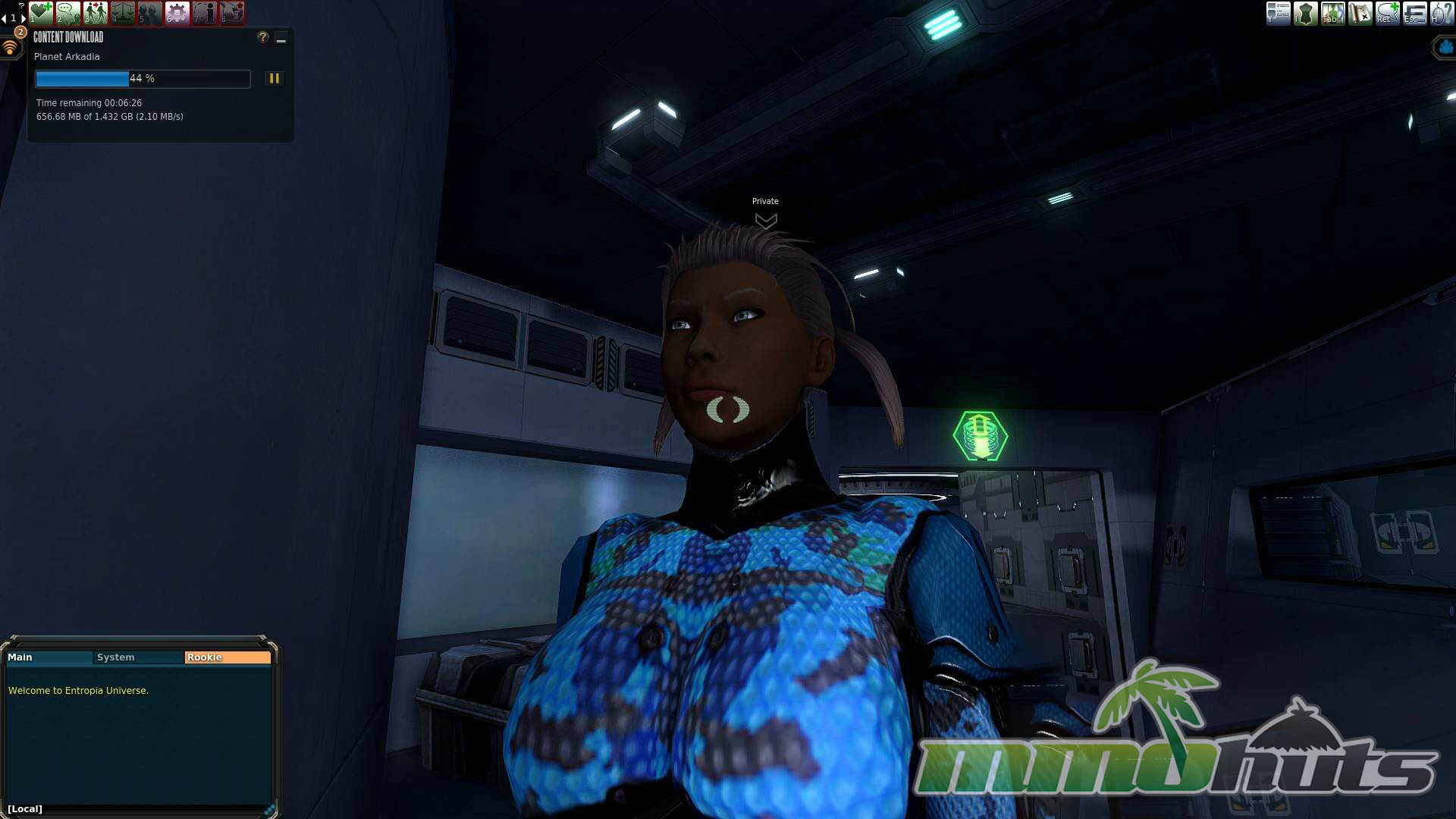
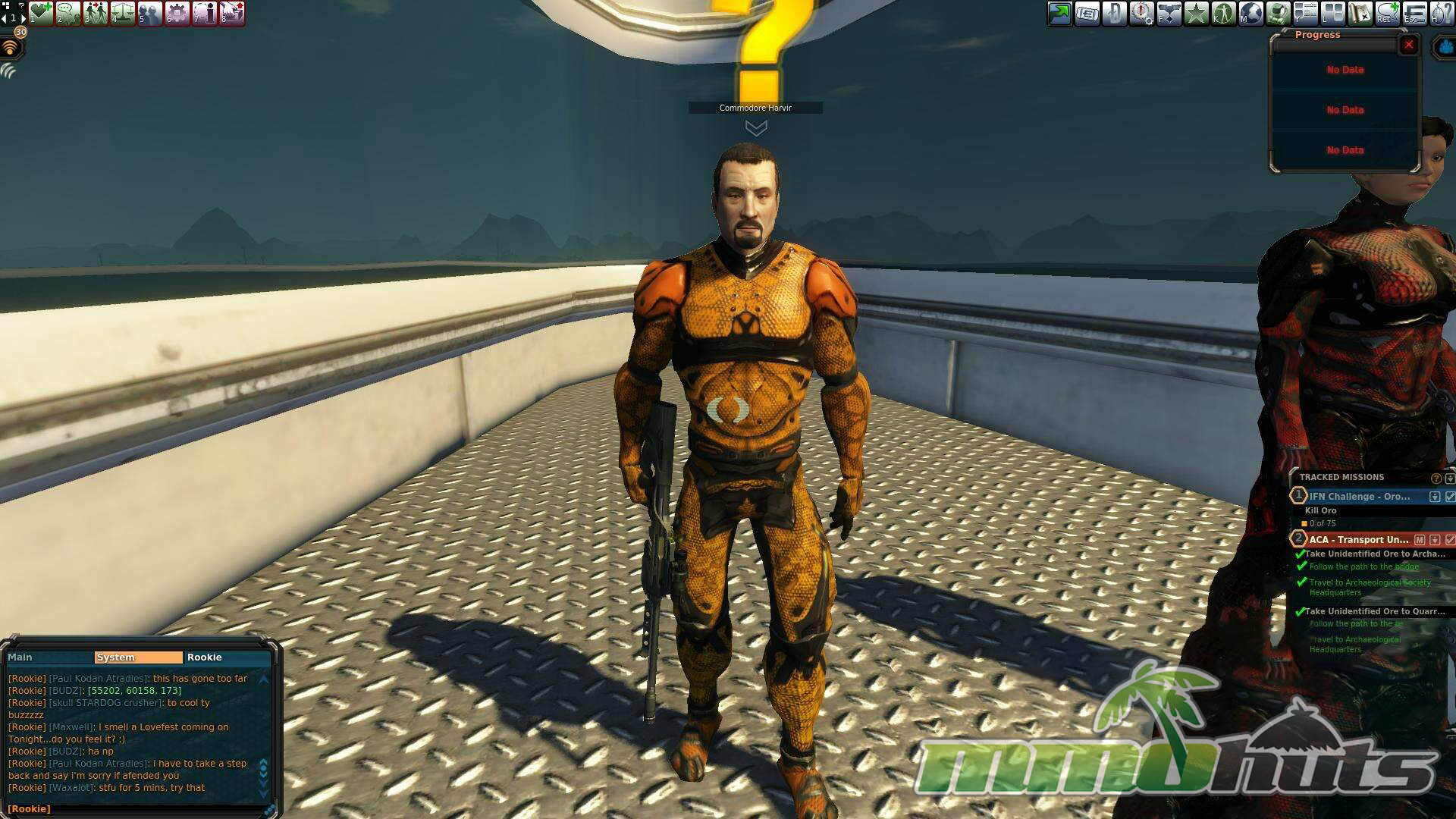
The character creation suite is one of the most detailed parts of the onboarding, with sliders and adjustments for a wide range of facial features and body proportions. It is the kind of toolset that makes two players’ characters genuinely look distinct, which fits the game’s “virtual universe” ambitions. If you enjoy roleplay, social identity, or simply treating your avatar as part of your long-term project, this system makes that investment feel meaningful from the start.
That said, the strong customization contrasts with the game’s less expressive presentation elsewhere. Your character can be finely tuned, but much of what surrounds you feels utilitarian, built to support economy and activity loops rather than cinematic immersion.
First Steps: A Guided Tour That Tests Patience
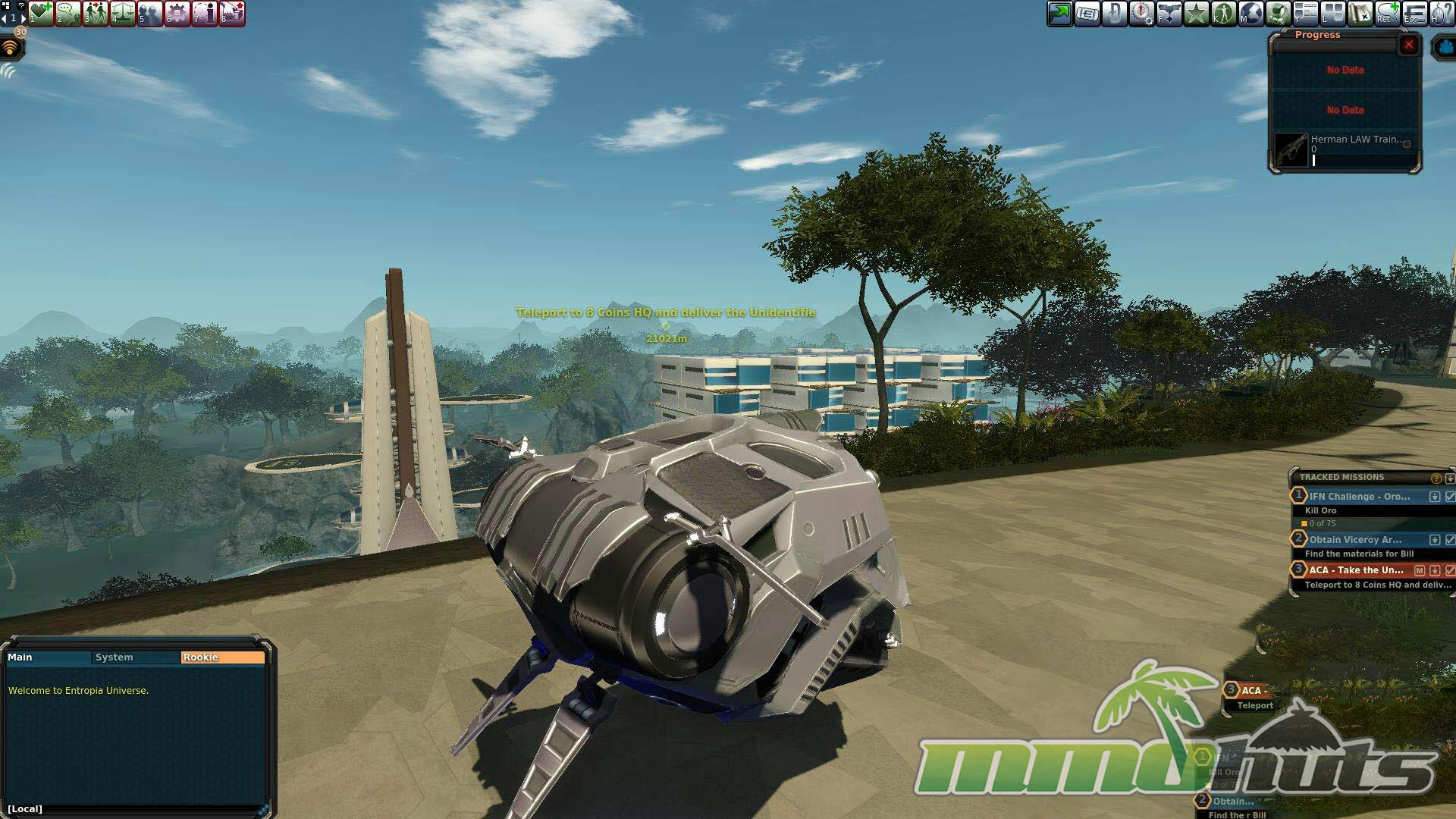
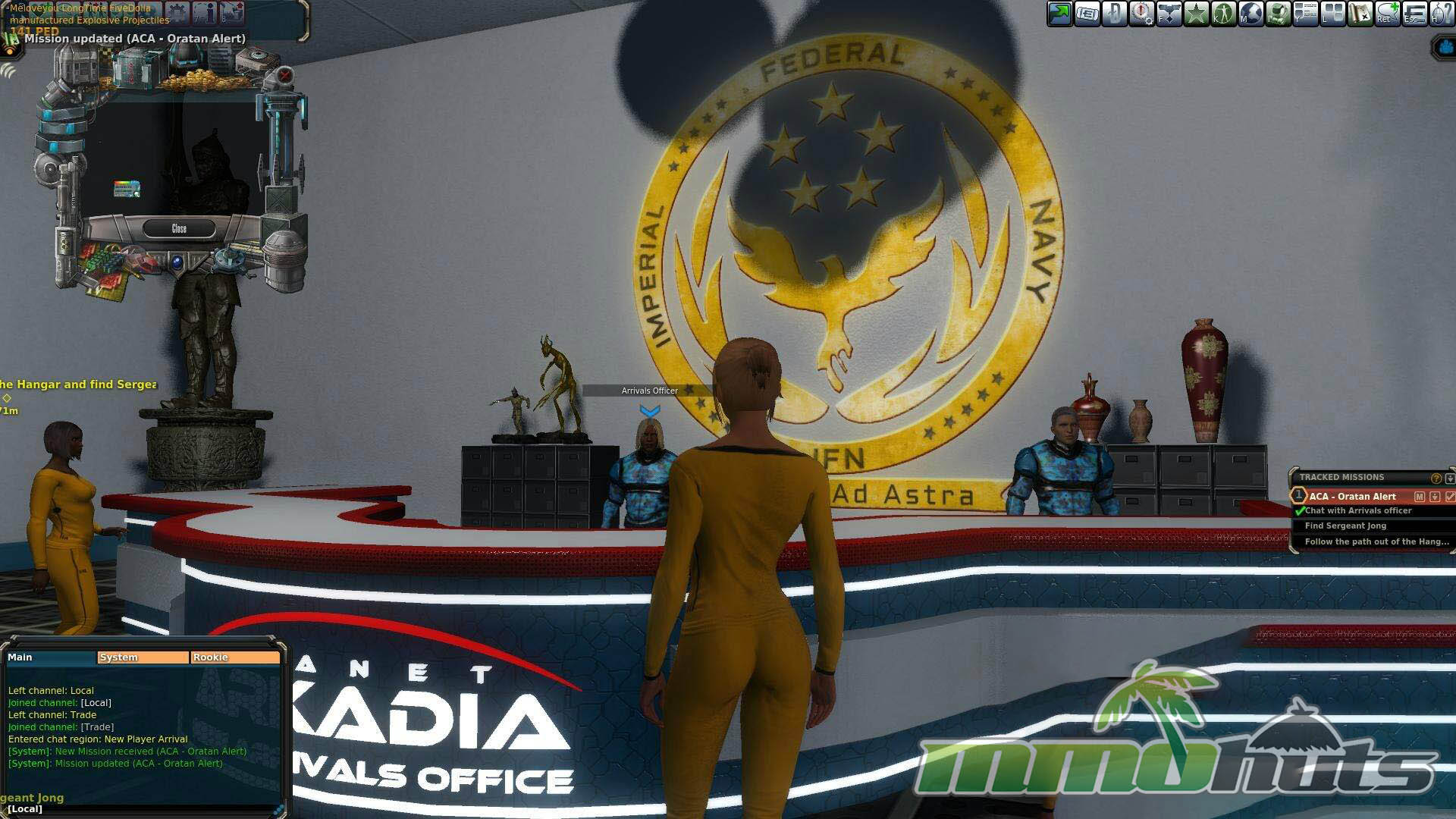
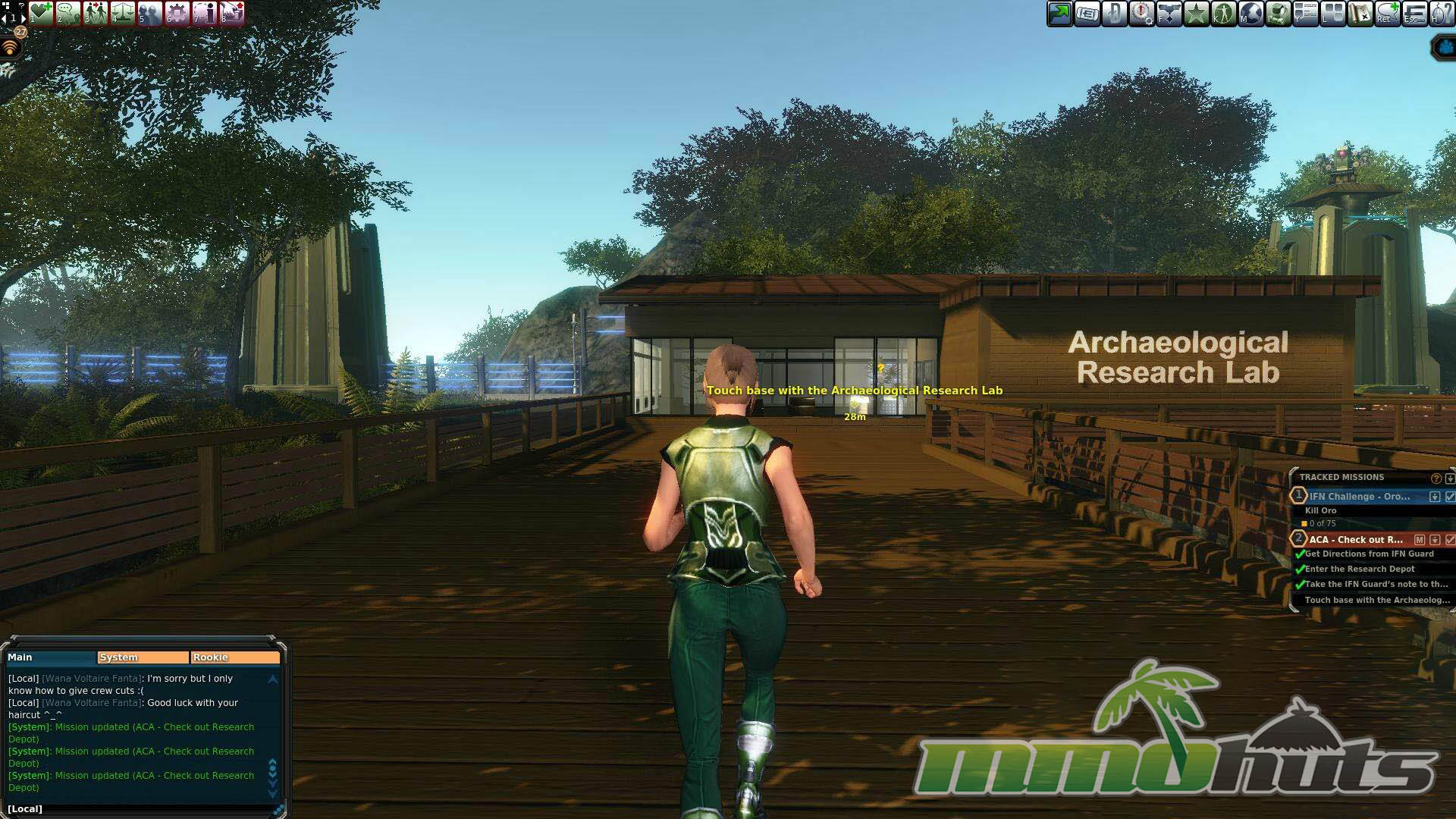
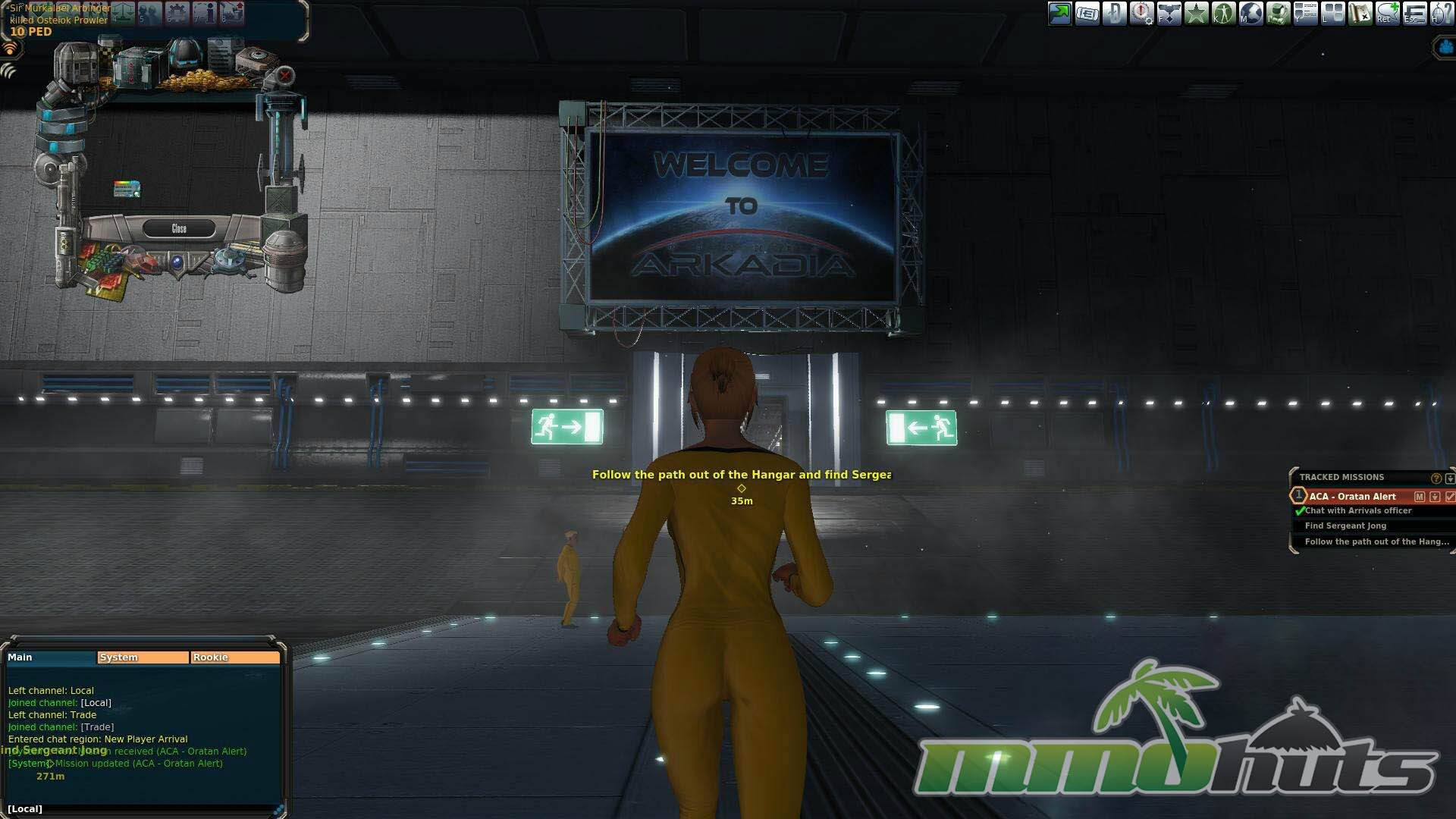
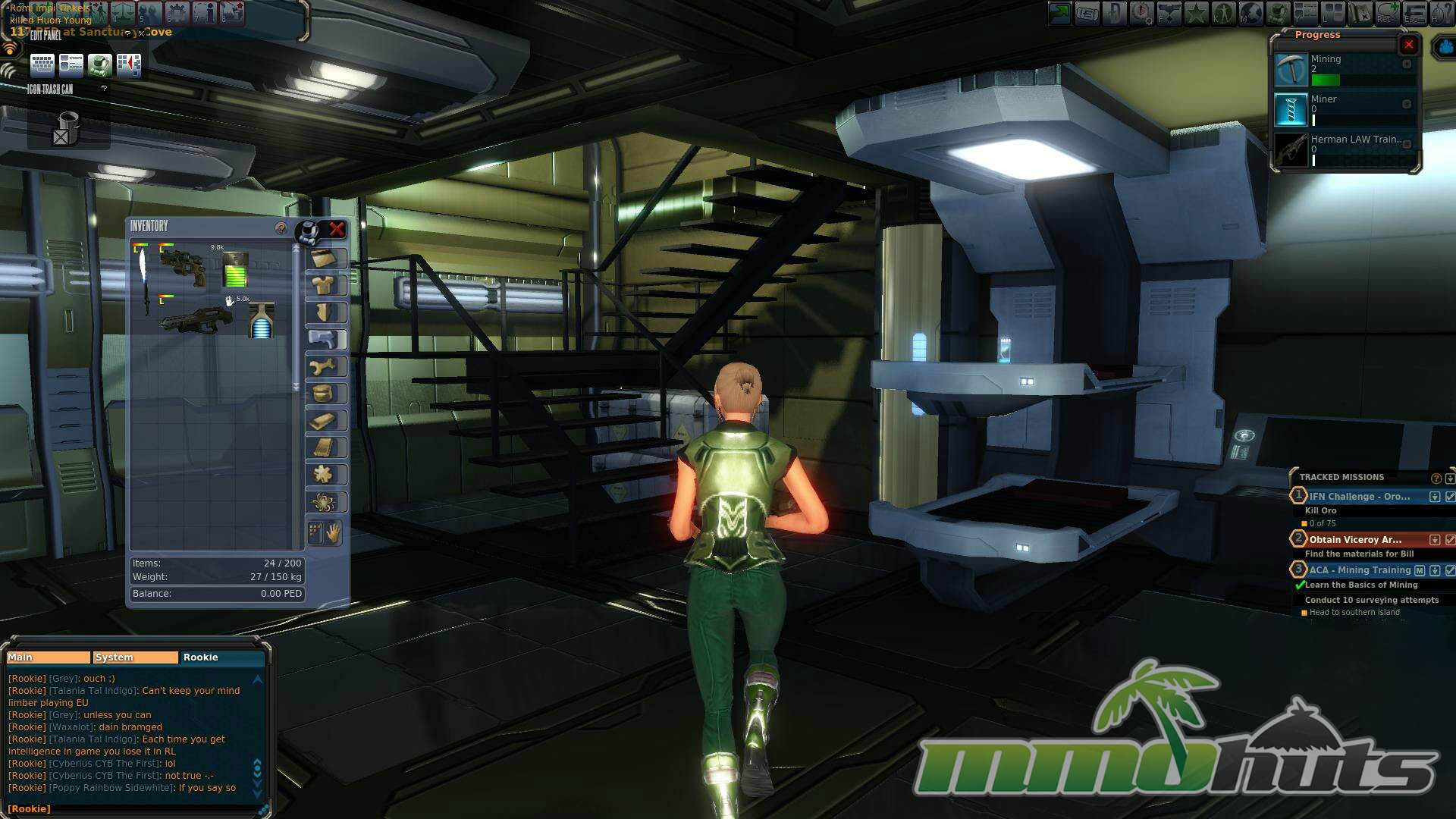
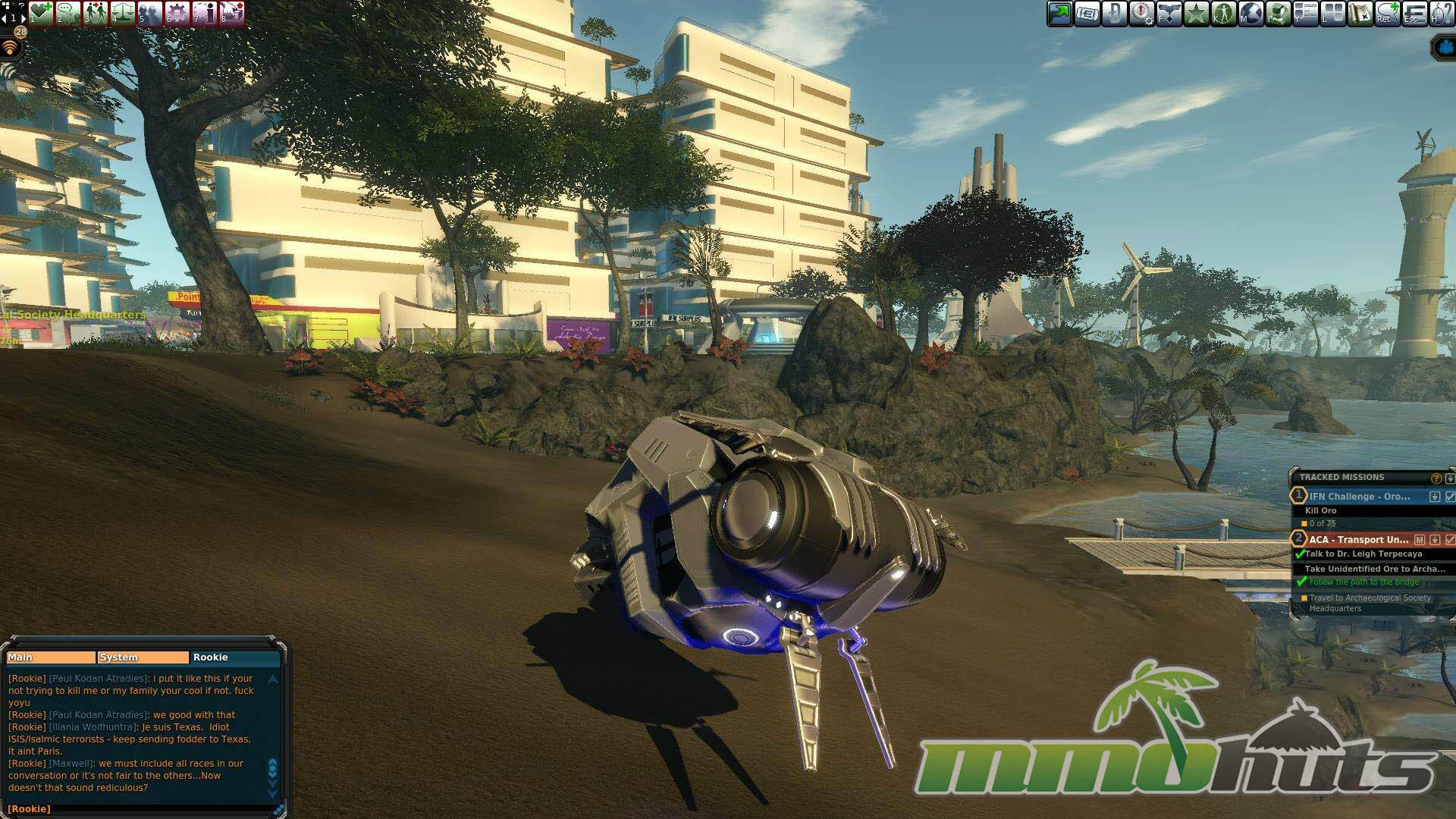
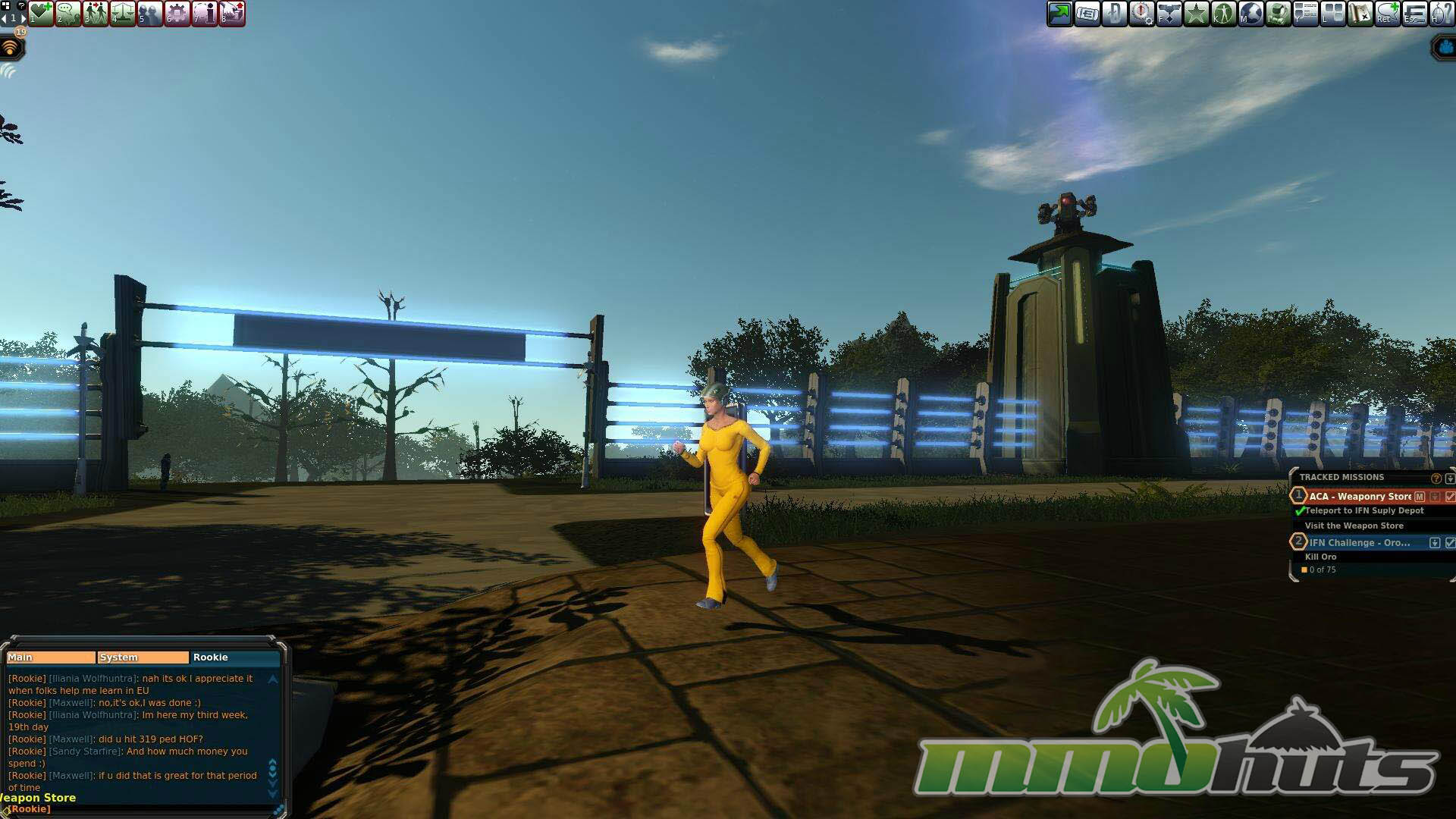
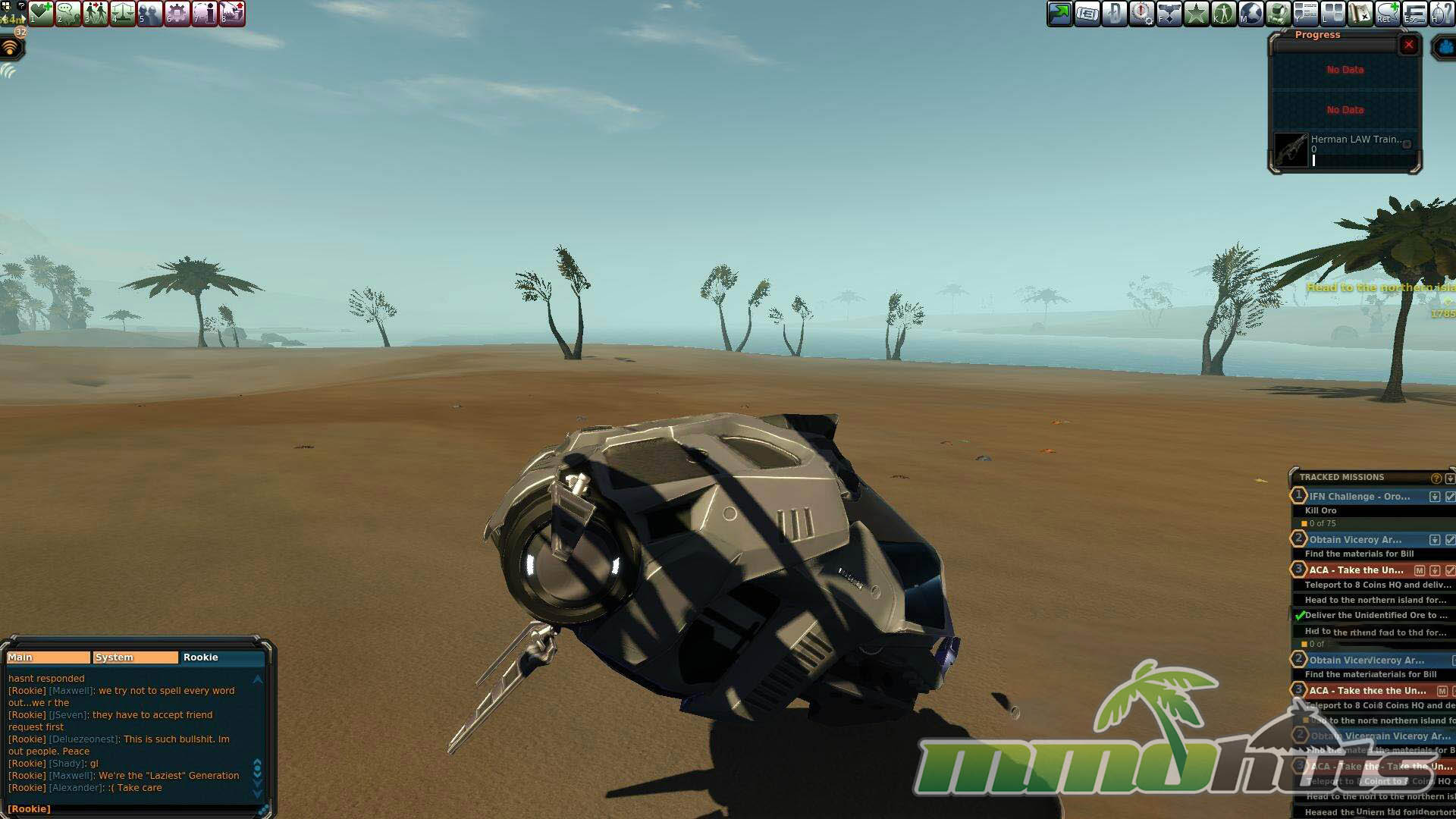
The early mission flow leans heavily on movement and introductions, sending you between NPCs and locations to show the basics. As a tutorial, it does a reasonable job of communicating scale and establishing key hubs, and CryEngine 2 still handles landscapes and open areas well. The problem is that the pacing can feel drawn out, and the world’s NPCs and set dressing do not always sell the illusion of a living place. The game’s strongest “life” comes from other players and the market, not from scripted characters.
If you are expecting an MMO that hooks you with story beats, Entropia can feel flat at first. If you are willing to treat the opening as orientation for a long-term sandbox, it makes more sense.
Making a Living is the Core Loop
Everything in Entropia Universe points back to value creation. The most consistent way to progress is to find a niche that produces something other players want, then scale it, whether through knowledge, efficiency, or capital. Without depositing money, your early choices narrow considerably, and you will likely spend time on low-cost tasks that trade convenience for minimal expense.
A good example is basic gathering while exploring. The game encourages slower, deliberate movement and observation, and some items are easiest to find when you are not sprinting around. It is a very different rhythm from typical MMOs, and it makes sense in a world where even small resources can be monetized through player trading, but it is also easy to find this loop repetitive if you are here primarily for adventure.
Sweating: The “No Deposit” Hustle
One of the most well-known starter activities is collecting Vibrant Sweat from living creatures. It is frequently recommended because it can be done with minimal or no spending, and the product has a place in the broader crafting economy (it is used alongside Force Nexus via an Energy Refiner to create Mind Essence, which fuels Mindforce). Mechanically, the process is simple: approach a creature, use the gather action, and hope you finish before it turns you into a respawn timer.
As an introduction to the game’s economy, sweating is informative because it teaches risk, time investment, and market value. As gameplay, it is repetitive by design, and it highlights the reality that “free-to-play” here often means “pay with time and patience.”
Mining: A Tool-Driven Routine
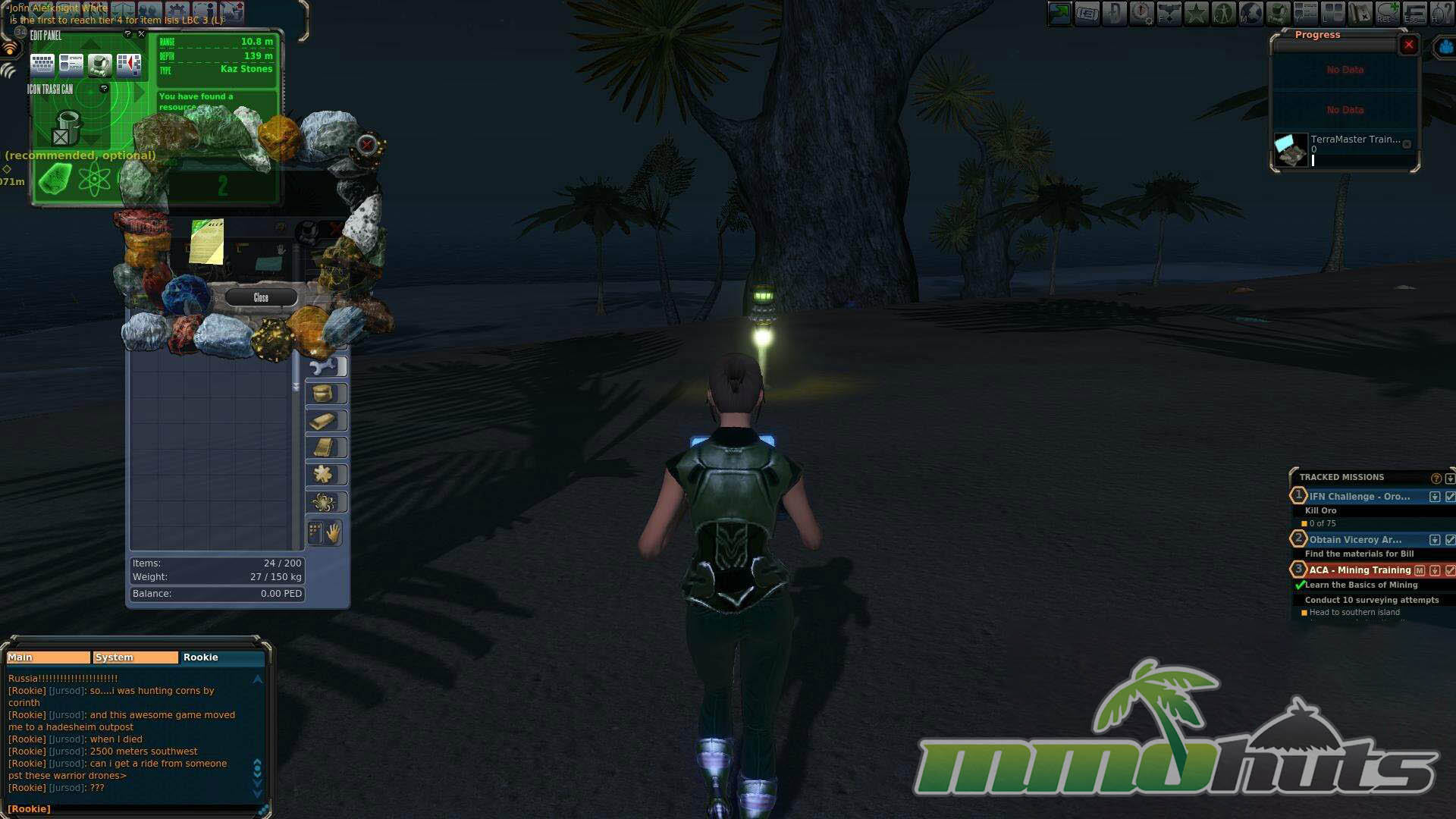
Mining is one of Entropia Universe’s signature professions, and it is also a good illustration of how the game blends simulation flavor with resource management. There is a startup cost, but the tutorial provides a small amount of the consumable Survey Probe and introduces the core tools: the Terramaster Trainer for scanning and the Rock Ripper Trainer for extracting resources once you locate a claim.
The loop is straightforward: you spend probes to search, you get a marker when something is found, and you extract the resource from that claim. It is more involved than the classic “click node, receive ore” approach, but the excitement largely depends on your relationship with risk and return. If you enjoy the possibility of profit, the process is compelling. If you want active moment-to-moment gameplay, mining can start to feel like procedure.
Skills: Progress Through Repetition
The skill system is easy to understand and very grind-friendly: do an action and you improve in the skill associated with that action. Use heavy melee weapons, your heavy melee improves. Mine more, your related mining skills rise. Each skill also has ranks, starting at “Newbie” and reaching up to “Great Ultimate Master.”
The catch is the scale. The climb is enormous, and the system is clearly tuned for long-term play, investment, or both. For players who like incremental growth and specialization, it is satisfying. For players who want a clear endpoint, it can feel daunting.
Mentors and the Social Safety Net
To soften the early game, Entropia Universe includes a Mentor program that pairs newer players with experienced ones. Mentors must have an account for at least 6 months, and the idea is that a disciple gains access to guidance on more advanced aspects of the universe, including systems that are otherwise difficult to parse alone. Graduating provides a tangible reward, including a complete armor set, which is a practical incentive to stick with the program.
In practice, the quality of the experience depends entirely on the person you are matched with. A good mentor can shorten your learning curve dramatically, while a disengaged one provides little more than a checkbox. Still, the program reinforces what Entropia does best: relying on player-to-player interaction to create meaning.
Combat: Functional, Not Flashy
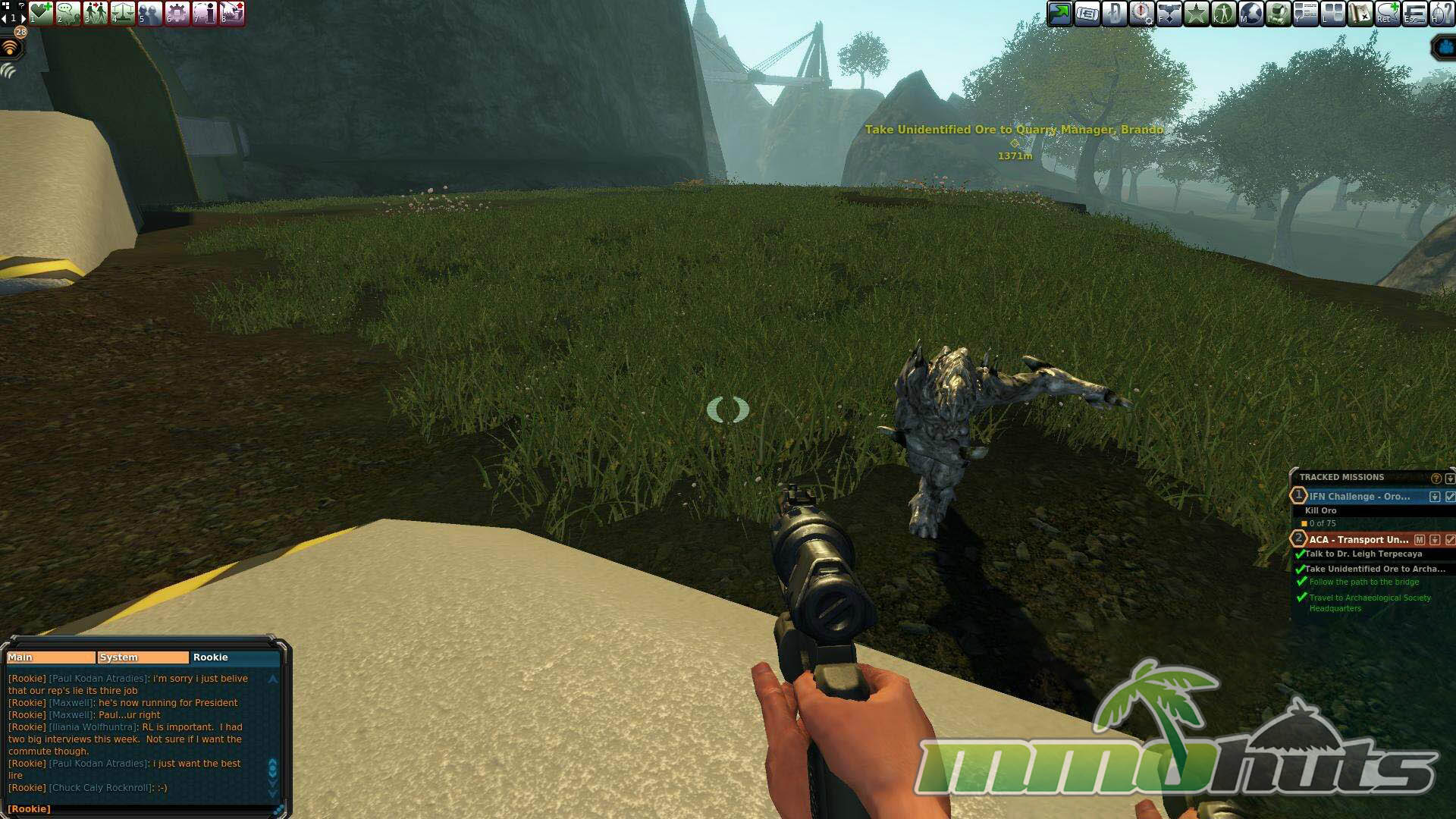
Combat works, but it rarely impresses. Melee can feel imprecise, and ranged fighting often becomes a simple routine of lining up shots and repeating attacks until either you or the target drops. The third-person aiming is awkward, and many players will prefer first-person for consistency. There is also the constant economic pressure of durability loss, ammo, and consumables, which can make fights feel like cost calculations as much as action.
PvP follows the same fundamentals, with the added benefit that it is largely contained within designated zones. That separation helps maintain the game’s broader sandbox feel without turning every trip into a gank risk, but it also means PvP is not the defining feature for most players.
An Economy With Real Consequences
The real-cash economy is Entropia Universe’s most distinctive strength and its biggest barrier. It creates genuine tension and excitement, because success and failure can carry weight beyond a typical loot treadmill. At the same time, it also makes the game feel harsh if you approach it like a conventional MMO, because efficiency often comes from spending PED, and many “best practices” for earning involve slow, repetitive labor at the start.
There are guides for everything, but most of them boil down to the same truth: you build your position gradually. Players looking for a quick shortcut will be disappointed. Players who enjoy markets, optimization, and long-term planning will find a surprisingly deep sandbox.
Final Verdict – Good
Entropia Universe is less a traditional MMO and more a long-running experiment in virtual society, similar in spirit to other world-sim platforms. Its scale, player economy, and real-cash framing make it genuinely unusual, even decades after release. The tradeoff is that the game demands patience, comfort with risk, and a willingness to learn systems that are not always presented cleanly.
If you are interested in economic gameplay, player-driven goals, and the idea of building a presence in a persistent universe, Entropia Universe can be rewarding. If you primarily want story, polished combat, or fast progression without financial pressure, it is likely to feel like a niche curiosity rather than a daily destination.
Entropia Universe Links
Entropia Universe Official Site
Entropia Universe Wikipedia
Entropia Universe Entropedia [Database/Guides]
Entropia Universe Entropia Planets [Database/Guides]
Entropia Universe Directory [Database/Guides]
Entropia Universe Requirements
Minimum Requirements:
Operating System: Windows XP or higher
CPU: Intel Pentium 4 2.8g hz or AMD Athlon 64 Series or better
RAM: 2 GB RAM
Video Card: NVIDIA GeForce 7800 Series or better / ATI Radeon 1900 series or better
Hard Disk Space: 10 GB of free space
Recommended Requirements:
Operating System: Windows XP or higher
CPU: Intel I7 / AMD Phenom II
RAM: 4 GB RAM
Video Card: NVIDIA GeForce 285 / ATI Radeon 4870 or better
Hard Disk Space: 10 GB of free space
Entropia Universe Music
Coming Soon!
Entropia Universe Additional Information
Developer(s): MindArk
Publisher(s): MindArk
Designer(s): Jan Welter Timkrans, Benny Iggland
Release Date: January 30, 2003
Open Beta: May 20, 2002
Development History / Background:
Entropia Universe (formerly known as Project Entropia) is created by Swedish software company MindArk in Gothenburg. Development began in 1995 with two parallel teams, one based in Sweden led by Jan Welter Timkrans and another in Switzerland headed by Benny Iggland. In its earlier form, the game ran on the Netimmerse 4 engine and was focused on a single world, Calypso, before later expanding its scope. In August 2009, Entropia Universe moved to CryEngine 2 from Crytek alongside the launch of Version 10.0.
The project has also drawn mainstream attention for its high-value virtual property sales, earning entries in the Guinness World Records Book in both 2004 and 2008 for most expensive virtual objects sold. A virtual space station sold for $330,000 in 2009, followed by a virtual resort on Planet Calypso selling for $635,000 the next year.