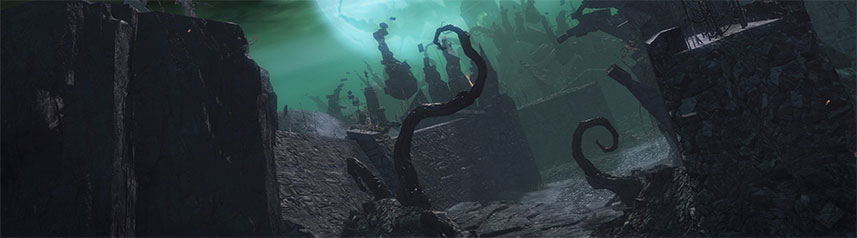
Defiance is a cross-platform 3D sci-fi MMOTPS built around a rare concept, an online shooter designed to complement a TV series that aired on SyFy under the same name. You play as an Ark Hunter, scavenging the wreckage of crashed alien Ark ships for tech and valuables while surviving a hostile, monster-filled wasteland in a ruined future Earth.
 | Publisher: Trion Worlds Type: MMOTPS (third person shooter) Release Date: April 2, 2013 Shut Down: April 29, 2021 PvP: Deathmatch and Open World Pros: +Big shared-world zones with persistent activity. +Plenty of guns, skills, and vehicles to build around. Cons: -Free accounts run into notable limitations. -Some activities and options sit behind DLC. -Level gaps can create awkward balance when players mix in the same area. |
Defiance Shut Down on April 29, 2021
Defiance Overview
Defiance aimed high from day one. It released simultaneously across PC and consoles (PS3 and Xbox 360), and it was designed to sit alongside a SyFy original series as part of a shared-media push. While it launched as a buy-to-play title, it later transitioned to free-to-play on June 4, 2014, with newer additions still tied to separate DLC purchases.
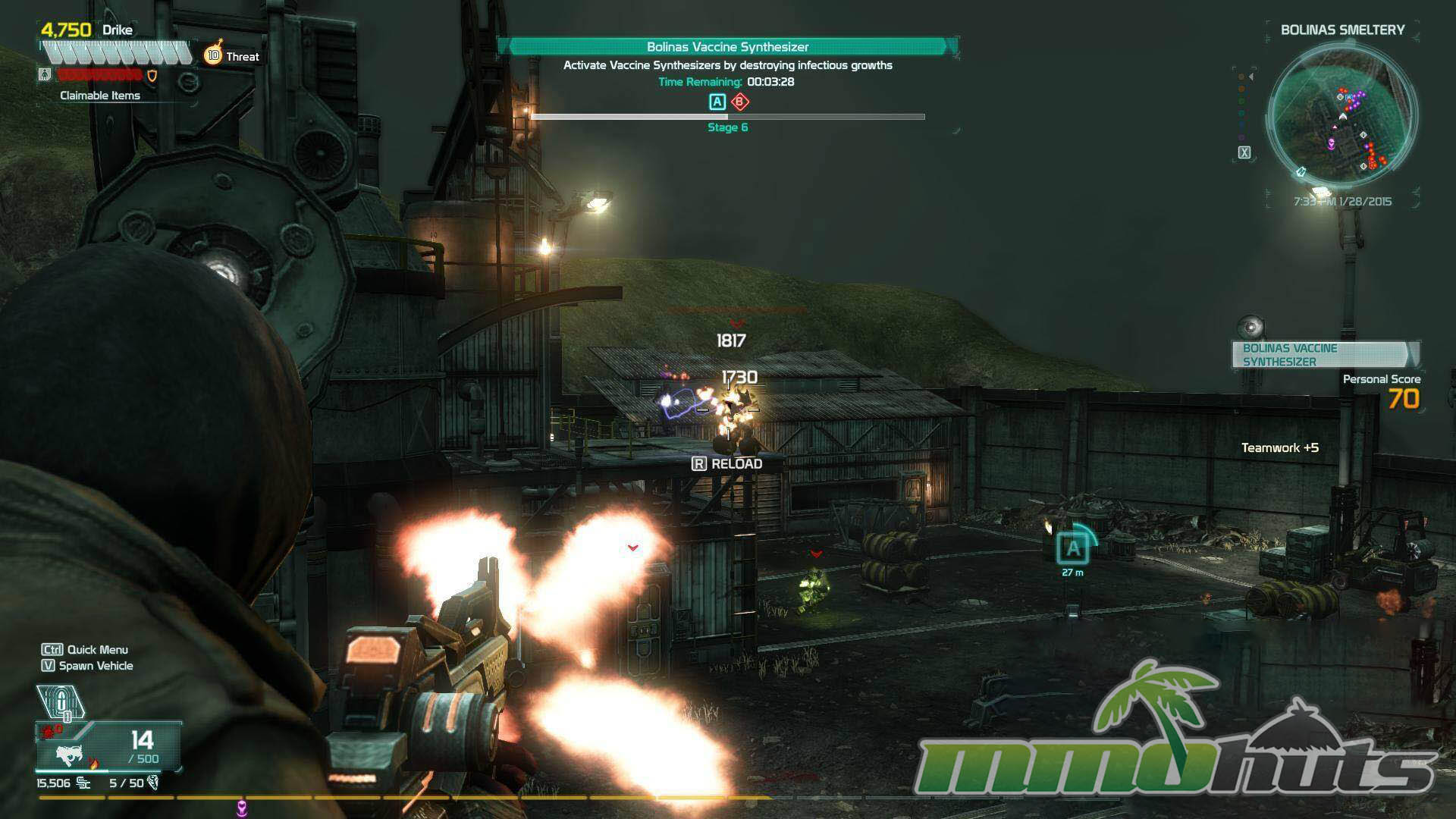
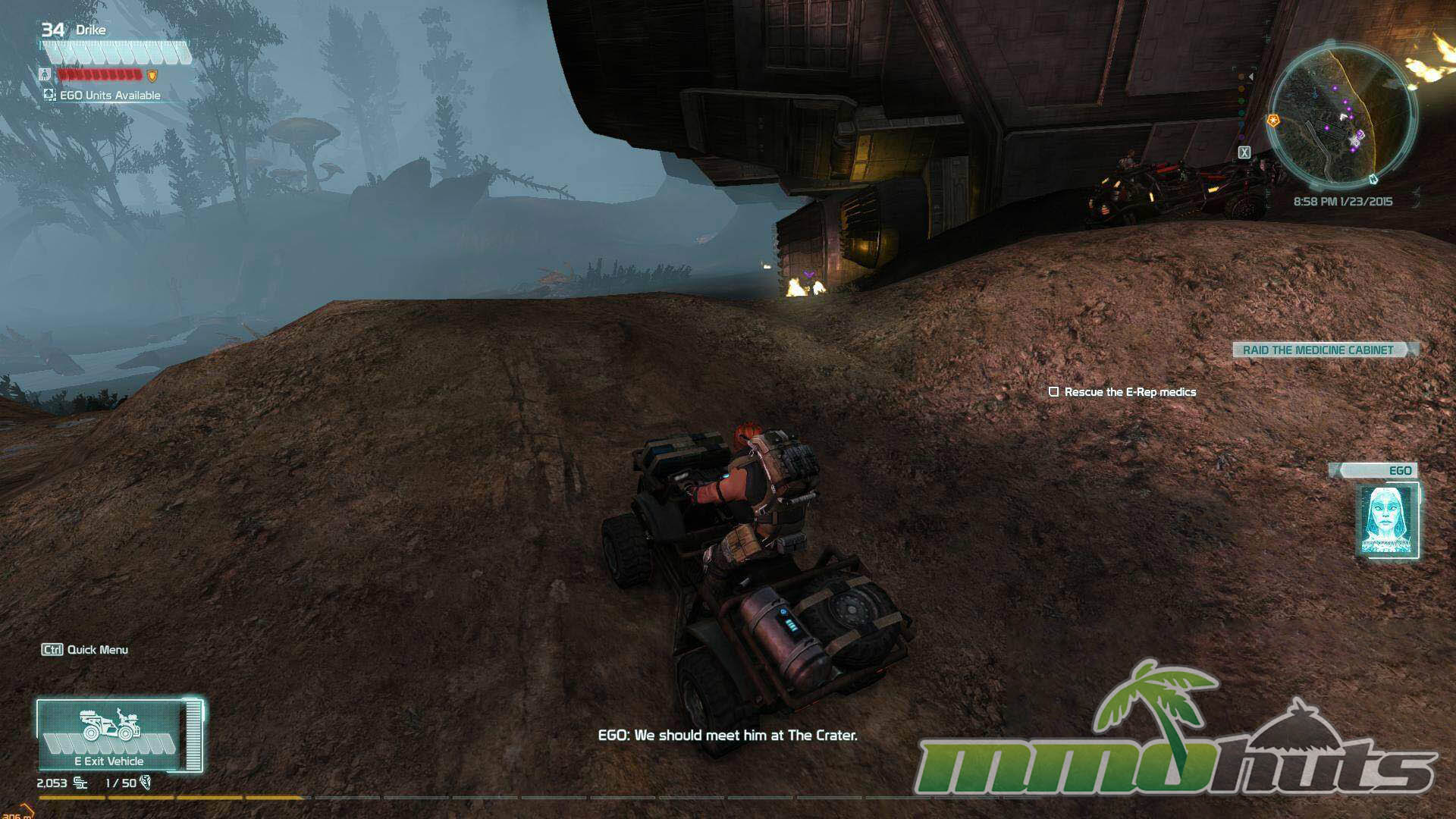
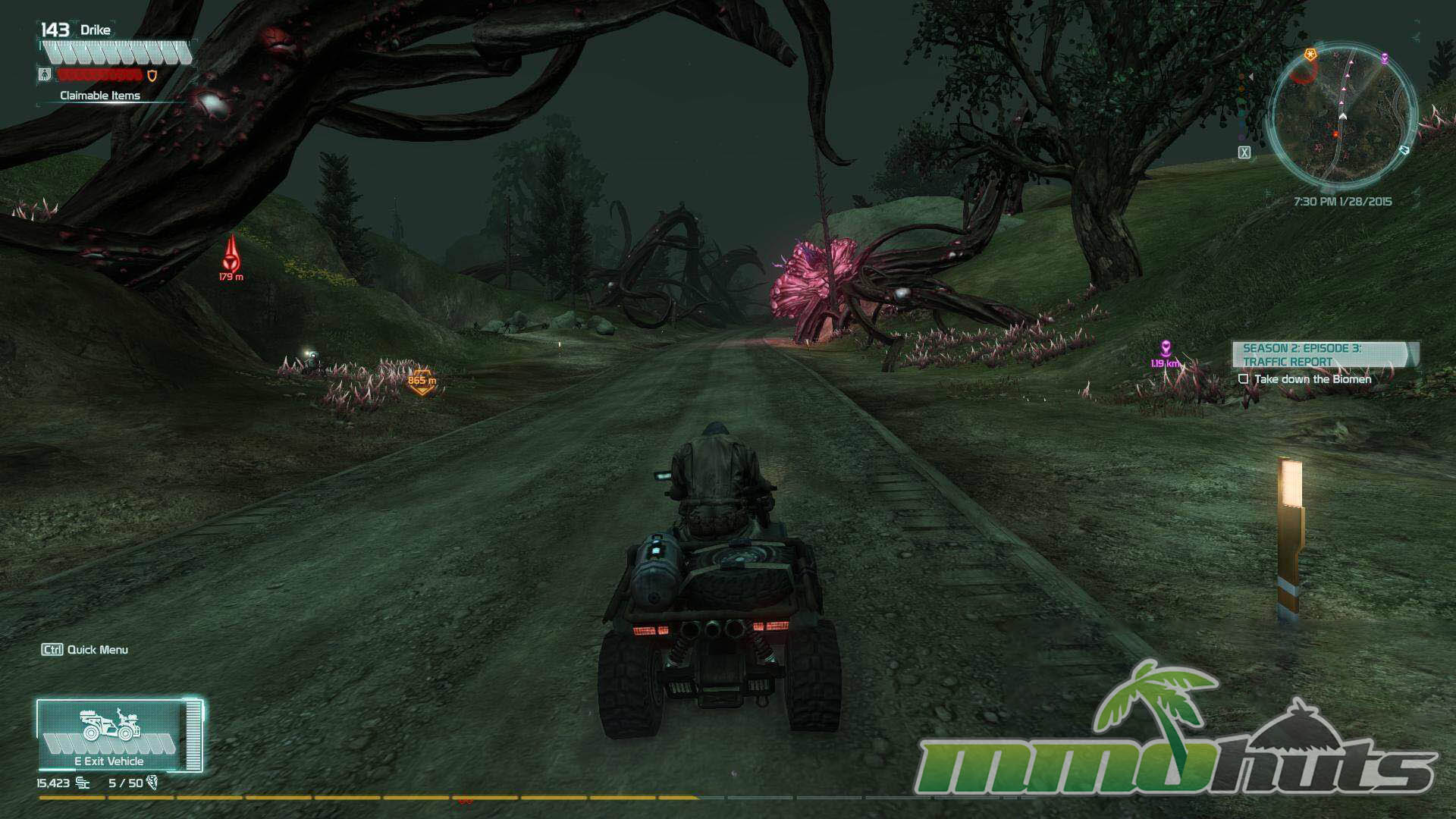
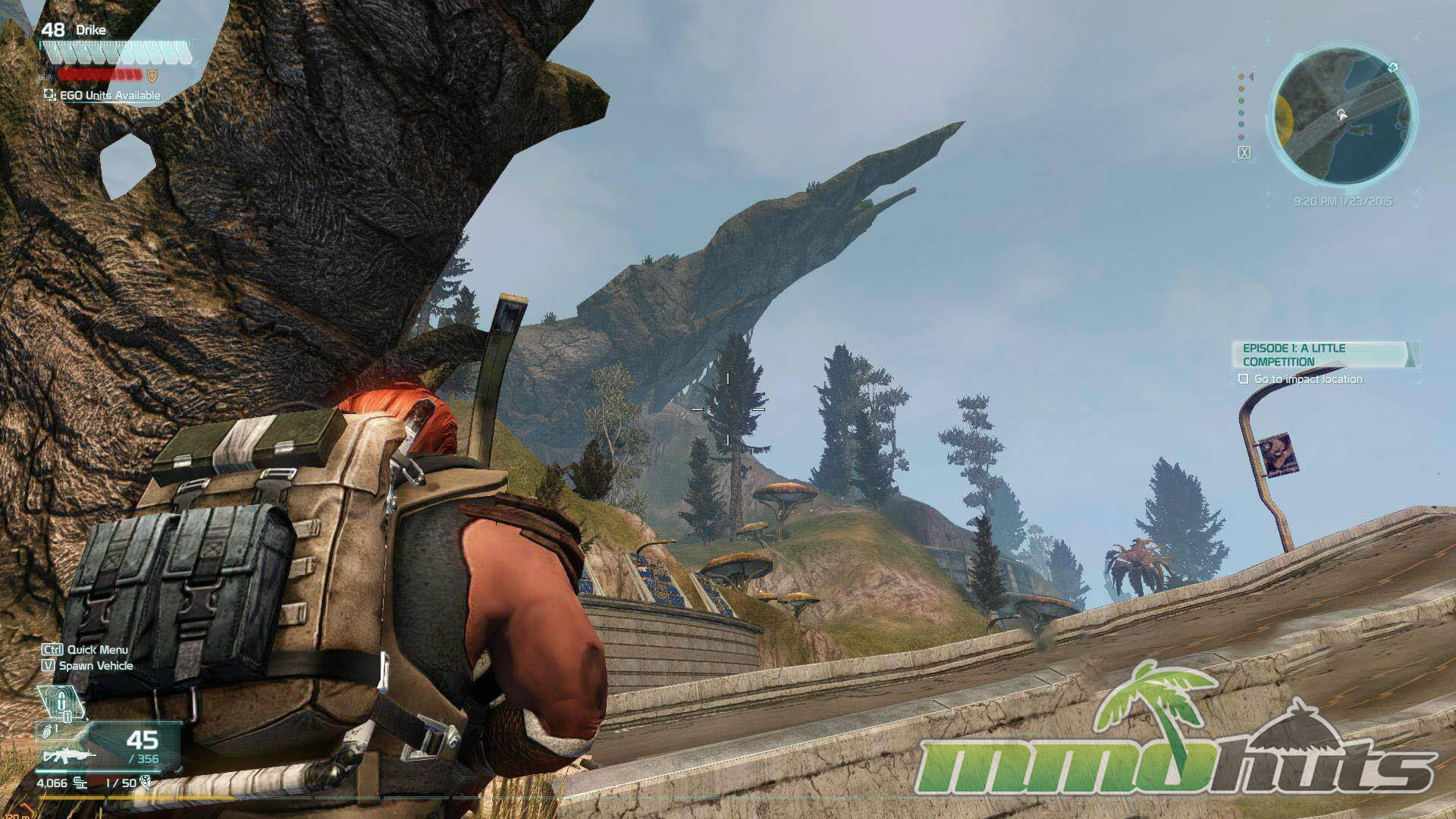
The setting is the San Francisco Bay Area decades after a catastrophic conflict reshaped the planet. From a third-person shooter viewpoint, you roam the open world as an Ark Hunter, tracking down salvage and alien technology from Ark ships that regularly fall from orbit. The structure leans heavily on roaming, public events, and drop-in cooperation, letting you explore solo but frequently nudging you into ad hoc groups as the world reacts around you.
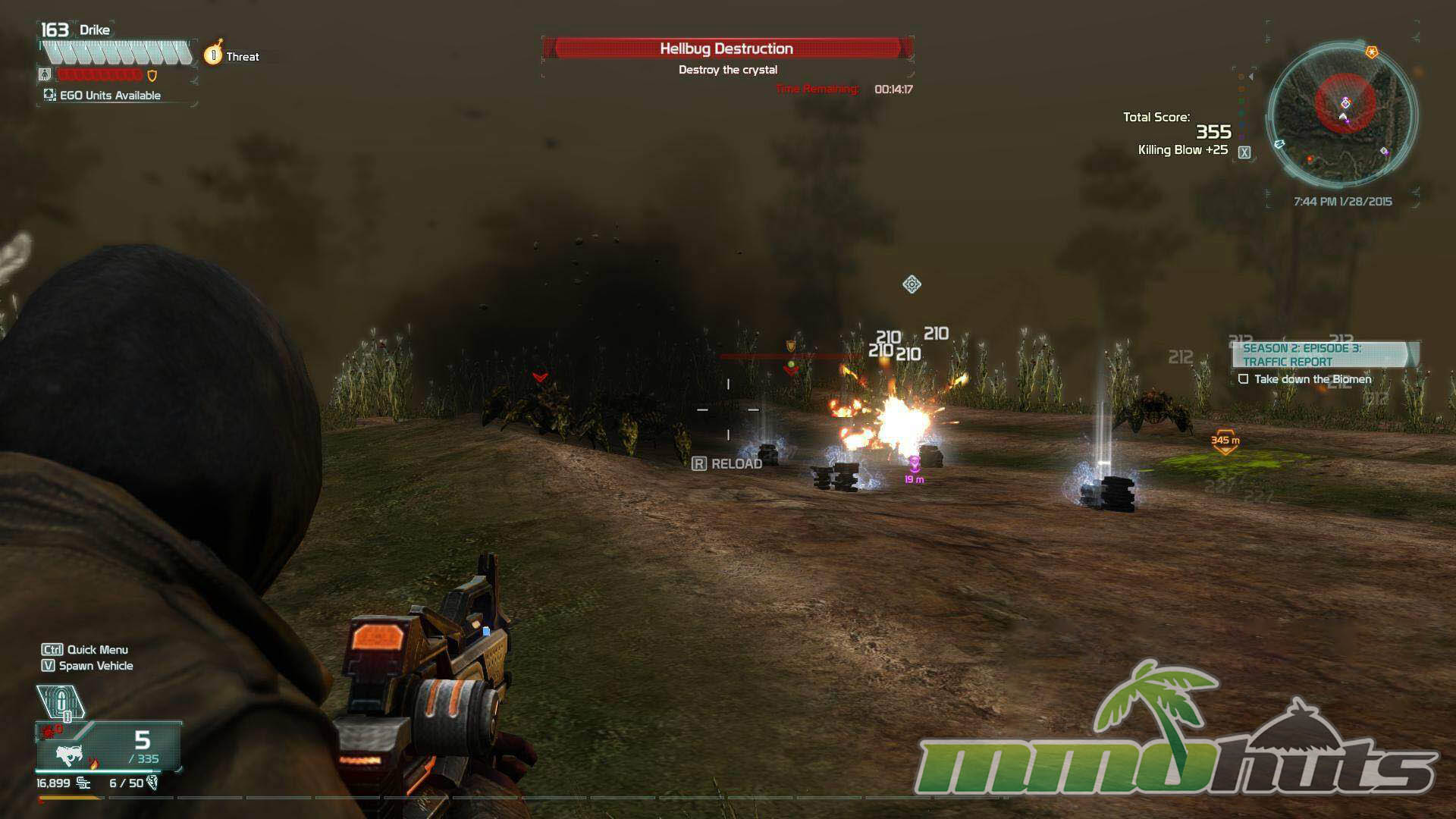
Defiance Screenshots


Defiance Featured Video

Races
- Humans – native to Earth, Humans have learned to endure Defiance’s harsh new reality. They are framed as hardy survivors and natural Ark Hunters, even as opinions differ on how to deal with the incoming Votan peoples, ranging from cooperation to outright hostility.
- Irathient – one of the alien Votan races, the Irathient are portrayed as fierce and untamed, leaning into a more aggressive, wild identity compared to other factions.
- Castithan (DLC required) – a proud Votan race defined by status and tradition. Castithans follow a strict caste structure and often come off as aloof, treating those beneath them as lesser.
Origins (aka Classes – only affects starting weapons)
- Machinists – tinkerers and scavengers who specialize in repurposing alien tech.
- Survivalists – everyday people forced to adapt fast to a broken world.
- Outlaws – raiders and opportunists who live by taking what they need.
- Veterans – battle-tested survivors shaped by the earliest alien conflicts.
Defiance Review
Defiance is a 3D science fiction MMORPG developed and published by Trion Worlds, released on April 2nd, 2013. Instead of the usual tab-target MMO approach, it plays as a third-person shooter with RPG progression layered on top, including a broad skill grid that supports multiple builds without locking you into a rigid class. Its best-known hook was the tie-in with the SyFy series, with certain mission beats and recovered items echoing elements used in the show’s narrative. On PC, Defiance was distributed via Trion’s Glyph client (the same ecosystem used for games like Rift and ArcheAge) and it also launched on Steam.
Getting Your Character Rolling
Character creation is straightforward. Players choose between Humans and Irathients by default, and the Castithan option is added through the Castithan Charge Pack DLC. You also pick one of four “origins,” presented more like a short background than a traditional MMO class choice. In practical terms, this selection mainly determines your starting primary weapon, and that initial loadout becomes irrelevant fairly quickly once the game starts handing you replacements.
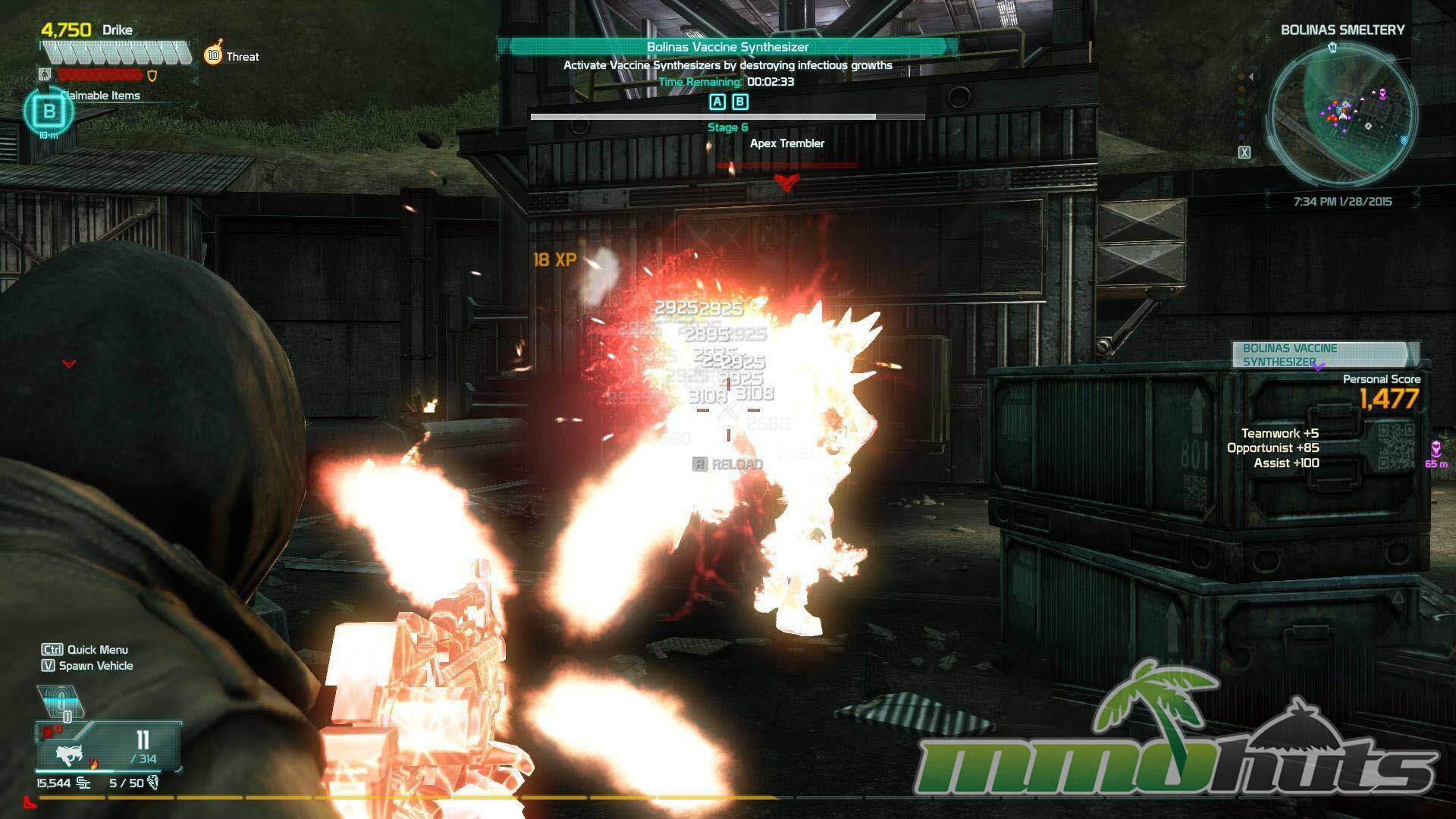
One of Defiance’s defining ideas is that there are no hard weapon restrictions. Any character can equip any gun, and the game tracks proficiency by weapon category through use. As you gain experience with a weapon type, that category levels up and grants small stat improvements (for example, better reload speed or faster firing). Because different weapon families progress at different rates, you can either lean into a favorite style early or gradually level multiple types to stay flexible.
The Early Game Pace
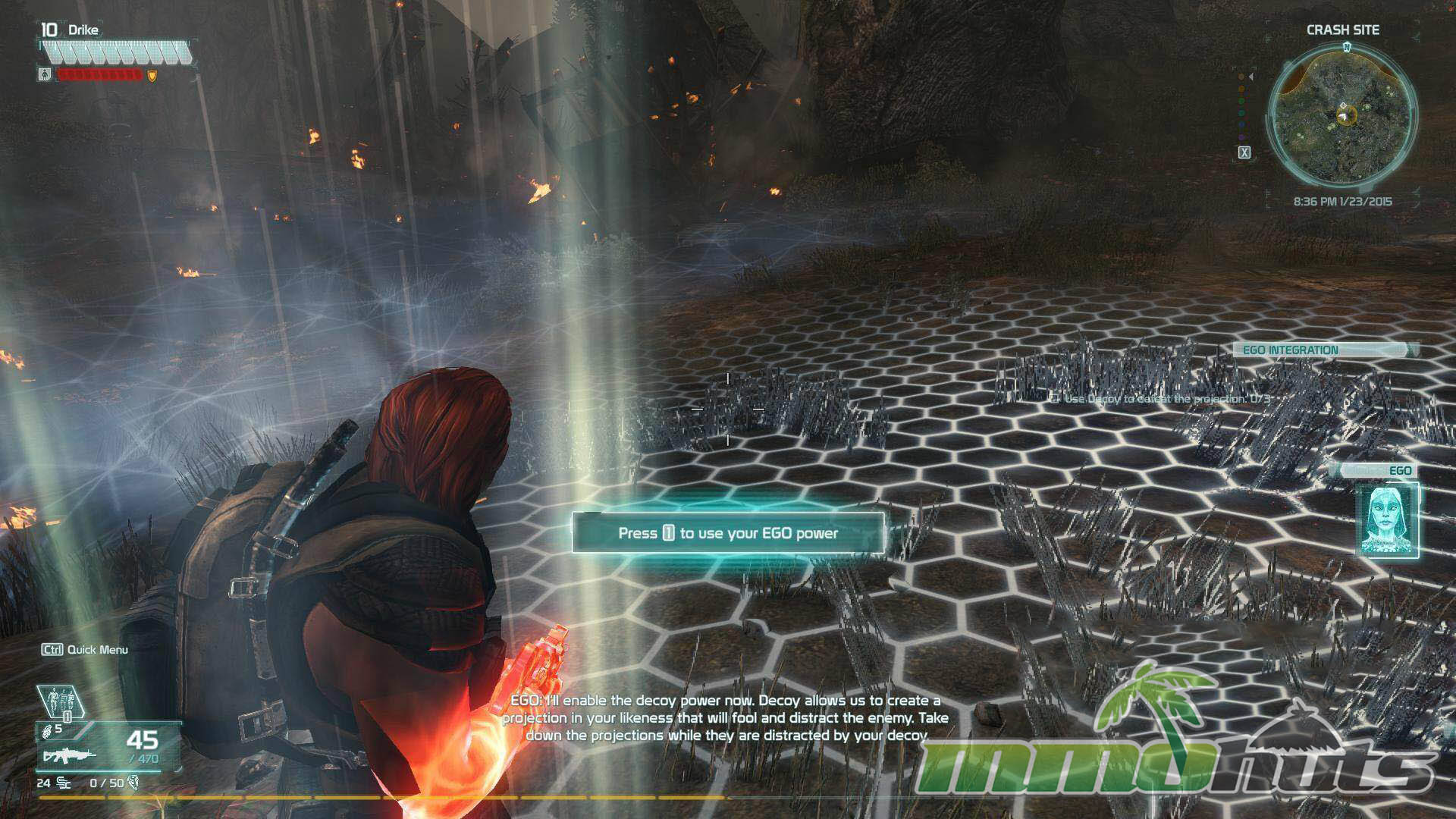
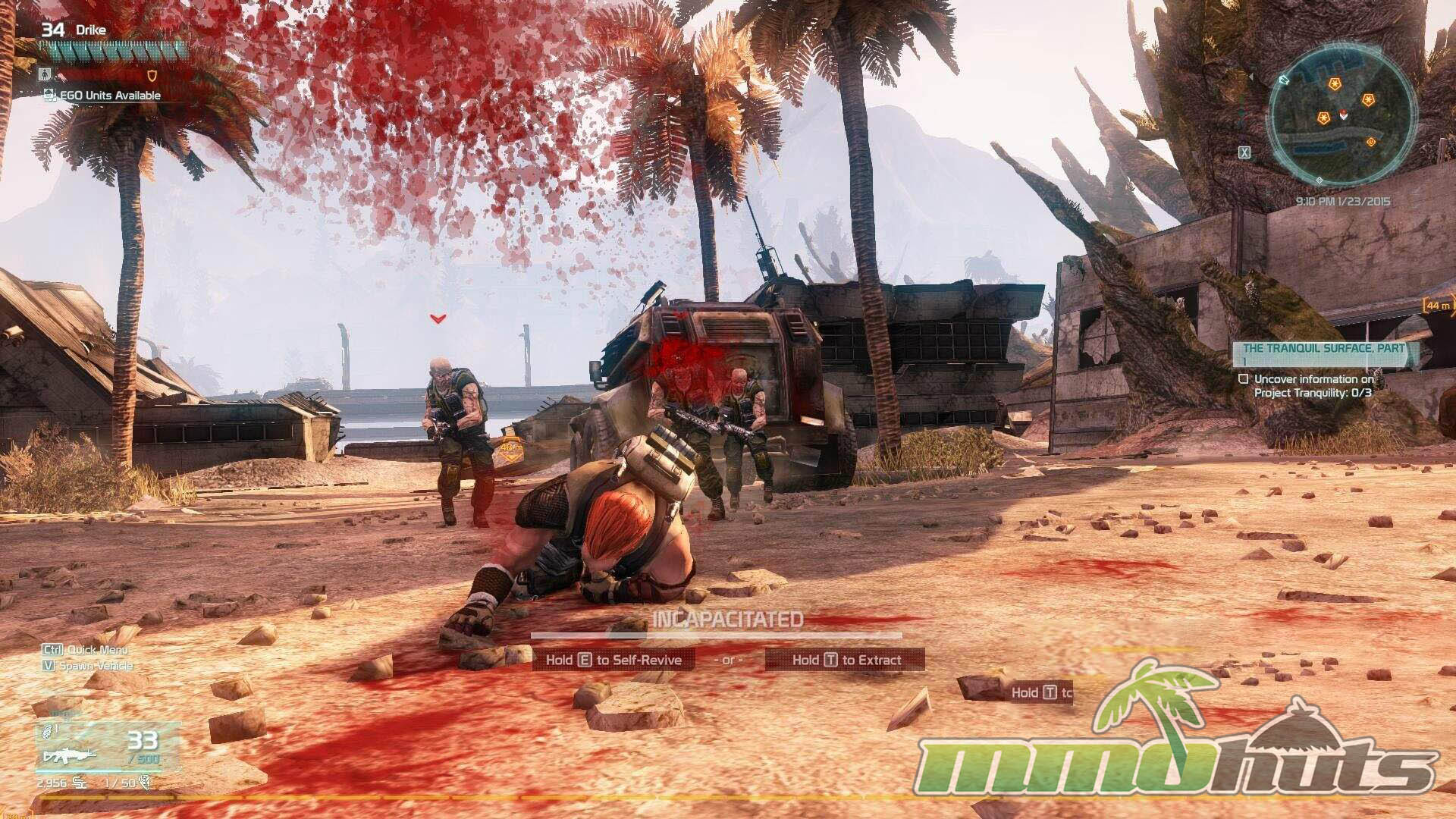
The opening hours focus on teaching fundamentals while introducing the EGO implant, represented in-game by a holographic guide. Missions are built to cover the basics, movement, swapping gear, using items, and activating EGO abilities. Controls follow familiar PC shooter conventions (WASD movement, right-click to aim, left-click to fire), and the tutorial has you try each of the four core EGO powers before committing to your first pick.
EGO Progression and the Skill Grid
Instead of a conventional level number, Defiance uses your EGO rating as the primary progression gate. Completing story missions and side activities increases that rating, and reaching key thresholds unlocks practical features, such as additional inventory space, extra loadouts, co-op content, and other systems that broaden what you can do.
As your EGO rating rises, you earn EGO points to spend on the ability grid. The four signature powers (Blur, Cloak, Decoy, and Overcharge) can be pushed up to level 5, while the smaller surrounding perks generally cap at level 3. With enough investment across the grid, it is possible to unlock and learn the other EGO powers as well, but spreading points too thin can leave you feeling weak in harder missions. The grid works best when you build around one primary power and then branch outward for supporting perks.
Each power supports a different play approach. Blur is about mobility and close-range pressure, pairing naturally with shotguns or melee-focused play. Cloak favors careful positioning and long-range picks, though firing breaks invisibility. Decoy creates a hologram to draw attention and reduce incoming pressure, and Overcharge is a straightforward damage spike for short windows. For solo players, Decoy and Overcharge tend to feel especially useful because they either reduce incoming fire or shorten fights.
PvP Modes
PvP is split into two primary formats, standard matchmaking and Shadow Wars. In the matchmaking playlist, you queue up and get placed into one of four PvP maps once enough players join. These maps support two modes: a team-based deathmatch, and a “capture and hold” objective mode focused on controlling three points. Deathmatch is the simpler option, the last team standing wins. Capture and hold revolves around accumulating points by controlling objectives; eliminations reward the player but do not directly count toward the win condition.
Shadow Wars uses a similar objective structure but places the fight on the Overworld itself, meaning NPC enemies and uninvolved players can be present in the same space. Hostile mobs can interfere and often need clearing to stabilize an objective. Meanwhile, neutral players who are not participating appear without the usual indicators and cannot be attacked (nor can they attack you), which can create momentary confusion in the middle of a chaotic public area.
Co-Op Missions
Alongside open-world play and PvP, Defiance includes cooperative mission content spread across seven maps, each tied to story threads around the Bay Area. Co-op has three difficulty tiers with EGO requirements: 1,000 for standard, 3,000 for advanced, and 5,000 for expert. Teams are built around four-player groups, and missions vary in structure, from pushing through combat-heavy objectives to defending key items or locations.
These co-op runs and matchmaking PvP are instanced, separating them from the persistent overworld. The result feels closer to how games like Guild Wars handle certain mission content, or how traditional MMO raids and battlegrounds pull you into dedicated spaces, even though most of Defiance’s day-to-day play happens out in shared zones.
Arkfalls and Public Events
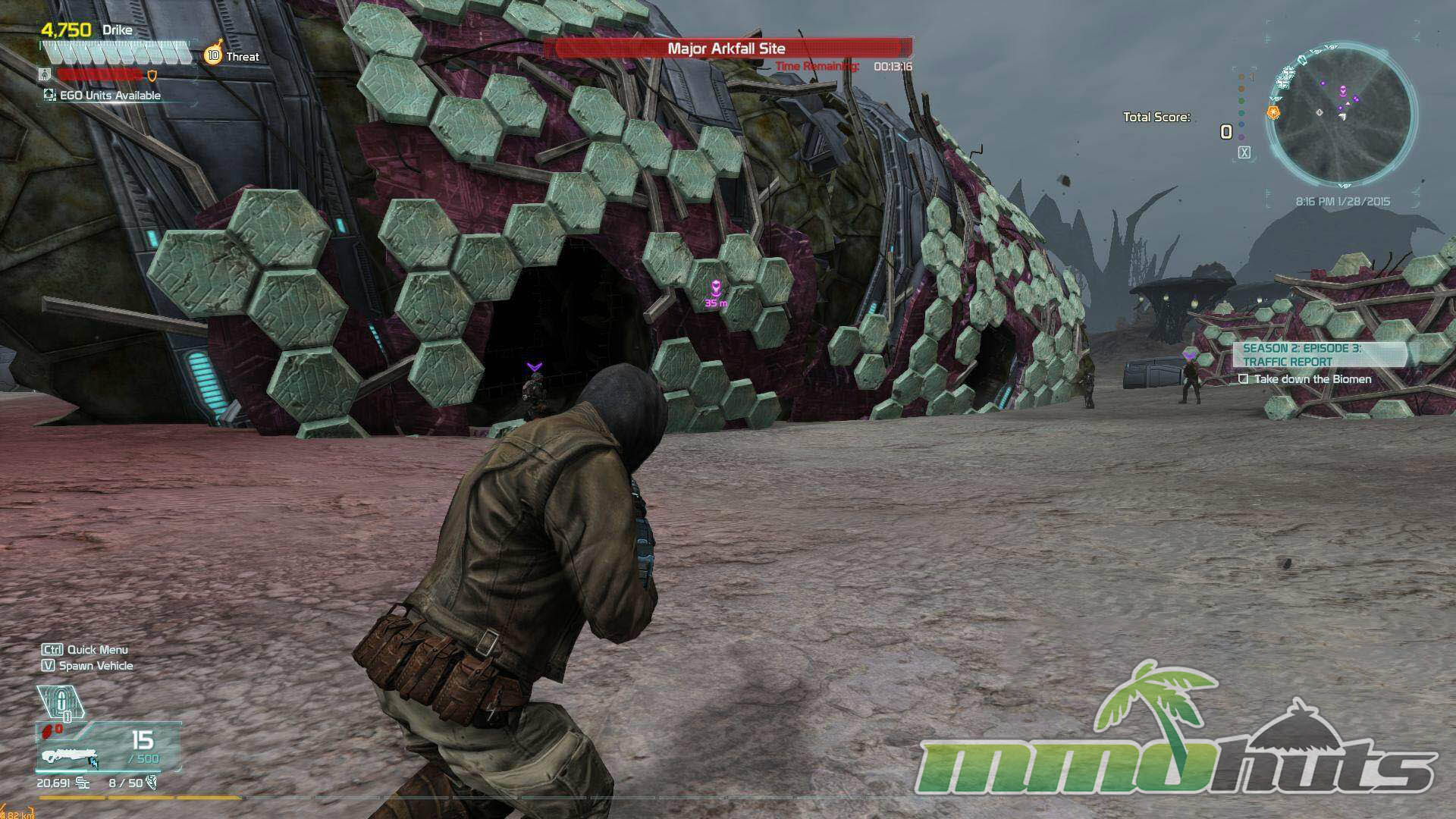
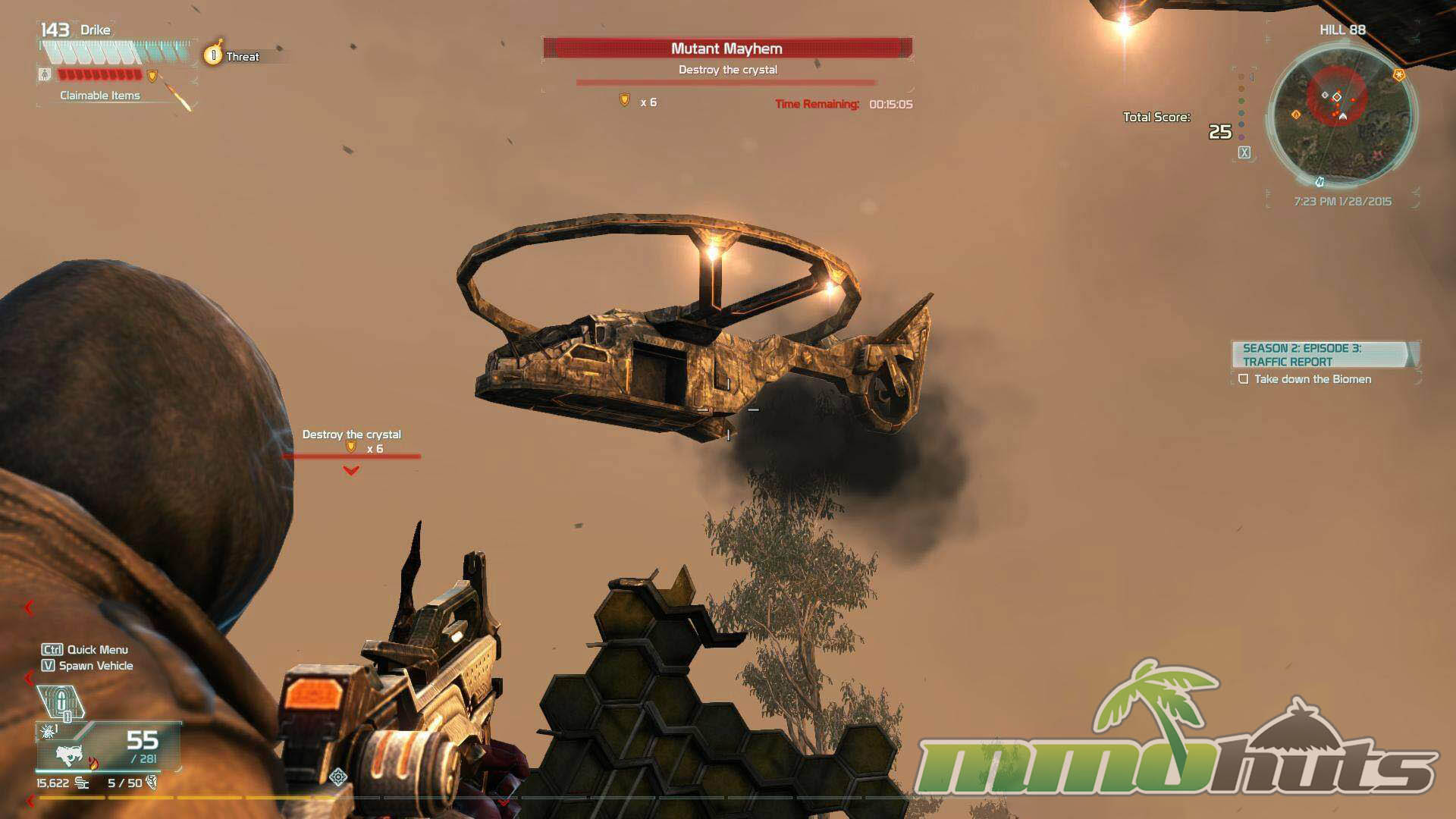
Arkfalls are Defiance’s headline dynamic events, and they echo the public-event energy Trion used in Rift. The premise is simple, fragments of Ark ships crash down carrying valuable salvage, and every crash attracts trouble. Arkfalls come in minor and major forms.
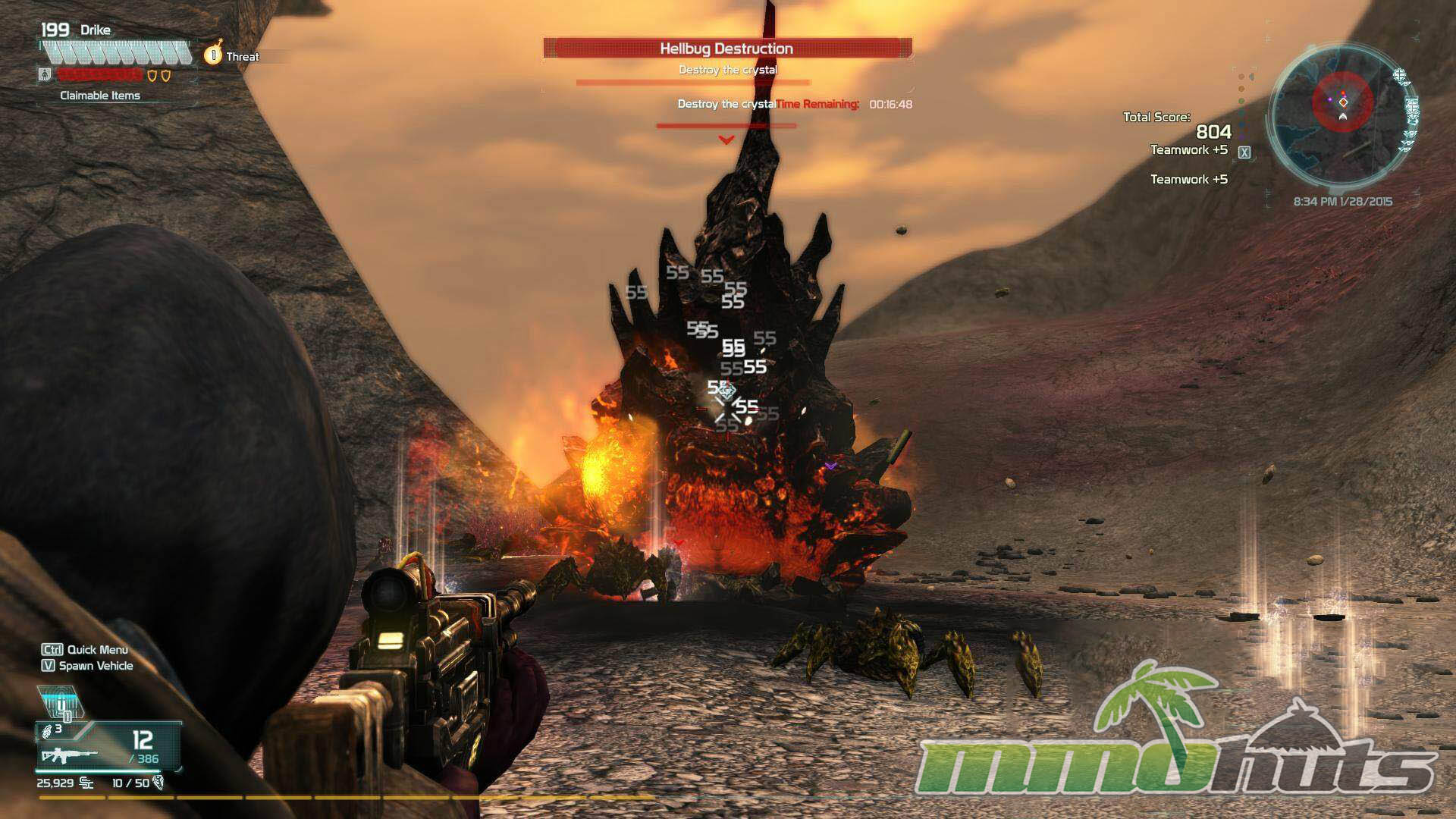
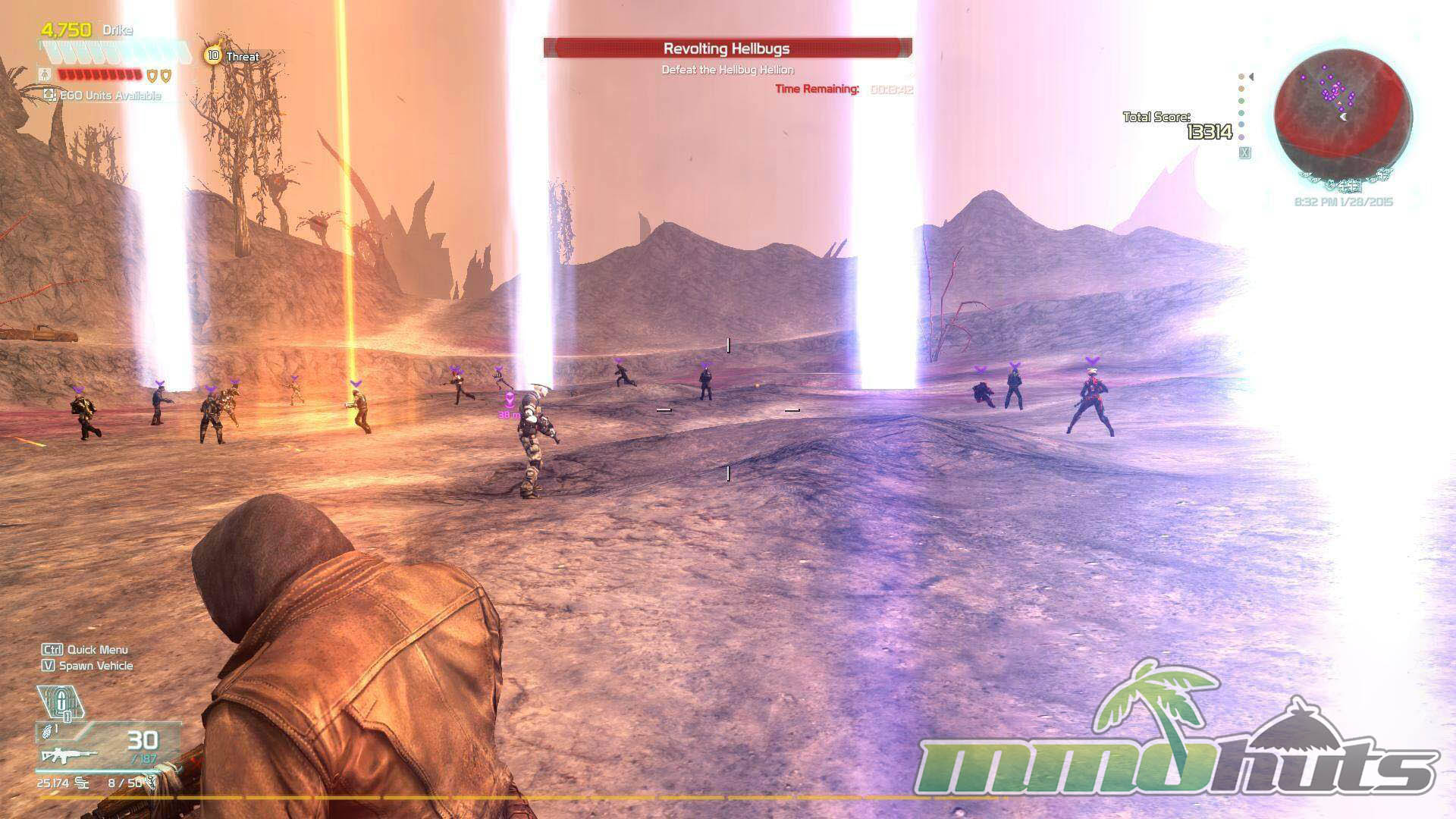
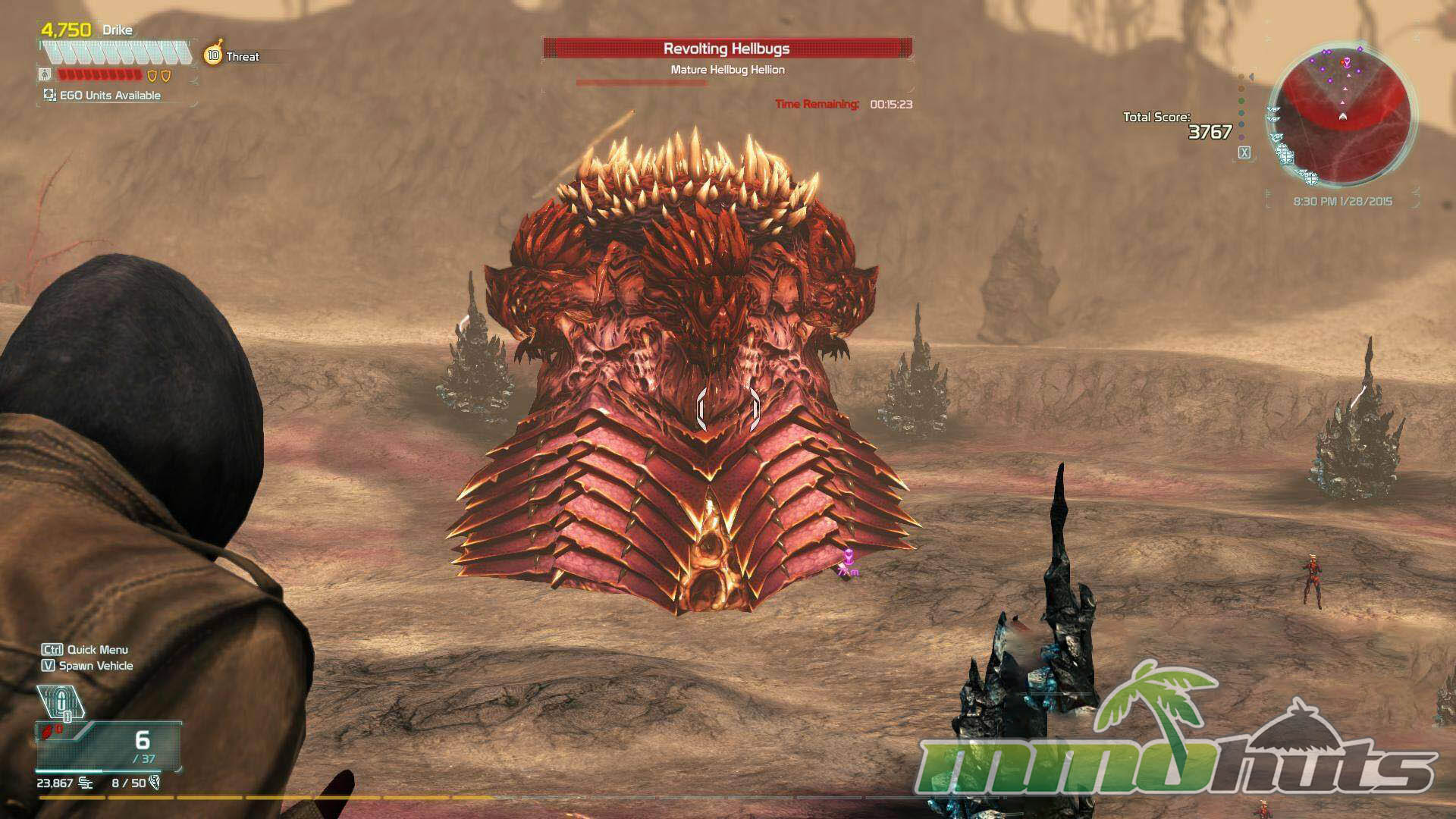
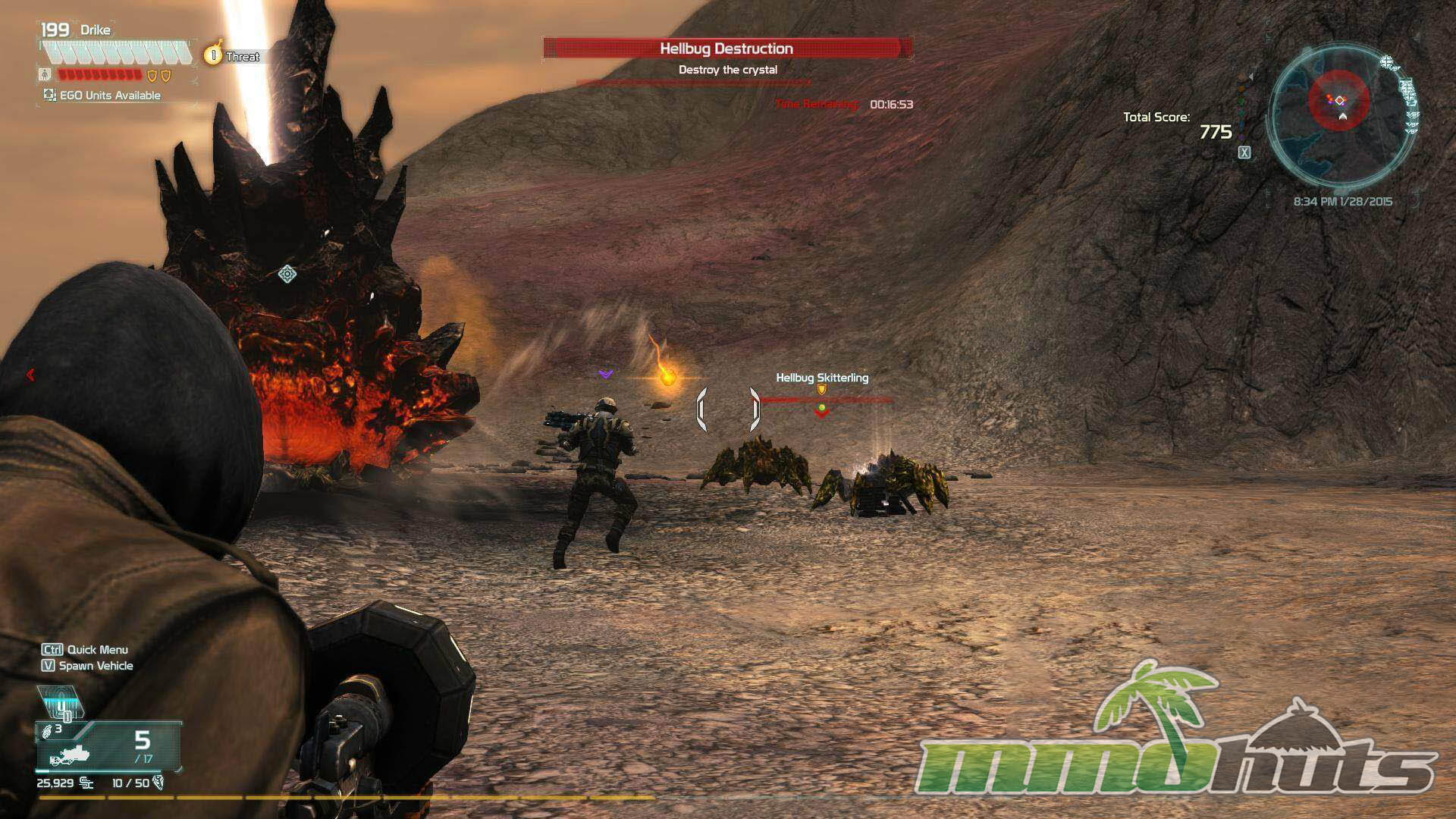
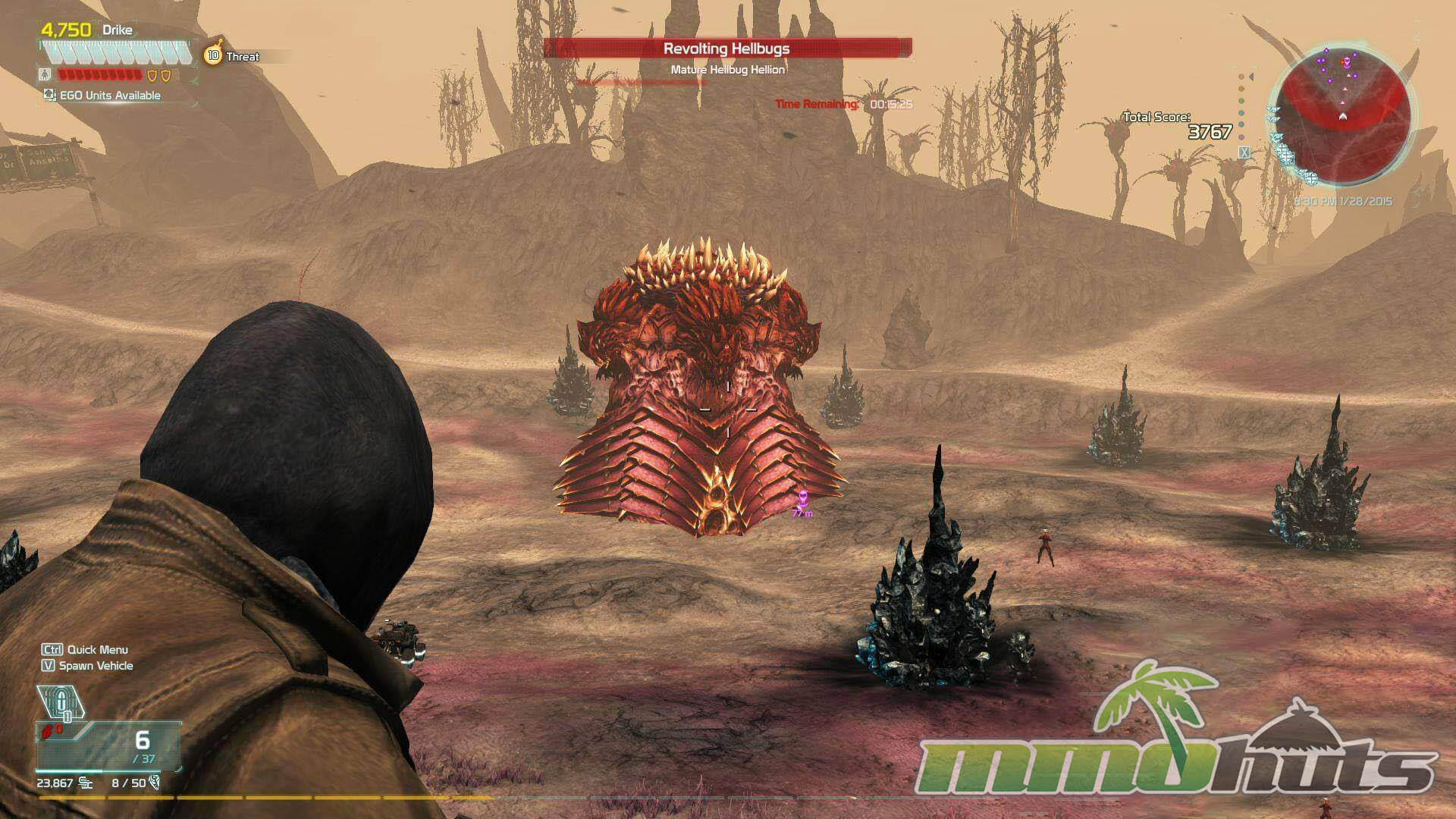
Minor Arkfalls are smaller encounters that draw a particular enemy set. A good example is a Hellbug-themed event, where you deal with waves of Hellbug types before entering the fallen Ark piece for a short instanced fight. Major Arkfalls escalate the formula by spawning multiple minor events first, then culminating in a larger crash with tougher opposition. In a Hellbug Uprising, for instance, you clear several smaller Hellbug waves before facing a massive Hellion that can take a crowd of players to bring down.
Cash Shop and Monetization
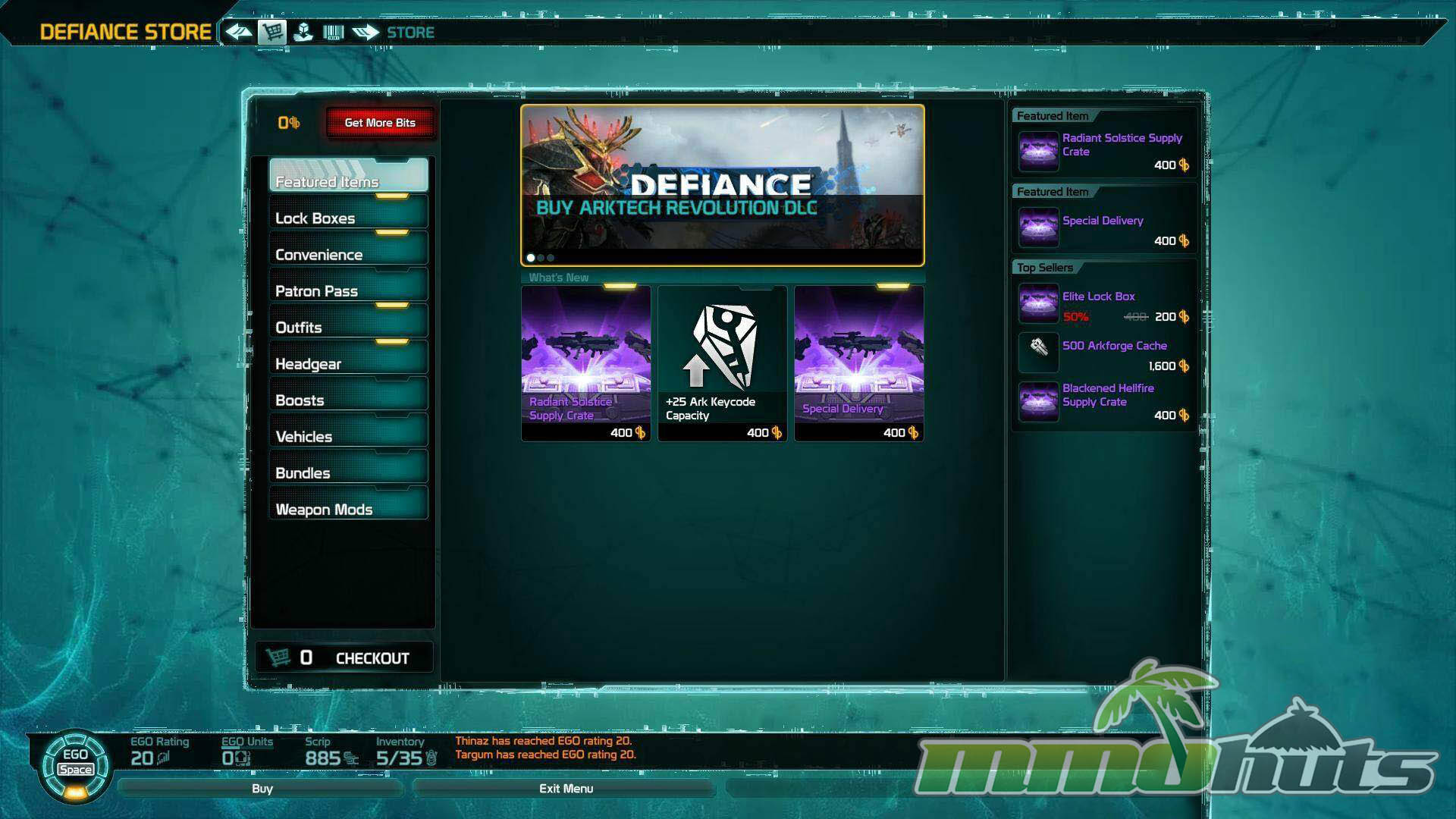
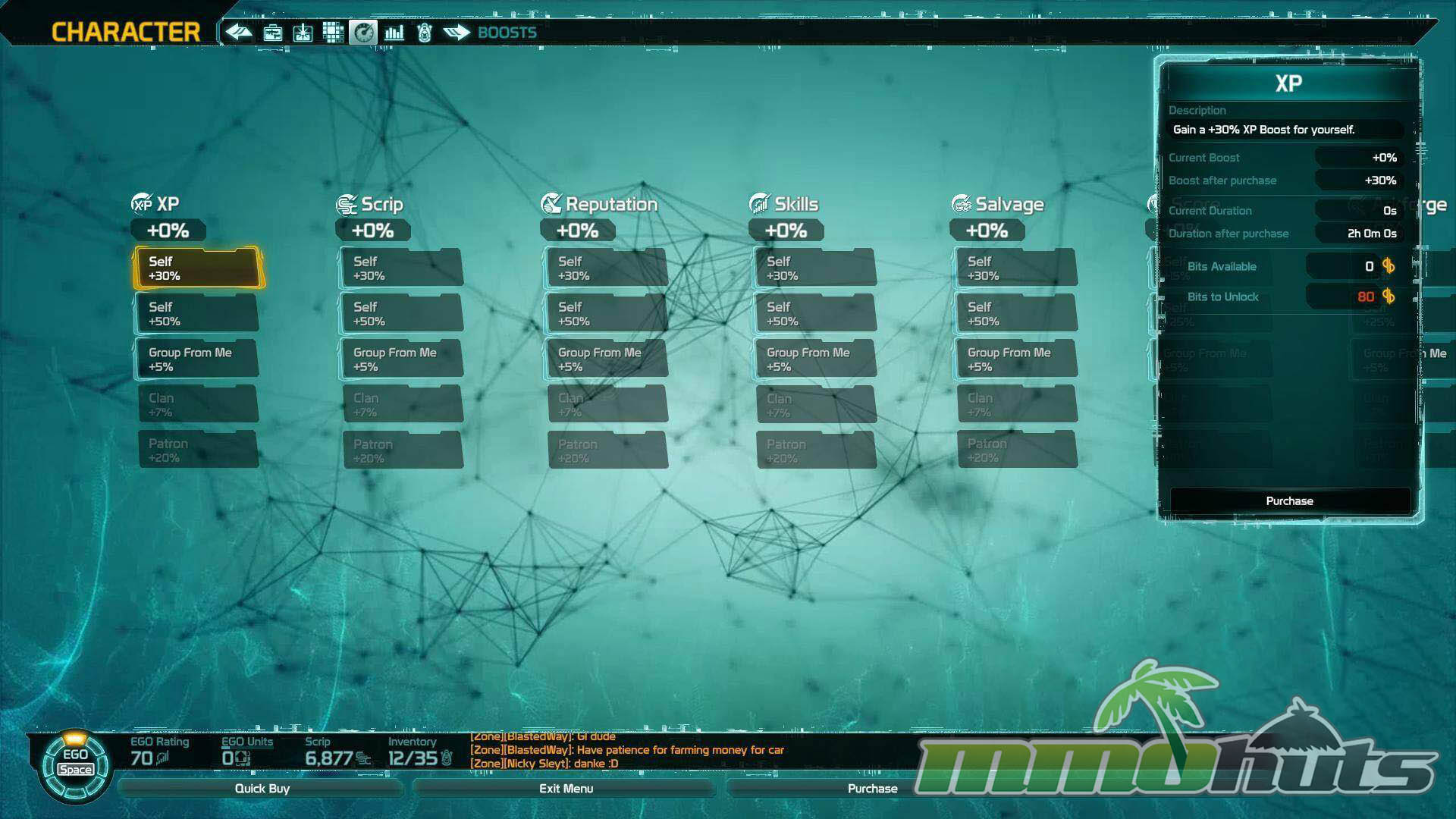
Defiance’s store focuses on convenience boosts (experience, currency, and reputation) and also offers small reputation purchases for various factions. The more attractive side of the shop is cosmetic variety, with multiple armor looks, helmets, and vehicles, plus paint options for customizing rides. While monetization and DLC gates can still feel restrictive for free players, the shop generally avoids pushing blatantly match-winning gear, and it leans more toward time-saving and appearance customization than raw power.

Final Verdict: Good
Defiance is a game with an unusual identity. It mixes MMO structure, a shooter camera, and a build system that encourages experimentation, and the TV tie-in gives it a flavor few online games even attempt. At the same time, the world can feel strangely thin despite the amount of content on paper, and combat pacing can skew toward frustration. Solo players can get overwhelmed in certain mission moments, while grouping sometimes makes enemies feel overly spongey rather than genuinely smarter or more dangerous. That kind of scaling can make cooperation feel less rewarding than it should.
Even with those problems, Defiance can still be enjoyable if you want a shared-world shooter with RPG progression, especially if you already care about the show’s setting and themes. Its mix of gunplay and character building offers a different rhythm than the many fantasy MMOs built primarily around melee and ability rotations, and that novelty remains one of its strongest points.
Defiance Links
Defiance Official Site
Defiance Wikipedia
Defiance Wikia (Database / Guides)
Defiance Show / Game Wikia
Defiance Subreddit
Defiance System Requirements
Minimum Requirements:
Operating System: Windows XP SP 2
CPU: Intel Core 2 Duo 2.0 GHz or AMD equivalent
Video Card: Nvidia GeForce 8600 GT / ATI Radeon HD 2900 / Intel HD 4000 Integrated
RAM: 2 GB
Hard Disk Space: 15 GB
Recommended Requirements:
Operating System: Windows 7 or better
CPU: Intel Core i5 2.4 GHz of better
Video Card: Nvidia GeForce GTS 250 / ATI Radeon HD 4750 or better
RAM: 4 GB
Hard Disk Space: 15GB
Defiance Music & Soundtrack
Defiance Additional Information
Developer: Trion Worlds & Human Head Studios
Head Designer: Bill Trost
Other Platforms: Windows, Xbox 360, Playstation 3
Closed Beta Date: January 18, 2013
Open Beta Date: March 22, 2013
Foreign Release:
Australia: April 11, 2013
Shut Down: April 29, 2021
Development History:
Defiance entered production in Augfust 2008 as a collaboration between Trion and Syfy, with the core goal of running a game and television series in parallel. The Defiance TV show premiered on Syfy on April 15, 2013, and it proved popular enough to reach 3+ seasons. The game launched on April 2, 2013 as a buy-to-play release that included a subscription, then later removed the subscription and switched to free-to-play on June 4, 2014. Ahead of release, Trion Worlds secured $150 million in funding and staffed a team of about 150 employees to support development, with estimates putting total development costs around ~$70 million. On February 24, 2021, Trion announced Defiance would shut down, and the servers ultimately went offline on April 29, 2021.