Crush Online
 (No Ratings Yet)
Crush Online blends MMO progression with MOBA-style controls and lane-pushing territory battles, wrapping it all in a three-faction war that plays out across a persistent world map. Its standout hook is the multi-weapon setup, letting a single character swap fighting styles mid-combat while jumping between questing, dungeon runs, and large-scale PvP sectors.
 | Publisher: GAMESinFLAMES Playerbase: Shut Down Type: MMO Battle Arena Release Date: October 10, 2016 Pros: +Clever MMO and MOBA crossover design. +Weapon swapping adds variety to one character. +Ongoing three-faction territory conflict with map-wide stakes. Cons: -World navigation can be hard to read and easy to misinterpret. -Noticeable latency spikes during play. -Visuals feel dated and rough in places. -Soundtrack and effects lack personality. |
Crush Online Overview
Crush Online aims to marry traditional MMORPG structure with the tempo and perspective of a MOBA. After choosing one of three rival factions, you move through a shared world where territory ownership changes hands through arena-like sector battles, not isolated match queues. Between those clashes, you complete quests and missions for currency and loot, tackle dungeons for upgrades, and prepare your character for the next push on the map.
Instead of rolling multiple characters for different roles, Crush Online leans on a flexible weapon system. Each class can equip several weapon types, and swapping weapons changes your available abilities, which helps keep moment-to-moment combat from feeling one-note. The larger goal is faction strength, since captured sectors provide advantages that matter beyond a single fight. If you enjoy PvP that feels connected to a broader campaign, this is the part of the design that tries to set Crush apart.
Crush Online Key Features:
- Persistent Three-Way Warfare – fight over a living world map where sectors are won and held by your faction through MOBA-flavored battles.
- Unique Blend of Genres – MMO questing and progression feed into arena-like PvP, using familiar MOBA controls and presentation.
- Legion System – group up through guild-style Legions, whether you want structured PvP squads or social support.
- Cartoony 3D Graphics – stylized visuals and bright character designs aim for a light fantasy tone rather than realism.
- Large Variety of Weapons and Gear – experiment with different weapon categories and equipment to suit your preferred role and rhythm.
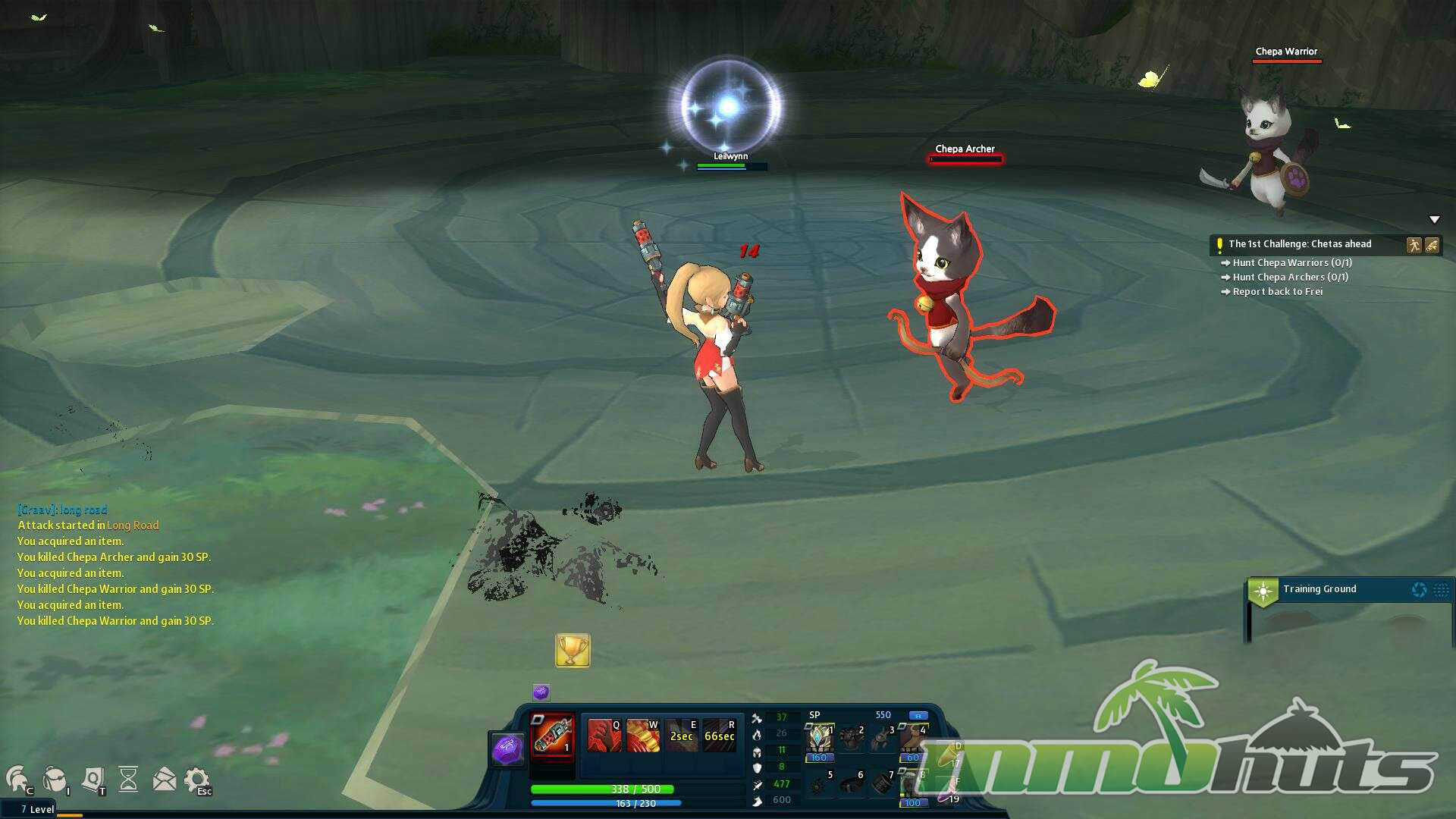
Crush Online Screenshots




Crush Online Featured Video

Crush Online Review
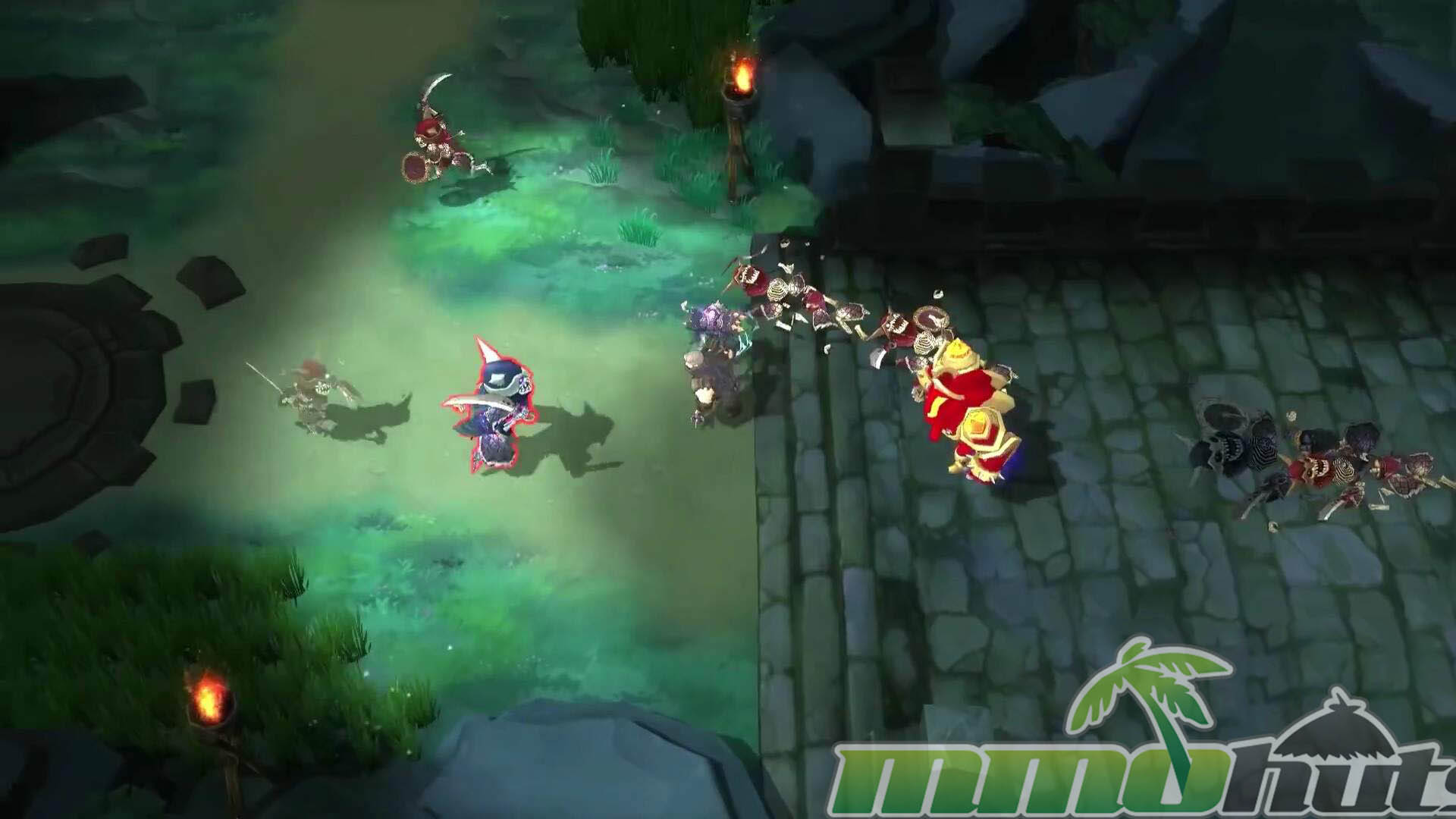
Crush Online is a 3D MMO Battle Arena built around a constant three-faction struggle in the world of Gaia. You play as a Protector aligned with one of the realms, then spend your time bouncing between MMO staples (quests, gear hunting, dungeons) and the game’s real centerpiece, sector-based territory wars that resemble MOBA lanes and objectives more than open-world skirmishes.
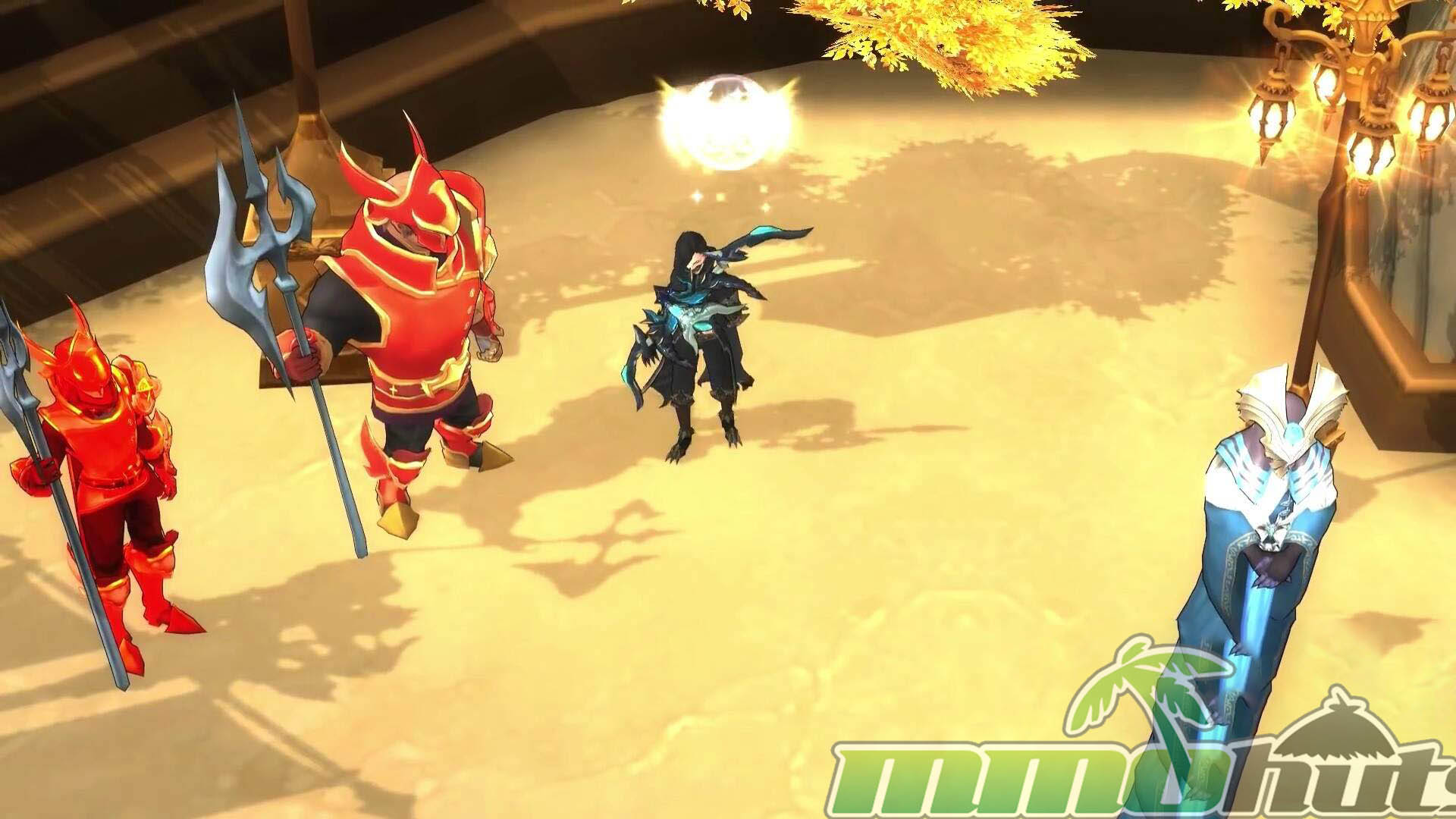
Visually, the game goes for a cel-shaded, anime-inspired look. The style is readable and consistent, but the overall presentation feels behind other games that use similar shading, especially in environment detail and effects. Sound is serviceable but rarely memorable, with combat and ambient audio that does its job without establishing much identity.
Picking a role: Saint, Punisher, or Guardian
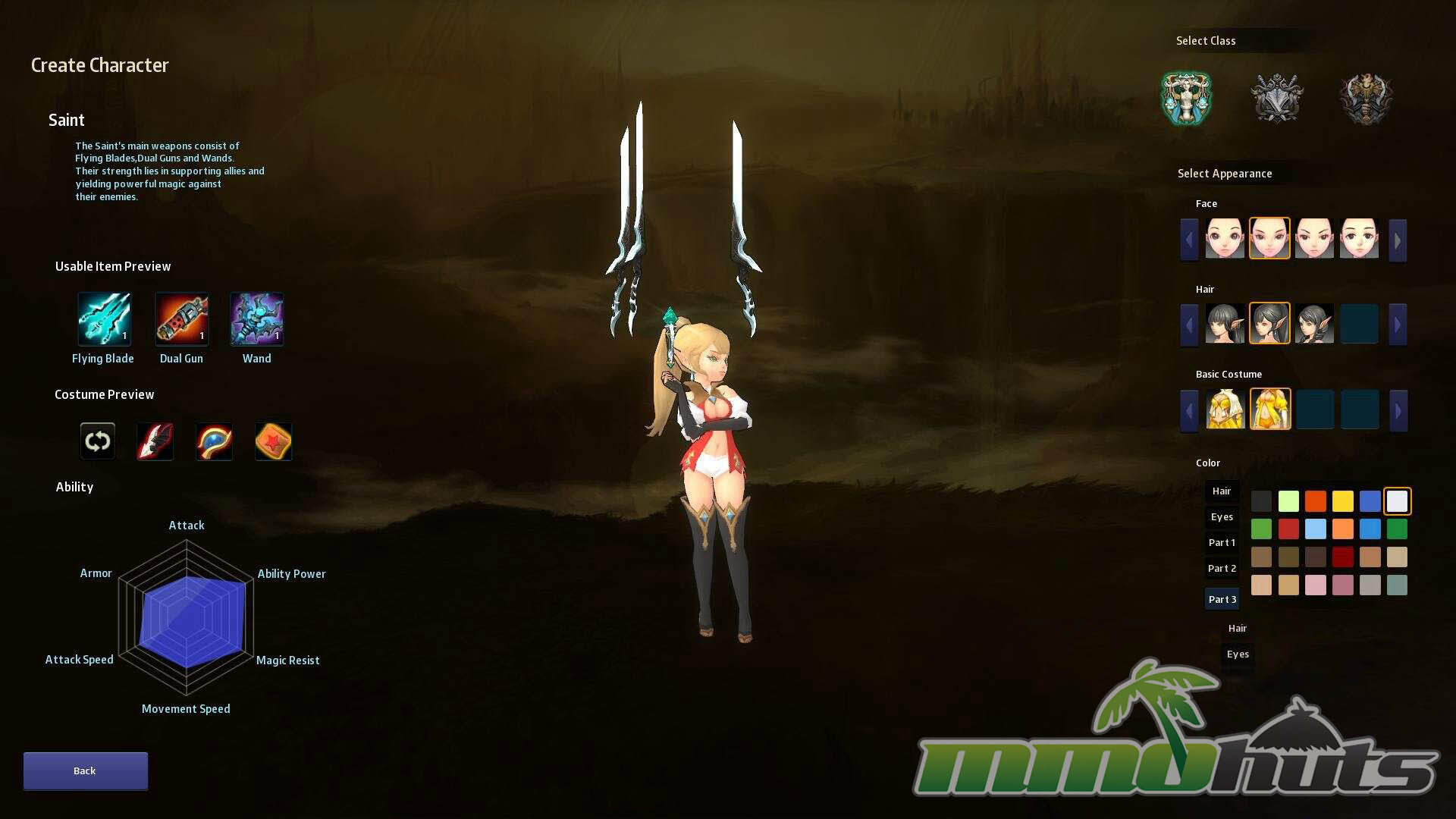
Character creation is quick and uncomplicated, and that simplicity is a double-edged sword. You select a faction and one of three classes, but the factions are not strongly differentiated beyond their territory colors, and the class lineup is shared across all sides. Class choice matters, but the broader “who are you in this war” fantasy is not as pronounced as it could be.
The three classes cover familiar party and PvP roles: Saint as support, Punisher as damage, and Guardian as the sturdier frontline. It is also worth noting that the classes are gender-locked, and cosmetic customization is limited compared to what many MMO players expect, particularly if you are coming from titles known for robust character creators.
Tutorials teach the buttons, not the geography
Early progression walks you through basic systems, including combat, quests, inventory management, and the game’s arena-driven warfare. In terms of explaining the controls and the MOBA-like interface, the onboarding does a decent job, and it gets you into real activities quickly rather than dragging out a slow introduction.
Where the new-player experience stumbles is in navigation and clarity of destinations. It is easy to end up in an unexpected location or get dropped into conflict zones without a strong sense of how to return to a hub or where the objective sits on the larger map. Convenience items like return scrolls become less of a luxury and more of a practical tool, because confusion is not rare when moving between sectors.
An MMO that plays like a MOBA
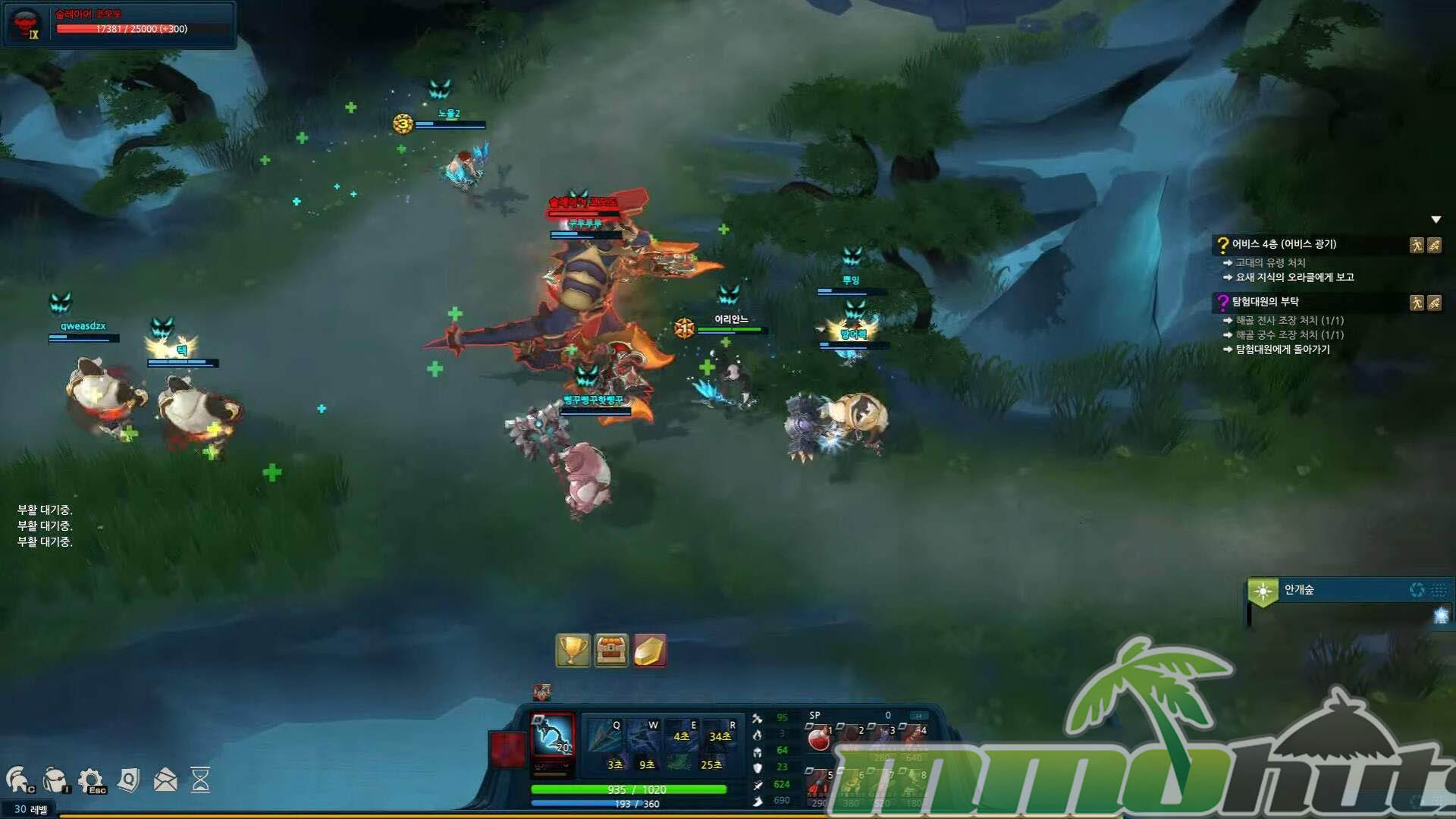
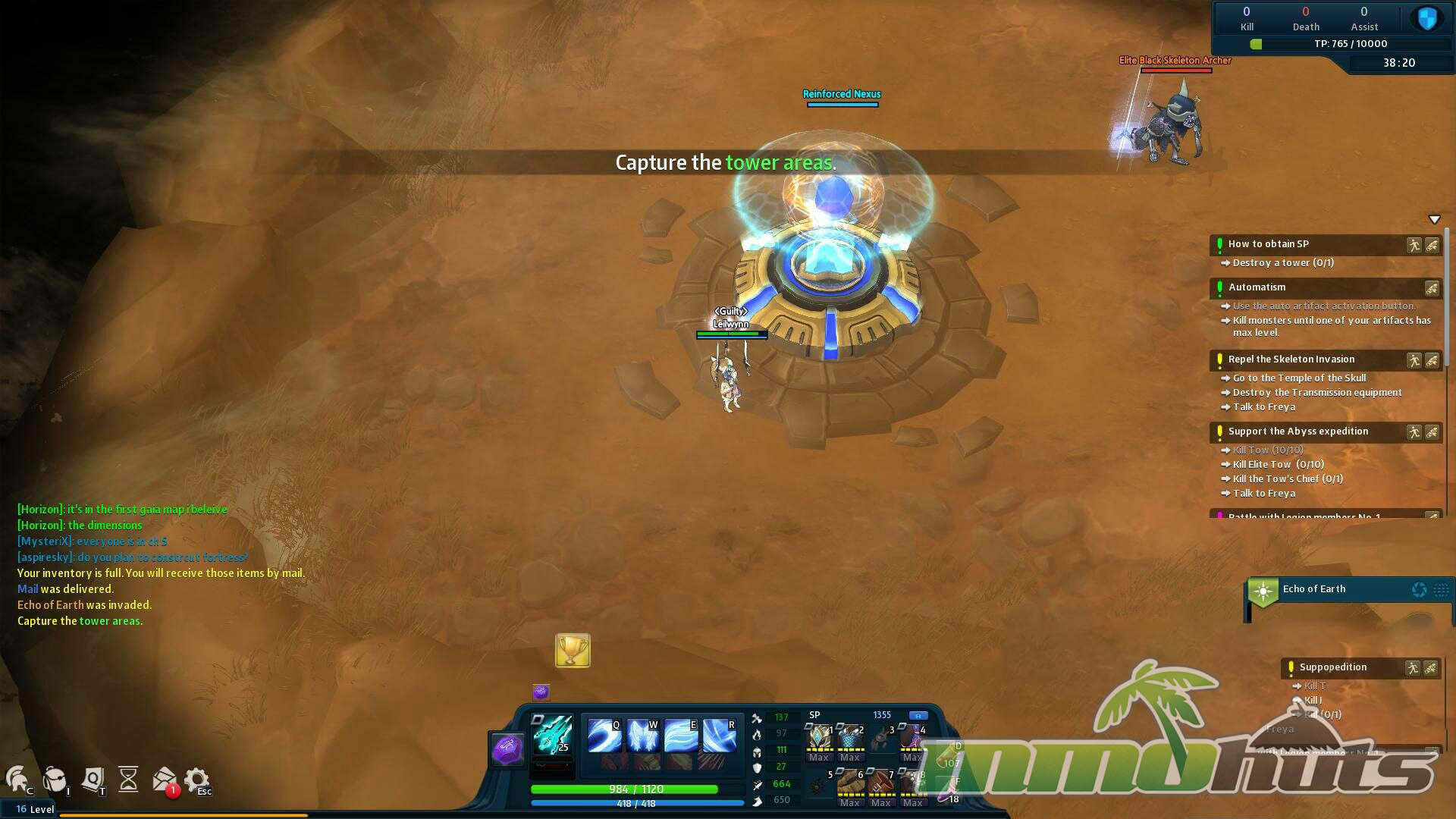
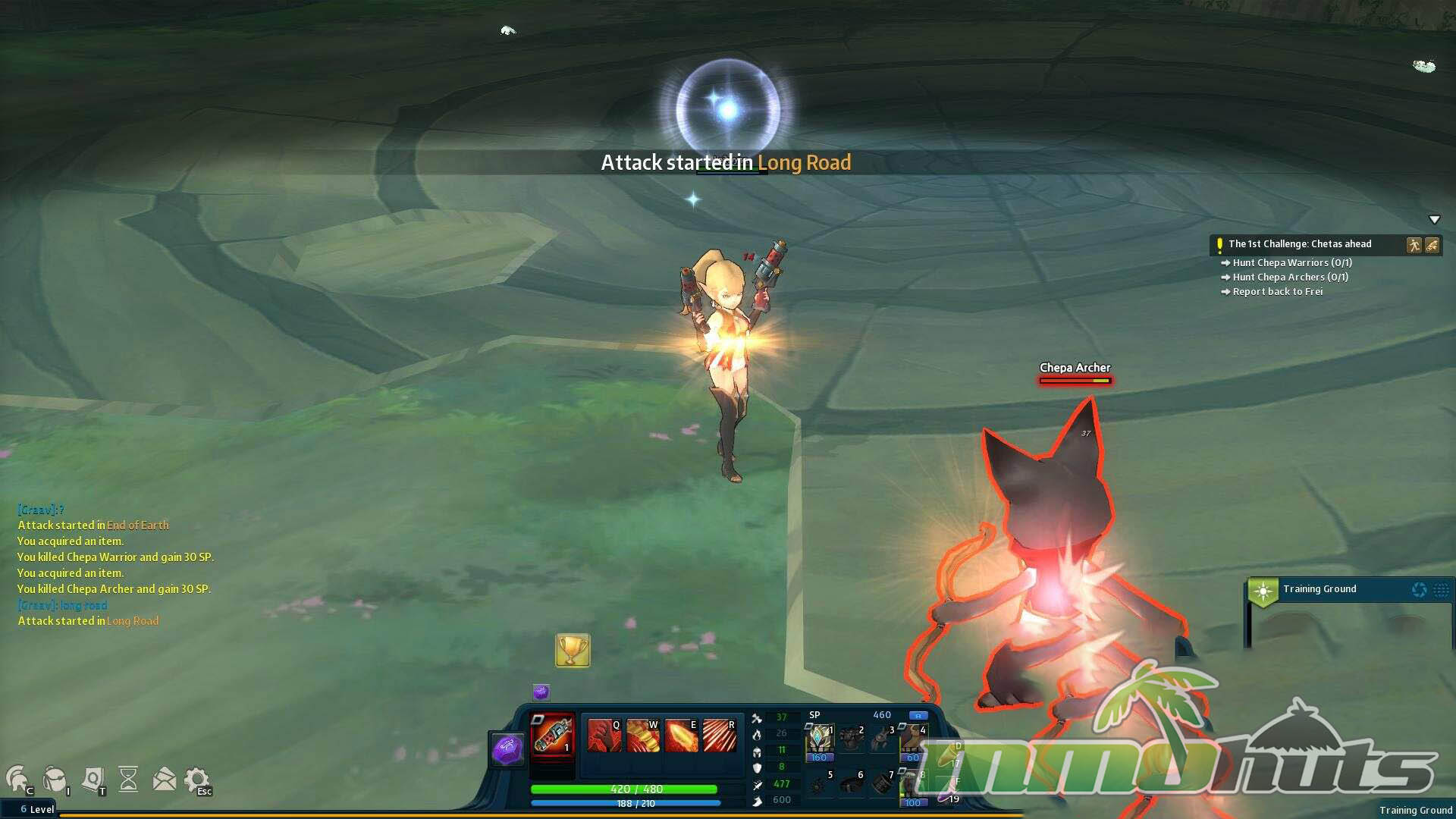
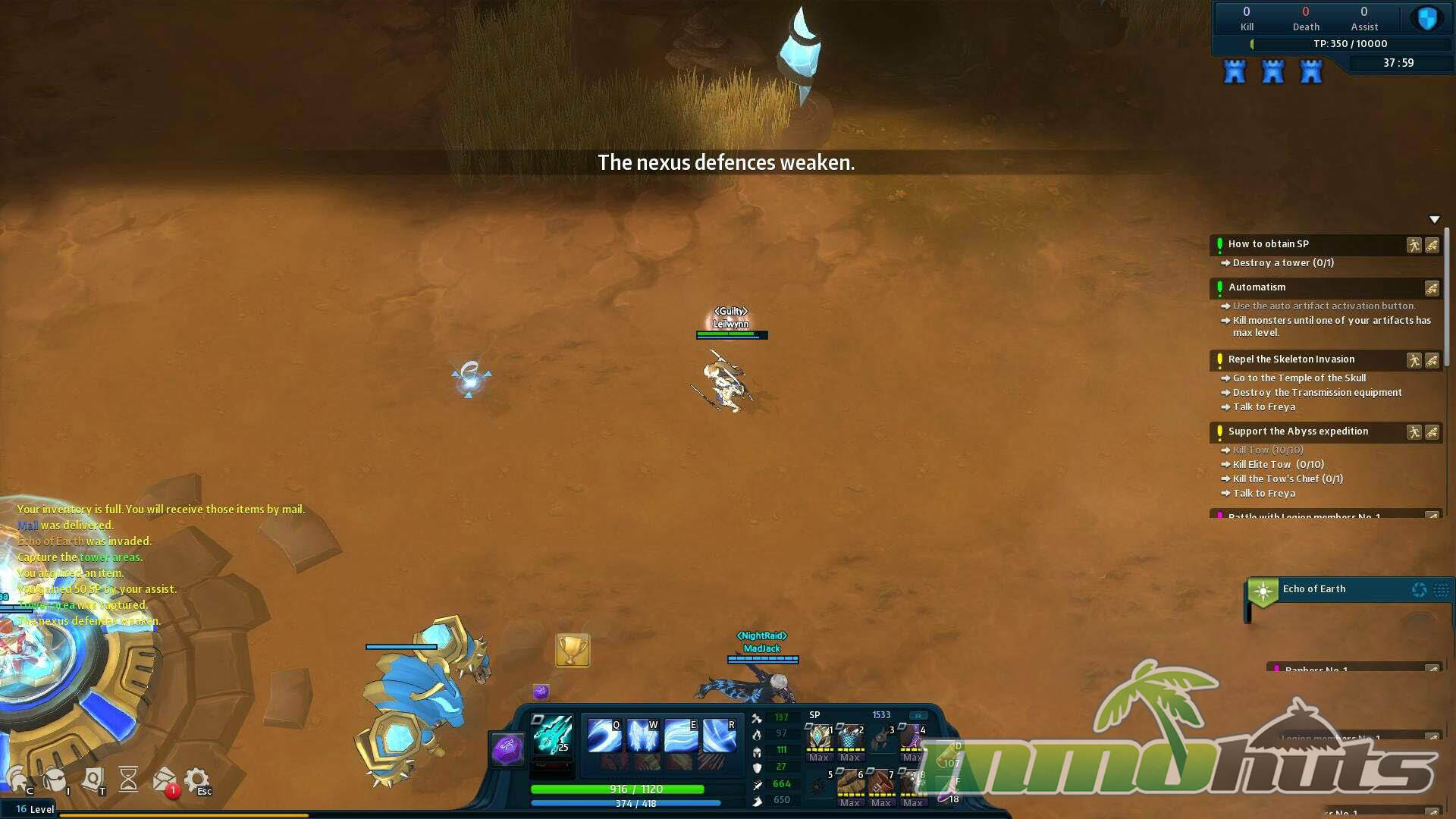
On the surface, the questing loop looks familiar: talk to NPCs, clear enemies, collect drops, and move to the next area. The difference is in how you control your character and how combat is framed. The camera sits in a top-down perspective, movement is handled with mouse clicks, and skills map cleanly to MOBA-style hotkeys. It is immediately recognizable to anyone who has spent time in the genre, and it gives fights a snappy, tactical feel compared to many tab-target MMORPGs.
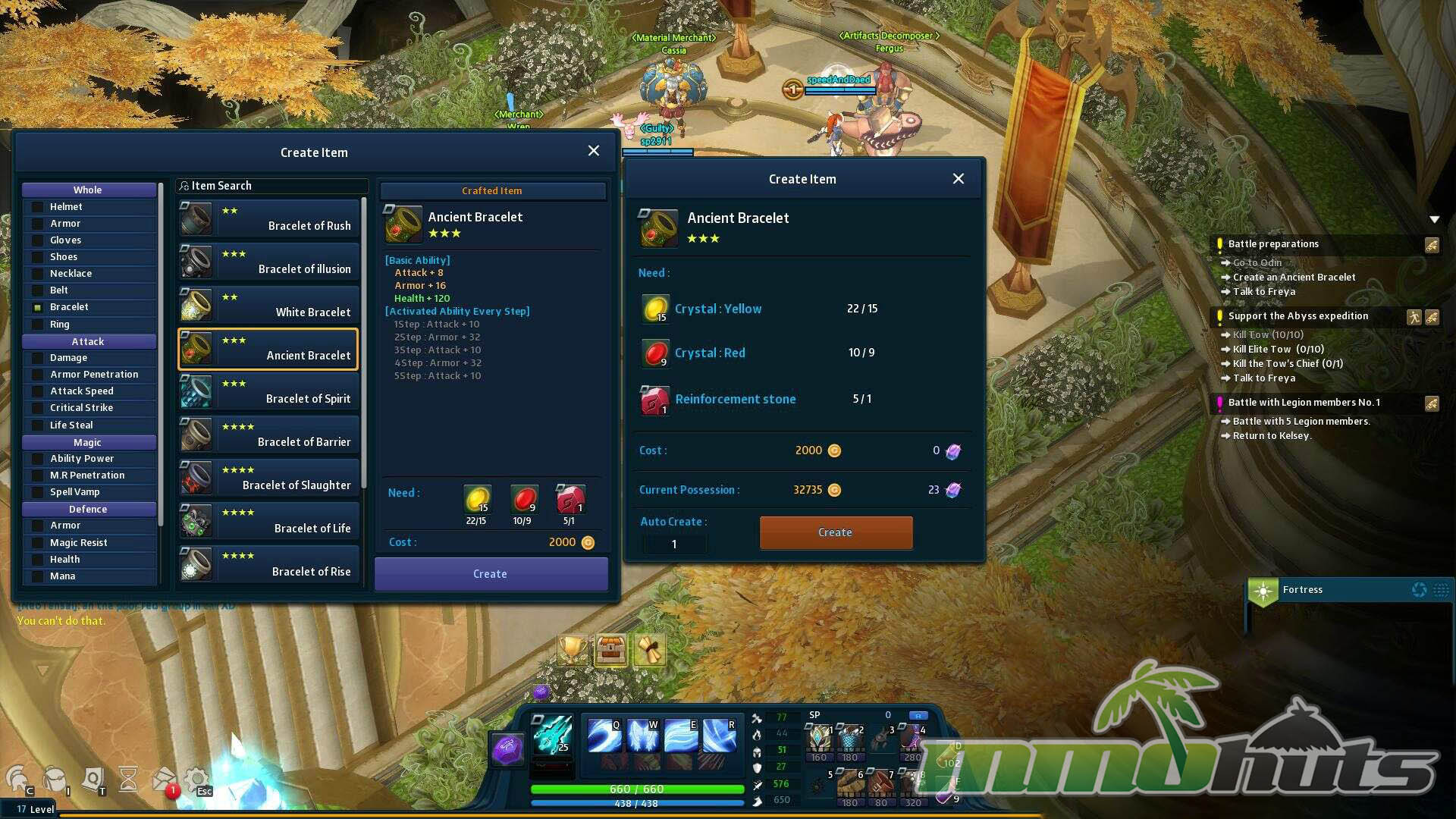
Gear is slotted into a small set of equipment categories, and upgrades can be applied using SP gained from defeating monsters. A notable twist is that these gear upgrades do not persist when entering a different zone, which shifts the focus away from permanent incremental power in moment-to-moment play and toward preparing appropriately for the current area and activity.
As you climb levels, the game’s priorities become clearer. Questing and PvE exist, but largely as a pipeline to better equipment and readiness for faction warfare. The further you get, the more the territory conflict feels like the main event, with the MMO structure serving as the scaffolding that pushes players toward those battles.
Territory sectors, towers, and a nexus-style objective
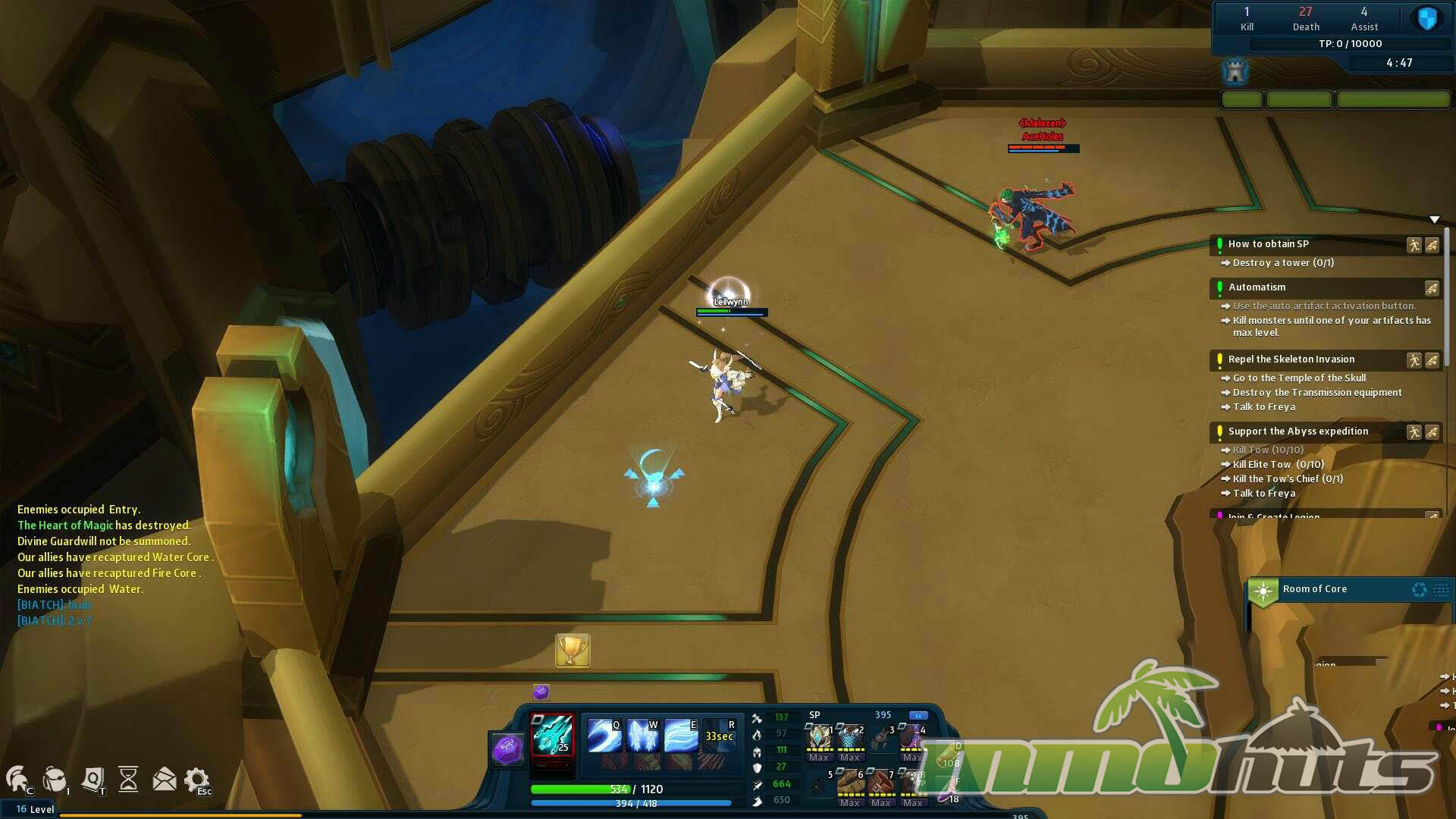
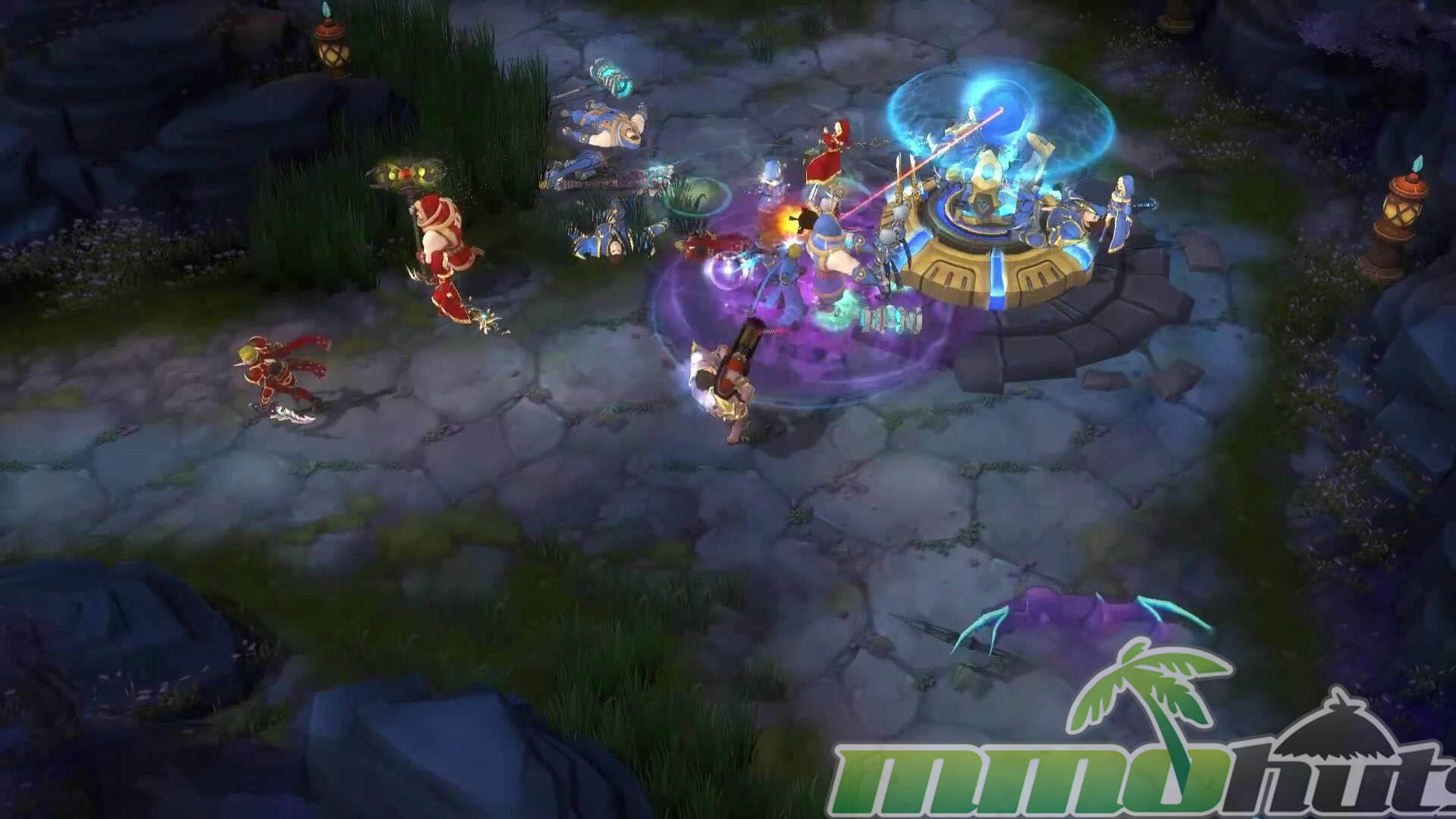
Crush Online’s persistent war is structured around a world map divided into many small sectors. Outside of instanced content like dungeons, these sectors function like contained arenas with defensive towers and a core objective for each side. To flip ownership, players push through defenses, secure towers, and ultimately destroy the opposing team’s nexus equivalent.
If you have experience with large, ongoing faction conflicts in other games, the appeal here is similar: the map state changes, bonuses follow control, and skirmishes can escalate into bigger pushes as players rally. You can step into war zones at any level and receive maximum upgrades to your gear for that environment, but that does not fully equalize the playing field. Character progression and equipment quality still influence outcomes, particularly when fighting experienced opponents.
Weapon swapping as the core gimmick
The most distinctive system is the ability to equip and develop multiple weapon types on a single character. Which weapons you can use depends on your class, and each weapon comes with its own skill set. Swapping is done on the fly, and because abilities have independent cooldowns per weapon, switching can create a rhythm where you rotate tools to keep pressure up or respond to changing situations.
Saints, for instance, can access options like dual guns, wands, and magical levitating swords, while Punishers are limited to bows and daggers. The system is more about flexibility and utility than turning every class into a high-damage hybrid. Support-oriented kits still feel support-oriented, even if the visuals of certain weapons suggest otherwise. Regardless of class, you have five weapon slots available, which encourages experimenting once they are unlocked.
You begin with a single weapon slot and gain additional slots as you level. Each equipped weapon can be improved using Spell Stones obtained through quests and enemy drops. Upgrading raises damage and strengthens the associated skills, so investment into a weapon type is meaningful, not just cosmetic variety.
Jewels and premium crafting pressure
Crush Online avoids the typical cash shop storefront, but it still offers premium currency in the form of Jewels. These can be used to craft equipment without having the full material requirements, provided you have the gold and meet the level needed to equip the item. Jewels are also obtainable through achievements, such as completing exploration goals or reaching monster kill milestones.
In practice, that means dedicated free players can earn Jewels over time, but spending money can accelerate access to stronger crafted gear. Depending on your tolerance for progression shortcuts in PvP-focused games, this can feel like an uncomfortable step toward pay-to-win, even if it is not a direct purchase of power with no gameplay involvement.
Final Verdict – Good
Crush Online is an unusual project, an MMO that borrows heavily from MOBA conventions while trying to keep the sense of a living world and an ongoing campaign. Its best moments come from the persistent three-faction war, where fights can swing quickly and where sector objectives give battles clear structure. The weapon-swapping system also adds variety that helps the combat stand out from more traditional MMO kits.
At the same time, the game’s rough edges are hard to ignore. Navigation and readability can be frustrating, technical performance issues like lag spikes undermine competitive play, and the audiovisual presentation does not reach the standard set by many comparable titles. Add in premium crafting advantages and the experience can feel uneven. If you primarily want a persistent territory-war game and can accept the quirks, there is something distinct here, otherwise it is difficult to recommend beyond curiosity value.
Crush Online System Requirements
Minimum Requirements:
Operating System: Windows XP, Vista, 7, 8, 10
CPU: 2 GHz Modern processor
Video Card: Shadow 2.0 capable video card
RAM: 1 GB
Hard Disk Space: 1 GB
Recommended Requirements:
Operating System: Windows XP, Vista, 7, 8, 10
CPU: 2.4 GHz Modern processor
Video Card: Shadow 2.0 capable video card
RAM: 2 GB
Hard Disk Space: 1 GB
Crush Online Music & Soundtrack
Coming Soon!
Crush Online Additional Information
Developer(s): JoyImpact
Publisher(s): GAMESinFLAMES
Closed Beta: June 29, 2016
Open Beta: September 9, 2016
Official Release Date: October 10, 2016
Shut Down: May 01, 2017
Development History / Background:
Crush Online is an MMO with MOBA elements developed by JoyImpact, a South Korean gaming company, known for creating mobile games such as AIKA Online, and published by GAMESinFLAMES, a German-based gaming company. The game was planned for a European launch in late 2016, and it was also associated with reports of a mobile version, often referred to as Crush Mobile, in development. Crush Online entered open beta on September 9, 2016, released on Steam on October 10, 2016, and later shut down on May 01, 2017.