Clash Royale is a mobile-focused online card battler that mixes collectable cards with lane-based tower defense. Matches are designed to be short (usually just a few minutes), with real-time PVP where timing, deck building, and quick decision-making matter as much as raw card levels. With its familiar Clash of Clans cast, bright cartoon presentation, and an Arena ladder built for constant progression, it is easy to see why it became a staple competitive game on phones and tablets.
 | Publisher: Supercell Playerbase: High Type: Mobile CCG/MOBA Release Date: March 2, 2016 Pros: +Very approachable match format. +Large variety of cards and deck options. +Tactical, real-time PVP with constant mind games. +No Stamina system limiting play. Cons: -Slow “Chest Opening” timers can feel restrictive. -Monetization can translate into faster power progression. -Core match flow may feel straightforward over time. |


Clash Royale Overview
Clash Royale is a 2D online competitive battle game from Supercell, the studio behind Clash of Clans and Boom Beach. It takes recognizable characters from that universe and drops them into short, real-time matches built around card decks, two-lane pushing, and tower destruction. Instead of turn-based card play, everything happens live, you generate Elixir over time and you spend it to deploy troops, buildings, and spells at the right moment.
Progression is tied to the Arena ladder, where wins award trophies and unlock access to additional Arenas, along with new card pools to collect. Deck building is the main long-term hook, since different combinations can shift how you attack, defend, and trade Elixir. Social features are also a big part of the package, including clans for interaction and card sharing, plus TV Royale for spectating high-level matches and learning common strategies and counters.
Clash Royale Features:
- Real-Time Battles – Live PVP against players worldwide in compact 1-4 minute matches that emphasize quick reads and fast reactions.
- Cartoony Graphics – The same playful Clash art style returns, reworked for a top-down arena where units are easy to read at a glance.
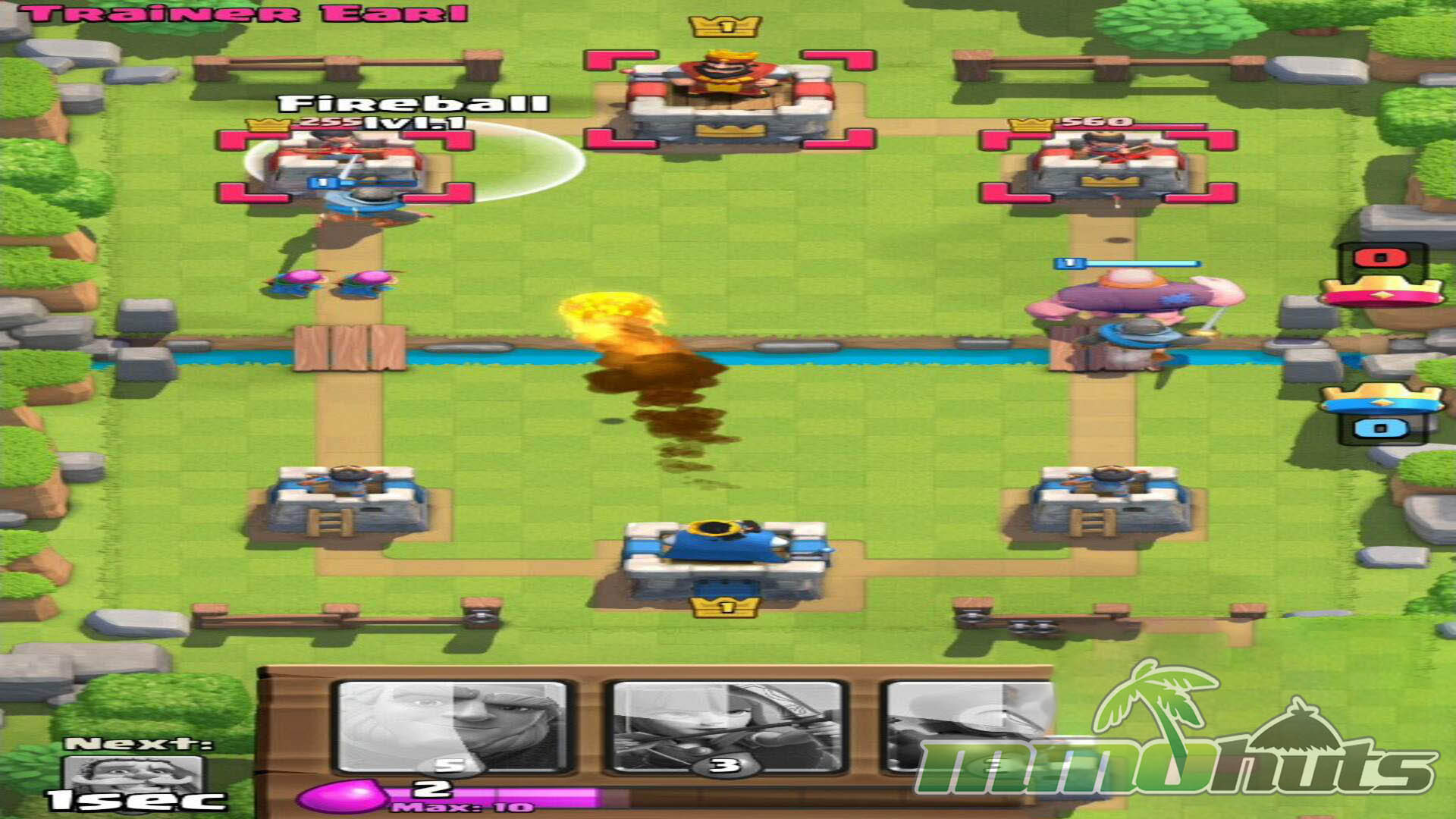
- Simple & Strategic Combat – Two lanes, three towers per side, and a regenerating Elixir resource create a straightforward ruleset with plenty of tactical depth.
- Many Cards to Collect – Build decks from over 100 Troop, Spell, and Building cards inspired by Clash of Clans, with lots of room for experimentation.
- Upgrade Your Cards – Earn chests through play to unlock new cards and duplicates, then improve card power through upgrading over time.
Clash Royale Screenshots

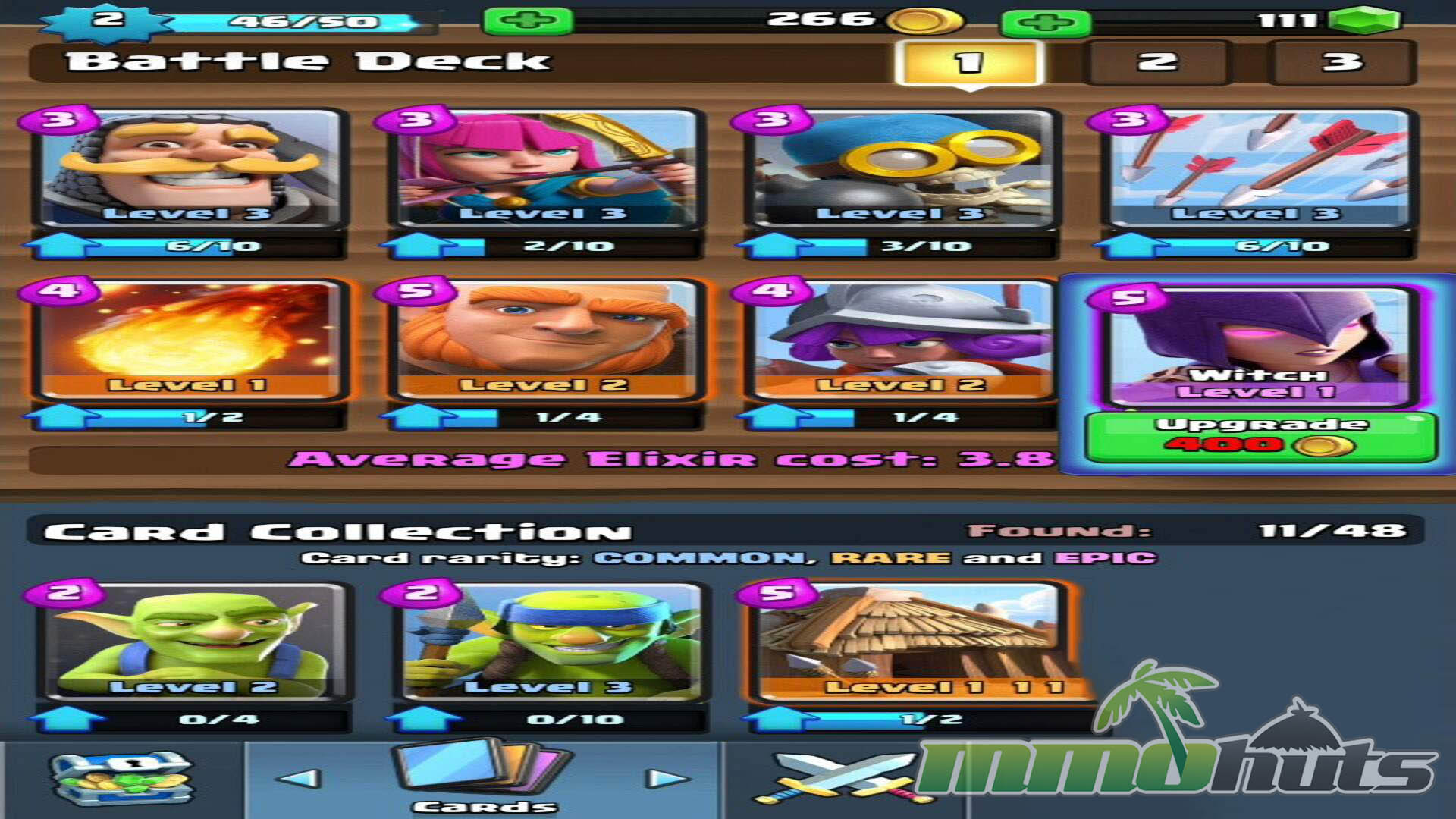
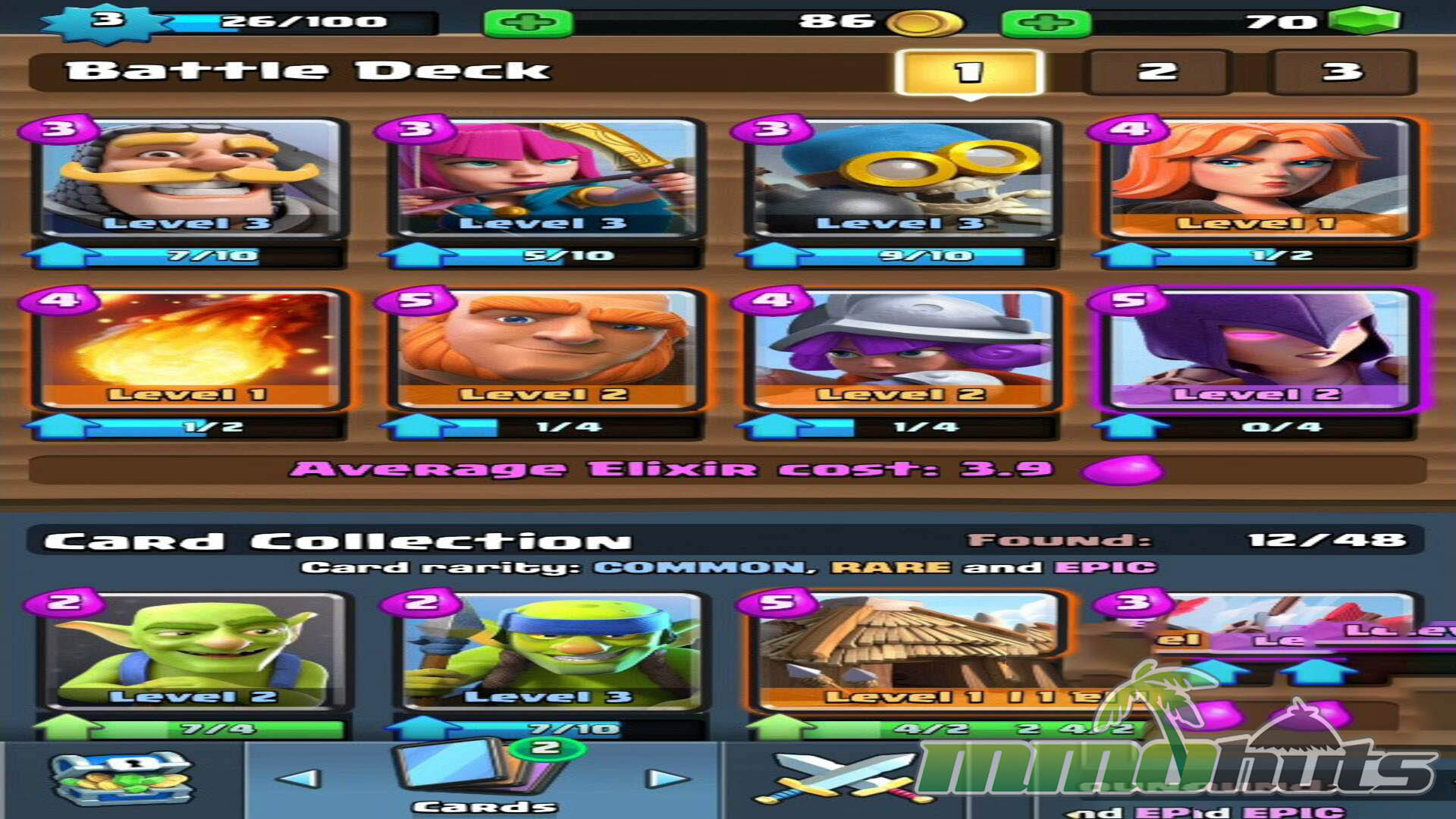
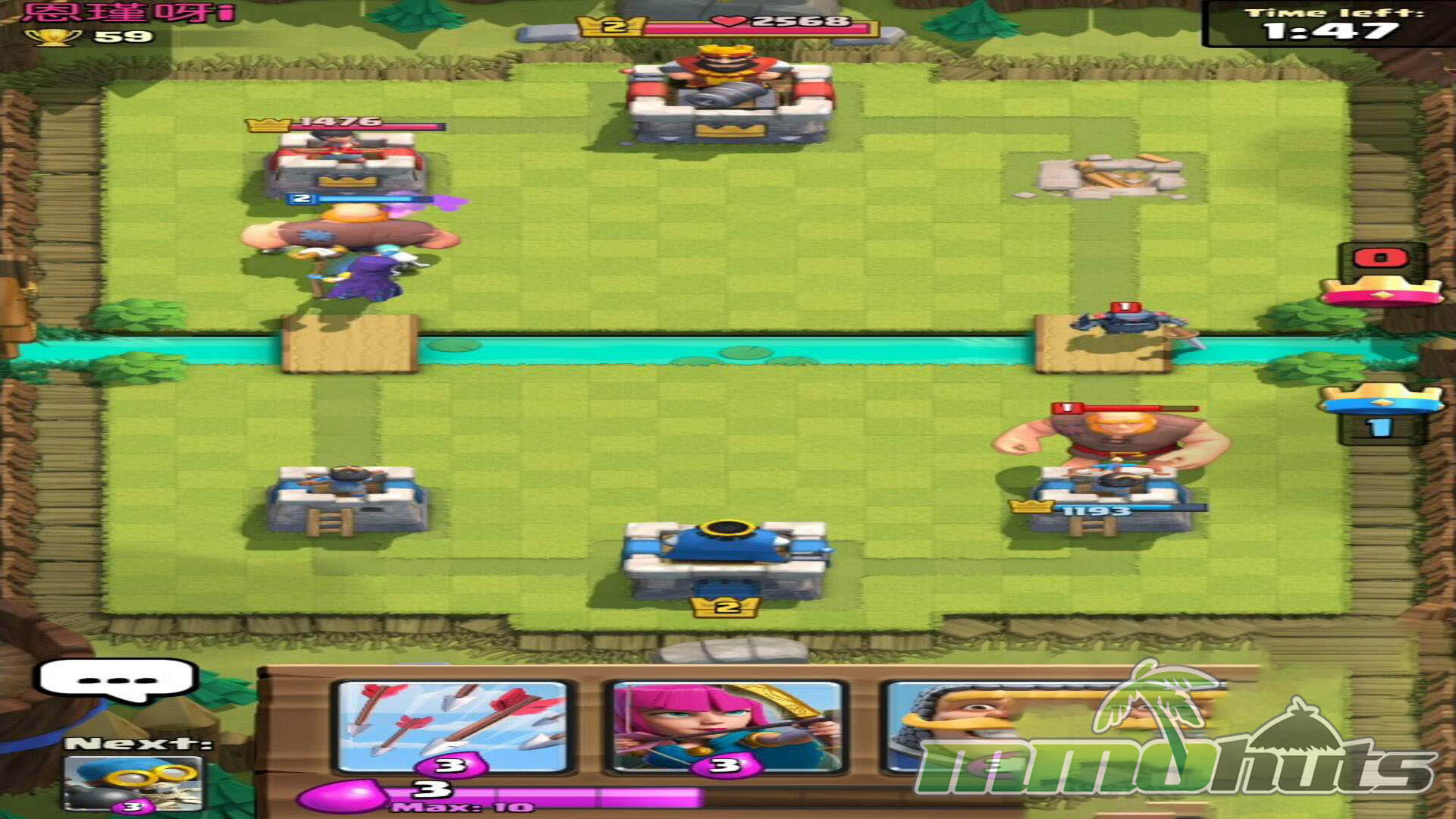
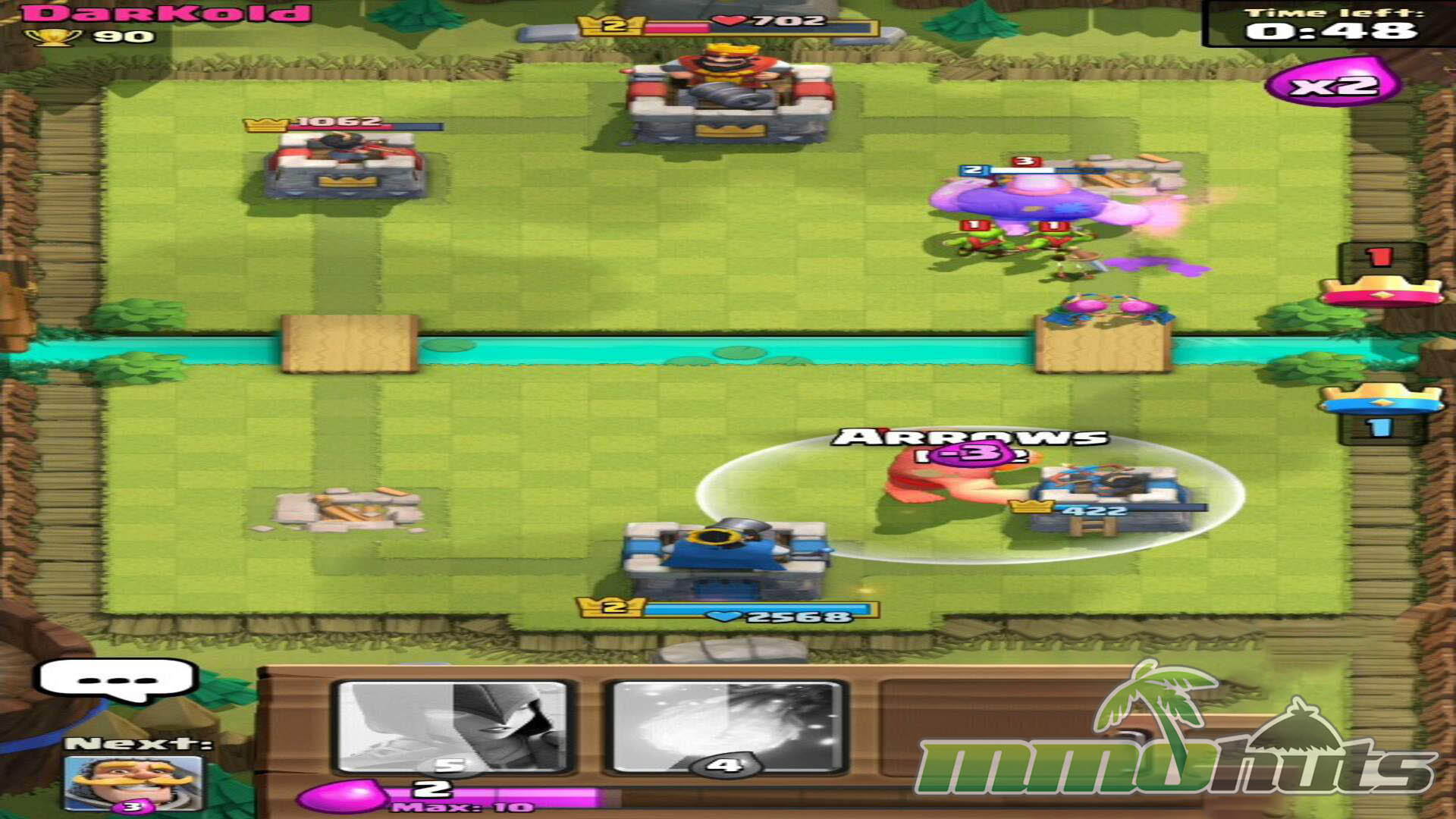
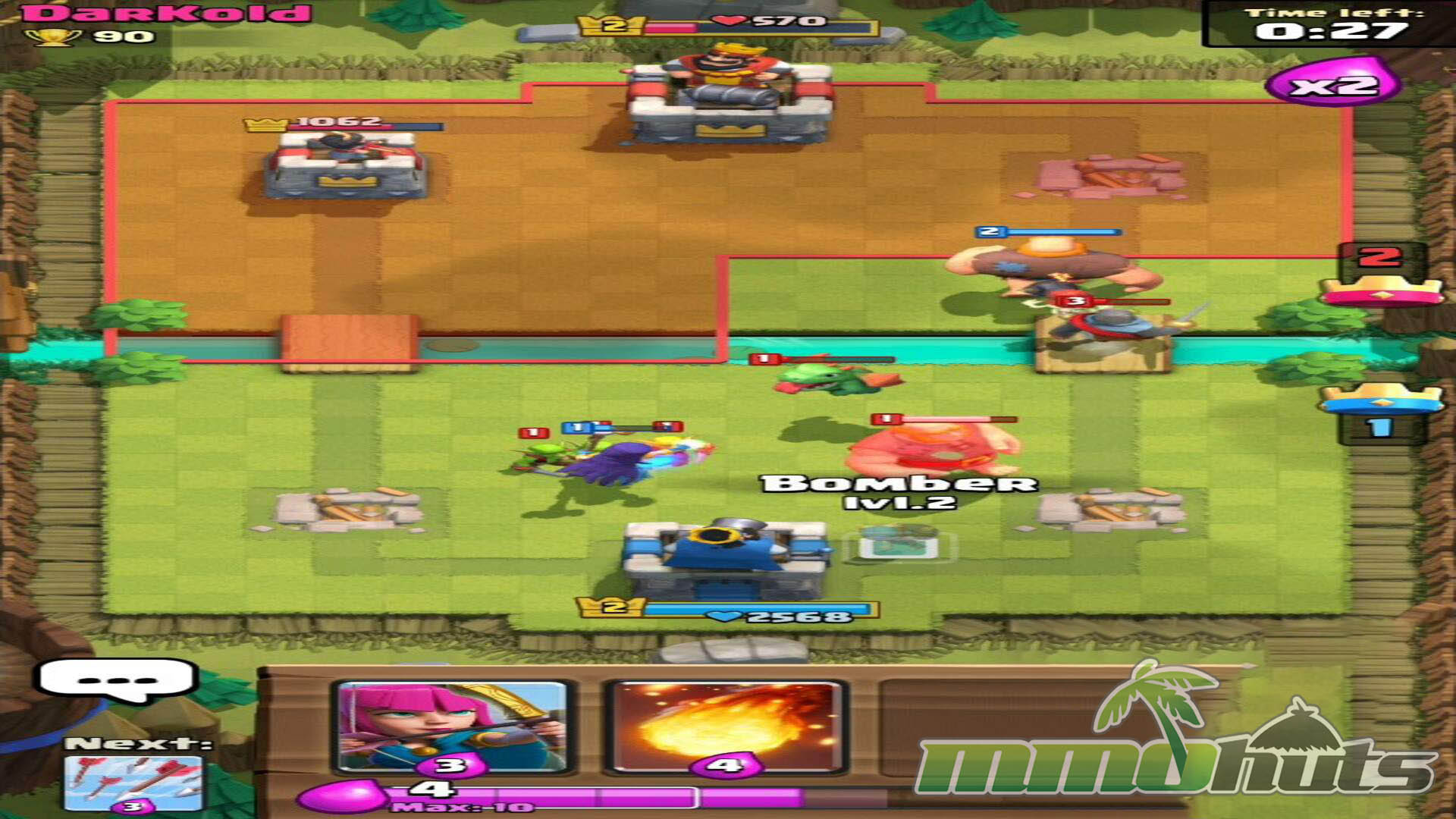
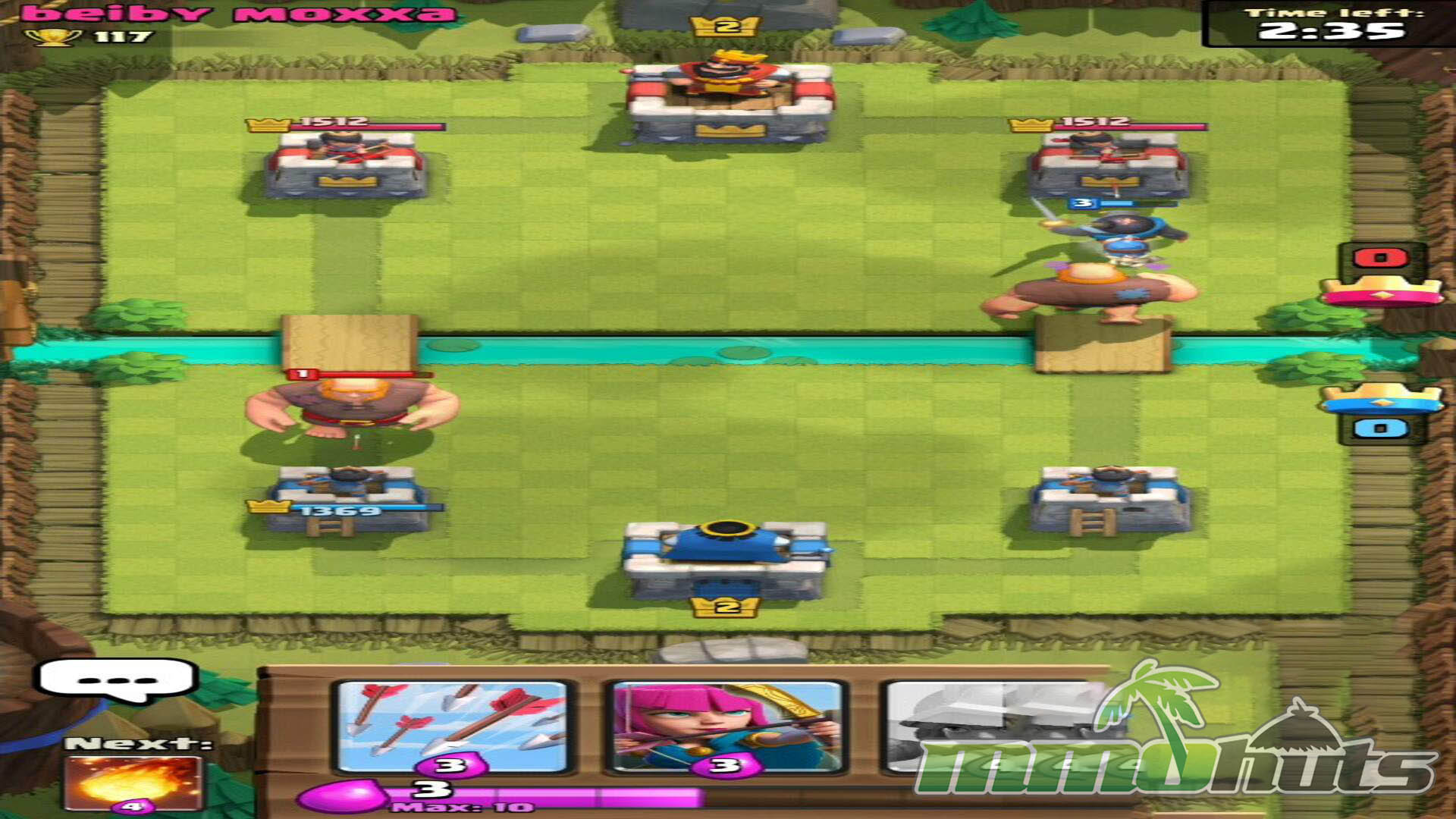
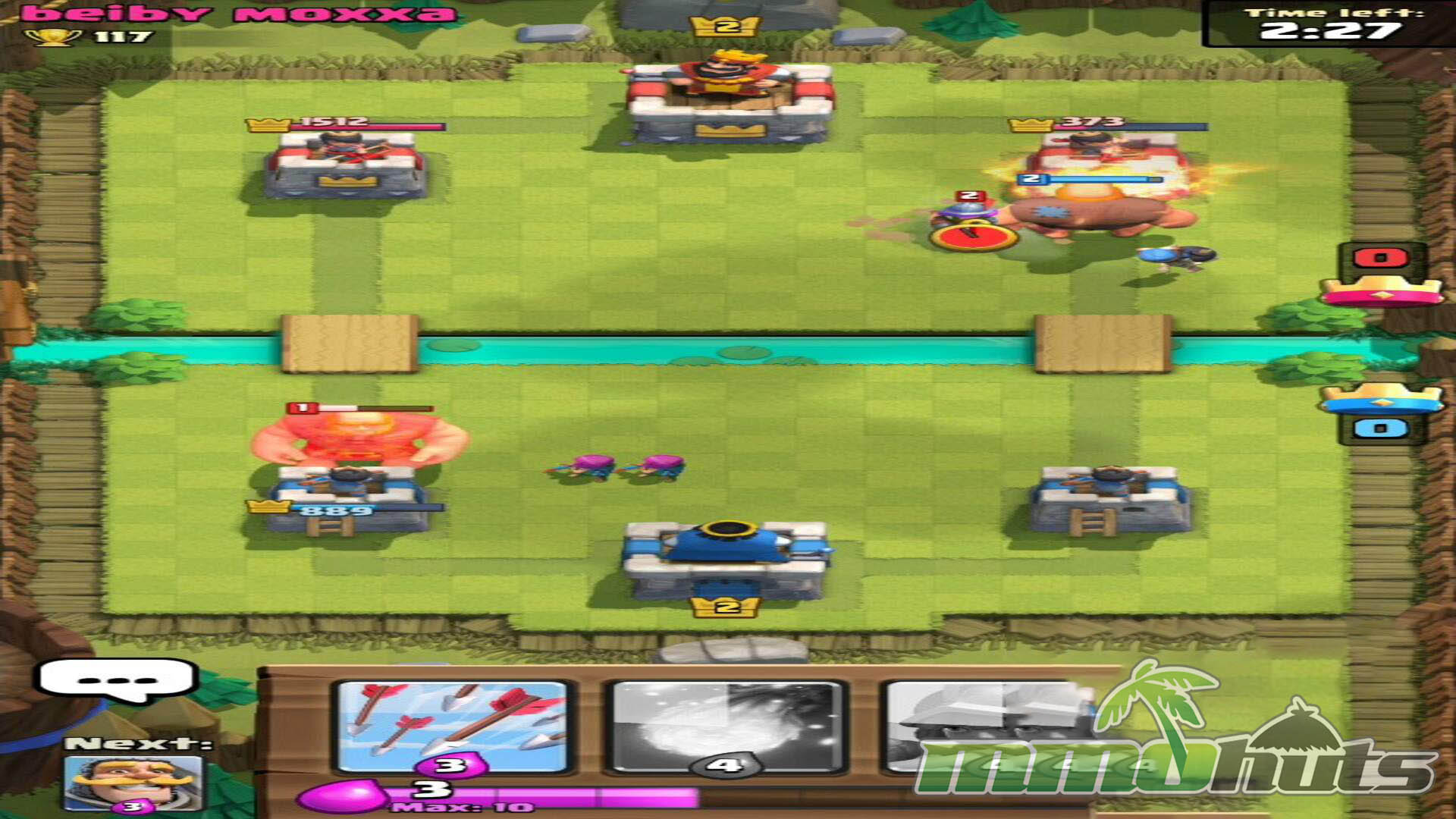
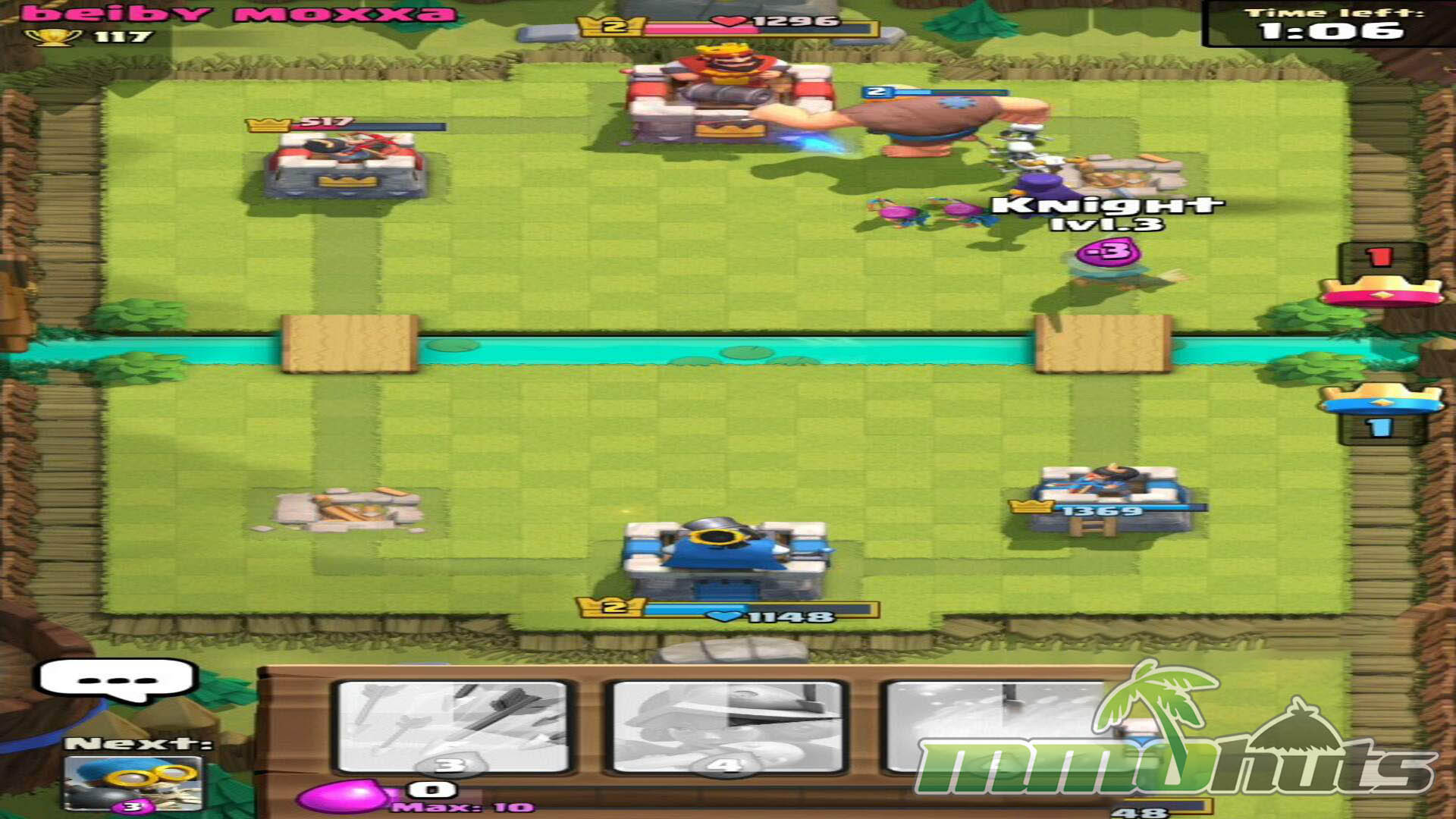
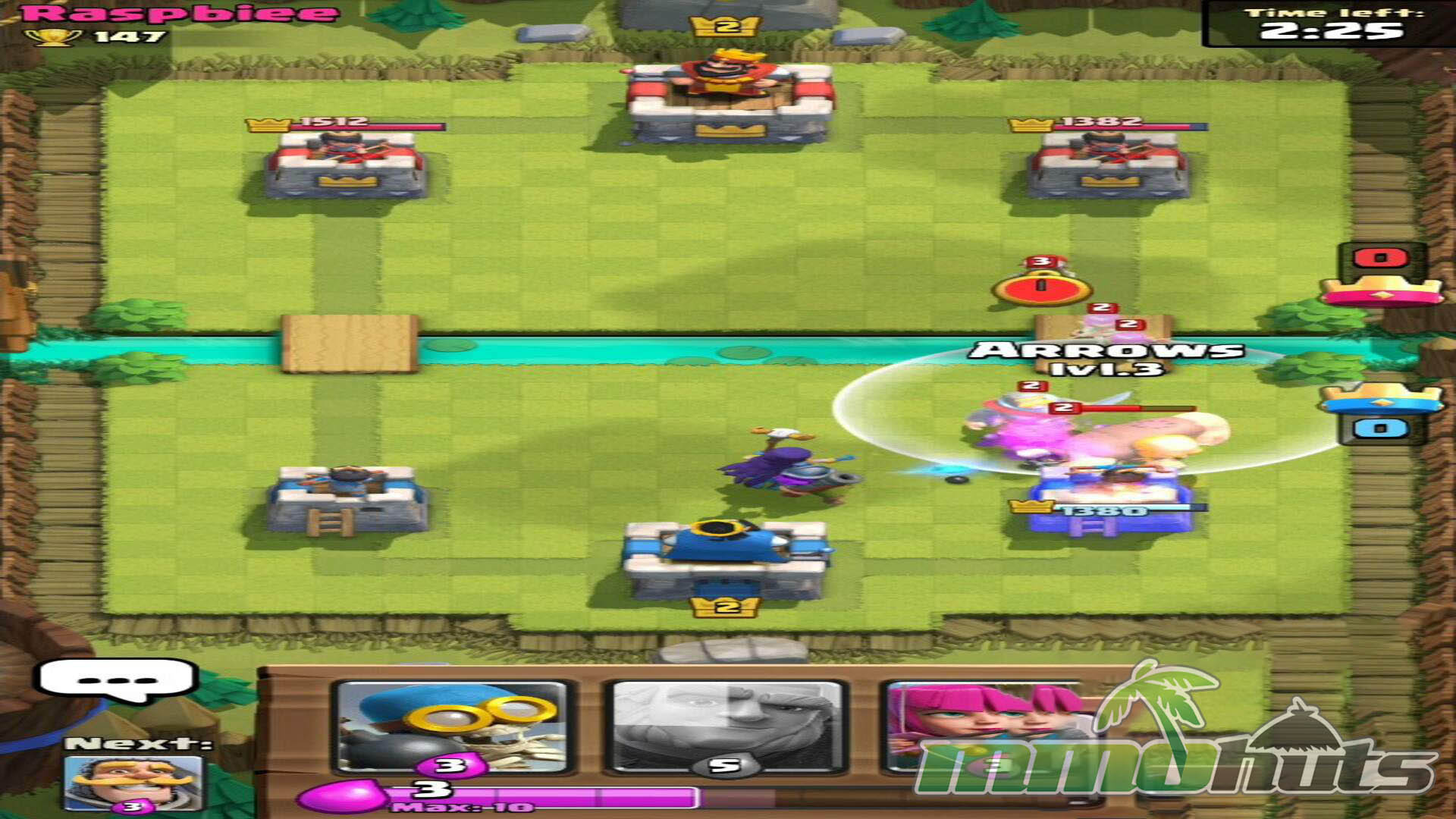
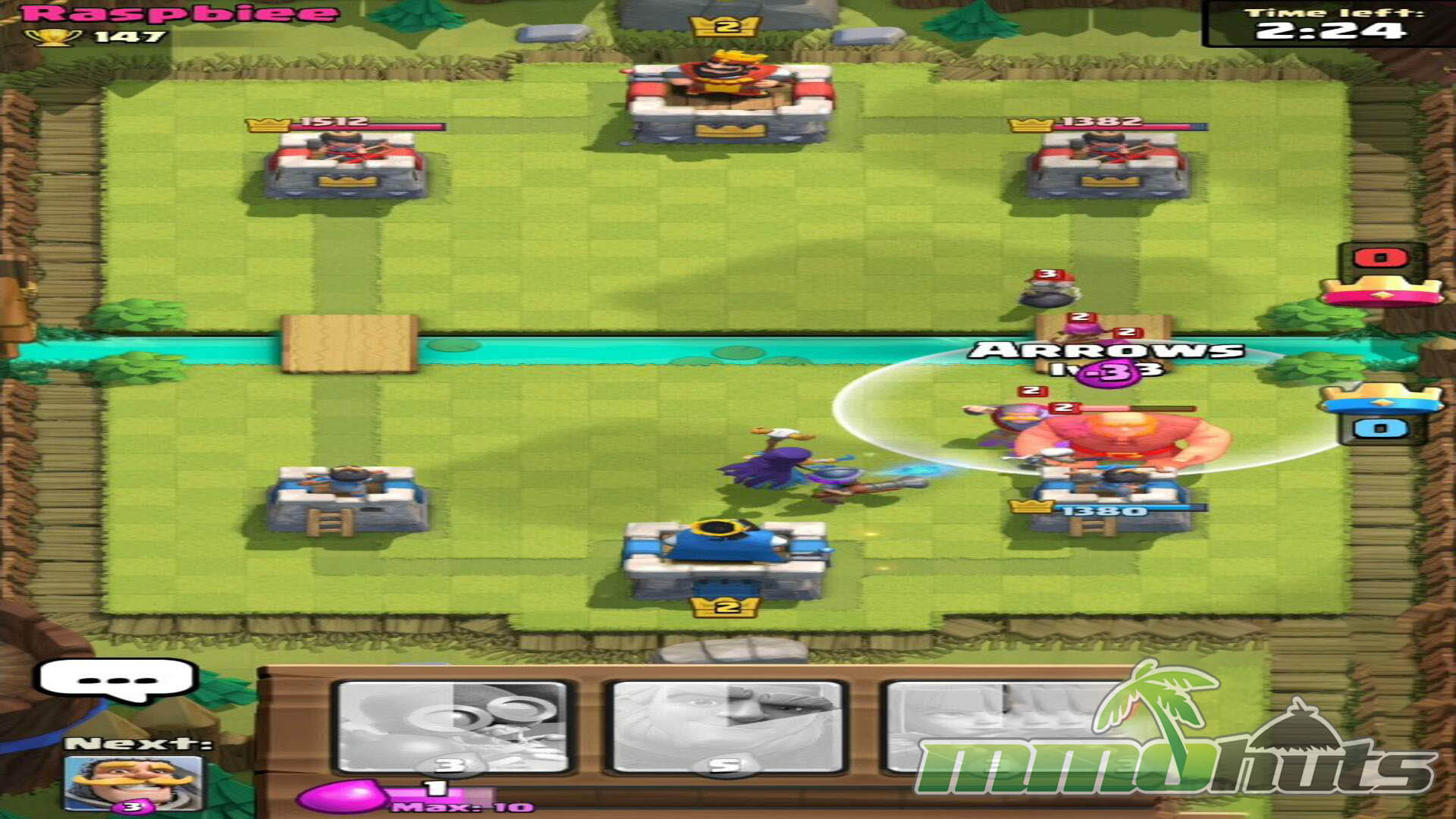

Clash Royale Featured Video
Clash Royale Review
Clash Royale is a free-to-play mobile CCG with MOBA and castle defense influences, developed and published by Supercell. The concept is immediately readable, bring a deck, spend Elixir to deploy units, and outplay another person in a short head-to-head match. It is built for quick sessions, but it also supports long-term competitive grinding through its trophy ladder and Arena progression.
Entering the Arena Ladder
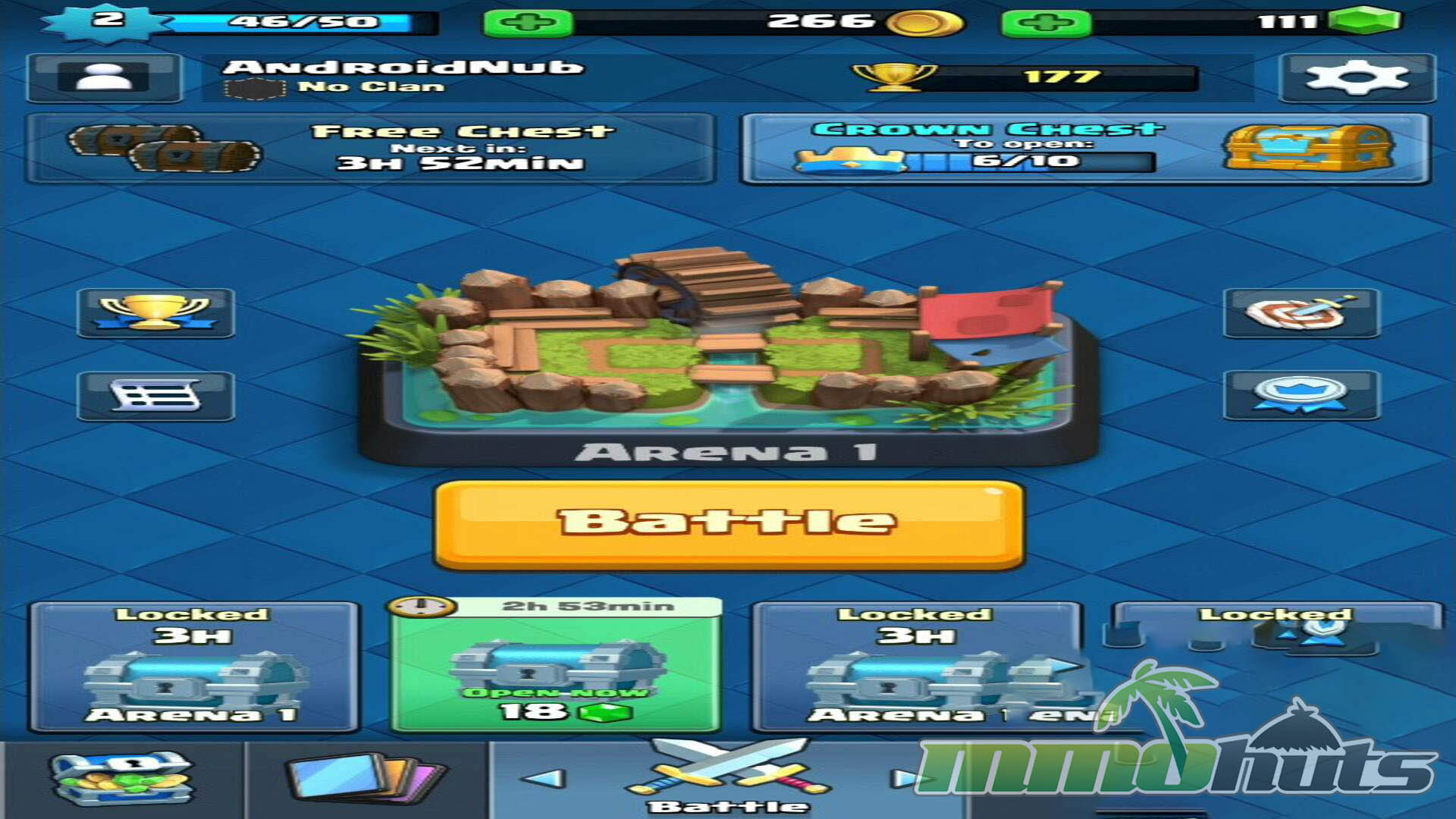
At its heart, Clash Royale is focused on online PVP. Your rank is represented by trophies, and those trophies determine which Arena you are currently in. Arenas function like leagues, with higher tiers offering access to additional cards through the chest rewards tied to that Arena. Win, and you generally gain trophies and a chest, lose, and you drop trophies, sometimes enough to slide back into a lower Arena.
Matchmaking does a solid job of keeping opponents near your current standing, which is important in a game where small advantages can snowball quickly. Queue times are typically fast because of the game’s large population, and the short match length makes it very easy to play “one more” repeatedly.
How Matches Actually Play
Clash Royale blends card selection with real-time lane pressure. You bring a deck of 8 cards, and you hold up to 4 in hand at any moment, cycling through the rest as you play them. The battlefield has two lanes, each guarded by two Arena Towers and backed by a central King’s Tower. Towers automatically fire at nearby enemies, so positioning and timing often matter as much as which card you choose.
Crowns determine the winner. Destroying an enemy tower awards a Crown, and taking down the King’s Tower ends the match immediately with a full three-Crown win. Elixir steadily regenerates, and each card has an Elixir cost, which turns every deployment into a tradeoff, commit too much to one push and you may not have enough left to respond elsewhere.
Matches run for 3 minutes, and ties go into a 1 minute Sudden Death where the next Crown decides the outcome. The rules are simple to learn quickly, but the pace forces constant decision-making, which is where the strategy shows up.
Even though the presentation looks light, the best games are full of small tactical choices. Deck composition shapes everything, your answers to swarms, your ability to punish expensive plays, and whether you prefer slow buildup pushes or quick pressure. In match, you are constantly choosing between defending efficiently, counter-pushing with surviving troops, or gambling on an aggressive lane to race a tower down.
A lot of the depth comes from Elixir management and prediction. You can often gain a major advantage by forcing your opponent into inefficient responses, baiting out a key counter, or timing a spell to get maximum value. Because matches are so short, each mistake has weight, but there is also room for clever recoveries when you defend well and turn it into a strong counterattack.
Cards, Roles, and Deck Identity
Collecting and upgrading cards is the long-term progression system, and it also defines the game’s variety. Cards fall into three categories: Troops, Spells, and Buildings. Troops cover a wide range of roles, from durable front-liners to fragile damage dealers and utility units. Spells provide targeted or area effects that can swing trades or finish off a weakened tower. Buildings can control space, pull enemy units, or provide defensive value that buys time.
Because your deck is limited to eight cards, each slot matters, and strong decks typically include answers to common threats plus a clear win condition. The large pool of available cards encourages experimentation, and it is easy to understand why players spend so much time refining a single list.
Chests: Progression With Friction
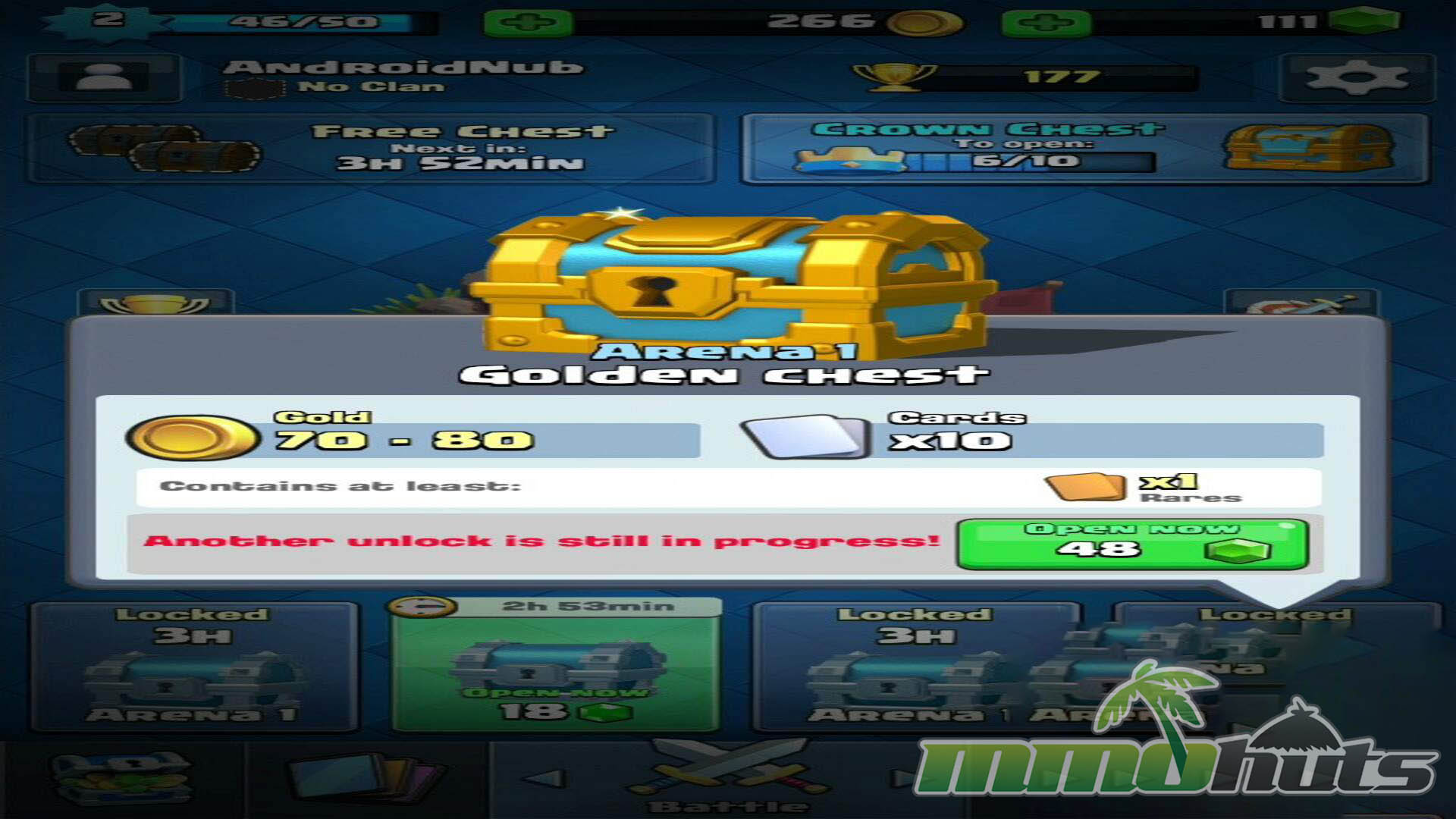
Chests are central to unlocking cards and gaining duplicates for upgrades, and they are also where many players feel the most tension with the game’s pacing. Winning matches awards chests of different types, such as Silver, Gold, Giant, Magical, and Super Magical. Each chest contains random cards tied to your Arena, and duplicates contribute toward leveling those cards.
The catch is the timer. Chests take real-world time to open (for example, hours for common chest types), and only one can be opened at a time. With four chest slots, it is easy to fill up quickly if you are winning, which means you can keep playing, but you stop earning additional chests until you clear space.
This is not a traditional stamina mechanic since the game does not prevent you from queuing more matches. Still, it effectively slows progression unless you are willing to wait. Timers can also be bypassed with Gems, which makes the system feel like a pressure point designed to nudge spending, especially for players who want to level cards quickly.
Cash Shop/In-App Purchases (IAP)
The in-game shop expands on the same idea. Gems can be used to instantly open chests, purchase higher-tier chests that deliver large card bundles immediately, or convert into Gold. Since upgrades require Gold after you have enough card duplicates, resource bottlenecks can stack, and paid options can smooth both the time and currency friction.
This is where the pay-to-win debate comes from. Players who spend can accelerate upgrades significantly, which can translate into stronger card levels sooner. On the other hand, free players can still unlock the full range of cards over time and improve steadily through consistent play. The experience tends to feel most uneven for players chasing high-end competitiveness quickly, where efficiency and progression speed matter more.
Final Verdict – Great
Clash Royale succeeds because its matches are fast, readable, and genuinely tactical, and because deck building gives players a strong reason to keep experimenting. The chest timers and monetization can be frustrating, particularly if you are trying to progress at a competitive pace, but the core loop remains engaging. For anyone looking for short, skill-driven PVP sessions on mobile, it is still one of the most compelling options in its genre.
Clash Royale Links
Clash Royale Official Site
Clash Royale Google Play
Clash Royale iOS
Clash Royale Wikia
Clash Royale System Requirements
Minimum Requirements:
Android 4.0.3 and up / iOS 7.0 or later.
Clash Royale Music & Soundtrack
Clash Royale Additional Information
Developer: Supercell
Publisher: Supercell
Platforms: Android, iOS
Release Date: March 2, 2016
Clash Royale was developed and published by Supercell, the Finish creators of the hugely popular Clash of Clans and Boom Beach mobile games. After a beta period that began in January 2016 and ran for roughly two months, the game launched worldwide on March 2, 2016. In the week following release, it climbed to #1 on the U.S. App Store for both top downloads and top grossing, with similar momentum on Google Play. Supercell has also seen enormous financial success from its portfolio, including Hay Day, and Clash Royale quickly became another major pillar in its lineup.