Age of Wushu Dynasty
 (No Ratings Yet)
Age of Wushu Dynasty is a free-to-play, hack-and-slash mobile MMORPG that leans hard into wuxia styled Chinese fantasy. It combines flashy 3D visuals with stage-based missions, a handful of distinct martial schools to pick from, gear chasing, and a combat system that tries to be more thoughtful than typical mobile button spam thanks to its Parry/Overt/Feint triangle. Between the hub areas, instanced runs, open PK in shared zones, and an Arena focused on asynchronous matchups, it offers a lot to do, even if the loop can start to feel routine over time.
 | Publisher: Snail Games Playerbase: Medium Type: Mobile MMORPG Release Date: January 7, 2016 Pros: +Sharp 3D presentation for a mobile MMO. +Action combat with a tactical parry mind-game. +Distinct wuxia atmosphere and scenery. Cons: -Core stages and objectives can feel repetitive. -Monetization provides notable power advantages. -Quest flow is often talk-and-run, with little variety. |


Age of Wushu Dynasty Overview
Age of Wushu Dynasty is a 3D action MMORPG from Snail Games, the studio known for the PC MMORPG Age of Wushu and the mobile action title Taichi Panda. Set in the mythic martial world of Jianghu, it asks you to rise through one of four schools and build out a toolkit of kung fu techniques while chasing stronger gear and tougher encounters. Instead of a single seamless world, the game mixes social hubs and shared quest spaces with instanced stages that deliver the bulk of the combat and progression.
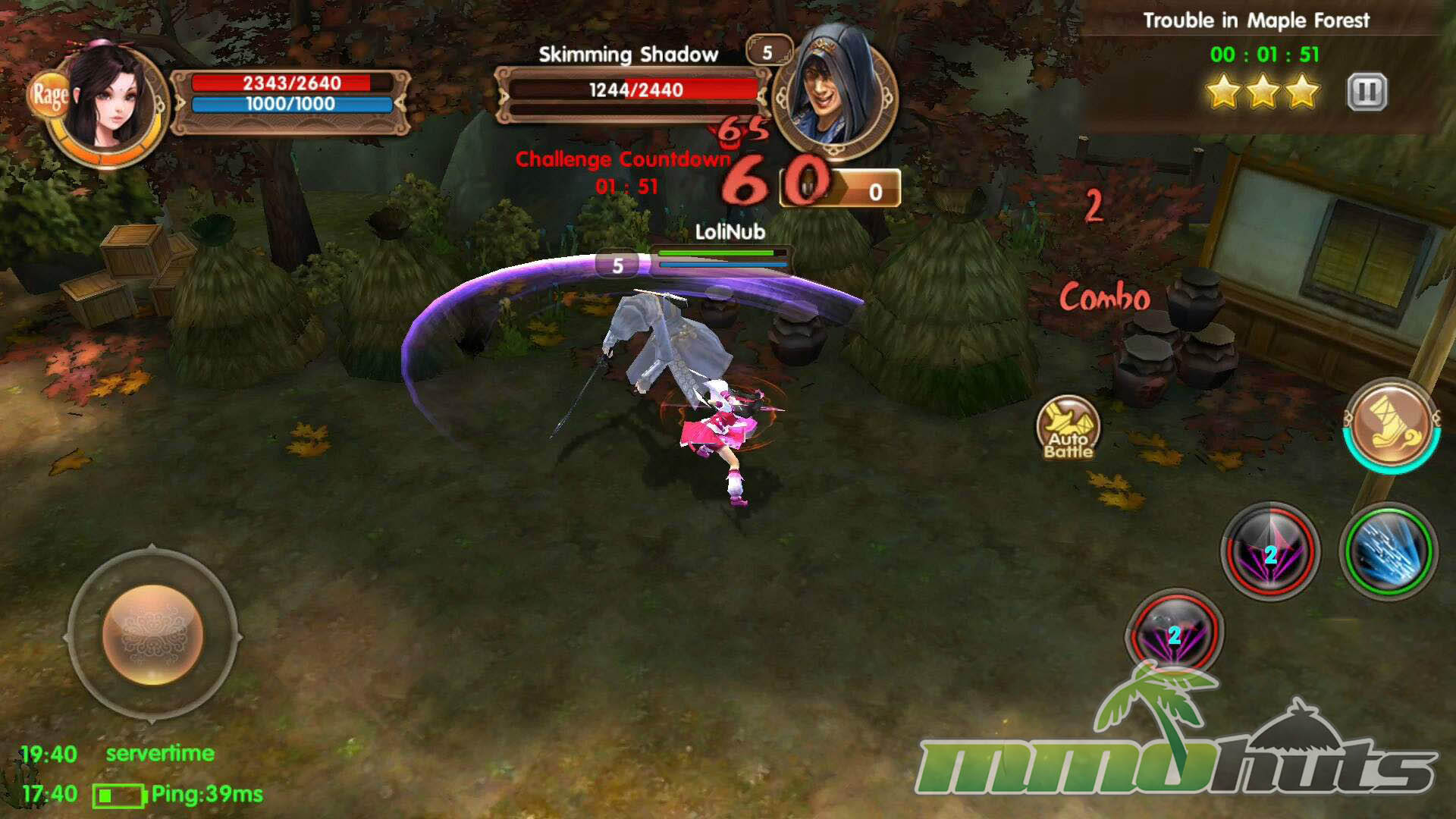
The moment-to-moment fighting is built around fast attacks, skill buttons, and movement, but it adds a small layer of mind-games through the Parry/Overt/Feint system. You are encouraged to read enemy behavior, break defenses, and time counters rather than only cycling cooldowns. Outside of PVE, the game offers two main PVP flavors, open PK in shared areas and an Arena that focuses on structured matchups (with battles played asynchronously). If you are looking for a mobile MMO with a wuxia coat of paint and a stage-driven structure, Age of Wushu Dynasty largely delivers, even if it does not mirror the fully open format many players associate with the PC original.
Age of Wushu Dynasty Features:
- High Quality Graphics – Detailed 3D visuals paired with an Ancient Chinese fantasy look, from costumes and weapons to city architecture and landscapes.
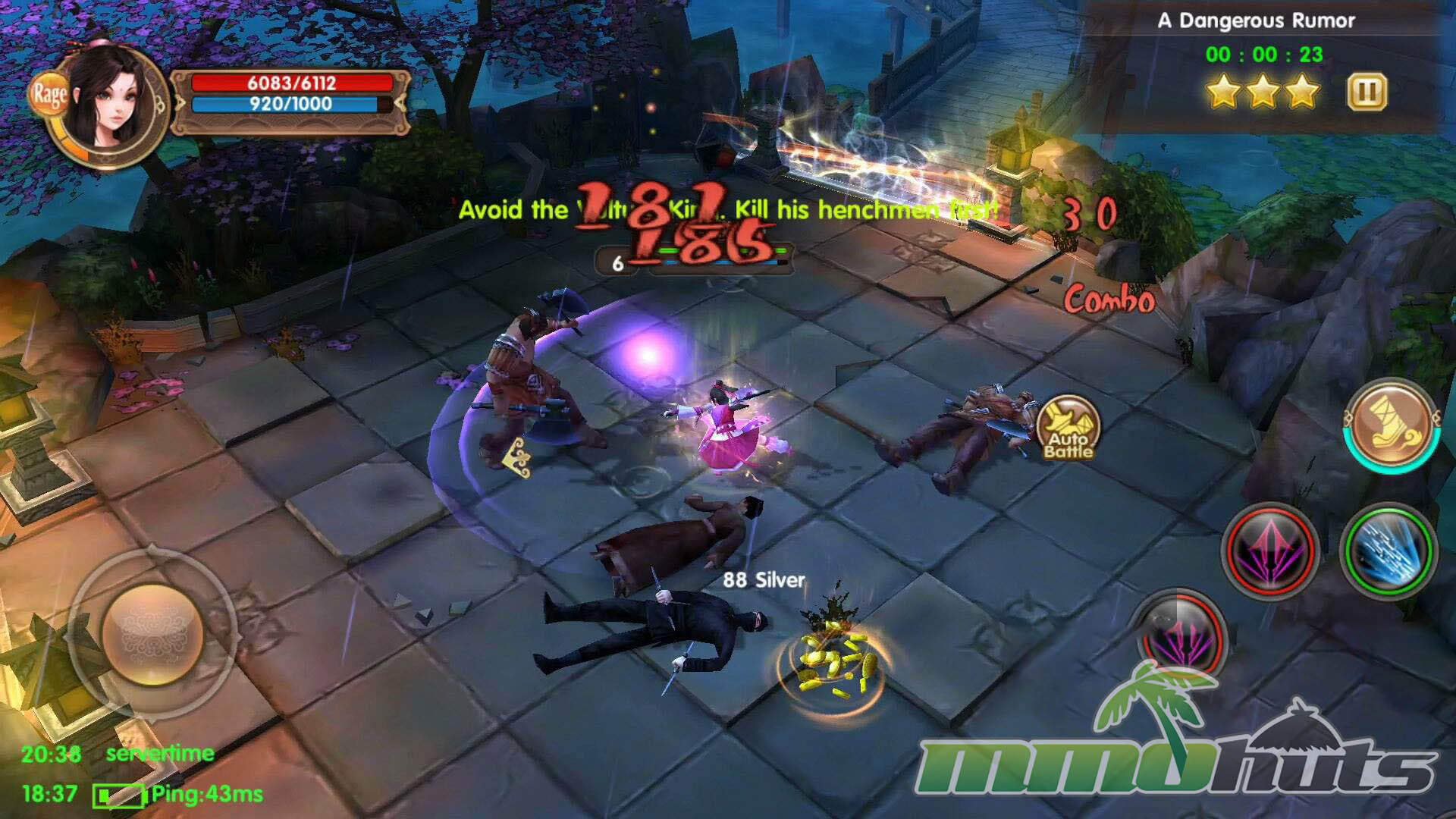
- Instanced Stages – A large collection of bite-sized missions and dungeons, each with its own enemies and a boss encounter to cap the run.
- Persistent Town and Areas – Shared hubs and quest zones where players gather, pick up objectives, and fight mobs in public spaces.
- Strategic, Action Combat – Real-time hack-and-slash combat enhanced by Parry/Overt/Feint interactions that reward timing and decision-making.
- Four Martial Arts Schools – Four class options themed as Shaolin, Wudang, Emei, and Tangmen, each with its own animations, skills, and combat flavor.
- Open World PVP & Arena – PK is enabled in shared areas for those who want danger, while the Arena provides 1 vs 1, 2 vs 2, and guild battles in a more organized format.
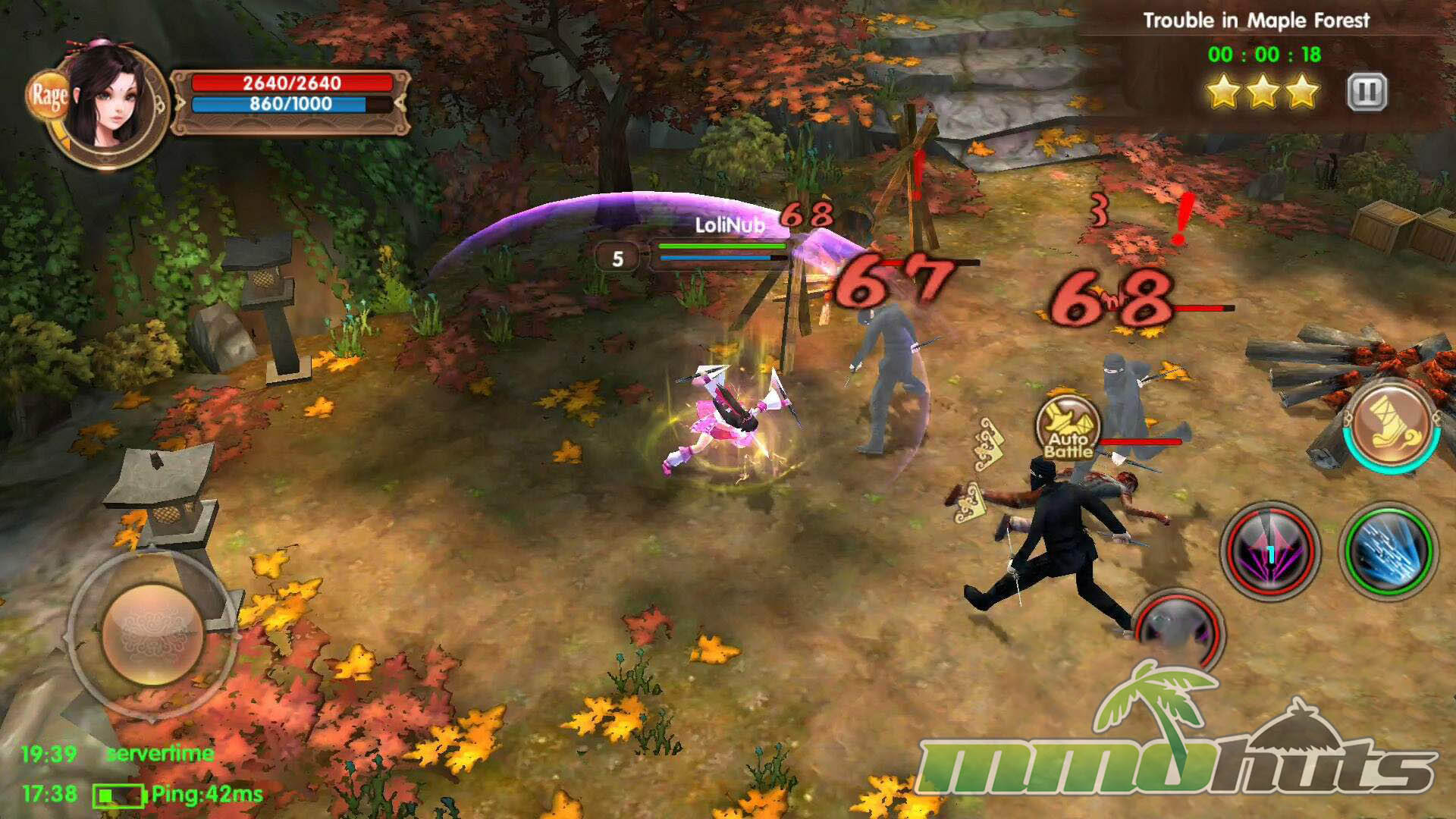
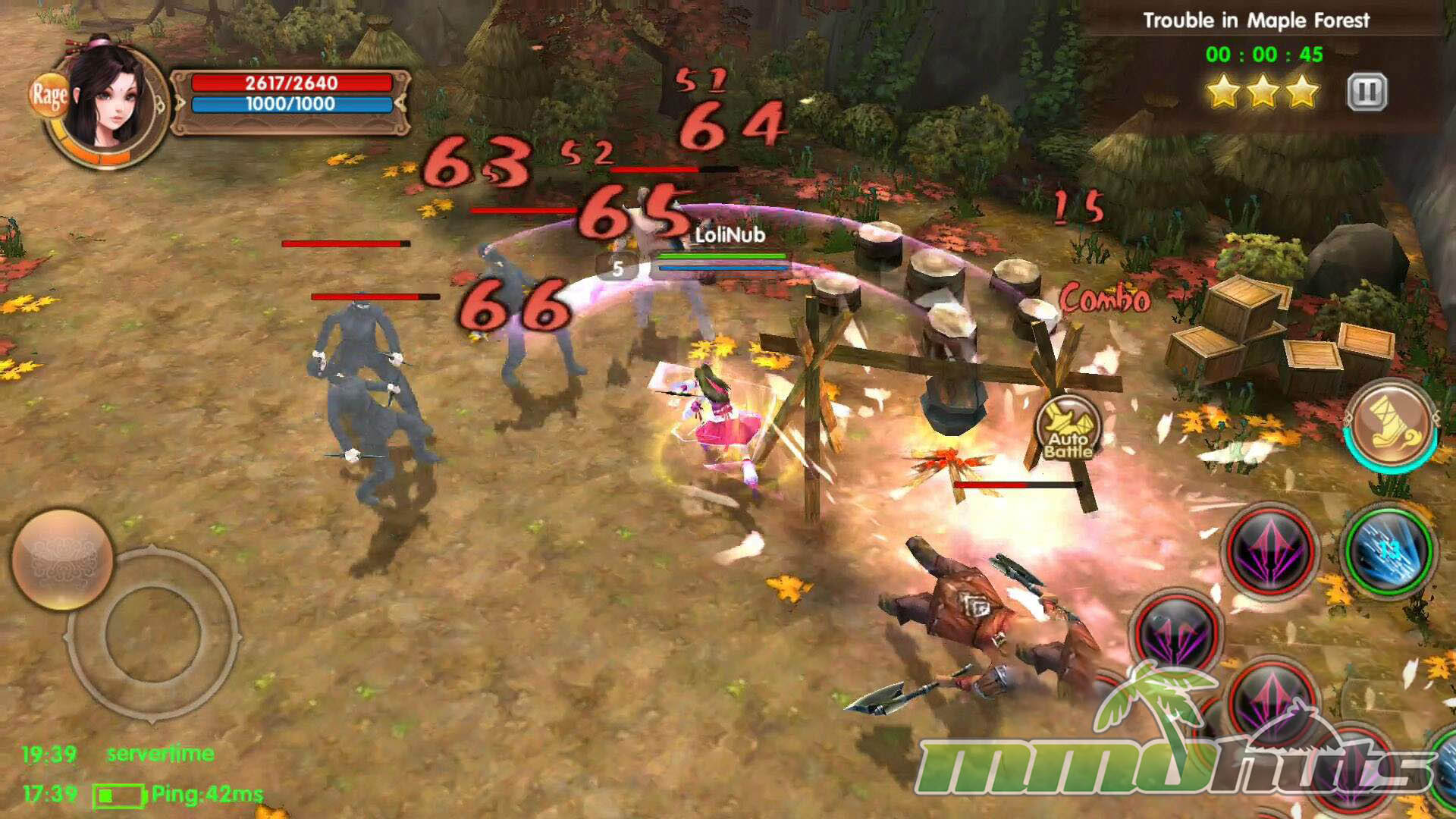
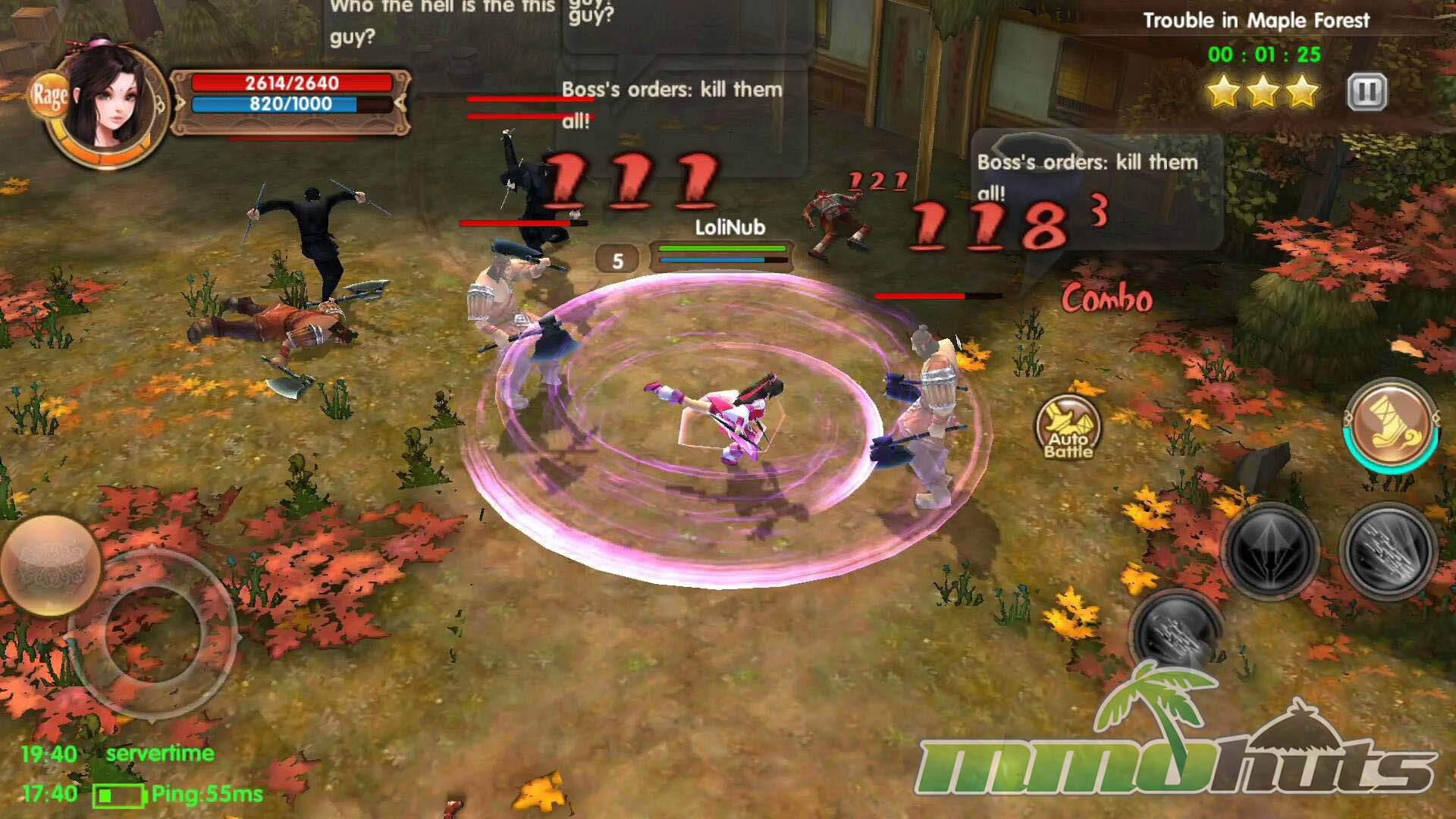
Age of Wushu Dynasty Screenshots







Age of Wushu Dynasty Featured Video

Age of Wushu Dynasty Review
Age of Wushu Dynasty is a free-to-play 3D action MMORPG developed and published by Snail Games. It was revealed publicly around E3 2015 and, following multiple closed beta phases, released worldwide on January 7, 2016. The important expectation to set is that this is not a one-to-one mobile version of the PC MMORPG Age of Wushu. Instead, it takes a mobile-first approach with hubs and shared spaces feeding into instanced stages, which makes it feel closer in structure to Snail’s Taichi Panda than to the original PC sandbox. That decision will either be a sensible compromise for mobile play or a disappointment, depending on what you want out of the name.

Character Creation and Classes
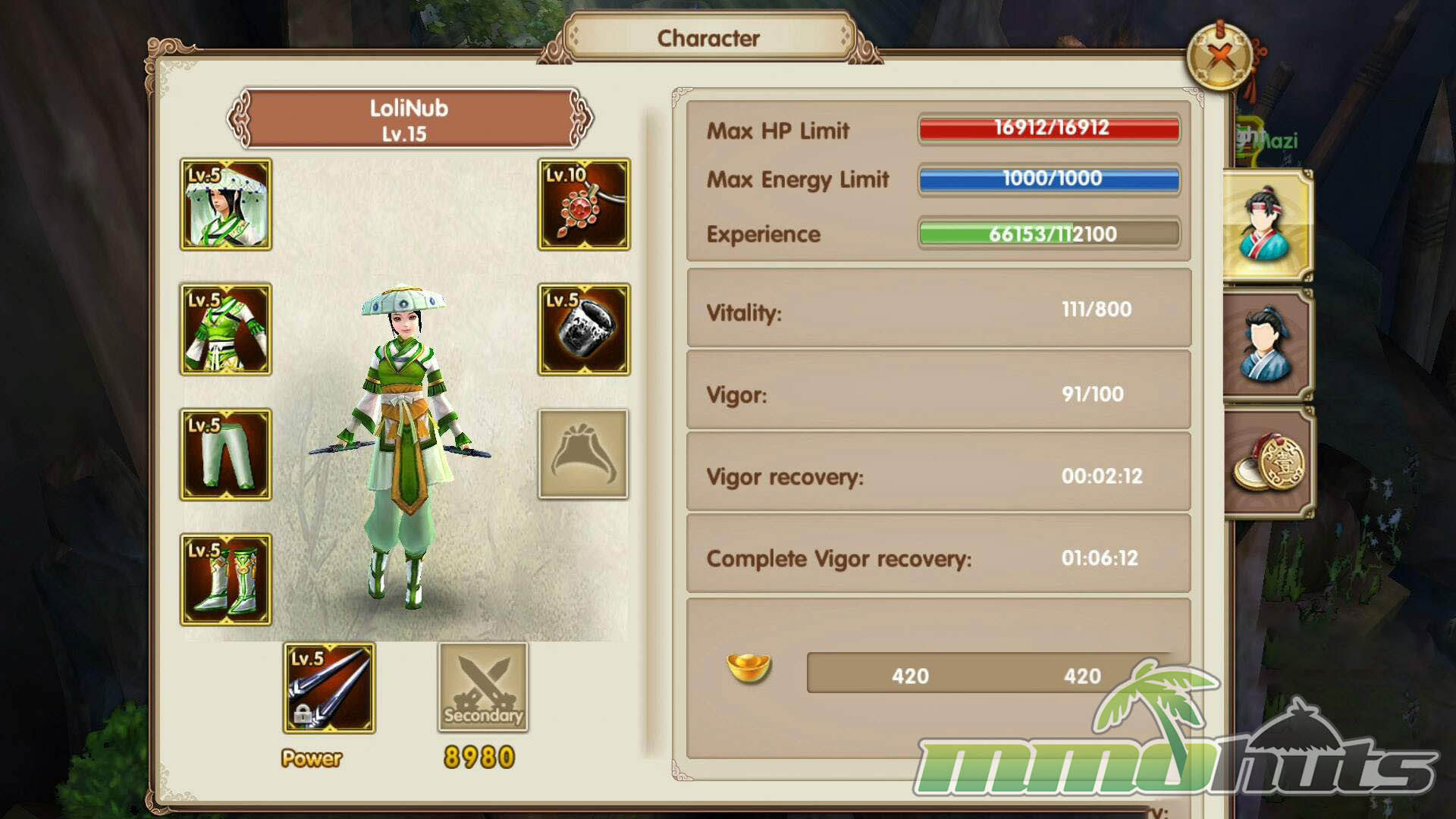
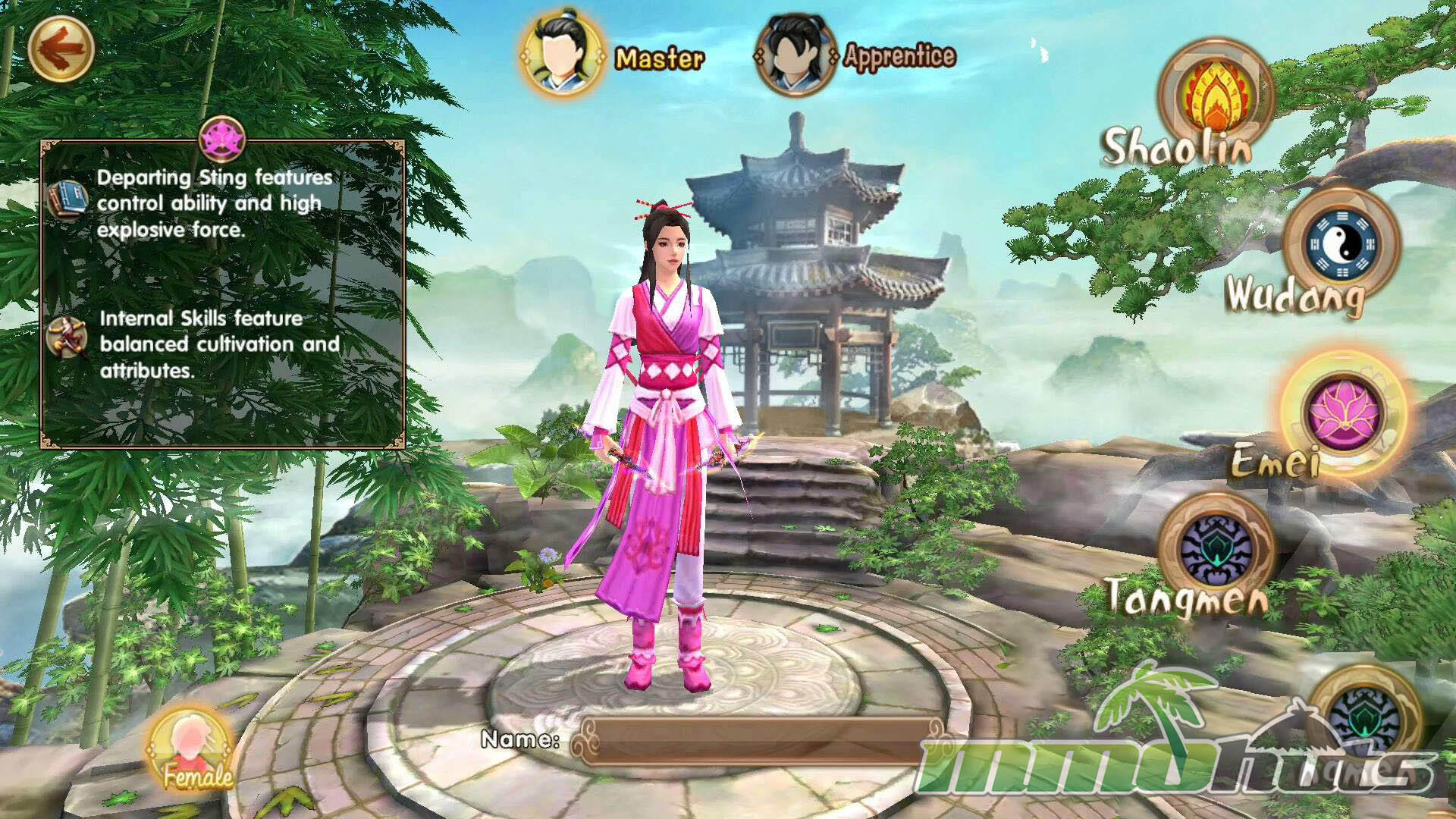
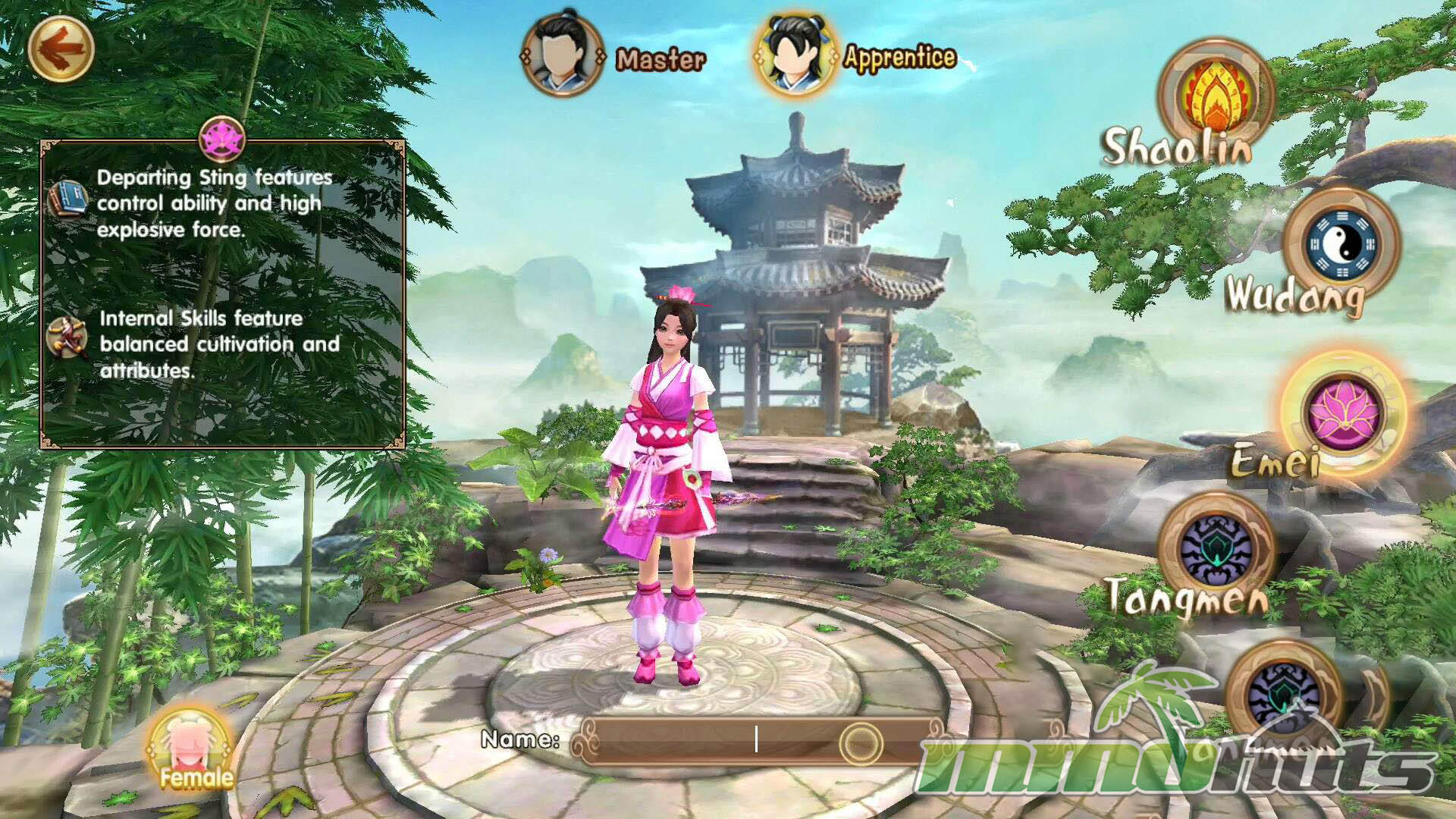
Character setup is quick and mostly about choosing a school rather than sculpting a unique avatar. There are four Martial Arts Schools: Shaolin (male only), Wudang, Emei (female only), and Tangmen. Each is framed with a recognizable role and style. Shaolin plays like a staff-wielding monk with longer-reaching melee swings and chi-themed techniques. Wudang focuses on swordplay with a defensive slant and survivability tools. Emei is positioned as a balanced fighter using daggers, leaning into control and burst windows. Tangmen also uses daggers, but pushes more aggressive pressure through poison-flavored skills and close-range offense.
Each school offers a “Master” and “Disciple” presentation option, effectively a visual age variant, but beyond gender choice and that look, customization is limited. In practice, the classes share a similar control scheme and overall pacing, so the differences come down to skill behavior, range, and how their kits express the parry interactions. It is enough to encourage experimenting, but not enough to make the game feel like four completely different combat games.
A Striking Setting, Built Around Instances
Jianghu is presented with colorful, stylized environments and a clear wuxia identity. Cities and scenic zones are easy on the eyes, and the art direction does a lot of the heavy lifting in making the world feel distinct from more generic fantasy mobile RPGs. That said, the way you traverse it is not truly open in the PC MMO sense. Social activity, quest pickups, and some combat happen in persistent areas, but the main progression loop is driven by instanced stages.
Stages are typically linear runs where you clear groups of enemies on the way to a boss. The pace is brisk, mobs fall quickly, and the rewards are the usual mix of experience, silver, and chances at gear or upgrade items (including things like keys, recipes, and Cultivation stones for improving skills). The upside is convenience and clear progression. The downside is that repeated runs can blur together once you settle into the rhythm.
Questing That Often Plays It Safe
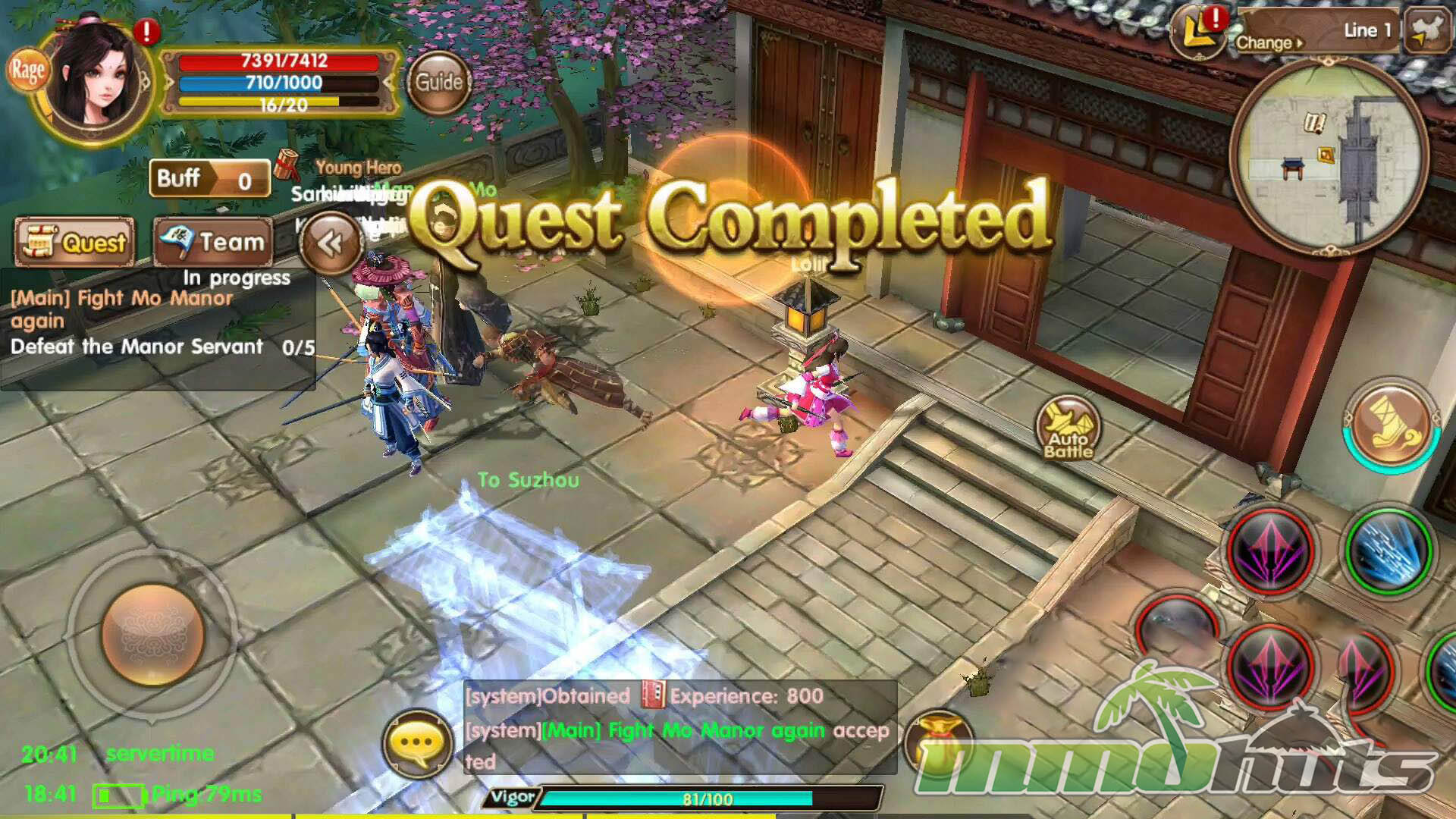
Questing follows familiar MMO logic, talk to NPCs, travel to objectives, clear a mission, then report back. Age of Wushu Dynasty keeps it especially streamlined with a single main questline and an auto-move feature that can carry you between steps. For players who want a low-friction mobile experience, that automation is useful. For anyone hoping for exploration or meaningful side content, the structure can feel overly guided.
A common pattern is extended stretches of running between NPCs, punctuated by an instanced stage or a quick objective in a shared area. The objectives rarely surprise you, and the game leans heavily on “go here, speak to this person” pacing between combat segments. The result is a loop that can start to feel like busywork, even when the combat itself remains enjoyable.
The narrative framing is serviceable but not particularly gripping. It leans on familiar threats like bandits, assassins, and foreign aggressors, with your character positioned as the one martial artist who can keep the situation from spiraling. There are short cutscenes around stages that add a cinematic touch, complete with voice work at times, but the presentation is inconsistent. One noticeable issue is that English voice lines do not always match the English subtitles, which can make story scenes feel disjointed. Later on, voiced dialogue becomes less prominent, so the mismatch stops being a constant distraction, but it is still an odd blemish early in the experience.
Action Combat With a Simple Mind-Game Layer
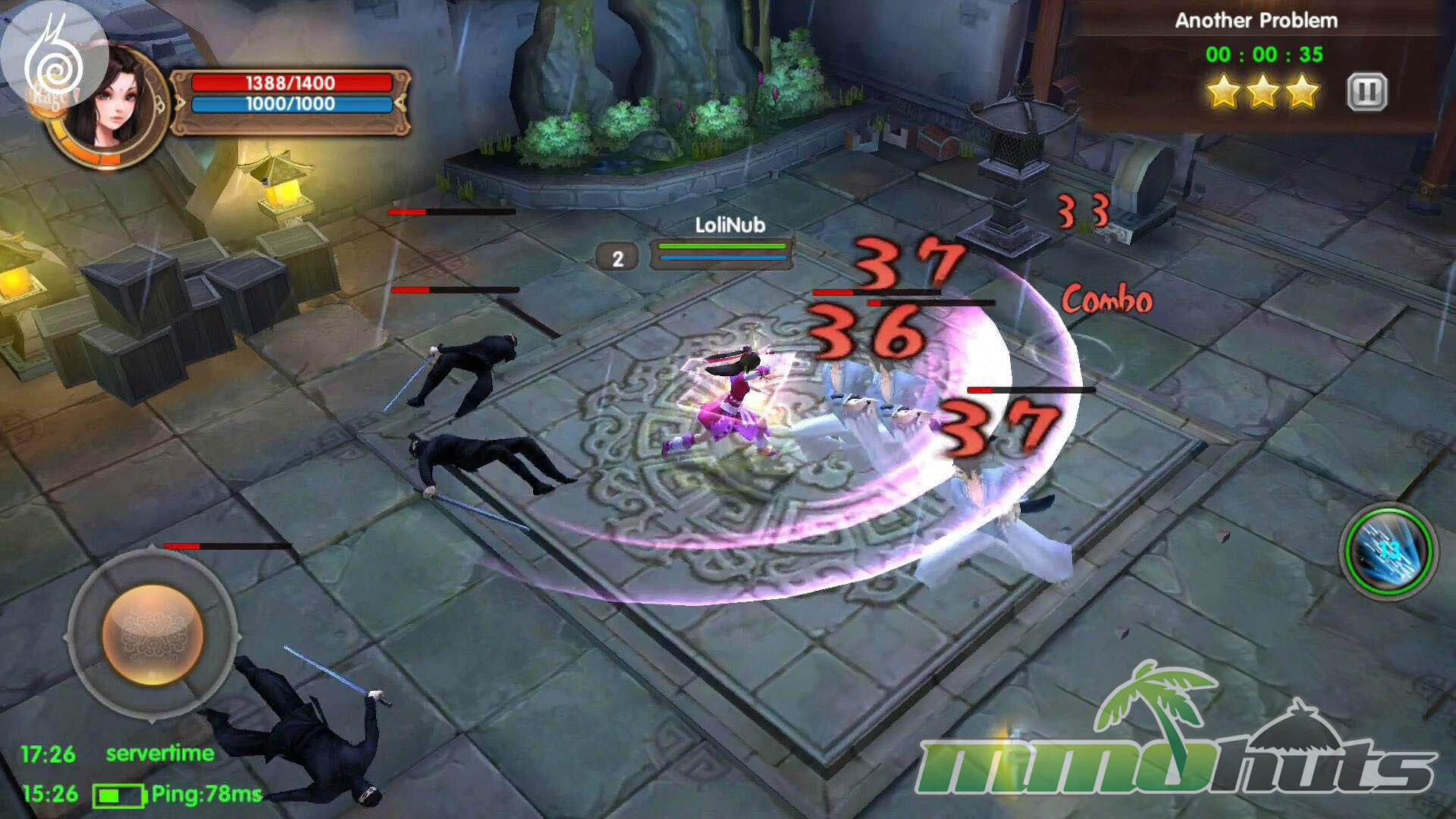
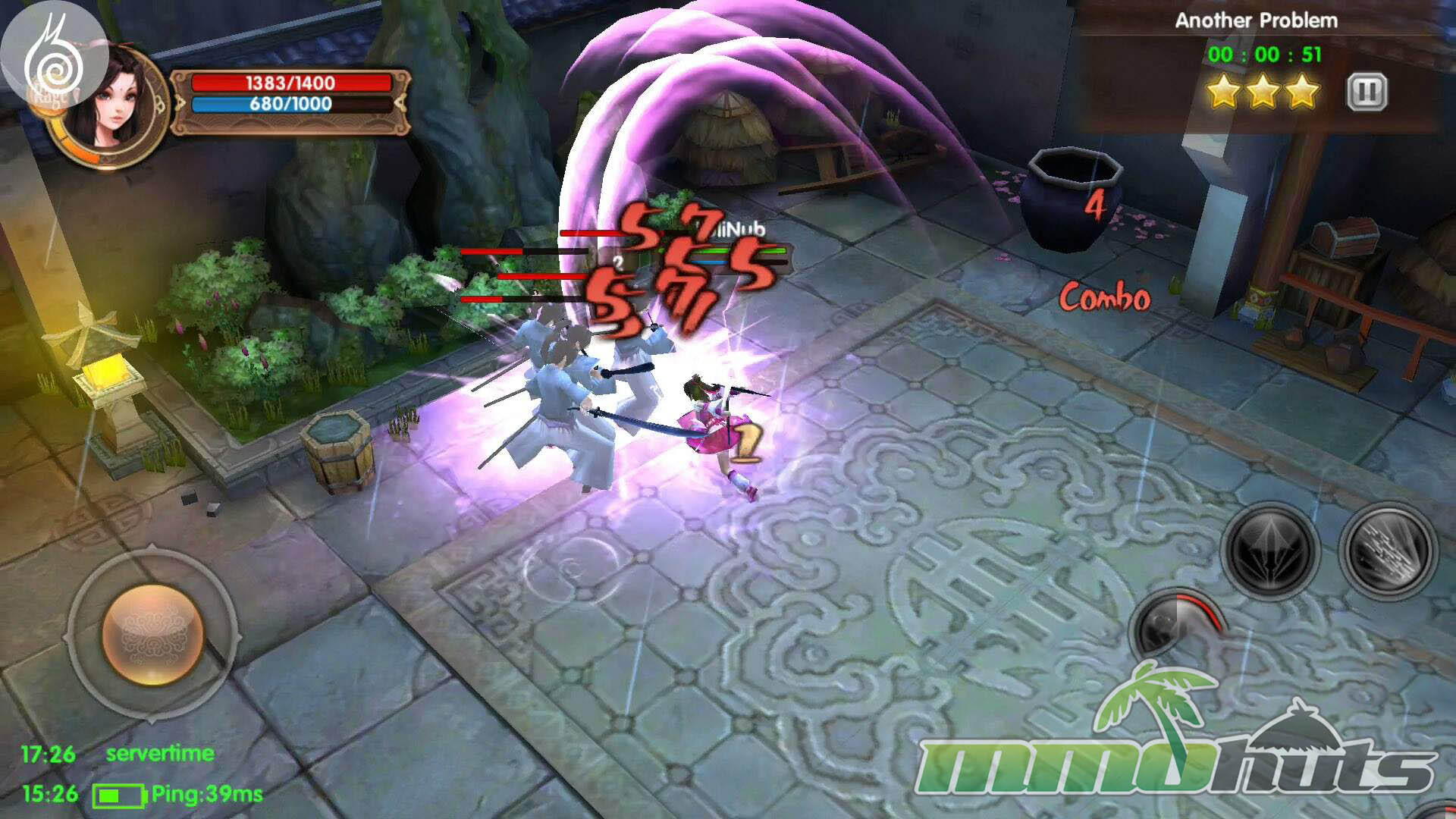
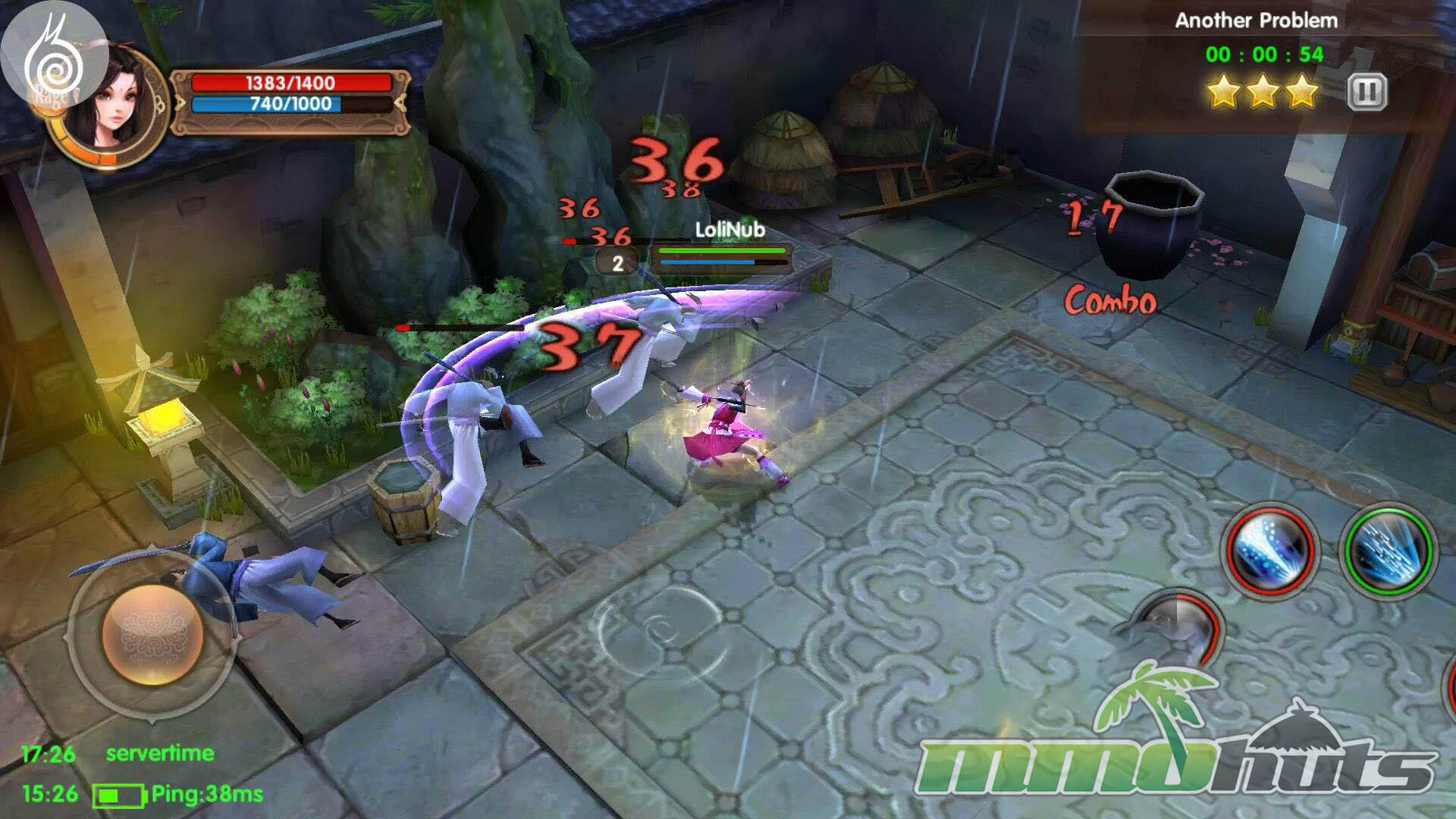
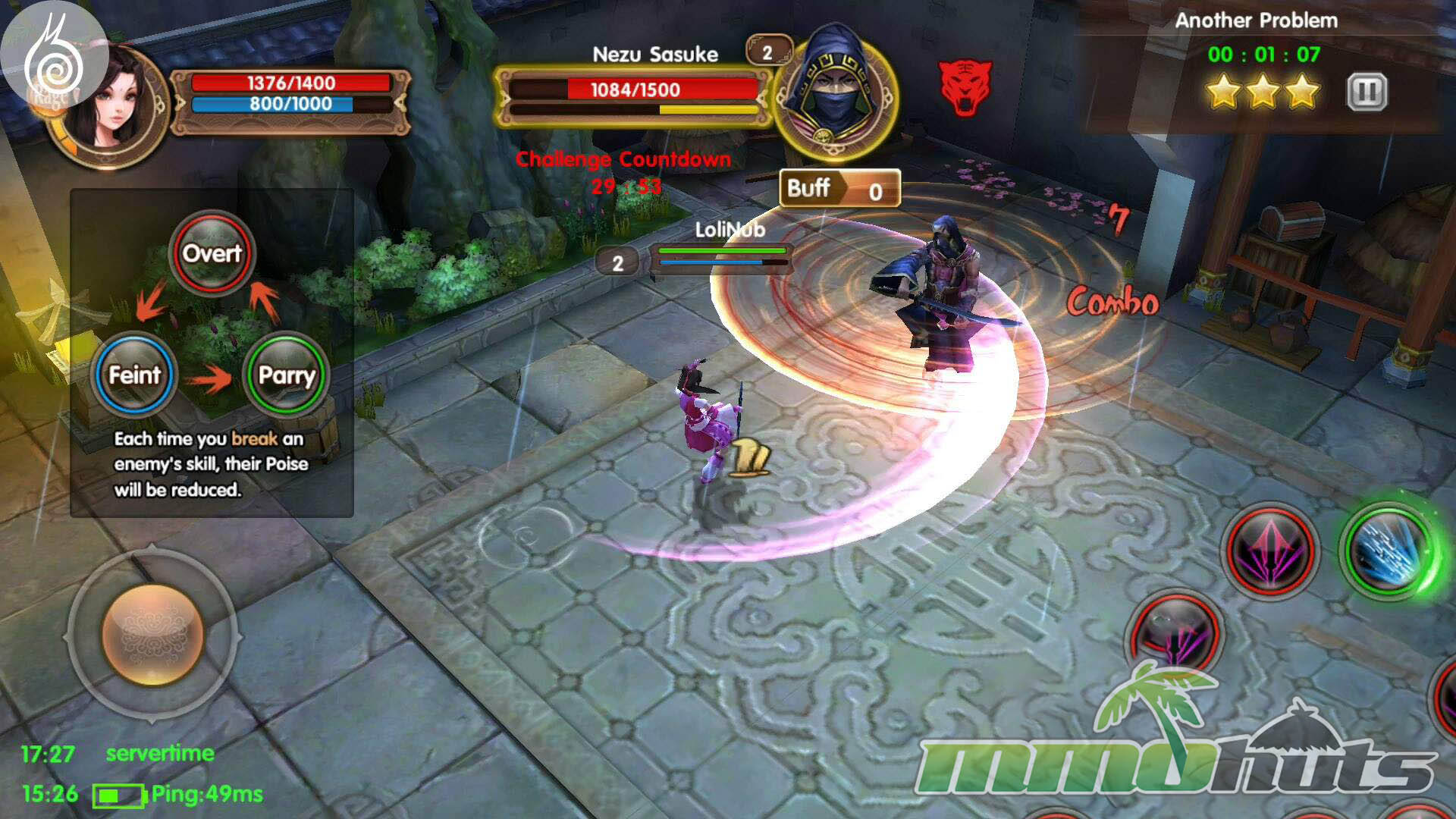
Combat is built for touch controls: a virtual stick for movement, a main attack button, and skill icons arranged for quick access. At baseline it is a familiar mobile action RPG formula, fast clearing, frequent skill use, and plenty of enemies designed to be cut through efficiently. The standout mechanic is the Parry/Overt/Feint relationship, which functions like a rock-paper-scissors check layered on top of standard attacks.
Parry is used as an active defensive skill. For players it can block and trigger a counter if timed correctly, while enemies use it primarily as a block state. When an opponent is parrying, Feint is used to break that defense. Overt represents normal attacking pressure and can interrupt or overcome a Feint attempt. The system is not complex, but it encourages paying attention to enemy behavior rather than only spamming abilities. A Rage skill adds an extra burst tool once the meter fills through combat. Auto-combat is also available, but it generally performs worse than manual play, especially in fights where timing parries and breaking guards matters.
Open World Player Killing and Organized PVP
PVP comes in two very different forms. The first is open PK in persistent areas, including towns, where players can initiate fights freely. In a game that is otherwise heavily instanced, this can feel like a feature imported from the PC lineage more than something the mobile structure truly supports. Mechanically, killing players grants infamy (4 per kill, up to 20), and death with infamy results in time spent in jail (1 minute per infamy) until it clears. Beyond that, the system offers limited incentives, so it often reads as a nuisance mechanic rather than a meaningful risk-reward layer. Being killed usually just means a quick respawn and getting back to your route, but repeated harassment can still be frustrating, especially when higher-level players target hubs.
The Arena is the more structured alternative, offering 1 vs 1, 2 vs 2, and guild battles. However, these matches are asynchronous, you fight AI-controlled versions of other players’ characters rather than real-time opponents. You pick from a list, choose manual or auto play in most modes (with early PVP leaning on auto), and use daily attempts to earn silver and PVP badges for rewards. The format is common for mobile RPGs, but it blunts the appeal for an action MMO where direct player skill and reactions could have been the main draw. Even with manual control, fights can drag due to high durability on both sides, and the outcome often feels more dependent on stats and upgrades than on tactical play.
Cash Shop/In-App Purchases (IAP)
Monetization is extensive and, in practical terms, can translate into power. The game uses a “Top Up” system that mirrors a VIP model in function. Buying Gold (premium currency) also grants extra rewards tied to how much you purchase, such as gear, crafting and upgrade materials, silver, keys, and other progression items. There are also longer-term deals that provide Gold over time across different durations.
Gold can be spent on a wide range of convenience and power items, including higher-tier upgrade materials, equipment chests, silver, crafting boosters, Cultivation stones for skill upgrades, chest keys, and vigor or energy-related items to extend play sessions. Paying also unlocks VIP-like benefits such as increased limits on purchases and instances. While it is possible to progress without spending, the acceleration and equipment advantages available through purchases are significant, which can be especially noticeable in competitive contexts.
Final Verdict – Good
Age of Wushu Dynasty is best approached as a stage-driven mobile action MMORPG wearing a wuxia skin, not as a direct portable version of the PC Age of Wushu experience. Its strongest qualities are the presentation and the slightly more thoughtful combat loop built around Parry/Overt/Feint. Where it struggles is variety, with questing that leans heavily on automated travel and repetitive objectives, and PVP systems that feel either under-motivated (open PK) or underwhelming (asynchronous Arena). If you enjoy mobile hack-and-slash progression and want a martial arts themed world with solid visuals, it is still an easy recommendation to try, particularly as a casual, drop-in MMO.
Age of Wushu Dynasty Links
Age of Wushu Dynasty Official Site
Age of Wushu Dynasty Google Play
Age of Wushu Dynasty iOS
Age of Wushu Dynasty Official Facebook
Age of Wushu Dynasty Wiki
Age of Wushu Dynasty Requirements
Minimum Requirements:
Android 2.3.3 and up / iOS 6.0 or later
Age of Wushu Dynasty Music & Soundtrack
Age of Wushu Dynasty Additional Information
Developer: Snail Games
Publisher: Snail Games
Platforms: Android, iOS
Release Date: January 7, 2016
Age of Wushu Dynasty was developed and published by Snail Games, a China-based studio also responsible for the PC MMORPG Age of Wushu and the mobile title Taichi Panda. First shown publicly around E3 2015, the game was positioned as a mobile companion or spin-off rather than a full recreation of the PC experience. As a result, it emphasizes instanced missions and mobile-friendly pacing, aligning it more closely with Snail’s mobile action RPG design sensibilities than with the PC game’s broader open-world expectations.
Outside of this title, Snail Games has been associated with PC online releases like Black Gold Online and 5Street, and has also worked on hardware-related projects such as the 3D smartphone W 3D and the Android-based gaming console OBox.