Age of Ishtaria is a mobile TCG RPG built around collecting a huge roster of illustrated character cards, then assembling specialized decks to tackle quests, PvP, and rotating weekly events. Between upgrading and evolving units, navigating the Bazaar to trade, and chasing event rewards, it aims to keep progression moving even if you are playing for free.
  | Publisher: Silicon Studio Playerbase: Medium Type: TCG RPG Release Date: October 16, 2014 Pros: +Massive selection of cards to hunt down. +Premium currency can be earned through play. +Combat has an uncommon, combo-like twist. +Card art is consistently strong. Cons: -Bazaar trading is clunky and hard to use efficiently. -Pack pulls rely on fixed odds for high-rarity cards. -Core loop can feel grindy over time. |


Age of Ishtaria Overview
Age of Ishtaria drops you into a fantasy world threatened by a destructive force known as Storm, and your main tool for pushing it back is a deck of summoned heroes represented as cards. Each unit comes with two passive effects and a single active skill, which layers additional decision-making on top of the game’s signature combat rules. Alongside card skills, battles revolve around four elemental alignments (fire, earth, water, and null) and three attack styles (Flurry, Slice, and Pound). The interesting part is that the order you pick those attack styles matters, because chaining them can transform outcomes, for example turning a sequence into a launch, a multi-target strike, or a defense-breaking setup.
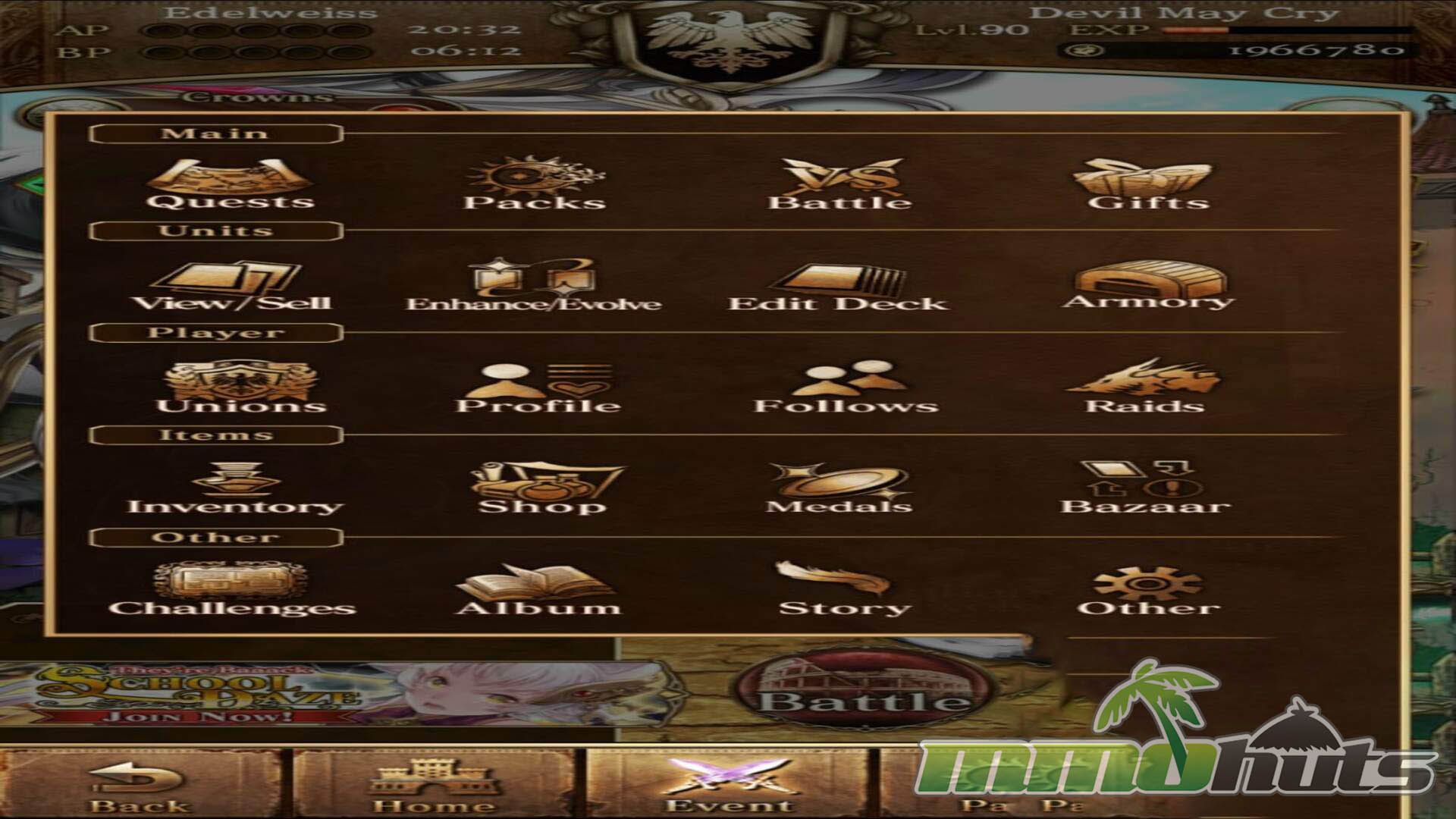
Progression is built around strengthening your roster through enhancement and evolution (including updated artwork as units evolve), using the Bazaar to trade with other players, and jumping into weekly events that offer limited rewards and new cards. Outside of events, you will work through PvE quests with lighthearted dialogue, climb rankings in the PvP arena, and join a union to tackle cooperative boss raids and team-based competition.
Age of Ishtaria Key Features:
- Collect Cards – build a library of over a thousand distinct cards, each featuring detailed character art.
- Unique Combat System – cards use one of three attack styles that can be chained to create different tactical results.
- Enhance and Evolve – power up units by feeding materials, then merge duplicates to evolve them and unlock altered visuals.
- Weekly Events – frequent rotating events provide new objectives, new cards, and event-specific rewards.
- Join a Union – team up with other players for guild-style play, including competitive union events.
Age of Ishtaria Screenshots



Age of Ishtaria Featured Video

Age of Ishtaria Review
Age of Ishtaria sits in an interesting middle ground between a card collector and a mobile RPG. You are still chasing rarities and optimizing decks like a typical TCG, but moment-to-moment battles ask for more than simply slotting in your strongest units. The combo-driven attack system gives fights a puzzle-like quality, and the constant cadence of weekly events helps the game avoid feeling static, even if the underlying grind eventually shows through.
“Meru, look, the Stranger is finally waking up!”
The opening sets the tone quickly: you arrive in Ishtaria and are guided by Salix (the last Mandragora) and Meru (the Witch of Ages). They carry the tutorial with playful banter that is more charming than you might expect from a mobile card RPG. Early battles focus on teaching turn flow, because encounters typically play out in waves, and each wave allows both sides to execute a sequence of attacks before the next exchange.
Elemental affinity is straightforward at first glance. Fire, earth, and water behave like a rock-paper-scissors triangle, while null counters null. The real hook is how attack styles interact. Cards can be Flurry, Slice, or Pound, and selecting them in different orders changes what the chain does. One sequence might convert part of your lineup into multi-target hits, while another might shift your actions into debuffs that soften the enemy for the rest of the turn. That means the “right” move is often about timing and sequencing, not just raw stats.
Event modes add even more nuance. Some formats allow defensive deck setups where the same attack styles behave differently, so you need to read event rules carefully before assuming your usual combos will perform the same way. On top of that, every card’s passives can trigger at different moments (such as the start of a wave or the start of an attack), and active skills require waiting a set number of turns before you can press and hold to fire them off. There is also the Burst gauge, which builds over time and, when full, lets you unleash a high-volume attack turn that can swing a fight. Add in status effects like Paralysis and Poison, and battles become surprisingly layered for a game that, from the outside, can look like a standard card collector.
Building a roster that can handle anything
Deck flexibility is important, because events and PvP formats often reward specialized setups. Cards drop from questing, but those rewards generally sit at the low end of the rarity range (Level 1 to Level 2). The top end (Level 7) is largely tied to Card Packs and event rewards. Packs are purchased with Crowns (premium currency) or various Tickets. Event packs are more restrictive, requiring Crowns and event-specific tickets, but they are also where you will see chances at the newest cards.
The ticket ecosystem is generous in that it can be farmed, but it is also more complicated than it needs to be. Gold packs use a single ticket, while Silver and Bronze packs require ten tickets of the matching type. The system works, but it can feel like extra layers added on top of an already RNG-driven process.
Weekly events are the more satisfying path to rare units, because they provide clear goals and a sense of momentum. Some events are rank-based ladders, while others focus on point thresholds and completion milestones. That mix matters, because it gives players who cannot commit to nonstop grinding a fair shot at meaningful rewards through completion-style events. Event cards are also commonly time-limited, which makes participation feel worthwhile even if you are not chasing the very top of the leaderboard.
Upgrades, evolution, and the “break” system
Progression is spread across several systems. Enhancement raises a card’s level (up to 100), although lower-rarity units have lower level caps. A high-end example is a Platinum Level 7 card, which can reach level 100, while a level 2 rarity unit caps much earlier (such as level 30). Enhancement is done by feeding other units and Grimoires, which function as upgrade materials in card form.
Evolution is handled by merging duplicate copies to improve the unit and update its artwork. In practice, the rules can feel inconsistent. Most cards (excluding Level 7 and Platinum Level 7) can be merged up to five times, while Level 7 units have a tighter limit and Platinums cannot be merged at all. The restrictions likely exist for balance reasons, but the way it is presented can be confusing, especially when you are trying to plan long-term investments.
Then there is Breaking, which increases a card’s core combat stats (Attack Power and HP). There are three break tiers, each requiring Spirit Gems of different sizes: twenty Small Spirit Gems for the first, ten Medium for the second, and six Large for the third. The costs do not follow an intuitive “bigger tier equals more items” progression, so it can take time to internalize what you need. The upside is usability: the menus for Enhancing, Evolving, and Breaking are organized together, switching between them is painless, and the materials needed for enhancement and breaking are obtainable through normal play.
The Bazaar: trading with friction
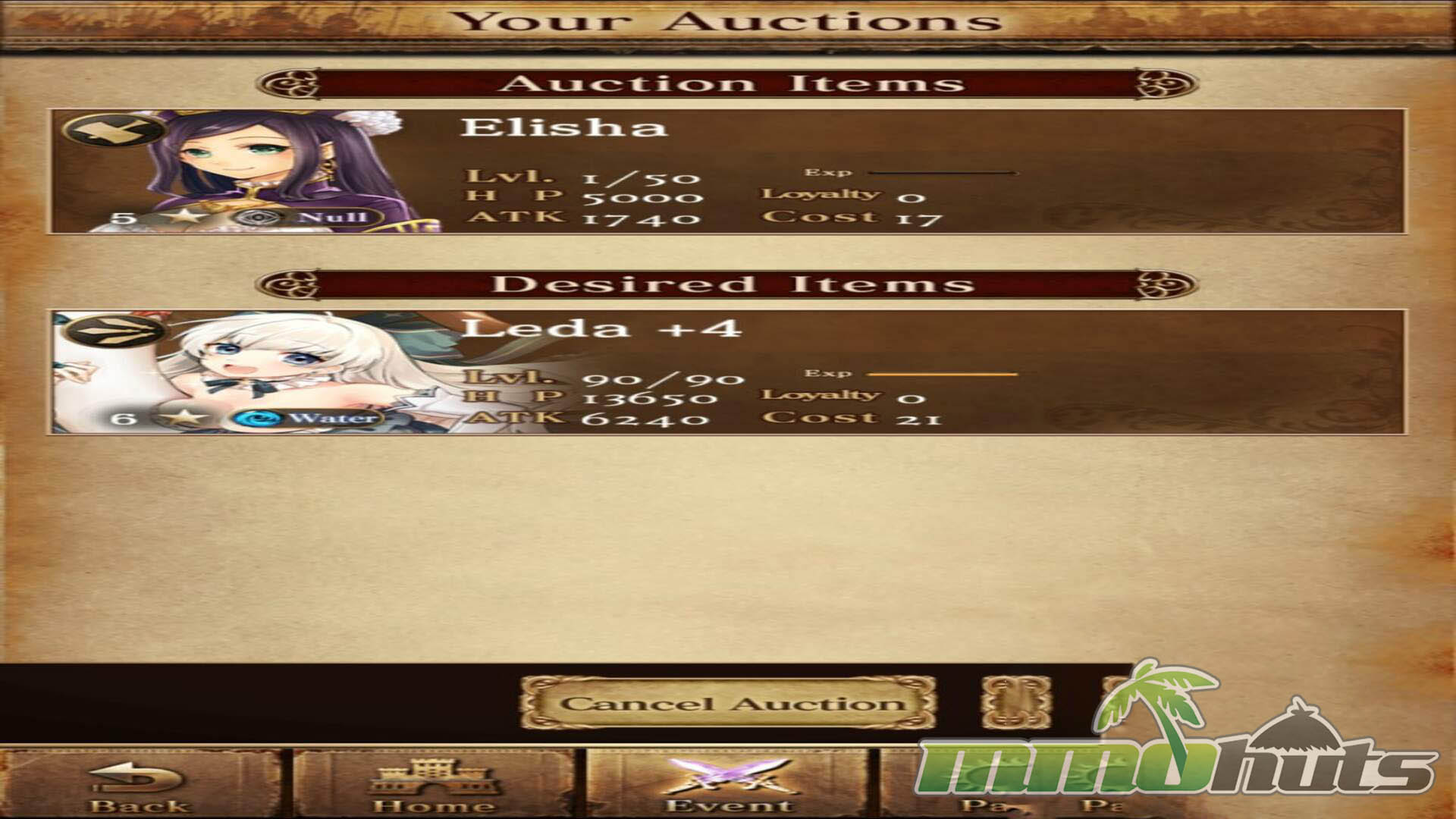
Age of Ishtaria does include player trading through a shared marketplace called the Bazaar, but it is one of the weakest parts of the overall experience. Listings function more like trade offers than true auctions, and the interface makes it difficult to track who listed what or to quickly search for specific targets. The lack of direct, player-to-player trades also limits how social the economy can feel.
The restrictions on event cards add another layer of frustration. Many are flagged No Trade for long stretches (six months to a year), which reduces the Bazaar’s usefulness for the very cards players are most likely to want. It is still better than having no trading at all, but it often feels like you are working around the system rather than benefiting from it.
Activities and modes beyond the main quests
The weekly event schedule is the heart of the game. Whether it is boss-focused content, cooperative and competitive union formats, or point-grind events, most players will spend the bulk of their time chasing event rewards. The repetition is real, but the combat system does a good job of pushing you to adjust lineups and sequencing rather than sleepwalking through every fight.
Outside of events, there is a long PvE quest chain spread across multiple map regions. First-time clears award Crowns, which makes story progression doubly valuable for free-to-play users. Each region can also be Purified using Sacred Stones, granting buffs like increased HP, higher Attack Power, better skill proc rates, and adjustments to how many potions and revives are usable in battle. It is a helpful power-smoothing tool, especially when you hit difficulty spikes.
PvP exists in the arena with multiple ranking windows, and its deck structure differs from standard questing. Instead of a single five-card lineup, you use a raid-style setup with five teams of three cards, which makes roster depth matter. There is also the Nightmare Rift for tougher boss encounters and a union system that supports coordinated play, particularly during team-based PvP events.
Why Crowns and Medals matter
The economy is where Age of Ishtaria quietly does better than many mobile peers. Crowns are the premium currency, and while they are still tied to better access to packs, they are also obtainable through normal play. Quests award Crowns for first-time completion, events frequently hand them out, and even daily log-in activities contribute. Because there are many maps and each one also pays out Crowns when fully Purified, saving for a premium pack is slow but achievable without spending.
Medals are the second big support system, and they help relieve pressure from stamina-style mechanics. You earn Medals by selling cards of Level 3 rarity and higher, and increasing a card’s loyalty (raised by using it in combat) improves the Medal return. In other words, Medals are farmable at a steady pace. The exchange shop is unusually practical: you can trade Medals for AP and BP potions (used heavily in events), plus quality-of-life upgrades like extra card space, certain Level 5 and higher rarity cards, and Grimoires for enhancement. It is a strong safety valve that helps free players stay active during event weeks.
Final Verdict – Excellent
Age of Ishtaria stands out most for its combat, because the three attack styles and their chain interactions make battles feel more tactical than the average mobile card RPG. Its strengths are clear: a huge collection pool, consistently appealing card art, and an economy that allows players to earn meaningful amounts of premium currency and event stamina resources through play. The downsides are just as noticeable, mainly the awkward Bazaar and the sometimes opaque upgrade rules around evolution and breaking. Even with those issues, the steady stream of weekly events and the satisfying battle system make it an easy recommendation for mobile RPG fans who enjoy collecting and optimizing decks.
Age of Ishtaria Links
Age of Ishtaria Official Site
Age of Ishtaria Facebook Page
Age of Ishtaria Google Play
Age of Ishtaria iTunes App Store
Age of Ishtaria Wikia
Age of Ishtaria Reddit
Age of Ishtaria Forums [Official]
Age of Ishtaria System Requirements
Minimum Requirements:
Operating System: Android 4.0 and up / iOS 5.1.1 or later.
Age of Ishtaria Music & Soundtrack
Coming soon!
Age of Ishtaria Additional Information
Developer(s): Silicon Studio
Publisher(s): Silicon Studio
Language(s): English, Japanese, Korean
Release Date: October 16, 2014
Development History / Background:
Age of Ishtaria is a TCG RPG developed and published by Silicon Studio, a Tokyo-based gaming company. Silicon Studio is known for developing games such as Bravely Default and Grand Sphere. Age of Ishtaria was released October 16, 2014 for mobile platforms.