
Mytheon
Mytheon is an action MMORPG themed around Greek antiquity, where you choose from three archetypal classes and battle mythic beasts and gods using collectible “Power Stones” that can become spells, summons, or deployable defenses.
 | Publisher: True Games Type: Action MMORPG Release Date: March 3, 2011 Pros: +Deep build variety via stones. +Distinctive combat system. +Tactical, timing-based encounters. Cons: -Limited to three classes. |

Mytheon Overview
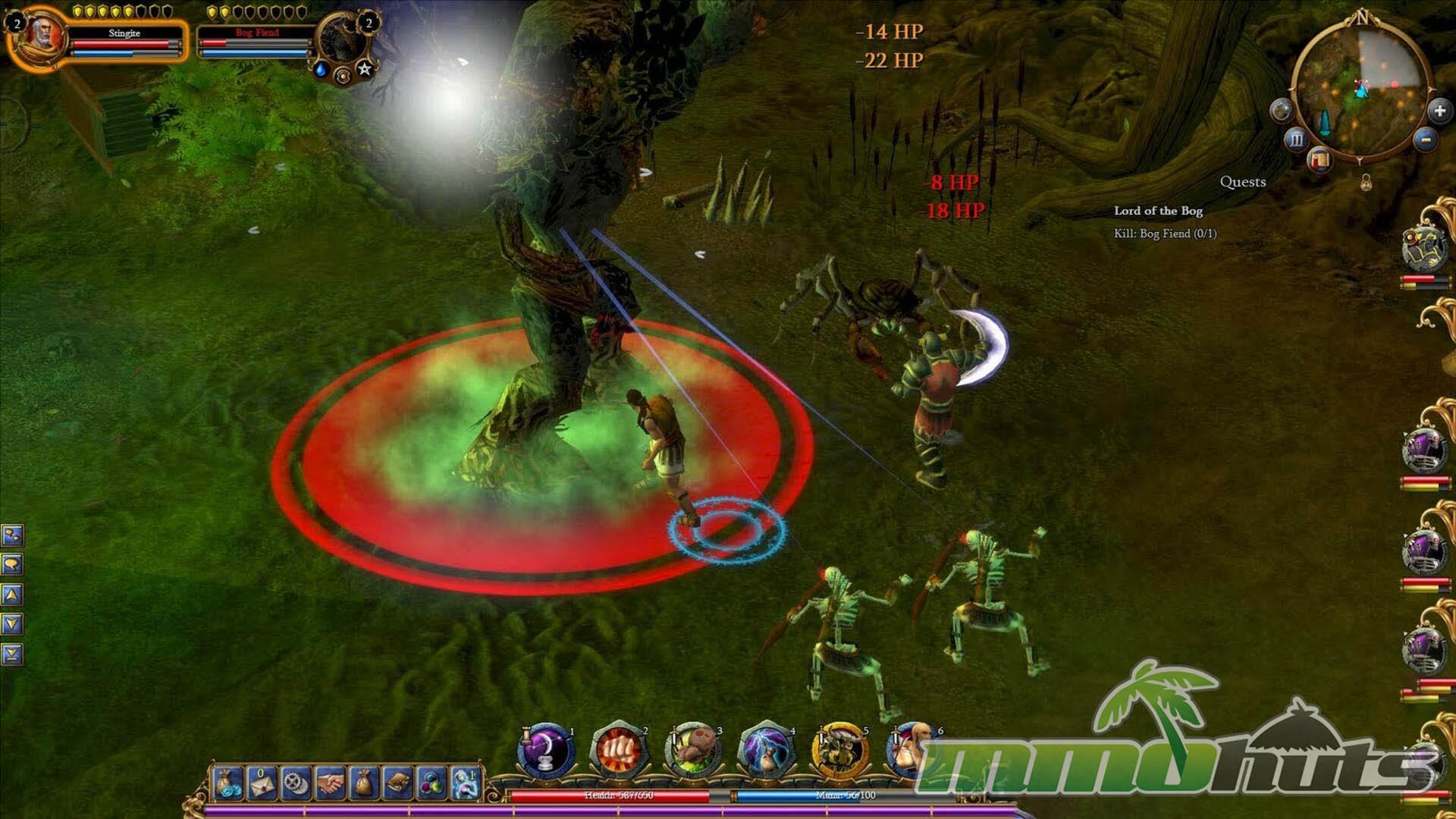
Mytheon is a buy-to-play MMORPG that tries something unusual for the genre, it merges click-to-move action RPG pacing with a strategy layer built around collectible “Power Stones.” These stones function as your core loadout and, in moment-to-moment combat, as a rotating hand of abilities that you draw and spend. Depending on what you equip, a stone might translate into a direct attack (like elemental blasts), a temporary structure that blocks enemies or boosts stats, or a summoned creature that fights alongside you. That system creates a constant push and pull between planning your battle set and reacting to what the game deals you in the middle of a fight.
Progression largely revolves around acquiring and improving stones, including crafting that can open access to rarer or more specialized options. While the stone system is shared across the game, each class leans into certain stone categories and roles. Warcasters are sturdier frontliners who typically rely on battle stones and sustain tools like healing stones or consumables. Eidolons are positioned as the support class, using a more balanced selection of stones to keep allies alive and control the flow of encounters. Elementalists occupy the caster niche, emphasizing elemental damage and summons to pressure groups of enemies quickly.
Outside of the stone mechanics, Mytheon still plays like a traditional RPG in many ways, you pick up quests, grind monsters for drops, and advance through zones. For competitive players, there are PvP options ranging from straightforward one-on-one duels to a larger arena mode where clever stone usage and tempo matter as much as raw stats.
Mytheon Key Features:
- Three Playable Classes (Warcaster, Eidolon, Elementalist) – Choose one of three myth-inspired roles, then shape it heavily through your Power Stone selections.
- Over 180 Power Stones to Collect – Build out your kit with stones that translate into attacks, summons, and structures during combat.
- Lots of Game Content – Several avenues for gaining levels and stones, including quests, drops, and other activities.
- PvP Modes – Test your build and decision-making in duels or a larger arena setting.
- Unique Greek Theme – The world draws from Greek mythology (and neighboring myth traditions), with recognizable creatures and story beats.
Mytheon Screenshots




Mytheon Featured Video

Mytheon Review
Mytheon is an action-focused MMORPG from True Games that aims for a more “session-friendly” structure than a fully open world, pairing persistent towns with instanced adventure areas. The result lands somewhere between a dungeon crawler and an MMO hub game, which will feel familiar to players who enjoyed the flow of games built around social cities and mission-like zones. Where Mytheon tries to stand out is in combat, the Power Stone system adds a deck-like layer that changes how you build characters and how fights unfold.
Three Classes, Plenty of Builds
The first thing you notice is how streamlined character creation is. Mytheon does not lean on deep visual customization or a long list of classes. Instead, it offers three distinct options, Warcaster, Elementalist, and Eidolon, each with male and female variants and a modest set of cosmetic choices (hair, face, skin tone). It is enough to get started, but you should not expect the kind of granular sliders seen in some modern MMOs. In practice, individuality tends to come more from your equipment and, more importantly, from your stone setup than from the character creator.
That limited class roster is also the game’s most obvious constraint. The upside is clarity: each class has a readable identity and a defined role in both solo and group play. The downside is that if none of the three styles click, there is no fourth option waiting in the wings.
Presentation and Controls
Mytheon uses mouse-driven movement and targeting, staying close to the action RPG formula rather than the typical WASD MMO scheme. Anyone coming from isometric dungeon crawlers will adapt quickly. The trade-off is that combat can feel a bit less immediate than full manual movement systems, especially when you are issuing rapid reposition commands and trying to weave stones on cooldown. It is playable and intuitive, but not always as snappy as you might want during hectic pulls.
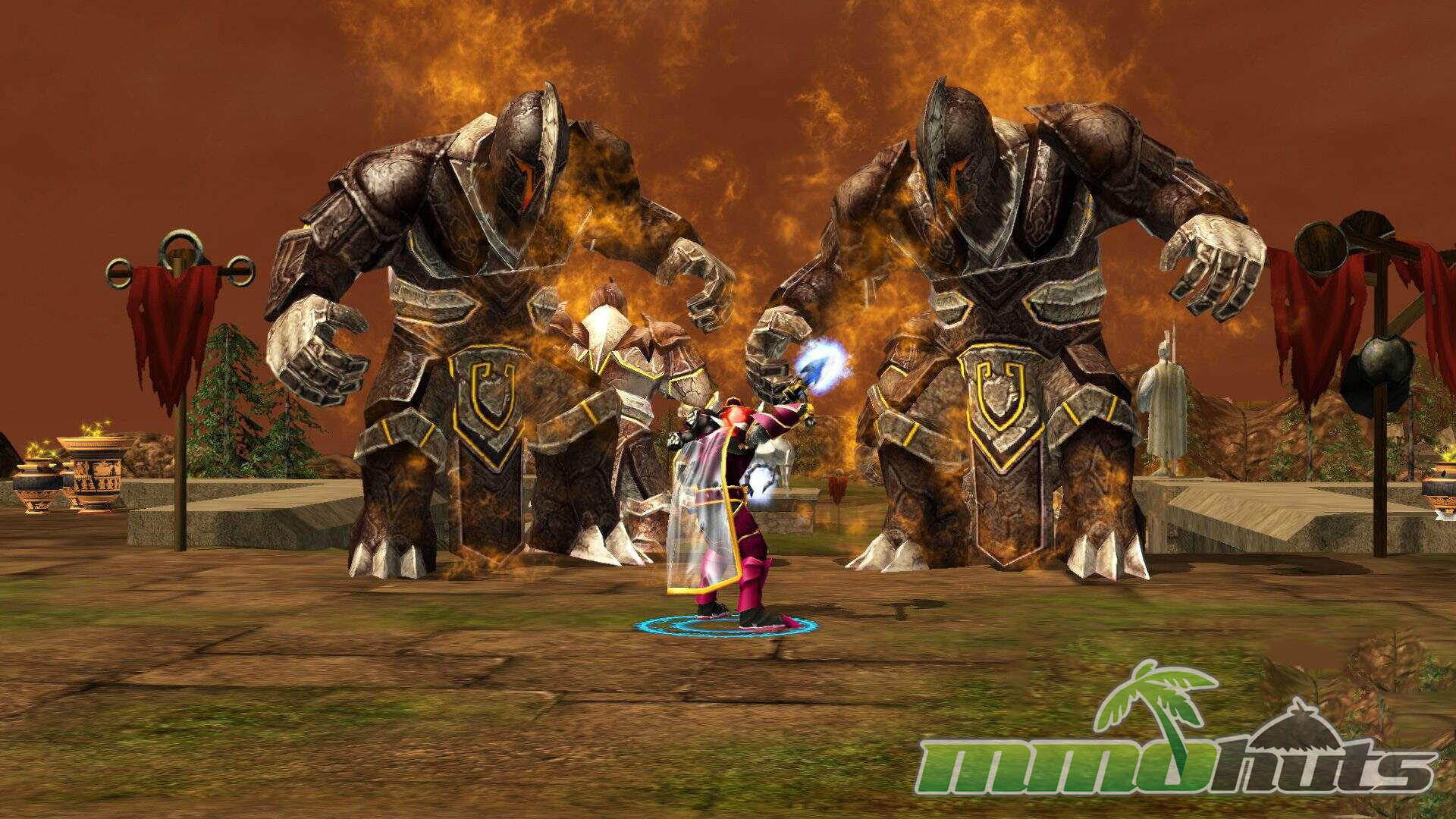
Visually, the game goes for a bright, stylized look that suits its mythological creatures and exaggerated spell effects. Environments have clear color separation and readable silhouettes, which helps when multiple summons, structures, and enemies are stacked on screen. It also supports a range of display options, making it flexible for different setups.
Zones, Hubs, and Instancing
Progression is paced around a low level cap, which makes the early game feel measured rather than fast-forwarded. You begin near an early encampment by Echidna’s Swamp, taking on introductory quests and working through the first bracket of enemies. Structurally, each region revolves around a shared hub city where players gather, manage inventory, and pick up tasks. Travel is convenient, you can return to the hub via an interface icon, and from there jump to unlocked locations within the region if you meet the level requirements.
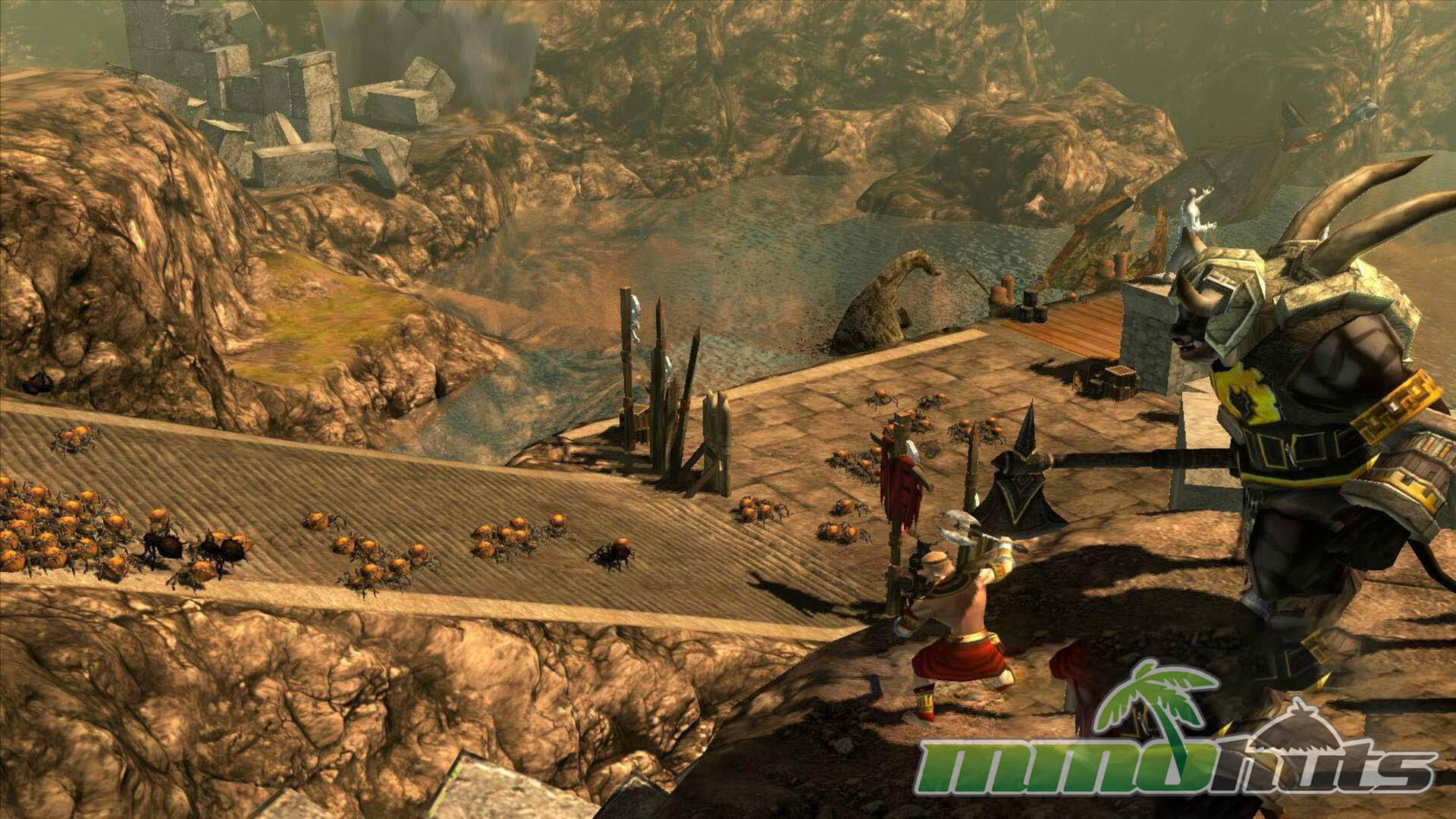
The game’s geography draws from Greece and neighboring myth-inspired regions, including an Egyptian-themed area with its own capital hub. Moving between hubs is handled through NPC travel, such as speaking with a ship captain. Once you leave a hub, most adventuring spaces are instanced. That design keeps zones focused and helps performance, but it also means you will not organically “run into” strangers out in the wilderness unless you form a party and enter together.
Power Stones: A Deck-Like Combat Loop
Mytheon’s defining idea is that your abilities are not a static hotbar. Instead, you assemble battle sets (up to 40 stones) but only see a limited selection at a time during combat. As you use a stone, it cycles back into the set and another one appears after a short delay, which creates a rhythm that is part planning and part improvisation. Some stones are instant, others have cast times, and the categories are varied enough to support different approaches, direct damage spells, summoned companions, and structures that hold space or provide buffs.
Companions and structures are temporary and capped, so you cannot simply flood the field forever. That limitation matters because it forces you to make choices about tempo: do you spend early stones establishing control with summons and defenses, or do you push damage immediately and hope the next draw supports your plan? It is a clever system, and Mytheon does a decent job of introducing it gradually so new players are not buried under complexity from the start.
Stones come from multiple sources, enemy drops, boss rewards, quests, and merchants. While most are aligned to specific classes, there is some overlap, which adds flexibility for experimenting. Crafting also plays a role for players who want to chase more specialized options rather than relying purely on drops.
Questing, Feats, and PvP Progression
On the PvE side, Mytheon is largely built on repeatable questing and grinding loops. You will often be asked to clear specific enemies or work an area repeatedly for progress and drops. To help structure that repetition, the game uses an achievement-style system (called feats) that lists objectives per zone, giving you extra goals beyond the basic quest list.
Combat downtime is managed through shrines that restore health and mana. Since stones consume mana and different classes regenerate at different rates (also influenced by gear), resource management becomes another small layer of decision-making, especially when you are chaining fights without returning to town.
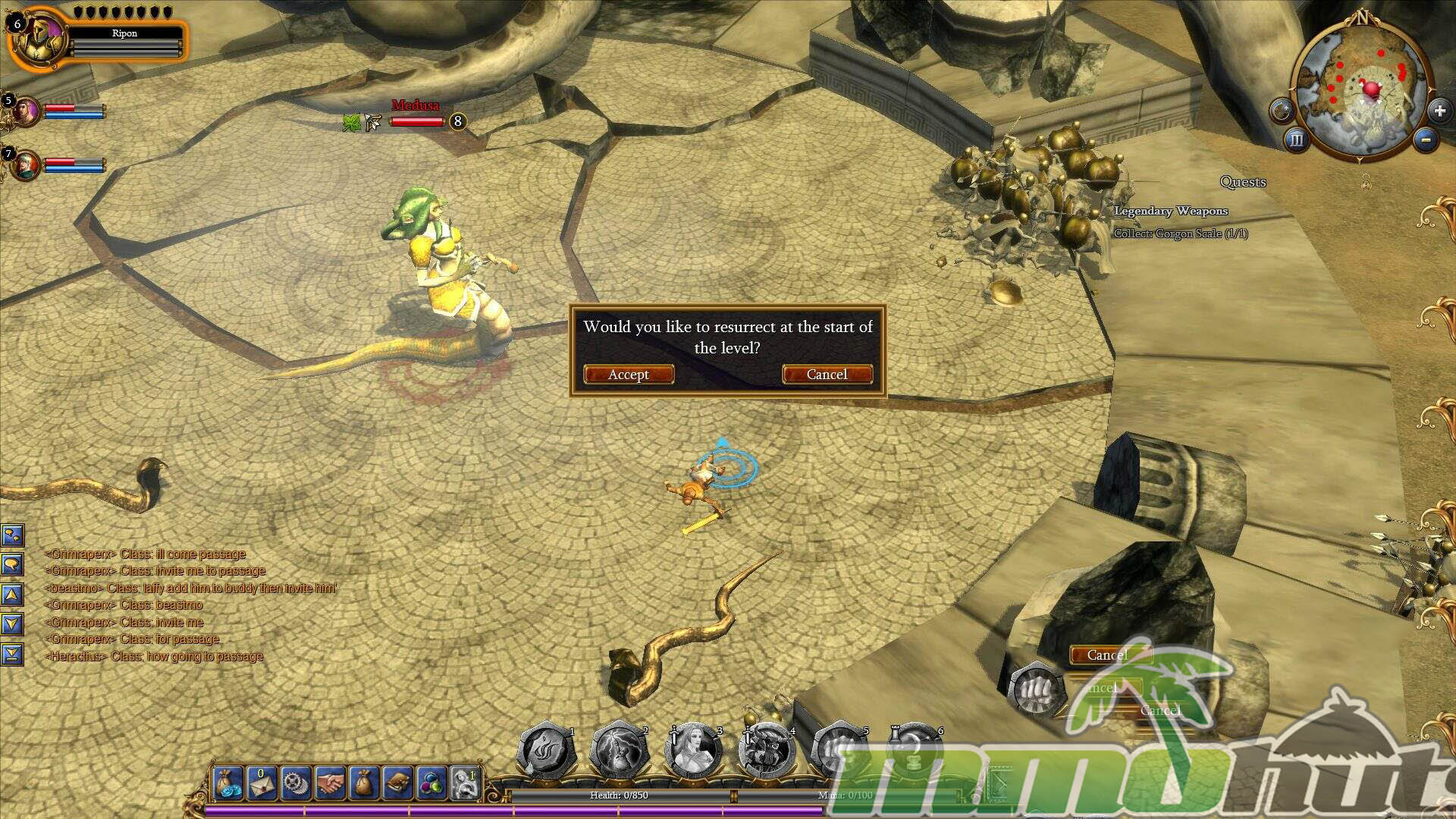
PvP is one of the more interesting alternatives to pure grinding. Duels are easy to initiate by challenging another player, and groups can also challenge other groups. Once accepted, participants are moved to a gladiator arena and fight through rounds, with the first side to take three rounds earning the win. PvP rewards can be substantial in terms of experience, making it a legitimate leveling path for players who prefer outplaying opponents to repeating PvE circuits.
Mythology, Monetization Concerns, and the Overall Package
Narratively, the game leans into the idea of divine conflict, gods and legendary forces turning hostile, with a few human strongholds surviving thanks to powerful relics. It is not a deeply nuanced story, but it fits the monster roster and the setting, and it provides enough context to make the zones and bosses feel thematically coherent.
Where the experience becomes more complicated is monetization. During the game’s earlier life, a cash shop existed with familiar conveniences such as extra inventory space and experience boosts. The more questionable aspect is that practical items like potions and even gear were also present in the shop via premium currency. Even if some currency can be earned through quests and events, that sort of offering inevitably raises fairness questions, particularly for PvP, where even small advantages can snowball.
Taken as a whole, Mytheon is at its best when you treat it as an action RPG style MMO with a genuinely distinctive ability system. The instanced structure will not satisfy players who want a seamless, massively shared world, but it does keep the experience focused and makes grouping straightforward.
Final Verdict: Good
Mytheon combines familiar questing and hub-based progression with a Power Stone system that makes combat feel more tactical than most action MMORPGs. While the limited class selection and instanced layout will not appeal to everyone, the stone-driven buildcraft and reactive fights give it a personality that stands out in the genre.
Mytheon Music & Soundtrack
Coming soon…
Mytheon Additional Information
Developer: Petroglyph Games
Publisher(s): True Games
Release Date: March 3, 2011
Intitial Closure Date: July 27, 2011
Steam Rerelease: December 08, 2015
Development History / Background:
Development on Mytheon had a turbulent start, including delays and a legal dispute between Petroglyph Games and True Games. True Games alleged that Petroglyph missed agreed deadlines and claimed the work was being prolonged, or quality was not being delivered, in a way that increased costs for the publisher. Partway through production, development shifted from Petroglyph to an internal True Games studio in Beijing, where the title was finished and prepared for release. Roughly six months after launch, True Games was acquired by Disney, and several projects under the True Games umbrella were shut down, including Faxion Online and Mytheon, with Mytheon closing on July 27th, 2011. The game later returned via Steam as a buy-to-play release on December 08, 2015.