
RF Online
RF Online, also known as Rising Force Online, is a 3D sci-fi MMORPG set on the embattled planet Novus, where three rival nations clash over limited resources that can decide the future of their people. Even with its lasers, machinery, and cybernetics, the game leans heavily into classic MMO fantasy traditions too, with melee weapons, magic, and summon-style combat living side by side with high-tech warfare.
 | Publisher: RedFox Games Playerbase: Low Type: MMORPG Release Date: Feb, 21, 2006 (NA/EU) PvP: Duels / Open World / Faction Wars / Guild Battles Pros: +Skills improve through repeated use. +Robust crafting and upgrading. +Faction leadership and politics. +Memorable soundtrack. Cons: -Gameplay loop can feel monotonous. -Early progression lacks challenge. -Botting is a persistent issue. |

RF Online Overview
RF Online revolves around constant tension between three factions, quick skirmishes that can erupt anywhere, and scheduled large battles that push server rivalries to the forefront. You can enlist with the Accretian Empire and rely on brute-tech durability, swear allegiance to the Holy Alliance of Cora and wield mystical power, or side with the Bellato Union and lean into engineering, tools, and armored hardware. On Novus, the struggle is not symbolic, it is about securing the minerals and materials that keep an entire race alive.
RF Online Key Features:
- Large-Scale PvP – the signature attraction is Chip War, a three-faction conflict that takes place three times daily, focused on territory control and decisive pushes.
- Fast-Paced Action – combat is built around quick inputs and constant repositioning, especially once PvP becomes the main activity.
- Unique Character Progression System – improvement is tied to doing, repeated weapon use and skill use directly builds proficiency over time.
- Forge Your Own Character – between three factions and four core classes (with later specializations), character identity is shaped by both progression choices and gear.
- Well-Made Storyline –the narrative framing supports the faction conflict well and helps the world feel more coherent than a simple “good vs evil” setup.
RF Online Screenshots
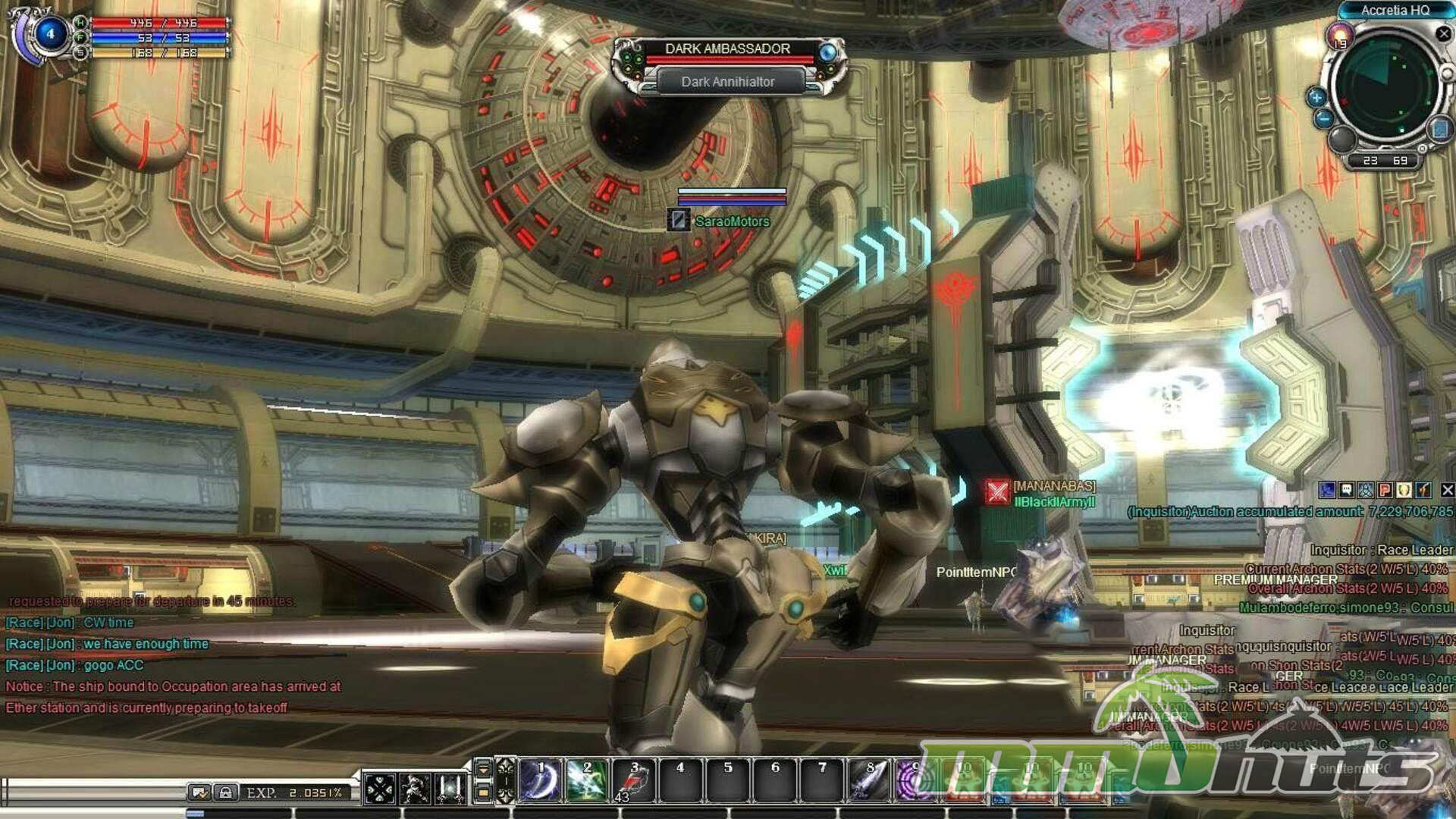
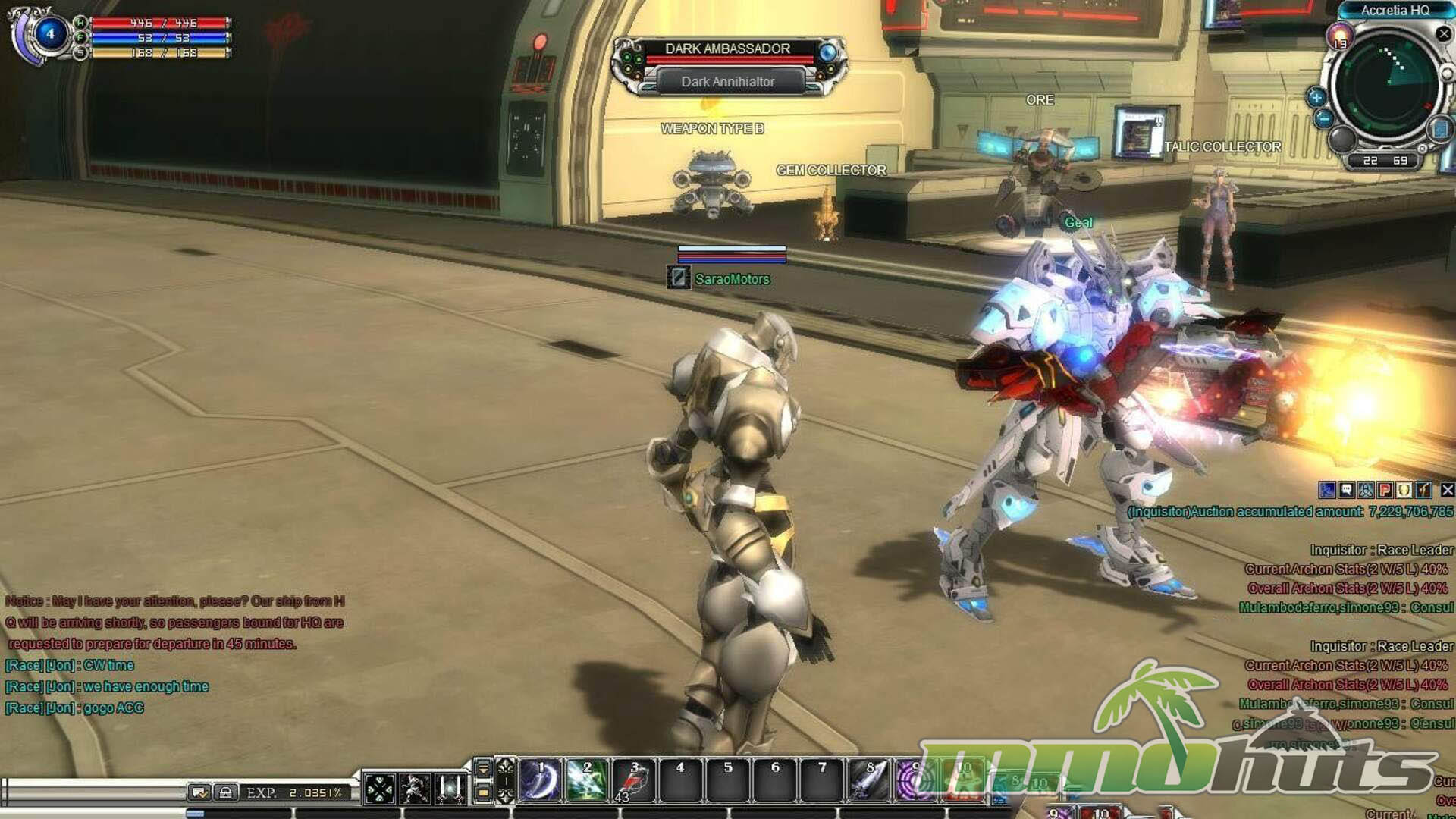
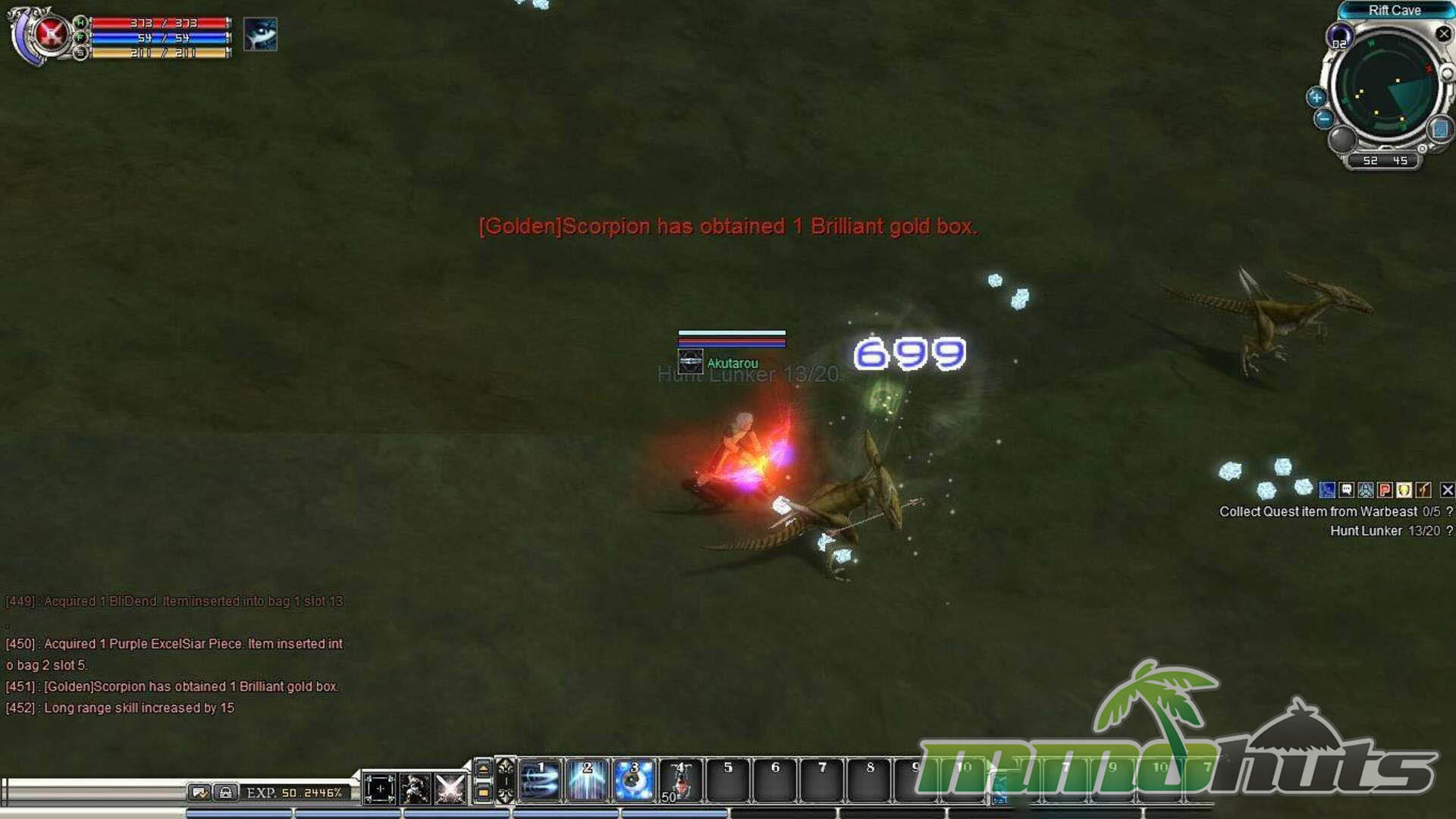
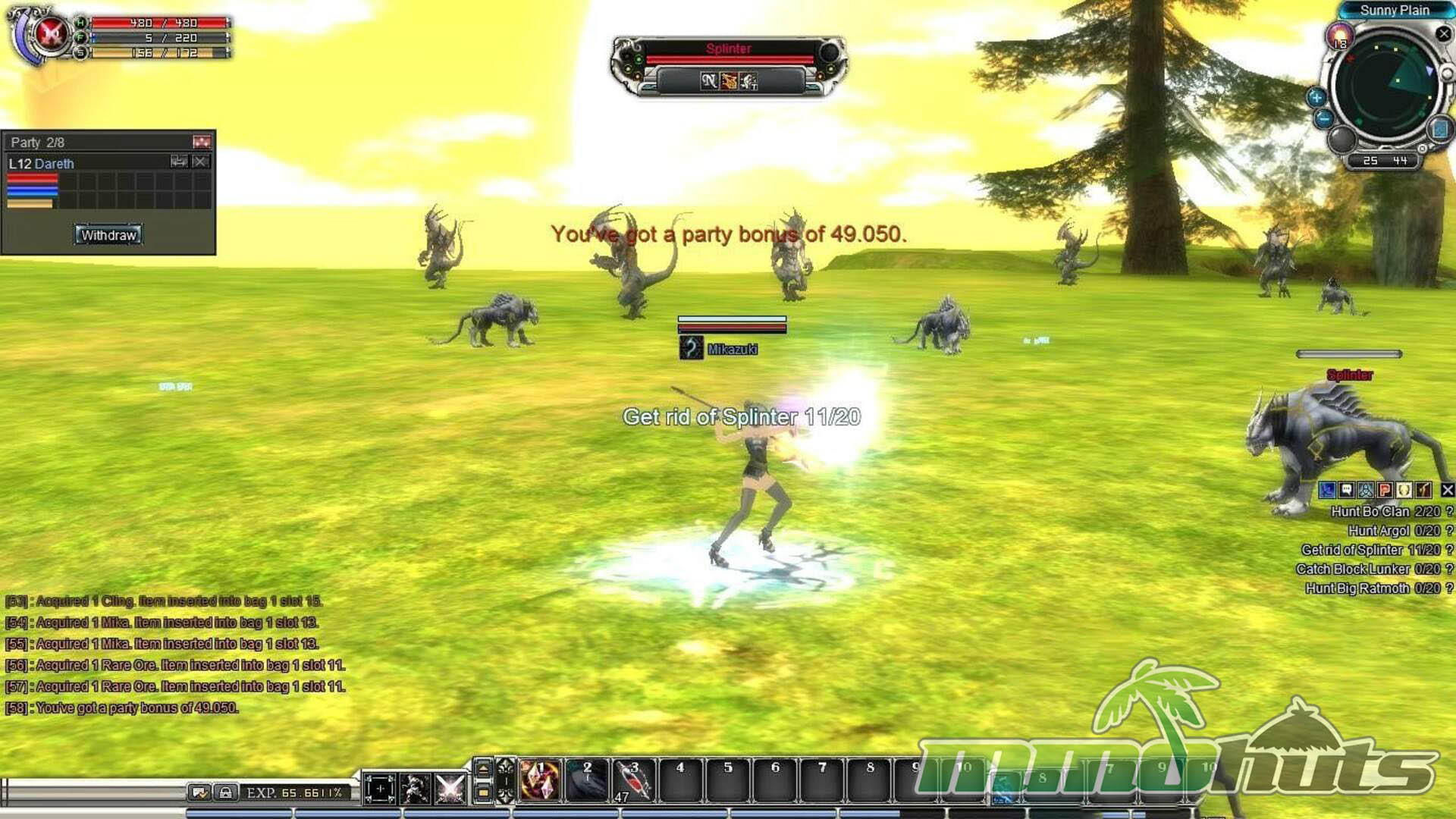


RF Online Featured Video

RF Online Classes
Races:
- Accretia – a cybernetic nation that trades spirituality for raw technology. They cannot use magic, but they compensate with strong defenses, heavy armor, and access to specialized weapons like launchers, grenades, and siege-focused tools.
- Cora – a devout, magic-oriented people who follow Decem and favor mystical power over machines. They excel at offensive spellcasting, and their signature advantage is calling Animus companions into battle.
- Bellato – a versatile faction that blends tech and magic without specializing as hard as the other two. Their answer to size and survivability is the Massive Armored Unit (MAU), a combat vehicle platform with both melee and ranged variants.
Classes:
Accretia characters cannot choose the Spiritualist path due to their lack of magic, while the other factions can access all four starting archetypes. Class branching opens up later, with added specializations unlocked at Level 30 and Level 40.
- Warrior – the close-range frontline option, built around swords, axes, maces, and shields. Warriors typically anchor groups with higher durability and are commonly used as tanks or secondary tanks in party play.
- Ranger – a ranged damage specialist using bows or firearms, with utility skills such as traps and control effects. Accretian rangers stand out by leaning into launchers and siege mode for long-range pressure.
- Spiritualist – a fragile but impactful caster role with offensive spells and supportive buffs. Coran spiritualists add another layer of power through Animus summons.
- Specialist – the crafting and production-focused class, centered on mining, refining, manufacturing, and upgrades. They can deploy defensive towers, and Bellato specialists gain MAU access for heavy combat presence.
RF Online Review
RF Online (Rising Force Online) is a sci-fi themed 3D MMORPG that deliberately blends technology with traditional fantasy staples. Developed by CCR International, the game launched in North America and Europe on February 21, 2006 under Codemasters as a subscription product. It later returned in the West as a free-to-play title through GamesCampus in August 2012. After that service ended, RedFox Games assumed operation in February, 2016. The setting, Novus, is defined by an ongoing resource conflict between three distinct factions, and the game’s identity largely comes from that constant war rather than from isolated PvE progression.
Entering Novus
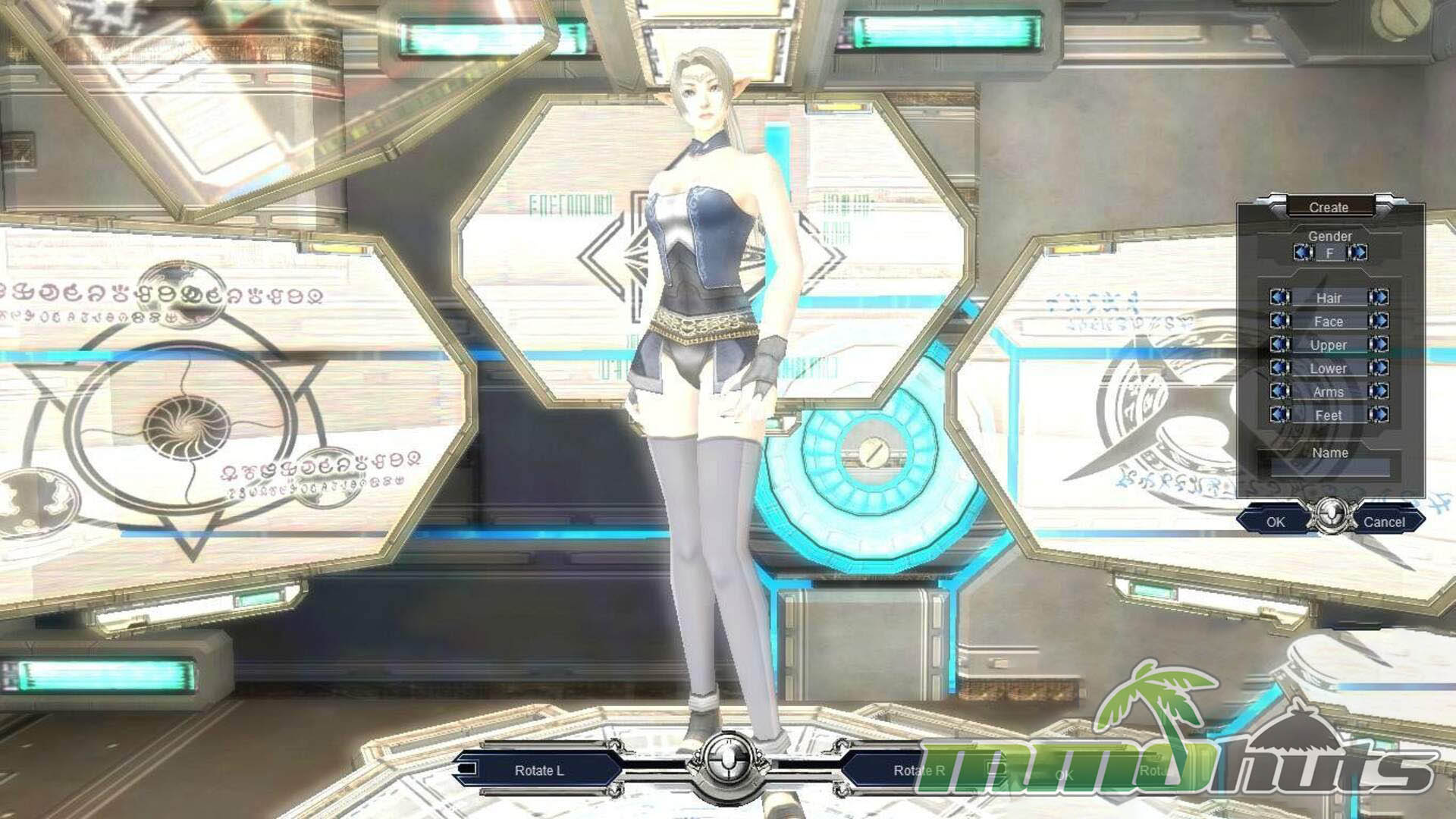
Character creation is your first meaningful decision because faction choice heavily shapes your playstyle and your role in the server-wide conflict. Accounts can hold up to three characters, and you can spread those across different factions if you want to experience multiple perspectives. Accretia emphasizes armored survivability and advanced weaponry, Cora leans into magic and summons, and Bellato occupies a middle ground with strong utility and their iconic MAU combat frames. Class selection follows the usual MMORPG template (Warrior, Ranger, Spiritualist, Specialist), with the important caveat that Accretia cannot become Spiritualists.
Afterward, the game offers a short tutorial to cover movement and combat basics, then places you into your faction’s starting settlement. Those hubs act as rare pockets of safety, because outside of faction headquarters and a few protected transition points, RF Online’s world is effectively designed to encourage PvP contact.
Visually, RF Online has that older-era MMO look with bold architecture and a strong emphasis on atmosphere, and the music does a lot of work carrying the sense of place. One presentation issue that can stand out is the soft, glowy filter the game often gives off. If that look feels too foggy or washed, adjusting the glow setting in the options can make environments and character silhouettes much clearer.
Progression on the Way to the Front
Questing functions as the main onboarding tool, steering you through zones while handing out gear and basic direction. Where RF Online differs from many MMORPGs is that levels are not the only progression axis that matters. Alongside traditional leveling, you are constantly building proficiency through PT points earned by attacking, taking hits, blocking, and using abilities.
Levels still matter because they gate major features and equipment access, including the broader participation in faction warfare. However, the way your character “feels” in combat is strongly tied to how much you have actually used a weapon type or skill line.
One onboarding choice that affects this is the early distribution of very powerful starter weapons. They help players reach key thresholds (notably Level 30) quickly, but they can also distort the natural pace of growth, especially in a system where repeated actions are the foundation of character improvement.
PT, Proficiency, and Skill Growth
The PT system is essentially a “you get better by doing” model. Use a weapon repeatedly and the related stats climb, use abilities and they progress too. Stats can be trained up to 99, while skills top out at seven ranks. The practical outcome is that swapping weapon types is possible, but it comes with a real performance cost unless you invest time building the relevant proficiency.
This is also why extremely high-damage early weapons can work against a player’s long-term growth. If everything dies instantly, you are cutting down the number of hits, blocks, and repeated actions that would otherwise feed PT gains. In RF Online, efficiency is not always about ending fights as fast as possible, it is also about building the character foundation that will matter in open-world conflict.
Most skills can be used from the start, with Spiritualists operating through Force instead. Force reavers unlock Forces (spells), obtained from NPCs or monster drops. As you meet skill thresholds, higher tiers become available, and additional class options open as you approach Level 30 and Level 40.
The upside of the PT approach is that it gives players a tangible sense of mastery and specialization. The downside is that certain stats can be slow to train and can become repetitive, especially when you are raising defensive values through sustained incoming damage and constant self-maintenance. It is a system with personality, but it demands tolerance for routine.
Where RF Online Truly Works
RF Online is at its best when players treat PvP as the core activity, not an occasional diversion. Because most zones are effectively open to conflict, routine questing and resource runs can turn into faction skirmishes with little warning. Many players will ignore each other to stay focused on objectives, but it only takes one aggressive encounter to escalate into a bigger fight, especially when higher-level players arrive and others respond in kind.
The centerpiece is Chip War, a three-way faction battle that runs three times per day and is available to players Level 30 and above. While the entry requirement is low, participating comfortably usually requires more development than a fresh Level 30 character has. The goal is to destroy an opposing faction’s control chip while keeping your own safe. Victory grants access to resource mining until the next Chip War, plus a faction-wide buff, while the losing sides suffer a debuff.
Leadership is also part of the loop. Each race elects Archons weekly, and those leaders coordinate strategy and deployments while guild leadership handles the practical coordination of members. This political layer gives the war structure, even when the actual fighting is chaotic.
Final Verdict – Great
RF Online can feel grind-heavy and repetitive if you are approaching it primarily as a PvE progression MMO, and the early game’s power curve (helped along by gifted gear) can make the first hours feel easier than they should. Add the long-standing botting problem, and it is clear the game has rough edges.
Still, the reason RF Online remains memorable is its faction PvP focus and the cadence of Chip Wars. Few MMORPGs are as unapologetically built around scheduled, large-scale three-sided conflict, and that structure gives players a reason to log in beyond the usual quest treadmill. If you want an MMO where the world feels contested and your faction’s success has tangible stakes, RF Online is worth your time, just be mindful of how you progress and do not let overpowered early items undermine the PT system that makes the game distinct.
RF Online Links
RF Online Official Site
RF Online Wikipedia
Rising Force Wiki (Database / Guides)
RF Online System Requirements
Minimum Requirements:
Operating System: Windows XP / Vista / 7 / 8
CPU: Intel Pentium 3 / AMD Equivalent
Video Card: GeForce FX Series / ATI Radeon 9500 or Better
RAM: 256 MB
Hard Disk Space: Over 6 GB
Recommended Requirements:
Operating System: Windows XP / Vista / 7 / 8
CPU: Intel Pentium 4 or better
Video Card: GeForce 6000 Series / ATI Radeon X700 or better
RAM: 1 GB
Hard Disk Space: Over 6gb
Video card must support Dirext X 9.0c or above. RF Online supports 32 bit and 64 bit operating systems. The game originally launched back in 2004, so it’ll be compatible with a lot of older hardware.
RF Online Music & Soundtrack
RF Online Additional Information
Developer: CCR
Game Engine: R3 Engine (Developed by CCR)
Closed Beta Date: June 4, 2007
Open Beta Date: June 27, 2007
Foreign Release(s):
South Korea: October, 2004 (Daum)
Taiwan: May, 2005
Philippines: January, 2006 (LevelUp!)
China: March, 2006 (GDCN)
Brazil: January, 2007
Russia: April, 2007
Japan: June, 2007 (GameOn)
Indonesia: October, 2007
Several localized versions of RF Online are no longer available.
Development History / Background:
RF Online was created by South Korean developer CCR and debuted in South Korea in October 2004 as a subscription-based, pay-to-play MMORPG. Development reportedly spanned more than five years, involved a team of over 100 staff, and totaled over $8 million USD in investment. The business model shifted from pay-to-play to free-to-play in 2006. The North American and European edition launched on February 21, 2006 as a retail release that required a subscription under Codemasters. After Codemasters’ license ended, the NA/EU service closed on November 9, 2008. CCR later handled publishing for NA/EU directly before licensing the service again to GamesCampus. Although the game never became a major hit in the West, it has remained a strong title for CCR in South Korea, and across its lifespan it has been licensed to 54 countries worldwide. In the West, RedFox Games now operates the service following the GamesCampus shutdown.