
Cards and Castles
In Cards and Castles, battles play out like a tabletop skirmish brought to life, you build a deck, draw into options each turn, then spend coins to deploy units, structures, and spells onto a grid. It is a free-to-play hybrid of collectible card game and tactics, built around five distinct factions that encourage different approaches, from aggressive melee pushes to slower, defensive setups.
|
Publisher: Bit Mass, LLC Playerbase: Medium Type: CCG Strategy Release Date: April 10, 2014 Pros: +Distinct factions support varied strategies. +Plays across multiple platforms. +Polished interface with appealing sound and visuals. Cons: -Occasional freezing and stability hiccups. -Slow card acquisition for free players. -Familiar mechanics that echo other CCGs. |



Cards and Castles Overview
Cards and Castles revolves around assembling decks from a large card pool, then using those cards to win castle-to-castle battles on a grid. Developed and published by Bit Mass, the game offers five factions with their own themes and synergies, letting you experiment with multiple deck builds depending on whether you prefer direct pressure, defensive play, or spell-driven bursts. You can play online against other players or practice and progress through single-player content versus AI.
Progression is tied to unlocking more cards. New additions come from booster packs, account leveling, and campaign-style content that provides structured challenges. Once in a match, the goal is simple: protect your own castle while breaking the enemy’s. Each turn you draw from your deck and spend coins to place units, drop buildings, or cast spells, with positioning and board control mattering as much as raw card power.
Cards and Castles Key Features:
- Card game meets board tactics – deckbuilding matters, but so does movement and placement on a grid-based battlefield.
- Cross-Platform Feature – move between mobile and PC play without having to abandon your account.
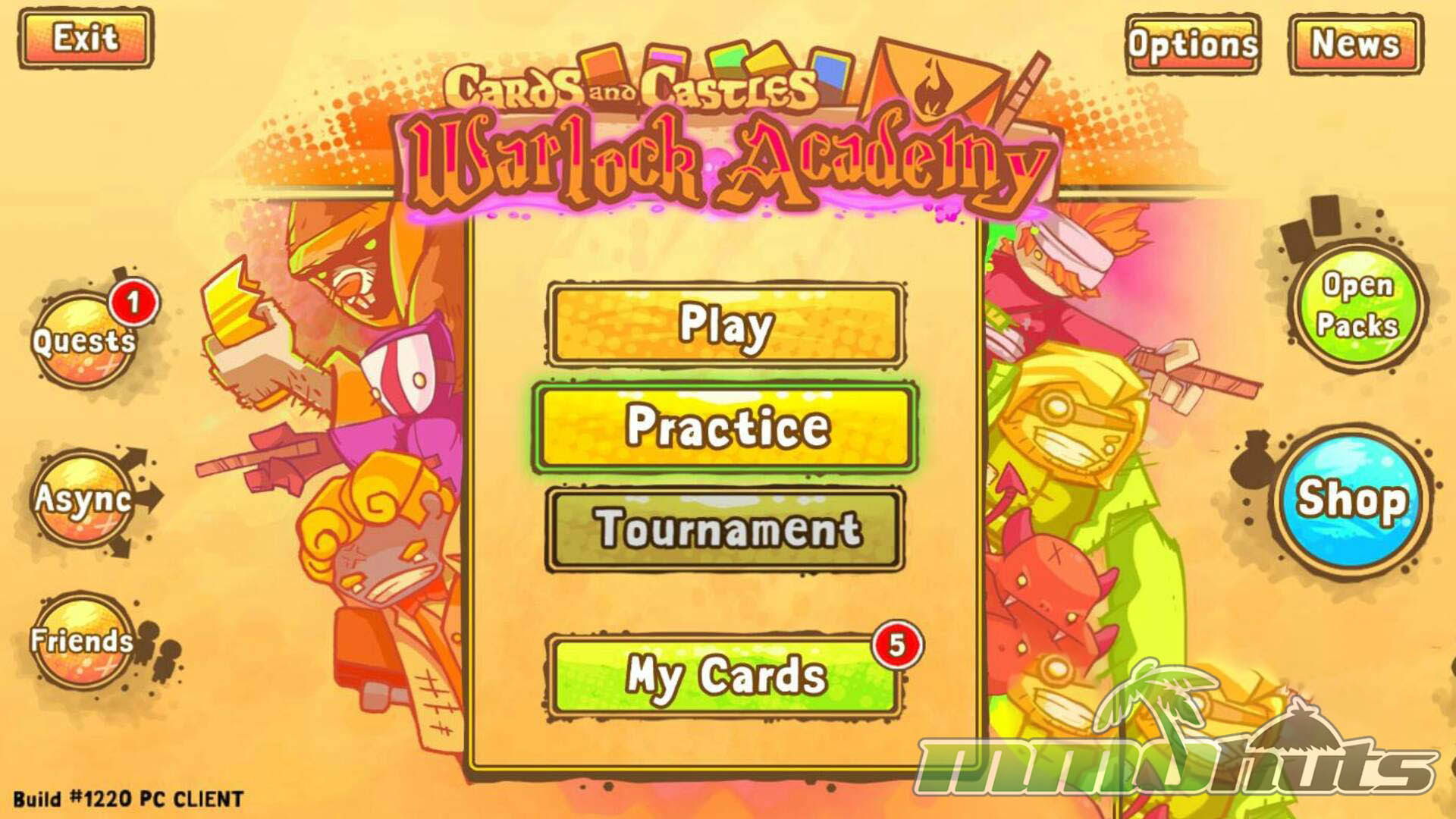
- Readable UI, stylized visuals, and fitting music – menus are straightforward, the art leans into a clean cartoon look, and the soundtrack supports the medieval tone.
- Buildings as playable cards – structures can provide utility like buffs, protection, or extra value during a match.
- Competitive ladder option – ranked play gives you a way to measure improvement against other deckbuilders.
Cards and Castles Screenshots





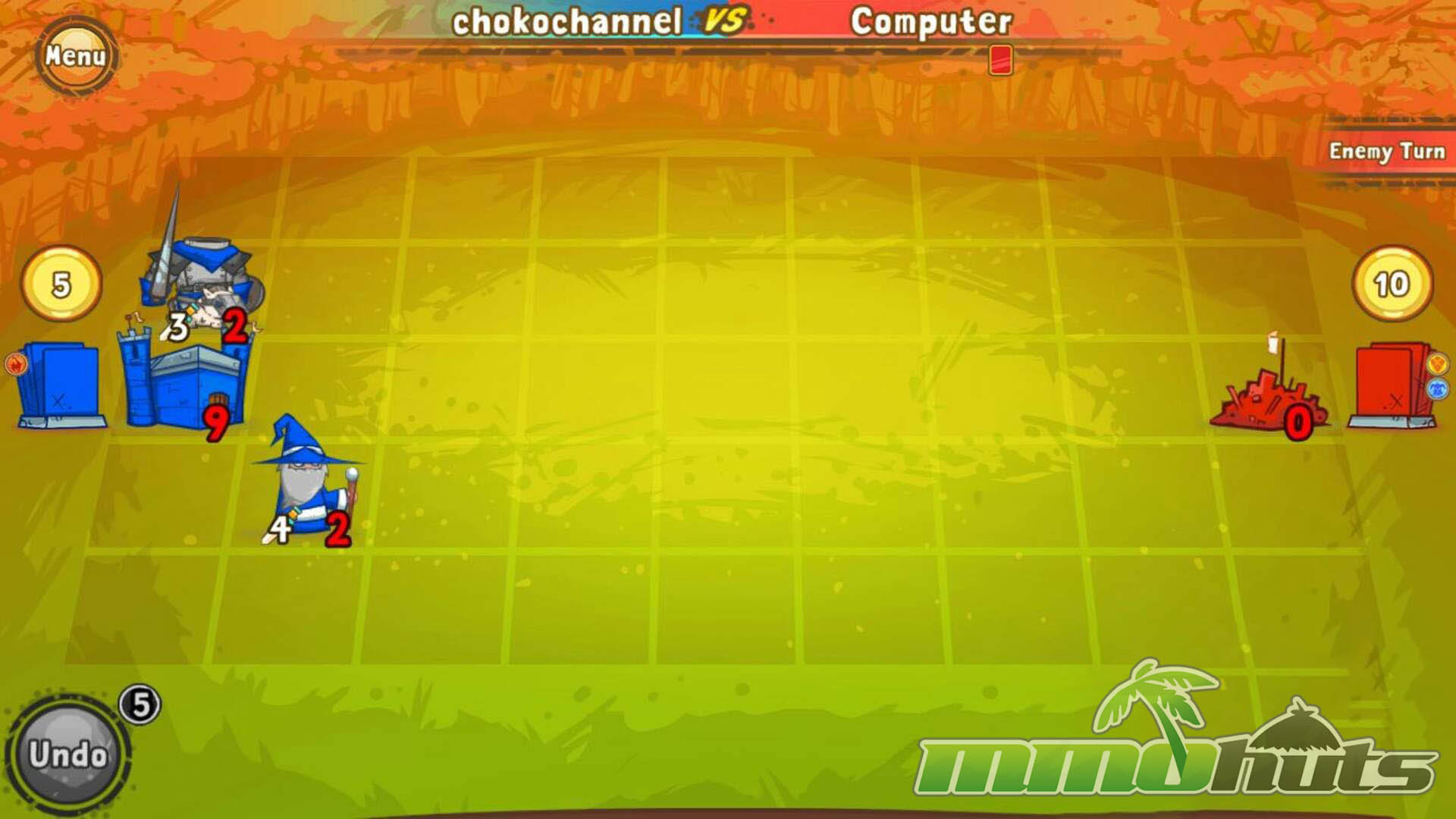
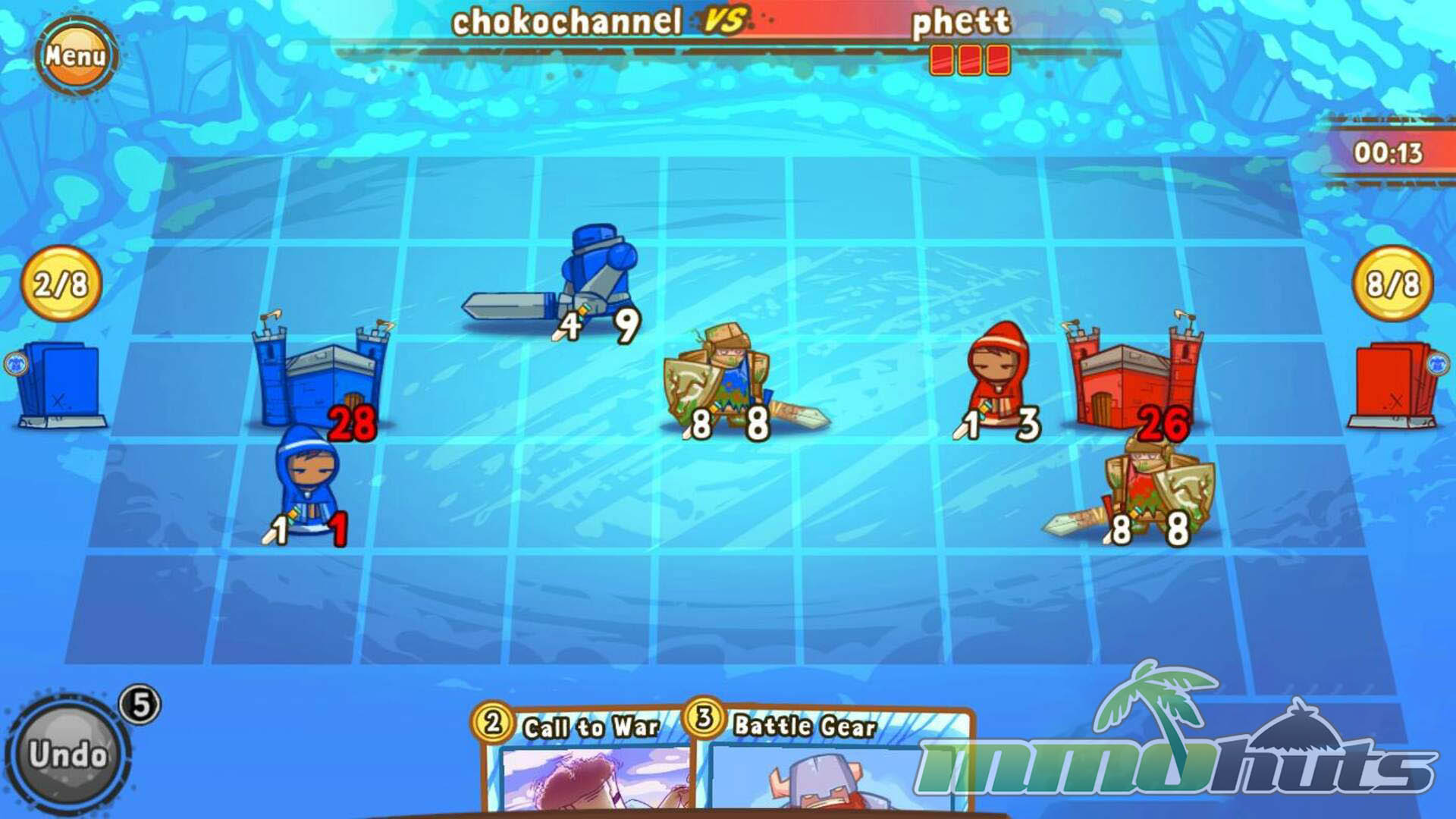
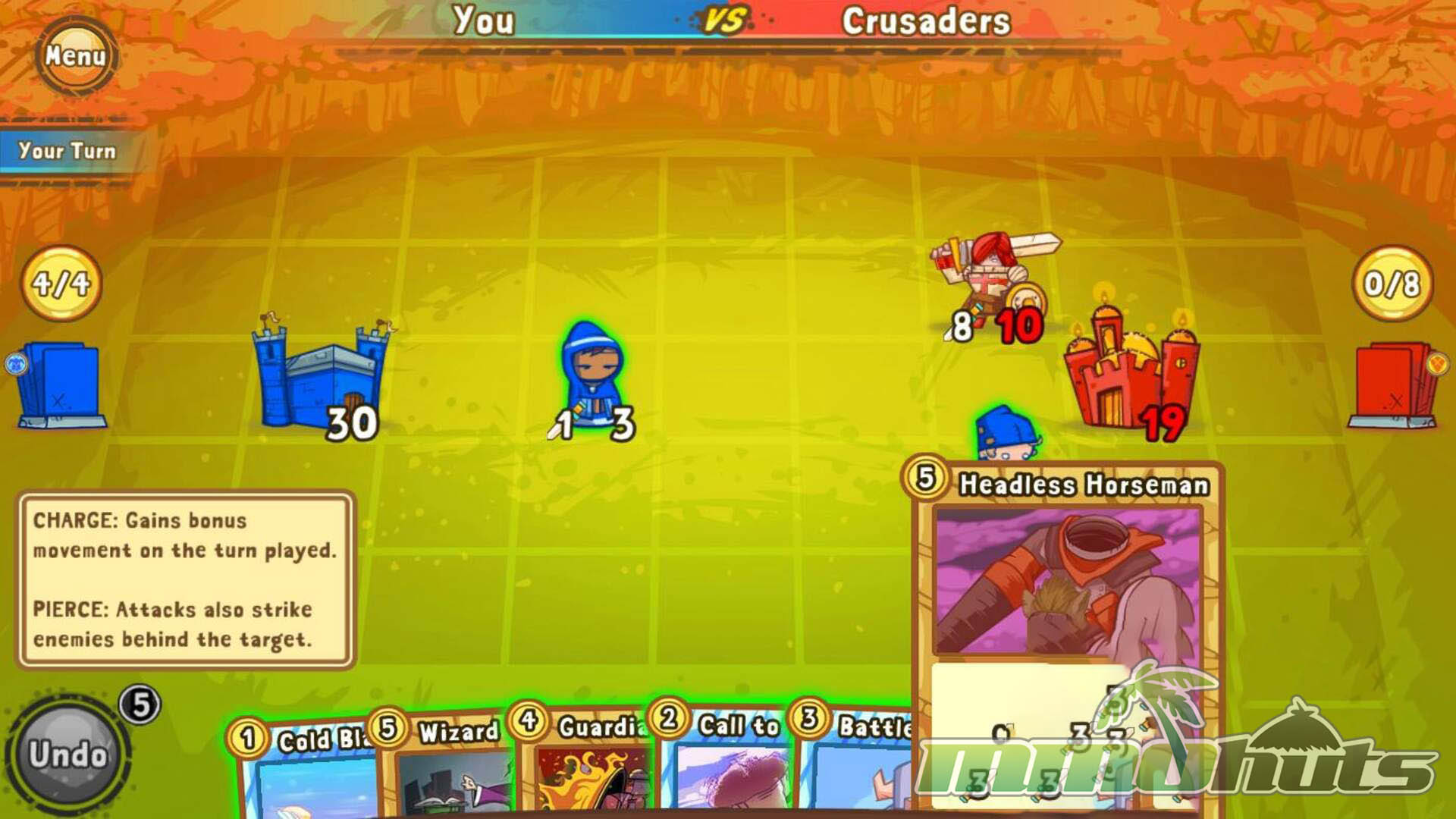
Cards and Castles Featured Video

Cards and Castles Classes
Vikings – built around heavy hitting melee troops and offensive buffs that aim to overwhelm the board.
Crusaders – focuses on durability through healing, protective effects, and high-health units that can hold key squares.
Warlocks – emphasizes high damage output with fragile units, backed by spells that can threaten multiple targets at once.
Pirates – leans into generating more “coins” so you can play stronger turns and accelerate your tempo.
Ninjas – favors quick pressure and trickier approaches, using speed and stealth-oriented tools to create openings.
Cards and Castles Review
Cards and Castles asks you to win the old-fashioned way, push an army across the battlefield and knock down the enemy castle before yours falls. Bit Mass delivers a free-to-play card battler that will feel immediately familiar to anyone who has spent time in modern digital CCGs, but with a key twist: matches unfold on a grid where spacing, lanes, and blocking matter, not just the numbers printed on a card.
A familiar CCG framework, with a tactical board layered on top
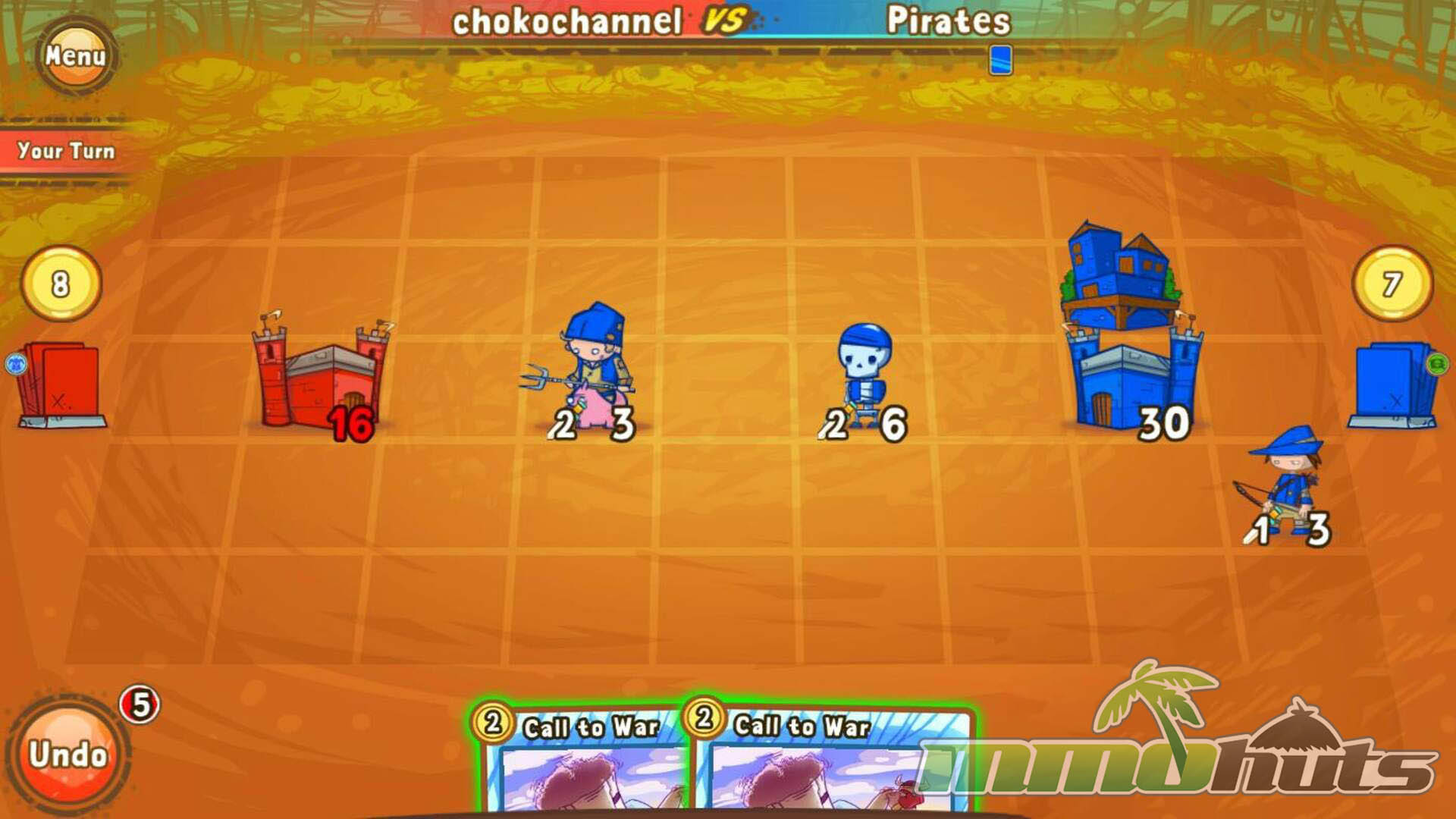
The underlying turn structure closely mirrors the genre’s standard rhythm. You draw a card each turn, gain a set amount of coins, and spend those coins to deploy units, buildings, or spells. Coin growth is steady, starting low and increasing by one each turn, and unused coins do not carry over, so planning around curve and tempo is important. There is also a catch-up tool for the second player: the “Medal of Bravery” can be used to gain an extra coin for a turn, helping offset the advantage of moving first.
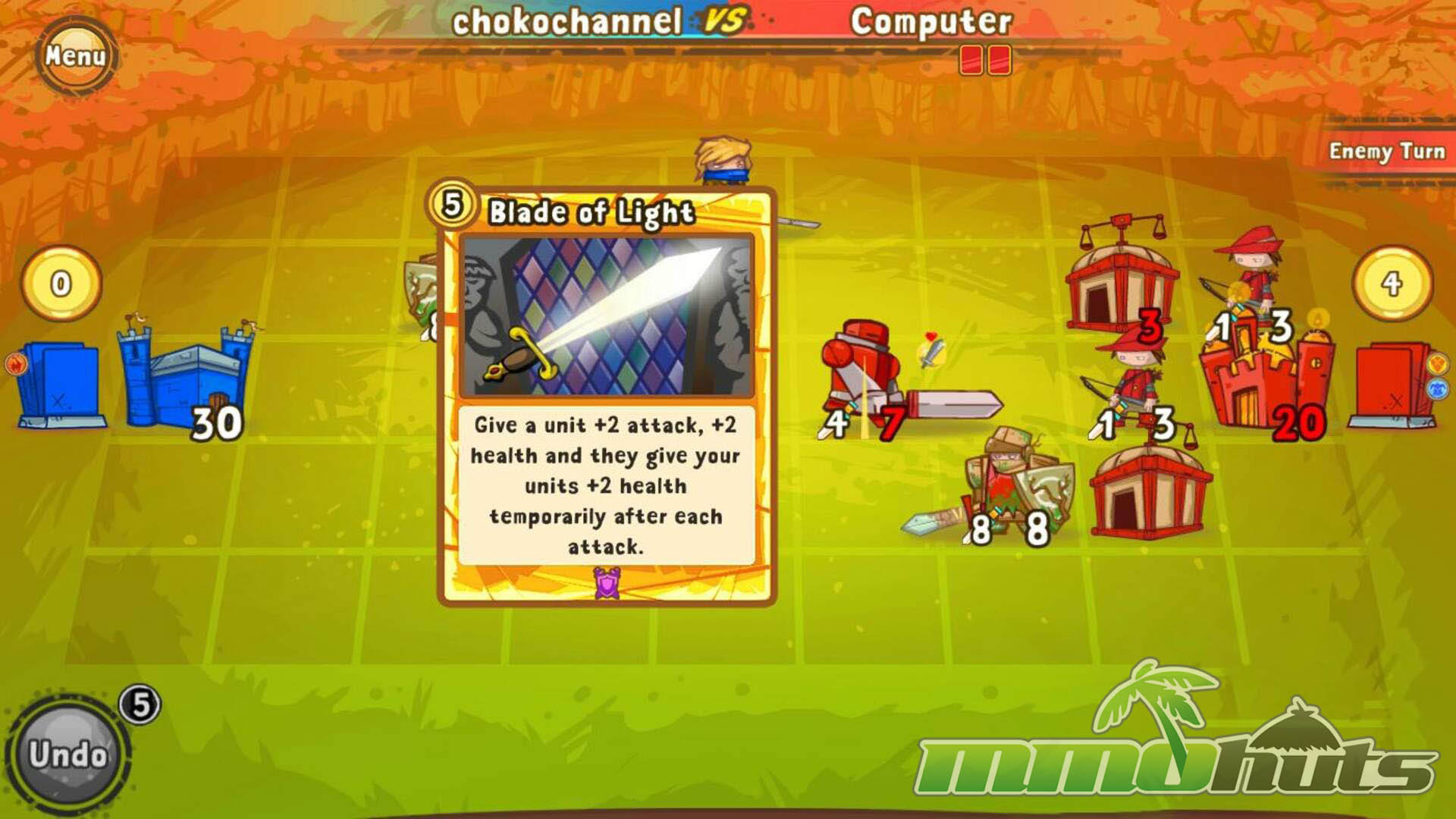
Before the first turn fully begins you are allowed a small hand adjustment, cycling one card back into the deck to draw a replacement. Units show attack and health values, and they disappear when health hits zero. Many cards also bring keywords and special effects, including mechanics that deal damage over time or strike in patterns, and the interface does a good job of explaining what a card does when you hover or tap it.
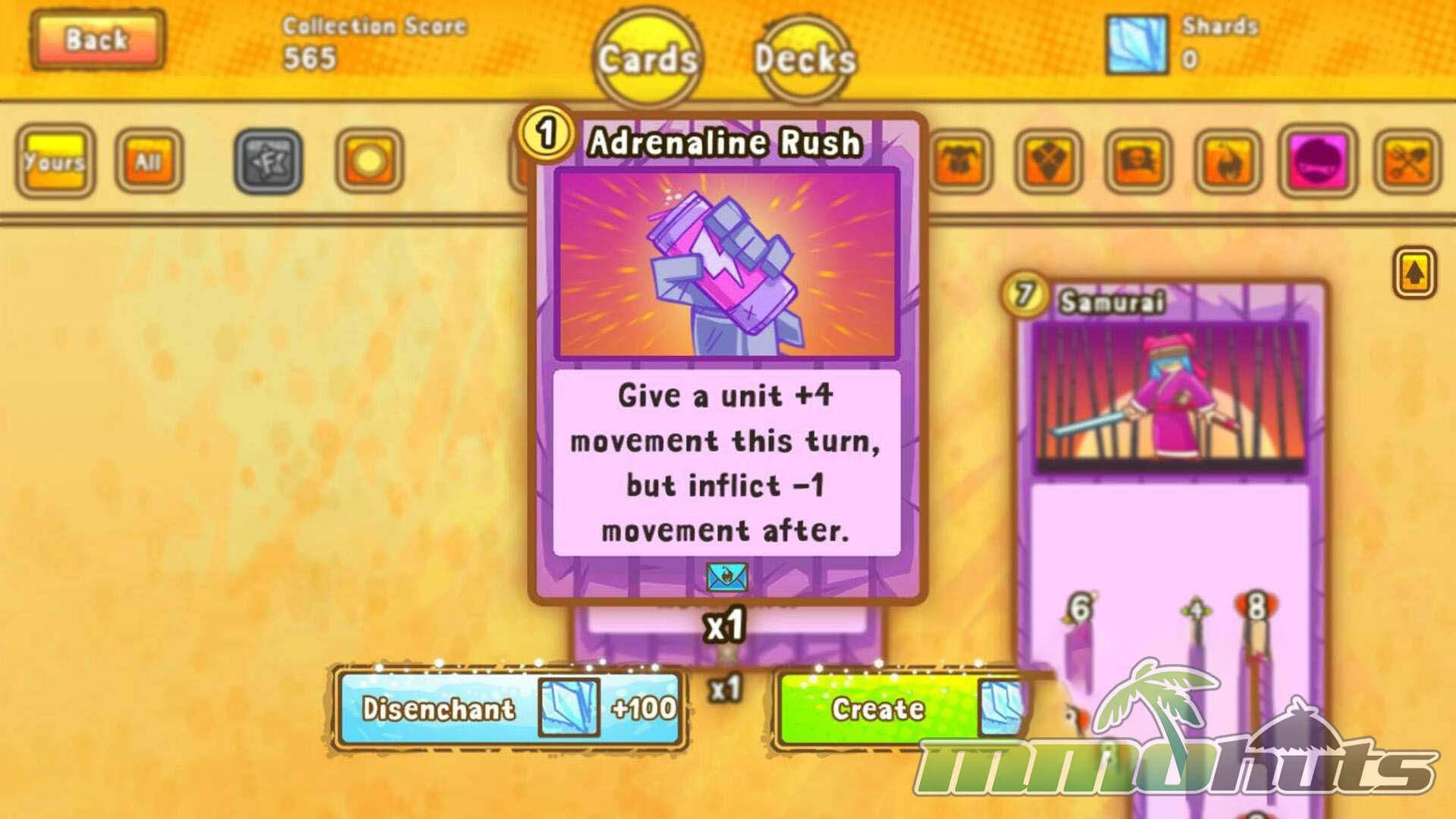
Deck construction is faction-driven, and it is one of the game’s better ideas. Cards are grouped into Vikings, Crusaders, Warlocks, Pirates, Ninjas, plus a Neutral pool. You can combine up to two factions (along with neutrals) in a single deck, which naturally creates interesting pairings and tradeoffs. There is also a crafting loop using shards, letting you dismantle unwanted cards and convert that value into new ones. Rarity follows the expected tiers: Common, Rare, Epic, and Legendary. On top of that, “Hero Cards” act as powerful build-around options, but they require you to commit to a single-faction deck and match the hero to that faction.
The end result is that Cards and Castles can feel heavily inspired by other big-name digital CCGs, sometimes to the point where the similarities are hard to ignore. That said, it is not without its own identity, because the battlefield itself changes how you value cards and how you sequence turns.
Where Cards and Castles separates itself
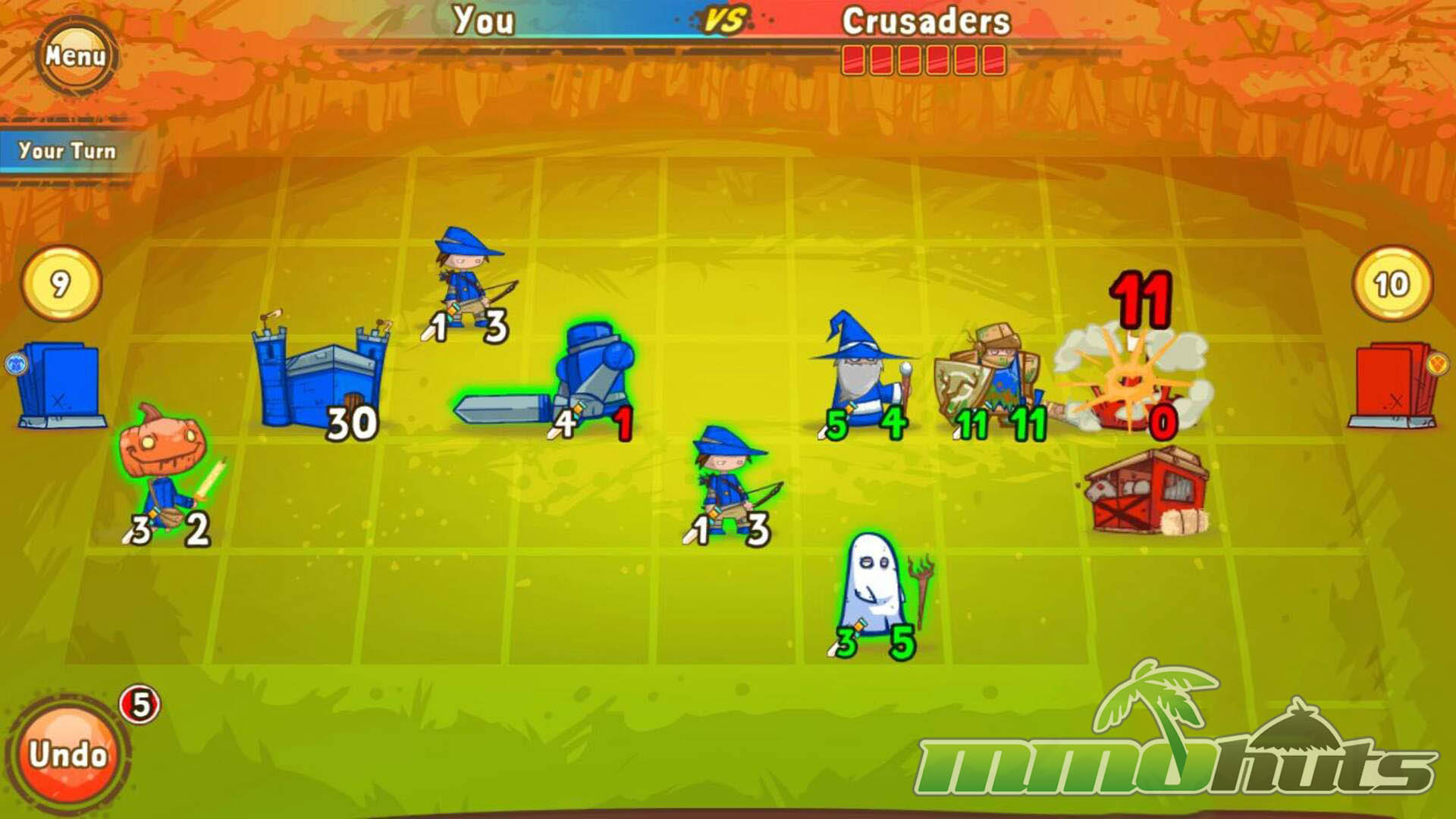
The grid-based arena is the main differentiator. Positioning determines whether melee units can actually connect, whether ranged pieces can safely contribute, and how effectively you can protect key squares in front of your castle. Instead of simply “trading minions,” you are also managing lanes, choke points, and the risk of leaving openings for a direct castle hit.
Buildings are the second standout feature. Because structures are played onto the board like other cards, they become a strategic layer that many CCGs do not have. Depending on what you bring, buildings can provide defensive anchors, value engines (like extra draw), or economy boosts (such as additional coins). They often shape the tempo of a match, especially when both players are trying to establish a stable front line.
The single-player offerings also help break up the standard PvP loop. Campaigns and tournament-style scenarios cost Card Points (the earnable currency) to unlock, but it is notable that you can access them without paying real money. These modes also introduce alternate objectives and unusual setups, which is a welcome change if you are tired of the same win condition every match.
Modes: casual matches, ranked ladder, and a draft-style format
Cards and Castles splits play into three main options. Friendly matches are the low-pressure choice, good for testing decks or learning matchups, especially since the AI can become predictable once you understand its patterns. Ranked matches provide the ladder experience, rewarding wins with stars and gradually pairing you against stronger opponents as you climb.
Draft Mode is the most “event” oriented option. You pick two factions, then build a temporary deck from a sequence of randomized selections. After that, you take that deck into a short run against other players, aiming to beat five opponents. If you have played arena-style modes in other digital card games, the structure will be instantly recognizable, and it serves a similar purpose here, giving variety and rewarding flexible decision-making.
Card acquisition and the free-to-play pressure
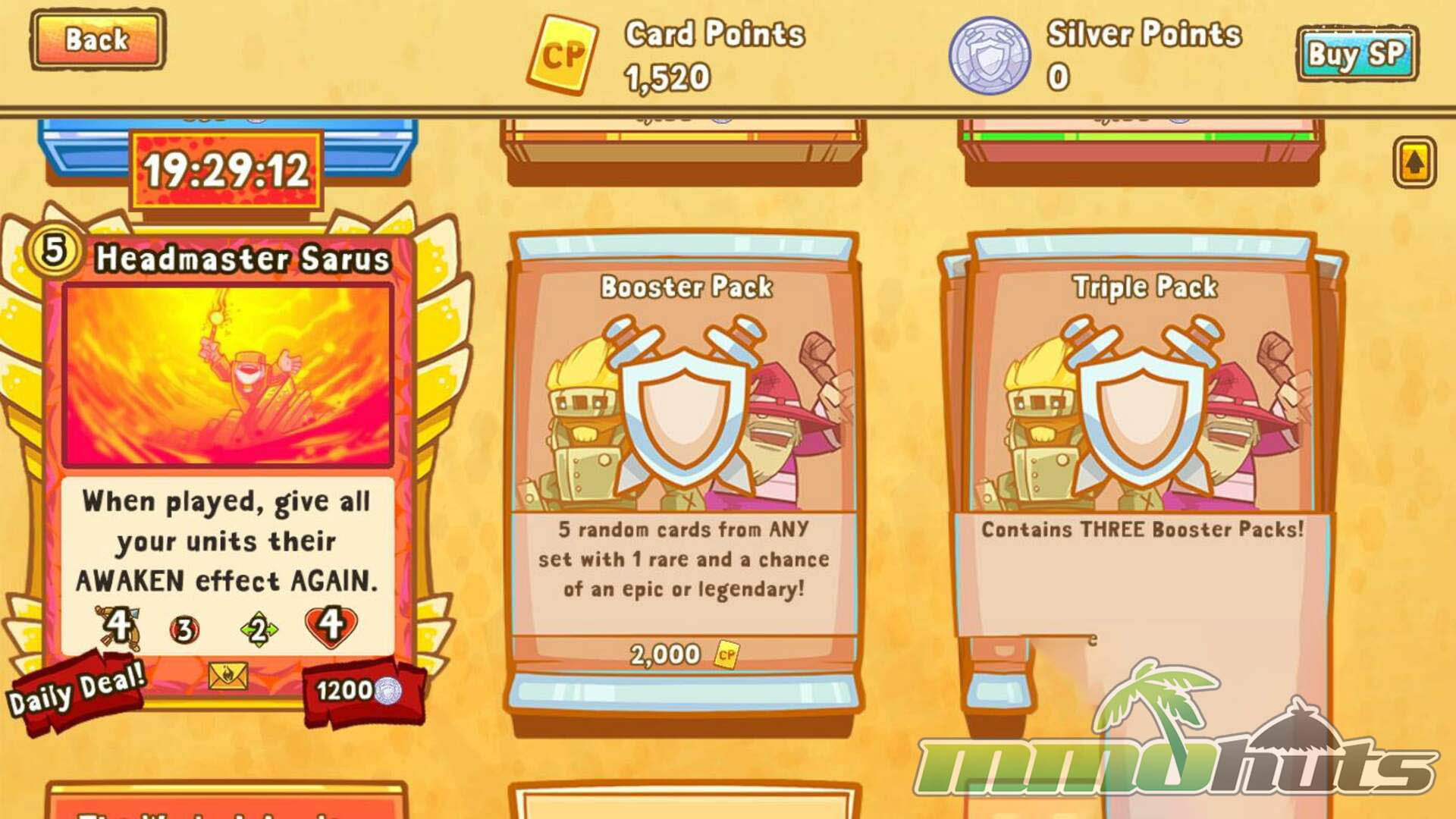
Like most deckbuilders, your long-term strength is tied to collection size and card quality. In practice, building a competitive library without spending can be slow. Booster packs cost 2000 Card Points, and higher rarities feel uncommon enough that progress can stall if you rely only on packs. Even with multiple openings, it is easy to walk away with mostly commons and very few meaningful upgrades.
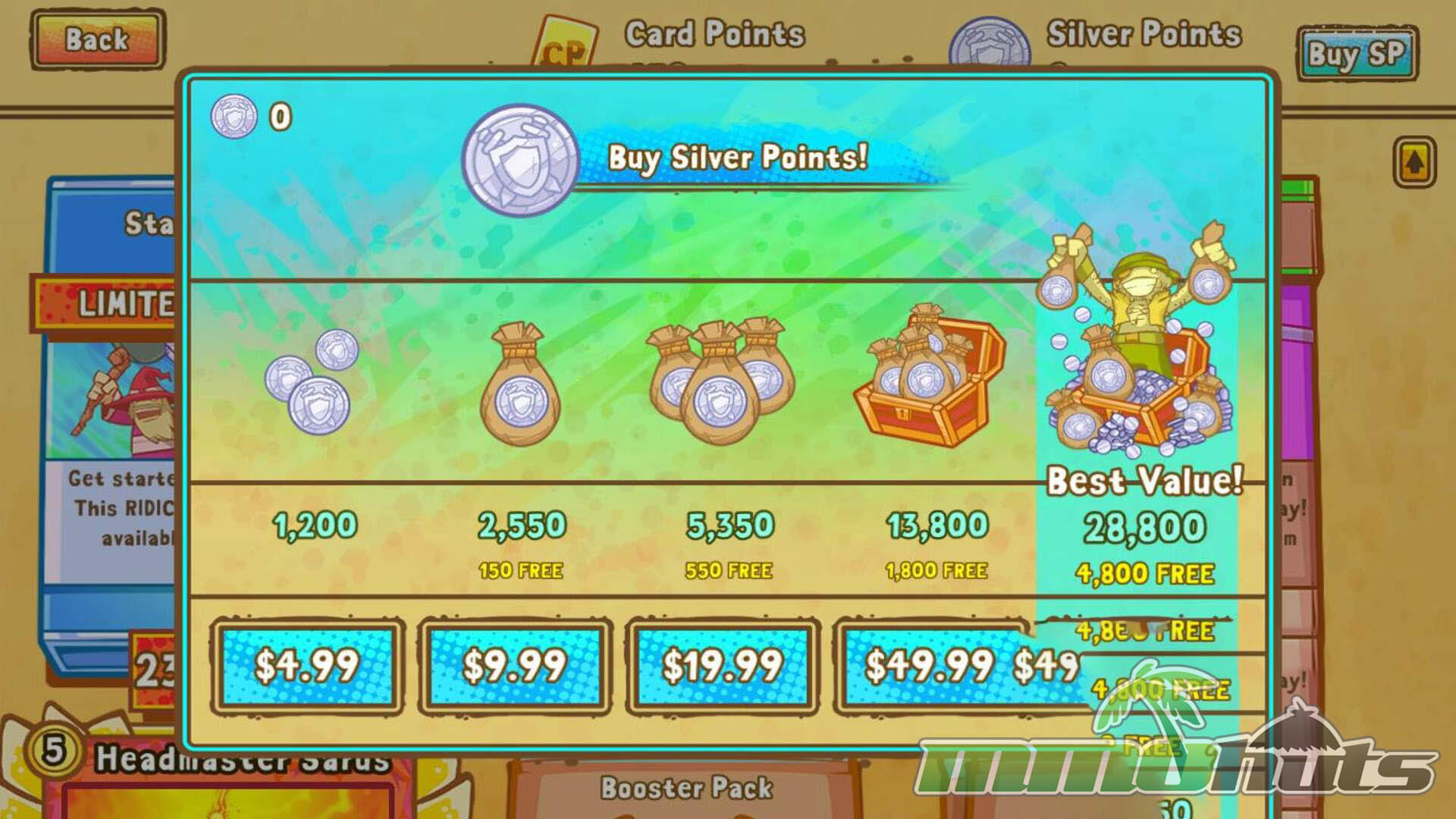
This is where the game’s monetization becomes a real sticking point. Players who buy Silver Points can accelerate collection growth by purchasing packs or targeted card options with better odds. The imbalance is not unique to this genre, but it does mean the competitive scene favors players willing to spend, especially when chasing Epic and Legendary staples.
The frequent update cadence also creates a moving target. New cards arrive regularly, and balance shifts can change what is considered “best,” which is healthy for variety but can be frustrating if you are trying to keep up on a limited card pool. Staying competitive often means continually rebuilding or retooling decks as the metagame evolves.
Presentation and performance
From a usability standpoint, Cards and Castles is easy to live with. Menus are clean, information is readable, and card text and effects are communicated clearly. The visuals are simple and charming rather than flashy, and the music supports the light medieval tone without becoming distracting.
The main technical complaint is stability. Freezing and hiccups can occur often enough to be noticeable, which is especially irritating in ranked matches where a lock-up can cost you a game.
Final Verdict – Fair
Cards and Castles is an enjoyable tactical card battler when you approach it as a casual strategy game. The faction system and grid-based combat create real decision-making beyond simple card trades, and the ability to play across platforms is convenient. However, the grind for meaningful card upgrades can be steep for free players, and the paid currency makes it hard to ignore the pay-to-win feel once you aim for serious ranked play. It is best recommended to players who want a lighter, tactical CCG to dip into, rather than a primary competitive card game to commit to.
Cards and Castles Links
Cards and Castles Official Site
Cards and Castle Steam Page
Cards and Castles Google Play
Cards and Castles Apple Store
Cards and Castles Wikia
Cards and Castles Requirements
Minimum Requirements for PC:
Operating System: Windows 7
CPU: 1000 MHz
RAM: 1024 MB RAM
Hard Disk Space: 200MB
**NOTE: Internet connection is required to play both single-player and multiplayer mode.
Minimum Requirements for Mac:
Operating System: OS X
CPU: 1000 MHz
RAM: 1024 MB RAM
Hard Disk Space: 200MB
**NOTE: Internet connection is required to play both single-player and multiplayer mode.
Cards and Castles Music & Soundtrack
Coming Soon…
Cards and Castles Additional Information
Developer(s): Bit Mass, LLC
Publisher(s): Bit Mass, LLC
Languages: English*, Czech, Dutch, French, German, Italian, Japanese, Korean, Polish, Portuguese, Russian, Simplified Chinese, Spanish, Swedish, Traditional Chinese, Turkish (*English is currently the only language supported on the Steam release of the game).
Composer(s): Schulyer Johnson and Ian Luckey
Other Platforms: Andriod, iOS
Release Dates: Early Access (Steam) – December 18, 2014; Mobile Release (iOS and Android?) – April 10, 2014
Development History / Background:
Cards and Castles is both developed and published by Bit Mass, LLC. It launched first on mobile platforms (Android and iOS) in April 2014, then later arrived on Steam in Early Access on December 18, 2014. In 2015, the game received a major overhaul through its “Tournament of Champions” update, which focused on improving the interface, updating visuals, and refreshing the music. As a strategy-leaning CCG, it is often compared to Blizzard’s Hearthstone due to shared genre conventions, but its defining hook is the added tactical layer of grid-based battles and the ability to play buildings alongside units and spells.