
Steel Ocean
Steel Ocean is a free-to-play WWII naval arena shooter built around large-scale 16v16 battles. You captain one of 100+ warships across six ship classes, using gunnery, positioning, and teamwork to win objective-focused matches on sprawling ocean maps.
 | Publisher: Changyou Type: Naval Arena Combat Release Date: November 12, 2015 Shut Down: May 03, 2020 Pros: +Playable submarines add variety. +Battles keep a brisk pace. +New-player guidance is clear. +Integrated voice chat for coordination. Cons: -Connection and latency hiccups. -Progression can feel grindy. |
Steel Ocean Overview
Steel Ocean is a 16v16 World War II themed naval combat title that puts you in command of a warship and drops you into instanced sea battles. Before queuing up, you pick from six ship classes that mirror familiar WWII roles, destroyers, light cruisers, heavy cruisers, battleships, aircraft carriers, plus submarines for stealth-focused play. Across the tech progression, you can unlock, pilot, and upgrade more than 100 vessels by earning experience and currency through matches.
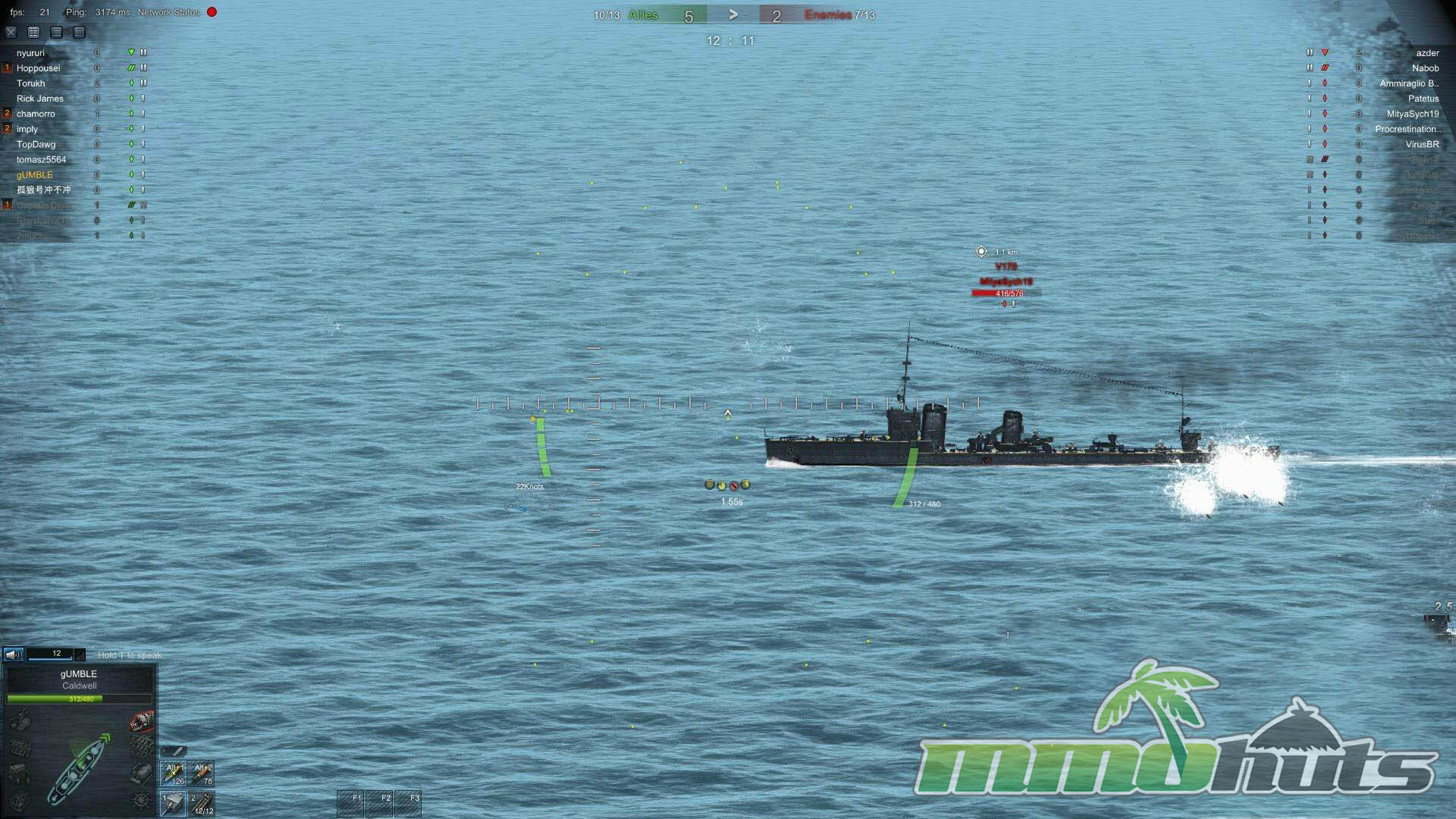
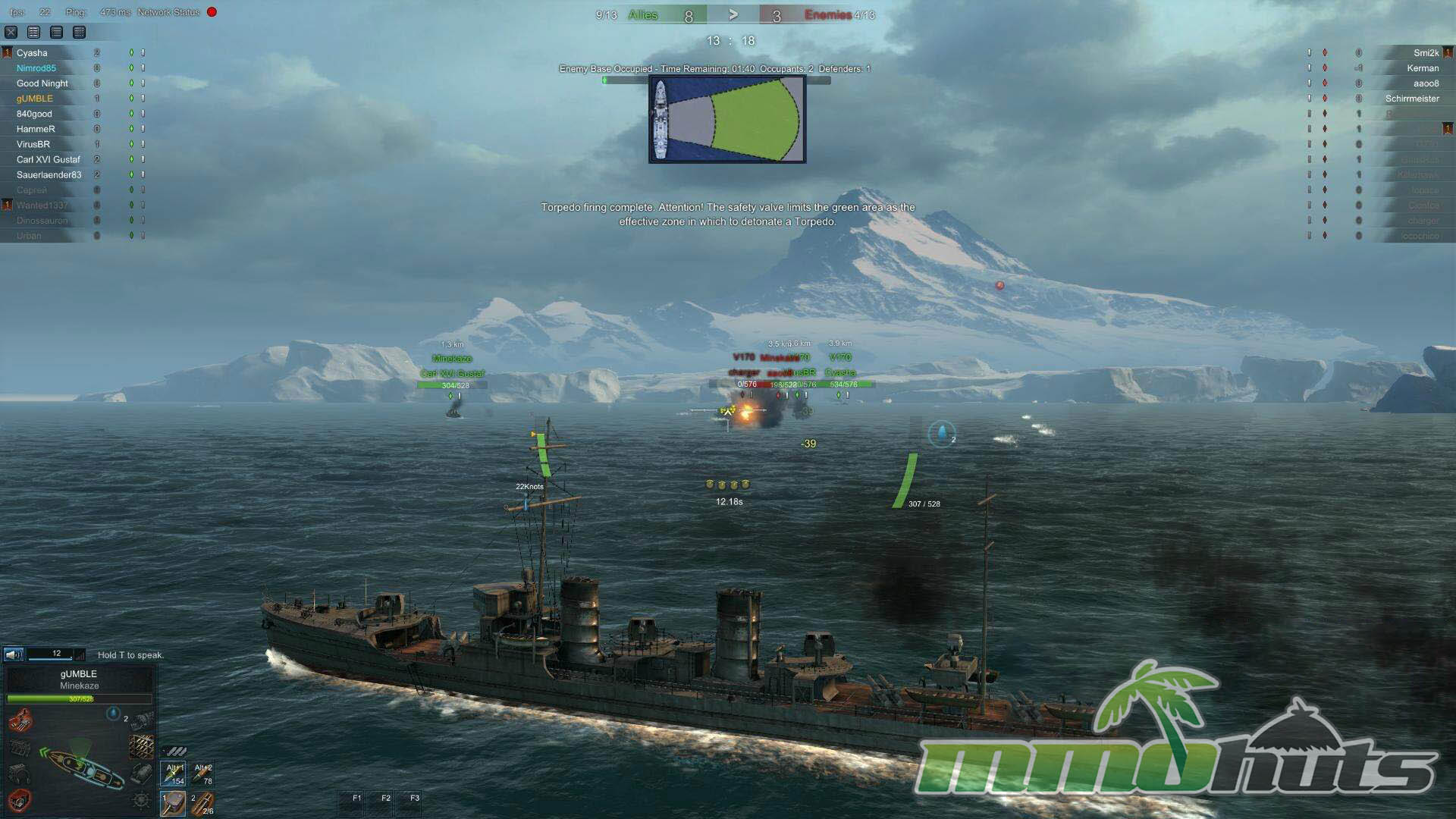
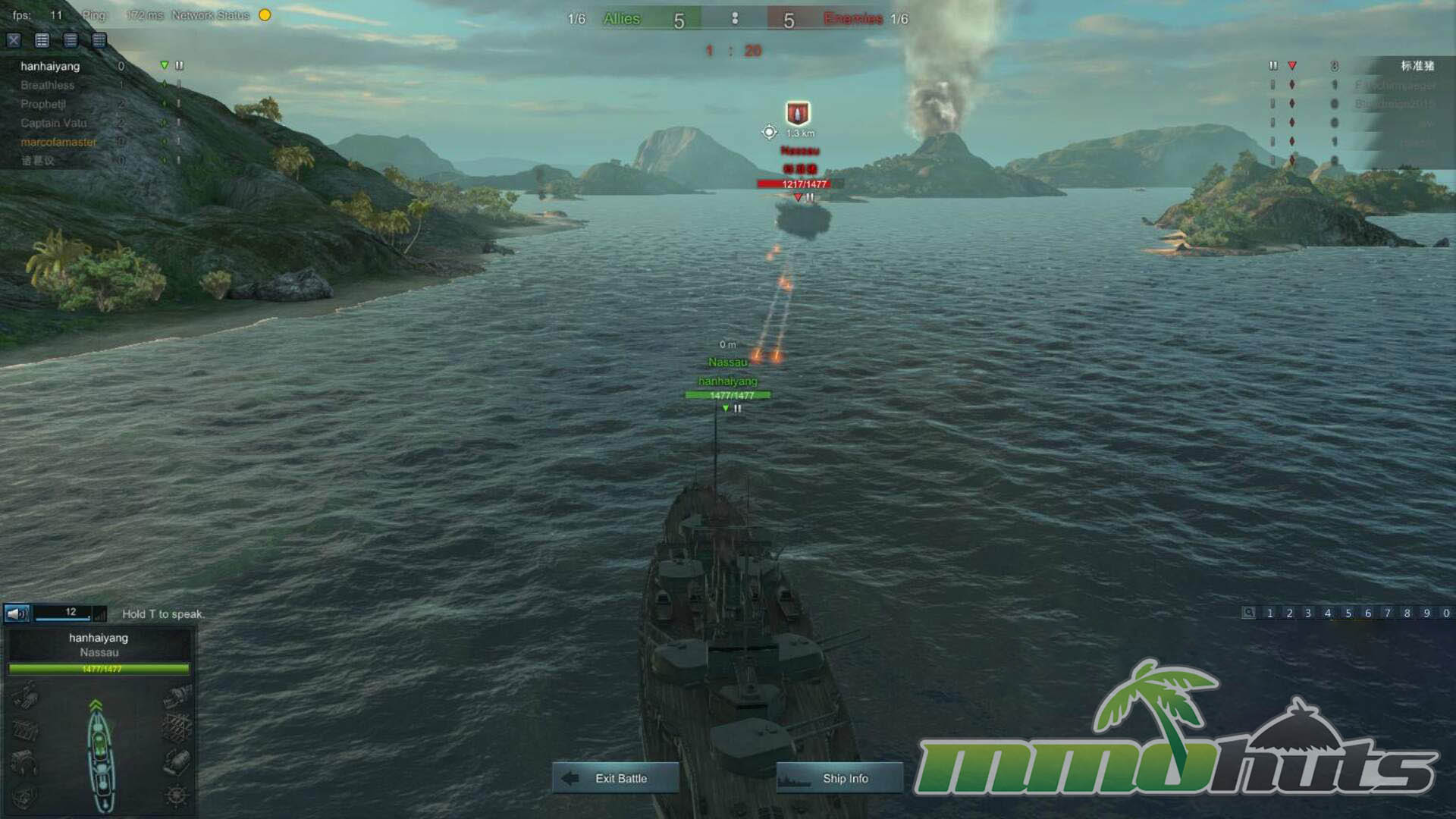
Combat leans on classic naval fundamentals: reading the map, coordinating with allies, and placing shots with lead and timing rather than twitch aiming alone. Shell travel time matters, so landing consistent hits often comes down to predicting enemy course changes and punishing mistakes. Maps also vary in feel, ranging from open water engagements to island-dotted routes and colder regions where visibility and approach angles can change how fights develop.
Steel Ocean Key Features:
- Ship Variety – six ship classes and 100+ total ships, each with distinct strengths and battlefield jobs.
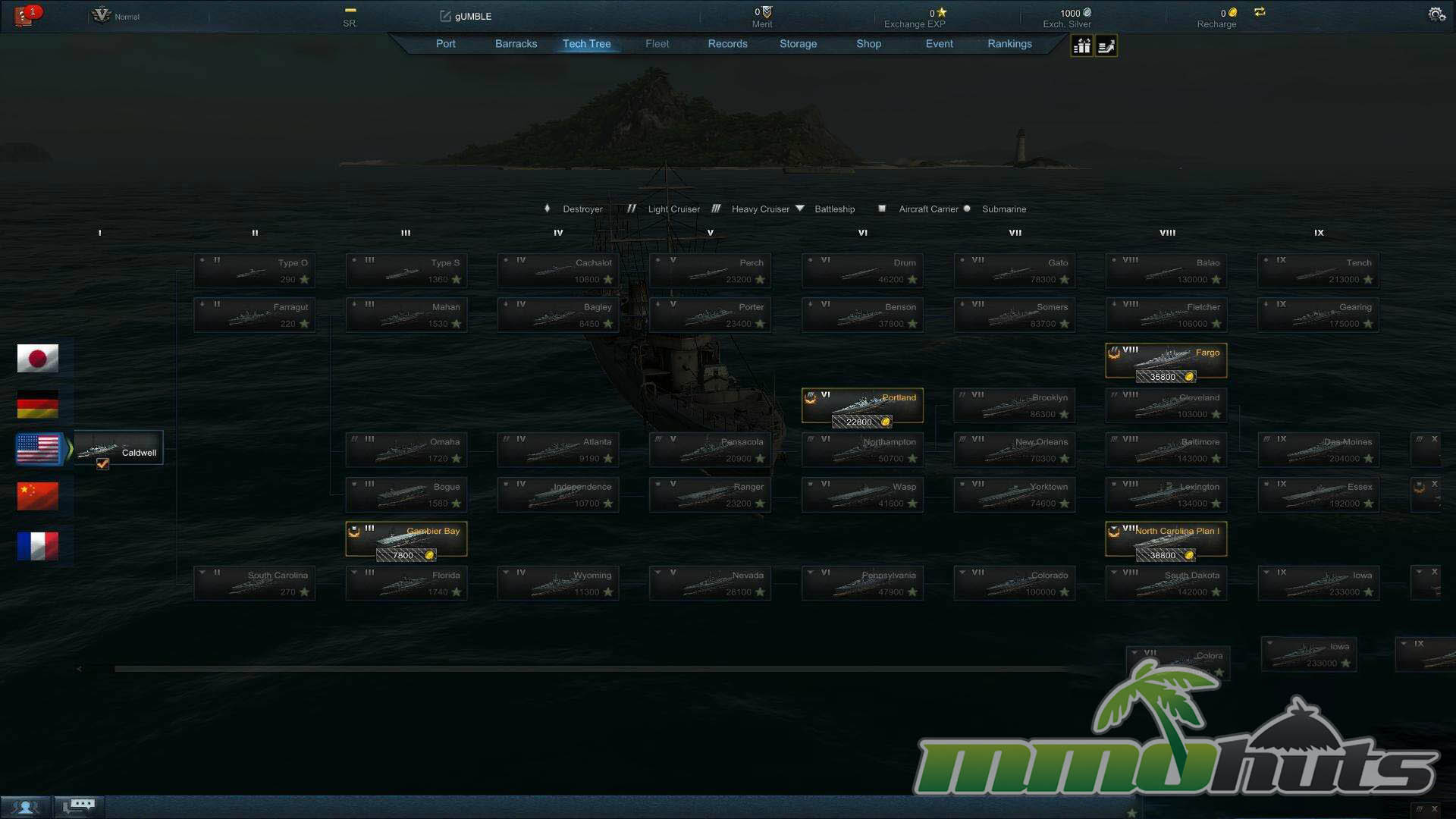
- 5 Tech Trees – gain experience in matches to climb multiple lines and access stronger, more specialized vessels.
- Submarines – use stealth and positioning to threaten larger ships from below the surface.
- Precision Gunnery – long-range engagements reward leading targets and understanding movement, not just firing on cooldown.
- Environmental Variety – battle across different ocean theaters, from warm island chains to harsher, colder waters.
Steel Ocean Screenshots






Steel Ocean Featured Video

Steel Ocean Review
Steel Ocean is a free-to-play 3D naval MMO shooter set during World War II, built around match-based battles on objective-driven maps. In practice, it occupies the same lane as other lobby-based naval combat games, with a similar loop of selecting a ship, entering an instance, completing objectives, and using post-match rewards to improve your fleet. It is difficult not to compare it to World of Warships, because Steel Ocean mirrors the genre’s expected structure and pacing while trying to carve out a few points of distinction.
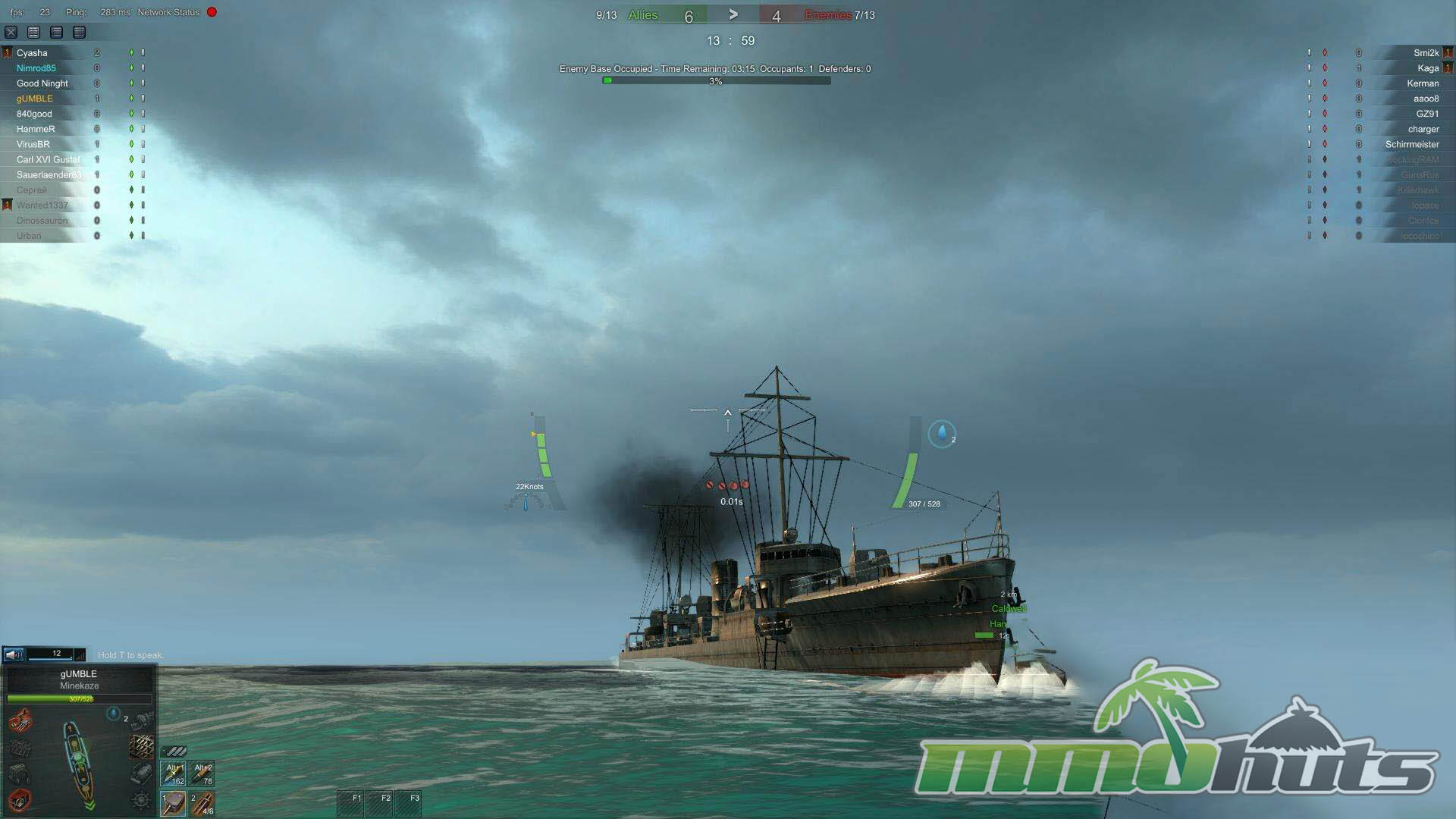
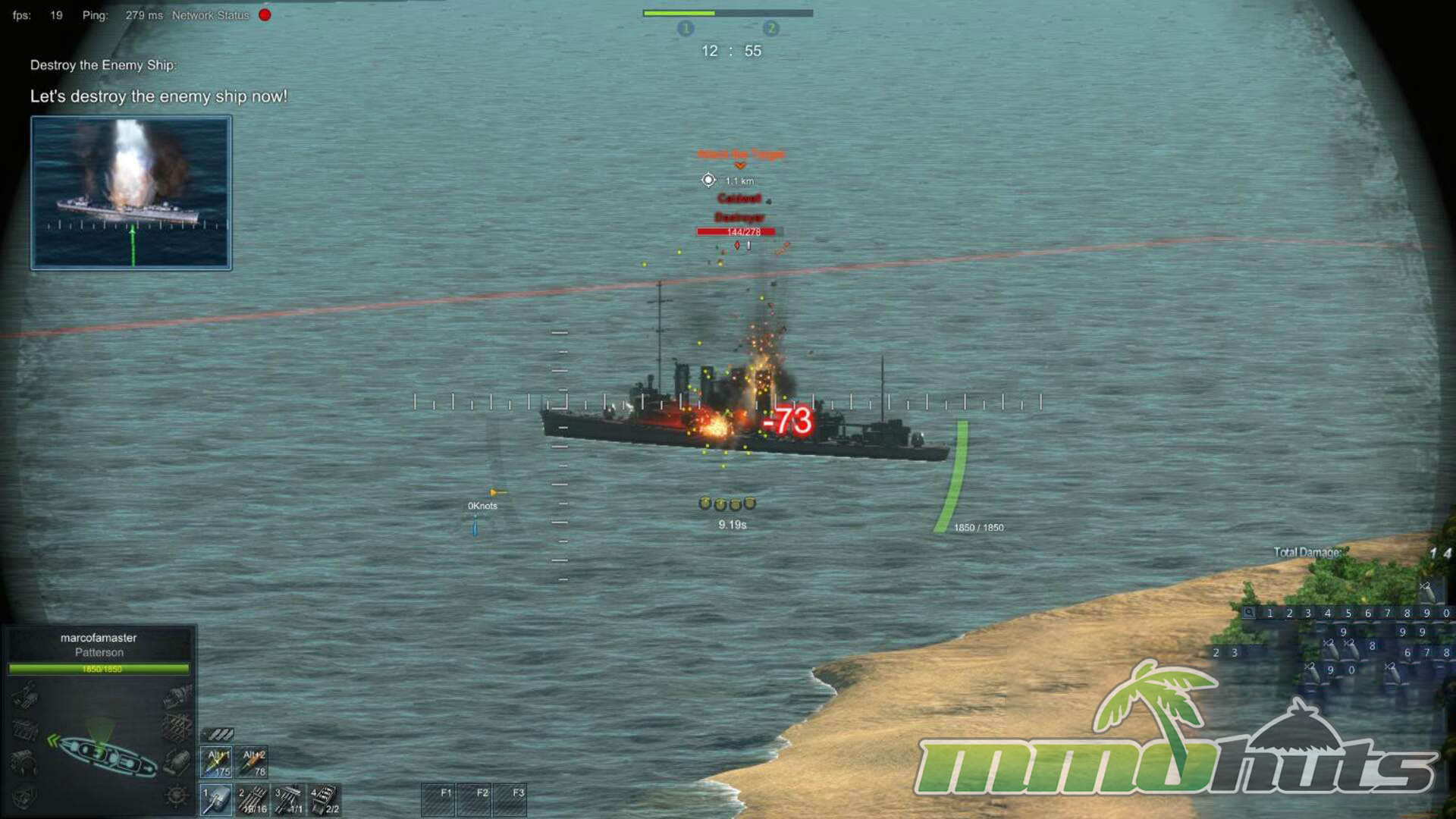
Visually, the presentation is serviceable but clearly behind the top competitor in the space. Ship models and combat effects get the job done, but they do not always have the same crispness or animation polish you might expect, even when settings are pushed higher. Water rendering is one of the better-looking elements, which matters in a game where the horizon is often your main backdrop. Performance can be inconsistent, with noticeable frame drops when battles get busy, particularly during heavy torpedo activity and sustained artillery exchanges. Audio lands in a middle ground: cannon fire and impacts have enough weight to sell combat, while the music supports the mood without becoming a standout feature.
Learning the Basics Without Friction
New players are introduced through a short, two-part tutorial that covers movement, aiming, firing, and practical tools like radar and communication pings. It is optional and can be skipped, but it is also easy to revisit later through the help menu. Beyond that, the game relies on frequent tooltips and pop-up prompts to explain key systems such as upkeep, upgrades, and the broader progression loop. For players who want more depth, an advanced tutorial becomes available later, focusing more on positioning and the fundamentals of naval engagements.
Familiar Foundations With a Couple of Twists
Steel Ocean’s moment-to-moment feel will be instantly recognizable to anyone who has played similar naval arena titles. Controls, match flow, and even the overall UI approach align closely with what the genre has standardized. Where it tries to differentiate itself is through features like submarines and the inclusion of night battles, which can alter how cautious you need to be with approach angles and detection.
For newcomers, the match objectives are straightforward and readable: some modes emphasize total elimination, while others focus on capturing and holding zones or completing map-based goals. Battles are not quick skirmishes either. Even smaller engagements can run for a substantial amount of time, and at the full 16v16 scale, matches can stretch as teams play carefully around sight lines, torpedo lanes, and the threat of crossfire.
Ship Classes and Progression
Your roster is split into six categories: Destroyers, Light Cruisers, Heavy Cruisers, Battleships, Aircraft Carriers, and Submarines. Each fills a recognizable role. Battleships are built to absorb punishment and deliver heavy salvos, while destroyers and lighter cruisers trade durability for speed, flexibility, and the ability to reposition quickly. Carriers and submarines add alternative pressure tools, forcing enemies to respect threats that are not always coming from the surface gun line.
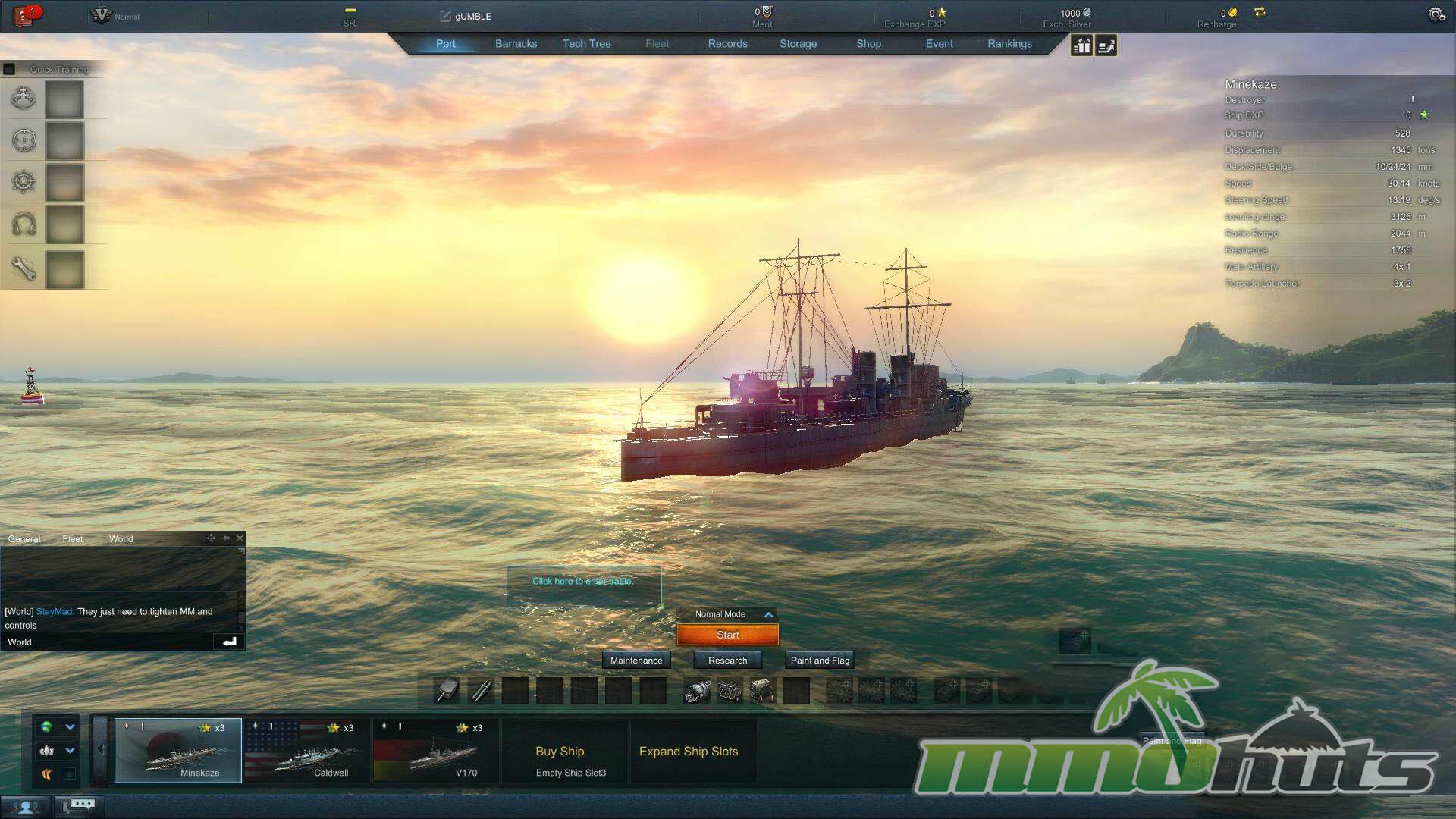
At the start, players are given four destroyers to get them into matches quickly and to teach the basics of maneuvering and torpedo play. Only one ship is taken into battle at a time, but the larger goal is to build a lineup by unlocking new hulls and improving existing ones. Upgrades are purchased using experience and silver earned from matches, and these improvements can meaningfully change how a ship handles, survives, and deals damage. Premium currency (Gold) can accelerate access to high-end ships and ammunition, which can create a power gap in certain situations, but the game still leans heavily on positioning and decision-making. A well-played standard ship can outfight a stronger purchase if the premium captain misreads the engagement.
Queueing, Match Balance, and Fleet Play
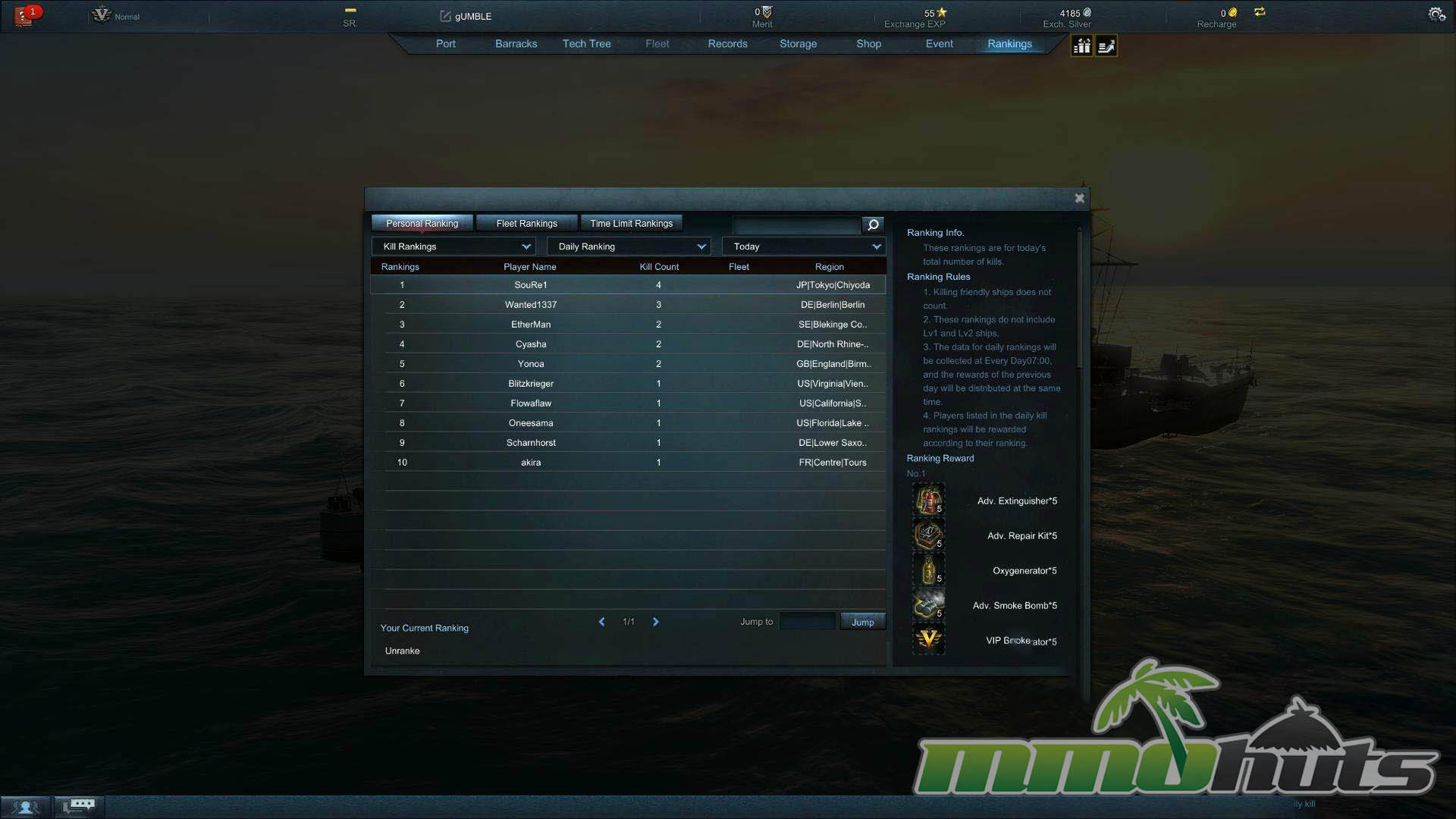
Getting into a game is handled through a familiar lobby-and-matchmaking setup, similar to other instanced competitive shooters. The matchmaking generally aims to avoid extreme mismatches, so new players are less likely to be thrown into games where they are deleted instantly by dramatically superior ships. For players looking for more organized play, Fleets function as the game’s social and competitive structure, with scheduled Fleet battles running multiple times per week.
The Final Verdict (Good)
Steel Ocean offers a solid naval combat loop, and its inclusion of submarines plus occasional night battles gives it a couple of genuine talking points. That said, it sits in the shadow of World of Warships in terms of overall production values and visual polish, and it also struggles with performance and network roughness that can undermine otherwise satisfying engagements. If you are new to naval arena combat, it is an approachable entry with clear guidance and a straightforward upgrade path. If you are already deeply invested in the larger competitor, Steel Ocean’s unique elements may not be enough on their own to justify switching.
Steel Ocean System Requirements
Minimum Requirements:
Operating System: Windows XP SP 3 or higher
CPU: Intel(R) P4/PE Core 2
Video Card: NVIDIA GT220
RAM: 2 GB
Hard Disk Space: 6 GB
Recommended Requirements:
Operating System: Windows XP SP 3 or higher
CPU: Intel(R) Core(TM)I5-3570
Video Card: Nvidia GeForce GTX 650
RAM: 4 GB
Hard Disk Space: 6 GB
Steel Ocean Music & Soundtrack
Coming Soon!
Steel Ocean Additional Information
Developer: ICE Entertainment
Game Engine: Unreal Engine 3
Closed Beta 2: November 21, 2014
Steam Greenlight Posting: September 11, 2015
Release Date: November 12, 2015
Steam Release Date: November 12, 2015
Development History / Background:
Steel Ocean was created by the Chinese studio ICE Entertainment and built on Unreal Engine 3. It appeared on Steam Greenlight on September 11, 2015, was approved shortly after on September 23, 2015, and launched on Steam on November 12, 2015. On February 03 2020, the team announced that the game would be shutting down, with service ending on May 03, 2020.