
Legion of Heroes
Legion of Heroes is a free-to-play fantasy MMORPG for mobile that blends a roaming open world with tactical, turn-based encounters. Instead of controlling a single avatar in real time, you build a squad from a huge roster of heroes, position them in formation, and win fights through smart target selection and well-timed skills, all while following a surprisingly story-forward quest line.

|
Publisher: Nexon Type: Mobile MMORPG Release Date: October 23, 2013 Shut Down: March 16, 2020 Pros: +A genuinely large, persistent world for a mobile MMO. +Turn-based battles that reward planning. +Quest writing and story beats are stronger than typical genre fare. Cons: -Monetization and an energy-style limiter can be frustrating. -No options to change your character’s look. -Automation features can make parts of play feel hands-off. |
Legion of Heroes Shut Down on March 16, 2020
Legion of Heroes Overview
Legion of Heroes is a 3D mobile MMORPG from NEXON M, Inc. that emphasizes exploration and party-based progression across a shared, persistent world. You move between towns, field zones, and dungeons packed with roaming enemies and quest NPCs, with the option to group up and tackle content alongside players from other regions. What sets it apart from many mobile MMOs is its combat loop, battles are tactical and turn-based, and you manage multiple party members rather than a single character.
A major pillar of the game is collection and team-building. With well over one hundred heroes available, you can recruit new allies, shape a lineup around class roles, and adjust your formation for different enemy types. Beyond PvE questing, there is real-time PvP and group-oriented challenges like the Chaos Abyss, which push your roster depth and tactical decisions more than routine grinding. Guilds and public chat also help the world feel active, at least when the community is healthy.
Legion of Heroes Key Features:
- Huge Open World – a large, persistent set of zones with numerous maps and locations to uncover.
- Turn-Based Combat – formation-driven, tactical battles where you command several characters each turn.
- Collect ‘Em All – a roster of 100+ heroes to recruit, manage, and build teams around.
- Class Variety – four core classes to anchor party composition (Berserker, Mage, Gladiator, Sniper).
- Immersive Story – questing that leans on character dialogue and a more structured narrative than most mobile MMORPGs.
Legion of Heroes Screenshots






Legion of Heroes Featured Video

Legion of Heroes Review
Legion of Heroes is a free-to-play mobile MMORPG developed under the Nexon umbrella, with NEXON M Inc. handling publishing duties. It launched on Android on October 23, 2013, and stood out quickly because it did not chase the typical mobile MMO formula of auto-questing plus real-time skill spam. Instead, it leaned into squad tactics, a collectible hero roster, and a quest line that actually tries to keep you reading. Even among its mobile contemporaries, it felt like a game designed to do something different rather than simply compress a PC MMO into a phone screen.
Classes and Character Creation
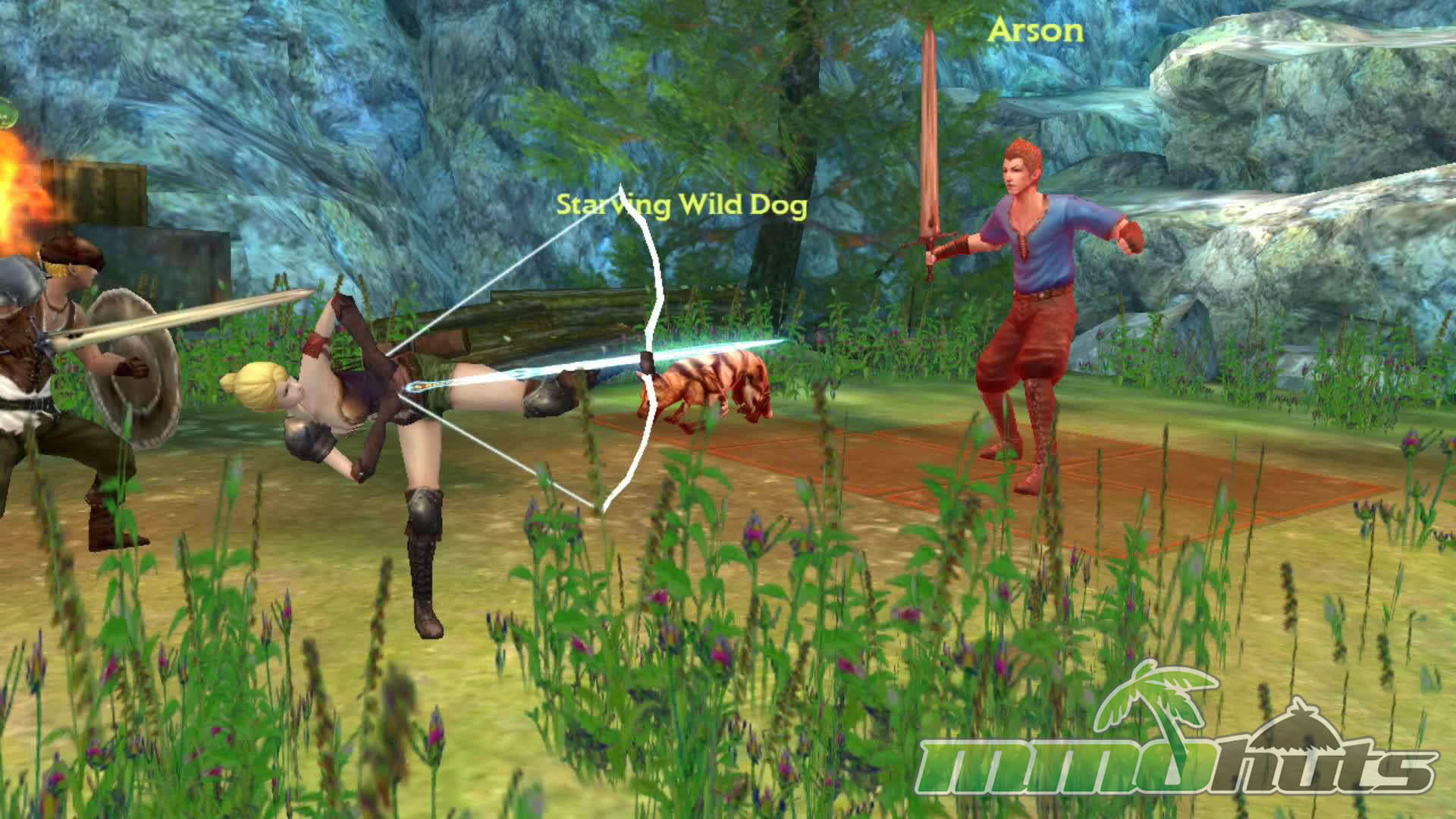
At the start, you pick one of four classes, and the choice comes with fixed race and gender pairings. The available options are a male beastkin Berserker, a female fairy Mage, a male human Gladiator, and a female human Sniper. Each class has a clear combat identity, Berserkers bring heavy weapons like axes and cannons, Mages combine elemental damage with healing support, Gladiators favor swords and spears, and Snipers attack from range with bows and firearms.
The downside is presentation flexibility, there is no appearance customization, and even gear changes do not visually alter your character. That sameness can be deflating in an MMORPG context. The saving grace is that your “main” presence is not locked to your starter forever, because the broader hero system lets you change your leader later and build a party around the characters you enjoy most.
A Beautiful Fantasy World
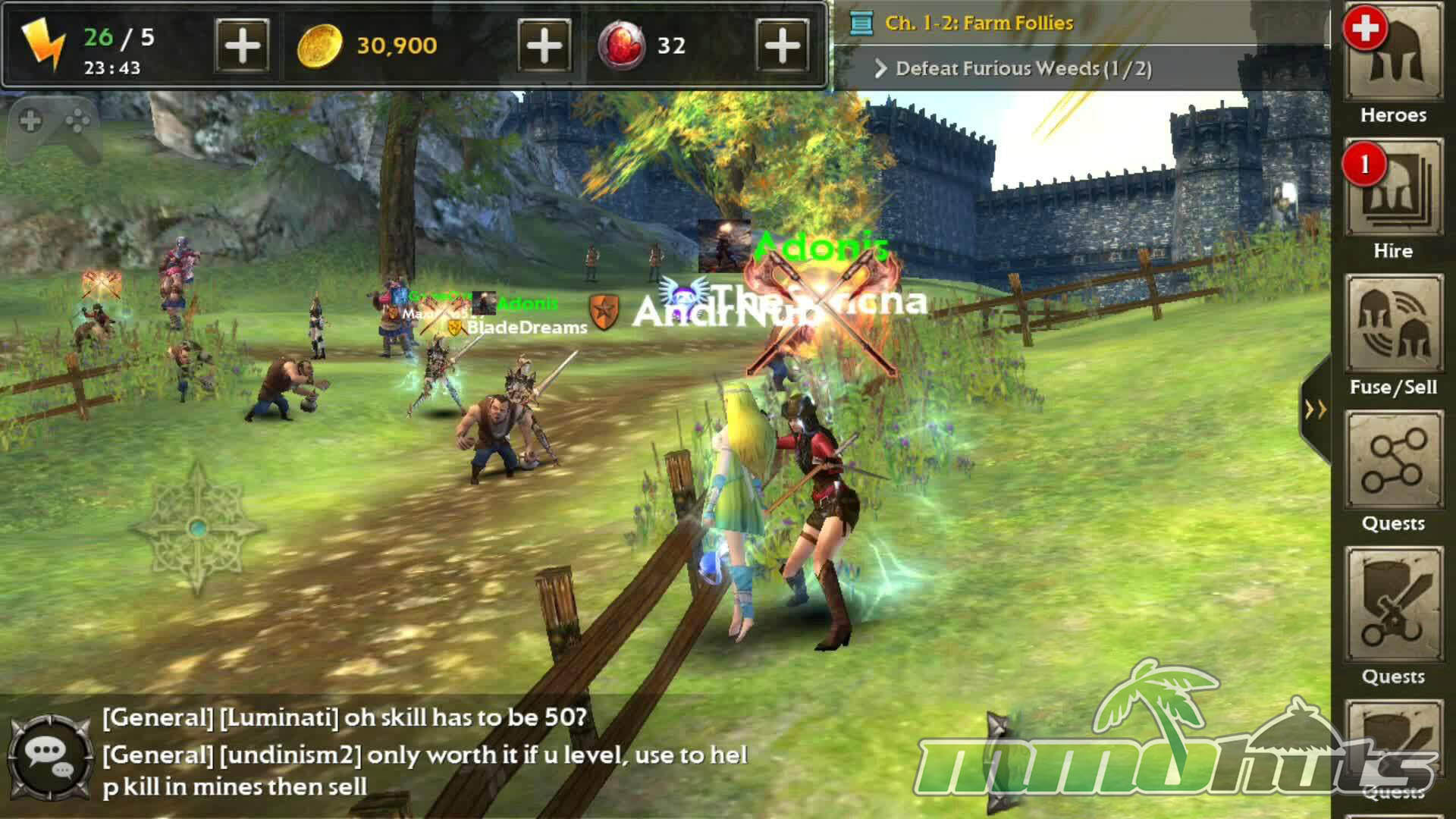
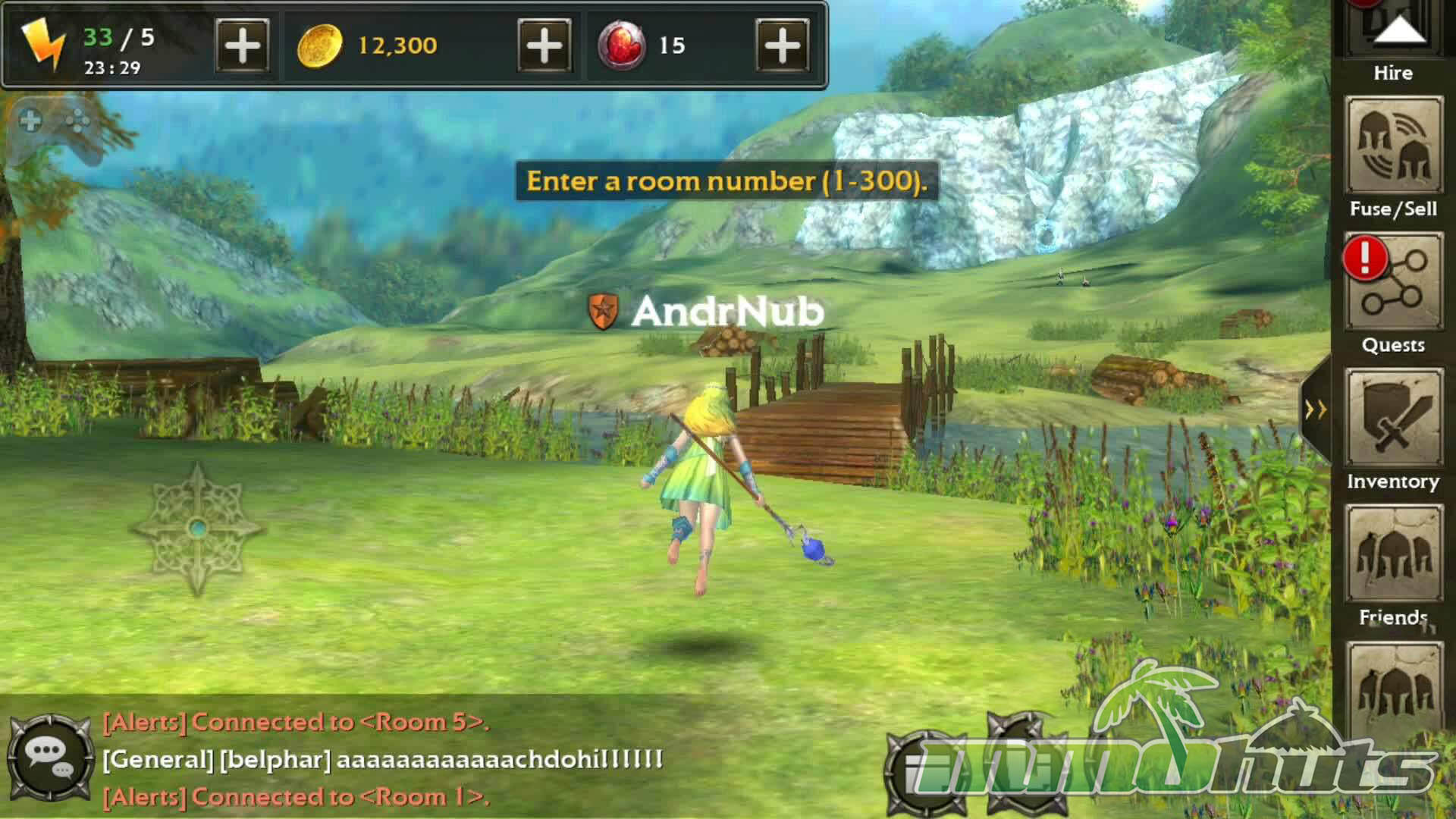
For a mobile MMORPG, the scale of the world is one of Legion of Heroes’ biggest strengths. You begin in bright, pastoral starter areas and gradually branch into zones with distinct themes, dungeons, and scenery changes that help the journey feel like a real adventure instead of a menu-driven checklist. NPCs are placed throughout the environment, monsters wander the fields, and the overall look fits a classic medieval fantasy tone.
Quest navigation includes an auto-move option that will guide you to objectives. It can be a quality-of-life tool when you just want to progress, but it also contributes to the “hands-off” criticism some players have. Visually, the game can appear soft, with lower-resolution assets that make textures and models look slightly blurred up close. From a normal play distance, the art direction still carries, and the world remains more attractive than many mobile peers from the same era.
Unique Tactical Combat
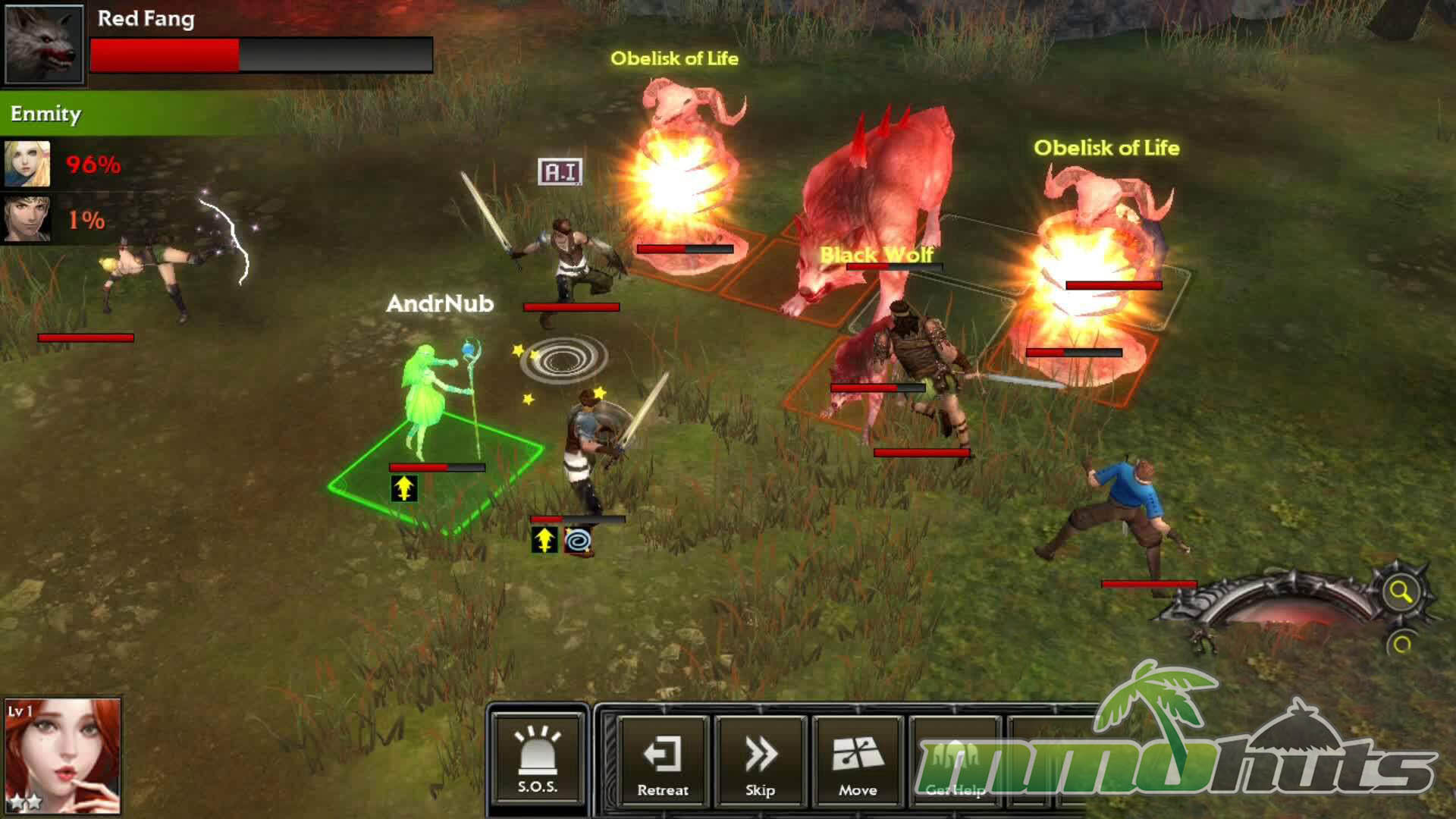
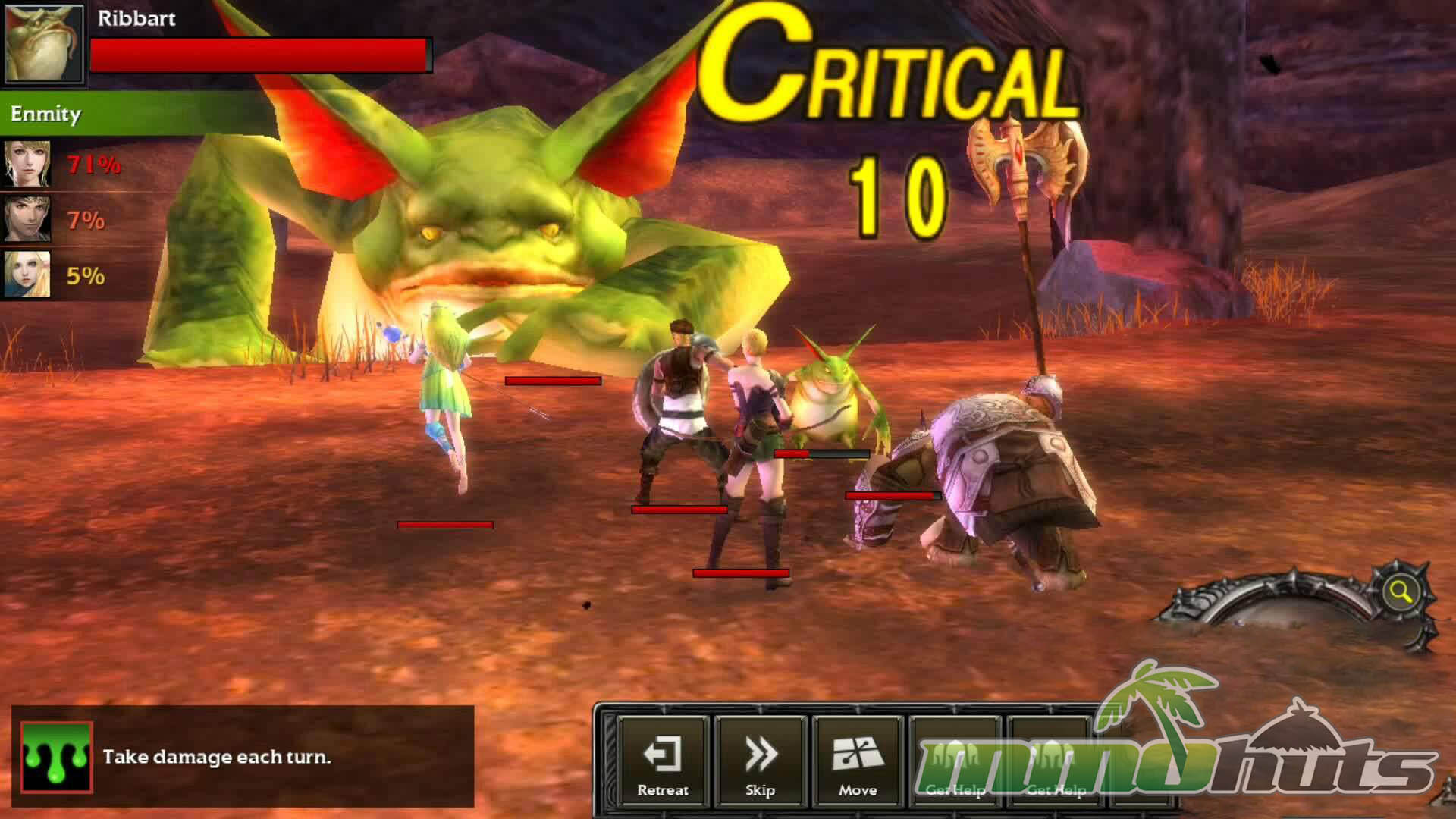
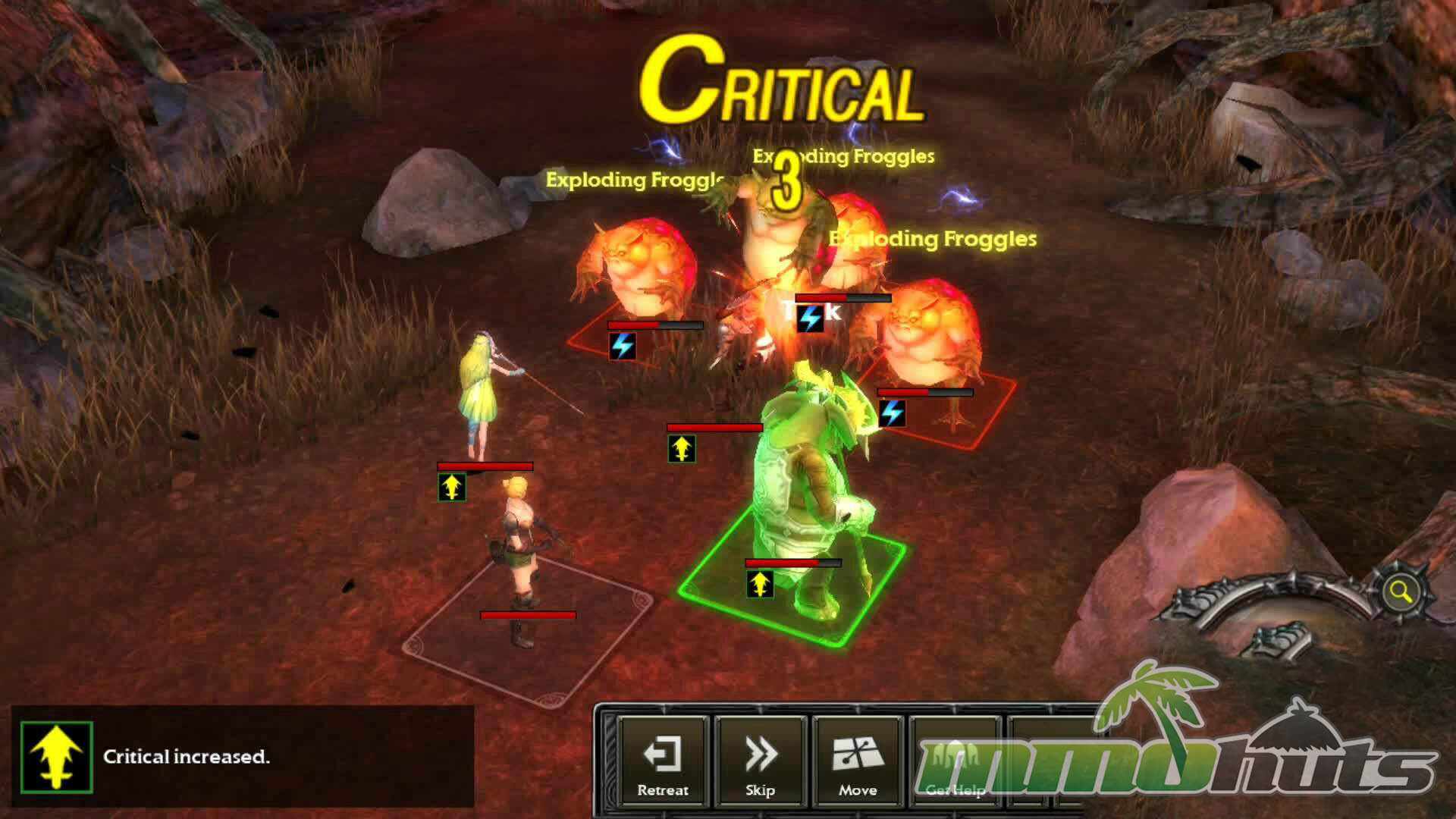
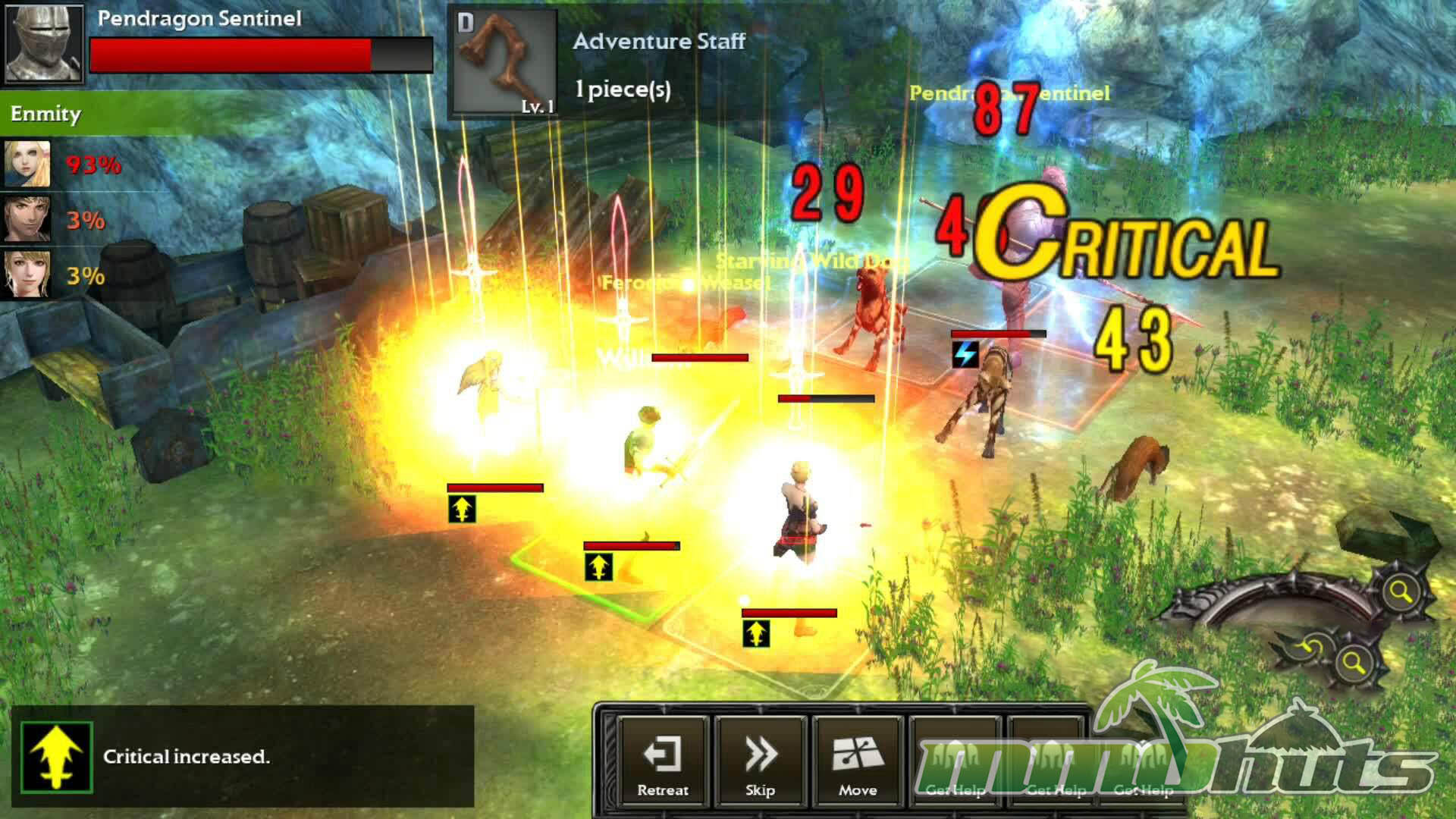
The defining feature here is the turn-based combat system. Rather than real-time tapping or action combat, encounters shift into a separate battle instance once you engage an enemy in the field. You command multiple heroes, similar in spirit to Atlantica Online (also associated with Nexon), and success is tied to formation, skill timing, and threat management rather than raw reflexes.
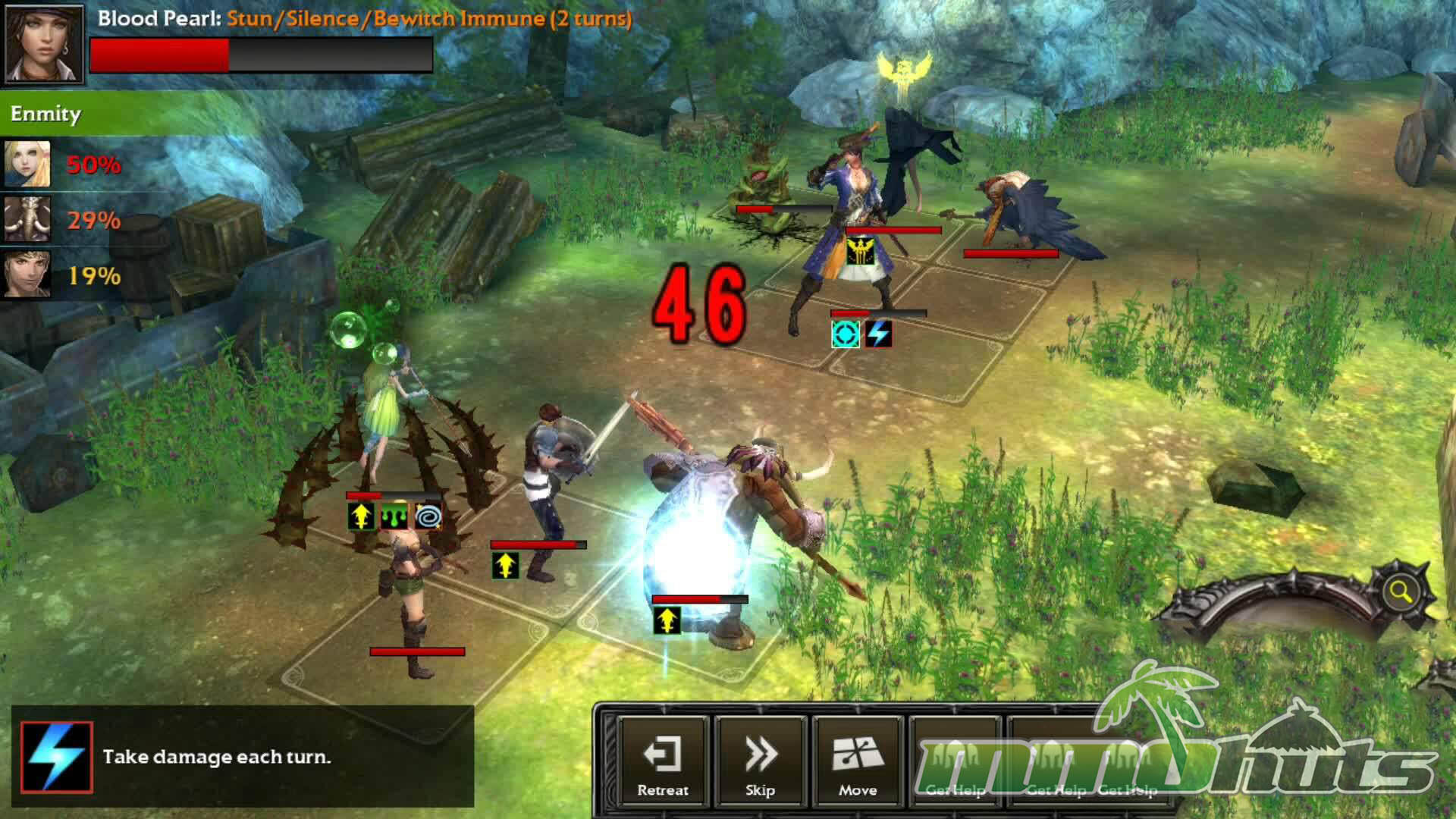
Your party starts with three slots, and you can expand up to six by Level 15. Positioning matters because heroes are arranged on a 3×3 grid, which adds a layer of planning before the first turn even starts. Every recruitable hero maps to one of the four classes (Berserker, Mage, Gladiator, Sniper), but individual kits and skills help them feel distinct, especially once you begin stacking synergies across a full lineup.
Most fights play out across multiple waves, typically three, with the final wave capped by a boss. Some special encounters focus entirely on a single boss wave. On each turn you choose which hero acts, pick a target, and decide whether to spend skills, including stronger abilities tied to a Fury meter. Because enemies take their own turns, careless play can snowball quickly, especially when a boss can disrupt your party with control effects. The best battles reward fundamentals like focusing priority targets, saving key stuns or silences, and avoiding unnecessary damage.
There is also a strong “keep the team alive” pressure. If a hero falls, you can revive them with Hearts (premium currency), or leave them down and deal with injury downtime unless you pay gold to heal them. That creates tension and encourages careful play, but it also connects combat outcomes to monetization in a way some players will not love. The overall system is still one of the most distinctive combat approaches in the mobile MMORPG space, and it is not surprising that nDoors, known for Atlantica Online and tied to Nexon, had involvement in development.
An Engaging MMORPG Story and Questing
Many MMORPGs treat quest text as filler, but Legion of Heroes makes a real effort to keep the narrative readable. Conversations are presented in brisk exchanges between recurring characters, which helps the world feel populated by personalities rather than anonymous quest dispensers. The writing is not just longer, it is better paced, and it uses character voice to keep even routine objectives moving.
The objectives themselves are often familiar MMO staples, a lot of monster hunting and dungeon progression, but the framing does a good job of maintaining momentum. The storyline is structured into chapters, with a climactic boss encounter acting as a capstone for each arc. It is not a revolutionary narrative, but it is unusually competent for the genre and platform.
Over One Hundred Heroes to Collect
The hero roster is not a side activity, it is the core progression driver. Heroes you recruit can be slotted into your party, controlled in battle, and used to refine your strategy. Collecting new characters changes how you approach encounters because roles and skill sets vary, and certain lineups simply handle specific bosses more cleanly than others.
You gain heroes through quest progression and through a ticket system. Tickets drop from battles and come in multiple tiers (bronze, silver, gold, and platinum), with higher tiers improving the odds of receiving stronger, higher-rank heroes. The important point is that tickets are not impossibly rare, they can be farmed with regular play, which makes collection feel achievable even without constant spending. For players who enjoy roster-building, Legion of Heroes offers a steady sense of discovery as new recruits open up new tactical options.
Cash Shop/In-App Purchases
Legion of Heroes is playable without paying, but it does include a few systems that can push players toward the store. The biggest friction point is Morale, an energy mechanic that is uncommon in MMORPGs, even on mobile. Battles consume Morale, and when it runs low you either wait for it to regenerate or refill it through purchases. In practice, Morale tends to support around one to two hours of active battling depending on pace, which may be fine for short sessions but can feel limiting for players who want long grinding stretches.
Beyond Morale, the shop offers various conveniences and power-related items, including certain heroes, Hearts (also used for revives), gold, equipment, and Orichalcum. Gear purchases are often tied to randomized chests, and Orichalcum is used to reduce item level requirements. Most resources can be earned through play, so the PvE experience can remain fair for patient players. PvP is where spending is most likely to translate into advantage, because stronger equipment access and roster depth matter more when you are fighting other players rather than scripted enemies.
When Convenience Starts Playing for You
Automation is a double-edged sword here. Auto-move can take you directly to NPCs or monsters for quests, reducing downtime and making the game easier to play in short bursts. At the same time, it can make the world feel less like a place you are navigating and more like a sequence of guided stops.
Combat has a similar option through auto-battle, letting AI control your party. This can be useful for low-risk grinding, but it tends to make weaker decisions in tougher encounters, especially where proper crowd control timing and target focus are required. The key is that these tools are optional, you can play manually when you want the tactical depth to shine, and use automation when you are clearing easy content or multitasking.
Final Verdict – Great
Legion of Heroes earns its reputation by meaningfully separating itself from the standard mobile MMORPG template. The turn-based, multi-hero combat adds genuine strategy, the hero collection loop gives long-term goals beyond leveling, and the quest dialogue is more engaging than most competitors. Its drawbacks are real, the Morale system restricts extended play, automation can dilute the feeling of agency, and monetization can influence competitive modes, but the core gameplay remains distinctive and well-produced. For players who wanted a tactical party RPG feel inside an MMORPG shell, Legion of Heroes was one of the better attempts on mobile.
Legion of Heroes Links
Legion of Heroes Official Site
Legion of Heroes Wikia (Database / Guides)
Legion of Heroes Facebook Page
Legion of Heroes Google Play
Legion of Heroes iTunes App Store
Legion of Heroes System Requirements
Minimum Requirements:
Operating System: Android 4.0 or later / iOS 7.0 or later.
Legion of Heroes Music & Soundtrack
Comin Soon…
Legion of Heroes Additional Information
Developer: Nexon M & Ndoors
Publisher: Nexon M
Platform(s): Android, iOS
Release Date: October 23, 2013
Shut Down: March 16, 2020
Legion of Heroes was developed by NEXON Co., Ltd, with the English release published by NEXON M, Inc., a mobile-focused developer and publisher headquartered across Oakland and Los Angeles, California. NEXON M operates as a subsidiary of NEXON Co. Ltd, a major Korean game company headquartered in Tokyo, Japan. The publisher is also known for other mobile titles, including Monster Squad, DomiNations, and Base Busters. The English version of Legion of Heroes surpassed one million downloads worldwide, while the Korean version reached a Top 10 Grossing position on Korea’s Google Play charts. The game debuted on Android in 2013, followed by an iOS launch in 2014. Nexon’s subsidiary, NDoors, also contributed to development. On February 12, 2020 it was announced that the game would shut down on March 16, 2020.