Spiral Knights is a 3D, top-down action MMORPG that blends hack-and-slash combat with light puzzle rooms and a strong focus on cooperative dungeon runs. It plays a bit like a Diablo-style ARPG filtered through the dungeon sensibilities of classic Zelda, and it is available both as a standalone client and as a browser-based Java game.
 | Publisher: Sega Playerbase: Medium Type: MMORPG Release Date: April 4, 2011 (NA/EU) PvP: Arena Pros: +Distinctive visual style. +Strong dungeon layouts. +Clever action RPG and puzzle pairing. +Robust crafting and upgrades. Cons: -Progression can feel slow and guided. -Monetization can create advantages. -Overall world scope is compact. |

Spiral Knights Overview
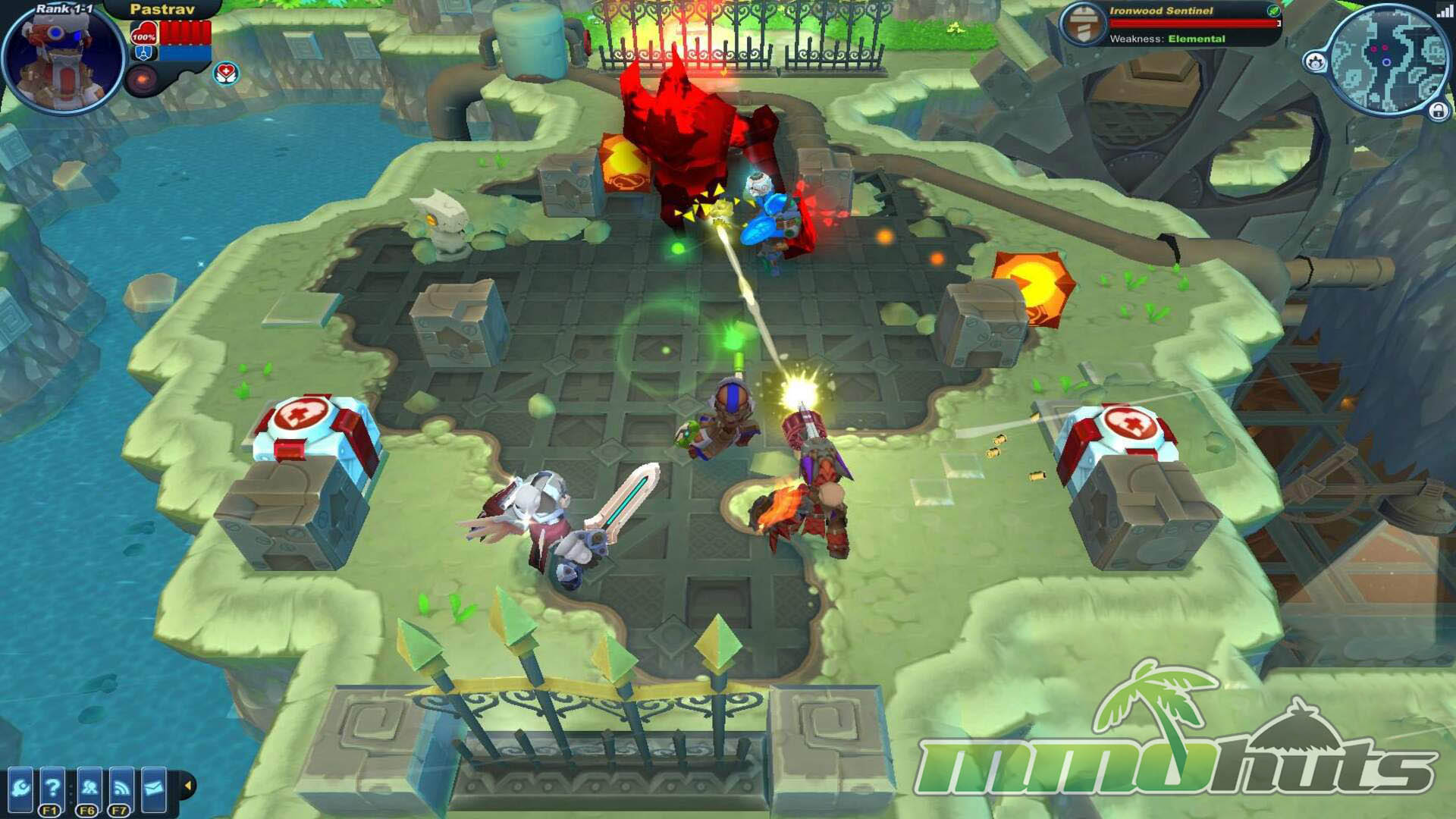
Spiral Knights is an isometric action MMORPG from Three Rings Design, published by Sega. The adventure is set on the planet Cradle, where your armored knight is part of an expedition that has crash-landed and is now forced to delve into the shifting Clockworks beneath the surface. The core appeal is the moment-to-moment dungeon crawling, quick combat, and puzzle rooms that encourage communication and teamwork. Alongside its stylized art direction and smart level flow, the game supports 4-player instanced dungeons, PvP arenas, crafting and upgrading, pets, guilds, and a generally approachable presentation that runs well on a wide range of systems.
Spiral Knights Key Features:
- Gear-Driven, Classless Progression – your role is defined largely by equipment, with Swords, Guns, and Bombs serving as the community’s main “class” identities.
- Action Combat Paired With Puzzles – most content is built around cooperative dungeon floors where positioning and room mechanics matter.
- Crafting and Upgrades With Real Depth – equipment advancement is central, so forging, recipes, and materials play a major part in long-term play.
- Mission-Focused Structure – progression revolves around completing missions, including 80+ rank missions that function as the main PvE path.
- Instanced-First Design – the experience is centered on private instances rather than a huge seamless overworld, with hubs used mainly for grouping and services.
Spiral Knights Screenshots

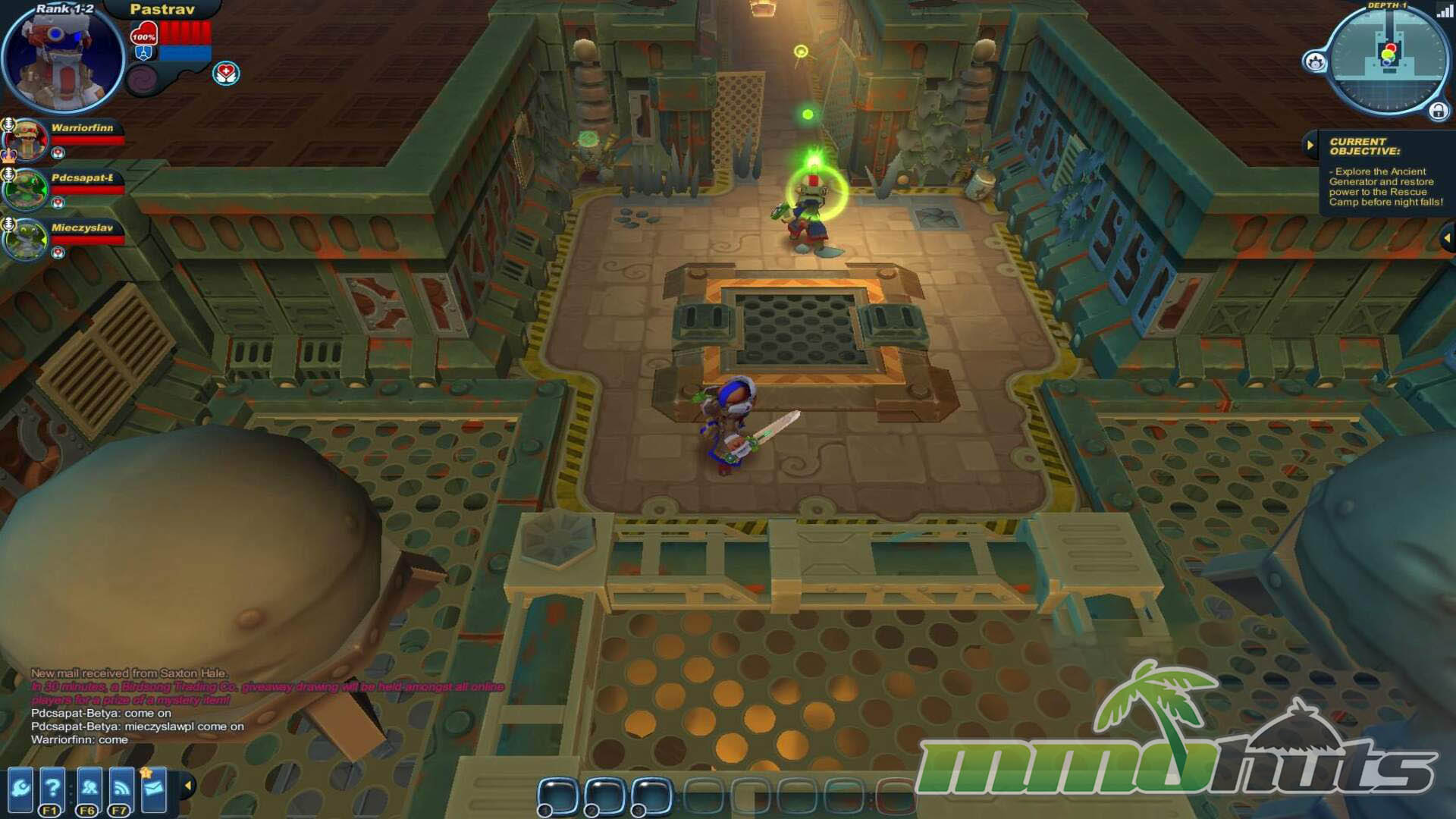

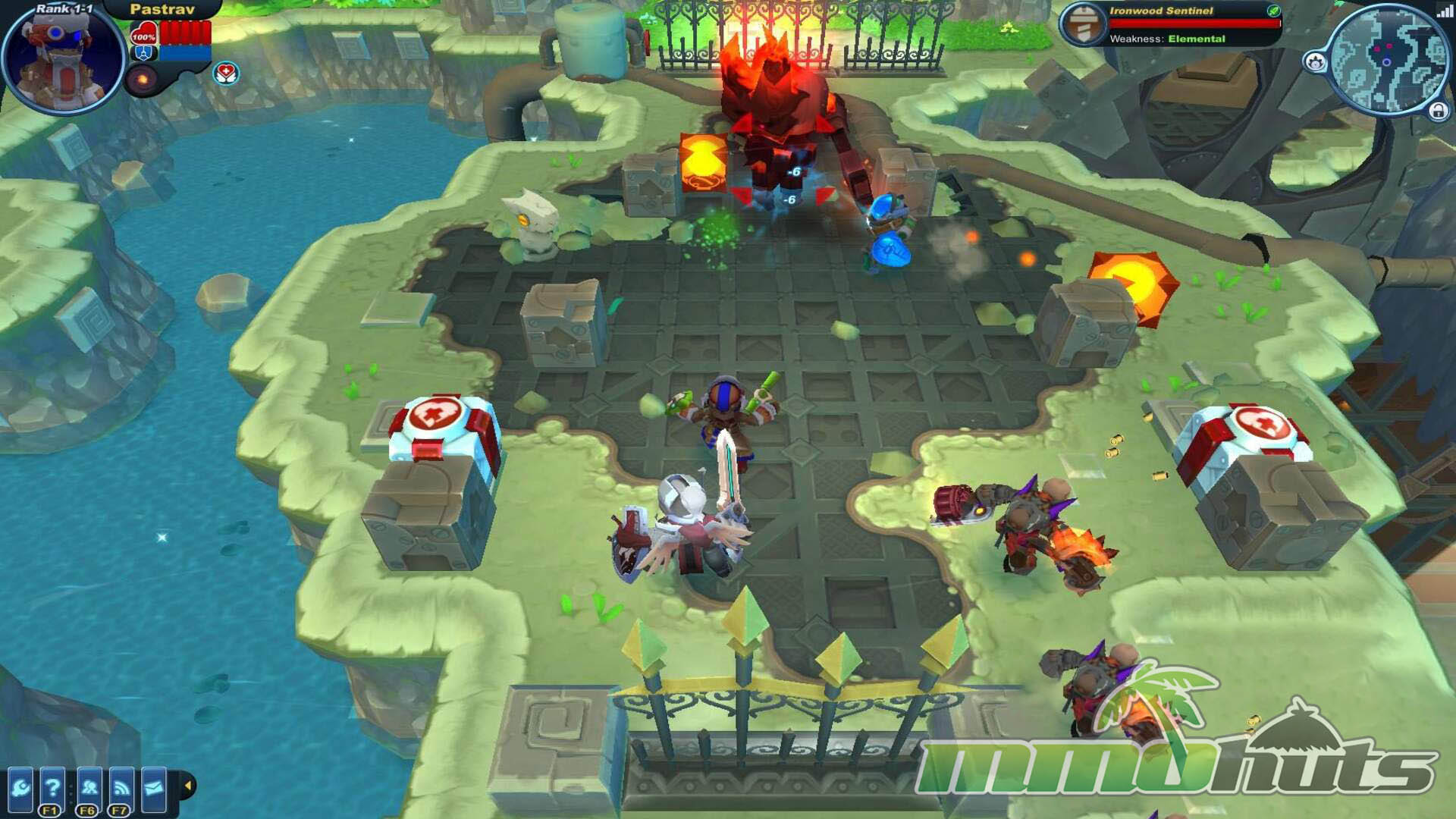
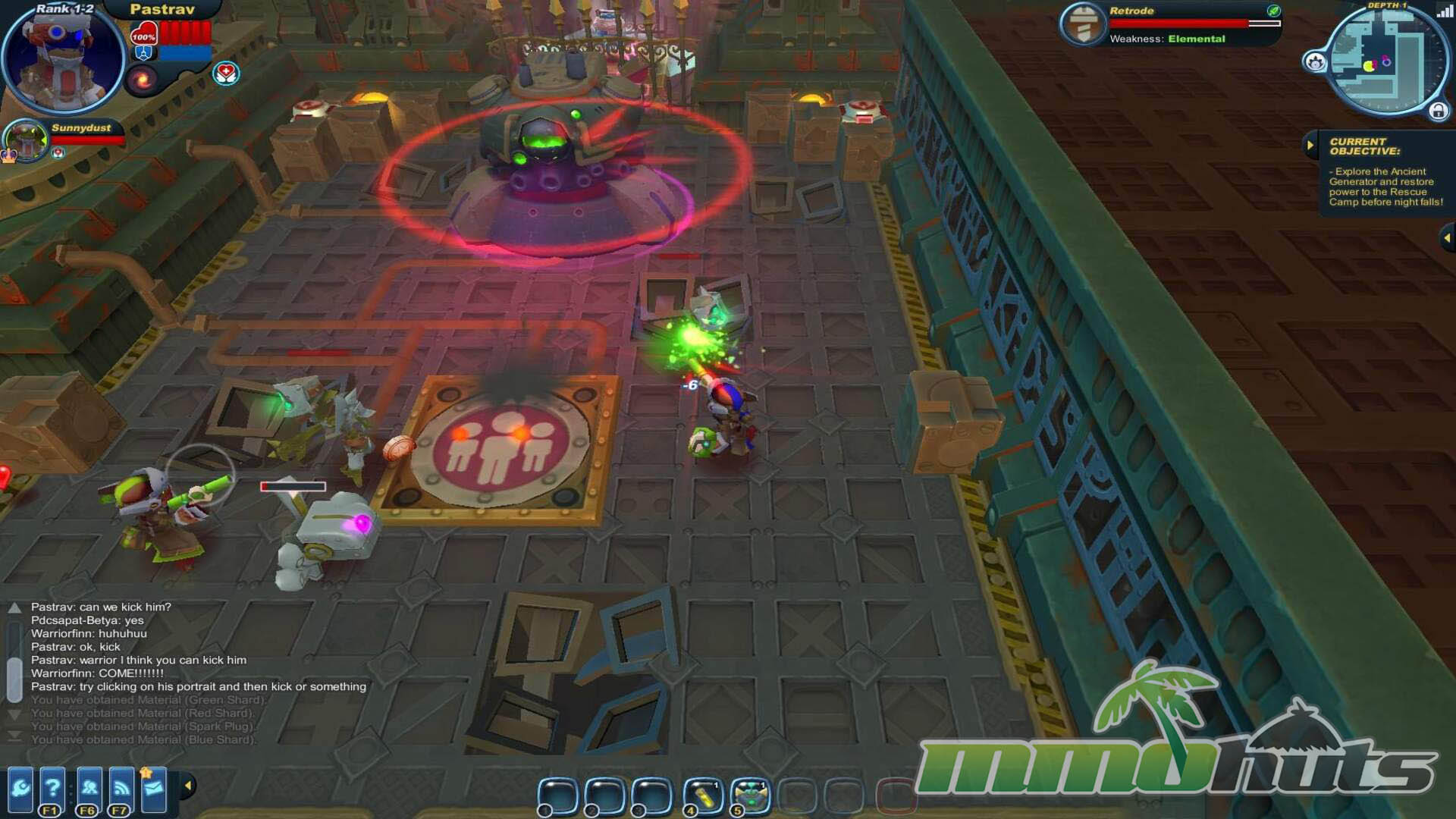
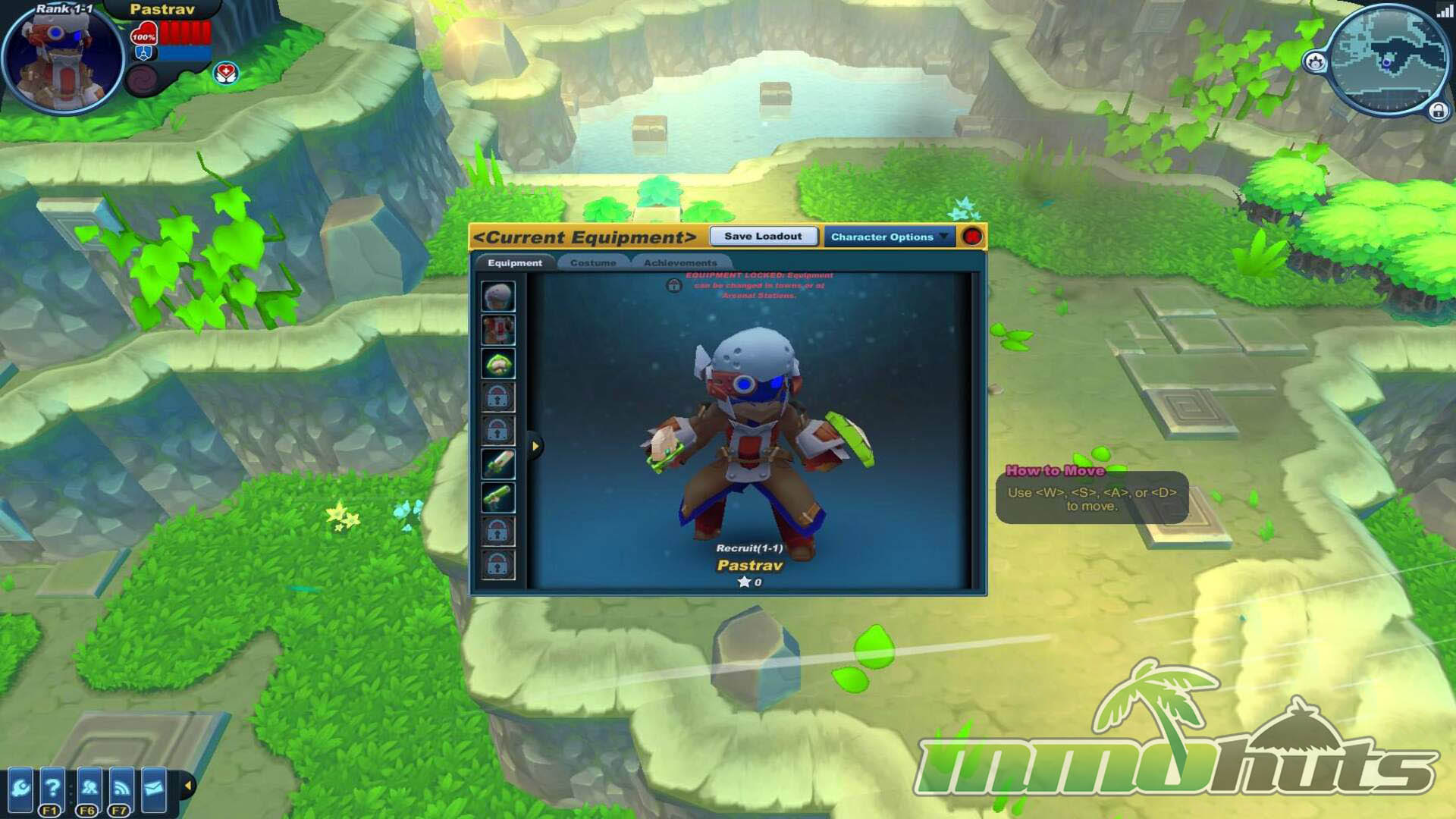
Spiral Knights Featured Video

Spiral Knights Review
Spiral Knights is a 3D isometric action MMORPG developed by Three Rings Design and published by Sega. Built around the Java platform, it is playable on Windows, Mac, and Linux, and it originally launched on April 4, 2011. It is also available through Steam, and you can still grab it directly from the official site. The game drew a sizable audience early on, surpassing 3 million created accounts in its first stretch of popularity. Historically, one of the most controversial systems was the old “Energy” limitation that restricted playtime unless you refueled via the cash shop, but that model was later removed after heavy criticism from the community.
Crash Landing
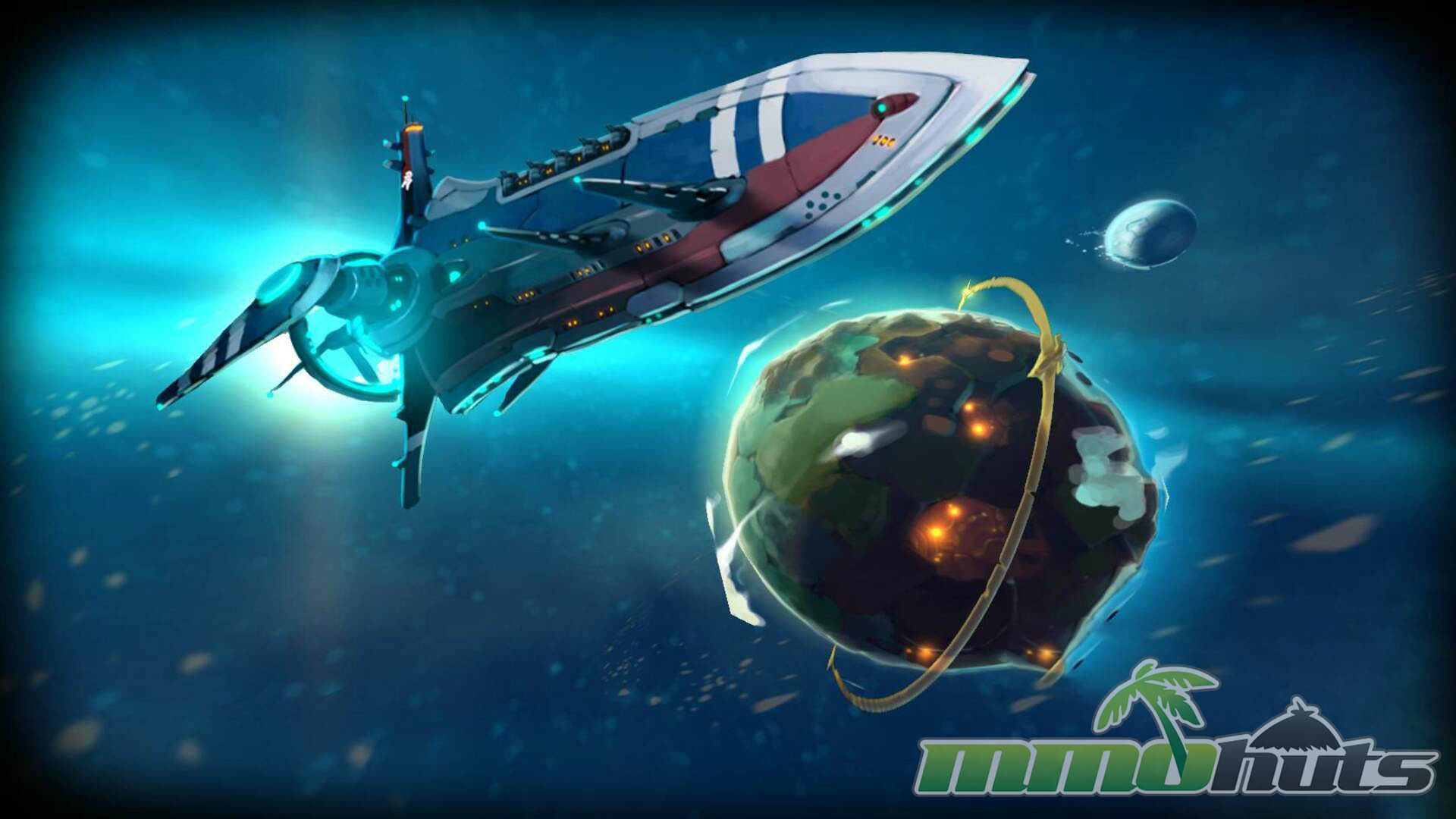
The premise is straightforward and serviceable: the Spiral Knights are an organized, spacefaring force from Isora, traveling aboard the Skylark until disaster strands them on Cradle. Cradle is less a typical open-world planet and more a shell over the Clockworks, a dungeon complex that continually rearranges itself. That shifting nature gives the game a convenient excuse for repeatable runs and ever-changing layouts, and it also provides the narrative motivation for pushing deeper in search of resources that could help repair the Skylark.
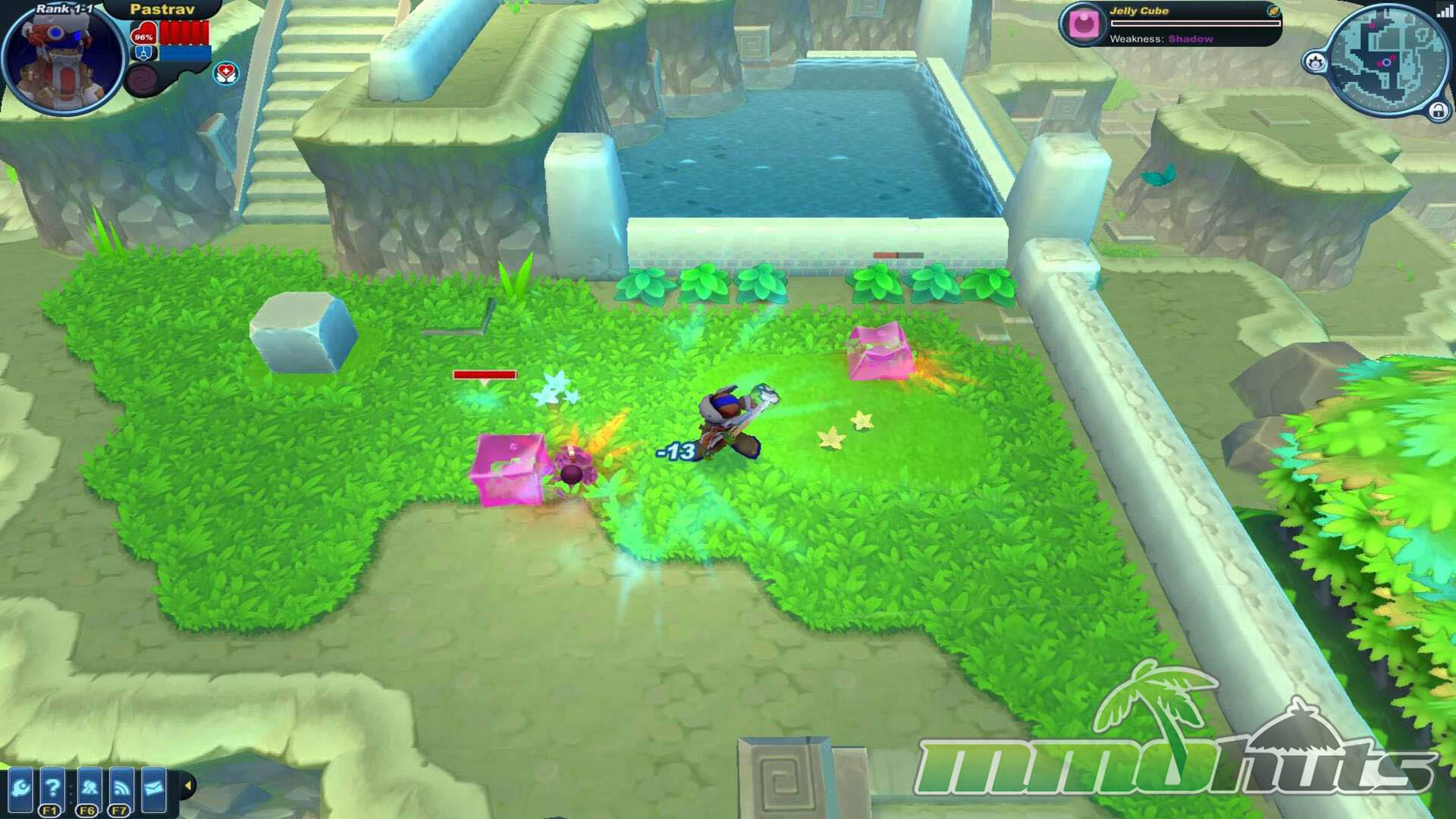
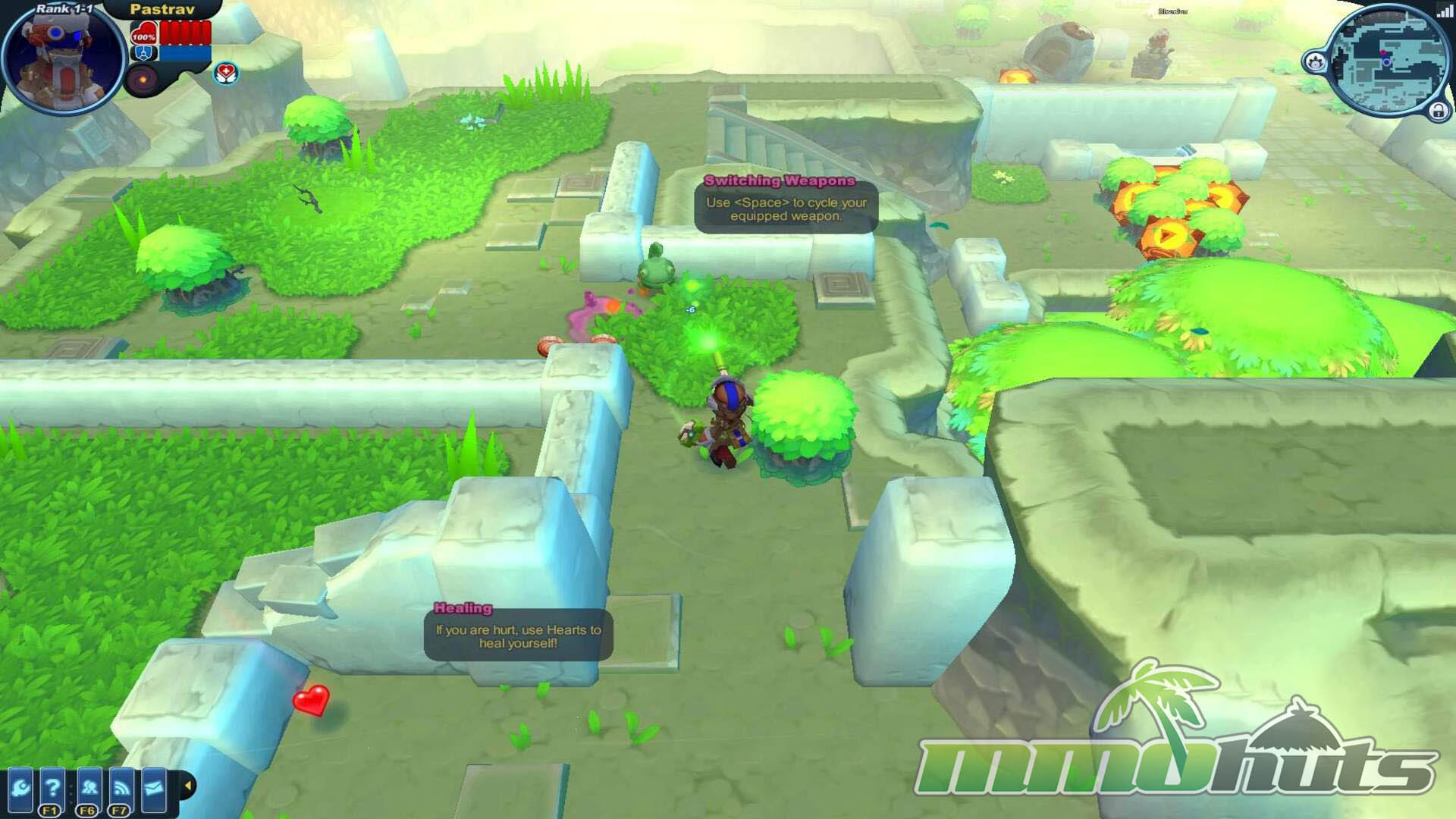
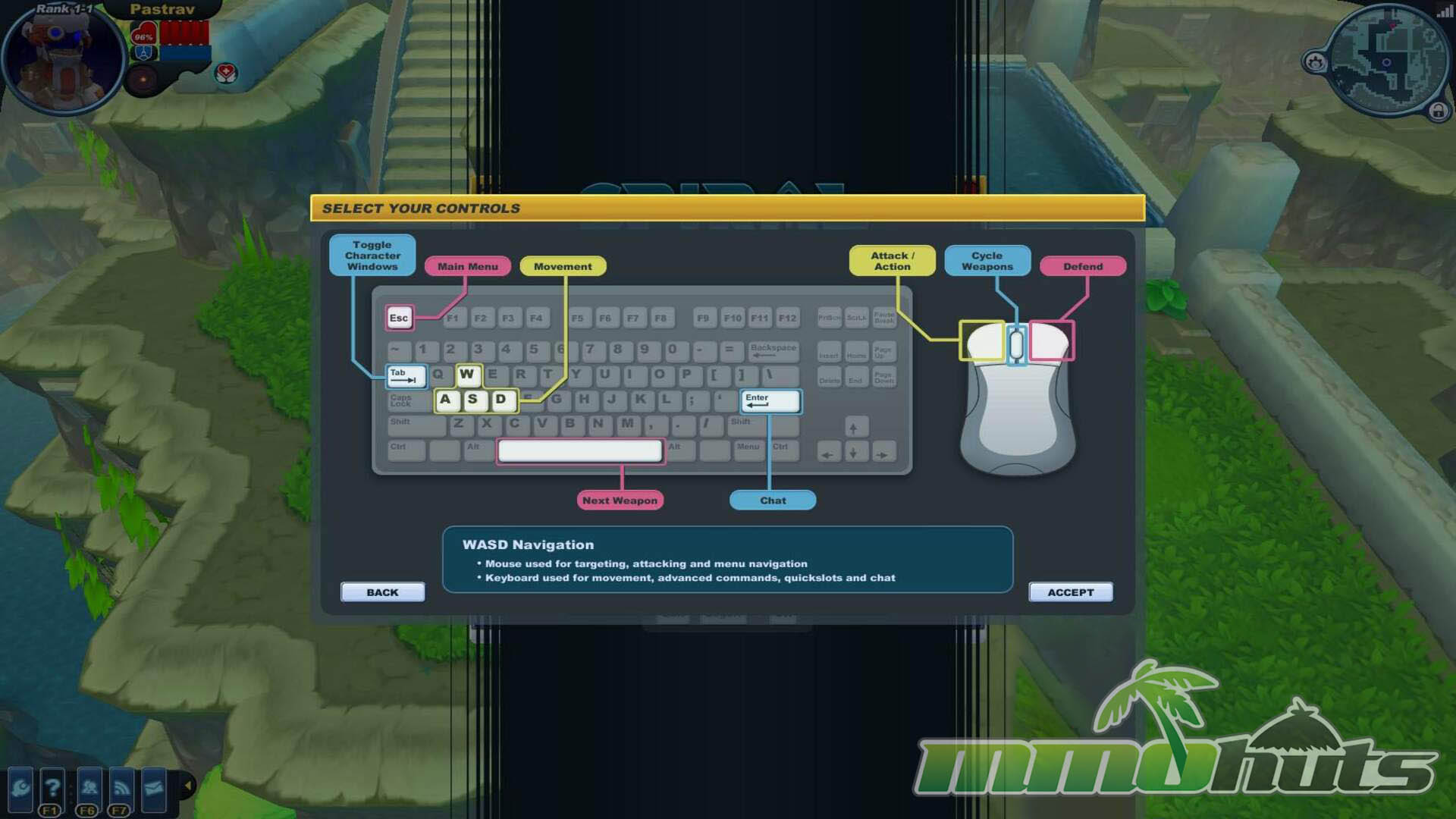
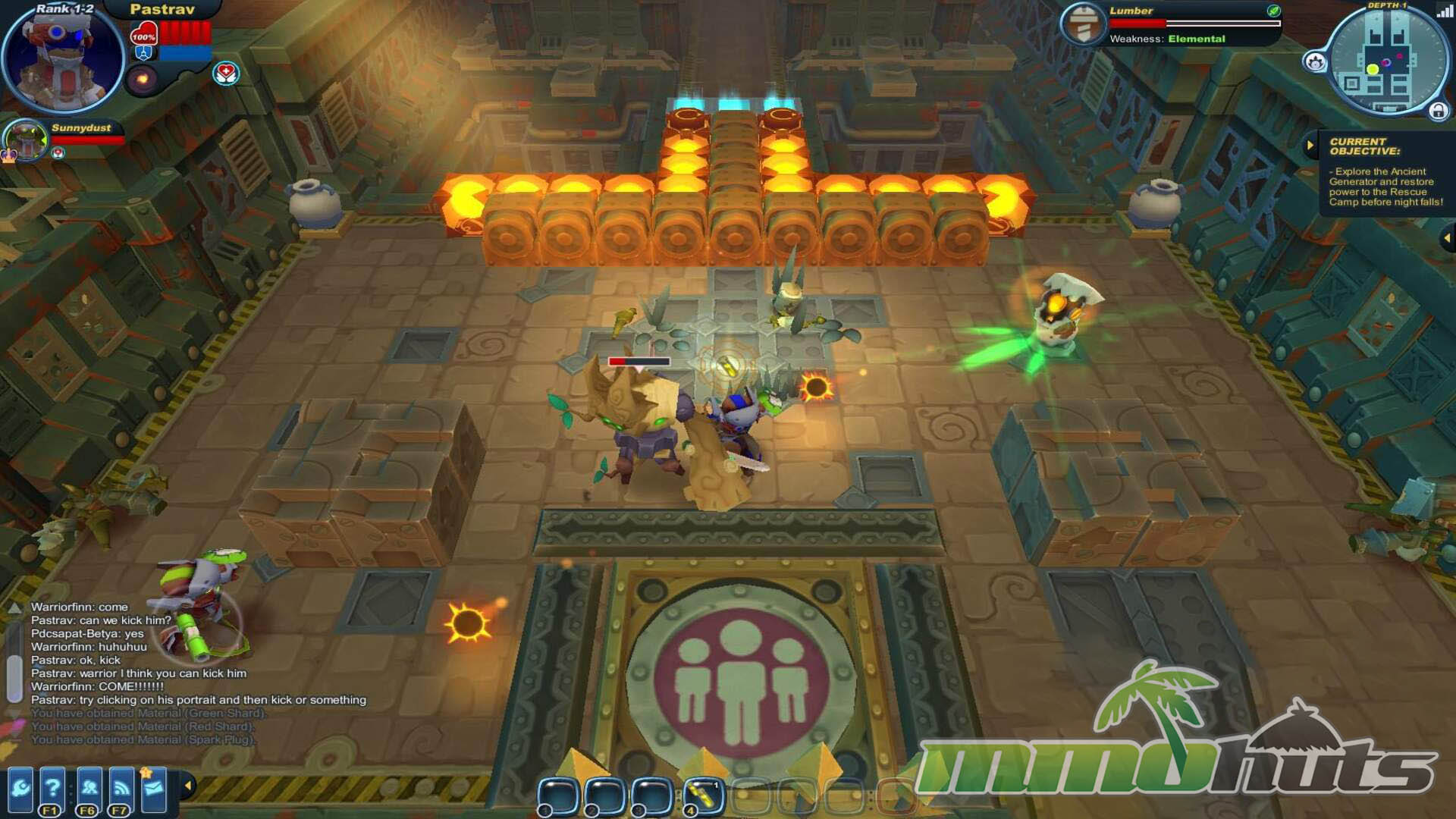
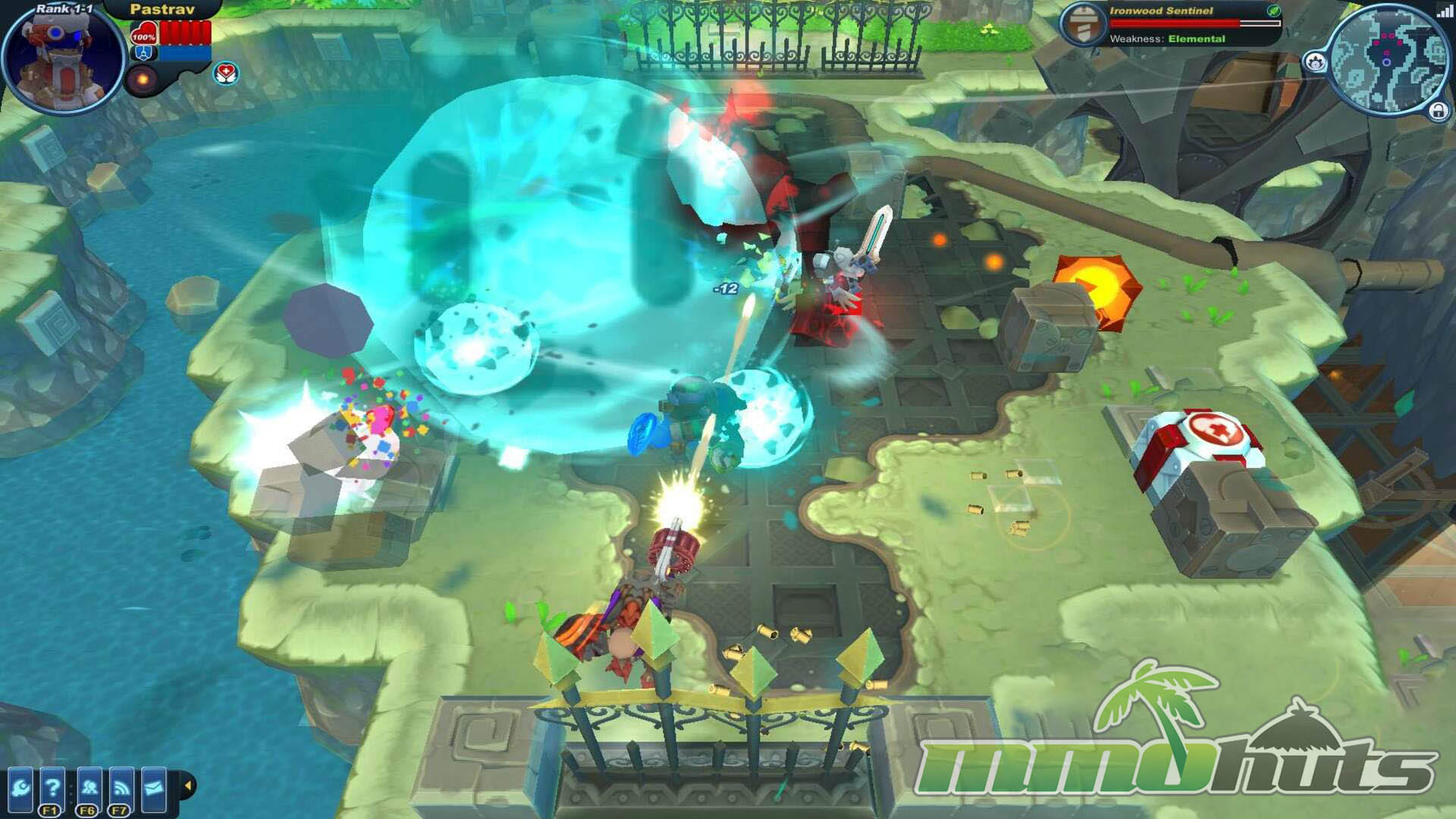
In practice, Spiral Knights plays like a clean, top-down ARPG. Encounters are fast and readable, you kite enemies, manage spacing, and commit to attacks in a way that feels closer to classic action RPG pacing than tab-target MMO combat. Control options are flexible, with support for mouse-only, mouse plus WASD, and custom bindings. The WASD plus mouse setup is especially comfortable, and it makes dodging and repositioning in crowded rooms feel natural.
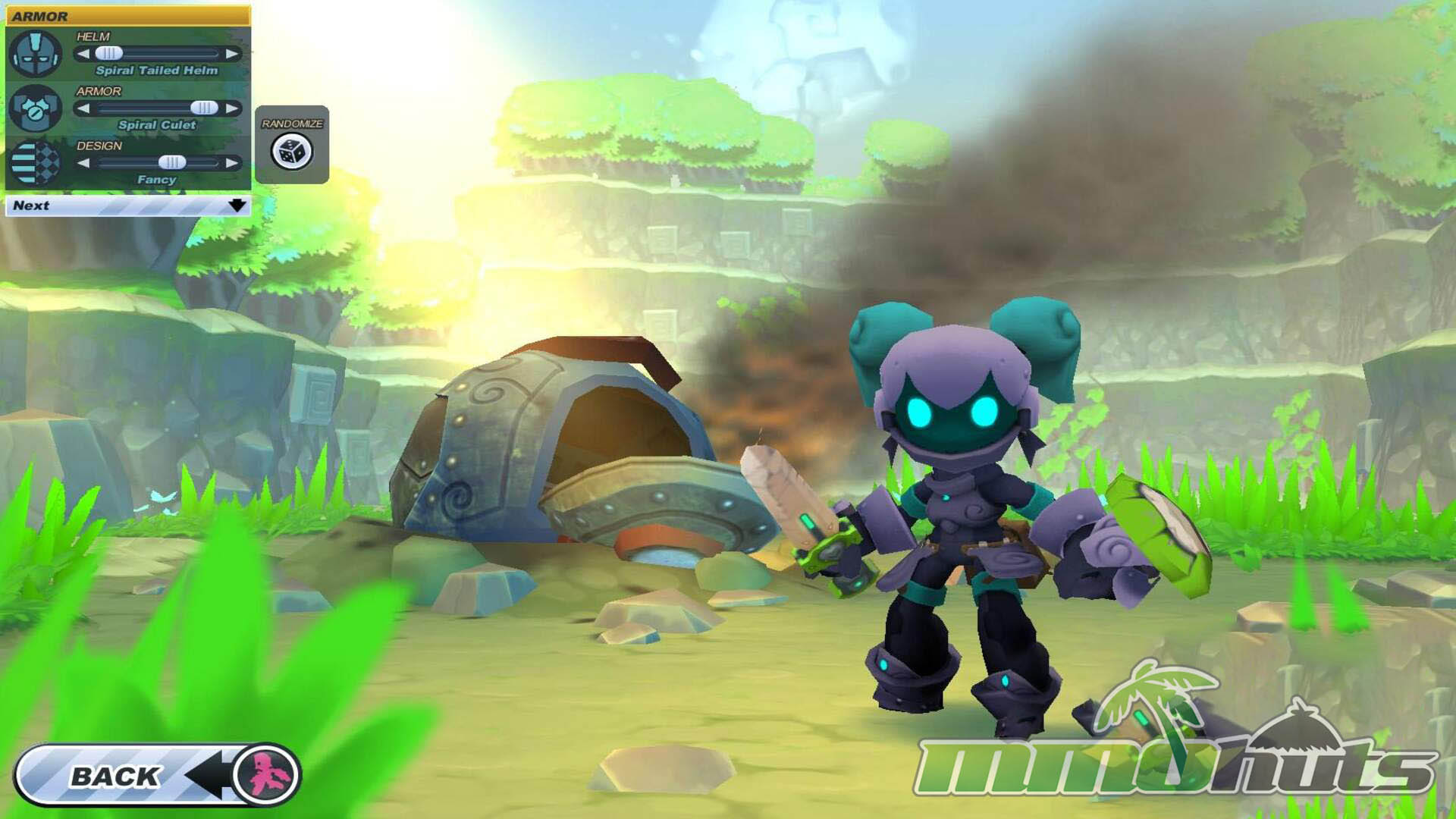
Character creation offers a reasonable set of cosmetic choices, mostly focused on gear, accessories, and color palettes. The overall look is a charming blend of medieval armor silhouettes and sci-fi plating. Importantly, the visuals you start with are temporary, because equipment swaps quickly become the main way your character expresses identity. There is no traditional class selection either. Instead, your “build” is primarily a function of what you equip, and most players describe the three weapon families, Sword, Gun, and Bomb, as the game’s de facto class options.
Gears and Levels
Cradle is not presented as a massive, always-busy world space. Spiral Knights leans hard into instanced content, and that choice shapes nearly everything: you gather in small hubs, then launch into dungeon instances, missions, or PvP. Town hubs cap at 10 players, dungeons are built around groups of 4, and PvP supports up to 12 players in a 6v6 setup. Social systems are present but compact, with guilds supporting 100 members and a friends list limit of 250. The upside is that the game’s best content is designed for small-team coordination, and it usually feels best when you treat it like a cooperative dungeon crawler first and an MMO second.
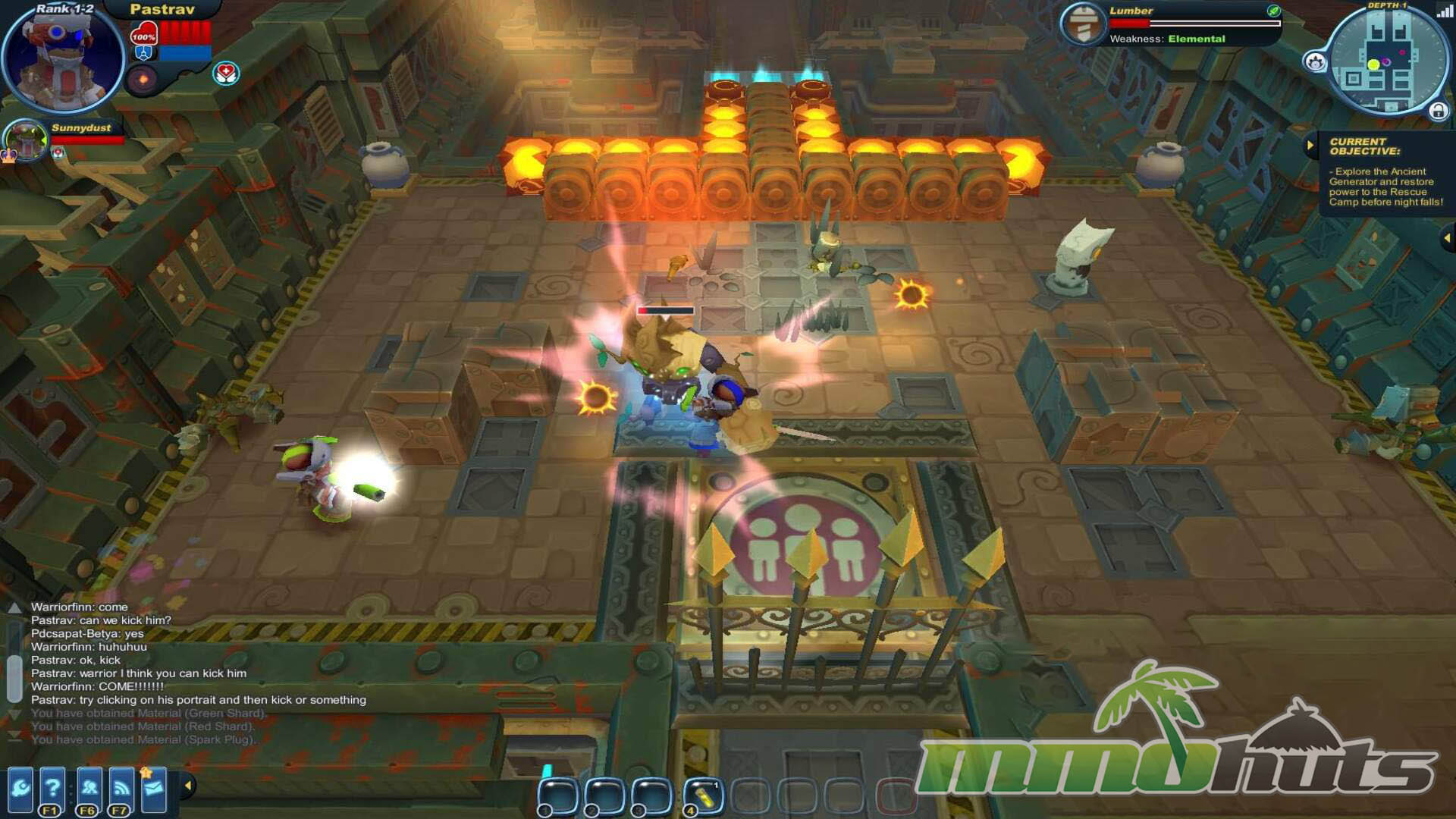
Queueing into dungeons is convenient, since you can start runs from an in-game menu rather than traveling long distances. Dungeon floors mix combat with light environmental puzzles and occasional lore beats. It is friendly to drop-in play: you can leave without harsh penalties, and loot is instanced so each player gets their own rewards. Enemy difficulty scales with party size, and solo runs are viable, though the pacing naturally feels more deliberate without teammates to split pressure and solve rooms quickly.
Completing dungeons awards Heat, which is used as part of the equipment improvement loop. Progression is guided by a mission system, essentially a structured quest chain that pushes you from one rank to the next. That structure is easy to follow, but it can also feel quite linear, especially once you have seen the “main” content and are primarily repeating runs for materials, upgrades, or PvP readiness. Spiral Knights includes over 80 rank missions that function as its primary PvE track, plus daily Prestige missions. There are also Expansion missions, which require cash purchases.
Leveling exists, but it is not the typical MMO skill-tree climb. You gain levels, but the real power growth comes from equipment. If you enjoy loot-driven games, this is a good fit: you hunt for drops, pick up gear through mission rewards or bosses, and steadily refine your loadout. The Forge is the key system here, letting you upgrade existing items to improve their stats, though the process is not always completely safe. Crafting ties into this loop through recipes and materials, with components sourced from dungeon runs or acquired via the Auction House.
The crafting economy is where the game can become grind-heavy. In the later stages, certain materials can take a long time to farm, and a single missing component can turn progress into a repetitive loop of running the same content. At the same time, the cash shop offers ways to obtain materials and other advantages, which can push the overall feel toward pay-to-win, particularly for players who care about optimizing quickly rather than earning everything through play.
PvP
Spiral Knights offers two distinct PvP experiences: Lockdown, a more standard arena mode with objectives, and Blast Network, a more playful bomb-centric mode reminiscent of classic arena puzzle-brawlers.
Lockdown is built around control points and team scoring. Players fight using the usual Spiral Knights toolkit (swords, guns, and bombs), and victory comes from accumulating points through eliminations and holding capture zones. Within Lockdown, players select one of three roles: Strikers, Guardians, and Recons. Each role modifies baseline combat behavior, replacing the default block with a special ability and adjusting certain weapon timings such as charge and attack speed. Strikers gain Striker Dash for a short sprint burst, Guardians get Guardian Shield to protect themselves and nearby allies, and Recons receive Cloaking, which grants temporary invisibility and the ability to mark opponents to reduce their armor.
Match formats include 4v4 and 6v6, with options to queue solo or with a guild group. Death is relatively low-stakes beyond the respawn delay (roughly 8 to 21 seconds), and the system encourages experimentation. Loadouts are a particularly helpful feature, allowing you to save gear setups so you can swap roles and playstyles without constantly re-equipping items manually. Rewards include PvP currency, crowns (which can be converted into cash shop currency), and Lockdown rank points that contribute to leaderboard position.
Blast Network is the more unusual offering, essentially a bomb-only competitive mode where map layout and spacing are as important as reaction speed. It supports Free For All, Random Team, and Guild Team, and each match runs on a timer with four powerups: Bomb Blast Up, Bomb Count Up, Speed Up, and Health Up. Event rewards are tied to the number of entrants. If there are more than four players, first place earns 46.7% of the entrants’ fees and second place receives 23.3%. If there are only four players, the winner takes 70% of the fees and everyone else gets nothing. Entry fees are paid in crowns, which adds a risk-reward element to participating.
Cash Shop
Spiral Knights uses a currency called Energy for its cash shop. Energy and crowns can be exchanged back and forth, which is an important detail because it means dedicated players can access shop items through in-game effort, not only real-money purchases. The shop includes cosmetics, crafting reagents and materials, convenience items, handguns, dungeon keys, and various boosts. Steam also offers content packs, including an armor pack.
Overall, the shop lands in a mixed but not catastrophic place. The ability to interact with the economy using in-game currency helps keep the model from feeling completely locked behind payment. However, lockboxes exist, and players who spend freely can gain noticeable advantages, particularly in PvP where optimized gear matters. Since the main draw for many players is cooperative dungeon crawling rather than competitive play, the monetization is often tolerable, but it is still worth noting for anyone sensitive to power-selling elements.
Final Verdict – Great
Spiral Knights remains an easy recommendation for players who want an MMO-flavored dungeon crawler with responsive combat and a strong co-op rhythm. Its art direction is memorable, its instanced dungeon design stays enjoyable for a long time, and the gear-focused progression gives it the familiar “one more run” pull of ARPGs. PvP is surprisingly substantial for a game in this style, even if monetization can create an edge for paying users. If you enjoy top-down action games and like teaming up with friends for short, repeatable dungeon sessions, Spiral Knights is well worth trying.
Spiral Knights Links
Spiral Knights Official Site
Spiral Knights Steam Page
Spiral Knights Wikipedia
Official Spiral Knights Wiki [Database / Guides]
Spiral Knights Wikia [Database / Guides]
Spiral Knights System Requirements
Minimum Requirements:
Operating System: XP / Vista / 7 / 8
CPU: Intel Pentium 4 1.3 GHz
Video Card: GeForce 5 Series / ATI Radeon 8500
RAM: 512 MB for XP or 1 GB for Vista / 7 / 8
Hard Disk Space: 700 MB
Mac OS X Requirements:
Operating System: OS X Snow Leopard 10.6.3 or later
CPU: 1.3 GHz
Video Card: GeForce 5 Series / ATI Radeon 8500 or better
RAM: 1 GB
Hard Disk Space: 700 MB
Because Spiral Knights can be played in a web browser, it is not particularly demanding on hardware. It is also compatible with Linux.
Spiral Knights Music & Soundtrack
Spiral Knights Additional Information
Developer: Three Rings (Subsidiary of Sega)
Publisher: Sega
Composer(s): Harry Mack
Platforms: Windows / Mac OS X / Linux / Java
Game Engine: Built on Java
Closed Beta: November 12, 2009
Open Beta: April 4, 2011
Steam Release Date: June 14, 2011
Foreign Release:
Spiral Knights is distributed worldwide with no IP blocks through the official website and through Steam.
Development History / Background:
Spiral Knights was created by the San Francisco studio Three Rings Design and built using Java, with Sega handling publishing. Work on the project began in 2007, with Nick Popovich serving as lead designer. The game entered closed beta or alpha testing on November 12, 2009, and later reached full release on April 4, 2011. After launch, Spiral Knights earned recognition in industry circles, including a nomination at the 2011 Game Developers Choice Online Awards, and it has picked up additional awards over time. Its Steam debut on June 14, 2011 helped expand the audience significantly. Because the game is Java-based, it could also be distributed through web portals and played in a browser, leading to availability on sites such as Armor Games and Kongregate. In terms of early growth, Spiral Knights reached over 1 million accounts within 3 months of release and exceeded 3 million within 13 months.