MicroVolts is a lobby-based third person MMO shooter that leans hard into its toy box theme, turning everyday rooms into oversized battlefields. It mixes accessible, arcade-like gunplay with a colorful cast and a loadout system that encourages constant weapon swapping. With seven core weapon categories, a healthy spread of modes, and maps built around playful verticality and cover, it aims to deliver quick matches that feel more like a cartoon brawl than a military sim.
 | Publisher: Masang Soft Playerbase: TBD Type: MMO Release Date: June 9, 2011 (NA/EU) Relaunch Date: September 8, 2023 Pros: +Wide selection of weapon styles. +Many modes and maps to rotate through. +Memorable, well-constructed arenas. Cons: -Cash shop gear can be overly strong. -Occasional ping and stability problems. |

MicroVolts Overview
MicroVolts Surge, commonly referred to simply as MicroVolts, is a bright, anime-styled third person shooter originally from Rock Hippo Productions. Instead of open-world progression, it focuses on match-based action via lobbies, with a lineup of characters, multiple modes, and plenty of customization aimed at both casual drop-in play and players who enjoy tweaking their look and stats.
Controls are immediately familiar for anyone who has played PC shooters, using standard WASD movement and mouse aiming. The hook is perspective and setting, you are a tiny toy soldier fighting across household environments scaled into arenas. That toy-scale framing is not just cosmetic either, because maps are designed around oversized props, tight corners, and layered routes that reward learning sightlines and shortcuts.
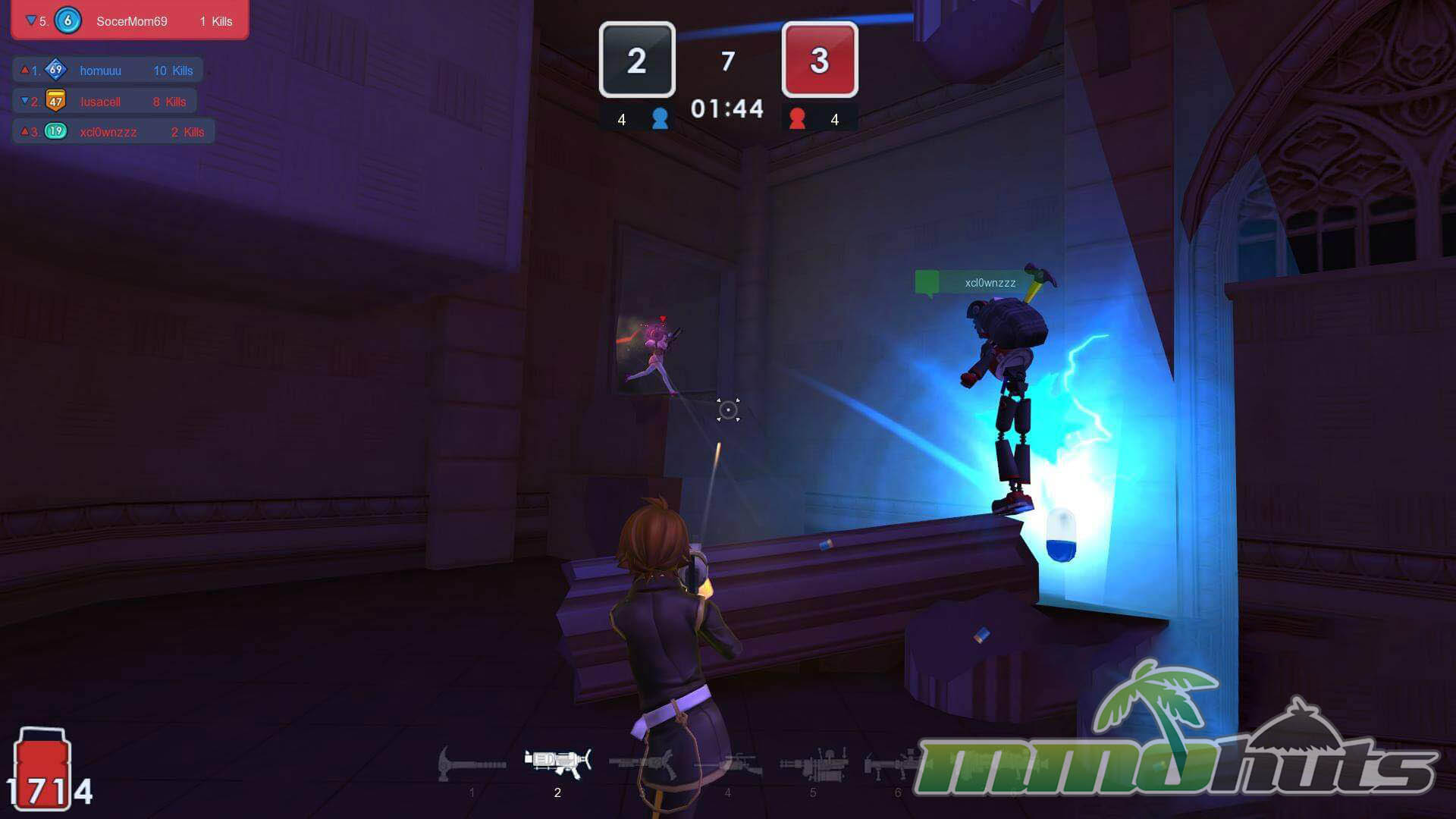
A major differentiator is how flexible the combat toolkit feels in-match. Rather than locking you into a single class loadout, MicroVolts revolves around seven primary weapon types that you can swap between as situations change. Long sightline ahead, shift to a sniper. Tight hallway fight, bring out a shotgun or melee. This constant swapping pushes a reactive playstyle and helps matches stay dynamic even when you are still learning the maps.
MicroVolts Key Features:
- Flexible Weapon Selection – swap between seven weapon categories to respond to different ranges and engagements.
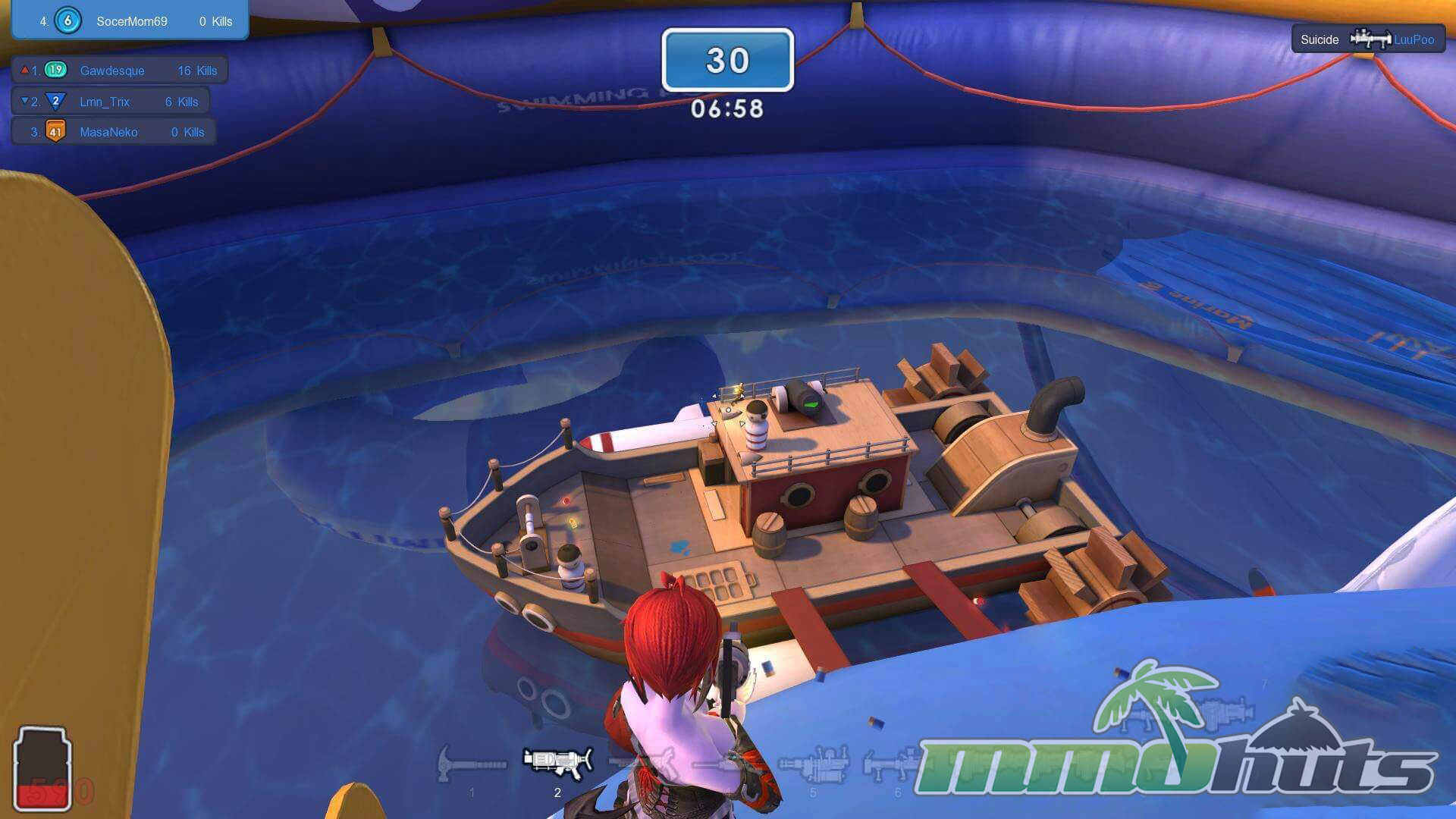
- Toy-Scale Battlefields – fight across playful environments built from everyday objects, viewed from a toy’s perspective.
- Dark Corners and Ambush Routes – use lighting and hidden paths to set up flanks and surprise eliminations.
- Large Map and Mode Pool – rotate through more than twenty maps and roughly a dozen game types.
- Character Customization – mix rented or owned outfits and weapon variants to adjust stats and personalize your look.
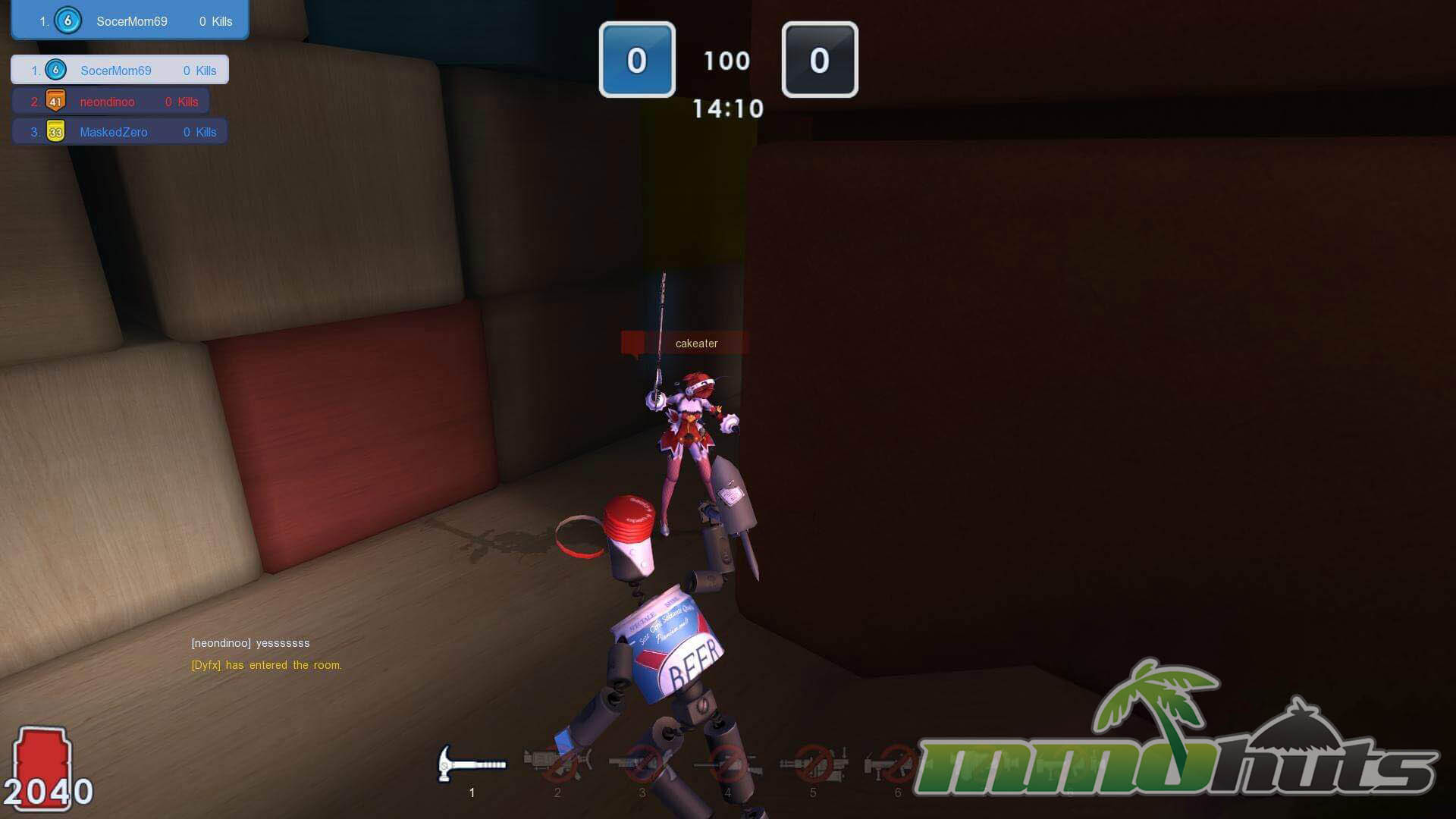
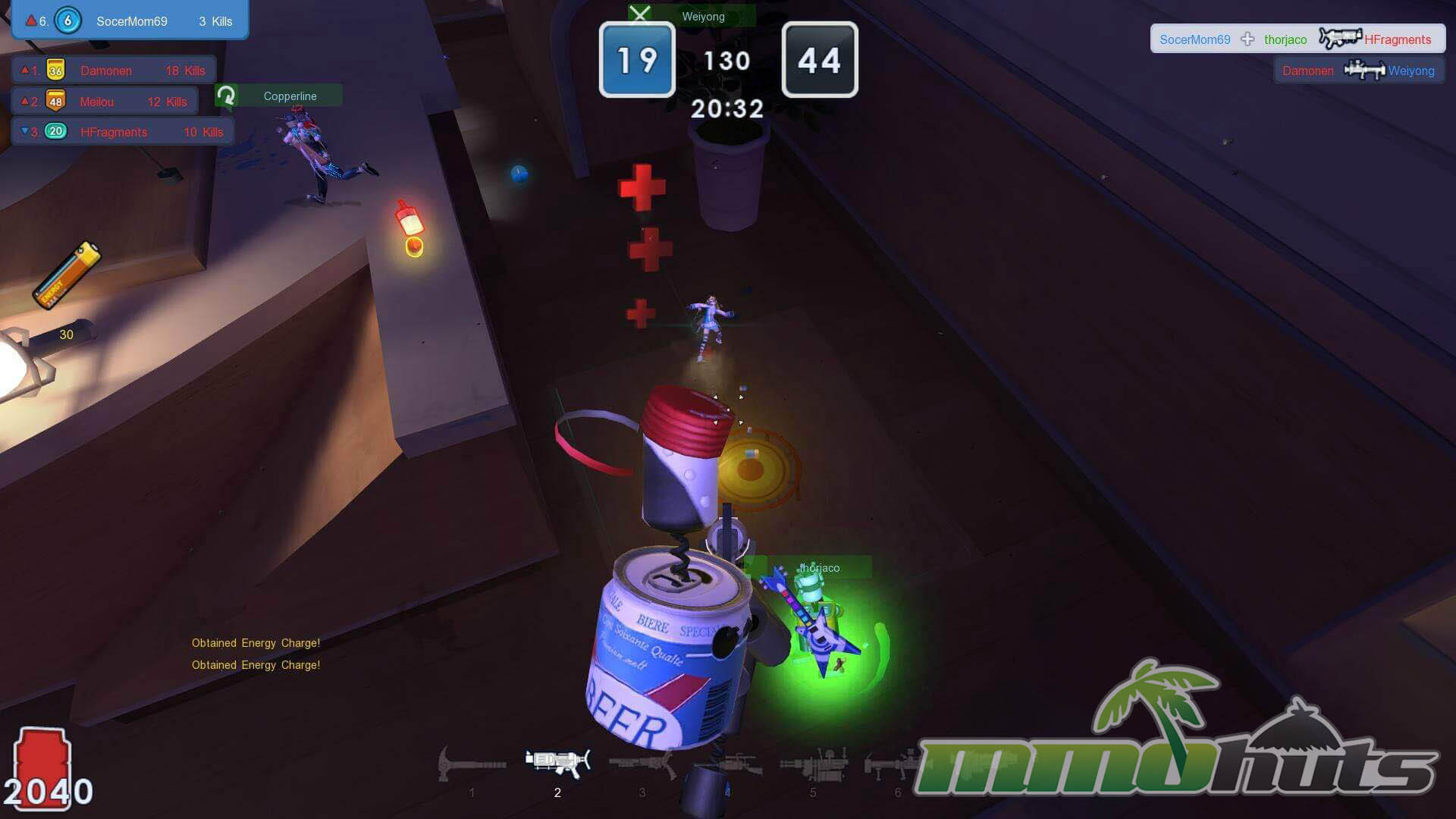
MicroVolts Screenshots







MicroVolts Featured Video

Weapon Types:
- Bazookas – long-range rockets with explosive impact and splash damage. Well-placed shots can pop enemies into the air, and direct hits are devastating.
- Grenade Launchers – lobbed explosives that bounce and detonate either on contact with opponents or shortly after landing. Useful for banking shots off walls and pressuring corners.
- Gatling Guns – a beginner-friendly option thanks to high fire rate and generous ammo. Effective at close to mid range when you can keep tracking targets.
- Melees – close-range tools like hammers, chainsaws, pickaxes, and swords. Extremely threatening up close, but offer no reach at distance.
- Rifles – a reliable general-purpose choice with good accuracy, steady rate of fire, and moderate damage, making it one of the most adaptable options.
- Shotguns – heavy burst damage in tight spaces, balanced by slower firing and reload speeds.
- Snipers – high damage per shot with a slower cadence. In the right hands, they can delete targets from far angles.
MicroVolts Review
MicroVolts is a fast, lobby-driven third person shooter with a bright, toy-themed presentation and an easy-to-learn control scheme. Matches are short and chaotic in a good way, with a low barrier to entry that lets new players contribute quickly while still leaving room for veterans to outplay through movement, positioning, and smart weapon swaps. Visually, it sits in the same broad cartoon neighborhood as games like Team Fortress 2, and mechanically it shares some of the quick, arena-like energy found in S4 League.
It is available free to play for North America and Europe, and the overall structure is straightforward: pick a character, enter a channel, and jump into matches through the lobby system. Progression exists, but the moment-to-moment appeal is primarily about mastering maps and understanding when to change weapons rather than building a long-term RPG-style character.
A Toy Box Conflict
The game sets the stage with a brief intro that frames the action as toys brought to life, but story is not the focus once you are in matches. MicroVolts plays like an arcade shooter first and foremost, and the “why” behind the fighting is mostly an excuse to justify its playful environments and character designs.
Character choice is more about preference and cosmetics than strict roles. Several characters are available right away, with additional options obtainable through MicroPoints (the in-game currency). Differences between characters exist but tend to be subtle, and the larger impact comes from what you equip and how you play. Each character also has their own wardrobe options, which reinforces the collect-and-customize loop that sits alongside the core shooting.
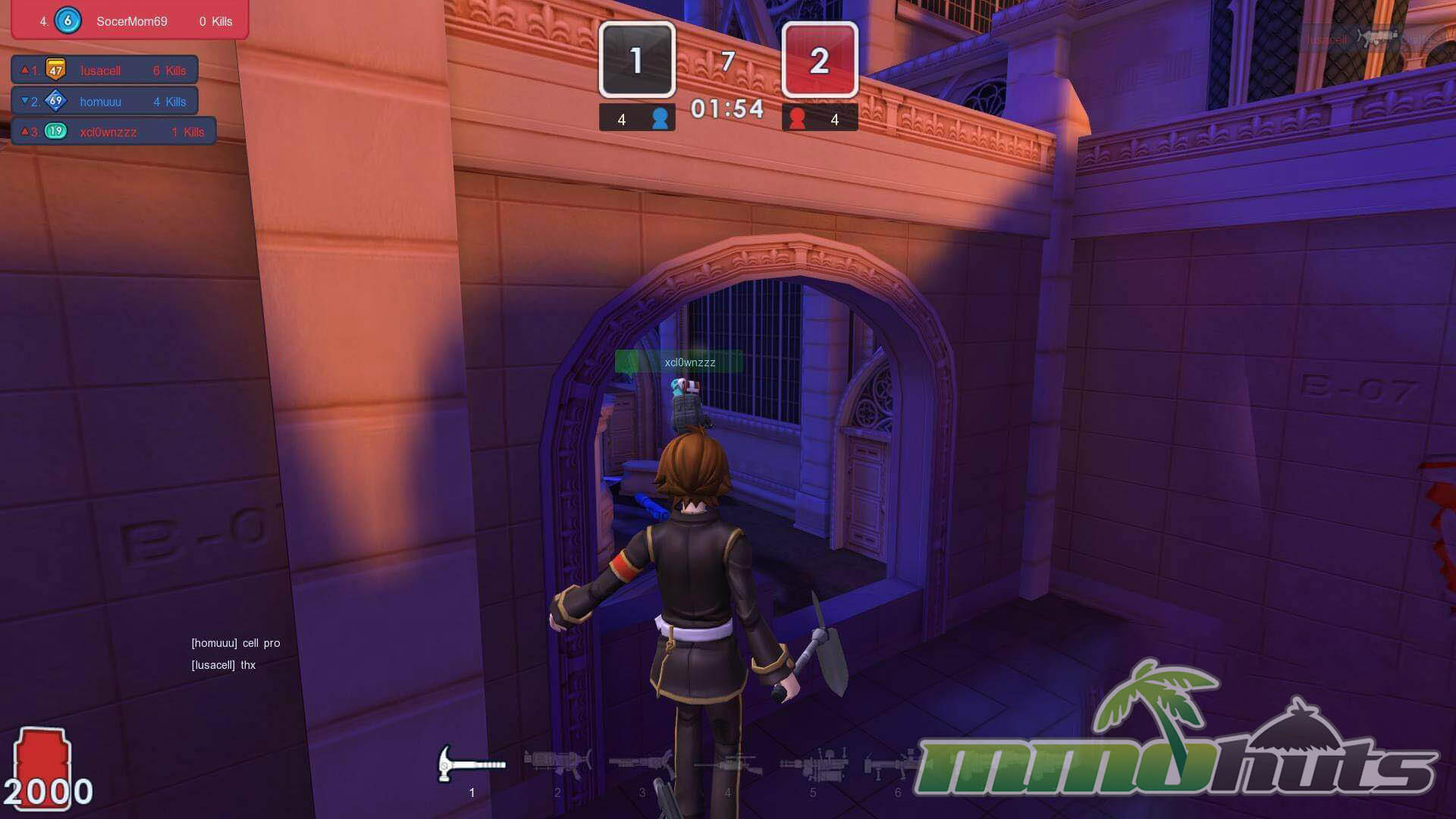
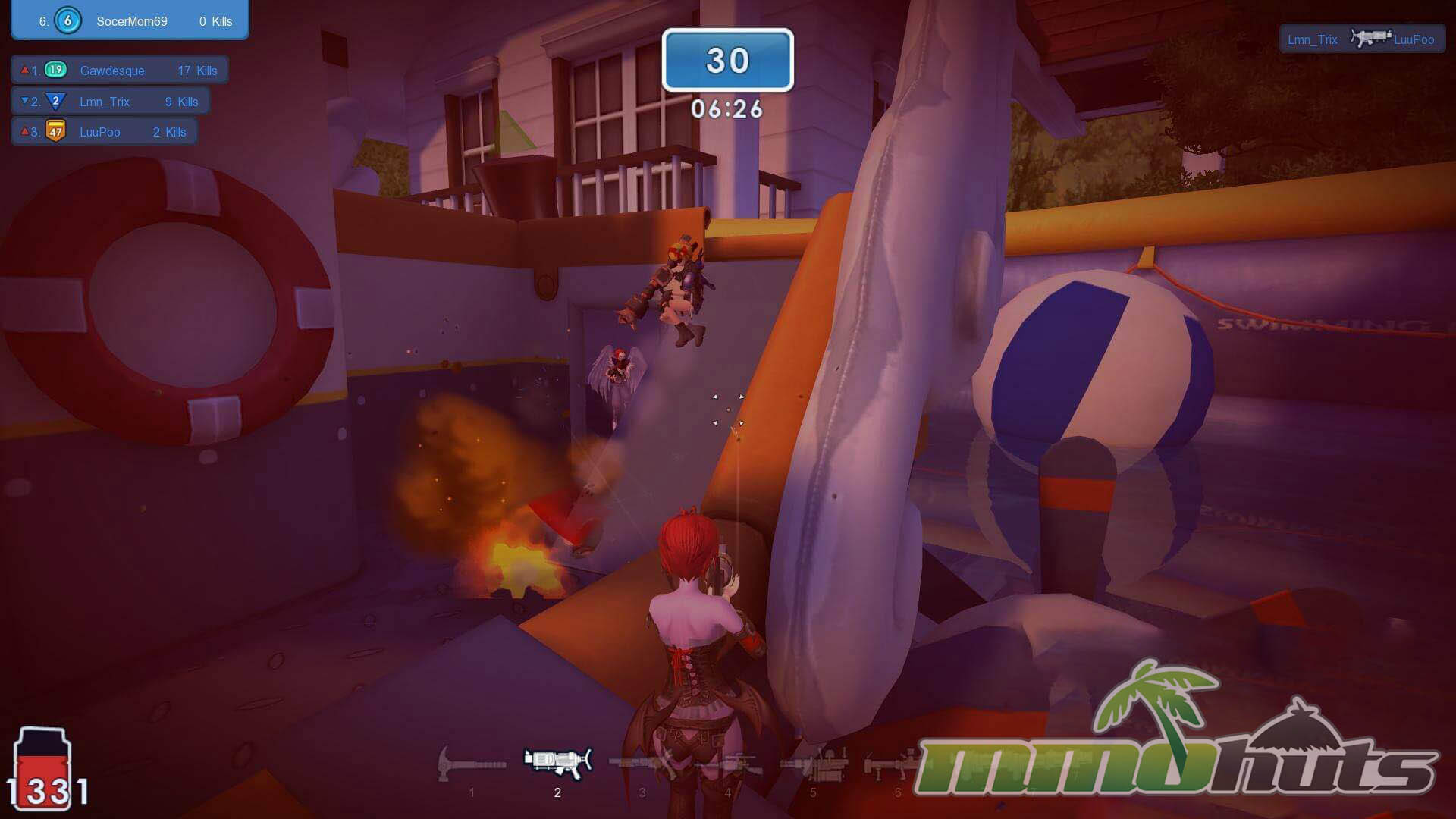
Where MicroVolts really earns its identity is in its arena design and how it supports multiple playstyles in the same match. The maps are built with layers, ramps, drop-offs, and toy-scale props that act as real cover and traversal tools rather than simple decoration. It is common to bounce between elevated routes, duck into tight spaces, and use props to break sightlines, which makes learning each map’s “safe” rotations and dangerous choke points genuinely rewarding.
The weapon system complements this design by letting you access the full set of weapon categories in many modes, encouraging on-the-fly adaptation. Ammo limits, reload pacing, and weapon feel are tuned to keep most choices viable, so success often comes down to picking the right tool at the right time. Some players gravitate toward the Gatling Gun early because it is forgiving, while others settle into the Rifle for its consistent performance across ranges.
How It Feels to Play
Combat is quick, and time-to-kill is low enough that awareness matters. You are rarely “building up” power during a match, you are immediately capable, and the main learning curve is understanding spacing and knowing when to disengage. Because the game is built around swapping weapons frequently, a smart player treats their weapon wheel like a toolkit, not a commitment.
The environments encourage tactical decisions even though the overall pace is arcade-like. Cover is everywhere, and the best players use terrain to control angles, approach fights from unexpected routes, and deny opponents clean lines of fire. In many situations, changing weapons is faster than waiting out a reload, so firefights often become a sequence of quick swaps and repositioning rather than a single extended duel with one gun.
If you are brand new, single player against bots is a practical way to get comfortable with the feel of each weapon type and the rhythm of switching. Anyone with shooter experience should adjust quickly, but players coming from slower, more methodical free-to-play FPS games may be surprised by how aggressively MicroVolts pushes constant movement and close-range brawling.
Smaller Observations
Spawns are generally sensible, but the pace can make them feel harsh, especially on tighter maps or in free-for-all formats. It is possible to re-enter the action under pressure, though the game provides a brief window of protection to prevent immediate spawn deaths. Still, the speed of engagements can make it difficult to reorient, which may frustrate players who prefer slower, information-heavy positioning.
Lighting and shadows are not just visual flair. Some areas and routes are clearly meant for ambushes, and with low durability in many fights, landing the first shot often decides the exchange. Hidden tunnels and darker flanking paths show up across multiple maps, reinforcing a simple but effective stealth-adjacent layer to an otherwise loud, kinetic shooter.
The third person camera fits the game’s movement and theme, giving you a wider read on corners and nearby threats than a first person view would. Shooter veterans may need a short adjustment period, but it suits the “toy in a giant room” concept well and helps sell the scale of the environments.
MicroVolts also rewards aggression by dropping small health vials on kills. Because anyone can pick them up, controlling the immediate area after a frag matters. Players who consistently scoop up these drops can stay active longer and swing momentum, especially in clustered fights.
Network performance can be inconsistent. In testing, latency spikes and occasional match drops can occur, and ping may feel higher than expected compared to other online shooters. The game includes both European and United States servers, and you can switch between them by choosing channels, which can help depending on where you are playing from.
Cosmetics, Stats, and the Shop
MicroPoints earned through matches can be spent on outfits and gear, and customization is a meaningful part of the game’s long-term loop. Clothing options are extensive for certain characters, and beyond appearance, items can provide small stat changes such as movement speed bonuses. Weapons also have store variants that tweak performance values like damage or clip size.
This is where the game’s free-to-play friction shows. Some weapon variants are simply better than others, which can create a noticeable advantage for players who have access to stronger items. Most equipment can be rented for limited durations (such as 7 or 30 days) or purchased permanently. Renting is far more approachable for new players, while permanent ownership tends to require a large time investment.
Conclusion
MicroVolts succeeds when you treat it as a fast, playful arena shooter: jump in, experiment with weapons, and enjoy learning maps that are built with real personality. The freedom to swap between seven weapon types at any moment keeps matches from feeling one-note, and it lets you shape your own approach, whether you prefer ranged picks, close-quarters bursts, or explosive pressure.
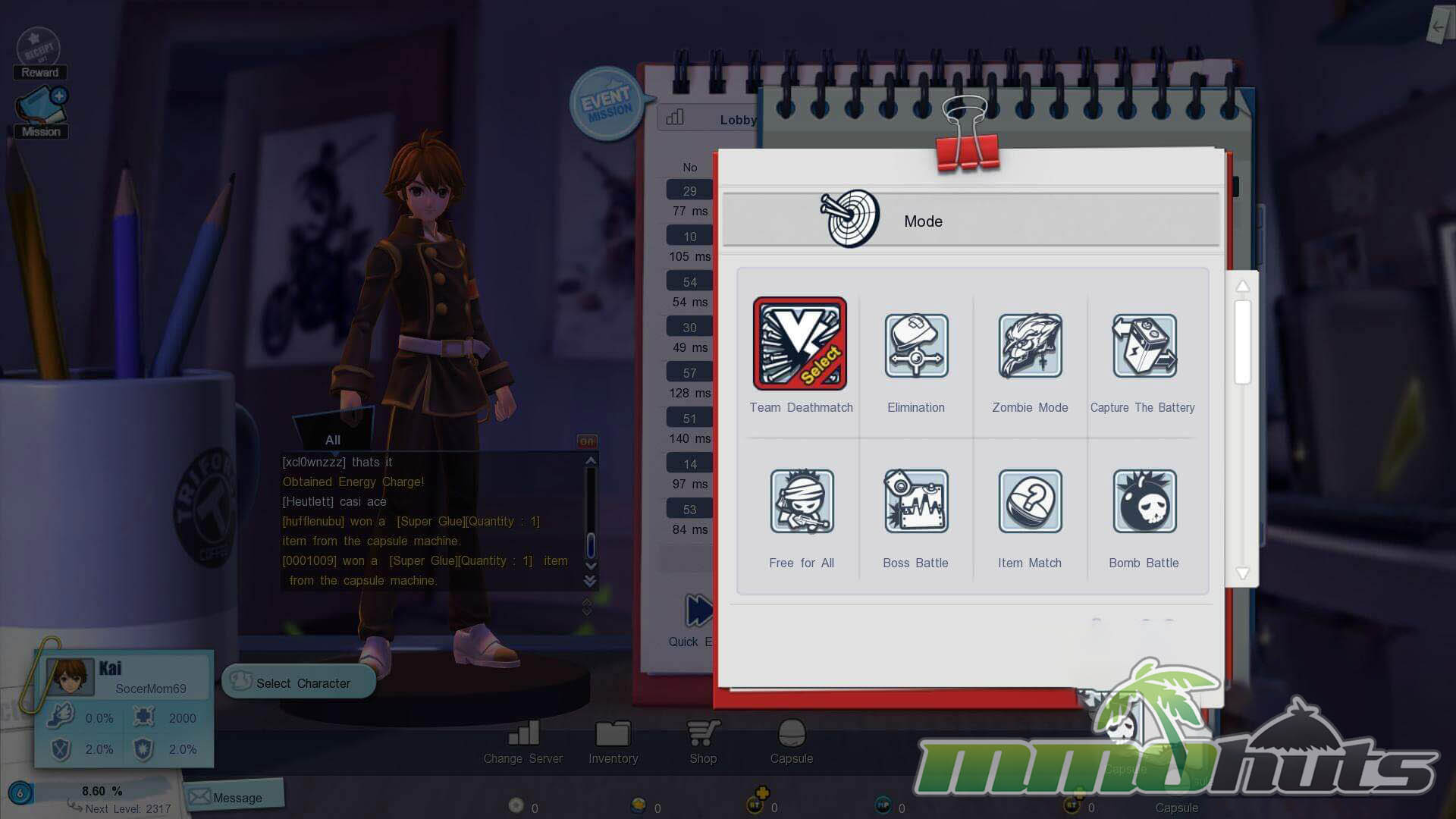
The current content pool is much broader than what the game launched with, offering more than twenty maps and over a dozen modes. Team-focused formats tend to highlight the game’s strengths, but free-for-all can be a fun stress test of movement and awareness. Popular options typically include Team Deathmatch and Elimination (a round-based team mode without respawns until the round ends), and there is also a zombie mode for players who enjoy PvE-style chaos. Custom lobbies that restrict weapon types (sniper-only, melee-only, and similar) are a nice bonus that helps keep sessions fresh.
Long-term progression is relatively light. Ranking up mostly provides status and unlock access to some cosmetic elements, so players looking for deep meta-progression may find the loop repetitive over time. For those who primarily want quick matches and expressive customization, the core formula holds up well.
Final Verdict – Great
Even with occasional latency hiccups and the disadvantages that can come from stronger shop items, MicroVolts remains an easy game to enjoy. The controls are approachable, the toy-themed arenas are consistently creative, and the constant weapon swapping keeps the action lively. If you want a third person MMO shooter that prioritizes fast matches, colorful presentation, and map-driven gameplay variety, MicroVolts is still worth stepping into.
MicroVolts Links
MicroVolts Official Site
MicroVolts Wikipedia
MicroVolts Surge Wikia (Database / Guides)
MicroVolts System Requirements
Minimum Requirements:
Operating System: Windows XP / Vista / 7 / 8
CPU: Intel Pentium 4 2 GHz or AMD equivalent
Video Card: GeForce 7600 GT / ATI x800XT or better
RAM: 1 GB
Hard Disk Space: 2GB
Recommended Requirements:
Operating System: Windows XP / Vista / 7 / 8
CPU: Intel Dual Core 2.4 GHz or better
Video Card: GeForce 8600GT / ATI X1650XT or better
RAM: 2 GB
Hard Disk Space: 2GB
MicroVolts Music & Soundtrack
MicroVolts Additional Information
Developer: NQ Games
Closed Beta Date: August 12, 2010 (First closed beta). January 28, 2011 (Second closed beta)
Open Beta Date: March 10, 2011
Foreign Release:
Taiwan: November, 2009 (Published by Insrea)
Thailand: June 1, 2010 (Published by TOT)
Japan: April 30, 2011 (Published by Gungho)
Indonesia: July 10, 2012 (Published by Kingslaim)
Global: Masang Soft
MicroVolts is known as H.A.V.E Online Asia. MicroVolts is the European / American name of the game.
Development History / Background:
MicroVolts was created by the Korean studio NQ Games. Despite being developed in Korea, it was only briefly available in South Korea through Gravity Interactive (Warp Portal). In terms of tone and design sensibilities, it clearly draws from Western-styled, character-driven shooters, and its colorful, cartoon-like approach invites comparisons to Valve’s Team Fortress 2. For North America and Europe, the game originally launched through Rock Hippo Productions on June 9, 2012, and later also appeared on Steam on July 5, 2012. Masang Soft announced intentions to relaunch the game in 2019, though there were no further updates as of early 2020.