Wurm Online is a medieval sandbox MMO built around player agency rather than scripted theme park content. It drops you into a massive, persistent world and asks you to make your own goals, whether that means gathering and crafting for trade, mastering a long list of skills, founding a village with friends, or claiming a quiet stretch of wilderness and shaping it into a home. The core appeal is simple: almost everything that feels “civilized” in Wurm exists because a player made it happen.
 | Publisher: Code Club AB Playerbase: Low Type: MMO Sandbox Release Date: December 12, 2012 Pros: +A truly persistent world shaped by players. +Welcoming, knowledgeable community. +Deep skill and profession progression. Cons: -Steep, menu-heavy interface. -Outdated visuals. -Slow-burn pace that demands real time investment. |

Wurm Online Overview
Wurm Online is a medieval sandbox MMO developed by Code Club AB, created by friends Markus “Notch” Persson and Rolf Jansson. Its defining trait is that the world’s “man-made” footprint is largely player-driven. Settlements, roads, tunnels, marketplaces, and other infrastructure typically begin as a player project, then expand as others contribute. The land itself is huge and varied, with dense forests, mountains, deserts, and colder regions that make travel and planning feel meaningful.
In practice, Wurm Online plays like a long-term simulation of frontier life. You gather raw materials (wood, ore, stone, crops) and refine them through crafting, then use the results to build, trade, or support larger community projects. Progression is heavily skill-based: repeating actions increases your competence, which gradually unlocks better results and more options for how you interact with the environment. That loop supports many playstyles, from quiet crafting and animal husbandry to exploration and hunting.
For players who want conflict, Wurm also supports kingdom-based PvP on dedicated servers, where territorial control and organized warfare become major motivations. Whether you prefer cooperative settlement building or competitive conquest, the game’s main promise is the same: you set the agenda, and the world remembers what players have changed.
Wurm Online Key Features:
- Persistent sandbox world – a long-running world where building, crafting, exploration, and conflict are driven by player choices.
- Village forging – establish a settlement wherever you can survive, then grow it into a community hub with other players.
- Huge skill list – a broad progression system with many skills to train, supporting specialized roles and long-term goals.
- Large scale warfare – opt into PvP servers and align with a kingdom to fight for land and influence.
- Terraforming – reshape terrain with tools, from digging and mining to flattening land and carving routes through the wilderness.
Wurm Online Screenshots
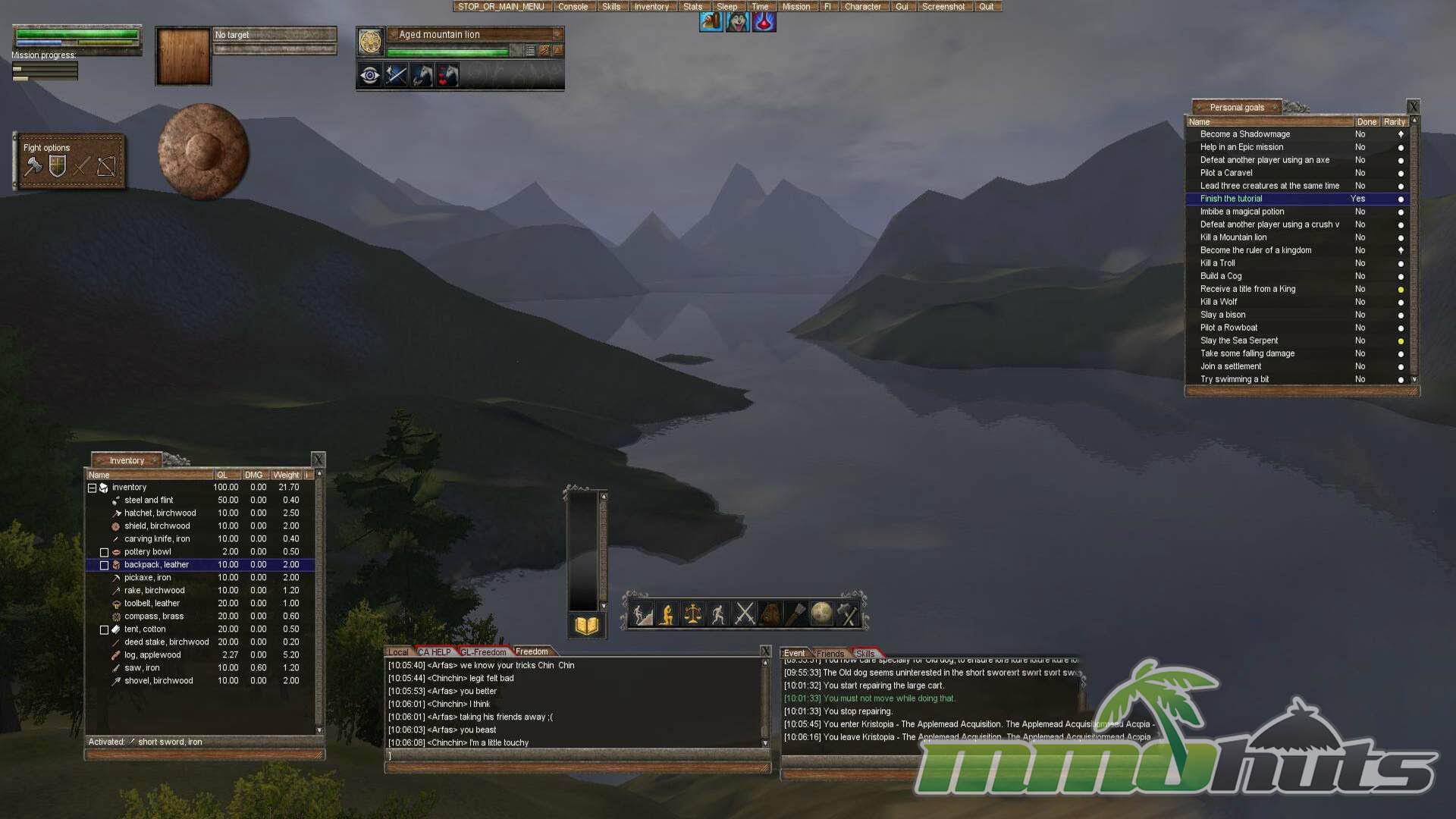
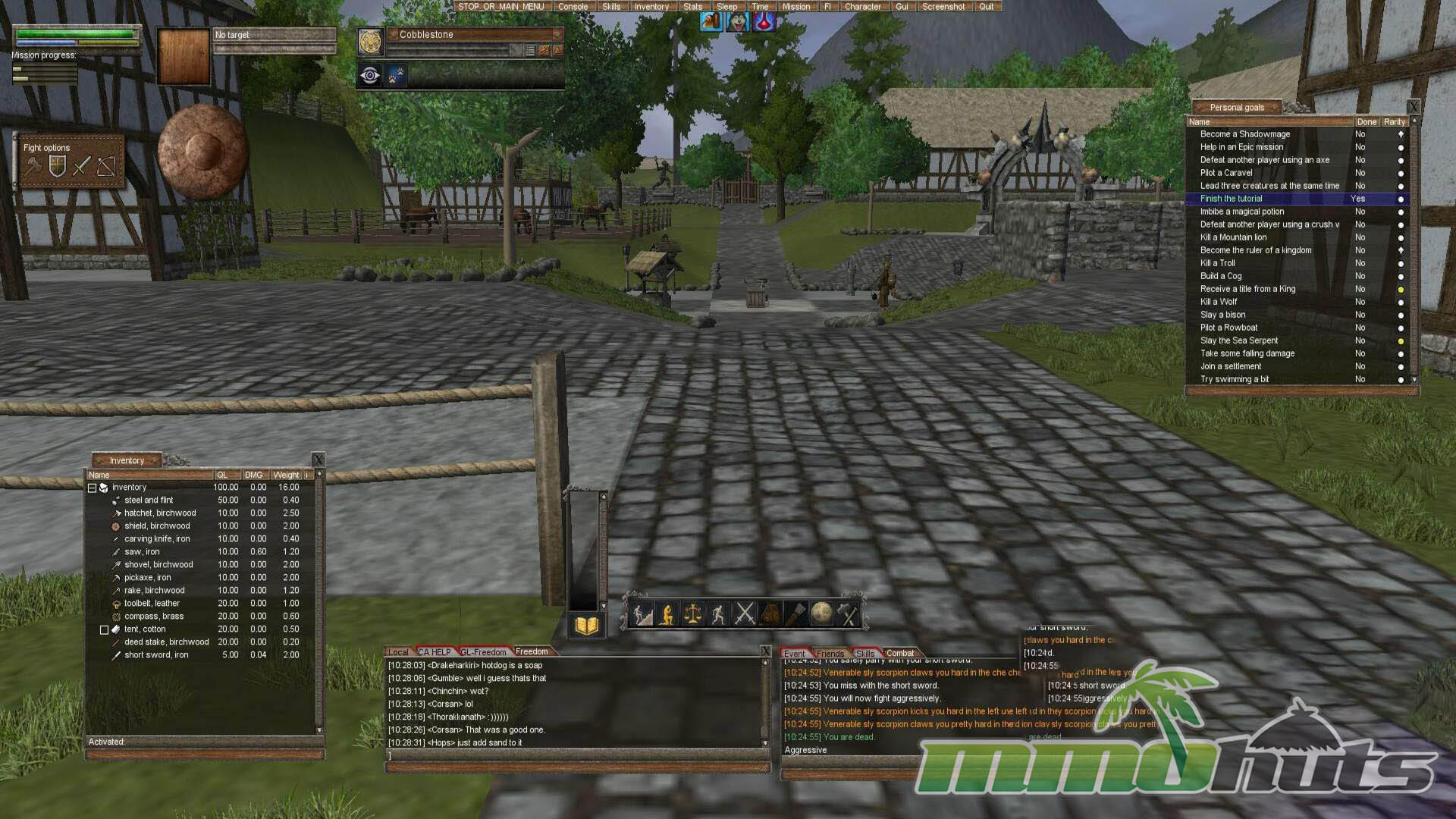
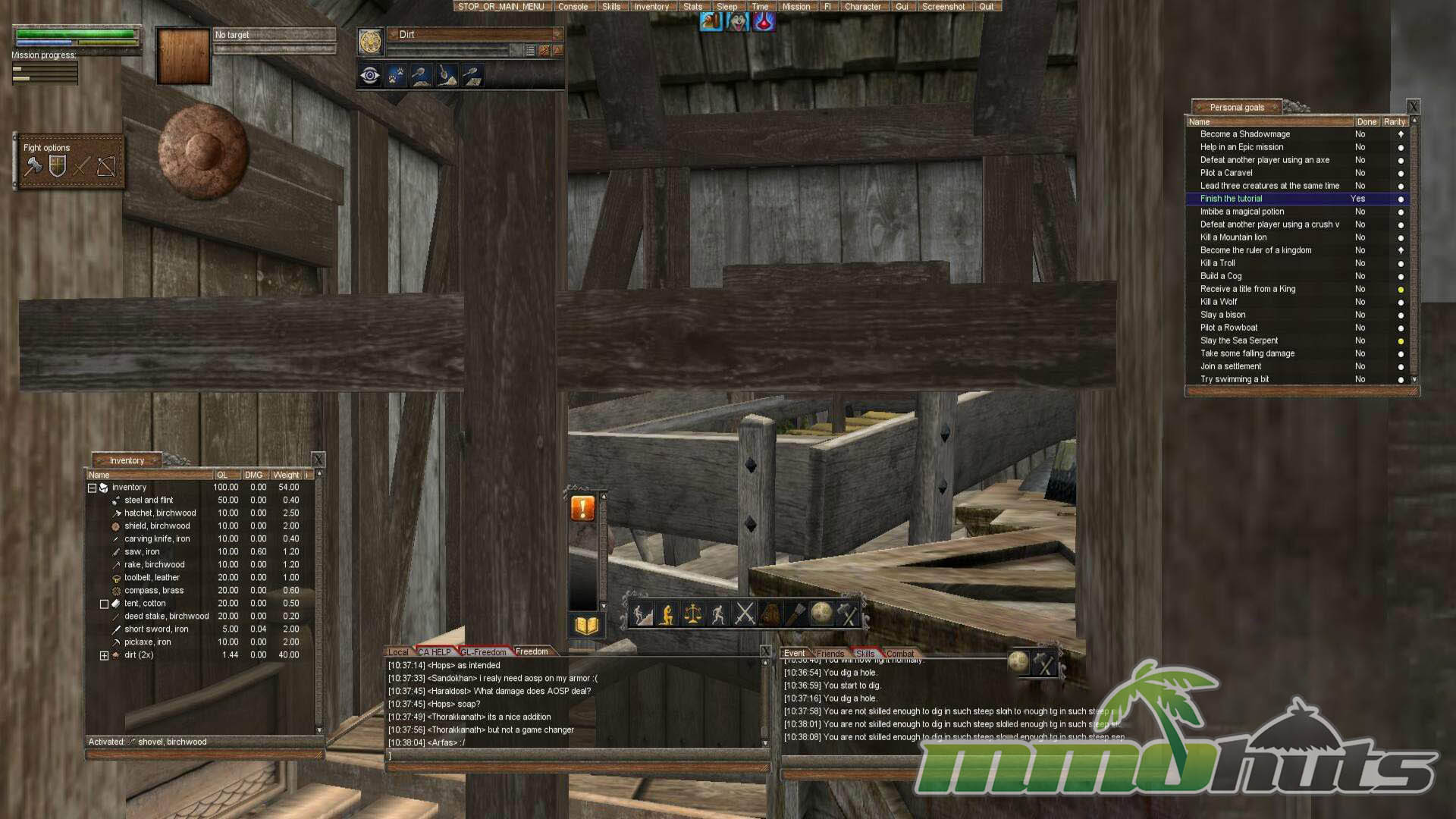
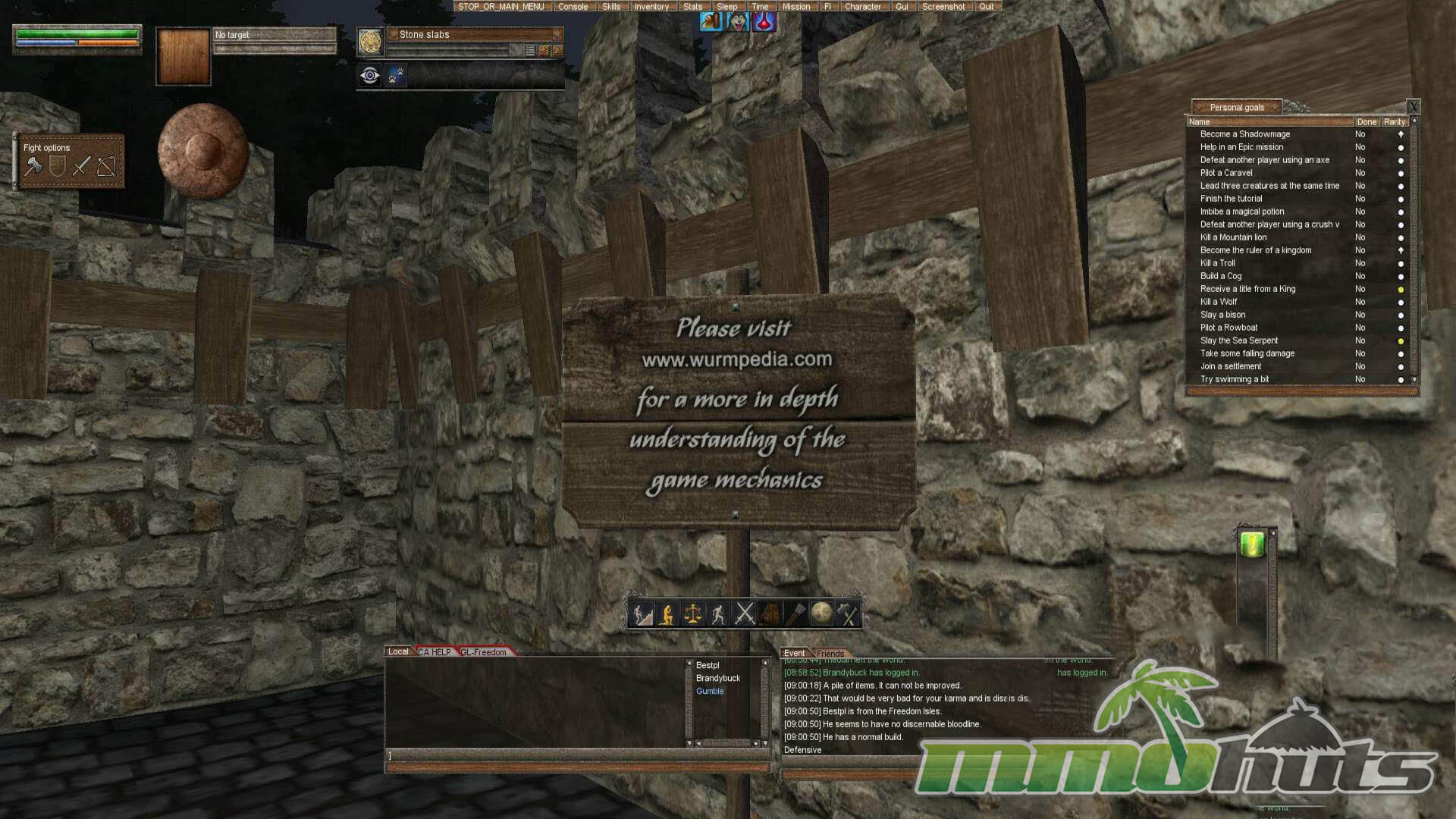
Wurm Online Featured Video

Wurm Online Review
Wurm Online occupies a rare niche among MMOs. It is not trying to deliver a guided story campaign, a rapid gear treadmill, or a theme park tour of quests. Instead, it leans hard into the idea of a living sandbox where commitment and curiosity matter more than fast rewards. It is also important to set expectations early: Wurm is deliberately slow, unusually demanding, and absolutely willing to let new players feel lost until they learn its language.
That said, if you enjoy games where your progress is measured in projects completed and skills earned over time, Wurm Online can feel uniquely satisfying. Its strongest moments come from taking a blank stretch of wilderness and turning it into something that lasts, then seeing other players interact with what you built days, weeks, or months later.
A learning curve with sharp edges
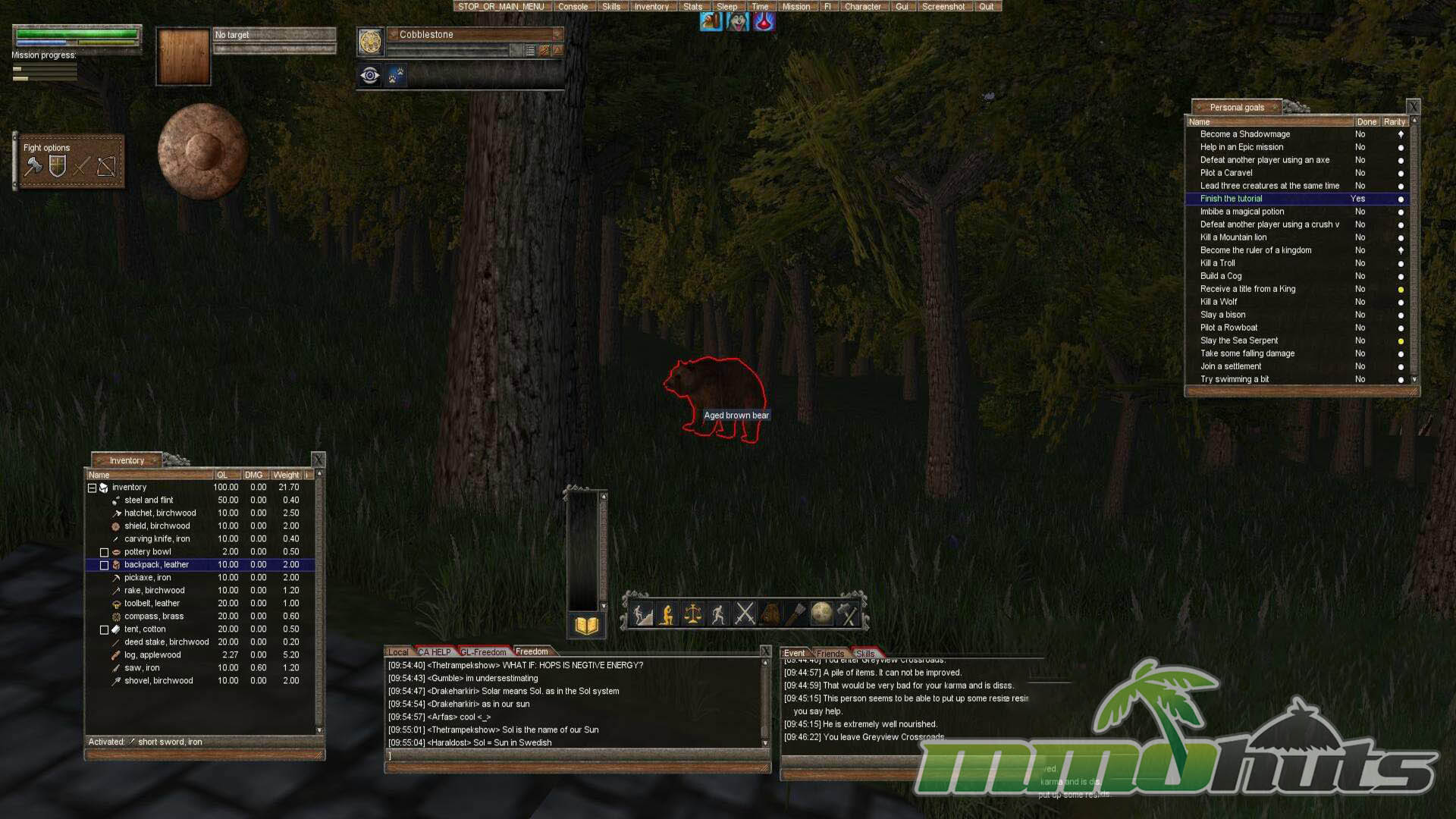
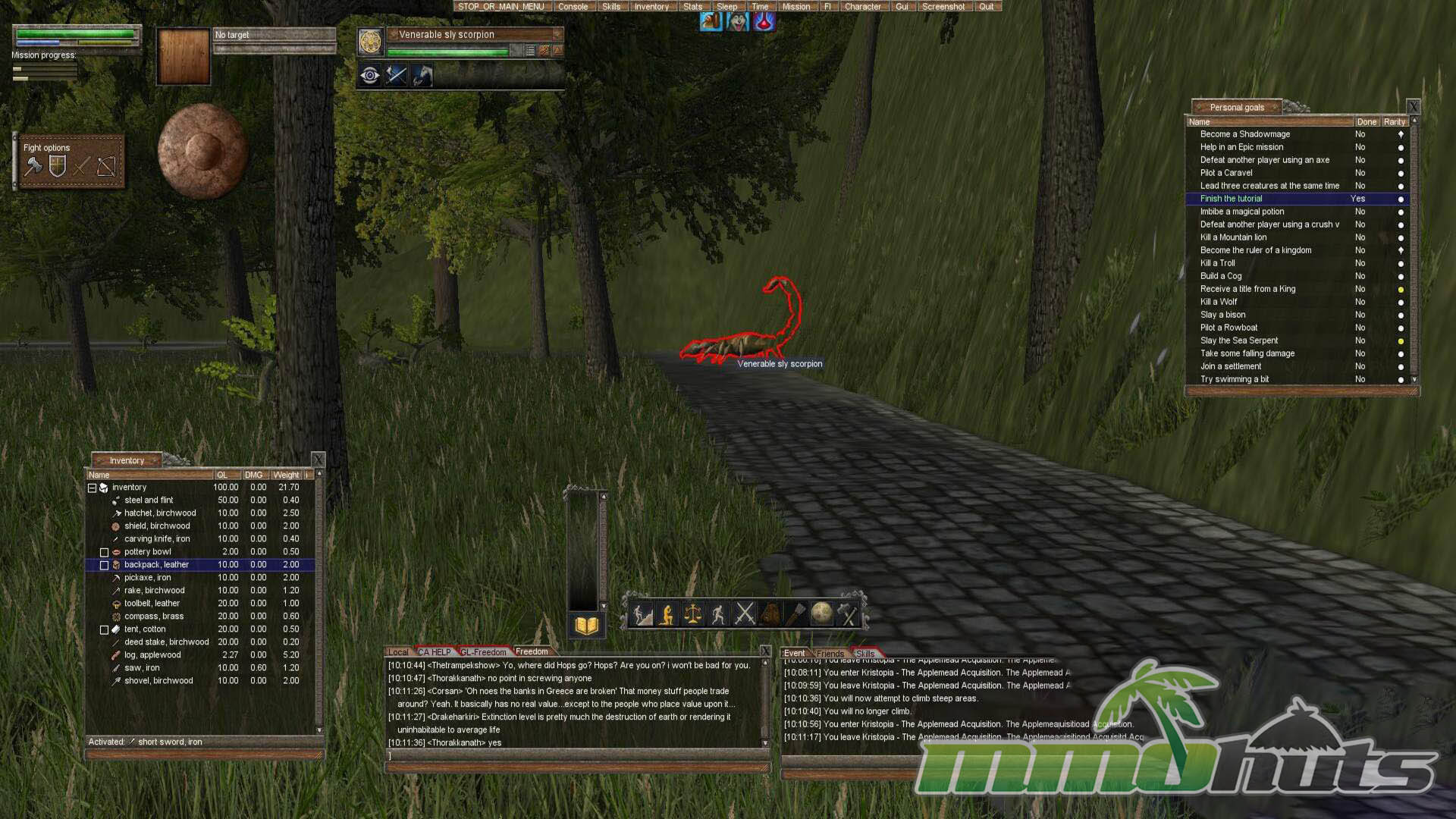
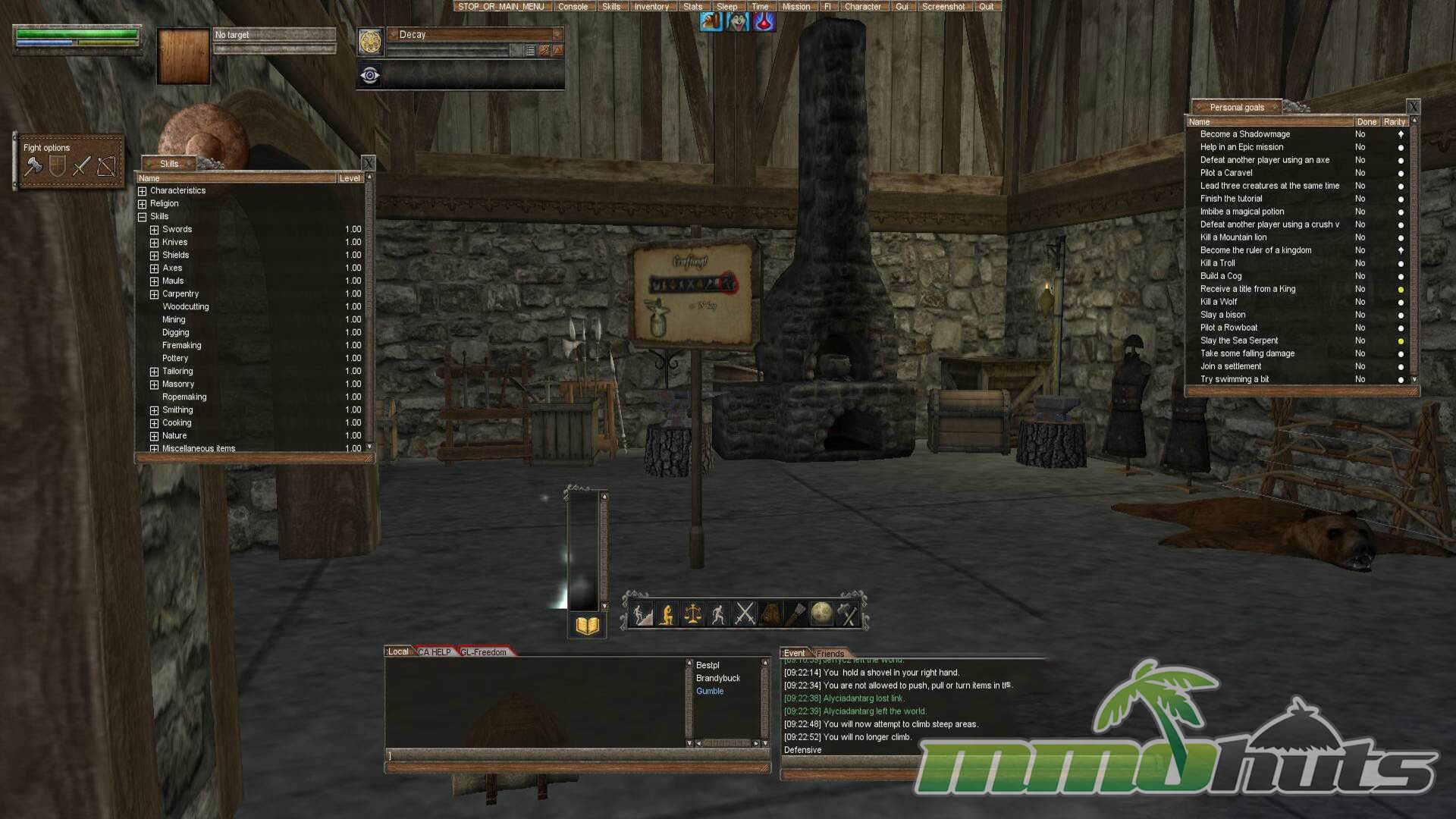
The biggest hurdle is the interface and general usability. Wurm Online is not a “jump in and swing a sword” kind of MMO. Many actions are performed through menus and contextual options, and it can take a while to understand what the game expects from you. Even basic tasks often involve selecting the right tool, choosing the correct action from a right-click list, and confirming you are using the proper item or active skill.
The tutorial helps, and it is worth taking seriously. Players who skim it often end up frustrated, not because the game is unfair, but because Wurm’s logic is different from modern MMO conventions. Once you internalize the workflow, the controls become manageable, but the early hours are undeniably a test of patience.
Character customization exists, but it is not a central focus. You can adjust your look with simple options, yet Wurm’s identity is far more about what you do than how you appear. The game tends to treat your avatar as a tool for interacting with a complex world simulation, not as a fashion model for social hubs.
Old visuals, strong atmosphere
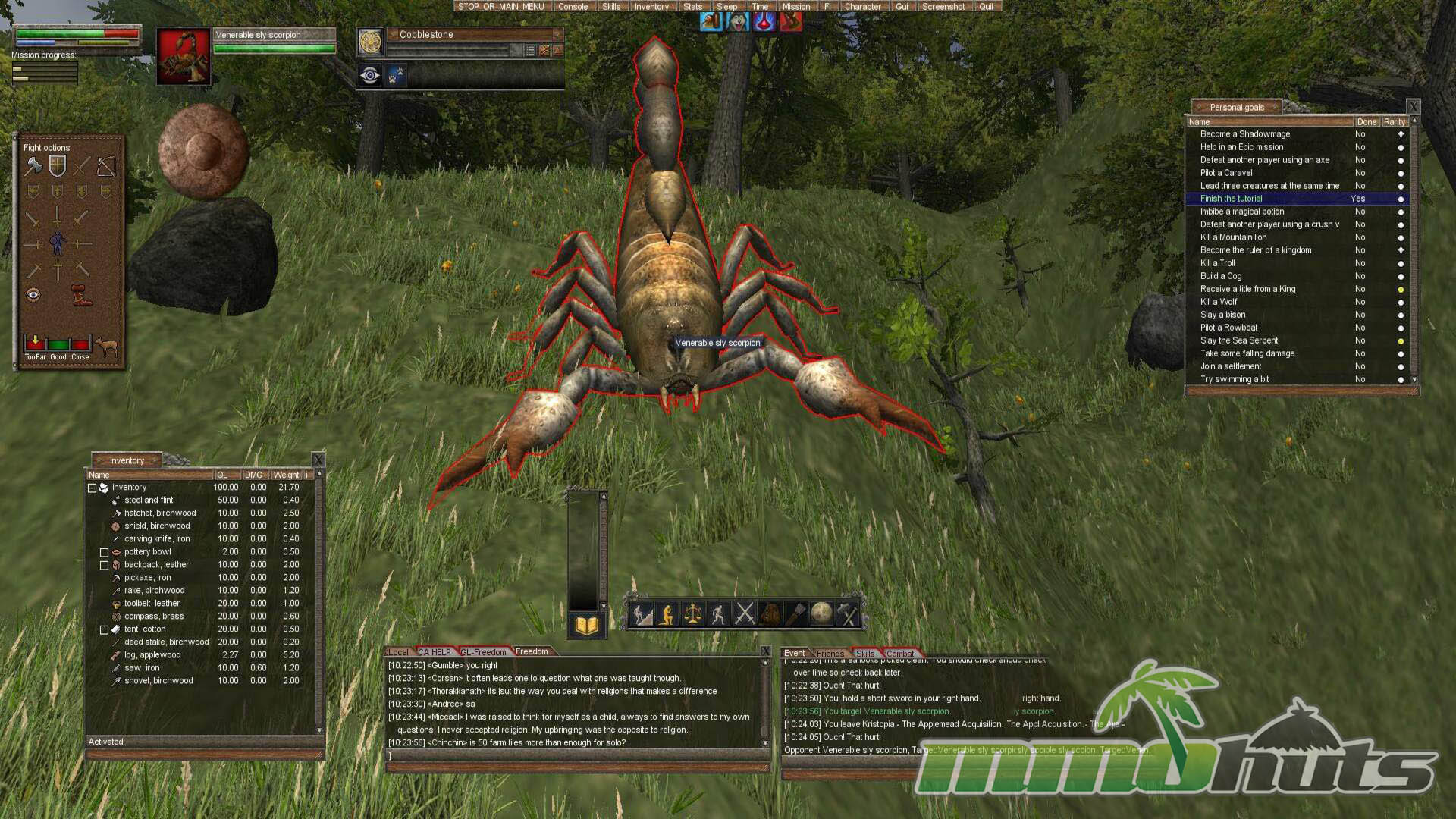
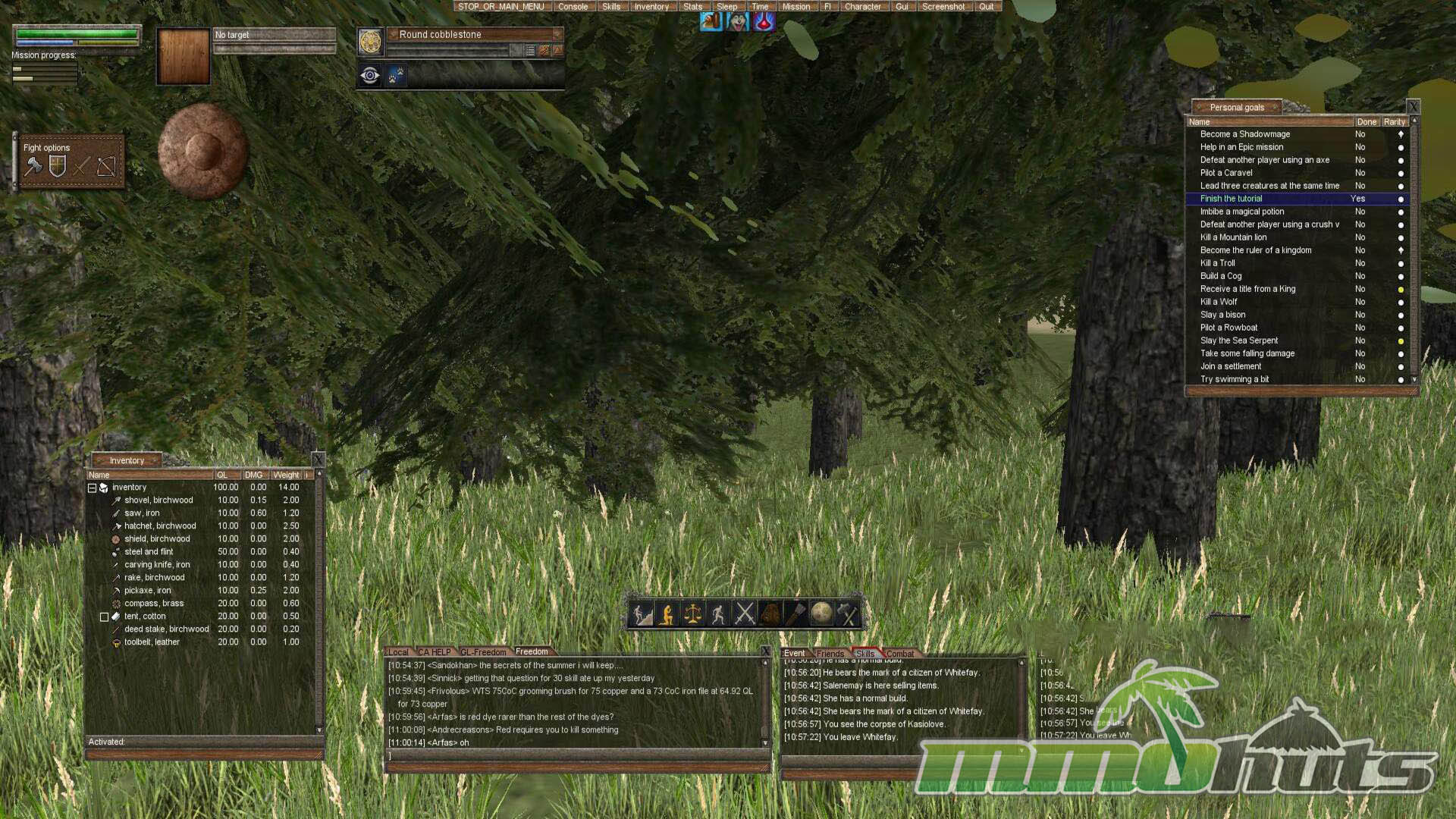
Wurm Online shows its age visually, and players accustomed to modern presentation may struggle with the dated models and environments. However, the world still has a strong sense of place, helped by systems that make it feel less static than it looks. The environment cycles through seasons, weather changes over time, and the day and night rhythm affects how you travel and explore. Living things also have a sense of time passing, which contributes to the impression that the world exists beyond your immediate actions.
Exploration is one of Wurm’s quiet strengths. Dense vegetation limits sightlines, hills and mountains create natural landmarks, and the unknown beyond the next treeline can feel genuinely intimidating. In many MMOs, exploration is a scenic detour between quest hubs. In Wurm, it can be a meaningful part of survival and planning, especially when you are deciding where to settle or what routes are safe to travel.
The soundtrack complements that mood well. Music tends to be calm and reflective, which fits the game’s slower pace and helps long crafting sessions or long walks through wilderness feel less monotonous.
Choosing a home server
After the tutorial, you choose where to begin your real journey. Wurm Online is split across multiple servers, and they are not just “channels.” Each server has its own geography and history, shaped by the communities living there. Some servers focus on PvE, while others support PvP and kingdom conflict as a normal part of the experience.
That structure matters because Wurm’s core promise, that players build almost everything, becomes clearer when you see how different servers develop. A newer server can feel like untouched frontier, while an older one may have established highways, public projects, and settlements that reflect years of player labor.
The freedom is both the appeal and the challenge. Wurm rarely tells you what your next objective should be. For some players, that feels liberating. For others, it can feel directionless. The game works best when you set a personal plan, even a small one, such as improving a single skill, building a workshop, or scouting a place to claim as your own.
Skills and progression
Wurm’s progression is built around a huge set of skills, and it rewards repetition and specialization. Perform an action and you gain skill in it, and many tasks also influence broader attributes tied to your character. Over time, higher skill levels translate into better results, improved efficiency, and new interactions with materials and the environment.
The system encourages long-term thinking. Most skills begin at 1.00 and can be trained up to 100, and reaching meaningful milestones takes persistence. The upside is that progress feels earned, and players can develop distinct roles within a village or trade network. The downside is that anyone expecting rapid leveling or quick mastery will likely bounce off the pacing.

Combat exists, but it is not the main event
Combat in Wurm Online is functional rather than flashy. It is not the centerpiece of the experience, and it can feel simplistic compared to action-focused MMOs. Encounters often come down to preparation: your gear quality, your relevant skills, and whether you are facing something far above your current ability.
Because building a capable fighter takes time, the early game is more about avoiding danger than seeking it. Later, there is variety in weapons and the option to engage in more serious conflict, especially on PvP servers where kingdom warfare is part of the game’s identity. Still, Wurm’s most memorable stories tend to come from survival, construction, and community projects rather than moment-to-moment combat mechanics.
Building a life, not just a house
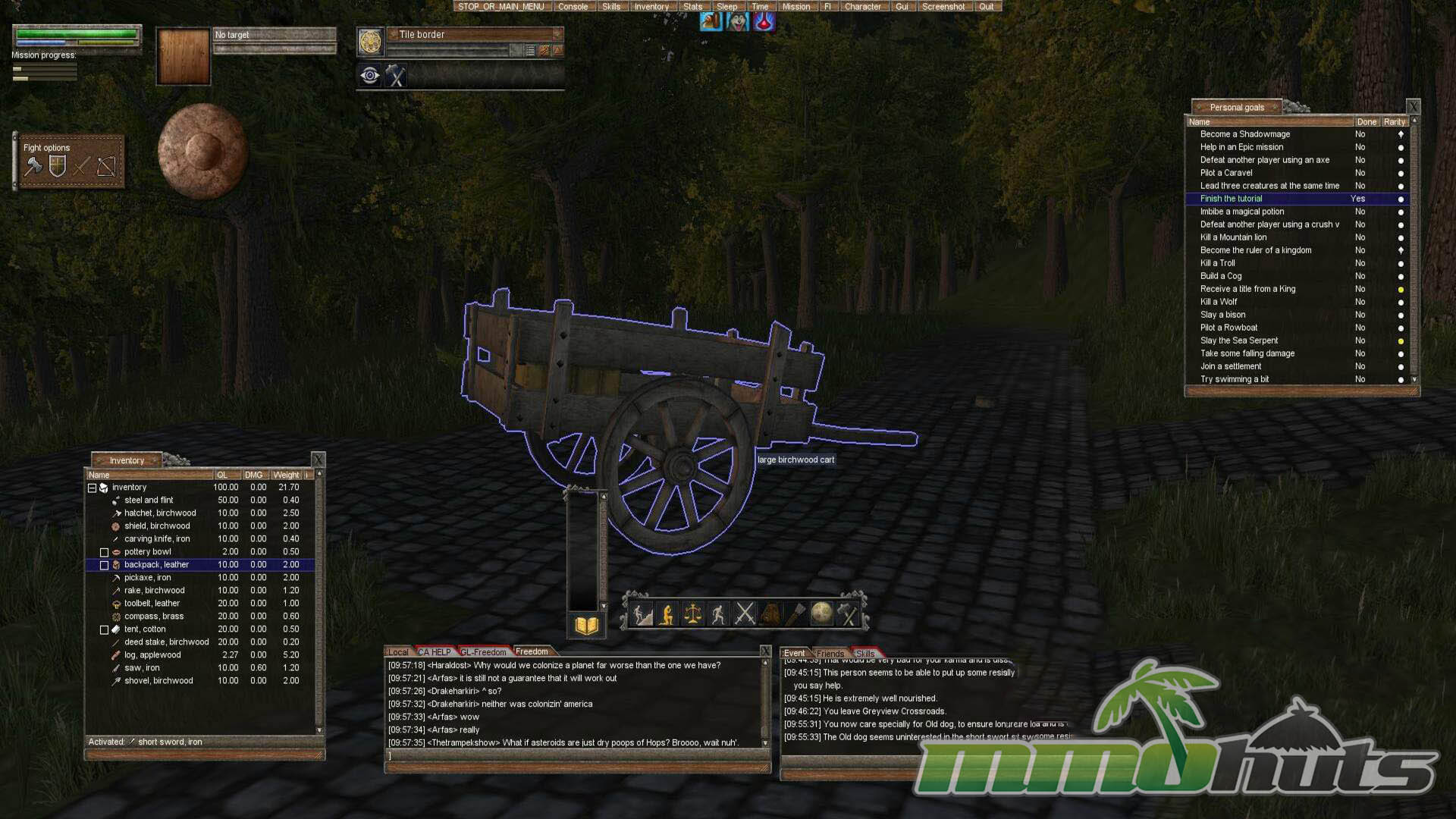
Housing and settlement building are where Wurm Online truly separates itself from many MMORPGs. Instead of placing a pre-made home in a restricted neighborhood, you can claim land and build where it makes sense for your goals. The scale of the world means there is usually space to find a location that feels like yours, whether you want a coastal workshop, a forest homestead, or a mountain stronghold.
Construction is also grounded in the crafting economy. You do not simply “buy” a building, you source materials, refine them, and assemble the structure piece by piece. The process is slow, sometimes painstaking, but it creates a strong sense of ownership. When you finish your first serious build, it feels like a real accomplishment because you can trace every wall back to the work that produced it. For new builders, external guides are extremely helpful, since planning mistakes can cost significant time.

A small but committed community
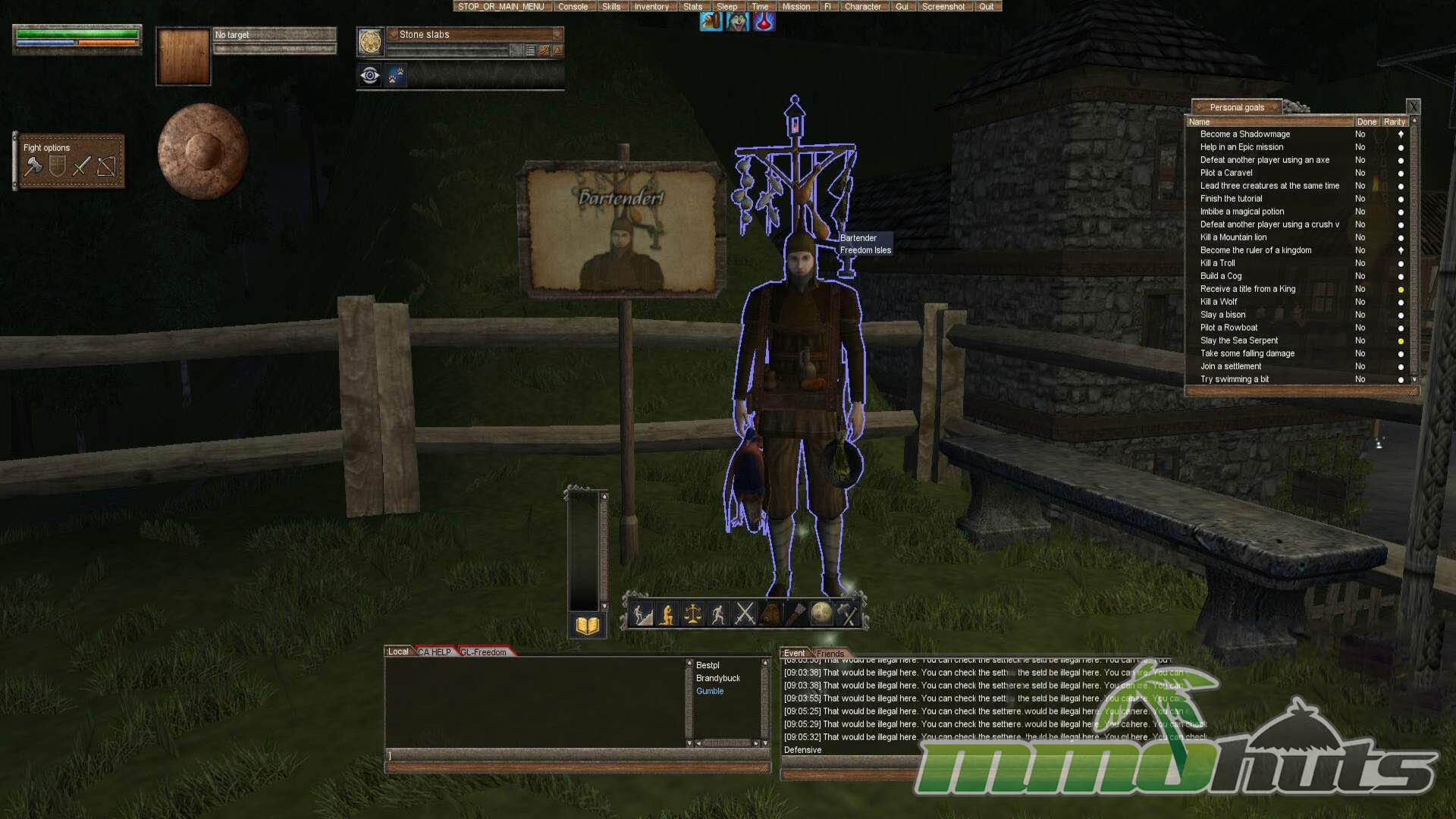
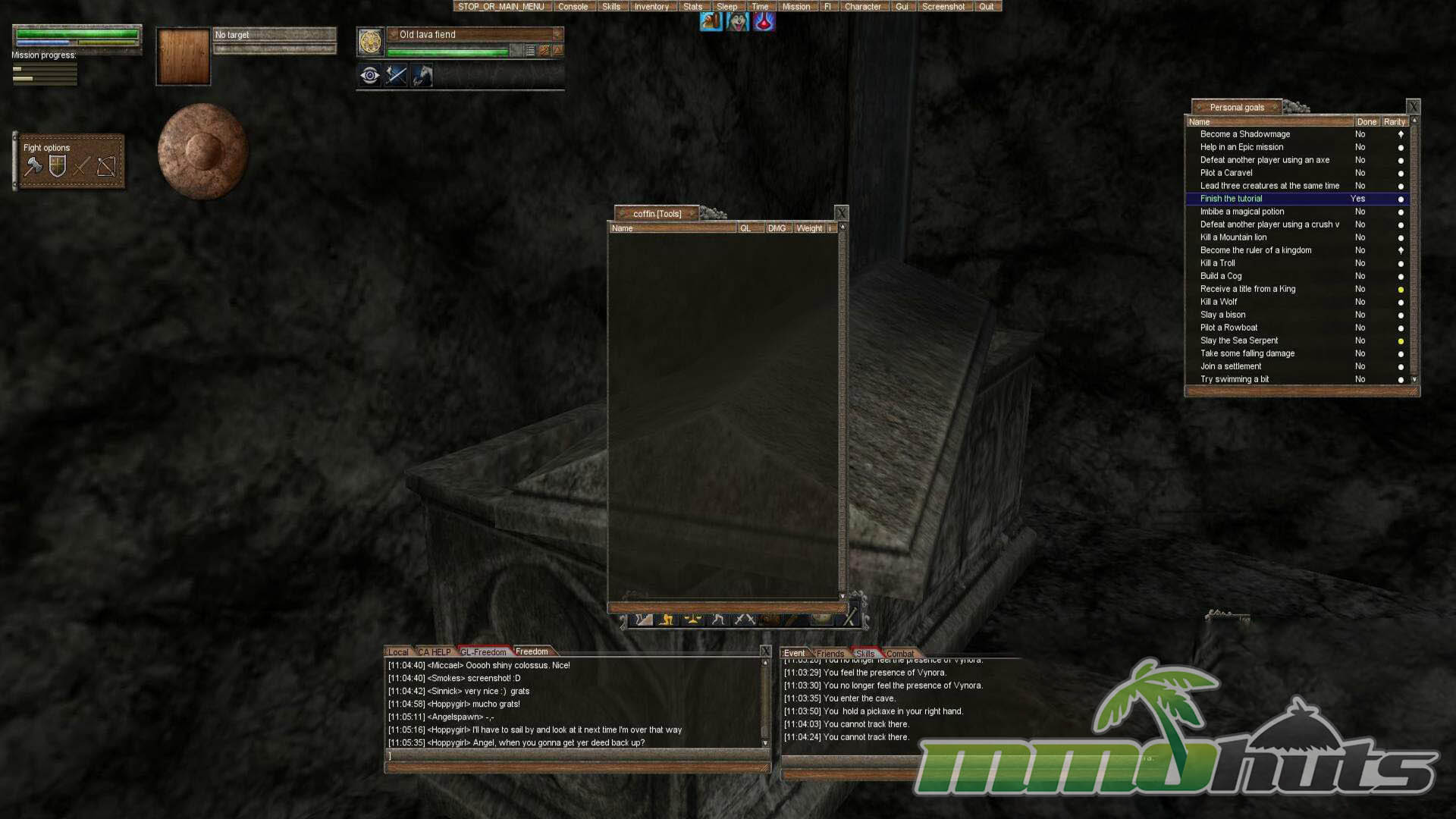
Wurm Online’s population is labeled low, but the culture benefits from that scale. The players who remain tend to be invested, experienced, and willing to share knowledge. In chat, it is common to see veterans answering questions, offering advice, or pointing newcomers toward useful resources and safer routes.
That helpfulness makes sense given how dense Wurm’s systems are. The game is easier to enjoy when you can learn from others, whether you join a village or simply ask questions while you find your footing. If you value social cooperation and long-term projects, this community dynamic is a major positive.
Premium Services
Most of Wurm Online can be experienced for free, but some key advantages are reserved for premium accounts. Premium removes skill limitations and allows you to choose from any server, which can matter a lot once you know where and how you want to play. Premium status also affects certain capabilities, including access to building stone houses and captaining all sailing ships. Game time can be purchased in-game with 10 silver coins at any settlement token.
If you are new, it is sensible to spend time learning the basics before paying. Wurm is the kind of game where understanding your preferred playstyle first will help you decide whether premium benefits match what you actually want to do.
Final Verdict – Good
Wurm Online is uncompromising. It asks for time, attention, and a willingness to learn systems that feel old-fashioned by modern standards. The interface can be a barrier, the visuals are dated, and progress often comes in slow increments rather than dramatic leaps.
But for players who want a genuine sandbox MMO, it delivers something rare: a persistent world where effort leaves visible marks, where communities build real infrastructure, and where personal milestones, like finishing a house or mastering a craft, feel meaningful because they are hard-won. If you are looking for freedom that comes with real responsibility and long-term payoff, Wurm Online remains one of the genre’s most distinctive options.
Wurm Online Links
Wurm Online Official Site
Wurm Online Wikipedia
Wurm Online Reddit
Wurm Online Wurmpedia [Database/Guides]
Wurm Online Wikia
Wurm Online System Requirements
Minimum Requirements:
Operating System: Windows XP, Windows Vista, or Windows 7
CPU: Pentium 4 2.0GHz or Athlon 64 3500+
Video Card: GeForce 2 MX 400 64MB or Radeon 9250
RAM: 1 GB
Hard Disk Space: 1.5 GB
Wurm Online is a Java game and will run on Mac and Linux.
Wurm Online Music & Soundtrack
Coming Soon!
Wurm Online Additional Information
Developer(s): Code Club AB (formerly Onetoofree AB)
Designer(s): Rolf Jansson, Markus Persson
Game Engine: Java, (OpenGL for rendering)
Closed Beta: 2003
Open Beta: 2006
Release Date: December 12, 2012
Development History / Background:
Wurm Online was developed by Swedish development company Code Club AB. Built in Java and rendered with OpenGL, it began development in 2003 under friends Markus “Notch” Persson and Rolf Jansson, entering closed beta that same year. After several years in testing, the game moved into open beta in 2006. Persson later departed the project to pursue other work, most notably Minecraft. Wurm Online reached official release on December 12, 2012, and has often been referenced by critics as a “true sandbox” due to how strongly it emphasizes player-created worlds and long-term systems-driven play.