Battle for control of the ocean lanes in Wind of Luck: Arena, a free-to-play naval MOBA built around team-based ship combat. It mixes arcade-style broadside exchanges with a surprisingly hands-on approach to captaining, letting you tune your ships, hire specialists, and juggle sailing and gunnery in the middle of hectic 9v9 brawls.
 | Publisher: Trazzy Entertainment Playerbase: Low Type: MOBA Release Date: June 06, 2014 Shut Down: March 1, 2016 Pros: +Deep ship loadouts and tuning. +Good emphasis on positioning and team decisions. +Clean visuals with appealing ship designs. Cons: -Control scheme can feel clumsy at first. -Tutorial does not prepare new players well. -Low population makes matches hard to find. |
Wind of Luck: Arena Overview
Wind of Luck: Arena is a free-to-play MOBA that swaps fantasy heroes for warships, pitting two teams against each other in naval skirmishes where the win condition is simple, sink the opposition. Before heading out, you outfit your vessel with weapons such as cannons, carronades, and catapults, then fine-tune how your ship handles by adjusting its speed, turning, and raw damage potential to suit the role you want to play.
Progression revolves around earning fame, wealth, and expertise through battles. Fame is tied to unlocking stronger ship tiers, expertise gates new tech and weapon options, and piasters act as the currency for purchases. You can also recruit crew specialists who boost key stats like gunnery performance, adding another layer of planning, with the risk that these crew members can be lost during combat.
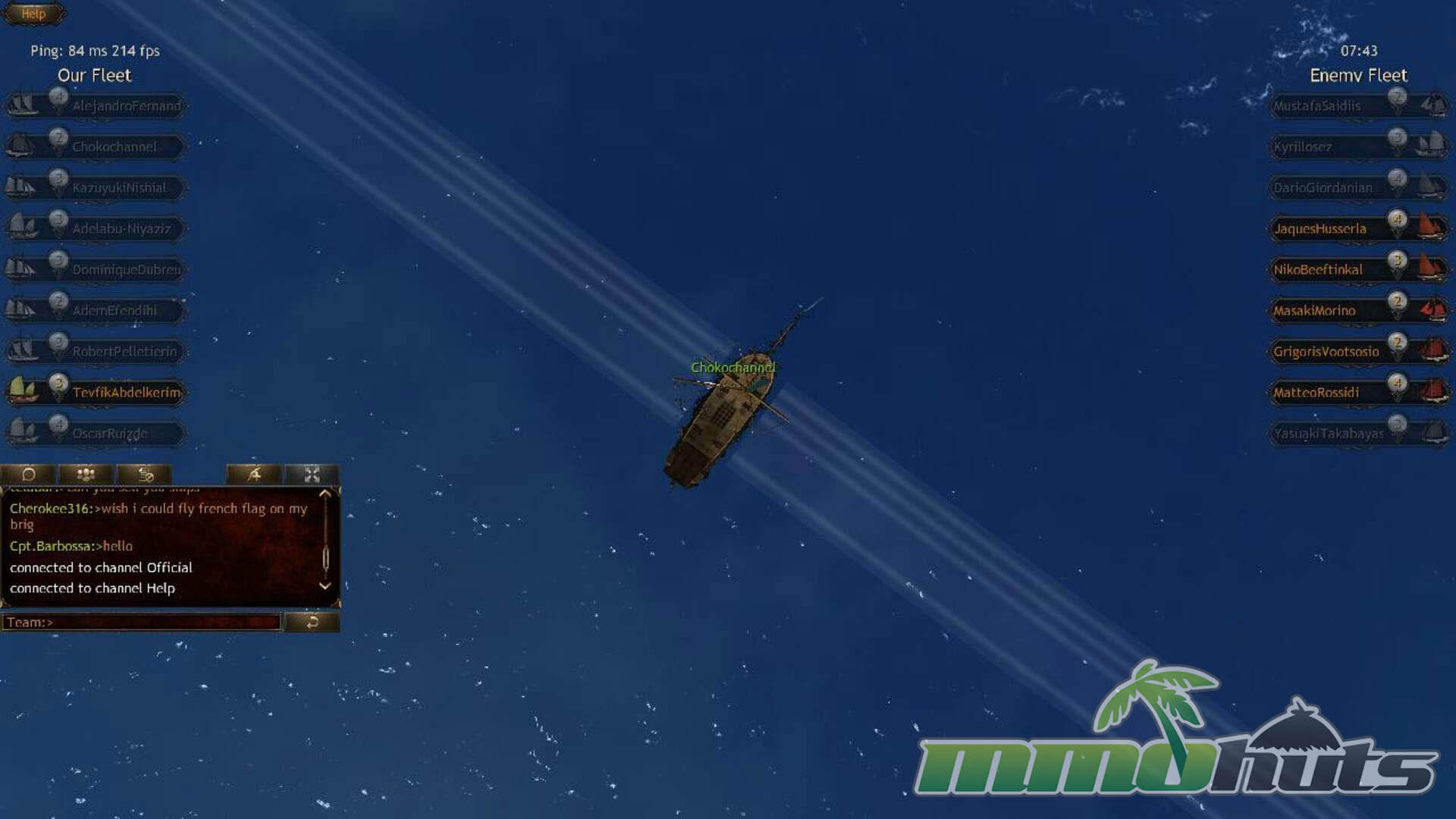
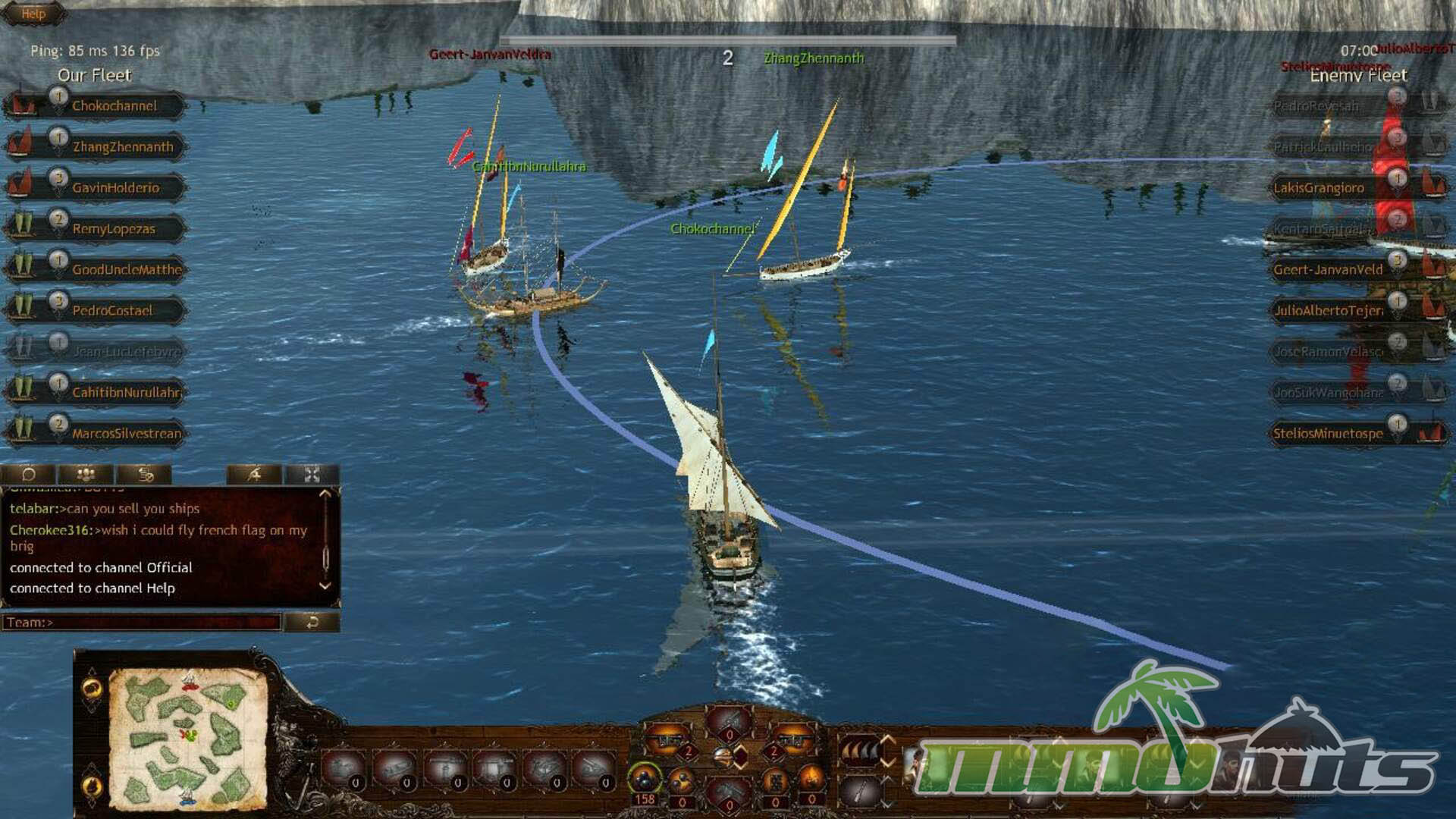
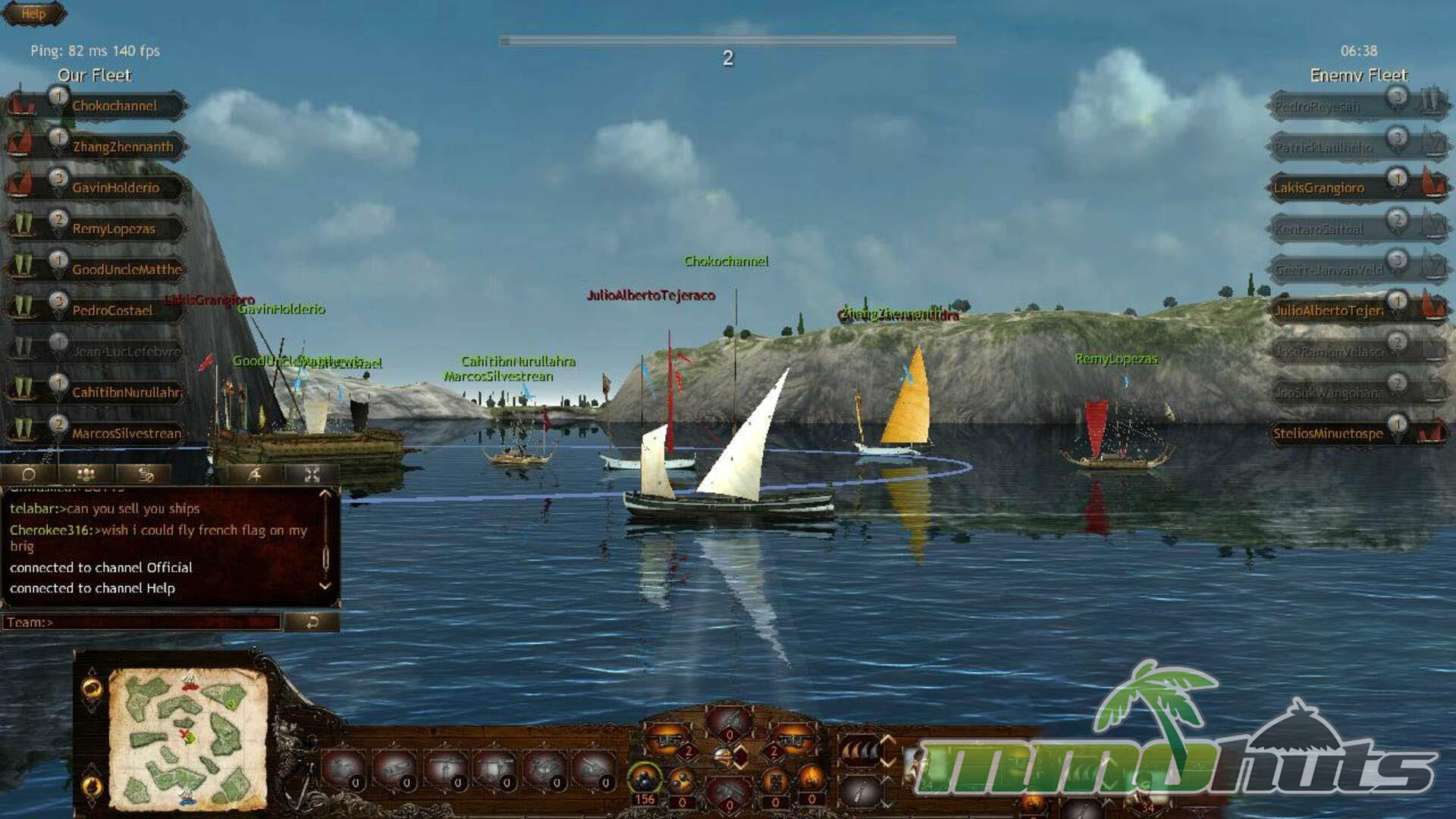
Matches are built around frantic 9v9 encounters where situational awareness matters as much as accuracy. You are managing movement, firing arcs, and ship handling while keeping an eye on the battlefield through tools like a telescope, which reinforces the fantasy of being a captain rather than a standard MOBA character. Wind of Luck: Arena shut down on March 1, 2016.
Wind of Luck: Arena Key Features:
- Customize Your Fleet – pick from three ship themes and tailor each vessel with weapons, sails, speed choices, crew specialists, and other upgrades.
- Fame is the Name of the Game – earn fame from victories to access higher tier ships with improved performance and stronger firepower.
- Take Control – captaining is hands-on, you will be adjusting sails, lining up cannon shots, and using the telescope to read the map while staying combat-ready.
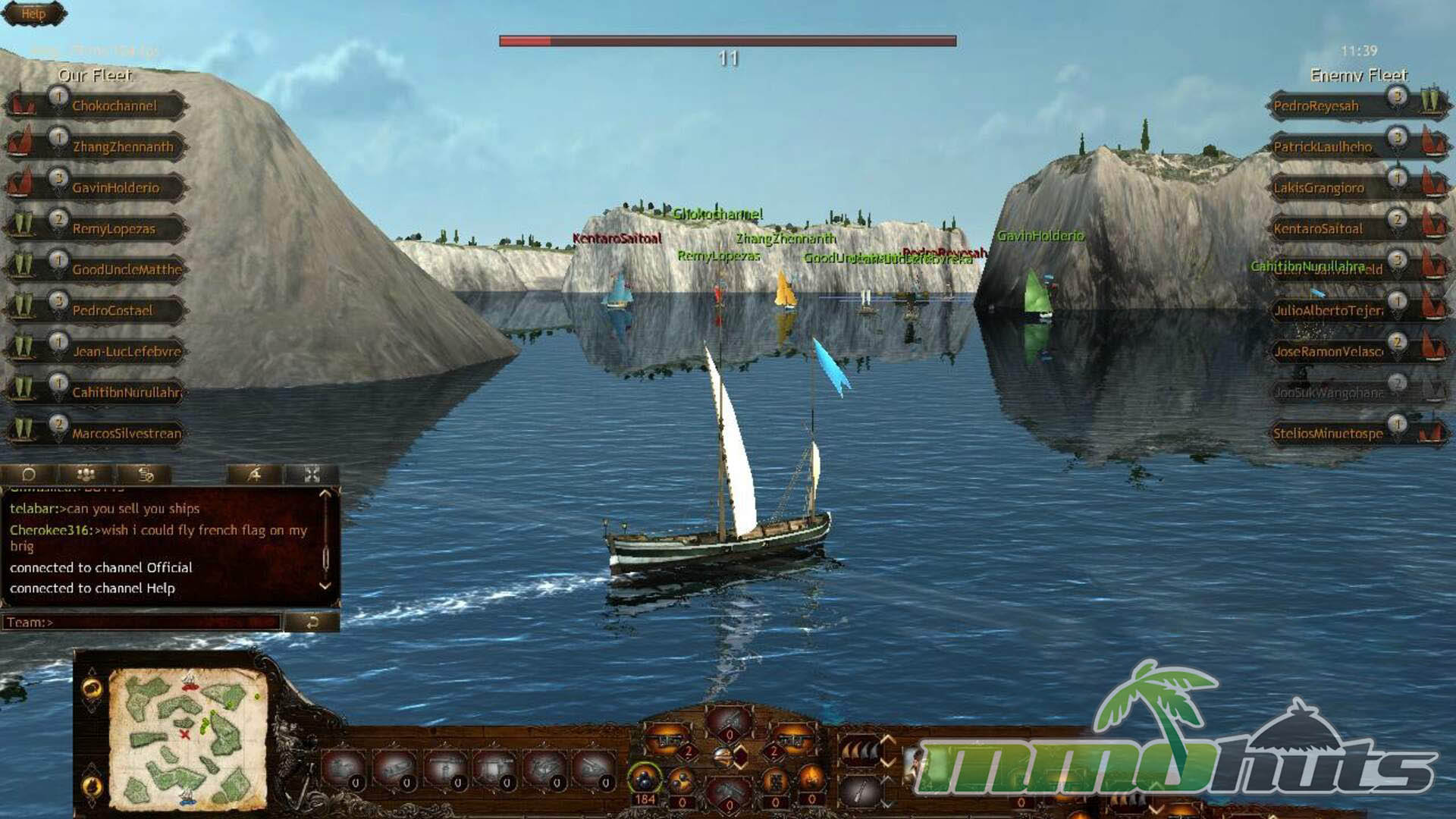
- Great Graphics – a straightforward visual style highlights the charm of the different ship looks (Asian, Caribbean, or Mediterranean) and their weapon details.
- 9v9 Battles – sail with a full team of nine and try to outplay the enemy fleet through coordination and positioning.
Wind of Luck: Arena Screenshots
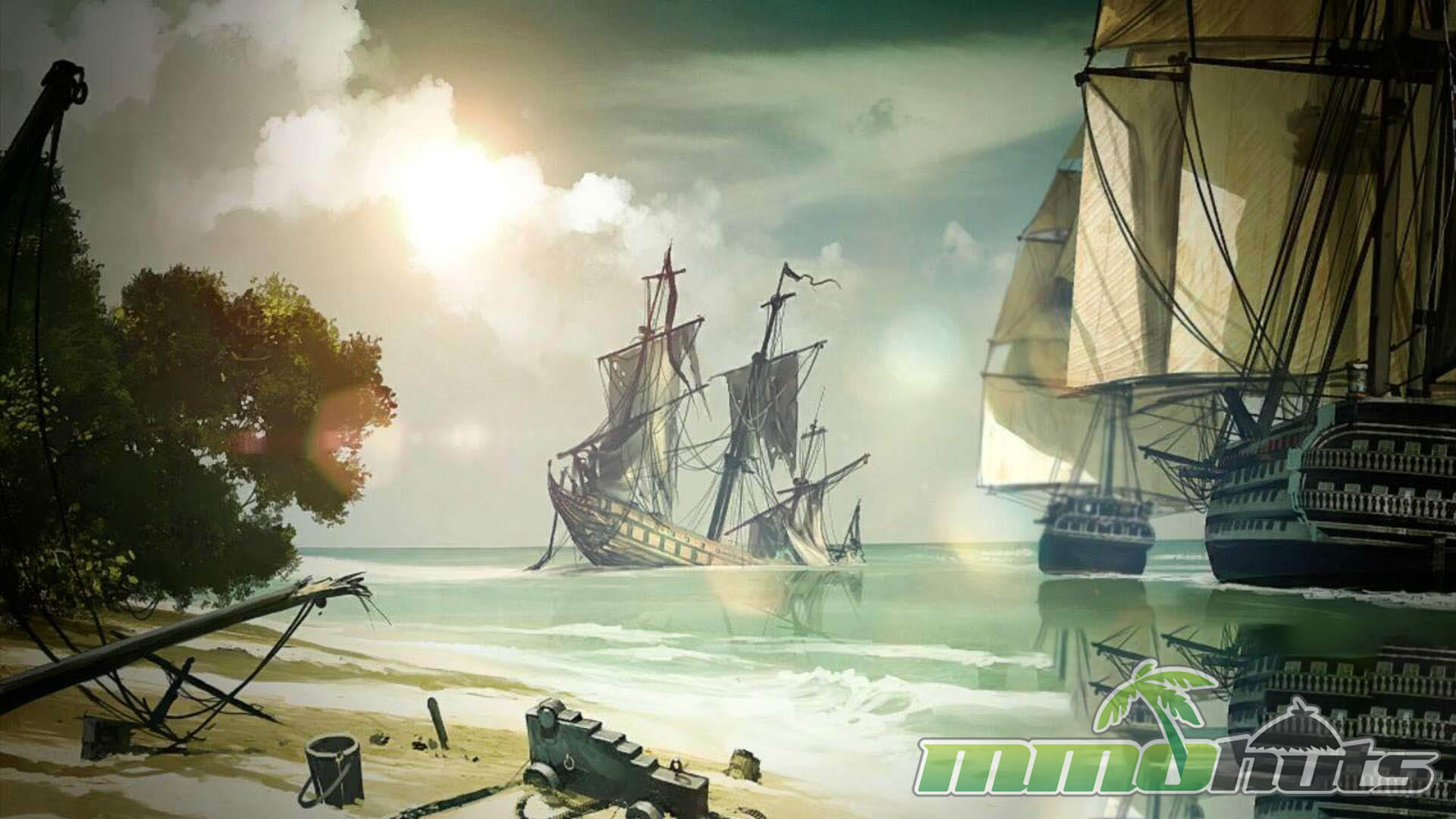
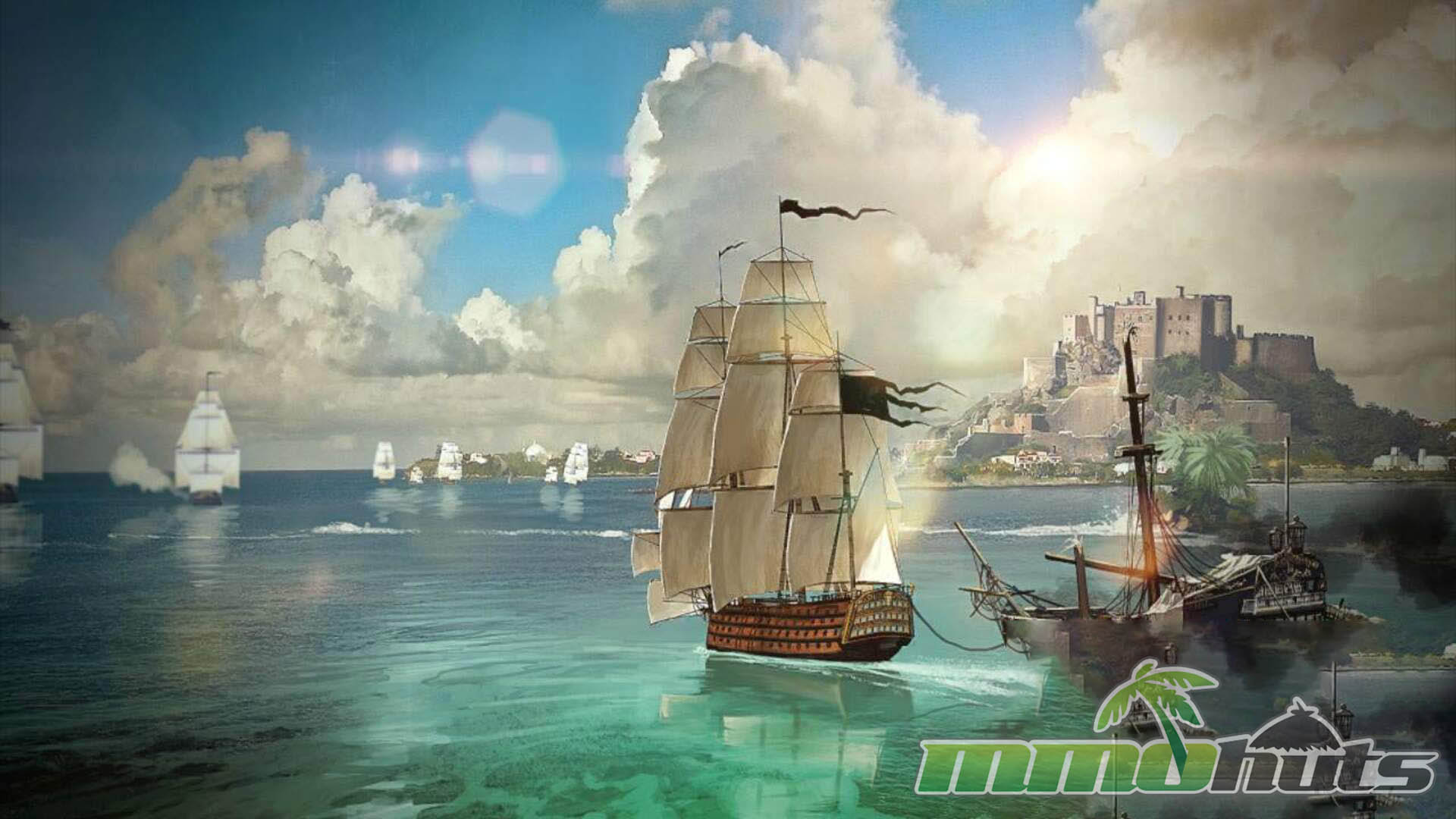

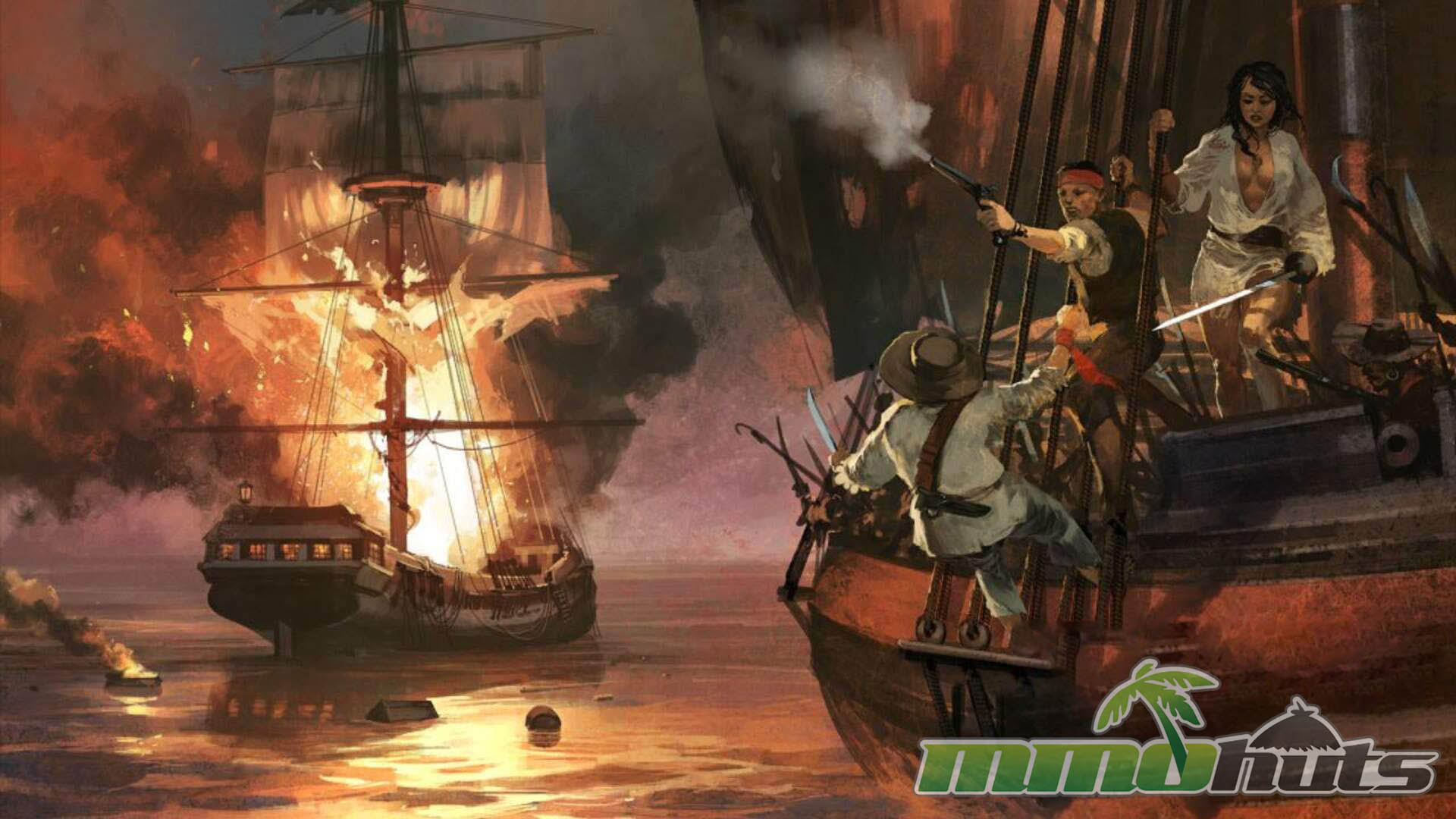
Wind of Luck: Arena Featured Video

Wind of Luck: Arena Review
Wind of Luck: Arena aims to deliver MOBA-style team fights in a setting that does not get enough attention, full-scale ship combat. On paper it is a strong pitch: customize your fleet, manage crew, and take part in large 9v9 battles where sailing skill and gunnery matter. In practice, there is plenty to like once you are in a match, but the onboarding and overall polish do not always support the game’s best ideas.
First Steps at Sea
The game throws you into a tutorial immediately, but it does not do a great job of explaining what you should be learning. Even with the client set to English, the instructions can be hard to parse, and the sequence of objectives does not consistently teach the fundamentals of steering, aiming, and managing ship systems in a way that feels confident.
That confusion is amplified by the control scheme. Wind of Luck: Arena maps a lot of actions to the keyboard, enough that new players may feel like they are studying a flight simulator rather than picking up a MOBA. After struggling through the early prompts, the most practical way to learn is to look up controls and then get into a real match to connect the inputs to the situations where they matter.
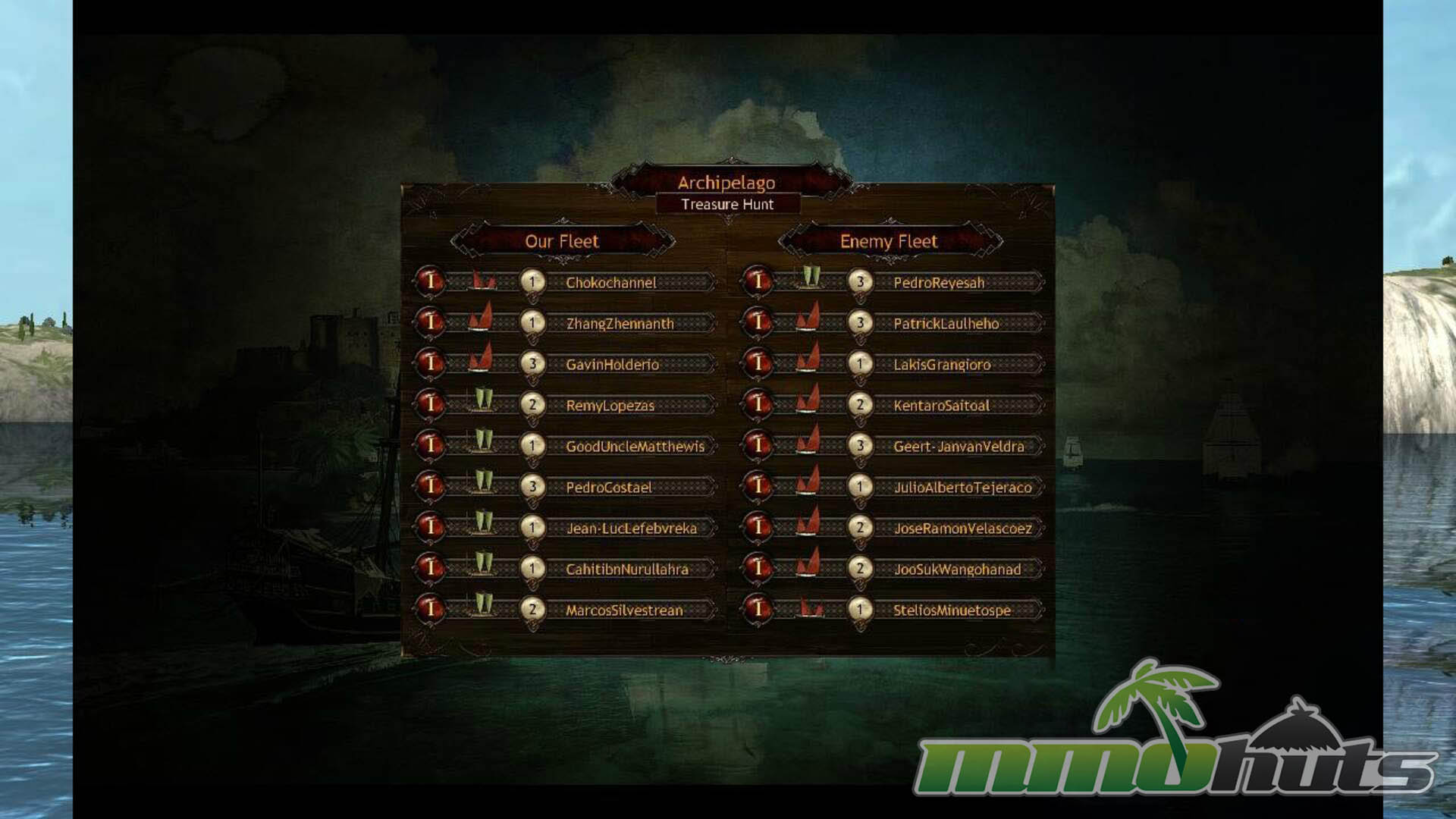
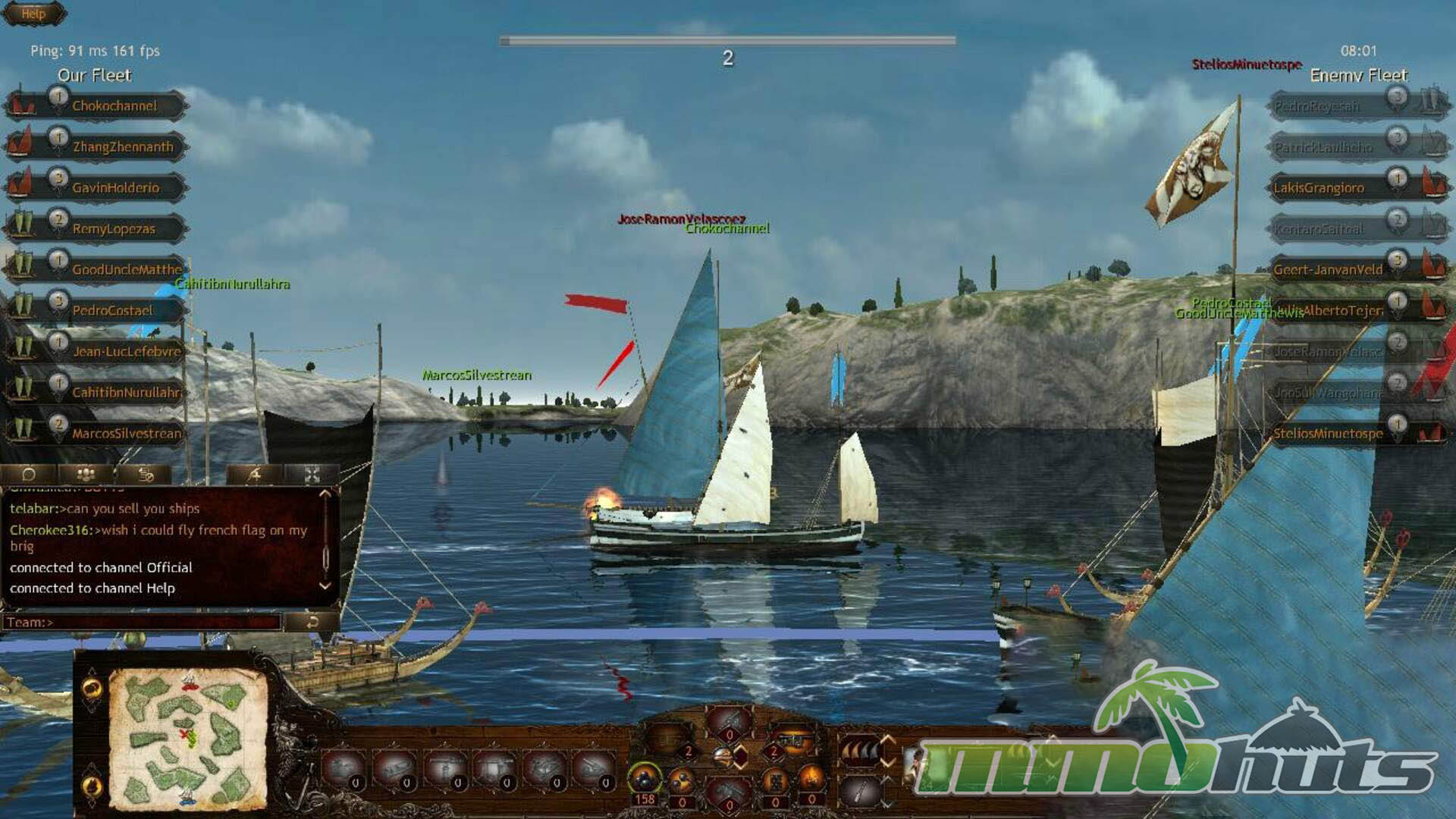
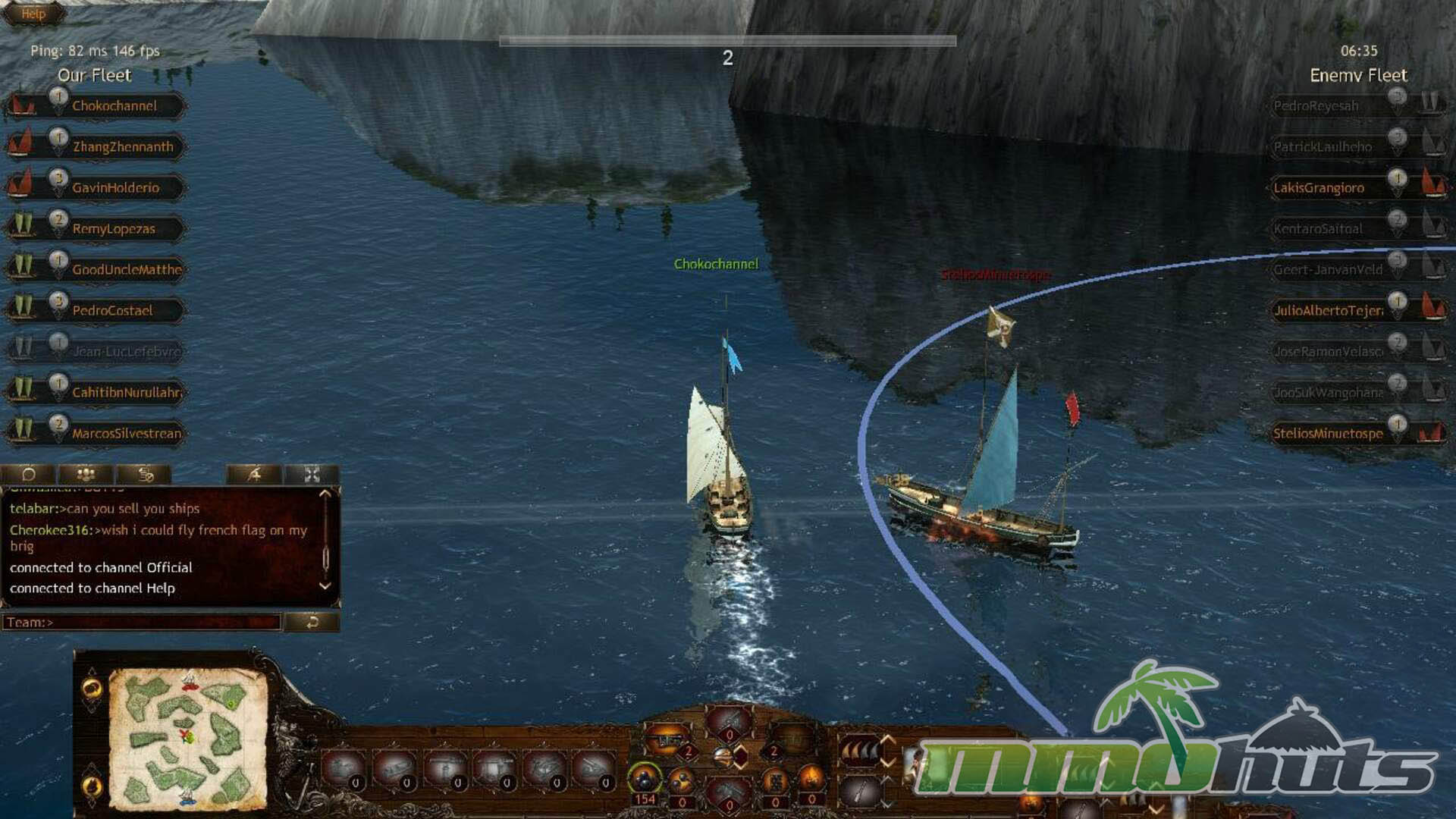
Once I queued into a 9v9 battle, the experience improved quickly. The mode plays like a fleet deathmatch, two teams enter, and the goal is to sink every enemy ship. Early on, the pacing can feel slow while you get your bearings, but the first close-range engagement flips the switch. Cannon fire, oil barrels, and desperate turns create a kind of chaos that is rare in the genre, and while the number of inputs is intimidating, the actual feel of sailing and lining up broadsides becomes satisfying with a little time. After the match wrapped up, I headed back to the ship management hub to see how deep the customization really goes.
The Shipyard and Progression Loop
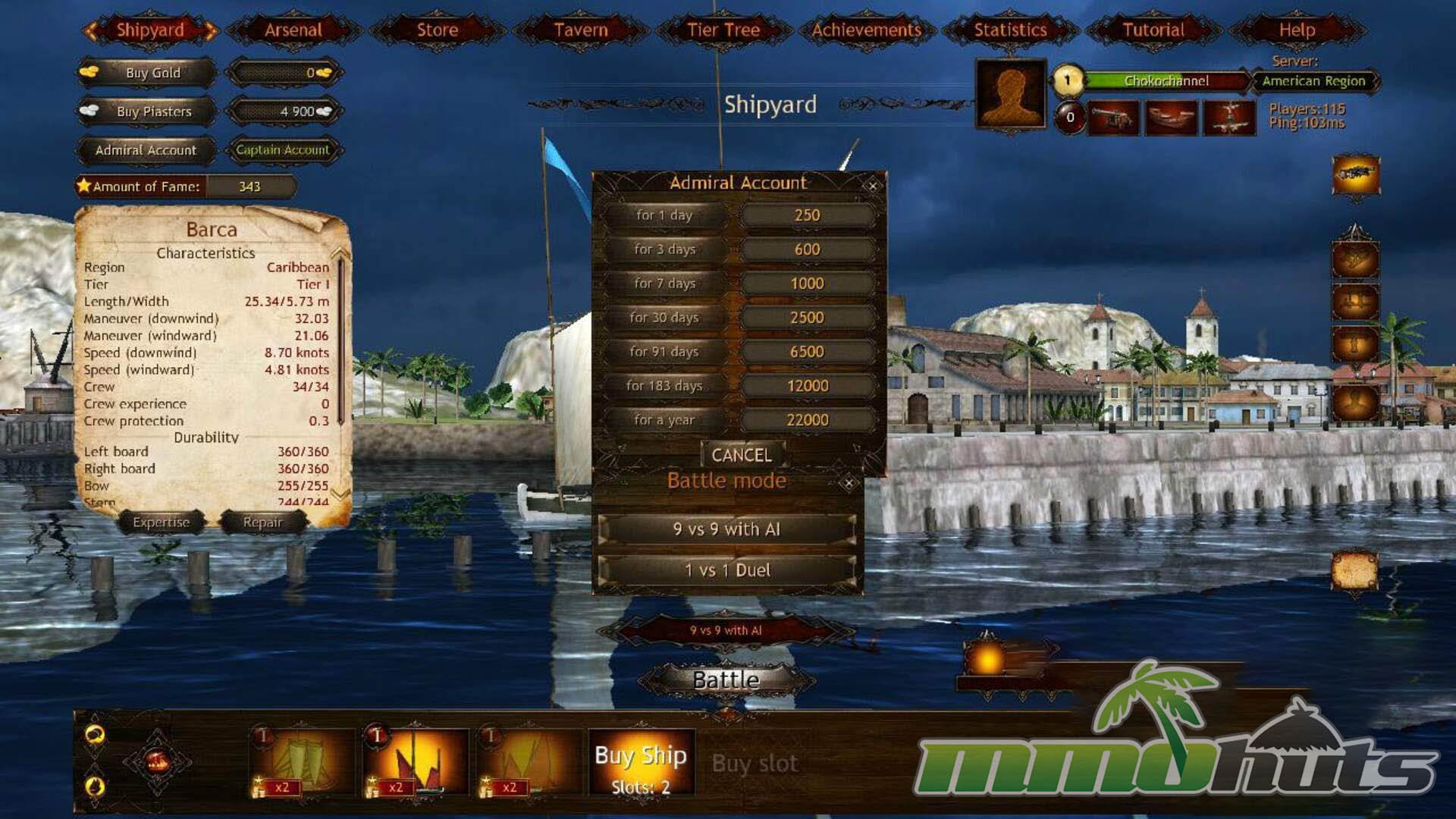
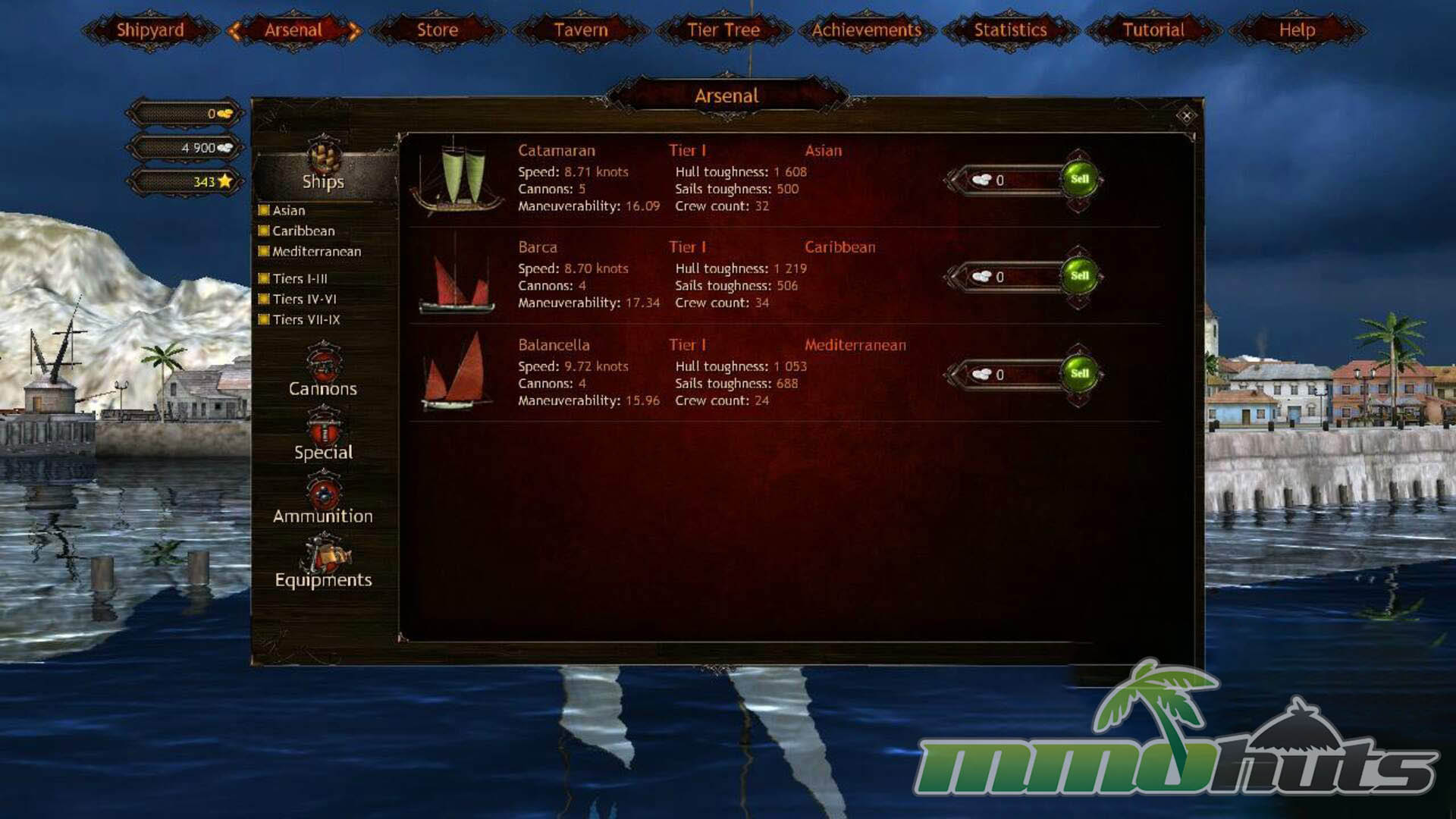
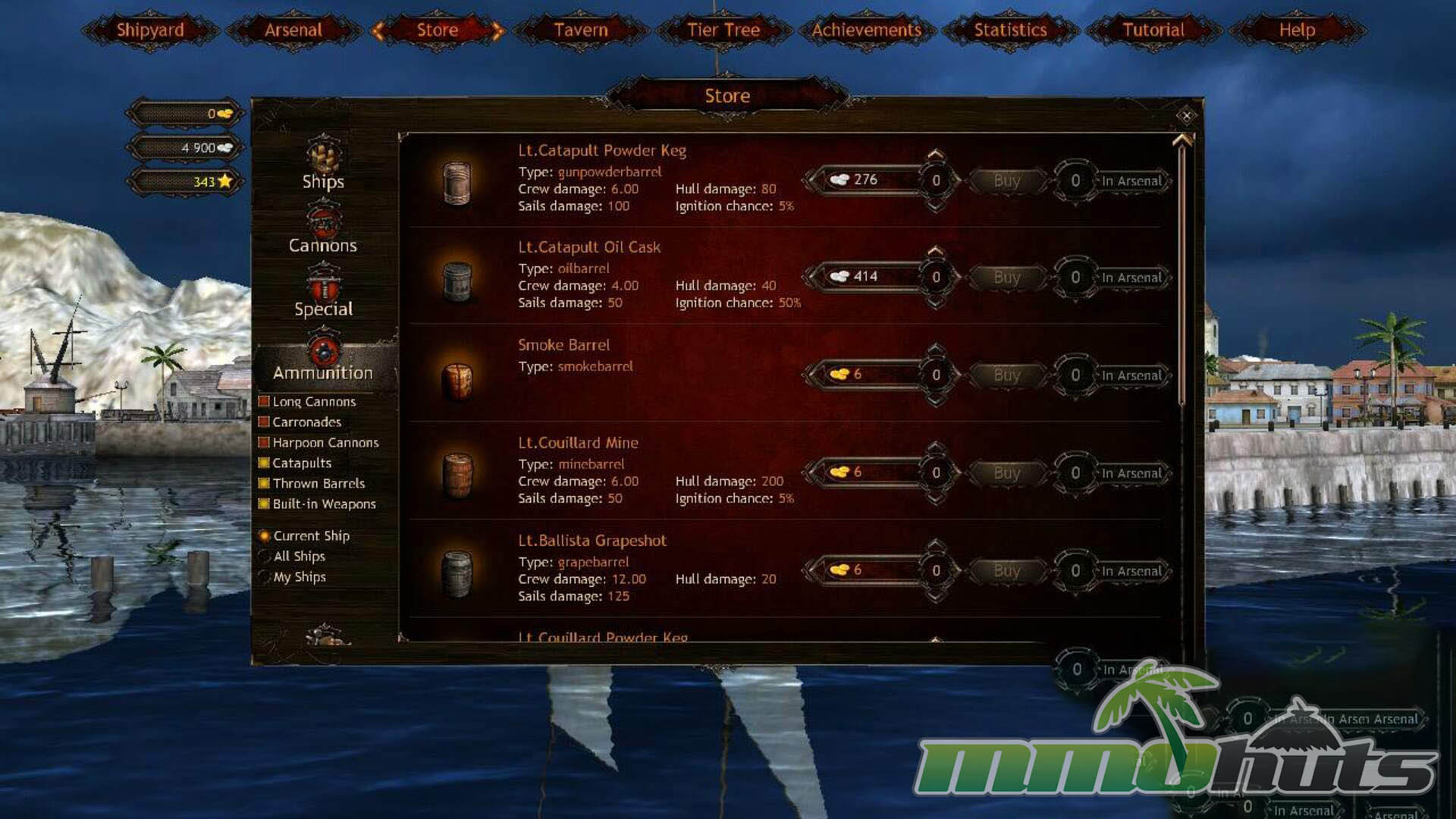
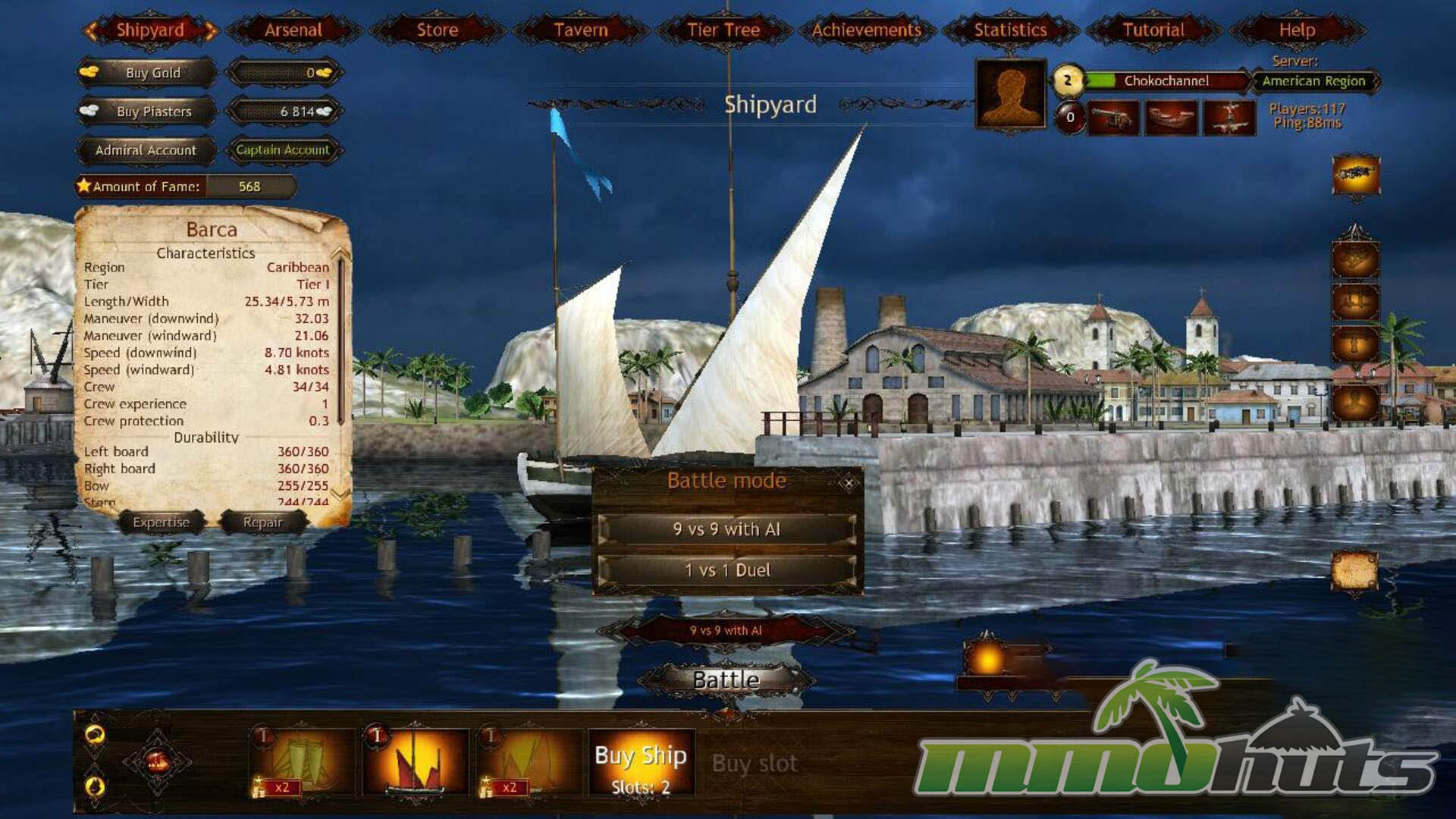
Between battles, most of your time is spent in the Shipyard interface. It is essentially your loadout and progression headquarters, a place to buy weapons, upgrade ships, and hire crew. Menus along the top lead to areas like the Arsenal, Store, Tavern, and the Tier Tree, with your active ship presented front and center as the one you are currently modifying. Swapping to another vessel is done via the ship icons along the bottom of the screen.
Everyone begins with three Tier I ships, one per style (Asian, Caribbean, and Mediterranean). From there, the game pushes you to specialize. Weapons and upgrades are not all available immediately, because they are tied to your earned resources: fame, expertise, and piasters. Fame is the broader unlock track for ships, expertise opens up tech on the Tier Tree, and piasters are the spending currency. One detail worth noting is that expertise is tracked per ship, so if you want a specific weapon option on a particular vessel (for example, a higher tier Asian ship), you need to play that ship to build the expertise required for that unlock.
Crew management adds another layer. Specialists recruited from the Tavern provide stat boosts, such as improvements to cannon performance, and different ships allow one to three of these crew members. The catch is that specialists can be killed during battle, which makes them feel like an investment you are risking each time you deploy.
Match Flow, Maps, and the Core Appeal
At its best, Wind of Luck: Arena delivers a distinct kind of team fight. Positioning is not just about hiding behind terrain, it is about wind angles, turn radius, firing arcs, and committing to a broadside without exposing yourself to multiple opponents. The ship class you pick meaningfully changes your role. Heavier ships can lean into durability and firepower to win head-on exchanges, while smaller, faster vessels play more like skirmishers, looking for flanks and isolated targets.
The game includes three maps, and while additional content was discussed, the available selection can feel limited over time. The bigger issue is that the overall feature set does not fully match the ambition implied by the concept. There are promises of additional modes, but the playable experience centers primarily on the large 9v9 combat, which is fun, but also highlights how much the game relies on players already understanding its systems.
Moment-to-moment, the multitasking is the point. You are constantly adjusting your approach, managing camera angles, keeping track of hazards like fire, and trying to lead shots at moving targets. When it clicks, it creates a tactical rhythm that is different from land-based MOBAs and closer to a naval brawler with team strategy layered on top.
Spending Money and Account Advantages
Wind of Luck: Arena offers a paid step up from Captain to Admiral status. Admiral accounts earn fame, expertise, and wealth 50% faster, which speeds up access to better ships and improved equipment. It is a progression advantage rather than a direct “buy damage” button, but it still affects how quickly players can reach higher tiers.
There were also plans for a clan-like system called “brotherhoods,” with Admiral accounts intended to have the exclusive ability to create them, while standard accounts could still join. In terms of match-to-match fairness, the paid benefits feel more like a head start than an unbeatable wall, but in a game with a low population, any progression gap can feel more noticeable.
Final Verdict – Fair
Wind of Luck: Arena has a strong identity and some genuinely enjoyable naval combat once battles get underway. The ship handling, broadside exchanges, and build choices can create tense, memorable moments, especially in coordinated 9v9 fights. Unfortunately, the rough tutorial, the heavy control learning curve, and the slow pace of overall refinement hold it back from being as approachable as its concept deserves. With clearer onboarding and more fully realized modes, it could have been an easy recommendation for players looking for a different kind of MOBA, but as it stands, it is a game remembered more for its potential than its finish.
Wind of Luck: Arena Links
Wind of Luck: Arena Official Site
Wind of Luck: Arena Steam Page
Wind of Luck: Arena GUI Guide
Wind of Luck: Arena Steam Greenlight Page
Wind of Luck: Arena Wikia [Database/Guides]
Wind of Luck: Arena Requirements
Minimum Requirements:
Operating System: Windows XP SP3/Vista/7/8 32 and 64 bit
CPU: Dual Core 2 GHz
RAM: 2 GB RAM
Video Card: 512 Mb ATI Radeon 4850 or comparable NVIDIA (latest drivers) and support OpenGL 3.2
Hard Disk Space: 3 GB
Recommended Requirements:
Operating System: Windows Vista/7/8 32 and 64 bit
CPU: Dual Core 3 GHz
RAM: 4 GB RAM
Video Card: 1 Gb ATI Radeon 6850 or comparable NVIDIA (latest drivers) and support OpenGL 3.2
Hard Disk Space: 3 GB
Wind of Luck: Arena Music & Soundtrack
Coming Soon…
Wind of Luck: Arena Additional Information
Developer(s): Trazzy Entertainment
Publisher(s): Trazzy Entertainment
Game Engine: C4
Languages: English, German, Italian, Polish Russian, Spanish
Steam Greenlight Posting: September 25, 2014
Open Beta: November 25, 2013
Release Date: June 06, 2014
Steam Release Date: August 18, 2015
Shut Down: March 1, 2016
Development History / Background:
Wind of Luck: Arena was developed by Trazzy Entertainment, an independent studio also known for Tagimoto and Revenge of Roger Rouge. The team originally formed in 2009 under the name Homo Habilis Studio, then rebranded as Trazzy Entertainment in 2011. Wind of Luck: Arena became the company’s primary focus for several years, with an open beta that went live on November 25, 2013 and attracted a relatively small but enthusiastic audience. The game shut down on March 1, 2016.