Twelve Sky 2
 (No Ratings Yet)
Twelve Sky 2 drops you into a martial fantasy MMO built around clan identity, weapon-focused combat, and long stretches of monster hunting across a wintry landscape. It aims for a distinct Chinese-inspired aesthetic, and while its moment-to-moment play can feel old-school (sometimes to a fault), there is still a clear appeal for players who enjoy steady grinding, simple progression, and periodic clan PvP as a change of pace.
 | Publisher: Red Fox Games Playerbase: Low Type: Fantasy Release Date: September 09, 2009 Pros: +Strong character models. +Smooth combat animations. +Large-scale zones. Cons: -Questing becomes monotonous. –World often feels sparse. –Class choices can seem too similar. |

Twelve Sky 2 Overview
Twelve Sky 2 leans hard into a culturally flavored presentation, pairing traditional martial motifs with clean, stylized movement and solid-looking character gear. You choose a clan, pick a fighting style, and then spend most of your time pushing outward from early hubs into broader regions packed with hostile creatures and routine objectives. Progression is straightforward: fight, complete tasks, gain levels, and invest in skills that shape your build. When the PvE grind starts to blur together, the game encourages you to jump into clan-versus-clan conflict for points, bragging rights, and a bit of competitive momentum.
Twelve Sky 2 Key Features:
- Ginormous World – Wide, travel-heavy zones that emphasize scale and long-distance exploration.
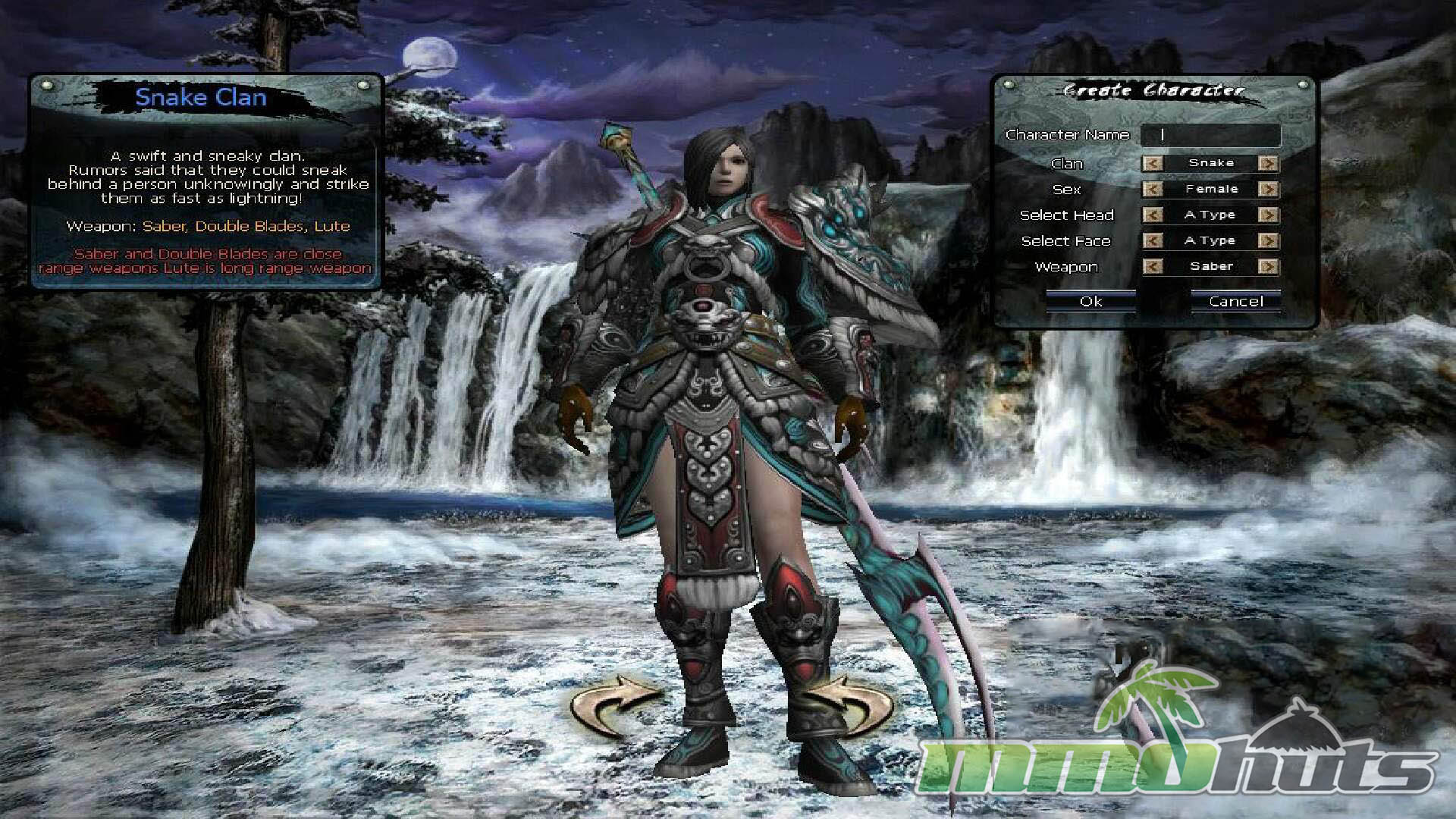
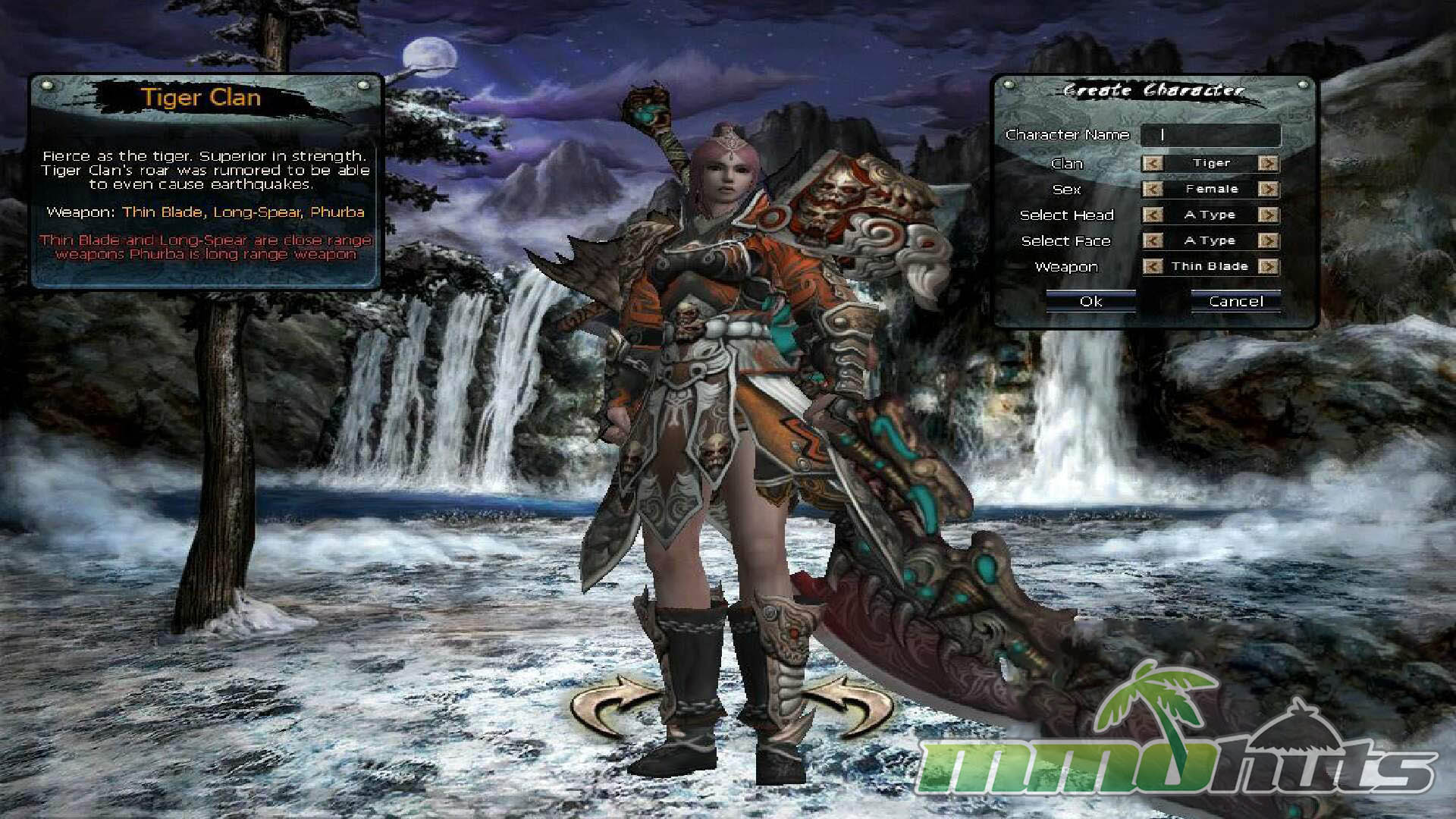
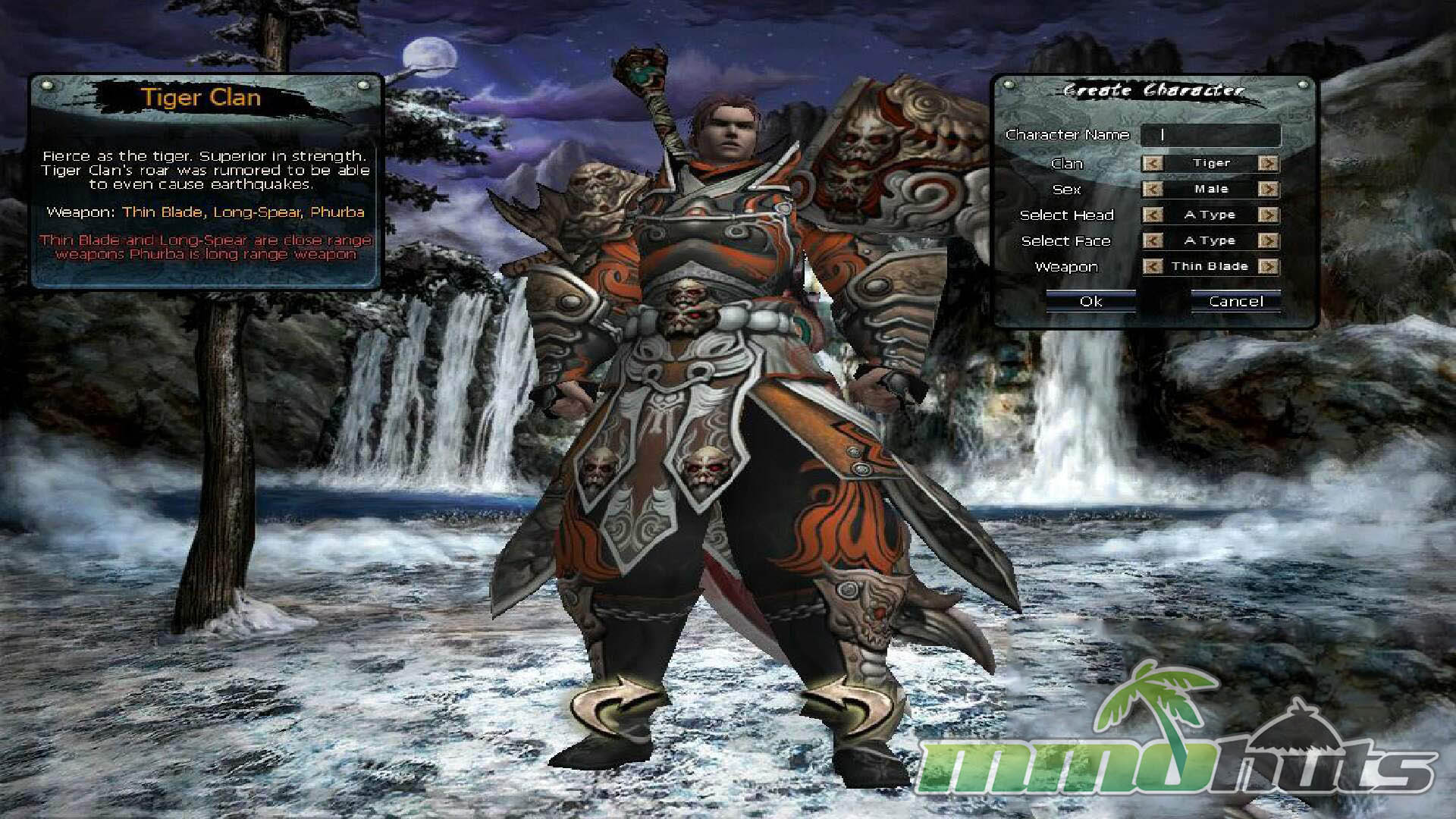
- Multiple Classes – Three factions determine your clan identity and your character’s overall look.
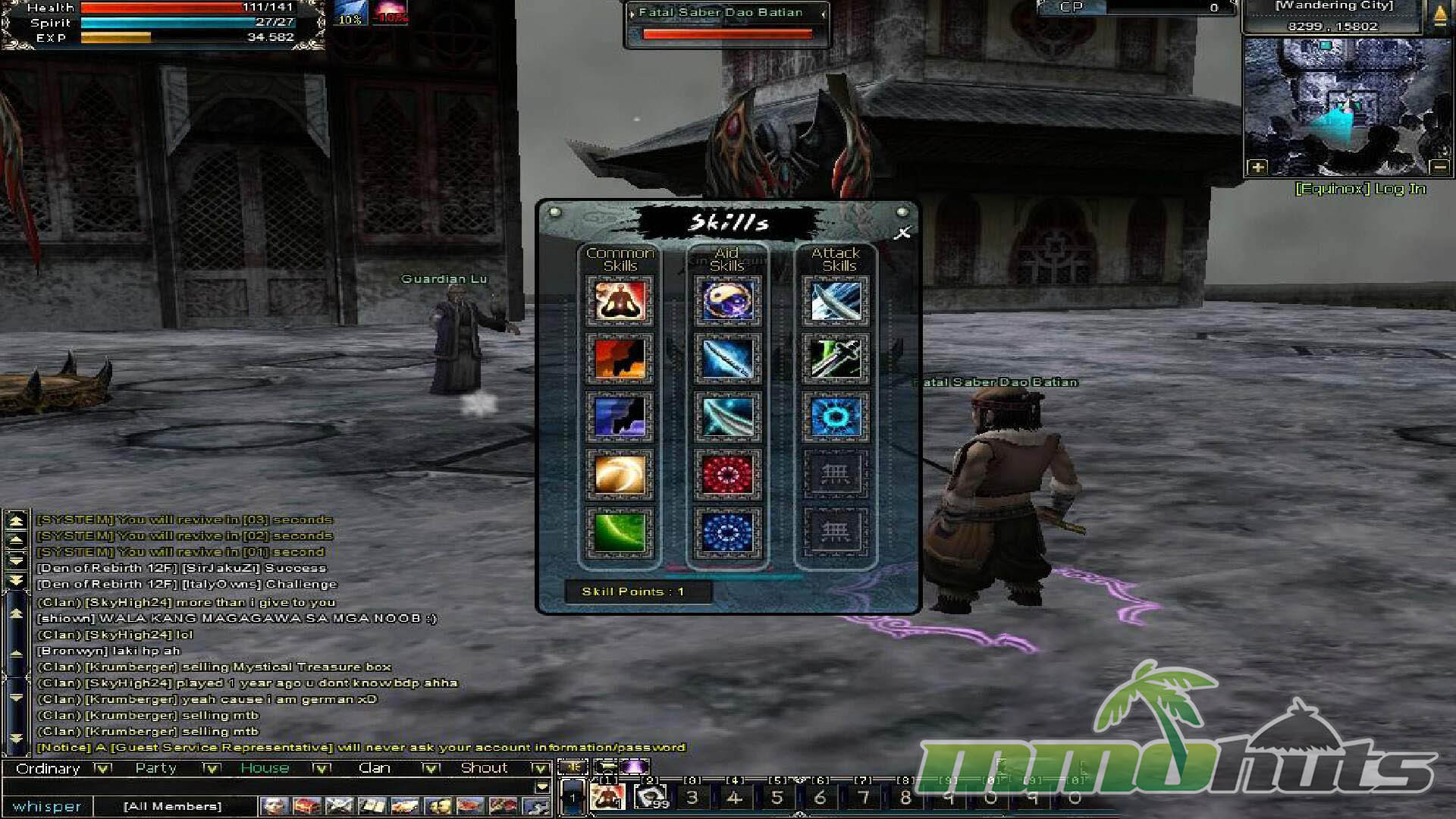
- Diverse Set of Skills – Choose from 7 combat skills, or specialize into a smaller core kit for efficiency.
- Clan-Based Warfare – PvP and clan competition give you an alternate goal beyond leveling.
- Well Realized Theme – A Chinese-influenced setting and visual direction that defines the game’s tone.
Twelve Sky 2 Screenshots





Twelve Sky 2 Featured Video

Twelve Sky 2 Classes
Imperial Dragon- The most even-handed option of the three. It is designed to be adaptable, letting you play comfortably in different roles depending on your weapon choice and stat investment.
Royal Snake- Built around speed and evasive play. The concept is simple: mobility keeps you alive, and quick engagement patterns help you avoid trading hits with heavier opponents.
Fierce Tiger- A power-first approach that favors raw impact. It tends to feel slower and more deliberate, but it is meant to punish mistakes with heavy damage when attacks connect.
Twelve Sky 2 Review
Twelve Sky 2 is not the kind of MMO that tries to reinvent the genre. It plays like a traditional grind-focused title from its era, with serviceable combat, familiar quest loops, and a world that is more about size than density. That said, it is not outright broken or unplayable, it simply lands in the middle. If you enjoy older MMORPG pacing and can tolerate repetition, there is some value here, especially if you approach it as a clan grinder rather than a narrative adventure.
Setting and Enemies: Style First, Variety Second
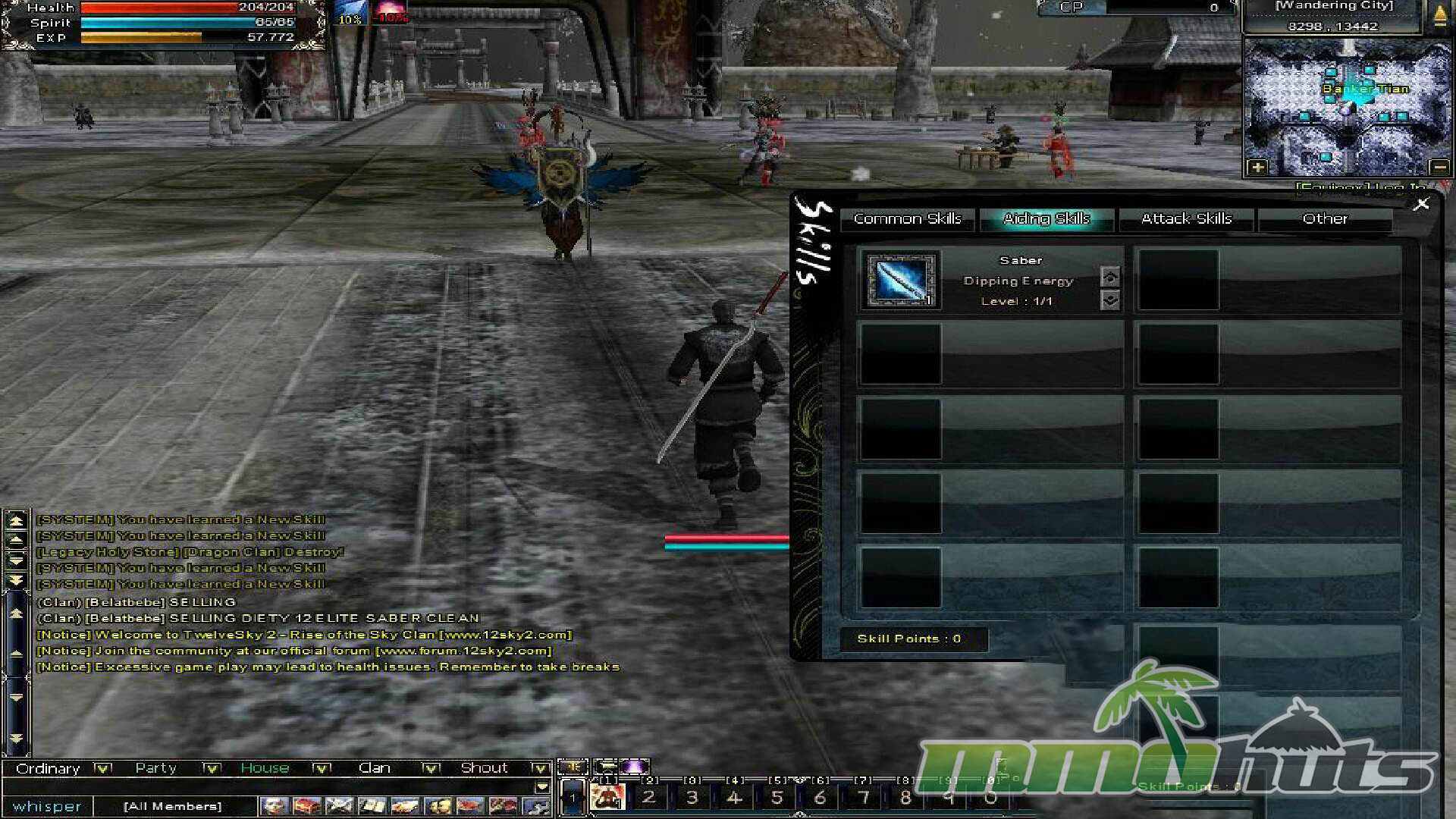
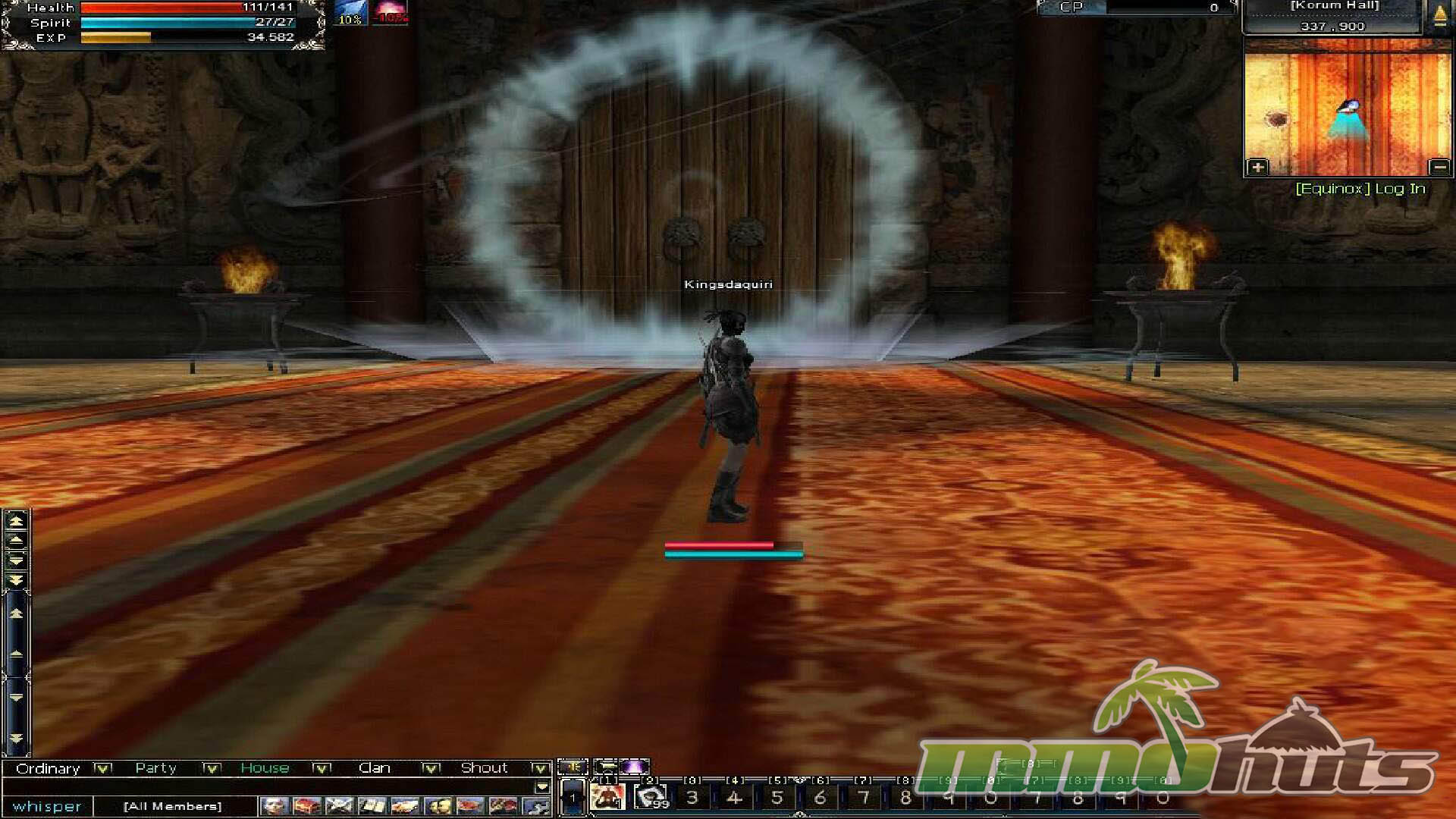
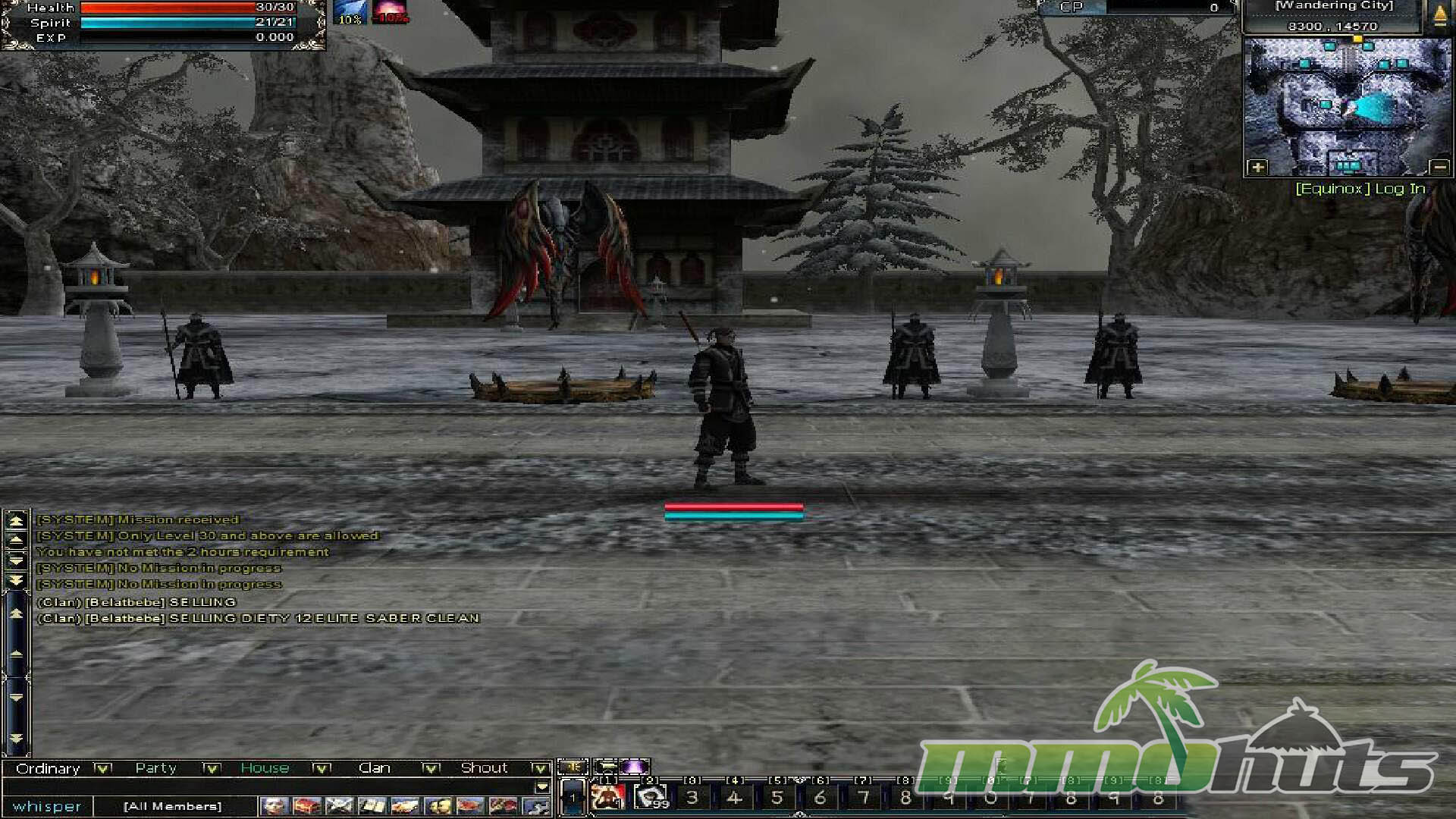
The strongest first impression is the thematic direction. Twelve Sky 2 borrows heavily from Chinese cosmology and martial fantasy imagery, with ornate weapons, mythic touches, and character outfits that fit the harsh, snowy regions you start in. Player models generally look appropriate for the setting, and the animation work on your character’s attacks sells the idea of practiced forms rather than weightless flailing.
Enemy design ranges from grounded to bizarre, and you will run into everything from small camp creatures near starter areas to much stranger opponents further out. The downside is that while the roster looks varied, many enemies behave similarly, and their movement and attack animations often feel minimal compared to the player character’s more polished motions.
Characters and Gear: The Best-Looking Part of the Package
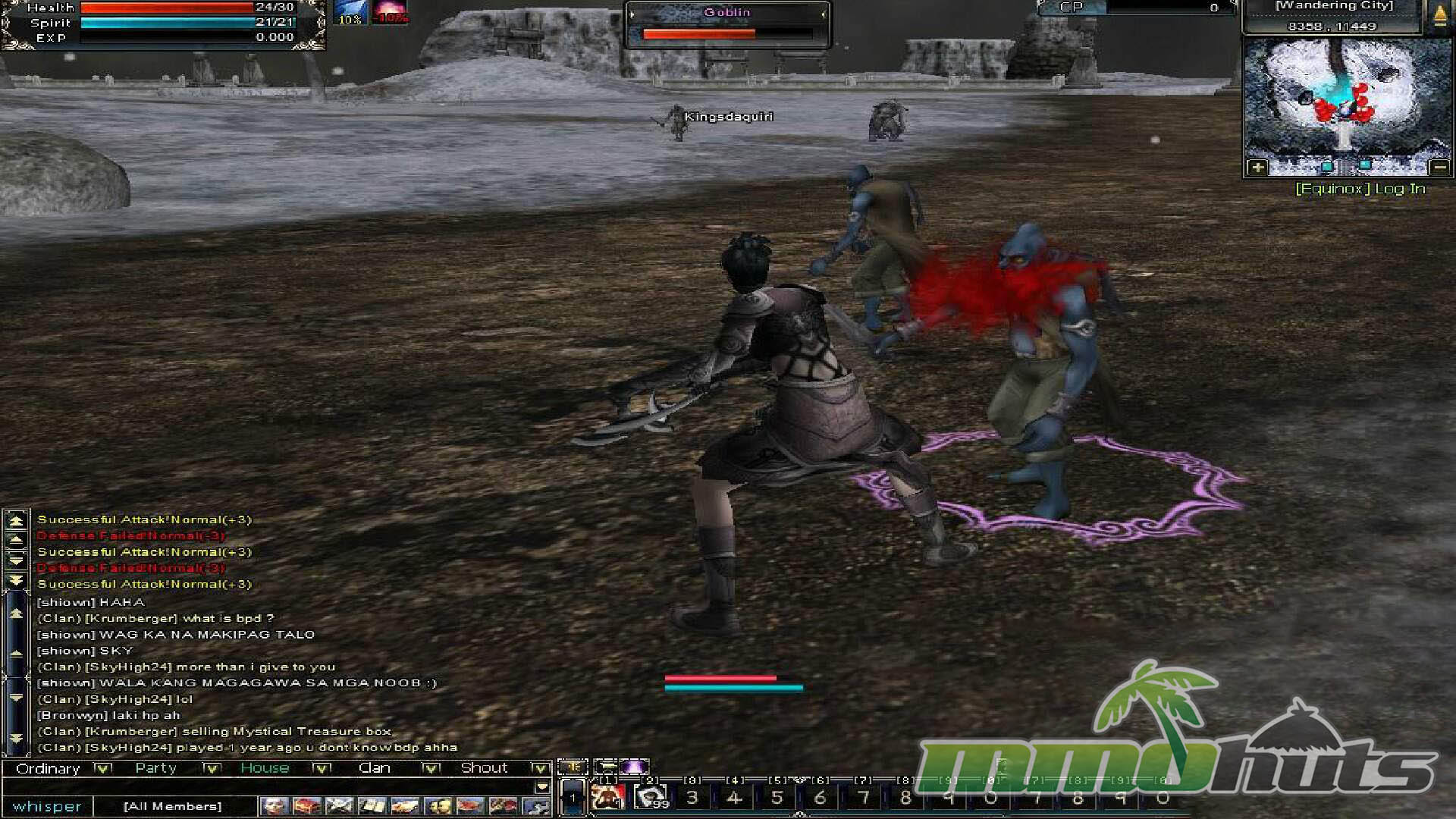
On a purely visual level, the game does a respectable job with armor silhouettes and swing animations. Weapon arcs have clear follow-through, and the overall “stage combat” feel fits a martial MMO. The cold-weather presentation also helps the game avoid the common MMO issue where armor design ignores basic practicality, here, most outfits look like they belong in a freezing landscape.
Where the presentation struggles is in the world itself. Zones can be large but also plain, with long stretches that feel like connective tissue rather than places worth stopping in. The result is a setting that looks coherent, but not especially alive.
Movement and Options: An Old-School Interface That Fights You
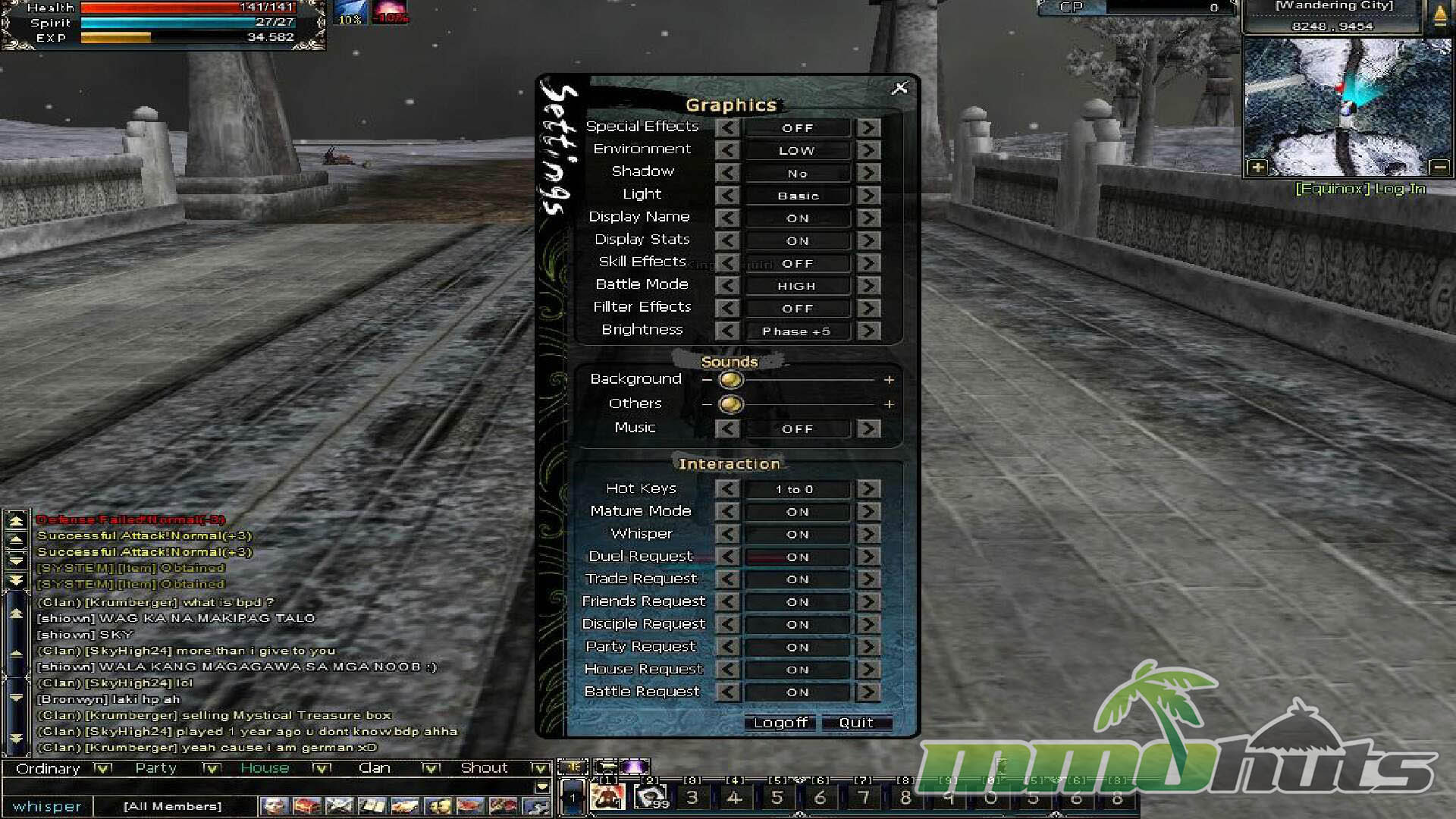
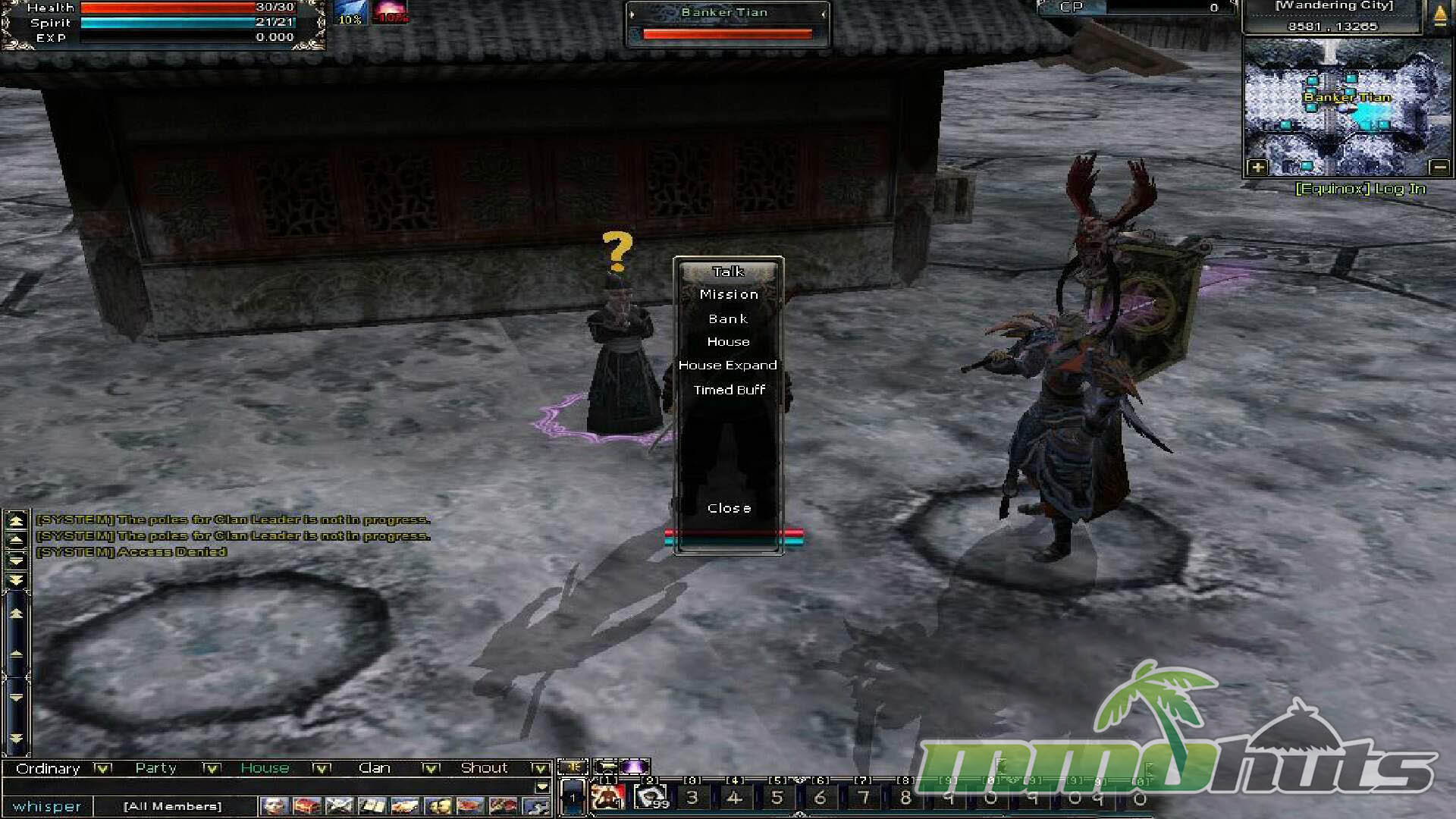
Getting around is not as comfortable as it should be. Movement relies heavily on mouse clicking in a way that can feel more like a top-down PvP title than a traditional MMORPG, and long-distance travel becomes tiring because there is no convenient way to settle into extended movement. The settings menu is also thin, with limited adjustment for controls and visuals. On modern displays, the presentation can feel constrained, and the client’s approach to resolution and display modes shows its age.
Character creation and early decisions also lean toward “pick a flavor” rather than “pick a playstyle.” While the three clans have different identities and weapon themes, their practical feel overlaps a lot once you are actually fighting. Build differences come more from how you allocate stats and which skills you prioritize than from the initial faction choice. Even your starter weapon selection loses importance quickly because alternative weapon paths open up early on.
Skills and Progression: Flexible, but Poorly Explained
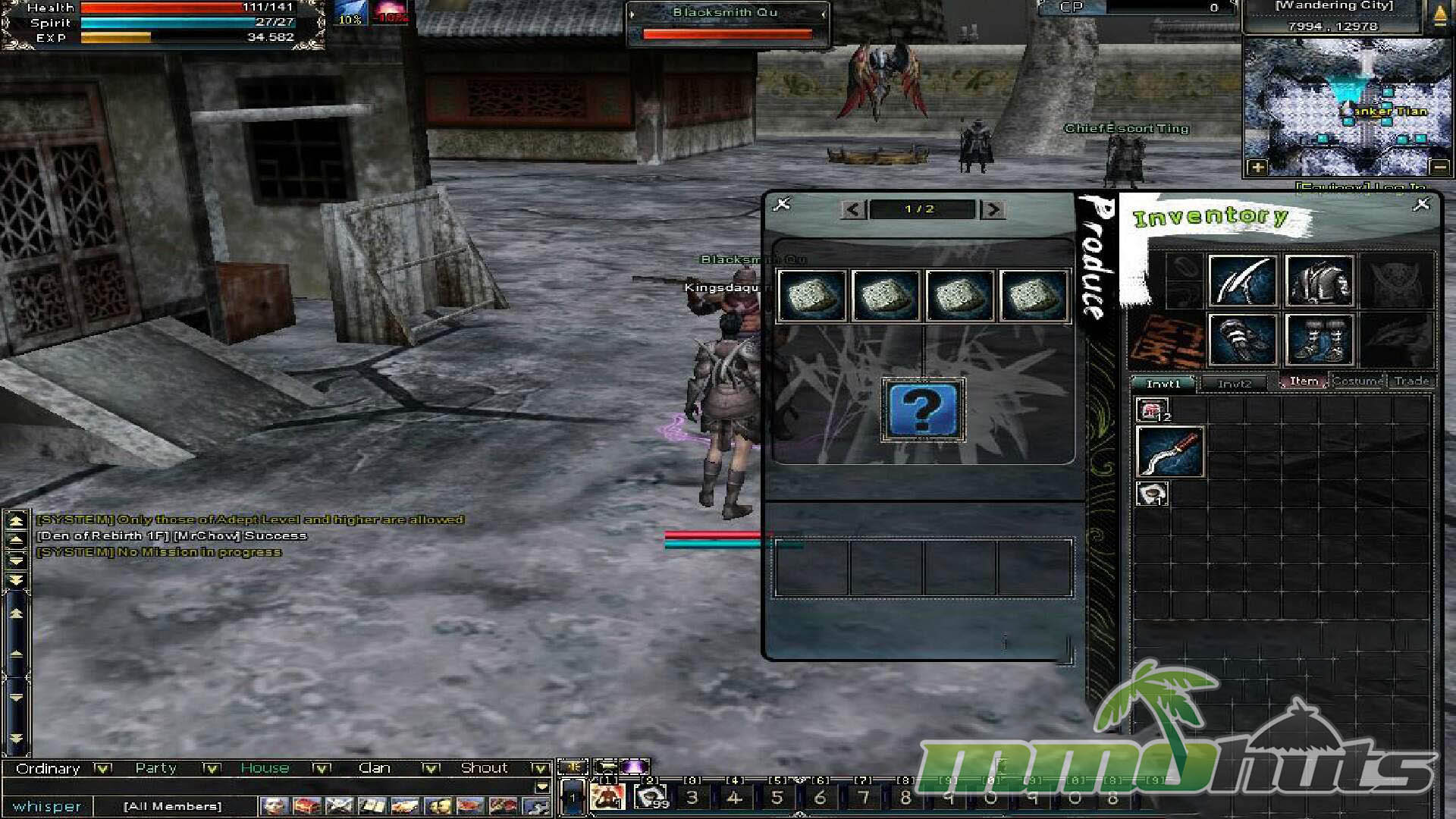
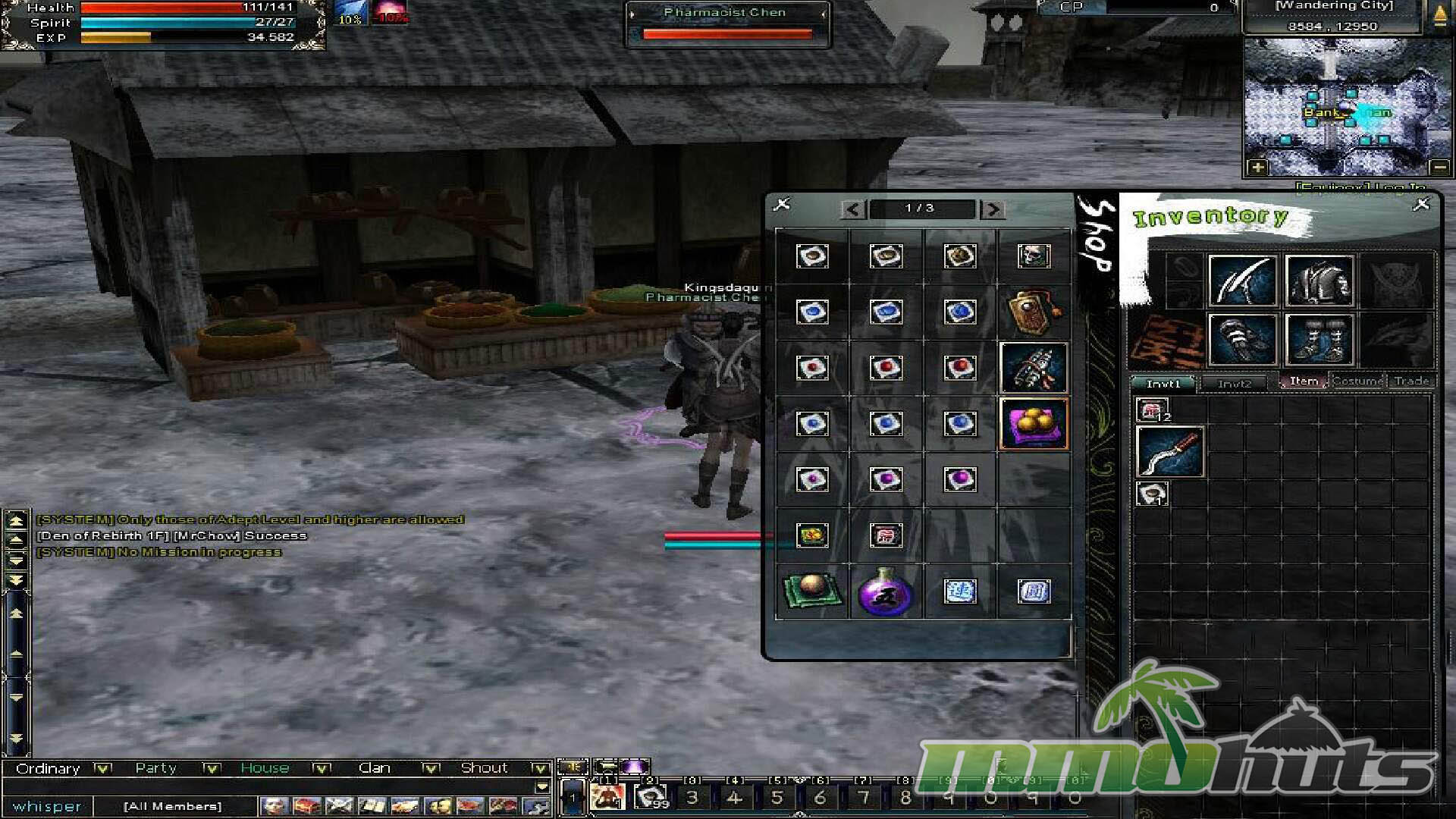
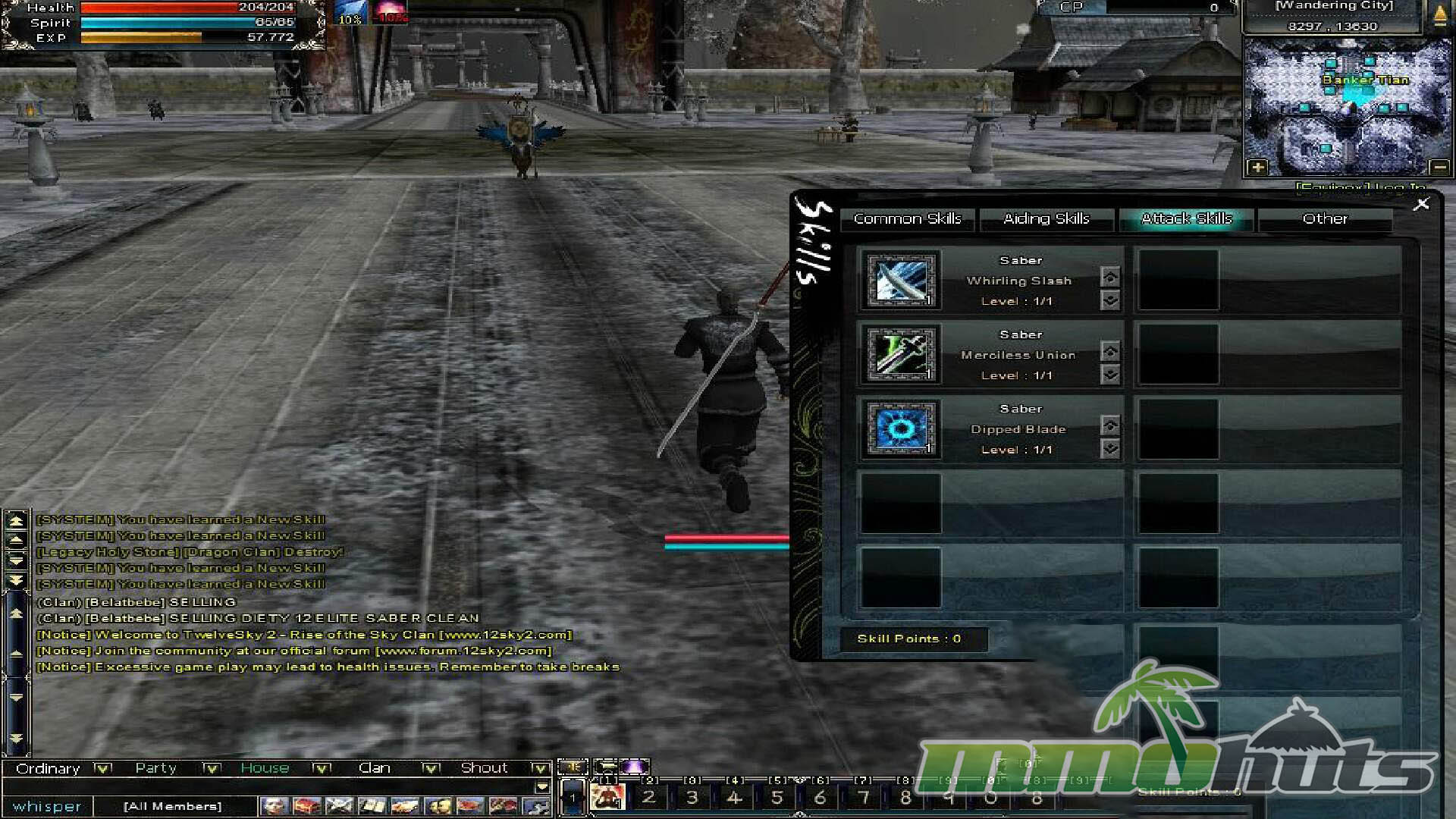
Skill acquisition is handled through NPC purchasing using points gained from leveling. It works, but it feels dated and can be confusing because you can access multiple skills very early without much guidance on what is worth investing in. Players who enjoy experimenting may appreciate the freedom, but anyone looking for clear onboarding will likely feel adrift.
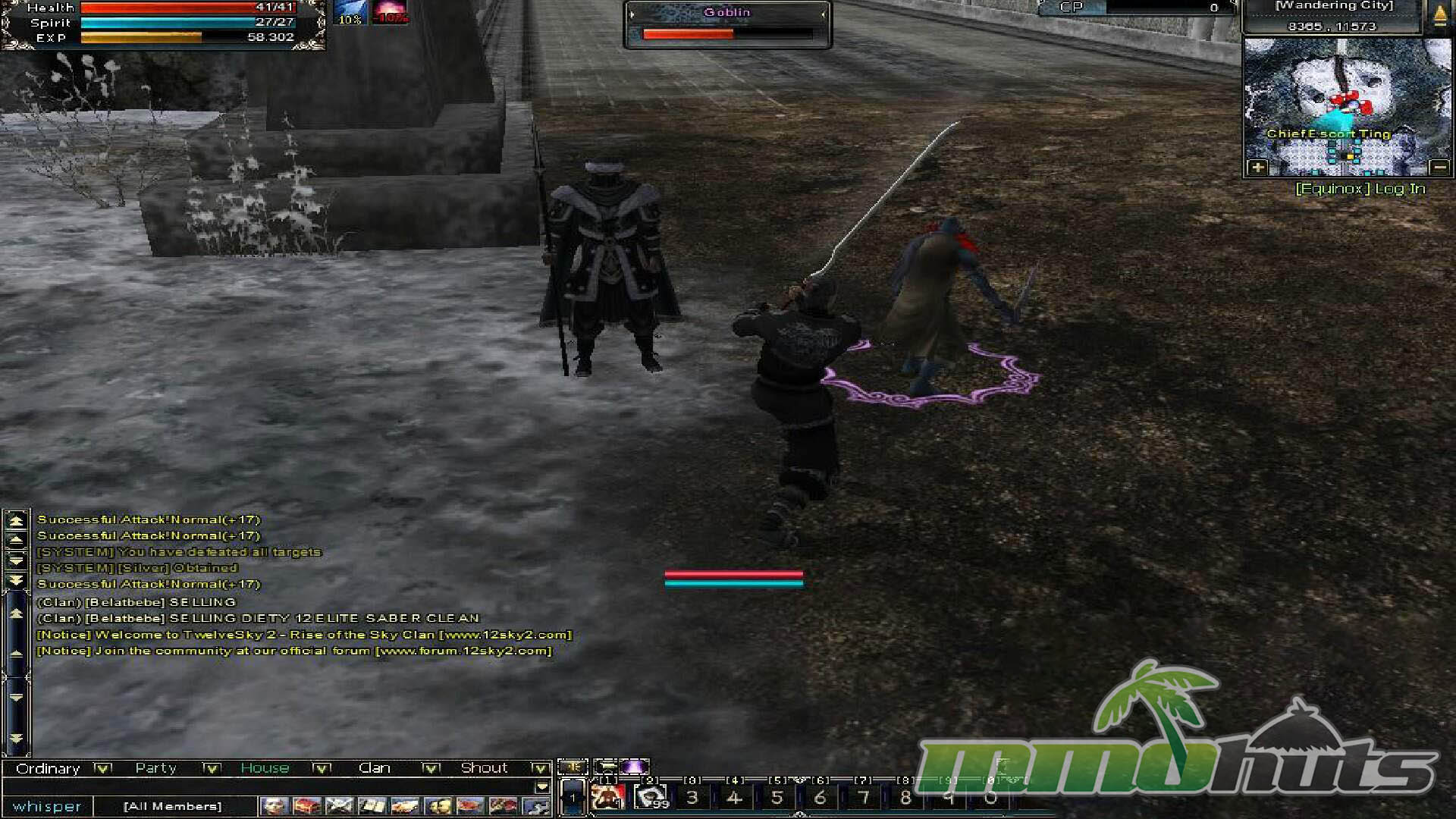
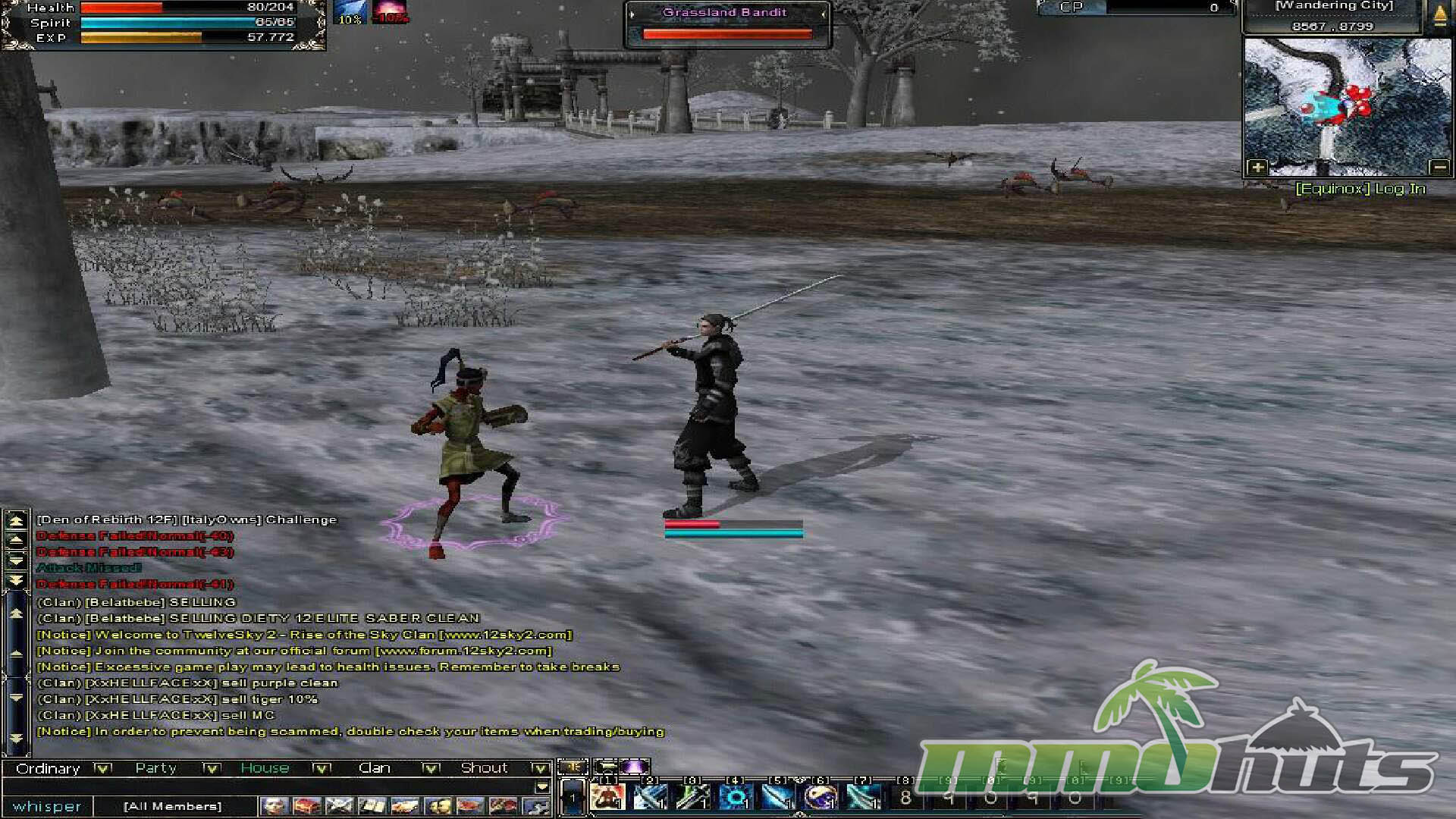
Combat itself is simple. Most fights revolve around auto-attacks with occasional skill activations, and the overall rhythm rarely demands much adaptation in standard PvE. Some builds add a bit of preparation, such as maintaining buffs to improve attack speed or damage output, and upgrading those skills does matter, but the baseline experience is still repetitive.
Questing and Motivation: Functional Grinding, Little Narrative Pull
The quest structure is as traditional as it gets: travel out, defeat a set number of enemies, return for a reward, repeat. It is efficient for leveling, but it does not do much to create memorable moments. NPC dialogue rarely adds meaningful context, and tonal inconsistencies sometimes creep in, including modern phrasing that clashes with the setting.
The bigger issue is that the game provides limited reasons to care beyond progression for its own sake. If you are looking for story hooks or a clear campaign-style arc, Twelve Sky 2 does not strongly support that. The most compelling long-term motivation tends to be clan competition and PvP participation, rather than the world’s narrative stakes.

Final Verdict: Good
Twelve Sky 2 has a few clear strengths, particularly its character modeling and the smoothness of its combat animations, but it is held back by repetitive PvE structure and a world that often feels empty despite its size. It is not a disaster, it is simply a very average MMORPG with dated systems and limited guidance. Players who enjoy classic grind loops and clan-oriented PvP may still find it worthwhile, but anyone seeking lively exploration or story-driven content will likely bounce off.
Twelve Sky 2 Links
Twelve Sky 2 Official Site
Twelve Sky 2 Wikipedia
Twelve Sky 2 Google Play Companion App
Twelve Sky 2 Wiki [Database/Guides]
Twelve Sky 2 Wikia [Datebase/Guides]
Twelve Sky 2 Facebook
Twelve Sky 2 System Requirements
Minimum Requirements:
Operating System: Windows XP / 2000
CPU: Pentium III 800mhz
Video Card: GeForce 5200 or Radeon 7600 64 MB
RAM: 512 MB
Hard Disk Space: 3 GB
Recommended Requirements:
Operating System: Windows XP / 2000
CPU: Pentium IV 2.4 Ghz
Video Card: GeForce FX 5600 or Radeon 9550 128 MB
RAM: 1 GB
Hard Disk Space: 3 GB
Twelve Sky 2 Music & Soundtrack
Twelve Sky 2 Additional Information
Developer: ALT1
Publisher(s):
Europe – Mayn Interactive
Philippines – GameClub
Korea – Paran
China – Gfyoyo
Taiwan – Gameflier
North America – Aeria Games and Entertainment
Game Engine: GXD Game Engine
Release Date: September 09, 2009
Development History / Background:
Twelve Sky 2 is produced by the Korean studio ALT1, a team closely associated with the Twelve Sky franchise. The setting draws from ideas rooted in Chinese cosmology, which helped the series resonate strongly across parts of the Asian MMO market. The game received public exposure at events like the 6th annual ChinaJoy Expo in 2008, and it later appeared in coverage and photo features on UDN. Twelve Sky 2 runs on ALT1’s in-house GXD Game Engine, which contributes to its distinct look and overall atmosphere. ALT1, previously known as Gigasoft, is best recognized for the Twelve Sky titles, and the studio also worked on the 3D fantasy MMORPG Troy Online (released in 2011 and now shut down).