TOME: Immortal Arena is a 3D fantasy MOBA built around brisk, brawl-heavy matches that typically wrap in 10 to 20 minutes. Instead of leaning into complex stat math, it aims for an approachable ruleset, there is no ability power, armor penetration, magic resistance, or similar layers that define many genre staples.
 | Publisher: KIXEYE / Steam Playerbase: Low Type: MOBA Release Date: November 21, 2014 (NA/EU) Shut Down Date: May, 2015 Pros: +Fast 10 to 20 minute matches with frequent fights. +Easy to learn and get into quickly. +Supports a 7 vs 7 map for bigger brawls. Cons: -Very little room for builds or personalization. -Lightweight systems can feel shallow to competitive players. -Small item pool limits experimentation. |
TOME: Immortal Arena Overview
TOME: Immortal Arena is a fantasy-themed MOBA developed by KIXEYE and distributed through Valve’s Steam platform. It began life as a browser project, but the focus shifted to a standalone client release, and the browser version was ultimately discontinued. Even with those roots, the Steam version presents clean, readable visuals and can run at 1920×1080, which helps the battlefield stay legible during the constant skirmishing.
In feel, it lands somewhere between the lane structure you would expect from League of Legends and the more immediate, action-forward pacing associated with arena-style MOBAs. Matches are intentionally short, and the game supports multiple team sizes and maps, including a 3v3 Colosseum, a 5v5 Sanctuary, and a larger 7 vs 7 option. A few design choices set it apart from the more traditional, systems-heavy entries in the genre:
- Match length is generally 10 to 20 minutes, with less emphasis on long farming phases.
- Progression during a match is largely automated, abilities improve as you level without talent choices.
- Stats are pared down to the essentials (Damage and Health), avoiding layers like armor, magic defense, or penetration.
- There are no ward items or equivalent tools to place persistent vision.
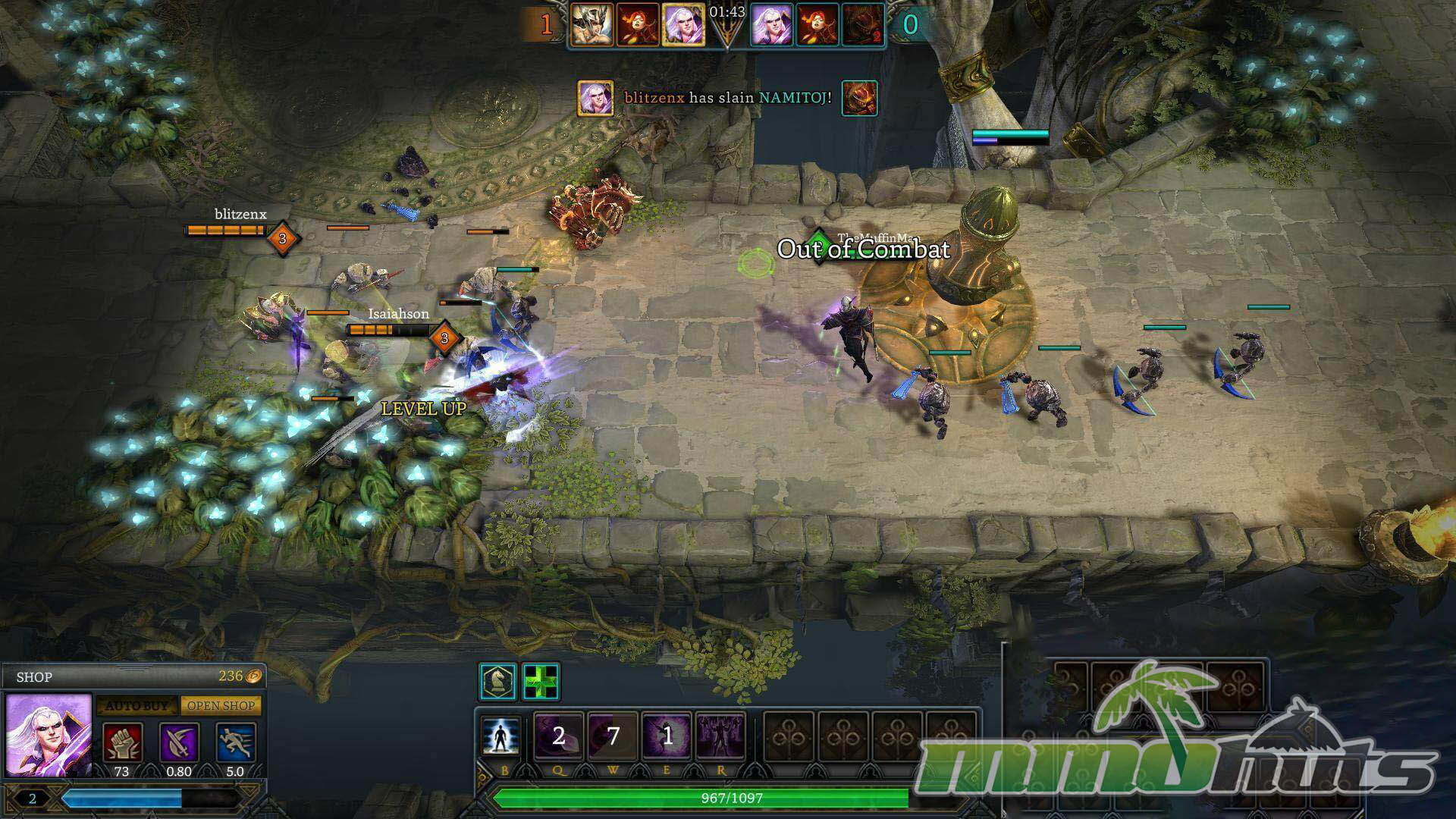
- Shopping does not require a base visit, you can buy items when you are out of combat.
KIXEYE announced that official development support for Tome: Immortal Arena ended on February 5, 2015. No new content will be added, but the servers will remain up for some time.
TOME: Immortal Arena Screenshots
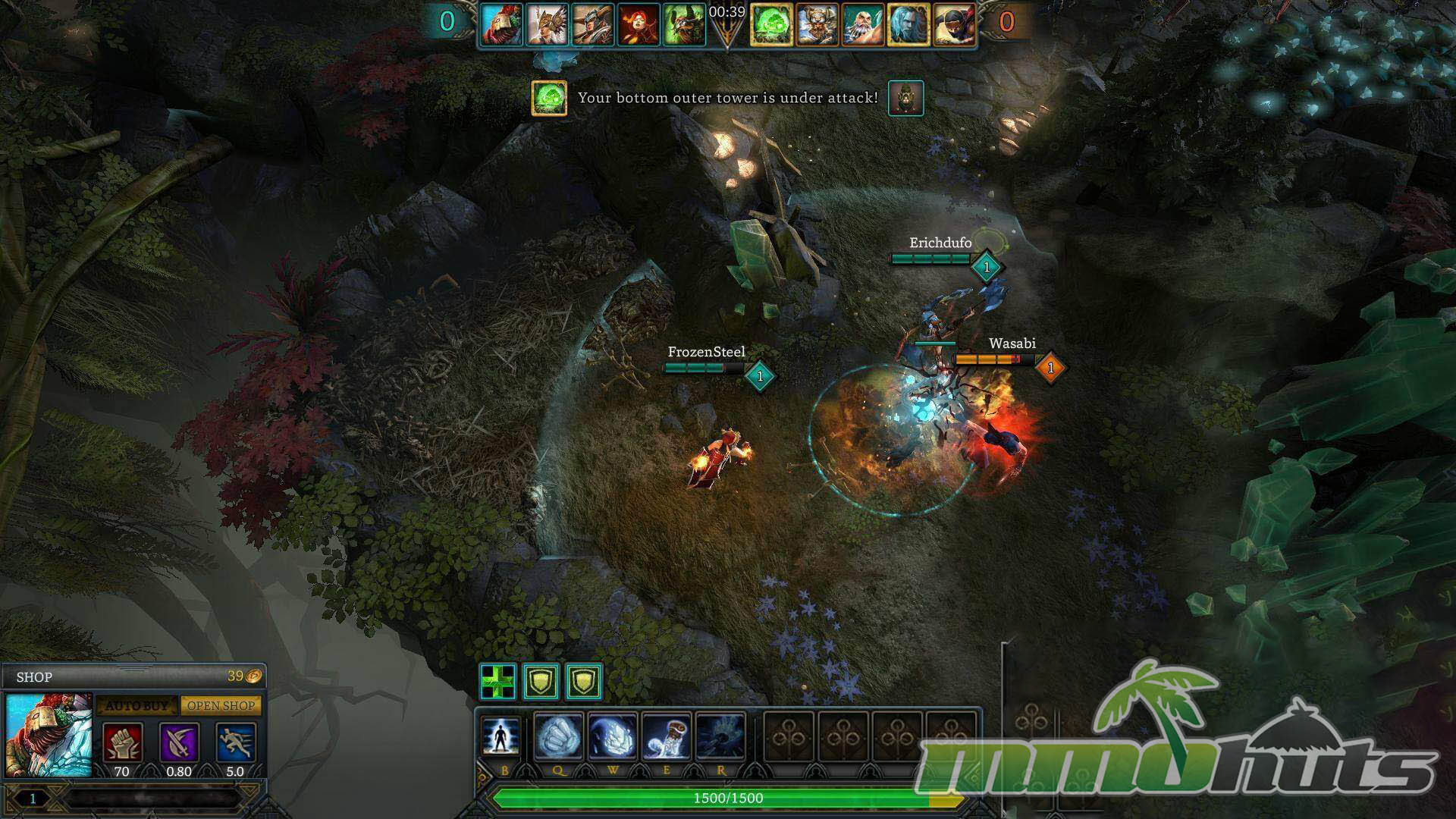
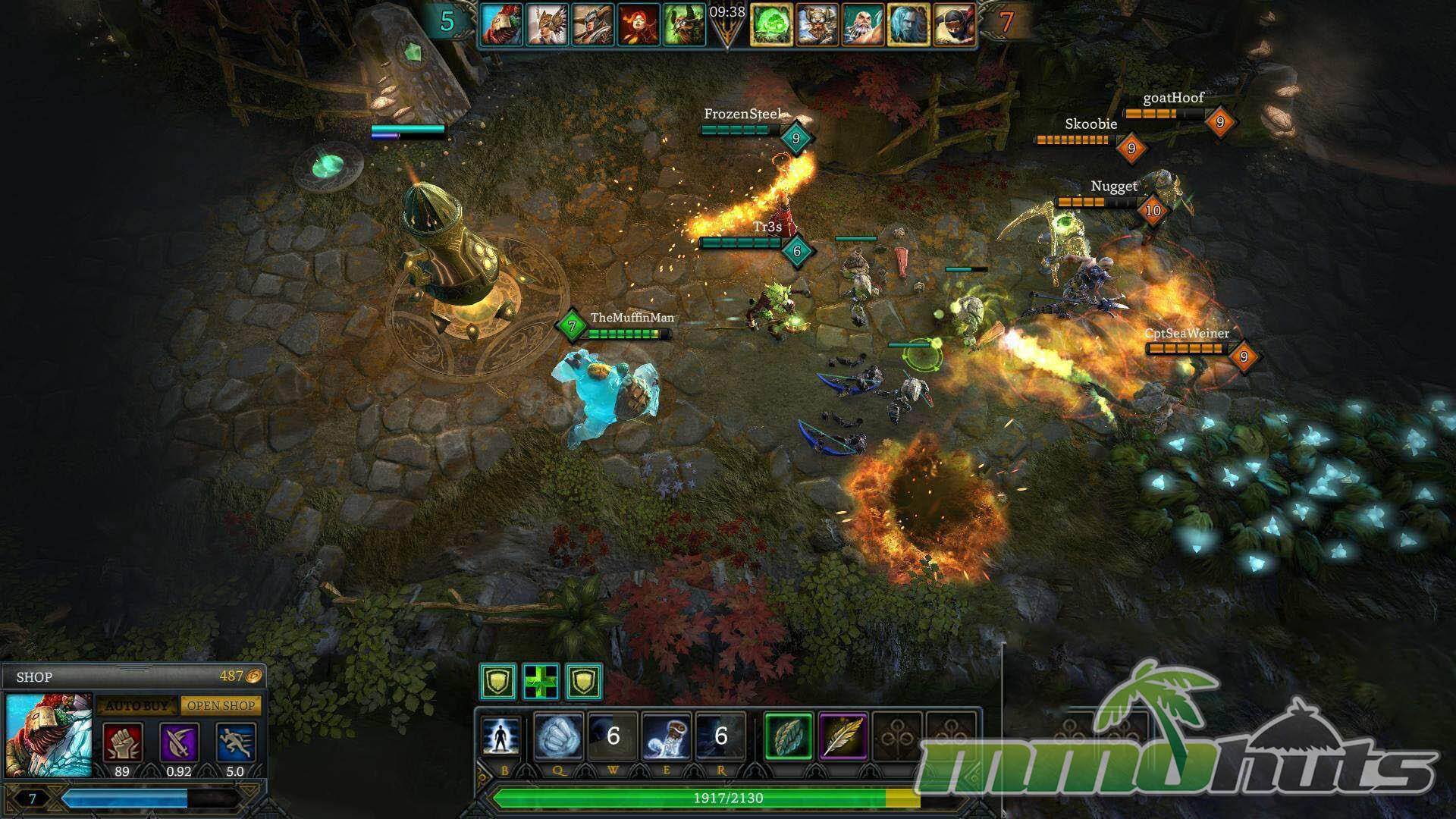
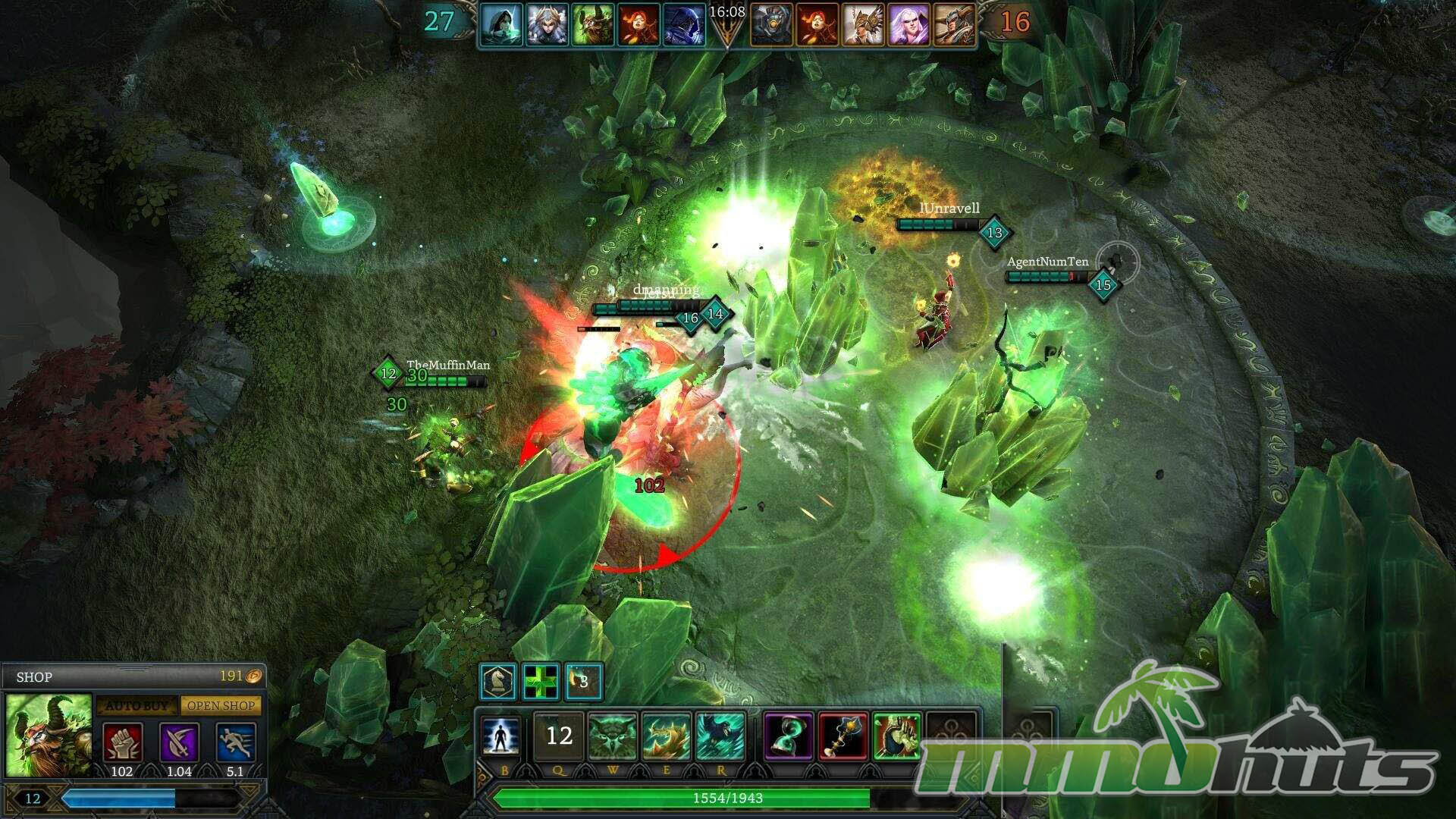
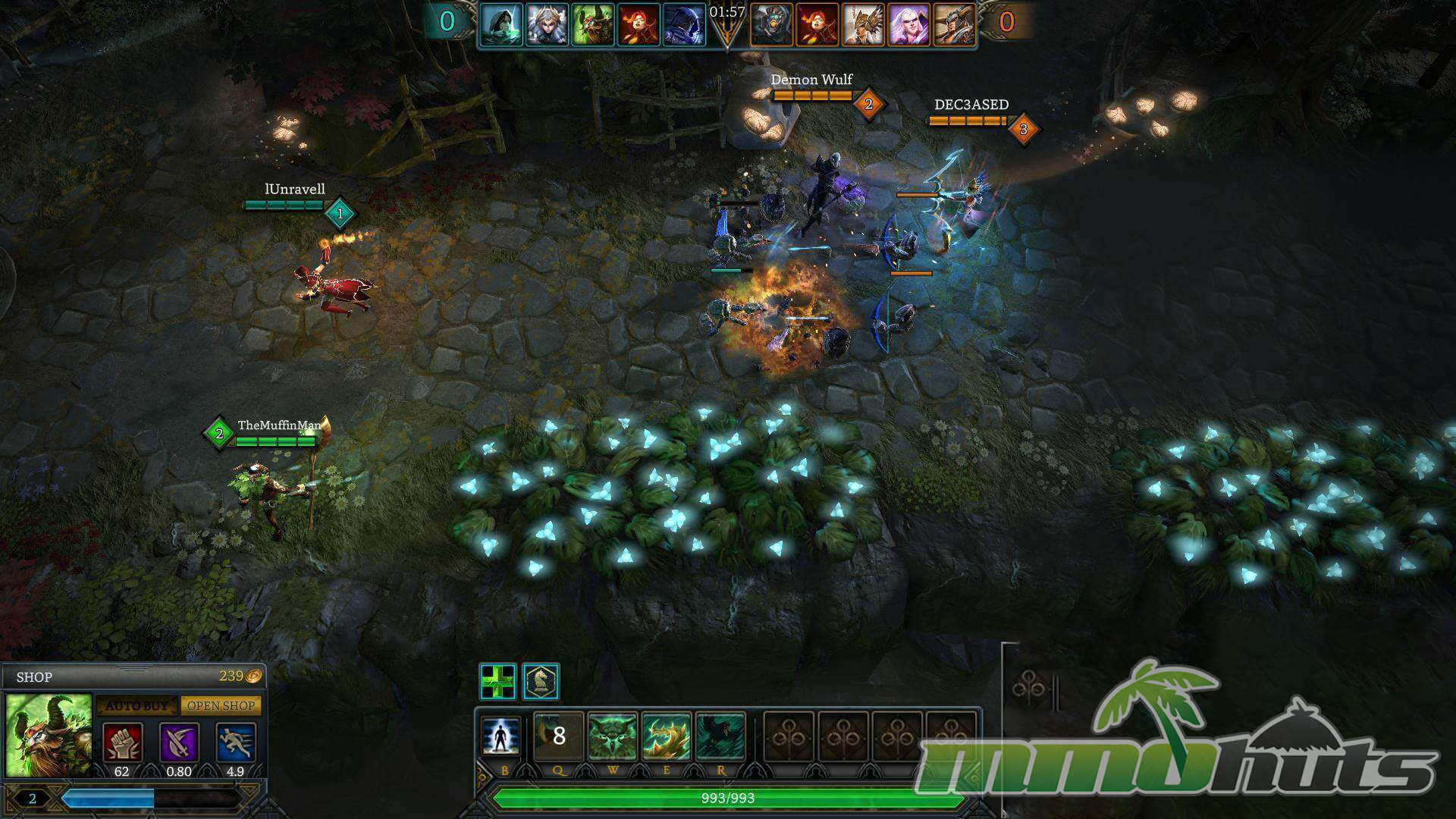
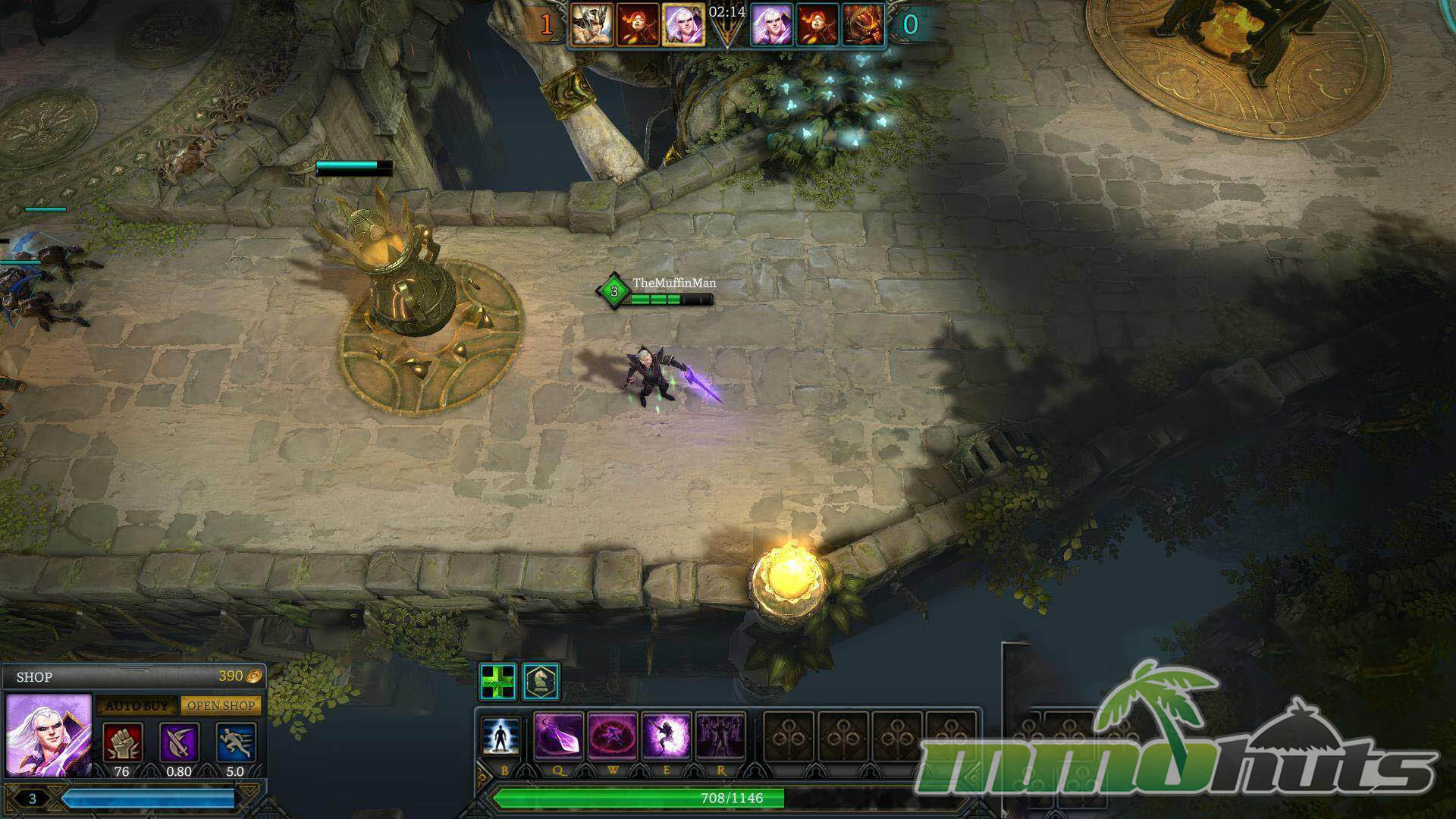
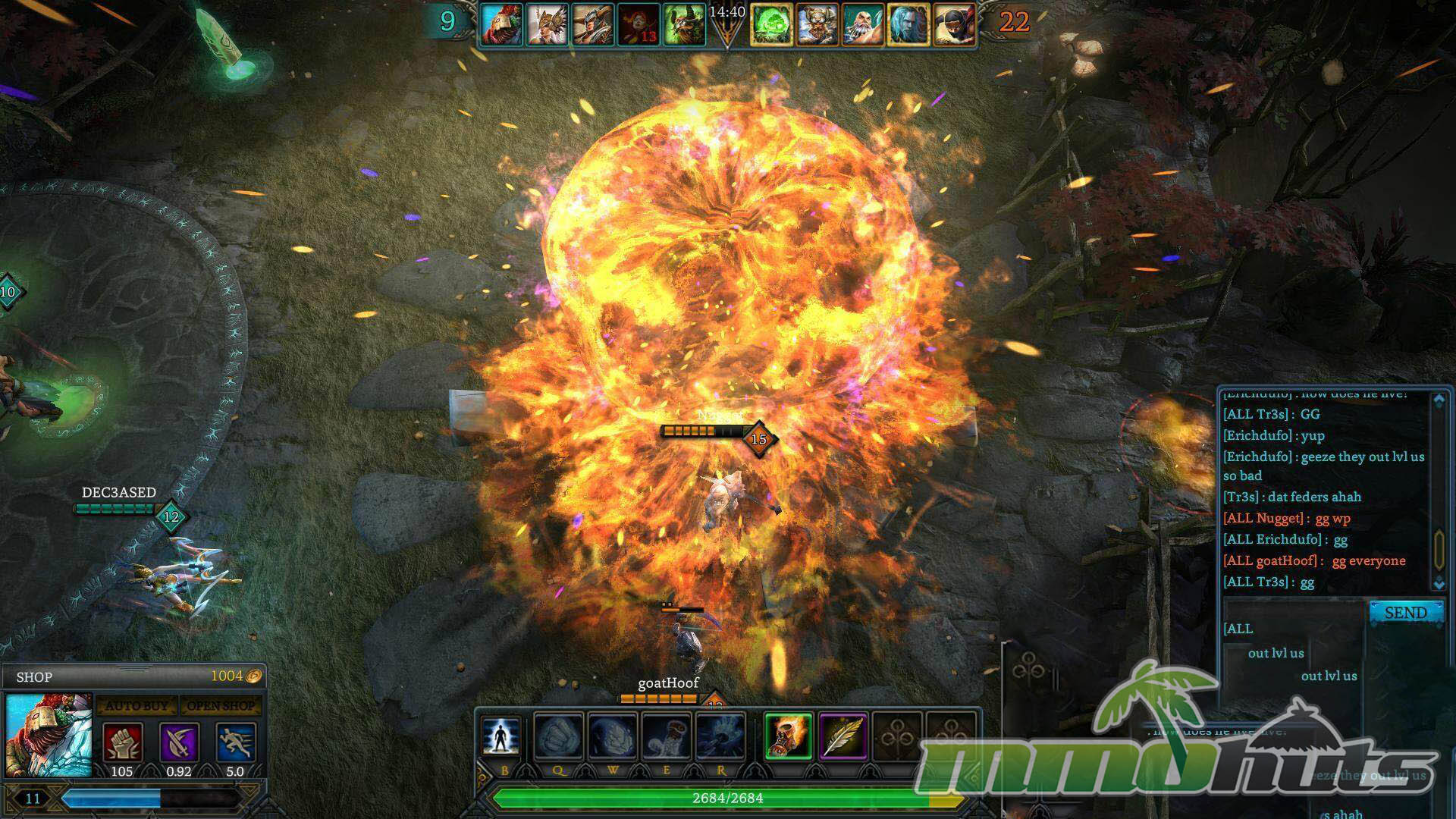


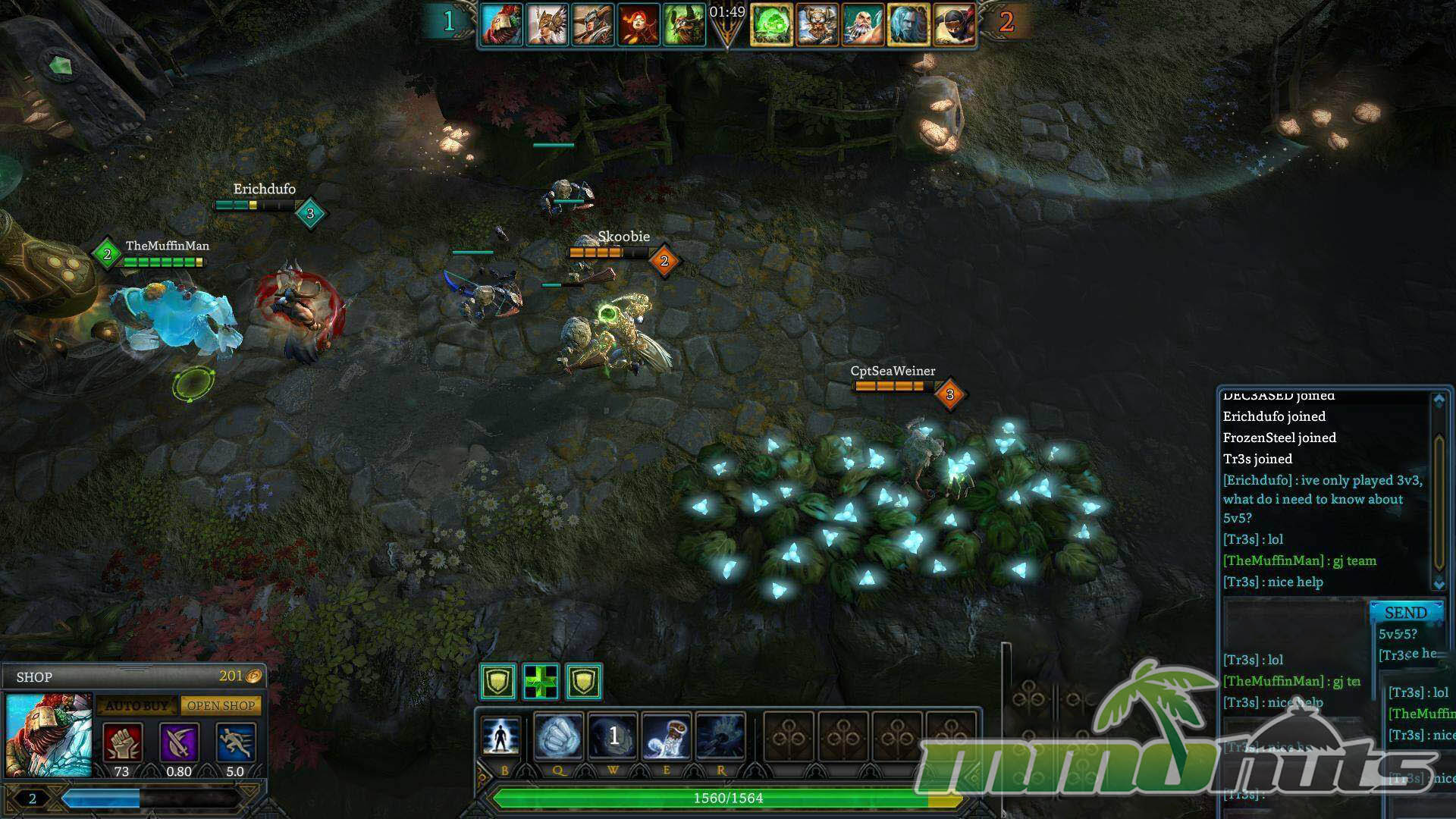
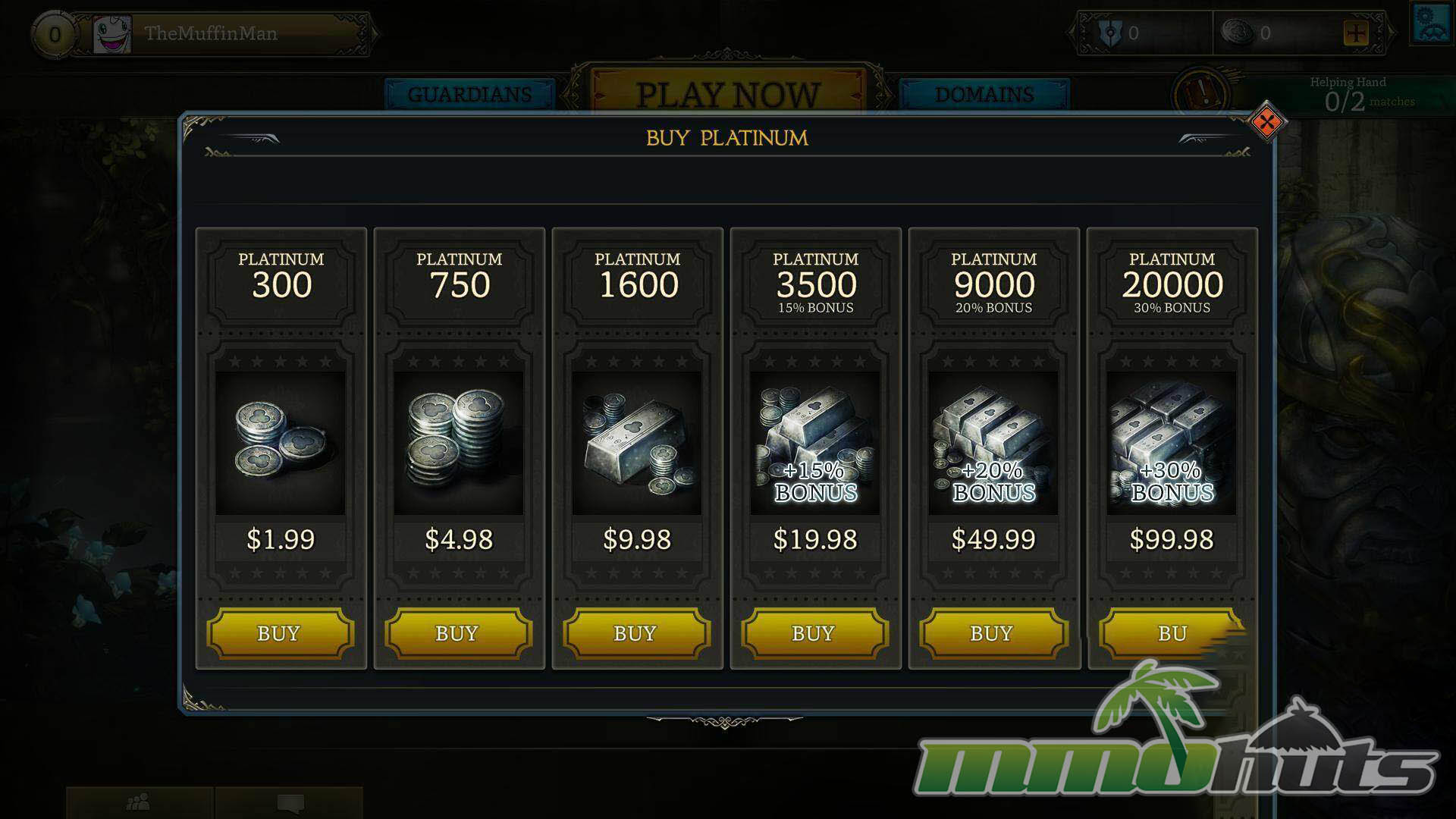
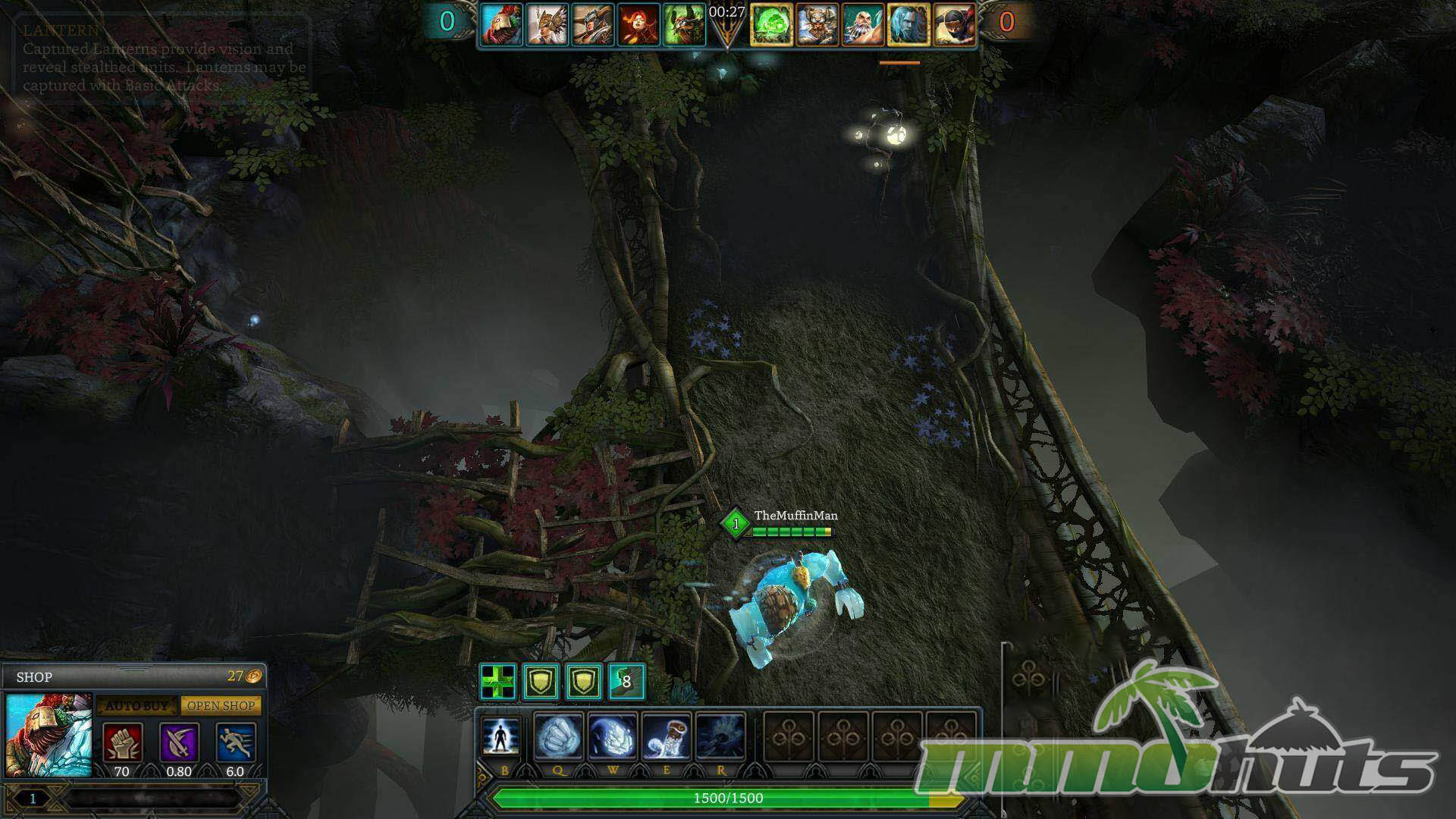
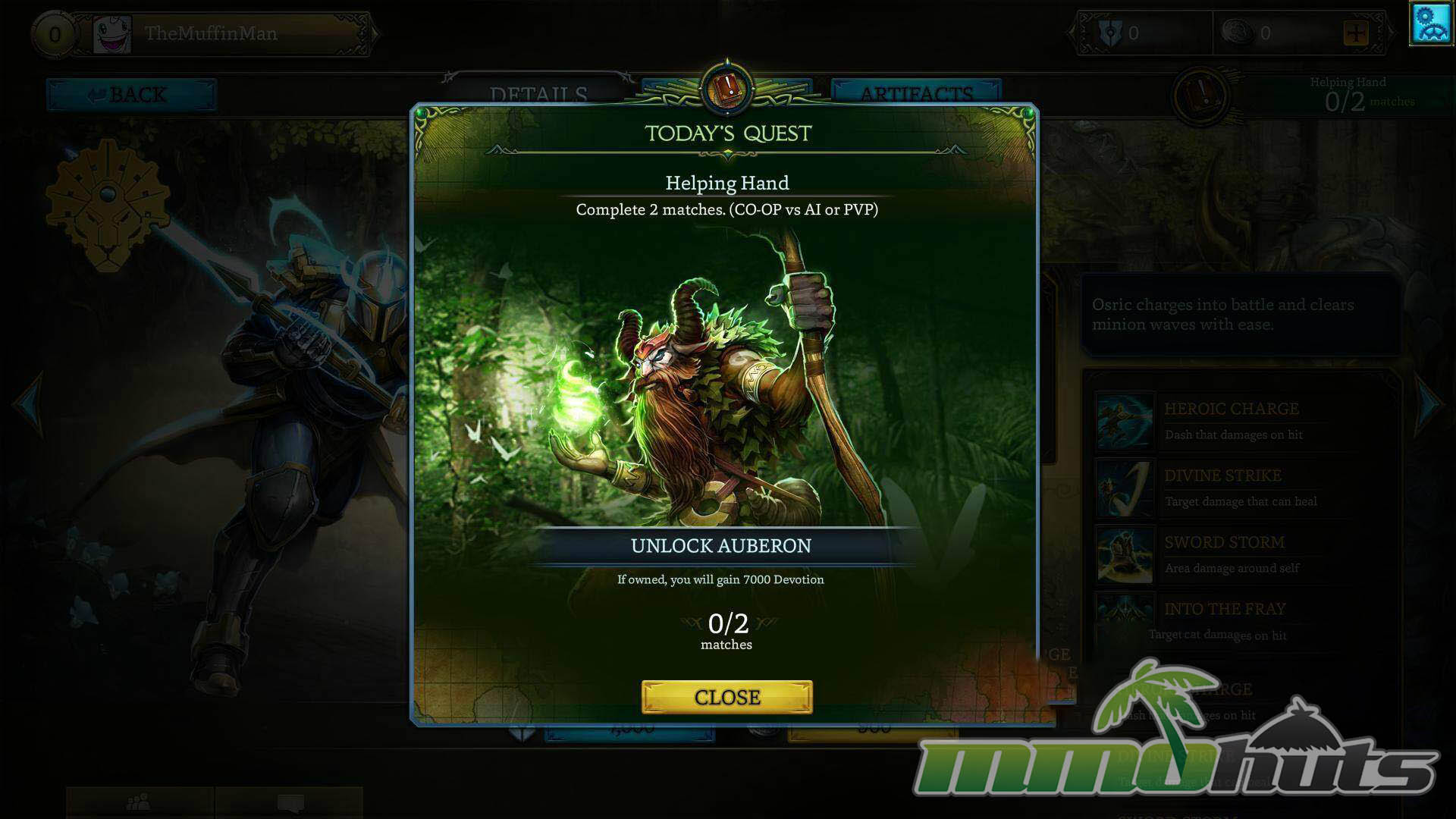

TOME: Immortal Arena Featured Video

TOME: Immortal Arena Review
TOME: Immortal Arena is KIXEYE’s take on a streamlined MOBA, built to minimize downtime and get players into fights quickly. After appearing earlier as a browser-based closed beta, it arrived on Steam on November 21, 2014. In a genre where games like League of Legends and DotA helped define deep metas and years of evolving balance, TOME takes the opposite approach: it trims out many of the genre’s traditional knobs and dials to create something closer to an action-first “lite” interpretation.
The result is a game that rewards forward momentum. The economy is simplified (you do not need to last-hit to earn gold), resource management is removed (no mana system), and the usual retreat-and-reset loop is softened by out-of-combat regeneration and the ability to shop away from base. These decisions push matches toward frequent clashes and quick conclusions, for better and for worse.
First Steps and Tutorials
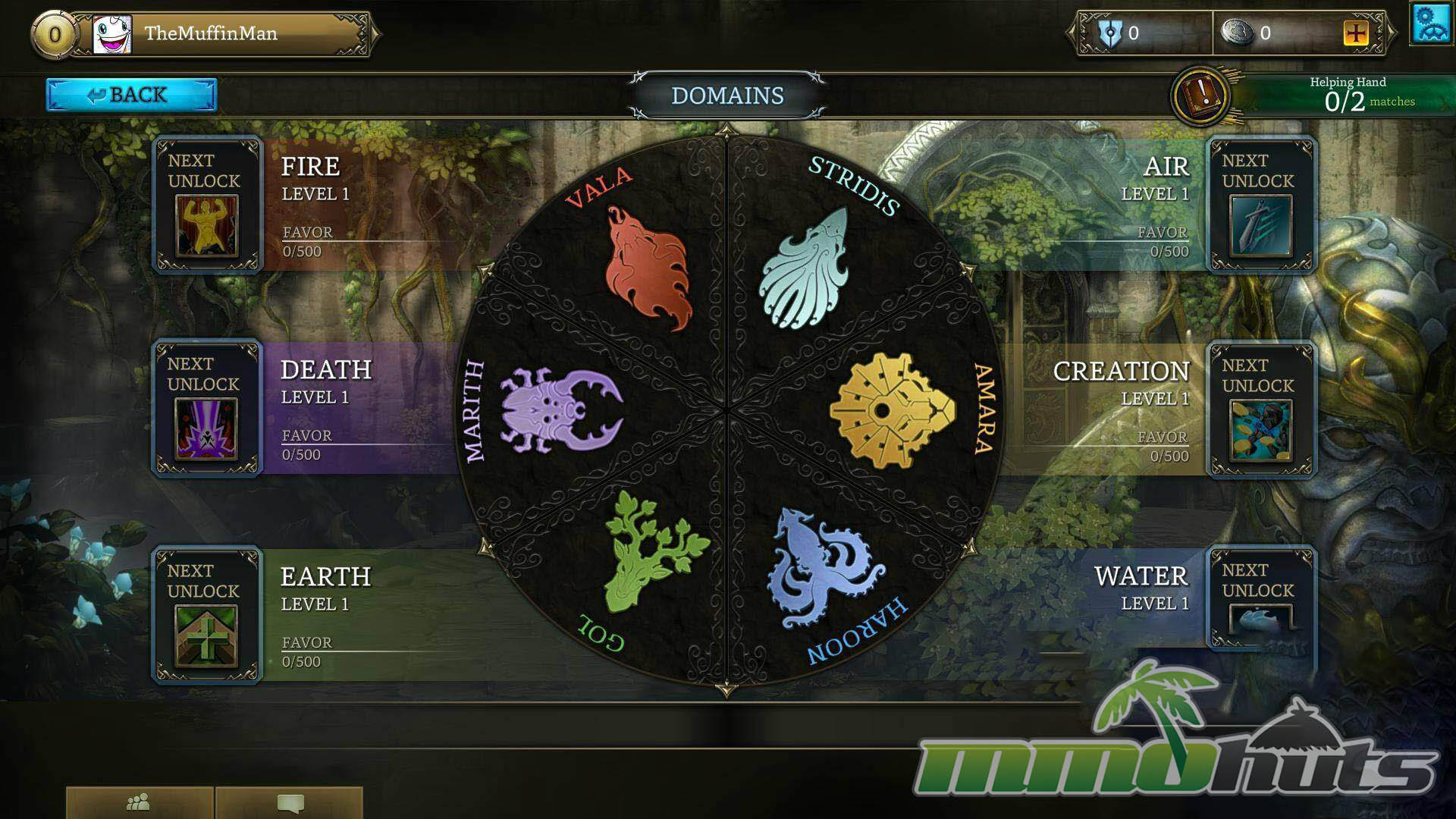
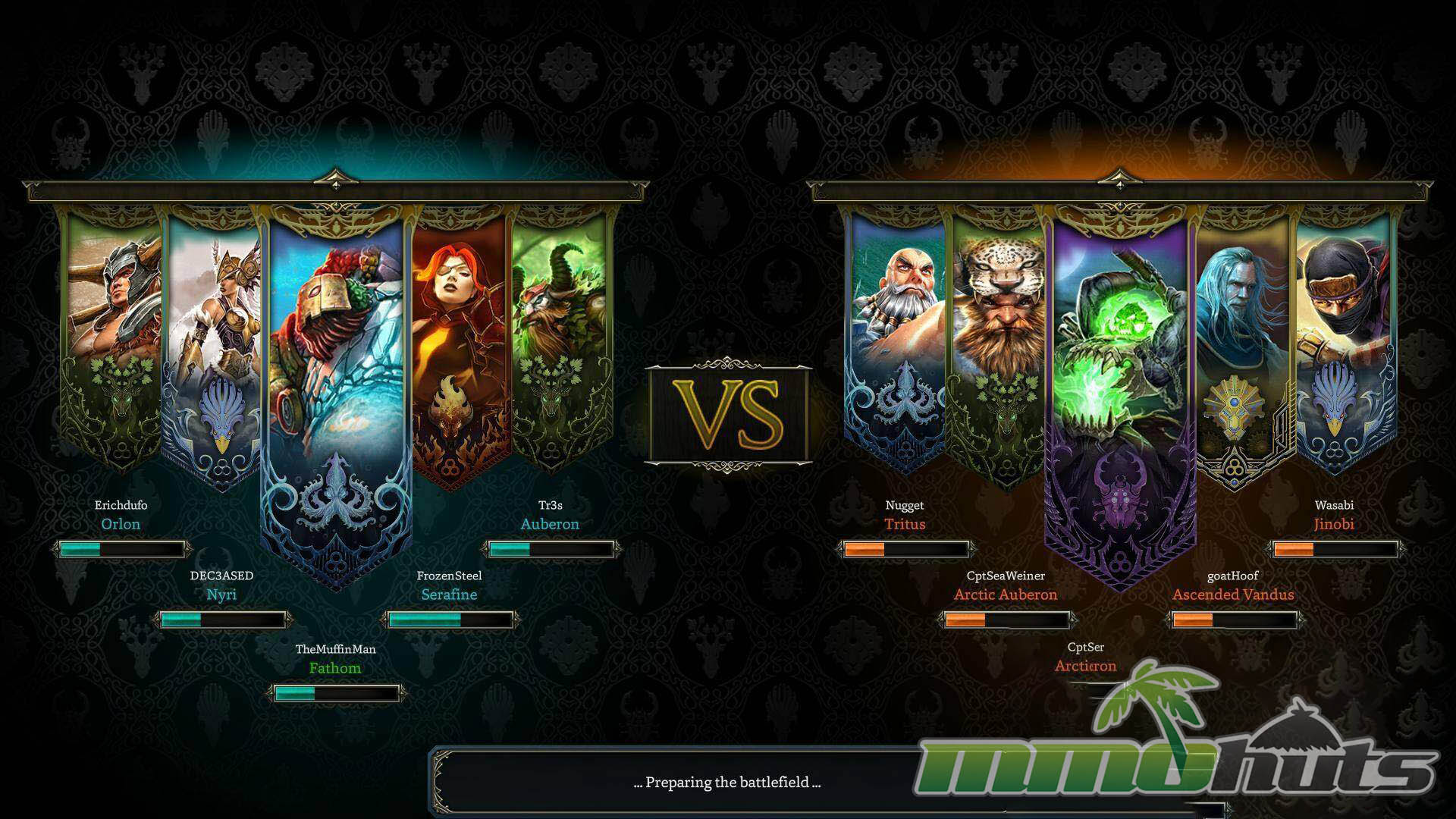
In TOME, you take on the role of a Harbinger and bring a chosen Guardian into the arena, drawn from one of six Domains. On your first launch, the game asks you to select a skill level, Beginner, Intermediate, or Expert, which effectively determines how much guidance you receive. Beginner routes you through a tutorial that covers both MOBA basics and TOME-specific rules. Intermediate offers explanation plus a practice environment, while Expert drops you into the core menus immediately.
That onboarding is useful because even experienced MOBA players can be tripped up by unfamiliar ability kits and the game’s pacing. With fewer systems to manage, match outcomes tend to hinge more on execution, positioning, and knowing what each Guardian’s kit does in a fight.
Guardians, Domains, and Progression
The roster sits at 20+ Guardians, with six rotating into a weekly free selection. In practice, this rotation and the game’s quest-driven unlocks make it possible to sample a broad set of characters without spending money, especially if you mix in Co-op vs AI and PvP matches to complete objectives.
Guardians can be bought with Devotion (earned by playing) or Platinum (paid currency). Pricing is typically around 7000 Devotion or 900 Platinum. Each Guardian is tied to a Domain and has a suggested role, but because itemization is narrow and matches are fast, those roles function more like guidelines than strict team requirements. It is common to see players build aggressively even on characters labeled as more supportive, and the game rarely enforces a traditional composition.
Between matches you earn Domain Favor, Guardian XP, and Devotion. Favor unlocks Blessings, persistent, equipable bonuses chosen during Guardian select, restricted to the Guardian’s own Domain. You also have Relics that provide smaller bonuses; some are core options aligned with broad roles, while others are Guardian-specific and unlock with Guardian XP. A particularly player-friendly touch is that Guardian XP can be earned even for Guardians you do not own, so you are not starting from zero if you decide to purchase a character later.
Maps and Match Types
TOME offers two primary maps: Coliseum (3v3) and Sanctuary (5v5), each available across Practice, Co-op vs AI, and PvP. A separate 7v7 mode also exists for players who want larger team fights and a busier battlefield.
Practice mode is generous in one key way: it unlocks the full Guardian lineup for testing. The trade-off is that Practice does not award Devotion, XP, or Favor, so it is best used to learn kits and experiment with item choices.
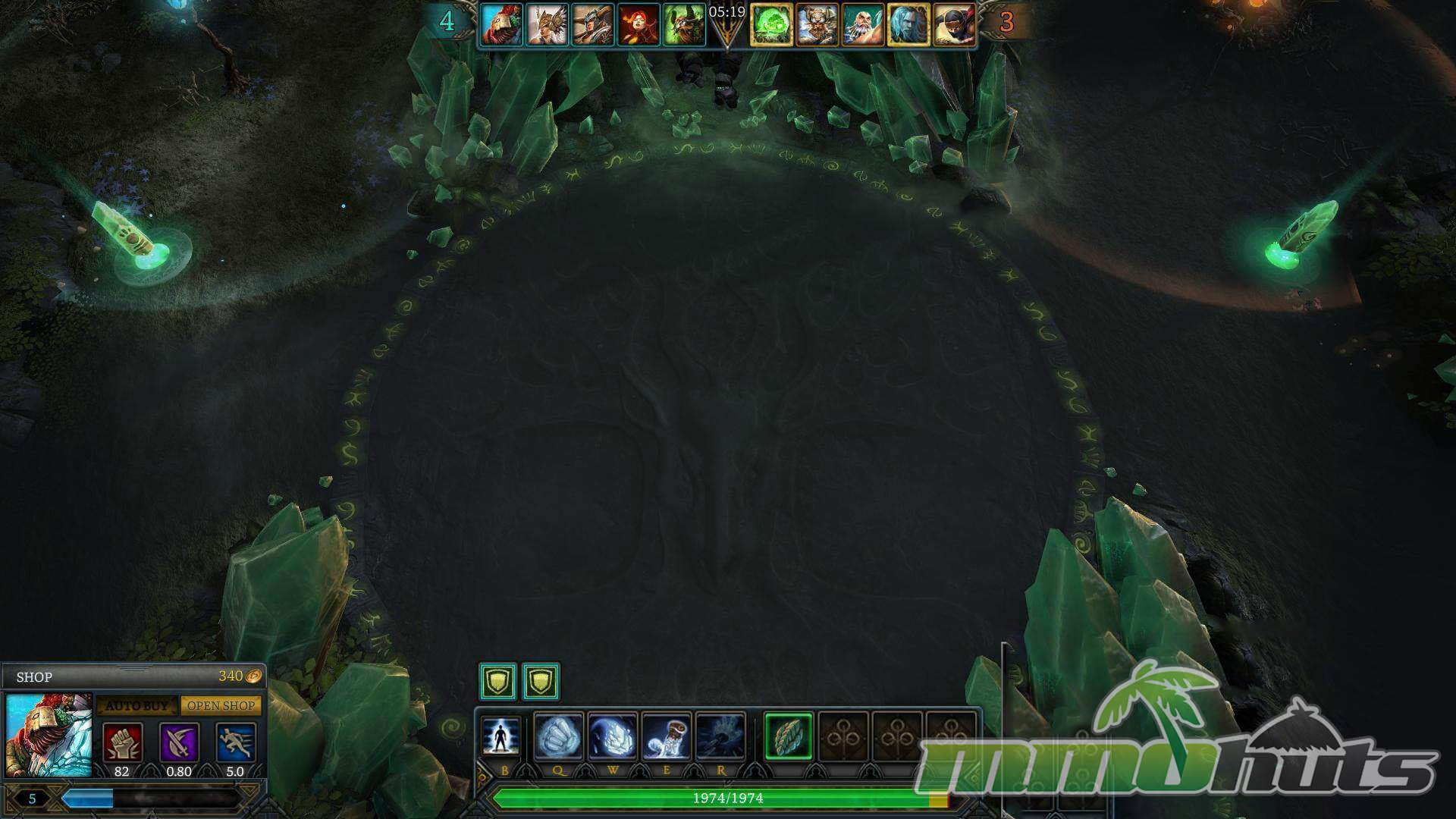
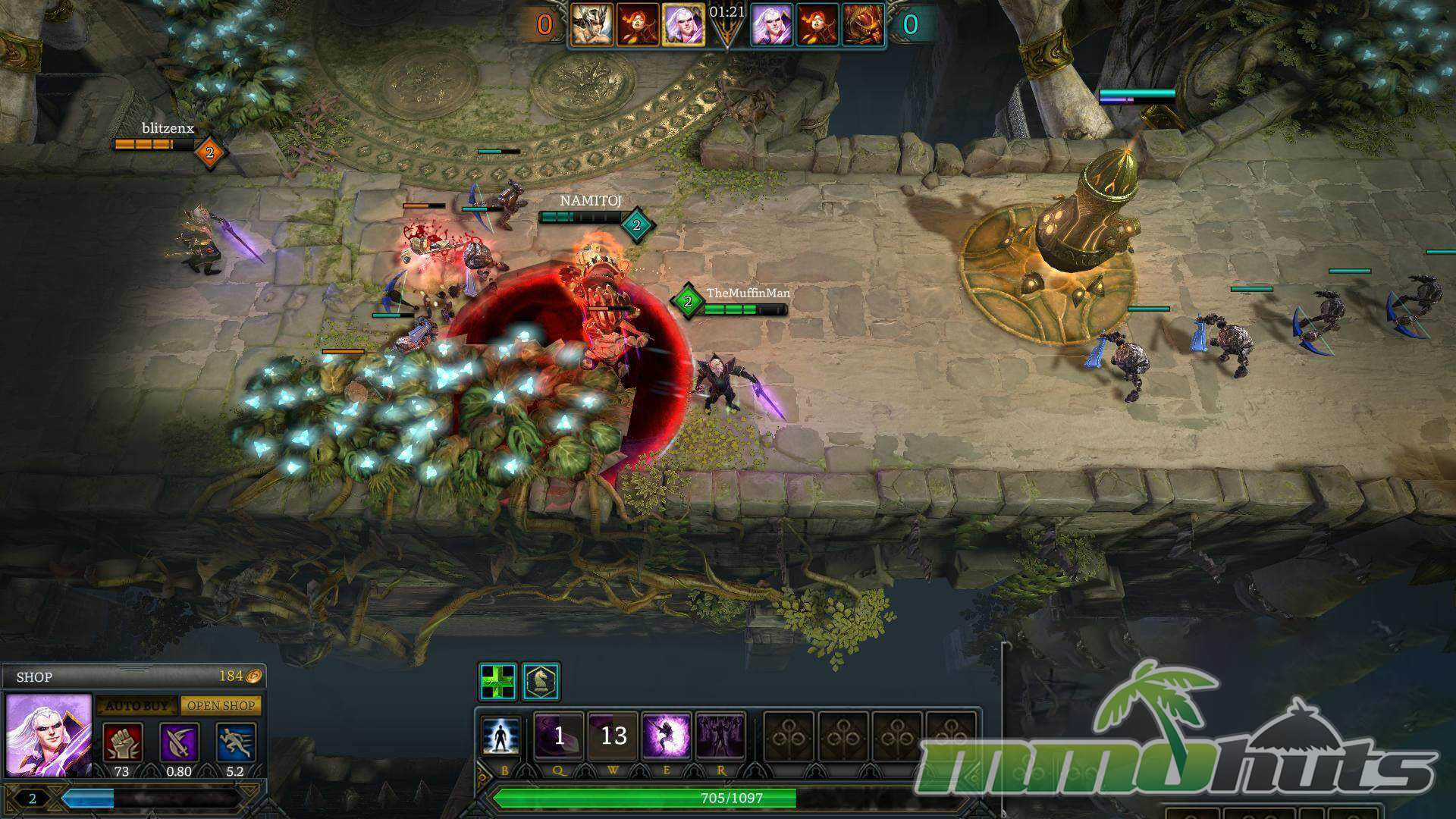
Coliseum is compact, with two lanes, two enemy towers (one per lane), and a midboss. Its size keeps players colliding constantly and matches often end quickly once a team gains momentum. Sanctuary also uses a two-lane layout, but stretches the play space and adds a jungle area with vision lanterns and neutral monsters. It includes four enemy towers total (two per lane), and its extra room can create more opportunities for flanks, rotations, and comebacks depending on team coordination.
Core Gameplay Loop
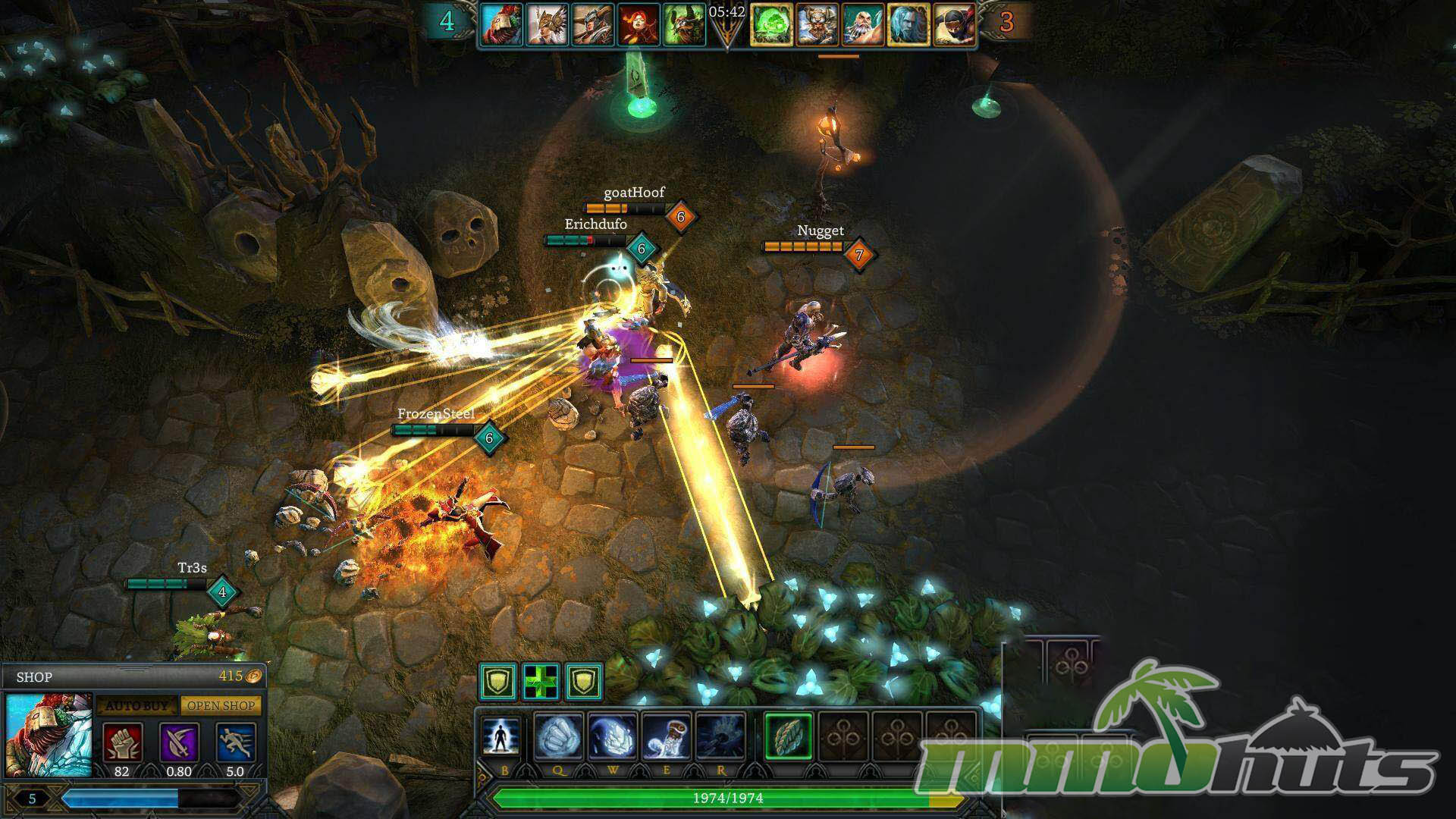
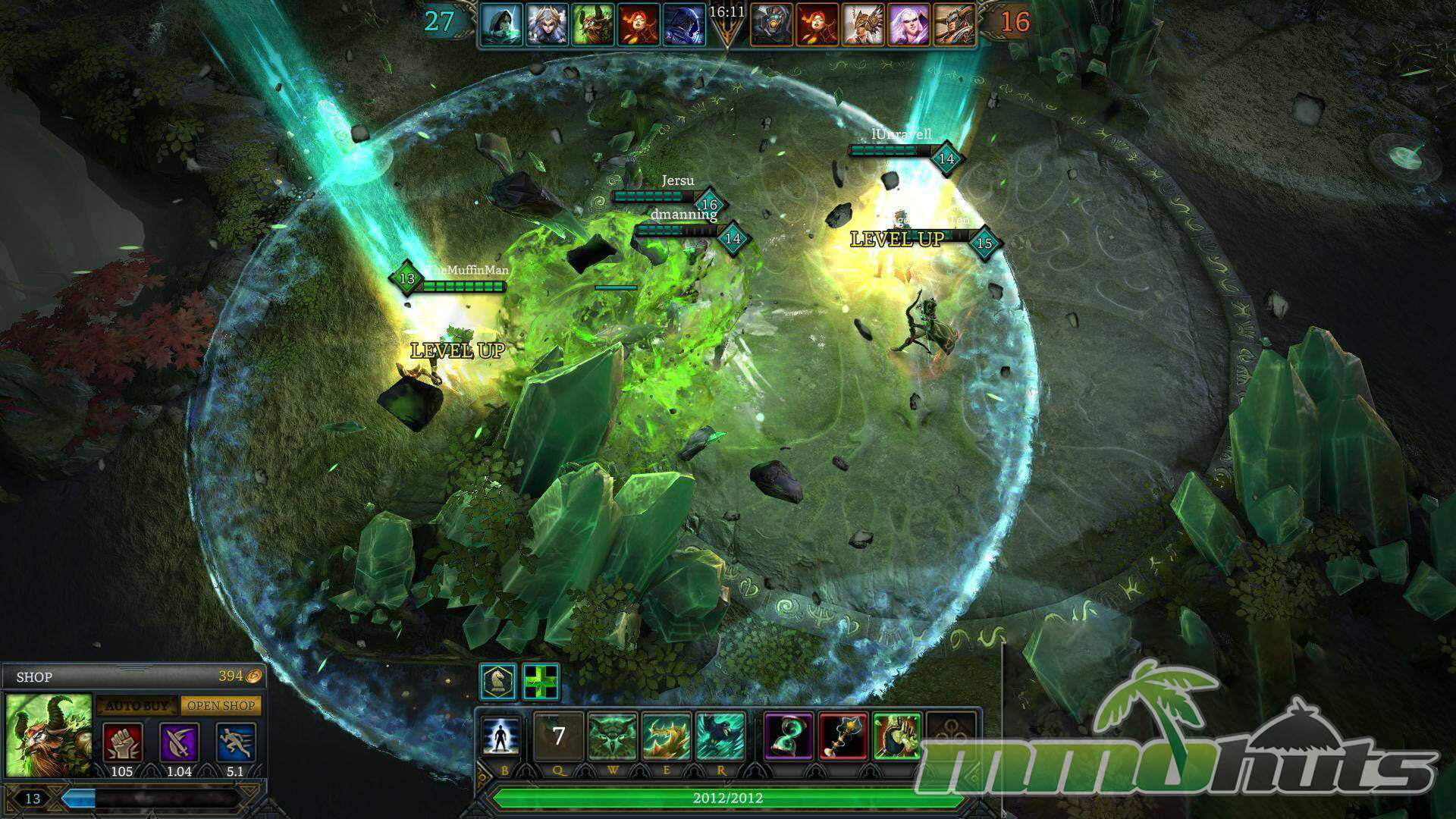
At match start you have three abilities immediately available, with your ultimate unlocking at level 6. Abilities rank up automatically as you gain levels, which removes the typical MOBA decision-making around skill order. You then push with minion waves toward the enemy altar, dealing with opposing Guardians and defensive structures along the way.
Towers have a distinctive “ammo” mechanic that can be depleted under pressure, making prolonged sieges more decisive. Once a tower falls, allied minions receive a noticeable boost (represented by an icon above their health bar), accelerating the pace and increasing the threat of a snowball. On smaller maps, losing an early tower can quickly shift the match into a defensive scramble, similar in impact to giving up a major lane objective in more traditional MOBAs.
With cooldowns as the primary limiter and no mana to conserve, combat is ability-heavy and often relentless. Combined with simplified gold generation and constant wave presence, matches can feel like a continuous series of skirmishes, with very little time where both teams are simply farming and resetting.
Life in the Coliseum
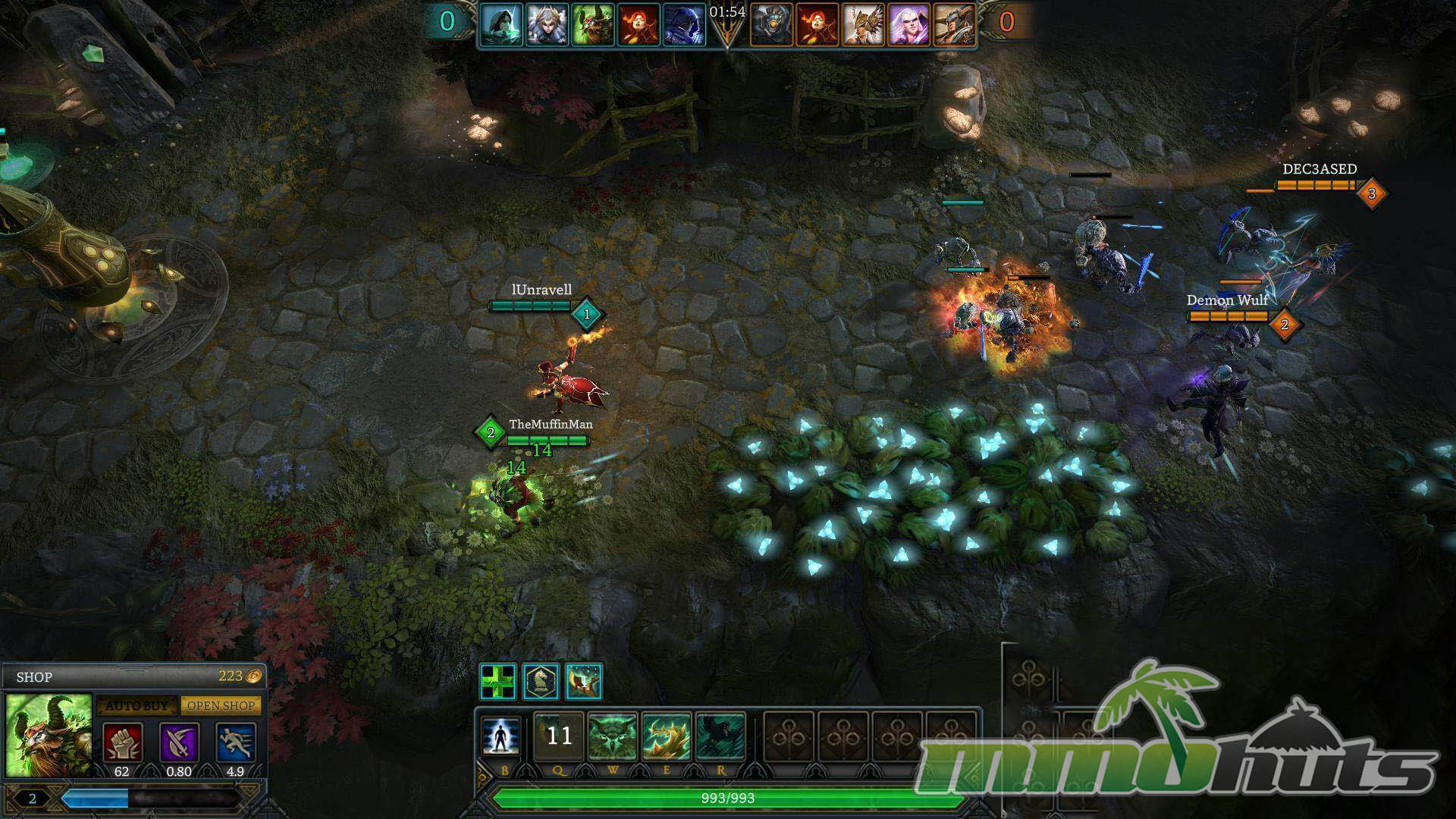
Coliseum tends to start immediately, teams spawn and quickly commit to lanes, trading damage, clearing waves, and testing for openings. Because out-of-combat recovery is fast, early pokes often matter less than coordinated bursts or catches that convert into tower pressure. Ganks happen frequently due to the map’s tight layout, and because there are only two lanes, rotations are quick and predictable.
The first tower usually determines the flow of the match. Once minions are empowered, the defending side is often forced to split attention between stopping buffed waves and responding to enemy Guardians pushing the opposite lane. That split pressure can create a cascading problem: sending one player to manage the empowered minions can weaken the main lane defense, which then invites a dive or a second tower loss. When a team is clearly ahead, the midboss becomes a win-more objective, helpful but not always required to close the game.
Sanctuary’s Jungle Pressure
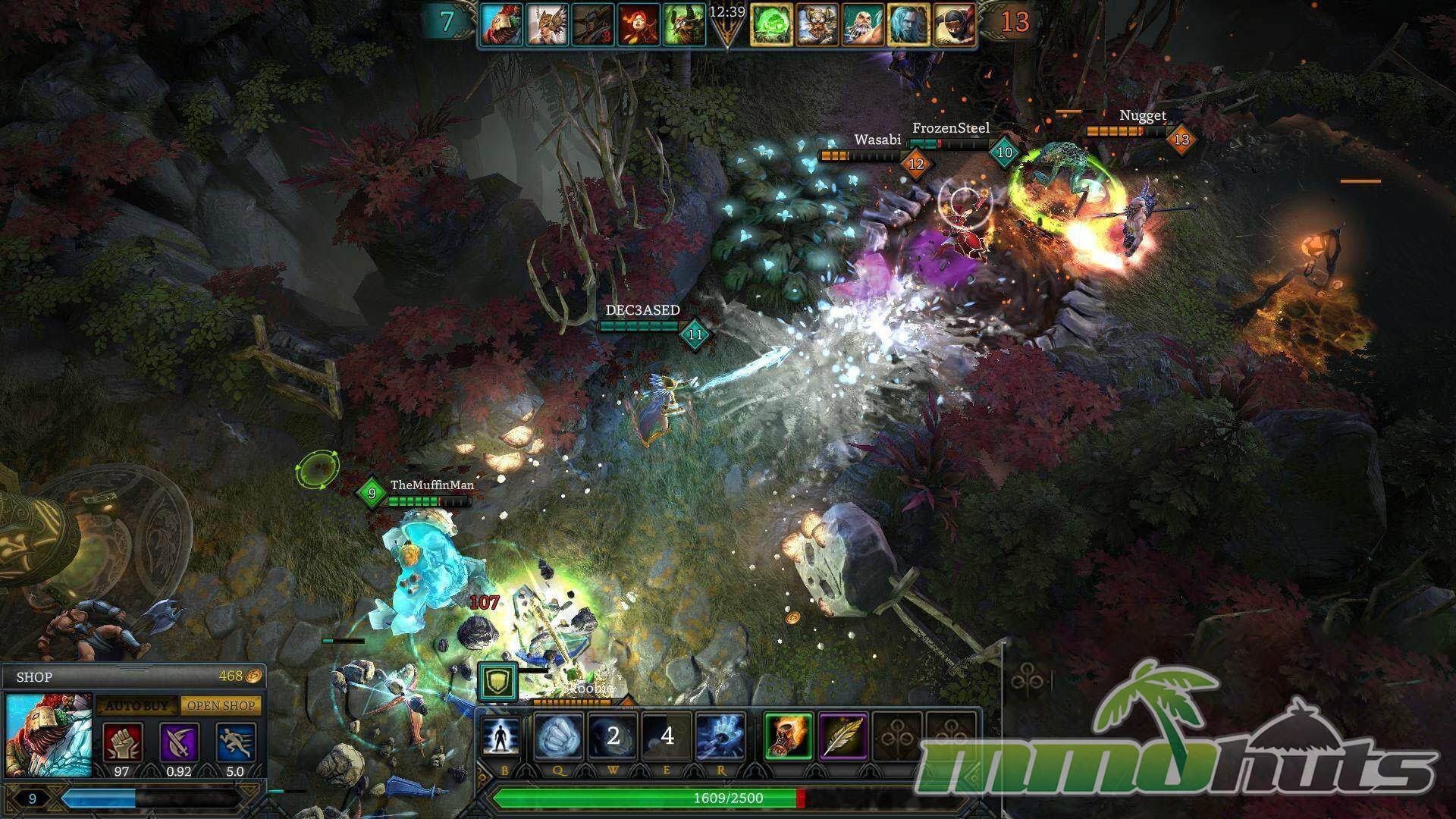
Sanctuary opens with more early movement. Instead of sprinting directly to lane, teams often fan into the jungle to secure lanterns that provide vision. Early encounters are typically small skirmishes rather than full commits, but the map’s neutral tools encourage proactive play. Movement speed runes and the Lasthul monsters (granting attack speed) can help set up ganks and create tempo advantages.
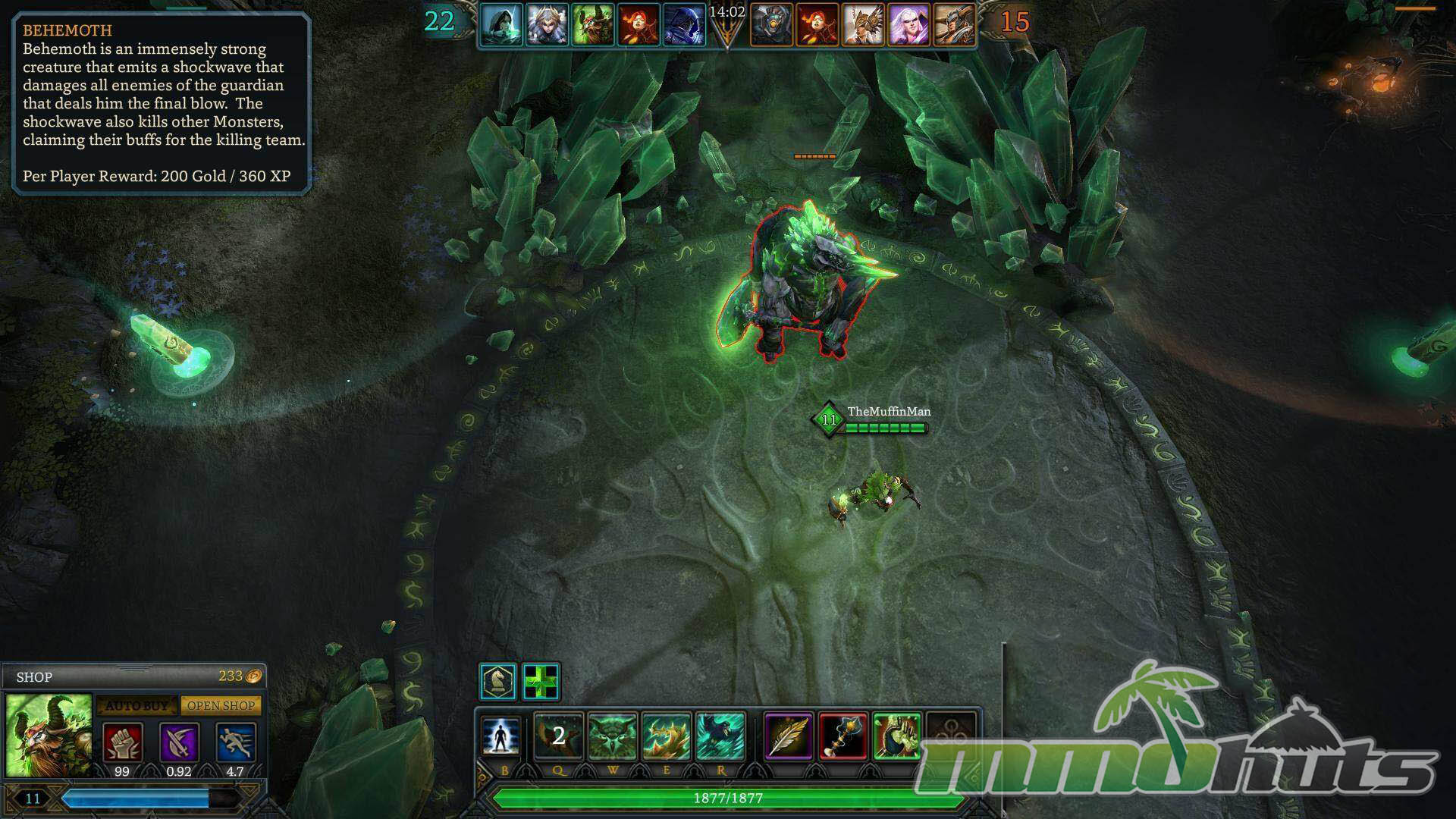
Lantern control matters more here than in Coliseum because it shapes how safely teams can rotate through the jungle. While tower destruction still empowers minions and provides a tangible lead, the larger map gives the trailing team more room to recover through coordinated fights, smart lantern control, and opportunistic takes on major objectives like Behemoth.
Overall, Sanctuary better supports momentum swings. A strong jungle fight can undo an early lane deficit, especially if it leads to reclaiming vision and denying the opposing team’s ability to move unseen.
Items and Build Variety
One of TOME’s most distinctive conveniences is its shop system. You can purchase items from anywhere, as long as you are out of combat long enough to complete the brief channel. This keeps the match flowing and reduces time spent disengaging purely to buy.
The downside is that the item system is extremely narrow. Items fall into three primary categories (Might, Attack Speed, and Health), with only five items per category, and you only have four item slots. That limitation makes build paths straightforward, but also means most Guardians converge on similar, predictable loadouts. For players who enjoy theorycrafting, counter-building, or adapting to enemy compositions through items, this is one of the game’s biggest constraints.
Closing Impressions
TOME: Immortal Arena succeeds at delivering the promise of fast matches and frequent fights. It avoids many of the friction points that can intimidate new MOBA players, such as last-hitting, complex stat interactions, and the need to constantly recall to base. You are rarely far from the action, and the game’s structure encourages decisive pushes rather than long stalemates.
At the same time, the simplification comes with trade-offs. Matchmaking and balance can feel uneven, and the smaller roster and limited cosmetic options leave less to chase for players who value variety and personalization. Compared to genre leaders that have benefited from years of iteration, TOME can feel undercooked in depth, even when it is enjoyable moment to moment.
For newcomers, that accessibility is the main appeal, you can learn quickly, understand what matters in a match, and play several games in the time it takes some MOBAs to finish a single round. For veterans, the lack of strategic layers, limited itemization, and automated ability progression may make the experience feel repetitive once the novelty fades.
Final Verdict – Good
TOME: Immortal Arena works well as an entry point to MOBAs and as a short-session, combat-forward alternative to longer, more demanding competitors. If you can tolerate the game’s presentation quirks and do not need deep buildcrafting, it offers quick, energetic matches, but players looking for long-term strategic depth may find it too lightweight.
TOME: Immortal Arena Links
TOME: Immortal Arena Official Site
TOME: Immortal Arena STEAM Page
TOME: Immortal Arena Subreddit
TOME: Immortal Arena Wikia (Database and Guides)
TOME: Immortal Arena System Requirements
Minimum Requirements:
Operating System: Windows XP (SP3)
CPU: Intel Core 2 Duo 2.13 GHz or better
Video Card: nVidia GeForce 8600 GT or ATI HD 2600 XT with 256MB or better
RAM: 4GB
Hard Disk Space: 4GB
64 Bit OS Strongly Recommended
Recommended Requirements:
Operating System: Windows Vista (SP2)+
CPU: Intel Core i3 3.3GHz or better
Video Card: nVidia GeForce 8800 GT 512MB or better.
RAM: 4GB
Hard Disk Space: 4GB
64 Bit OS Strongly Recommended
Tome: Immortal Arena Music & Soundtrack
Tome Immortal Arena Additional Information
Developer: KIXEYE (Previously known as Casual Collective)
Open Beta Date: February 16, 2010
Development Background
TOME: Immortal Arena is a 3D casual MOBA developed by San-Fransisco California based KIXEYE. It began as a browser-based concept (including plans around Adobe Flash and Facebook), before shifting direction into a client-based release. The game launched on Steam on November 21, 2014, but it struggled to build a sustained audience. Official development support ended on February 5, 2015.