Spellweaver is a fantasy-themed digital trading card game that clearly takes inspiration from genre staples like Magic: The Gathering, while still trying to carve out its own identity with a few mechanical twists. Players pick from 7+ deck themes, complete quests, practice against AI, and jump into ranked PvP to earn currency and cards, gradually growing a stronger collection over time.
 | Publisher: Dream Reactor LLC Type: TCG Release Date: February 01, 2016 Shut Down: April 05, 2022 Pros: +Polished presentation and animations. +Multiple distinct deck identities to learn. +Competitive ladder via ranked play. Cons: -Core ideas feel familiar if you have played other big TCGs. -Not many tactical options during a match compared to deeper rivals. |
Spellweaver Shut Down on April 05, 2022
Spellweaver Overview
Spellweaver is an online collectible card game set in a classic high-fantasy world, built around choosing a deck identity and outplaying opponents through resource management and battlefield positioning. Players select from 7 unique deck paths (examples include Spectral Power and Rage), then take on AI opponents, queue for casual matches, or enter ranked matchmaking where you are paired based on your competitive standing.
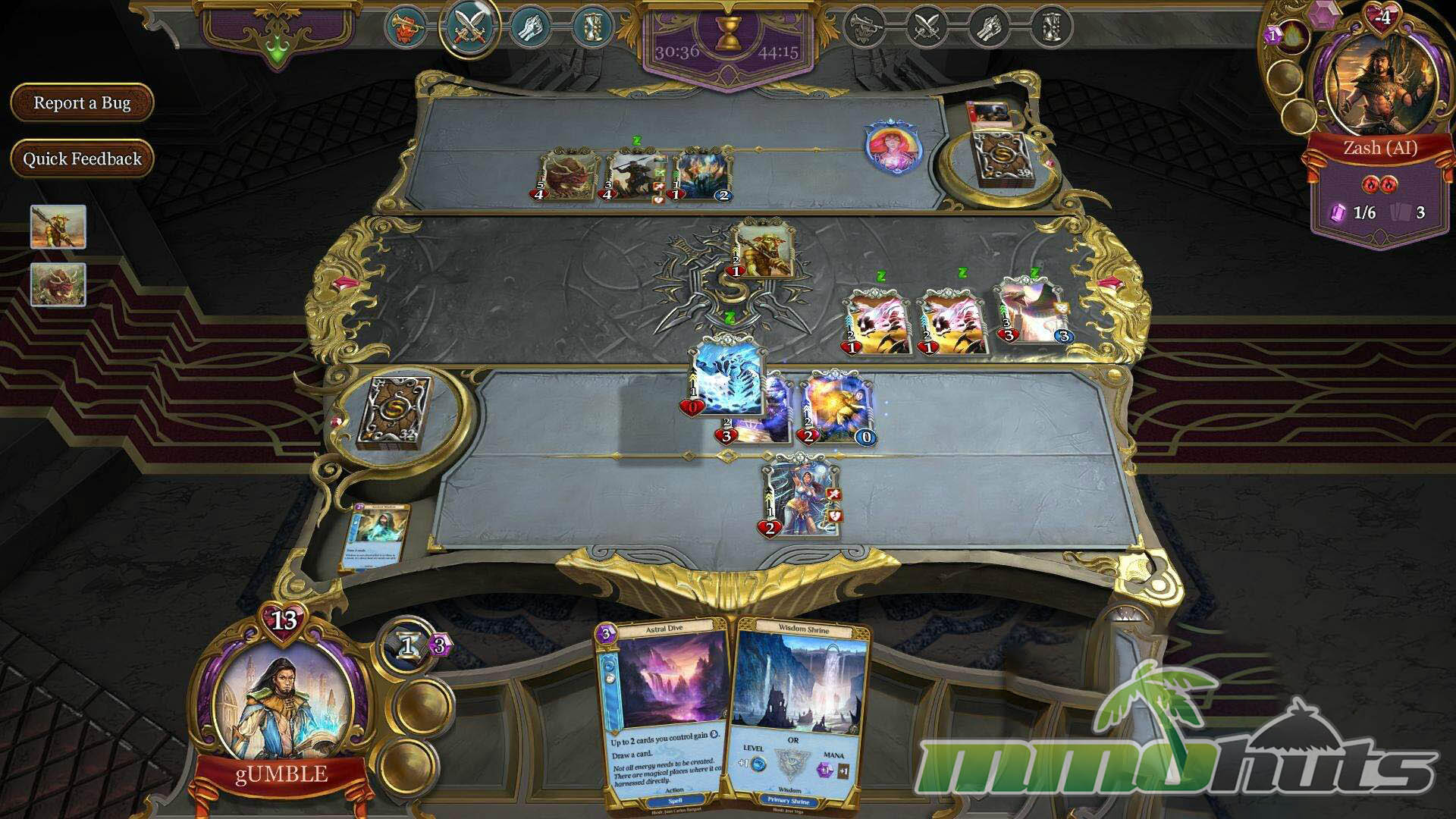
In matches, progression is driven by playing Order (Shrine) style cards to raise your wisdom level and build up mana, which then enables you to deploy creatures, cast spells, and apply curses. Units are placed with intent, whether you want bodies on the front line to pressure the enemy or support pieces positioned to protect and enable your main threats. Each hero also brings an active ability that can swing turns, such as Daris’ Thorough Study, which grants an extra card draw when triggered.
Victory comes from reducing the opposing hero’s health to zero. Winning games and completing tasks rewards gold that can be used to unlock more decks and buy card packs, steadily expanding your available pool. The quest structure gives you short-term goals, while deck construction lets you blend cards across heroes, encouraging experimentation and personal playstyles rather than forcing strict, single-faction builds.
Spellweaver Key Features:
- 7 Card Decks – pick from 7 deck styles with different themes and approaches, then open up more options by earning currency through play.
- Ranked Play –practice versus AI or measure yourself against other players in a ranked matchmaking ladder.
- Familiar Play –anyone with Magic: The Gathering experience will recognize the general flow and rules quickly.
- 3 AI Difficulties –start with the easiest opponents to learn fundamentals, then move up to harder AI for a more punishing test.
- Deck Building – combine cards across heroes to shape a deck that fits your preferred strategy.
Spellweaver Screenshots



Spellweaver Featured Video

Spellweaver Review
At a glance, Spellweaver can be mistaken for another entrant chasing the same audience as Hearthstone, with a familiar board layout and a hero-centric win condition. Spend a little time with it, though, and it becomes clear the designers aimed for a more tactical ruleset that sits closer to traditional TCG sensibilities, with extra considerations layered on top of the usual attack and health math.
New players are guided through an early tutorial that covers the basics quickly, which is important because the game introduces a few concepts that are not standard for every digital card battler. Like most games in the genre, you win by taking the enemy hero to zero health, and heroes come with unique abilities that can be activated at key moments. Deck identities are tied to these heroes, and each deck leans into specific strengths and limitations, giving you a reason to swap strategies rather than playing one list forever.
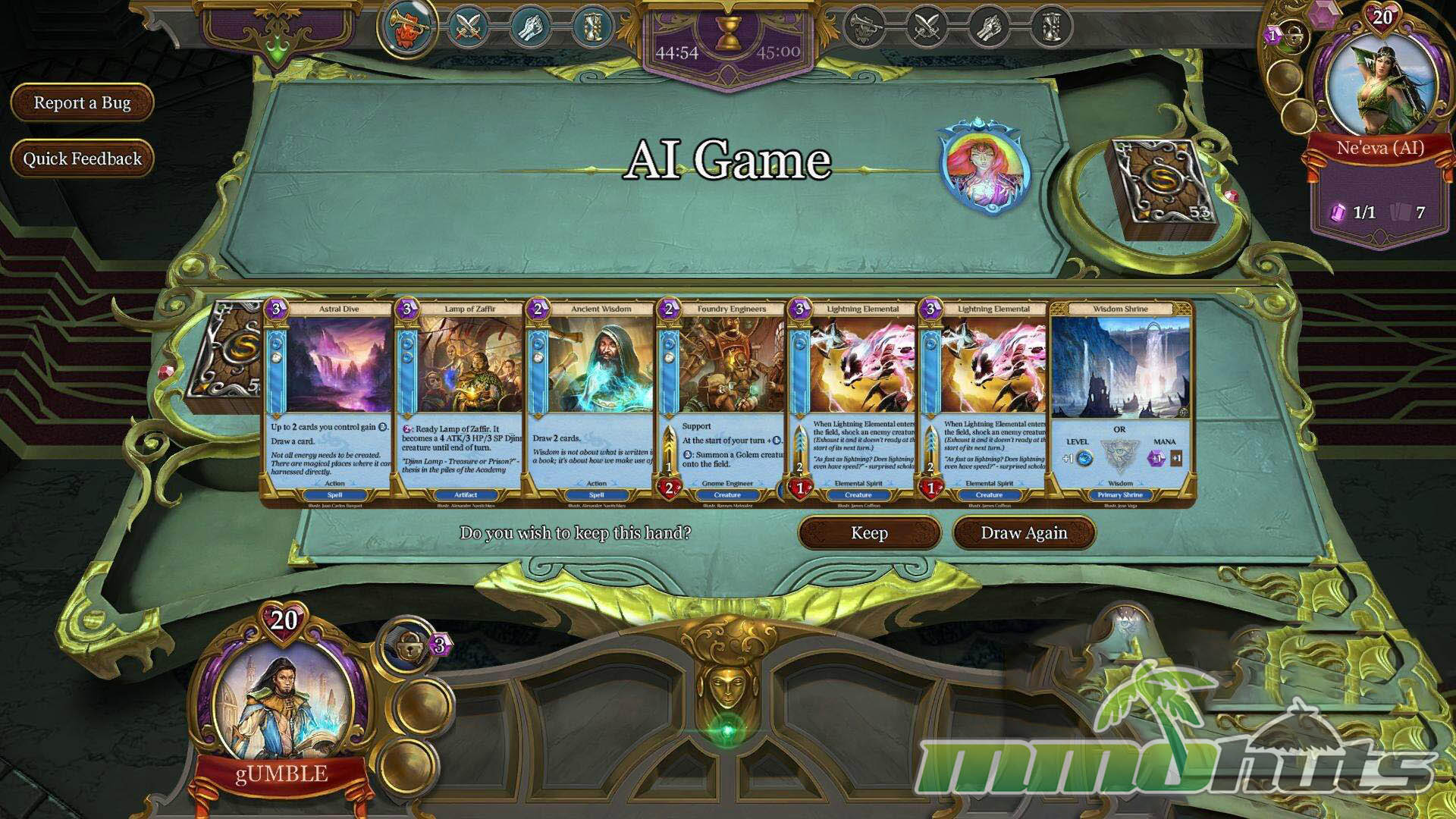
Creatures follow expected rules: they have attack power and a health value, and they are removed when their health is reduced to zero. Spellweaver also includes common quality-of-life ideas seen in other online TCGs, such as a way to redraw your opening hand, a system intended to soften the first-turn advantage, and a draft-like mode that asks you to build a deck on the fly and then prove you can pilot it.
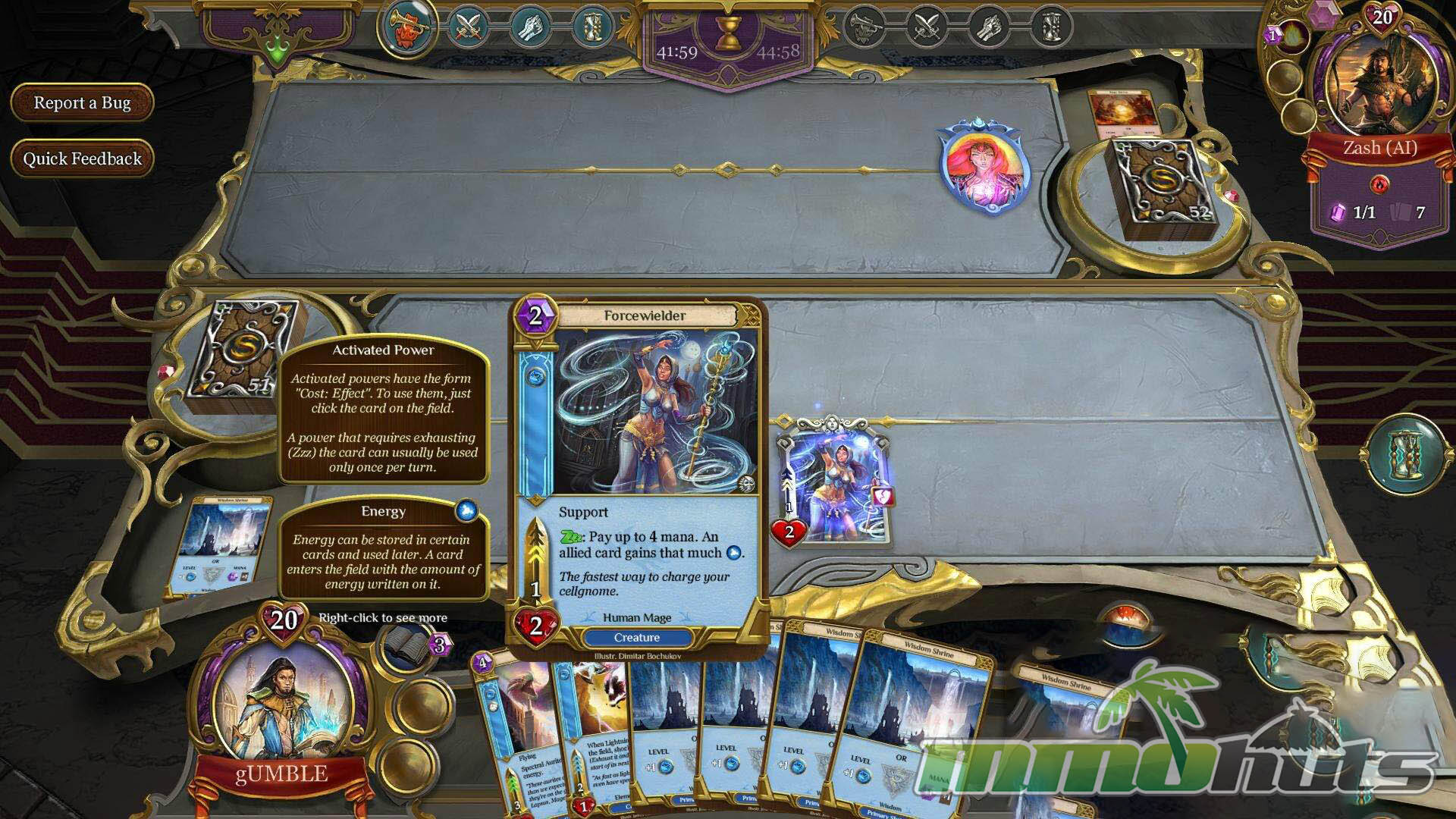
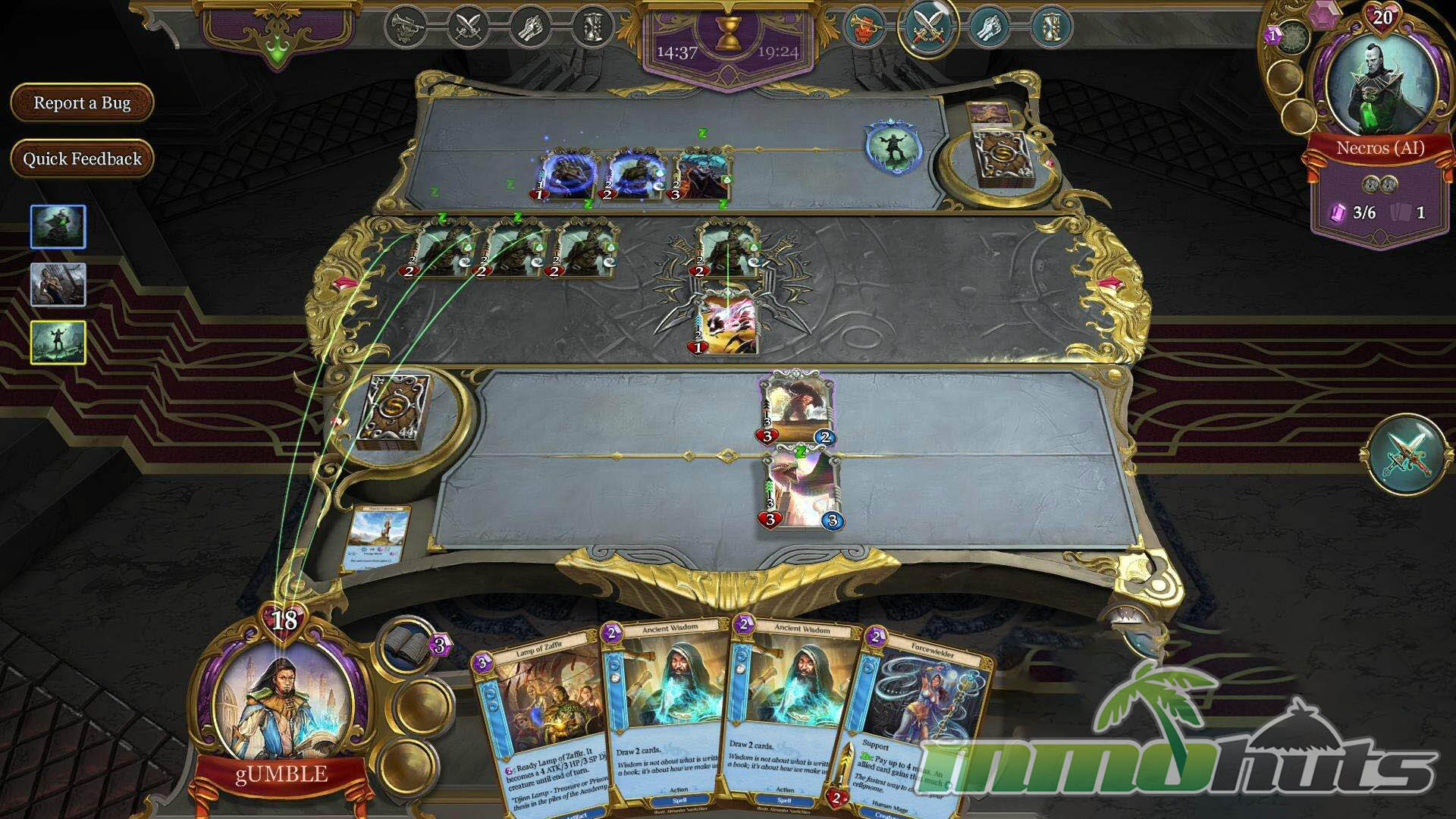
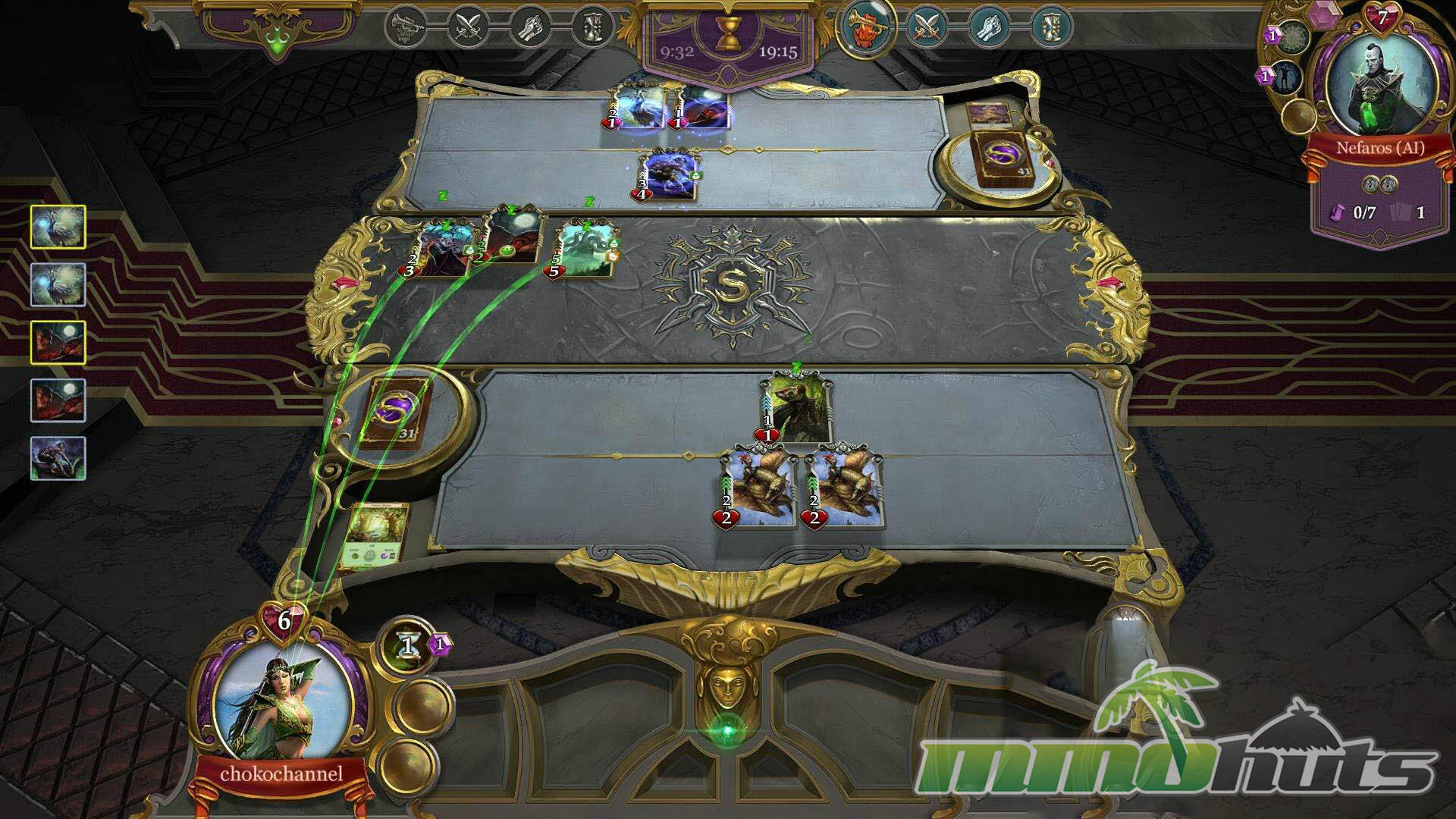
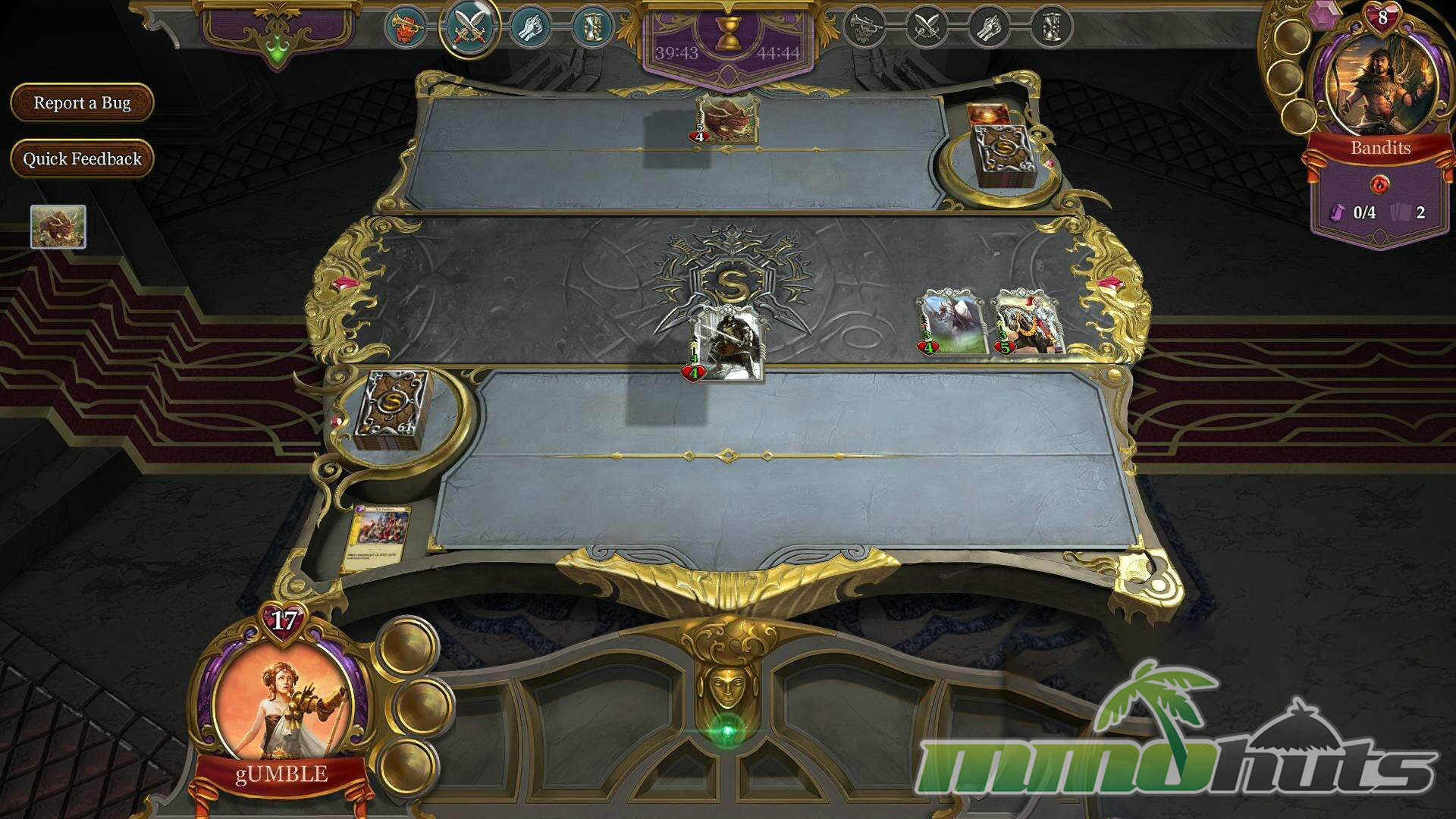
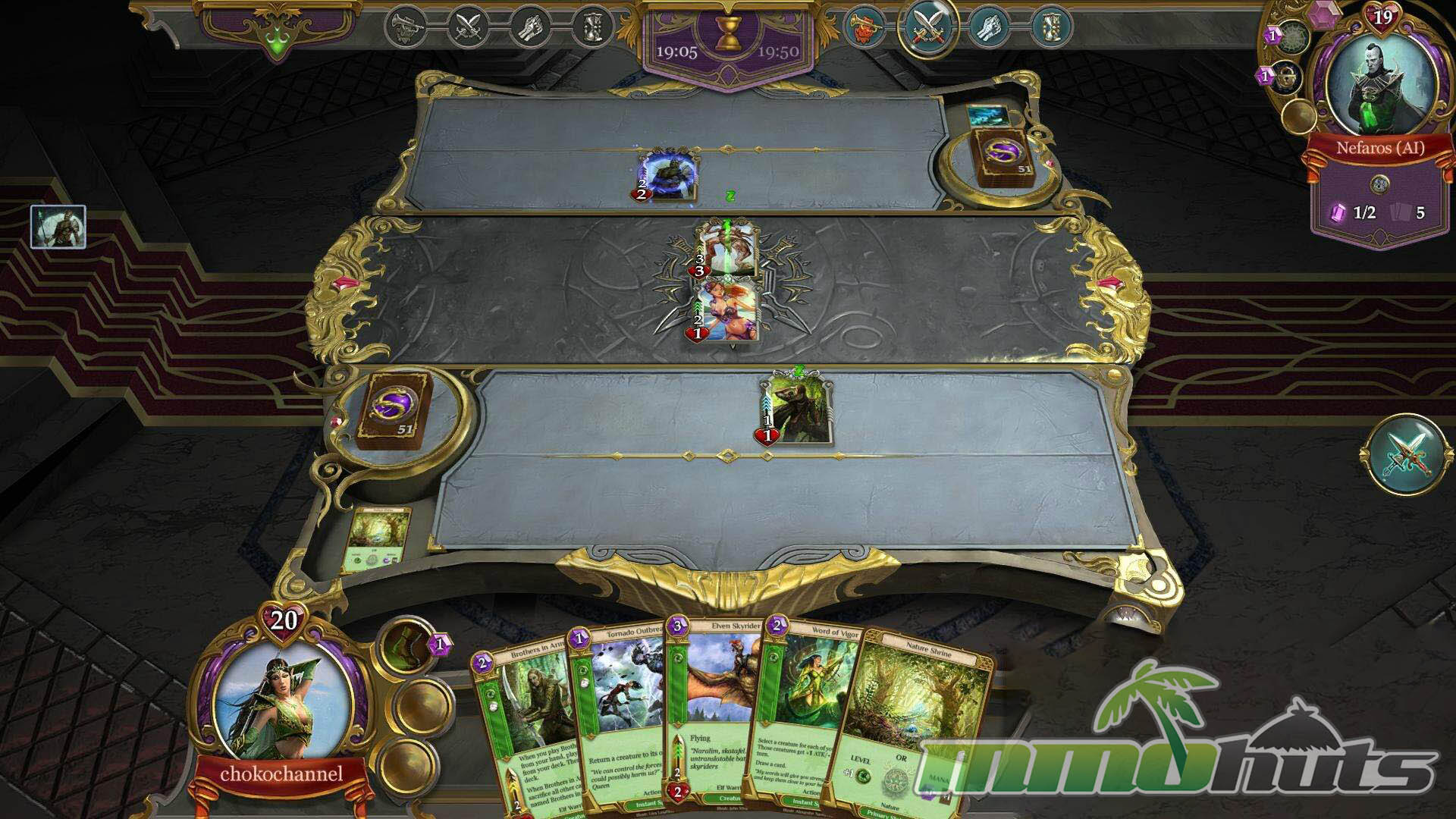
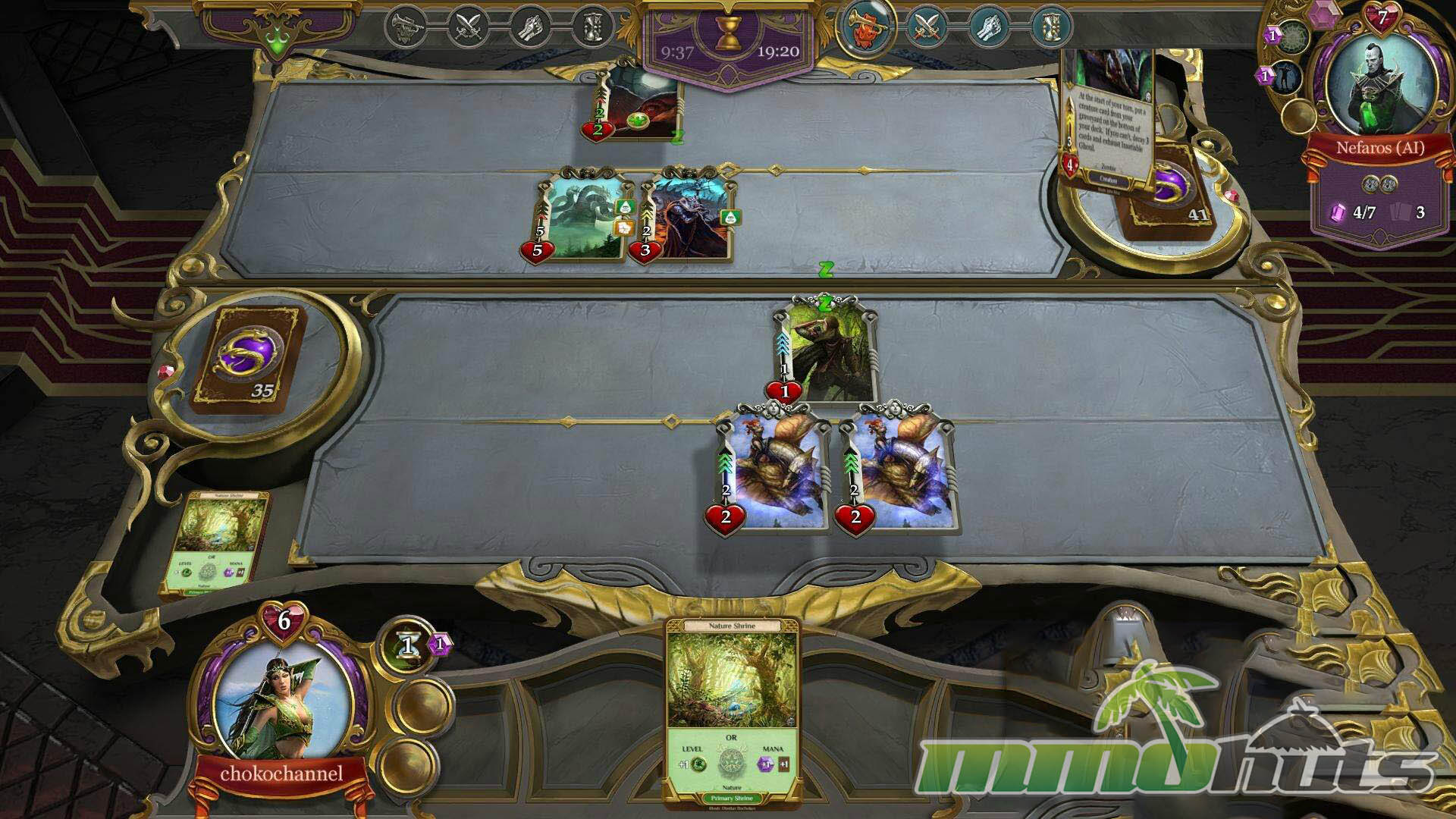
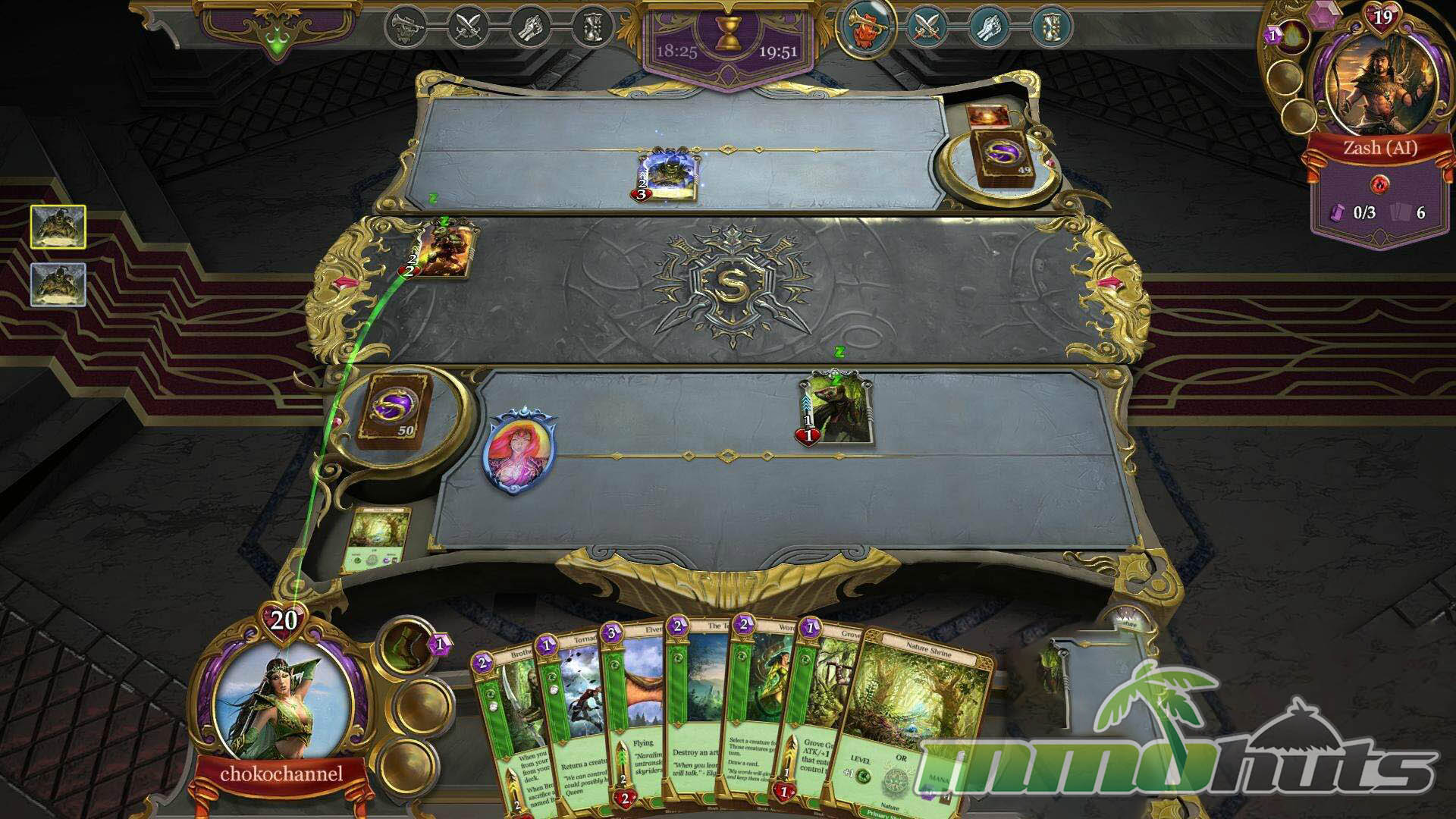
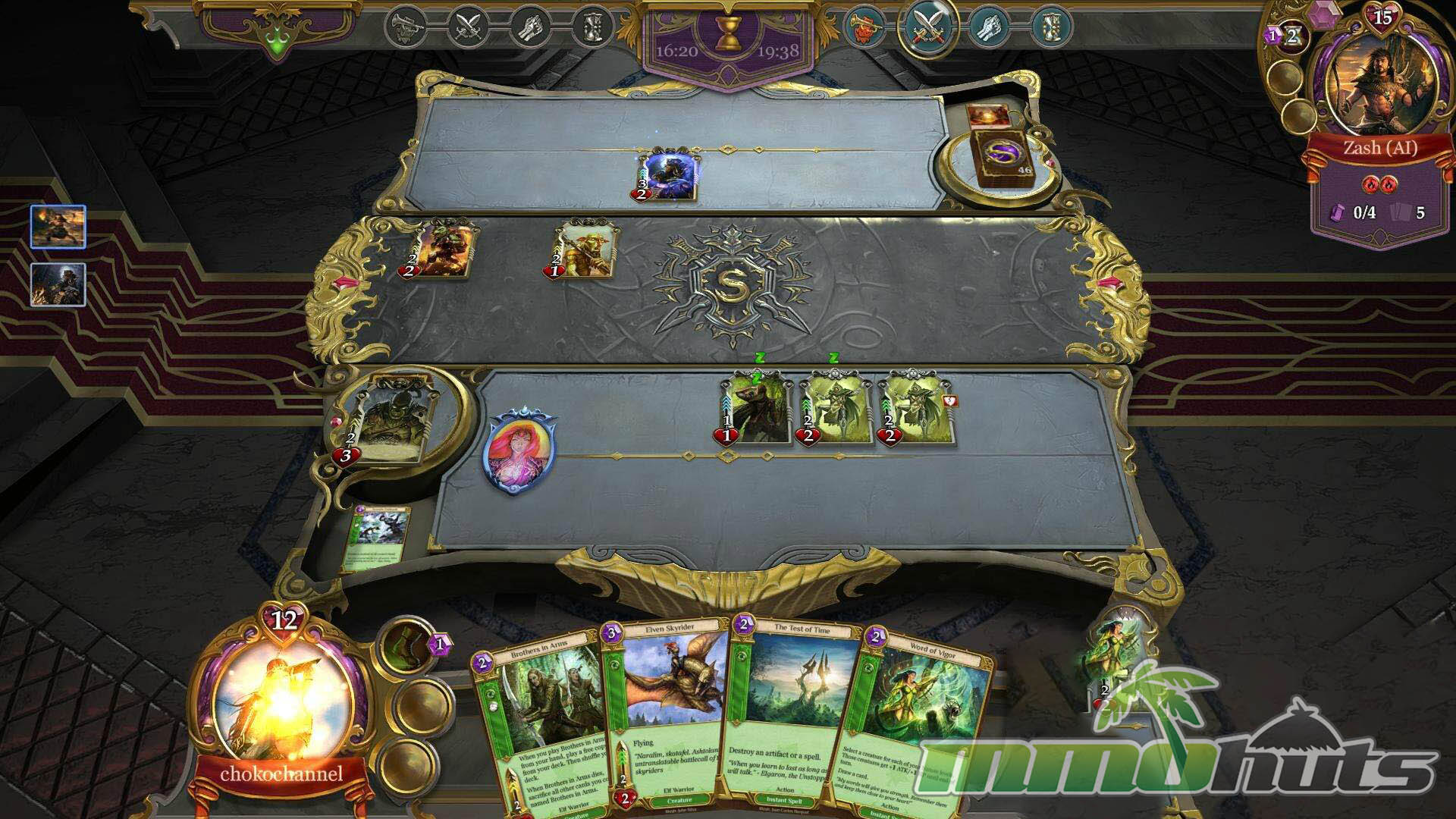
Visually, the battlefield presentation is clean and readable. Card text is easy to check via mouse-over, and the turn flow is reinforced by a phase bar along the top so you always know what step you are in. The game also uses turn timers with separate clocks for each player, which helps keep matches moving and limits overly slow play.
A More Tactical Ruleset Than It First Appears
One of Spellweaver’s biggest mechanical departures is the inclusion of speed as a core stat. Cards sit on a speed scale from 1 to 4, and that value impacts which enemies they can engage. It is a small change on paper, but it meaningfully alters combat decisions because it adds another axis to evaluate beyond raw damage and survivability. Having the speed advantage can open up favorable trades, but committing fast units poorly can also get them removed with little payoff.
Another important difference is how combat resolves. Units restore their health at the end of each battle phase, which changes how chip damage and incremental trades play out. If you cannot finish a target within the phase, it can effectively “reset,” forcing you to plan removal and attacks more deliberately. On top of that, players choose defenders and can influence the sequence of attacks, and combat does not always resolve instantly at the moment you click. The end result is a more planned, order-sensitive style of fighting that rewards anticipating counterplays.
Resource growth is also handled in a less automatic way than many digital card games. Instead of gaining one mana each turn by default, you typically use Shrine-style cards to decide between developing your affinity (often tied to color or faction requirements) or increasing your mana while also drawing a card. Many cards require both a minimum affinity level and enough mana to cast, so you are constantly weighing short-term tempo against long-term access to higher-tier plays. This system adds depth, but it can also punish inexperienced players who mis-sequence early turns.
Menus, Progression, and How You Build a Collection
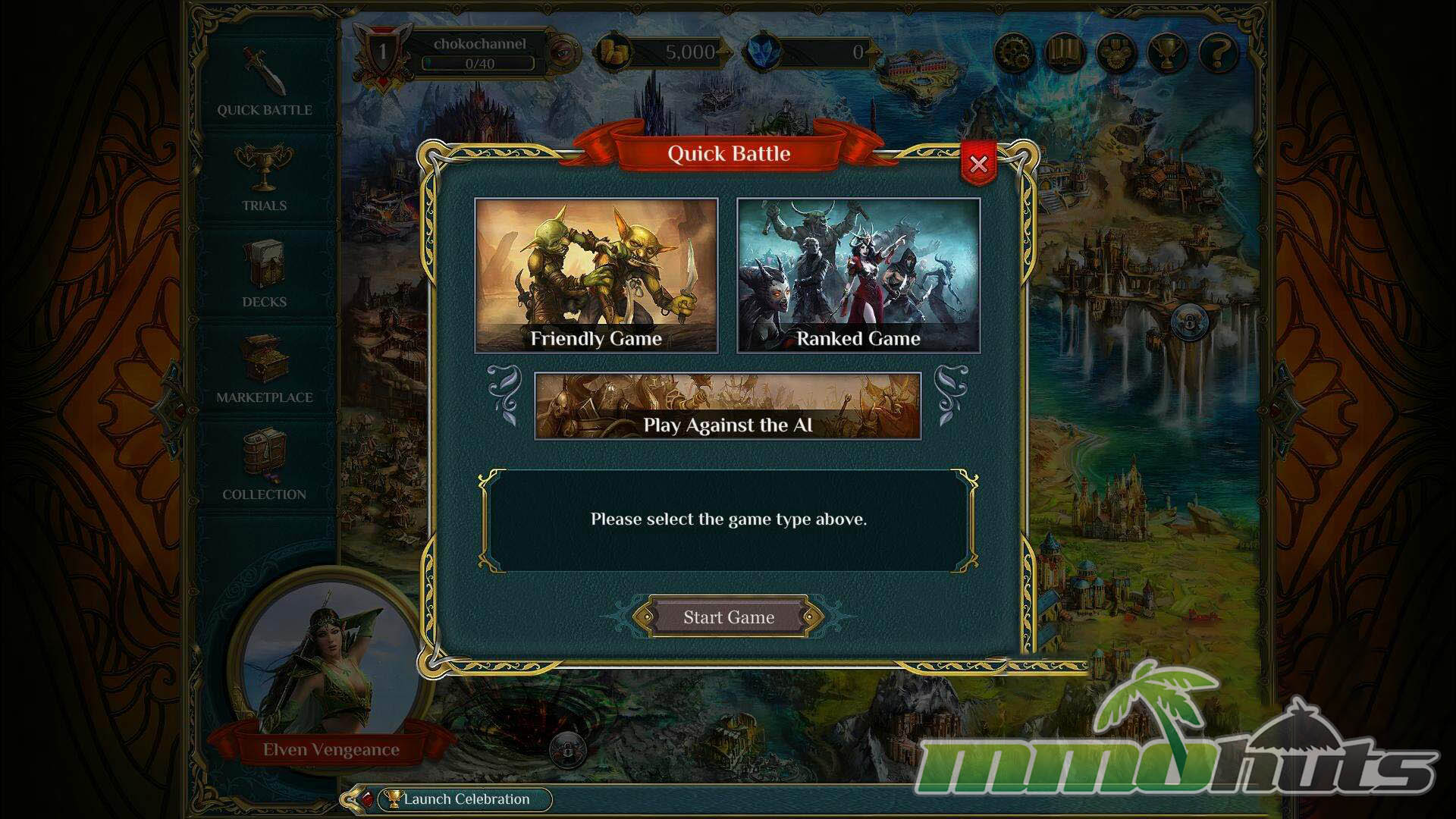
Outside of matches, Spellweaver uses a UI style that feels deliberately old-school, with ornate buttons and a medieval fantasy presentation reminiscent of classic PC strategy titles. Functionally, it works well. Jumping into casual games, ranked queues, or the draft-like Trials mode is straightforward, and the deck builder includes filters to help you sort a growing card pool.
Progression revolves around unlocking decks and collecting cards through play, quests, and the shop. While the first deck is available immediately, the others are tied to regions on the world map. You can unlock these with earned currency, pay premium currency to speed things up, or gain access gradually by leveling your account through regular matches. The ability to unlock through play keeps it approachable for free-to-play users, although the option to bypass progression will not appeal to everyone.
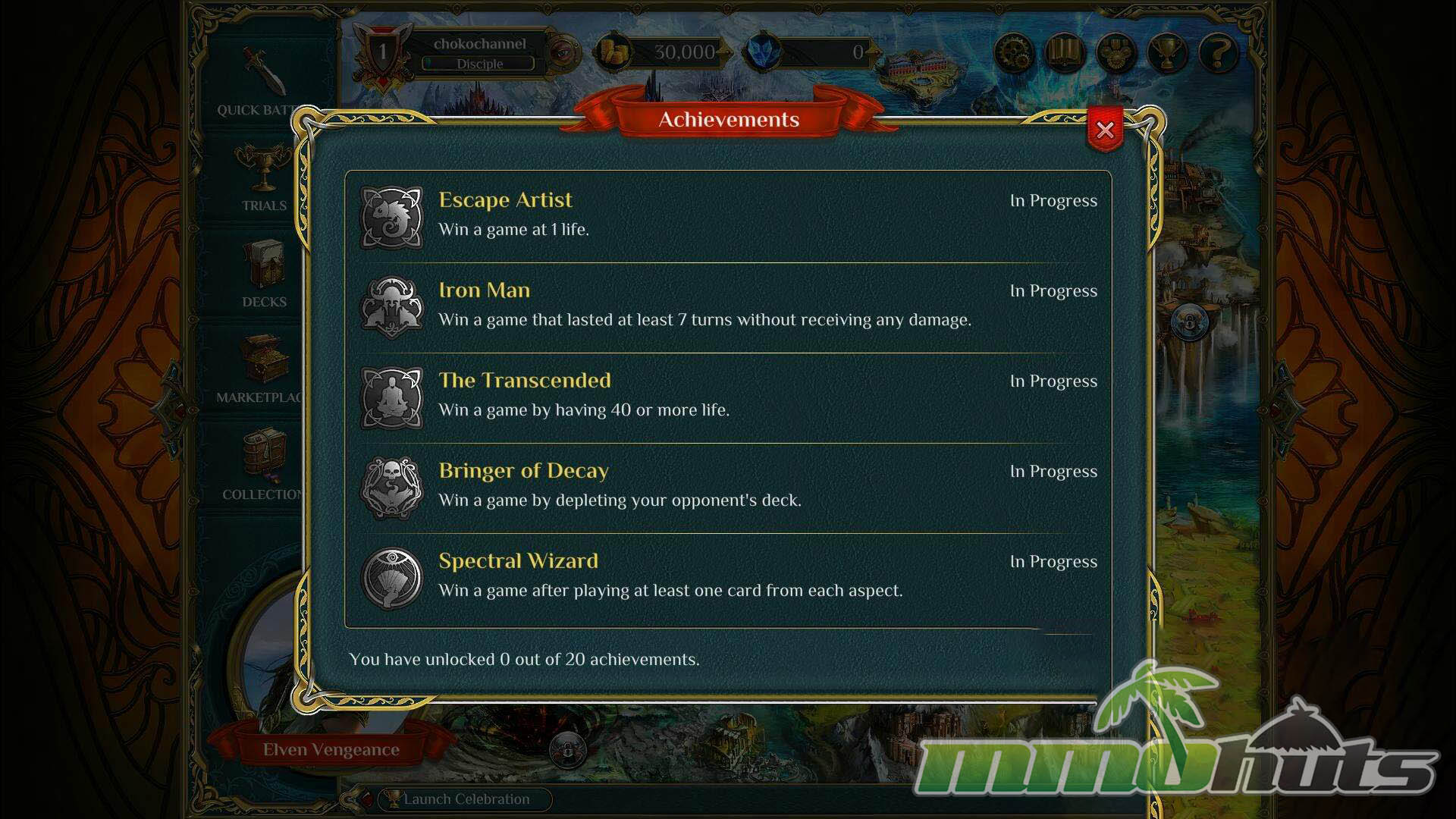
Each region offers simple quest tasks that reward cards associated with that deck, and there are also achievements that provide additional goals and incentives. These systems help keep the early and mid-game from becoming a pure grind, especially if you enjoy chasing checklists while learning matchups.
Card acquisition also flows through the Marketplace, where booster packs can be purchased using either in-game currency or premium currency. The crafting tools are housed within the deck management area, and while it works, the placement can feel unintuitive because you may not expect crafting to be tucked behind “Edit Deck.” The system supports breaking down extra copies and converting them into the cards you actually want, which is a key feature for anyone trying to assemble specific builds.
The Storefront and Competitive Fairness
The area where Spellweaver draws the most criticism is monetization. The Marketplace includes premium booster packs that require real money and advertise improved odds for rarer cards. In a collectible card game, rarity often correlates with power or flexibility, so any system that increases access to top-tier cards via cash risks undermining competitive balance.
Alongside packs, the store offers cosmetic card backs and subscription-style options that provide regular packs and bonuses. Those extras can be appealing for dedicated players, but the presence of cash-only packs with better rarity odds can make long-term competitive investment feel less fair for strictly free-to-play users.
Final Verdict – Good
Spellweaver does enough mechanically to stand apart from the most straightforward digital card battlers. Speed, the battle-phase structure, and the Shrine-driven resource decisions all add layers that reward planning and matchup knowledge. Unfortunately, the monetization approach can discourage players who want a purely skill-driven ladder, since access to stronger cards can be accelerated with money. For strategy fans who enjoy tinkering with decks and learning nuanced combat rules, it remains a solid TCG experience, even if its long-term appeal is complicated by its pay-to-win pressures.
Spellweaver Online Links
Spellweaver Official Site
Spellweaver Steam Greenlight Page
Spellweaver Wikia [Database/Guides]
Spellweaver Twitter
Spellweaver System Requirements
Minimum Requirements:
Operating System: Windows XP 32 bit
CPU: Pentium D 805 2.67GHz or Athlon 64 X2 Dual Core 3600+
RAM: 2 GB GB RAM
Video Card: GeForce 6800 GT or Radeon X1600 Pro 512MB
Hard Disk Space: 3 GB Free Space
Official system requirements have not yet been released for Spellweaver. The requirements above our based on our experience and will be updated when official numbers become available.
Spellweaver Music & Soundtrack
Coming Soon!
Spellweaver Additional Information
Developer: Dream Reactor LLC
Project Lead: Ivko Stanilov
Game Designer: Dimo Zapryanov
Lead Artist: Alexander Nanitchkov
Producer: Kaloyan Pishmanov
Marketing: Theo Petrova
Steam Greenlight: January 04, 2015
Steam Greenlight Approved: March 04, 2015
Closed Beta: January 11, 2015
Open Beta: June 15, 2015
Release Date: February 01, 2015
Steam Release Date: February 01, 2015
Shut Down: April 05, 2022
Development History / Background:
Spellweaver was created by the Bulgaria-based studio Dream Reactor LLC, founded in 2011 by Ivko Stanilov. The project appeared on Steam Greenlight on January 04, 2015, then moved into Closed Beta on January 11, 2015, followed by an Open Beta on June 15, 2015. It was approved through Greenlight on March 04, 2015. The TCG was scheduled for a Steam release on February 01, 2015. The team later communicated on Twitter that development would end and the game would shut down on April 05, 2022.