Siegelord was a free-to-play, fantasy-flavored browser strategy MMO built around a three-empire conflict. You began with a modest city and, through construction, research, and constant skirmishing, tried to turn it into a war machine capable of pushing your faction’s borders across a persistent world map.
 | Publisher: 37 Games Entertainment Type: Strategy Release Date: December 19, 2014 Shut Down Date: September 16, 2018 Pros: +Three-sided faction conflict. +Persistent world map that shifts with player wins. +Encourages coordinated, faction-level planning. Cons: -Familiar, formula-driven city-building loop. -Cash shop advantages can pressure competitive players. |
Siegelord Overview
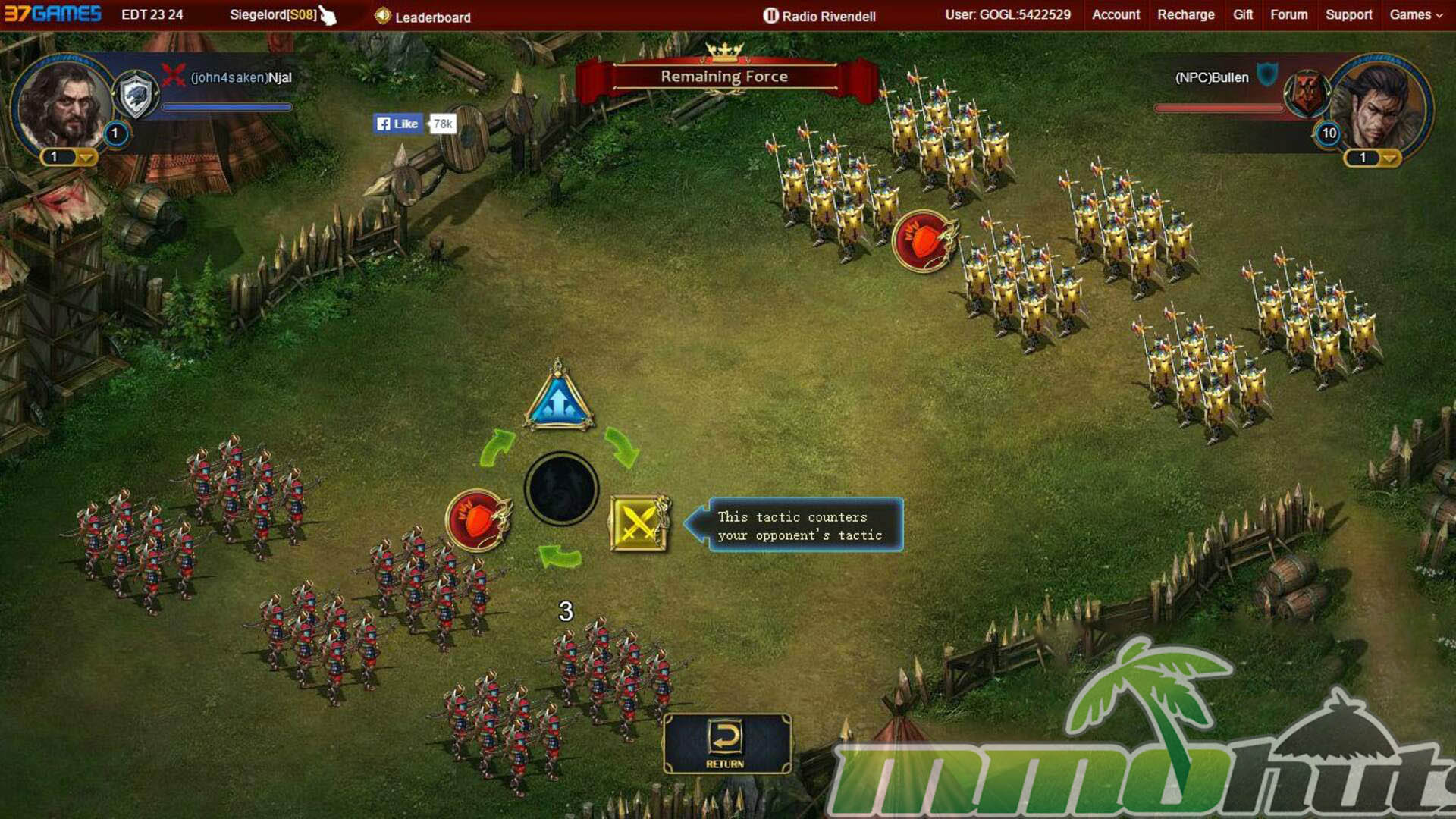
Siegelord was a medieval fantasy browser MMO where three rival powers struggled to control the same continent. After pledging yourself to a faction, you expanded your holdings, trained troops, and worked with other players to seize key locations and defend hard-won territory. Battles played out in real time, asking you to adjust tactics on the fly rather than simply watching numbers resolve in the background, and the larger war effort was reflected on a shared map that changed as towns fell and were reclaimed.
Siegelord Key Features:
- Three-Way Faction War – instead of a simple two-side rivalry, every campaign had to account for two enemies at once.
- Dynamic Map – the front line was never fixed, with territory expanding or shrinking based on what players captured.
- Tactical Real-Time Combat – battles rewarded reacting to what the opponent was doing rather than relying on one preset plan.
- Generals – collectible commanders added bonuses and special advantages that could swing close fights.
- Alliances – organized groups helped coordinate attacks, defense, and long-term faction goals.
Siegelord Screenshots






Siegelord Featured Video

Siegelord Review
Siegelord was a 2D free-to-play strategy MMO from 37 Games Entertainment, designed to run directly in a web browser. It launched on December 19, 2014, and was accessible through its official site as well as Facebook, which made it easy to jump in without installs, patches, or a demanding PC setup.
At its core, the game sold the fantasy of being a newly appointed lord handed a small settlement and a big political problem: three factions were deadlocked in a continent-wide struggle, and every player’s progress was meant to feed into that larger war. The presentation was above average for the browser strategy space, with readable art, a clean interface, and music that leaned into the “court intrigue and marching armies” mood. Over time, though, the combat visuals and repeated battle pacing could start to feel samey, especially during longer grinds.
Getting Started
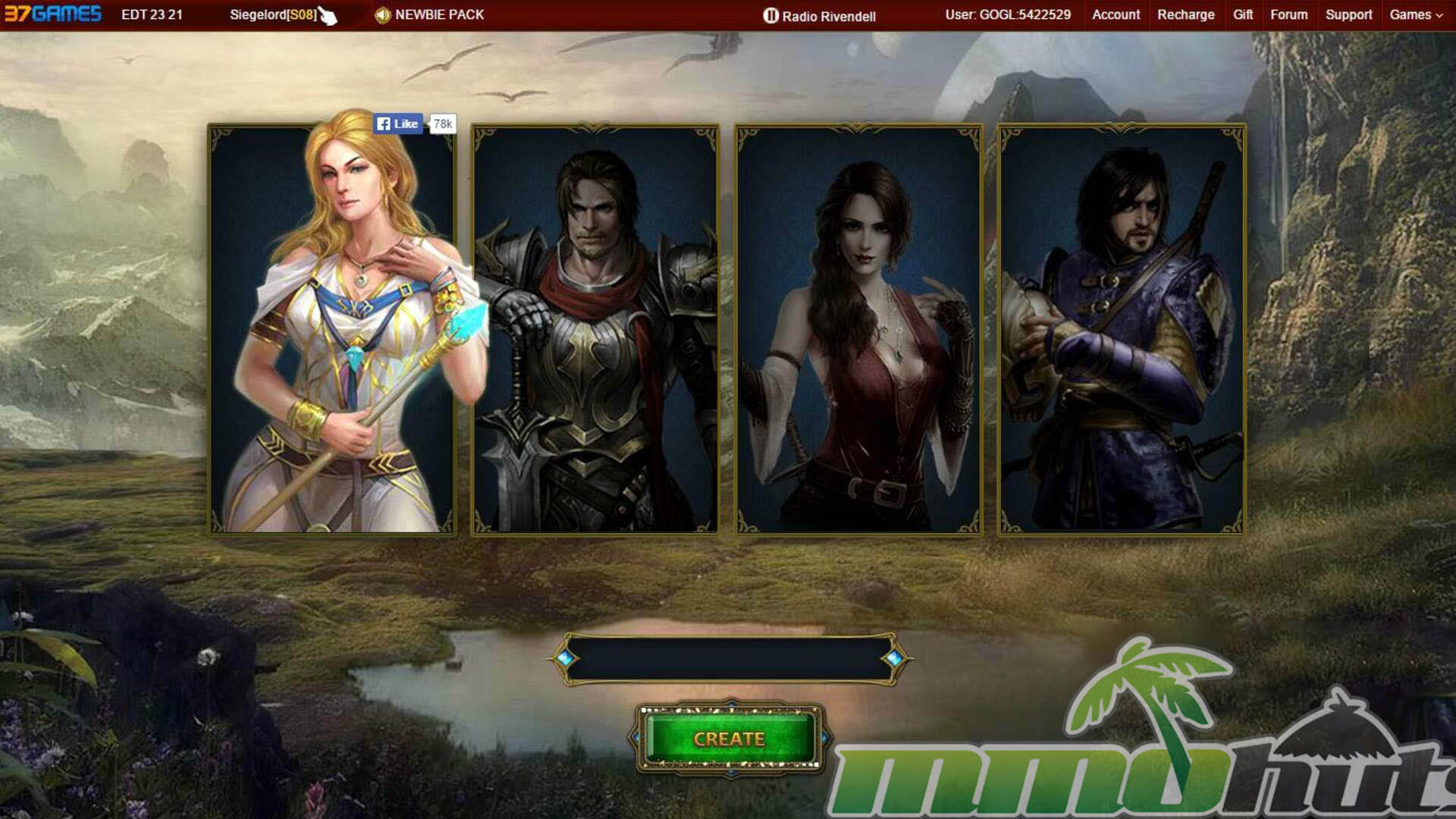
Early on, you selected an avatar from a small set of pre-made character options. This choice functioned as a visual identity rather than a class system, it did not meaningfully change your gameplay. A brief onboarding sequence walked you through the standard fundamentals: building placement, upgrades, and the general flow of using quests to open up features.
Once you were through the basics, you chose one of the three factions: the Kingdom of Albion, the Empire of Gorm, or the Nord Alliance. Albion was framed as a thriving commercial power, Gorm as a resource-rich empire with the means to field strong armies, and the Nords as hardened northern clans shaped by harsh conditions and an escalating rivalry, particularly with Gorm. Mechanically, the important part was the faction identity and the shared war effort rather than deep asymmetrical faction design.
Building a Realm
Progress followed a familiar city-builder cadence: start small, improve production, unlock more buildings, and raise your military capacity to keep pace with tougher encounters and larger objectives. You spent much of your time upgrading structures, managing resource bottlenecks, and clearing quests that guided you toward the next system.
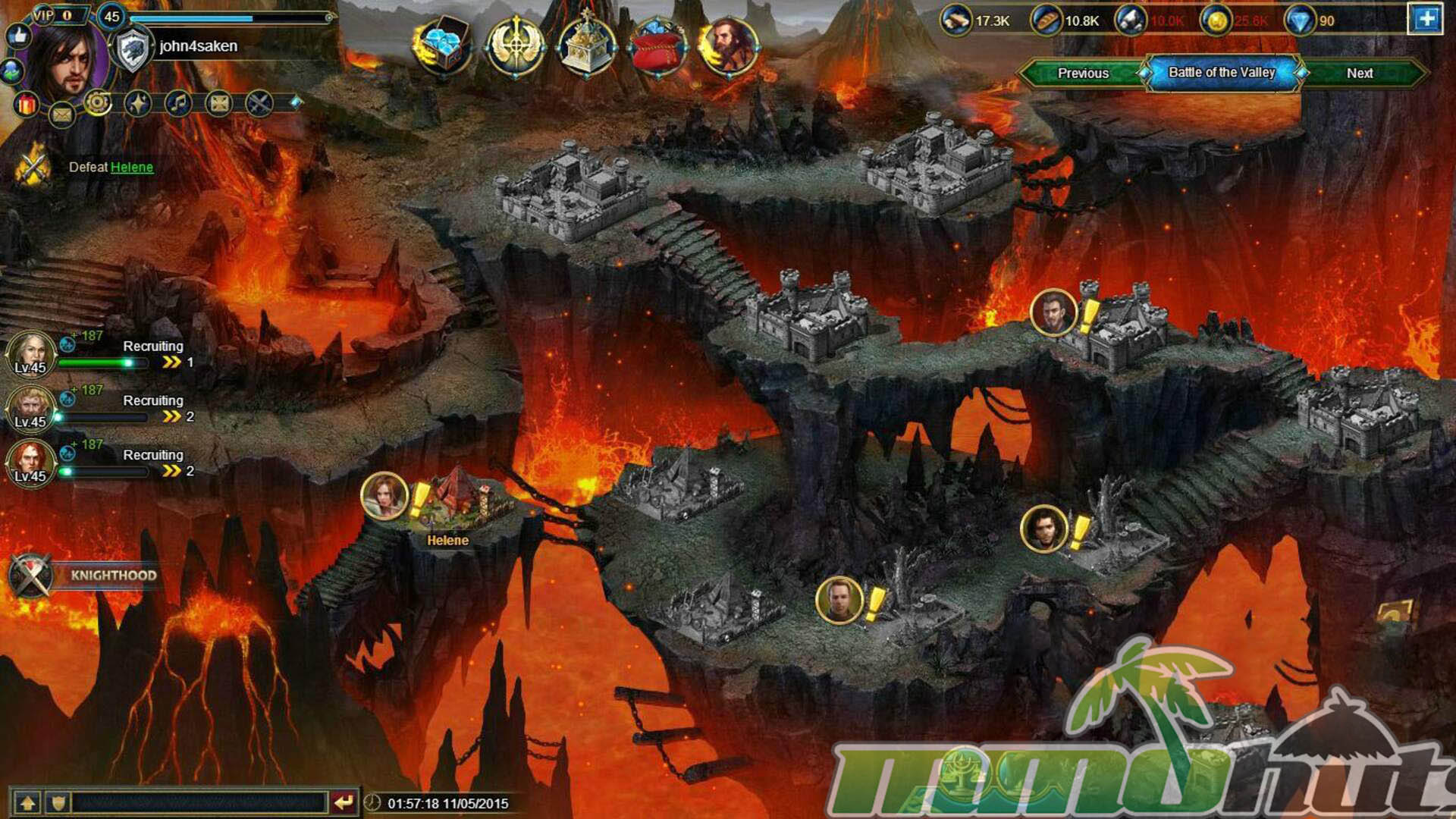
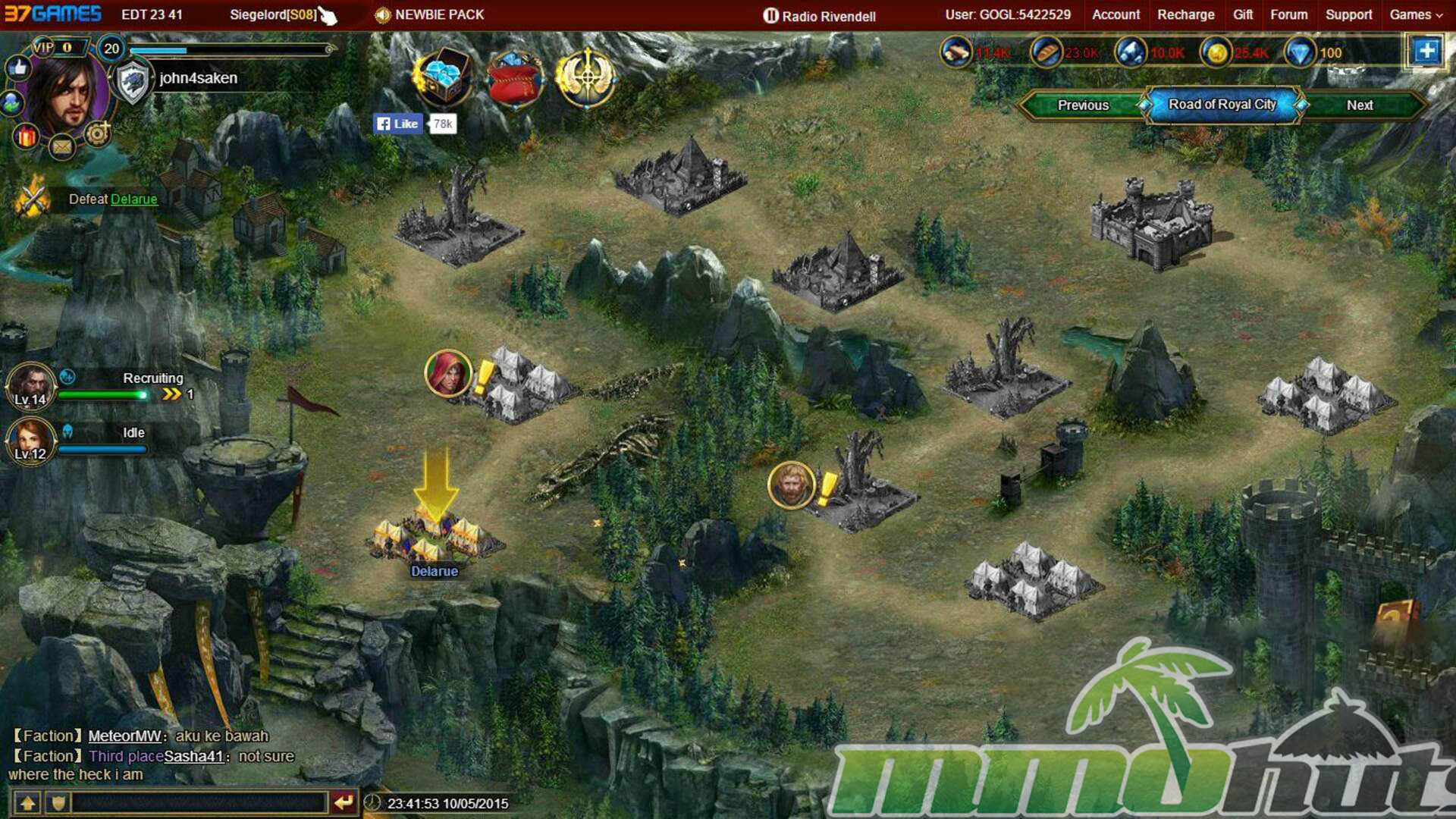
The world map was not immediately available, it opened up after you completed a set of tutorial tasks and introductory quests. Once unlocked, it became the centerpiece of the experience, showing settlements of various sizes across your faction’s holdings. Near contested edges you could spot enemy-held towns, often indicated by fog. Capturing these locations removed the fog and pushed borders outward, while losses pulled the line back. That constant tug-of-war made the map feel meaningfully alive, and it was one of the more memorable aspects of Siegelord compared to many static-map browser strategy games.
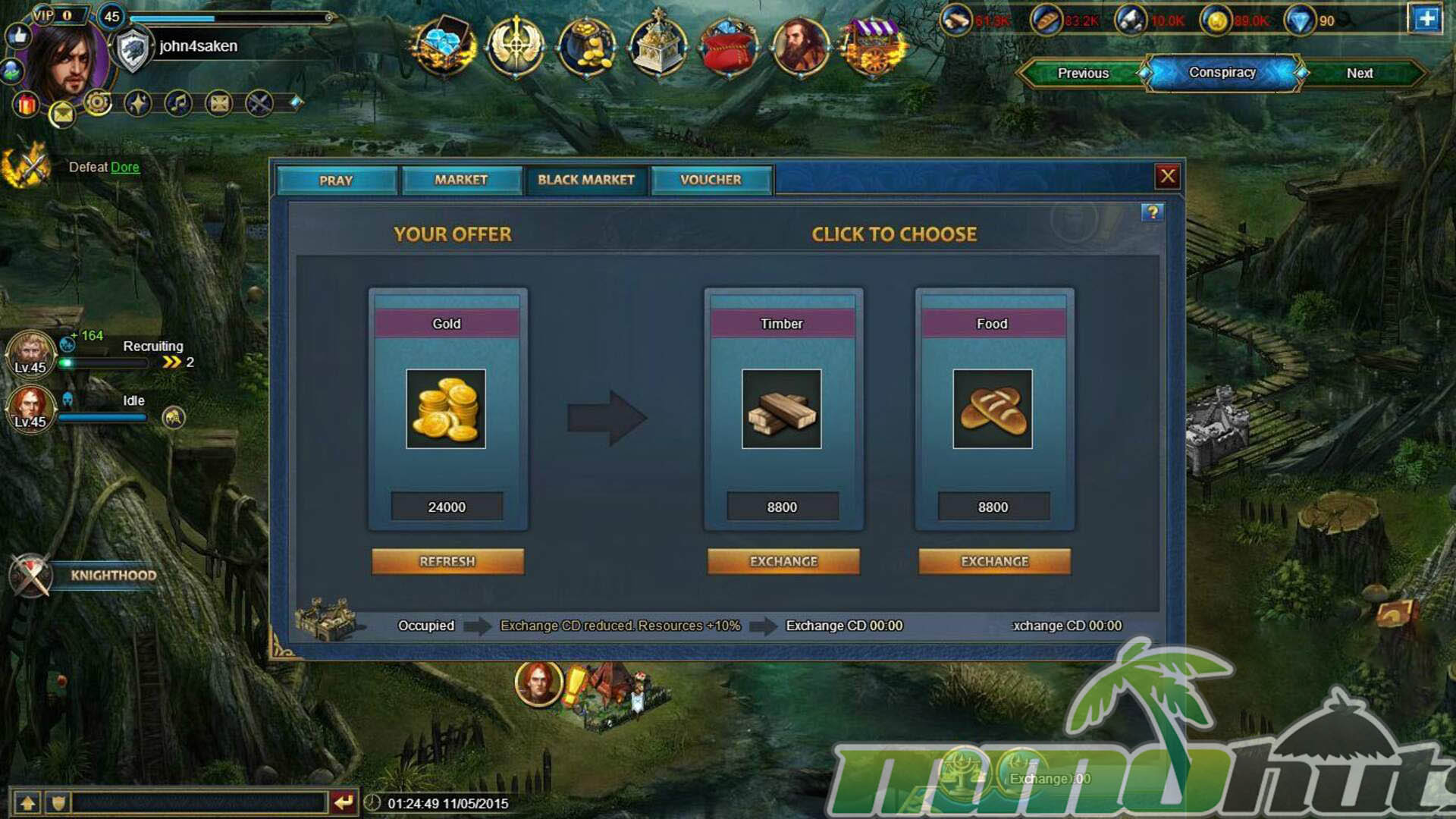
Resource management was built around the expected medieval staples. Sawmills produced wood, Farms generated food, and Dwellings provided gold. Upgrades increased storage and supported the rising costs that came with progression. Active players could sometimes keep certain production levels modest while prioritizing other development, but eventually storage and income upgrades became difficult to avoid. The game also offered a “prayer” option for extra resources. You could use it a limited number of times per day, after which additional uses required Diamonds, the premium currency.
How Battles Play Out
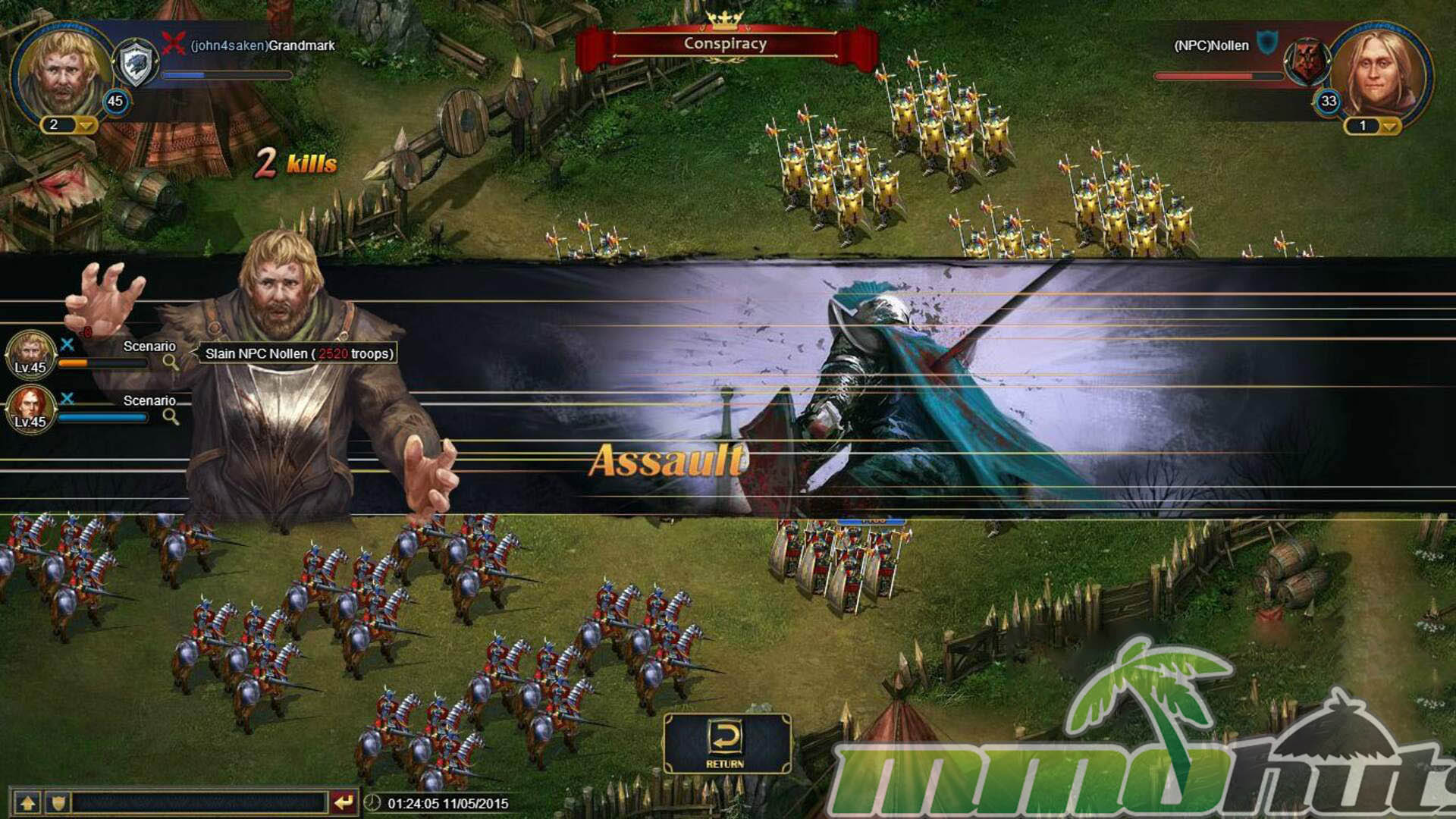
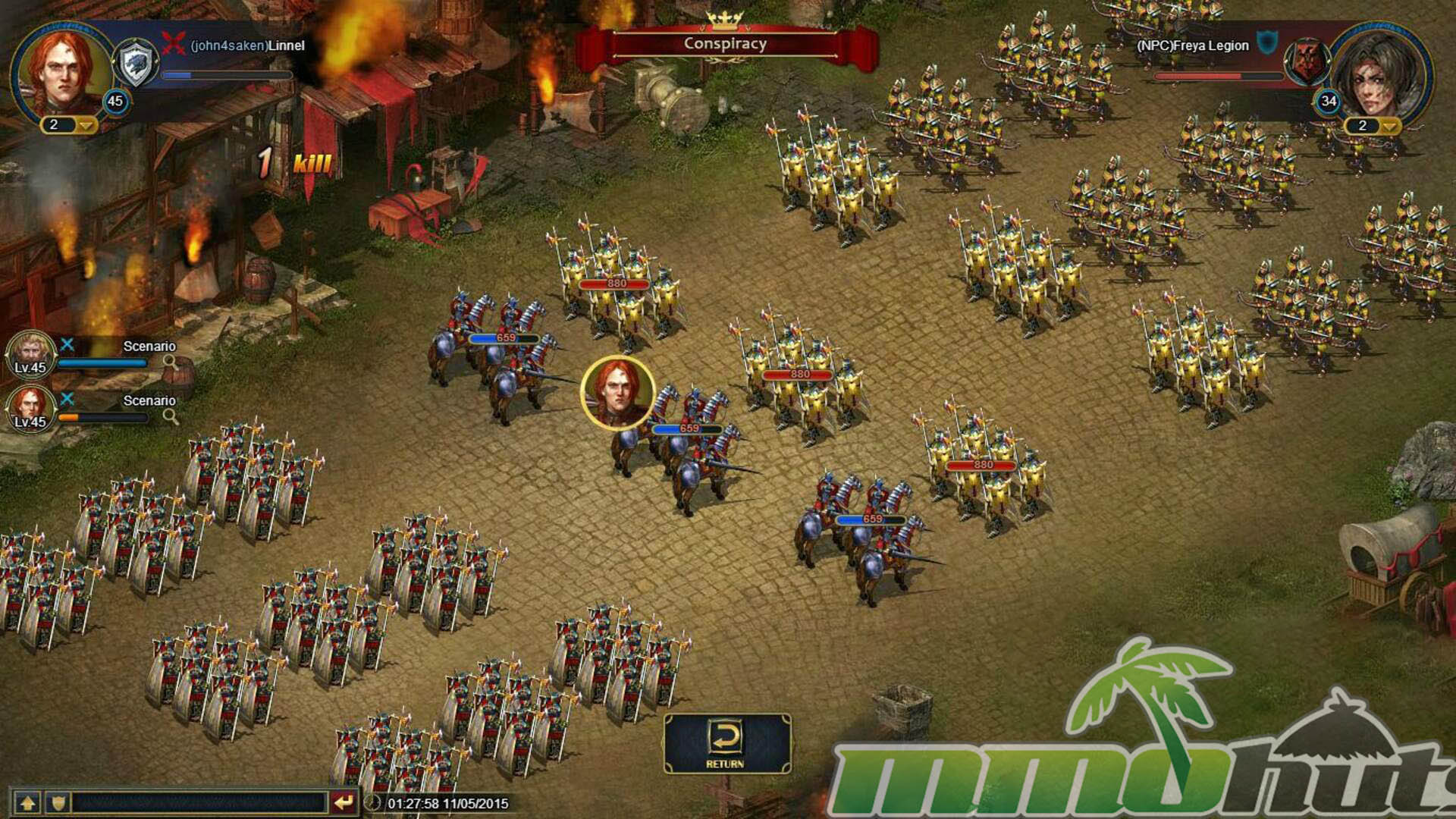
Combat leaned on a rock-paper-scissors relationship between three stances: Defense defeats Attack, Attack defeats Assault, and Assault defeats Defense. Fights resolved in waves, and between waves you had a short window to select your approach, trying to anticipate what the other side would do next. Winning usually came down to consistent correct calls rather than one decisive moment, and repeated battles made the pattern easy to understand, even for newcomers.
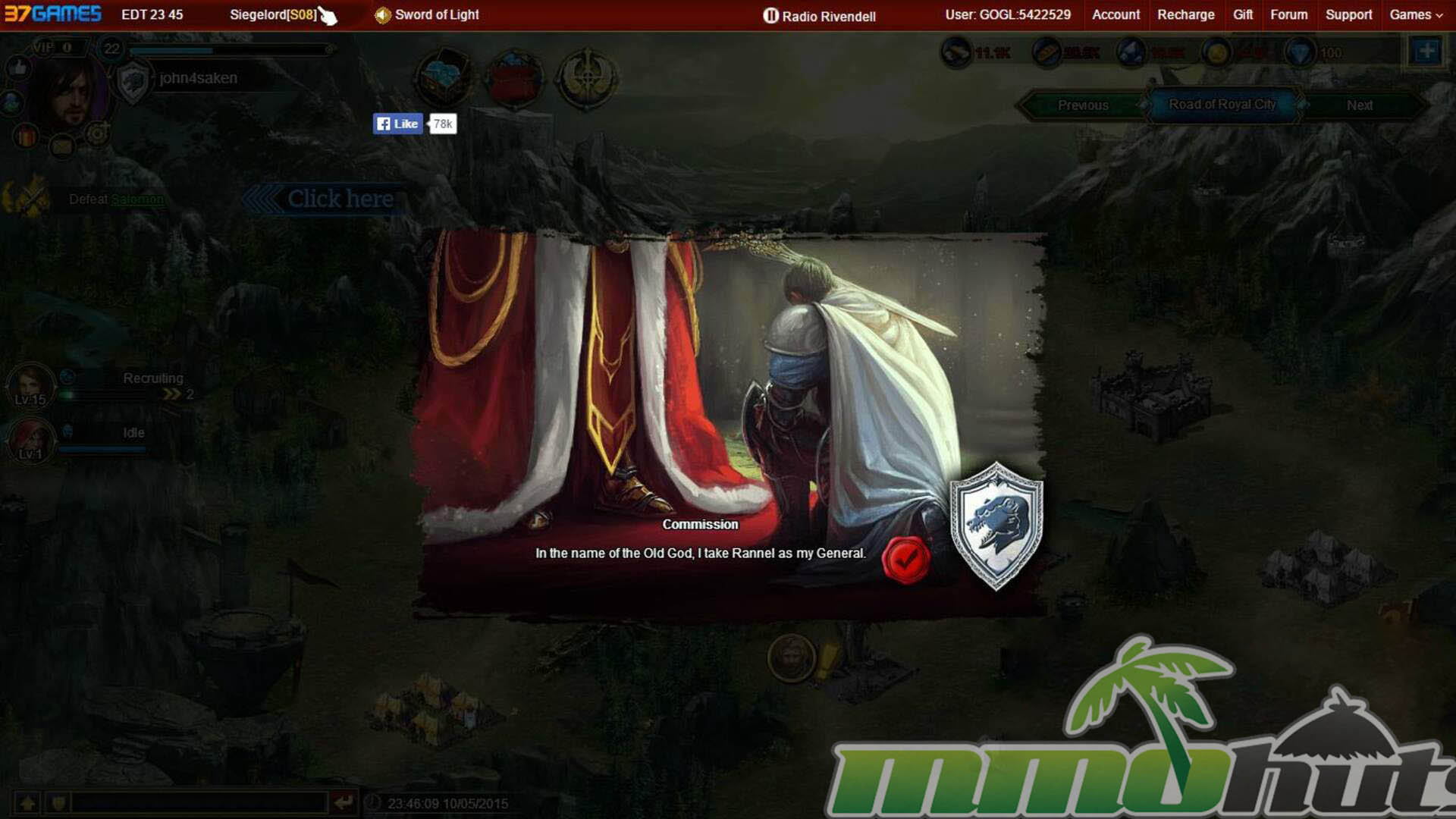
Generals were the main layer of added depth. They provided unique abilities and bonuses that could improve troop performance, and could also grant situational advantages such as better attack or defense on specific terrain. Generals could be geared up with items like armor, weapons, boots, gauntlets, rings, and mounts, which further shaped their value. When you defeated enemy generals, you could then purchase and bring them to your side. You began with a single General slot, and more slots (up to 4 total) could be unlocked through research, which required resources.
Faction War and Endgame Pressure
After working through the PVE campaign content, the focus shifted toward open conflict against the other factions. The game’s larger appeal was the idea of a continuous, player-driven territorial struggle where many players were fighting at once. In practice, it pushed you toward coordination, because a lone player rarely had enough weight to influence the map without support. Alliances and faction coordination mattered for timing pushes, holding key settlements, and responding when the front line moved.
Competitive players could also chase status through rankings, with the possibility of being crowned king of their faction if they climbed high enough. That kind of long-term ladder goal gave dedicated groups something to aim for beyond routine upgrades.
The Cash Shop Reality
As with many free-to-play browser MMOs of its era, Siegelord offered premium conveniences and power-leaning items through Diamonds, purchasable with real money. Spending could translate into an advantage, particularly for players trying to compete at the sharp end of faction warfare. The game was still playable without paying, but the pace felt slower, and staying competitive often demanded patience, careful resource use, and some luck with progression systems.
Final Verdict – Good
For a browser strategy MMO, Siegelord delivered a solid package. Its visuals and audio were stronger than many peers, and the shifting territory map gave the broader war a sense of momentum that made logging in feel purposeful. The underlying city-building and combat loop could feel conventional over time, and the premium economy created the usual free-to-play friction, but the three-faction format and persistent battlefield helped it stand out while it was active.
Siegelord Requirements
Operating System: XP / Vista / 7 / 8
CPU: Intel Pentium 4 or AMD Equivalent
Video Card: Any Graphics Card (Integrated works well too)
RAM: 512 MB
Hard Disk Space: 100 MB (Cache)
Because Siegelord ran in a web browser, it was built to be lightweight and generally performed well on most PCs. It was tested and ran properly on Internet Explorer, Opera, Firefox, and Chrome, and in practice any modern browser was typically sufficient. Siegelord could also be played through Facebook.
Siegelord Additional Information
Developer(s): 37 Games Entertainment
Publisher(s): 37 Games Entertainment
Release Date: December 19, 2014
Shut Down Date: September 16, 2018
Development History / Background:
Siegelord was a free-to-play 2D browser strategy MMO created by 37 Games Entertainment, a company known for producing and publishing browser-based titles. It officially released on December 19, 2014, and players could access it through the official website or via Facebook. On September 04, 2018, it was announced that Siegelord’s servers would close on September 16, 2018.