
Shot Online pitches itself as a more authentic take on online golf, built as a persistent MMO where you level a golfer, take on quests, and compete across a sizeable lineup of courses. With over 21 courses and a mix of quick head-to-head play and scheduled events, it is a niche title that still caters to players who want golf mechanics to feel grounded rather than arcade-like.
 | Publisher: GamesCampus Playerbase: Low Type: Sports MMO Release Date: November 30, 2004 (NA/EU) Pros: +Convincing, simulation-leaning golf feel. +Plenty of courses to learn (21+). +Questing gives structure between rounds. Cons: -Very small community. -Matches can run long, especially full rounds. |

Shot Online Overview
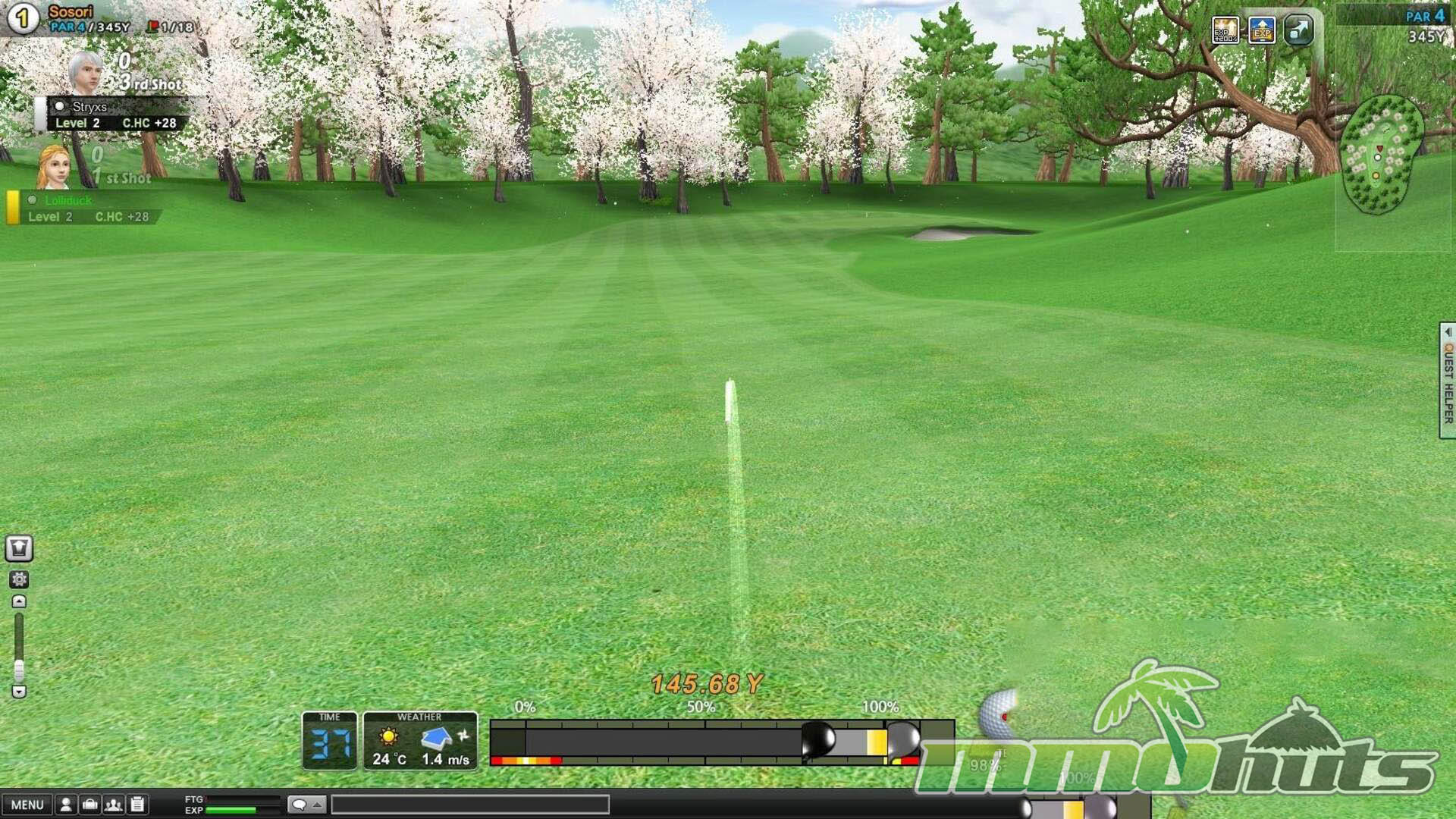
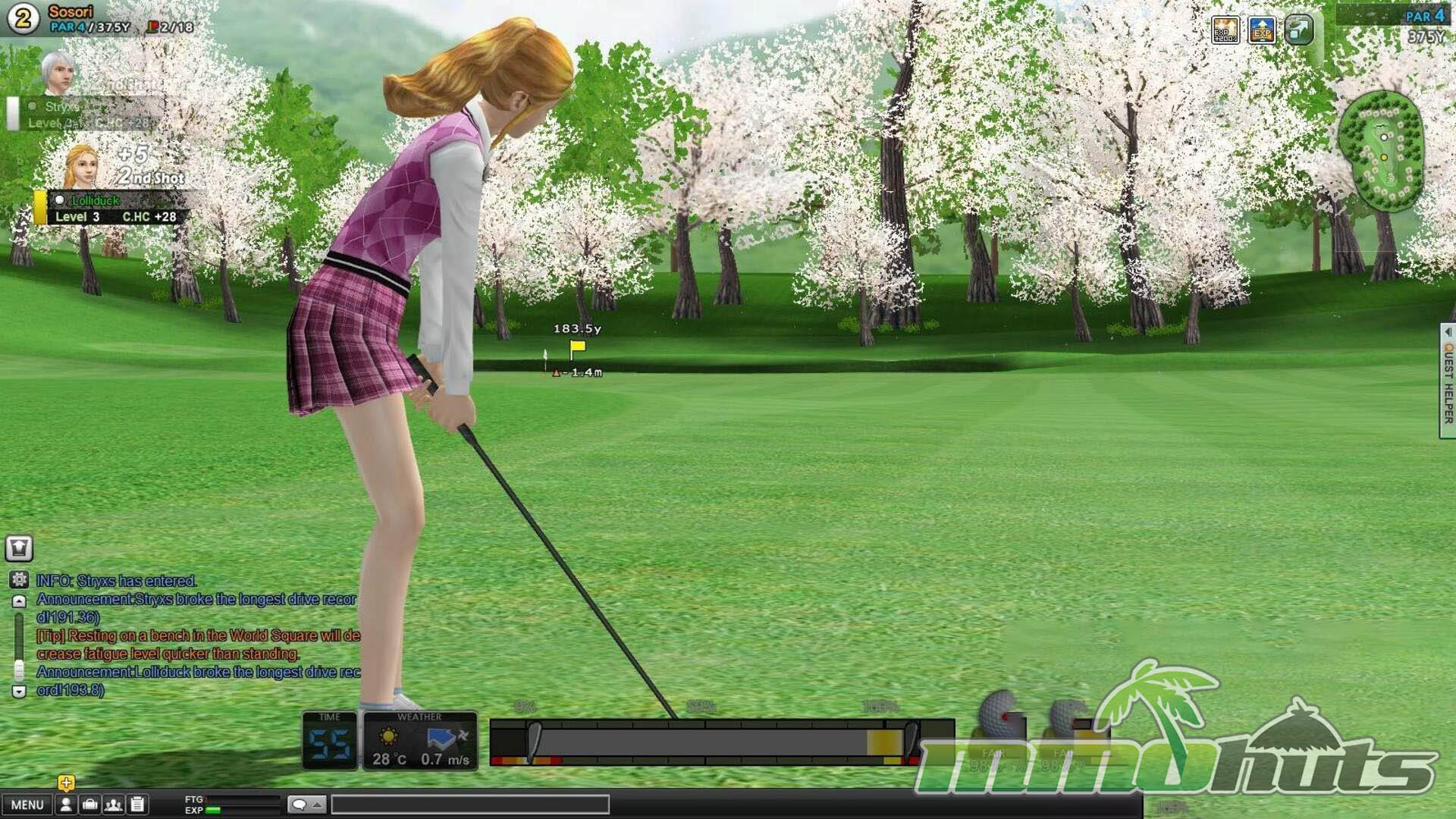
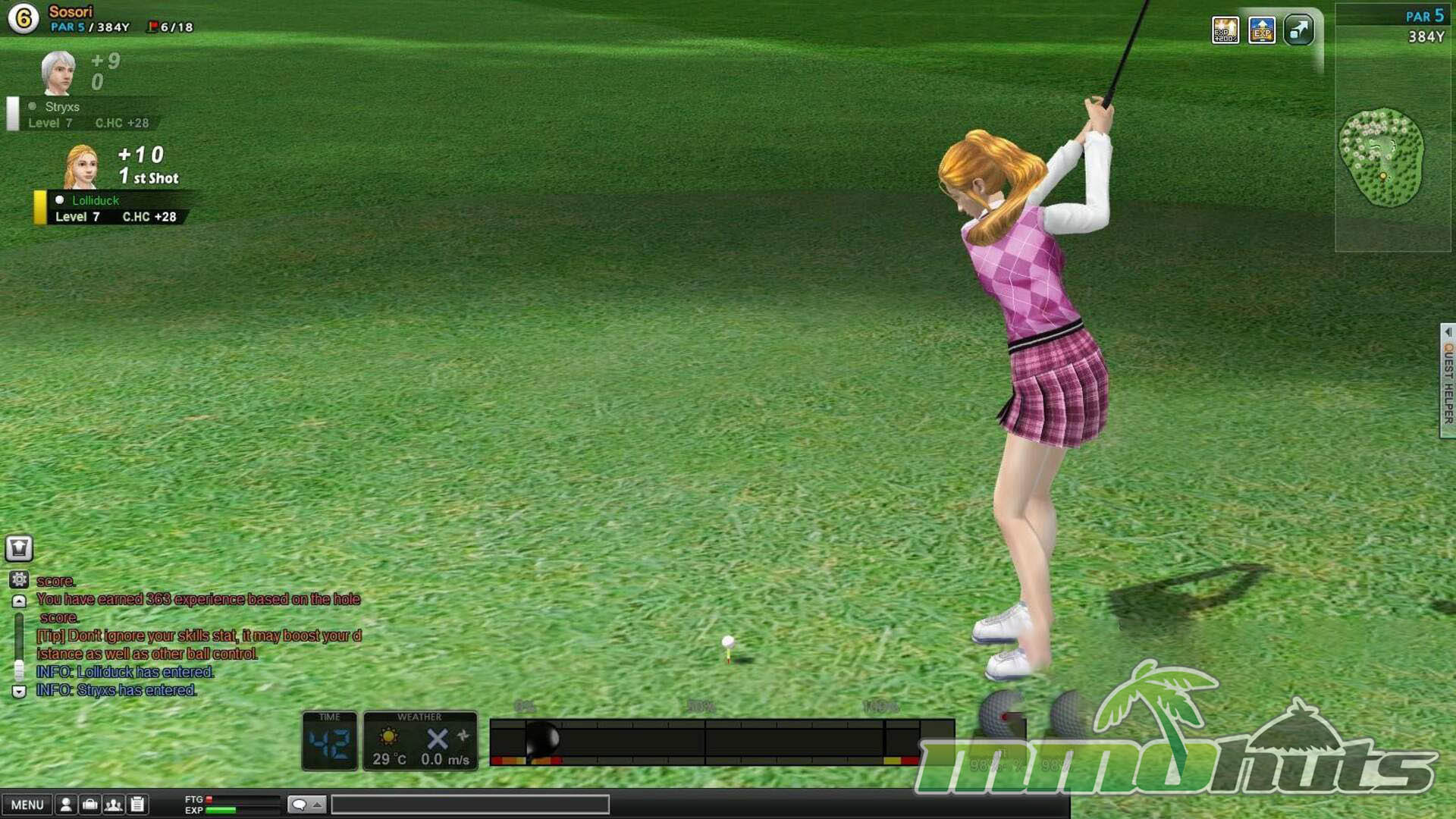
Shot Online is a 3D golf MMO that leans toward realism in both presentation and shot-making. Instead of flashy special shots, the game focuses on reading lies, planning club selection, and managing factors like power and accuracy in a way that resembles traditional golf games on PC and console. Visually it is clean and functional, and the audio is understated, designed more to support the calm pace of a round than to steal attention.
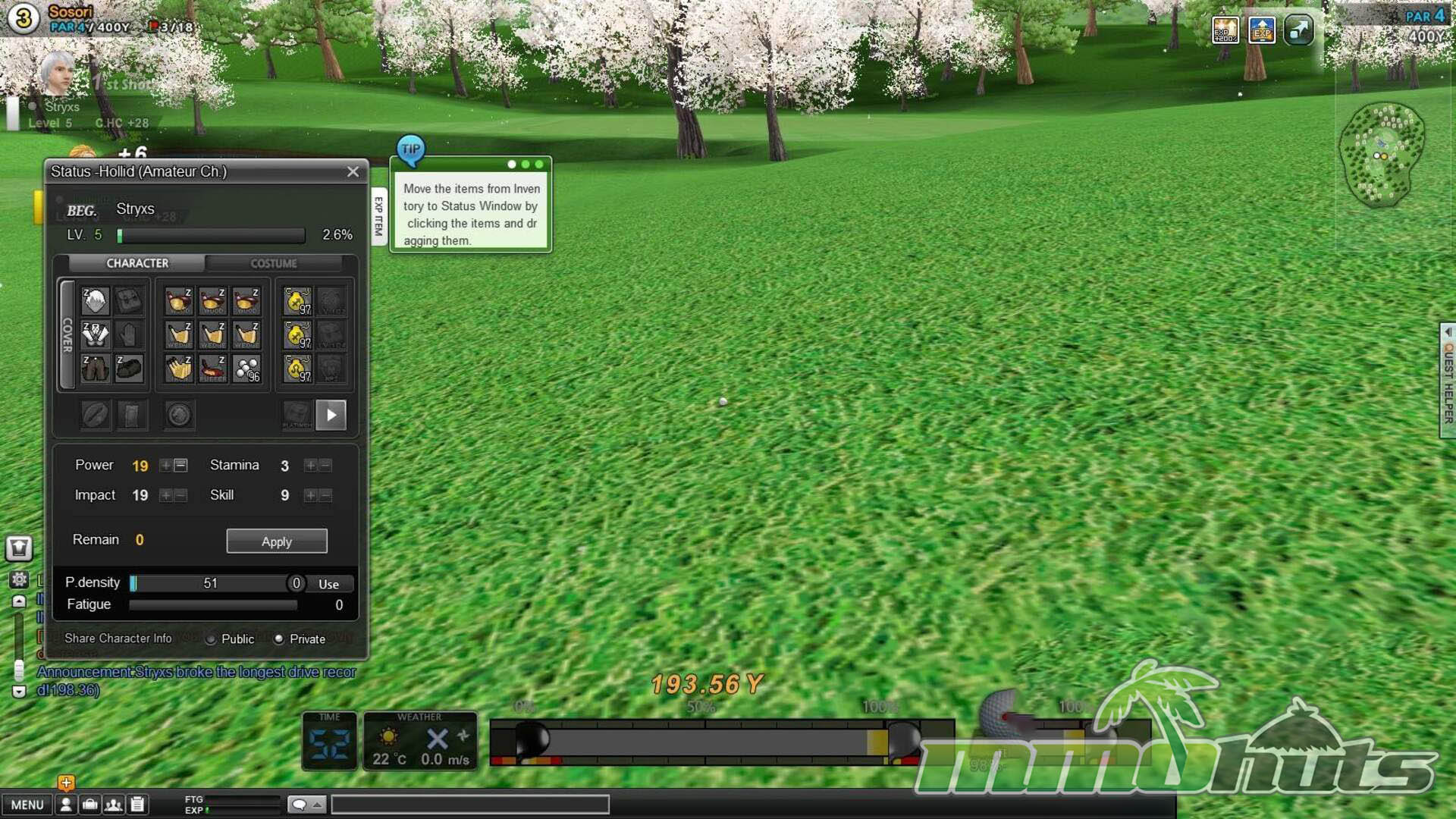
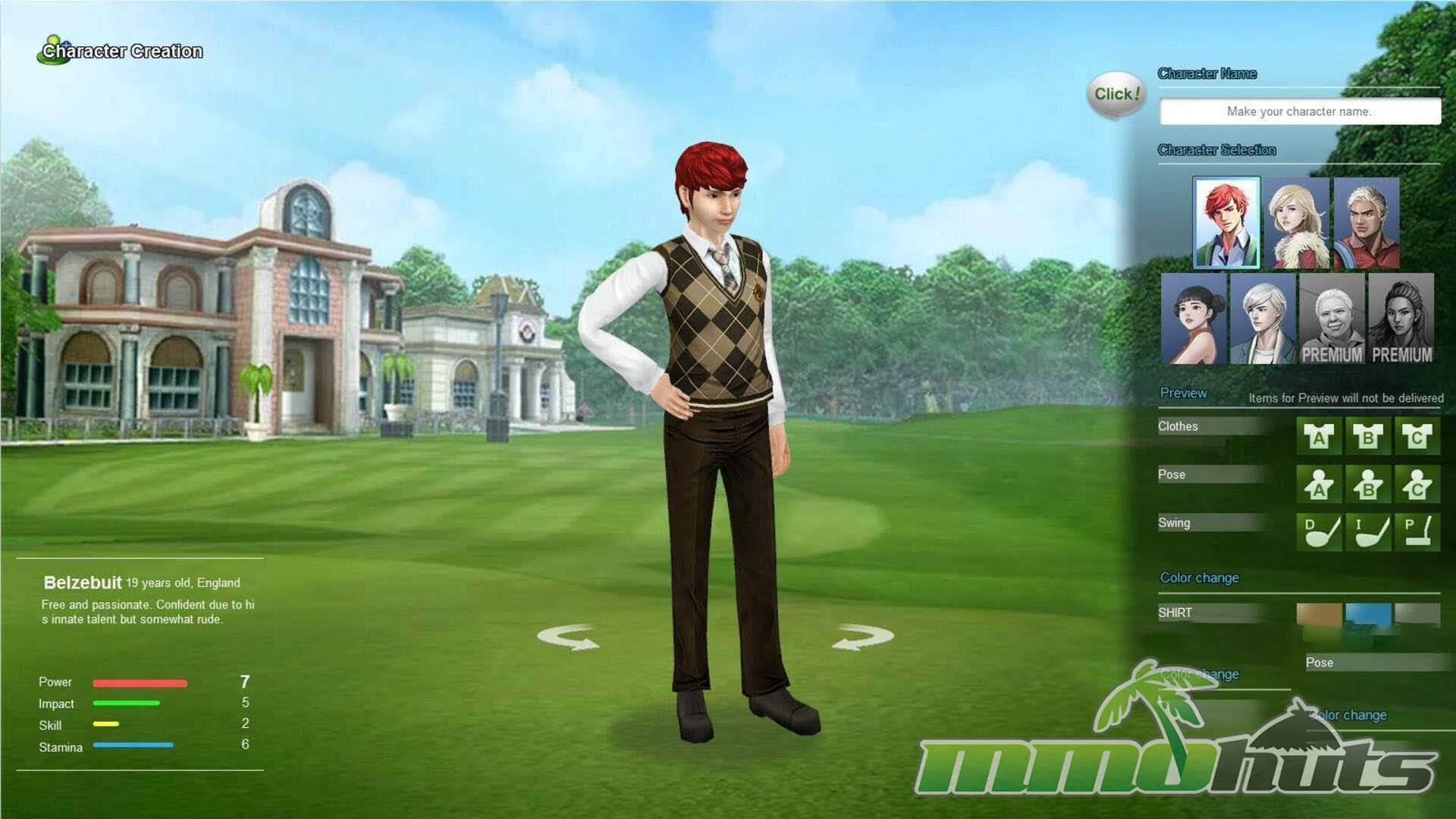
Players choose from a small roster of characters, five available by default, with two additional options reserved for premium membership. Progression is tied to four core attributes, power, impact, skill, and stamina, and leveling gives you points to shape how your golfer performs. The result is an MMO loop built around improving both your character sheet and your personal execution.
Shot Online Key Features:
- Virtual Golf – play full rounds on digital courses that emphasize believable shot physics and familiar golf fundamentals.
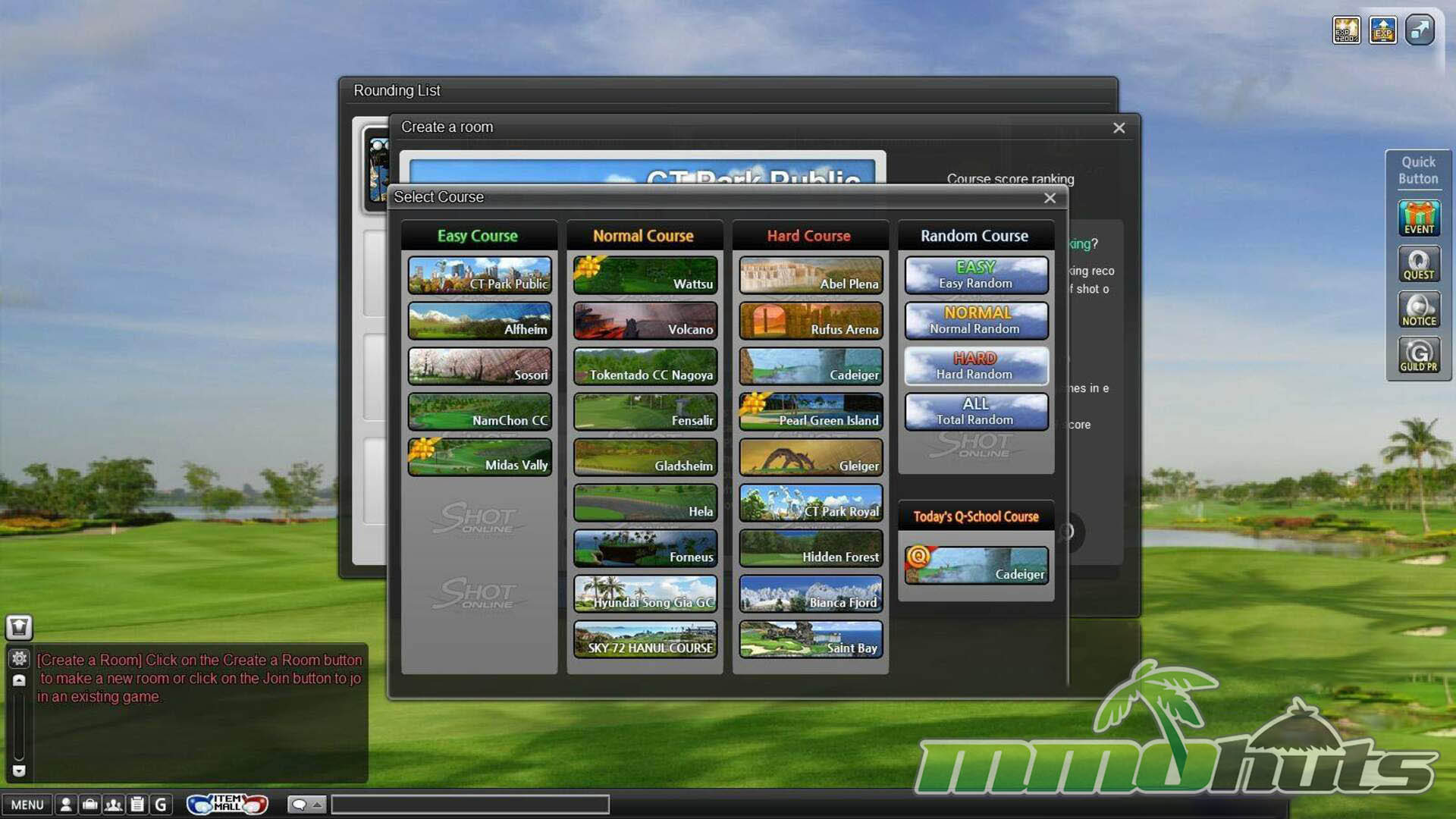
- Over 21 Courses – a broad selection of courses gives you plenty of layouts to study and master.
- Fun Game Modes – rotate through the game’s ten modes to keep sessions from feeling repetitive.
- Participate in Tournaments – join competitive events to measure your consistency against other players.
- Good Graphics and Music – an unobtrusive presentation and relaxing music fit the sport and the slower pacing.
Shot Online Screenshots



Shot Online Featured Video

Regular Characters:
- Belzebuit – leans into stamina and power, with average impact and weaker skill.
- Erda – strong skill-focused pick, generally balanced, with low impact and average stamina and power.
- Shaoring – high stamina and an even spread across impact, skill, and power.
- Wotan – built for distance with extremely high power and stamina, but very low impact and skill.
- Zygmunt – high impact and skill, decent power, and lower stamina.
Premium Characters
- Camila – emphasizes impact and skill, supported by moderate stamina and power.
- Albus – trades stamina for high power and skill.
Shot Online Review
Shot Online is a semi-realistic 3D golfing MMO developed by OnNet. While it launched in Korea in 2004, it arrived for US players later that year, with the NA/EU release dated November 30, 2004. It is often mentioned alongside other online golf titles like Pangya, but the tone is very different. Where Pangya embraces an anime-styled, arcade sensibility, Shot Online aims for a more grounded look and a stricter approach to shot execution. Even with its modest visibility today, it has managed to keep a dedicated audience for a long time, which says a lot about how well it serves its specific niche.
Character Choice Over Character Creation
If you are expecting a deep avatar creator, Shot Online is not built that way. Your “build” starts by selecting a pre-made golfer, five for regular accounts and seven for premium, and their stat spreads meaningfully influence how the game feels. A power-heavy character can help when you want more distance, while a higher-skill option can feel more forgiving when you are learning timing and precision.
Customization is limited to small cosmetic swaps, such as choosing from a few color palettes for outfits, plus additional clothing options you can obtain in-game. It gets the job done, but it never becomes a major part of the game’s identity.
The opening onboarding is handled well. After a brief introduction, the tutorial walks you through the key mechanics quickly, but clearly, which is important because the controls are approachable yet timing-sensitive. Movement and interaction can be done via arrow keys or point-and-click, and while the basics click fast, playing efficiently takes practice and repetition.
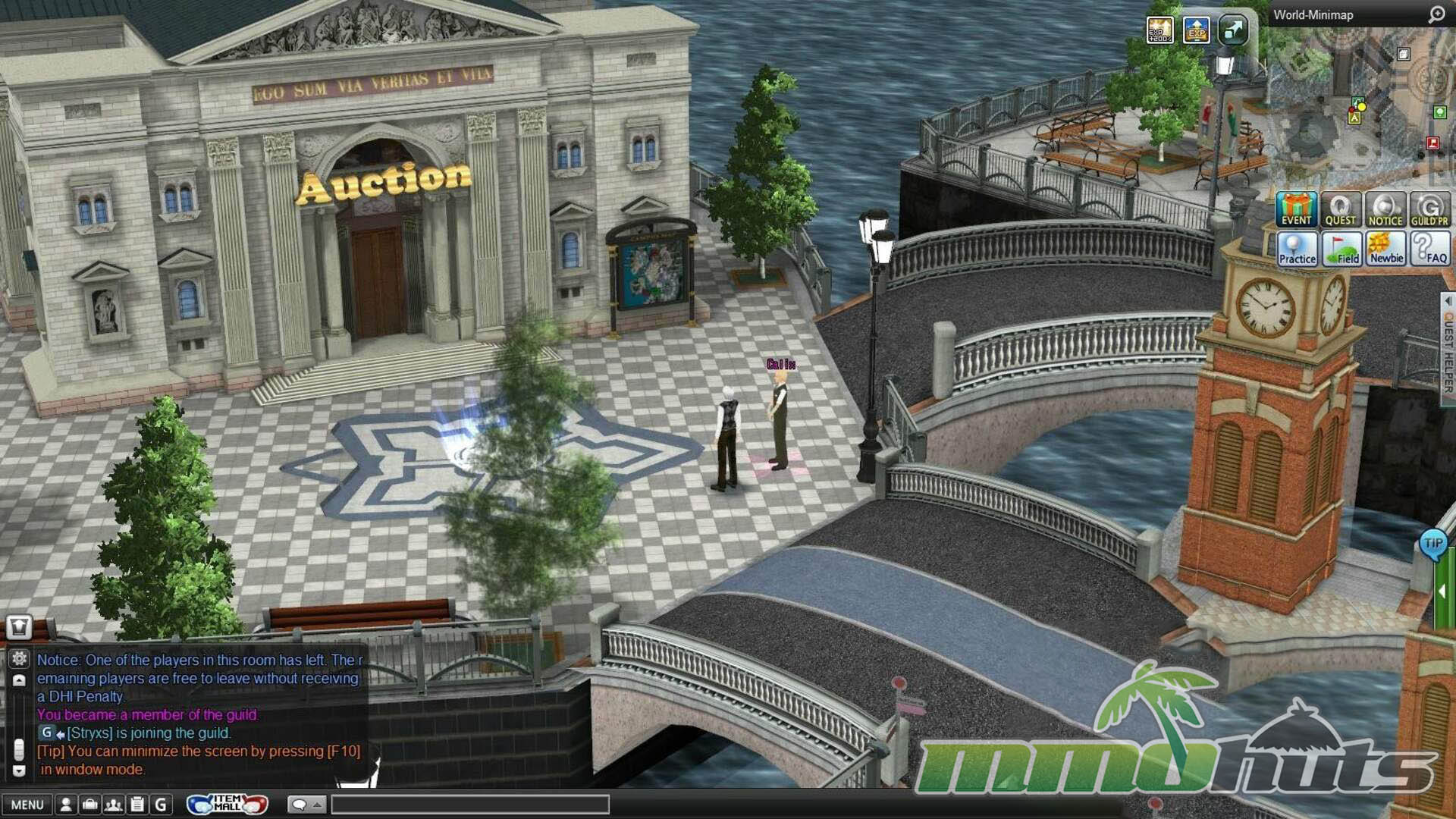
Once you are through the tutorial, you spend downtime in the lobby, the central hub that links everything together. It is where you shop, chat, manage items, and pick up quests before heading out to play.
Gameplay
Shot Online supports ten game modes and wraps them in an MMO-style progression loop with quests and leveling. Advancement is steady rather than slow, and each level grants two points you can allocate across the four stats (power, skill, stamina, impact). Those numbers are not just window dressing, they influence shot behavior and consistency, but player execution still matters a great deal, especially when conditions become less forgiving.
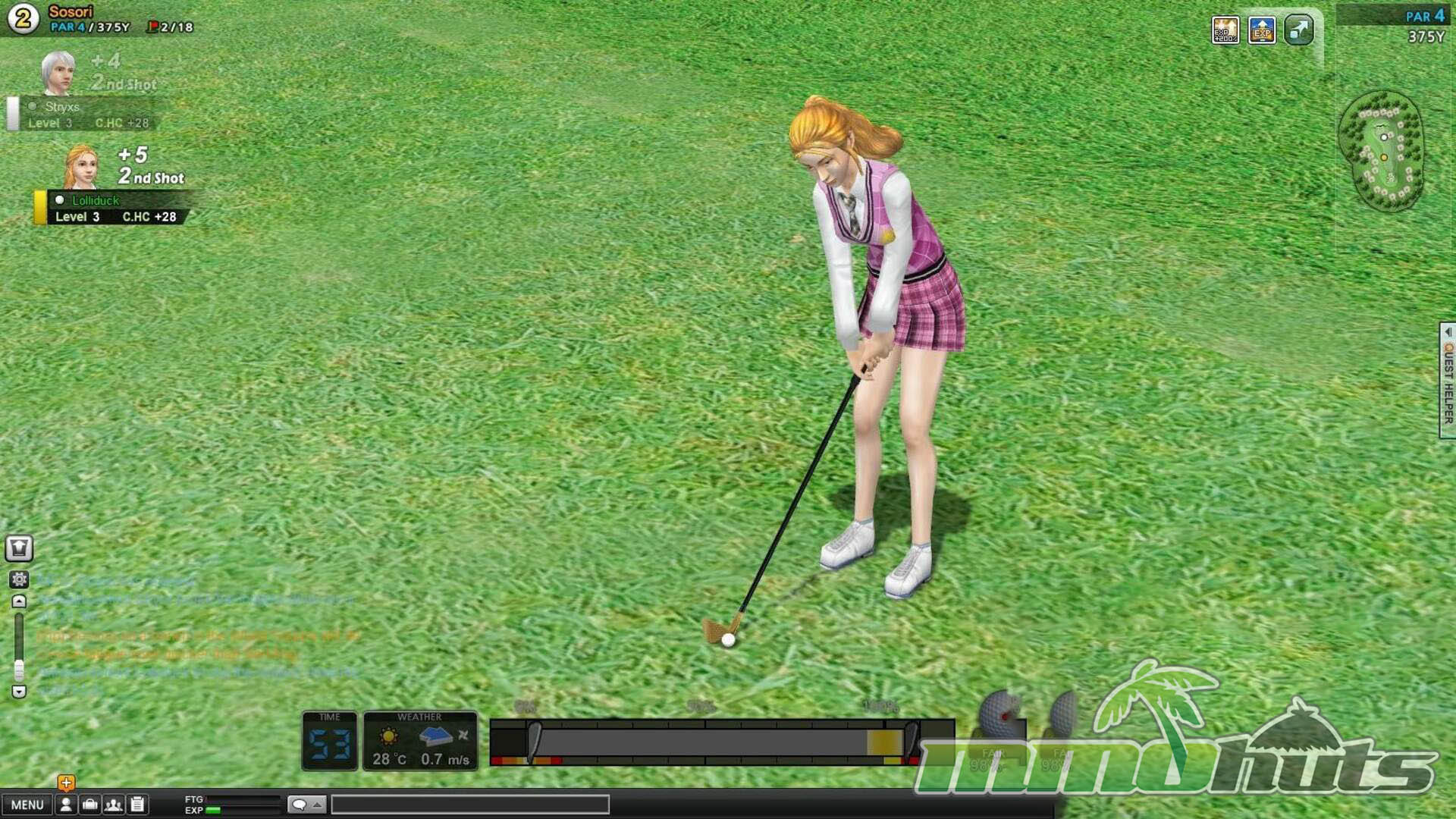
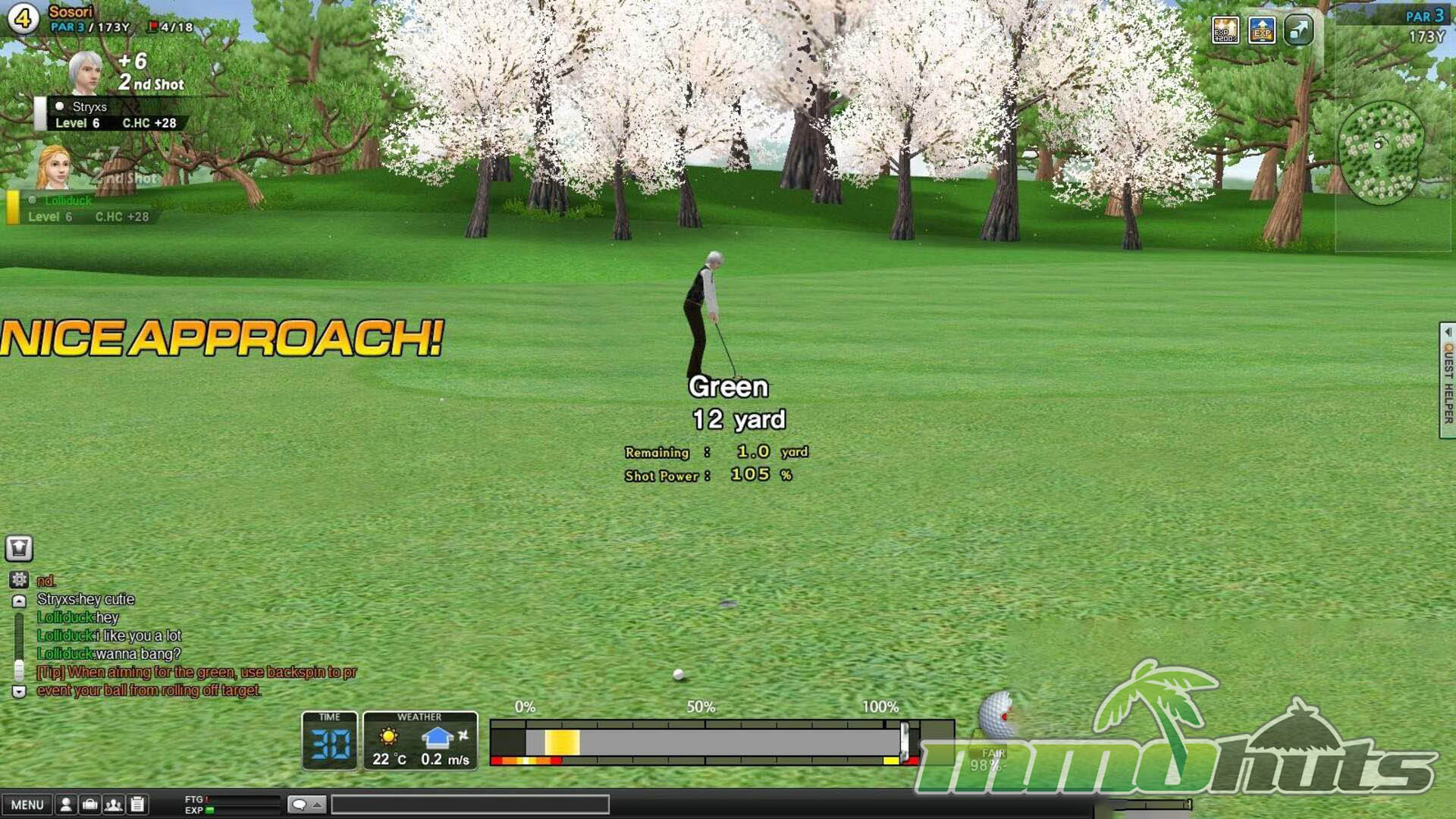
In terms of feel, it is about as close to traditional golf as you can reasonably expect from an MMO format. Club selection is part of the decision-making, and environmental factors like weather can alter ball movement, reinforcing the sim-leaning direction.
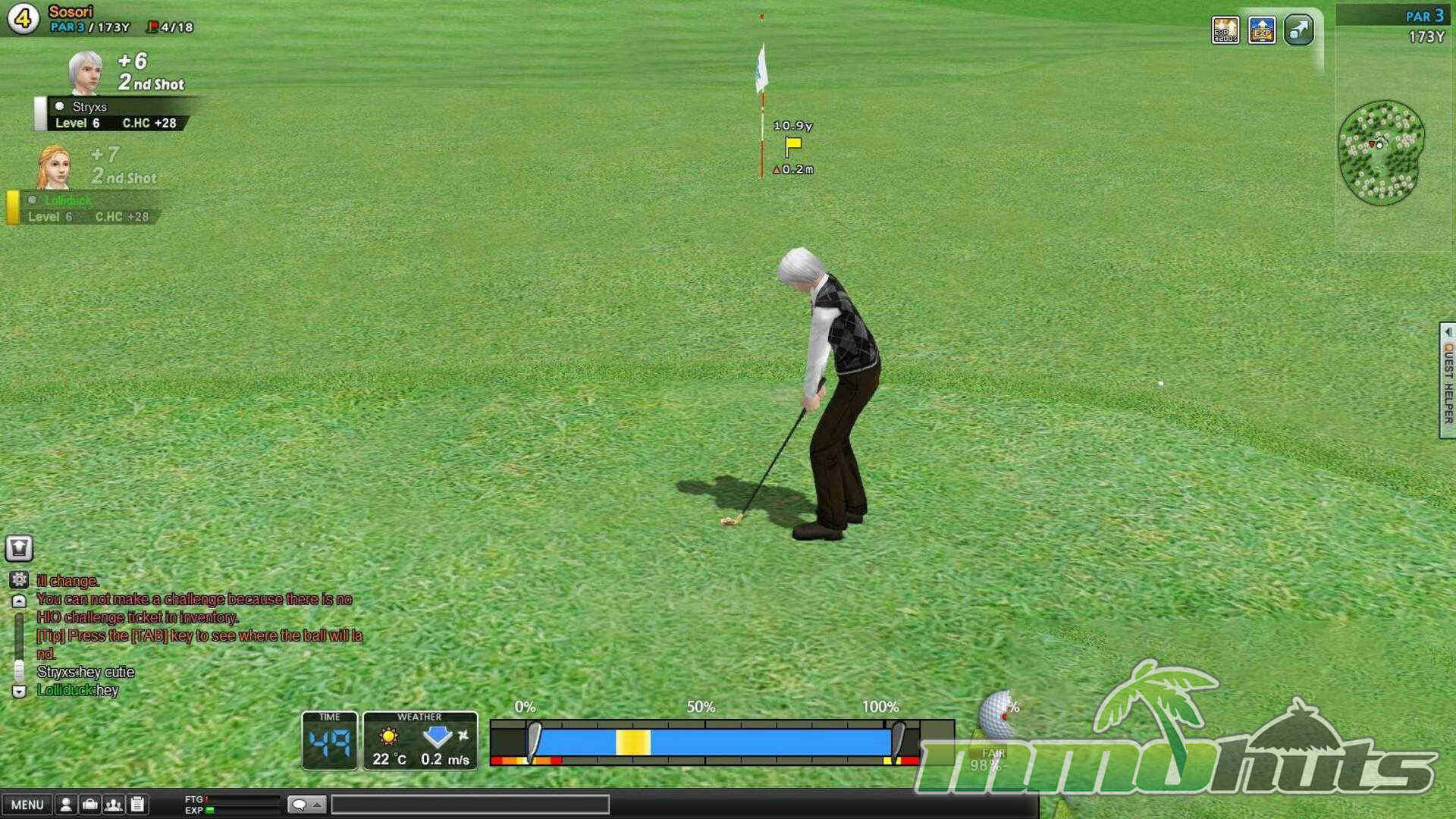
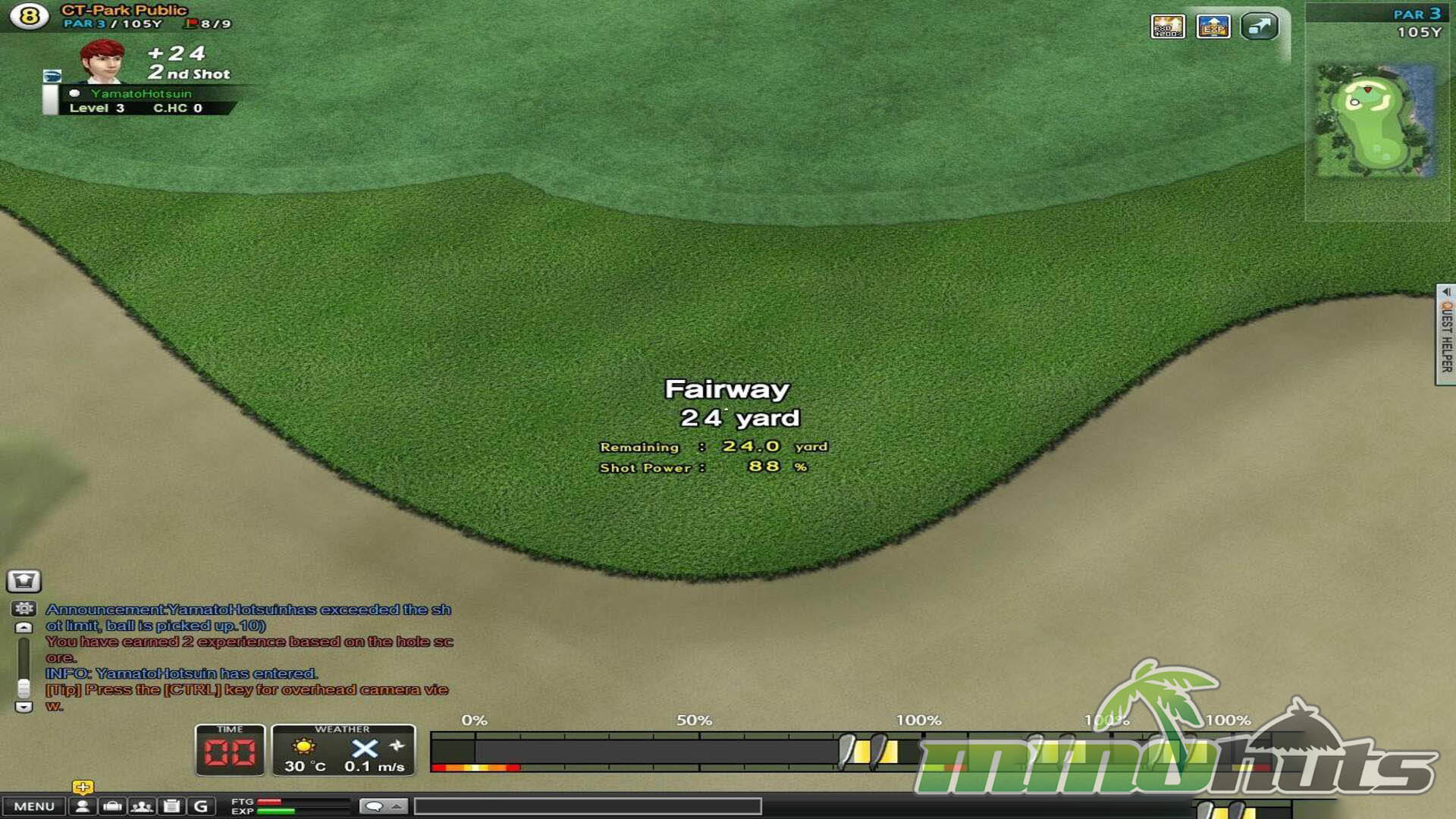
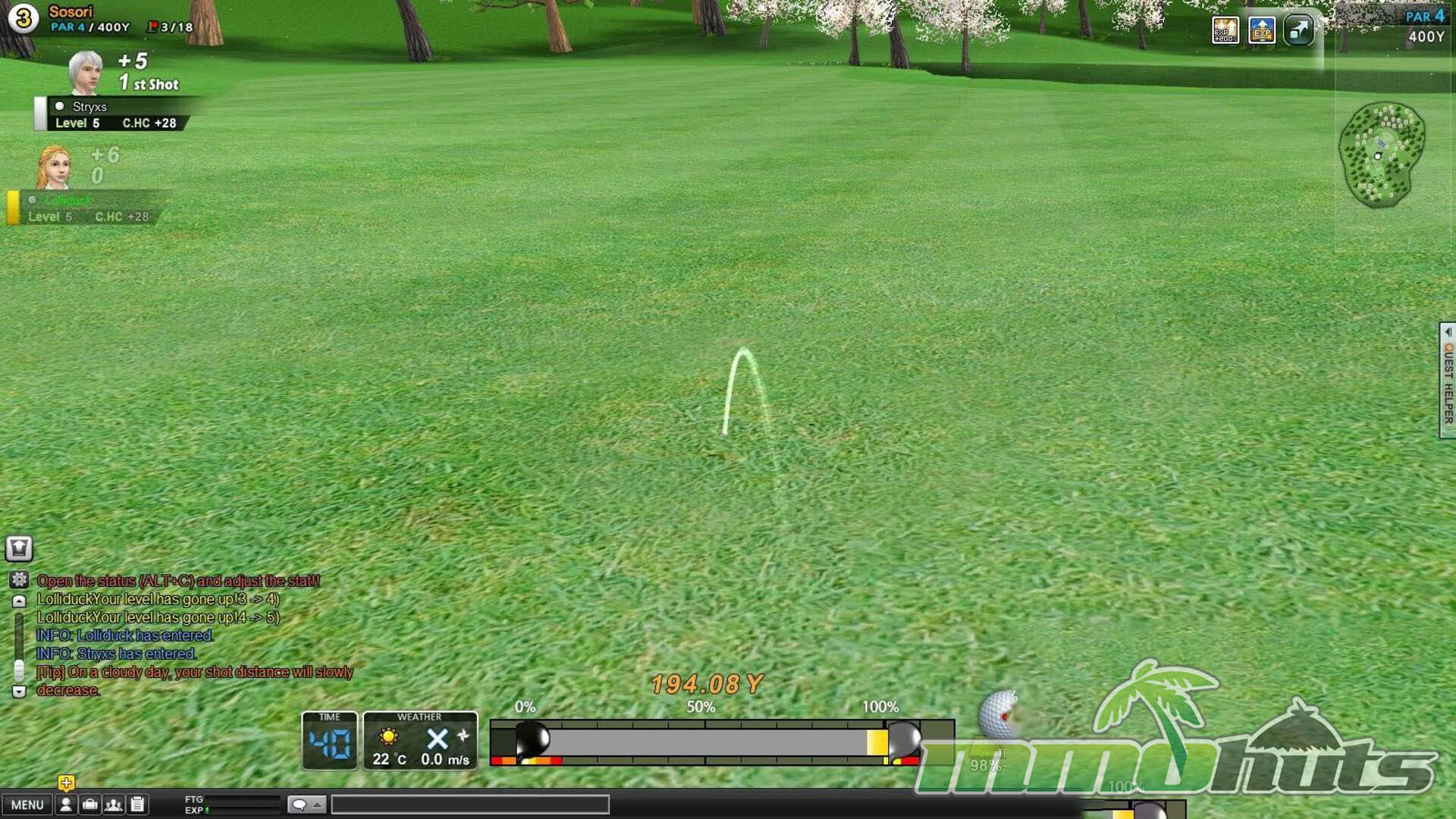
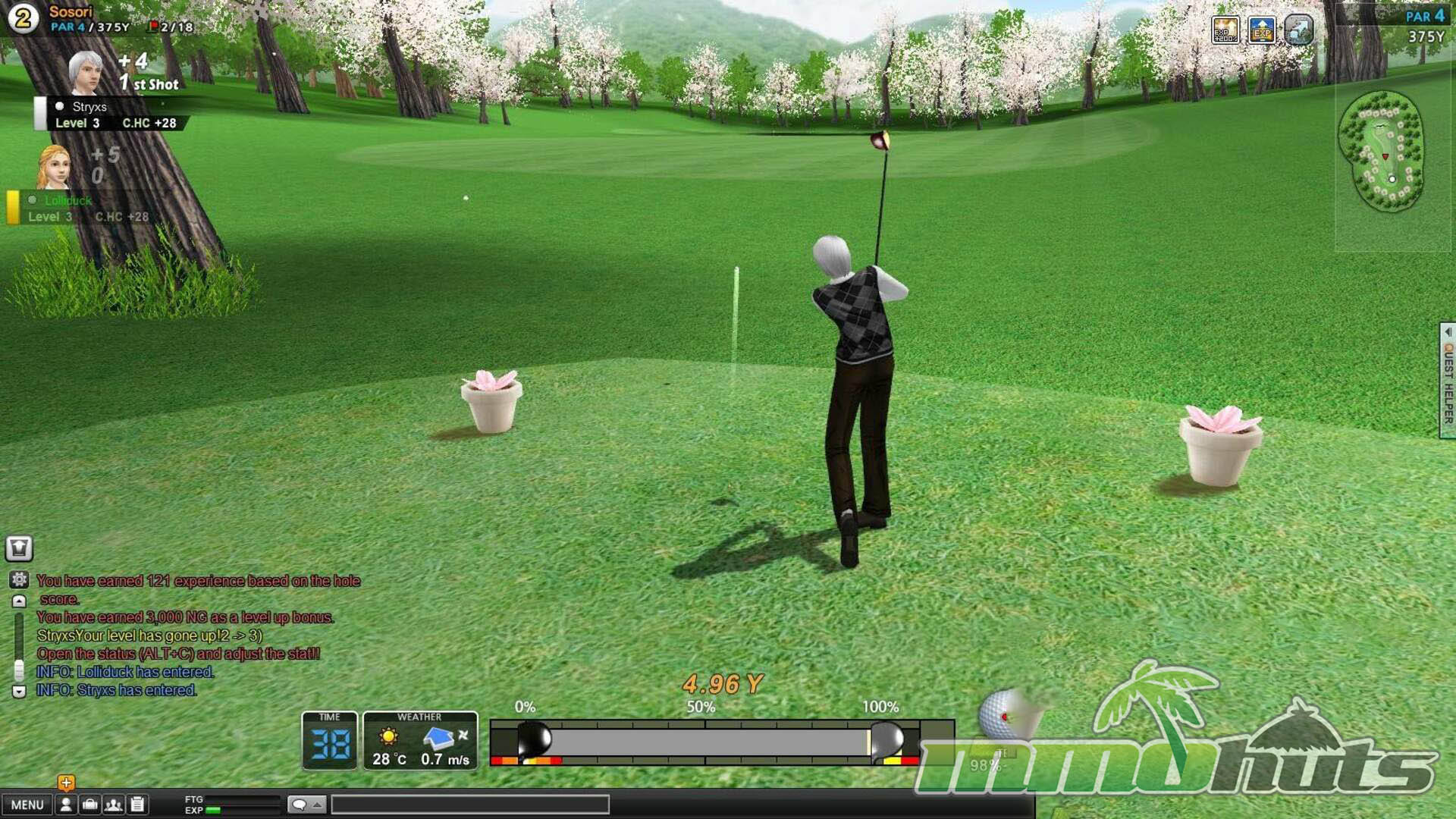
Shot planning is supported by a shot guide (triggered with the tab key) that helps estimate where the ball is likely to travel, then you commit using a familiar power meter stopped with the space bar. If you have played other golf games, the cadence will feel recognizable. Over time, you start to internalize how much your character’s stats, your timing, and course conditions each contribute to the final result.
One interesting competitive wrinkle is the way match entry works for head-to-head play, you pay in-game currency to join, and the winner effectively takes the pot. It adds tension to otherwise routine rounds and makes wins feel more personal than simply earning another system-generated reward.
Keeping Variety in the Rotation
Where Shot Online holds up best is in the amount of content to rotate through. Between 21+ courses and 10+ modes, there is enough to keep the sport from feeling like the same nine holes forever. Courses are grouped into beginner, intermediate, and advanced brackets, and some higher-tier layouts are restricted to Semi-pro and Tour Pro players.
The pro testing system gives long-term players something concrete to aim at, but it is also strict. Taking a pro test requires Level 41+, a strong skill rating on the relevant course, and a 250,000 currency entry fee. Promotion is tied to performance, with the top 50 percent of participants scoring 68 or under eligible to move up. Because disconnects and lag can cost you the attempt with no redo, the system rewards preparation and stable connections as much as it rewards golf fundamentals.
Tournaments
Tournaments appear periodically and act as the game’s most public competitive stage. Requirements vary by event, but if you qualify you can enter and play alongside other eligible golfers. Winning does more than provide currency, it also grants a title that marks the achievement, which is a nice touch for a game built around reputation and long-term progression.
The main drawback is participation. With the game’s low population, some tournaments can feel quieter than they should, and the overall energy depends heavily on how many players decide to show up during that window.
Item Mall
Cosmetics and some equipment can be earned and bought with in-game currency, but the larger selection sits in the web-based item mall. You will find clubs, balls, outfits not typically available through normal play, and various experience-related items. There is also a free items section, which helps soften the storefront feel.
The store is stocked with convenience items that can noticeably smooth progression, including balls that can boost stat points. As with most older free-to-play MMOs, the experience is best when you treat the mall as optional support rather than a requirement.
Final Verdict, Great
Shot Online succeeds at what it is trying to be, a golf MMO that prioritizes realistic mechanics, steady progression, and a wide spread of courses and modes. It is easy to recommend to players who enjoy methodical sports games and like the idea of building a character over time rather than simply selecting a course and playing one-off matches.
Its biggest weaknesses are not hard to spot: character customization is thin, controls can feel a bit awkward until you have hours in, and the low playerbase can make matchmaking and event participation inconsistent. Still, if you want a simulation-leaning online golf game with structure beyond casual rounds, Shot Online remains a solid option.
Shot Online System Requirements
Minimum Requirements:
Operating System: Windows XP / Vista / 7 / 8
CPU: Pentium 4 2 GHz
Video Card: GeForce FX 5700 or better
RAM: 2 GB
Hard Disk Space: 2 GB
Recommended Requirements:
Operating System: Windows XP / Vista / 7 / 8
CPU: Pentium 4 2 GHz
Video Card: GeForce 8800GT or better
RAM: 4 GB
Hard Disk Space: 4 GB
Shot Online Music & Soundtrack
Shot Online Additional Information
Developer: OnNet Co. Ltd.
Closed Beta Date: July 15, 2008 – September 17, 2008
Open Beta Date: October 25, 2004
Foreign Release(s):
South Korea: April, 2004 (OnNet Co)
Japan: June, 2004 (Excite Japan)
Taiwan: February, 2008
Several localized versions of Shot Online are no longer available. The GamesCampus version of the game is the most reliable.
Development History / Background:
Shot Online was created by South Korean developer OnNet Co. Ltd. and first launched in South Korea in April, 2004 as a free-to-play title. Strong early success led to licensing deals across multiple regions. For the Western release, OnNet formed a US subsidiary, GamesCampus, to handle publishing and operations. Over the years, Shot Online has remained GamesCampus’ most profitable publication and has stayed available long after many similar niche MMOs closed. The US version entered open beta on October 25, 2004 and remained open for more than 11 years. OnNet Europe also operates the game for European players. The game has been localized into Korean, English, Japanese, German, Traditional Chinese, Spanish, and French.