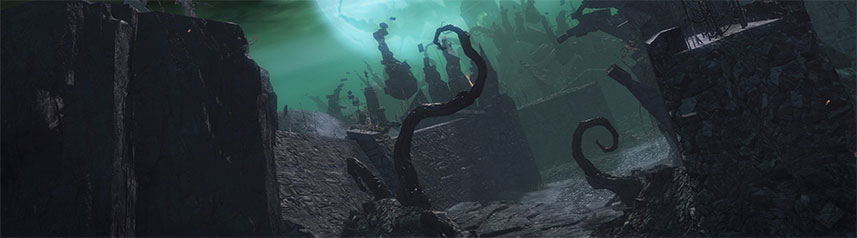
Shadowgun: Deadzone is a free-to-play mobile third person shooter built around quick online PVP matches, impressive (for its era) 3D visuals, and a steady stream of weapons and gear to unlock. It focuses on straightforward arcade-style firefights across two core modes, Deathmatch and the team-focused Zone Defense, with a simple upgrade loop that keeps you chasing the next gun.
 | Publisher: Madfinger Games Type: Mobile Shooter Release Date: November 15, 2012 Shut Down: March 31, 2019 Pros: +Strong visual presentation for a mobile shooter. +Great for quick drop-in matches. +Large selection of weapons to earn and improve. Cons: -Can start to feel samey over time. -Monetization can create power gaps |
Shadowgun: Deadzone Shut Down on March 31, 2019
Shadowgun: Deadzone Overview
Shadowgun: Deadzone is a free-to-play 3D shooter for mobile devices, developed and published by Madfinger Games, the studio behind Dead Trigger, Samurai, and the original Shadowgun. Instead of offering a campaign, Deadzone is designed as a purely competitive multiplayer experience, delivering short, repeatable matches with a console-inspired presentation and a sci-fi aesthetic that was notably ambitious for 2012. Online matches support up to 12 players, and the game keeps the pace high with sprinting, rolling, grenades, and a cover mechanic that encourages constant movement rather than slow, static duels.
Progression revolves around unlocking and upgrading a wide range of firearms, from conventional assault rifles and machine guns to plasma-based weapons and heavy launchers. In addition to guns, players can lean on equipment like frag grenades, sentry guns, and supportive consumables such as health and ammo packs. Whether you prefer a quick free-for-all or a coordinated team push, Deadzone is built for short sessions and immediate action.
Shadowgun: Deadzone Features:
- High Quality 3D Graphics – Detailed sci-fi arenas and flashy effects that aimed for a console-like look on mobile hardware.
- Fast-paced Combat – A mobile-friendly control scheme with cover, sprinting, rolling, grenades, and a close-range knockdown option.
- Two Modes – Jump into free-for-all Deathmatch or compete in the objective-driven, team-based Zone Defense.
- Many Weapons and Guns – A broad weapon roster, including SMGs, machine guns, plasma weapons, and rocket launchers, plus upgrades to improve performance.
- Easy to Pick up and Play – Short matches and a PvP-only structure make it well suited for quick play sessions.
Shadowgun: Deadzone Screenshots

Shadowgun: Deadzone Featured Video

Shadowgun: Deadzone Review
Shadowgun: Deadzone was Madfinger Games’ attempt to turn the Shadowgun universe into an always-online competitive shooter, and it largely succeeds at what it sets out to do. As a Czech studio recognized for pushing mobile visuals (notably with Dead Trigger and the Samurai series), Madfinger approached Deadzone with a clear goal: deliver a slick, match-based third person shooter that feels substantial even in short bursts. Released on November 15, 2012, it offered a PvP-only structure with fast matchmaking, compact arenas, and a progression system built around unlocking and improving gear.
Even today, the core appeal is easy to understand. Matches are short, movement is quick, and the game has that arcade shooter rhythm where you are constantly respawning and re-engaging rather than waiting around. The trade-off is that repetition can creep in, and the economy plus premium currency can create uneven fights, especially when upgrades and boosts enter the picture.

Modes
Deadzone keeps things simple with two playlists, and both are tuned for short sessions.
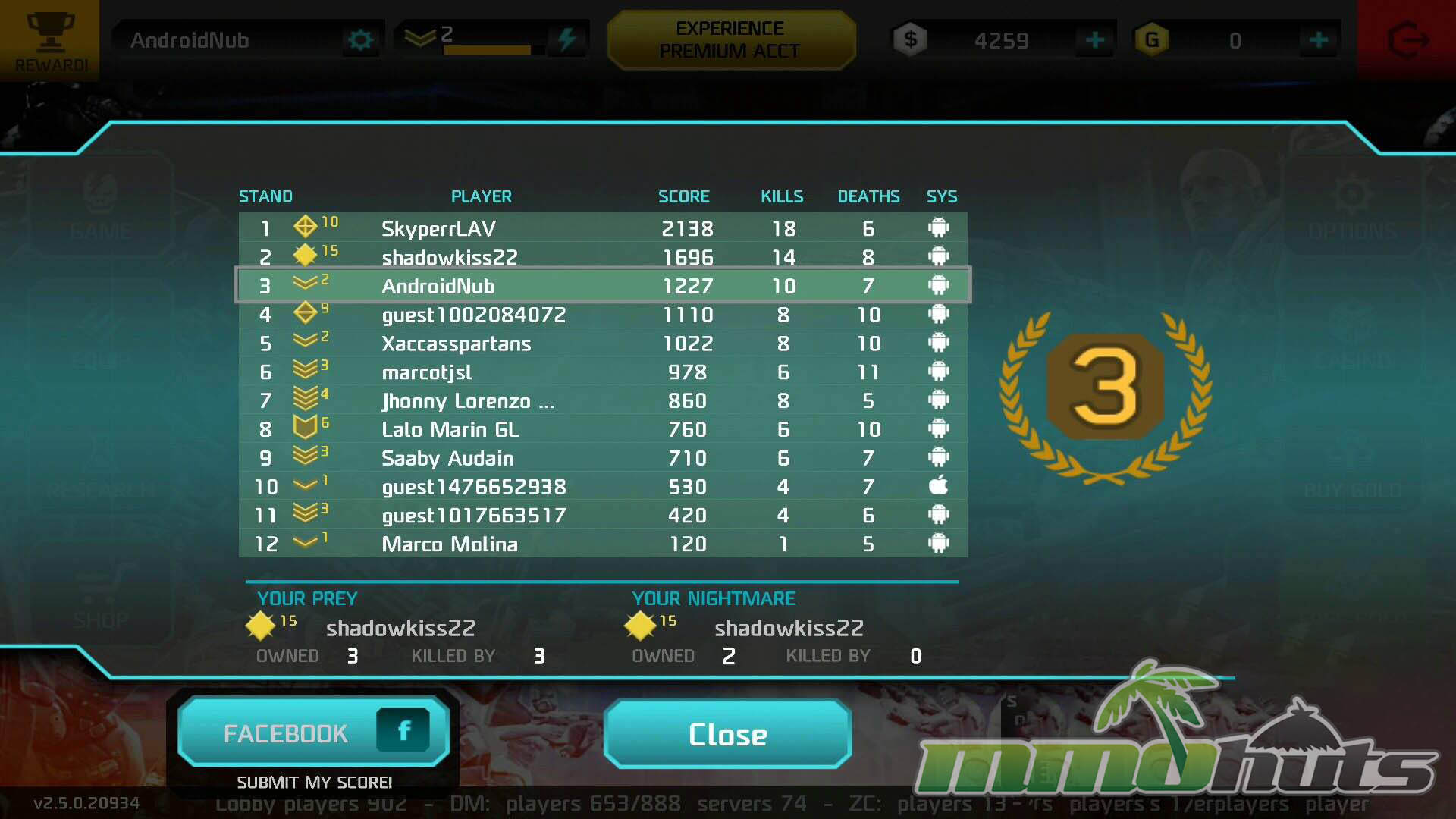
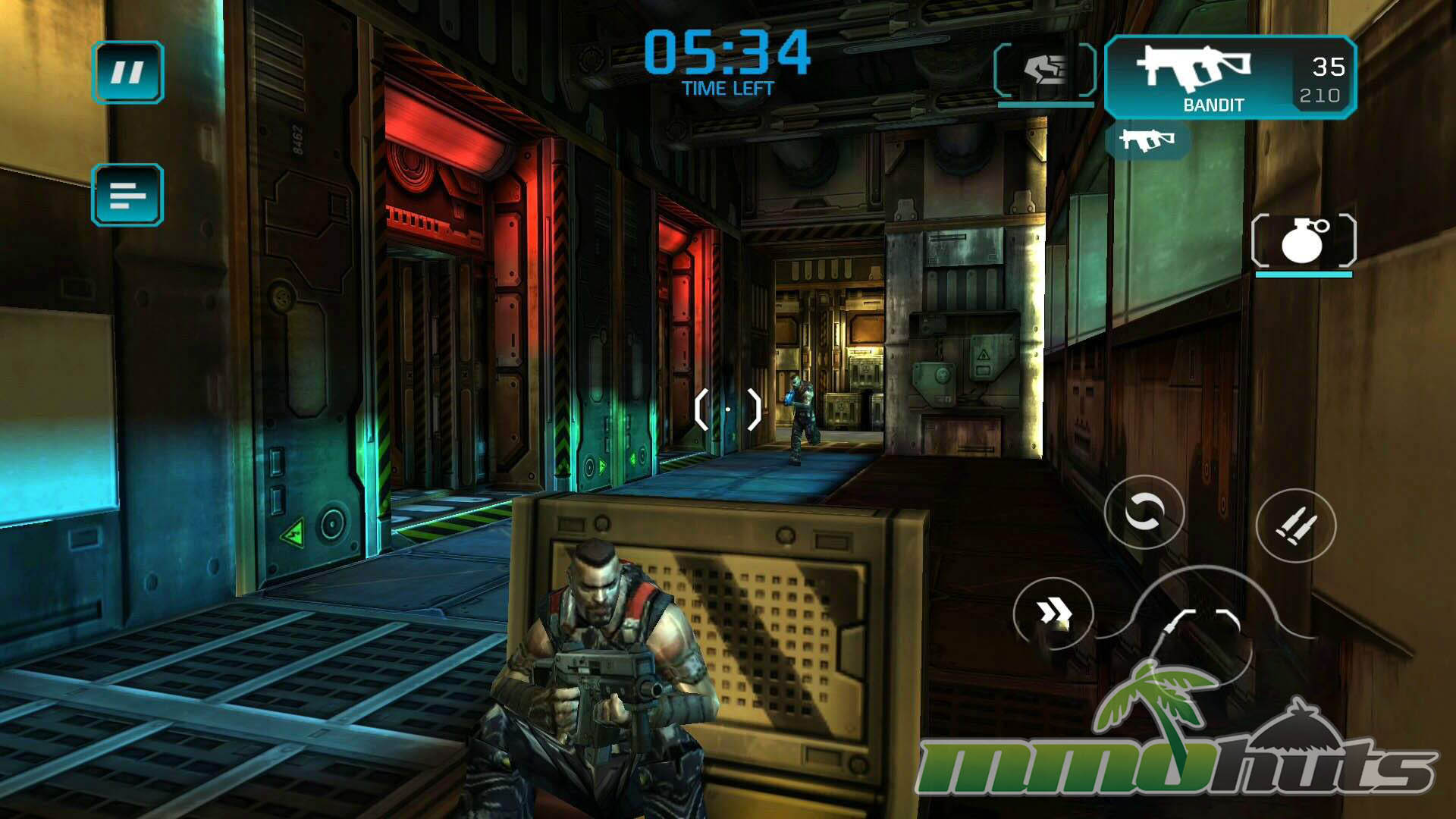
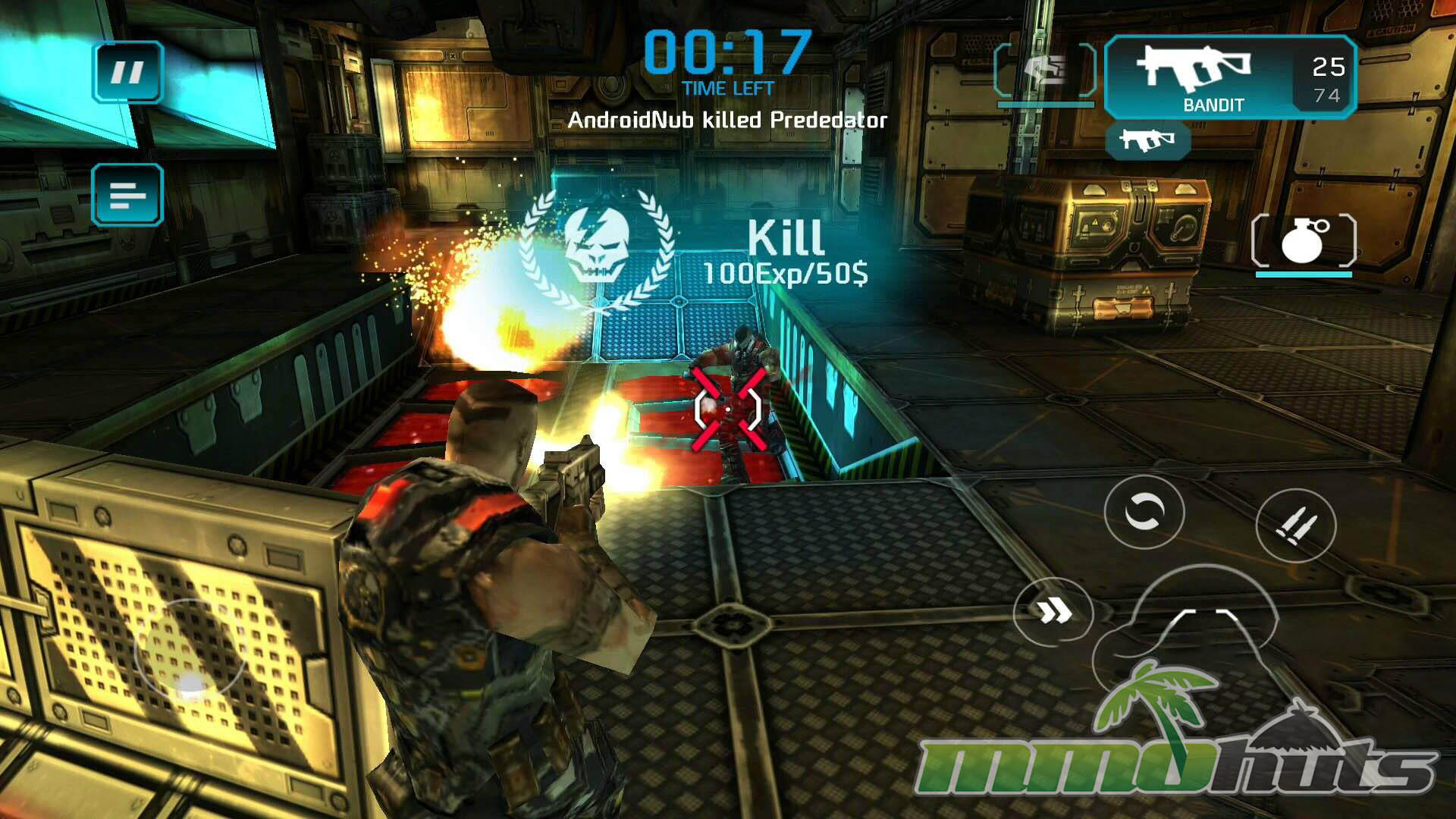
Deathmatch is a free-for-all format with up to 12 players in a single arena. It is a points race, you score primarily through kills and assists, and rewards (Money and experience) scale with performance. The maps tend to funnel players into frequent skirmishes, so even if you try to play cautiously, you will usually find action quickly. Respawns are fast (after a brief 5 second delay), and typical rounds land around the 5 to 6 minute range. The pace makes it an ideal “play a match or two” mobile shooter, but it also highlights the game’s weak spots, since uneven matchmaking and gear advantages can swing a lobby.
Zone Defense is the team mode, built around capturing objectives while also tracking a kill goal. Players are split into Red and Blue, and victory can come either from reaching 100 kills first or by taking control of all five zones. Each map places the capture points A through E along a largely straight, lane-like layout, which creates a predictable frontline that shifts back and forth as teams trade control. Capturing involves standing in the zone while a flag meter progresses, and flipping an enemy point requires lowering their control before raising yours.
A key element is respawning at captured zones, which helps teams regroup quickly and keeps pressure on the contested middle points. When players coordinate, the mode becomes more tactical than it first appears, with flanking captures and backline steals forcing teams to react rather than simply brawl at the center. Like Deathmatch, rewards are based on contribution, and the winning team gets a small bump.
Combat
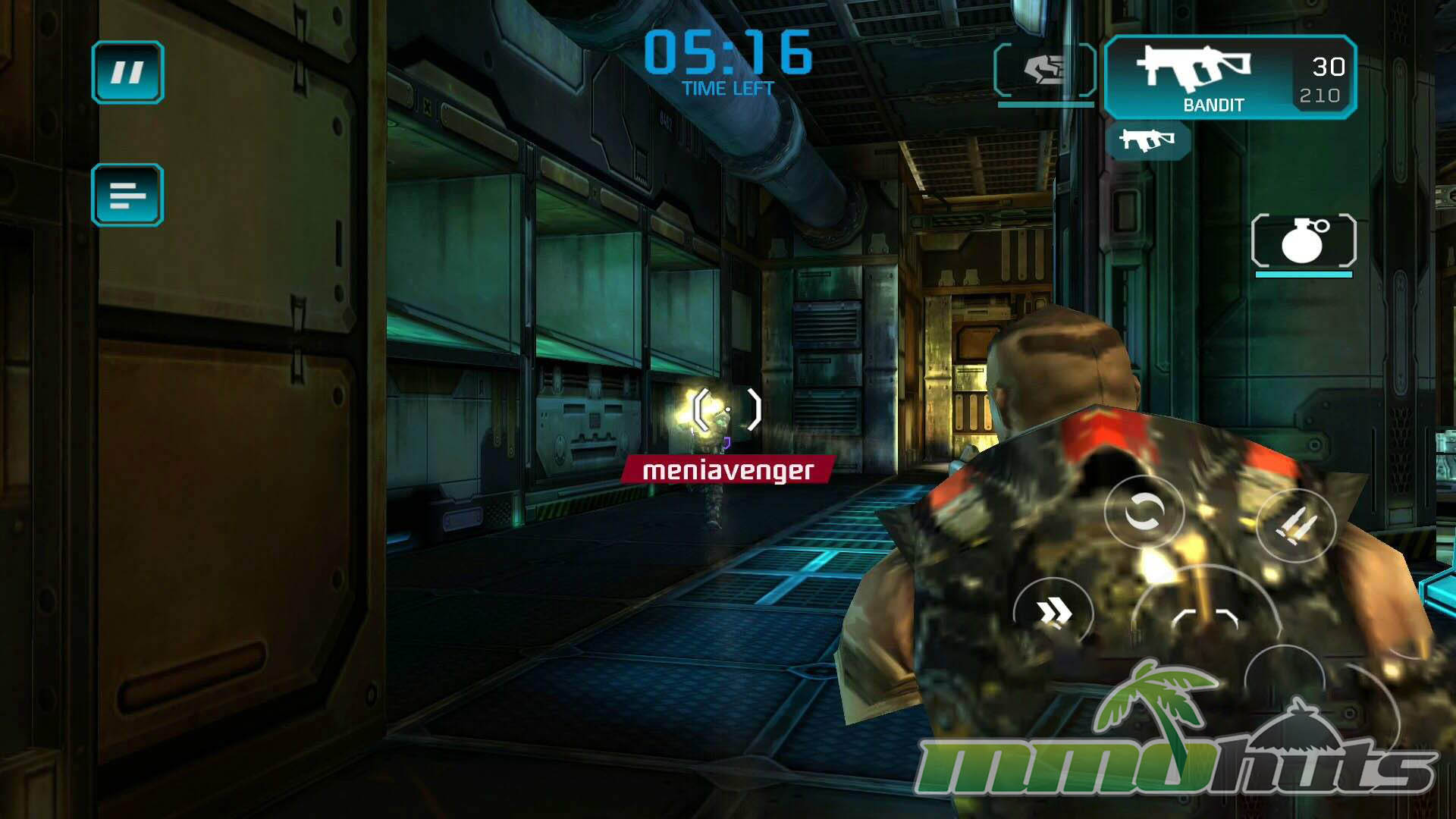
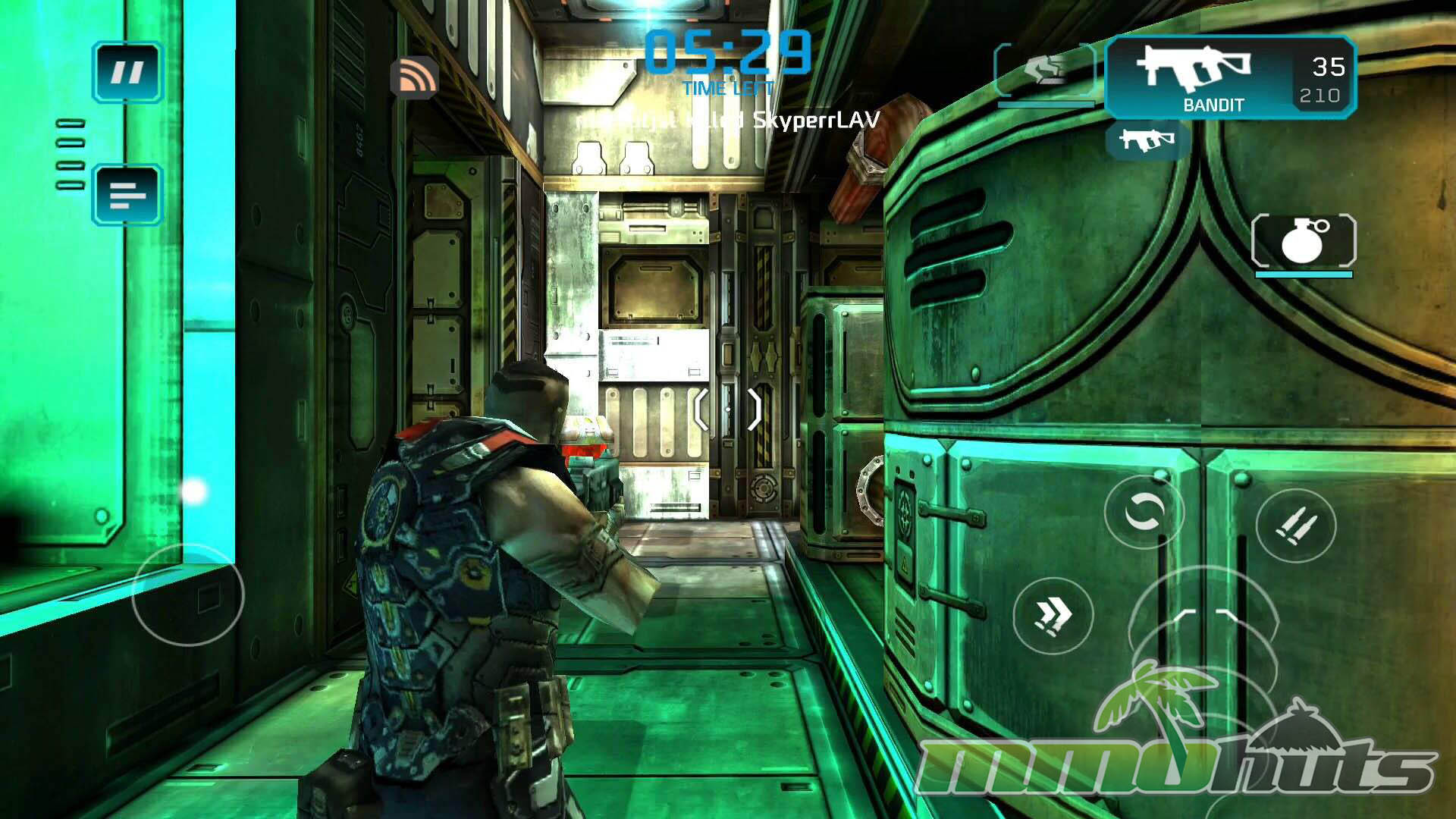
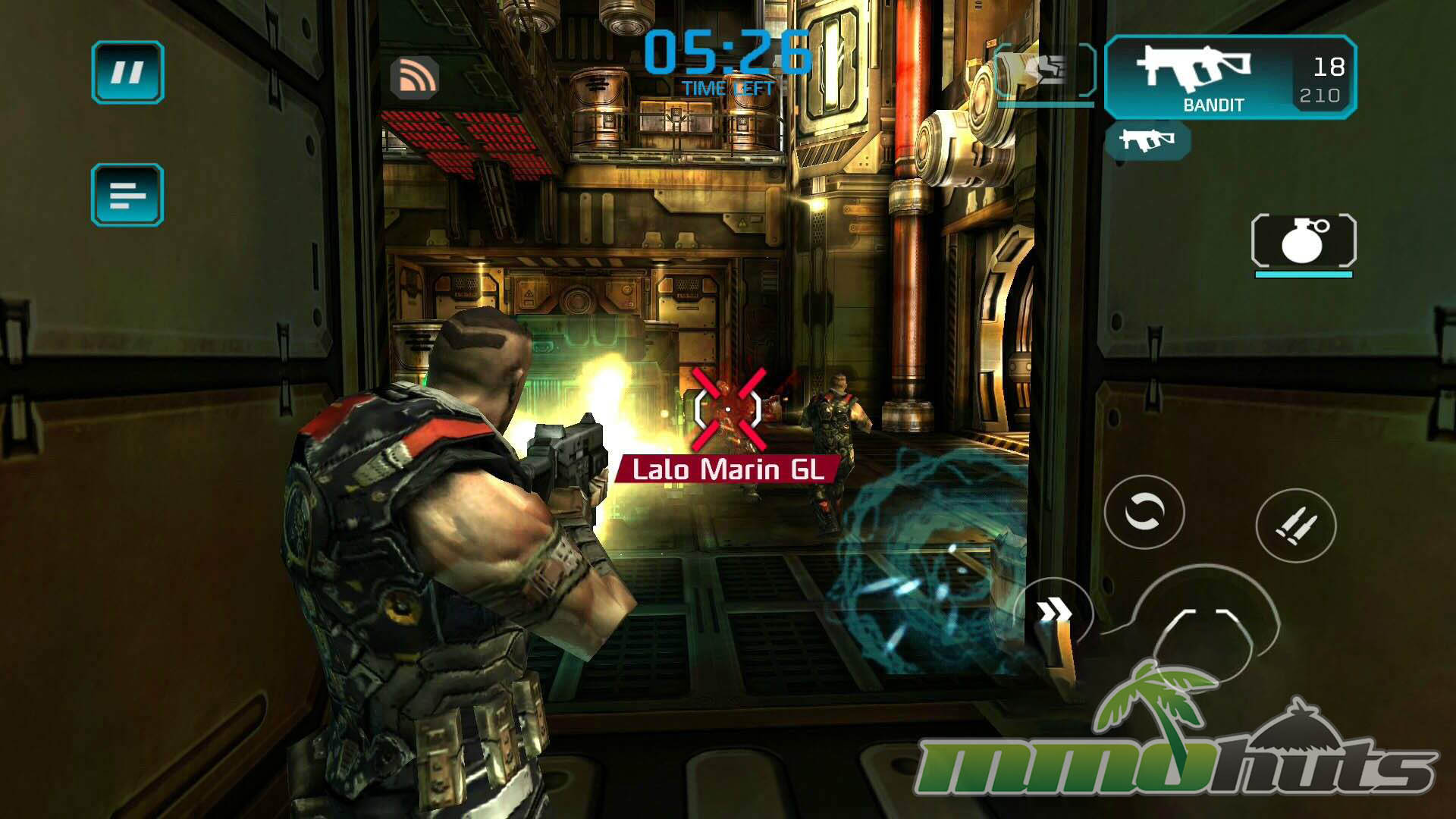
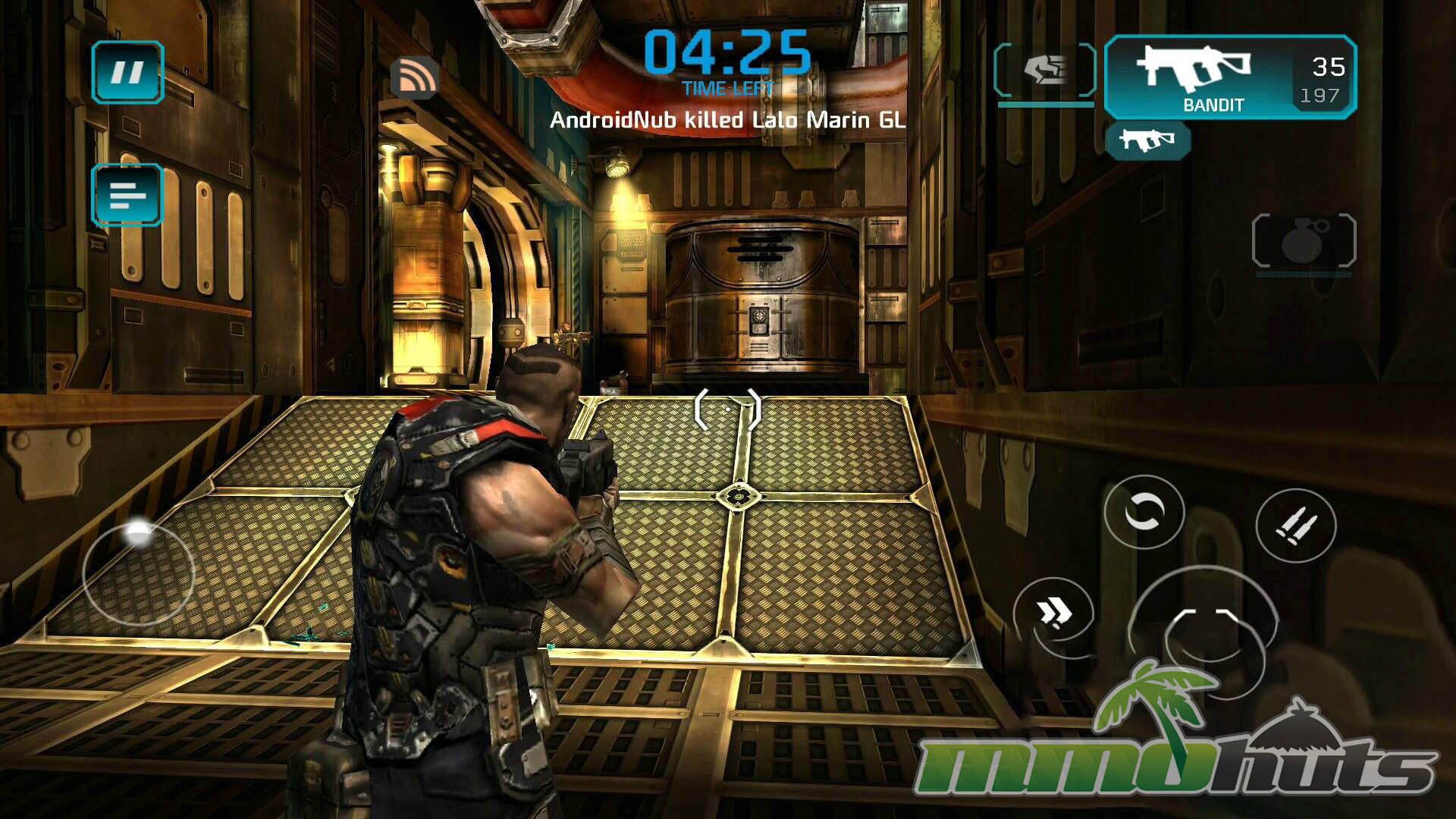
Moment-to-moment play follows the familiar mobile shooter setup: a virtual joystick for movement, touch aiming on the right side, and dedicated buttons for shooting, sprinting, rolling, and reloading. Additional icons handle grenades, weapon swapping, and power-ups. The first hurdle is precision, since touch aiming takes practice, and early matches can feel messy until muscle memory develops.
Once it clicks, the controls are surprisingly responsive, and the combat has a satisfying rhythm built around positioning. Cover is contextual, you press into objects like barricades and walls to take cover, then pop shots over it with the fire button. The close-range knockdown mechanic adds a distinctive twist: at point-blank range, triggering the attack can stun an opponent for a short window, creating a sharp advantage in tight corridors and rewarding aggressive pushes. It is a small feature, but it changes how you approach corners and close engagements.
Graphics
For a 2012 release, Deadzone’s presentation was a standout. Madfinger was among the early mobile developers to chase “console-like” visuals, and the game’s lighting, effects, and environmental detail were a big part of its identity. The overall tone leans sci-fi and industrial, with maps that resemble space stations, labs, and factory-like facilities, often with a darker, alien-tinged atmosphere.
Character models show their age more than the environments, with slightly chunky silhouettes and softer detail, but the arenas remain the star. Many locations are packed with small props and color accents that help them feel more than just flat multiplayer boxes. Animations hold up reasonably well, and the ragdoll deaths add a bit of punch to firefights. Even years later, it is easy to see why the game was frequently cited as one of the better-looking mobile shooters of its time.
Weapons and Upgrades
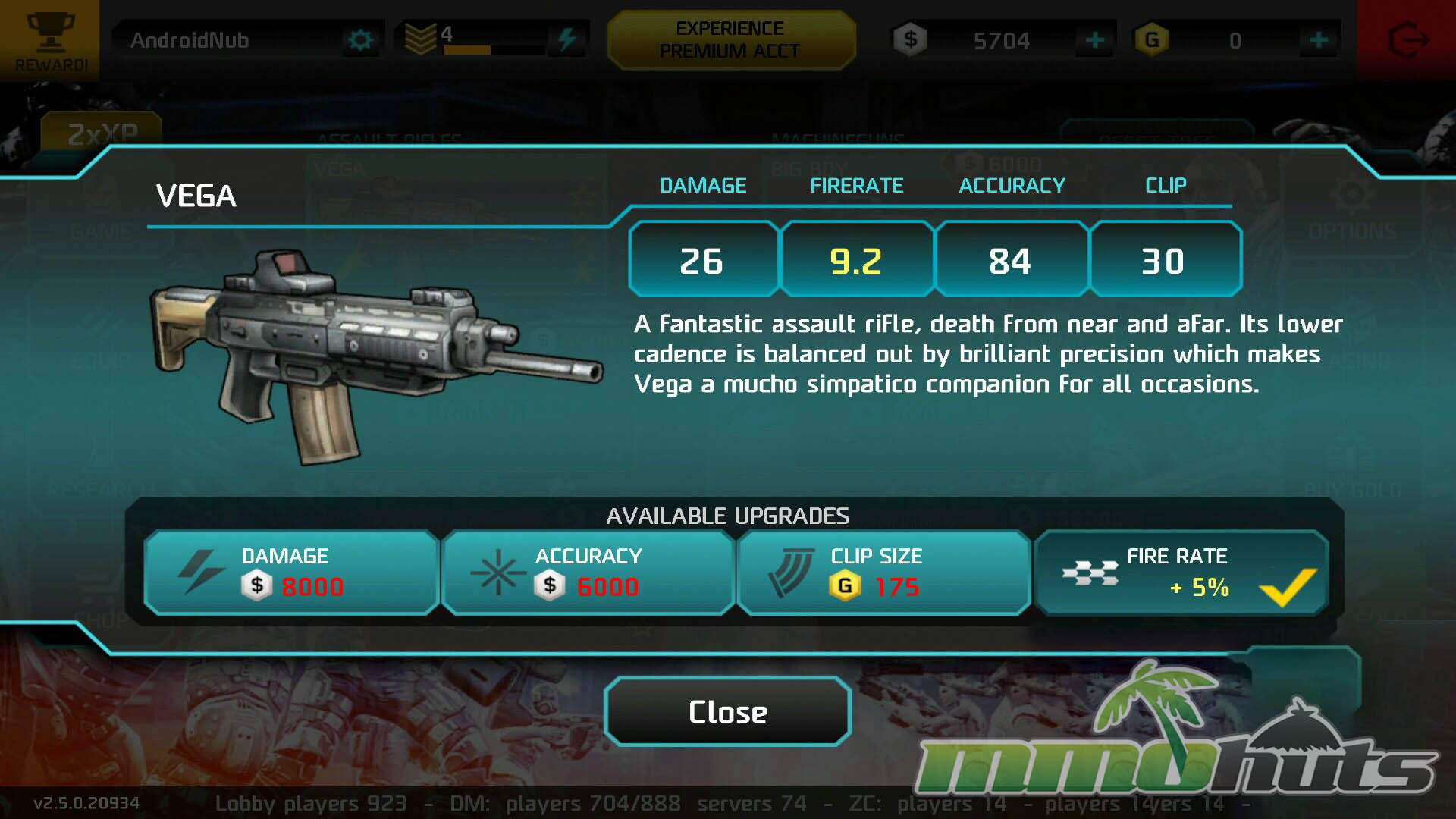
Deadzone’s long-term hook is its arsenal and the upgrade grind. Weapons and equipment unlock by level and must also be purchased with Money (the standard in-game currency). The categories cover a wide spread of playstyles: Closed RNG (SMGs and Shotguns), Assault (Assault Rifles and Machine Guns), Energy (Sniper Rifles and Plasma Throwers), Launcher (Rocket Launchers), and Explosive (Mines and Grenades). New gear tends to be expensive relative to early earnings, so progression often involves choosing whether to save for a new weapon or invest in upgrades for what you already own.
Upgrading uses Money to boost stats such as damage, fire rate, and clip size. Because each gun handles differently and fills a specific niche, the most effective loadouts usually reflect your preferred engagement range, whether that is rushing with an SMG, holding angles with a sniper rifle, or clearing objectives with explosives. Beyond weapons, there are team-oriented items (Area Healing, Radar & Jamming, Area Resupply), deployable Sentry guns, additional weapon and item slots, plus movement and health perks, all purchased with Money.
Cash Shop/In-App Purchases (IAP)
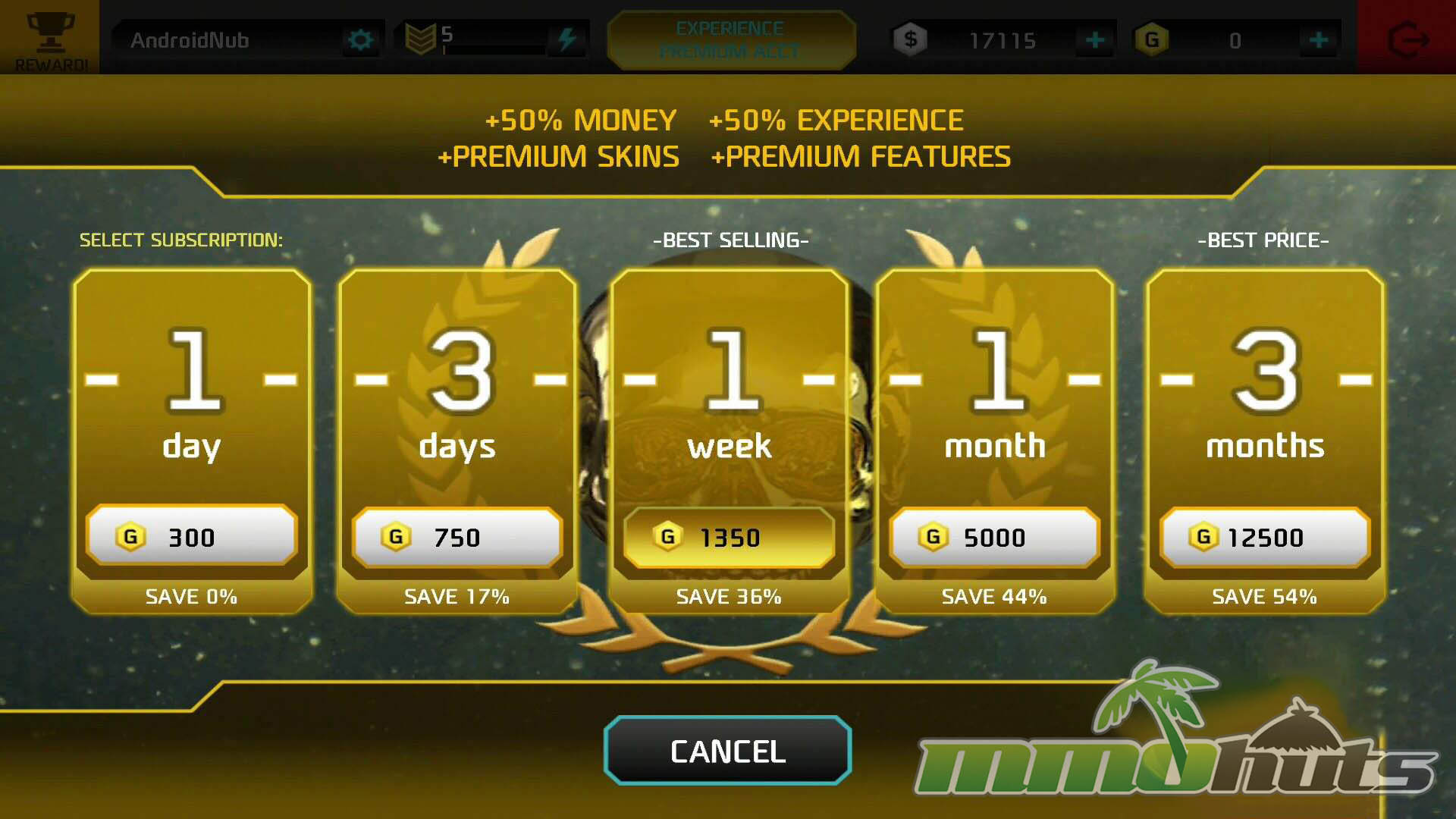
The monetization is where Deadzone can feel least fair. Players can spend Gold (premium currency) on VIP status, which increases experience and Money gain by 50%. Gold can also be exchanged directly for Money. In practice, that means paying players can reach unlock thresholds sooner and fund upgrades faster, which translates into stronger, fully improved gear earlier in the leveling curve.
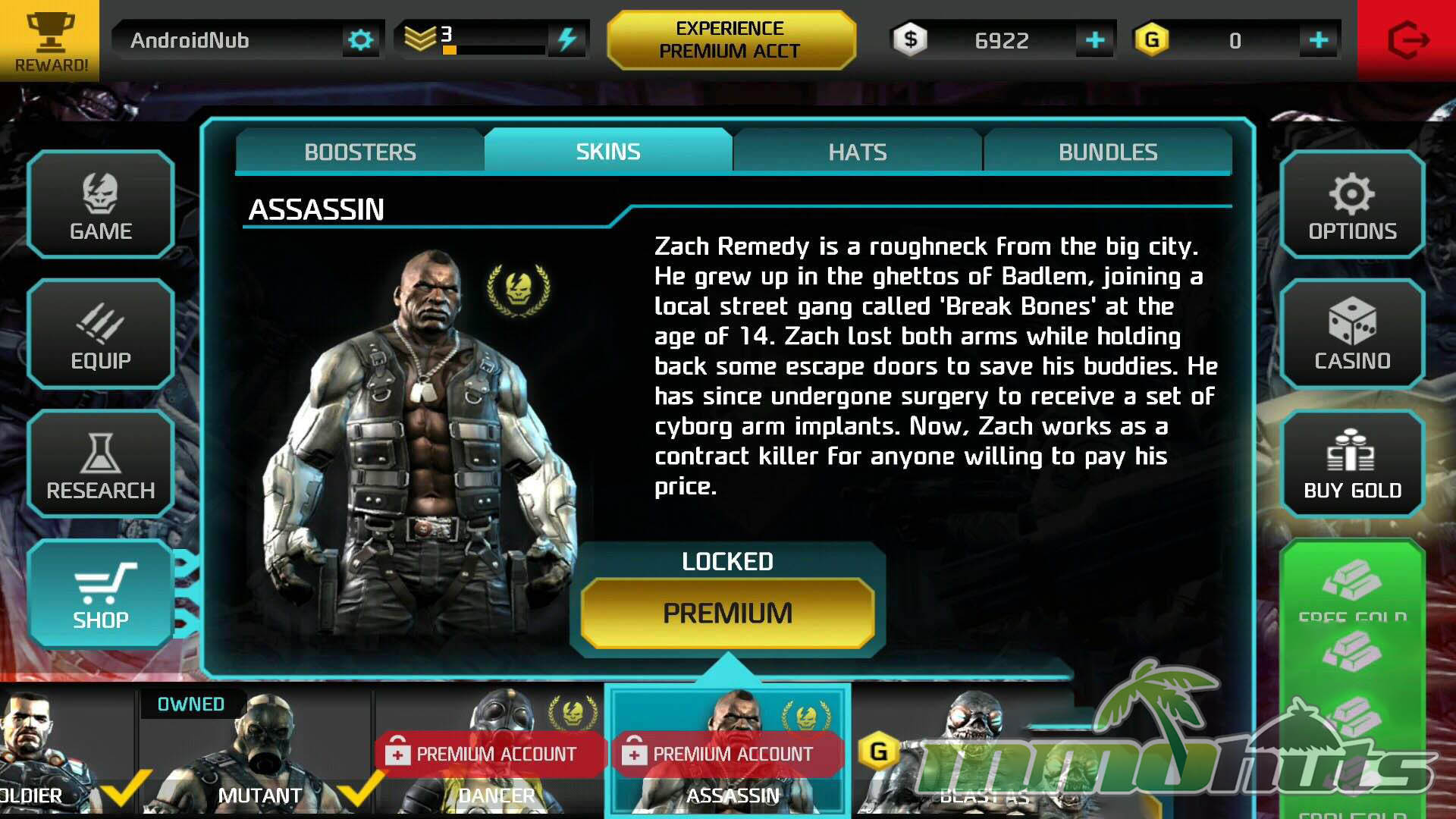
Gold also buys paid-only items such as Skins and Hats, plus temporary combat boosts. Skins are cosmetic, but Hats have gameplay impact by offering protection against headshots, and boost items provide short-lived advantages like improved armor, speed, damage, accuracy, or even invisibility. While it is true that weapons can be earned without paying, the combination of faster progression and stat-affecting purchases gives the game a noticeable pay-to-win edge. The upside is that not every lobby is stacked with spenders, so many matches still play out competitively, but the system can undermine fairness when it shows up.
Final Verdict – Good
Shadowgun: Deadzone delivers exactly what many mobile players want from a PvP shooter: quick matchmaking, short rounds, satisfying third person gunfights, and a steady sense of progression through unlocks and upgrades. Its visuals were impressive for the time and the overall gameplay loop is easy to enjoy in short sessions. The biggest drawback is the way premium currency and boosts can tilt the playing field, and the limited mode variety can make the experience feel repetitive over long stretches. For players looking for fast, arcade-style mobile PvP, it was an entertaining option while it lasted.
Shadowgun: Deadzone Links
Shadowgun: Deadzone Official Site
Shadowgun: Deadzone Google Play
Shadowgun: Deadzone iOS
Shadowgun: Deadzone Wikia
Shadowgun: Deadzone System Requirements
Minimum Requirements:
Android 3.0 and up / iOS 6.0 and later
Shadowgun: Deadzone Music & Soundtrack
Shadowgun: Deadzone Additional Information
Developer: Madfinger Games
Publisher: Madfinger Games
Platforms: Android, iOS
Release Date: November 15, 2012
Shut Down: March 31, 2019
Shadowgun: Deadzone was developed and published by Madfinger Games, a Czech mobile studio known for the Dead Trigger and Samurai series. Built as an online PvP offshoot of the single-player third person shooter Shadowgun, Deadzone shifted the focus entirely to competitive matches and progression through gear. The game launched globally on November 15, 2012 and currently has over 20 million downloads on Google Play and Apple iTunes. In August 2015, Madfinger Games released the “Game Master’s Kit,” a special version of Shadowgun: Deadzone that lets players build maps, adjust weapons and characters, and run custom servers.