In Robocraft, you construct combat-ready robots out of voxel blocks, then take those creations into fast online team battles. The hook is the freedom to experiment, you can bolt on guns, wings, thrusters, wheels, and armor plates to make anything from a clunky tank to a fragile flyer, then iterate after each match based on what gets blown off first.
 | Publisher: Freejam Games Playerbase: High Type: Vehicular Combat & Creative Building Release Date: July 8, 2014 Pros: +Deep build variety and experimentation. +Developers stay involved with updates and community. +Matchmaking generally keeps tiers fair. Cons: -Progression can feel grindy at higher tiers. -Matches can start to feel samey over time. |

Robocraft Overview
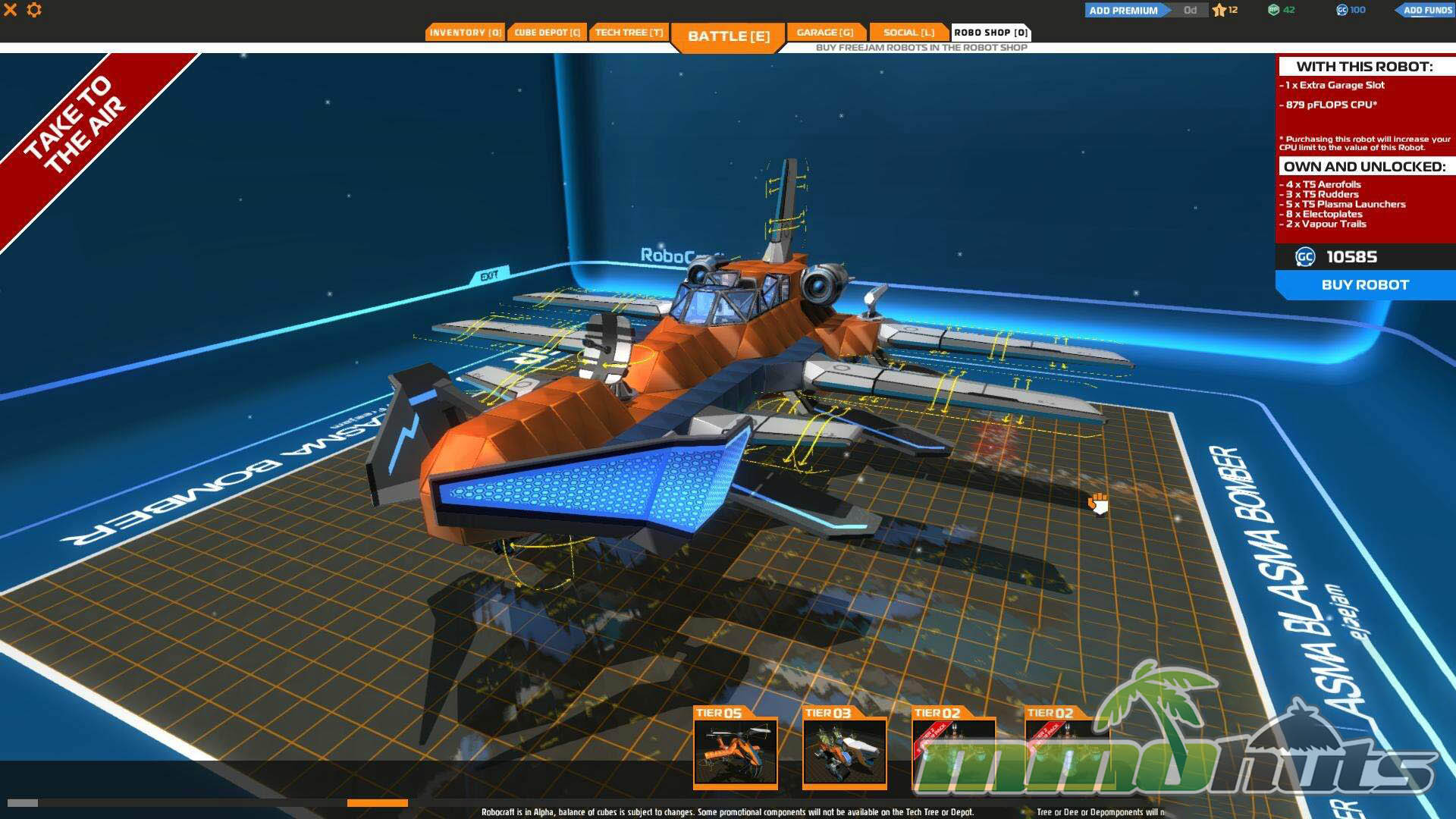
Robocraft blends a sandbox builder with arena-style PvP. In the garage, you assemble a robot from voxel cubes and functional components, then queue into matches where those designs are stress-tested against other players. The parts list is broad enough to support very different approaches, you can build ground bruisers with heavy armor and multiple guns, lightweight hover-style crafts, or aerial platforms that rely on wings and jets to stay mobile.
Progression is tied directly to playing matches. You earn Robot Points (RP) and Tech Points (TP) while fighting. Tech Points expand what you can access on the tech tree, while Robot Points are used to purchase the unlocked blocks and weapons. That loop encourages constant iteration: you fight, unlock something new, rebuild, then try again.
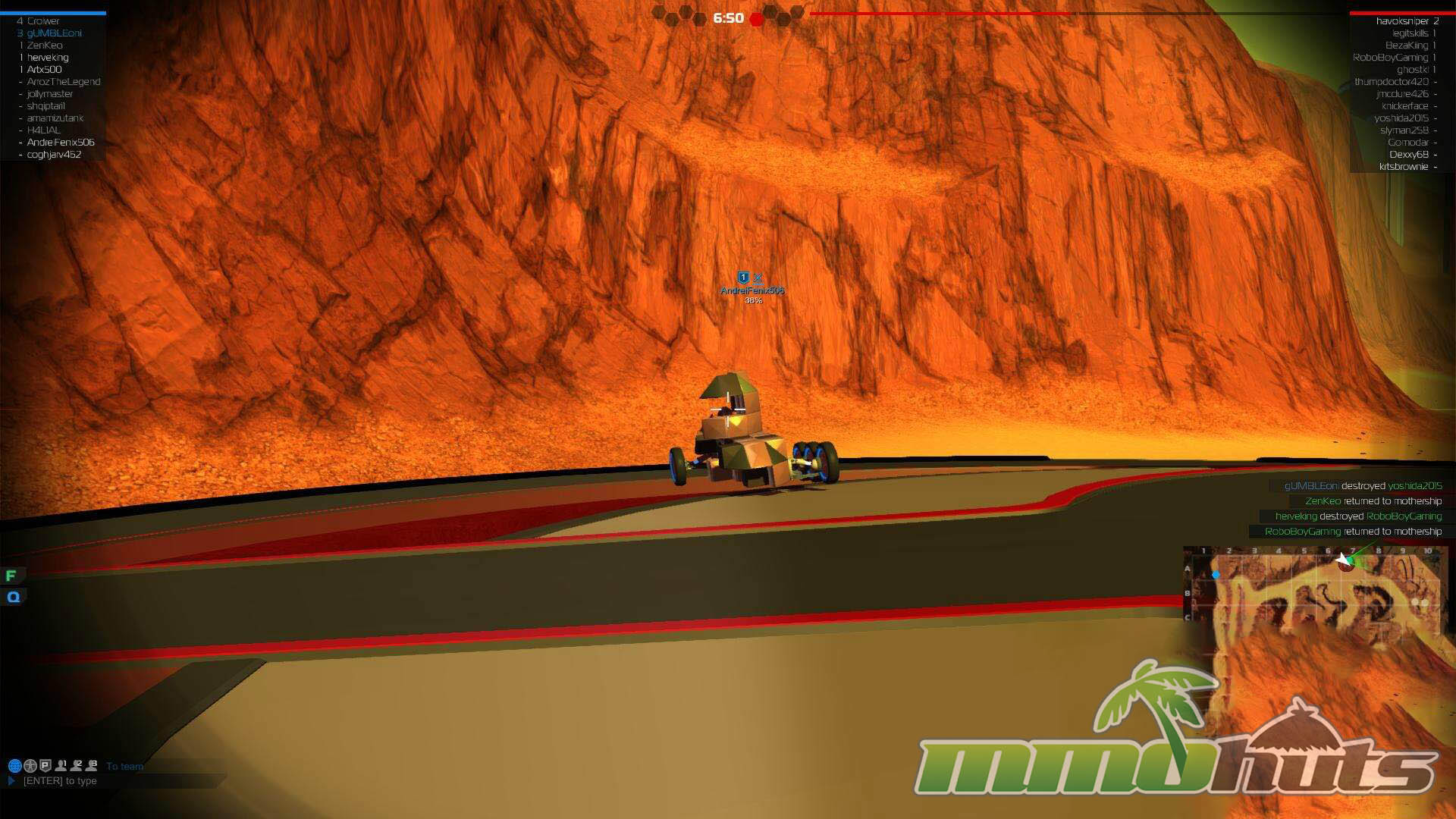
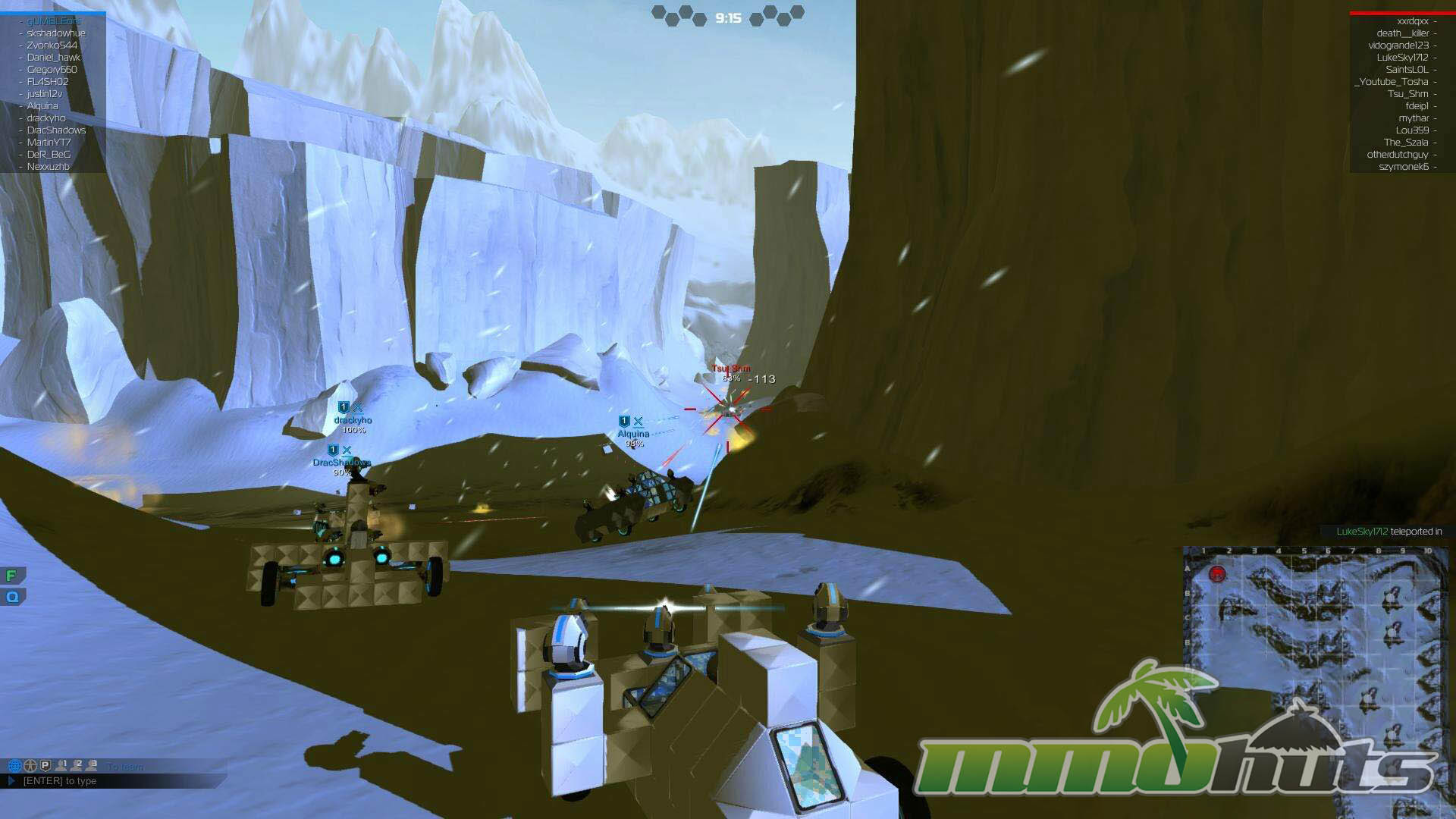
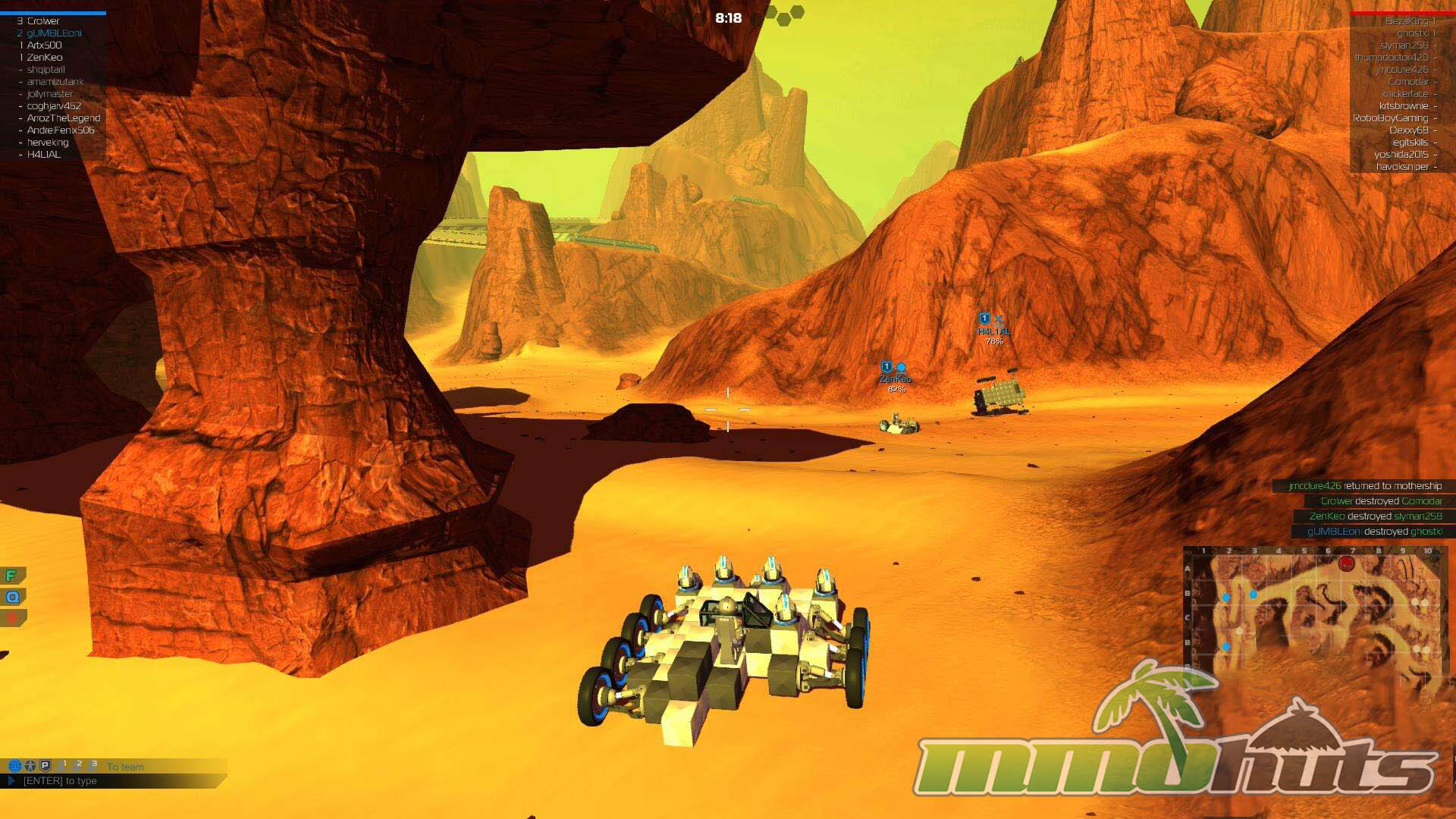
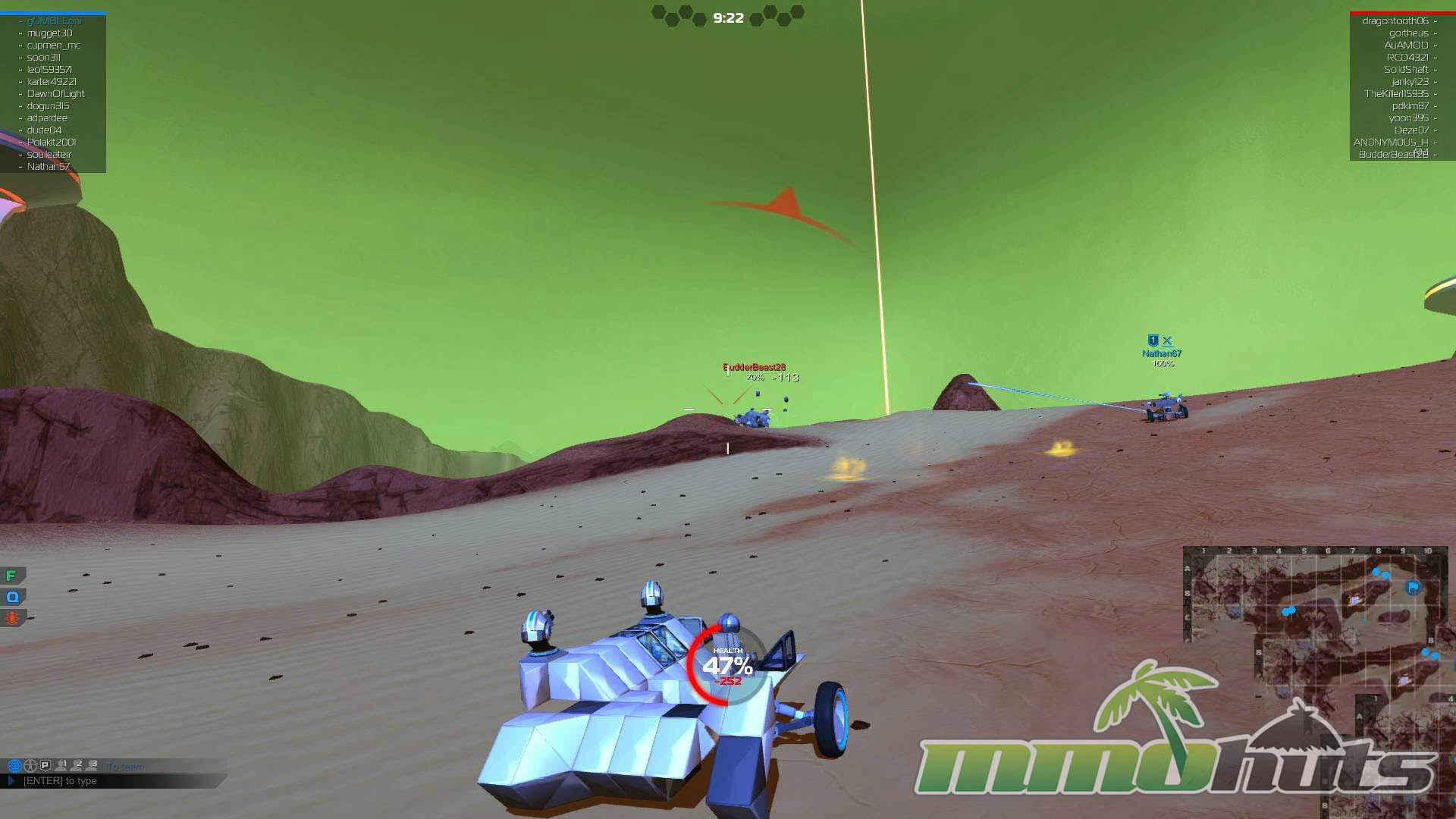
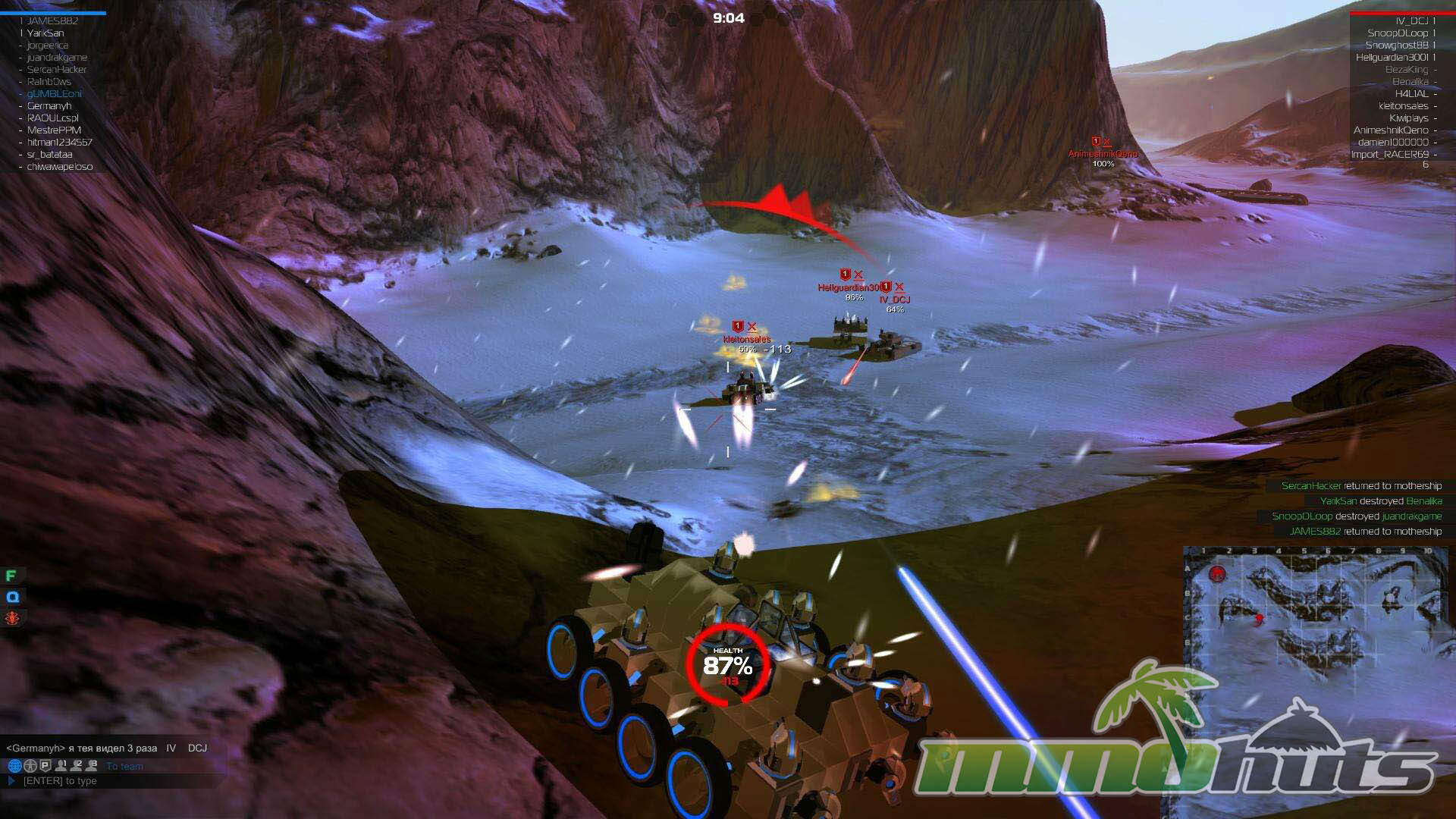
The combat has a distinct feel because destruction is component-based. Enemy robots do not simply “die” when a health bar hits zero. Instead, weapons tear away blocks and modules until the pilot seat is destroyed, which means target priority and construction choices matter. You can cripple movement by removing wheels, disarm an opponent by stripping their guns, or go straight for the seat if you can expose it. After each match, most players end up back in the editor reinforcing weak spots, changing weight distribution, or rethinking how weapons are mounted.
Robocraft Key Features:
- Part-Based Damage Model – robots stay in the fight until their blocks and key components (including the pilot seat) are destroyed.
- Extensive Customization – build almost any shape you can imagine, from land vehicles to airborne designs.
- Tech Tree – unlock a large collection of blocks, equipment, and weapon options through progression.
- Fast-Paced Gameplay – quick matchmaking and short matches keep the action moving.
- Cosmetic Items – personalize your machines with skins and visual flair.
Robocraft Screenshots

Robocraft Featured Video

Robocraft Review
Robocraft sits at the intersection of creative construction games and straightforward vehicle shooters. The best comparison is that it gives you a workshop first, then an arena second. The building tools are the main attraction, while battles function as the proving ground that earns you the currency and tech needed to broaden what you can build. If you enjoy experimentation, redesigns, and learning why a craft fails, it is easy to lose hours in the garage.
A builder’s playground with rules
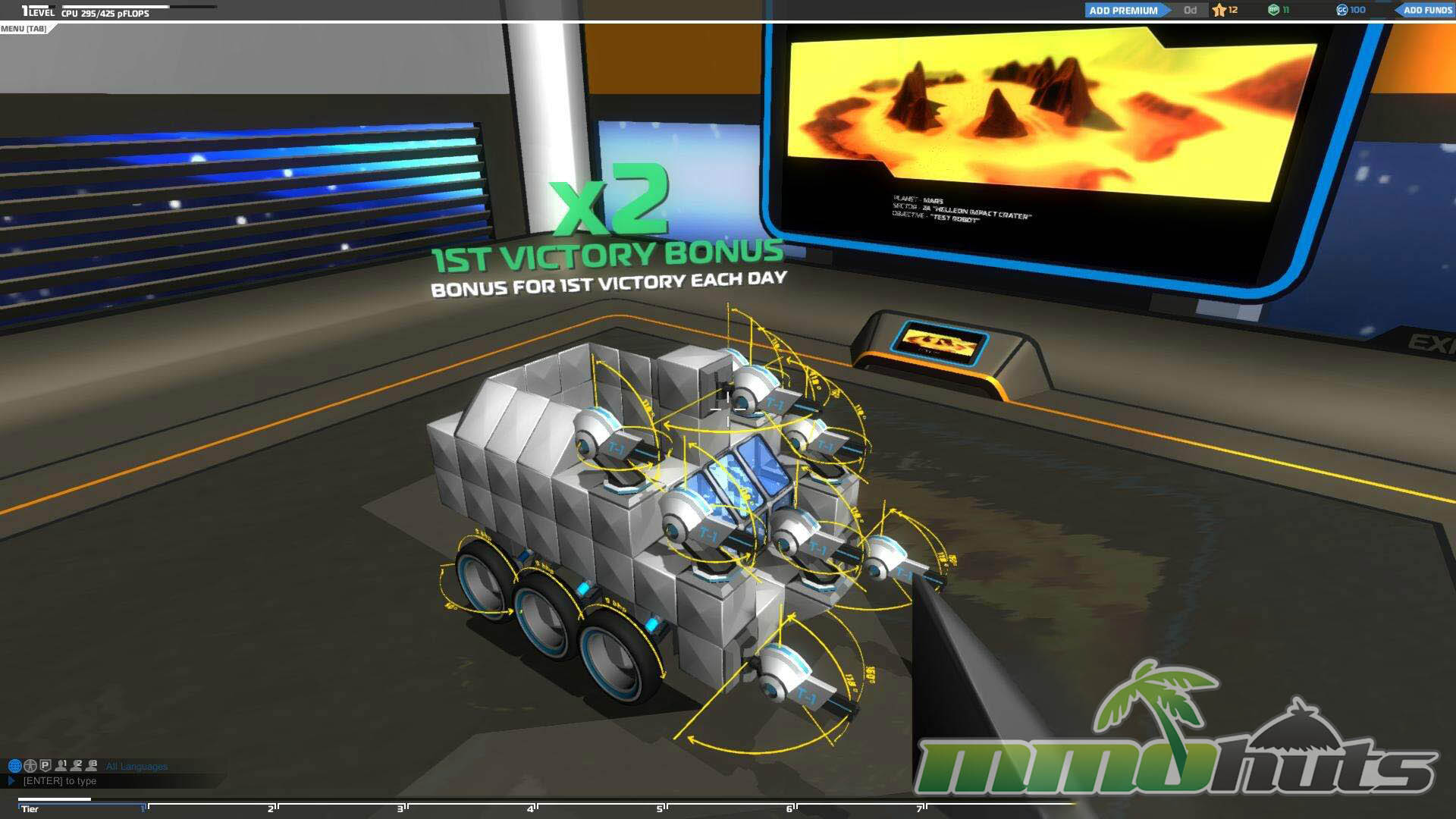
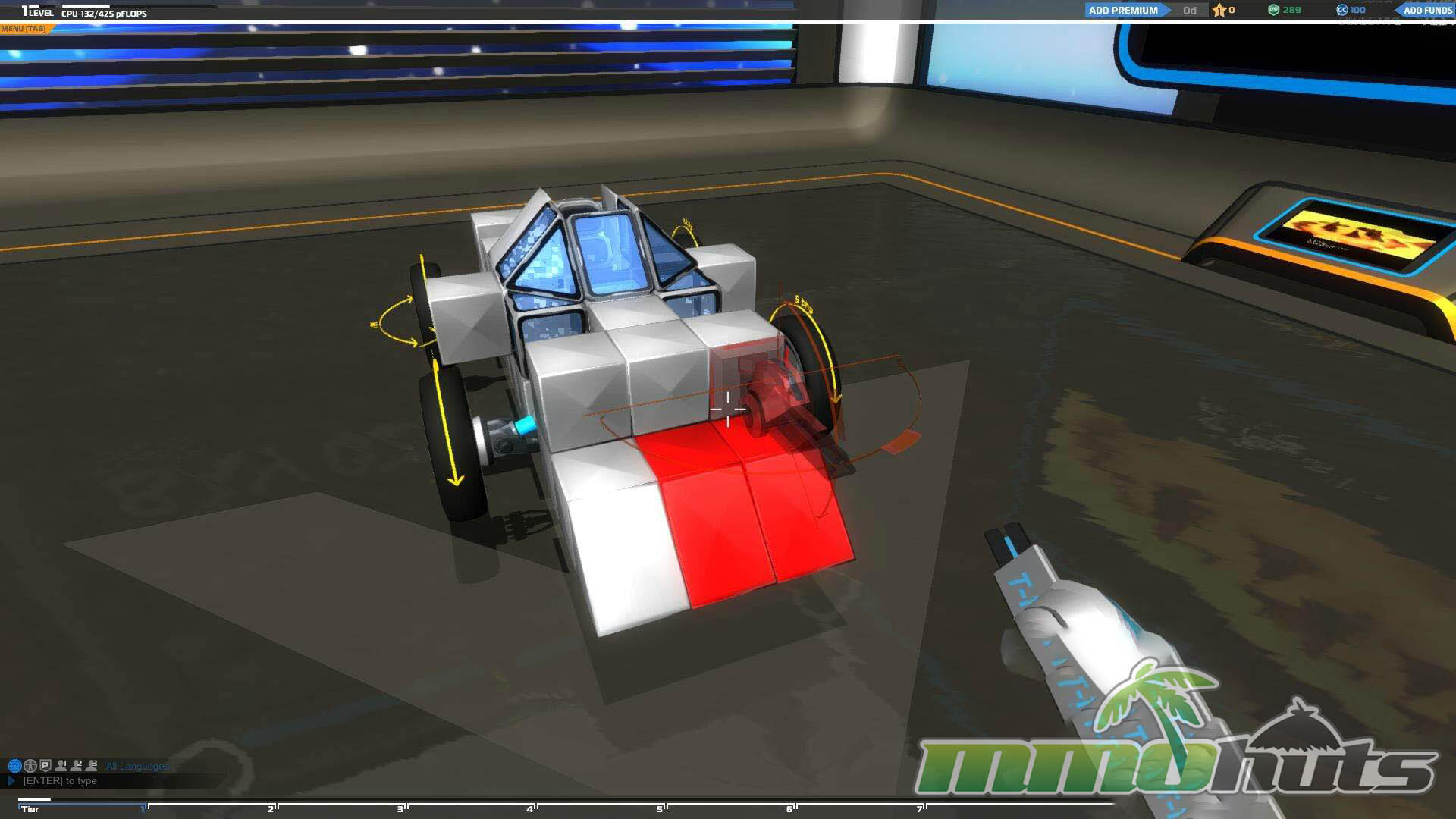
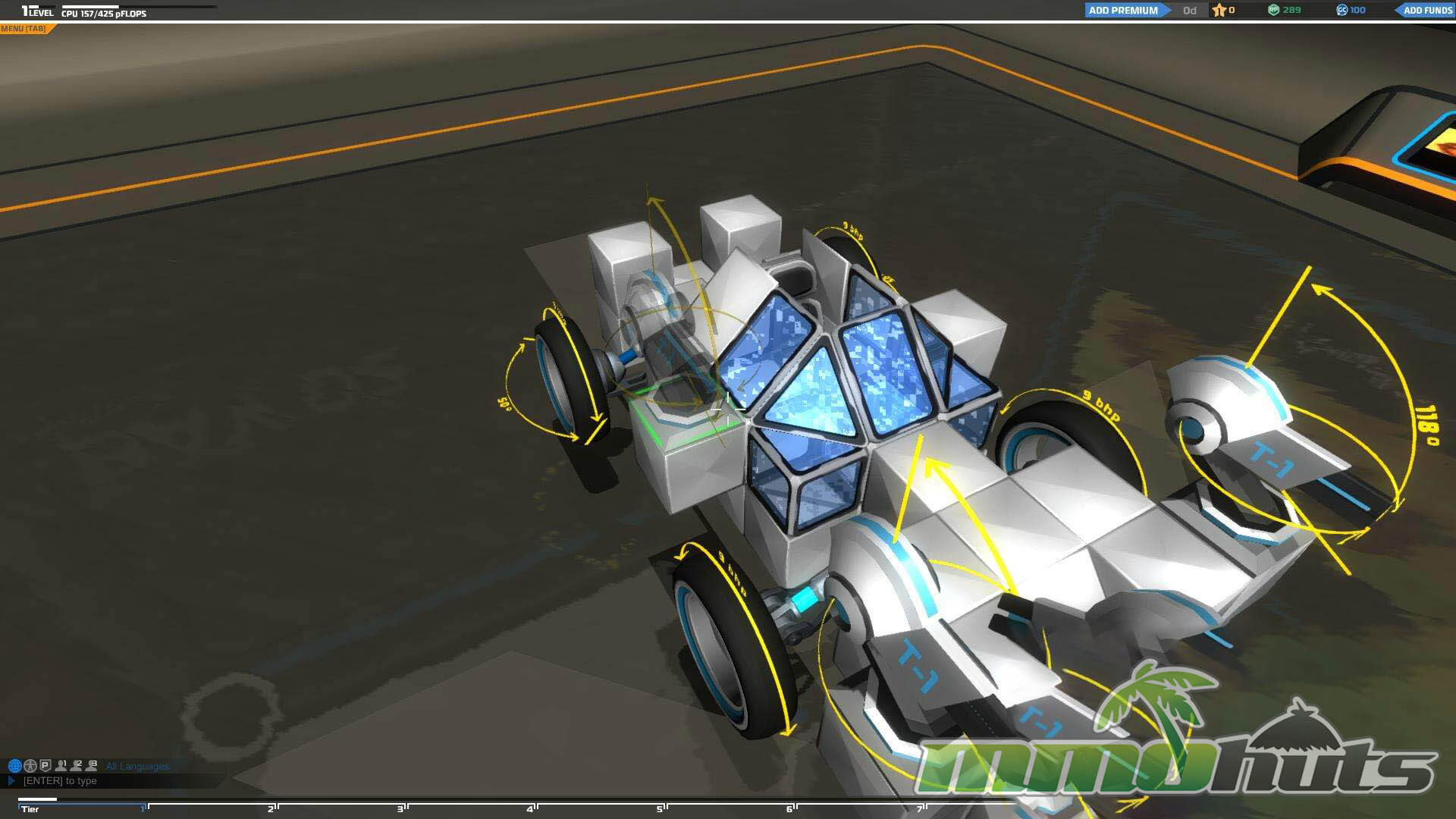
The editor is intentionally approachable. You start by placing cubes, then add movement parts (wheels, wings, jets) and weapons, and you can quickly produce something functional. The game does not demand engineering-level knowledge, but it does reward basic principles like balance, stability, and protecting critical components.
The main constraint is the CPU budget shown on the UI. Almost everything consumes CPU, so even if you have the parts unlocked, you still have to make tradeoffs between armor, mobility, and firepower. Early on, your block selection is limited, and the game gradually opens up as you earn RP and TP. That creates a satisfying sense of growth, even if the pace can slow later.
What makes the building compelling is how often small changes matter. Shifting weight, widening a wheelbase, relocating the pilot seat, or spacing weapons to avoid chain destruction can dramatically improve survivability. It is the kind of system where you build something “cool,” then slowly evolve it into something that actually wins fights.
When design flaws become explosions
The part-by-part destruction model is both funny and educational. A match regularly turns into a live demonstration of your weak points. Build too tall and narrow, and you will flip. Leave your seat exposed, and you will be deleted instantly. Stack weapons without protection, and a single volley can remove your entire offense.
Newer players will also notice how easy it is to get stuck in awkward situations. A sharp turn can tip a heavy craft, or a bad landing can leave you stranded. You can use “F” to self-right, but the delay can be punishing if enemies are nearby. Because of that, Practice mode is genuinely useful, it is worth stress-testing turning, acceleration, and takeoff before taking a new build into PvP.
The upside is that failures rarely feel wasted. Even a bad match gives you information: what broke first, what angle you were vulnerable from, and whether your mobility choices match your weapon loadout.
Simple shooting, interesting targets
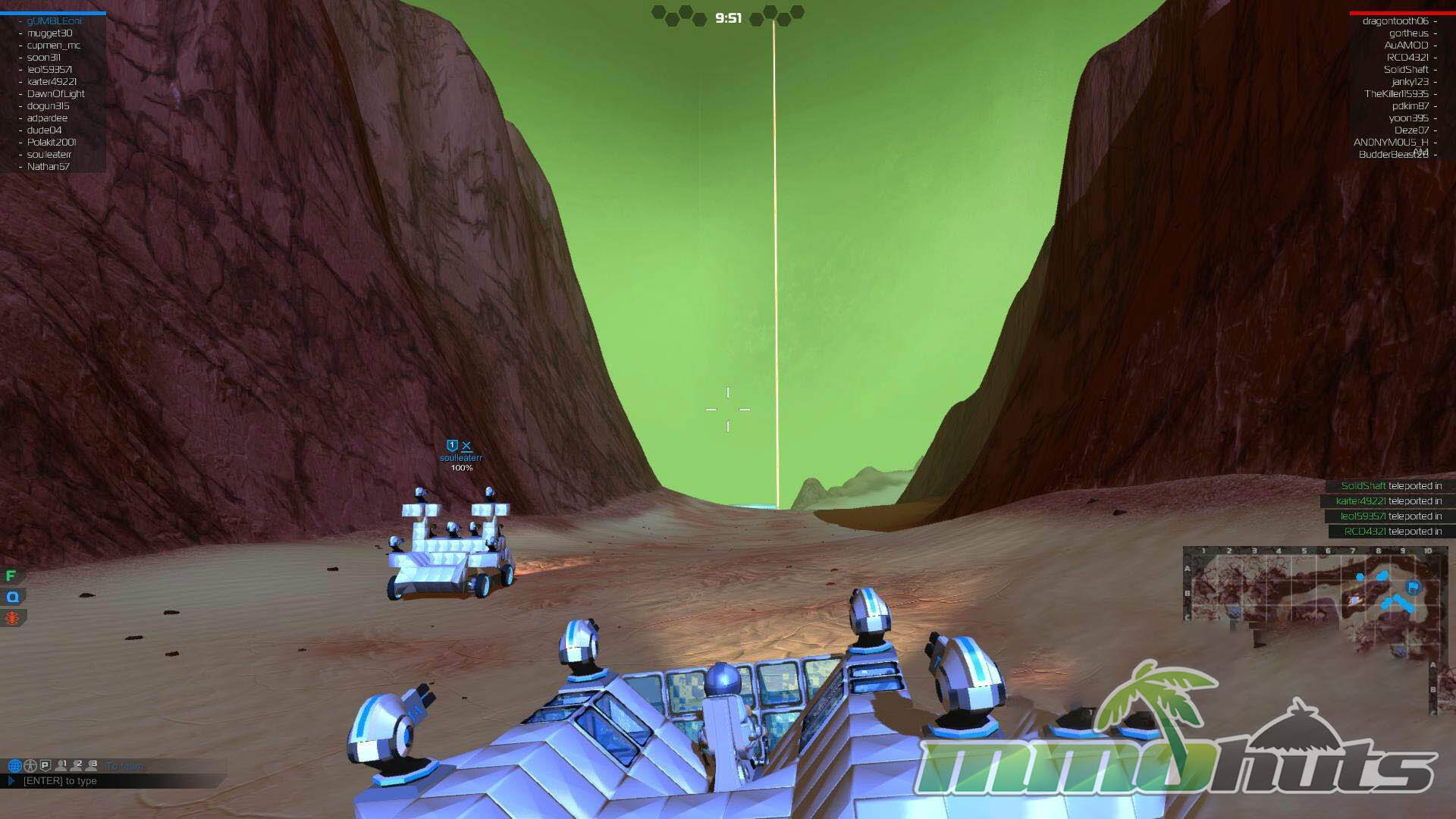
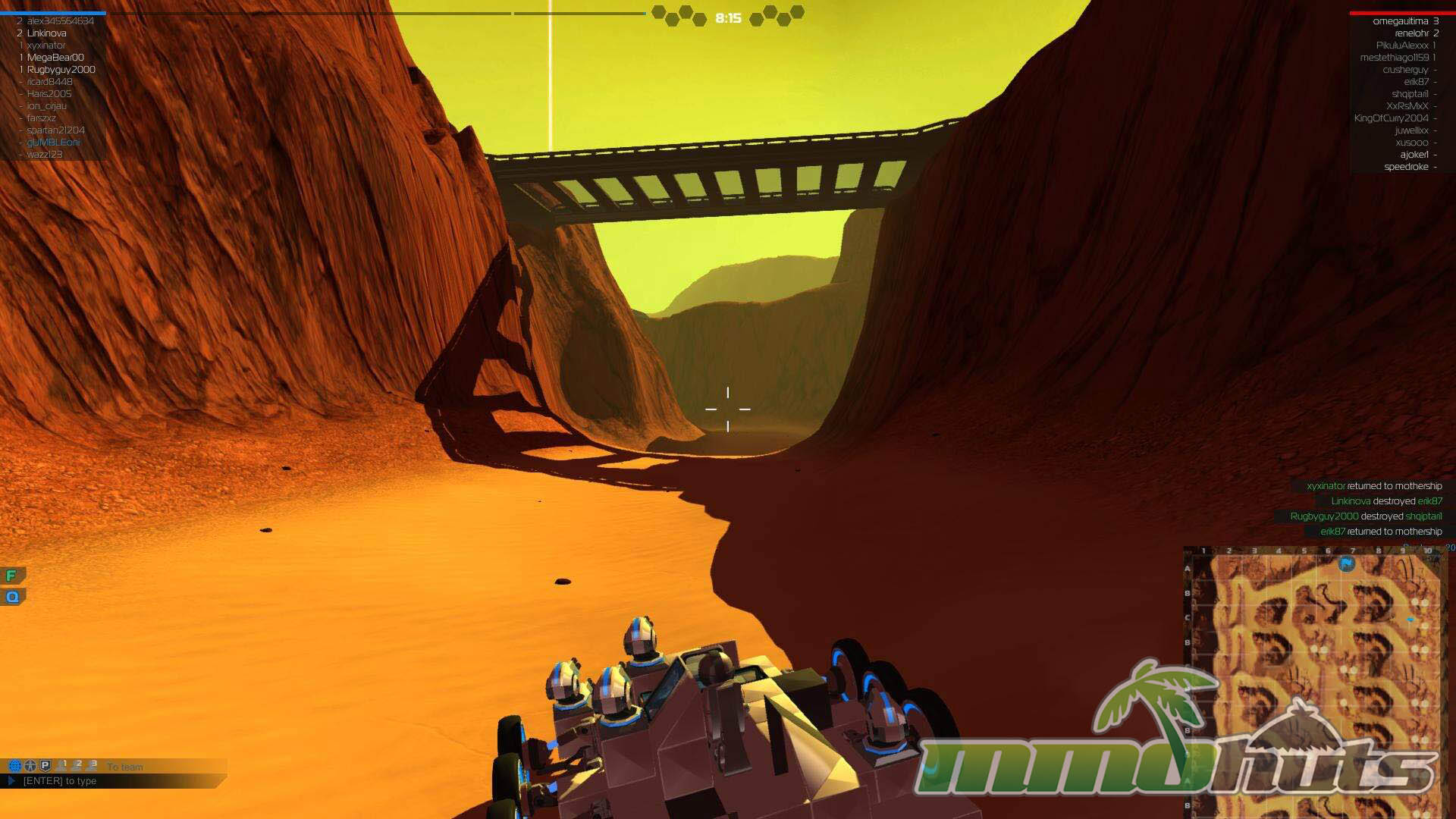
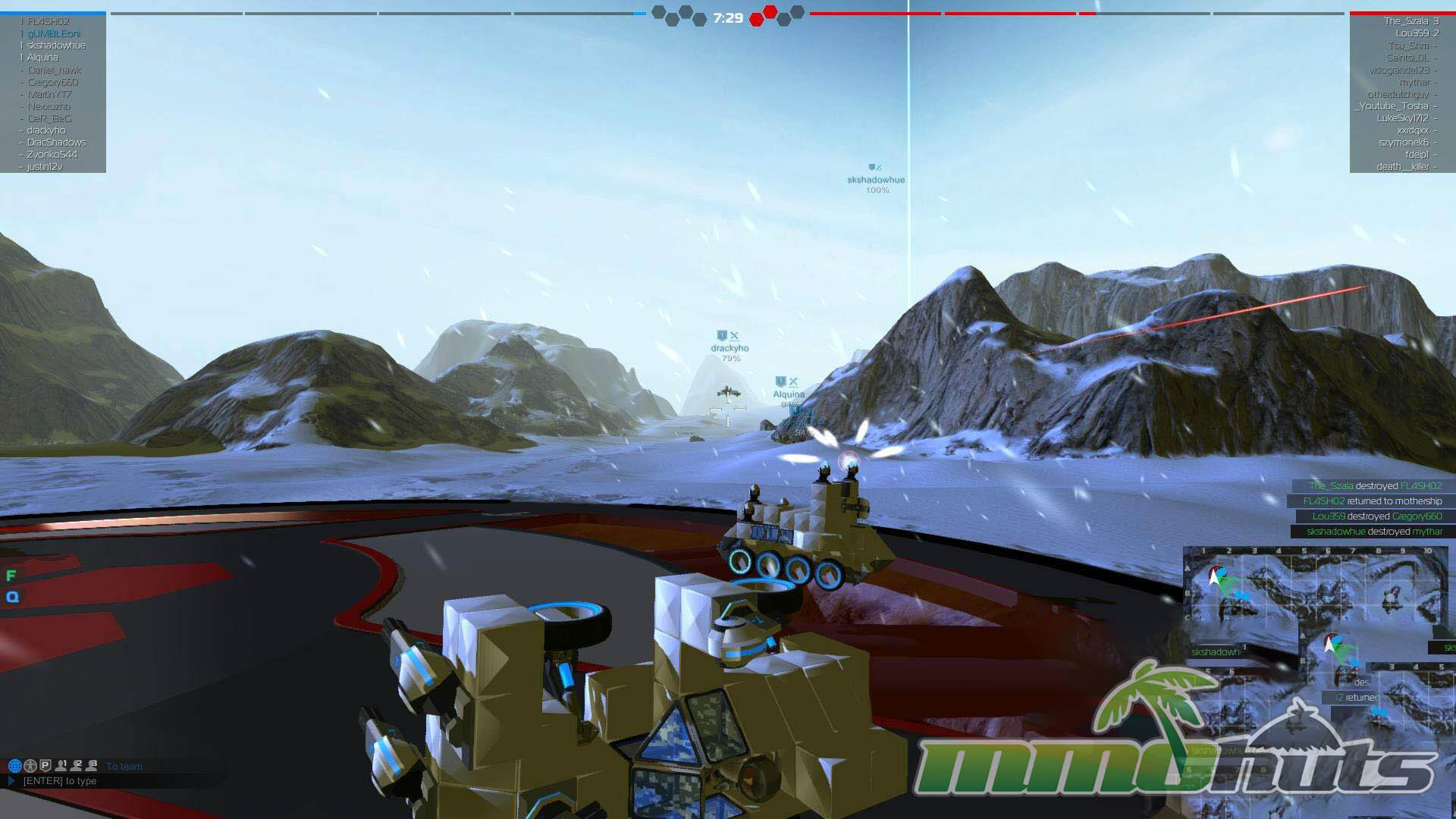
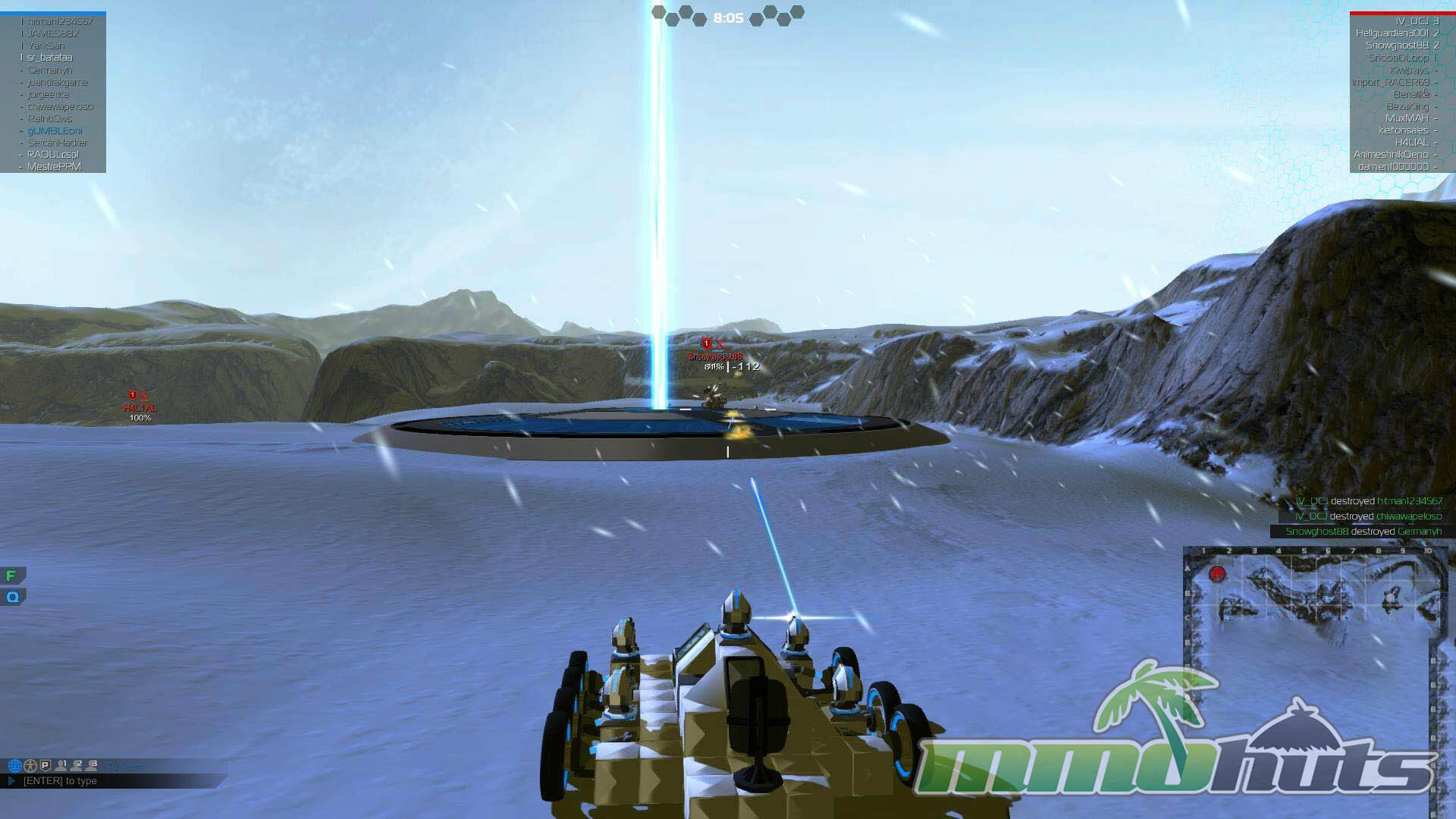
Moment-to-moment combat is not complex in the way a simulation shooter is. You aim with a crosshair, fire, reposition, and focus targets. The variety comes less from advanced mechanics and more from what players bring into the match. Since you can dismantle opponents, you are constantly deciding what to remove first. Do you immobilize them by cutting off wheels, strip their guns to reduce incoming damage, or tunnel toward the pilot seat?
That said, the match flow can start to blend together. The arenas are designed for quick engagements, and the objective is mostly about team fights and pushing toward victory conditions rather than deep tactical layers. If you are here primarily for competitive gunplay, Robocraft can feel repetitive. If you are here to validate builds and see your designs perform, the simplicity works in its favor.
Progression ties everything together. Tech Points push you through the tech tree, opening additional blocks and weapon tiers, while Robot Points pay for the parts you want to use. The tree looks intimidating at first, but much of it is incremental improvement, sturdier blocks, stronger versions of familiar weapons, and better mobility options. The real payoff is that higher tiers give you the tools to build bigger, stranger, and more specialized machines.
Community creativity is half the spectacle
A big part of Robocraft’s charm is simply seeing what other players show up with. Because the blocks are modular, the same limited toolkit can produce wildly different silhouettes and strategies. Some designs are brilliant and make you rethink your own layout. Others are clearly experiments (or jokes) that still manage to be entertaining for a match or two. Either way, the game constantly provides inspiration for your next garage session.
Free-to-play pacing and the temptation to shortcut
Robocraft is free-to-play, and the economy naturally nudges impatient builders toward spending. Grinding for RP and TP can feel slow once you are aiming for higher-tier equipment, especially if you are not fully enjoying the battle loop. The paid currency, Galaxy Cash (GC), can be used to pick up items and cosmetics more quickly.
Importantly, the shop is structured to avoid the worst pay-to-win scenario by keeping purchases within your current tech tier. You do not typically run into a player using endgame gear against beginners. You can still notice who has invested money early, often through fully optimized builds for a tier, but the tier restrictions help keep matches from becoming completely lopsided.
Final Verdict – Great
Robocraft is at its best as a creative vehicle builder that happens to have PvP attached. The workshop tools, the constant iteration, and the satisfaction of fixing a flawed design are the reasons to play. Combat is serviceable and fast, but it can feel like a repetitive chore when you are only queueing to fund your next upgrade.
If you enjoy tinkering, experimenting, and learning through failure, Robocraft offers a surprisingly absorbing loop. The active development presence and community focus also help it feel alive, even when the matches themselves start to feel familiar. For many players, the “real game” is the garage, and Robocraft succeeds because that part is genuinely fun.
Robocraft Links
Robocraft Official Site
Robocraft Steam Page
Robocraft Wikipedia
Robocraft Wikia [Database/Guides]
Robocraft Subreddit
Robocraft Requirements
Minimum Requirements:
Operating System: Windows 2000/XP/Vista/7
CPU: Intel from 3GHz with SSE2 support or equivilent AMD family
RAM: 2 GB RAM
Video Card: Shader Model 3.0 Compatible GPU, DirectX 9.0c
Hard Disk Space: 1 GB available space
Recommended Requirements:
Operating System: Windows 2000/XP/Vista/7
CPU: Intel from 3GHz with SSE2 support or equivilent AMD family
RAM: 4 GB RAM
Video Card: Shader Model 3.0 Compatible GPU, DirectX 9.0c
Hard Disk Space: 1 GB available space
Robocraft is MAC OS X and Linux compatible
Robocraft Music
Robocraft Additional Information
Developer: Freejam Games
Publisher: Freejam Games
Designer: Mark Simmons
Game Engine: Unity 4
Game Programer(s): Edward Fowler, Brian O’Connor, Sebatinao Mandala
Game Artist: Richard Turner
Alpha Build Date: March, 2013
Steam Release Date: July 8, 2014
Launch Date: July 8, 2014
Development History / Background:
Robocraft comes from UK indie studio Freejam Games and runs on the Unity engine (Unity 4). The first alpha build was made available in March 2013, and the game later arrived on Steam with a release date of July 8, 2014. Freejam Games reported rapid growth early on, announcing on April 14, 2014 that Robocraft had reached 300,000 players within a few months. In November 2014, an update introduced EasyAntiCheat (EAC) to reduce cheating. On February 18, 2015, the game received the “Dawn of the Megabots” update.