Planetary Annihilation is a science fiction real-time strategy game built around one big fantasy, starting with a lone robotic Commander and scaling up into system-spanning warfare. You harvest resources, establish production, and overwhelm opponents with land, air, naval, and orbital forces, all while entire planets become part of the battlefield.
 | Publisher: Uber Entertainment Playerbase: Low Type: MMO RTS Release Date: September 5, 2014 Pros: +Distinct, playful art direction. +Massive armies with huge on-screen unit counts. +Useful Picture in Picture view for multitasking. Cons: -Onboarding is thin. -Longstanding bugs can surface. -Demanding learning curve for new players. |

Planetary Annihilation Overview
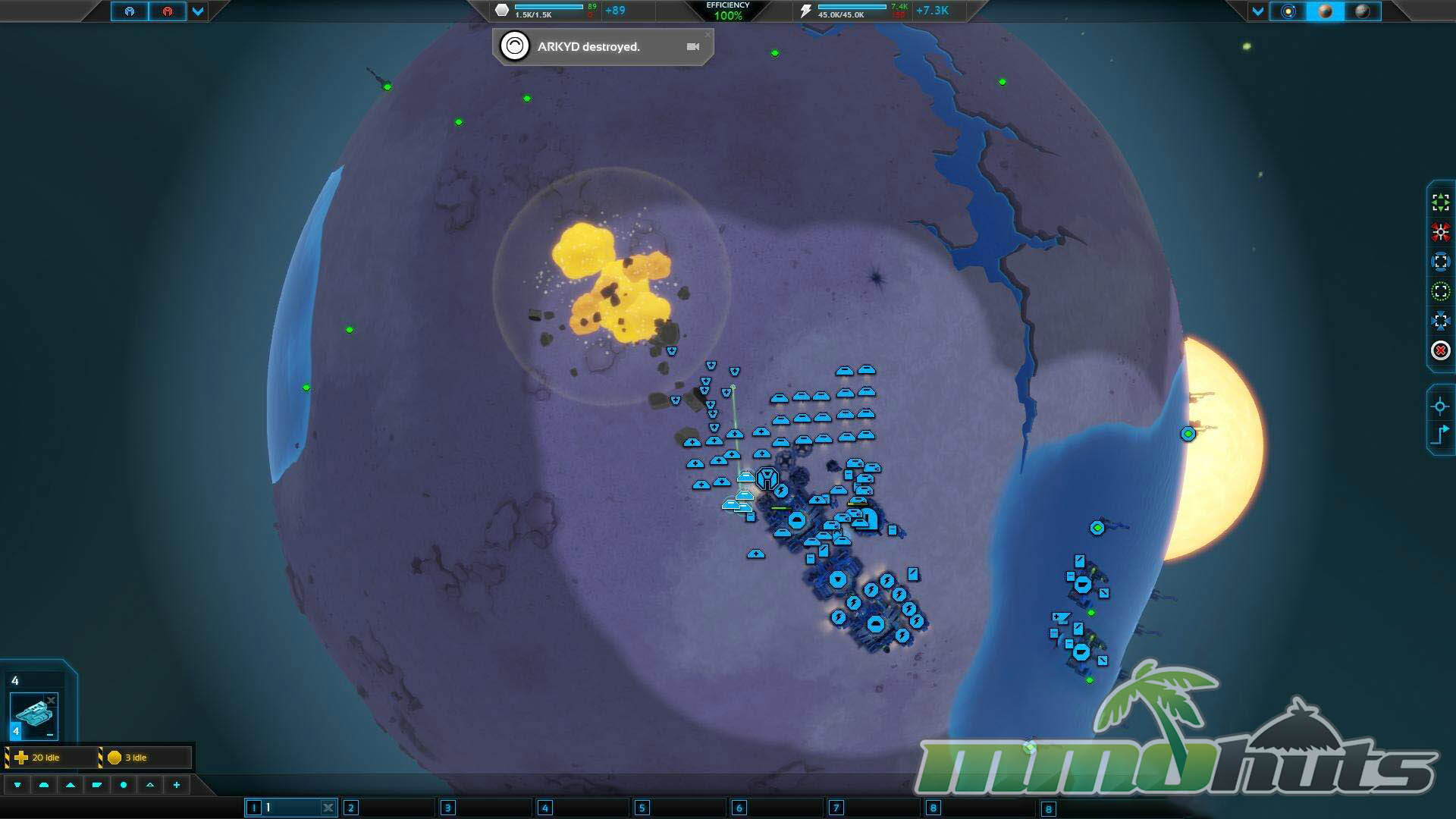
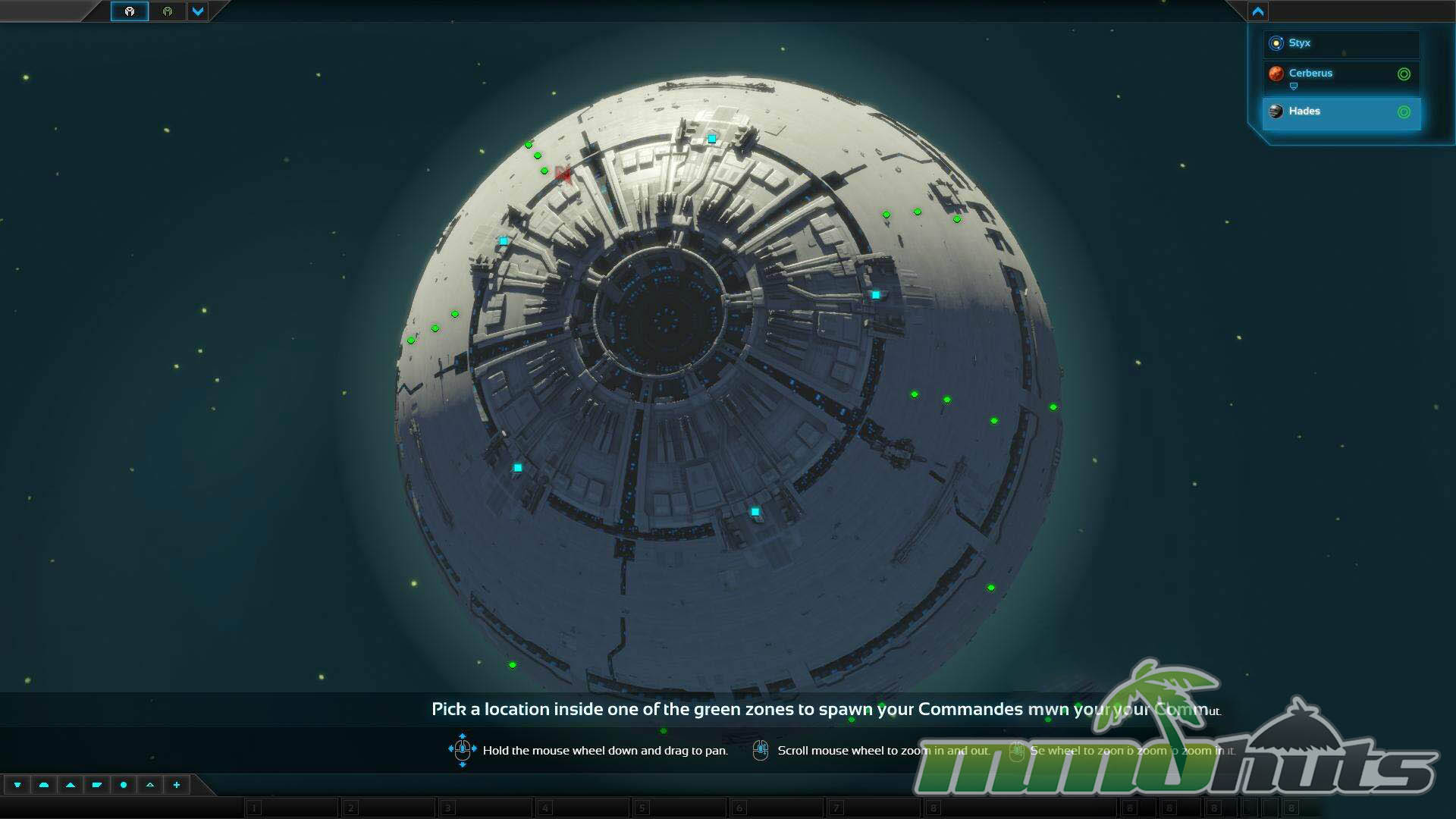
Planetary Annihilation is an RTS from Uber Entertainment, positioned as a spiritual follow-up to classics like Total Annihilation and Supreme Commander. Instead of traditional flat maps, matches take place across spherical, fully 3D worlds, including planets, moons, and asteroids, with entire solar systems sometimes serving as the stage for a single conflict. You begin with a Commander unit and expand by fabricating structures, extracting resources, and turning that economy into factories and armies.
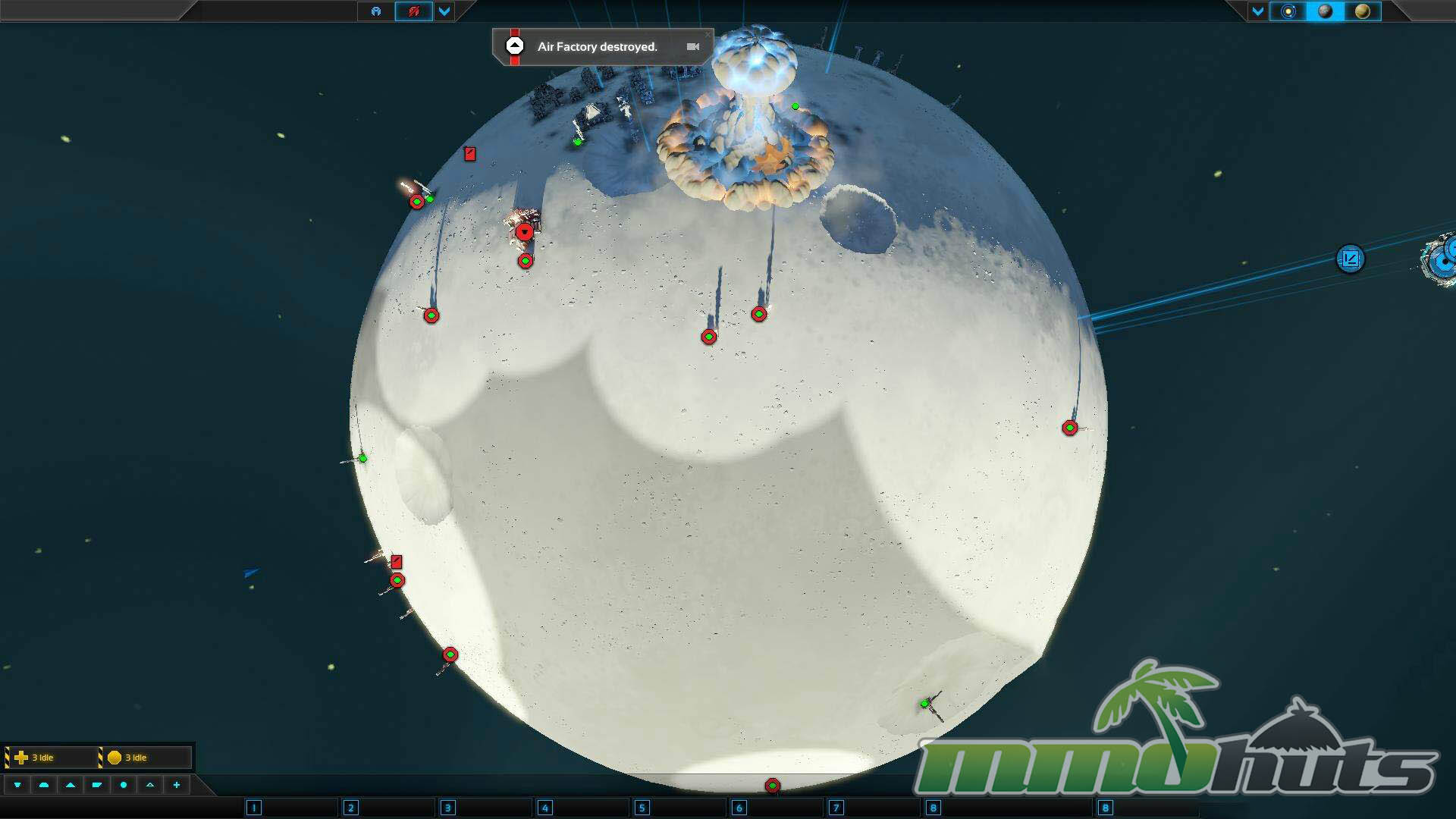
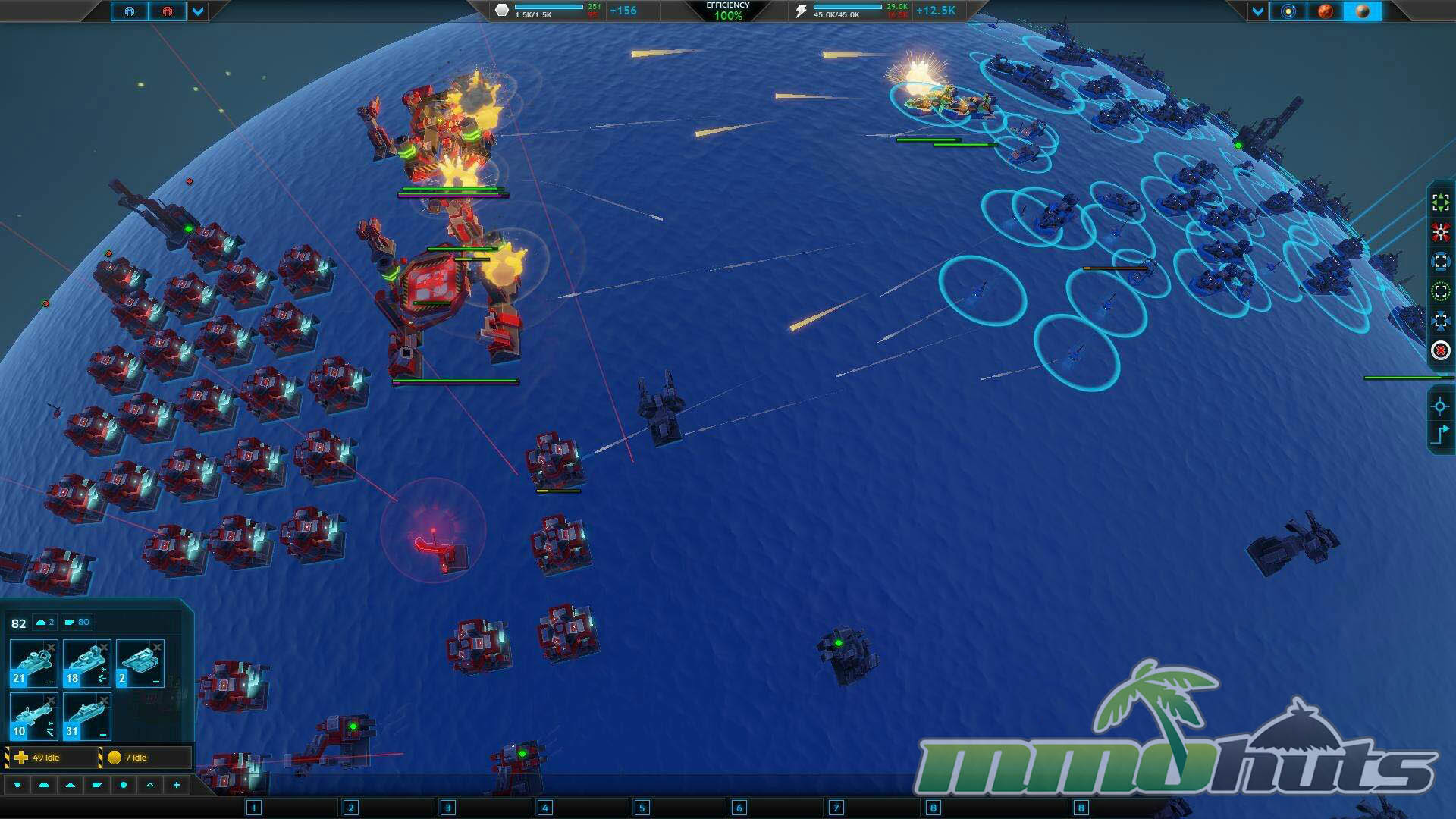
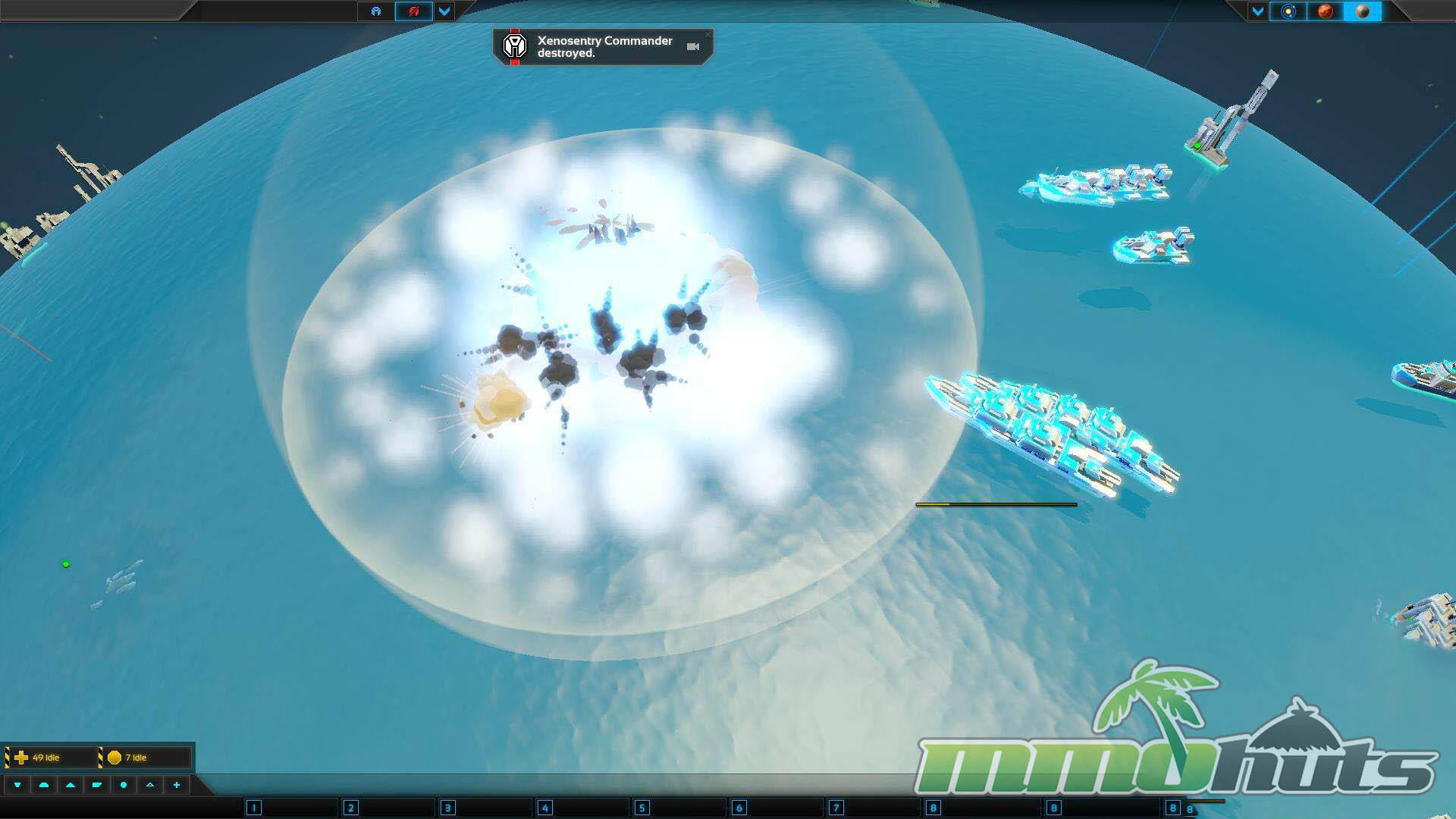
Combat is deliberately large-scale. You can field ground robots and vehicles, aircraft, ships, and even orbital tools that bring another layer of positioning and pressure. One of the game’s signature ideas is escalation beyond “base vs base,” with planet-killing options like gigantic lasers or using celestial bodies as weapons by slamming asteroids into enemy territory. For solo play, Galactic War Mode frames a campaign of system-by-system conquest. If you prefer standalone matches, Skirmish mode and online play focus on the core loop: build faster, scout smarter, and ultimately eliminate the opposing Commander while keeping your own alive.
Planetary Annihilation Key Features:
- Large Scale Battles – designed to support enormous armies and busy battlefields.
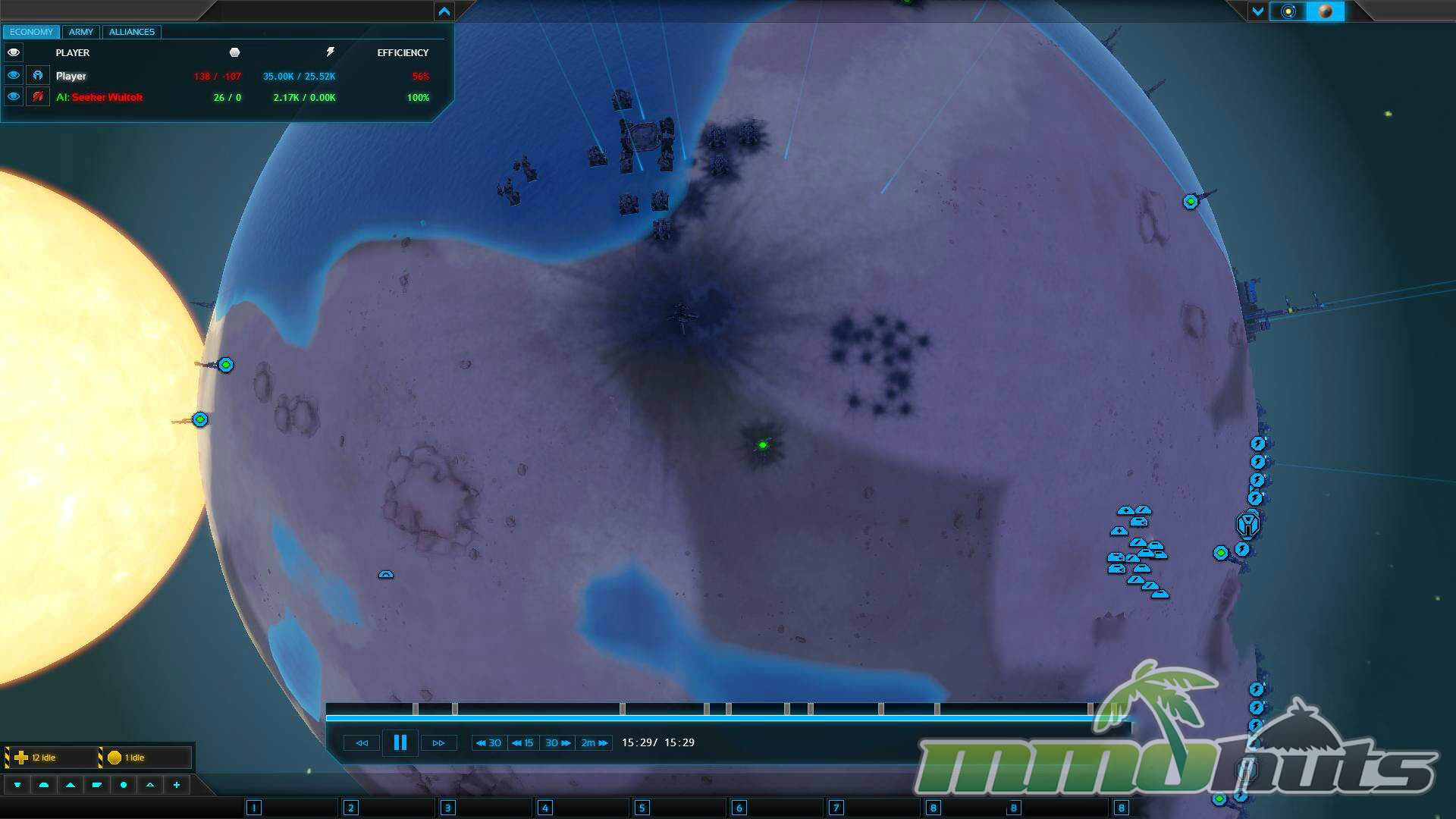
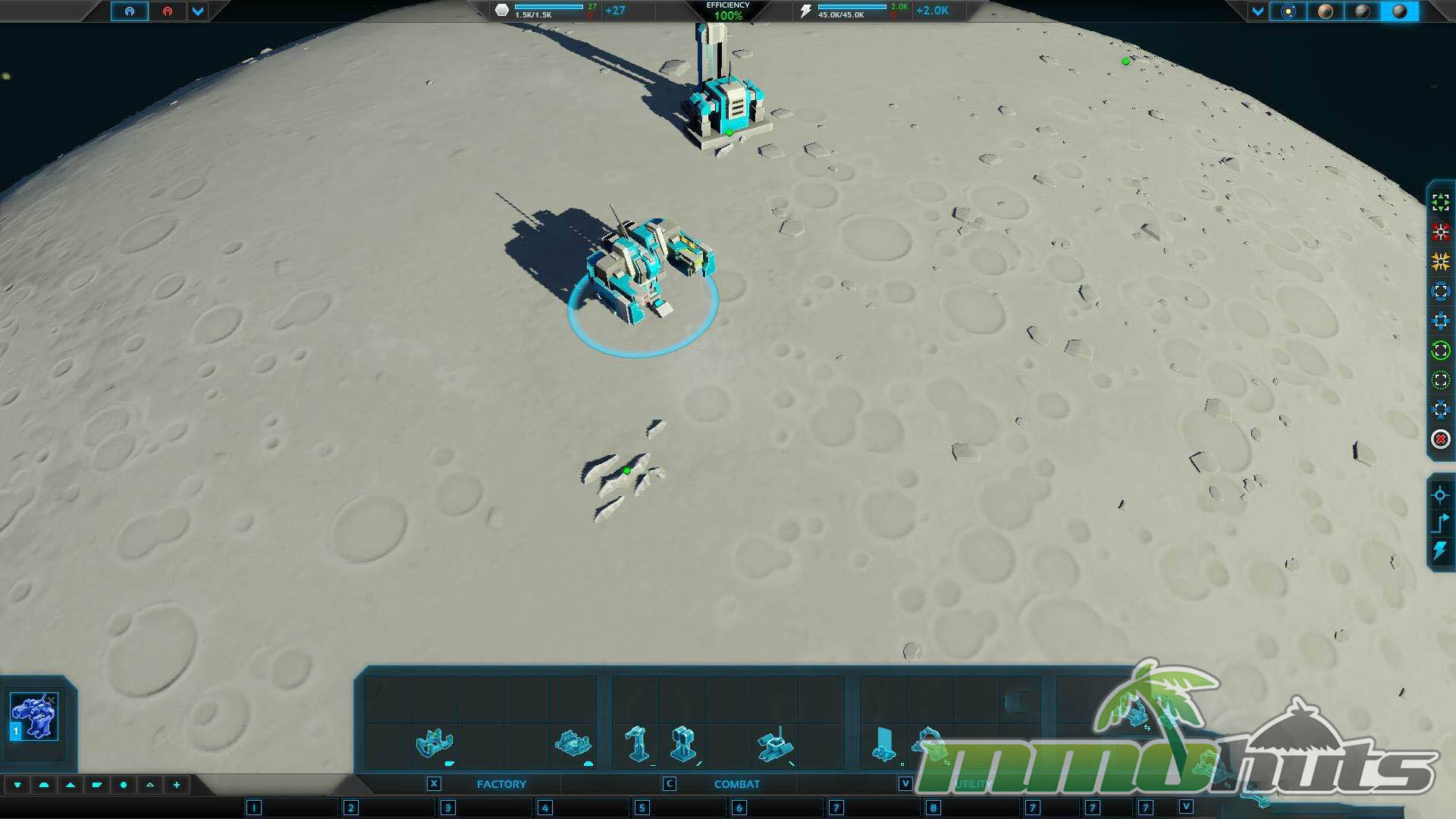
- Spherical Maps – planets and moons reshape how you scout, expand, and defend across curved terrain.
- Picture in Picture (PiP) – lets you monitor and command two locations at once, which is crucial in multi-planet wars.
- Planetary Weapons – catastrophic options, including turning celestial bodies into tools of destruction.
- Ground, Naval, Air, and Orbital Units – multiple combat layers encourage combined-arms planning.
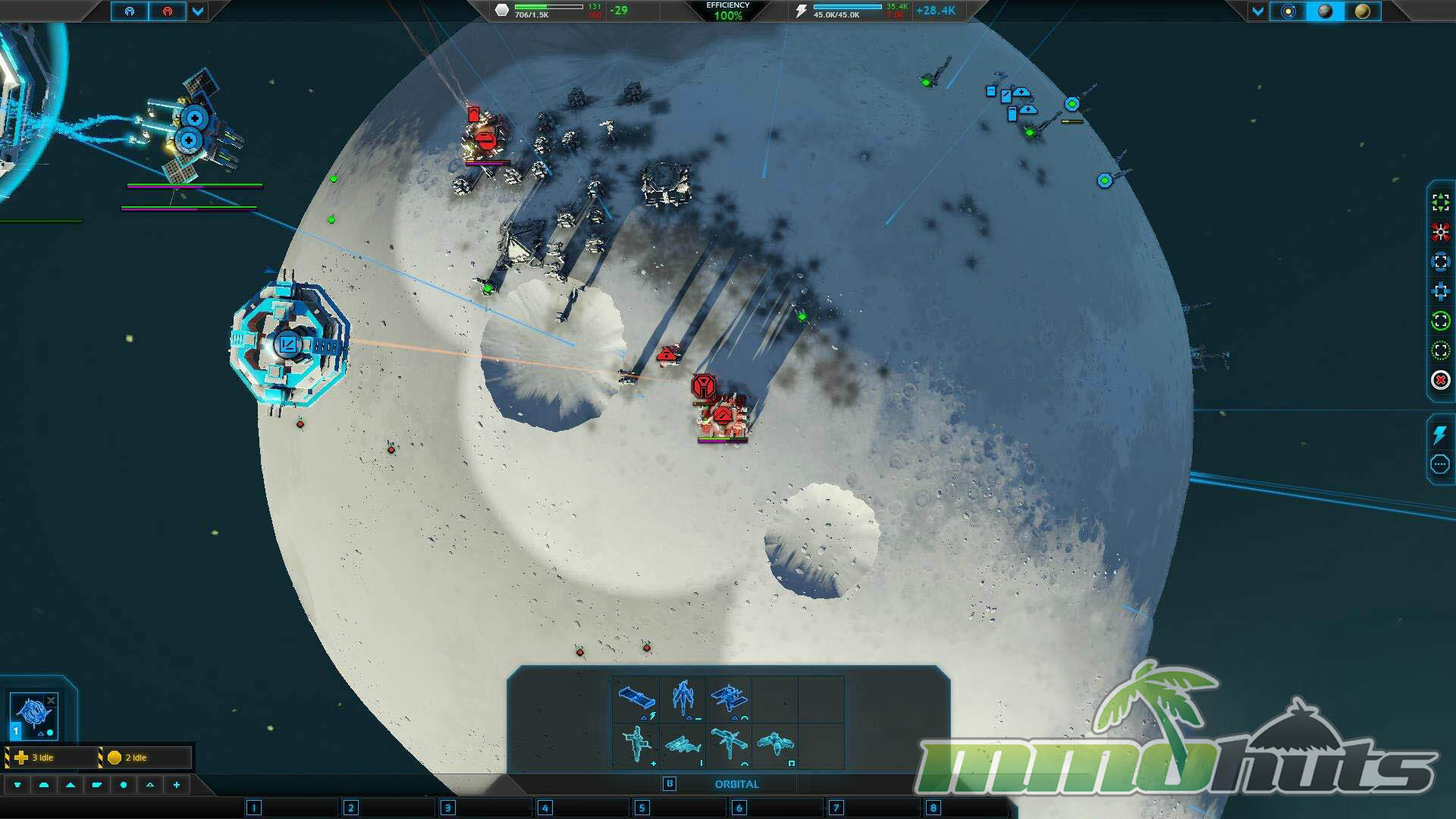
Planetary Annihilation Screenshots

Planetary Annihilation Featured Video

Planetary Annihilation Review
Planetary Annihilation targets a particular RTS itch: the satisfaction of going from a single starting unit to a self-sustaining war machine, then watching that machine collide with another at absurd scale. If you grew up on big-economy RTS games where production and expansion matter as much as tactical skirmishes, this one feels immediately familiar, but it also asks you to think in three dimensions and across multiple worlds.
My first sessions reinforced a simple truth about the game: prior RTS experience helps, but it does not replace learning Planetary Annihilation’s cadence. Even a small solar system can punish hesitation, because the game rewards early growth and constant momentum. It is very easy to feel “fine” for ten minutes, then realize the opponent has quietly claimed more metal, more factories, and more map control, and is about to convert that advantage into a wave you cannot stop.
Economy First, Army Second
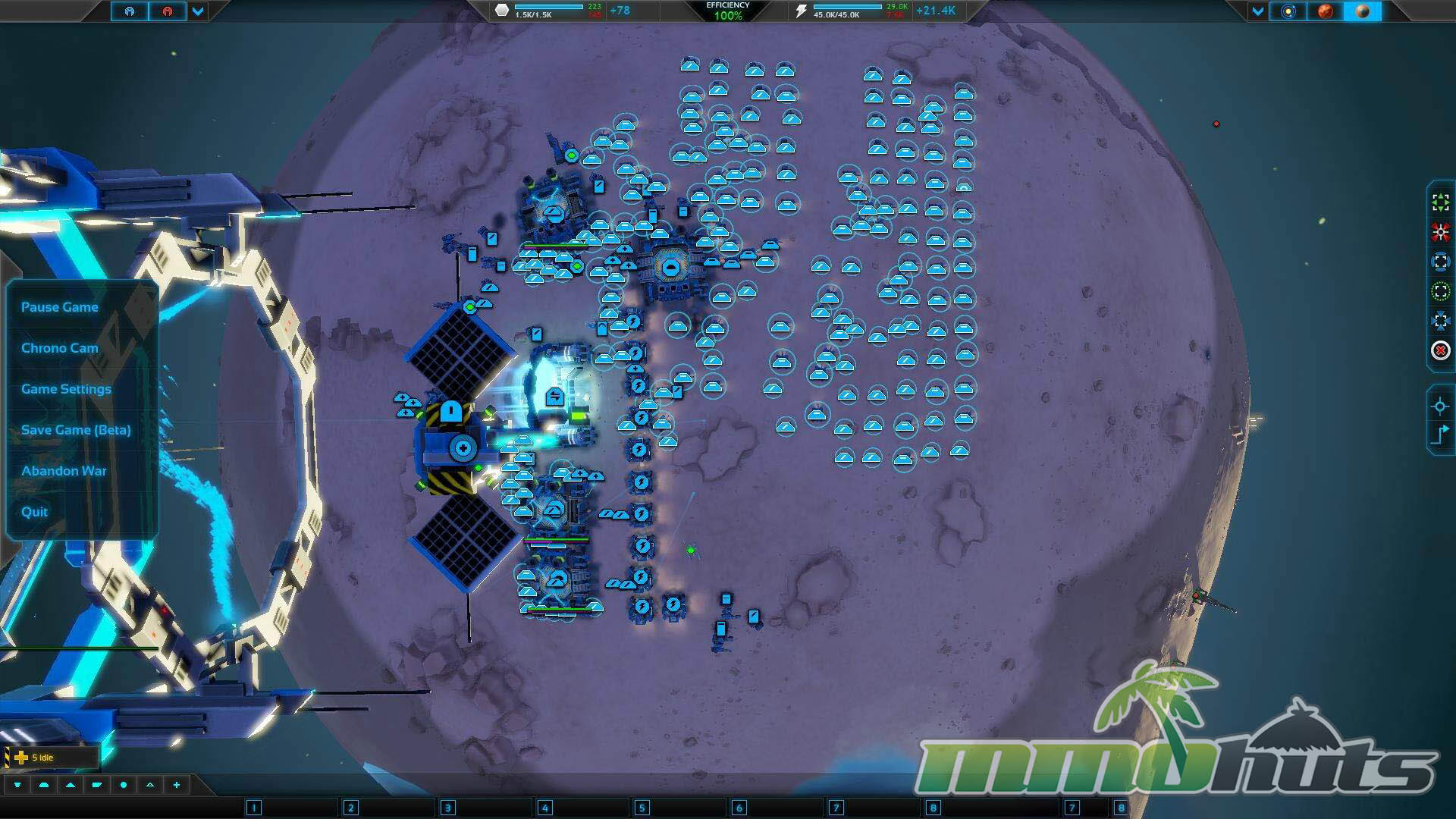
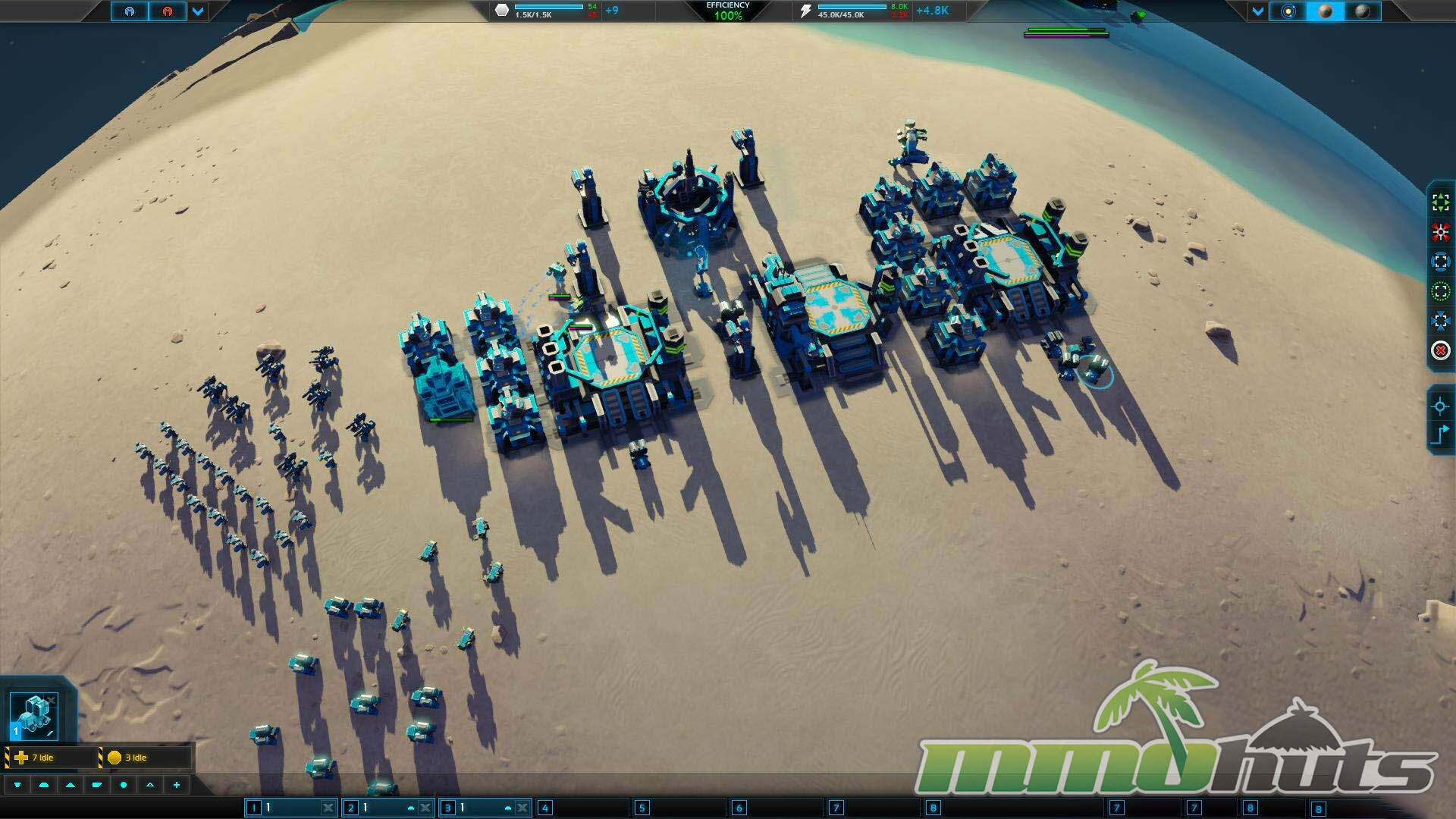
Planetary Annihilation leans heavily toward macro play. You are not meant to babysit small squads and squeeze out perfect trades; you are meant to build an economy that can keep multiple production lines running and then direct huge groups with broad orders. The two resources are Metal and Energy. Metal comes from dedicated extractor points, while Energy is generated from plants you can place more freely. When either resource is strained, production slows, and that slowdown can cascade into losing tempo.
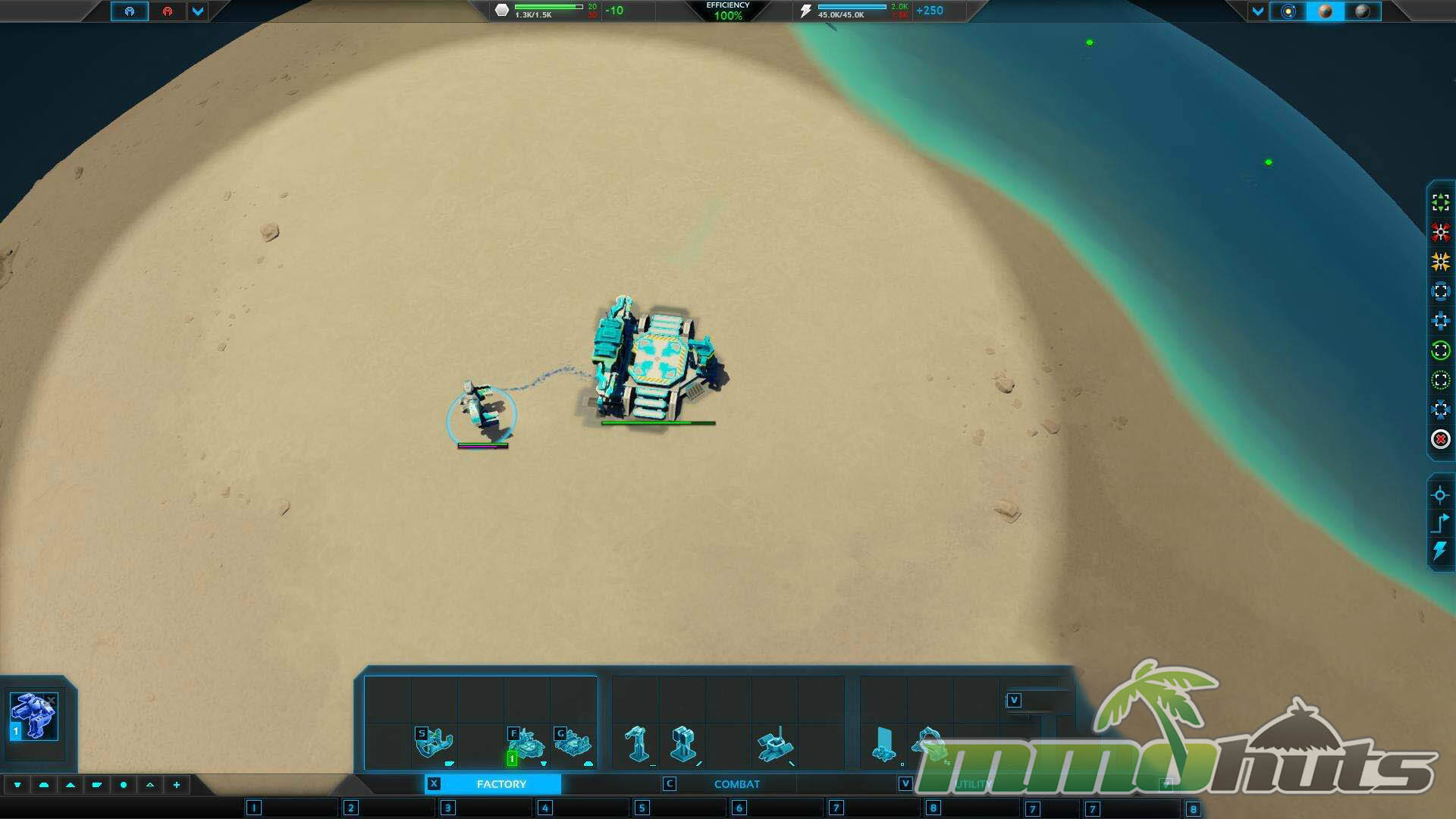
A key part of the early game is delegating. Your Commander can build, but committing it to every job is risky and inefficient. Getting additional constructors online quickly (and using them to expand to more extractors) is the real “engine start” for a match. Once you have that baseline, the game becomes a balance of scaling production, protecting infrastructure, and scouting well enough to avoid getting surprised by a timing push or a tech switch.
What the game does extremely well is the spectacle of scale. When battles ignite, the number of units involved and the clarity of the visual effects make the chaos readable and entertaining. The catch is that the enemy is scaling too. If you sit back and build a “perfect” force without contesting the map, the opponent can turn superior income into a larger army, better positioning, and eventually an attack that does not care how strong your first wave looked on paper.
Expansion and pressure matter. You do not necessarily need to be reckless, but you do need to be proactive: claim metal, deny metal, and be ready to exploit openings. If you damage an opposing Commander and have the tools to finish the job, hesitation can be costly, because disengaging often gives them time to reinforce, relocate, or escape to another world.
The art style is another strong point. It is stylized and almost toy-like, which keeps giant battles visually clean instead of muddy. That clarity helps when the screen is packed with units and projectiles, and it gives the game a distinctive personality compared to more gritty RTS offerings.
Presentation and the PiP Advantage
The spherical maps are more than a gimmick; they change how information works. Unlike a flat battlefield where you can pan over everything quickly, a planet always hides its far side. That makes scouting and awareness feel different, and it can create situations where threats build just beyond your camera’s view.
This is where Picture in Picture (PiP) becomes one of Planetary Annihilation’s best ideas. PiP is not just a passive window, it is a second, fully interactive view. You can issue commands, place buildings, and manage engagements through it while your main camera focuses elsewhere. In multi-planet matches, that flexibility is invaluable. Even on a single world, PiP helps you keep an eye on a vulnerable expansion or track an incoming attack without constantly snapping the camera back and forth.
It is a smart solution to the visibility challenges of a 3D planetary RTS, and it complements other interface tools that aim to keep the player in control even when the unit count becomes intimidating.
Interface Habits That Make the Game Click
Planetary Annihilation’s UI is capable, but it expects you to meet it halfway. The game supports efficient command patterns that are essential once you are managing multiple factories, expansions, and armies.
Area commands and line building are the most immediately useful. Area placement lets you quickly queue structures across a region, which is perfect for building extractors across a cluster of metal points or placing multiple defenses without individually clicking every spot. Line building speeds up repetitive layouts, such as rows of energy plants or layered defensive lines, and it reduces the mechanical friction that can bog down large-scale RTS play.
Unit selection and queuing tools also matter. Being able to rapidly select groups, issue broad orders, and adjust production priorities helps keep your attention on strategy rather than on busywork. The game does not always hold your hand with tutorial-style prompts, so learning these habits is often the difference between feeling overwhelmed and feeling empowered.
Eventually I moved from skirmishes into the game’s campaign framework, partly because it provides a more structured way to absorb its systems and tech options.
Galactic War
Galactic War is a light narrative wrapper around a series of escalating RTS encounters. The premise is straightforward: Commanders awaken, expand, and eliminate rivals, with the campaign pushing you from system to system. It is not a story-driven RTS campaign in the classic sense; it is more of a strategic layer that provides context and progression.
The mode’s most interesting element is its tech acquisition and limitation. As you travel between star systems, you pick up technologies that expand what you can build, but you have limited slots, which forces choices. That constraint can feel unusual if you are used to having the full tech tree every match, but it serves a purpose: it reduces early overload and encourages planning around a particular toolkit.
Finding the right combination of techs changes how you approach each fight. Some runs may emphasize orbital play, others may focus on different unit compositions, and the mode gradually introduces more complexity without dumping everything on you immediately.
The strategic layer also adds meaningful decisions about risk and reward. Systems marked by enemy Commanders force battles for control, while other routes can be used to hunt for additional slots or swap technologies. In practice, it becomes a campaign of adapting to what you have and leaning into it.
In my own play, orbital options shaped many matches. Establishing orbital presence can create pressure that is difficult to answer if the opponent is behind on tech or economy. Tools like orbital platforms can function defensively, but they can also be used aggressively to pin down key areas and force an enemy to respond under unfavorable conditions.
Co-op and Competitive Play
For players who find the scale daunting, shared-army co-op can make Planetary Annihilation much easier to digest. Two players controlling one faction can divide responsibilities, one focusing on economy and production while the other handles scouting and frontline management. It is also a practical way for less experienced RTS players to learn by watching how a veteran prioritizes expansion, builds, and timing.
PvP, on the other hand, is unforgiving. Because the game does not provide a robust matchmaking structure, match quality can vary widely. You might face someone far above your experience level, and Planetary Annihilation is the kind of RTS where small knowledge gaps (build order efficiency, scouting habits, or UI fluency) snowball into decisive losses.
It also needs to be said that online activity feels limited. Depending on when you play, lobbies can look quiet, and finding evenly matched games is not always easy.
The Missing On-Ramp
The most persistent criticism is still the same: the game does not do enough to teach itself. Galactic War helps introduce pieces gradually, but it is not a true replacement for a focused tutorial that explains the interface, economy rhythm, and the expectations of expansion and scouting. As a result, many players end up learning through external guides, community resources, or videos.
That lack of onboarding is frustrating because the underlying design is strong. Planetary Annihilation has excellent tools for large-scale control, but it often leaves players to discover those tools on their own. For a game that aims at huge battles and multi-planet management, better guidance would go a long way in smoothing the first few hours.
Final Verdict – Great
Planetary Annihilation is at its best when it embraces its core identity: a macro-focused RTS where economies roar, factories never stop, and battles can spill across worlds. The planetary battlefields, the escalation into orbital warfare, and the sheer density of units create moments that few strategy games can replicate.
Its shortcomings are real, especially for newcomers. The limited tutorial support and lingering rough edges make the first steps steeper than they need to be, and the low playerbase can limit multiplayer options. Still, if you enjoy RTS games built around expansion, production, and overwhelming force, Planetary Annihilation offers a distinctive, memorable take on the genre.
Planetary Annihilation Links
Planetary Annihilation Official Site
Planetary Annihilation Wikipedia
Planetary Annihilation Steam Store
Planetary Annihilation Gamepedia [Database/Guides]
Planetary Annihilation Wikia [Database/Guides]
Planetary Annihilation Requirements
Minimum Requirements:
Operating System: Windows Vista SP2 64-bit
CPU: 32 or 64-bit Dual Core or better
RAM: 4 GB RAM
Video Card: Shader 3.0 / OpenGL 3.2 +
Hard Disk Space: 2 GB HD space
Recommended Requirements:
Operating System: Windows 7 64-bit
CPU: Quad Core
RAM: 8 GB RAM
Video Card: Dedicated Graphics Chip (Not Integrated) / OpenGL 3.2+
Hard Disk Space: 2 GB HD space
Planetary Annihilation is playable on Mac OS X and Linux
Planetary Annihilation Music
Planetary Annihilation Additional Information
Developer(s): Uber Entertainment
Publisher(s): Uber Entertainment
Producer(s): Marc Scattergood, Jeremy Ables
Lead Developer(s): Jon Mavor
Lead Artist(s): Steve Thompson
Voice Actor(s): John Patrick Lowrie
Composer(s): Howard Mostrom
Alpha Release: June 8, 2013
Steam Early Access: June 13, 2013
Closed Beta: September 26, 2013
Open Beta (Kickstarter Backers): November 19, 2013
Release Date: September 5, 2014
Kickstarter Launch Date: August 15, 2012
Kickstarter End Date: September 14, 2012
Other Platforms: Mac OS X and Linux
Development History / Background:
Planetary Annihilation was created by the US-based studio Uber Entertainment. The team included developers with experience on strategy staples such as Total Annihilation, Supreme Commander, and Command and Conquer. Instead of pursuing traditional publishing investment at the outset, the project went to Kickstarter with a $900,000 goal. By the end of the campaign, Planetary Annihilation had raised $2,228,00. It became the eleventh Kickstarter project to pass the one-million-dollar mark.