
Paladins: Champions of the Realm is a free to play, hero-driven team shooter built around coordinated objective play. Matches revolve around picking a champion with a clear role, then tailoring that kit through loadout cards and in-match item purchases to fit your preferred style or your team’s needs.
 | Publisher: Hi-Rez Studios Playerbase: High Type: F2P Team Shooter Release Date: September 15, 2016 Pros: +Large roster with distinct roles and playstyles. +Robust loadout card system that meaningfully changes builds. +Bright, readable art style that runs well on many PCs. Cons: -Ranked can be difficult to break into for newer players. -Audio feedback lacks punch compared to top shooters. -Maps can start to blur together over time. -Matchmaking can feel uneven. |

Paladins: Champions of the Realm Overview
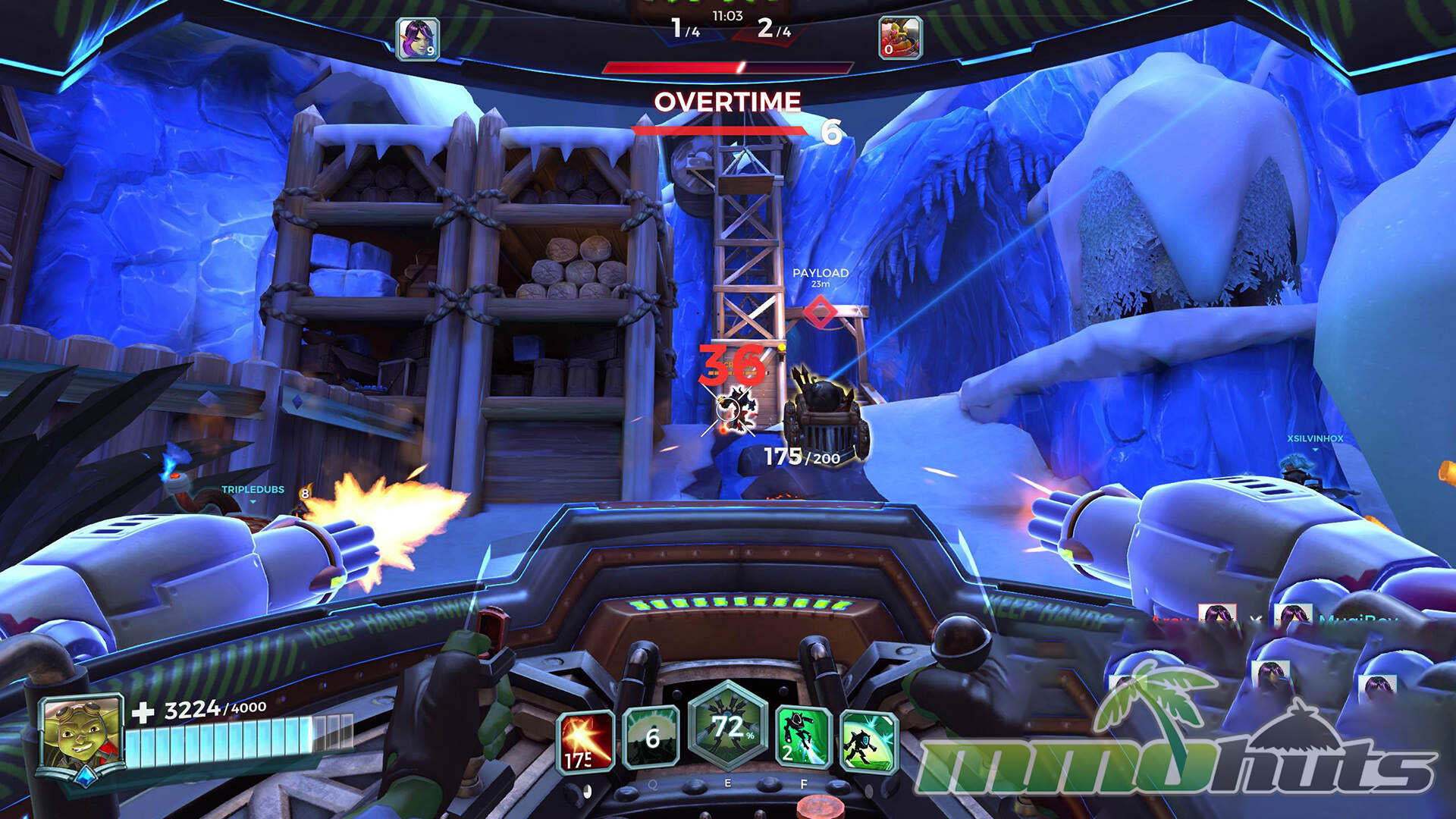
Paladins: Champions of the Realm is a 5v5 objective shooter where each player chooses a champion from a varied roster, then leans into a particular approach through cards and items. The core mode is built around a central capture point: claim it as a team, score, then transition into an escort phase where a payload must be pushed toward the enemy side. Each successful capture and push contributes points, and the first team to reach 4 points takes the match.
What keeps matches from feeling identical is how much control you have over a champion’s strengths. Before you even load in, you can set up a loadout that improves specific abilities or smooths out weaknesses. During the match you also earn currency through play and spend it on items that further sharpen your build, so your character can adapt to what the opposing team is doing. As you gain experience with a champion and unlock more options, competitive play becomes the natural next step, since teamwork and fast decision making matter as much as aim.
Paladins: Champions of the Realm Key Features
- Team Based Gameplay – Fight in 5v5 objective matches where roles, ult timing, and coordinated pushes decide rounds.
- Stack the Deck – Collect and equip cards to shape a champion’s strengths, emphasizing certain abilities or smoothing out weaknesses.
- Colorful Aesthetic – Clean, vibrant visuals help readability in fights and generally perform well across a wide range of PCs.
- Items – Earn credits during a match and spend them on upgrades that enhance damage, defense, healing, or utility.
- Close Quartered Maps – Compact layouts keep teams colliding near the point, with side routes that enable flanks and picks.
Paladins Screenshots


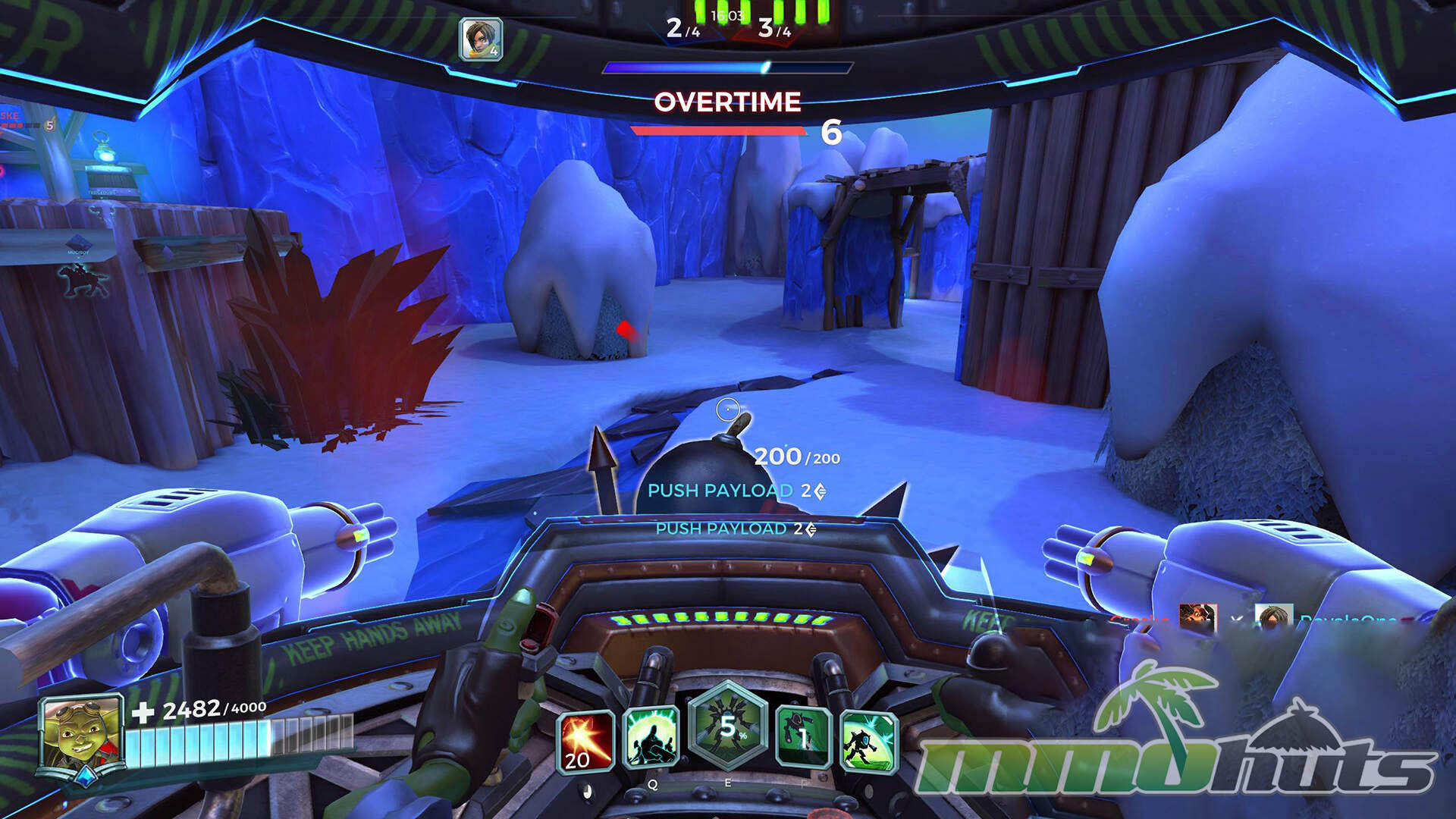
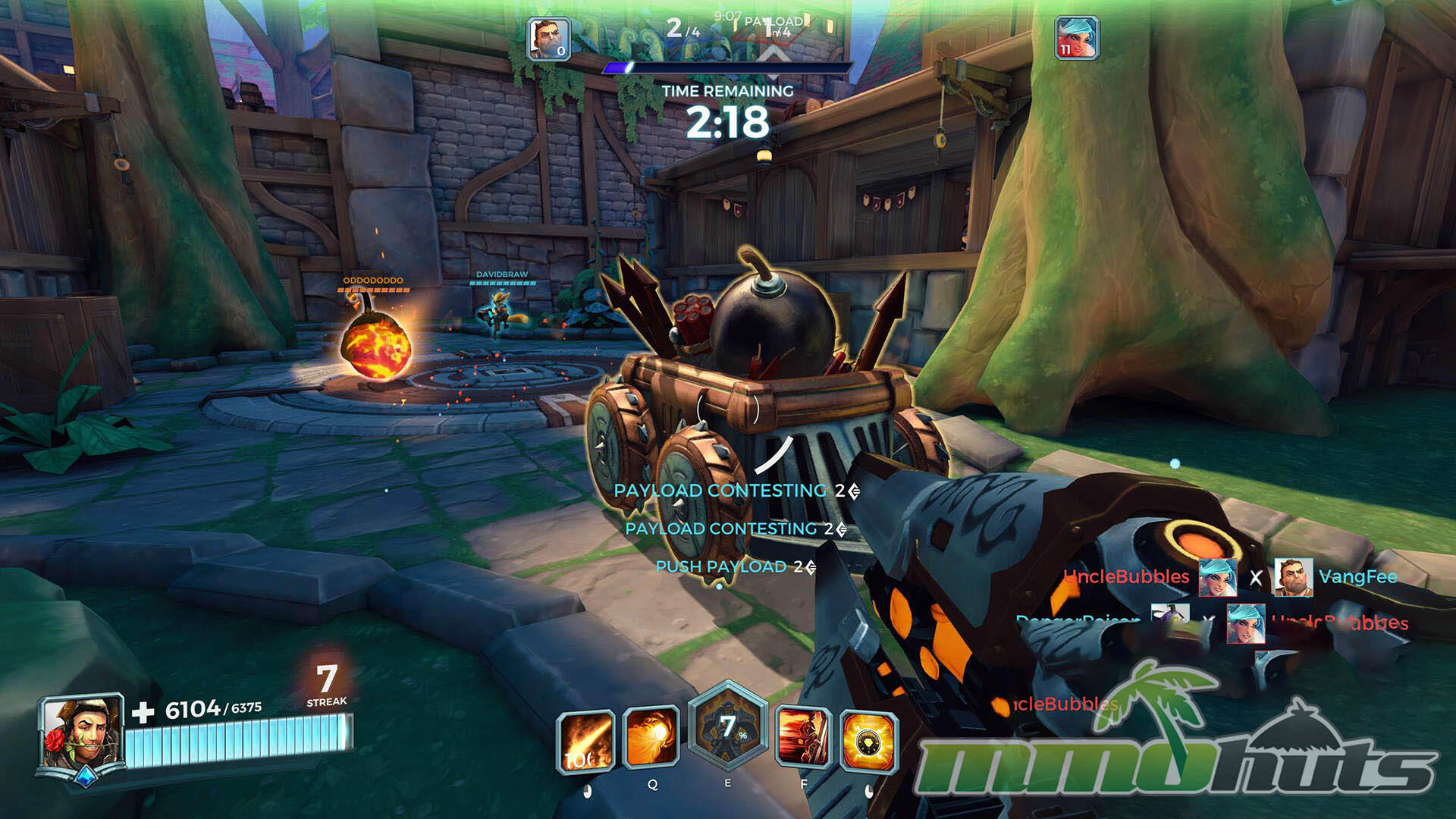

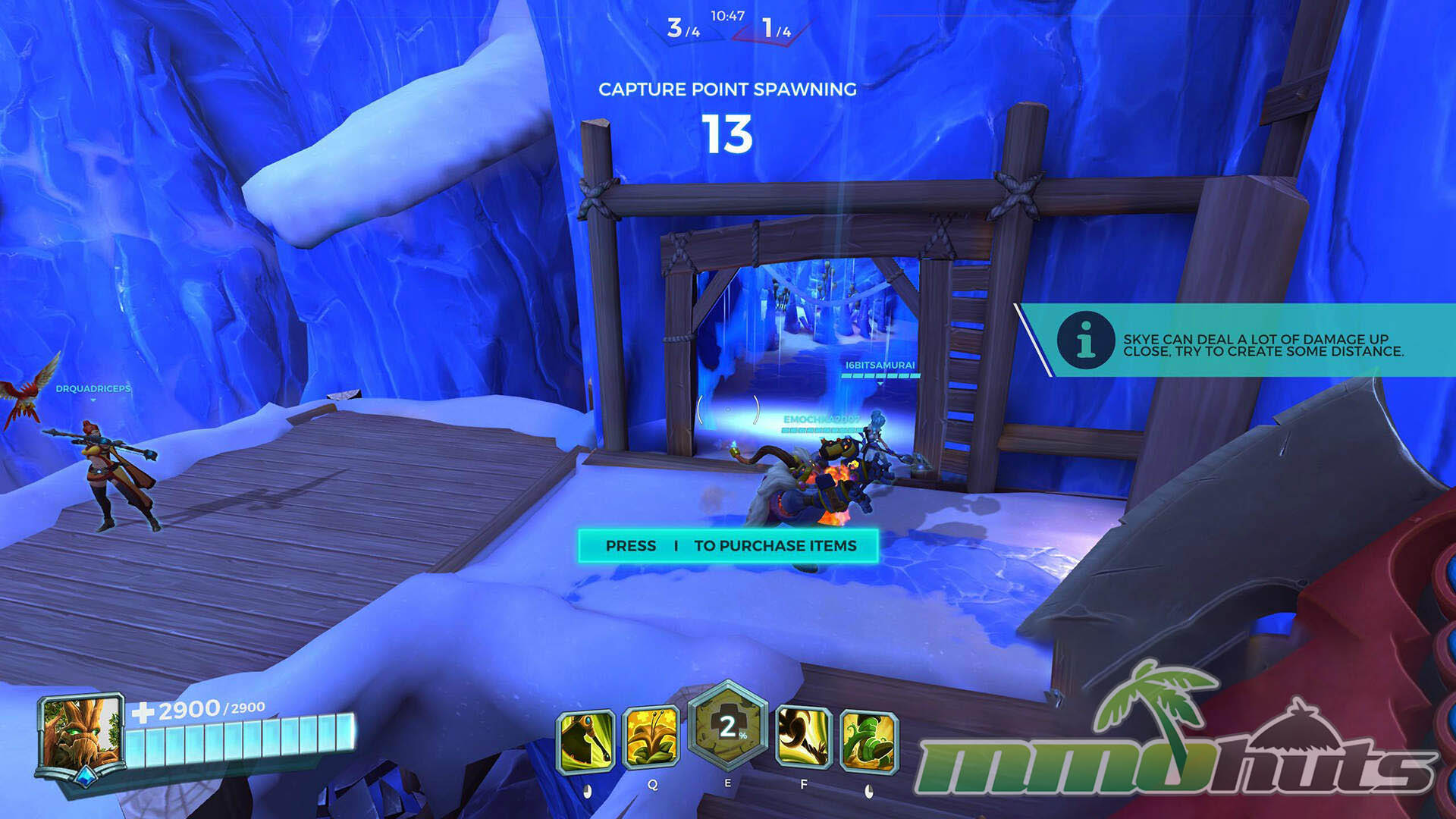
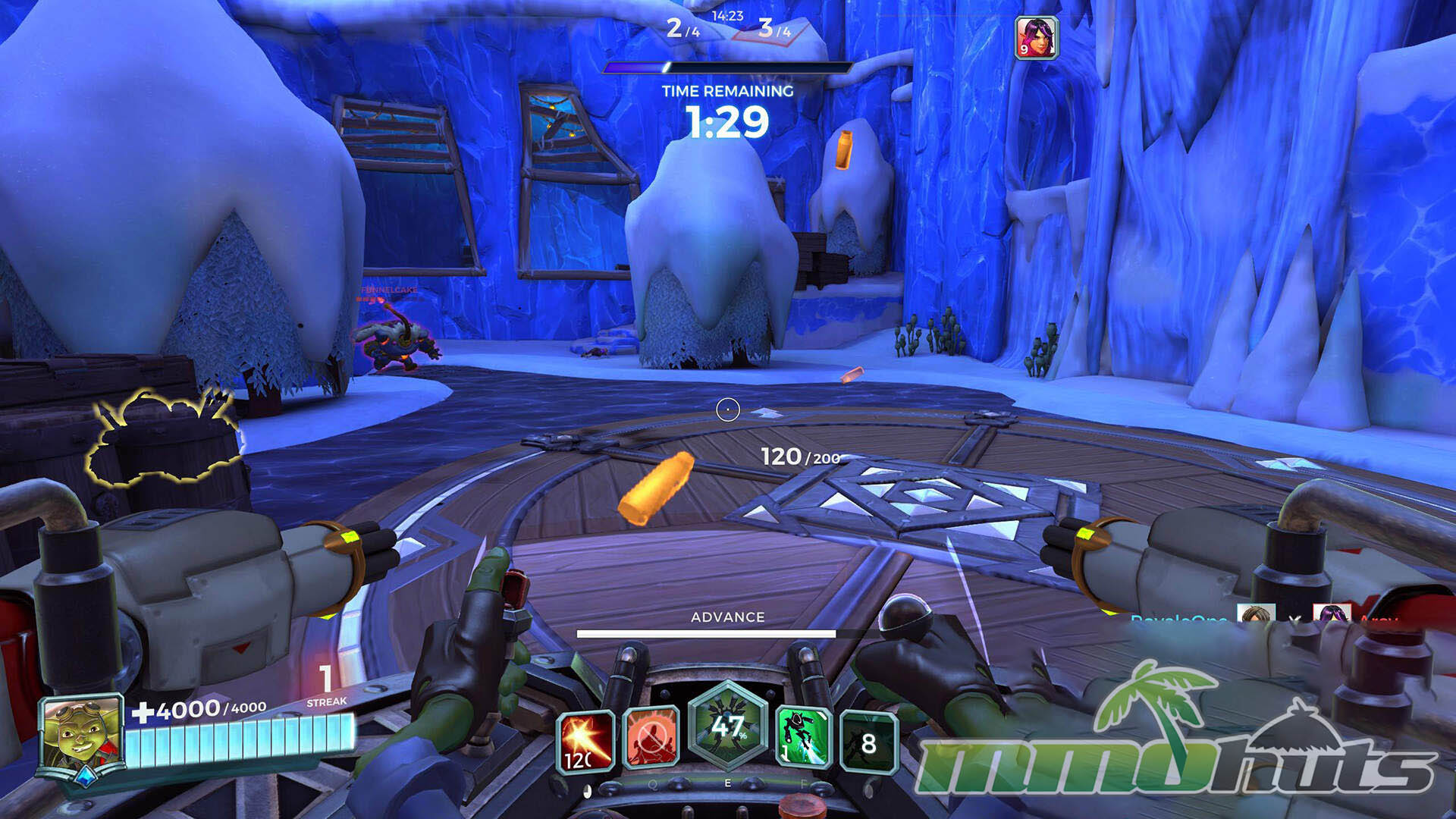
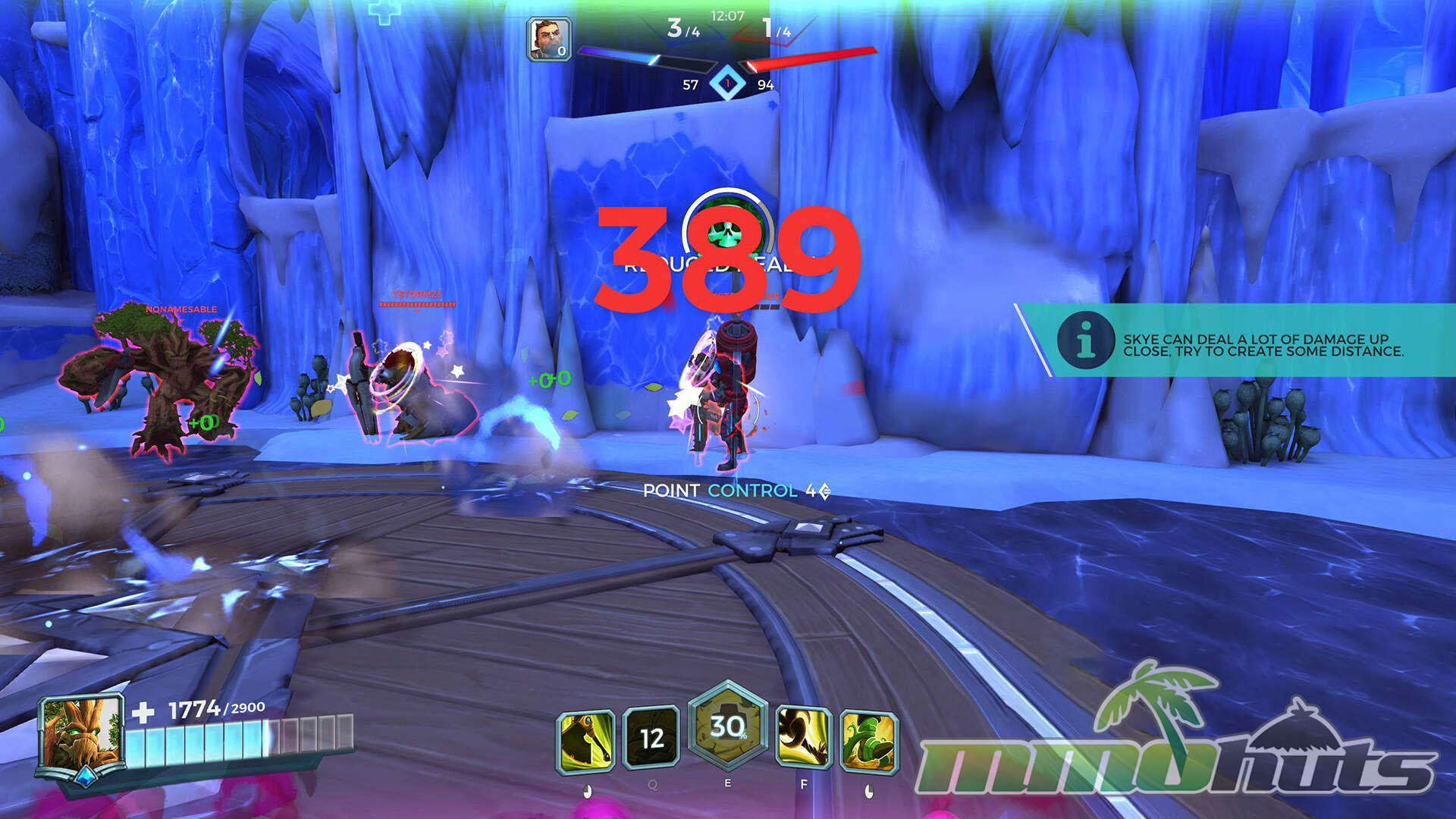

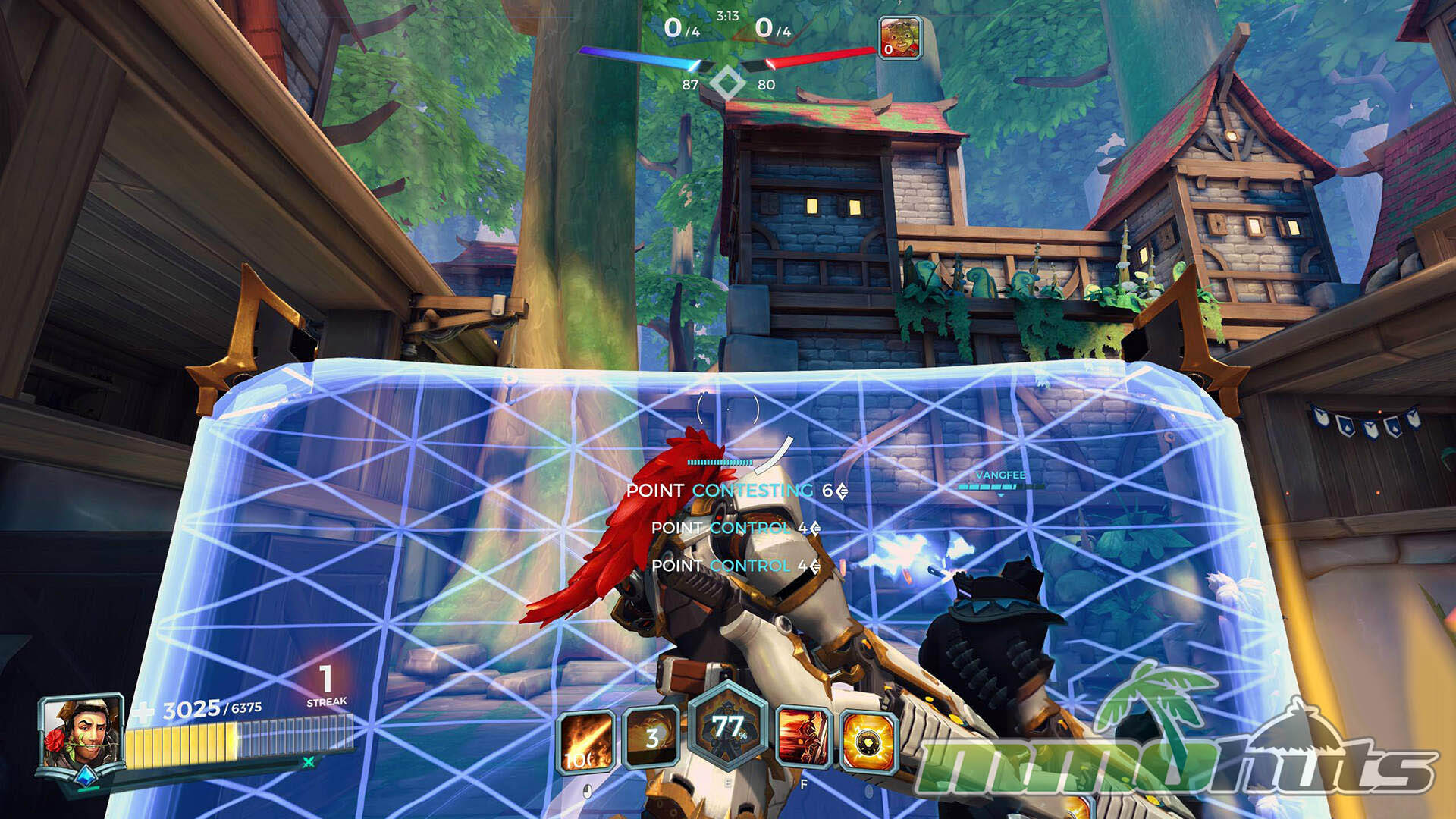
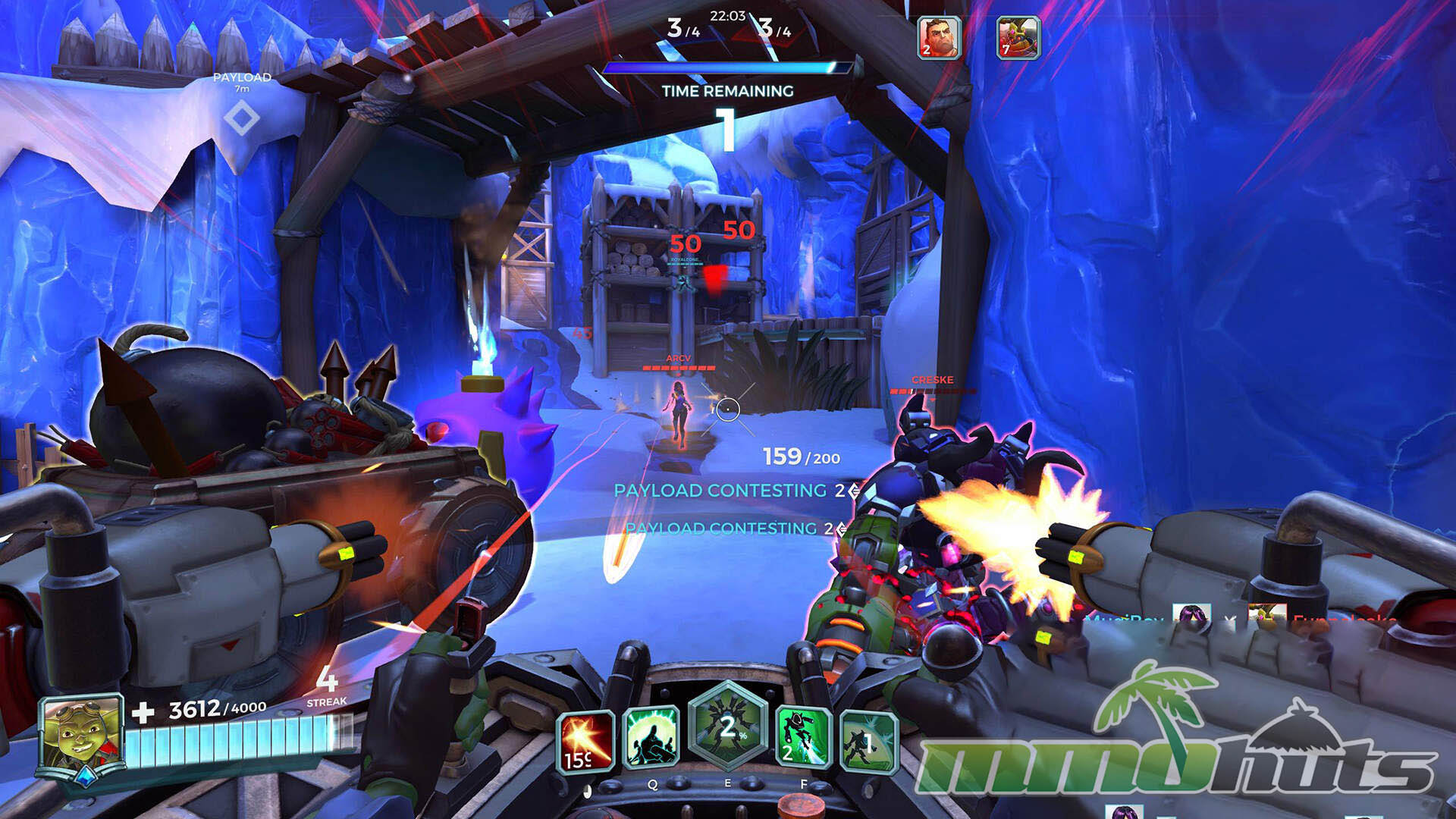
Paladins Featured Video

Paladins Review
Paladins landed on Steam as a highly approachable hero shooter, and it has stayed relevant because it balances quick readability with enough depth to reward long-term play. It is easy to understand what you should be doing (fight for point, push payload, repeat), but the details of how you do it change constantly based on team composition, your loadout choices, and what you buy during a match. That combination makes it welcoming for newcomers while still giving experienced players plenty to optimize.
How a Match Typically Plays Out
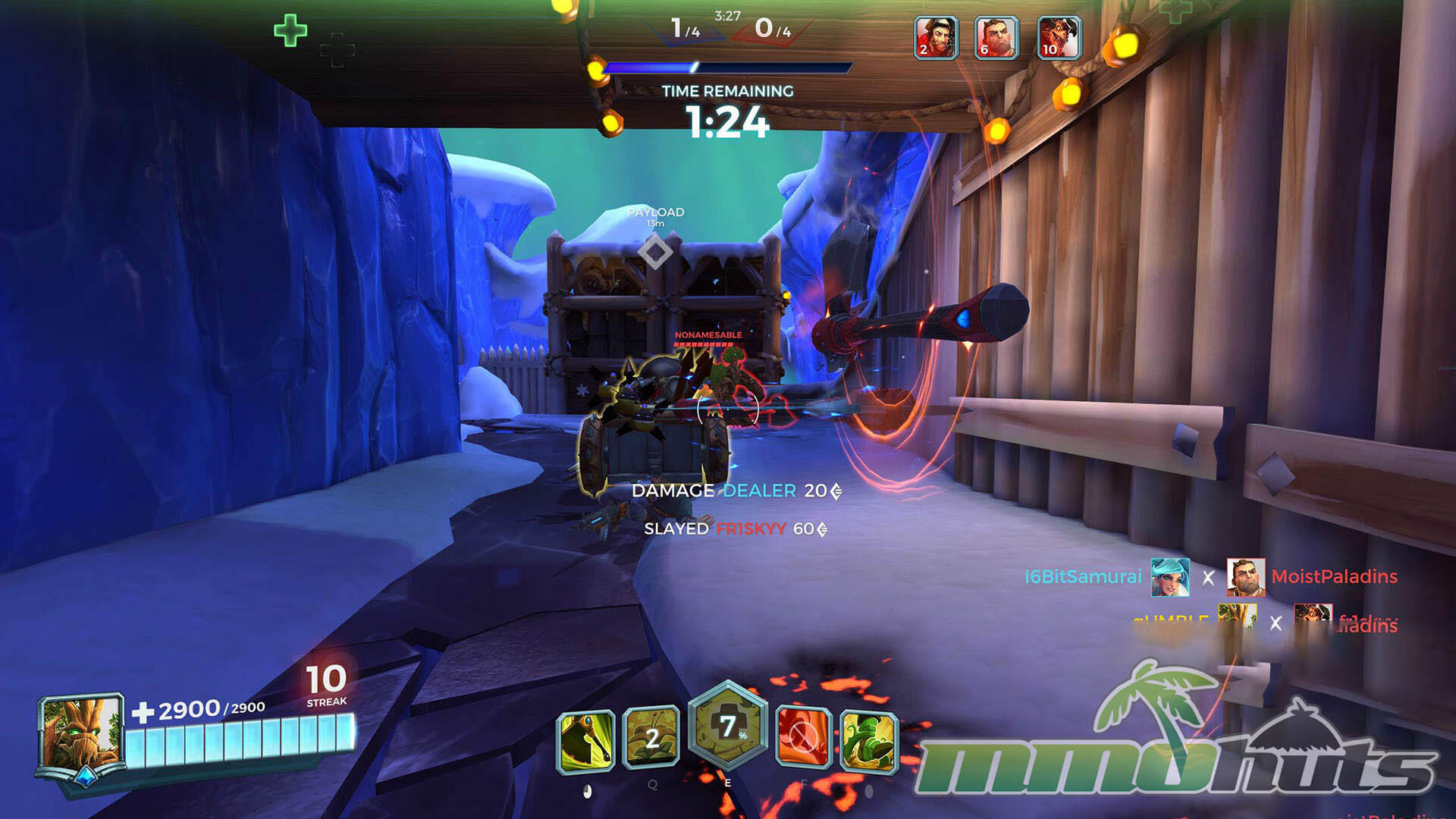
The match loop is clear and consistent. Two teams spawn on opposite sides, contest a capture objective, then the winning team attempts to escort a payload while the defenders try to stop it. Capturing the point awards progress toward victory, and a successful escort adds more, with the first team to 4 points winning the game. Because phases alternate between a concentrated fight on the point and a moving front line around the payload, momentum swings are common and comebacks feel possible.
Map layouts are intentionally straightforward, usually built around a primary lane with side paths that allow flanks, off angles, and safer rotations. This design does a good job of keeping players focused on the objective rather than wandering, but it also means fights happen frequently and mistakes are punished quickly. If your team ignores the capture point and chases kills, you often lose ground even if your damage numbers look good.
One of the most important habits Paladins teaches is staying alive. The game is not structured like a pure deathmatch, and a single death can break a defense or stall an important push. The out-of-combat healing encourages tactical disengages, so you are frequently making small, meaningful choices: take a duel now, retreat and recover, or reposition to re-enter the fight from a better angle. Those micro-decisions are a big part of why the game feels more strategic than its simple rule set suggests.
Champions and Team Roles
The roster is divided into four clear archetypes: Front Line, Damage, Support, and Flank. It is a useful framework because it communicates expectations immediately. A functional team composition usually wants at least a durable presence to hold space and some form of sustain, with the remaining picks covering damage output and pressure from off angles.
Every champion has a small kit of abilities plus an ultimate that charges through combat. Most kits are designed to cover a few essentials, damage, mobility or escape, some kind of control or utility, and a signature ultimate that can flip a fight when used well. Knowing when to commit your cooldowns and when to save them is often more important than raw accuracy, especially in clustered objective fights.
There is meaningful variety in how champions express their roles. Some rely on deployables and area control, others excel at burst damage and quick exits, and supports can feel very different depending on whether they are healing from the back line or holding space on the point. Rotating champions regularly helps keep the experience fresh, and it also teaches you how to play against them, which is essential once you start facing coordinated teams.
Learning curves vary by character. A champion’s silhouette and theme do not always match how fragile or mobile they are, so early matches involve recalibrating expectations and understanding what each opponent can do. Once you internalize those matchups, the game becomes more about positioning, timing, and team synergy than surprise.
Story Is Light, Style Does the Heavy Lifting
If you are looking for a strong narrative framework, Paladins does not put story front and center. Instead, it leans on strong character designs, readable silhouettes, and voice lines to establish personality. In practice, that is enough for this kind of competitive game: you quickly understand who is aggressive, who is sneaky, who is built to protect allies, and who wants to poke from range. The colorful presentation keeps fights legible, even when abilities start overlapping on the point.
Loadouts: The Card System That Defines the Game
Paladins’ card system is the feature that most clearly separates it from other hero shooters. Each champion can enter a match with a loadout built from cards, and those cards reinforce a particular way of playing, shorter cooldowns for a key ability, extra survivability tied to a movement skill, or bonuses that improve your preferred weapon pattern. You can use a default deck, but the game becomes much more interesting once you build your own.
Cards are grouped around different parts of a champion’s kit, which makes experimentation intuitive. You can spread points across multiple areas for a balanced feel, or invest heavily into a single ability to build around a specific game plan. The point system forces trade-offs, so even when you specialize, you still have to decide what you are giving up.
The deck-building rules encourage deliberate choices: cards start at a low value, and you increase their level to make them stronger, which also increases their point cost. Filling a full deck requires managing those point totals, so you naturally end up with a build that highlights two or three priorities rather than boosting everything at once. In play, that can lead to two players using the same champion in noticeably different ways, one leaning into survivability and point presence, another turning the same kit into a poke-heavy damage threat.
Experimentation is where the system shines. Testing a focused build can dramatically change how a champion feels, and it adds long-term motivation beyond simply unlocking more characters. Even when a specialized setup is not universally optimal, it can be effective in the right team composition, which is exactly the kind of strategic space that keeps a hero shooter interesting.
Build Sharing and the Early Meta Effect
As with most games that allow loadouts, the community side matters. Players trade builds, discuss which cards feel mandatory, and refine strategies as common compositions emerge. Paladins benefits from the fact that multiple approaches can work, so you are not always forced into a single rigid template. That said, you still feel the influence of popular builds, especially when ranked-minded players settle on what they believe is most efficient.
The healthiest matches tend to be the ones where your team adapts rather than autopilots. A support can lean more into healing or contribute more damage and control, and front liners can build for durability or disruption depending on what the enemy team is running.
Items: In-Match Adjustments That Matter
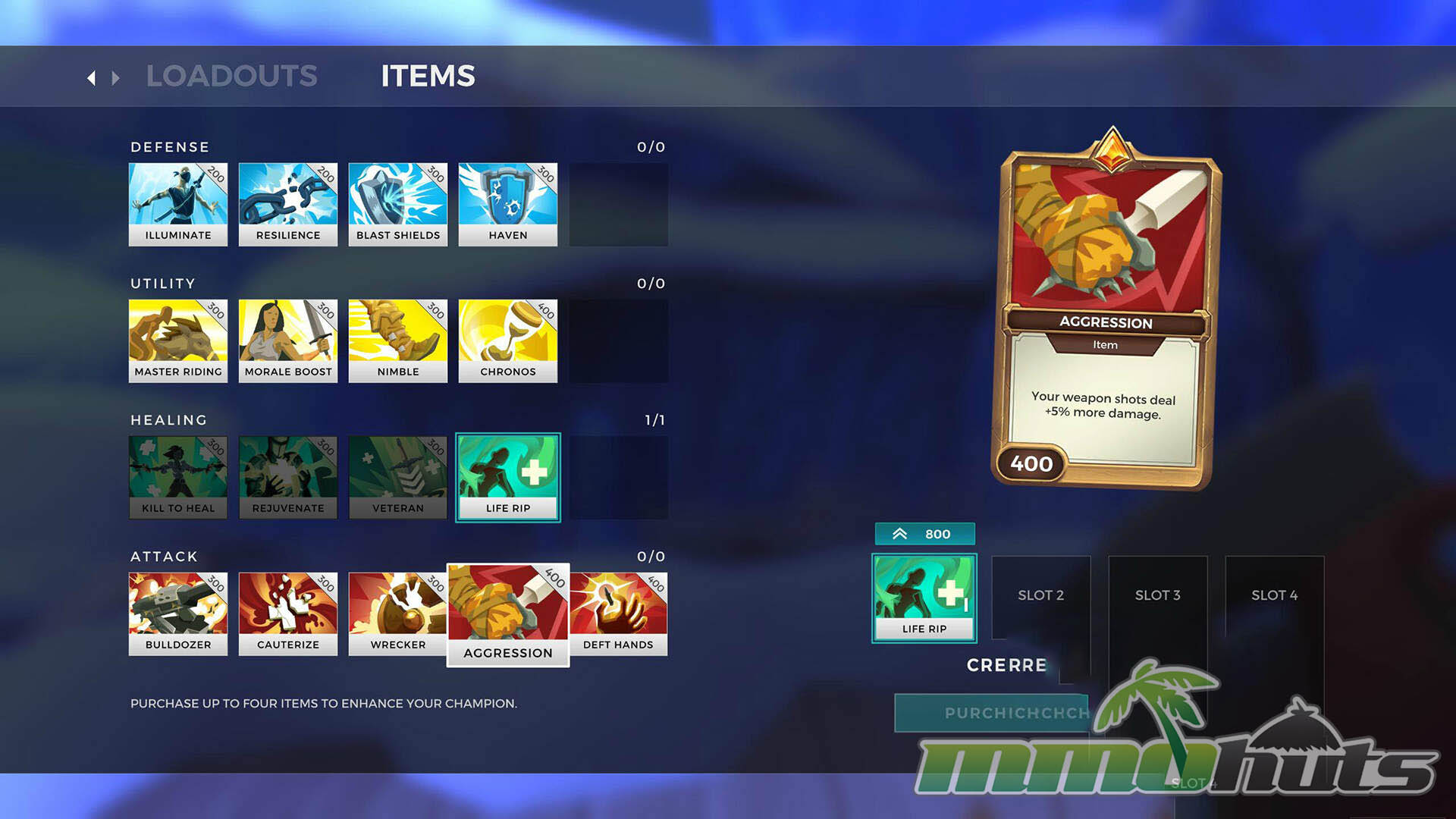
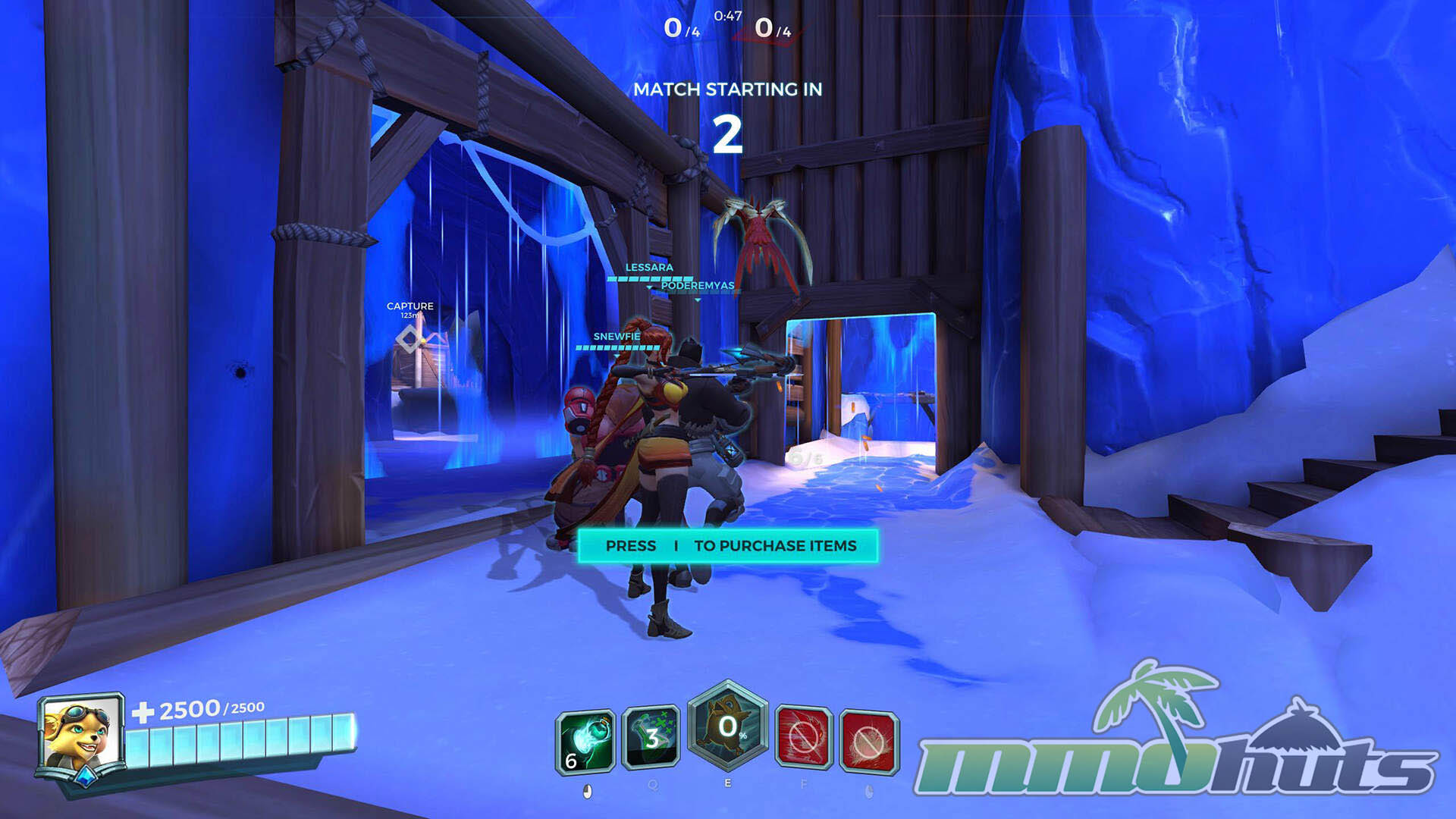
At the start of each round you receive an initial credit allowance (400), then earn more throughout the match by engaging enemies and playing the objective. Items function like temporary upgrades rather than physical gear, and they are categorized into Defense, Utility, Healing, and Attack. The system gives you a second layer of customization on top of your loadout, which is important because it lets you respond to what is happening in real time.
For example, sustained-fire champions tend to benefit from lifesteal effects, while other picks may prioritize cooldown reduction, survivability, or utility depending on the match. In practice, choosing items well can make a noticeable difference in whether you can stay in a fight long enough to contest the point.
Not every item feels equally impactful. Some choices can feel niche, and movement-related upgrades can be less appealing when most of your mount time is simply travel from spawn back to the action. Still, the broader system does its job, it encourages adaptation and keeps rounds from feeling locked in after champion select.
Combat Feedback and Audio Punch
Where Paladins sometimes falls short is in the weight of its weapons. Visual clarity is strong, but certain guns and abilities can feel lighter than they look, largely because the sound design does not always sell impact. When you land a strong hit, you want the audio to reinforce it, and some champions deliver that sensation better than others.
This is not a deal breaker in a game that prioritizes abilities and team play, but it is noticeable if you come from shooters where weapon sound and recoil feedback carry a lot of the moment-to-moment satisfaction.
Hitboxes and Payload Interactions
Hit detection can feel forgiving, and larger hitboxes mean fights often produce consistent damage output with fewer near-misses. That design choice fits the game’s identity, since Paladins is not trying to be a high-precision tactical shooter. It places more emphasis on cooldown management, positioning, and coordinated pressure.
The payload can be a more frustrating element, however. Its collision and hitbox behavior can make certain angles feel deceptive, where shots that appear clean are blocked in ways that do not match the model. Since payload phases are so central to winning, clarity here matters, and it is one of the areas that can occasionally create avoidable confusion in firefights.
Map Variety and Visual Similarity
Paladins’ maps do their job mechanically, they funnel teams toward the objective and provide flank routes and firing lanes that support the intended brawling pace. The downside is that, over time, many arenas can start to feel structurally similar. You often recognize the same overall pattern: central contest space, side corridors for rotations, and predictable cover placements.
Aesthetically, the game’s soft, colorful look is pleasant and consistent. The issue is less about visuals being unattractive and more about layouts not always feeling distinct enough to create a strong identity from map to map.
Why Flex Picks Matter
Team composition has a major impact on match quality, but not every player is willing to switch off a favorite champion. When teams refuse to cover core needs, such as a durable front line presence or reliable support, matches can feel lopsided before they properly begin. Simple guidance at the start of a game, suggesting what roles are missing, could help nudge teams toward healthier compositions.
Paladins also tends to emphasize overall team function rather than hard, rock-paper-scissors counters. That makes flexibility even more valuable. Instead of expecting one champion to completely shut down another, you generally win by combining roles effectively, controlling space, and making better decisions around the objective.
Monetization and the Store
The cash shop is primarily focused on cosmetics through paid currency (crystals), which can be used for skins and chests. Chests can include cosmetic items and cards, but cards are also obtainable with gold earned by playing, so core gameplay customization is not completely walled off for non-paying players. If you want broad access to champions going forward, a Founder’s Pack is presented as the option that guarantees access to future releases.
Overall, the store does not heavily intrude on the match experience, and most purchases are about personalization rather than direct power.
Final Verdict – Good
Paladins succeeds as a competitive, objective-focused hero shooter with strong customization at both the loadout and in-match levels. Its champion roster and build options create real variety, and the game’s pace keeps matches active and engaging. The main drawbacks come from map repetition, occasional matchmaking imbalance, and combat audio that does not always deliver satisfying impact. For players who enjoy teamwork, experimenting with builds, and learning a roster over time, Paladins is an easy recommendation.
Paladins System Requirements
Minimum Requirements:
Operating System: Windows XP / Vista / 7 / 8
CPU: Intel Dual Core / AMD X2 5600+
Video Card: Nvidia GeForce 7600 GT / ATI Radeon 2600 XT
RAM: 2 GB
Hard Disk Space: 10 GB
Recommended Requirements:
Operating System: Windows XP / Vista / 7 / 8
CPU: Intel Core i5 / AMD FX Series
Video Card: Nvidia GeForce GTX 400 series
RAM: 4 GB
Hard Disk Space: 10 GB
Official system requirements have not yet been released for Paladins. The requirements above our based on our experience and will be updated when official numbers become available.
Paladins Music & Soundtrack
Coming soon…
Paladins Additional Information
Developer: Hi-Rez Studios
Other Platforms: PlayStation 4, Xbox Online (in development)
Game Engine: Proprietary game Engine
Open Beta Date: September 16, 2016
Steam Release Date: September 16, 2016 (Open BEta)
Release Date: September 16, 2016
Development History / Background:
Paladins: Champions of the Realm is Hi-Rez Studio’s third first person shooter (FPS) title. Based in Alpharetta, Georgia, the studio built an early reputation for embracing free to play models in the West. Global Agenda launched in 2010, followed by Tribes: Ascend in 2011, and Paladins later entered Open Beta and arrived on Steam as an Early Access release on September 16, 2016.