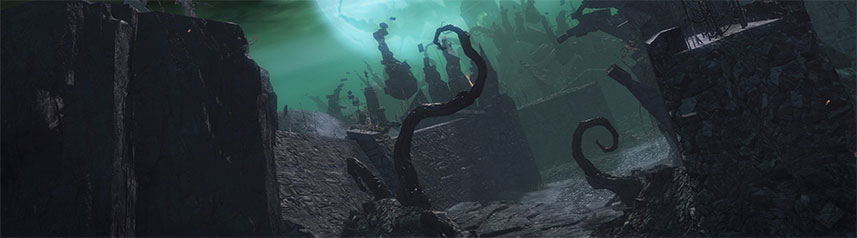
Magicka: Wizard Wars is a competitive, action-focused MMO spin-off built around Magicka’s signature spellcrafting, letting players stack elements on the fly to create attacks, defenses, and utility. Most matches revolve around 4v4 brawls, with a lighter MOBA-style mode and a dedicated duel arena, all wrapped in the series’ playful tone and over-the-top magical chaos.
 | Publisher: Paradox Interactive Playerbase: Medium Type: MMO PvP Release Date: May 27, 2014 Shut Down Date: July 21, 2016 Pros: +Spell-combo combat that feels genuinely different. +Short, easy-to-queue matches. +High-tempo fights with constant decision-making. Cons:-Connection and latency problems. -Missing player reporting tools. -No ranked matchmaking for competitive sorting. |
Magicka: Wizard Wars Overview
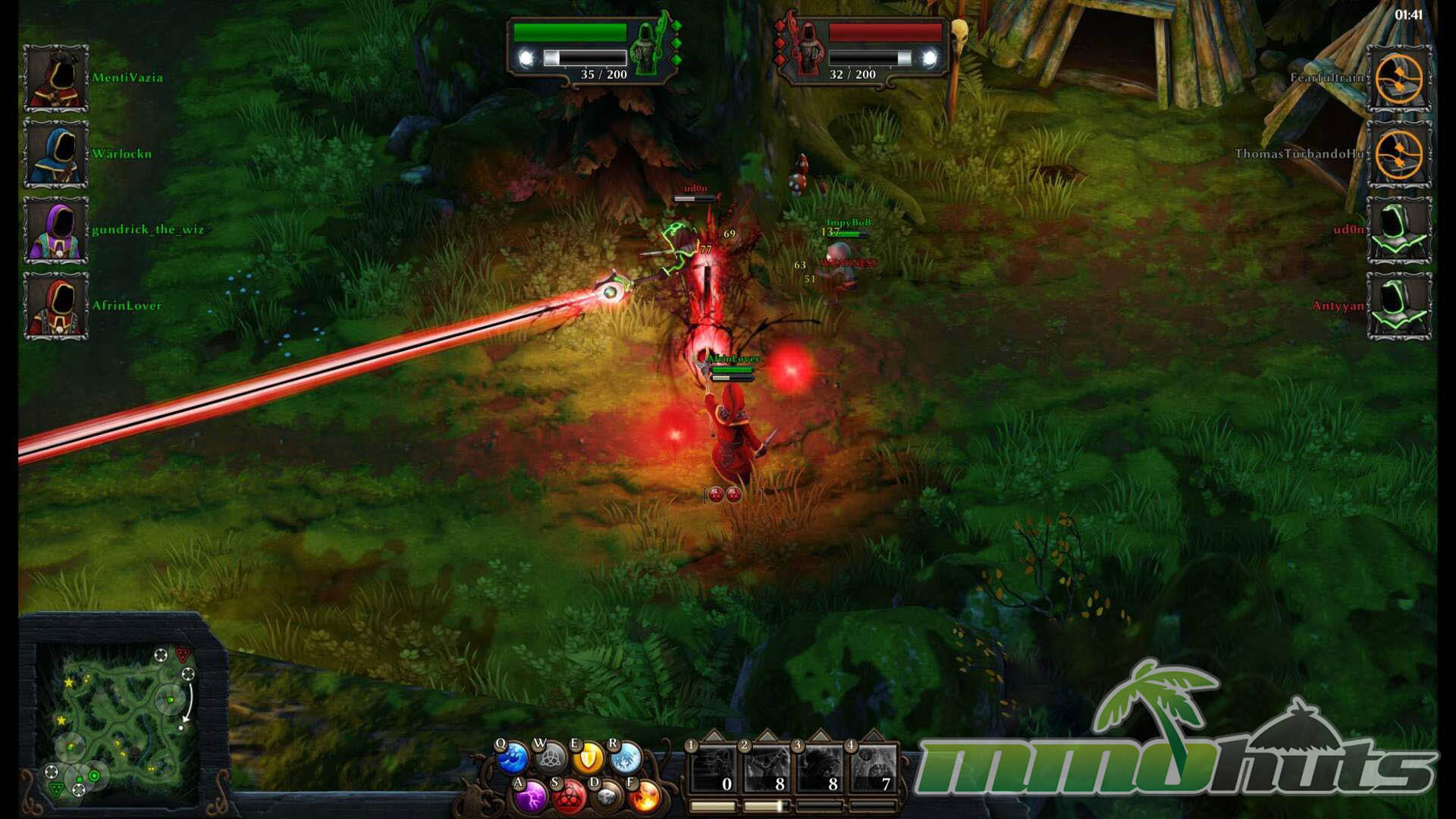
Magicka: Wizard Wars is a PvP spell-slinger that leans on humor and spectacle, but is ultimately driven by mechanical depth. Teams of four clash in two primary modes, Wizard Warfare and Soul Harvest, with duels available for players who prefer pure 1v1 skill tests. The core hook is its real-time spell construction, where elemental inputs can be mixed into a huge variety of offensive blasts, defensive tools, and situational tricks, with well over a hundred possible results.
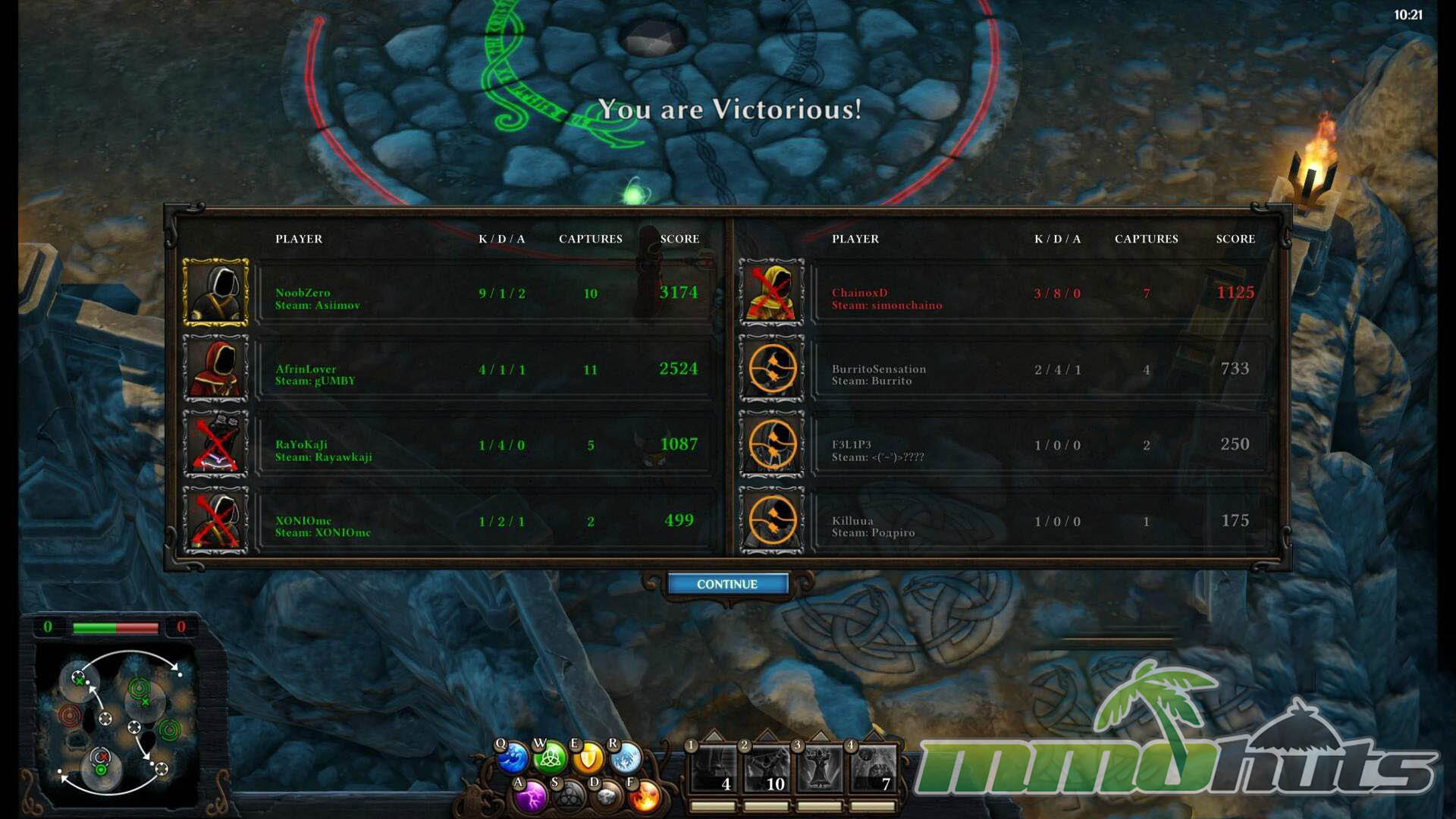
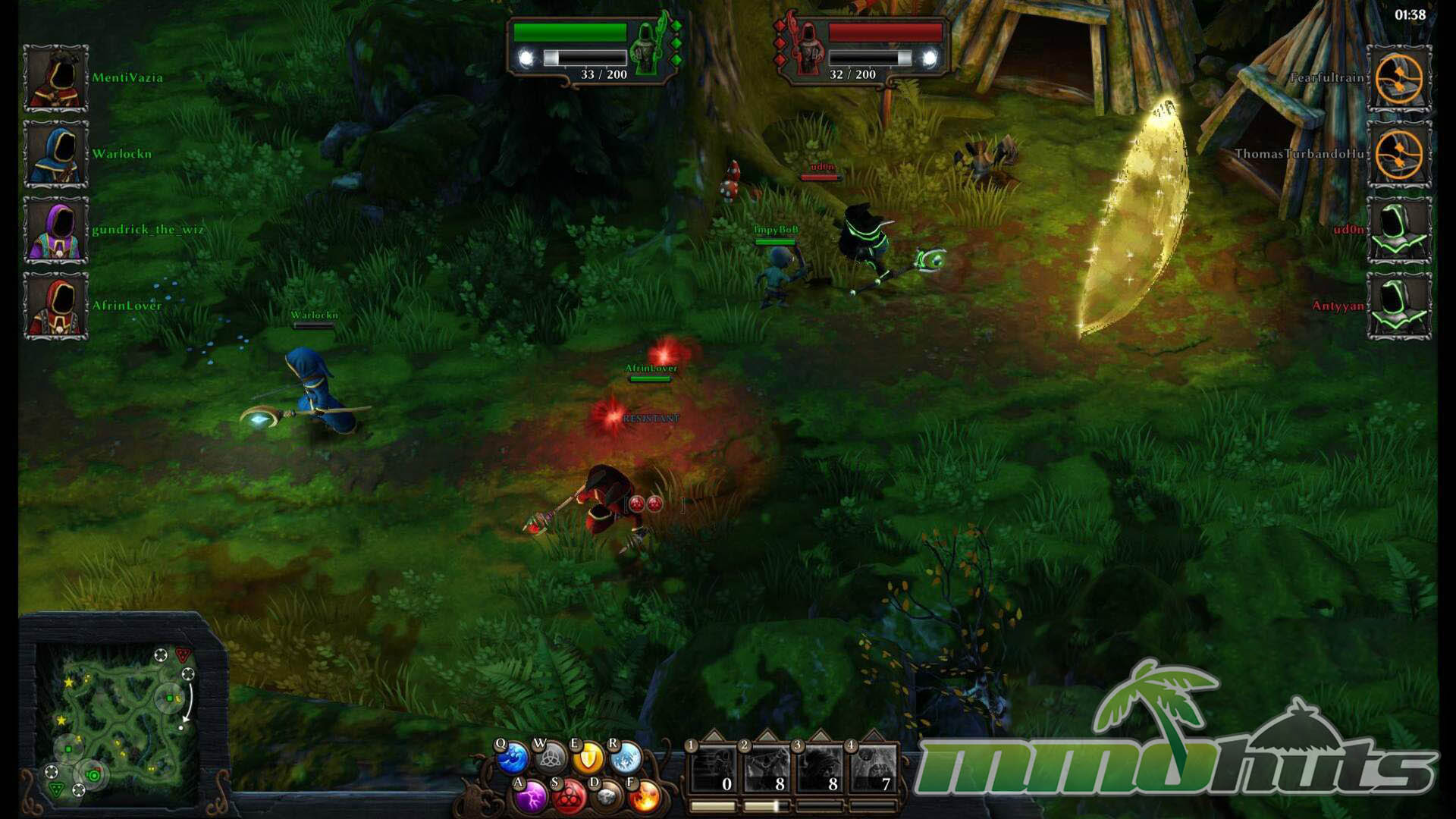
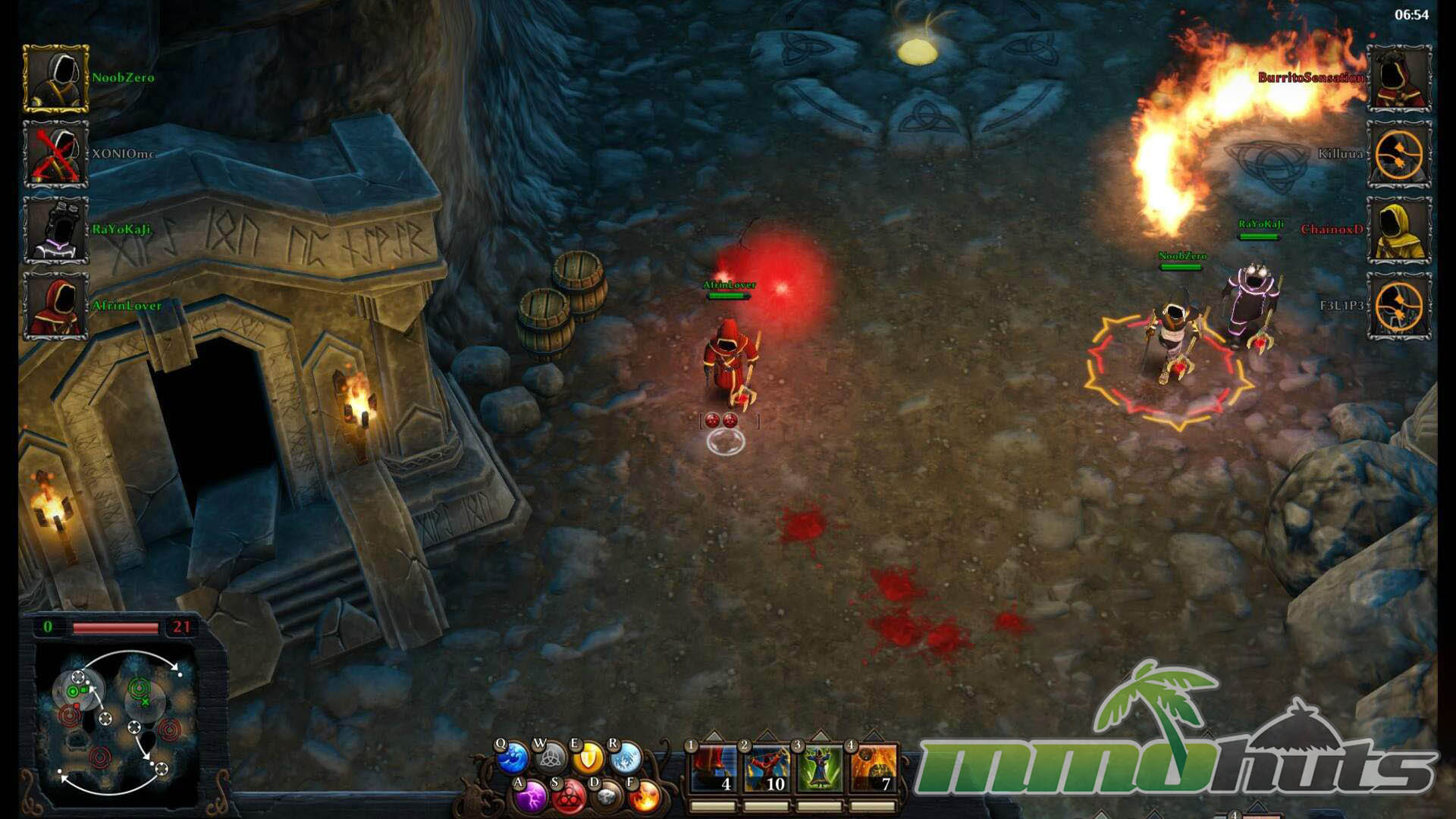
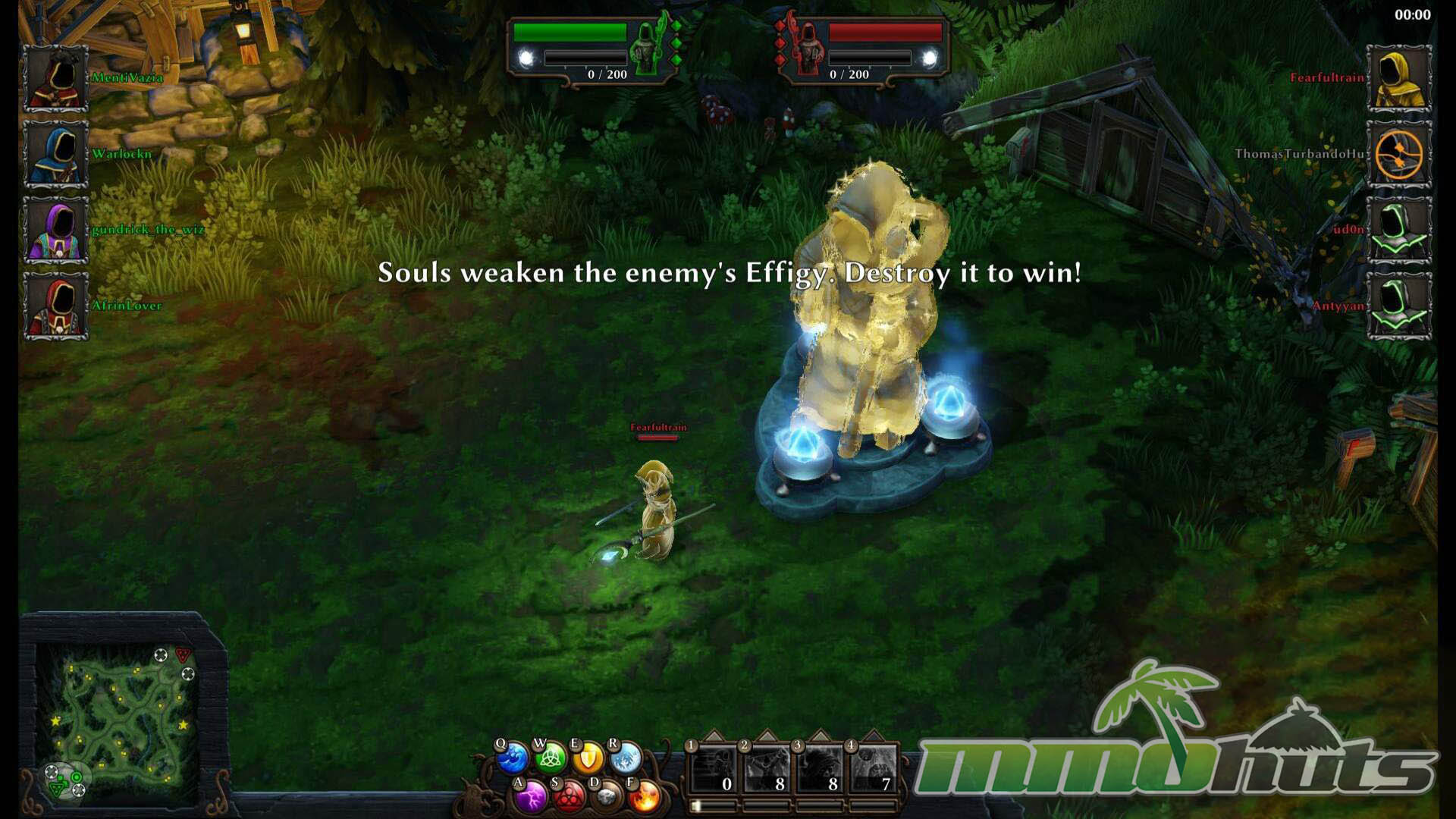
Wizard Warfare plays like a compact, objective-focused team brawl. Teams fight over spawn points on the map, and matches are decided by controlling those spawns and managing the opposing team’s limited lives. Soul Harvest, by contrast, borrows the familiar three-lane structure associated with MOBAs, asking teams to gather souls through map play and creep kills before pushing to destroy the enemy Effigy. Across all modes, positioning and timing matter, because the battlefield is often a storm of overlapping effects.
Progression and personalization come through gear and cosmetics. Players can pick up staves, robes, and other items that push elemental damage in a particular direction, which encourages building into a preferred role or play pattern. Alternatively, cosmetic options help your wizard stand out visually even when the screen is filled with spell effects. For players who want a controlled environment to practice combos and reactions, the duel arena offers direct one-on-one fights where execution and matchup knowledge are decisive. Magika Wizard Wars shut down on July 21, 2016.
Magicka: Wizard Wars Key Features:
- Unique Combat System – layer elemental magic together to produce 100+ offensive and defensive spell outcomes.
- Three Game Modes – Wizard Warfare, Soul Harvest, and Duels provide different match structures.
- Extensive Customization – equipment and cosmetics including robes, staves, and skins.
- Friendly Fire – careless casting can hit allies as well as opponents.
- Intense, Fast-Paced Combat – up to eight players exchanging spells in tight, hectic skirmishes.
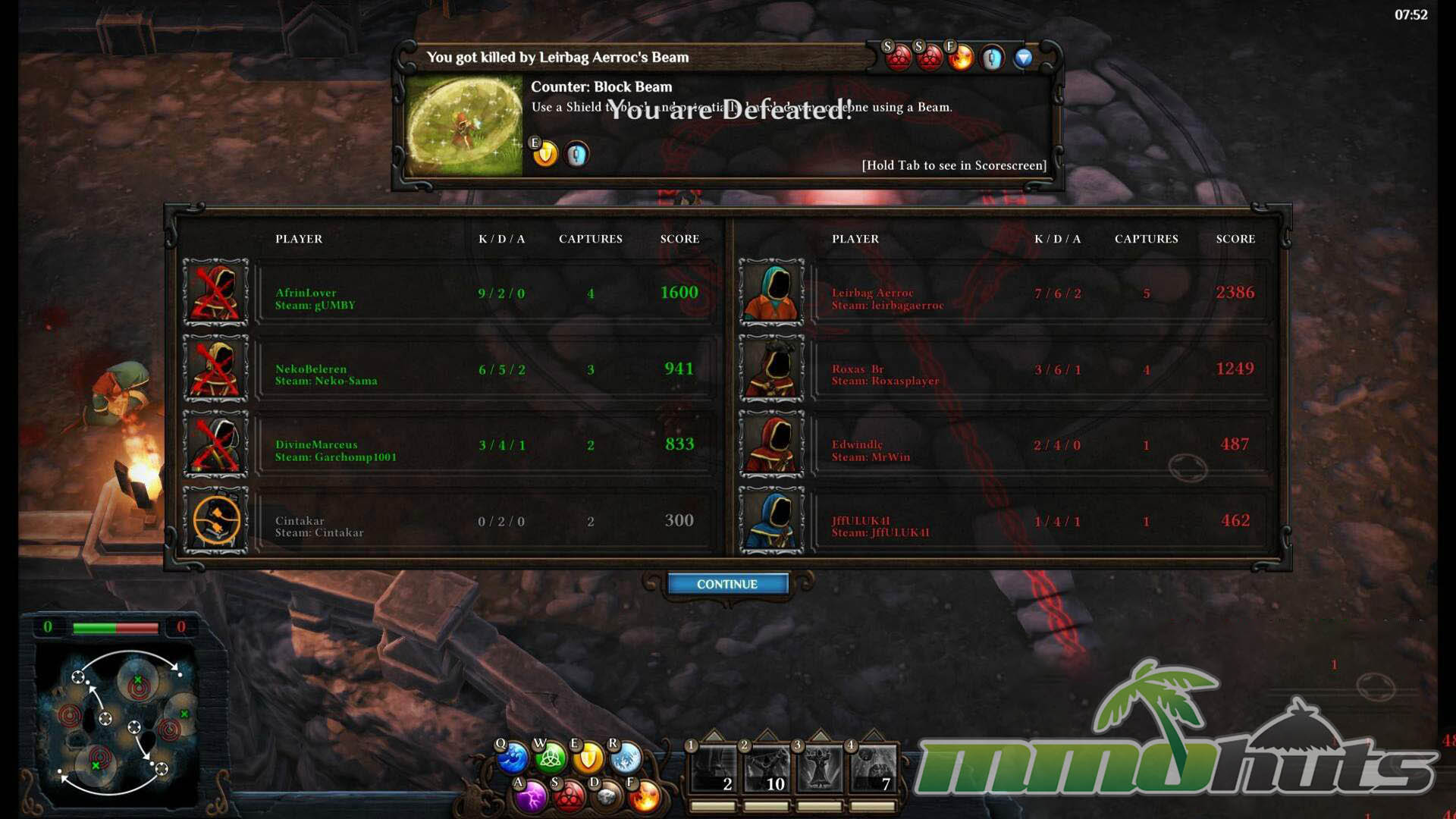
Magicka: Wizard Wars Screenshots

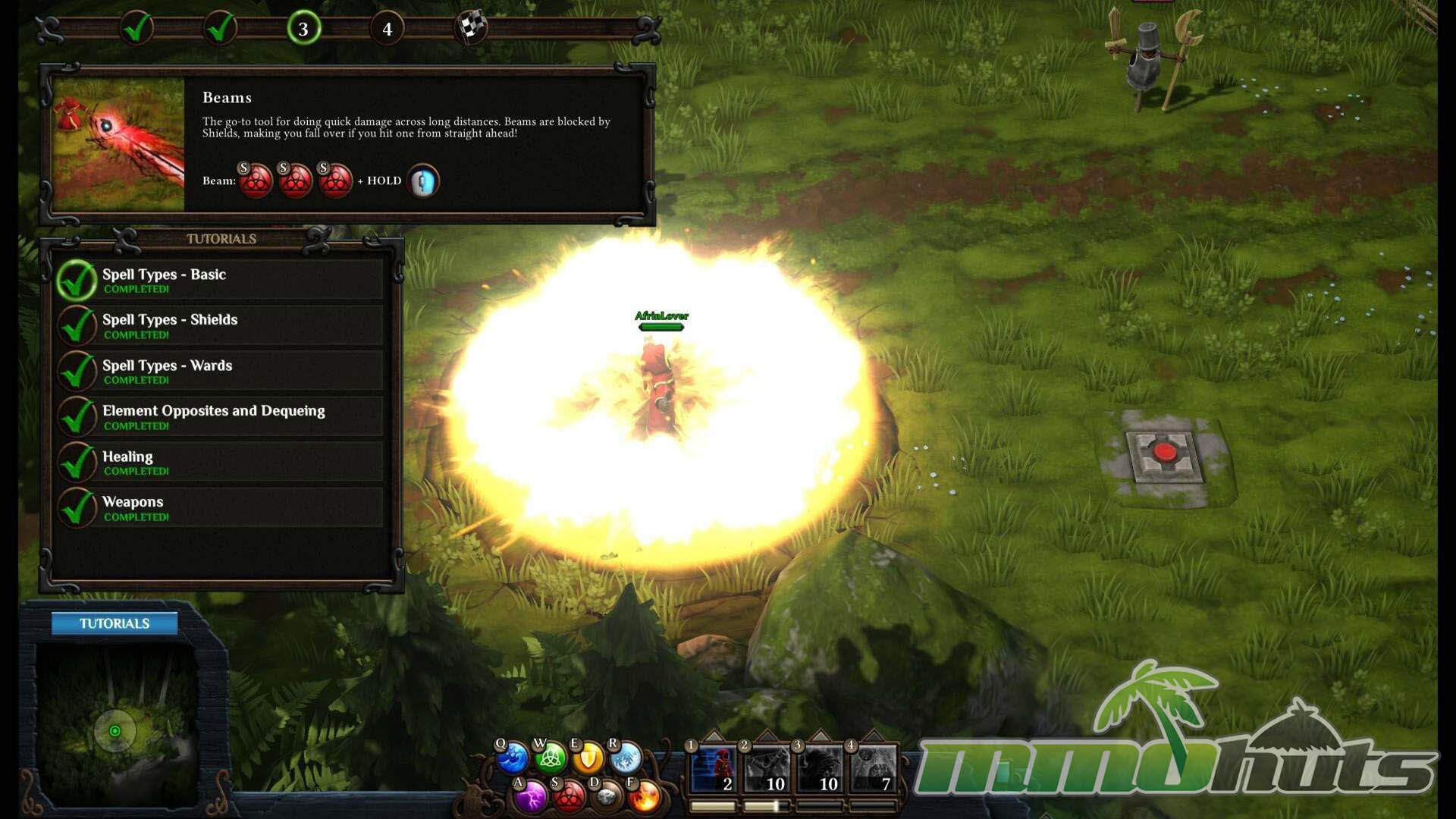
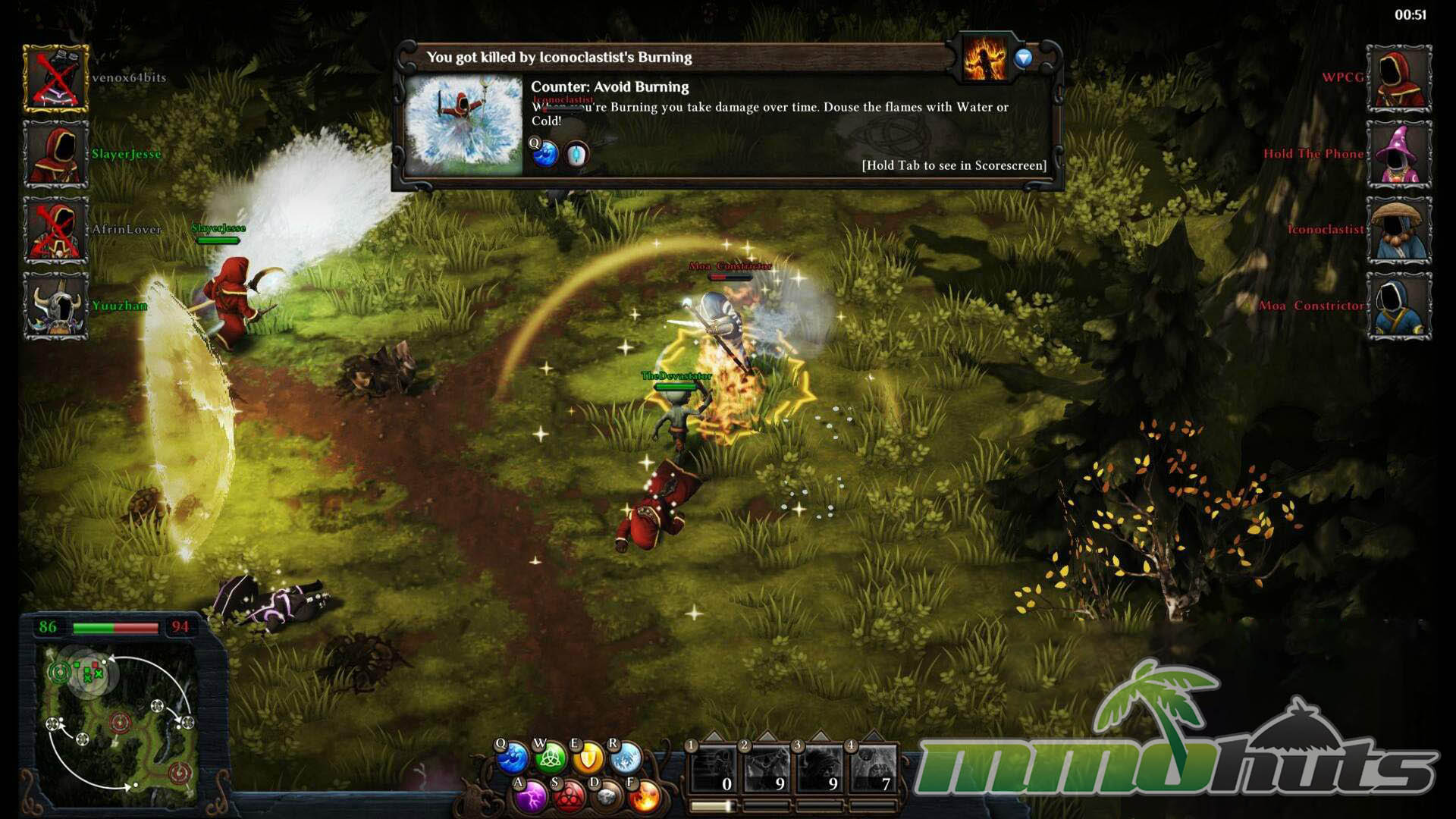
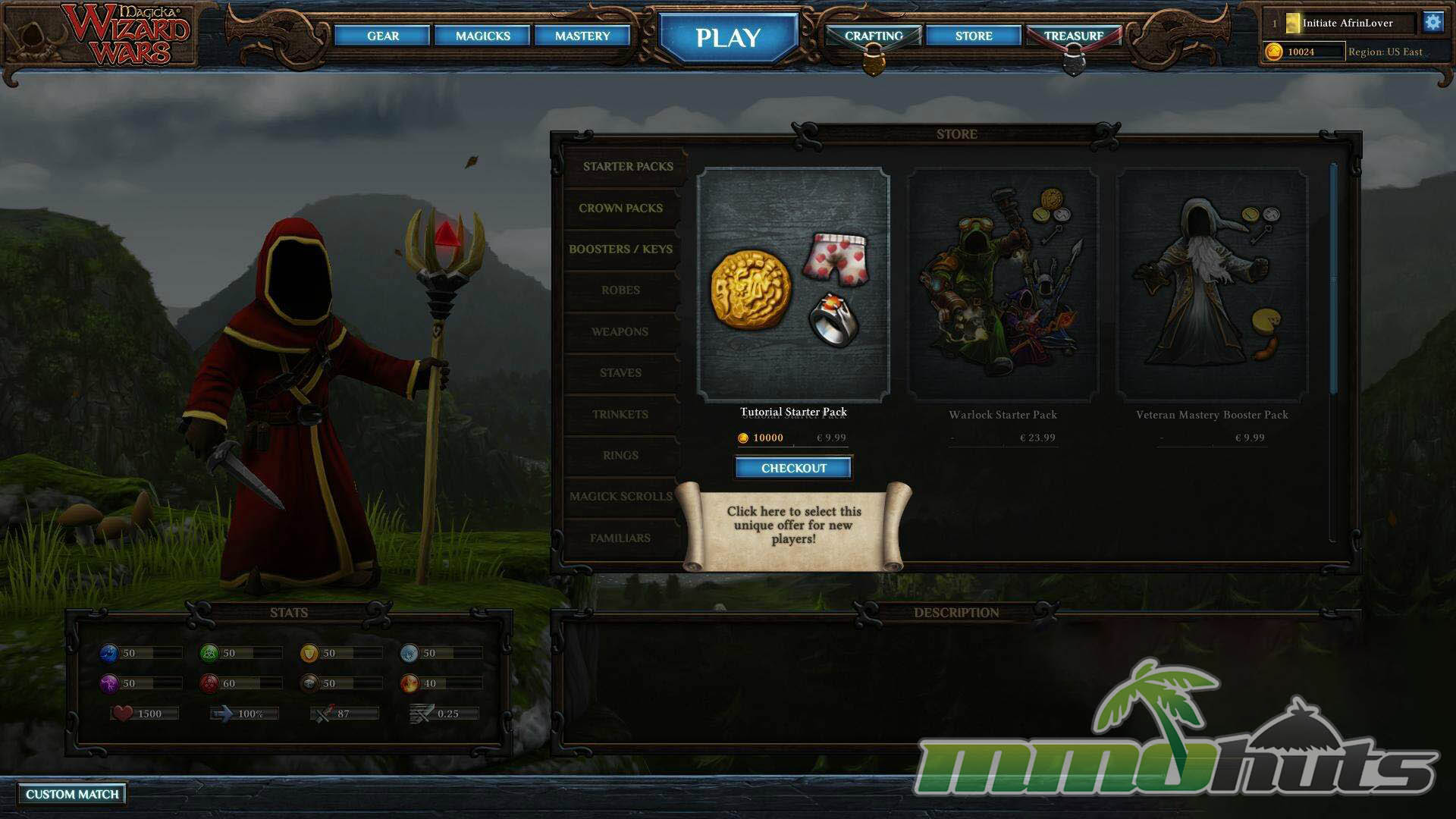


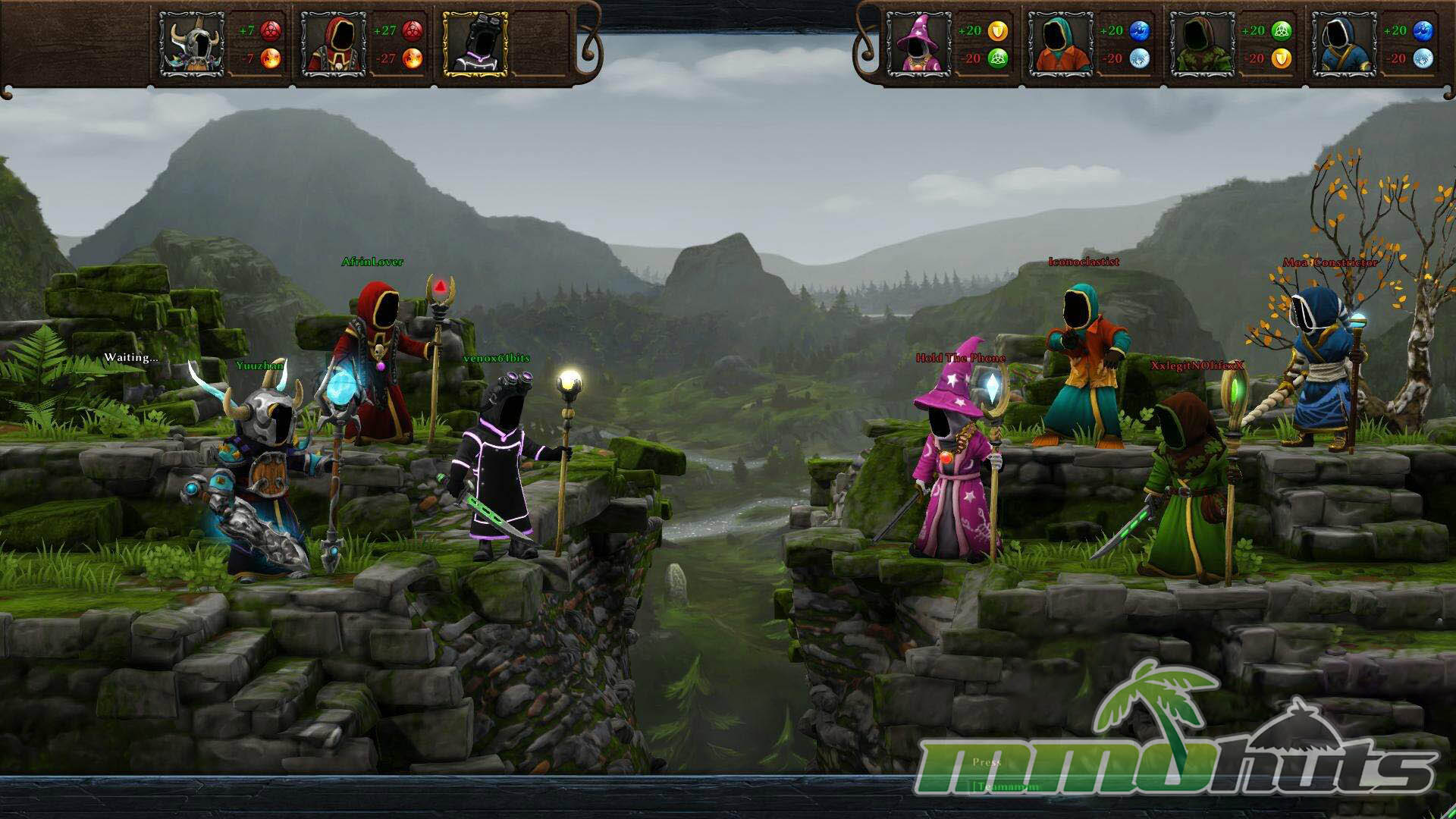


Magicka: Wizard Wars Featured Video

Magicka: Wizard Wars Review
Magicka: Wizard Wars arrived during an era when anything with lanes risked being dismissed as a trend-chaser, but the game’s identity comes from somewhere else. Even in its MOBA-flavored mode, the real focus is the moment-to-moment spellcrafting, the slapstick chaos of friendly fire, and the constant micro-decisions of building the right element chain under pressure. It is easy to start flinging magic, but consistently winning fights requires control, anticipation, and the ability to improvise when the battlefield stops being readable.
Elemental improvisation with a steep skill curve
Wizard Wars is a PvP game where mechanical execution matters, and it shows quickly. The spell system revolves around eight elements, water, lightning, life, arcane, shield, earth, cold, and fire, plus two sub-elements, steam and ice. These are combined in real time to generate a large catalog of effects, ranging from straightforward projectiles to area denial and hard counters. Early on, the sheer number of possible combinations can feel like learning a language mid-fight, but the input method is clean enough that experimentation becomes part of the fun.
Elements are bound to keys (Q, W, E, and onward), and casting is largely about sequencing. You can queue up to three elements to define an effect, or repeat an element to intensify it. Importantly, the system is not “anything goes”, there are interaction rules that dictate which elements work together, which conflict, and what kind of outcome you get. Some pairings negate each other, such as Arcane and Life, while other mixes create memorable utility, for example turning a defensive setup into a trap when combined with the right offensive component.
Defense is just as expressive as offense. Shield-based combinations can produce barriers and walls that change how a fight plays out, either by blocking lanes, stopping projectiles, or forcing opponents to reposition. Because combat is so lethal and friendly fire is always a threat, a well-timed defensive cast often matters more than squeezing out one extra damage spell. In practice, basic defensive casting becomes a survival habit, especially while you are still learning how quickly a duel can swing.
Beyond the elemental kit, each wizard brings four Magicks, which function like limited-use power plays. You choose your loadout before the match, and these abilities reward planning, because they are not available on demand. Dropping a large area effect at the right moment can decide a team fight, but wasting one into a shield wall or an empty lane can be the difference between controlling a spawn and losing the match. The best use cases tend to be coordinated pushes, last-second defenses, or the kind of chaotic skirmishes where everyone is stacked on a point.
Compact team battles that fit the game best
Of the three modes, Wizard Warfare is where Wizard Wars feels most at home. It is a brisk, brawl-heavy format that constantly pushes teams into contact, then forces them to make meaningful map decisions about spawn control. Capturing spawn points by holding them creates a simple objective layer, but it has real tactical weight, because a team without spawns is punished hard when players go down. The result is a mode that supports both aggressive wipes and clever retreats, depending on how well your team manages the map.
The friendly fire rule is also more than a gimmick here, it changes how you approach “safe” spells. Chain effects, wide cones, and persistent zones can be liabilities if your team collapses onto the same target. It encourages cleaner lines of fire and better spacing, and it also adds a layer of comedy when a fight ends because someone got too enthusiastic with an area spell. Finding an element focus that fits your comfort level helps, especially at the start, when managing multiple interactions can be overwhelming.
What makes Wizard Warfare particularly easy to recommend is its pacing. Matches tend to resolve quickly, and the mode rarely overstays its welcome. Even when games become scrappy stalemates, the limited lives and spawn pressure keep the action moving. It is the kind of format you can queue for casually, but it still rewards teams that communicate and adapt.
A lane-based detour that loses some momentum
Soul Harvest is the most conventional mode, and it also feels the least essential. Structurally, it resembles a classic three-lane setup with creeps and a base objective, ending with a push to destroy the enemy Effigy once conditions are met. The mode asks teams to collect souls (with a threshold of 300) through creep kills and map control, and then convert that advantage into a decisive assault when defenses drop.
The issue is not that Soul Harvest is incomprehensible, it is that it can become repetitive compared to the more explosive rhythm of Wizard Warfare. Without the same sense of escalating pressure through lives and spawns, the mode can drift into long stretches of farming creeps and avoiding unnecessary fights. Enemy players are dangerous, but the incentives often pull you toward efficiency rather than direct confrontation, which can make the mode feel like it is fighting against Wizard Wars’ best qualities.
There are still flashpoints. Boss creeps, like the troll, can force both teams into the same space by offering a major soul payout, and those moments create the kind of chaotic team fights the game is built for. However, the overall loop can wear thin, and it does not help that disconnects were not uncommon in matches, whether due to instability, frustration, or simply the lack of meaningful penalties for leaving. With no report tools and no strong matchmaking structure, Soul Harvest can be a rougher experience than it needs to be.
Duels as a pure skill check
The duel mode is straightforward in the best way, it is a one-on-one arena where spell selection, execution, and reads decide everything. It is also a practical place to learn how specific combinations behave under pressure, because you are not juggling spawn objectives or getting blindsided by a second opponent. When the system clicks, duels can feel like a fast tactical puzzle where every cast has a counter.
The downside is balance consistency. With no matchmaking, you can run into players with far more experience and combo knowledge, and the gap is obvious. Against a veteran who understands spacing, shields, and punishes, a newer player may struggle to land meaningful damage at all. As a result, duels are excellent for practice and for confident players, but can be discouraging if you are still building fundamentals.
Progression, purchases, and what “power” really means here
Matches reward Mastery Tokens that can be spent on unlocking new items and options, letting you lean into a particular elemental style. Building around a damage type is an easy way to create a coherent loadout, and it gives the progression system a sense of direction rather than pure randomness. The game also includes an in-game shop offering XP boosters and a range of equipment and cosmetics. You earn Crowns from play, but Crowns can also be bought, including 100,000 Crowns for approximately 10 dollars, which is enough to pick up most gear pieces you would want.
Does that translate into pay-to-win? It can tilt things slightly, because elemental bonuses matter, but Wizard Wars remains heavily skill-driven. Gear does not aim spells, choose the right element chain, or save you from friendly fire. The most dominant players are typically the ones who understand timing, counters, and positioning, and who can maintain composure when the screen becomes a storm of effects.
Treasure chests add another layer of rewards, granting randomized loot such as Crowns, Magick crystals, or rare skins, but they require magic keys to open. Players receive three keys for simply playing, and additional keys are sold through the store. A daily rarity multiplier tied to win streaks encourages playing in bursts, since it increases after ten wins but resets each day, limiting how much you can bank long-term.
Final Verdict – Great
Magicka: Wizard Wars succeeds most when it embraces what makes it unique, rapid spell construction, friendly-fire chaos, and small-team fights that demand quick thinking. Wizard Warfare is a strong, replayable mode that highlights the game’s strengths, and duels provide a sharp way to test mastery. Soul Harvest is serviceable but comparatively dull, and the lack of ranked matchmaking plus quality-of-life features (like reporting) holds the competitive side back. For players who enjoy high-skill PvP and the idea of “building” spells in real time, it remains a memorable take on the genre.
Magicka: Wizard Wars Screenshots
Magicka: Wizard Wars Links
Magicka: Wizard Wars Official Site
Magicka: Wizard Wars Steam Store
Magicka: Wizard Wars Magickapedia [Database/Guides]
Magicka: Wizard Wars Requirements
Minimum Requirements:
Operating System: Windows Vista SP2 or later
CPU: 2.4 GHz Dual Core CPU
RAM: 2 GB RAM
Video Card: 512MB NVIDIA GeForce 9800 / ATI
Hard Disk Space: 2 GB available space
Recommended Requirements:
Operating System: Windows Vista SP2 or later
CPU: 2.4 GHz Dual Core CPU
RAM: 4 GB RAM
Video Card: 512Mb Nvidia GeForce 440 / AMD Radeon 5670 or greater
Hard Disk Space: 2 GB available space
Magicka: Wizard Wars Music
Coming Soon!
Magicka: Wizard Wars Additional Information
Developer(s): Paradox Earth
Publisher(s): Paradox Interactive
Announcement Date: March 25, 2013
Steam Early Access (Alpha): October 15, 2013
Open Beta: May 27, 2014
Release Date: May 27, 2014
Shutdown Date: July 21, 2016
Development History / Background:
Magicka: Wizard Wars is published by Swedish video game publisher Paradox Interactive. Wizard Wars adapts the dynamic spellcasting system introduced in Arrowhead Game Studios’ Magicka and refocuses it for competitive PvP matches. It also marked the first title developed by Paradox North, an internal studio formed under Paradox Interactive. Backers gained access to an early alpha version through Steam Early Access on October 15, 2013. A tie-in novel, Magicka: The Ninth Element, released on November 14, 2013, and was written by Dan McGirt. The game launched as a free-to-play release on Steam on May 27, 2014, and Paradox Interactive later confirmed that Magicka: Wizard Wars would shut down on July 21, 2016.