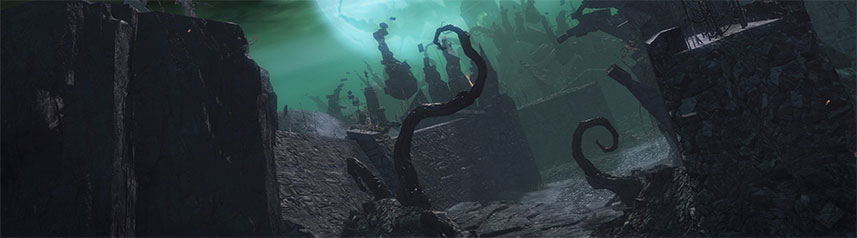
Maestia is a 3D fantasy MMORPG built around a conflict between two rival factions, the Superion Guardians and the Templar Knights. Its standout idea is a gem-based ability setup where powers are tied to special stones called Maestones, letting players customize their toolkit beyond the usual class skills.
 | Publisher: Aeria Games Playerbase: Low Type: MMORPG PvP: Duels / Faction Wars / Guild vs Guild Release Date: July 19, 2012 (NA/EU) Shut Down Date: March 31, 2016 Pros: +Maestone gem system adds real build freedom. +Large pool of skills to experiment with. +Divinity progression is a smart secondary grind. +Itemization feels rewarding. Cons: -Limited class roster. -Core loop can feel repetitive over time. |
Maestia Overview
Maestia: Rise of Keledus is a semi-realistic fantasy MMORPG set in a world pushed to the brink by a looming threat known as “The Dark Lord.” Early on, players commit to one of two sides: the Goddess-aligned Temple Knights or the Superion Guardians. While the moment-to-moment structure is familiar for the genre (questing, instanced content, character growth), Maestia tries to separate itself with a dual progression track, standard experience for levels plus Divinity Points earned through multiple activities.
The most distinctive layer is the Maestone system, where you socket gems that grant extra active and passive effects, effectively widening your build options beyond your class skill tree. Combined with branching skills, it gives the game a “tinker with your setup” vibe that can be appealing if you like experimenting. Maestia offers only four playable classes, and the service ultimately ended on March 31, 2016.
Maestia Key Features:
- 4 Classes – choose from the unique classes of Clerics, Mages, Rangers, or Warriors.
- Conquer Dungeons – play through dungeons in either Normal, Expert, or Time Attack modes.
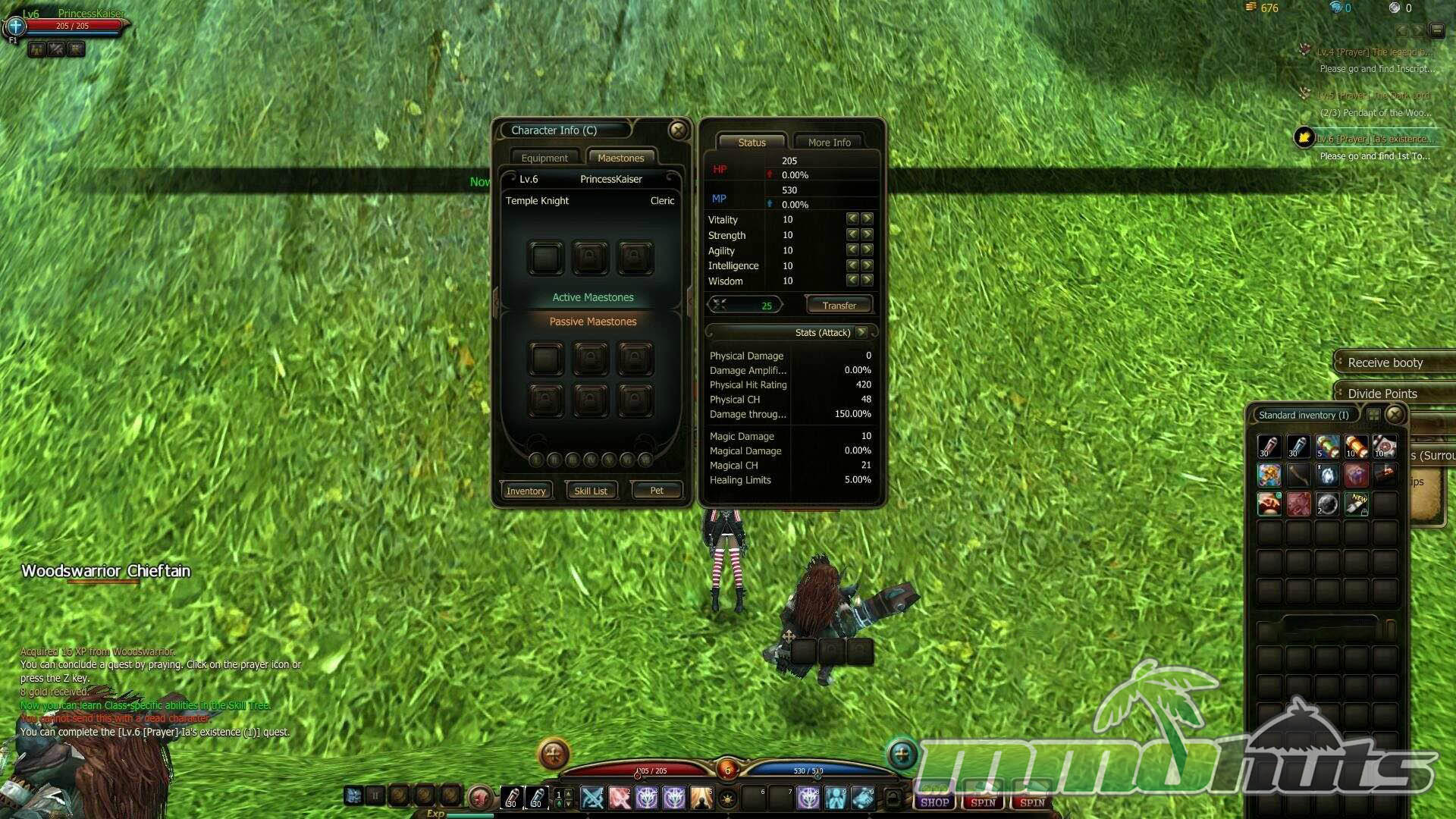
- Divinity/Maestone System – earn Divinity Points (DPs) by praying, killing enemies, and participating in PvP. Use DPs to buy Maestones to enhance your character.
- Hire Mercenaries – no need to adventure alone. Hire NPC mercenaries to fight alongside your character or hire actual players to act as your mercenaries (when they’re offline!).
Maestia Screenshots
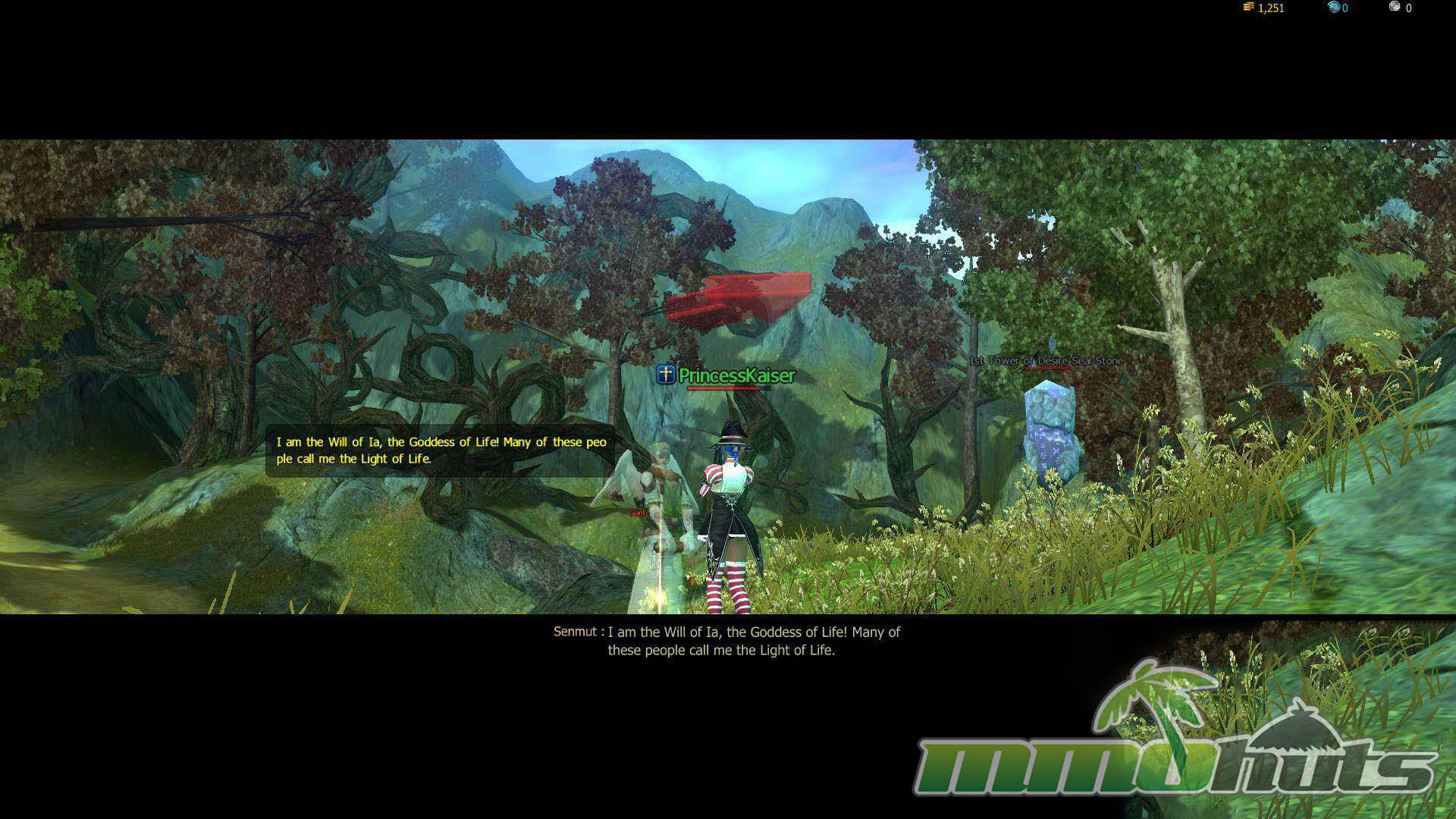
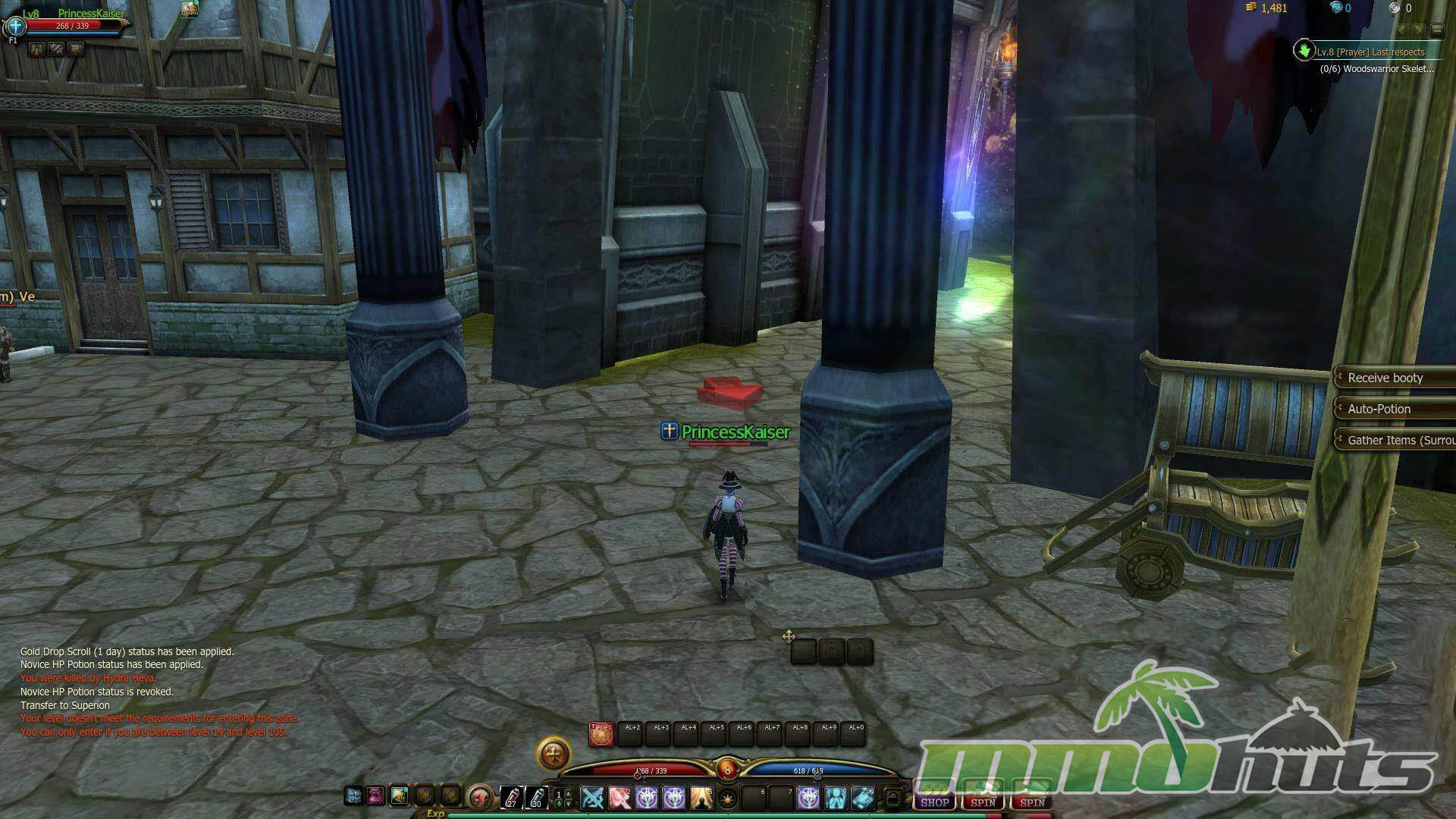
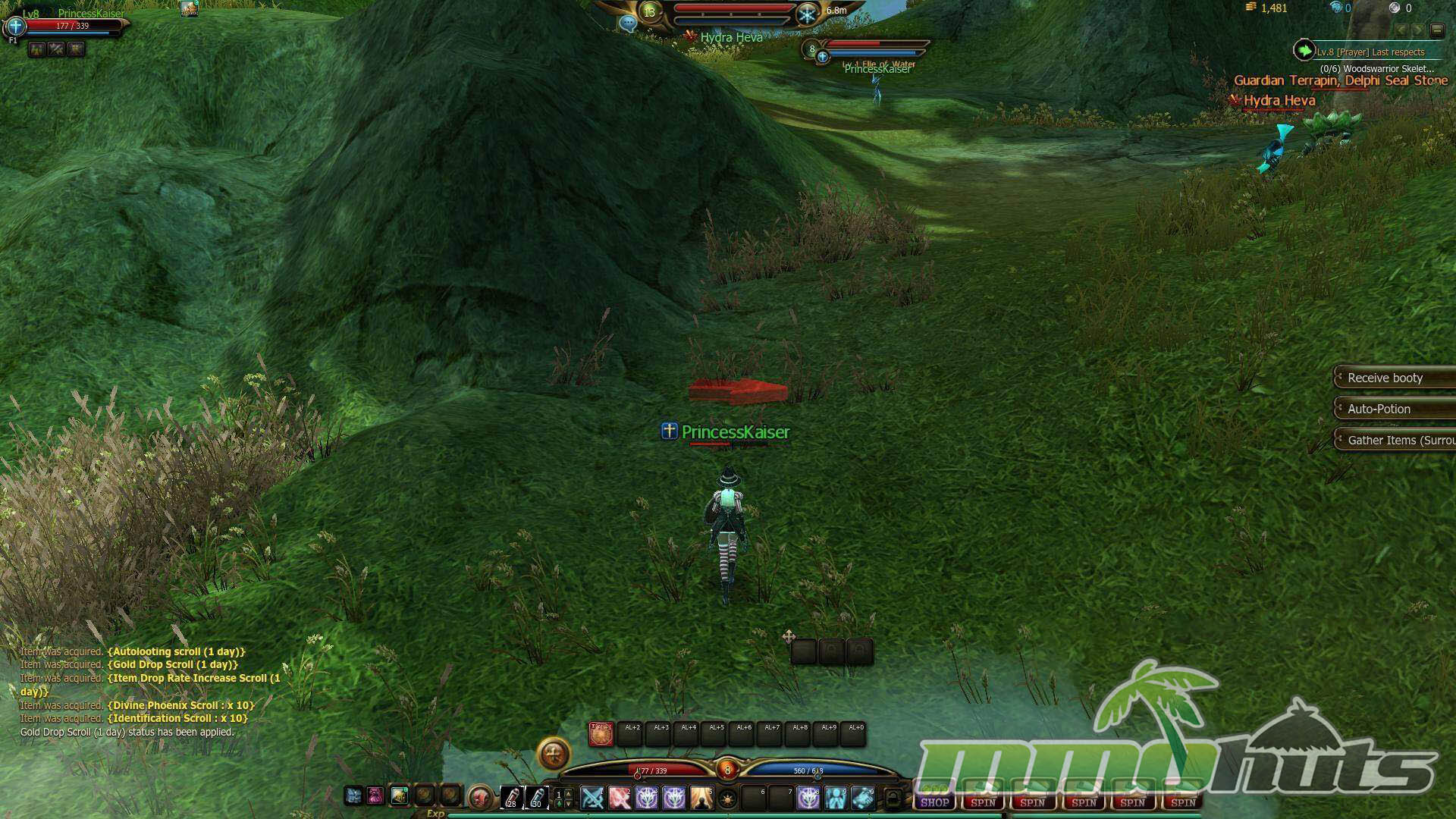


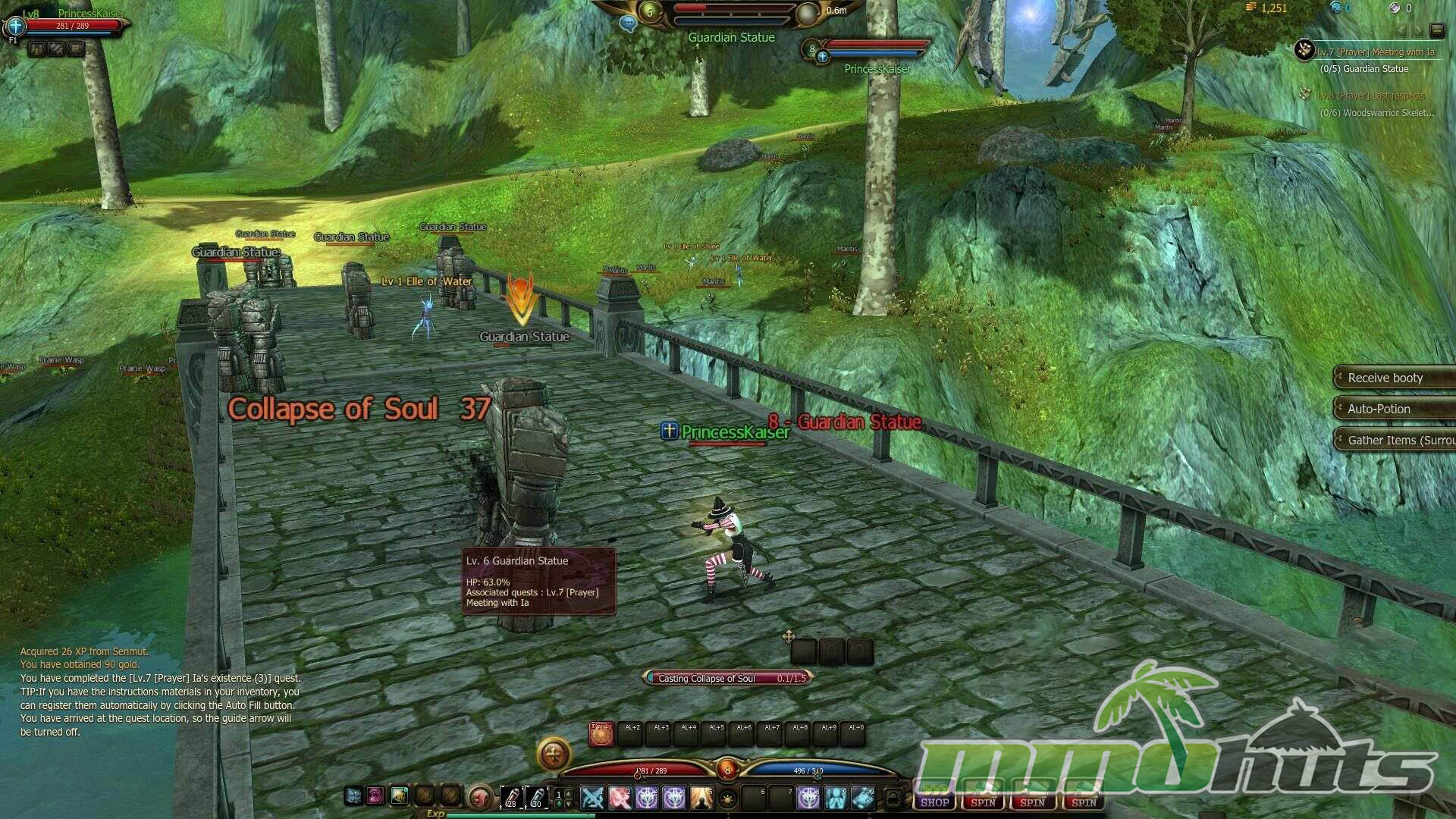

Maestia Featured Video

Maestia Classes
Warrior – Maestia’s front-line fighter, built around durability and straightforward melee pressure. Warriors lean on strength and defense, and their heavy armor options make them the natural choice for players who like to stay in the thick of combat.
Ranger – Fast, mobile, and flexible, Rangers rely on agility and quick attacks. They can fight at range with bows or stay closer with short swords and daggers, making them a good fit for players who prefer skirmishing and repositioning.
Cleric – The support-focused class, Clerics bring healing and sustain for themselves and allies. They are not the toughest on paper, but their ability to keep a party standing gives them clear value in longer fights.
Mage – A long-range damage dealer with a spell-focused toolkit. Mages excel at delivering heavy hits from a distance, and their selection of magical attacks makes them a strong pick for players who like controlling fights through ranged pressure.
Maestia Review
Maestia: Rise of Keledus is a 3D fantasy MMORPG developed by Rocks Network in South Korea. It was published in the United States by Gravity Interactive on November 30, 2011, and was then later acquired by Aeria Games. From the start, the game aims for a more grounded fantasy look than many of its peers, pairing large outdoor zones with a soundtrack that does a lot of heavy lifting for atmosphere.
First Steps and Early Progression
Character creation keeps to the basics: a modest set of faces, hair options, and body adjustments, without the deep sliders you see in newer MMOs. Where it does feel surprisingly open is color selection, you can push hair and skin into almost any shade. It is a small detail, but it adds personality quickly, especially in a game where gear silhouettes can look similar across players.
After your character is made, the opening tutorial begins in Superion and functions like a standard onboarding sequence: simple tasks, basic combat, and a gentle introduction to interface elements. It is useful for brand-new MMO players, but anyone familiar with hotbars and quest markers will move through it quickly.
Narratively, Maestia has ambition, but the presentation does not always keep up. The overall premise is clear enough, yet the writing can feel dense and, at times, awkwardly translated. Fortunately, most of the game’s appeal comes from systems and progression, so uneven dialogue rarely blocks enjoyment.
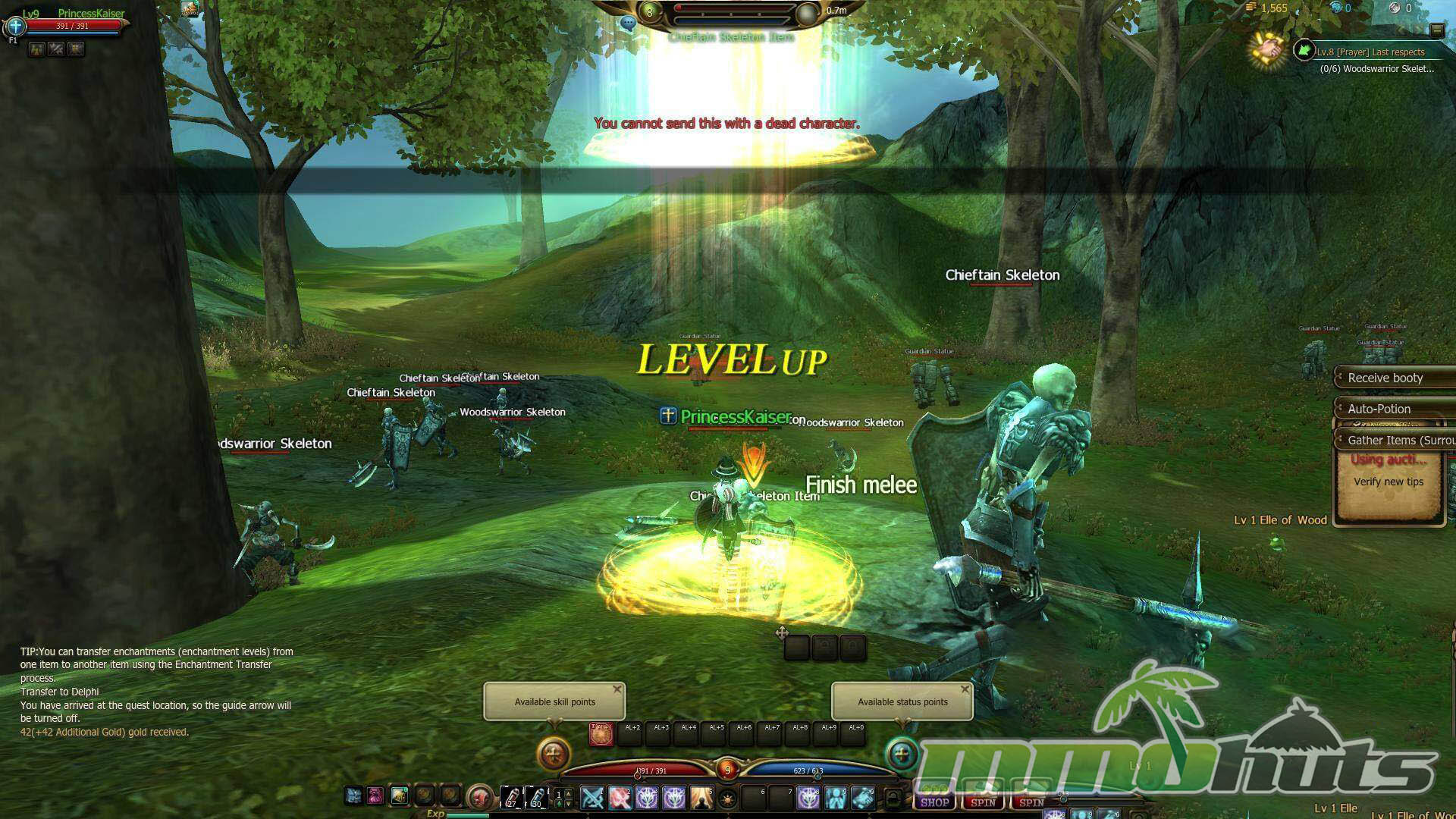
In terms of leveling, the early pace is comfortable, then it noticeably slows around the mid-teens. Past that point, the game often rewards persistence more than clever routing, and grinding can feel competitive with questing for efficient experience. Hitting the level cap of 100 is possible, but it is very much a long-haul goal.
Exploration, Interface, and Day-to-Day Play
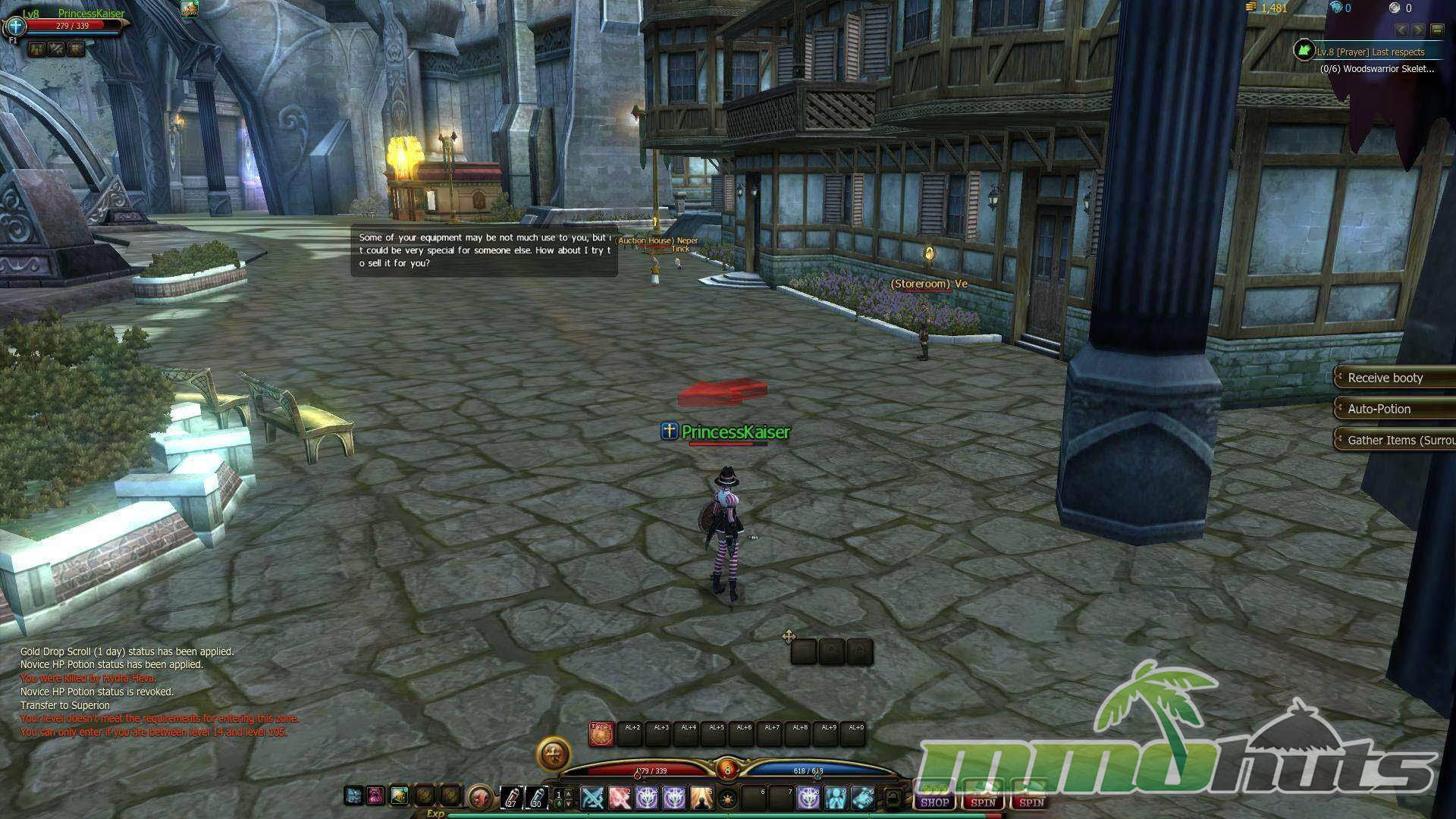
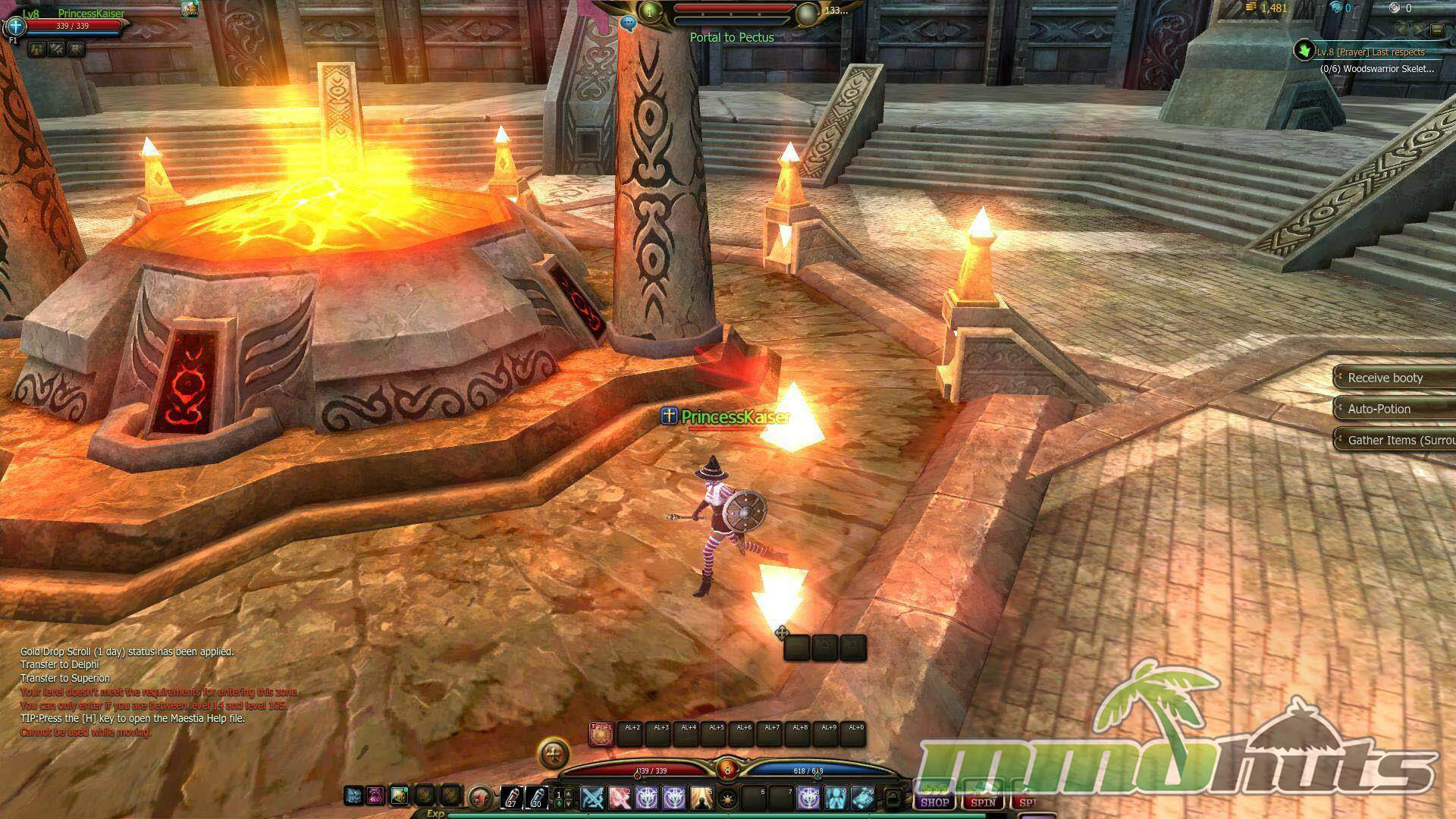
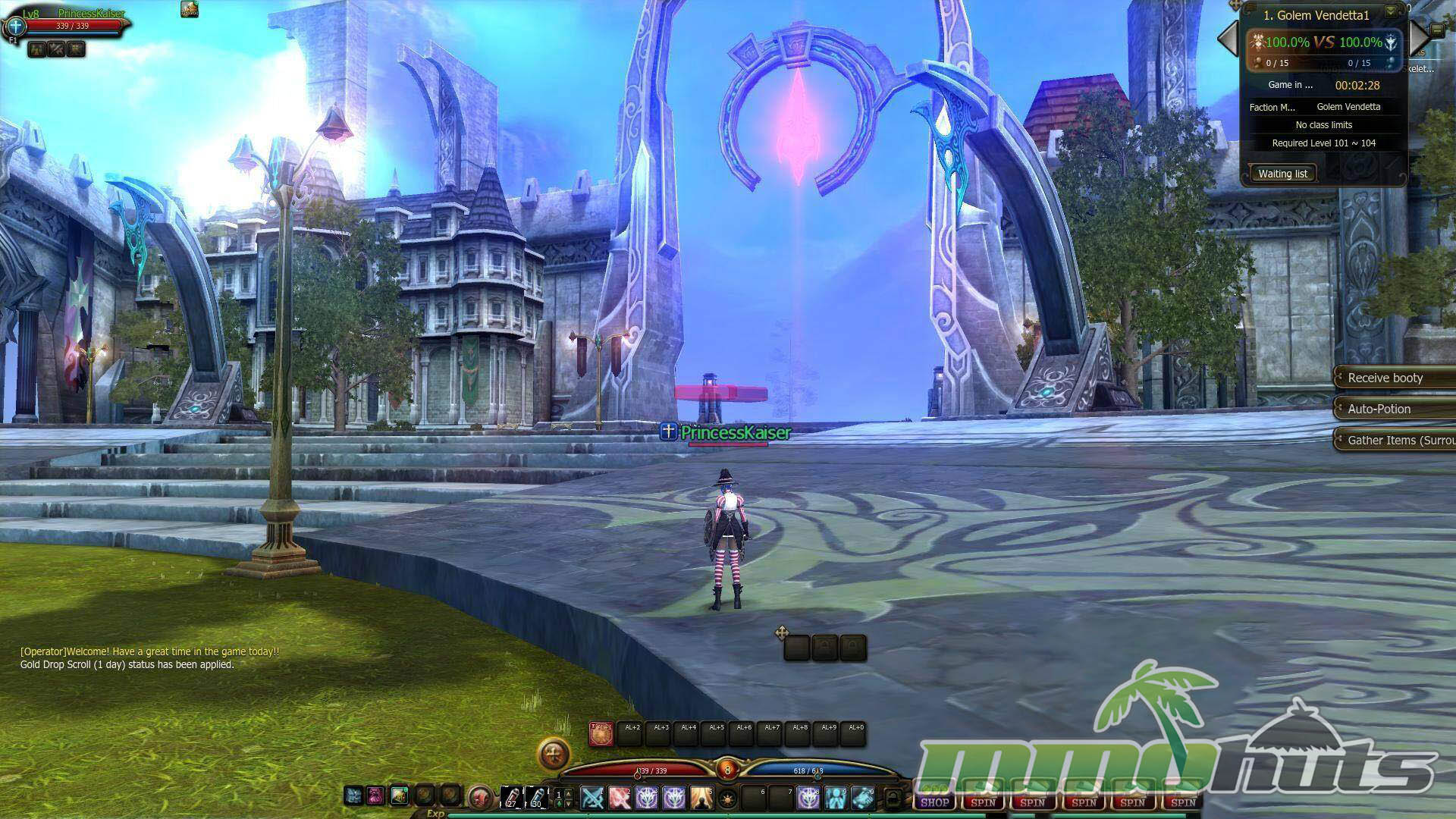
The world design is one of Maestia’s stronger impressions. Zones are spacious, and the environments feature enough foliage and structural detail to avoid feeling empty. While the overall fantasy direction is familiar, the game’s textures and scale give towns and landscapes a sense of place that holds up better than you might expect from its era. The music is consistently effective, it shifts cleanly between calm exploration and more dramatic moments, and it is arguably the game’s most memorable asset.
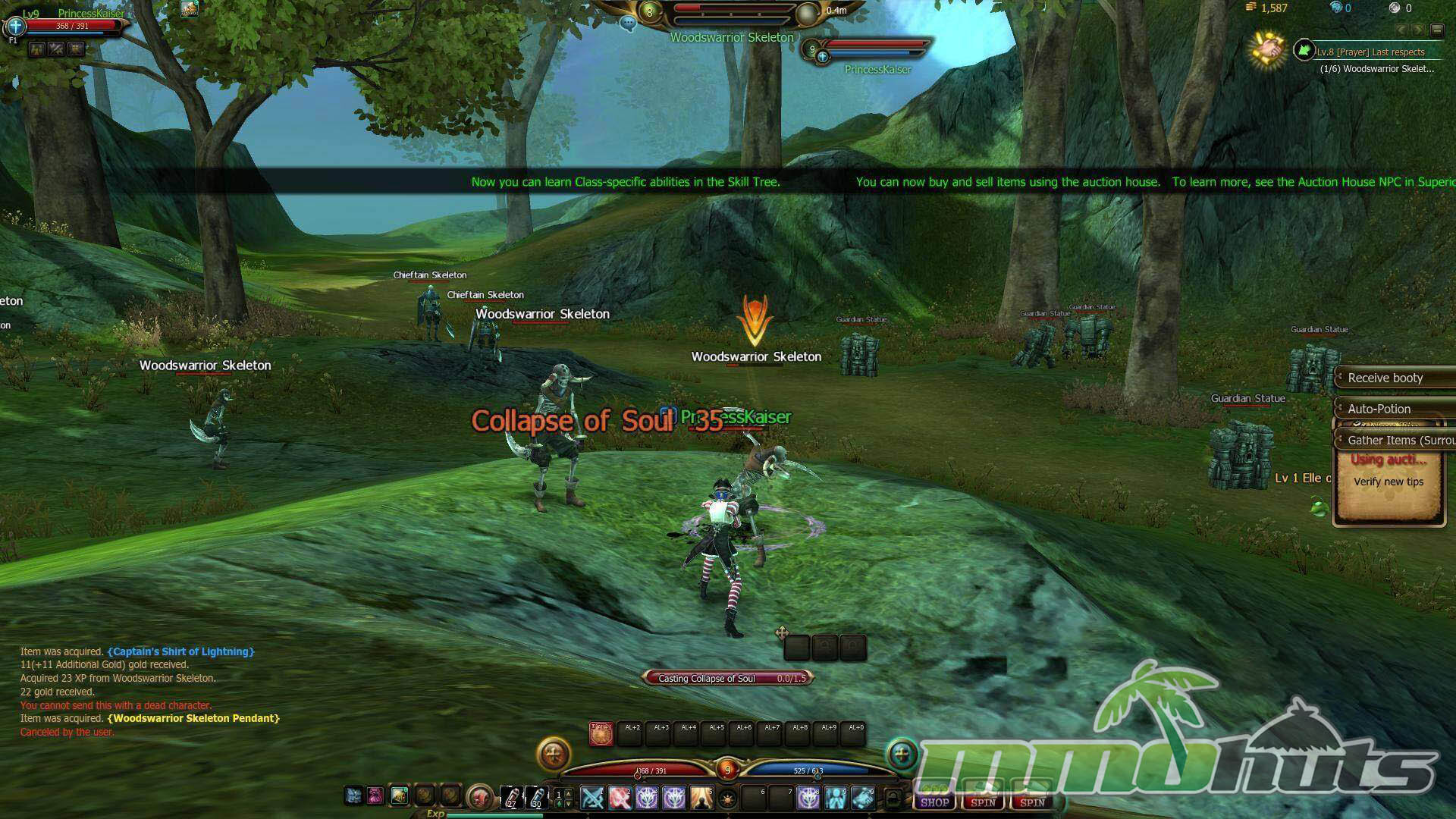
Movement supports both keyboard control and point-and-click navigation, so players can lean into whichever style feels more natural. The UI, however, can feel dated and occasionally cluttered. Convenience tools are plentiful: quick navigation to quest targets, and even automation options like setting potions to trigger below a certain health threshold. These features reduce friction, but they also make the experience feel more “guided” than some players prefer.
Combat and character growth are primarily driven by class skill trees. Each level grants a skill point to spend on learning new abilities or improving existing ones, and additional skills can be picked up via skillbooks purchased from merchants. It is a conventional structure, but it sets the foundation for Maestia’s more interesting customization layer later.
Outside of combat, the game includes lighter activities such as fishing, along with gathering and crafting-style systems. Fishing is straightforward, bring a rod and you can pull up restorative fish and occasional items. These features are not revolutionary, but they help the world feel more like a place you inhabit rather than a series of combat arenas.
Faction Conflict and Mass PvP
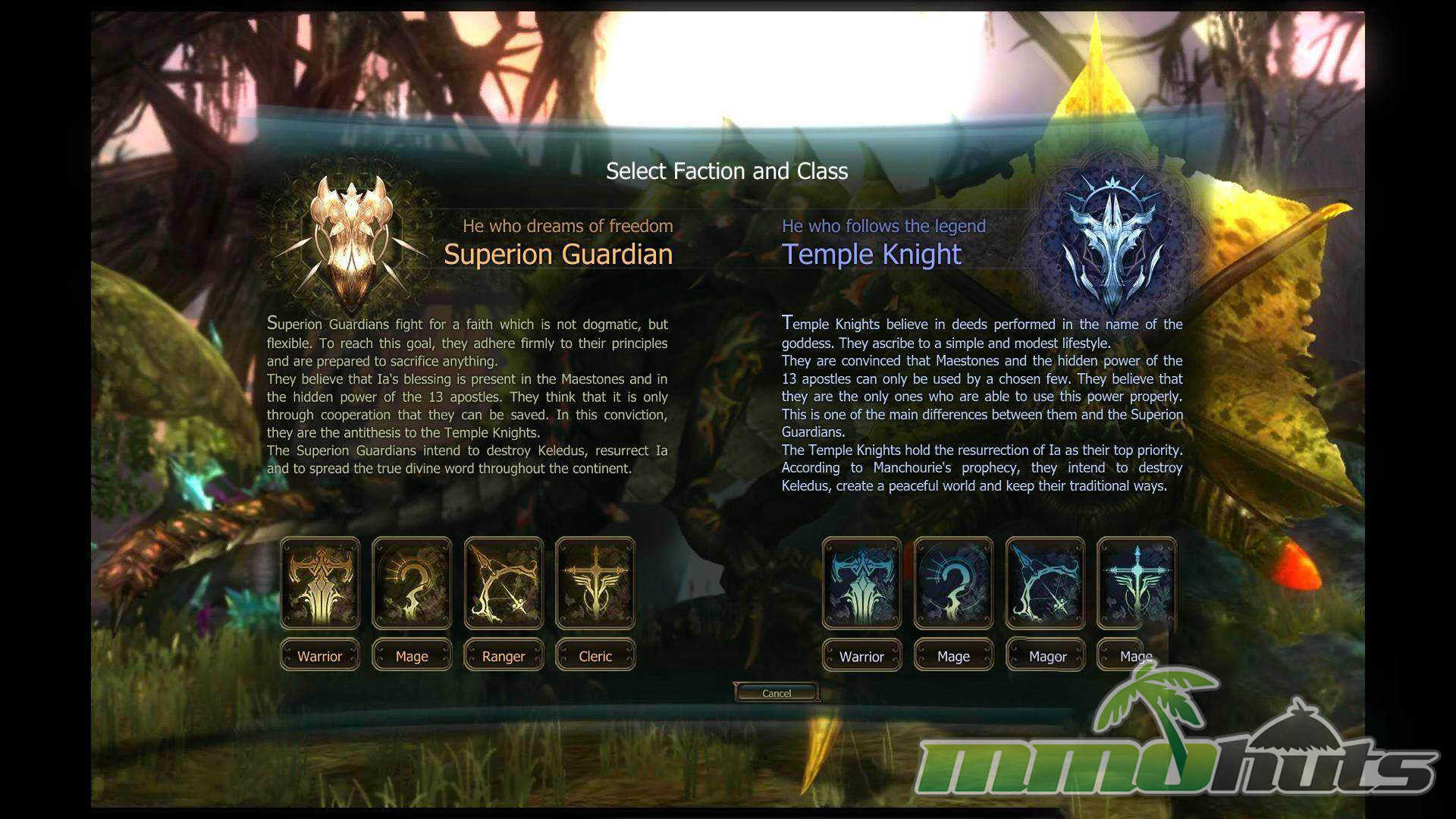
PvP is a major pillar, anchored by the two-faction setup (Superion Guardians versus Temple Knights). At level 100, players can participate in faction wars, a large-scale mode that emphasizes coordinated pushes and numbers. To keep participation open, players below the cap can receive temporary enchanted gear to help them contribute. The game also attempts to balance uneven teams by boosting the outnumbered side with enchanted jewelry, though that comes with a tradeoff: boosted players are visible on the map, which can paint a target on them.
Defeating opponents awards kill points that feed into PvP progression, including the ability to work toward specialized armor. Smaller PvP options exist as well, such as guild battles and more compact battleground-style encounters, but the faction wars are where Maestia feels most energetic due to the scale and the sense of an ongoing rivalry.
Prayer, Divinity, and the Maestone Build Layer
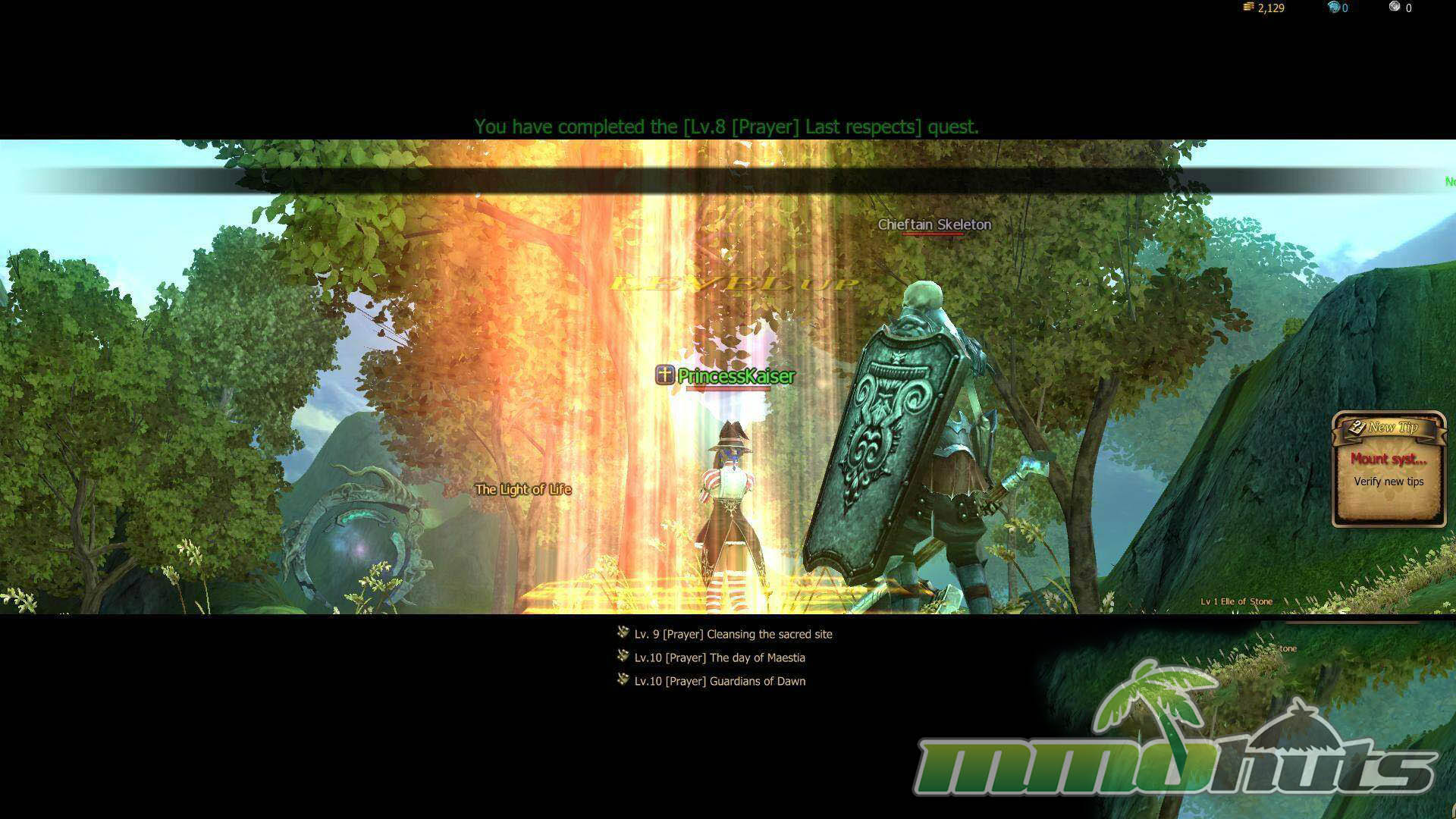
Maestia’s progression stands out most through its Divinity system. Prayer is not just flavor; pressing Z allows you to summon an NPC through praying, letting you accept and complete certain quests without needing to physically return to a quest giver. It is a practical feature that keeps you moving instead of constantly backtracking.
Praying at altars and participating in various activities earns Divinity Points (DP), a secondary currency used to obtain Maestones. DPs come from multiple sources, including monster kills in dungeons, playing on the night map, PvP participation, and even renting your character out as a mercenary. This creates a parallel grind that continues to matter even when your level progression slows, giving endgame players another meaningful path to improve their character.
Maestones are essentially performance-enhancing stones that add extra effects to your build. They can patch weaknesses (such as survivability or damage consistency) or push strengths further, depending on what you socket. There are passive Maestones that have a small chance to trigger an effect (for example, a 3% proc for increased damage), and active Maestones that reliably trigger but have limited uses before needing a recharge for 10 DPs.
Each character has three slots for active Maestones and four slots for passive ones. Collecting three of the same type allows you to combine and upgrade them to +1 for improved effectiveness, such as pushing a 3% passive chance to 4%. Upgrades are handled through general goods NPCs. Conceptually, it resembles gem-linked ability systems in other RPGs, where customization comes from what you equip rather than only what your class learns.
Mercenary Hiring and Offline Utility
Another unusual system is Maestia’s mercenary feature. Players can rent out their character while offline, allowing other players to hire that character to fight alongside them. The rented character earns 20% experience from the actions it participates in, which gives the owner a passive way to progress and gives the hiring player extra help in the field.
Because you are effectively hiring real players’ characters, there is an extra layer of decision-making: you can inspect gear and skills before hiring, and you can rate the mercenary afterward. NPC mercenaries also exist, providing a fallback option when player mercenaries are not available. For anyone who struggles to form groups consistently, this system can make solo play feel closer to party play without requiring constant scheduling.
Final Verdict – Good
Maestia: Rise of Keledus is not a perfectly refined MMORPG, but it has several systems that are more inventive than its surface-level presentation suggests. The Maestone gem setup and Divinity progression provide a satisfying layer of build crafting, and features like mercenary hiring and remote quest handling reduce friction in meaningful ways. At the same time, the limited class selection and a loop that can become repetitive hold it back from standing among the genre’s best. Maestia: Rise of Keledus earns 3/5 stars.
Maestia Links
Maestia Official Site
Maestia Official Game Guide
Maestia Wikia [Database / Guides]
Maestia System Requirements
Minimum Requirements:
Operating System: Windows XP / Vista / 7 / 8
CPU: Single Core 3 GHz
Video Card: GeForce 6800 GT or better
RAM: 1 GB
Hard Disk Space: 14 GB
Recommended Requirements:
Operating System: Windows XP / Vista / 7 / 8
CPU: Dual Core 2 GHz or better
Video Card: GeForce 8600 GT or better
RAM: 4 GB
Hard Disk Space: 14 GB
Maestia Music & Soundtrack
Maestia Additional Information
Developer: Roc Works
Closed Beta Date: June 14, 2012
Open Beta: July 19, 2012
Foreign Releases:
Japan: October 1, 2009
Shut Down Date: March 31, 2016
Development History / Background:
Maestia was developed by Roc Works, a game studio originally founded in Japan. The project first appeared in Japan under the name Project Homeage Genesis and reached Open Beta there on October 1, 2009. Following its reception in Japan, it later launched in other regions such as Korea and Taiwan under the same name. The English-language release did not achieve the same traction. Bigpoint initially held the European rights, while Gravity Interactive handled North America via Warpportal. After Gravity ended service, Aeria Games took over operations on June 17, 2013.