Legend Knight is a 2D, browser-based MMORPG that leans into classic fantasy heroics, you play as a reincarnated champion tasked with protecting your homeland from supernatural threats tied to gods, demons, and otherworldly forces. It is built for quick sessions and steady progression, with automation options that let the game handle much of the routine grinding.
 | Publisher: Proficient City Ltd Playerbase: Medium Type: MMORPG Release Date: September 3, 2014 Pros: +Beginner-friendly and fast to understand. +Plenty of gear, plus sockets and rune-style upgrades. +Free-to-play access Cons: -Only two classes to choose from. -Dated visuals and a UI that feels awkward and crowded. -Sound design can become irritating. |

Legend Knight Overview
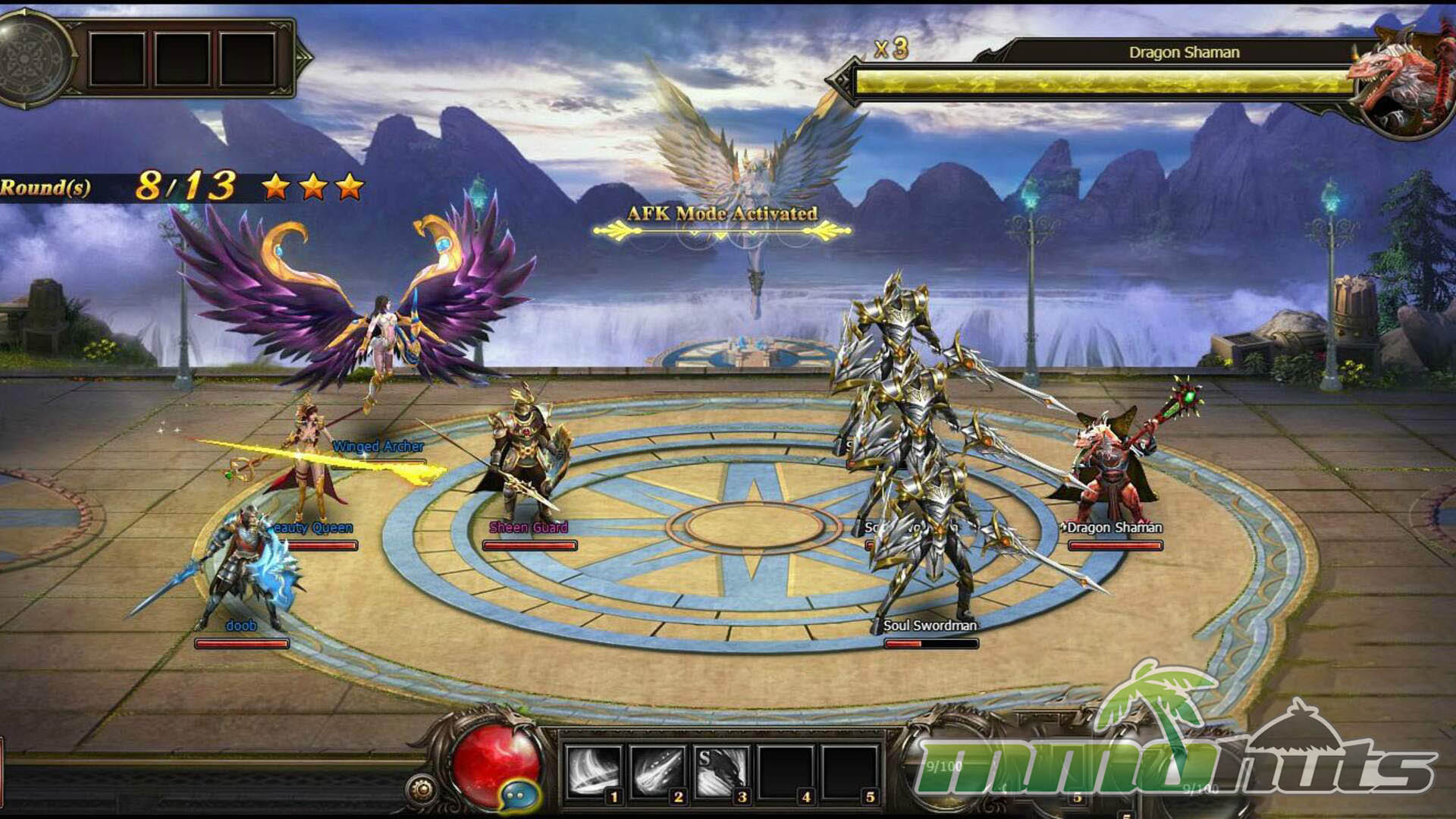
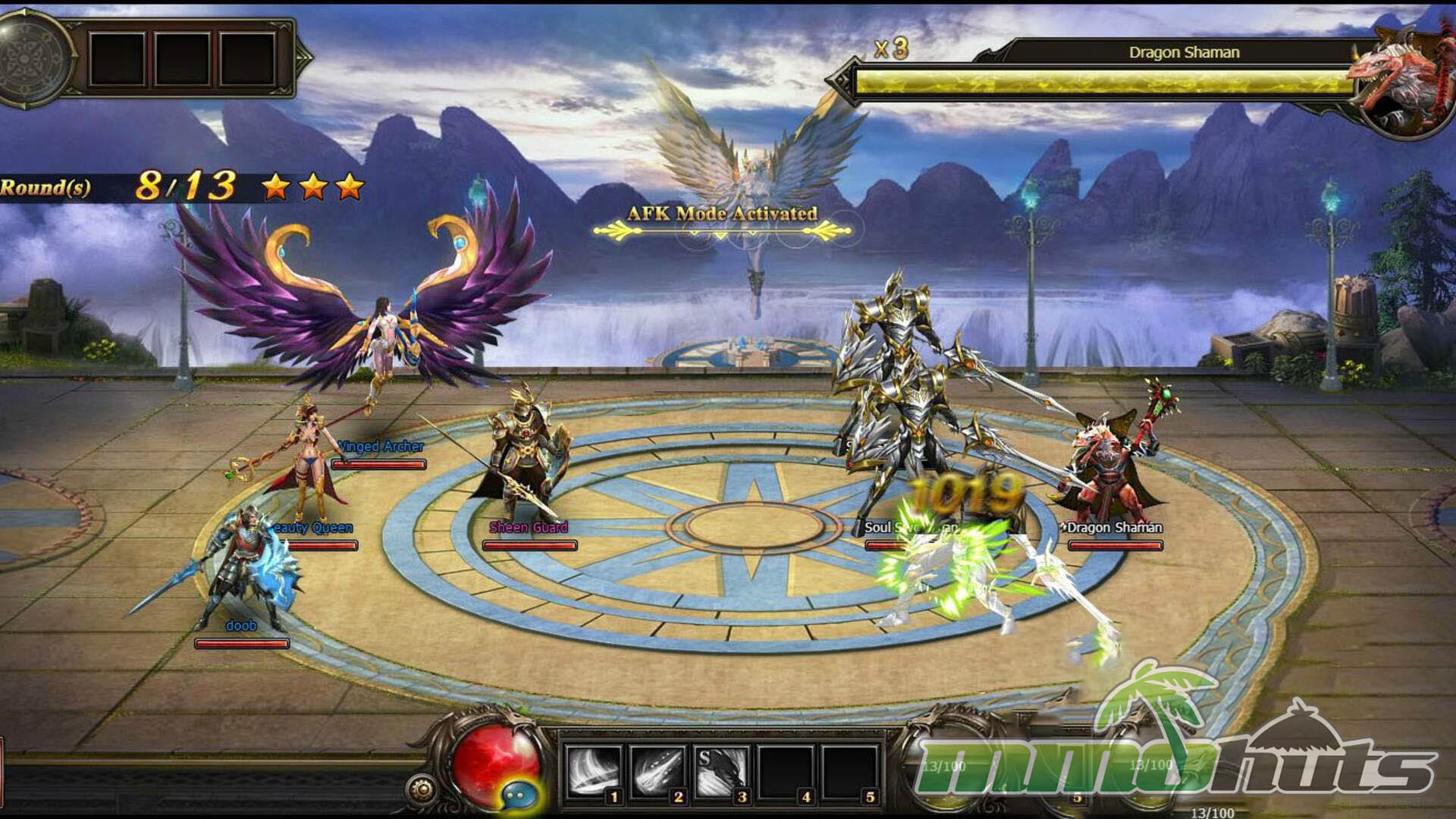
Legend Knight is a 2D browser MMORPG focused on party building and turn-based encounters. You pick between two core classes, a sword-focused Knight or a spell-slinging Wizard, then expand your roster by recruiting additional heroes to fill out a full team. Battles are less about twitch reactions and more about preparation, team composition, and positioning.
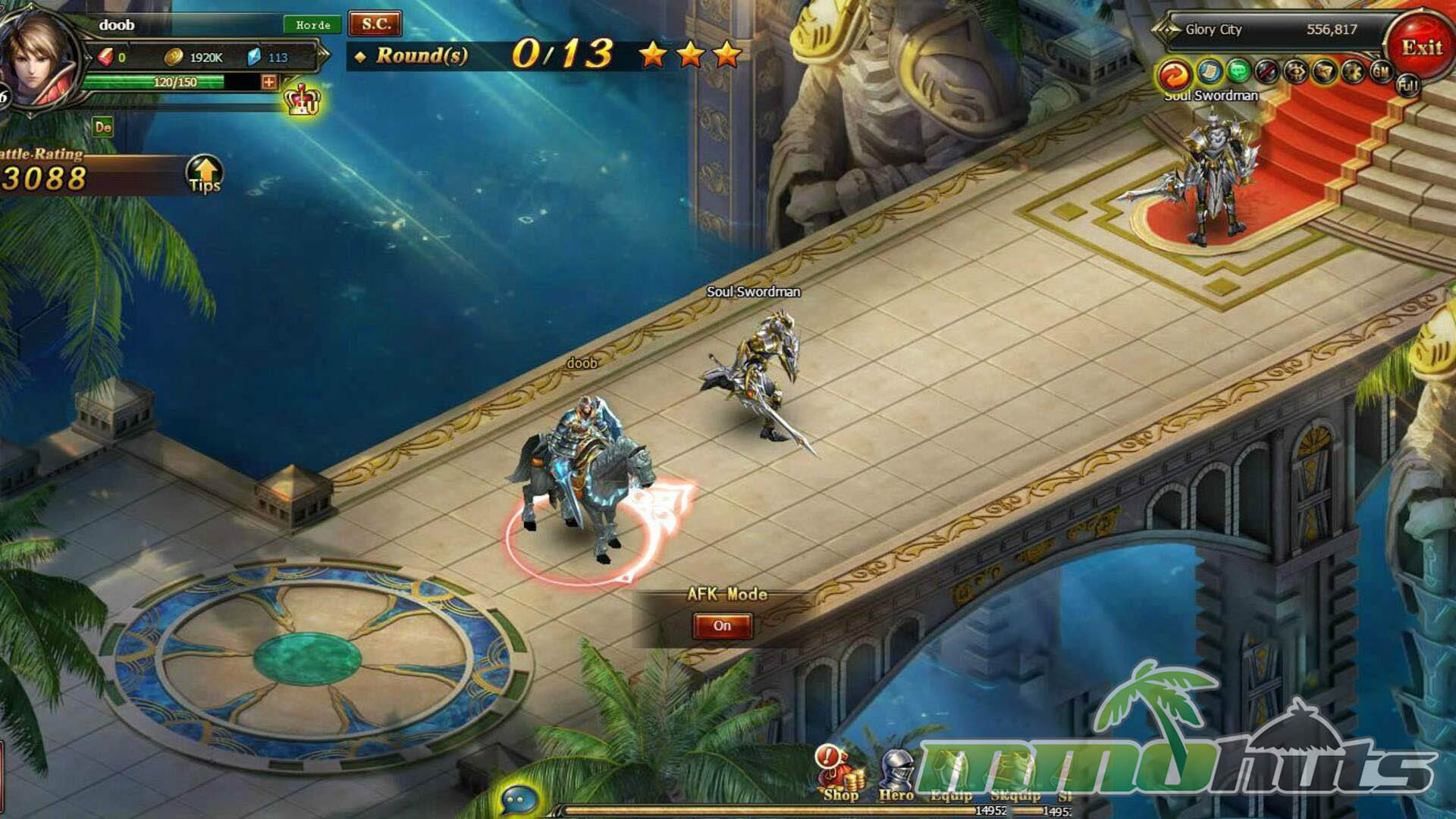
A major part of the game’s identity is convenience. Between auto-pathing, automated combat, and an AFK mode, the experience is designed to keep progression moving even when you are not actively making every input. For players who like management and incremental upgrades more than constant manual play, that design can be a feature rather than a drawback.
Legend Knight Key Features:
- Party Formation – build a line-up and arrange positions to create an edge in fights.
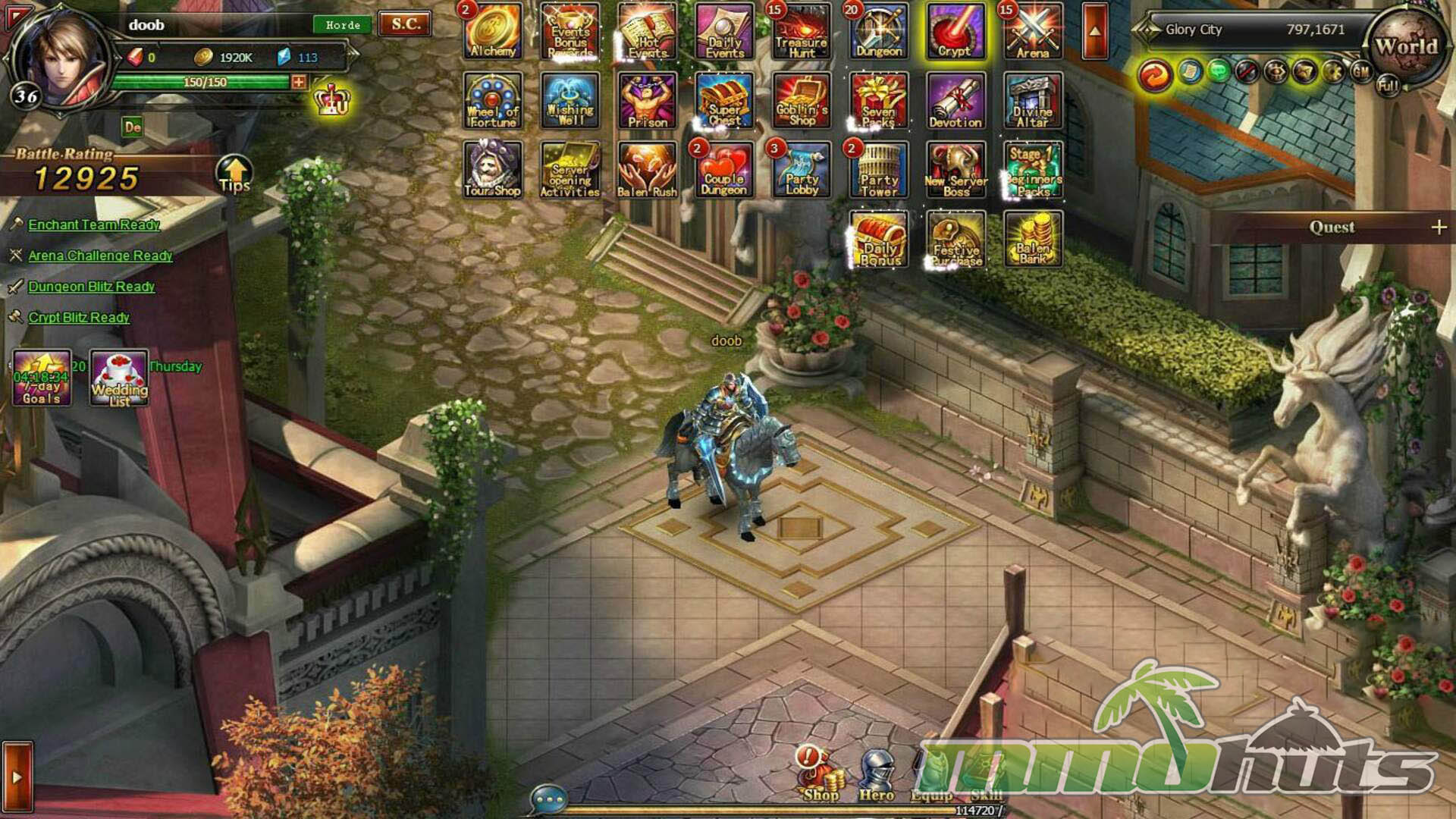
- Treasure Hunt – search dig sites for keys, then try your luck with treasure spins.
- Synthesize and Socket – improve gear by combining equipment and inserting runes to raise stats.
- Hero Recruitment – add new allies to your roster and shape a more flexible party.
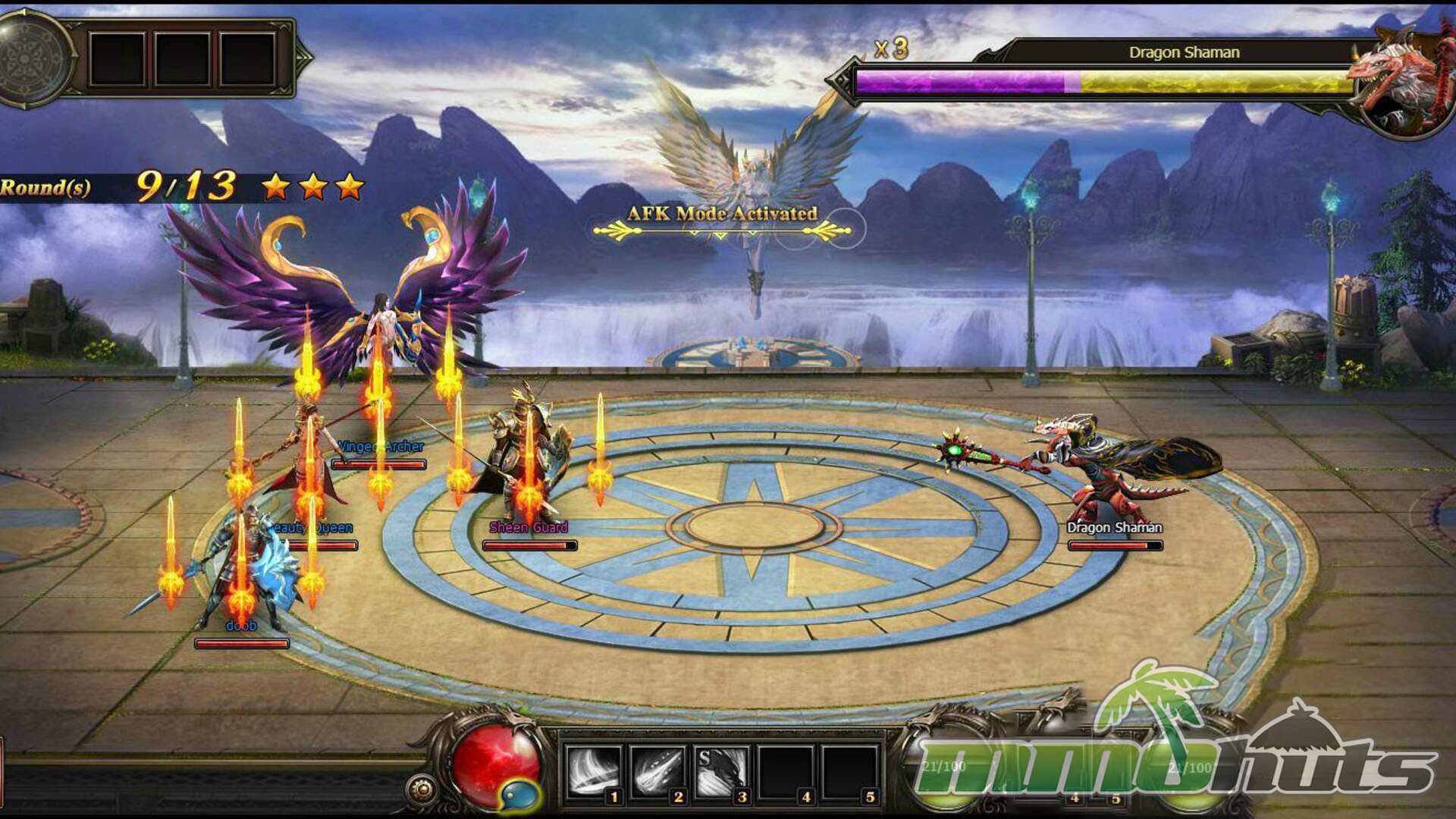
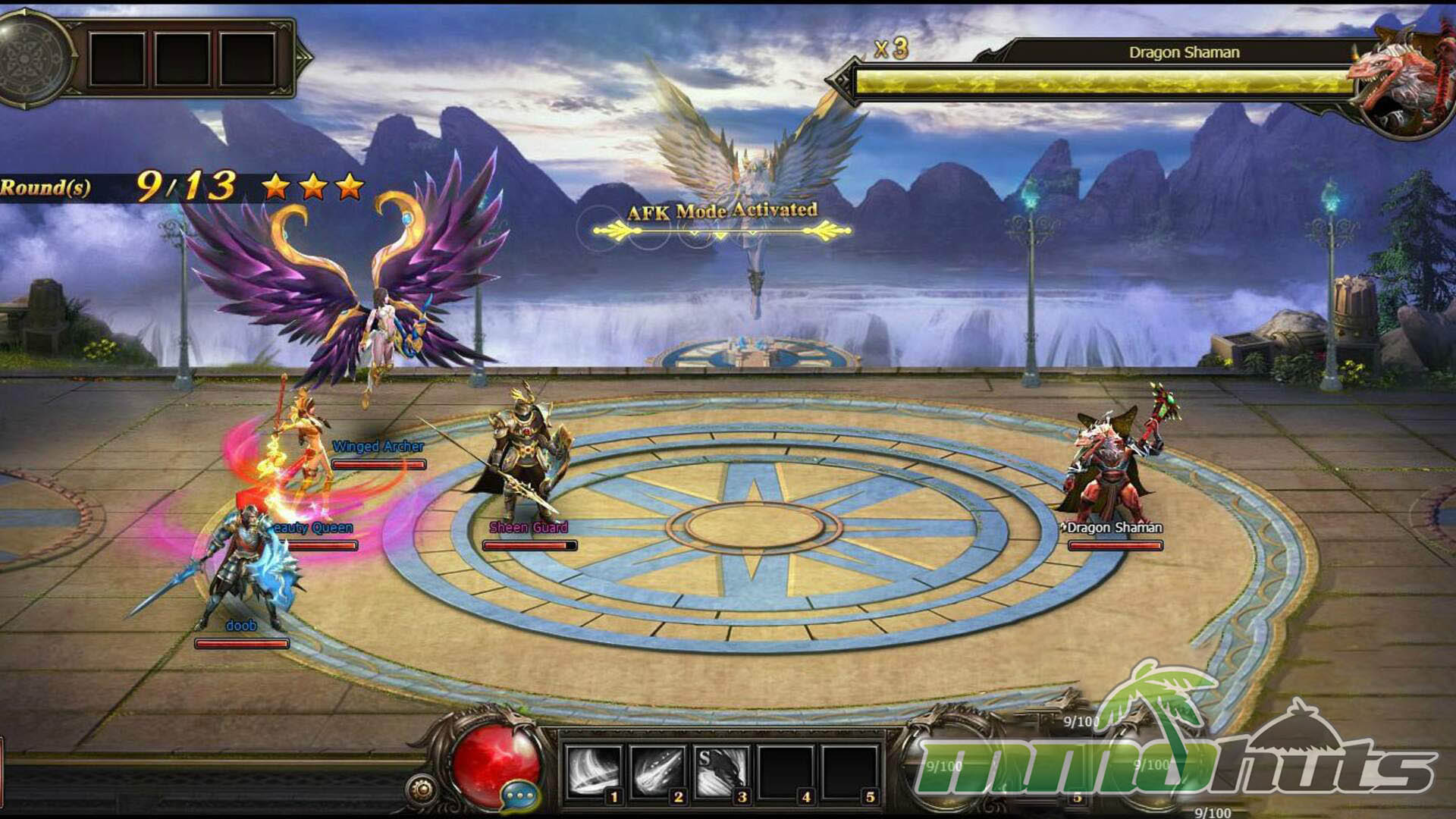
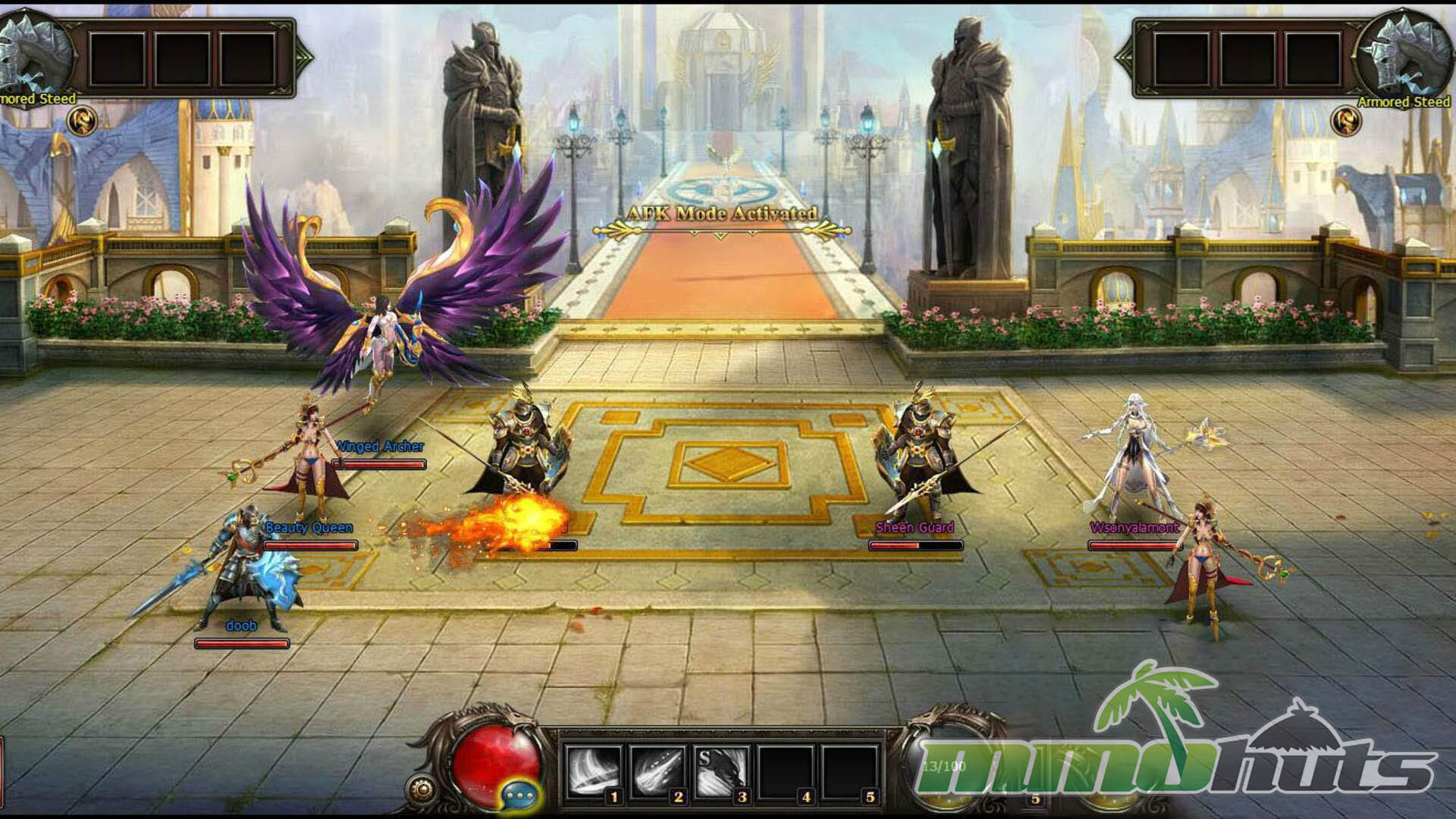
- AFK mode – hands-off combat that continues without constant player control.
Legend Knight Screenshots



Legend Knight Featured Video

Legend Knight Classes:
- Wizard – a magic user armed with wands and scepters, built to pressure groups with spell-based damage.
- Knight – a frontline option that mixes protection and offense, suited to trading blows and covering allies.
Although there are two class choices on paper, the two options share the same skill set in practice…
Legend Knight Review
Legend Knight is a free-to-play fantasy 2D browser MMORPG developed by 7th Road and published by Proficient City. It officially launched in September 2014, and it is playable through the official website as well as via Facebook, which fits its drop-in, session-friendly structure.
At a story level, it uses a familiar setup: the world has already survived a catastrophic conflict involving gods, demons, and dragon knights, thanks to a legendary warrior’s sacrifice. Centuries later, danger returns and that hero is reborn, placing the player in the role of the reincarnated knight who must push back the darkness while gradually recovering lost power and memories. It is a straightforward frame, but it gives context for the constant flow of quests and instanced battles.
A Hero Reborn
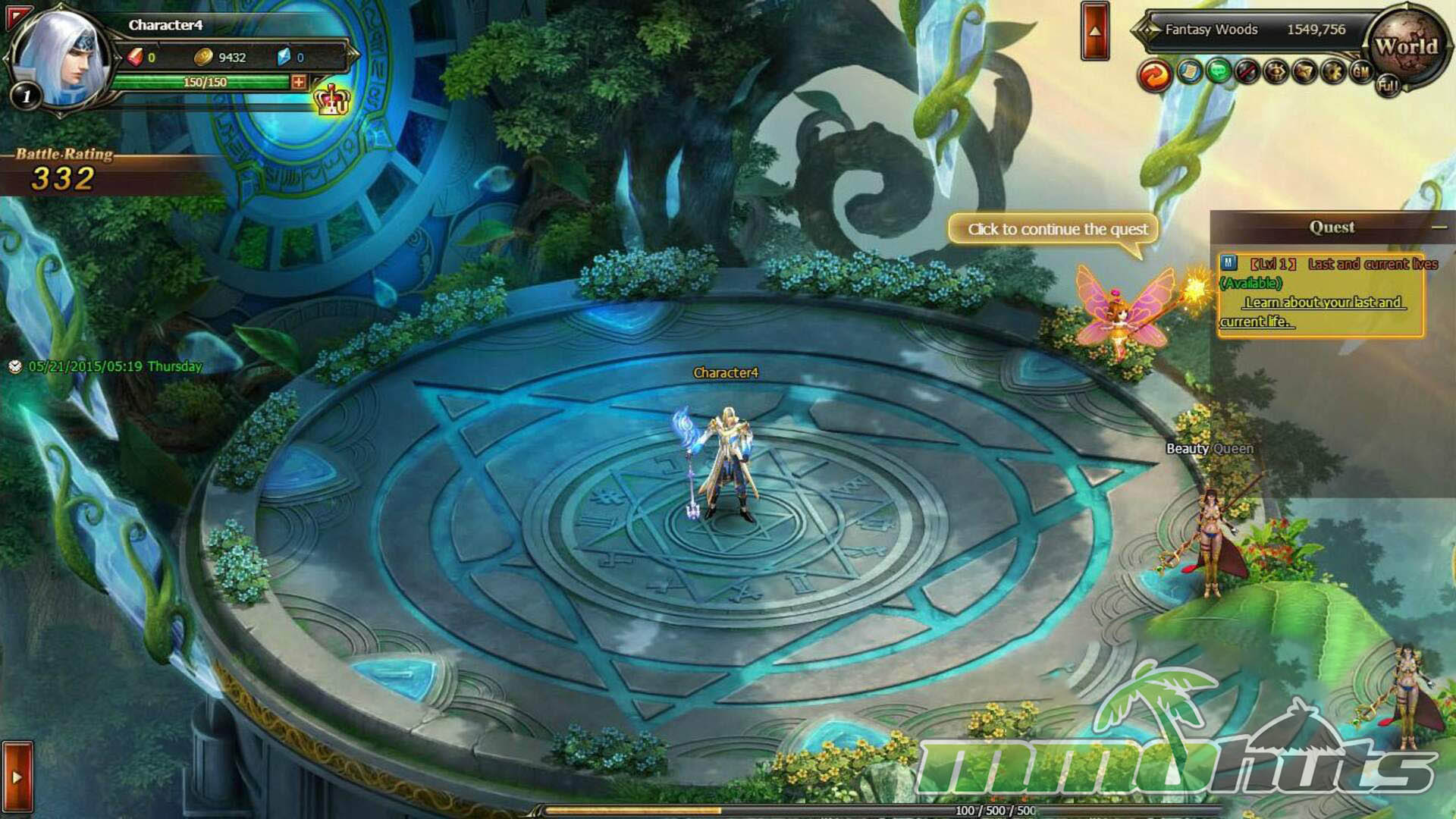
Character creation is minimal. You choose from pre-made templates, with male and female versions for each of the two available classes, and the opening sequence doubles as a guided tutorial. Early tasks walk you through movement, combat decisions, and foundational systems like adding heroes to your party. The game also immediately begins its reward loop, completing objectives grants experience and gold (the primary currency), which feeds into upgrades and recruitment.
Presentation is functional rather than impressive. The visuals land in the “budget browser MMO” tier, readable but lacking polish, and the overall look can feel like familiar assets repackaged into a new theme. Audio is serviceable at first, yet the high-pitched, repetitive tone can wear thin quickly, especially during longer sessions. The interface is arguably the biggest hurdle, it is packed with icons, menus, and alerts that compete for attention and reduce screen space during play.
Quest Flow and Turn-Based Fighting
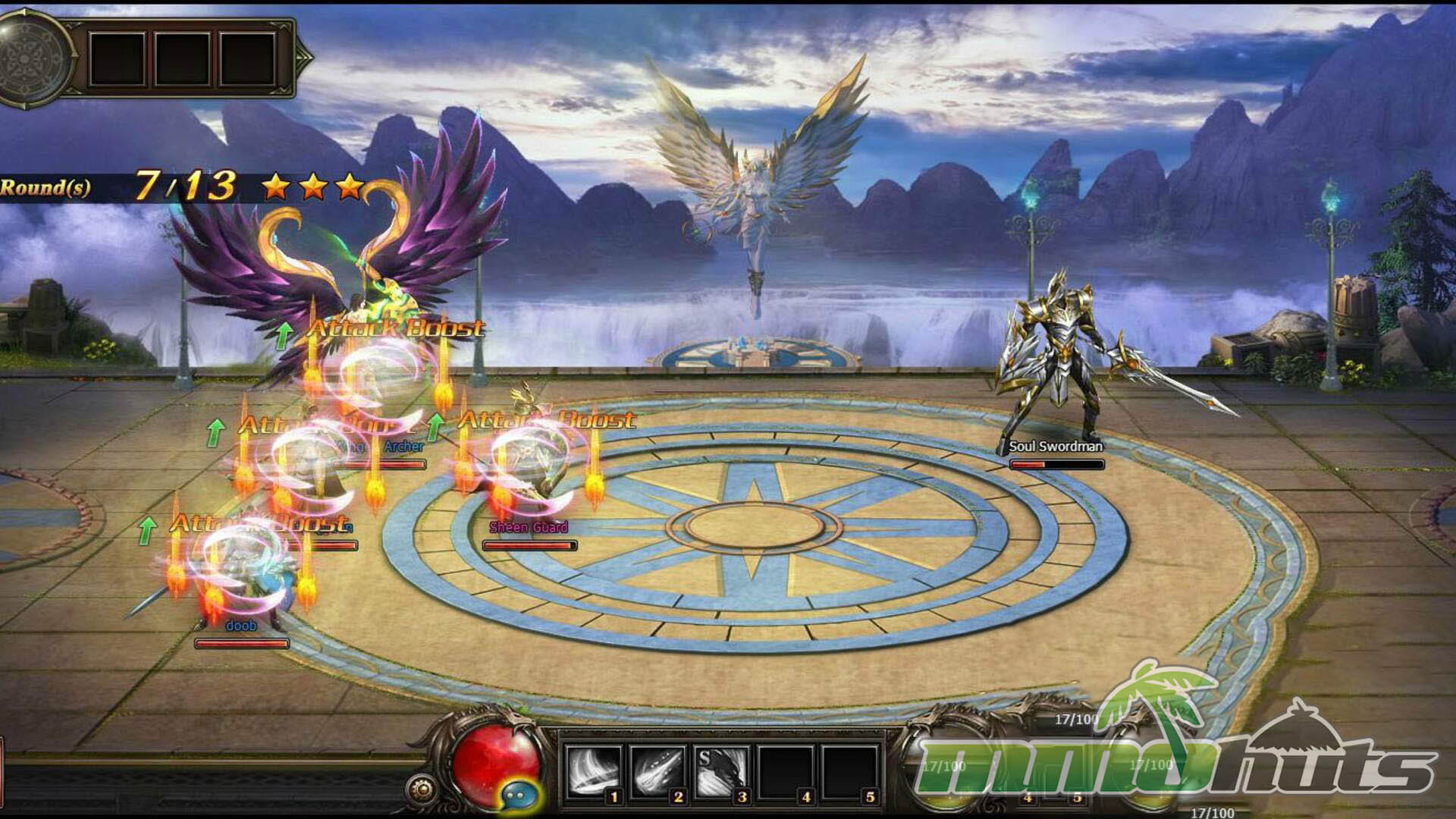
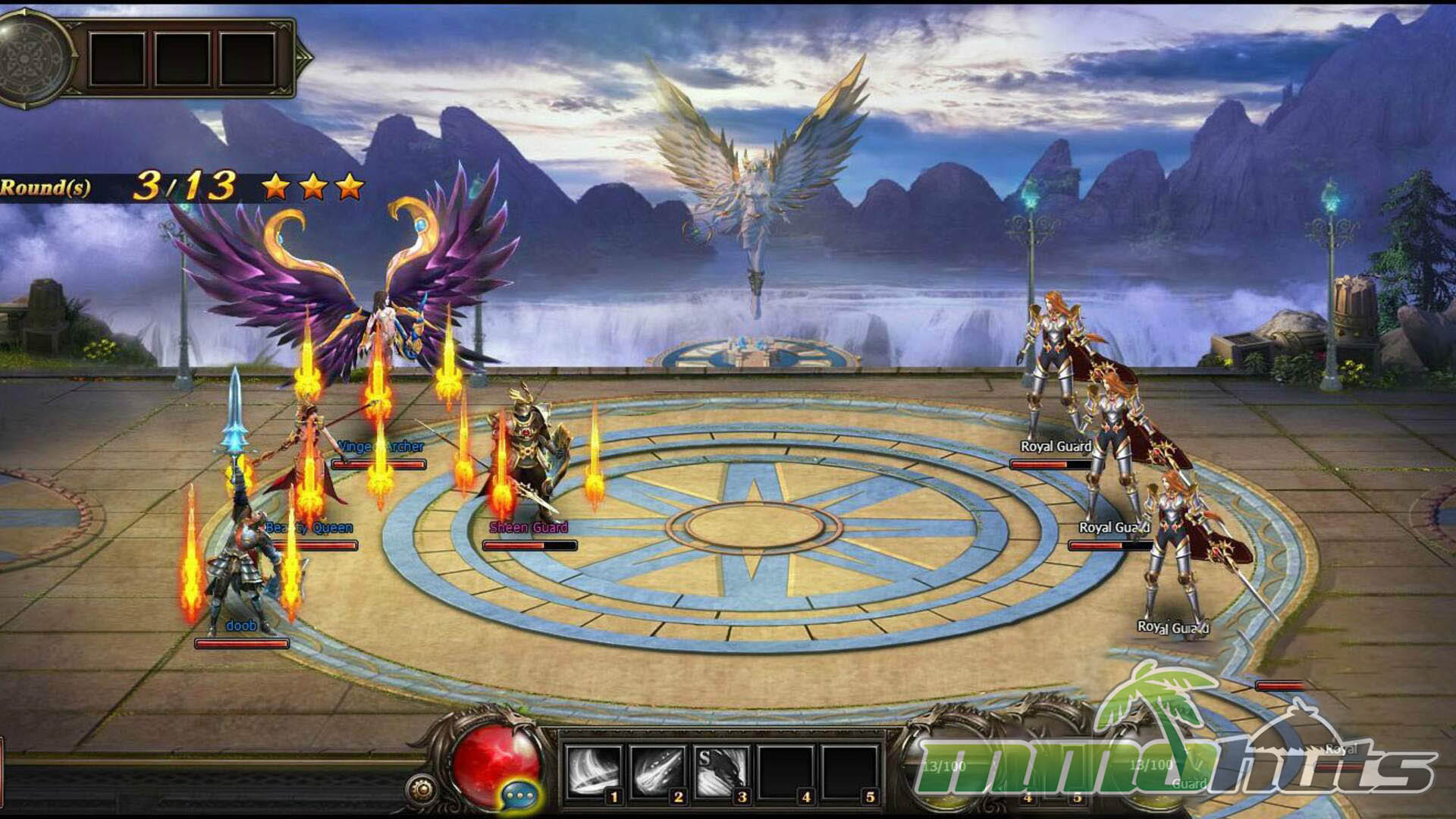
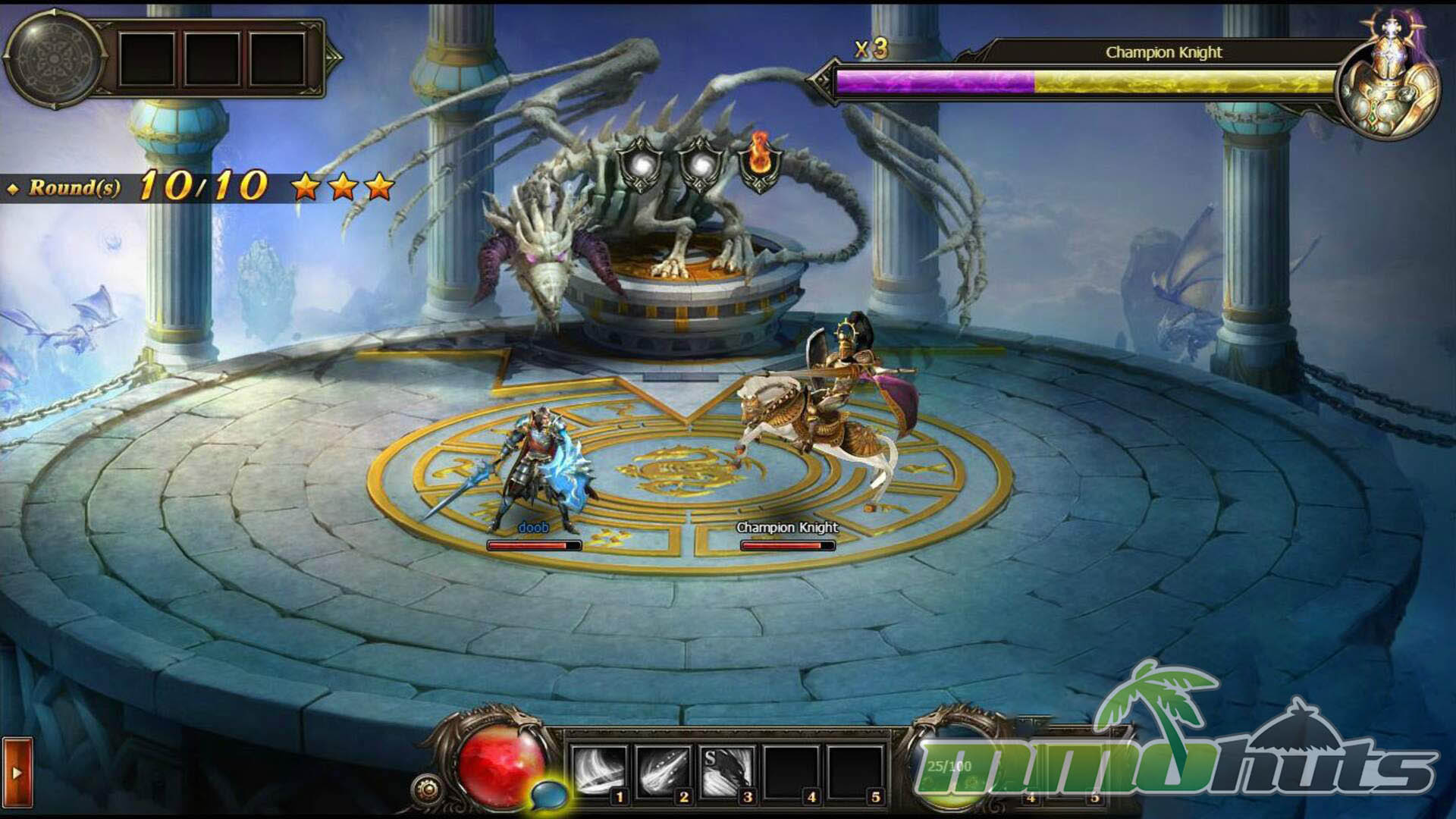
Progression is largely quest-driven, and the game does not hide that it wants to keep you moving. Auto-pathing can take you directly to objectives, and most quests boil down to combat goals. Accept a quest and you are commonly pushed into an instanced encounter, where combat plays out in turn-based fashion with a timer encouraging quick decisions.
Your stronger actions depend on Rage, a resource that builds through basic attacks and select skills that can restore it. That creates a simple rhythm: generate Rage, spend Rage for impact, then repeat. Encounters are graded with a star system based on how efficiently you finish, fewer rounds means a higher rating and better gold rewards. Experience gains are steadier, even if your rating drops, which keeps leveling consistent while still nudging players toward optimization.
In addition to auto-pathing, Legend Knight offers auto-combat, and it is a significant part of the package. You can let the AI run fights for you, which is convenient for routine content but also makes the game feel less interactive when you rely on it heavily.
Recruitable heroes add another layer of planning. You spend Gold to expand your roster with allies that fill typical RPG roles such as damage, tanking, or support. Formation matters because positioning influences who takes hits, frontliners are more likely to be targeted, while rear slots are safer. Building a party that can survive burst damage while still meeting round limits becomes the main tactical hook.
Dungeons Across the Continents
PvE endgame variety comes from dungeons tied to the world’s five continents, each gated by level requirements. As you level, you unlock stronger boss stages, and each clear is scored with the same star rating structure used elsewhere. The reward format here adds a bit of flavor, higher star ratings grant more draws from a card selection, and those cards determine what you receive.
Dungeon rewards include Minerals, a currency you can exchange for equipment and upgrade-related items. It is a familiar treadmill, but it gives dungeons a distinct purpose compared to regular questing, and encourages replay for better ratings and better pulls.
Crypt Runs for Gold and Experience
Crypt raids provide an alternate activity loop, and their focus is more on straightforward progression resources. Instead of Minerals, you earn experience and gold, and while star ratings still influence outcomes, crypts do not use the card-draw system found in dungeons. Difficulty tiers range from Easy through Nightmare, and the trade-off is exactly what you would expect: tougher runs offer stronger rewards, assuming your party can hold up.
This mode tends to feel like a cleaner grind option, especially if you are aiming to level heroes and stockpile currency rather than chase specific upgrade materials.
Arena and the Prison Feature
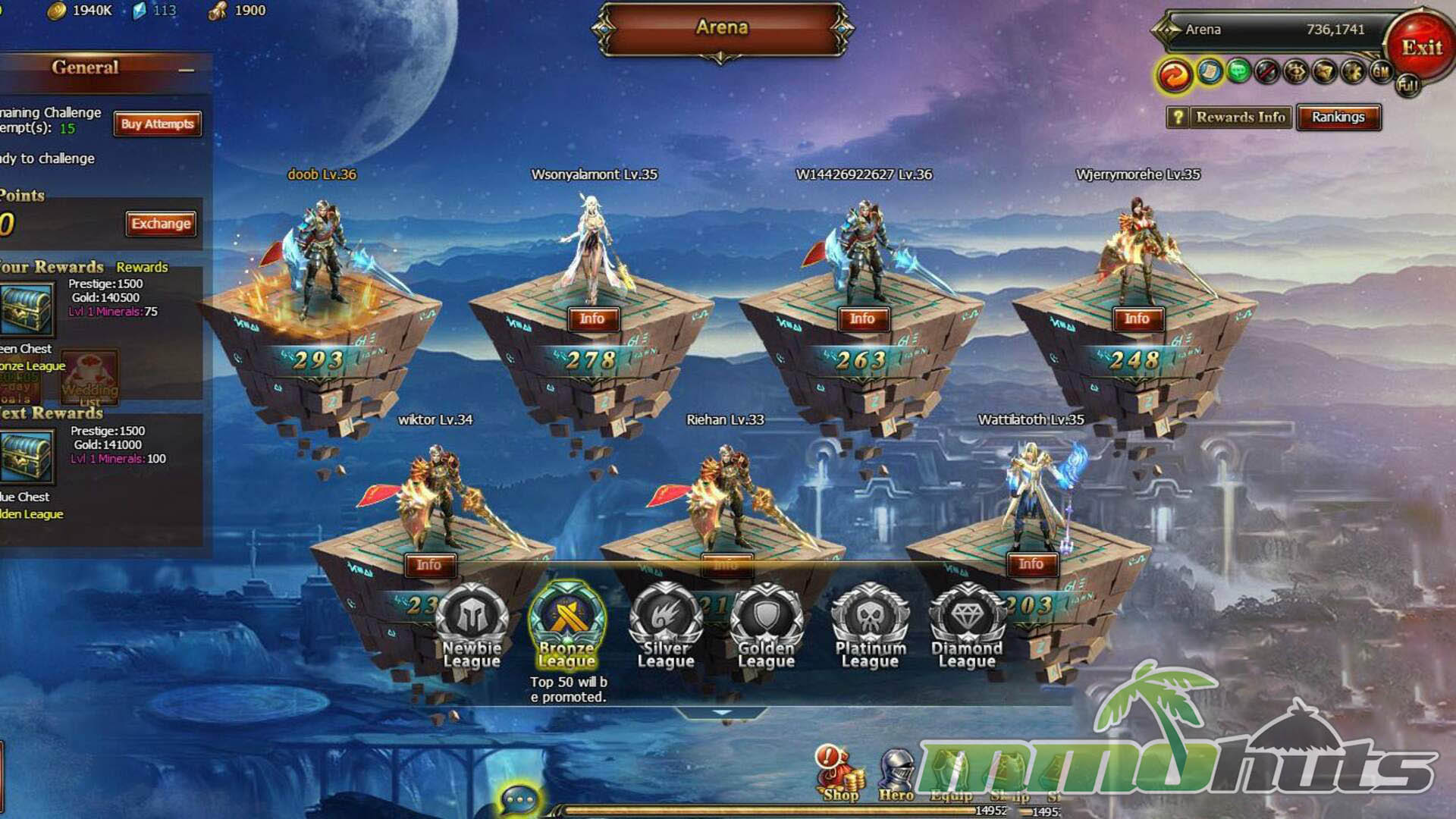
For PvP, Legend Knight uses party-versus-party arena battles that determine rank. Wins provide a mix of Minerals, Prestige, and Gold, and higher placement improves your overall payout. The PvP itself follows the same underlying structure as PvE combat, so success is largely about roster strength, formation choices, and progression advantages rather than mechanical outplay.
One of the more unusual systems is the Prison feature. After beating another player, you can challenge them again, and a second win can turn them into a prisoner. You can hold up to three prisoners at once, and interacting with them grants experience items used to level party members. Prisoners are not permanent, other players can rescue them, which creates a small loop of rivalry and repeat engagements if you want to keep your “captures.”
The Final Verdict – Fair
Legend Knight delivers a familiar browser MMO formula with a heavy emphasis on automation and incremental upgrades. The core systems, building a party, arranging formations, earning better star ratings, and improving gear through sockets and synthesis, can be satisfying if you enjoy management and steady numbers growth. At the same time, the limited class variety, cluttered UI, and dated audiovisual presentation make it hard to recommend over more modern free-to-play MMORPG options.
It is best suited for players who specifically want an easy-to-run, low-commitment MMO that can progress with minimal hands-on input. If you are looking for a more active, player-driven combat experience, the AFK and auto-combat focus may feel like it removes the main reason to play.
Legend Knight Links
Legend Knight Official Site
Legend Knight Facebook Link
Legend Knight Wikia [Database/Guides]
Legend Knight Requirements
Operating System: XP / Vista / 7 / 8
CPU: Intel Pentium 4 or AMD Equivalent
Video Card: Any Graphics Card (Integrated works well too)
RAM: 512 MB
Hard Disk Space: 100 MB (Cache)
Legend Knight is a browser based MMO and will run smoothly on practically any PC. The game was tested and works well on Internet Explorer, Opera, Firefox and Chrome. Any modern web-browser should run the game smoothly.
Legend Knight Additional Information
Developer: Proficient City Ltd
Publisher: Proficient City Ltd
Release Date: September 3, 2014
Development History / Background:
Legend Knight is a 2D browser-based MMORPG centered on a reincarnated hero narrative, paired with turn-based, party-focused combat and an emphasis on recruiting allies. Developed by Proficient City Ltd, it released on September 3, 2014 and was positioned to be accessible across regions through its browser delivery and social platform availability. The game has also maintained a notable community presence online, including a Facebook page that has surpassed 100,000 likes.