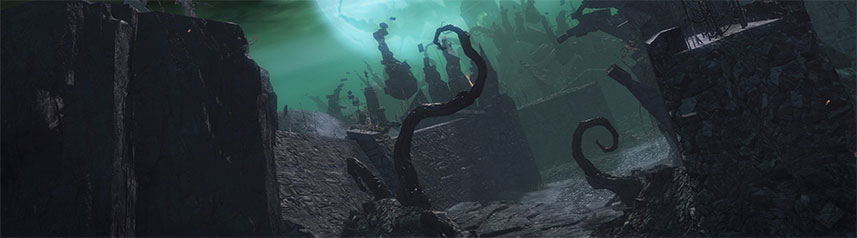
LawBreakers is a class-driven first-person shooter built around tight 5v5 objective matches in a near-future sci-fi setting. Players pick from a roster of distinct characters, each with their own weapons and abilities, then lean on teamwork, smart positioning, and rapid movement to win fights and complete the mode’s goals.
 | Publisher: Nexon Playerbase: Low Type: Character Shooter Modes: Objective-based Release Date: August 8, 2017 Shut Down Date: May 14, 2018 Pros: +A wide roster of characters and varied weapon kits. +Sharp Unreal Engine 4 visuals and strong effects. +Built-in Discord support. Cons: -Demanding skill curve, especially in low gravity zones. -Balance can feel uneven between roles. -Limited population makes matchmaking difficult. |
LawBreakers Overview
LawBreakers is a sci-fi arena shooter where the Law and the Breakers clash in small-team, objective-focused matches. Instead of building a custom loadout from scratch, you commit to a character-class with a defined toolkit, including signature weapons, movement options, and combat abilities. The result is a game that rewards both mechanical aim and knowing when to swap roles to answer what the other team is running.
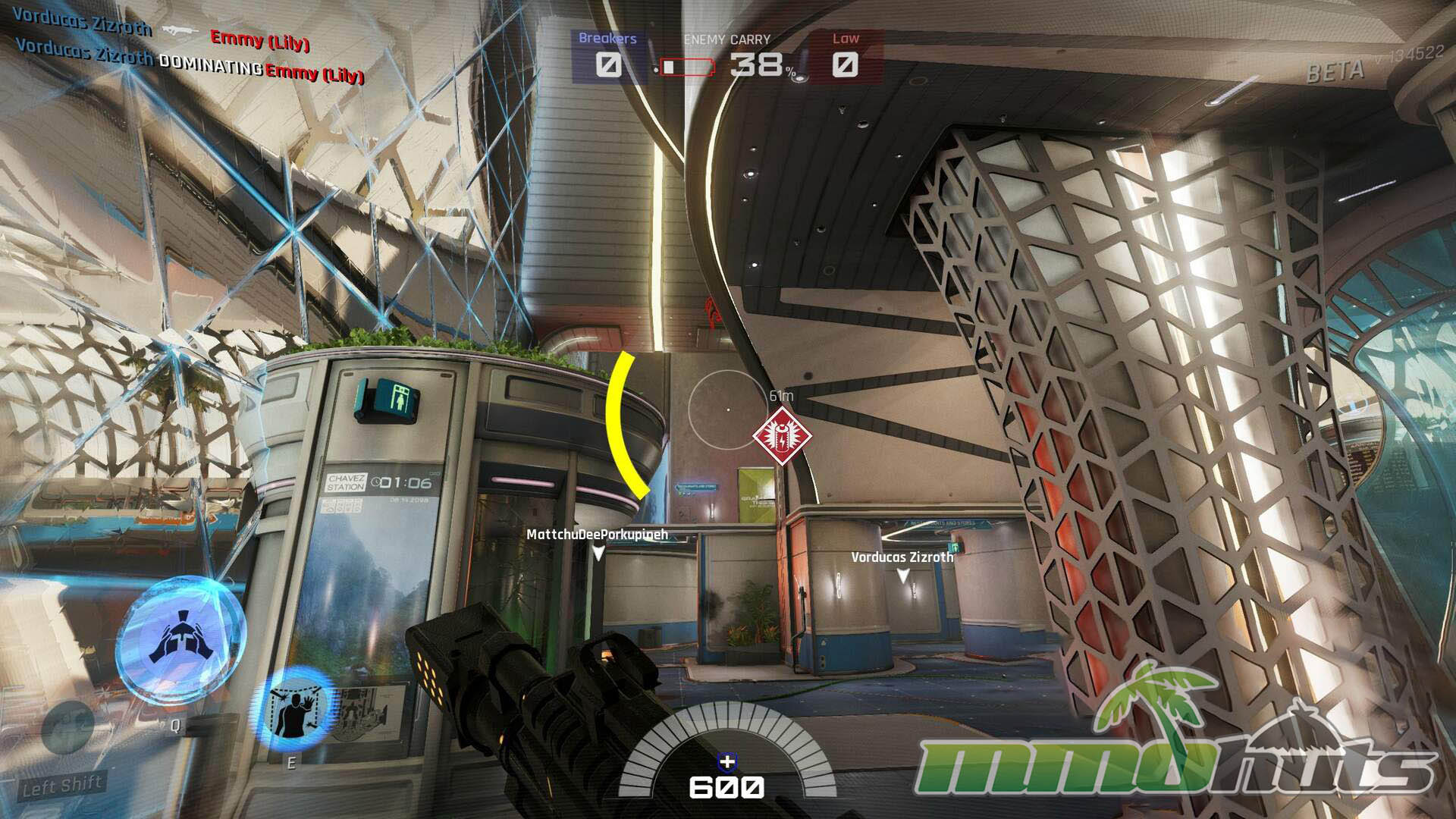
Matches are built around familiar objective formats, such as controlling capture points or escorting a valuable “battery” back to base to score. What makes those modes feel different here is the mobility. Jet-assisted movement, grappling-style traversal, and quick reposition tools keep engagements constant, and the maps are designed so you can rotate quickly between lanes rather than jogging across empty space. The game runs on Unreal Engine 4, and it shows in the crisp lighting, readable silhouettes, and punchy effects during hectic firefights.
Progression is straightforward. You earn experience as you play, level up, and receive Stash Boxes that contain cosmetic items like skins and profile flair. The cosmetics provide long-term goals without directly changing power, keeping the focus on skill and coordination.
LawBreakers Key Features
- Character-Class Roster – pick from distinct characters mapped to specific roles, each with unique weapons and ability kits.
- Loot Boxes – earn Stash Boxes with cosmetic rewards such as weapon skins, character skins, and avatars.
- Multiple Game Modes – play objective modes including Overcharge and Turf war.
- Fast Movement – use jet-assisted mobility, grappling-style tools, and bursts of speed to outmaneuver opponents.
- Discord Integration – jump into Discord with teammates more easily for coordination and callouts.
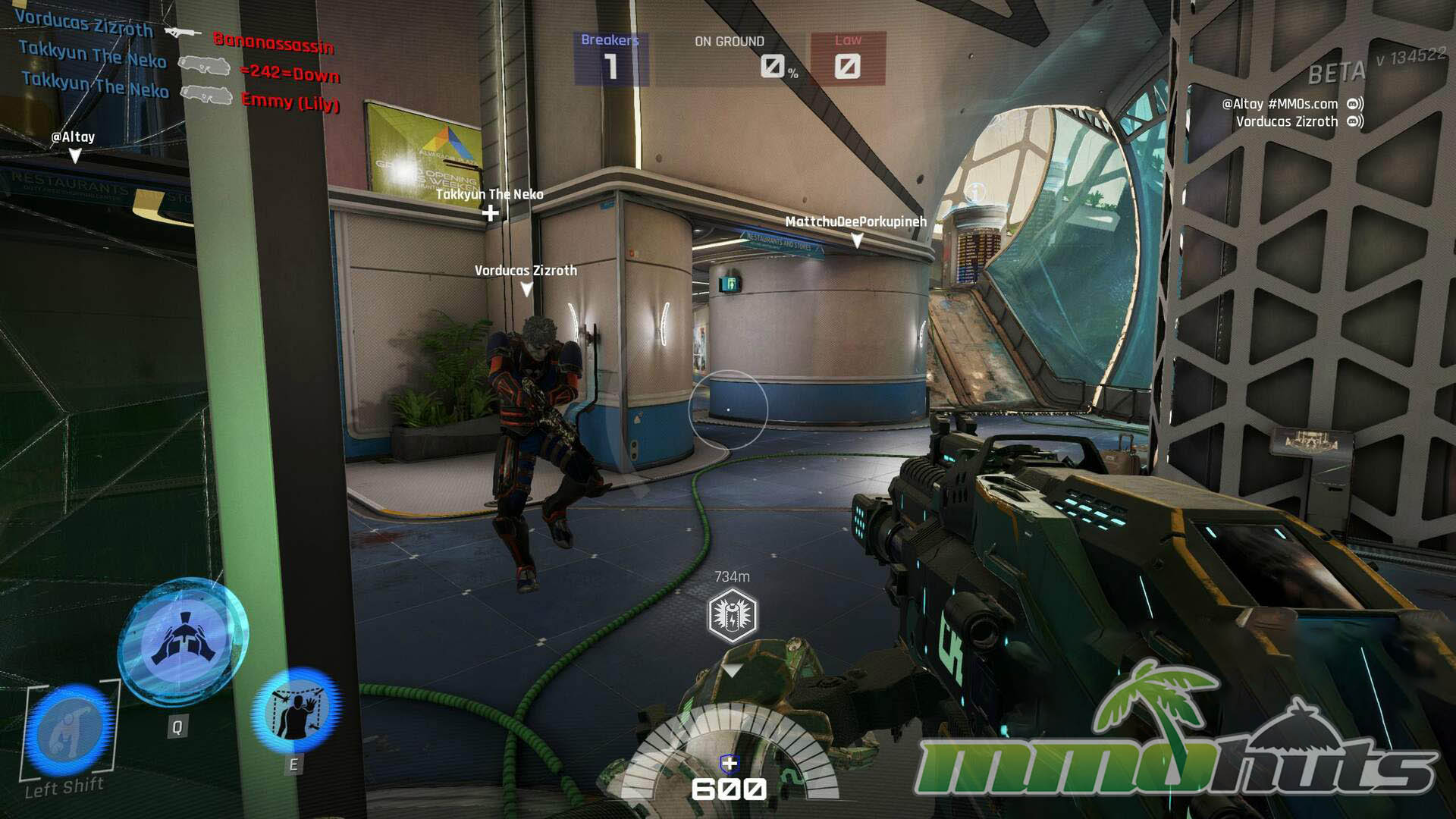
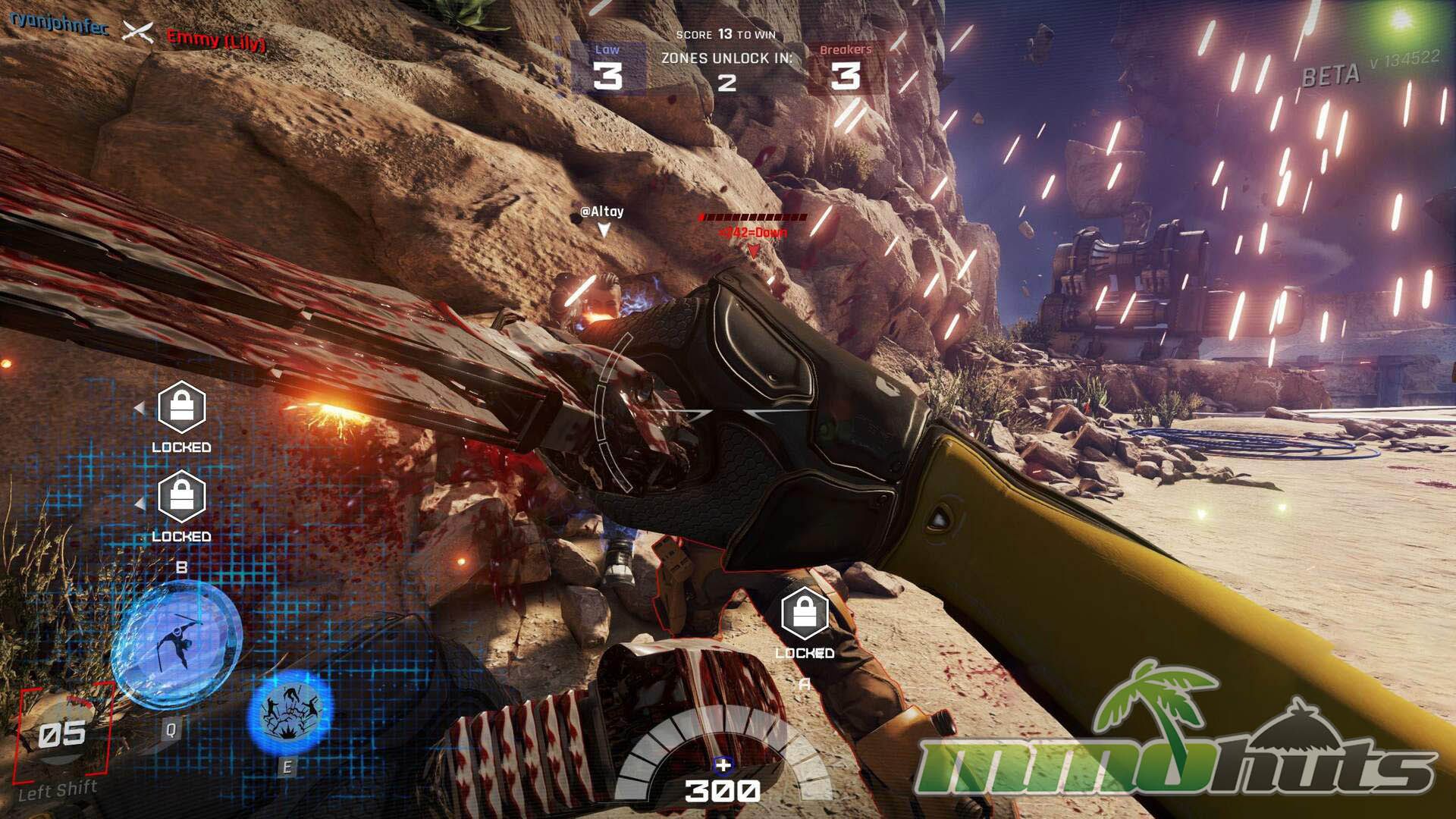
LawBreakers Screenshots


LawBreakers Featured Video

LawBreakers Review
This review reflects a Closed Beta perspective and was originally written before full release.
LawBreakers aims for the classic FPS feeling, quick spawns, constant skirmishes, and a heavy emphasis on raw combat execution, then layers in modern hero-shooter identity through fixed character kits. In practice, it plays like an arena shooter that has been steered into team objectives, with lots of verticality and a strong “always moving” tempo. When it clicks, it is the kind of shooter where every duel is explosive and every rotation matters.
Classes That Actually Change How You Fight
The roster is built around defined roles, with the Law and the Breakers fielding equivalent class archetypes. Instead of feeling like minor variations, the kits push you into different habits, such as committing to close-range pressure, supporting and stabilizing fights, or hunting isolated targets. Swapping mid-match is a real strategic lever, especially when the opposing team’s composition starts controlling key angles or repeatedly winning the same kind of engagement.
Team composition also matters more than it first appears. Because the game is objective-driven, a lineup that only chases eliminations can lose to a group that mixes disruption, sustain, and point control. The game communicates this somewhat indirectly, so new players may need time before they stop treating the match like pure deathmatch and start valuing spacing, timing, and role coverage.
Visually, the cast leans into a gritty, police-state sci-fi vibe. The silhouettes and gear are cohesive, which helps readability in fights, even if it can make some designs blend together at a glance. Weapons, on the other hand, tend to be bold and oversized, and they contribute a lot to the game’s personality when effects start filling the screen.

Unreal Engine 4 Does the Heavy Lifting
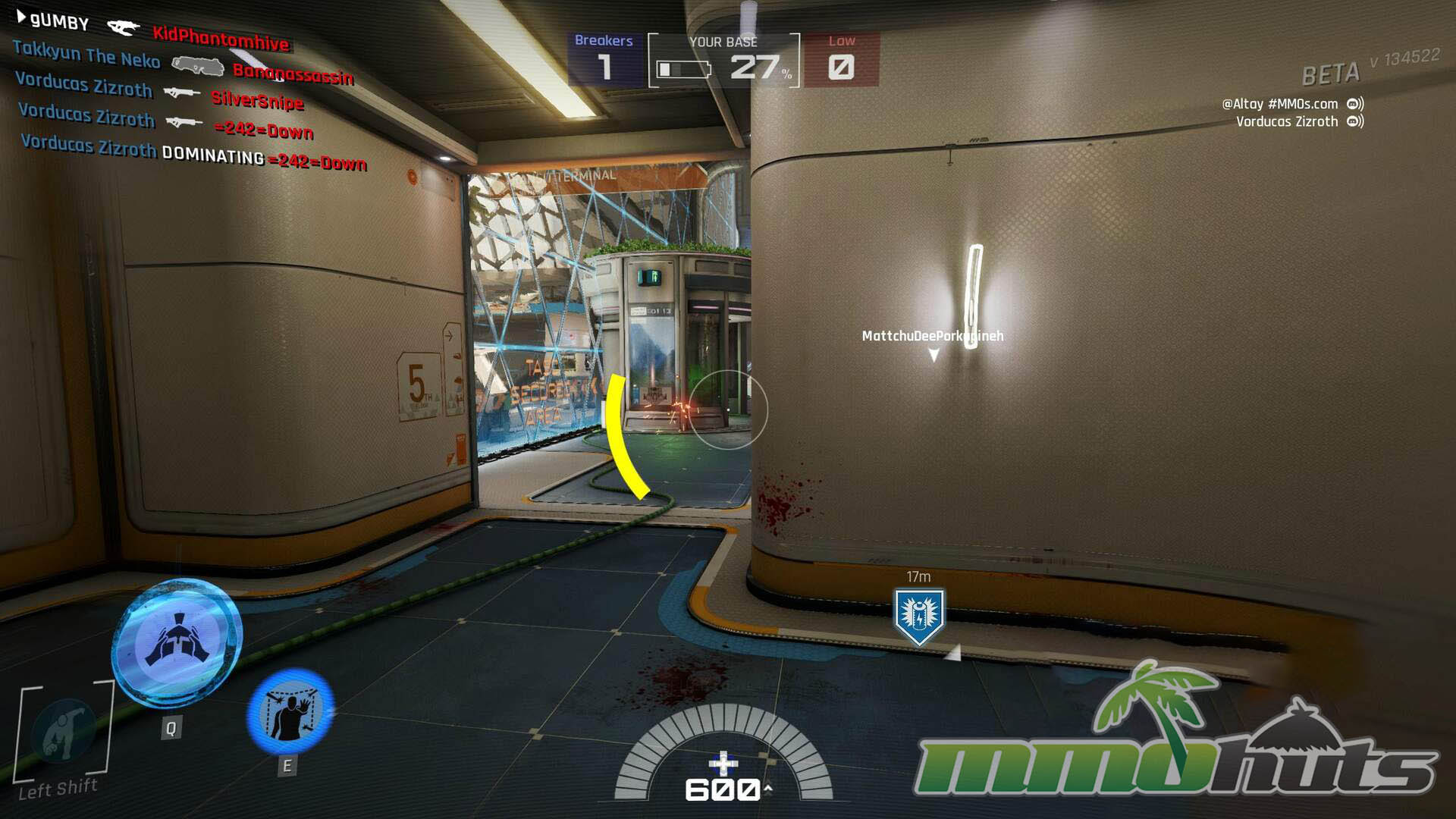
LawBreakers looks clean and responsive, and the presentation supports its speed. Maps are compact in a deliberate way, with routes that funnel you back into conflict quickly. The environments are dense with props and signage, giving them a lived-in feel rather than the sterile “sports arena” look some shooters default to.
A defining feature is the presence of low-gravity zones. These pockets of altered physics change aim, movement, and ability timing, turning familiar duels into aerial tracking contests. They are exciting once you understand them, but they can also be a wall for newer players because veterans use those areas to chain movement and angles that are difficult to read. The game provides visual cues for these zones, though the clarity can still feel a bit subtle when you are learning and moving at full speed.
Movement That Rewards Confidence
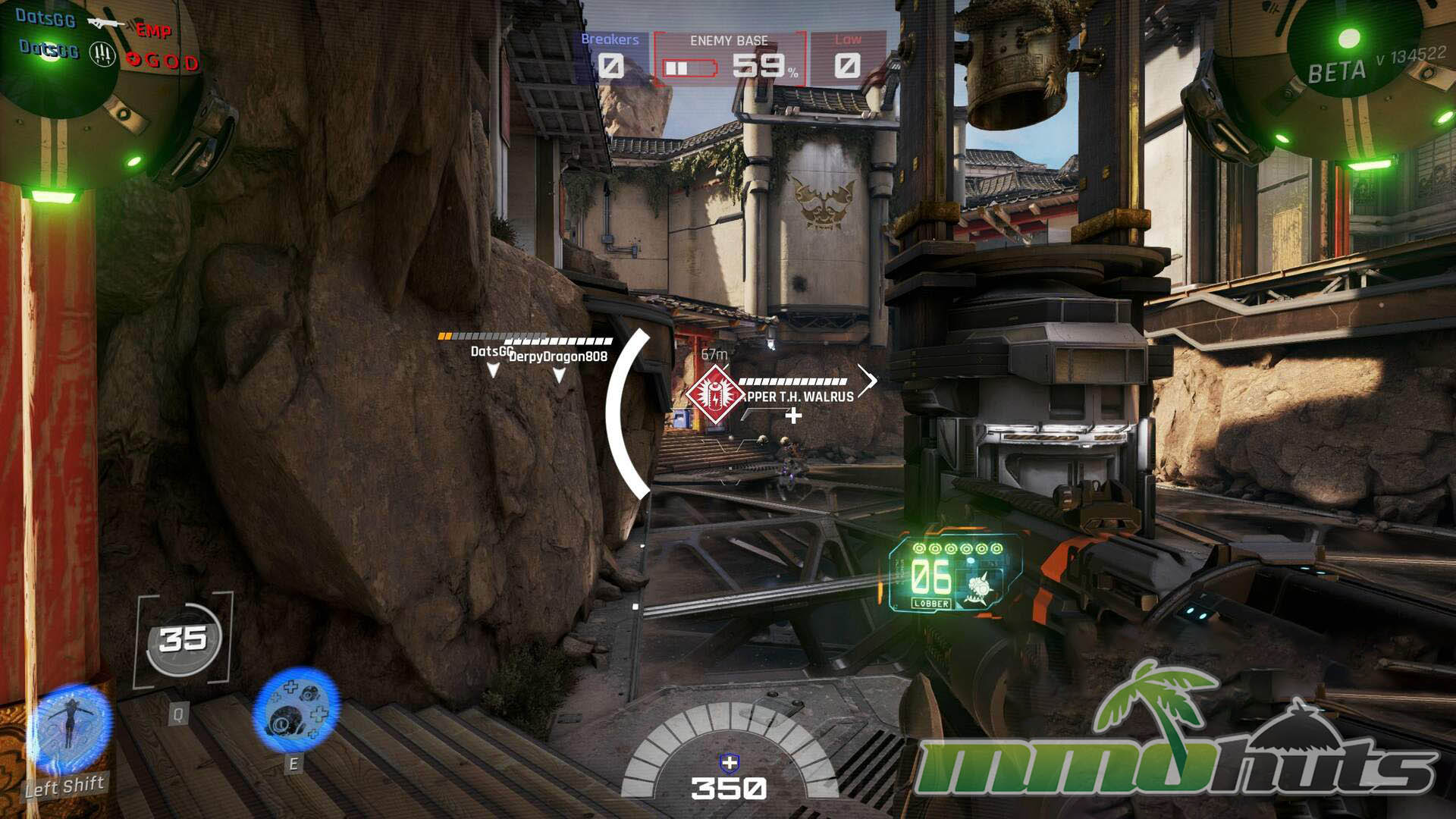
Getting around is one of LawBreakers’ strongest points. Every character has a Shift movement option that supports their role, such as bursts of speed, evasive dodges, or more aggressive repositioning. The best moments come from using mobility to create unfair fights, dropping onto a target from above, escaping just long enough to reload and re-engage, or taking a risky route to arrive on an objective first.
Not every class feels equally nimble, and some kits are intentionally heavier. That can be jarring if you come in expecting constant arena-style sprinting across the whole roster. Still, the map scale keeps slower roles relevant, and smart rotations usually matter more than raw top speed.

Objectives That Set the Stage
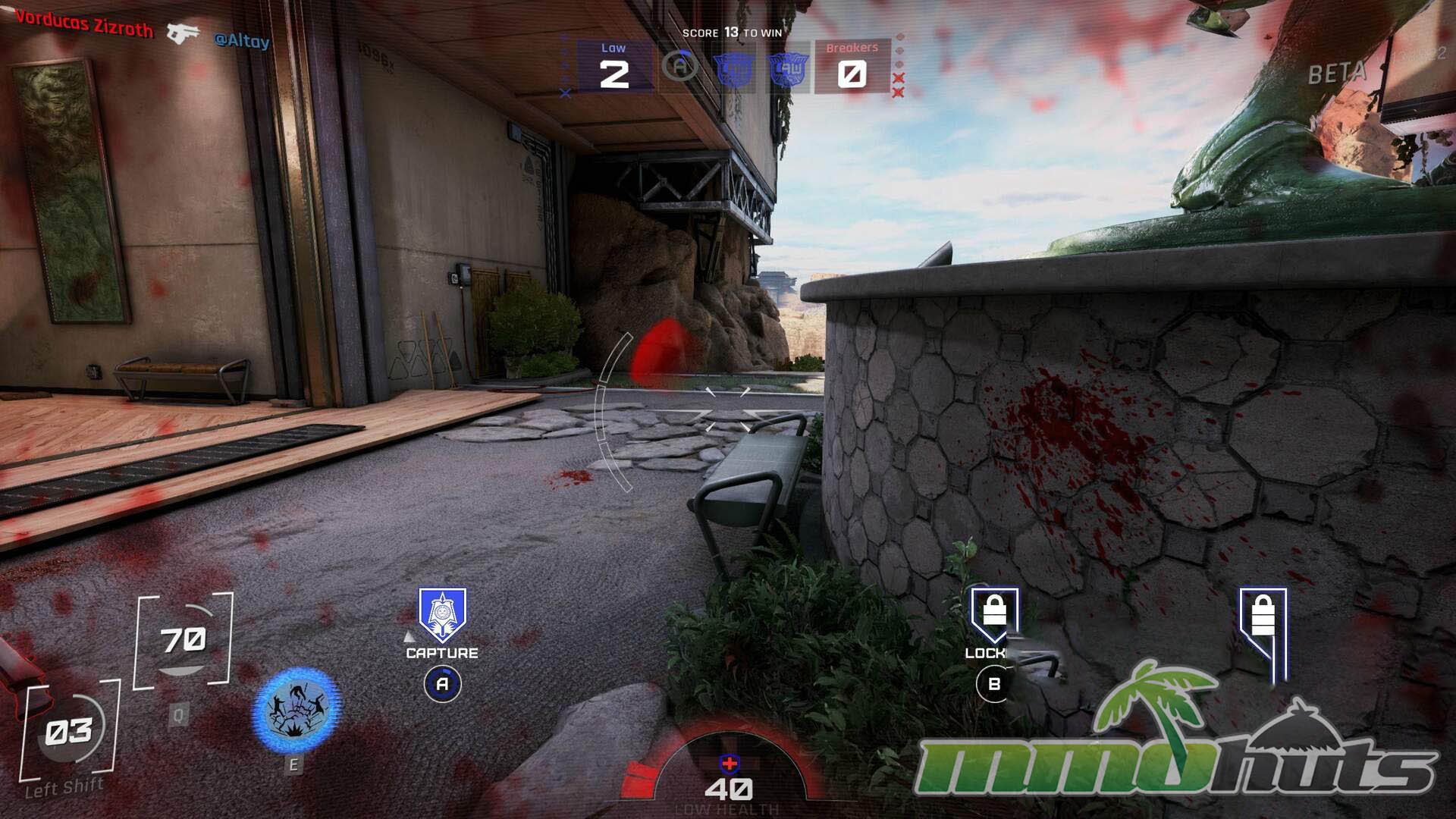
The primary modes are Overcharge and Turf War. Even without prior knowledge, most players will recognize the foundations, Overcharge resembles a tug-of-war capture-and-deliver format, while Turf War is a multi-point control mode built to force team fights.
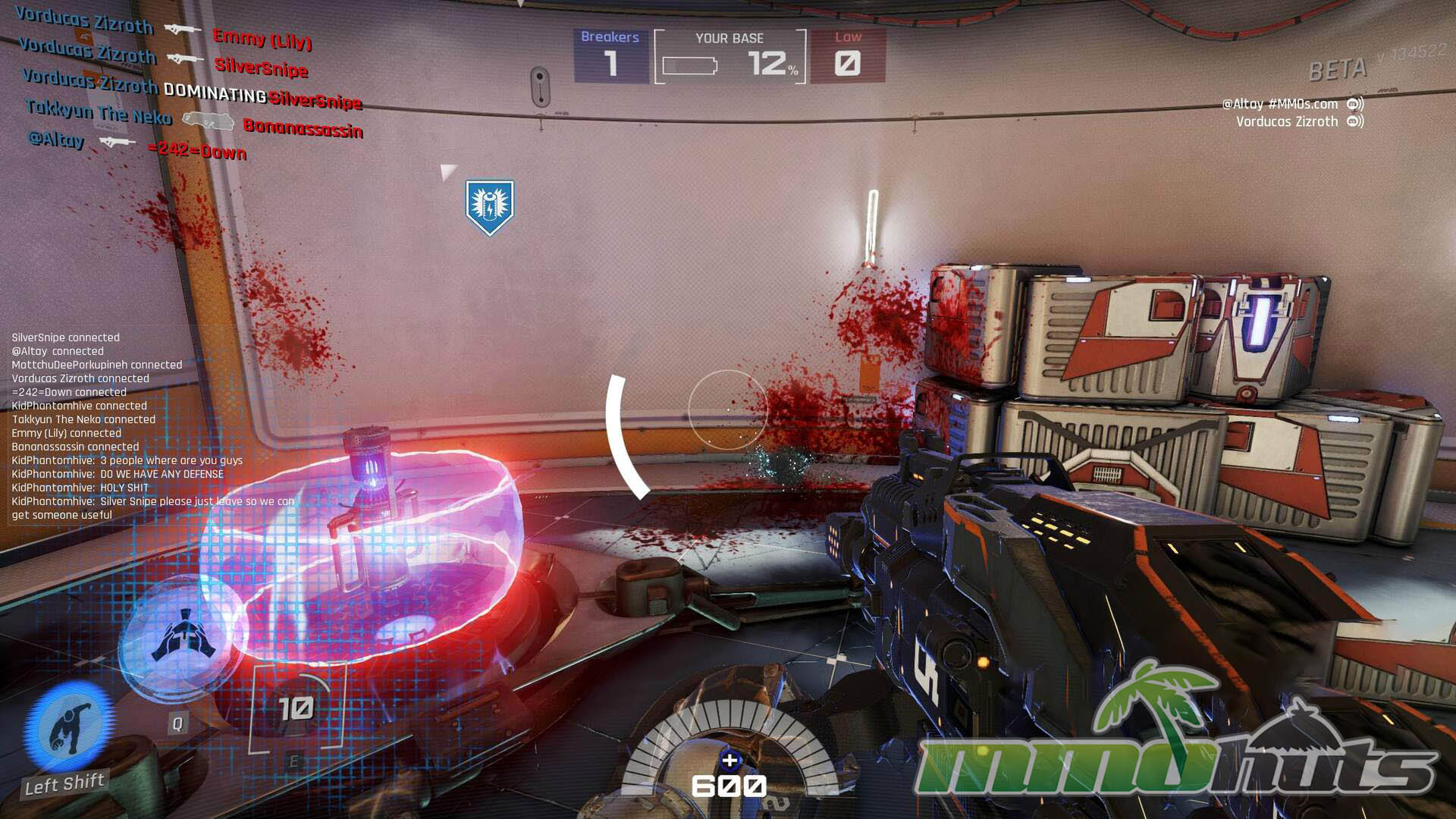
In Overcharge, teams contest a battery spawn, then fight to transport it and build charge. Filling the meter to 100 percent secures a point, and matches are played as a best two-out-of-three. Turf War focuses on capturing three points, with one typically acting as the central conflict zone while the others are closer to each team’s side, creating predictable rotations and frequent mid-map clashes.
In moment-to-moment play, though, LawBreakers often feels like a high-quality team deathmatch with an objective layer guiding where fights happen. The goals are important, but the game’s strongest pull is still the gunplay and movement, and it is easy to get absorbed in chasing duels while the objective quietly decides the winner.
Stash Boxes and Cosmetic Progression
Progression is tied to Stash Boxes, which are essentially loot crates earned through leveling. They contain cosmetic items, such as character skins, weapon skins, and profile icons. It is a familiar structure, but it works here because it keeps rewards separate from competitive power. If you enjoy sticking with a main class, the cosmetics provide a steady drip of customization without pressuring you to grind for gameplay advantages.
Where Expectations Can Clash With Reality
LawBreakers constantly tempts you to play it like an old-school arena fragfest. The pace, the movement toys, and the constant skirmishes all push you toward scoreboard obsession. Then the match reminds you that you are here to capture, hold, or deliver. That tension is not necessarily a flaw, but it does shape who will enjoy the game most. Players who like objectives as a framework for fights will feel at home, while those who want pure free-for-all competition may find themselves wishing for modes that remove the teamwork requirement.
Final Verdict – Good
LawBreakers delivers satisfying gunplay, strong mobility, and a roster that meaningfully changes how you approach each fight. Its objective modes are competent, but the game’s real strength is the moment-to-moment combat, where movement and aim combine into chaotic, skill-driven skirmishes. If you want a fast team shooter that feels closer to arena roots than to MOBA-style systems, LawBreakers is an easy recommendation on gameplay alone, even if its balance quirks and small community ultimately limit its long-term pull.
LawBreakers Links
LawBreakers Official Site
Lawbreakers Steam Page
LawBreakers Wikipedia Page
LawBreakers Official Twitter
LawBreakers System Requirements
Minimum Requirements:
Operating System: Windows 7, Windows 8.1, Windows 10 (64-bit versions only)
CPU: Intel Core 2 Extreme CPU QX6850/AMD A8-3870k (Quad Core CPU’s)
Video Card: Nvidia GTX 660, AMD Radeon 7870
RAM: 6 GB
Hard Disk Space: 30 GB
Recommended Requirements:
Operating System: Windows 7, Windows 8.1, Windows 10 (64-bit versions only)
CPU: Intel Core i7 -4790
Video Card: Nvidia GTX 970, AMD Radeon R9 290
RAM: 16 GB
Hard Disk Space: 30 GB
LawBreakers Music & Soundtrack
Coming soon…
LawBreakers Additional Information
Developer: Boss Key Productions
Game Engine: Unreal Engine 4
Lead Designer: Cliff Bleszinki
Reveal Date: August 28, 2015
Alpha: June 18 – June 19, 2016
Closed Beta 1: March 16 – March 19, 2017
Release Date: August 7, 2017
Shut Down Date: May 14, 2018
Development History / Background:
LawBreakers was the debut release from Boss Key Productions, the studio founded by Cliff Bleszinski after his time as a design lead at Epic Games. Bleszinski’s earlier work on franchises like Unreal and Gears of War shaped expectations for a fast, punchy shooter, and LawBreakers was positioned as a modern team FPS with strong arena DNA.
The project surfaced publicly after being teased years earlier under the code name Project BlueStreak, and it was published by Nexon as part of the company’s broader push into the North American market. In the wider shooter landscape, LawBreakers arrived alongside other Team Fortress 2-inspired, class-based games such as OverWatch and Paladins, competing for the same audience of players who enjoy defined roles and ability-driven teamplay.
During development, the game’s business model shifted. It was initially discussed as a free-to-play title, but Boss Key Productions later moved to a buy-to-play approach. Alpha sign-ups began on April 21, 2016. The first alpha test ran from Jun 18, 2016 to June 19, 2016. Closed Beta testing started on March 16, 2017 and lasted through March 19, 2017. Lawbreakers launched on August 7th, 2017, and service ultimately ended on May 14, 2018 following the closure of Boss Key Studios.