Hellgate is a fast-paced hack and slash action RPG set in a ruined, demon-overrun London. It blends Diablo-style loot chasing with shooter sensibilities, sending you through procedurally generated underground zones to farm gear, tune builds, and carve through hordes. While much of the experience plays like a solo ARPG, there were also options to group up for co-op monster slaying and engage in PvP through duels or flagged encounters.
 | Publisher: T3Fun (HanbitSoft) Playerbase: Low Type: Hack and slash MMORPG PvP: Duels/Flagged Open-World Release Date: October 31, 2007 Shut Down Date: December 31, 2015 Pros: +Snappy, kinetic combat. +Frequent loot rewards. +Distinct class choices. Cons: -Drab, samey scenery. -Questing can feel like a checklist. -Many weapons lack personality. |
Hellgate Overview
Hellgate is a post-apocalyptic hack and slash RPG developed by Flagship Studios, built around quick engagements, randomized dungeons, and a steady stream of gear upgrades. The moment-to-moment loop is simple but effective: push through instanced areas, wipe out dense packs of enemies, and constantly replace equipment as new drops roll in. Combat supports a surprising amount of variety for its era, thanks to multiple class archetypes and several skill trees per class that let you lean into melee, ranged, pets, or spell-like abilities depending on your faction choice.
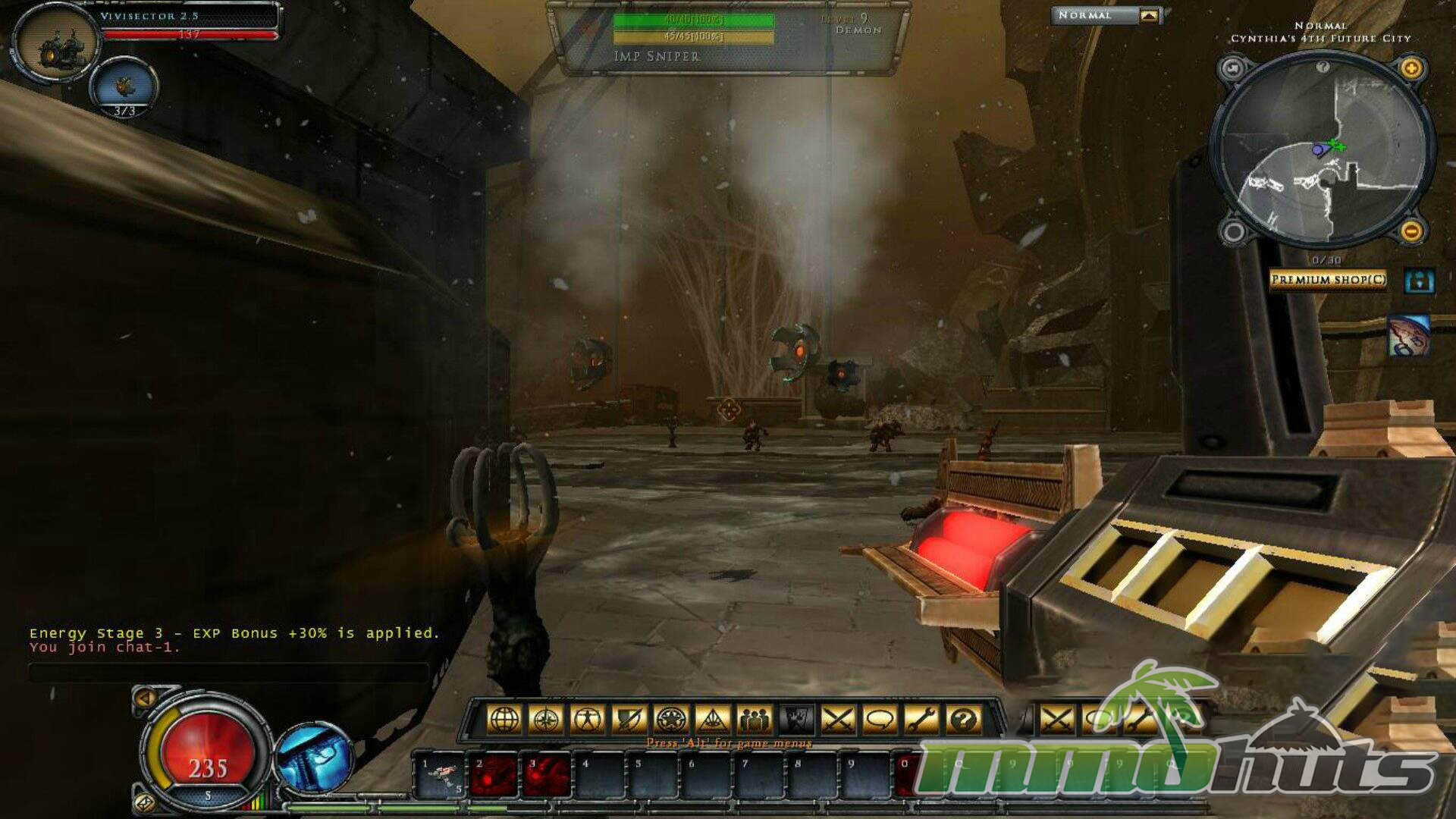
One of Hellgate’s most unusual traits is how it can shift between perspectives. You can approach it like a third-person action RPG, or switch into a first-person view when using firearms, which changes the feel from classic click-and-slash to something closer to a looter shooter. Add in procedural layouts and randomized itemization and the game aims to keep runs from feeling identical, even if the building blocks repeat.
Unfortunately, the game never held onto a big enough community for long-term stability. HanbitSoft ultimately closed the service (again) on December 31, 2015, leaving Hellgate as a memorable, flawed experiment that tried to merge ARPG loot obsession with MMO structure.
Hellgate Key Features:
- Class Variety – Three factions and six classes complete with respective skill trees.
- Custom Playstyle – Choose third-person melee action or a first-person firearm approach.
- Lively Combat – Rapid fights and heavy enemy density keep encounters moving.
- High Loot Drops – Regular loot showers encourage frequent gear swaps and upgrades.
- Procedural World – Randomized areas and drops help runs play out differently.
Hellgate Screenshots




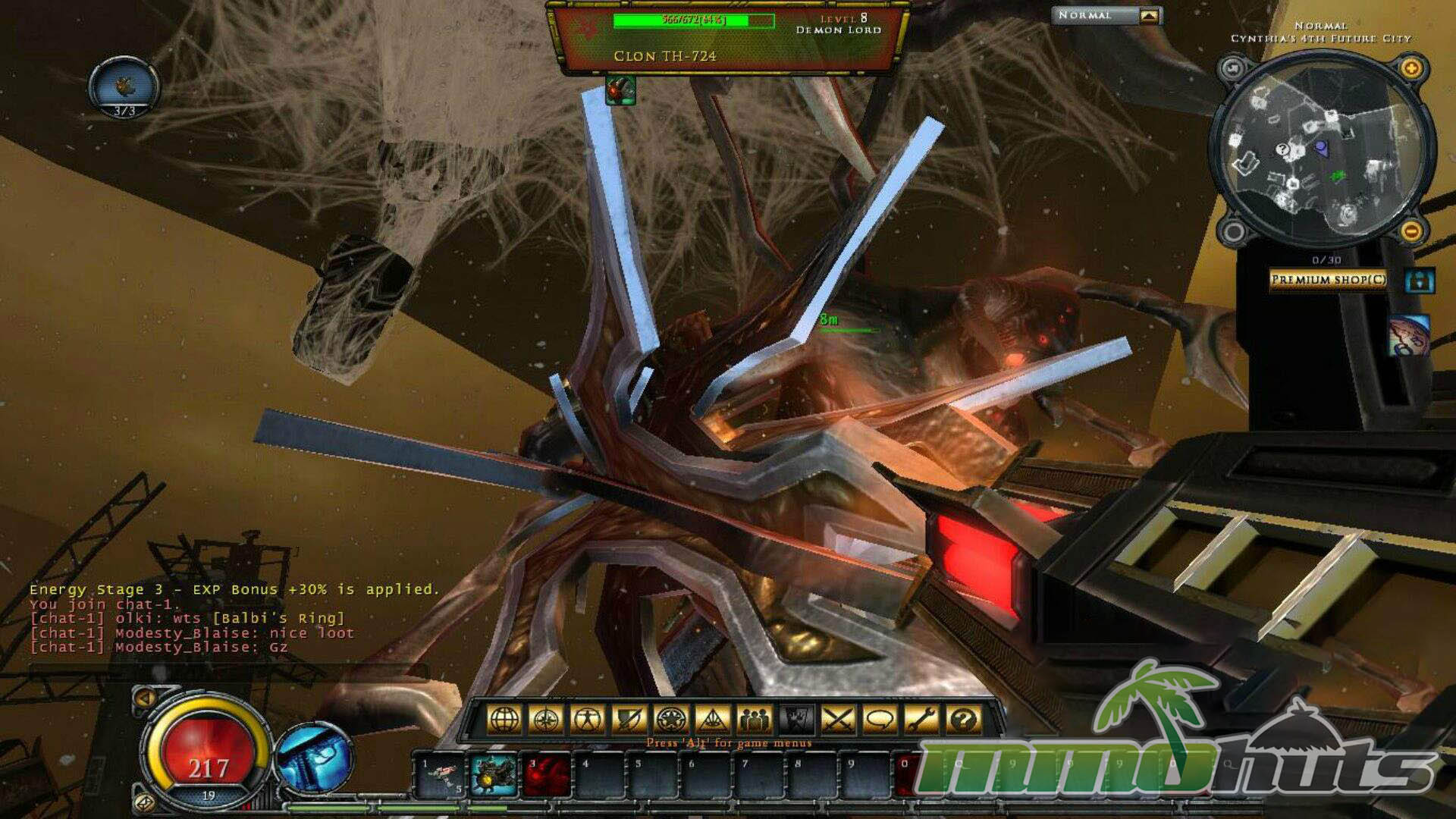
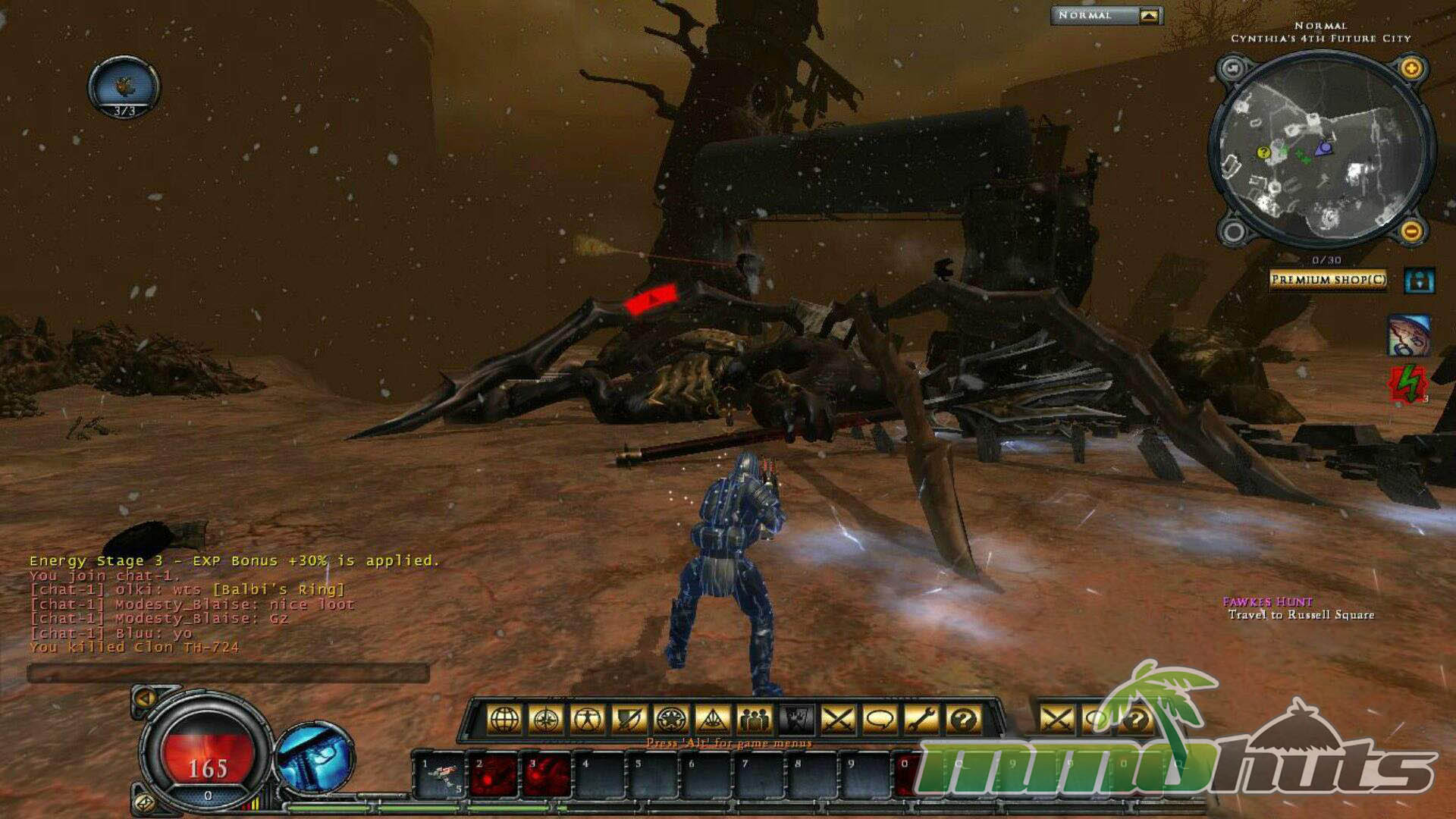
Hellgate Featured Video

Hellgate Classes
Templar:
Guardian – A frontline protector built around mitigation and traditional sword-and-shield brawling.
Blademaster – A dual-wield specialist focused on aggressive pressure and high melee output.
Hunter:
Marksmen – A straightforward ranged combatant designed for consistent firearm damage.
Engineer – Uses conventional weapons but shines with utility, gadgets, and deployable helpers.
Cabalist:
Summoner – A caster who calls on elemental and demonic forces to fight alongside them.
Evoker – An offense-heavy mage channeling destructive energy, including lightning, fire, spirit, and vampiric effects.
Hellgate Review
Hellgate drops you into a London that has already lost the war. Humanity is scattered, the streets are broken, and the real “city” becomes a network of tunnels, stations, and ruins where demons pour in. From the start it is clear what the game wants to be: a loot-driven action RPG with MMO trimmings, designed for players who enjoy clearing rooms quickly and watching numbers climb through constant upgrades.
London After the Fall
The setting is bleak by design, and it succeeds at selling a world that has been hollowed out. The downside is that many outdoor and transitional spaces lean heavily into gray-brown palettes and repetitive textures, which can make long sessions feel visually flat. Because so much of the content is assembled from procedural chunks, you often recognize the same structural pieces reappearing, even when the layout itself changes.
Where the game holds up better is in character presentation. Gear swaps noticeably alter your silhouette, and the animations communicate class identity well. The Blademaster, in particular, looks fluid in motion, with quick, controlled slashes that give melee combat a sense of rhythm rather than simple button mashing. In busy fights the movement and hit reactions do a lot of work to make the action readable and satisfying.
Quests, Small Stories, and the Grind
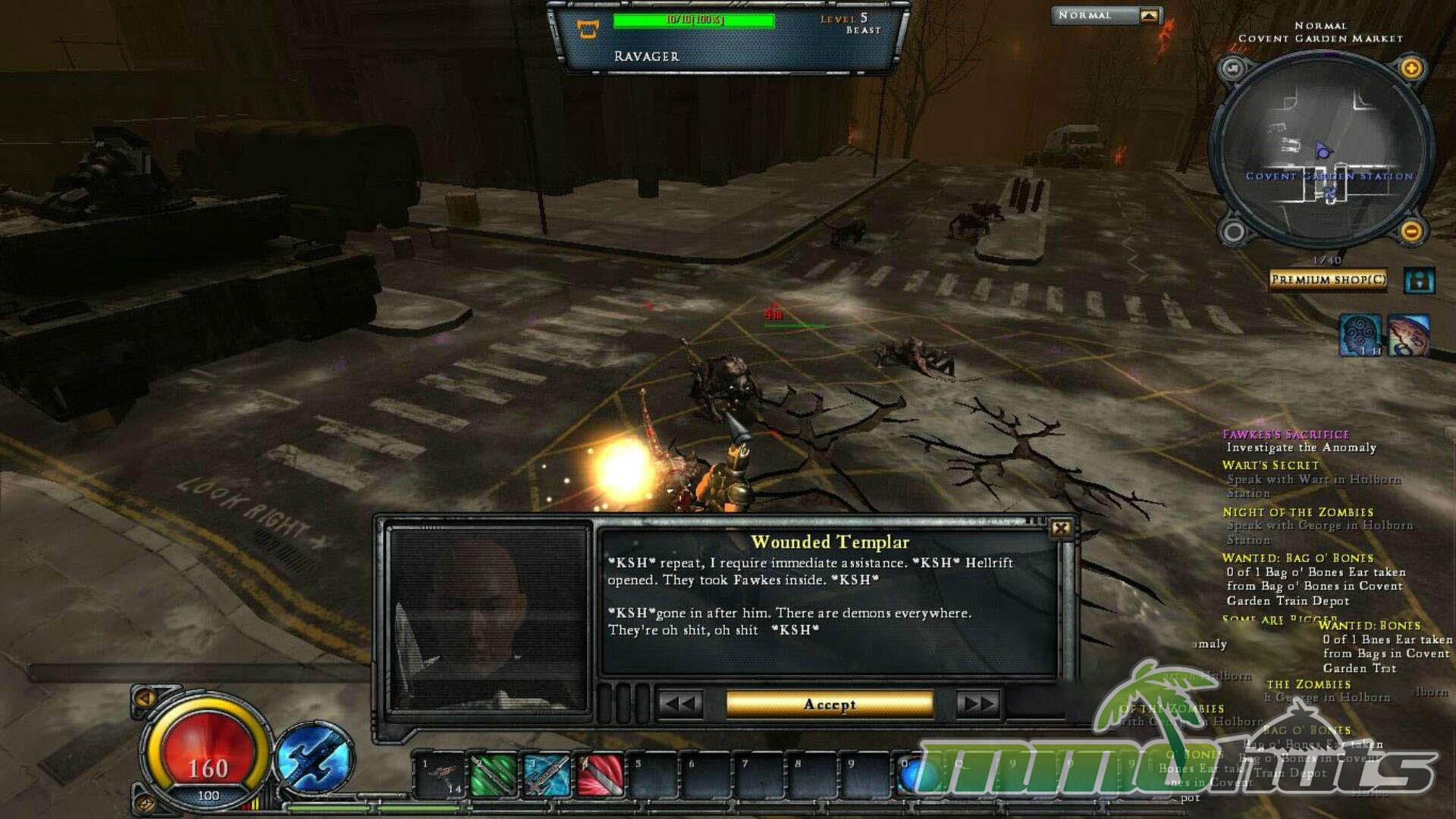
The main narrative is serviceable, enough to justify moving from one hotspot to the next, but it is rarely the reason you keep playing. Hellgate’s best storytelling tends to come from smaller side missions and short character moments that hint at how people are surviving in the margins. These optional tasks add texture to the setting, even when the game does not linger on them for long.
Mechanically, questing is where the repetition shows most. Many objectives boil down to clearing a required number of enemies and then dealing with a tougher target at the end. The saving grace is that the combat loop is quick enough to make this structure tolerable for a while, especially if you enjoy the “one more run” cadence that loot games thrive on.
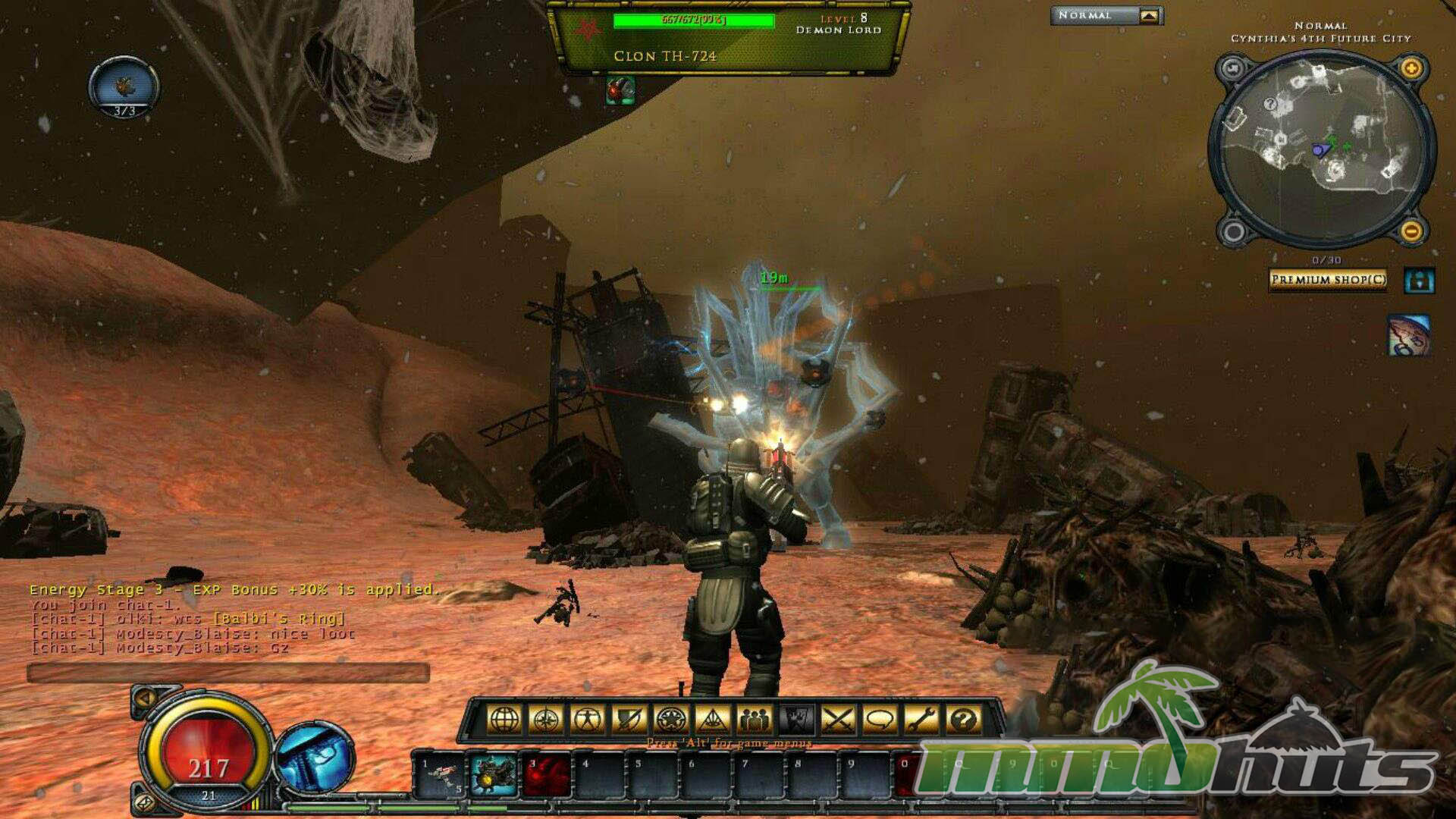
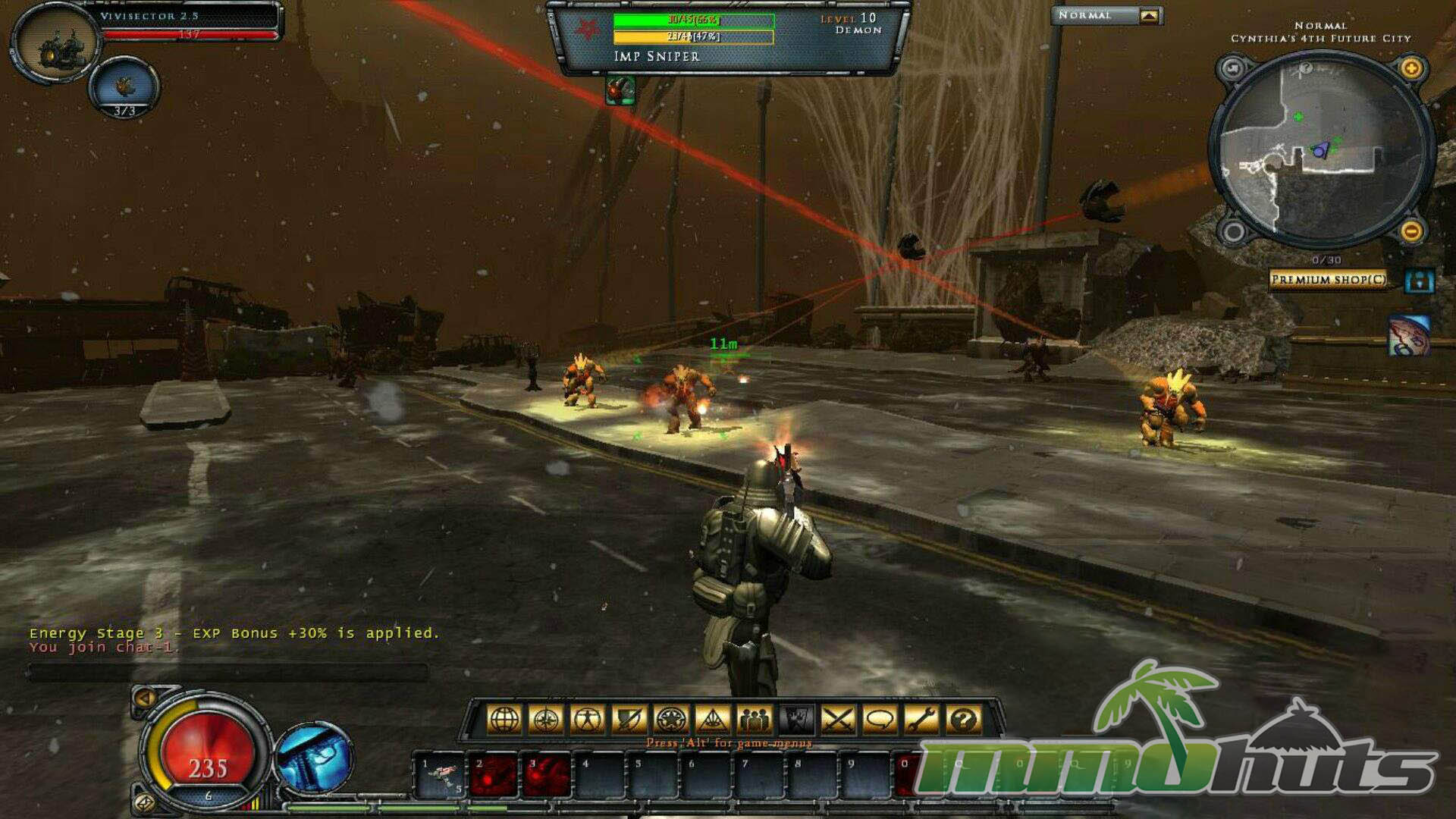
Slashing and shooting through dense enemy groups is still the highlight. Hellgate supports two distinct feels depending on what you equip: third-person hack-and-slash for melee, and a first-person view when using guns. That perspective shift is more than a novelty, it changes pacing and positioning, and it helps the game stand out among other ARPGs of its time.
Weapon variety is mixed. Swords, shields, and guns do the job, but many options feel like incremental stat sticks rather than truly different tools. The Grappler is an exception, a strange utility weapon that pulls enemies toward you. It is not always optimal, but it is memorable, and it adds a bit of personality to encounters that might otherwise blur together.
Build Crafting and Skill Paths
Class choice matters, but specialization matters just as much. Each class can branch into three active skill trees, plus a passive track, which encourages committing to a role rather than spreading points too thin. You can experiment early, then consolidate once you understand what your class does best, whether that means leaning into drones and robotics as an Engineer or focusing on lethal melee techniques as a Blademaster.
The total number of abilities is not endless, but the kit is functional, and it supports the game’s core goal: keeping you moving forward through waves of enemies without long downtime. Where exploration disappoints is in the lack of meaningful discovery. Checking every corner rarely pays off, so the optimal play often becomes a straight sprint between objectives and fights, which undercuts the idea of a ruined city worth scavenging.
Loot Flow and Inventory Management
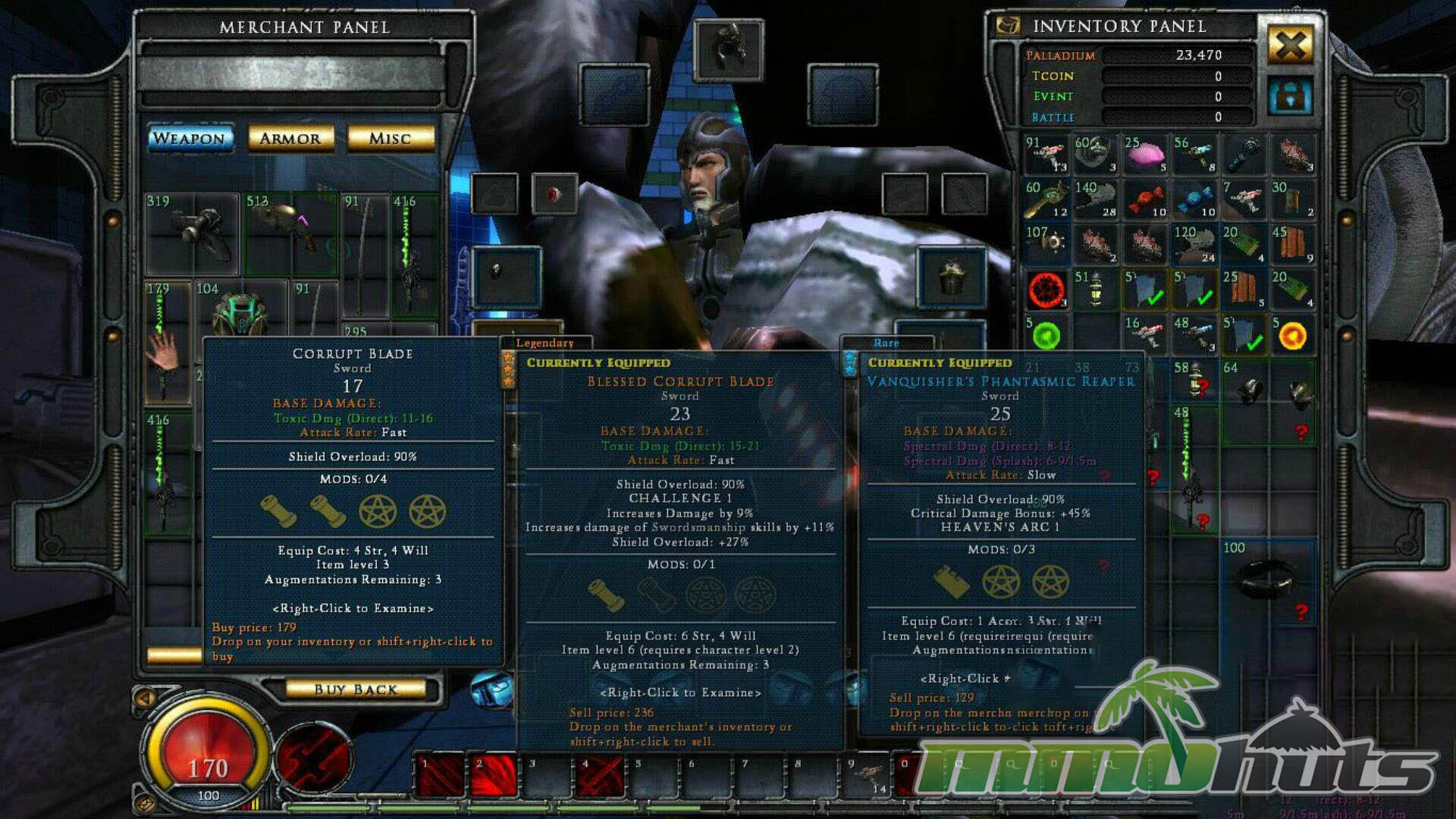
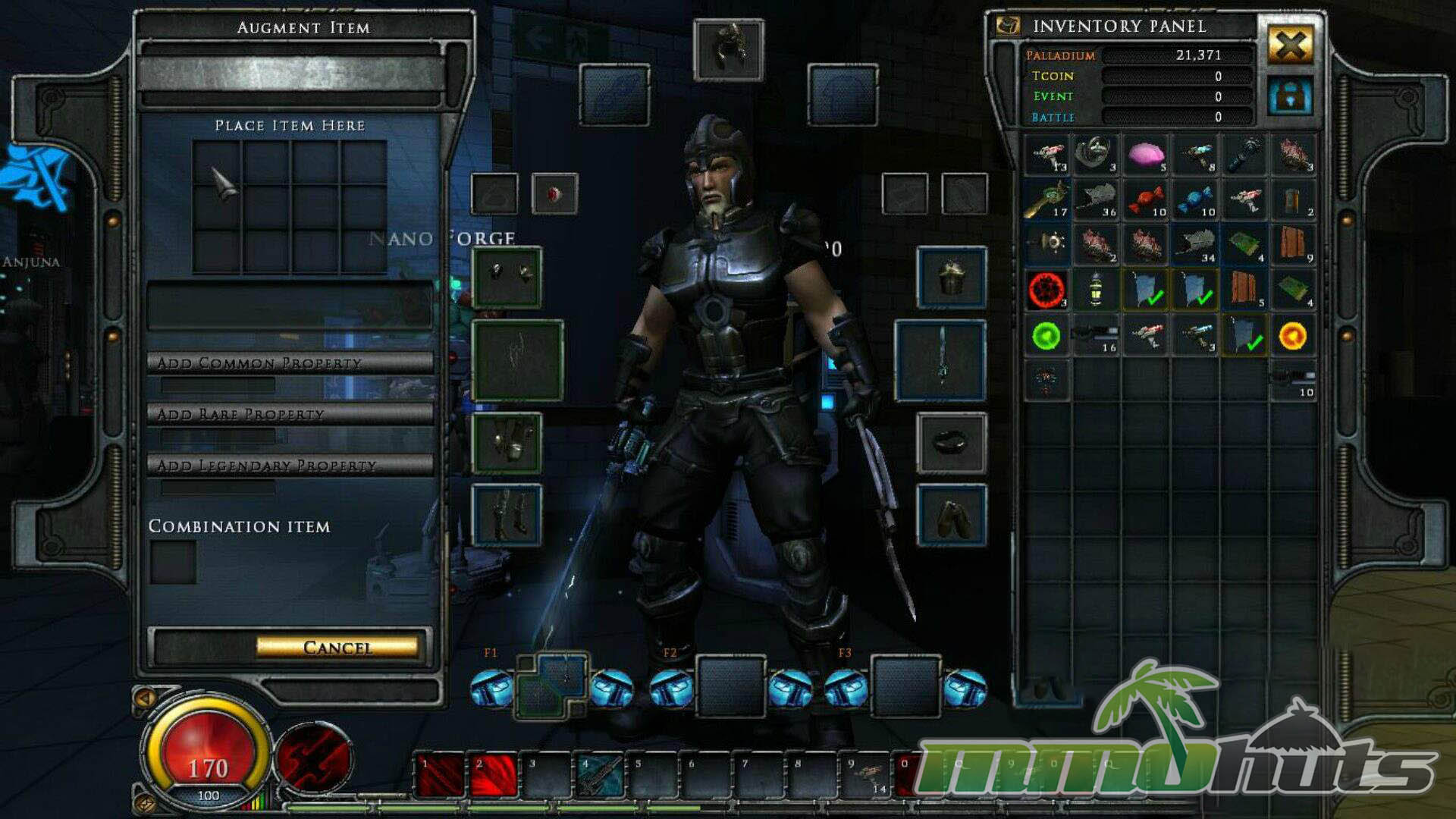
Hellgate understands the appeal of loot. Bosses and dense encounters regularly spill out gear, and the game pushes you into a satisfying loop of evaluating, replacing, and dismantling equipment. The inventory system uses a grid layout reminiscent of older ARPGs, where item size matters and packing your bag efficiently becomes its own small puzzle.
Identifying gear to reveal special properties is also part of the routine. Early on, limited identification resources can make it frustrating to judge drops immediately, but it quickly turns into a familiar loot-game habit: inspect what looks promising, equip upgrades, and break down the rest into materials for crafting and rebuilding. That constant cycle is one of Hellgate’s strongest hooks, it keeps progression feeling active even when quests themselves are repetitive.
Final Verdict – Great
Hellgate delivers a rewarding combat loop and a strong premise, and it deserves credit for attempting a hybrid of ARPG loot chasing and MMO-style structure. Its weaknesses are just as clear: environments can feel lifeless and visually monotonous, exploration rarely pays off, and many quests lean too hard on kill-count busywork. Still, for players who value fast action and frequent gear upgrades above all else, it remains a distinctive entry from its era, one with flashes of brilliance even if the overall package never fully reached its potential.
Hellgate System Requirements
Minimum Requirements:
Operating System: Windows XP
CPU: 1.8GHz
Video Card: Direct X 9.0 with 256MB Ram
RAM: 1GB
Hard Disk Space: 8G
Recommended Requirements:
Operating System: Windows XP/Vista/Win 7
CPU: Multi Core 2GHz and above
Video Card: Direct X 9.0 with 256MB Ram+
RAM: 2GB+
Hard Disk Space: 8G
Hellgate Online Music & Soundtrack
Hellgate Online Additional Information
Developer: Flagship Studios
Publisher: Namco Bandai Games, Electronic Arts, HanbitSoft, T3 Fun
Composer: Cris Velasco
Release Dates:
North America: October 31, 2007
Asia: November 2, 2007
Australia: November 1, 2007
South Korea: February 22, 2008
Shut Down Date: December 31, 2015
Development History / Background:
Hellgate was developed by California based video game company Flagship Studios. In 2008, Flagship Studios was seized after filing for bankruptcy and was used as collateral tied to funding received from Comerica Bank. While active development stopped, US and EU server support continued under Namco Bandai Games until January 31, 2009. HanbitSoft later acquired the title and reworked it into Hellgate London: Resurrection. The revived version first operated in Korea as of June 2011, and T3 Fun subsequently published the free-to-play release for America.