For Honor is a medieval-flavored 3D hack-and-slash action MOBA built around precision melee duels and team fights. Rather than relying on twitch shooting, it asks you to read opponents, manage spacing, and time blocks, parries, and counters while three rival factions battle for dominance.
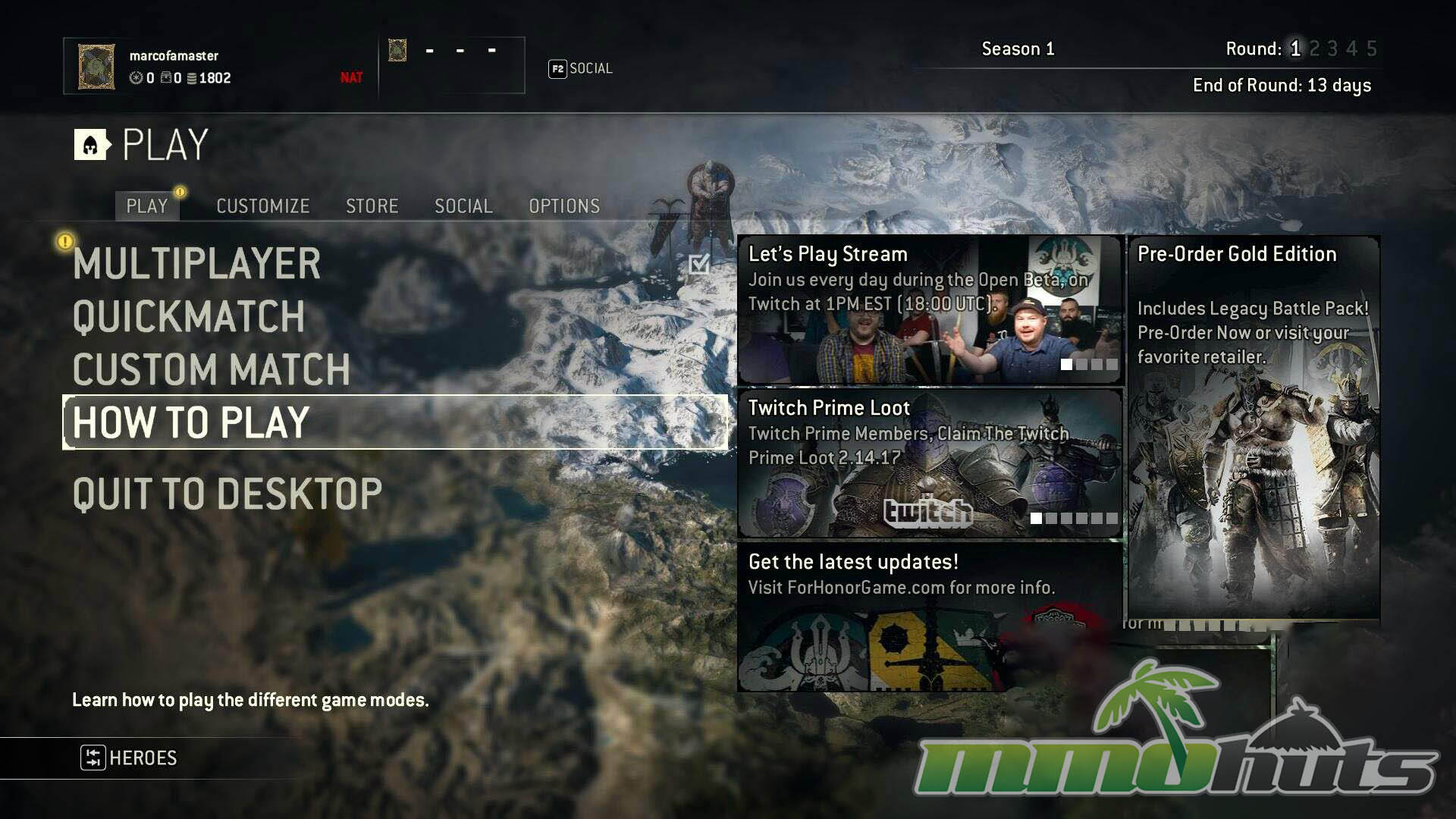 | Publisher: Ubisoft Playerbase: High Type: Hack-and-Slash Action Release Date: February 14, 2017 Pros: +High-end visuals and convincing animation. +Tense, skill-focused melee. +Three factions with strong identity. Cons: -Peer-to-peer hosting. -Unstable connections at times. -Demanding learning curve. |

For Honor Overview
For Honor drops you into a brutal, mythic conflict where Knights, Vikings, and Samurai are locked in a war that has stretched across centuries. Ubisoft’s take on a 3D hack-and-slash MOBA focuses on close-quarters mind games, with each hero bringing their own weapon set, move list, and rhythm to fights. You can tackle the game through its story-driven single player campaign, but the long-term hook is multiplayer, ranging from focused 1vs1 Duels to larger 4vs4 modes like Dominion.
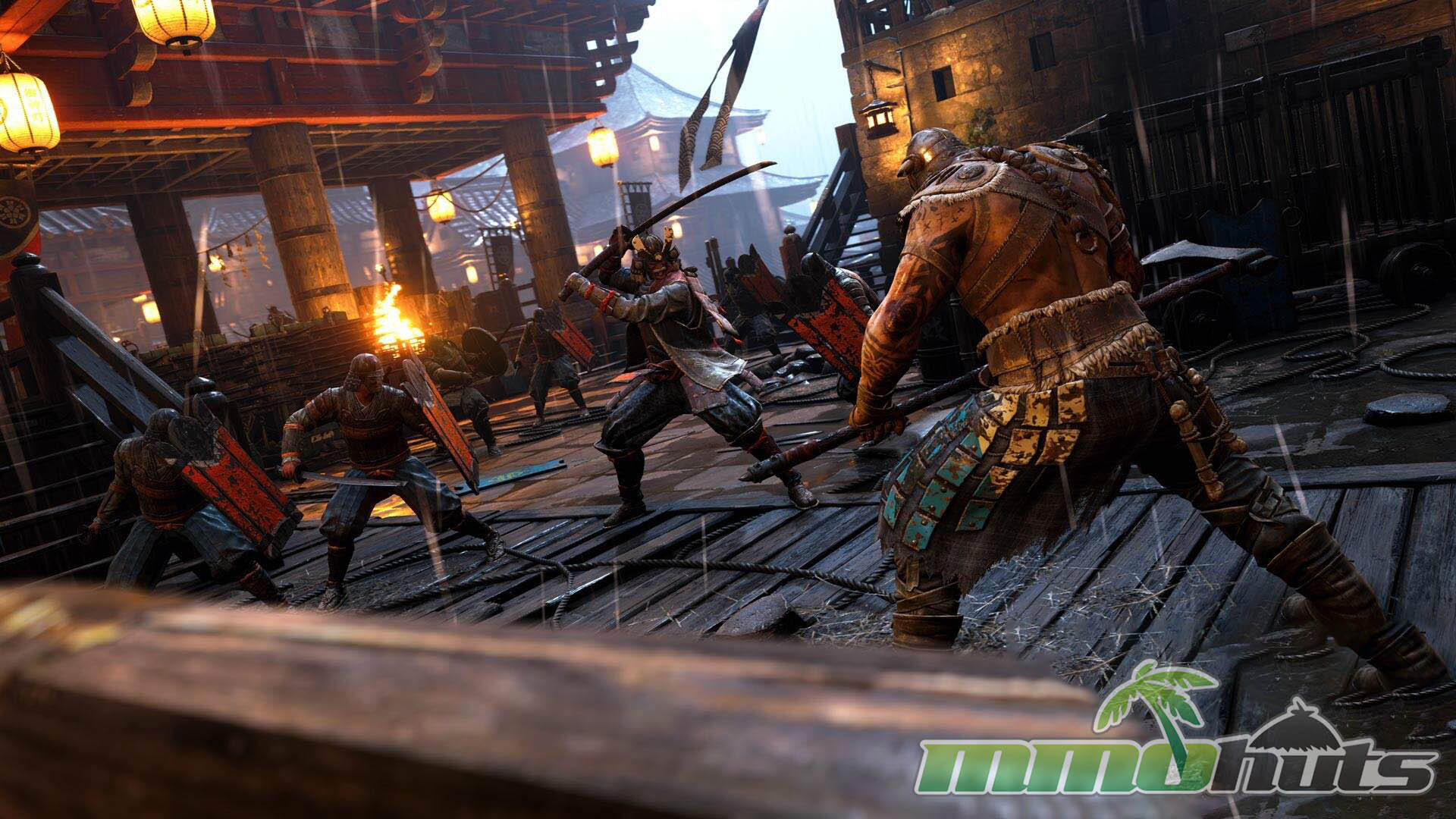
What makes For Honor stand out is how “physical” its combat feels. Attacks carry weight, animations flow naturally thanks to motion capture, and the arenas are packed with strong environmental detail. Beyond individual matches, a persistent three-way war ties sessions together as factions push and pull over territory, giving regular play a larger strategic context.
For Honor Key Features:
- AAA Visuals – battle across striking environments with detailed character models and smooth, natural-looking motion-captured movement.
- Intense Melee Action – a weapon-focused combat system built around timing, reads, and tactical decision-making rather than pure button spam.
- Three Factions – Vikings, Samurai, and Knights each bring distinct themes, gear styles, and signature fighting approaches.
- Hero Customization – earn gear through play, then tailor your hero’s look and adjust stats through equipment choices.
- Large-Scale Wars – take part in a persistent faction struggle where victories help secure and defend territory over time.
For Honor Screenshots


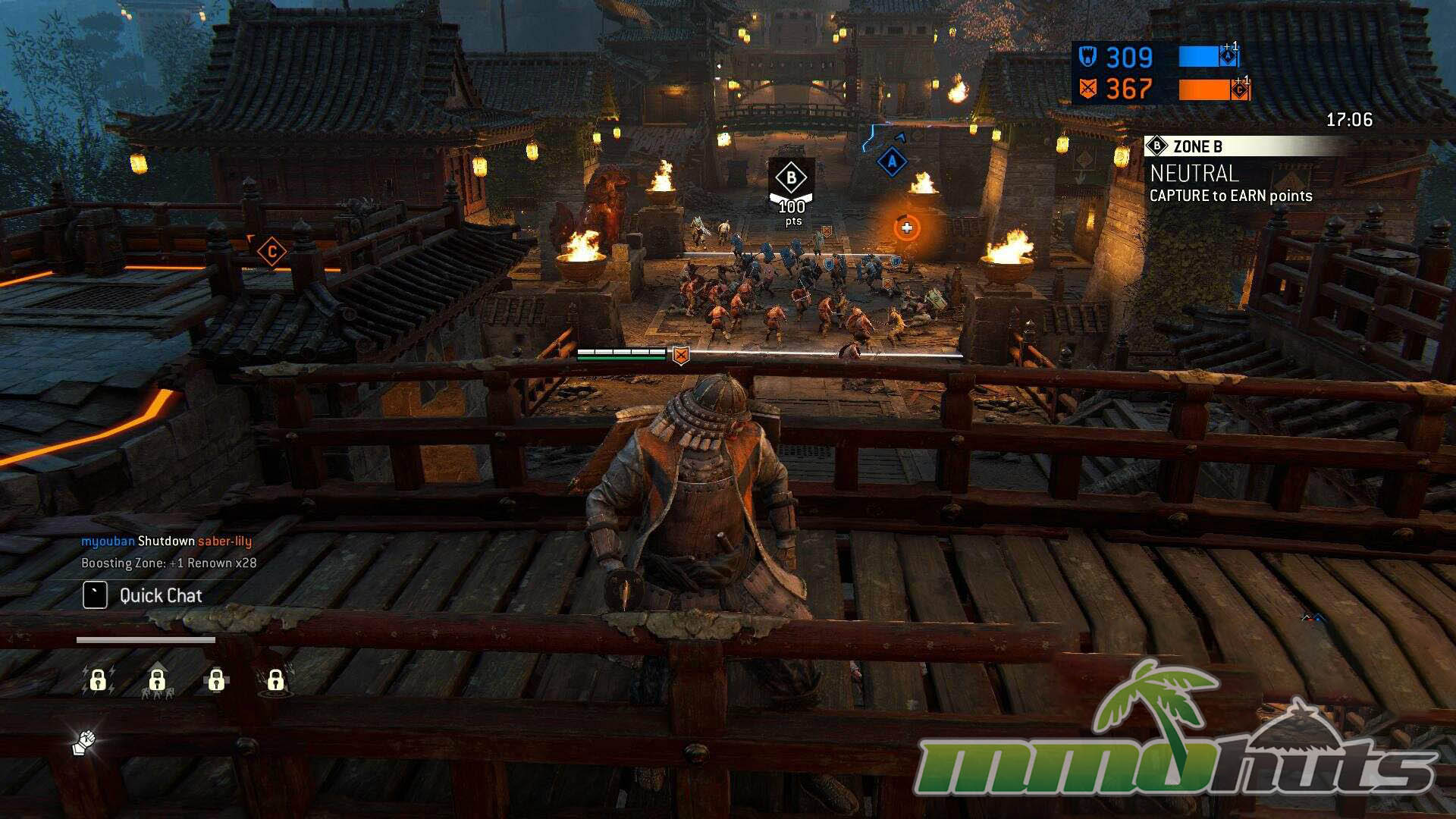
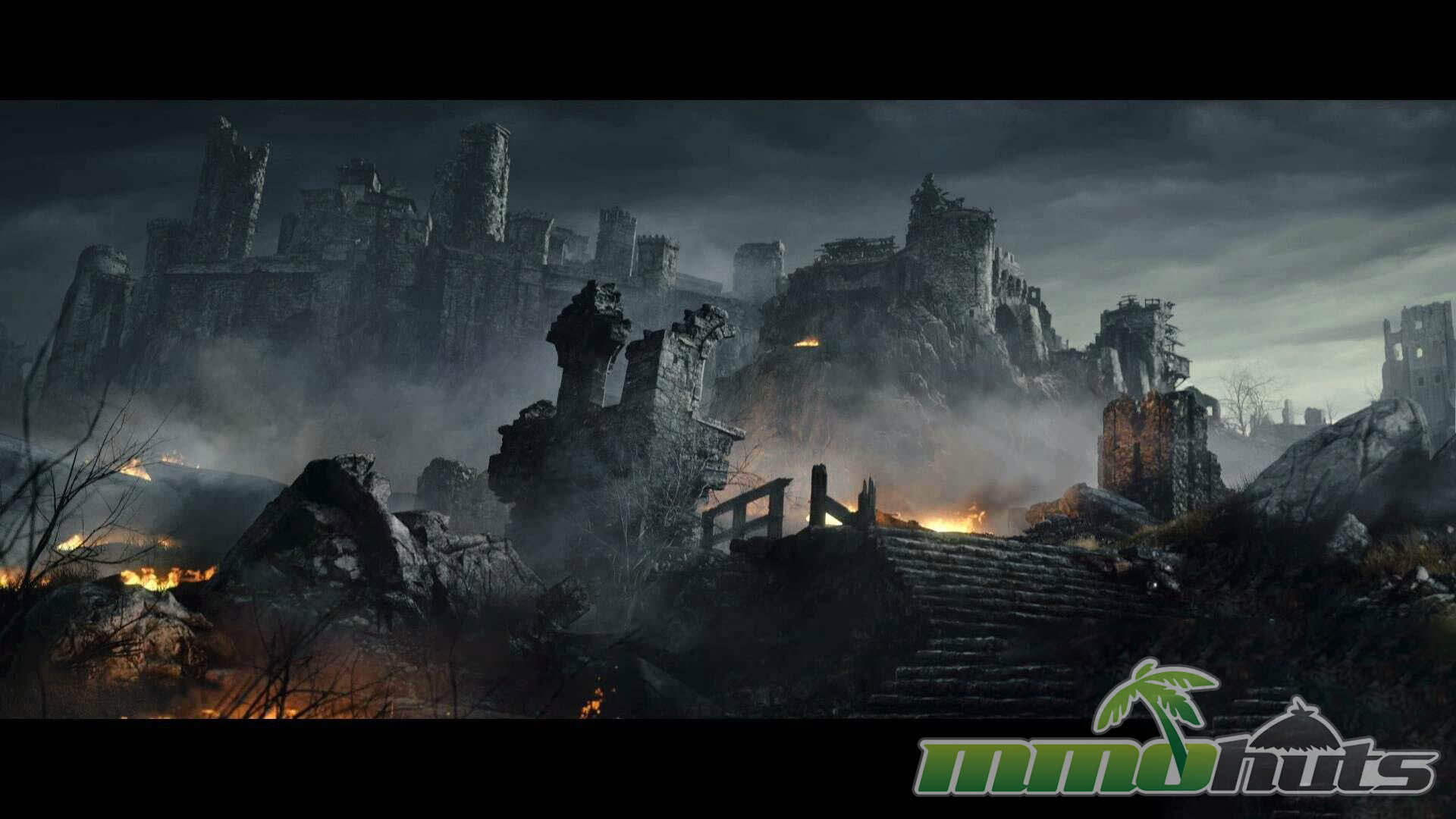
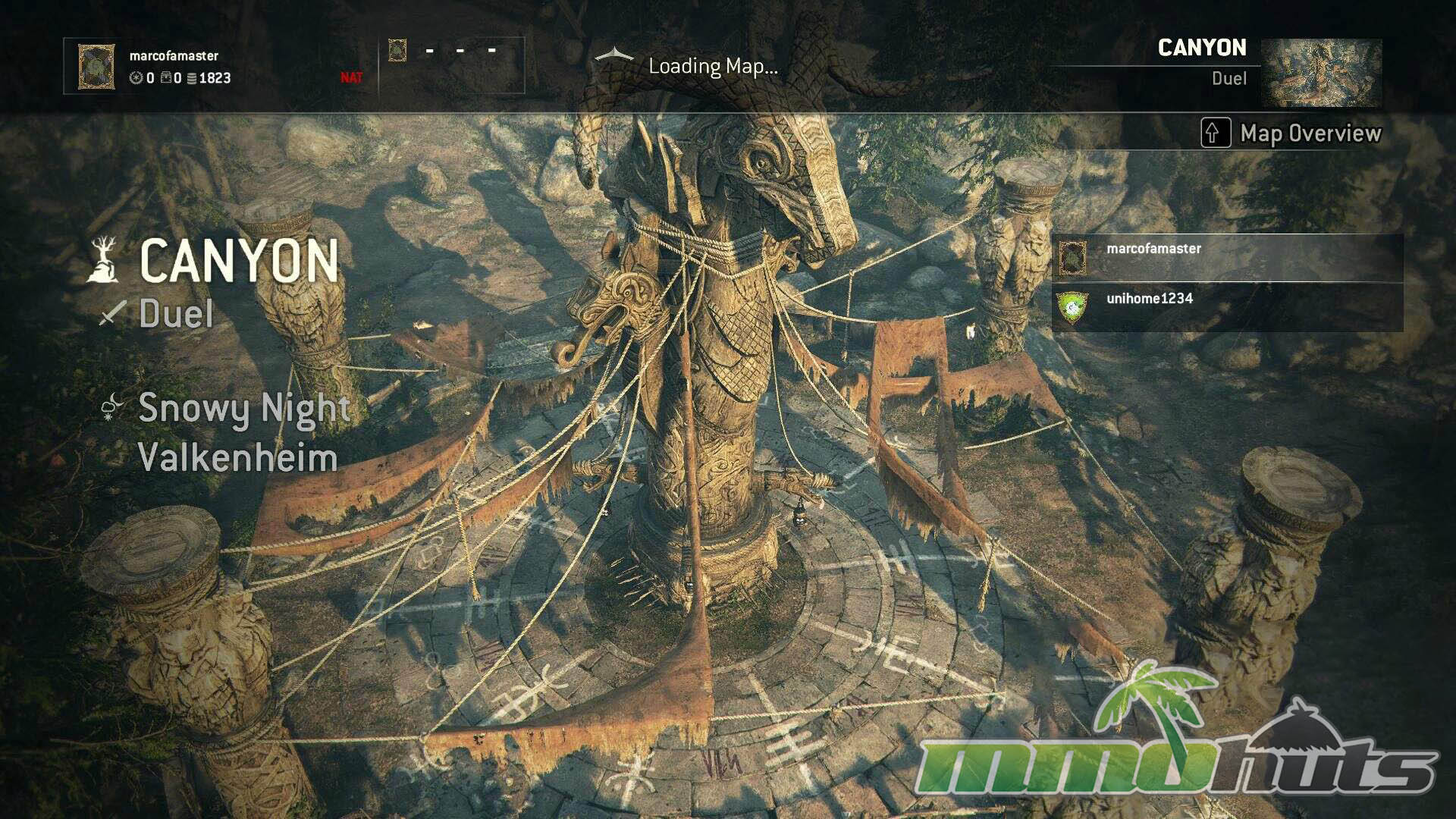
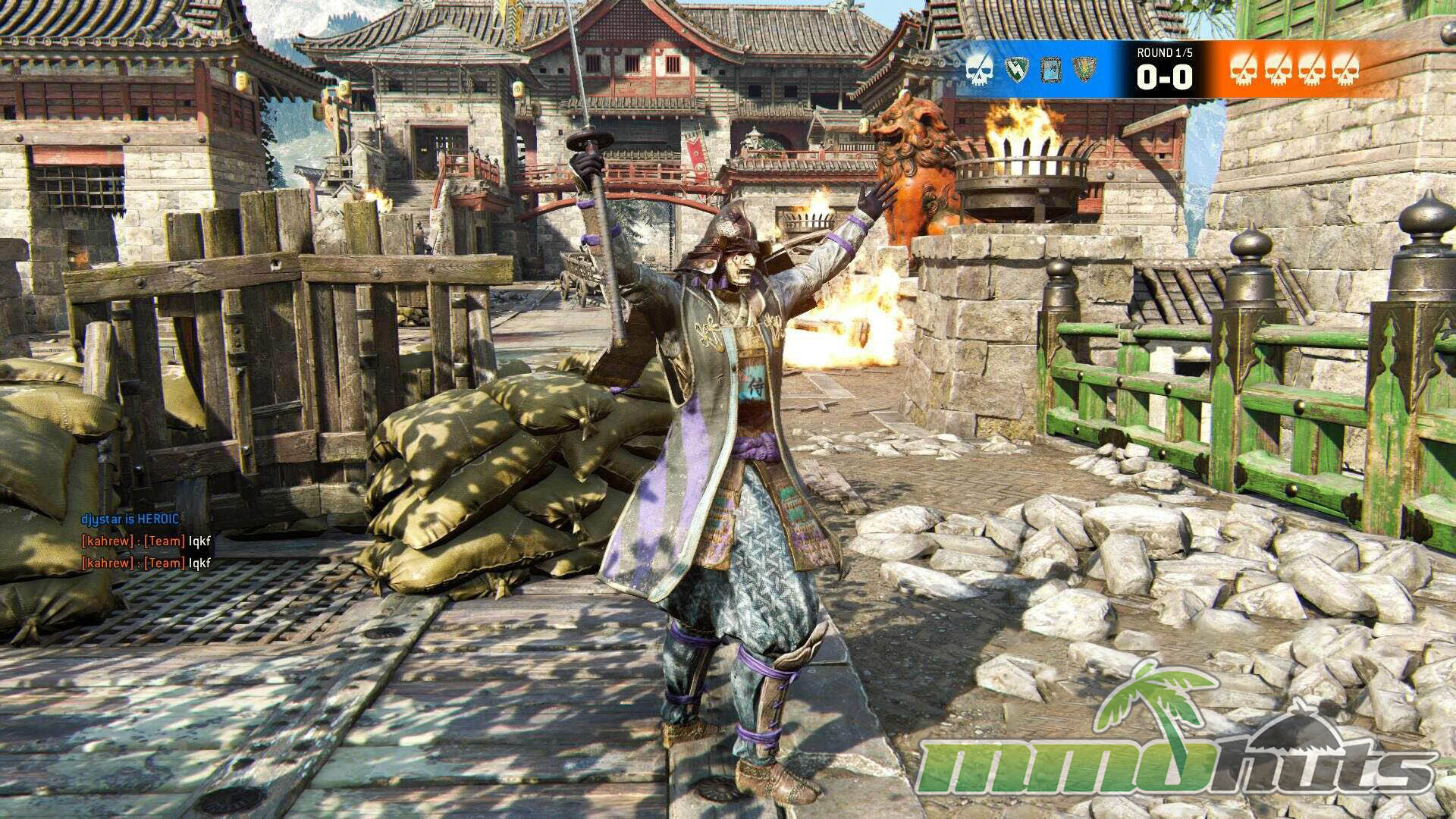
For Honor Featured Video

For Honor Review
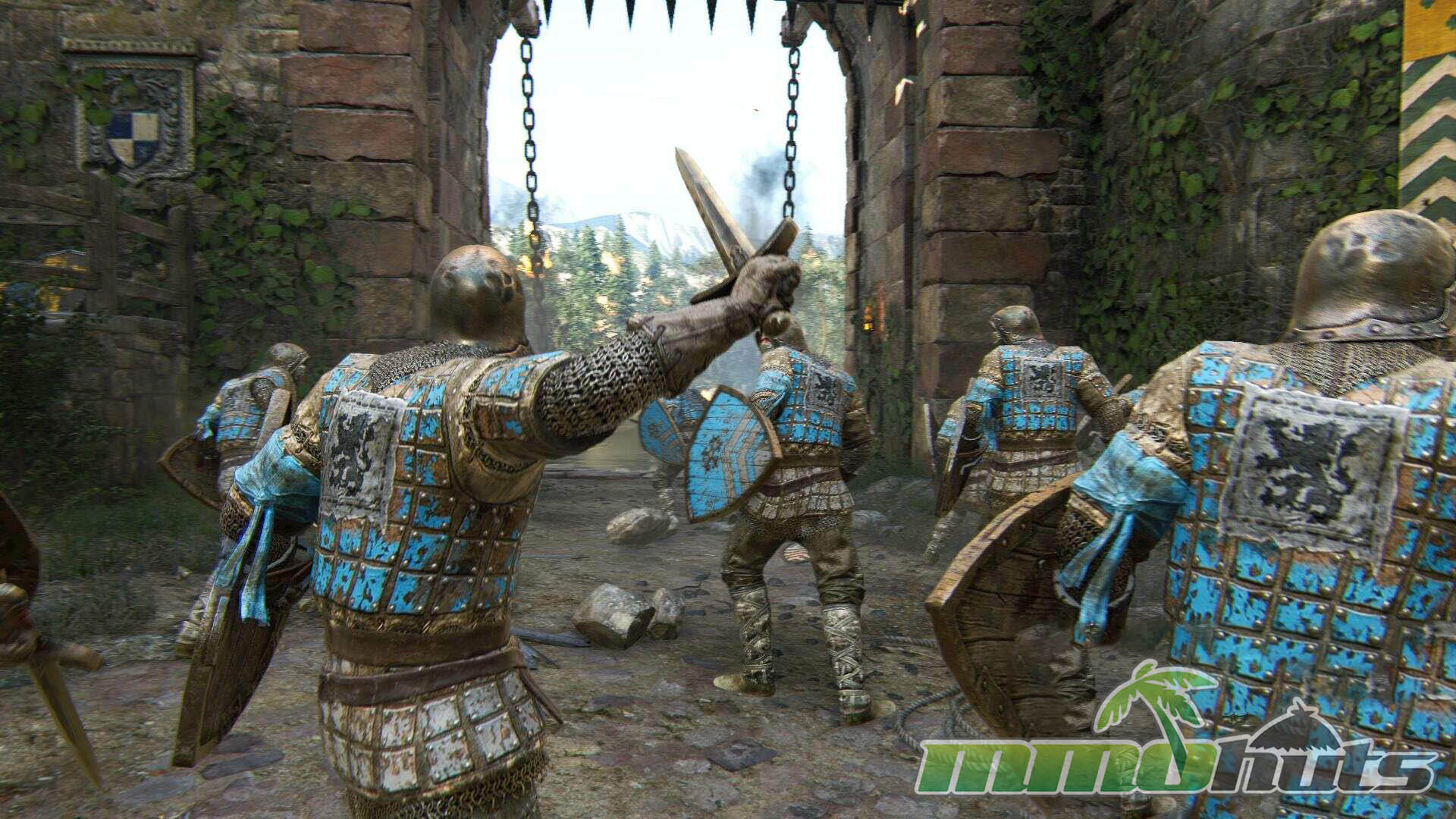
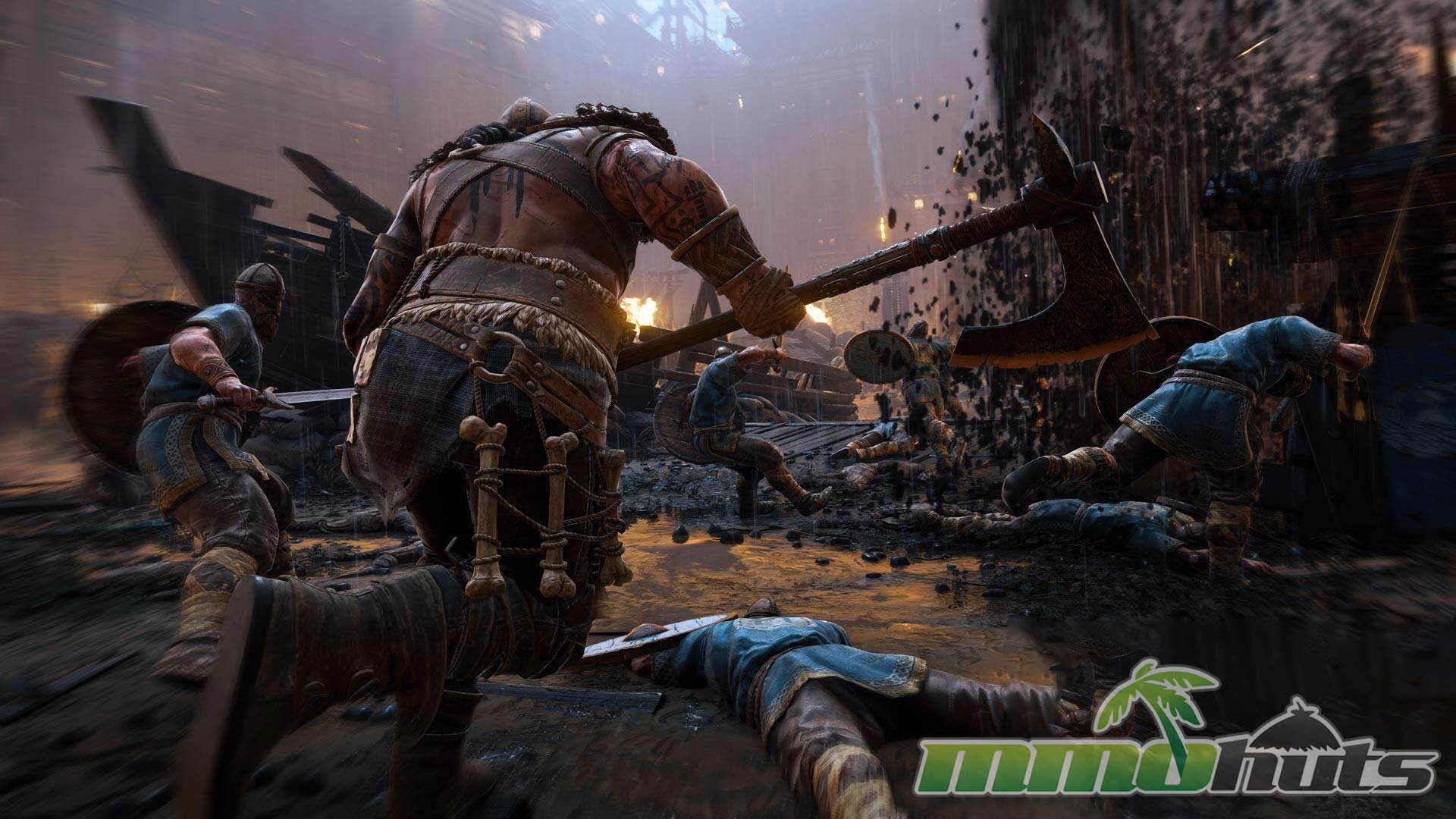
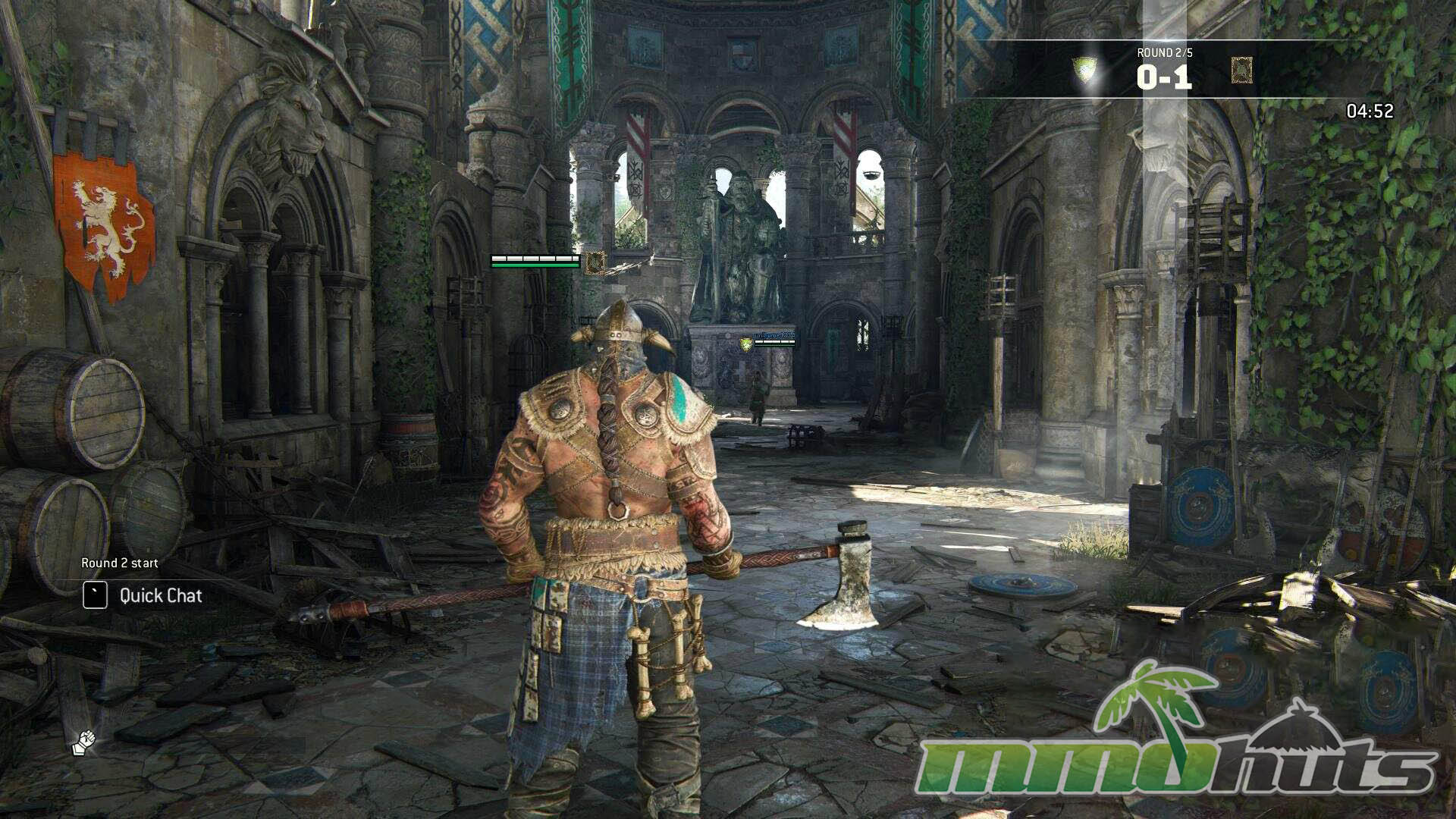
For Honor is a 3D, medieval-styled hack-and-slash built around a fantasy version of history where three warrior cultures clash for control. The production values are immediately noticeable, character armor and weapons are sharply detailed, environments are cinematic, and the motion-captured combat animations help attacks and recoveries read clearly. Audio does a lot of work too, with heavy impacts, steel-on-steel clashes, and dramatic music cues selling the chaos of a battlefield.
Picking a Side
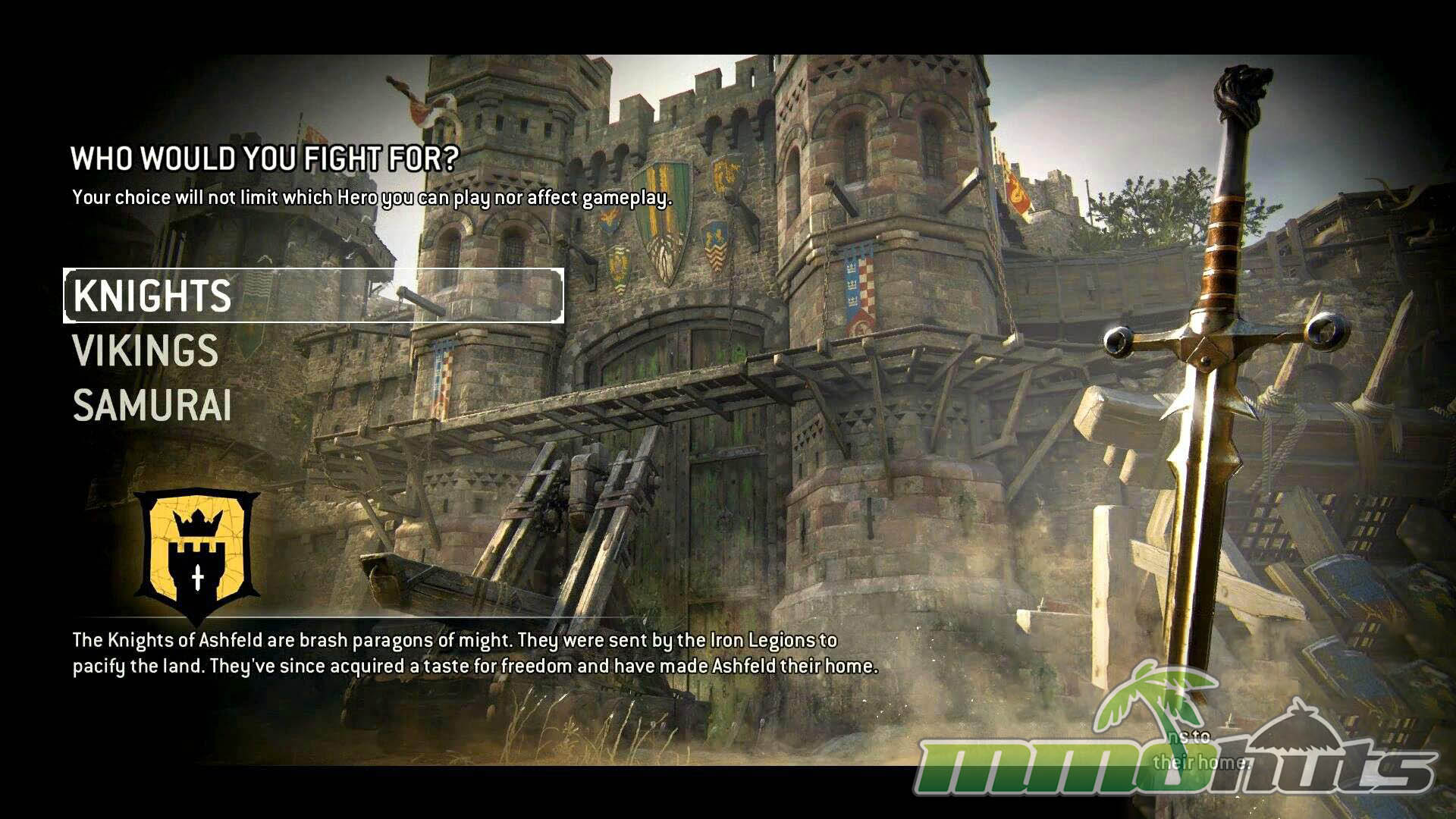
Early on, you pledge yourself to one of the three factions: Knights, Vikings, or Samurai. This choice matters for the ongoing faction war, but it does not lock you to a matching hero roster. In practice, you can fly a Samurai banner and still queue into matches using a Knight or Viking hero whenever you feel like it. After choosing a faction, you also create an emblem for your profile, with enough shapes and options to make something recognizable, or you can keep it simple and adjust it later.
Learning the Basics
For Honor is not a game that rewards skipping onboarding. The combat system is layered, and understanding guard direction, core movement, and the timing windows for defense makes a huge difference. The tutorial is worth finishing, not just for learning the fundamentals, but also for the Steel reward (the game’s currency). Once the basics click, the Advanced Tutorial is a smart next step, especially because it encourages repetition and muscle memory, which is exactly what you need before jumping into real PvP pressure.
Heroes
At launch, For Honor offers 12 playable heroes spread across the three factions, with four hero types represented: Vanguard, Heavy, Hybrid, and Assassin. Even within a category, heroes do not feel interchangeable, their speed, reach, and favored engagement ranges can vary a lot. One Vanguard might rely on safer spacing and longer reach, while another is slower but hits harder and punishes mistakes more severely. Because the game is so timing-driven, these differences are not cosmetic, they shape how you approach every duel and team fight.
Progression is hero-specific. As you play a hero, they gain experience and level independently, which influences the quality of post-match gear you can earn. Gear serves two roles: it changes your appearance and it can adjust stats. Importantly, you can only equip gear on heroes you have recruited. You begin with the three Vanguard heroes available, and additional heroes can be recruited for 500 Steel each. You can still take unrecruited heroes into matches to try them out, but you cannot outfit them with earned gear until they are recruited.
Game Modes
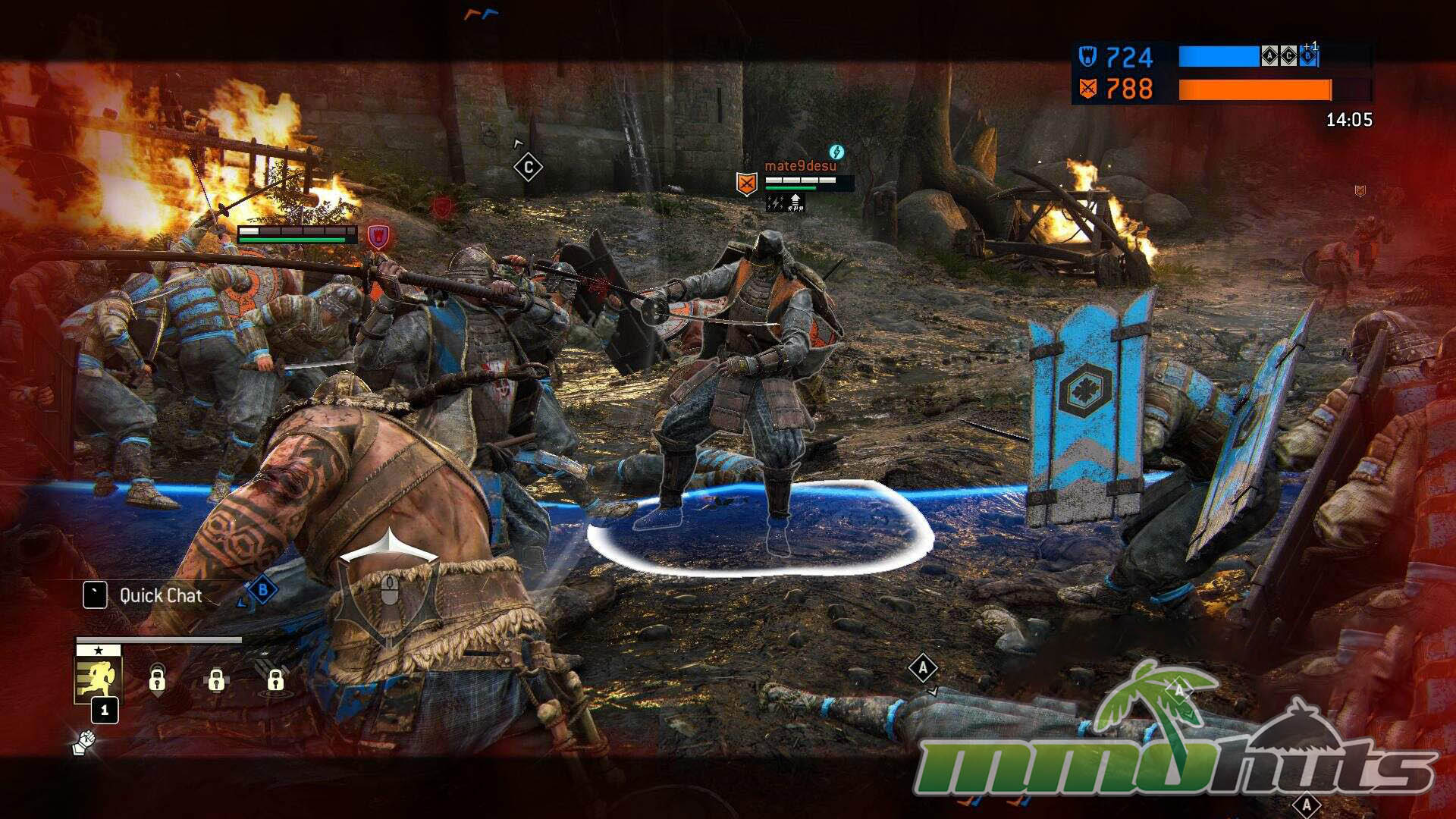
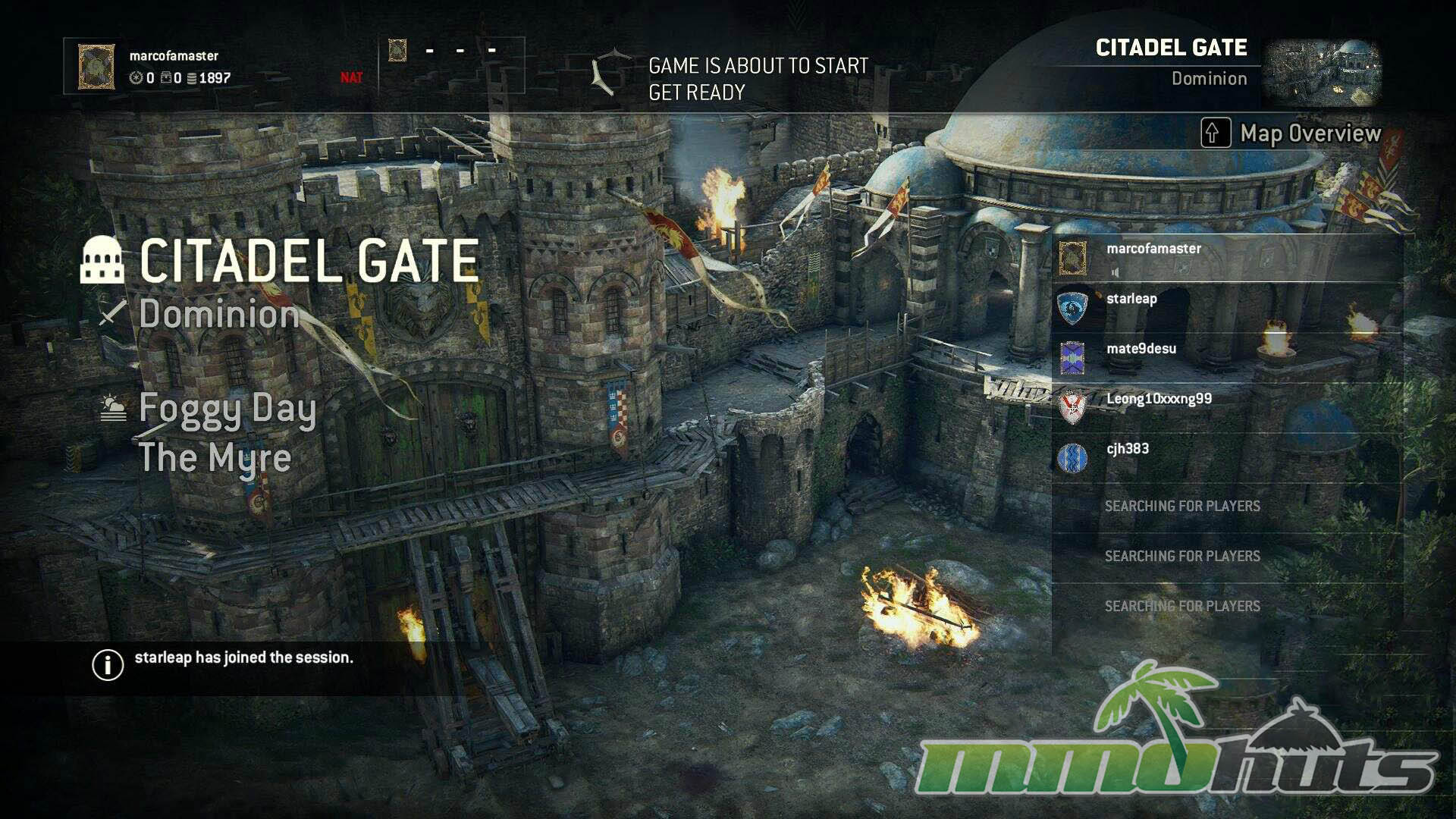
Multiplayer is split into five main modes: Dominion, Duel, Brawl, Skirmish, and Elimination. Duel (1vs1), Brawl (2vs2), and Elimination (4vs4) lean toward deathmatch-style play where survival and smart engagements decide the outcome. Skirmish and Dominion are 4v4 objective modes, with score built through actions rather than only final kills.
In Skirmish, points come primarily from defeating opponents, while Dominion emphasizes capturing and holding control zones. Once a team reaches the required score threshold, the match shifts into a decisive phase where finishing off the remaining enemy players becomes the final step to claim victory.
Combat
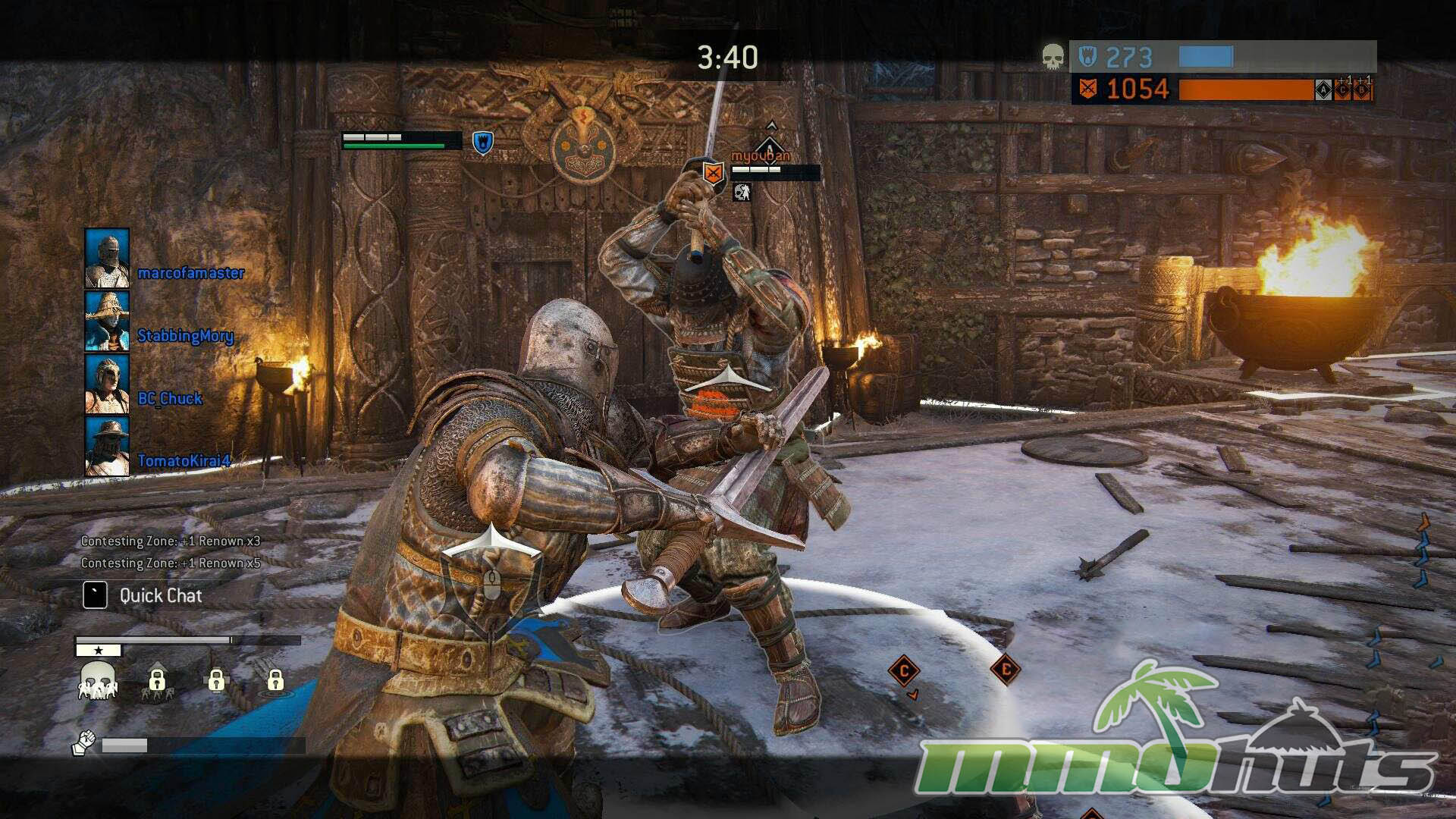
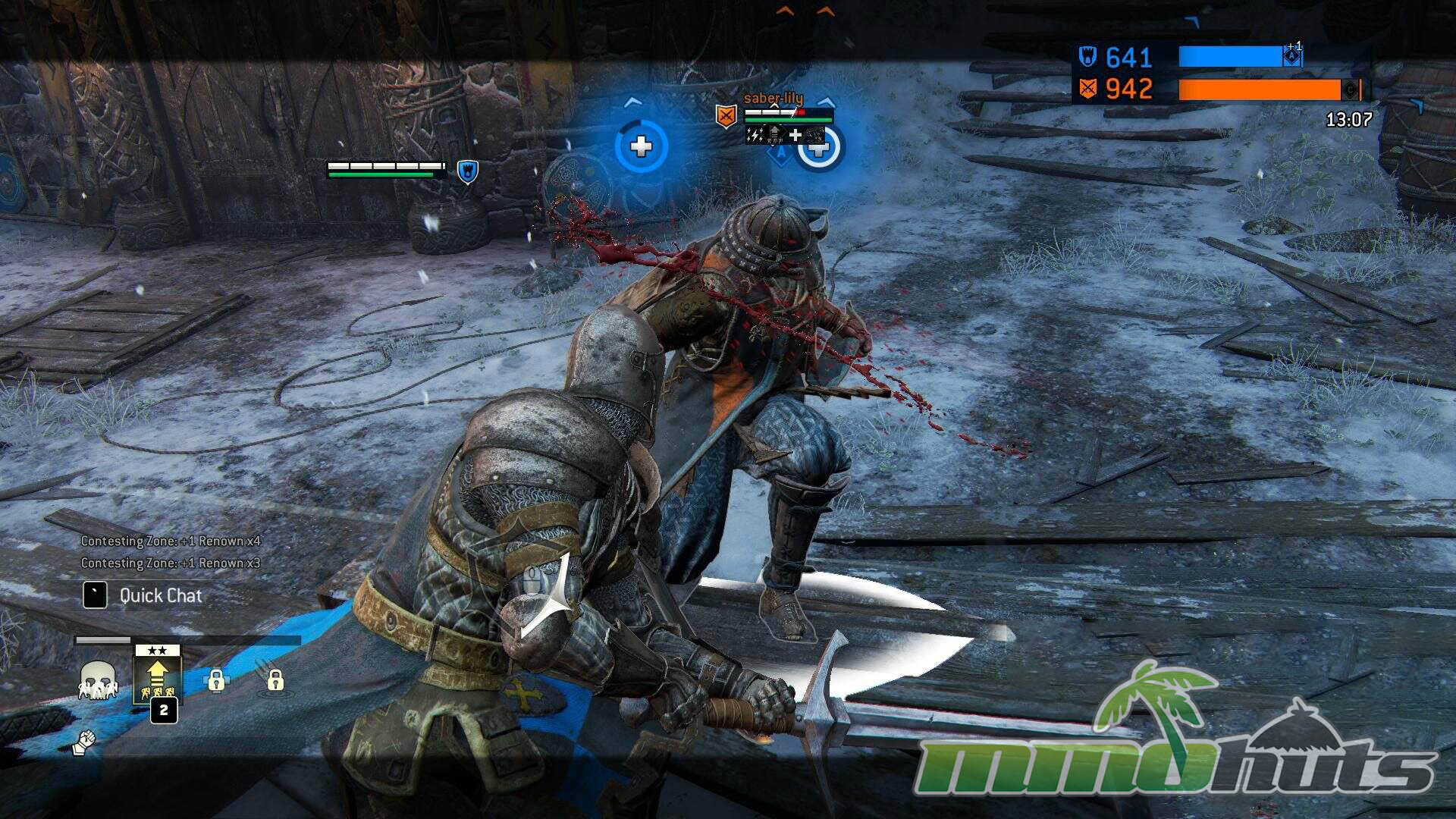
The heart of For Honor is its combat, and it can be punishing until the system becomes second nature. Fights revolve around directional guarding, feints, well-timed parries, guard breaks, and choosing when to commit to riskier attacks. Early on, it is easy to feel overwhelmed, especially when opponents punish predictable habits. Against inexperienced players you may scrape by with sloppy offense, but competent veterans will shut that down quickly.
Once the timing and reads start to click, the experience becomes far more satisfying. The game does a good job of making duels feel personal, and landing the right counter at the right moment can be as rewarding as any competitive win in the genre.
Controls are responsive on keyboard and mouse, but a controller can make quick guard changes and reactions feel more natural for many players. If you stick with mouse input, tuning sensitivity for Guard Mode can help. For newcomers, Duels are a safer environment to build fundamentals. In larger modes like Dominion and Skirmish, outnumbered situations happen frequently, and unless you are confident in your matchup knowledge, disengaging is often the smartest play.
A major drawback is the reliance on peer-to-peer hosting. Because combat depends so heavily on timing, lag spikes and inconsistent connections can undermine matches, especially in 4vs4 where network instability is more noticeable. In a premium-priced, reaction-based PvP title, dedicated servers would have been a better fit for the experience the game is aiming to deliver.
Faction War
Between matches, For Honor ties your play into a larger metagame through the faction war. After each completed match, you earn War Assets based on performance, which you can deploy on the world map to support attacks or defense of territories. Control is determined by which faction commits the most assets, and the front lines shift as boundaries update every 6 hours. Each season runs for 10 weeks, after which the map state resets, keeping the larger conflict in motion rather than permanently solved.
Cash Shop
In addition to the base purchase, For Honor allows players to buy Steel with real money. Steel can then be used to speed up access to things like Champion Status (a VIP-style boost for experience and Steel), equipment boxes, skills, outfits, and other items. While Steel is earnable through play, the presence of microtransactions in a full-priced AAA release can still feel out of place, especially when it creates a clear “pay to get things faster” option on top of an entry fee.
The Final Verdict – Great
For Honor succeeds most where it matters: the combat system is deep, demanding, and uniquely tense, and the presentation sells its faction fantasy with top-tier animation and strong art direction. The biggest friction points are not the gameplay itself, but the infrastructure and accessibility, peer-to-peer matches can be inconsistent, and the learning curve is steep enough to bounce players who do not enjoy practicing fundamentals.
If you want a competitive melee game that rewards patience, matchup knowledge, and mechanical improvement, For Honor is easy to recommend despite its issues. Players looking for a more relaxed, forgiving action experience may find it harsher than expected, but for those who stick with it, the payoff is real.
For Honor Links
For Honor Official Site
For Honor Steam Page
For Honor Wikipedia
For Honor Reddit
For Honor System Requirements
Minimum Requirements:
Operating System: Windows 7, Windows 8.1, Windows 10 (64-bit versions only)
CPU: Intel Core i3-550 or AMD Phenom II X4 955 or equivalent
Video Card: NVIDIA GeForce GTX660/GTX750ti/GTX950/GTX1050 or AMD Radeon HD6970/HD7870/R9 270/R9 370/RX460 with 2 GB VRAM or more
RAM: 4 GB
Hard Disk Space: 40 GB
Recommended Requirements:
Operating System: Windows 7, Windows 8.1, Windows 10 (64-bit versions only)
CPU: Intel Core i5-2500K or AMD FX-6350 or equivalent
Video Card: NVIDIA GeForce GTX680/GTX760/GTX970/GTX1060 or AMD Radeon R9 280X/R9 380/RX470 with 2 GB VRAM or more
RAM: 8 GB
Hard Disk Space: 40 GB
For Honor Music & Soundtrack
Coming Soon!
For Honor Additional Information
Developer(s): Ubisoft Montreal
Publisher(s): Ubisoft
Game Engine: AnvilNext 2.0
Platform(s): PC, Xbox One, PS4
Open Beta Date: February 9, 2017.
Full Release Date: February 14, 2017
Development History / Background:
For Honor is a 3D hack-and-slash action MOBA developed by Ubisoft Montreal and published by Ubisoft. As a new direction for Ubisoft in the hack-and-slash space, it was revealed publicly at E3 2015. Development used the AnvilNext 2.0 engine, which Ubisoft also utilized in titles such as Assassin’s Creed Unity, Assassin’s Creed Syndicate, Tom Clancy’s Rainbow Six Siege, and Steep. The game was briefly available in a free-to-play open beta running from February 9-12, 2017, followed by its worldwide launch on PC, Xbox One, and PS4 on February 14, 2017.