
Eternity Warriors 4 is a free-to-play mobile action RPG that leans hard into classic hack-and-slash dungeon crawling, fast runs through stage-based missions, and constant gear hunting. It delivers sharp 3D visuals and responsive combat across a lengthy campaign, then extends the loop with asynchronous PVP and repeatable challenge modes. The catch is that progression is tightly tied to your Power Score, so difficulty spikes can push players toward grinding, or toward the cash shop, depending on patience.
 | Publisher: Glu Playerbase: High Type: Mobile RPG Release Date: September 23, 2015 Pros: +Impressive visuals for a mobile ARPG. +Responsive, satisfying real-time combat. +Simple to learn and easy to jump into. Cons: -Mission loop can feel samey over time. -Pay-to-win pressure, especially around progression. –Difficulty ramps up abruptly. –Occasional pop-up advertising. |


Eternity Warriors 4 Overview
Eternity Warriors 4 is a 3D dungeon crawler action RPG developed by Glu, the mobile publisher known for series like Frontline Commando and Contract Killer. This fourth entry keeps the series’ familiar stage-driven structure, but upgrades the presentation with cleaner visuals and more polished animations. You pick one of three classes (Warrior, Assassin, or Mage) and push through a long set of missions packed with mobs, elite enemies, and boss fights that demand more than mindless button tapping. Between runs you will be collecting weapons, armor, and accessories, then improving your overall strength through enhancement systems that feed directly into your Power Score.
Progression is built around short, repeatable stages, making it easy to play in quick sessions, while still offering a lot to work toward if you want a longer grind. The game also supports an asynchronous companion system where you can bring an AI-controlled version of another player’s character into battle for extra support. Outside the campaign there is a guild layer for bonuses and social connections, plus competitive and farming-focused modes such as Arena PVP, Daily Dungeons, Trial of Heroes, and World Boss encounters. Moment to moment, the appeal is simple: flashy skills, quick dodging and positioning, and that steady drip of upgrades that keep your character moving forward.
Eternity Warriors 4 Features:
- Stage-based Levels – Progress through a large set of bite-sized missions featuring varied scenery, enemy packs, and boss encounters.
- High Quality Graphics – Detailed 3D environments, strong effects work, and smooth character animations give it a console-like look on mobile.
- Fluid, Action Combat – Fast hack-and-slash fighting with impactful skills and a Rage Mode for bursts of heavy damage.
- Three Classes to Choose From – Warrior, Assassin, and Mage each play differently, with their own kits and combat rhythm.
- PVP and Additional Modes – Asynchronous Arena battles plus Daily Dungeons, Trial of Heroes, and World Boss content for farming and challenges.
Eternity Warriors 4 Screenshots




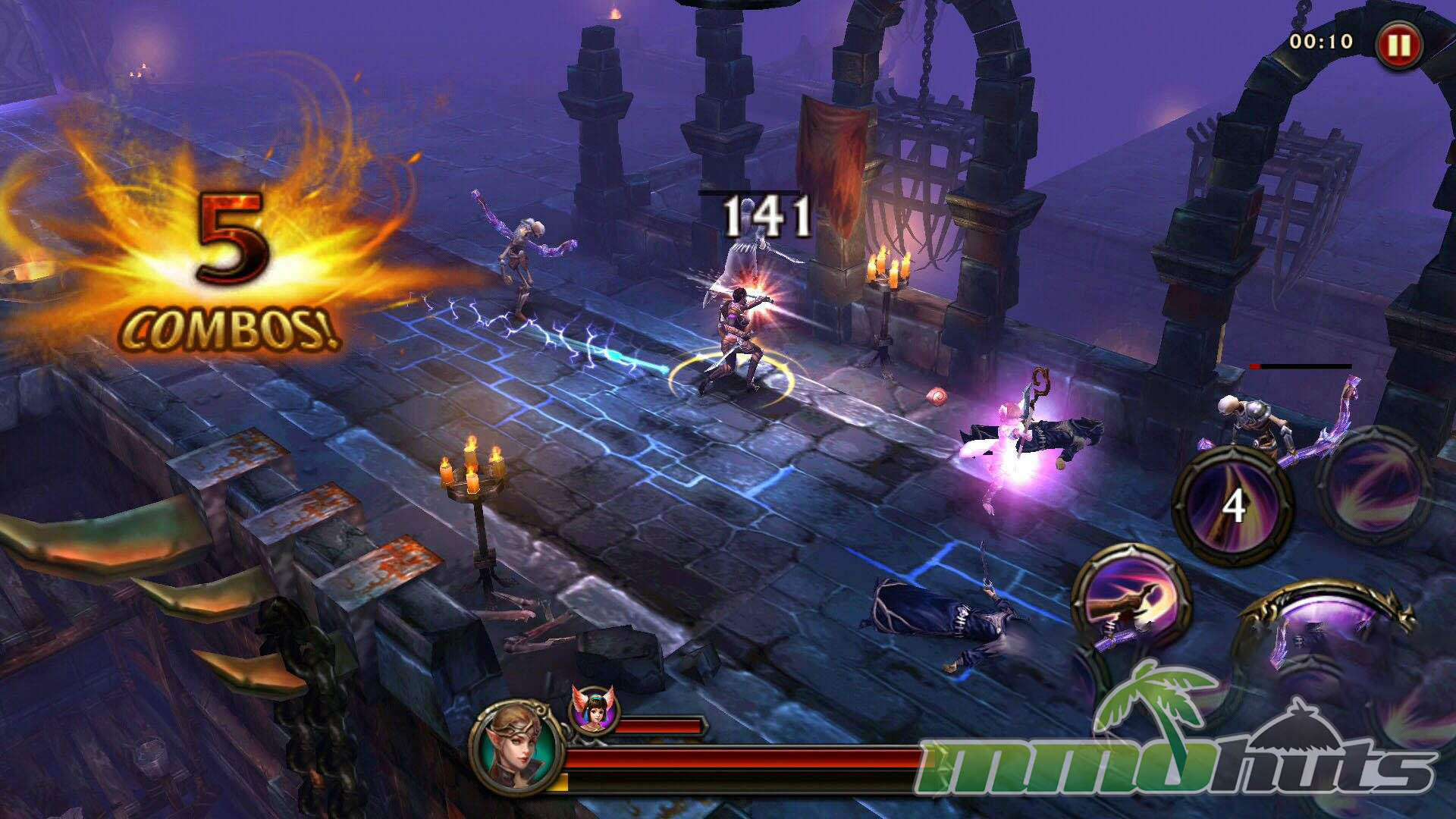
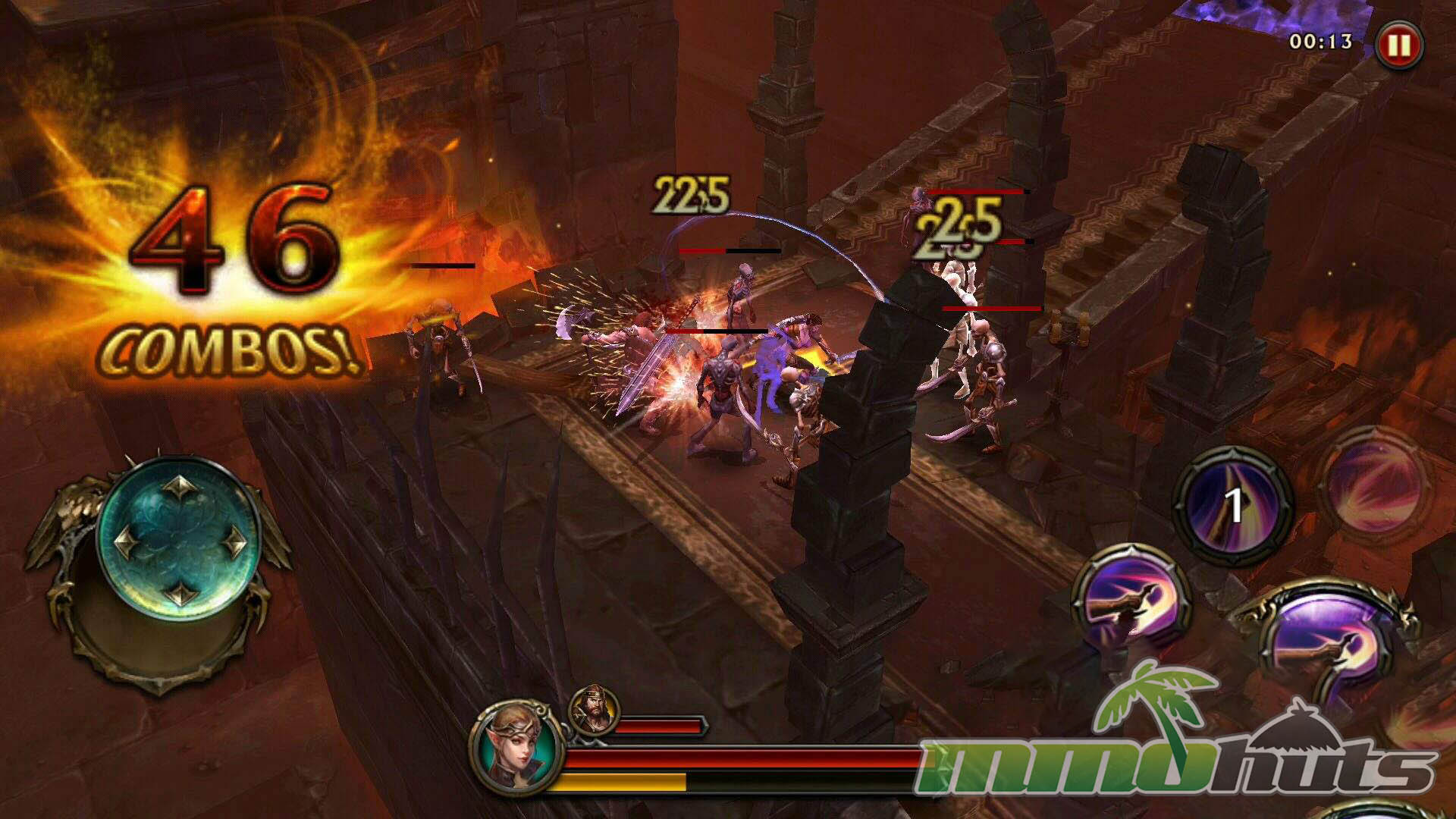
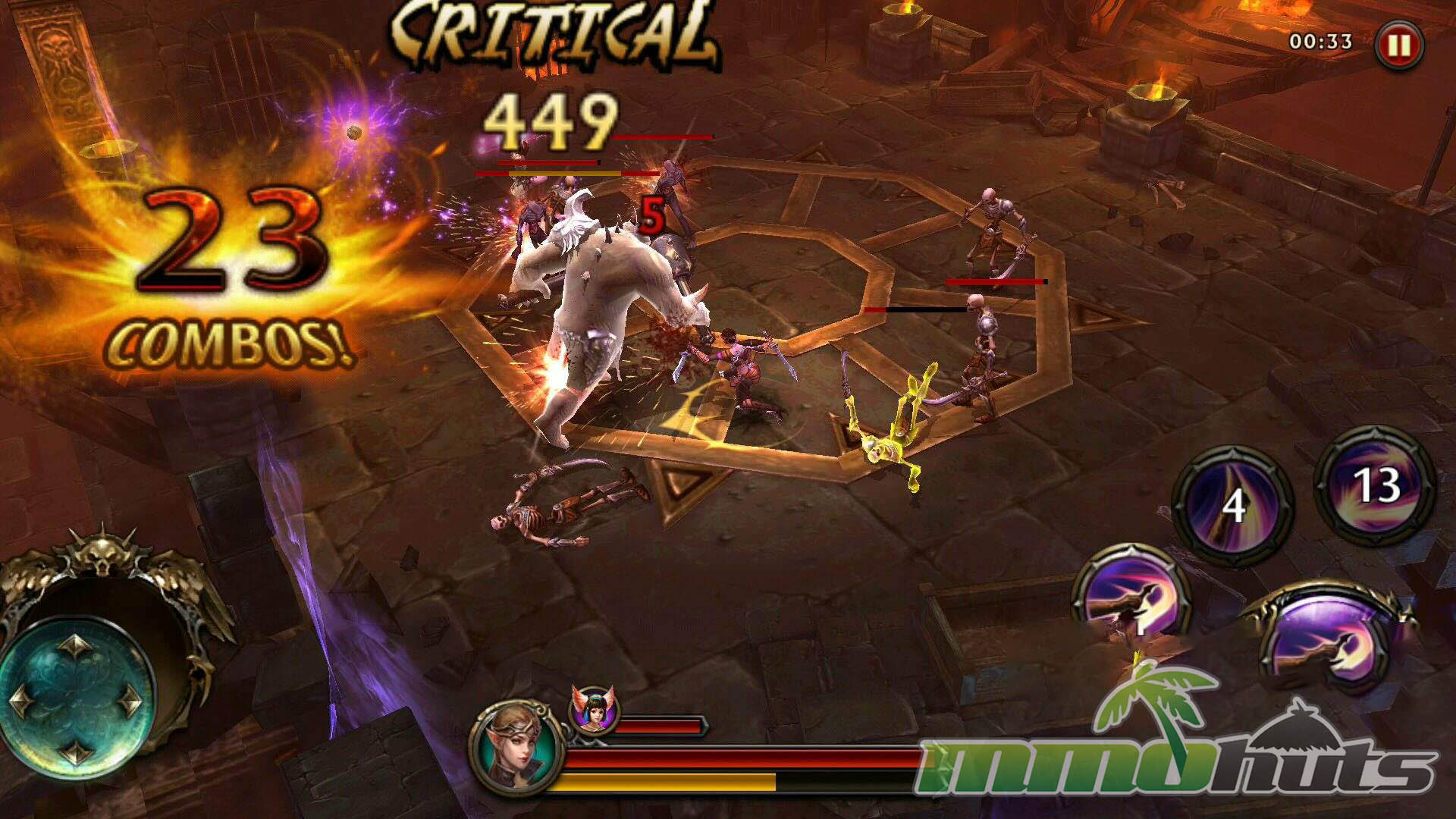
Eternity Warriors 4 Featured Video

Eternity Warriors 4 Review
Eternity Warriors 4 is a free-to-play 3D action RPG from Glu, who also developed and published it. As the fourth game in the Eternity Warriors line, it doubles down on quick stage clears, flashy abilities, and gear progression, while presenting it all with notably strong graphics for a 2015 mobile release. It launched worldwide on September 23, 2015 and, at the time, quickly attracted a large number of players. In practice, the game is at its best when you are carving through enemies with a class that clicks, but it can also feel restrictive because the difficulty curve often expects either repeated farming or premium shortcuts to keep your Power Score on pace.
Classes and Early Choices
Right at the start you commit to one of three archetypes: Warrior, Assassin, or Mage. The Warrior is the straightforward brawler, built around close-range pressure, solid survivability, and broad swings that hit groups. The Assassin trades toughness for speed, using quick multi-hit strings, mobility skills, and short-range burst to delete targets before they can retaliate. The Mage is the high-impact caster, specializing in wide area attacks and crowd control, but typically feeling more fragile if enemies reach melee range.
All three are defined by active skills and passives that unlock and improve over time, giving you a clear upgrade path even if the overall structure stays mission-based. Each class also features a Rage mechanic that fills during combat, then converts into a temporary power window where damage spikes and fights can swing in your favor if you time it well.
Campaign Structure and Stage Flow
The core of Eternity Warriors 4 is a single-player campaign split into many short stages spread across multiple maps. There is a central town hub where you can see other players, but functionally it behaves more like a staging area for menus and upgrades than a true social space. Maps are broken into sets of stages that unlock as you clear them, including bonus missions, and most runs are designed to fit into a few minutes unless you are underpowered or learning a boss.
Stages generally push you forward through a linear path while spawning waves of enemies, then end with a tougher encounter or a boss. You can also bring along an AI-controlled helper based on another player’s character, which adds a bit of safety but rarely replaces the need for your own solid build. The biggest gate is Power Score: each stage lists requirements and recommendations, and falling behind those numbers can turn routine missions into punishing slogs. That PS curve ramps quickly, which is where the game’s grind, and its monetization, become most noticeable.
Visual Presentation
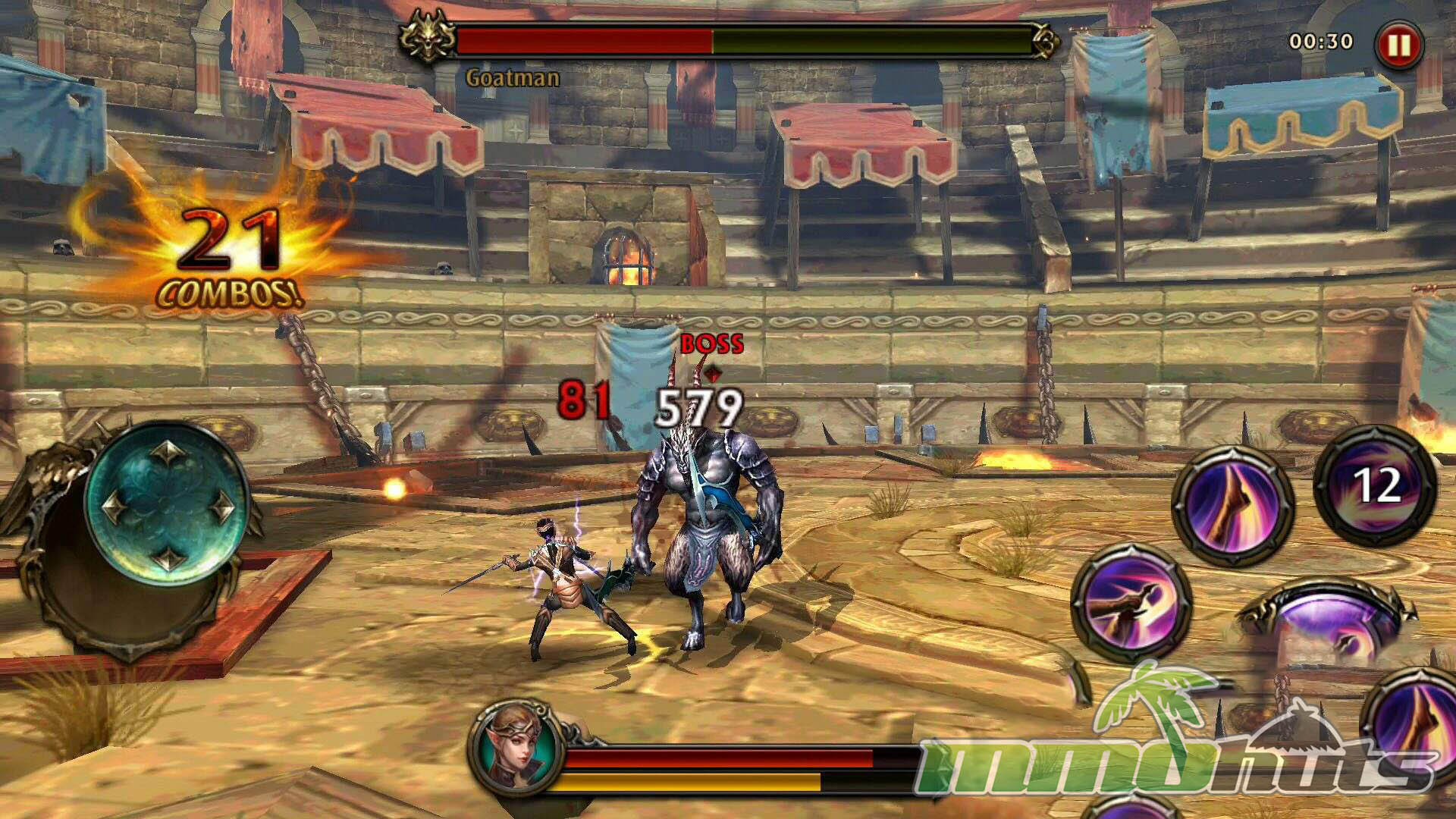
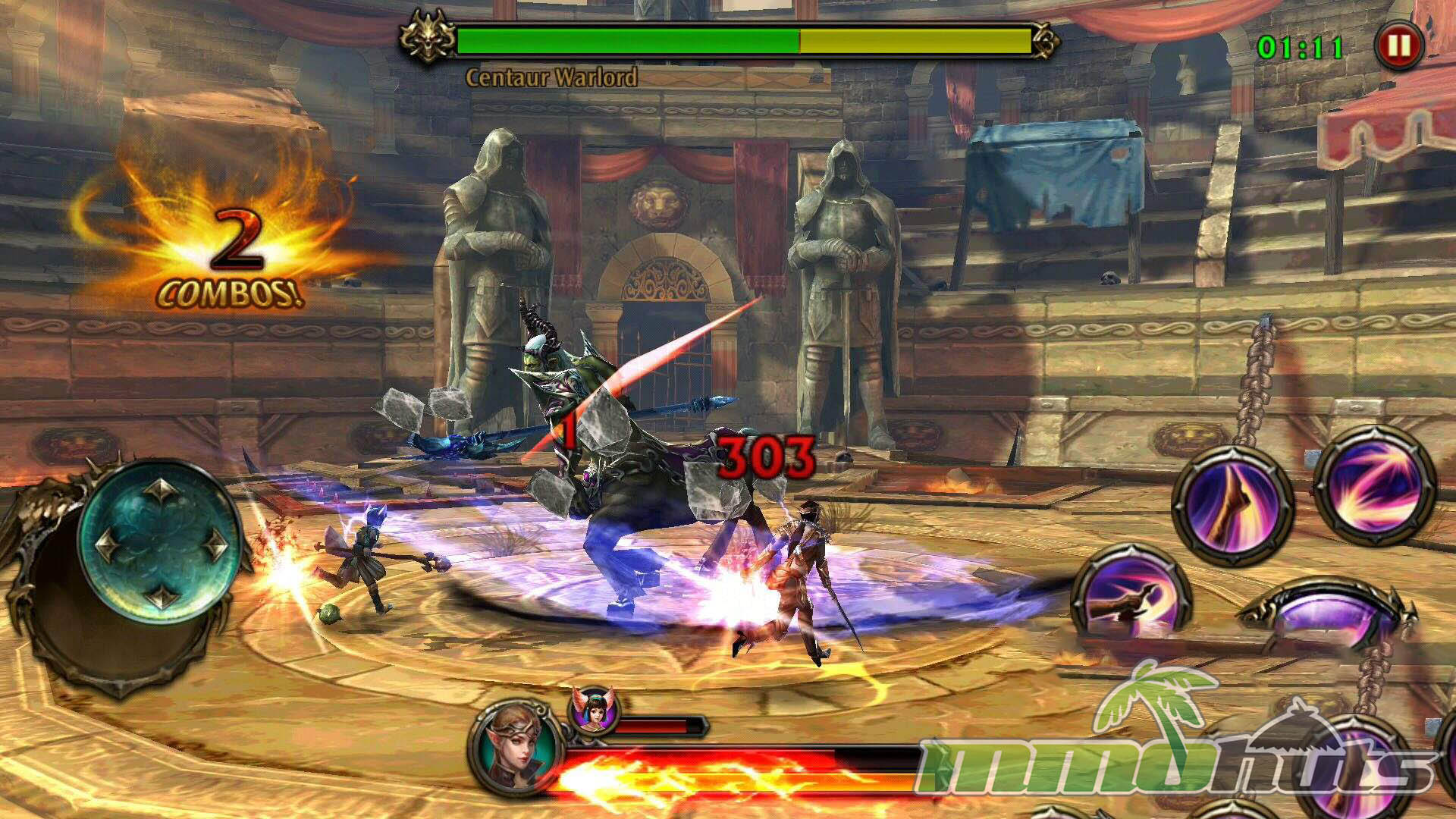
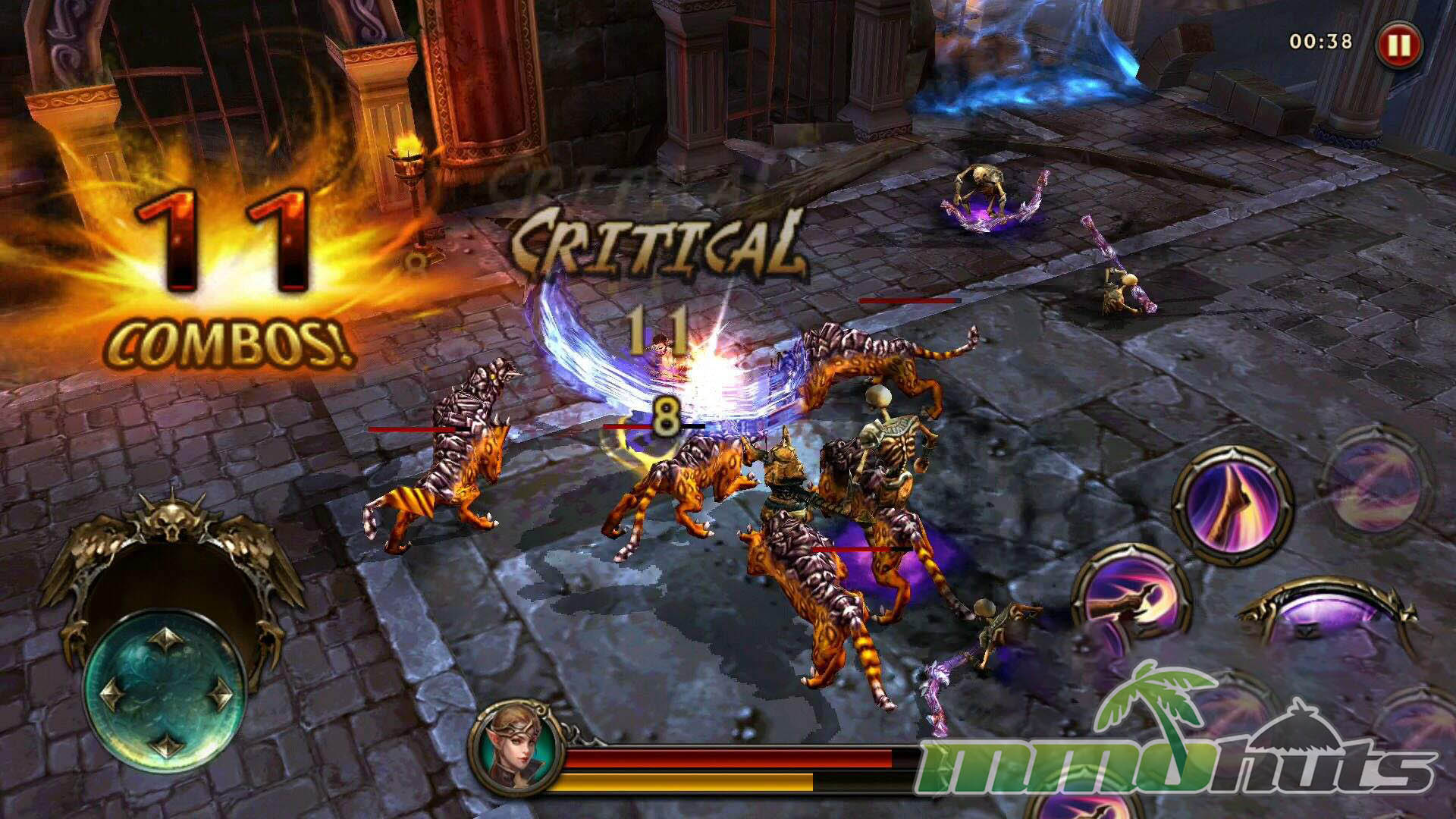
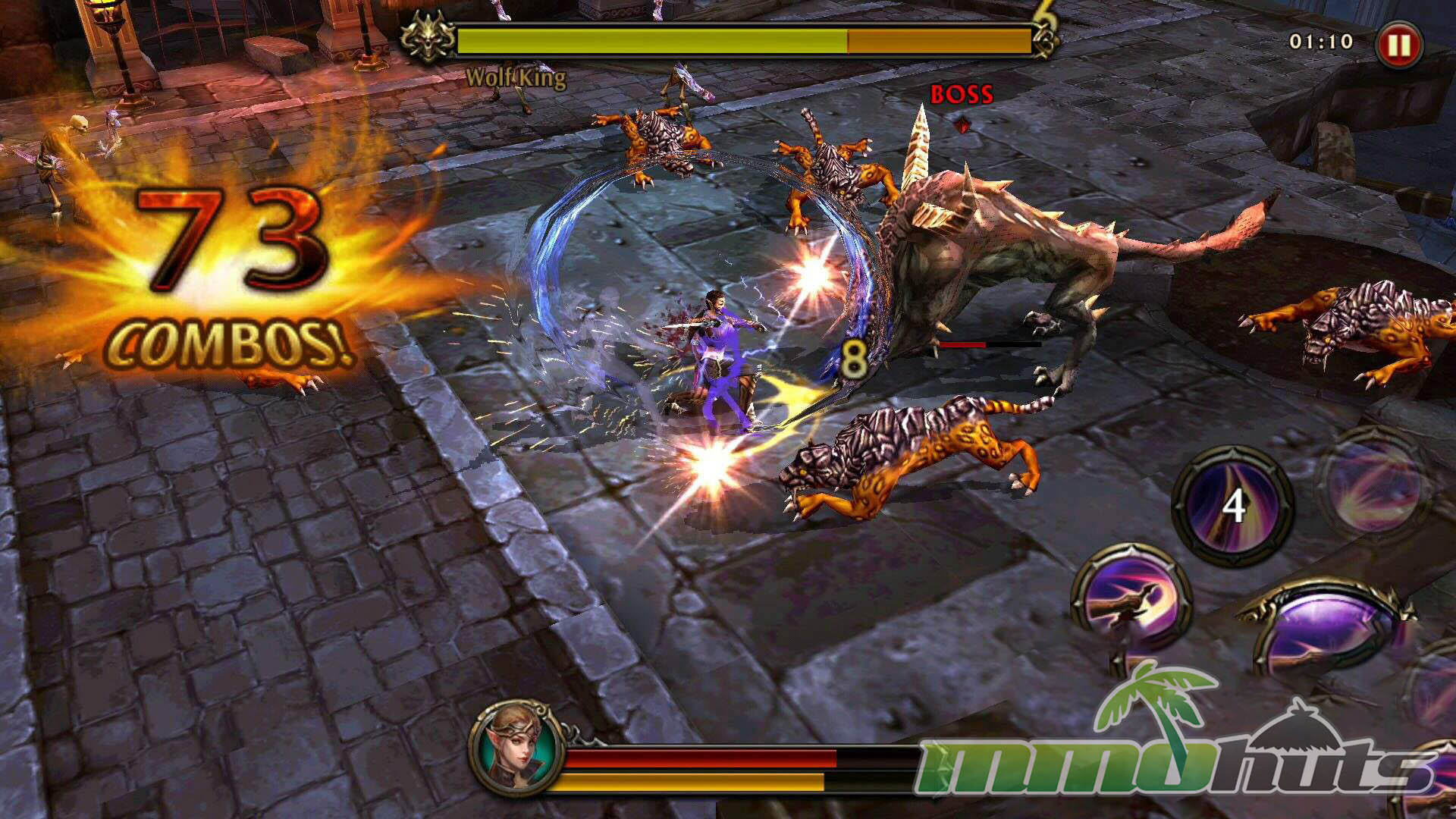
Eternity Warriors has long been known for strong visuals, and the fourth entry continues that reputation with crisp 3D character models, detailed environments, and skill effects that sell the impact of combat. The tone is largely dark fantasy, with plenty of ruins, dungeon corridors, and worn stonework, but the campaign also breaks into surface areas to keep the scenery from feeling completely uniform.
Even when the palette leans darker, the effects are bright enough to keep combat readable, and the animation work is a standout. Hits land with satisfying feedback, and many skills have a weighty, cinematic feel that helps the game stand out among other mobile ARPGs of its era.
Combat Feel and Boss Encounters
Moment to moment, Eternity Warriors 4 succeeds because it feels responsive. Movement is handled with a virtual stick, attacks and abilities sit on buttons, and the overall pacing encourages constant repositioning rather than standing still and trading hits. Each class has its own tempo, with the Assassin favoring speed and spacing, the Warrior rewarding commitment and crowd control, and the Mage focusing on timing and area denial.
A notable touch is the way certain skills can launch enemies, opening the door to air juggles and combo extensions. It adds a small layer of execution beyond pure button mashing, especially when you are trying to clear packs quickly or keep dangerous targets controlled. Regular enemies tend to be manageable, but bosses are where the game demands attention. They hit hard, they have recognizable patterns, and they can punish greedy play, particularly if your Power Score is lagging behind the recommended range.
Power Score Progression and Enhancement
Because the campaign’s difficulty rises sharply, staying current with upgrades is essential. Eternity Warriors 4 offers a large amount of loot to collect, but its enhancement approach is more global than a typical “upgrade this exact sword forever” system. Instead of directly leveling up individual items, you invest resources into broad equipment slots (Primary Weapon, Secondary Weapon, Helmet, Chest, Gloves, and so on). Improving those slots boosts core stats like Attack, Defense, and Health regardless of which specific piece you are currently wearing.
The upside is that your upgrade effort feels permanent, since you are not sinking resources into a weapon you will discard later. The downside is that the material and gold demands become a constant background requirement. Every few levels, additional materials are needed, and those often come from targeted farming in particular stages. Over time, maintaining a competitive Power Score becomes a loop of clearing content, gathering materials, and reinvesting them to keep pace.
Arena PVP and Extra Activities
Beyond the main stages, Eternity Warriors 4 includes Arena battles and three additional modes that broaden the daily routine. Arena PVP is asynchronous, you control your own character in real time, but you fight an AI-controlled version of another player’s build. It is a useful mode for testing your damage and survivability, and the ranking ladder gives it structure, but matchups can occasionally feel uneven when you run into a higher level character sitting at a low rank.
The additional modes are Daily Dungeon, Trial of Heroes, and World Boss. Daily Dungeon rotates its rewards and can be completed twice per day with a short wait between runs, making it one of the more efficient ways to stock up on gold or enhancement materials. Trial of Heroes focuses on difficult boss fights aimed at more advanced characters, and it is often where you will feel the game’s mechanics most clearly because mistakes are punished quickly. World Boss operates like a raid-style event where you chip away at a powerful target over multiple attempts within a time window, rather than expecting a single clean kill. Collectively, these modes serve as the game’s main farming outlets for currency, equipment, and the materials needed to keep upgrades moving.
Monetization and In-App Purchases
Eternity Warriors 4 is structured around in-app purchases, and that design becomes more obvious the further you progress. The game introduces farming early, and the Power Score requirements can create moments where advancement slows unless you repeat stages for resources. Premium currency (Gems) can be used to buy enhancement materials, energy, gold, inventory space, and convenience tools like Skip Tickets that auto-complete previously cleared stages (as long as you earned a strong grade).
There are also chests that trade currency for a shot at higher rarity items, with Gems tied to better odds and gold tied to more modest pools. The practical effect is that paying players can smooth out the difficulty spikes, reduce the amount of farming needed, and gain an edge in Arena through stronger gear and faster progression. Dedicated free players can still move forward, but it usually requires more repetition and careful resource management.
Final Verdict – Good
Eternity Warriors 4 delivers what many players want from a mobile hack-and-slash RPG: strong 3D visuals, smooth combat, and a steady stream of stages, bosses, and upgrades. Its main weakness is how aggressively the difficulty curve and Power Score gating steer you toward either grinding or spending, which can undermine the otherwise satisfying action. If you can tolerate repetition and monetization pressure, there is a substantial amount of content and a genuinely enjoyable combat engine to dig into.
Eternity Warriors 4 Links
Eternity Warriors 4 Google Play
Eternity Warriors 4 iOS
Eternity Warriors 4 Official Site
Eternity Warriors 4 System Requirements
Minimum Requirements:
Android 3.0 and up / iOS 7.0 or later.
Eternity Warriors 4 Music & Soundtrack
Eternity Warriors 4 Additional Information
Developer: Glu
Publisher: Glu
Platforms: Android, iOS
Release Date: September 23, 2015
Eternity Warriors 4 was developed and published by Glu, a well-known mobile studio responsible for titles and series such as Diner Dash, Contract Killer, Deer Hunter, and more. As the fourth entry in the Eternity Warriors franchise, it keeps the familiar dungeon-crawling action foundation while noticeably improving character models, environments, and animation quality. The game released worldwide on September 23, 2015 for Android and iOS, and it quickly drew a large number of installs in its first week. Other games in the Eternity Warriors series have also reached millions of downloads globally, and Glu’s broader catalog includes additional mobile action franchises like Blood & Glory and Frontline Commando, alongside several licensed, movie-based releases.