
Eco is a survival MMO built around cooperation, long-term planning, and the consequences of industrial growth. Instead of treating the wilderness as an endless supply box, the game asks players to build a functioning society while keeping a fully simulated ecosystem from collapsing. Every tree cut, animal hunted, and factory placed has ripple effects, and the endgame is less about personal power and more about whether your server can advance without triggering disaster.
 | Publisher: Strange Loop Games Playerbase: Medium Type: Simulation/Survival MMO Release Date: February 06, 2018 PvP: Justice System Pros: +Deep, believable ecosystem simulation. +Community-driven economy and specialization. +Satisfying town and infrastructure building. Cons: -Deliberate, slow progression. -Not very friendly to solo players. -Occasional networking hiccups. |

Eco Overview
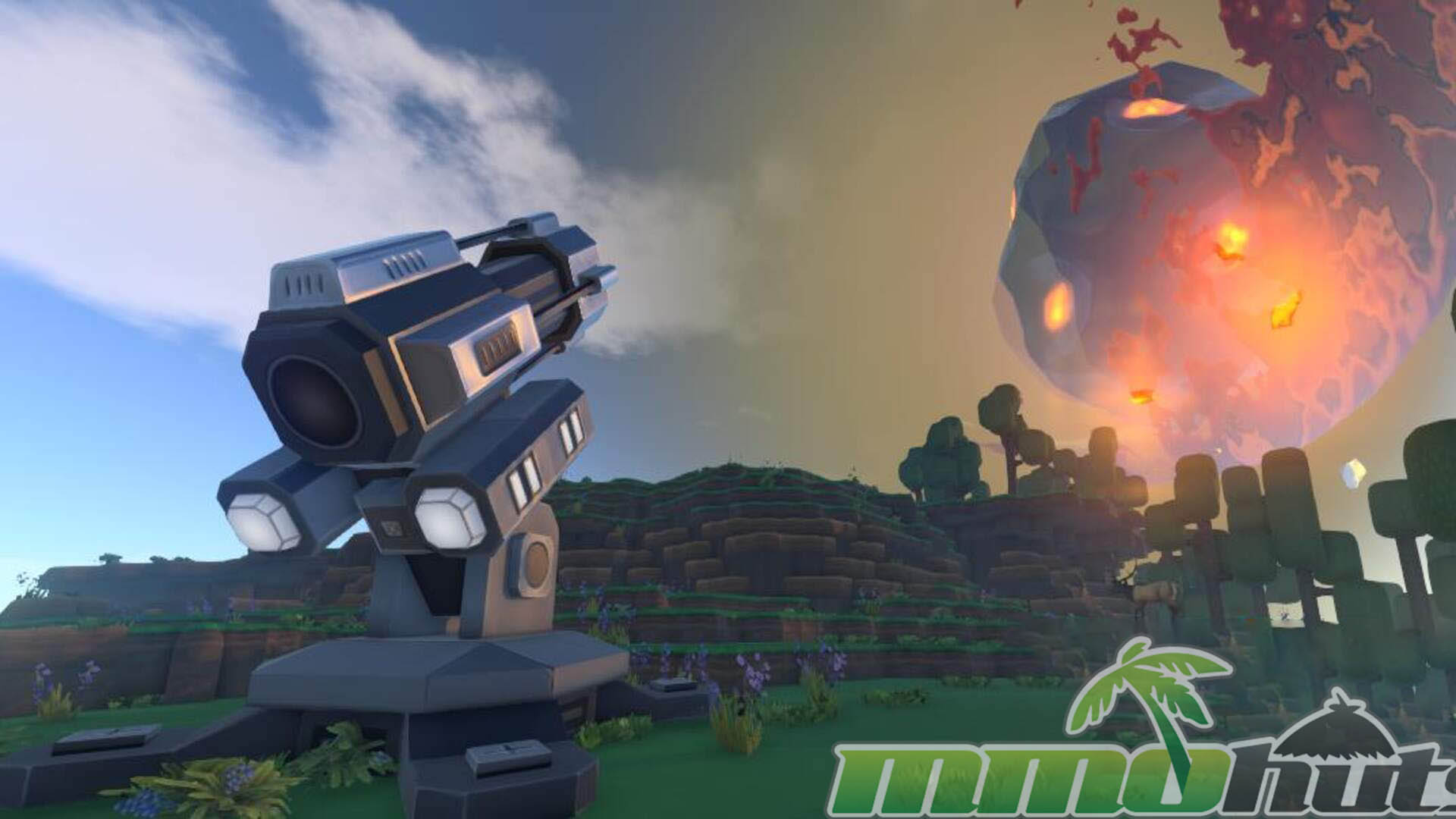
Eco is a 3D voxel-based survival and simulation MMO where the central challenge is sustainability. You and other players start with simple tools and limited knowledge, then gradually expand into agriculture, industry, and modern infrastructure by consuming resources that are not infinite. The twist is that the wilderness is not just scenery, it is modeled as a living system with plants and animals connected through relationships that can be disrupted by over-harvesting, pollution, or careless land use.
The social layer is just as important as the crafting. Servers can enforce harsh consequences, including server-wide permadeath, which makes safety planning and community rules matter. Eco also leans into governance with a player-run justice system. Communities can write laws, debate them, and vote them into effect, creating a framework for things like land use, theft prevention, or resource quotas. When someone breaks those laws, they can be flagged as a criminal and dealt with by other players through the tools the server has agreed on.
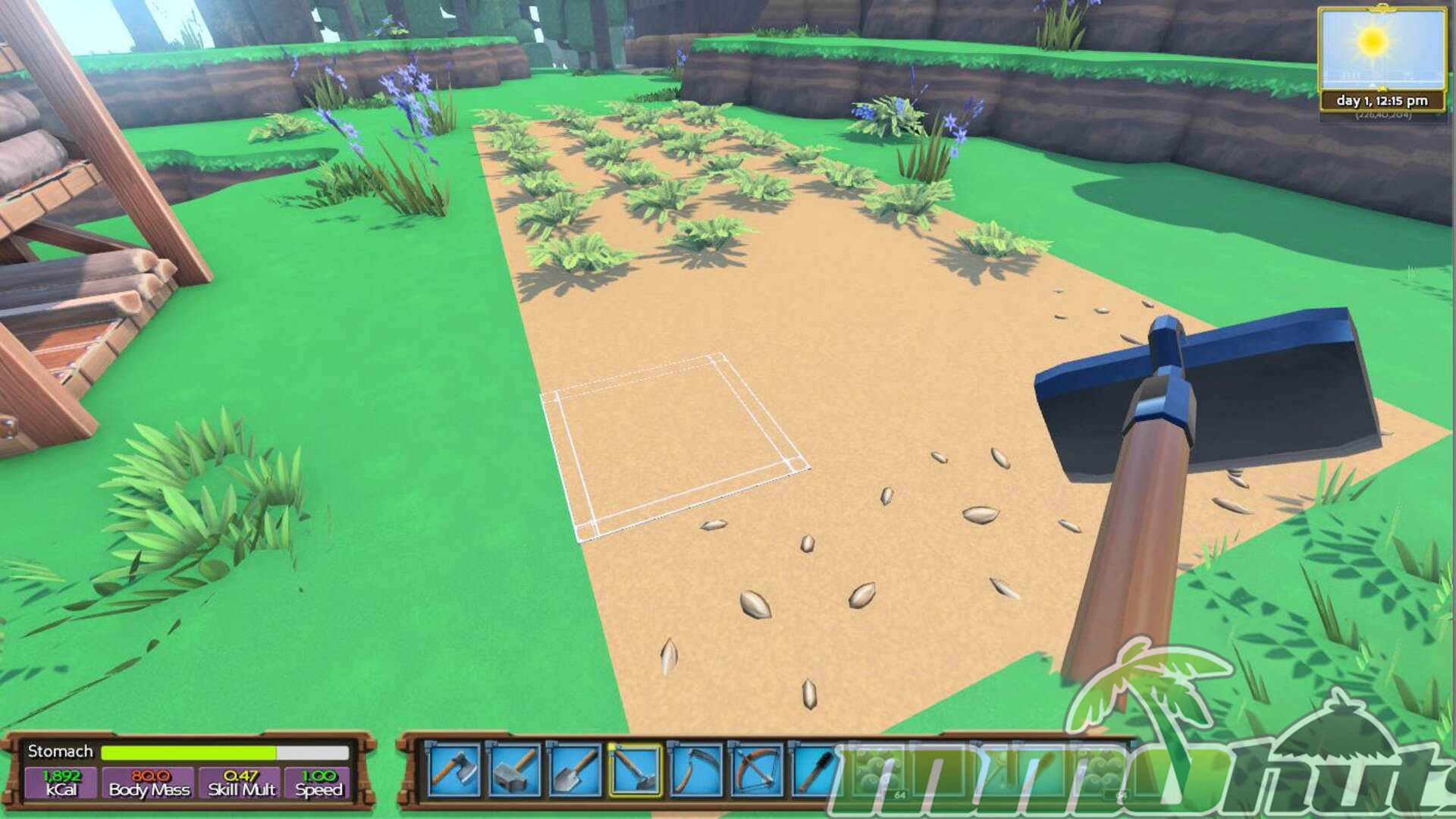
Progression is intentionally interdependent. Players cannot master everything, so specialization is the default. One person might focus on farming, another on cooking, another on mining or construction, and the most efficient towns are the ones that coordinate roles and trade. That naturally feeds into Eco’s player-driven economy, where materials, processed goods, and services become valuable because time and labor are real constraints.
Eco Key Features:
- Realistic Environment Simulation – explore a world filled with many species of plants and animals whose populations and behaviors respond to what players do, making environmental impact an ongoing consideration.
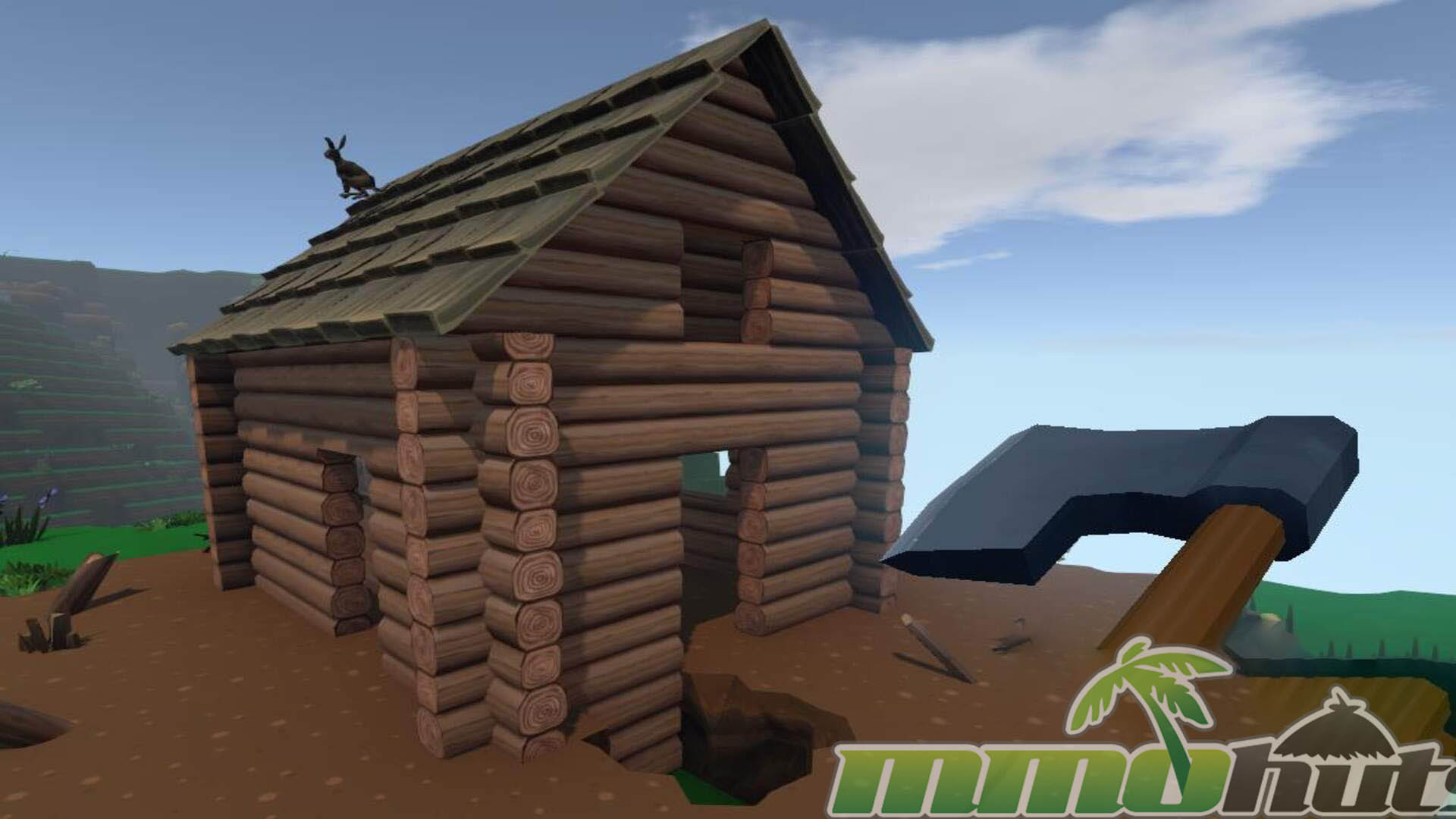
- Collaborative City-Building – design functional buildings that support a settlement, from homes that help maintain your character while offline to production structures that turn raw resources into usable goods.
- Justice System – create and enforce community laws, then use agreed-upon penalties to respond to players who ignore those rules.
- Player Skills – commit to a limited set of professions such as gathering, farming, or food preparation, encouraging trade and cooperation with nearby players.
- Technology Research – unlock new options through research that involves experimentation, then share discoveries with others to accelerate communal progress.
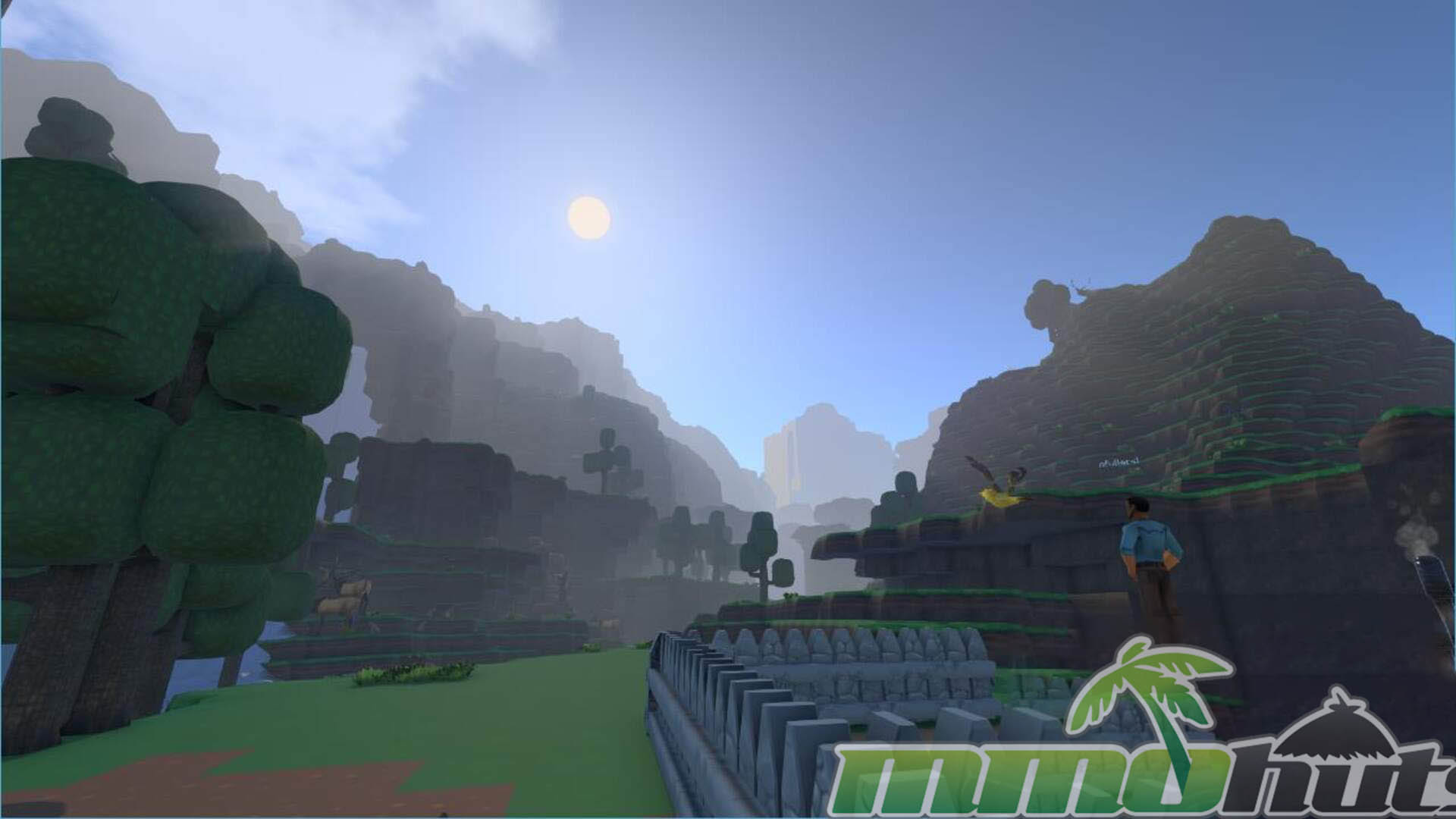
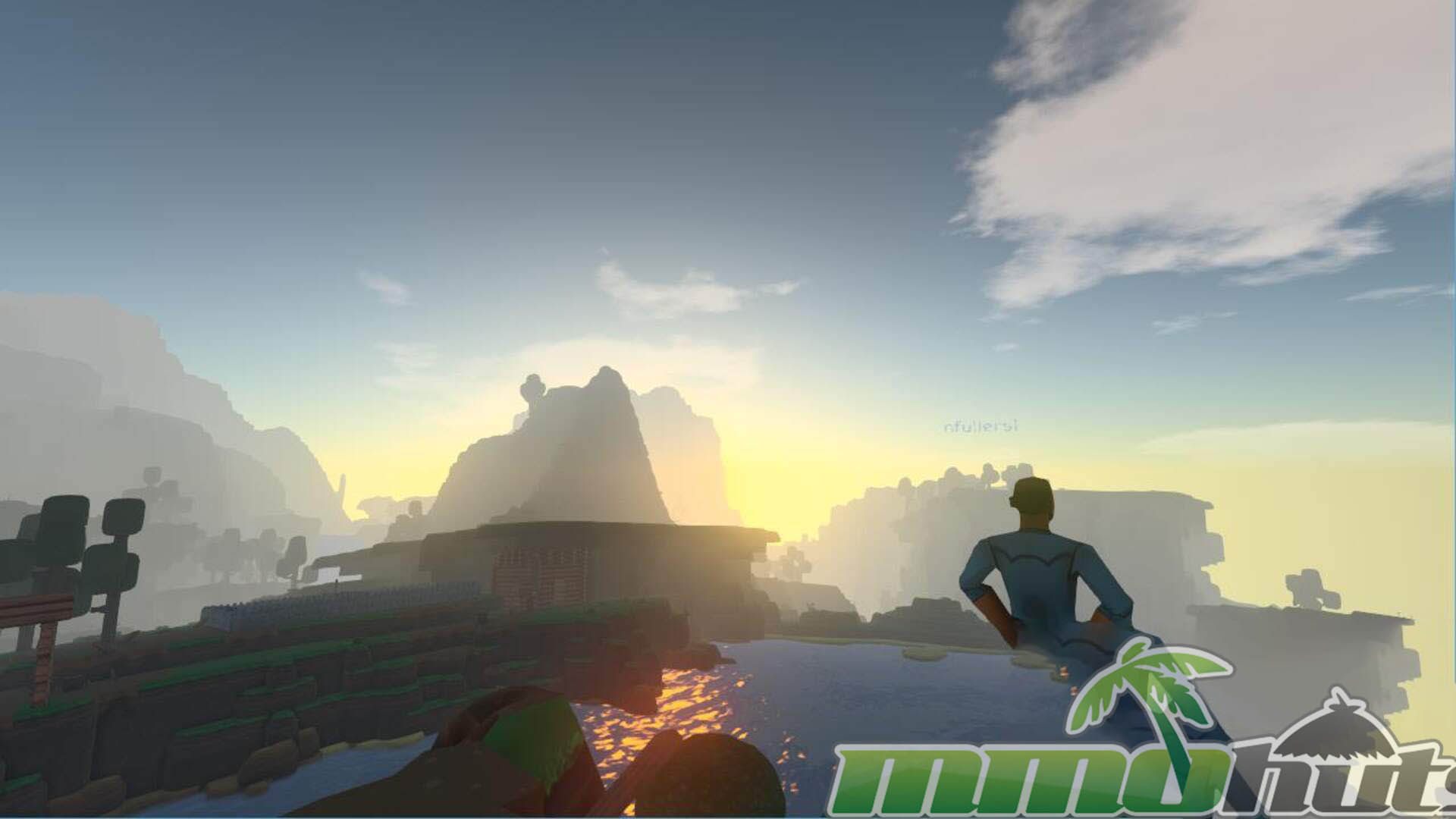
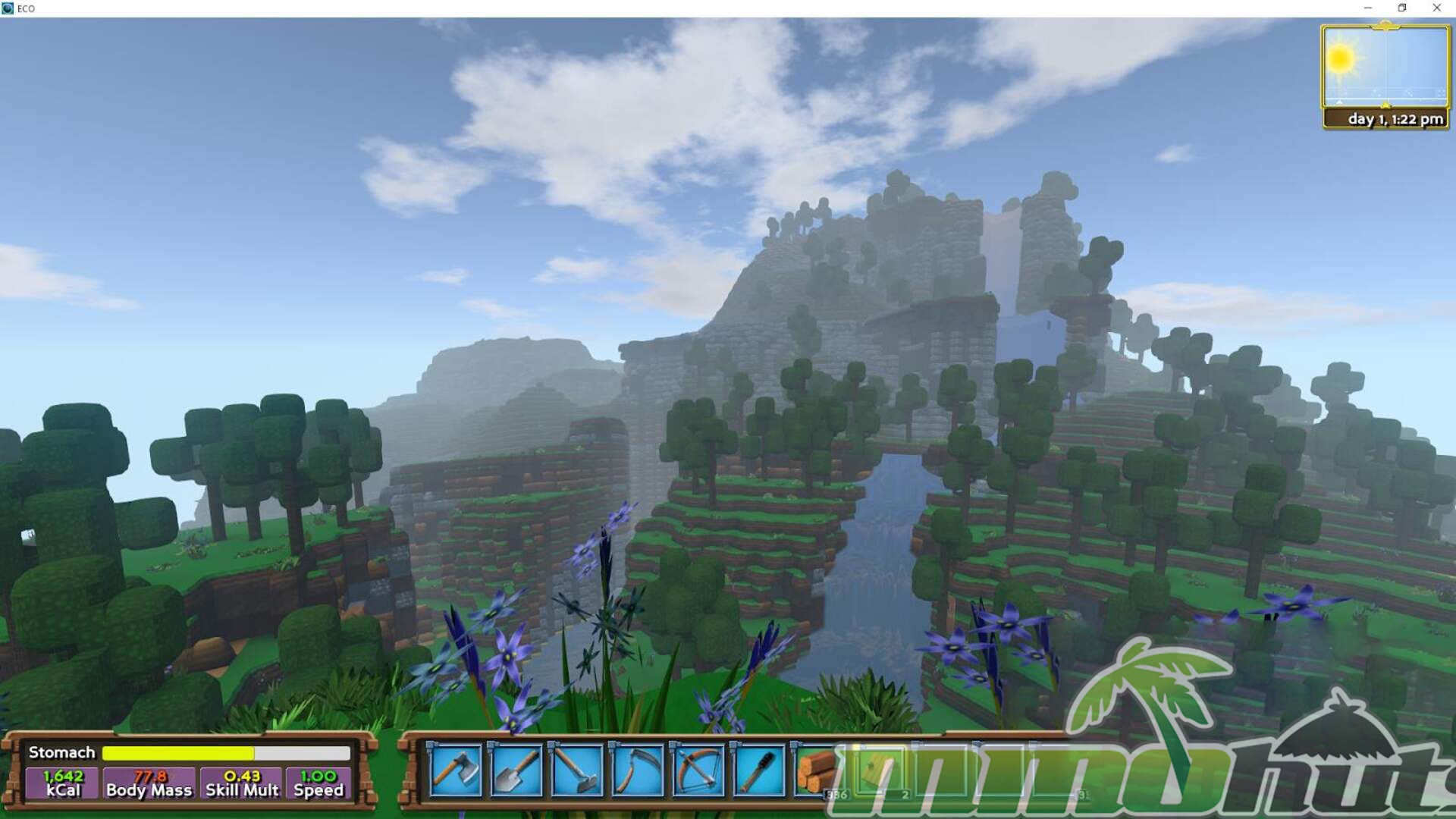
Eco Screenshots


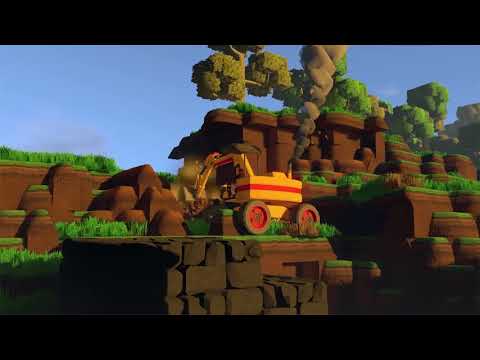
Eco Featured Video
Eco Review
Eco is at its best when you treat it like a shared project rather than a typical survival sandbox. The early hours are quiet and methodical, with players spreading out to gather, set up basic shelter, and establish a food chain that can support more than a handful of people. Unlike many survival games where the world resets your progress through constant combat pressure, Eco’s tension comes from logistics and long-term consequences. A town that grows too fast without planning can end up with depleted local resources, polluted water, or damaged habitats that take time to recover.
The crafting and production loop is built around specialization, and that design choice shapes the entire experience. You can build, gather, and craft, but you cannot be the best at everything, and trying to do it all tends to feel inefficient. In a populated server, this is a strength. You get a genuine sense of community as players set up shops, trade processed materials, and rely on each other for higher-tier construction. The economy feels purposeful because labor, tools, and refined goods are meaningful investments, not trivial items that everyone can mass-produce alone.
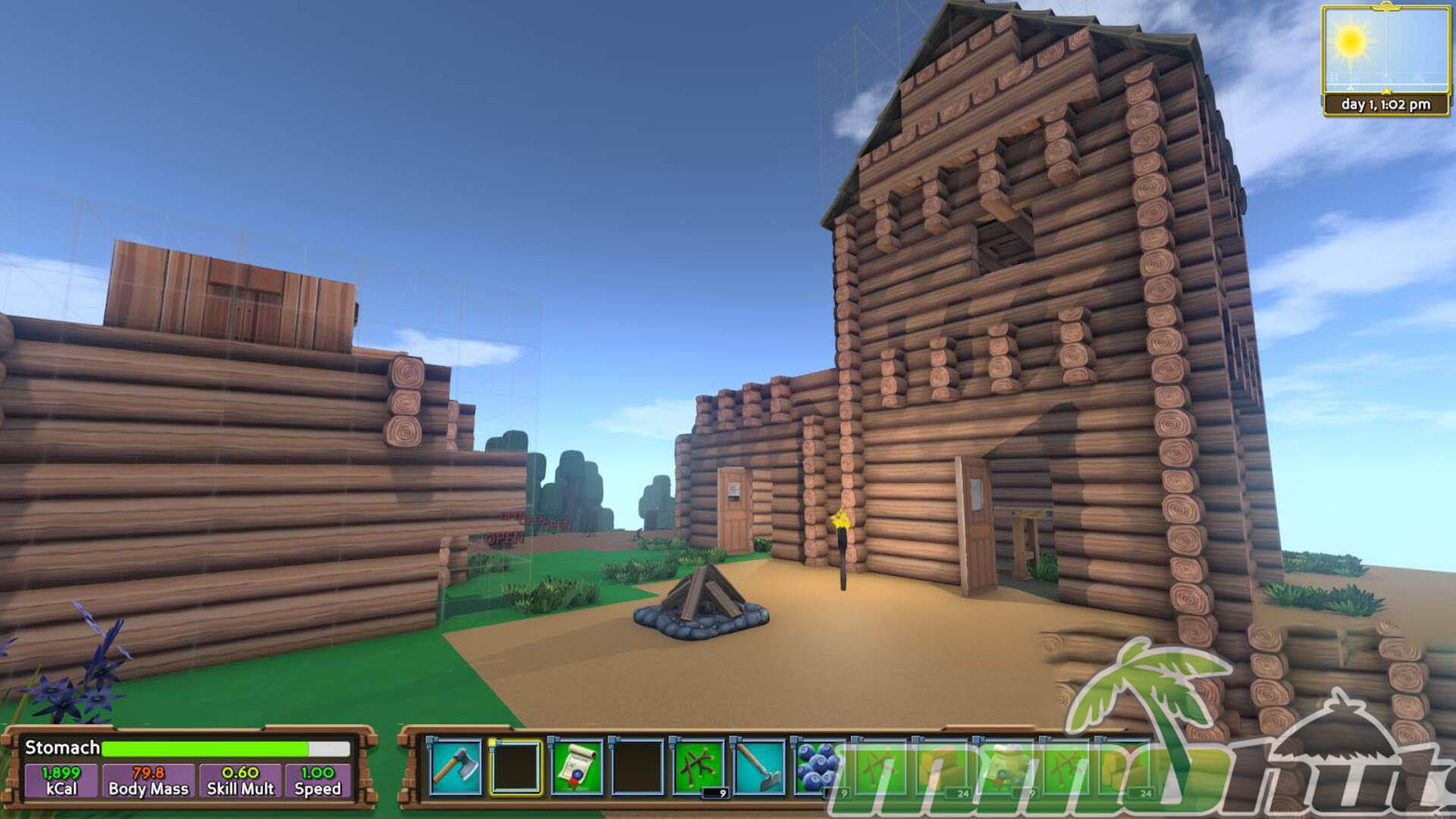
City building is also more than cosmetic. Settlements develop around practical needs, such as placing production near resources, organizing storage, and building homes that support players between sessions. As technology advances, the town’s footprint changes, and so does its impact. That is where Eco distinguishes itself, because “progress” is not purely positive. More advanced industry can introduce new forms of environmental stress, so the community has to weigh convenience against sustainability, then adapt with smarter planning and shared rules.
The law and justice system is one of Eco’s most interesting ideas, and also one of its most dependent on server culture. On a good server, laws provide clarity, reduce griefing, and create a framework for fair land use and trade. On a poorly managed server, governance can become messy, either too lax to matter or too strict to feel welcoming. Eco gives players tools, but it cannot guarantee good leadership, so your experience will vary based on who you play with and how organized they are.
Pacing is a frequent sticking point. Eco is designed to be slow, and that slowness is partly the point, because it encourages planning and cooperation. Players looking for constant action will likely bounce off it, especially if they attempt to play solo. While it is technically possible to make progress alone, the game clearly expects teamwork, and many systems feel tuned around a functioning settlement rather than a lone survivor.
From a technical standpoint, Eco can be demanding on servers and networks, especially when many players are active and a town becomes complex. When everything is running smoothly, the simulation-driven world is compelling. When connection or server performance dips, the deliberate pacing can feel even heavier.
Overall, Eco is a thoughtful MMO for players who enjoy building systems, organizing communities, and seeing cause-and-effect play out over time. If you want a survival game where the main antagonist is mismanagement and environmental collapse rather than monsters, Eco delivers a distinctive, collaborative experience.
Eco Online Links
Eco Official Site
Eco Kickstarter
Eco Steam Page
Eco Official Forums
Eco Reddit
Eco Twitter
Eco Facebook
Eco System Requirements
Minimum Requirements:
Operating System: Windows 10 64-bit
CPU: Intel i5 6500 3.2 GHz | AMD Ryzen 5 1500X 3.5 GHz
Video Card: Nvidia GeForce GT 640 | Intel HD 540
RAM: 2 GB
Hard Disk Space: 4 GB
Minimum Requirements:
Operating System: Windows 10 64-bit
CPU: Intel i7 9700K 3.6 GHz or better
Video Card: Nvidia GeForce RTX 2070 | AMD Radeon RX 5700 XT
RAM: 16 GB
Hard Disk Space: 5 GB
Eco Music & Soundtrack
Coming soon!
Eco Additional Information
Developer: Strange Loop Games
Kickstarter Launch: August 7, 2015
Alpha Release Date: November 23, 2015
Steam Launch: February 08, 2018
Development History / Background:
Eco is developed and published by Strange Loop Games, a studio with decades of combined industry experience across large-scale commercial projects and educational software. The game first appeared on Kickstarter with a $100,000 goal on August 7, 2015, and it reached that target on August 23, 2015 while the campaign was still in progress. Funding continued to climb through the end of the Kickstarter on September 9, finishing at $202,760 USD. That total unlocked additional stretch goals, including Land Ownership and the Player-Run Justice system. With an early prototype already prepared, Strange Loop Games delivered an Alpha build to backers on November 23. Eco later launched on Steam on February 08, 2018.