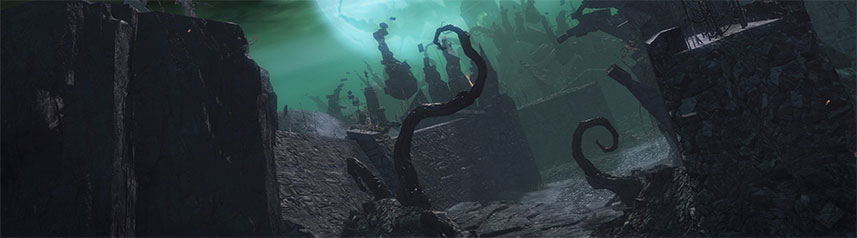
Destiny of Ancient Kingdoms (DOAK) was a free-to-play MMORPG built around a three-kingdom power struggle, mixing open-world adventuring with a heavy focus on competitive play. It offered a large map set to roam, multiple PvP formats to jump into, and a social ladder that let dedicated players rise all the way to ruling a kingdom as its King.
 | Publisher: UDEA Playerbase: Shut Down Type: MMORPG Release Date: August 30, 2016 Pros: +A true kingdom leadership system with a player King. +Six distinct, race-locked classes. +A wide selection of PvP modes. Cons: -Visually outdated presentation. -Combat and questing feel fairly standard. |
Destiny of Ancient Kingdoms Overview
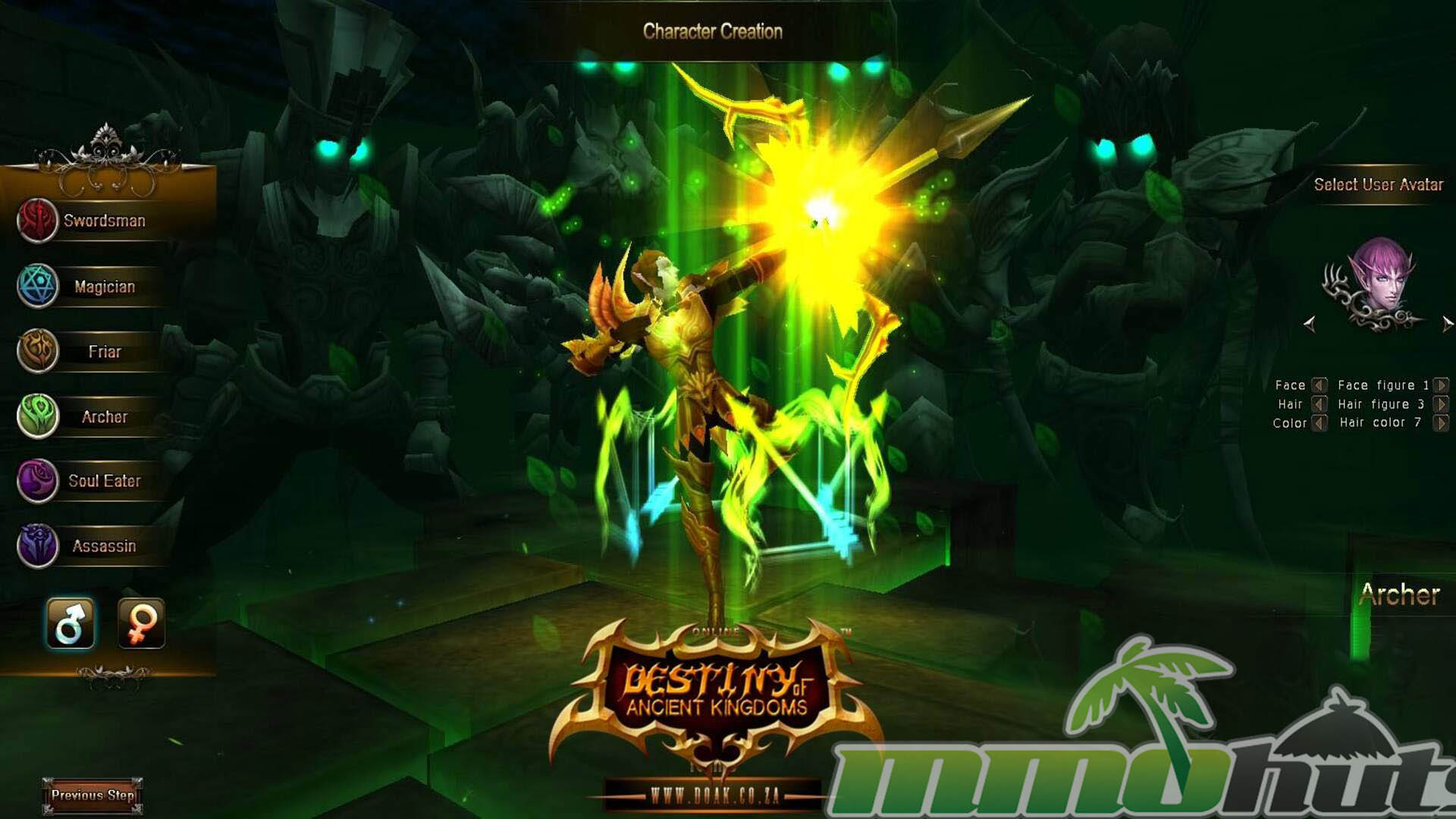
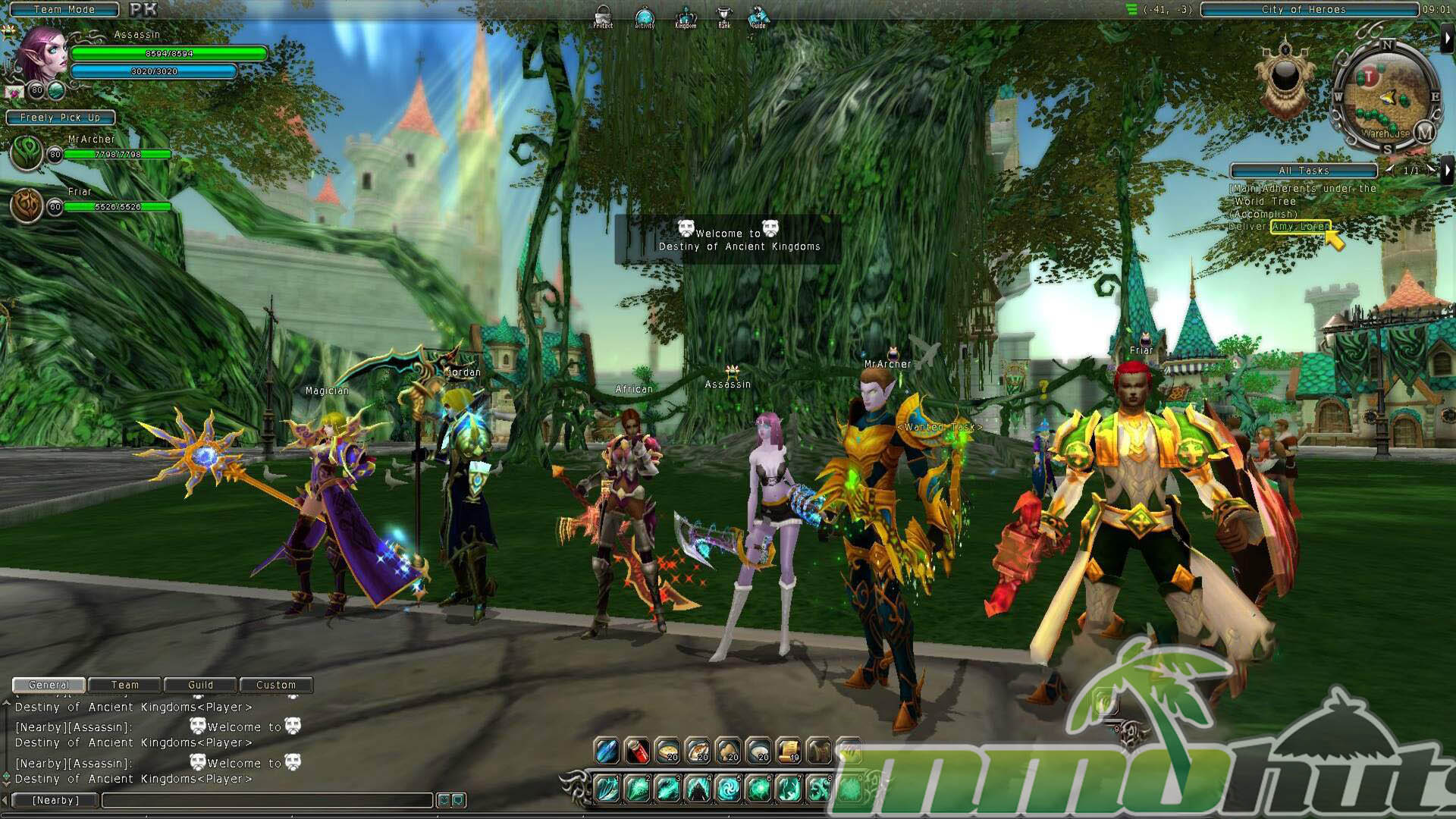
In Destiny of Ancient Kingdoms (DOAK), your first major choice is allegiance, you pledge yourself to one of three rival kingdoms and that decision frames your PvE and PvP experience. From there, character creation revolves around six classes that are tied to specific races, giving the roster a classic fantasy spread (for example, stealth-focused Elven Assassins and spellcasting Human Magicians), with each class bringing its own toolkit of skills and combat roles.
The game’s standout idea is its leadership structure. Rather than treating faction leadership as a static NPC role, DOAK positions the “King” as a player-driven seat of power. Climbing the kingdom hierarchy can eventually place you on the throne, with authority to appoint officials, punish troublemakers (including jailing players), and hand out rewards to those who support your rule. If the current ruler is ineffective or abuses that power, the game also leans into internal politics by allowing players to organize a rebellion to remove them.
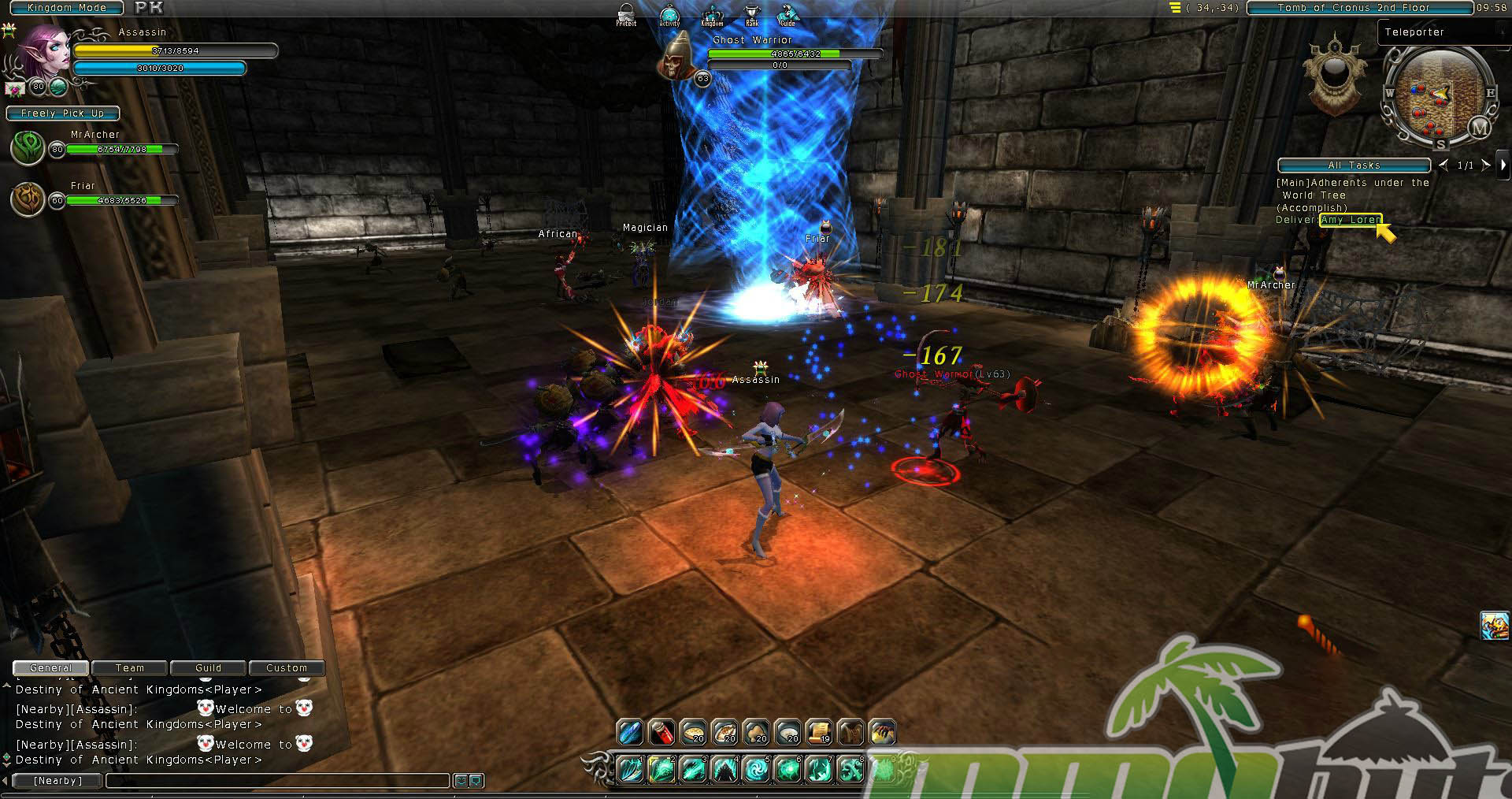
Outside of the political layer, DOAK follows the familiar MMORPG loop of leveling, farming monsters, and chasing better drops. You can call in summoned creatures to aid you in fights, grind through mobs and bosses for rarer loot, and then take that power into one of six PvP modes with different rulesets and objectives. The world itself is large on paper, featuring more than fifty maps and over 2000 mobs, so there is plenty of terrain and enemy variety to work through while you progress.
Social play is pushed through guilds, which act as the main long-term community structure. Guilds can participate in guild wars, work toward forging specialized gear, and generally provide the coordination needed for both organized PvP and kingdom-level ambition.
Destiny of Ancient Kingdoms Key Features:
- Six Character Classes – pick from six race-locked classes with their own abilities, strengths, and combat style.
- Become King – pursue the throne and govern your kingdom with real player-facing authority, for better or worse.
- Join a Guild – group up for guild wars and access guild-focused progression, including forgeable special gear.
- Six PvP Modes – fight other players across six distinct PvP formats with varying goals and rules.
- Massive Game World – explore a sizable world made up of 50+ maps and 2000+ mobs to battle.
Destiny of Ancient Kingdoms Screenshots

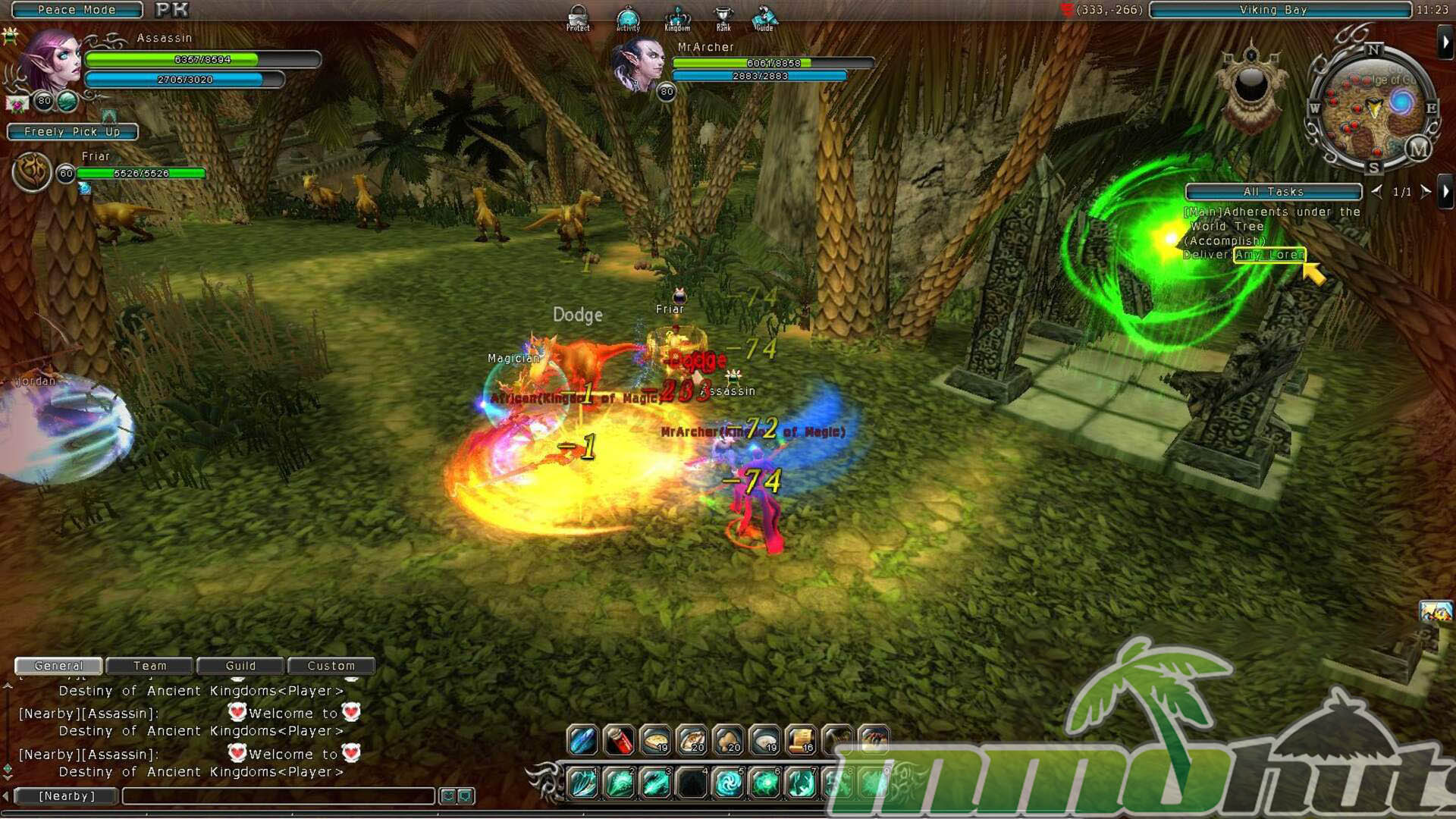
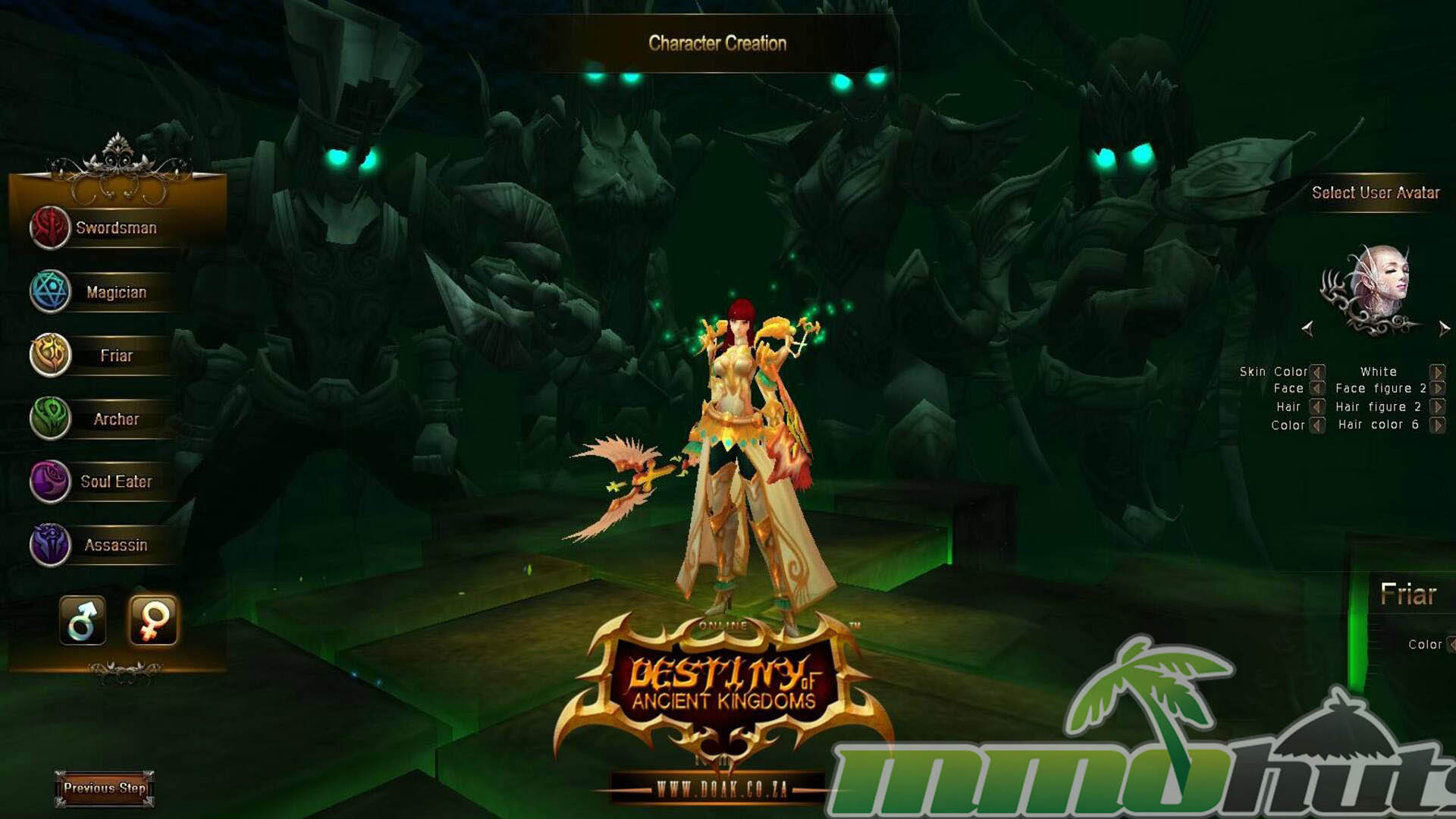
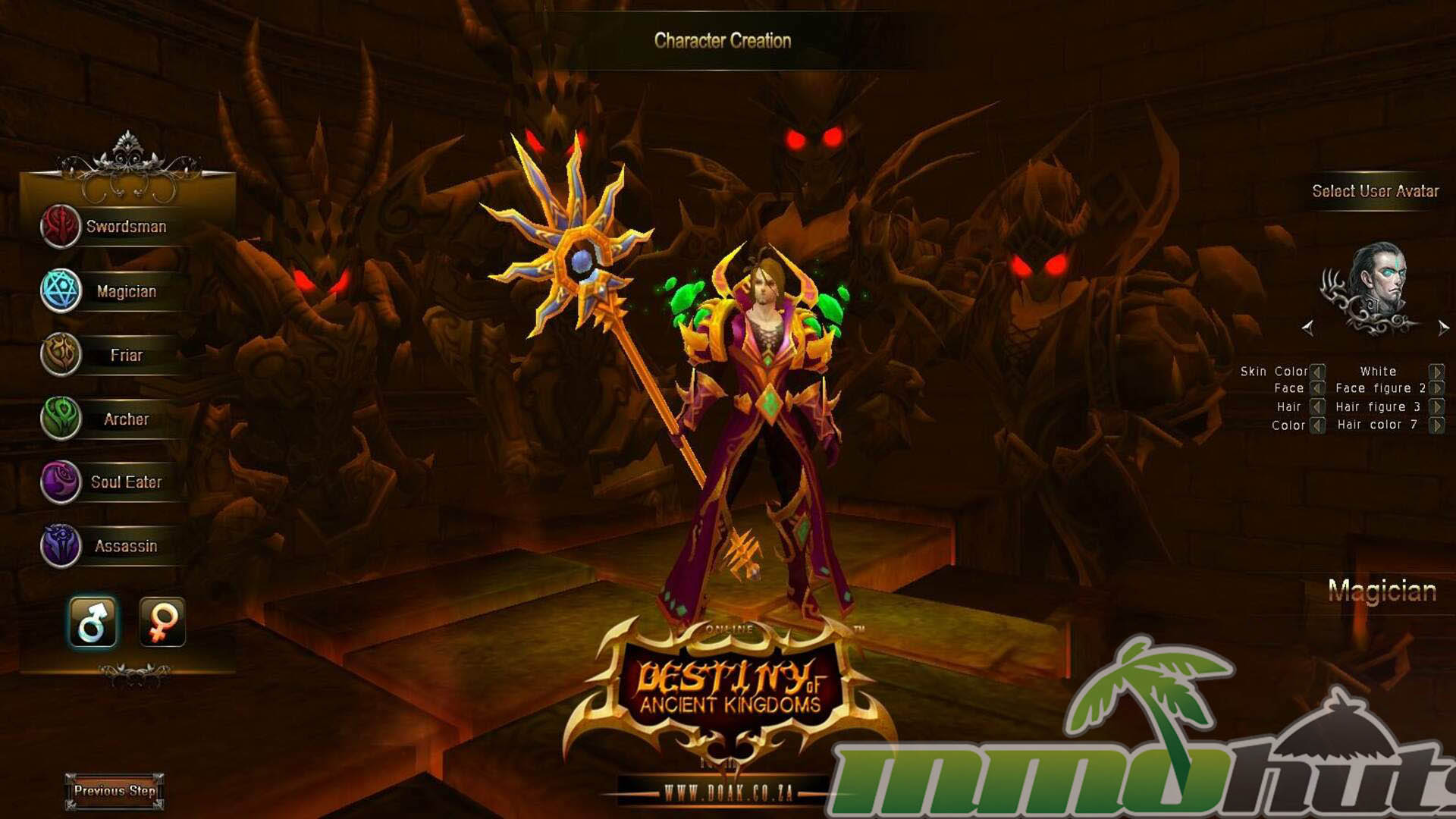

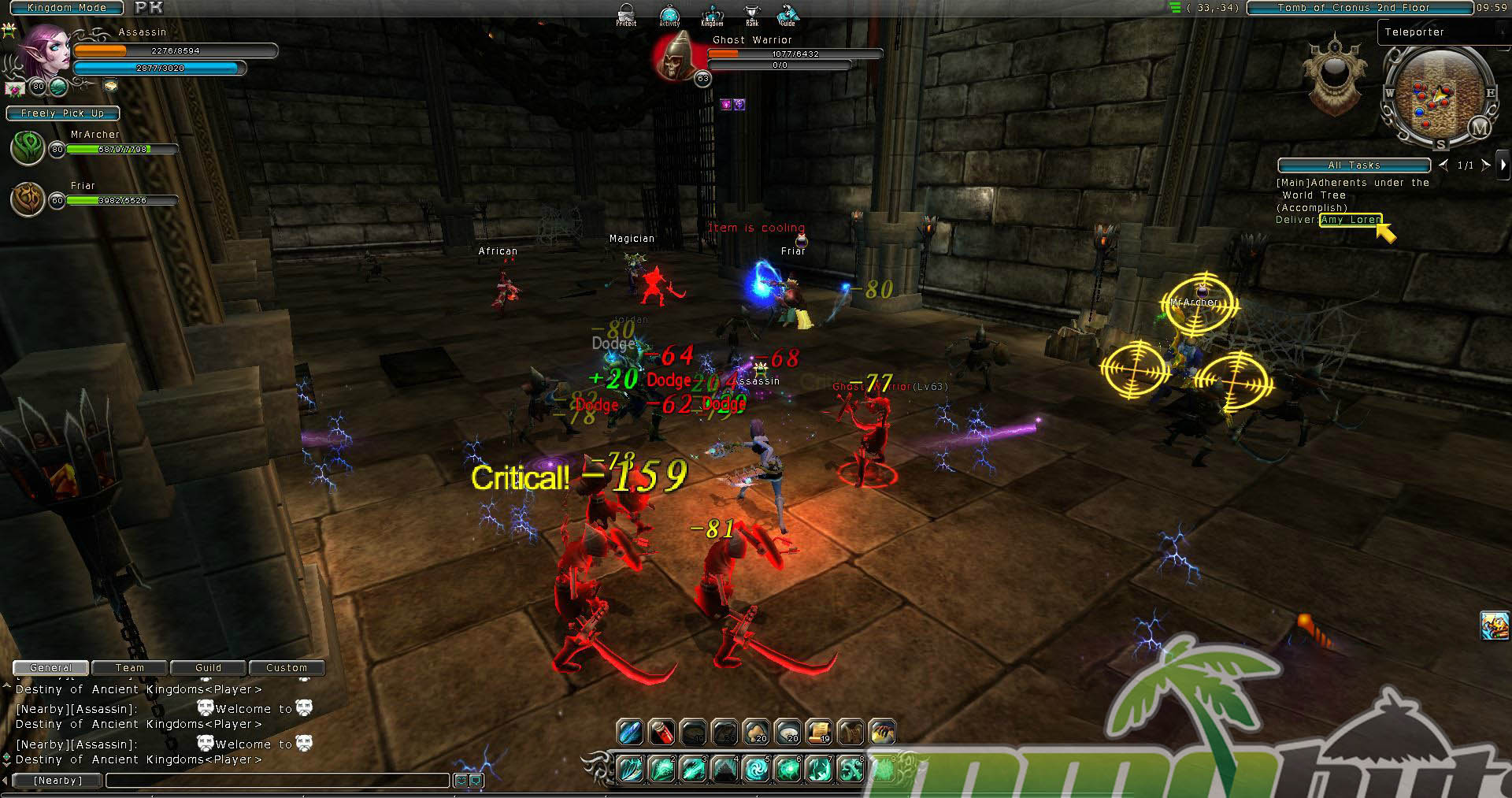

Destiny of Ancient Kingdoms Featured Video

Destiny of Ancient Kingdoms Review
Destiny of Ancient Kingdoms aimed to differentiate itself in a crowded MMORPG field by putting faction politics at the center of the experience. The three-kingdom setup gives the world a constant “us versus them” context, and when the community is active, that structure can make everyday activities, grinding, grouping, and gearing, feel like they contribute to something larger than personal progression.
Moment to moment, DOAK plays like a traditional free-to-play MMORPG from its era. You spend a lot of time moving between combat zones, completing typical monster-focused objectives, and strengthening your character through drops and upgrades. Summoning monsters to help in battle adds a small tactical layer, particularly in chaotic fights where extra bodies can swing pressure, but the overall combat and PvE loop tends to stay within familiar genre boundaries rather than redefining them.
Class choice matters largely because each class is locked to a race, which creates clearer identity between archetypes and helps kingdoms feel thematically distinct depending on who players choose to roll. In practice, it also means you are not just picking a skill kit, you are committing to a particular fantasy identity. That can be appealing for players who like strong role definition, although it can feel restrictive if you prefer mixing a race aesthetic with a different combat role.
The most interesting conversations around DOAK tend to come back to the King system. A player-run throne creates natural stories: loyalists trying to keep a competent ruler in power, opportunists campaigning for the crown, and frustrated citizens organizing to replace a leader they see as selfish or ineffective. The ability to appoint officials, punish players, and reward supporters gives the position teeth, which is exactly what makes it compelling. At the same time, systems like this live and die on community size and social cohesion. When populations thin out, the political ladder loses some of its energy and the world can feel quieter than its design intends.
PvP is where DOAK tries to provide ongoing goals beyond leveling. With six PvP modes, there is variety in how you can compete, and that breadth is helpful for players who want alternatives to a single battleground format. The downside is that dated visuals and a fairly conventional gameplay foundation can make it harder for the game to stand out to players used to newer, more polished MMORPGs.
As a whole, DOAK is best understood as a classic F2P MMO built around one strong hook: player leadership with meaningful faction authority. If you value social hierarchy, kingdom identity, and structured PvP options, its design direction makes sense. If you are primarily looking for modern presentation or innovative PvE systems, it may feel more like a familiar template with a political twist.
Destiny of Ancient Kingdoms Links
Destiny of Ancient Kingdoms Official Site
Destiny of Ancient Kingdoms Facebook Page
Destiny of Ancient Kingdoms Forums [Official]
Destiny of Ancient Kingdoms Steam Greenlight Page
Destiny of Ancient Kingdoms System Requirements
Minimum Requirements:
Operating System: Windows® XP / Vista
CPU: Dual-core 2.0GHz CPU
Video Card: Shader Model 2.0, GeForce 6200 or ATI Radeon 9550 video ram
RAM: 2 GB
Hard Disk Space: 10 GB
Recommended Requirements:
Operating System: Windows® 7 / 8 / 10
CPU: Dual-core 2.0GHz CPU or better
Video Card: Shader Model 2.0 or higher, GeForce 6200 or ATI Radeon 9550 video ram
RAM: 2 GB
Hard Disk Space: 10 GB
Destiny of Ancient Kingdoms Music & Soundtrack
A dedicated soundtrack overview for DOAK was never formally documented here. If you are researching the game today, archived gameplay footage is typically the best way to get a sense of its music direction, ambient zone audio, and combat sound effects.
Destiny of Ancient Kingdoms Additional Information
Developer(s): Utopia Dream Entertainment Alliance
Publisher(s): Utopia Dream Entertainment Alliance
Server(s): South Africa
Steam Greenlight: June 10, 2016
Release Date: August 30, 2016
Shut Down: 2019
Development History / Background:
Destiny of Ancient Kingdoms (DOAK) was a free-to-play MMORPG developed and published by Utopia Dream Entertainment Alliance, a South Africa-based studio. The project appeared on Valve’s Steam Greenlight on June 10, 2016, and operated with a single server hosted in South Africa. Following ongoing problems tied to its service provider, the game’s servers were ultimately taken offline in late 2019.