
Codename CURE is a free-to-play 3D MMOFPS built around co-op firefights, swarming zombies, and objective-driven runs through bleak, post-apocalyptic locations.
 | Publisher: Hoobalugalar_X Playerbase: Low Type: MMOFPS Release Date: July 17, 2015 Pros: +Snappy co-op shooting with quick rounds. +Large zombie packs keep the pressure on. +Strong, unsettling audio design. +Bots can aim well and keep fights moving. Cons: -Public matches often lack coordination. -Not many maps to rotate through. -Very dim lighting can be frustrating. -No onboarding for new players. |

Codename CURE Overview
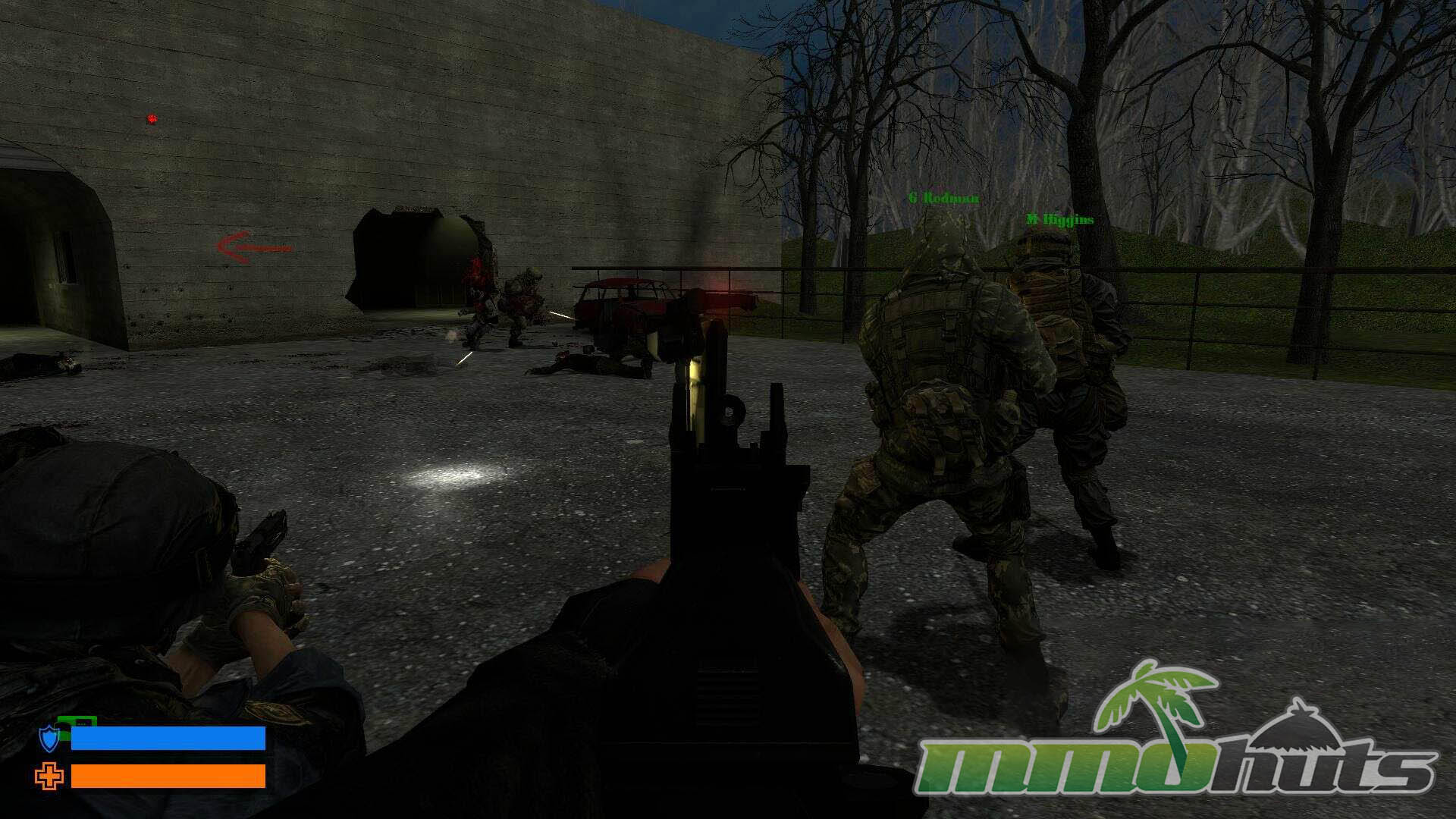
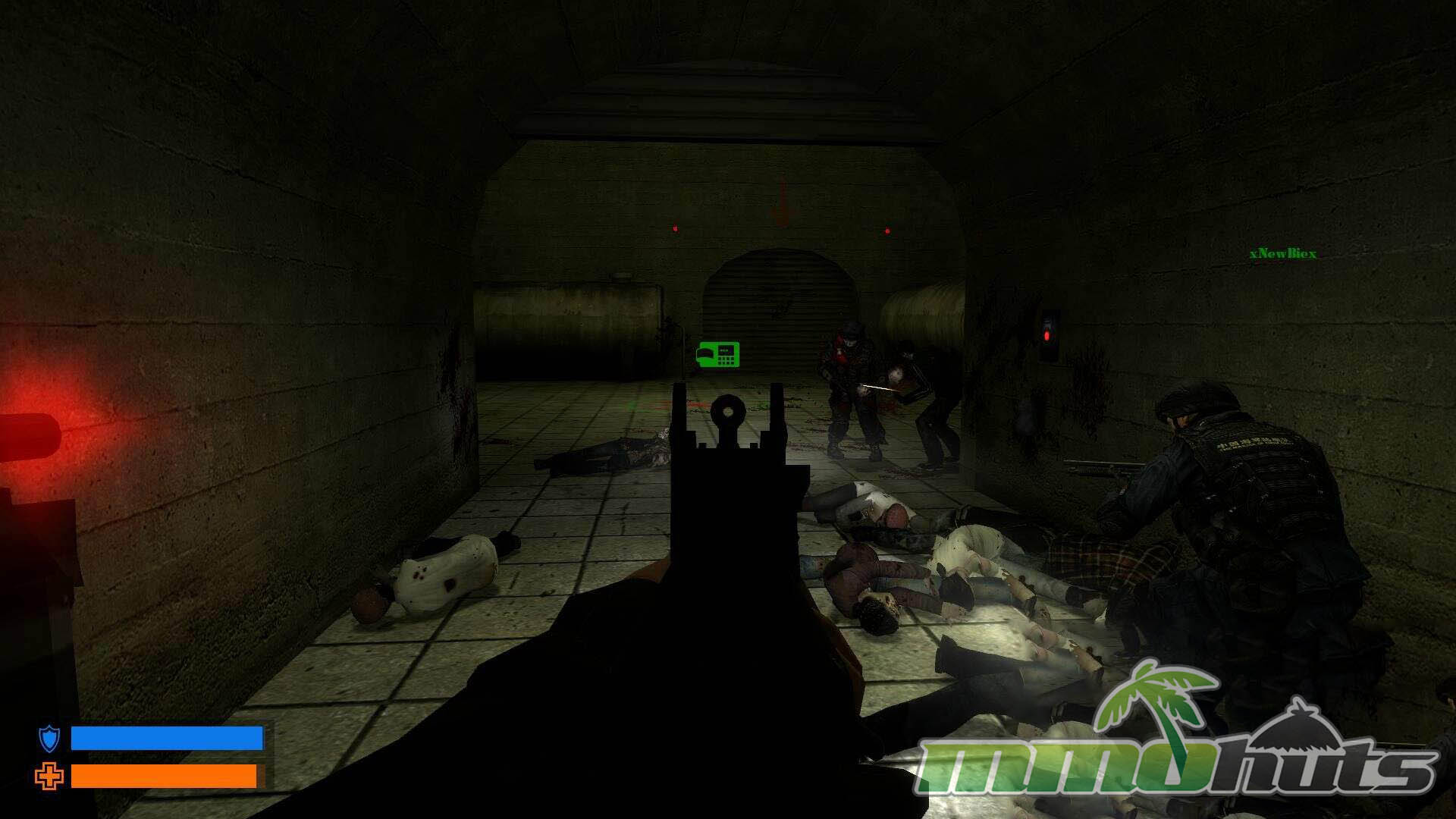
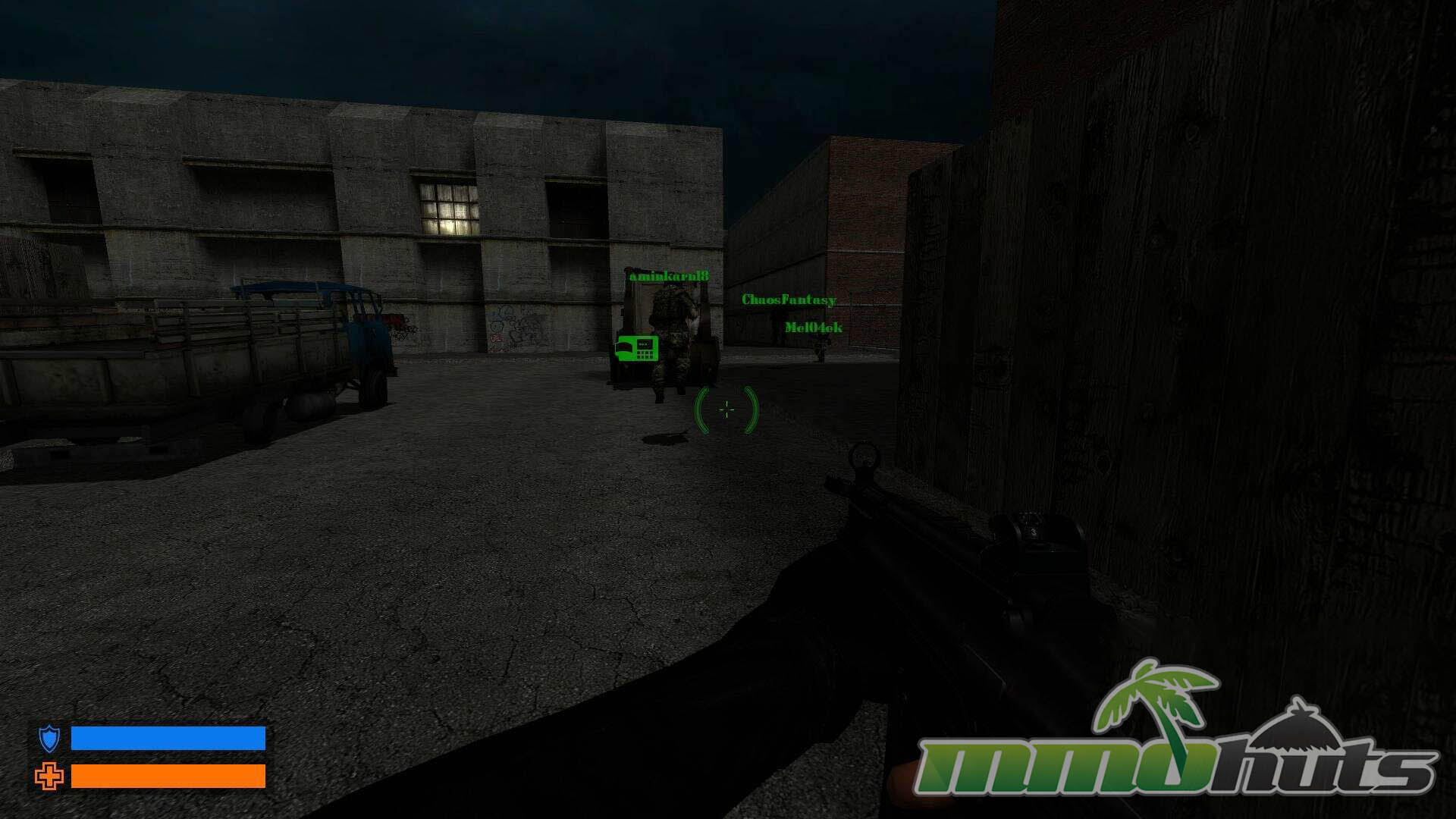
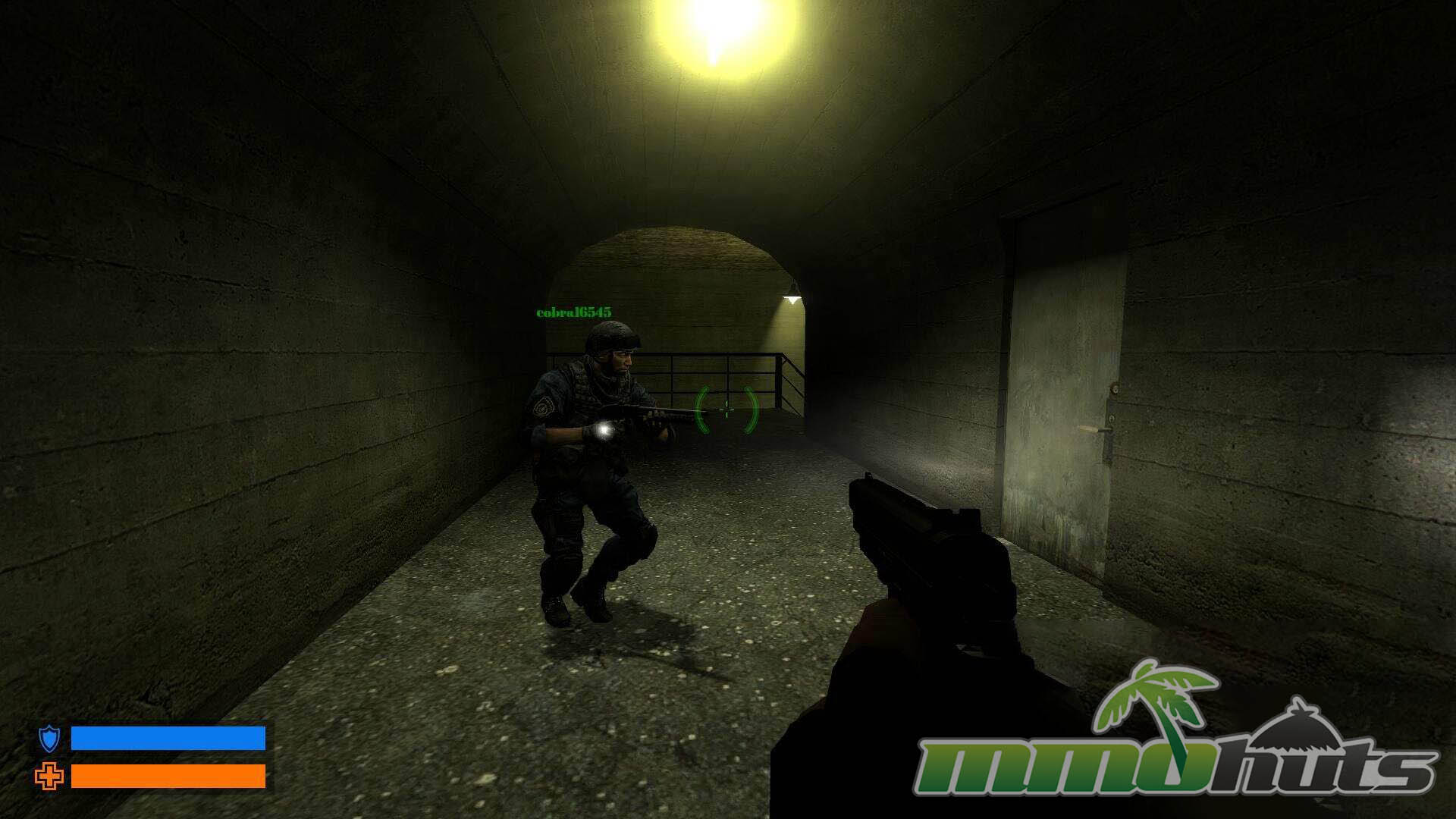
Codename CURE drops you into a ruined world that has been overrun by the undead, then asks you to survive long enough to finish the job. It is a free-to-play, cooperative MMOFPS where squads of up to six players pick specialized roles and push through zombie-filled spaces while completing mission objectives. One player might cover sightlines as a sniper, while another keeps the group stocked, and a technician can lock down choke points with deployable sentries when the horde starts to pour in.
The structure is simple and easy to understand, which makes it approachable for quick sessions, especially with friends. At its best, Codename CURE feels like a lean, Source-engine shooter focused on tense movement through dark interiors, sudden ambushes, and frantic last-second escapes once the objective is done.
Codename CURE Key Features:
- Action-packed FPS Combat – fight through waves of zombies with responsive gunplay and a solid spread of weapons.
- Cooperative Play – team up with up to 5 friends, or jump into player-hosted games online.
- Objective-based Maps – tackle large maps built around clear goals, with zombies constantly pressuring your route.
- Five Playable Classes – pick from five Team-Fortress inspired roles, each bringing a different combat job to the squad.
Codename CURE Screenshots




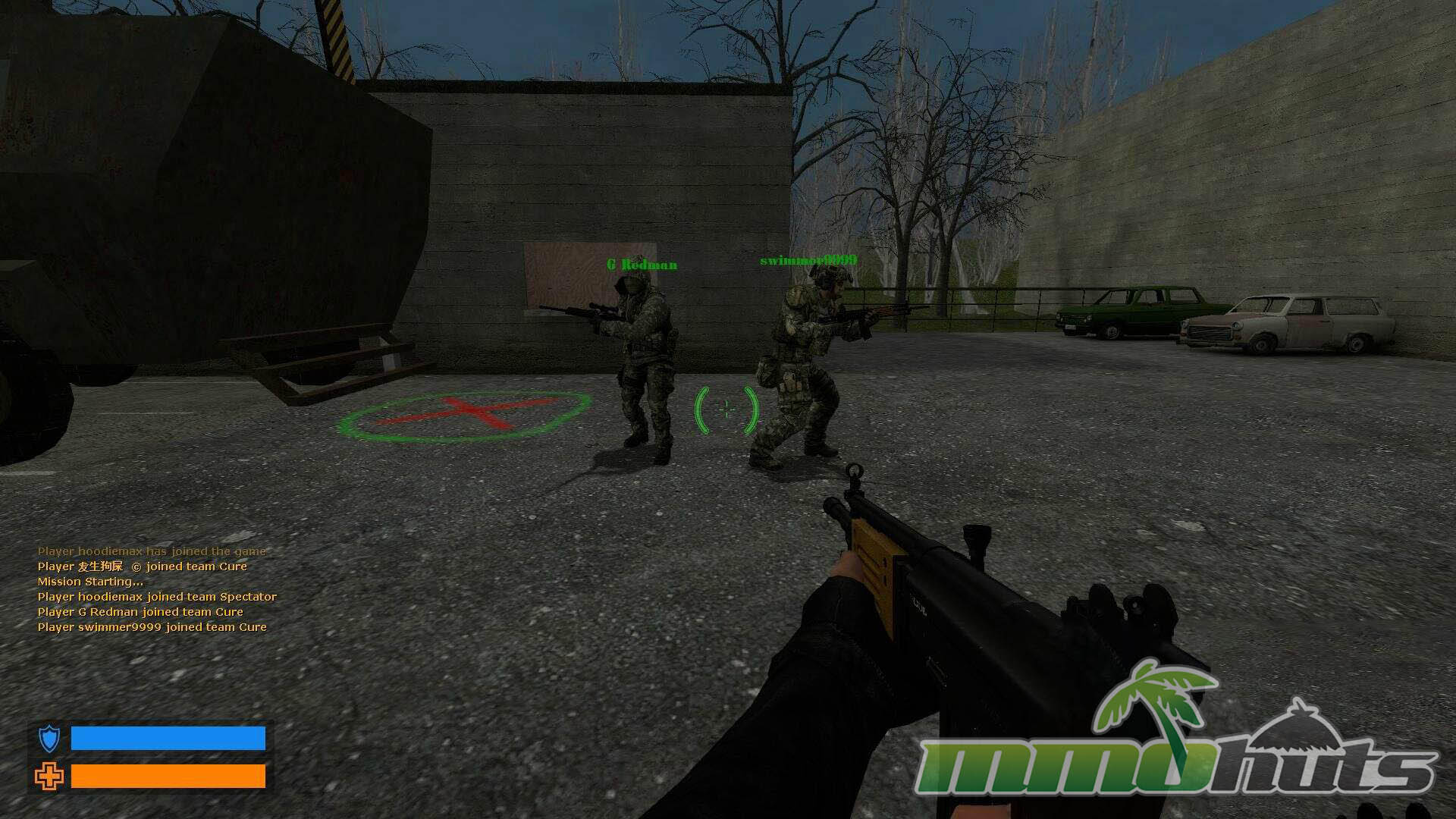
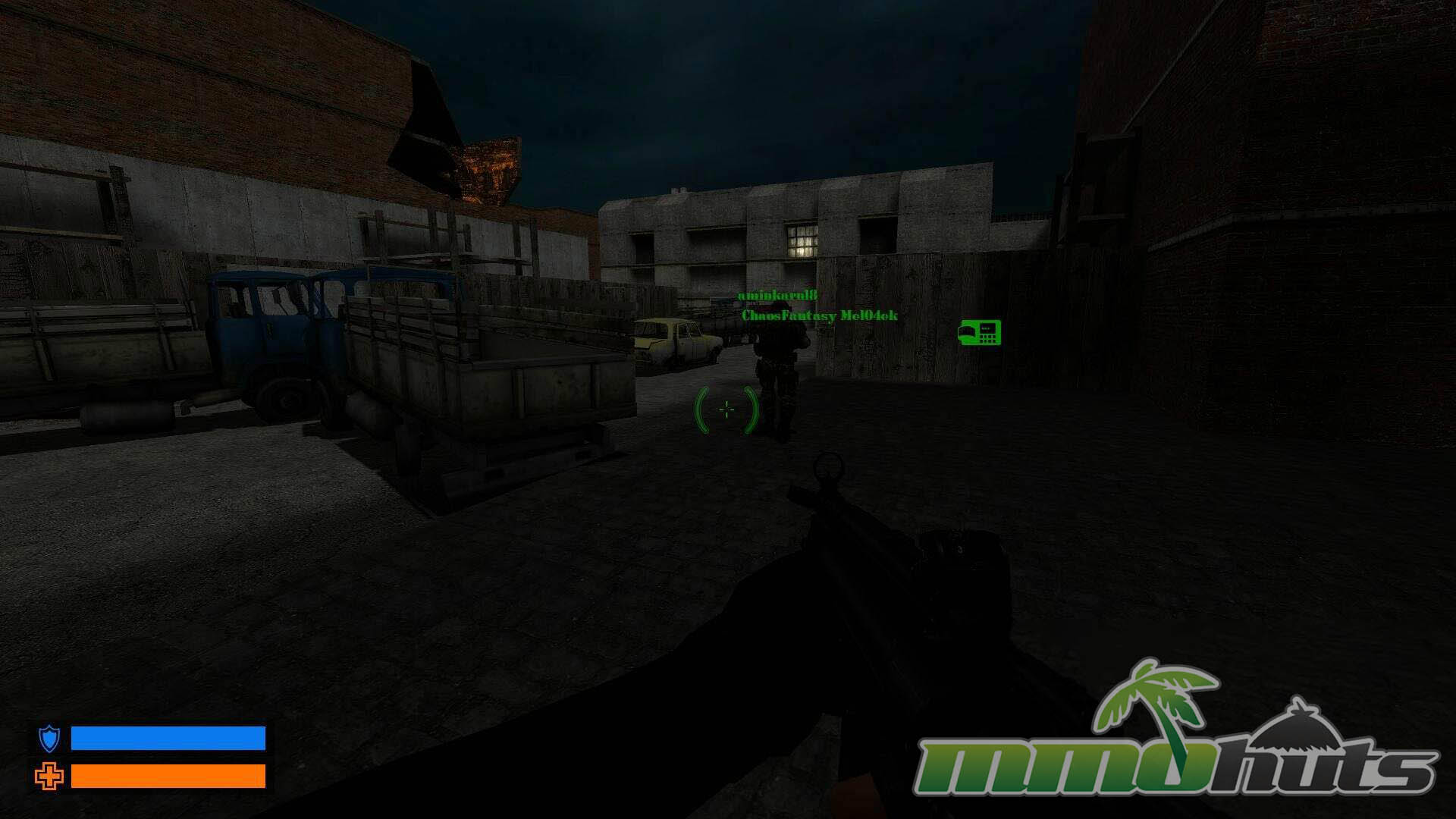
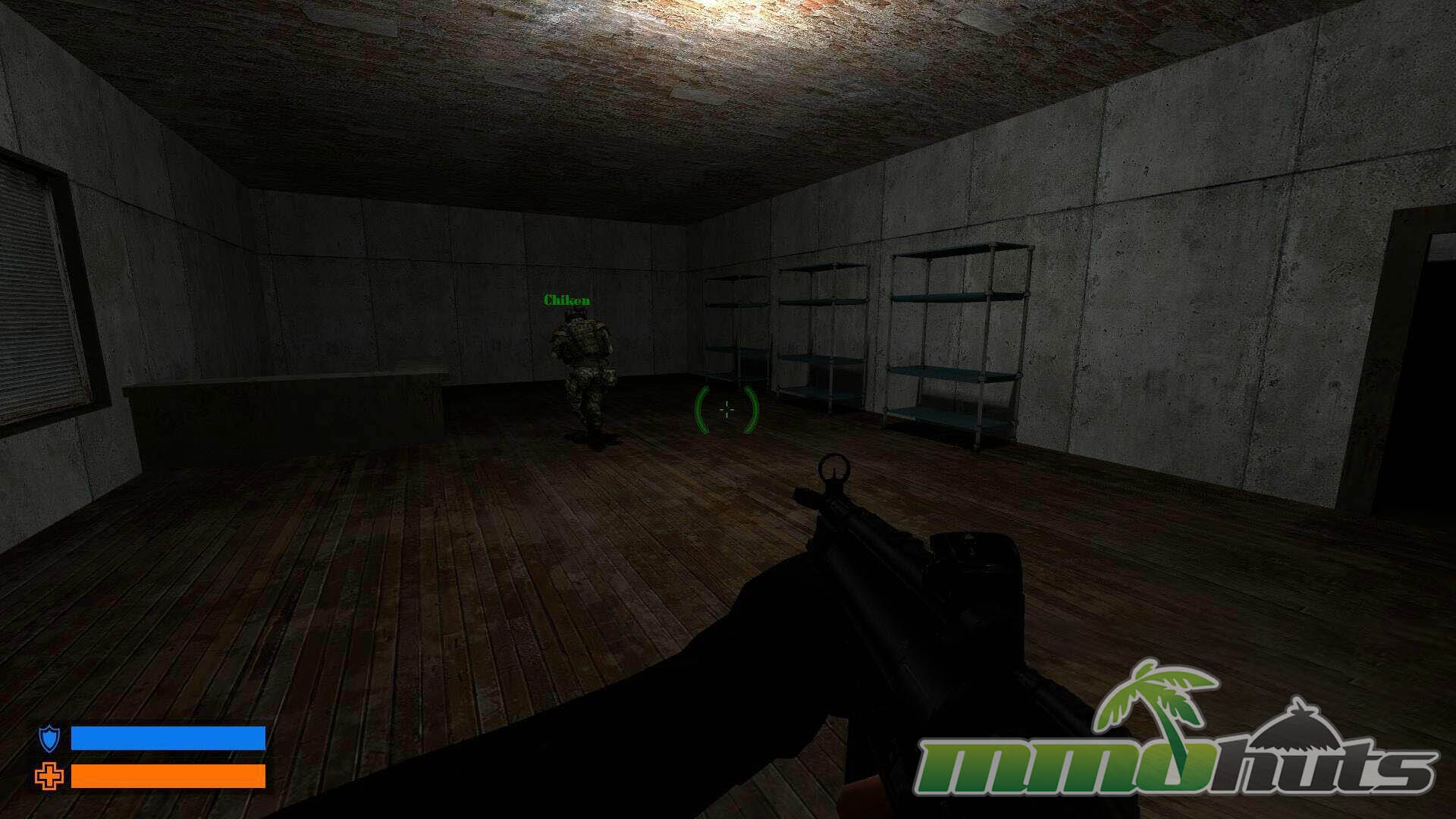
Codename CURE Featured Video

Classes:
Pointman – built for getting in first, using a shotgun and extended-mag dual pistols to probe corners and break up incoming packs.
Support – the team’s sustain specialist, able to place supply chests and keep everyone topped up. They carry an SMG and a tactical pistol suited to tight spaces.
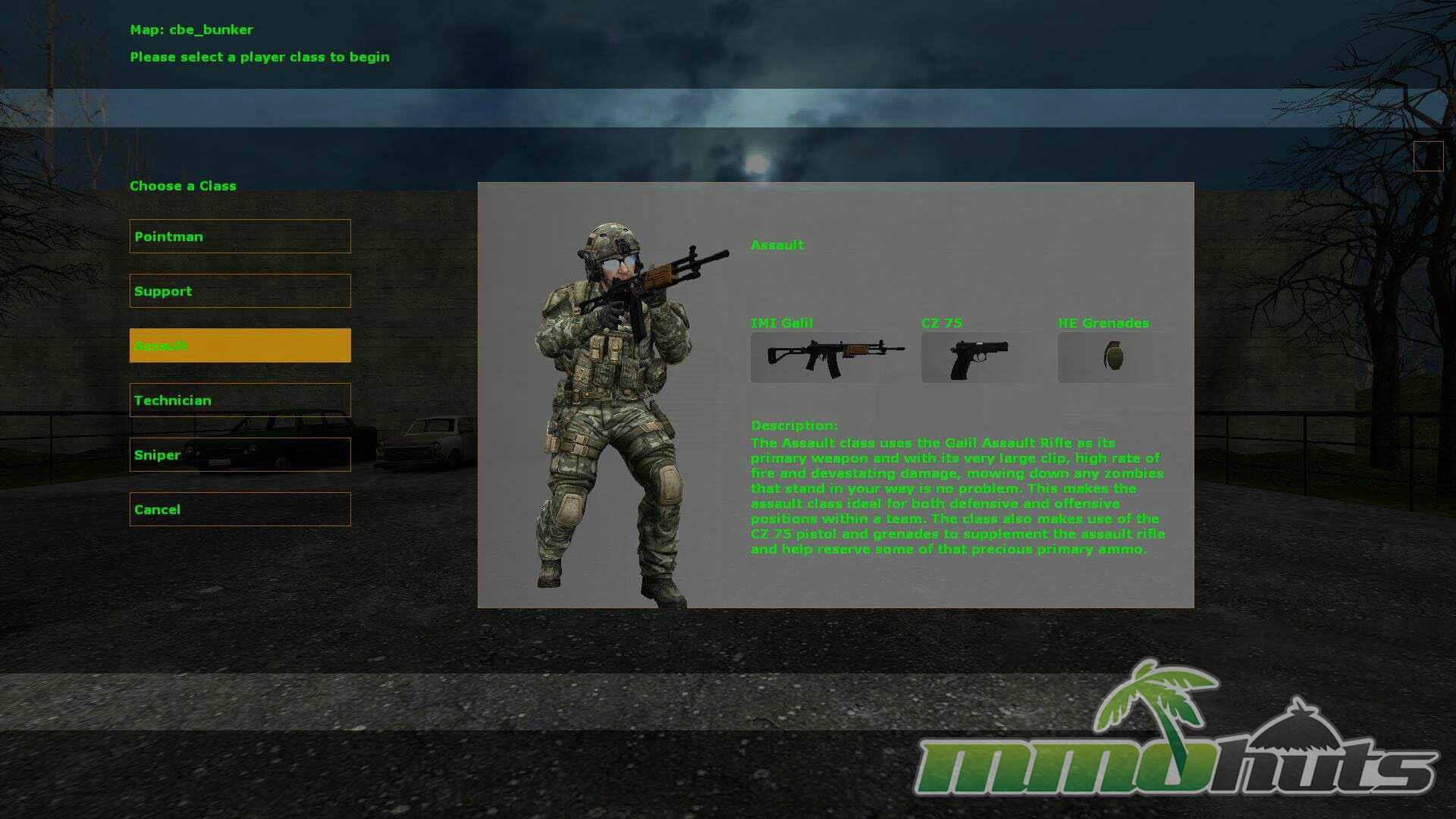
Assault – a flexible frontline pick, using a hard-hitting Galil Assault Rifle to clear lanes and hold ground when the pressure ramps up.
Technician – the class that can turn chaos into control by deploying sentry guns to cover entries and shred crowds. They also pack a shotgun and tactical pistol for close-range cleanup.
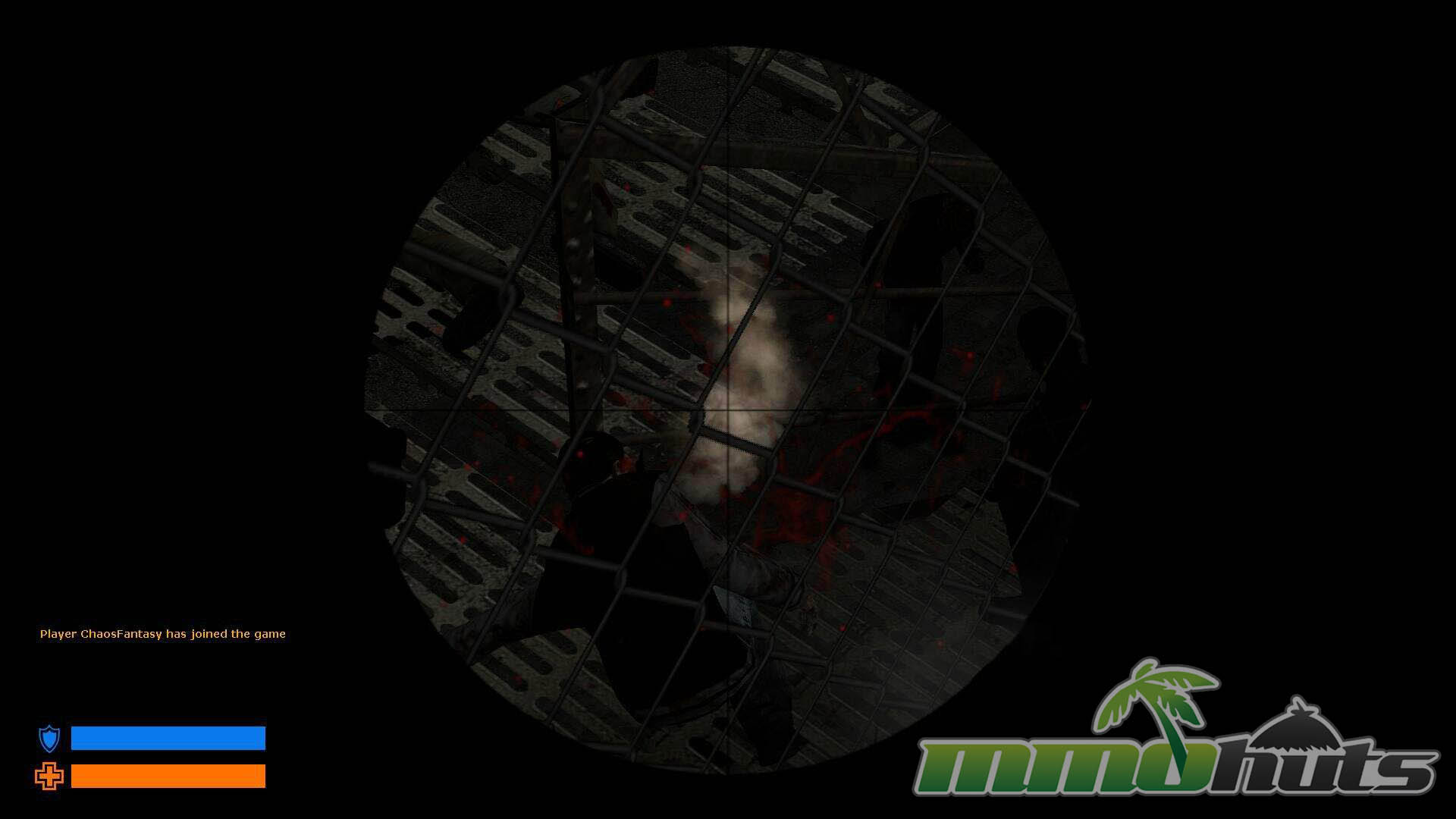
Sniper – ideal for removing threats before they close distance, with rifles that can still work up close if needed, although their slower pace struggles against full swarms.
Codename CURE Review
Codename CURE is a free-to-play 3D MMOFPS developed and published by Hoobalugalar_X. It began life as a Half-Life 2 mod and later returned as a standalone release on July 17, 2015. At the time of writing, it is available on Steam as an Early Access title, which helps explain some rough edges and the relatively light feature set.
Fighting Back in a Collapsed World
The premise is straightforward: the undead have taken over, and a specialist unit has been assembled to contain the outbreak. Your squad enters contaminated zones, completes objectives (most notably planting explosives at marked points), and then needs to make it out before time runs out. That simple mission loop gives each round a clear beginning, middle, and frantic sprint to extraction, and it works well for a game that aims to be more “drop in and play” than a long-form campaign.
As an Early Access project, the scope is currently limited. There is a single core mode, and the available map pool is not large. The upside is that the objectives are easy to read, so you spend more time shooting and moving, and less time learning complicated systems.
Learning the Basics, the Hard Way
One of the most noticeable hurdles is the lack of a tutorial or even basic guidance. Veterans of Source-based shooters will adapt quickly, but new players are left to discover key functions through trial and error. Small things, like unusual default binds for utility tools, can lead to early frustration, especially because visibility is often poor and the game expects you to use what you have.
A handful of prompts or a short training room would go a long way here, because Codename CURE is not complicated, it just does not explain itself.
Getting Into Matches and Playing With Bots
Once you are ready to jump in, the next obstacle is simply finding a session that fits. There is no true matchmaking, so you rely on browsing and joining available games, which can be hit-or-miss if servers are full or private. Hosting is an option and it is not difficult, but it does shift responsibility to the player, especially if you prefer to come and go casually.
When there are empty slots, the game fills them with bots. The AI is surprisingly competent in terms of aim and basic combat, so rounds do not collapse just because you are short-handed. Their weaknesses show in team utility, they are not consistent about support actions or making smart placements with tools, so a bot-heavy run can feel more like a shooting gallery than a coordinated operation.
Dark Maps, Great Atmosphere
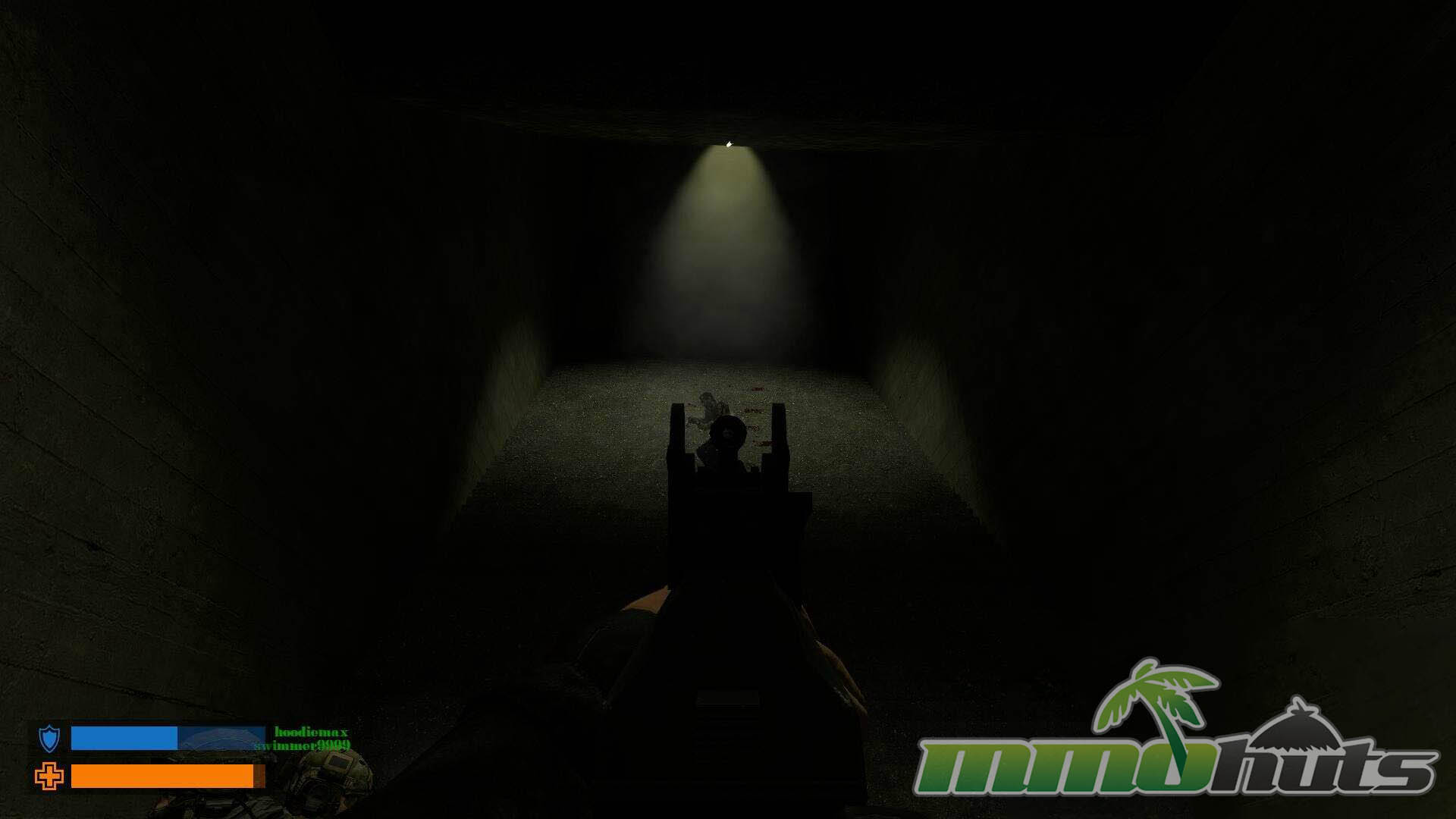
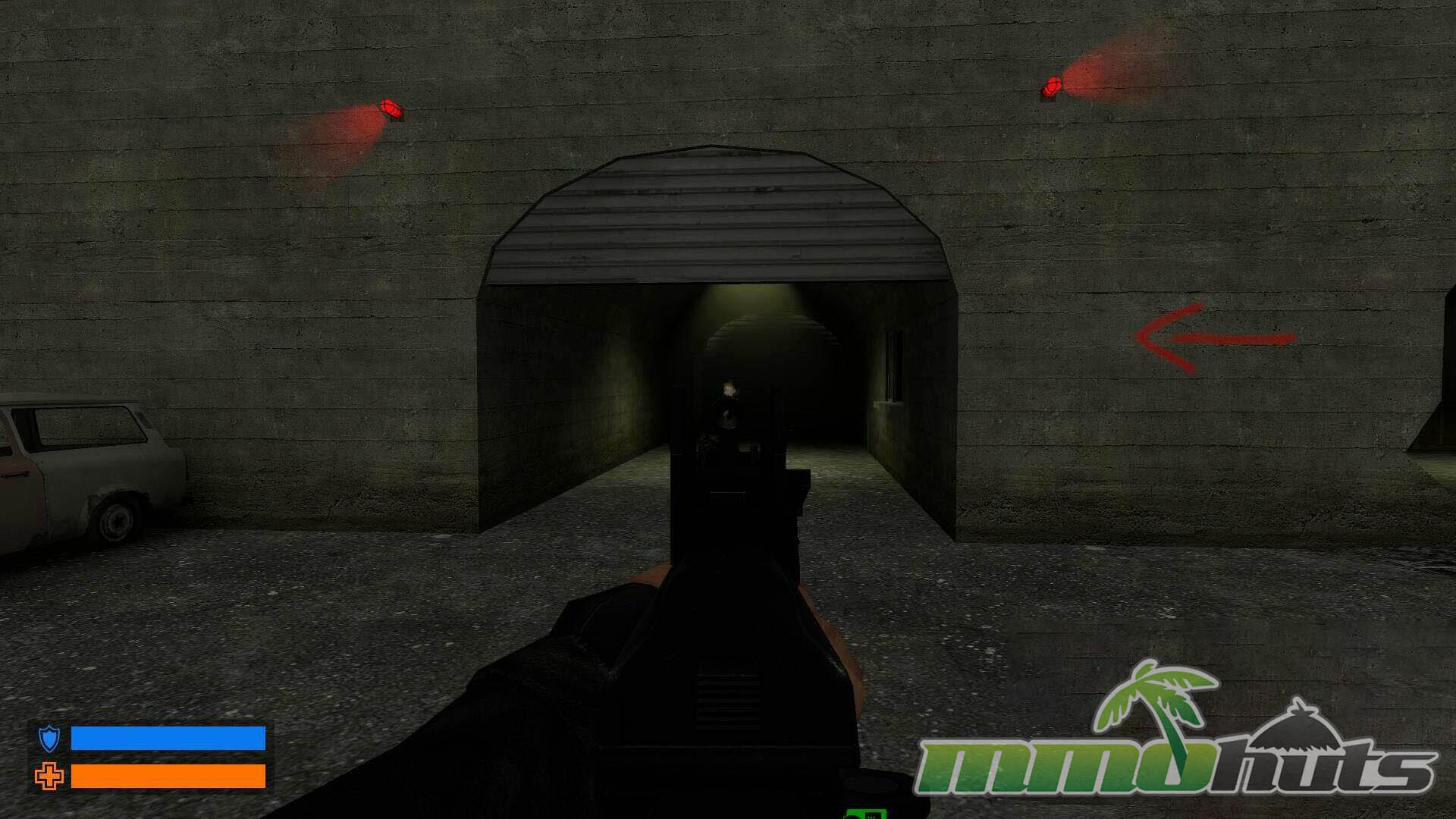
Codename CURE leans hard into low-light environments. Many areas are extremely dim, and even with gamma adjustments it can remain hard to read spaces at a glance. From a mood perspective it works, the darkness makes every hallway sound more dangerous and every distant groan more alarming, but it can also be a practical problem when you are trying to track teammates, identify angles, or react to sudden hits.
Where the game consistently impresses is audio. The music and ambient effects create tension without needing elaborate set pieces, and the zombie noises do a good job of signaling danger and building urgency. Visually, the Source Engine shows its age, but it remains a strong fit for responsive FPS movement and clean gunplay. Performance is also friendly to older PCs, which is a real advantage for a free-to-play co-op shooter.
The UI and menus, however, feel dated and utilitarian. It functions, but it does not present information in a modern, readable way, and it adds to that “mod roots” feeling.
Long-Term Motivation and Team Play
The core loop is enjoyable, blasting through zombies never stops being satisfying, but the game’s casual approach also means there is not much in the way of progression or long-term goals. Without unlock paths or a broader structure, the main reason to keep playing becomes personal enjoyment, improving your efficiency, or simply hanging out with friends.
Teamwork can also be inconsistent in public lobbies. The class design encourages cooperation, but not every group plays that way. Some players will set up sentries, keep ammo flowing, and hold choke points, while others sprint to the next safe spot and leave slower teammates to deal with the consequences. The game includes voice chat, yet in practice it often goes unused, so coordination tends to depend on luck and the attitude of the group.
Free-to-Play Without a Storefront
One surprising detail is what the game does not include. Many free-to-play titles rely on cash shops, paid boosts, or premium subscriptions, but Codename CURE does not currently push monetization systems. You can play without being nudged toward purchases, which is refreshing, even if it raises questions about how the project sustains itself over time.
The Final Verdict – Good
Codename CURE is not a genre leader, and it is difficult to place it above heavyweight co-op zombie shooters with stronger campaigns and deeper systems. Still, as a lightweight, Source-based co-op FPS, it delivers tense atmosphere, smooth controls, and satisfying firefights, especially when played with friends who actually coordinate roles.
With more maps, additional modes, and some form of progression (plus a basic tutorial), the game could feel far more complete. As it stands, it is a solid casual option for players who want straightforward objective runs and lots of undead targets without spending money.
Codename CURE System Requirements
Minimum Requirements:
Operating System: Windows XP
CPU: Pentium 4 3.0 GHz
RAM: 1 GB RAM
Video Card: Nvidia GeForce 6 series / ATI Radeon 9600
Direct X: DirectX 9.0c
Hard Disk Space: 4 GB available space
Recommended Requirements:
Operating System: Windows XP / Vista / 7 / 8 / 8.1 / 10 (64 bit)
CPU: Intel Core 2 Duo 2.4 GHz or higher
RAM: 2 GB RAM or more
Video Card: Nvidia GeForce 9 / ATI X1600 / Intel 4000 or higher
Direct X: DirectX 9.0c
Hard Disk Space: 4 GB or more available space
Codename CURE Music & Soundtrack
Coming Soon!
Codename CURE Additional Information
Developer: Hoobalugalar_X
Publisher: Hoobalugalar_X
Designer(s): Hoobalugalar_X
Game Engine: Source Engine
Release Date: July 17, 2015
Development History / Background:
Codename CURE started out as a community mod built on Valve’s Half-Life 2, then later transitioned into a standalone release. It is currently offered on Steam in Early Access form. The game takes place in a post-apocalyptic setting where an elite unit known as CURE is deployed to contain the infection. Players complete cooperative FPS missions that revolve around reaching target zones, planting explosives at marked locations, and extracting safely while fighting off zombies along the way.