Cloud Nine is a 3D fantasy MMORPG with a distinctly anime look, built around straightforward questing and a handful of light social systems. It is best remembered as Holic 2 in much of Asia, and as the follow-up to Holic Online, with three playable races, six base classes, and two rival nations that shape the game’s PvP boundaries and community identity.
 | Publisher: RedFox Games Playerbase: Low Type: MMORPG Release Date: November 24, 2009 Shut Down Date: September 5, 2017 PvP: Faction Wars / Guild Battles Pros: +Adorable monster designs. +Beginner-friendly systems. +Runs on very modest PCs. +Monster card collecting. +Pets, mounts, and monster transformation. Cons: -English localization is inconsistent. -Simple presentation and combat depth. -Small population with limited ongoing support. |
Cloud Nine Overview
As the successor to Holic Online, Cloud Nine keeps the same bright, chibi-leaning fantasy style while smoothing out some of the original’s rough edges. Marketed as Holic 2 across parts of Asia, it offers three races and six starting classes, then opens up a sub-class option at Level 20 that borrows from another class’ toolkit. It is a small but meaningful way to customize your build without completely changing your role.
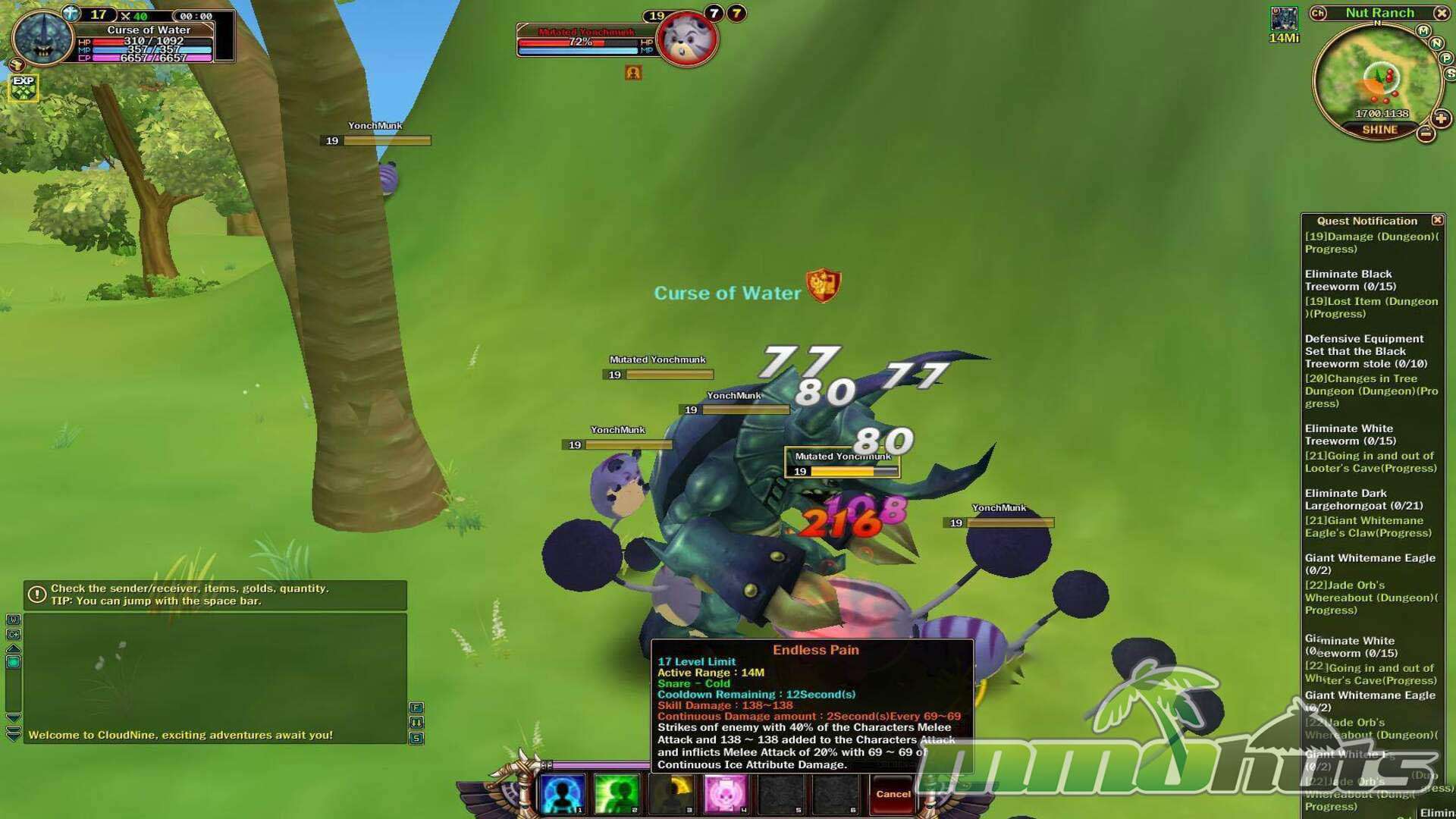
The signature system, and the one most players remember, is the monster card feature. Many enemies can drop collectible cards that fill regional “books,” and the broader card system feeds into capturing, collecting, and even temporarily transforming into monsters. Overall, Cloud Nine is designed to be approachable, with fast leveling, clear quest loops, and an emphasis on light progression rather than complex endgame structure. Players align with either Primus Union or Ganav Libero, form guilds for tougher PvE, and participate in faction-oriented PvP. The game ultimately shut down on September 5, 2017.
Cloud Nine Key Features:
- Collect ‘Em All – build out monster card books by collecting drops from the game’s creatures, and use certain cards to take on a monster form temporarily.
- Cute Graphics – a simple 3D anime presentation with friendly silhouettes and an intentionally light, colorful style.
- Complex Marriage System – a multi-step relationship and wedding process that goes far beyond a single menu click, with tangible couple-oriented rewards.
- Three Different Crafting Trees – choose one crafting path, make useful gear and items, and participate in player-to-player trade.
- Master and Apprentice – a guided mentoring setup that helps new players progress, while giving veterans incentives to teach and assist.
Cloud Nine Screenshots

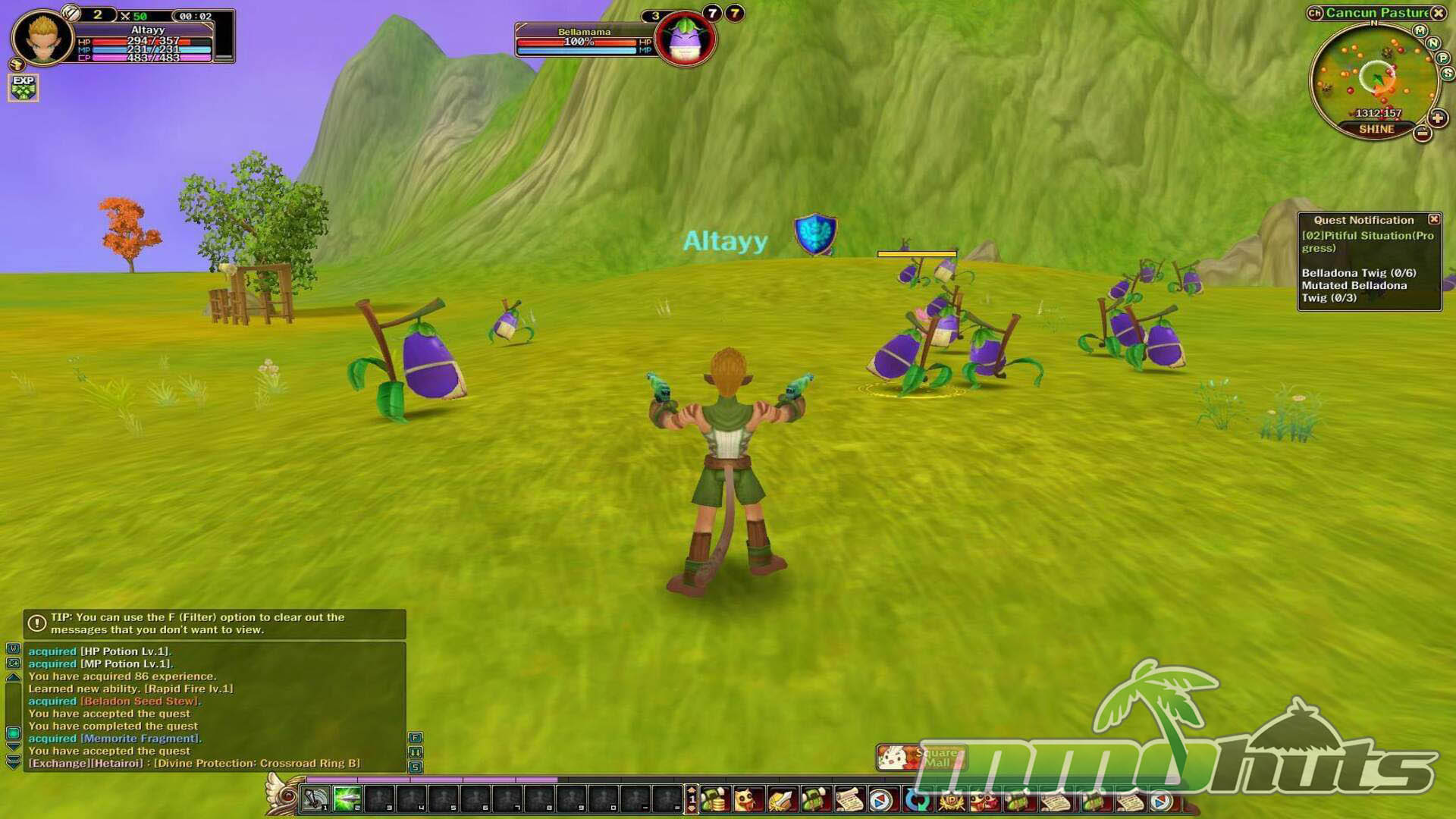
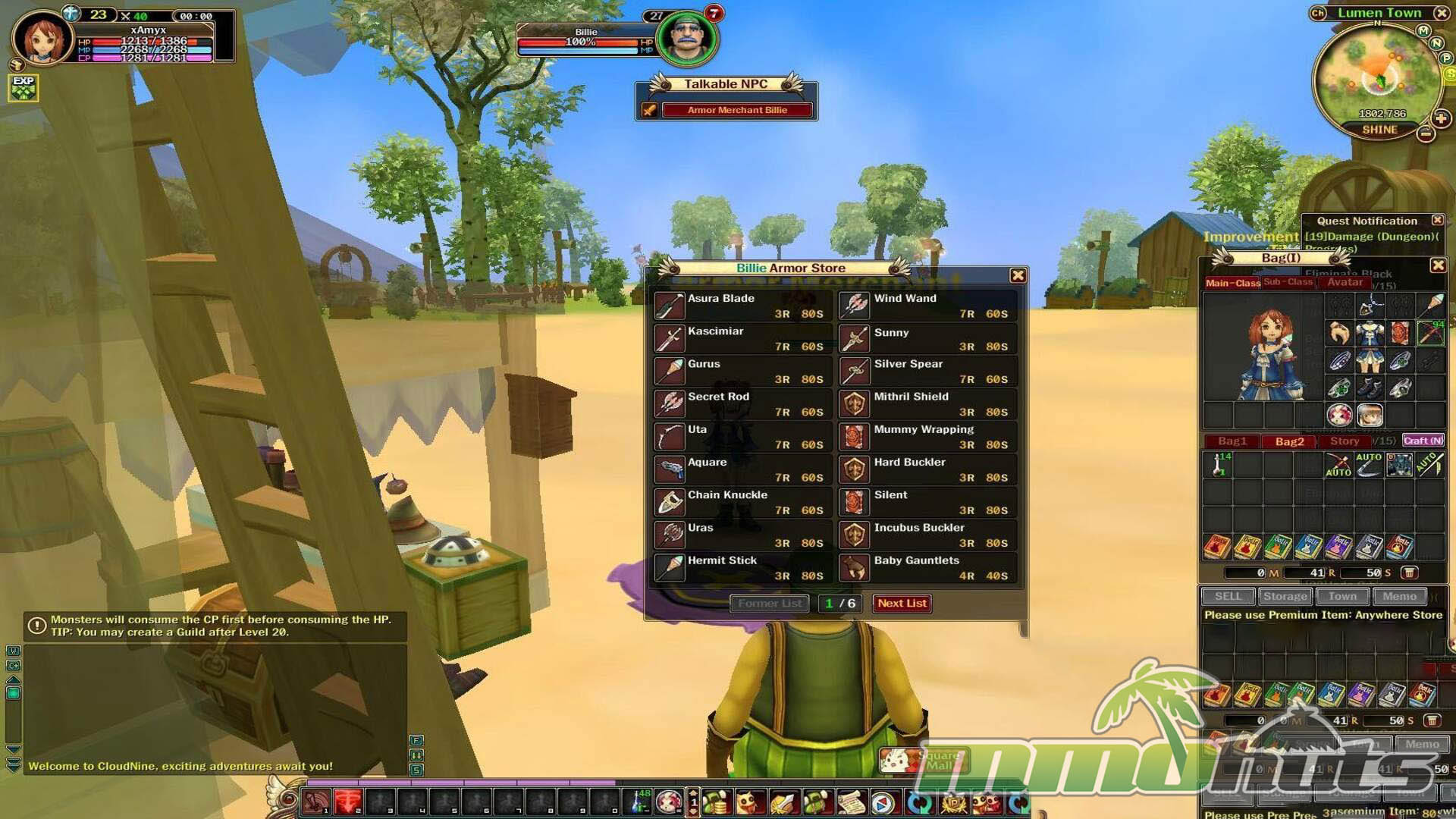
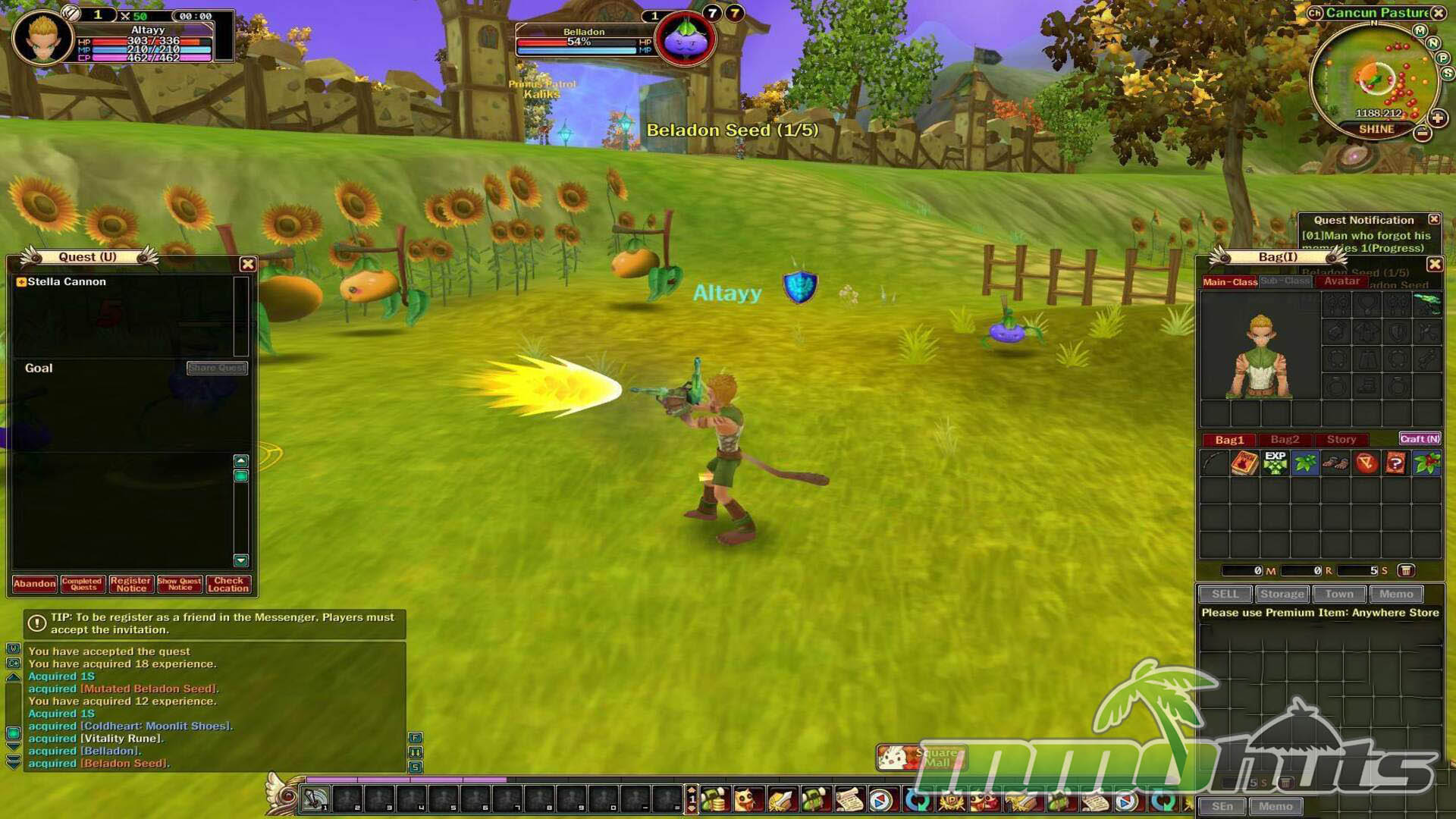
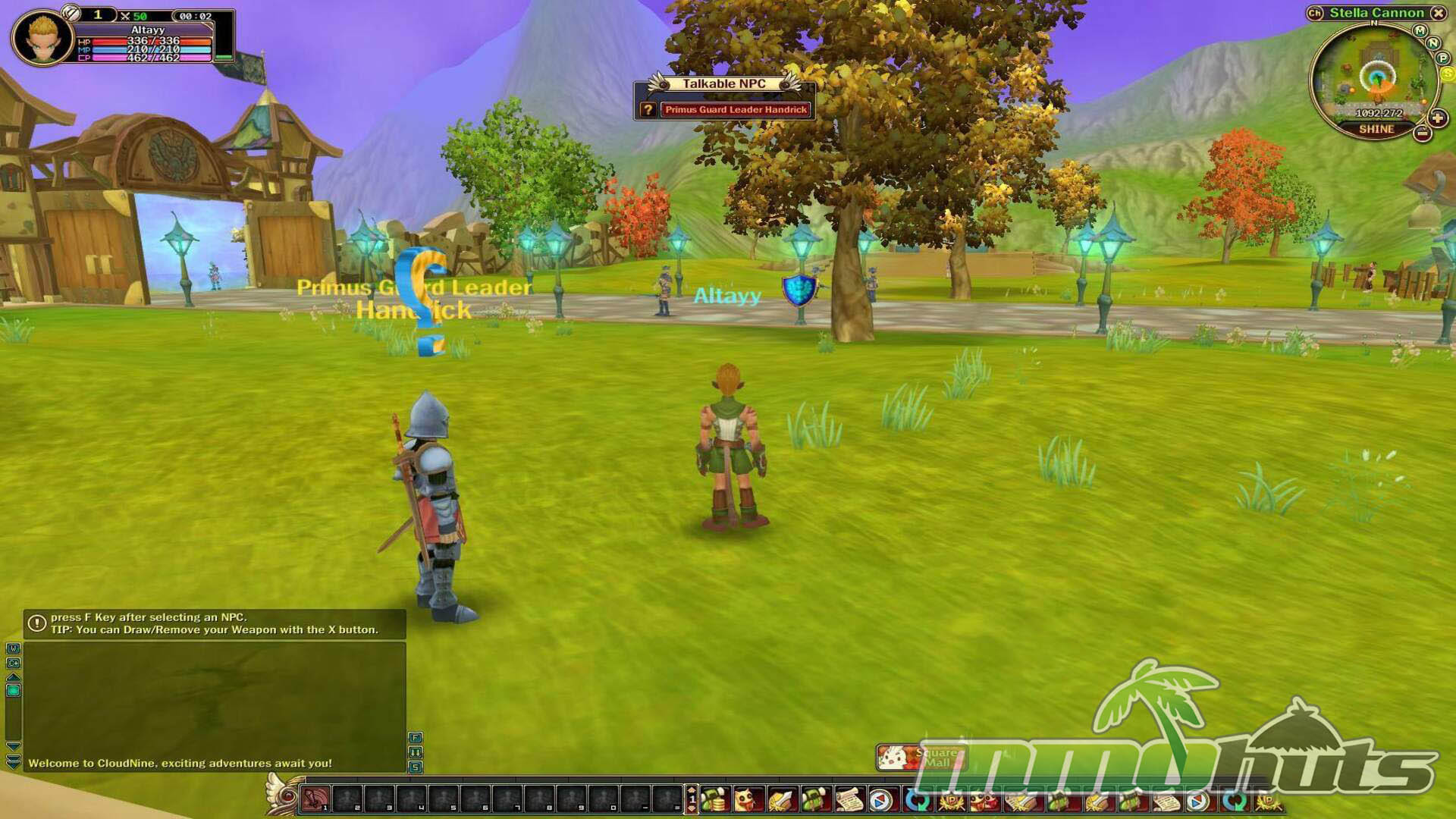
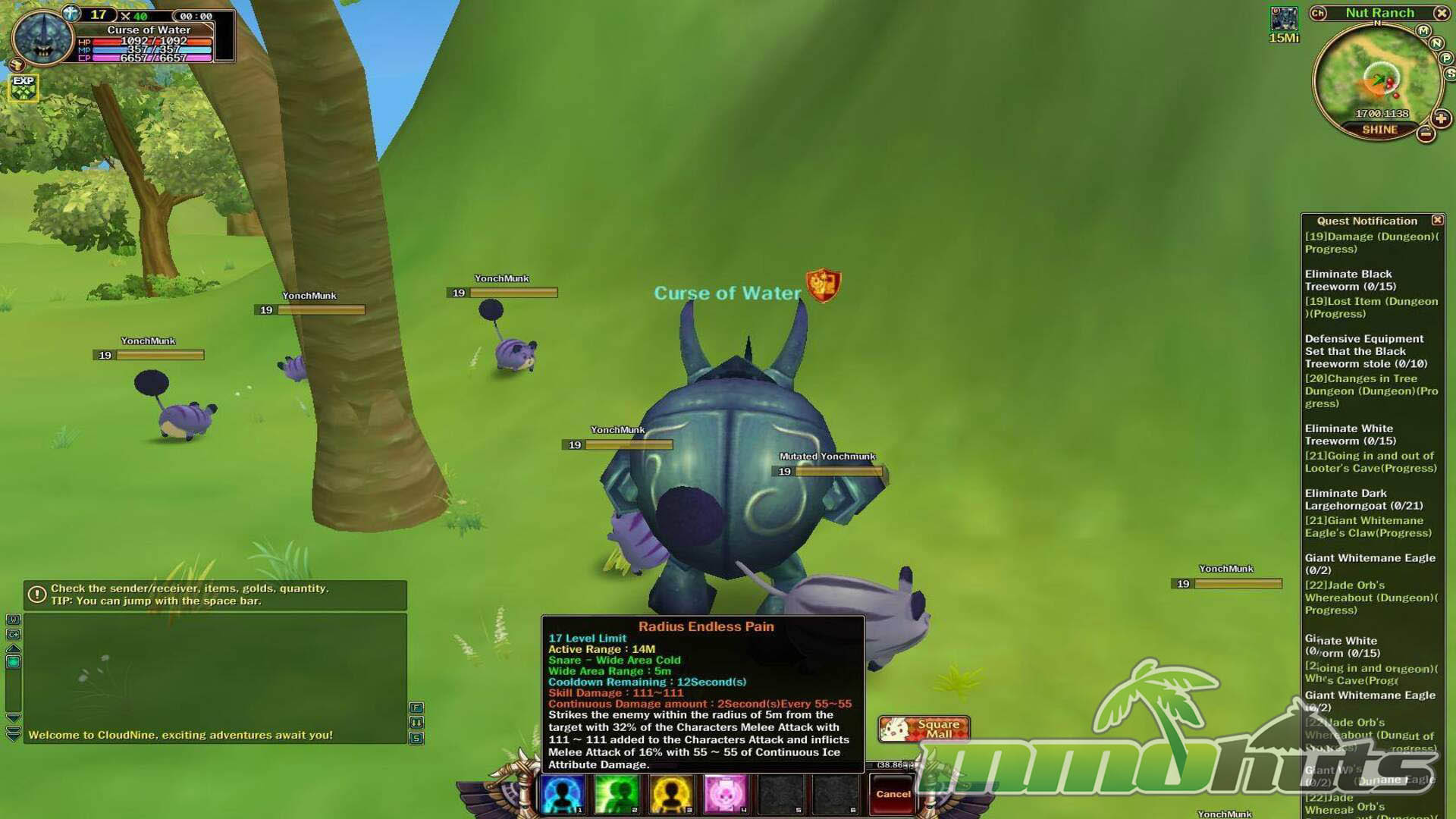

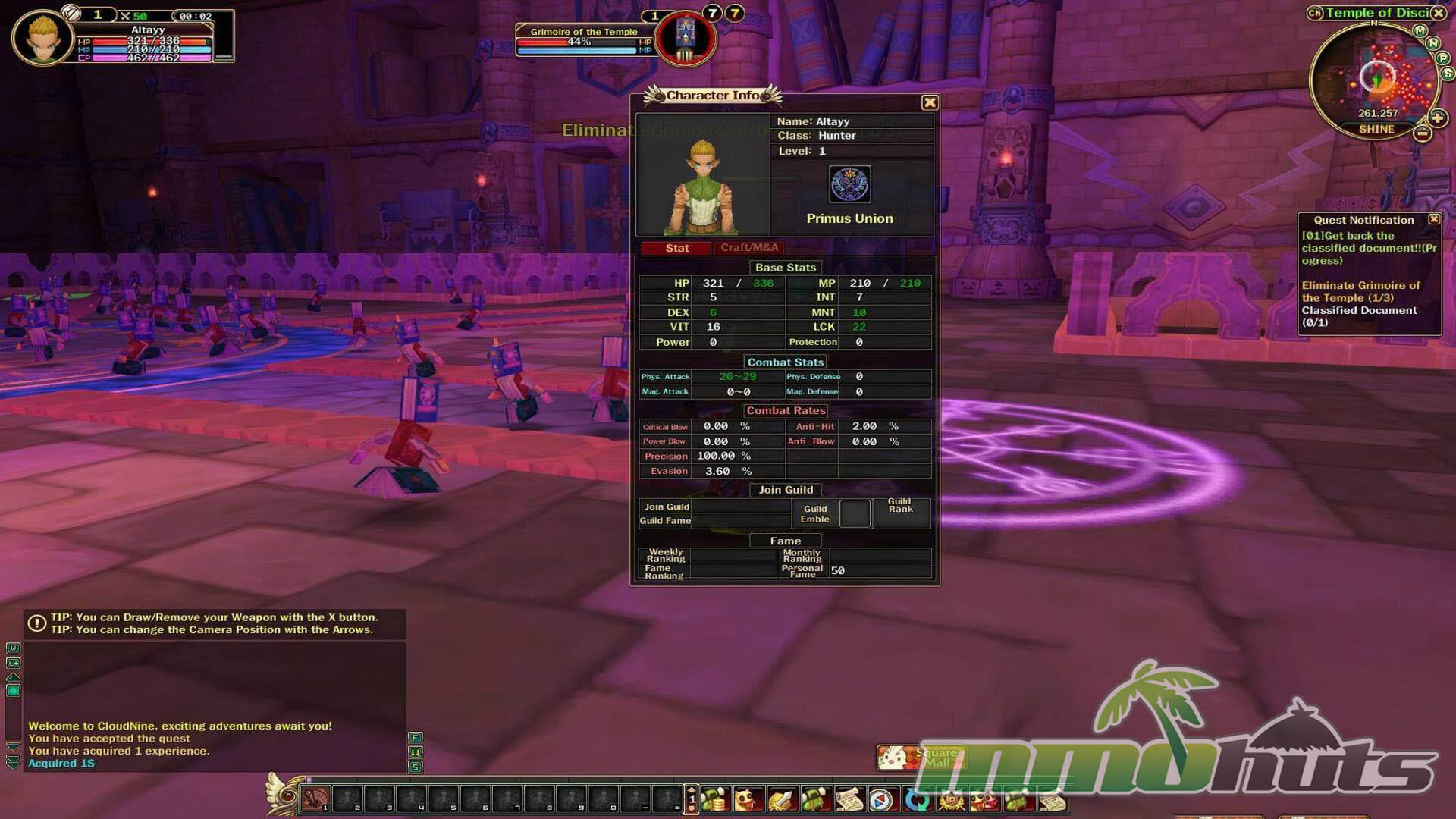
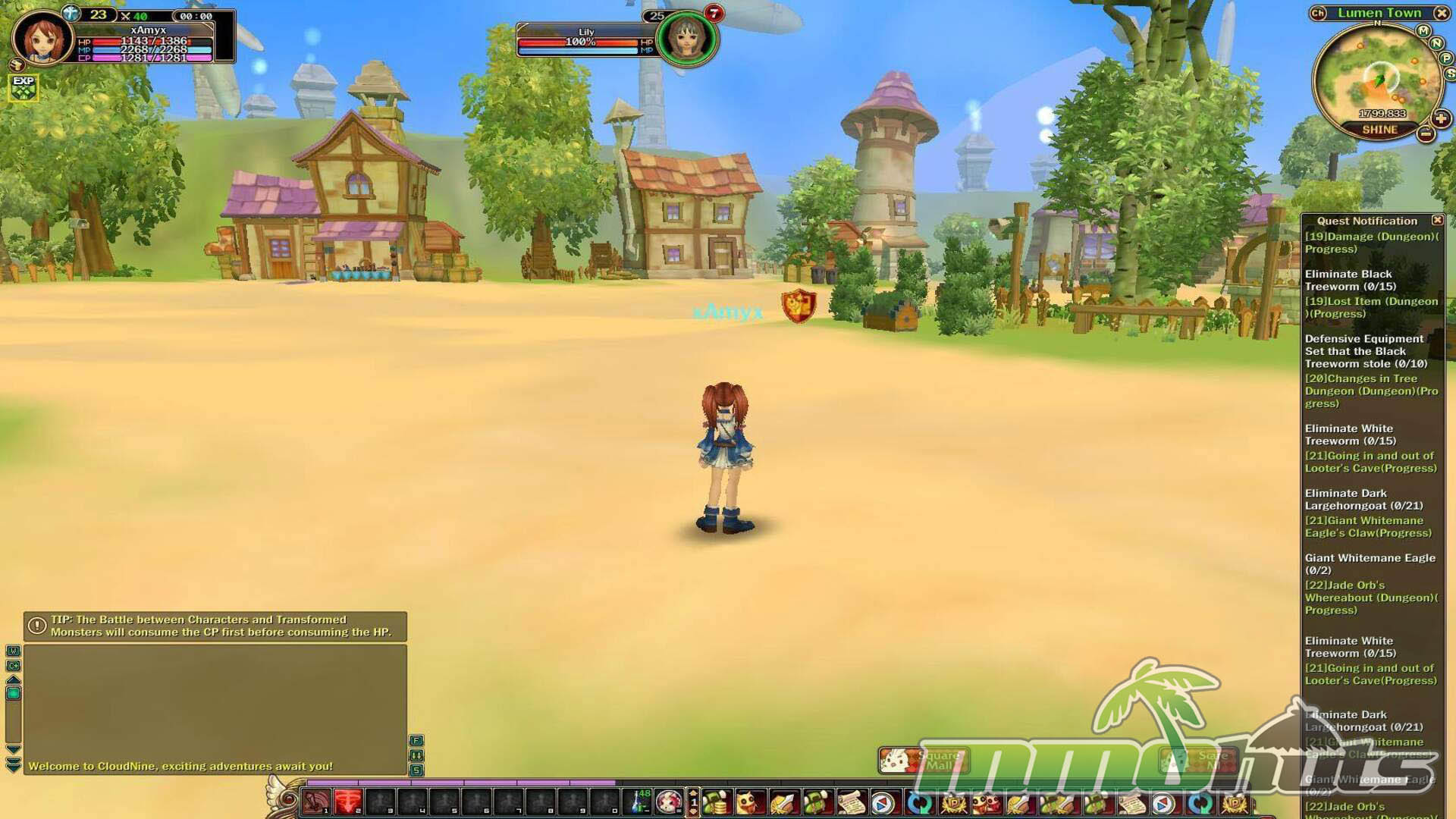
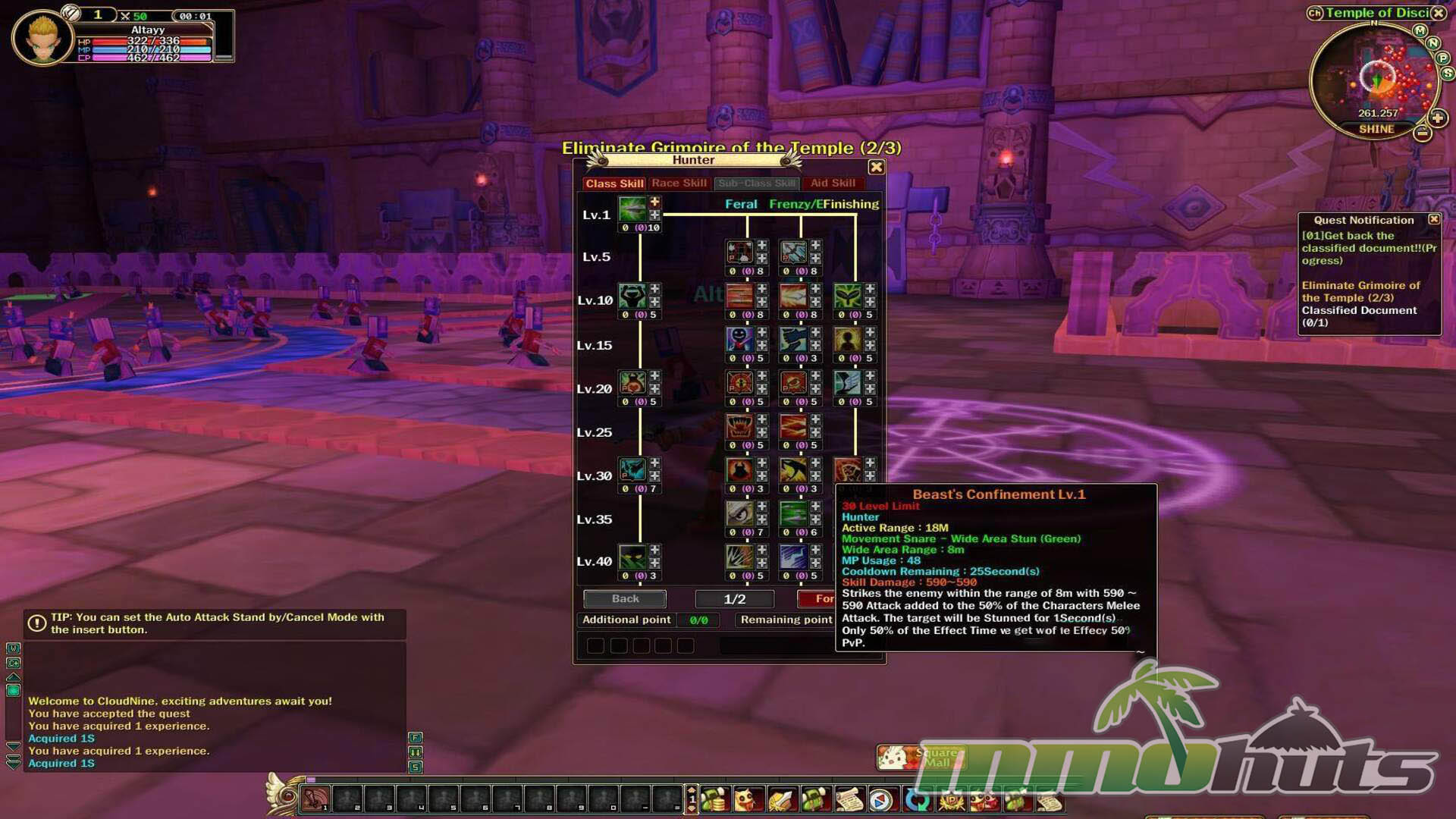
Cloud Nine Featured Video

Cloud Nine Classes & Races
Races:
- Seneka – said to be shaped by the gods, the Seneka are spiritually attuned and intellectually driven. Their focus on advancement and structure frequently clashes with the Matsuka outlook.
- Koshare – born from the Earth, the Koshare are small but remarkably strong, capable of handling oversized weapons. With long lifespans and dwindling numbers after the War of Gods, they feel like a hardy people rebuilding from loss.
- Matsuka – formed from flame at the world’s beginning, the Matsuka combine human and animal traits. They favor living in balance with nature and tend to reject crafting and technology, which fuels friction with the Seneka.
Male and Female versions of each race are available.
Classes:
- Cleric – a party-focused support that keeps allies standing through protection and healing, empowered through ties to the fairies of Lunatia.
- Hunter – a ranged specialist built around speed, kiting, and control tools that hinder enemies before they can close distance.
- Mage – an offensive caster tapping into divine and demonic forces, dangerous at range but fragile when pressured up close.
- Monk – a Ki-based fighter with flexible combat roles, capable of leaning into tanking or damage depending on build and skill choices.
- Rogue – a mobility-heavy attacker that relies on positioning and deception, excelling at punishing targets from behind.
- Warrior – a heavily armored front-liner designed to take hits and hold the line while supporting teammates in direct fights.
Sub-class choice available at Level 20
Nations:
- Primus Union – a coalition of merchant guilds brought together by Vakaven Kahharl. It functions as the world’s major hub for trade and crafting, and continues to push outward as it grows.
- Ganev Libero – a nation formed from a steady influx of travelers, hunters, and farmers. As the city’s influence expanded, five elders unified its people into a single political force.
Each nation has an independent starting zone and a player’s nation choice applies for all characters on the account.
Cloud Nine Review
Cloud Nine (Holic 2 in Korea) is a 3D, anime-styled fantasy MMORPG developed by Mgame, first released in Korea in 2008. It later arrived in North America via Netgame in late 2009, then changed hands after Netgame closed its service in late 2016, with RedFox Games taking over afterward. In terms of tone and presentation, it sits in the same neighborhood as other lighter MMOs of its era, with an emphasis on friendly visuals, quick progression, and accessible systems over heavy simulation.
Starting Cloud Nine
Your first meaningful decision is faction selection. Cloud Nine splits players between Primus Union and Ganav Libero, and that choice sets the rules for who you can fight in open conflict. Practically, faction does not drastically change your day-to-day PvE experience, but it does define the side you represent in larger PvP formats. The game also treats the decision as account-wide, so you are committing all characters you create to the same nation.
Character creation is not endlessly granular, but it gives enough sliders and cosmetic picks to make a character feel personal, especially around hair and face options. After that, you lock in one of three races and one of six classes. A notable customization layer appears at Level 20 through the sub-class system, letting you equip a secondary class that shares part of its skill set. It is also not a permanent trap, because you can switch your sub-class later via the class revolving skill found under “Aid Skills.”
Early progression is built around quests, with gentle guidance that points you toward objectives and helps you learn basic interactions. There is no deep, modern-style onboarding, but Cloud Nine does not need one to be playable. Movement and combat rely on familiar keyboard controls (WSAD) combined with point-and-click targeting. The introductory flow is largely mandatory, though, so experienced MMO players should expect a short period of hand-holding.
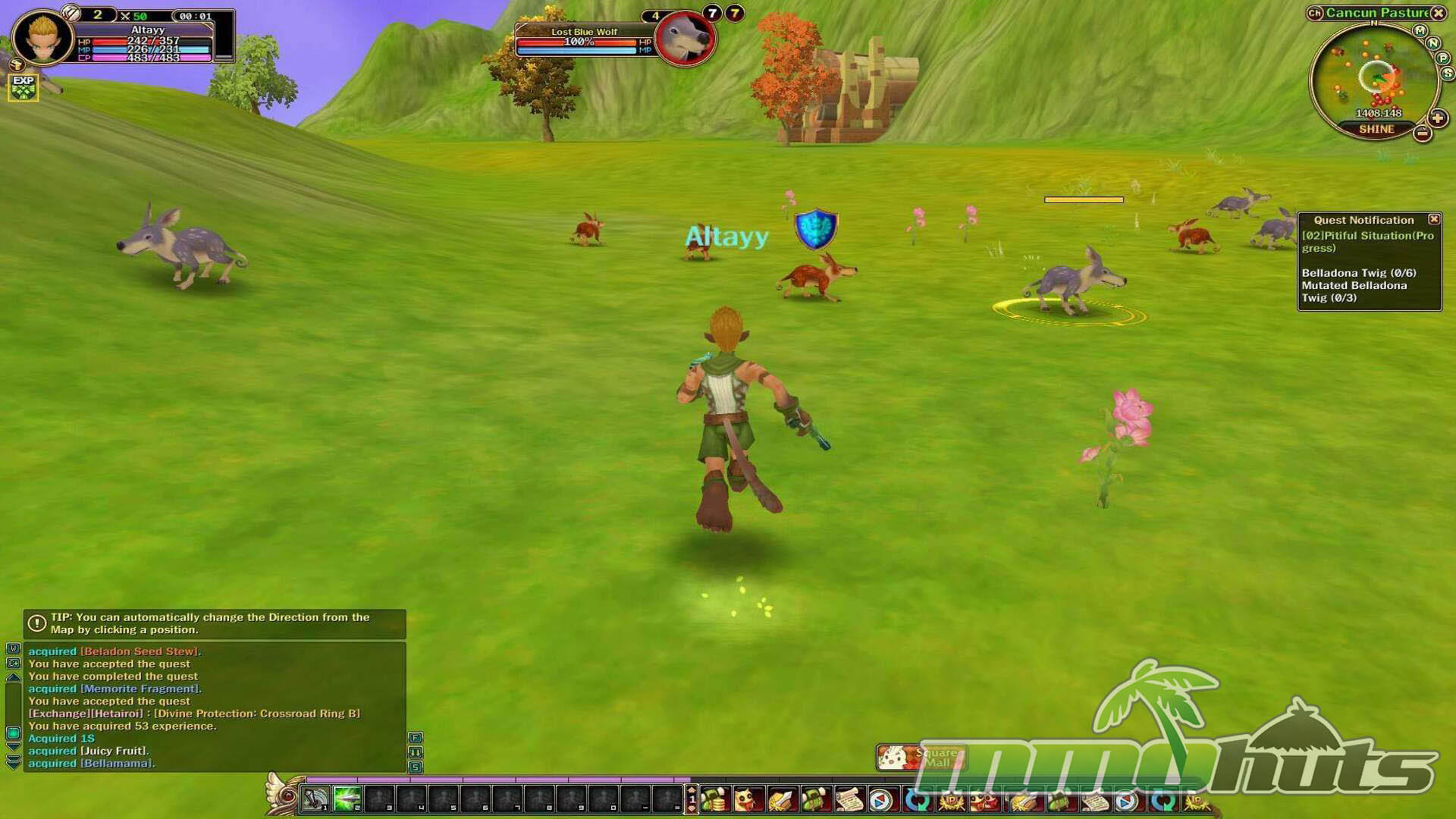
Leveling moves quickly, and the game does a decent job of sending you beyond the starter zone early rather than keeping you grinding one small patch of enemies. By the time you are around Level 6, you can already wander into other areas, which helps keep the questing loop from feeling too locked-in. The environments can blur together visually, but the wide open fields at least create the sense of a larger world.
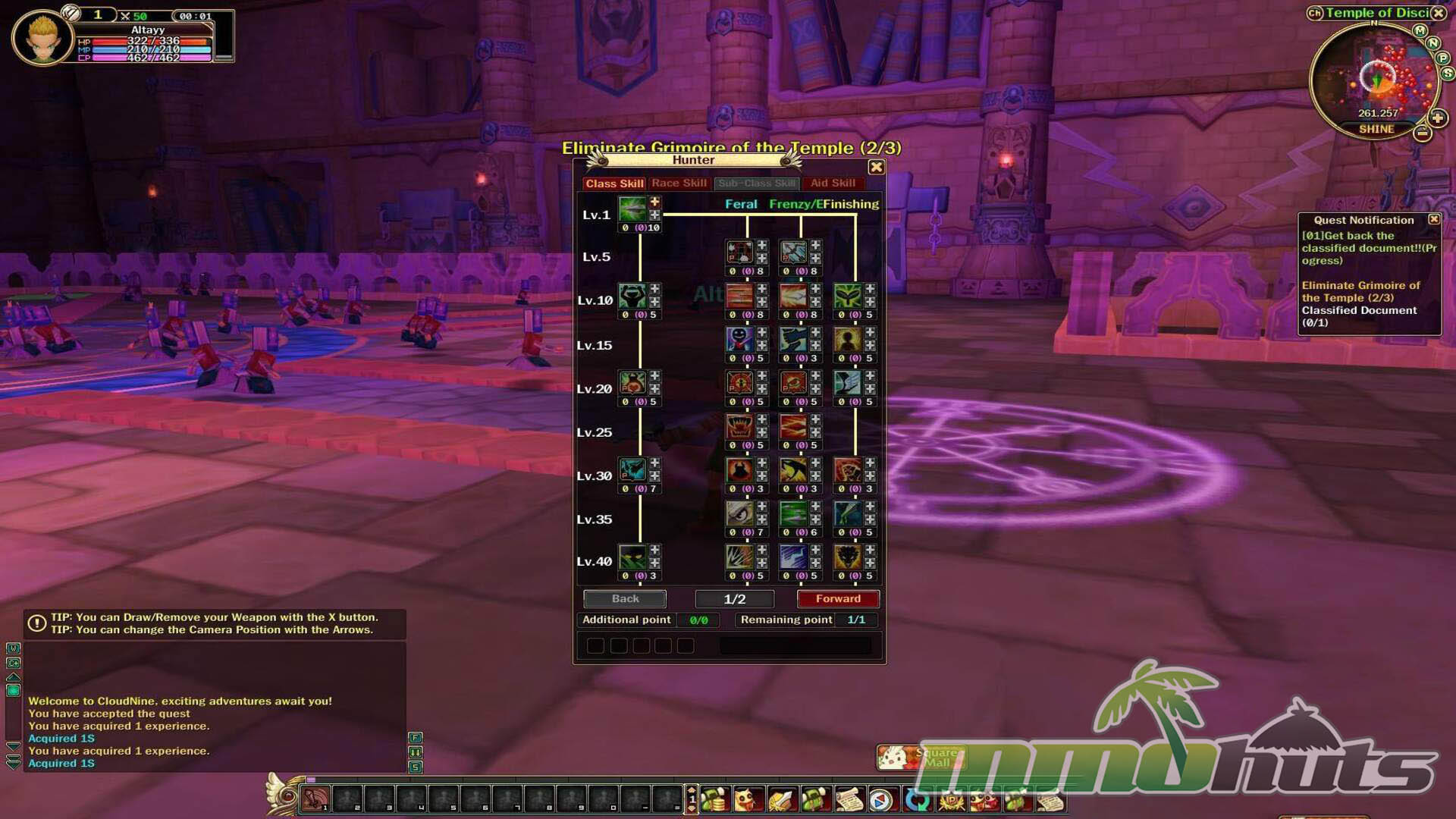
Skill Tree and Race Skills
Cloud Nine’s core skill progression is conventional: you gain skill points as you level and invest them into learning or improving abilities. Where it stands out slightly is the presence of race skills that boost stats and weapon training skills that improve weapon performance. Those supporting layers add a bit of character identity and long-term progression beyond simply chasing your next damage button. It is not a complex theorycrafting game, but it does provide enough levers to make builds feel different over time.
Find Love
The relationship and marriage system is unusually involved for a smaller MMORPG. Becoming a couple requires crafting steps rather than a single proposal prompt, including buying a couple ring blueprint, gathering materials, and crafting rings for both players. If the proposal is accepted, both rings are consumed; if it is rejected, only the proposer loses theirs.
From there, the game asks couples to build up their relationship through Love Rank progression before marriage is even on the table. Both players can collect daily love vouchers (displayed as hearts) from the couple NPC, and accumulating enough hearts (60) raises you to Love Rank 5. Only then can you move into engagement by buying the wedding item set from the Square Mall and reserving a wedding hall. Weddings occur hourly, and the couple is transported to the hall at the next available time. The payoff is functional rather than purely cosmetic, married players gain two special buffs for VIT and LCK, usable only when both partners are grouped together.
Crafting
Crafting is split into three professions, but you can only learn one at a time. Switching later is possible, though it comes with a reset that forces you to rebuild proficiency from the beginning. The three options cover the classic bases: jewelcrafting for stat accessories and jewels, metalworking for weapons, armor, and keys, and alchemy for consumables like potions.
Each profession has a clear use case, and the best pick depends on whether you want self-sufficiency in gear, stronger character stats through accessories, or a steady supply of consumables. Gathering supports the system through hunting, mining, and fishing, which provide materials used across the crafting trees.
PvP
PvP is present, but it is not the game’s strongest pillar. The largest limitation is the absence of a true dueling framework. You can fight opposing-faction players, but that is not the same as structured, opt-in duels with clear boundaries or matchmaking, and it can make casual PvP feel inconsistent.
Most competitive play is channeled into nation wars (Primus Union versus Ganav Libero) and guild house wars (guild properties battling each other). There is also Requital, a mode where guilds compete by hunting monsters for rewards. Outside these formats, Cloud Nine does not offer many PvP variations, so players looking for constant arena-style fighting may find it thin.
Become Someone’s Master (Or Apprentice)
The master-and-apprentice feature is one of the more practical social systems. It creates a formal relationship where newer players gain helpful boosts and access to summoning tools, while experienced players receive incentives to mentor. Apprentices receive an experience charm and whistles that can call their master, which is useful when a quest goes wrong or a dangerous zone is misjudged. Masters earn small amounts of fame as their apprentice levels.
The rules are straightforward: masters must be above Level 40, apprentices must be below Level 30. Starting the relationship is handled through a right-click menu on the other player’s portrait (“master & apprentice”), and the arrangement can be ended whenever either party chooses. Once the apprentice reaches Level 30, they graduate, the link dissolves automatically, and both players receive a permanent reusable item that provides a 30-minute buff.
Monsters and Pets
The monster and pet ecosystem is the most distinctive part of Cloud Nine, and also the easiest place to lose time in a good way. The game supports mounts, combat pets, monster cards, and temporary transformations, all tied together by collecting and interacting with the creatures you fight.
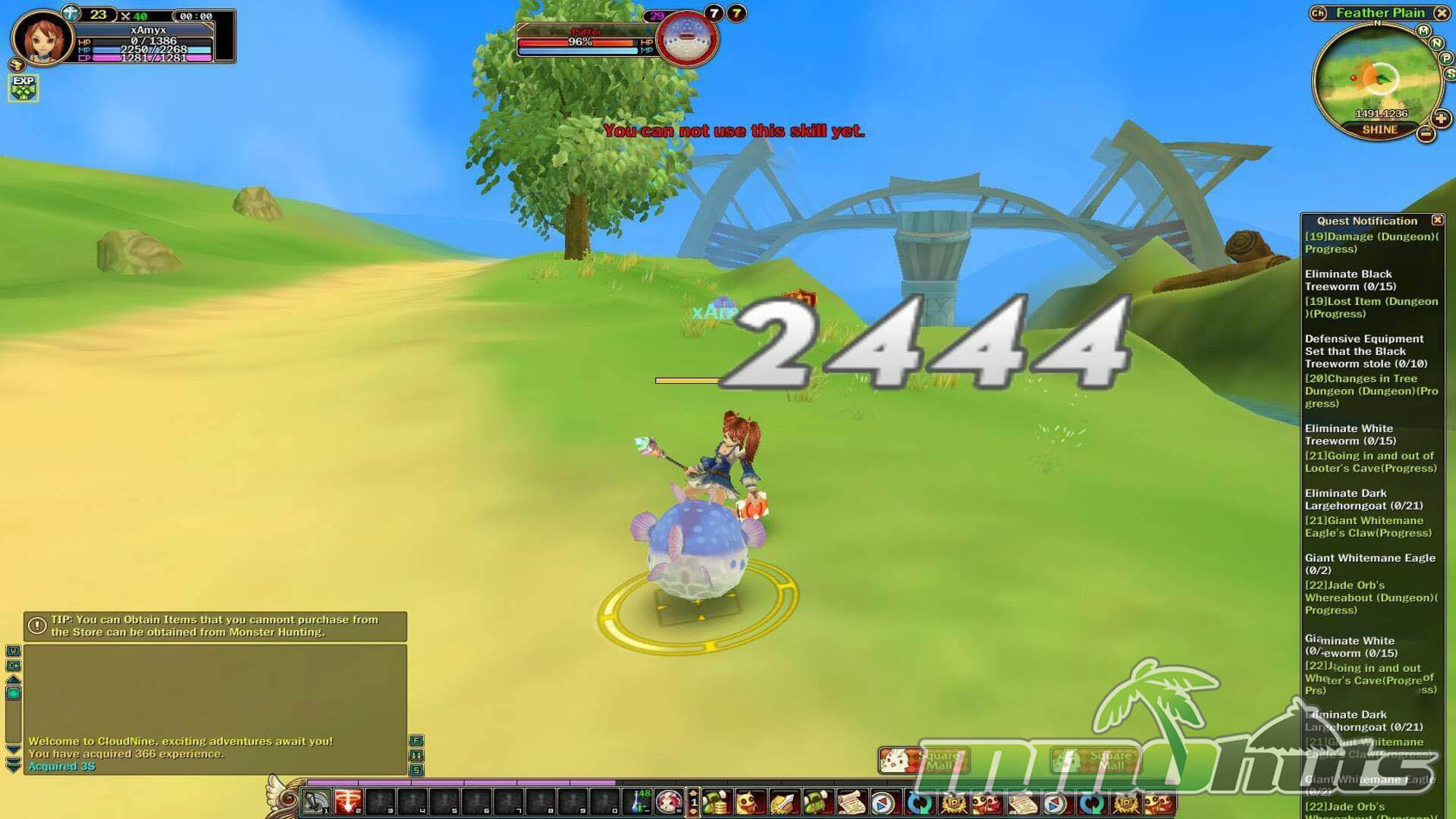
Mounts become a practical quality-of-life upgrade once you pass Level 25, increasing travel speed and reducing the tedium of crossing large fields. They also mitigate some incoming damage while you are mounted, which gives them value beyond movement.
Pets come from several sources. Some are earned through quests, others are linked to gathering activities like mining and fishing, and a separate path exists through capturing monsters. Capturing requires a capturing gourd, which is awarded for completing an entire monster card collection book. Pets can be equipped with items and join you in combat, giving solo players extra support and adding another progression track.
Monster cards drop from enemies and can be added to a collection book with a simple right-click. Each region has its own book, typically found in towns, which gives collecting a natural “checklist” rhythm as you move through zones. Cards also include short monster descriptions, which adds a bit of personality to what could have been a purely mechanical system. Completing books can reward the pet-capturing items mentioned earlier.
Transformation is the flashiest part of the feature set. With the appropriate transformation card, you temporarily become that monster, replacing your character’s stats and skills with the creature’s own. It encourages experimenting with stronger monster forms rather than treating transformations as cosmetic toys. It also comes with risk: NPCs may attack transformed players, so it is safer to transform away from populated areas. There is also a contagious “infection” effect where, in some cases, a killed player can be turned into that monster. As a gimmick and a tool, transformation is one of the game’s most memorable mechanics, especially when you are under-geared or exploring areas above your comfort level.
Square Mall
Square Mall is Cloud Nine’s in-game cash shop. Access happens through the client, though the catalog can be viewed on the website. The inventory focuses on familiar item mall staples such as outfits, mounts, teleport items, and general convenience purchases. Players buy Ncash (Netgame’s currency) to shop there.
Final Verdict: Fair
Cloud Nine is a modest, approachable MMORPG that leans on charm rather than complexity. Its strongest points are the monster card collection loop, the pet and transformation systems, and the fact that it runs well on low-end hardware. On the other hand, the localization can be rough, the overall gameplay depth is limited, and the PvP options feel underdeveloped without a true dueling feature. For players who enjoy older, lighter MMOs with cute monster design and uncomplicated progression, Cloud Nine had enough personality to be worth trying during its run.
Cloud Nine System Requirements
Minimum Requirements:
Operating System: Windows XP / Vista / 7 / 8
CPU: Intel Pentium 4 1.2 GHz / AMD 1600+
Video Card: Nvidia GeForce Ti 4200/ ATI Radeon 9000
RAM: 512 MB
Hard Disk Space: 8 GB
Recommended Requirements:
Operating System: Windows 7 / 8
CPU: Intel Pentium 4 2.4 GHz or AMD equivalent or better
Video Card: Nvidia GeForce FX 5200 / ATI Radeon 9250 or better
RAM: 1 GB or better
Hard Disk Space: 8 GB
Cloud Nine Music & Soundtrack
Cloud Nine Additional Information
Developer: Mgame
Closed Beta Date: October 26, 2009
Open Beta Date: November 24, 2009
Relaunch (Redfox) Open Beta: September 28, 2016
Shut Down Date: September 5, 2017
Development History / Background:
Cloud Nine is the sequel to Holic Online and is known as Holic 2 in much of Asia. The developer and publisher Mgame currently offers services directly in the USA, Korea, and Japan, but the game can be accessed from any region. The game shut down on September 5, 2017.