Pilot an AirMech and tear through enemy lines in this free-to-play action RTS that borrows smart ideas from MOBAs without feeling like a direct clone. Instead of locking you into a single lane role, AirMech lets you switch on the fly between a fast aircraft and a hard-hitting robot, hauling units, clearing waves, and contesting bases in the same match.
 | Publisher: Carbon Games Playerbase: Small Type: Action RTS Release Date: November 8, 2012 Pros: +Hands-on RTS battles with real decision-making. +Deep loadout and army customization. +Responsive, easy-to-learn controls. Cons: -Matches can start to feel similar over time. -Long beta period (still labeled beta after +2/3 years). |

AirMech Overview
AirMech is an Action RTS that mixes classic base control with MOBA-style pacing. Drawing inspiration from Sega’s Herzog Zwei, it revolves around a transforming craft that flips between jet and mech forms while you fight to secure territory and ultimately break the opposing team’s home base. Matches support 1v1, 2v2, 3v3, and 4v4, with each format emphasizing different priorities, from tight duels to coordinated map play.
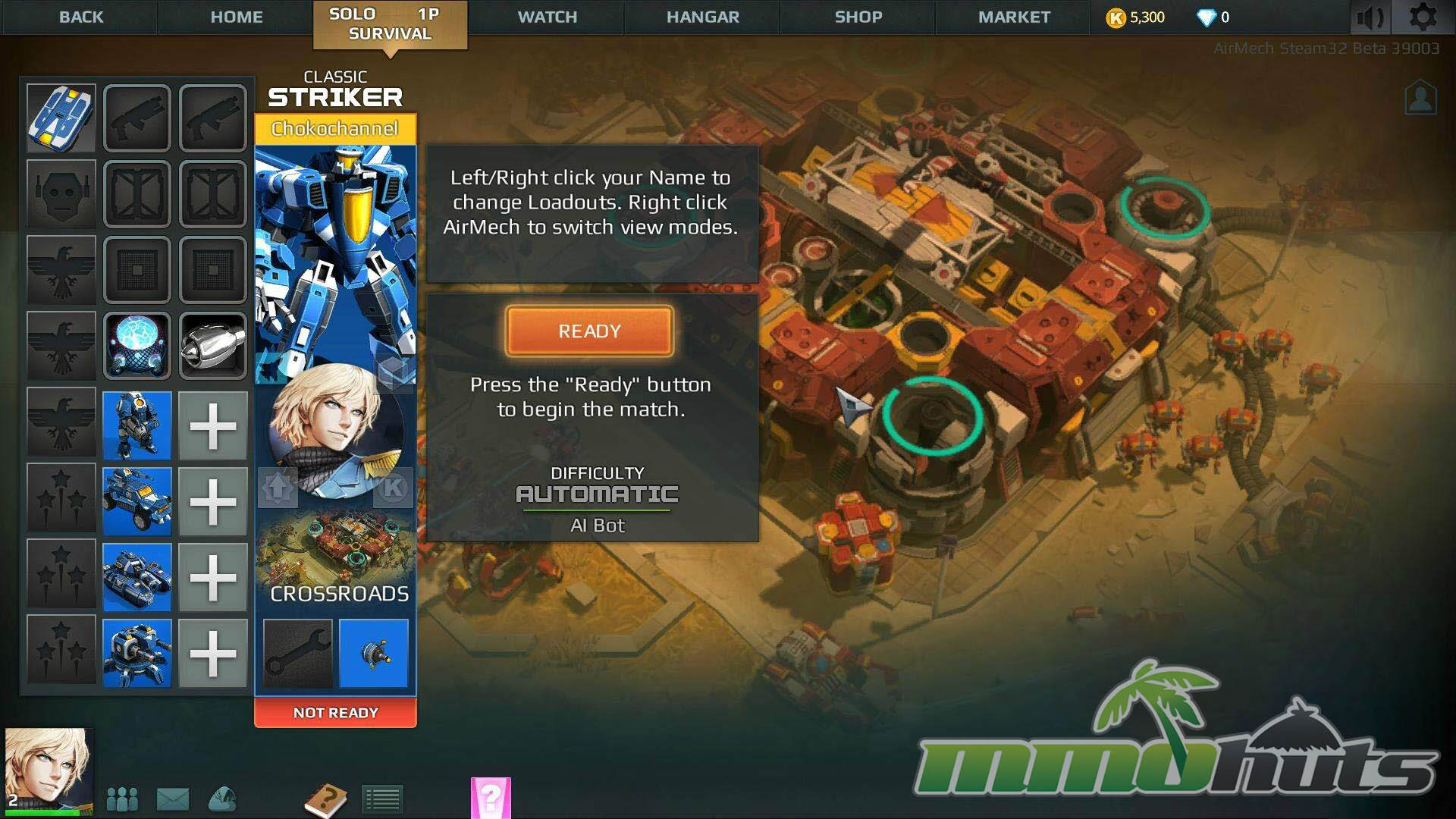
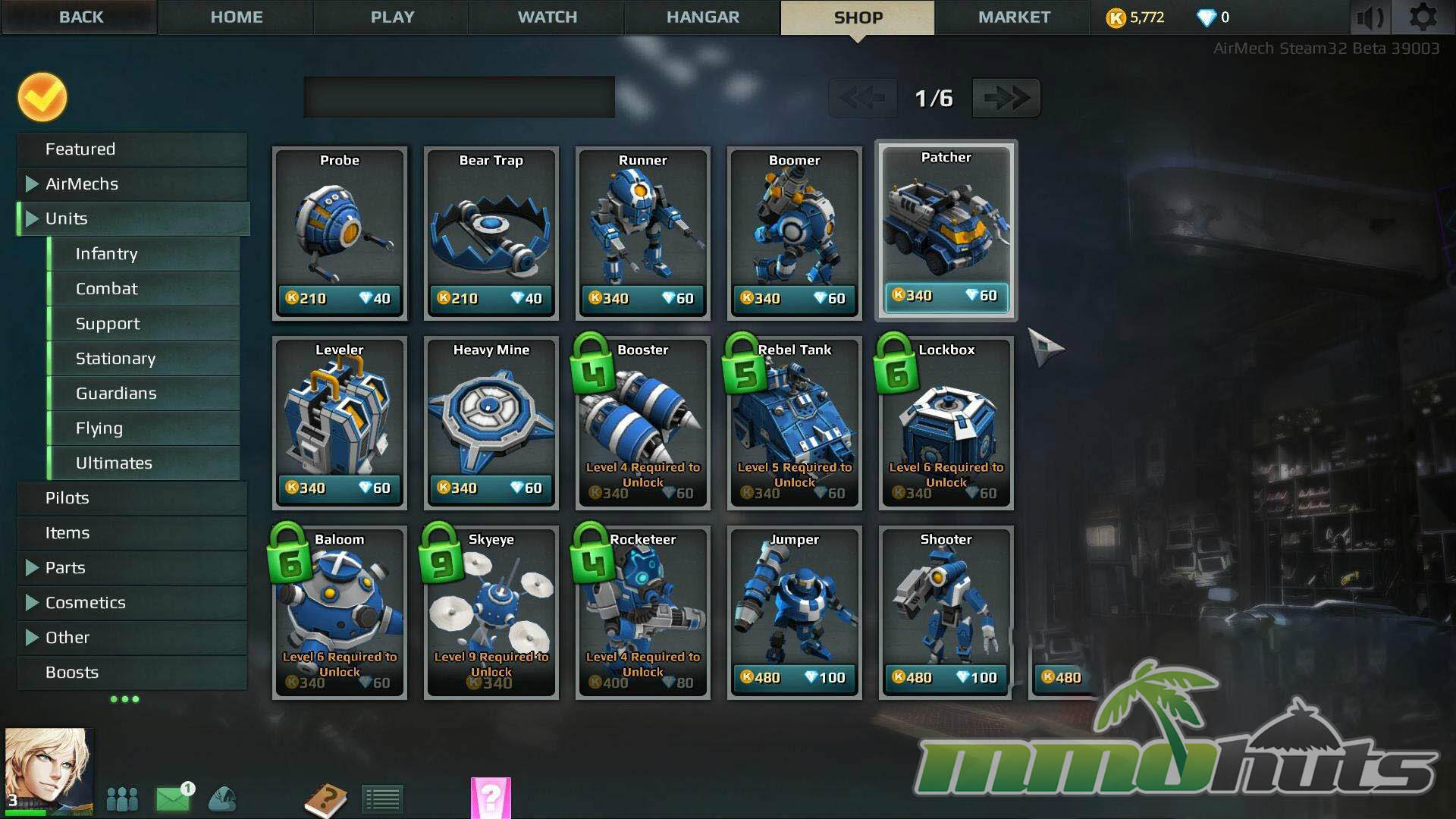
Between games, you fine-tune both your AirMech and the army you bring into battle through the Shop. Loadouts matter because you are not just piloting a hero unit, you are also deciding which supporting forces you can field, and how they fit your approach. If you enjoy experimenting, the game encourages tinkering, swapping units, adjusting gear, and taking those builds into ranked play to climb toward the leaderboards.
AirMech Key Features:
- Hands-On RTS Decisions – take and defend bases, manage the map, and turn small advantages into a push.
- Build-A-Mech – customize your mech with stats-focused upgrades and visual options.
- Active Transforming Combat – switch between aircraft mobility and mech brawling in real time.
- Fair Cash Shop – most unlocks are achievable through play, and paid items are designed to avoid a pay-to-win feel.
- Strong Loadout Tools – quickly edit builds with drag-and-drop convenience plus copy and paste support.
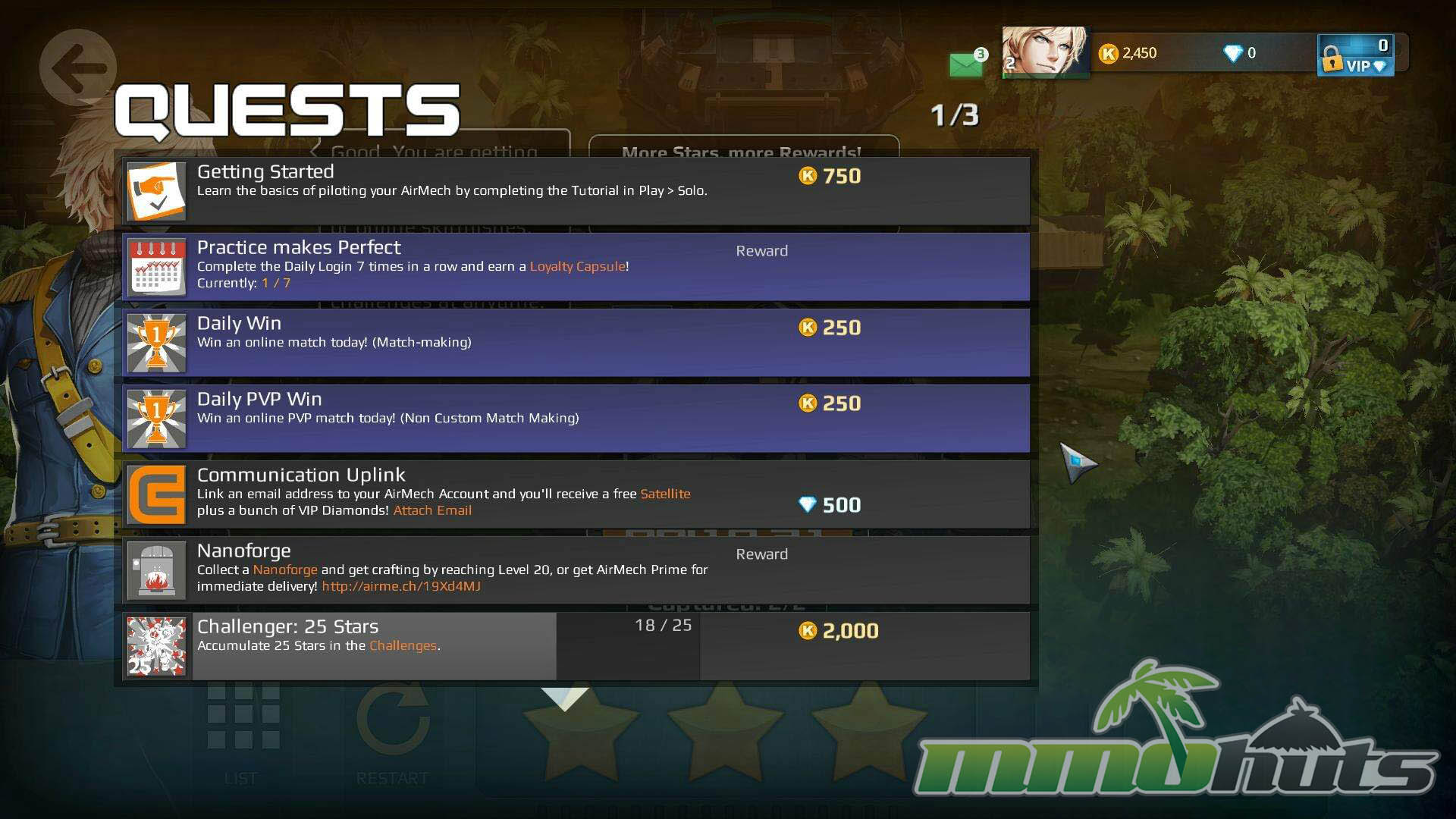
AirMech Screenshots




AirMech Featured Video

AirMech Review
AirMech is an Action RTS built around a Transformer-style machine that fights, transports units, and captures bases on the way to the enemy home base. It is developed and published by Carbon Games, and it also has a console edition under the name “AirMech Arena” for Xbox and PlayStation platforms.
First Steps and Learning the Basics
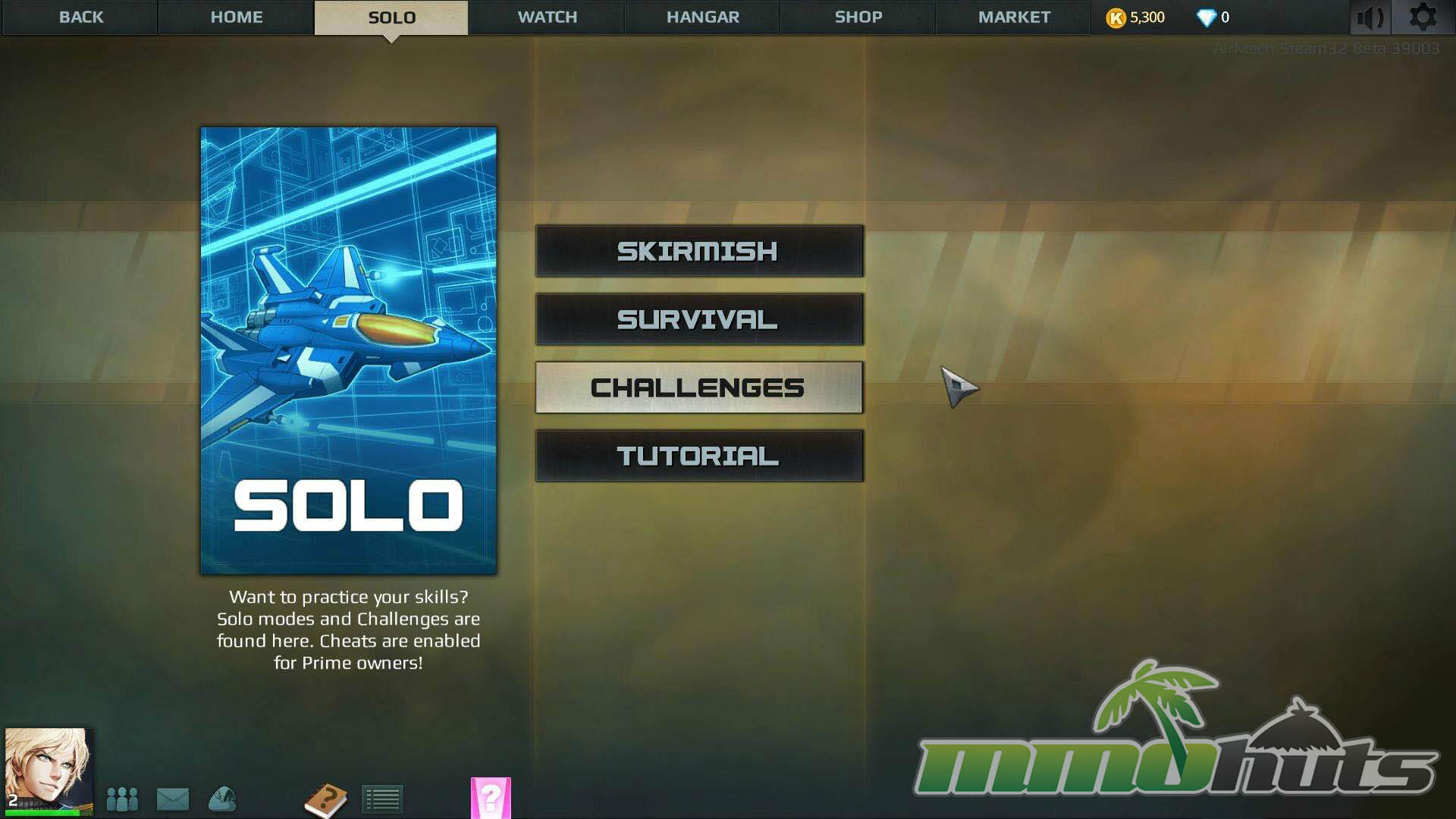
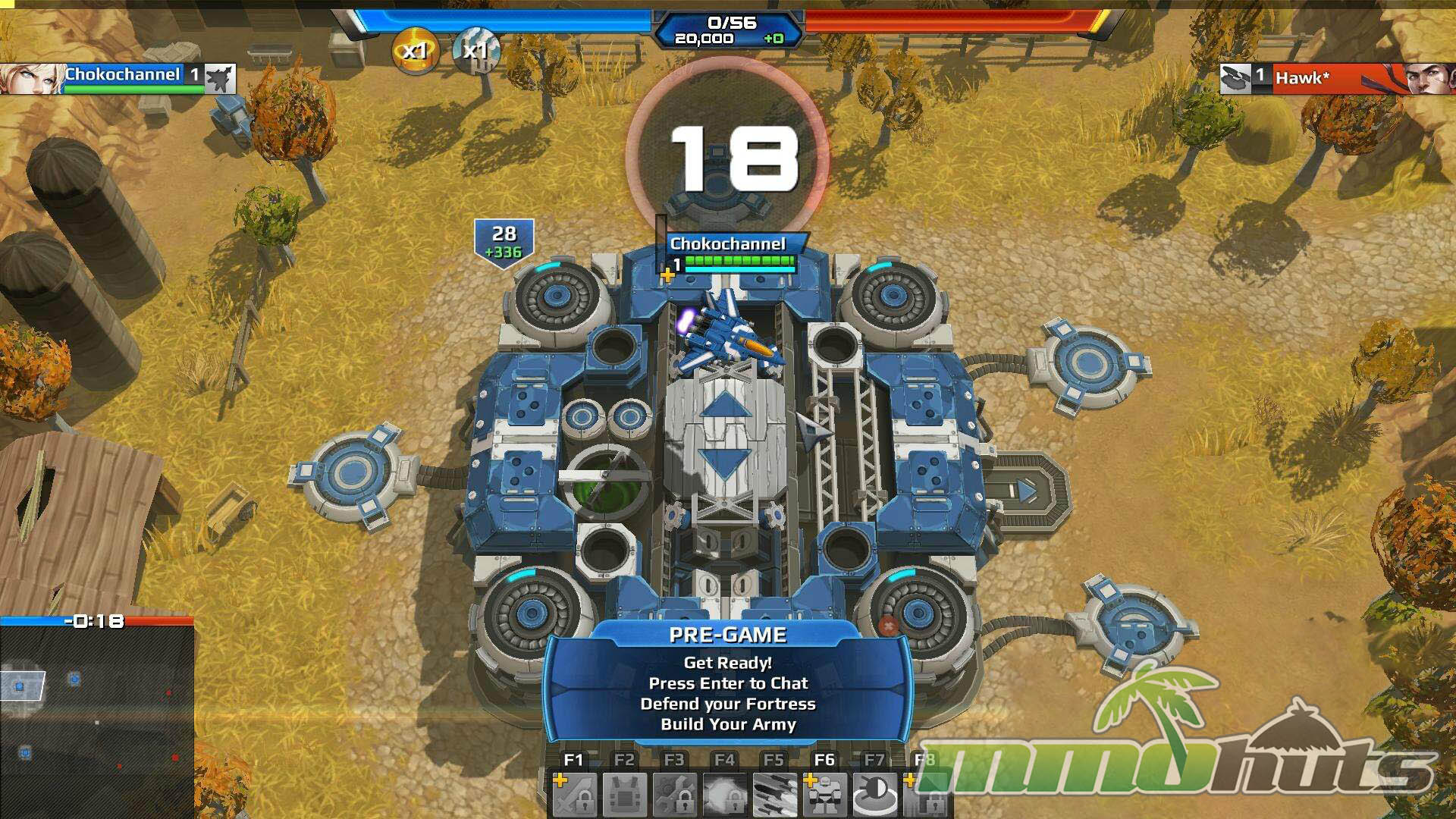
When you first boot in, the game offers an optional tutorial path built around a set of challenges. It is worth doing. AirMech moves quickly once real matches begin, and the tutorial does a good job laying out the essentials, how to capture bases, how to spend match credits, how to deploy and command units, and how to use your mech effectively. As a practical bonus, finishing those challenges also awards experience and Kudos (the in-game currency), which helps you start unlocking content without immediately feeling gated.
Before queuing, you pick your mech, a pilot (which provides gameplay bonuses), and the units you want available during the match. There are currently nine mechs to choose from. The unit selection is an important layer because you can own many units overall, but only bring nine into any single game. That limitation gives loadouts real identity, and it pushes you to think about coverage, anti-armor, anti-infantry, defense, and how you plan to take bases.
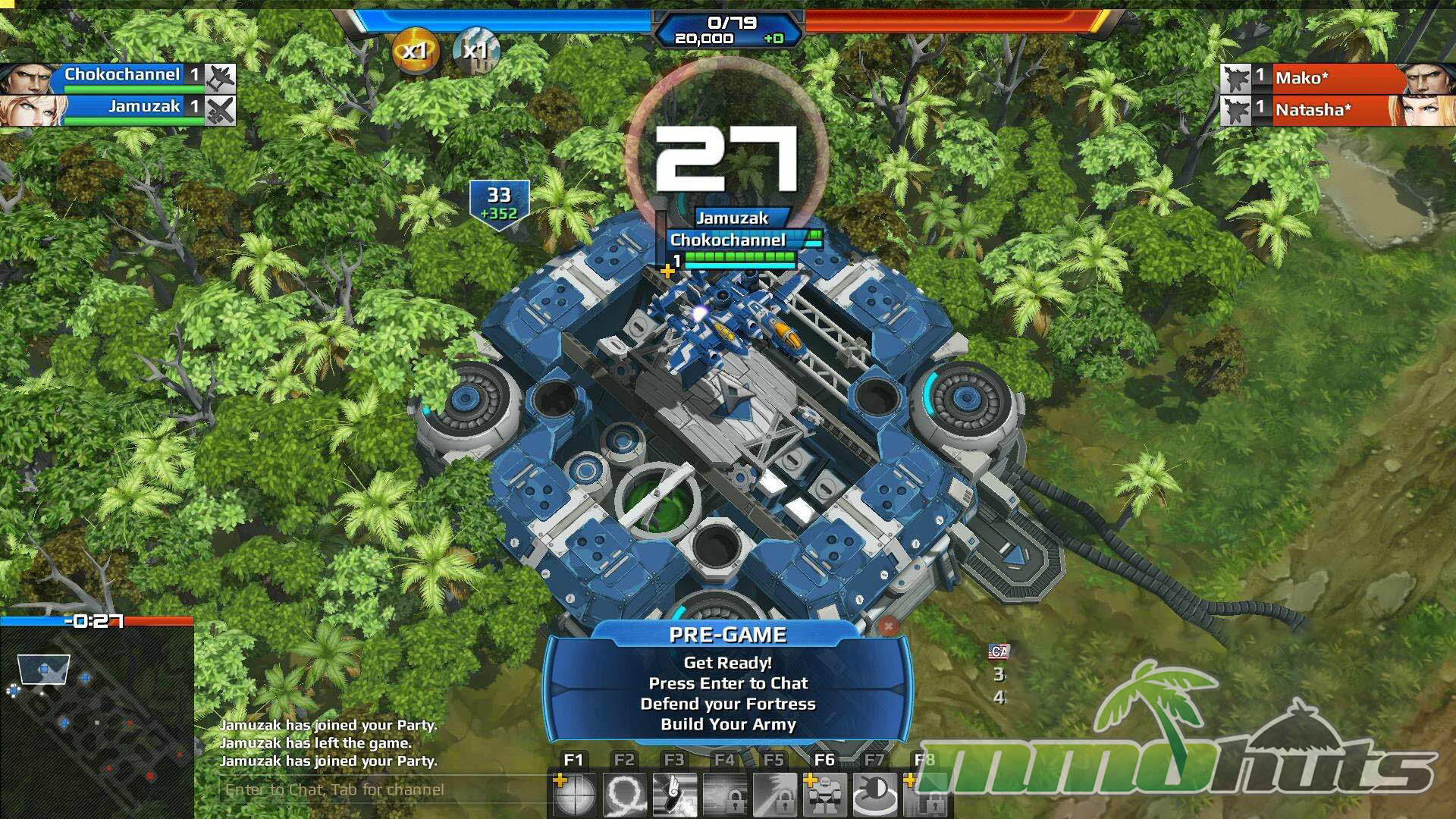
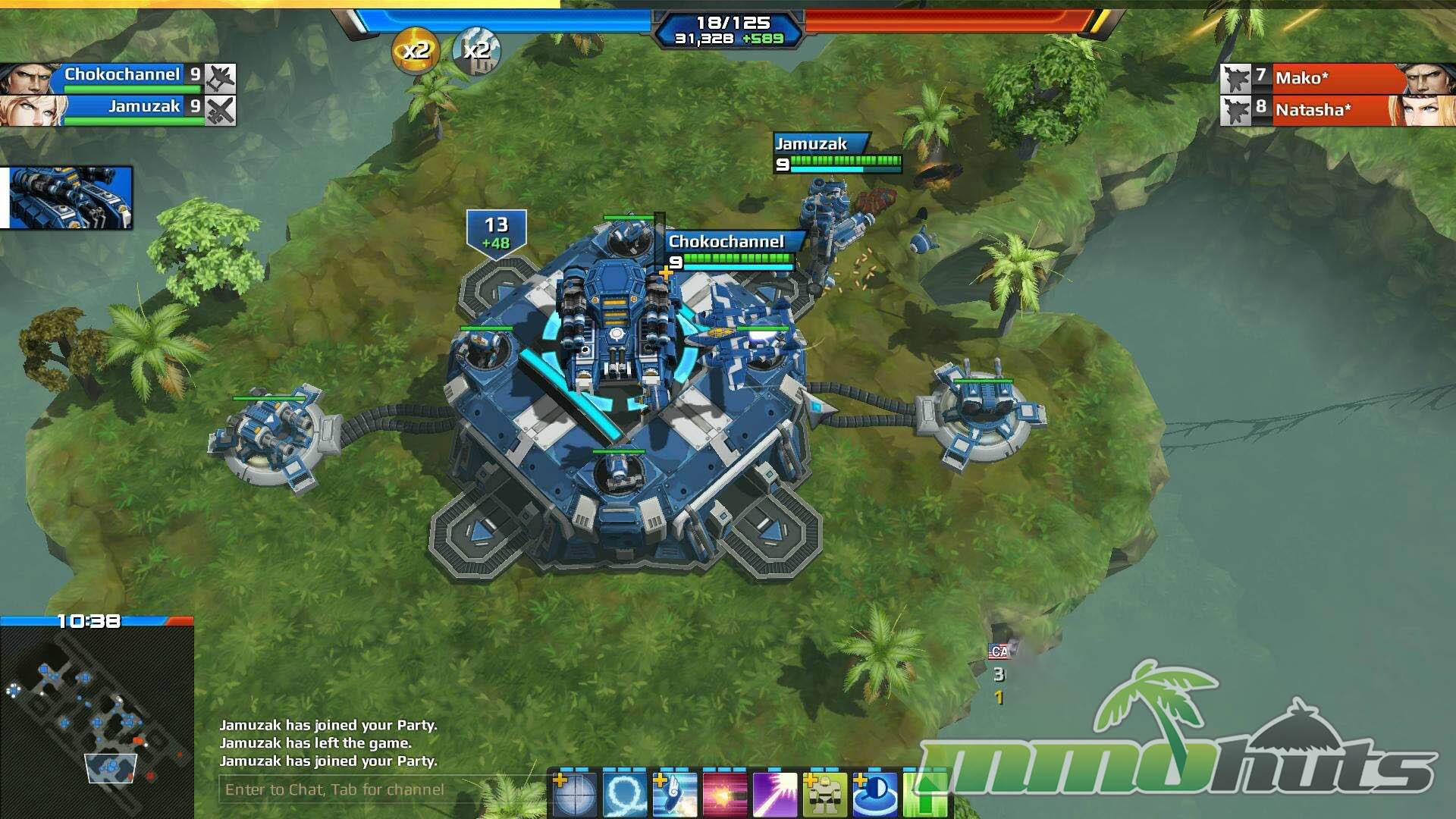
AirMech’s flow will feel familiar to MOBA players in one key way, the battlefield is constantly being contested by waves of basic troops moving out from your home base. Those troops alone will not usually crack fortified positions, so your job is to reinforce them with the right army units and your own mech presence. Bases generate income, so map control is not just about positioning, it is your economy. When you are ahead, you can press by chaining captures and denying the enemy resources. When you are behind, building a defensive line and stabilizing your income can be the difference between a comeback and a slow collapse.
Where the Game Clicks: Mobility, Micro, and Momentum
AirMech can feel busy at first, especially if you jump straight into a match without absorbing the fundamentals. Once it clicks, the appeal is clear, it is a strategy game that asks you to think like an RTS player while acting with the urgency of an action game. You are constantly rotating, clearing pressure off bases, ferrying units, refueling, building reinforcements, and issuing commands. The mech is not just a combatant, it is also the tool that keeps your whole plan moving.
The aircraft mode gives you speed and transport utility, letting you reposition quickly and deliver units where they are needed. The robot mode is where you commit to fights, contest bases, and disrupt enemy pushes. Learning when to stay mobile and when to plant yourself and trade damage is a large part of improving. In that sense, AirMech plays like a lighter, more approachable RTS layered over a hero-centric battlefield, with momentum swings that come from smart rotations as much as raw fighting.
The good news is that the control scheme supports this pace. Actions like selecting and deploying units, giving orders, and moving between objectives are handled smoothly. Controller support is available, but mouse and keyboard feels natural for the constant ordering and quick reactions. The game does not fight you mechanically, it challenges you to execute.
Menus, Loadouts, and Quality-of-Life
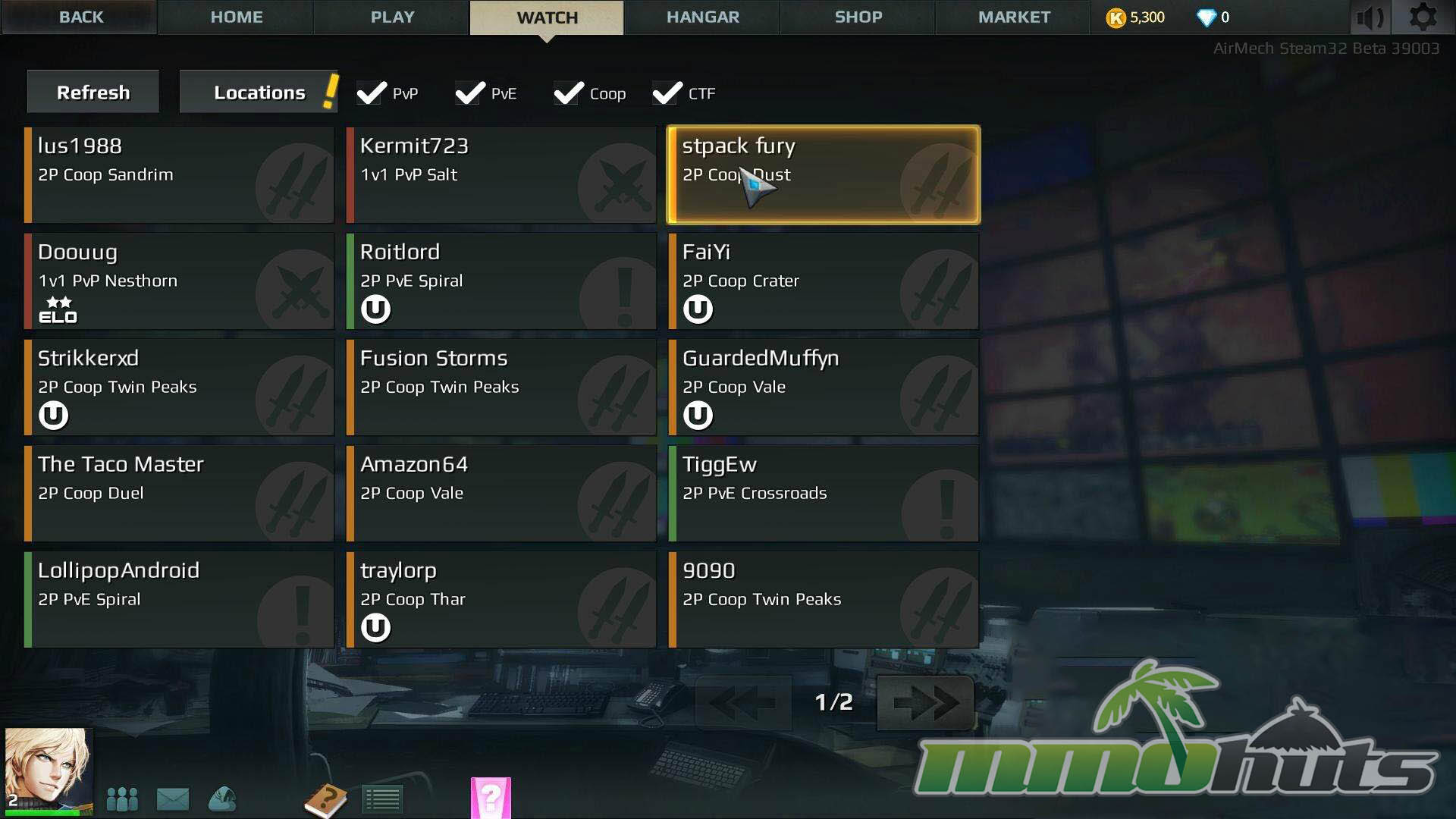
Outside of matches, the lobby layout is straightforward and functional. Tabs like Play, Watch, and Shop keep the key features easy to locate. You can manage friends, join factions, adjust your hangar, and spectate ongoing games without digging through confusing submenus. For a competitive-leaning game, the ability to watch matches and check the leaderboards directly from the interface is a strong touch.
The hangar is where the game’s customization strengths show up. Swapping units and tuning your setup is quick, and the ability to copy and paste loadouts makes experimentation much less tedious than it could have been. If there is a minor annoyance, it is navigation quirks like the back button shifting around depending on the screen. It is still generally in the top-left area, but it can be easy to miss when you are trying to cancel a queue or step out quickly.
PvP and Team Dynamics
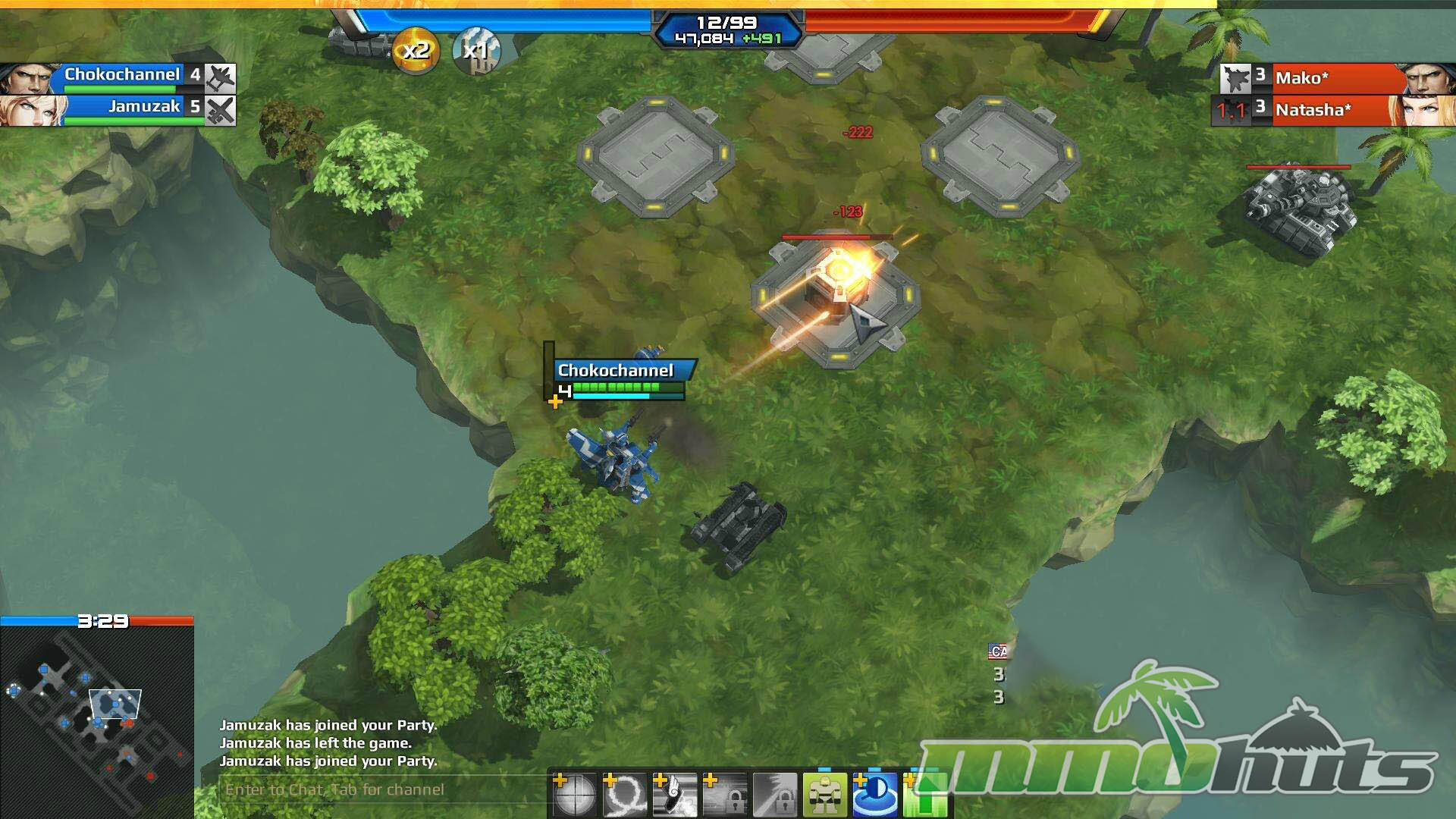
PvP is available from 1v1 up to 4v4, and the different team sizes noticeably change the feel. Smaller modes emphasize personal execution and efficient map control, while larger teams reward coordination, role coverage, and smart unit choices across the group. You can also group up with friends against bots, which is a good way to practice builds without the pressure of ranked play.
Playing with random teammates can be a mixed experience. Because unit selection matters, teams that communicate tend to feel significantly stronger. When someone refuses to coordinate their loadout or ignores objectives, the match can turn into a slow, frustrating loss. On the other hand, when the team is aligned, AirMech delivers satisfying back-and-forth pushes and strong end-of-match payoffs, especially when you finally break through the last defensive bases and finish the home base.
The Shop and Free-to-Play Value
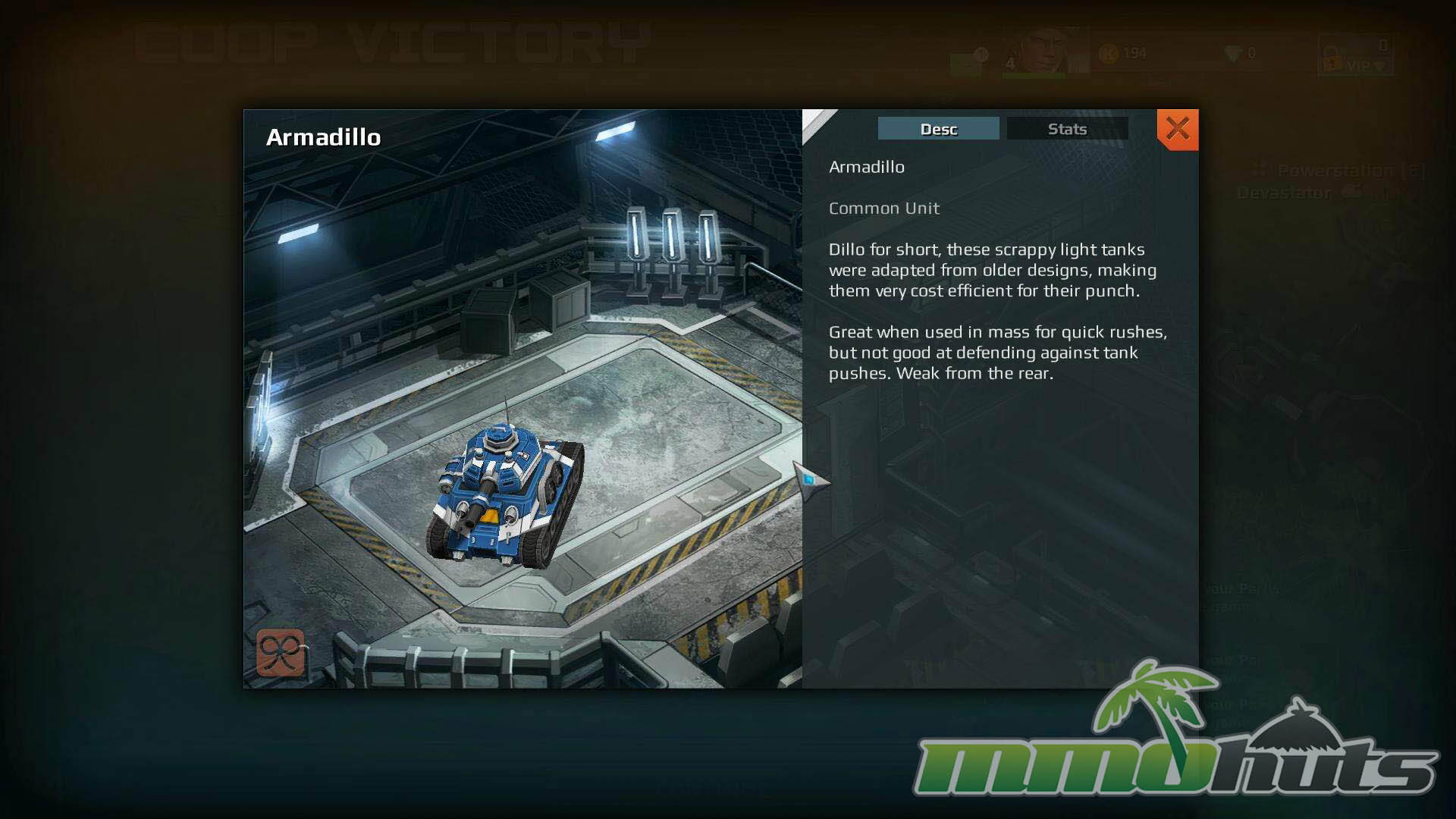
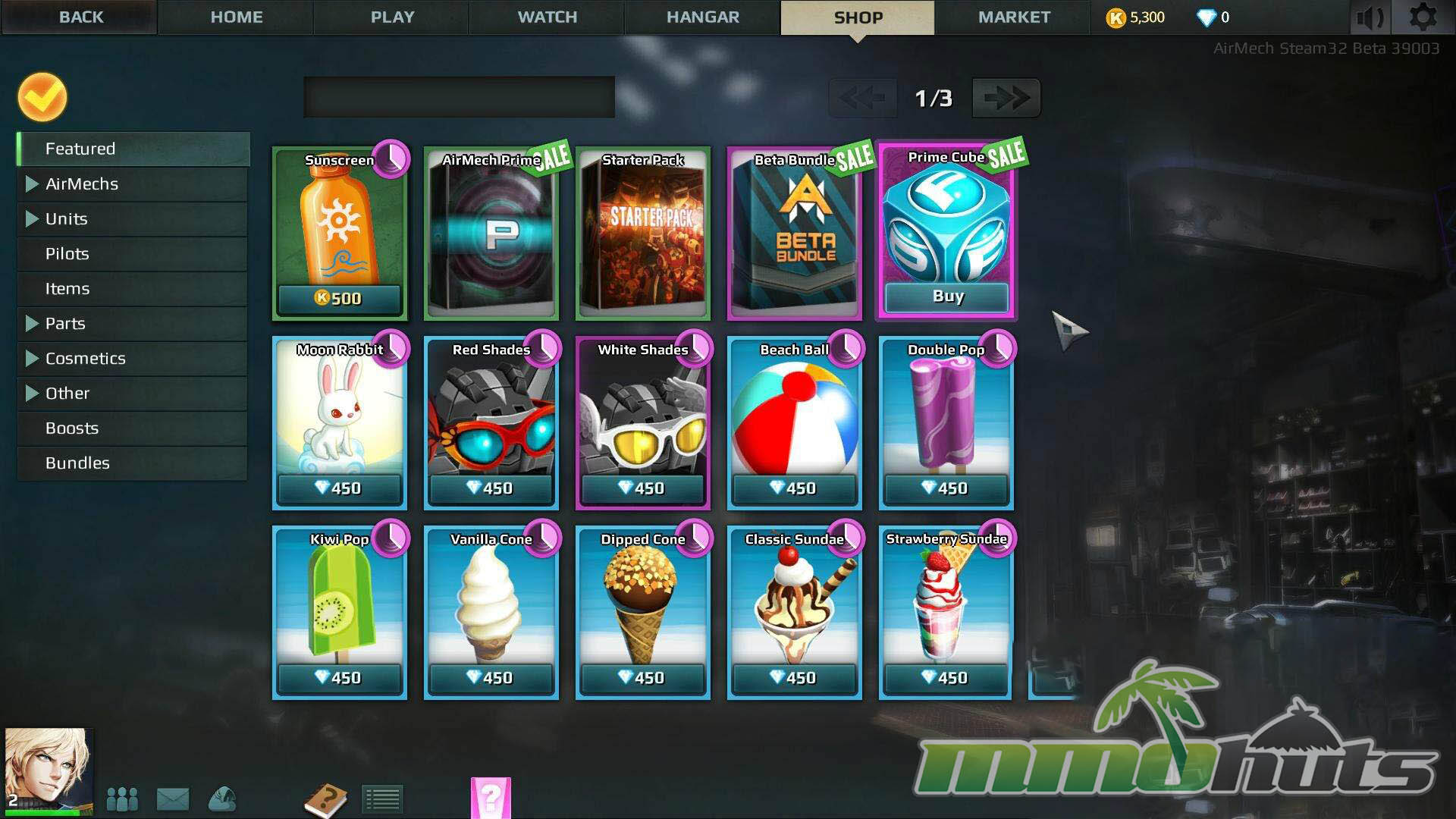
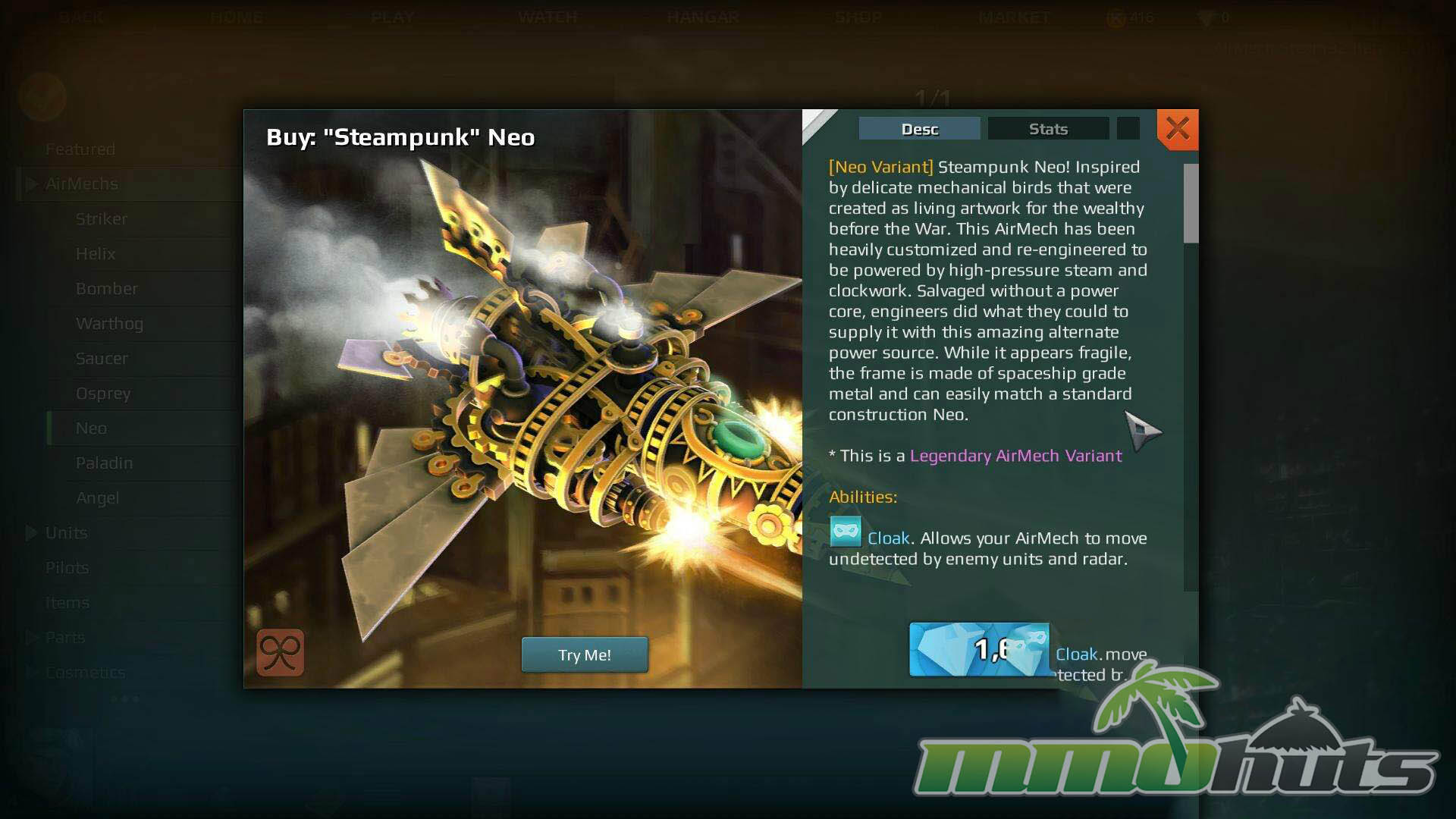
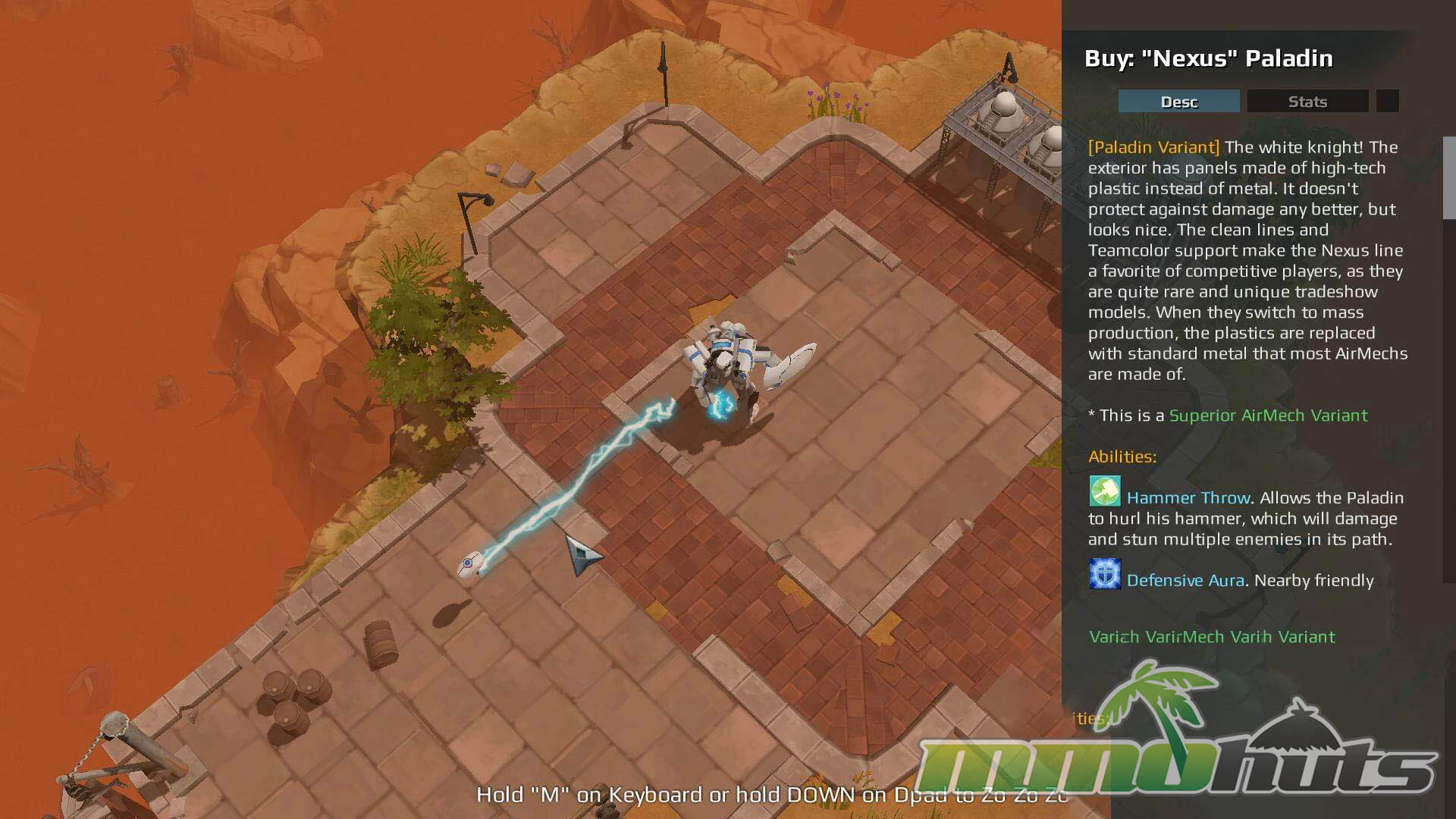
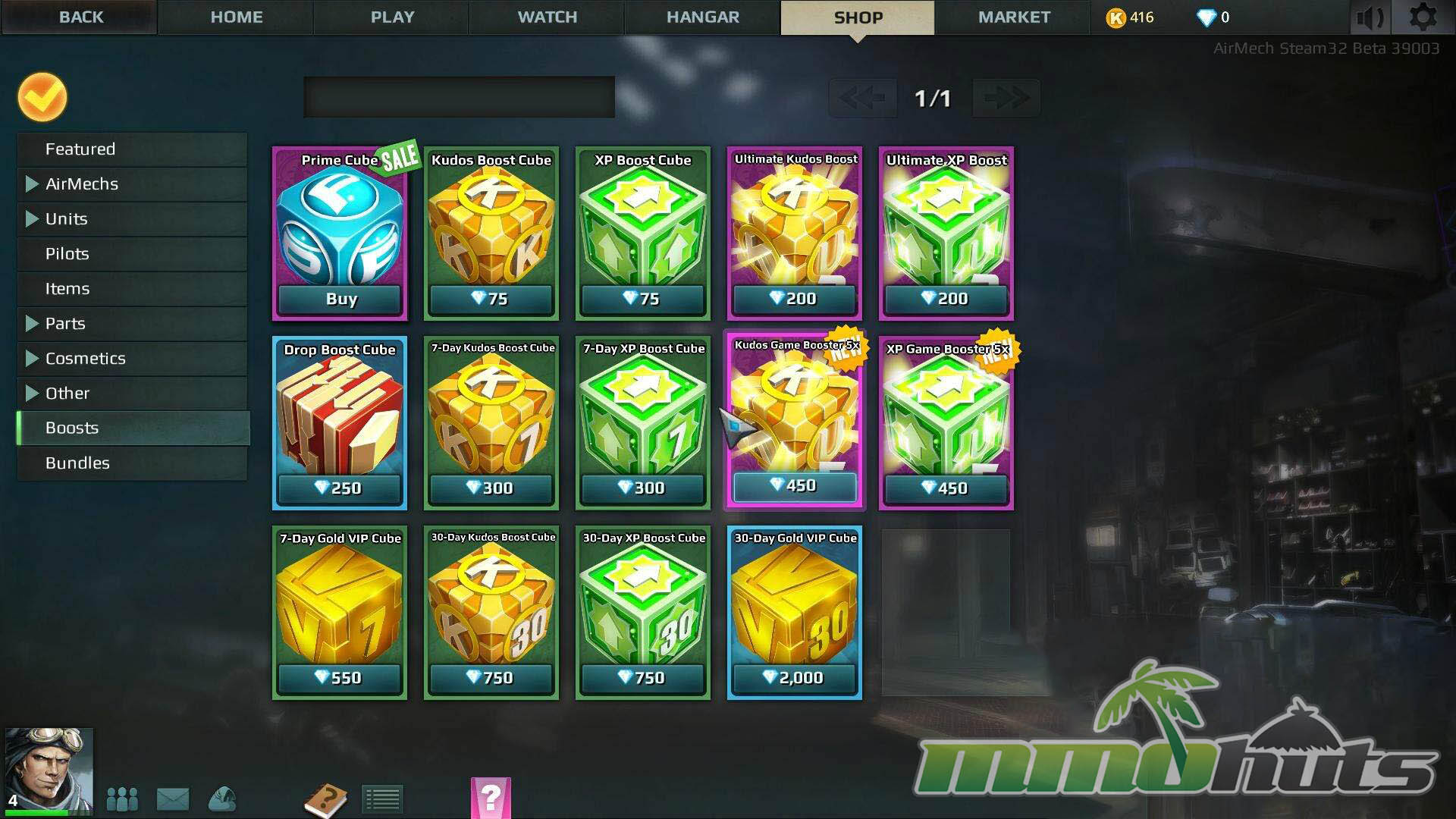
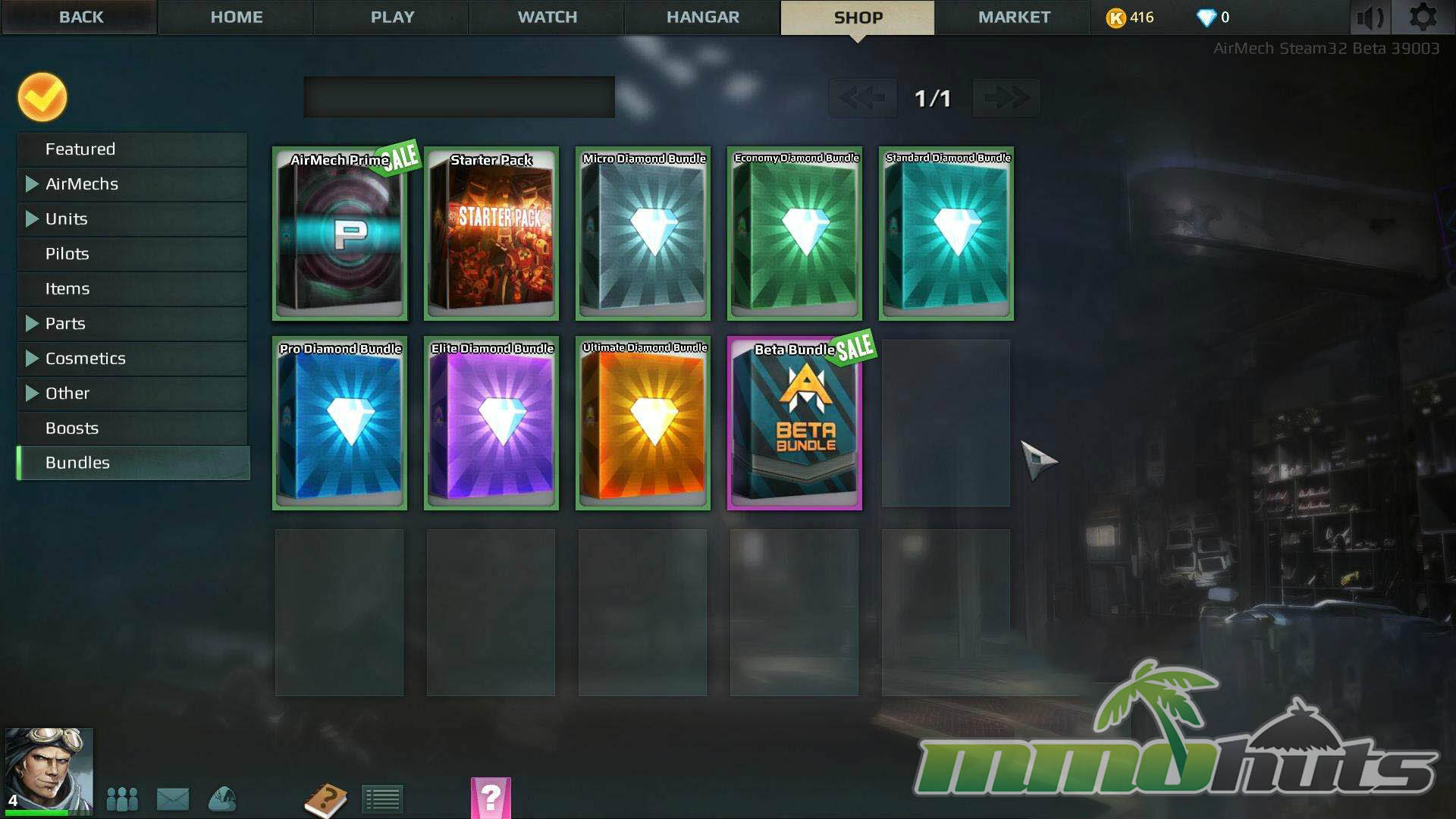
The Shop includes items that require real-money currency, but it also supports steady progression for free-to-play players. Units, pilots, and mechs can be unlocked with Kudos, and while many cosmetics are aimed at paying users, events can provide opportunities to earn free rewards. The layout is clean, and each item is presented with clear information so you can understand what you are buying.
A nice quality feature is the ability to preview certain cosmetics through a “Try Me” style option, which helps avoid wasted purchases. Overall, the monetization feels more like convenience and cosmetics rather than a direct power purchase, and match outcomes still hinge heavily on decisions and execution.
Final Verdict – Good
AirMech delivers a strong blend of action controls and RTS decision-making, with a fair free-to-play structure and a customization system that encourages experimentation. Its biggest issues are longevity and labeling, the game can become repetitive if you settle into the same mech and unit package, and the long beta status is hard to ignore. Still, if you enjoy skill-driven games with map control, quick tactical choices, and flexible builds, AirMech is an easy recommendation to try.
AirMech Links
AirMech Official Site
AirMech Steam
AirMech Wikipedia
AirMech Wikia [Database/Guides]
AirMech System Requirements
Minimum Requirements:
Operating System: Windows Vista
CPU: Intel i3 or better
RAM: 2 GB RAM
Video Card: 8800 GT or better
Hard Disk Space: 1 GB
Recommended Requirements:
Operating System: Windows 7/8/10
CPU: Intel i5 or better
RAM: 4 GB RAM
Video Card: Radeon HD7970 or better
Hard Disk Space: 2 GB
AirMec Music & Soundtrack
AirMech Additional Information
Developer(s): Carbon Games
Publisher(s): Carbon Games
Director(s): James Green
Composer(s): Front Line Assembly
Game Engine: Heat
Other Platforms: Playstation 4, Xbox One
Release Date: October 05, 2012
Steam Release Date: November 08, 2012
Development History / Background:
AirMech is developed by Carbon Games and released on October 05, 2012. The studio announced AirMech at Pax Prime in the summer of 2011, and it quickly drew interest from a niche crowd looking for a modern take on classic action-RTS ideas. Inspired by Sega’s Herzog Zwei, the project aimed to blend fast transforming combat with MOBA-like map pressure and objective-focused play. It was released through Steam on Novemeber 09, 2012. Ubisoft later stepped in to publish the console versions. In May of 2015, AirMech released on the Xbox and PlayStation platforms and has received a positive response from players.