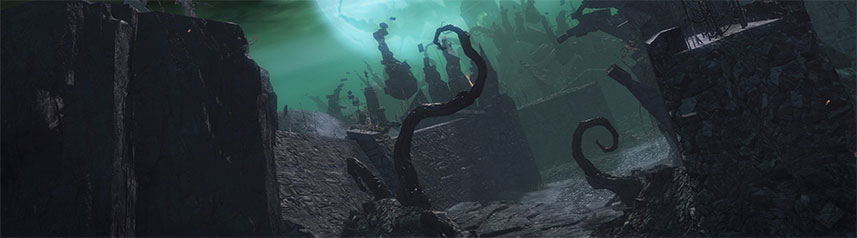
Aion is a 3D fantasy MMORPG that drops you into Atreia, a shattered world split between the Elyos and the Asmodians. It mixes traditional questing and instanced PvE with faction warfare, fortress sieges, and signature aerial movement, all wrapped in a CryEngine-powered world and a character creator that still stands out for its level of detail.
 | Publisher: NCsoft Playerbase: High Type: MMORPG Release Date: September 22, 2009 (NA) PvP: Duels / Open PvP Zones Pros: +Deep character creation with plenty of control. +Distinct PvPvE battles in contested zones. +Robust housing and pet support. +Memorable music and ambience. +A large amount of content to work through. Cons: -Very large install footprint. -New and returning players face a lot of legacy progression to reach current activities. -Combat flow and interface design feel dated compared to modern MMOs. |

Aion Overview
Aion is a content-heavy MMORPG set in the high fantasy setting of Atreia, where two opposing factions push their agendas across mirrored lands and a shared, dangerous middle ground. After launching as a subscription title, the game shifted to free-to-play on April 11, 2012, which opened the doors to a wider audience and helped keep the world active through ongoing updates. Over the years, major patches introduced systems like pets and player housing, alongside new regions and fresh activities that expanded the scope well beyond the early leveling zones.
What makes Aion feel different from many theme park MMORPGs is how often it tries to blend objectives. Its signature faction conflict is not only about fighting the other side, it also threads in powerful NPC threats, particularly in contested endgame-style zones where the environment itself can be just as dangerous as enemy players. Another long-running highlight is the character creator, which offers unusually granular control over facial features and body proportions, making it easy to build a distinctive look rather than choosing from a handful of presets.
Aion Key Features:
- Loads of Content – regular large updates raise the level cap and introduce new areas, keeping long-term progression moving.
- Extensive Character Creation – a remarkably detailed creator with sliders and fine adjustments that are still impressive for the genre.
- Tons of Features – a wide mix of systems, including mounts, pets, professions, cosmetic changes, and more ways to personalize your account.
- Unique PvPvE – faction warfare that also involves PvE threats, especially in The Abyss where objectives attract both players and NPC defenders.
- Great Soundtrack – strong musical themes that help the world feel grand, melancholic, and appropriately otherworldly.
Aion Screenshots

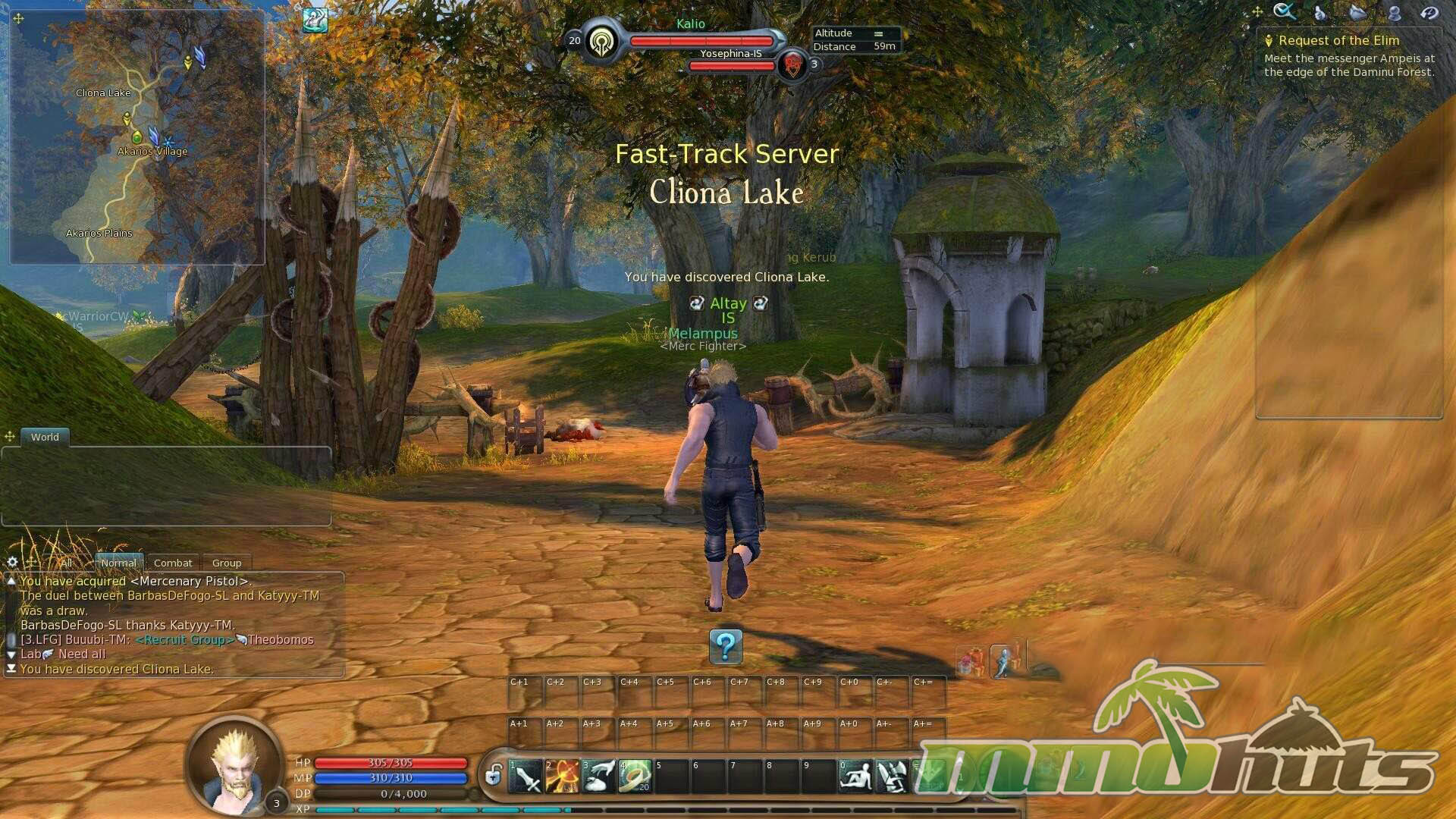
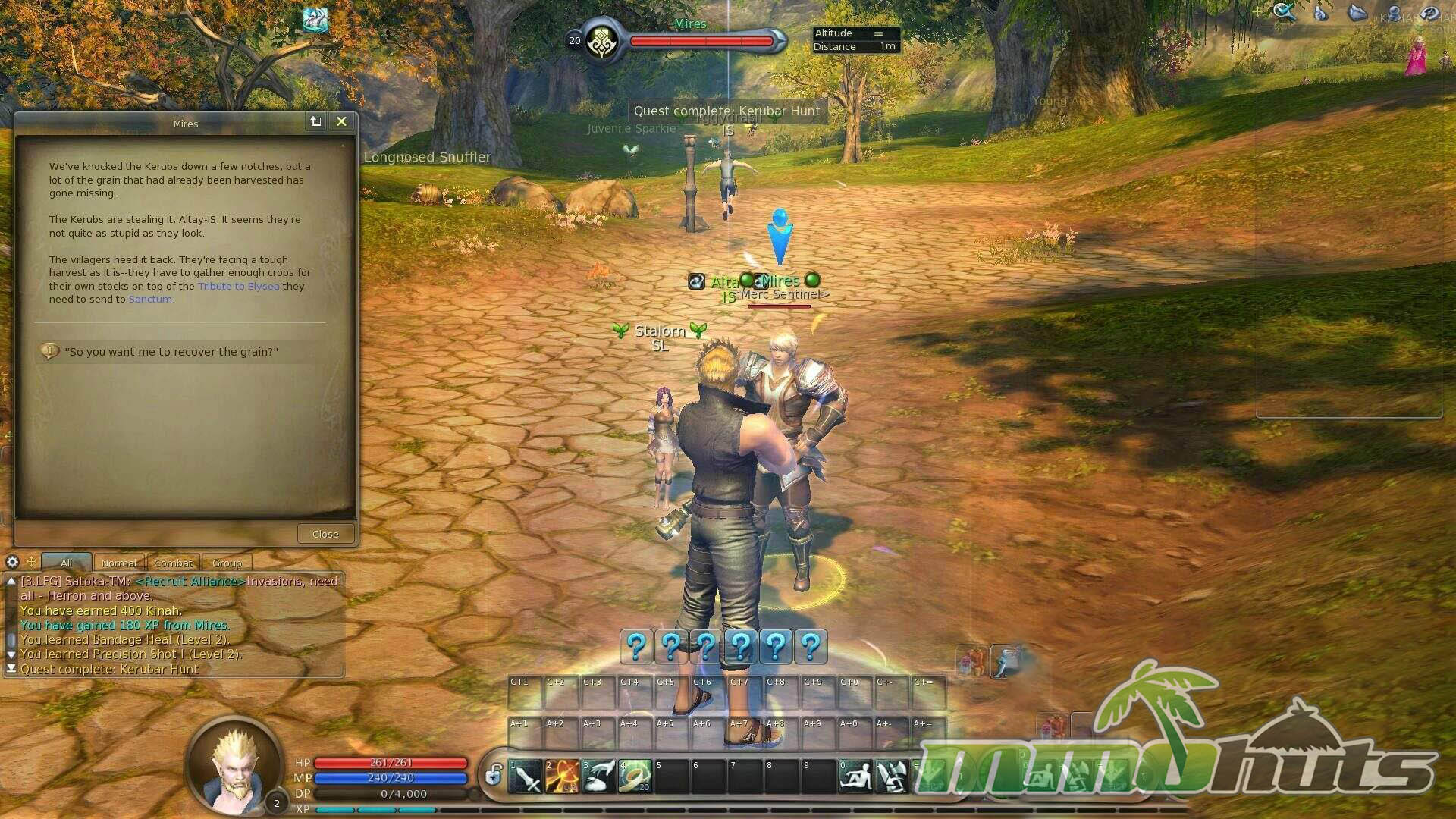
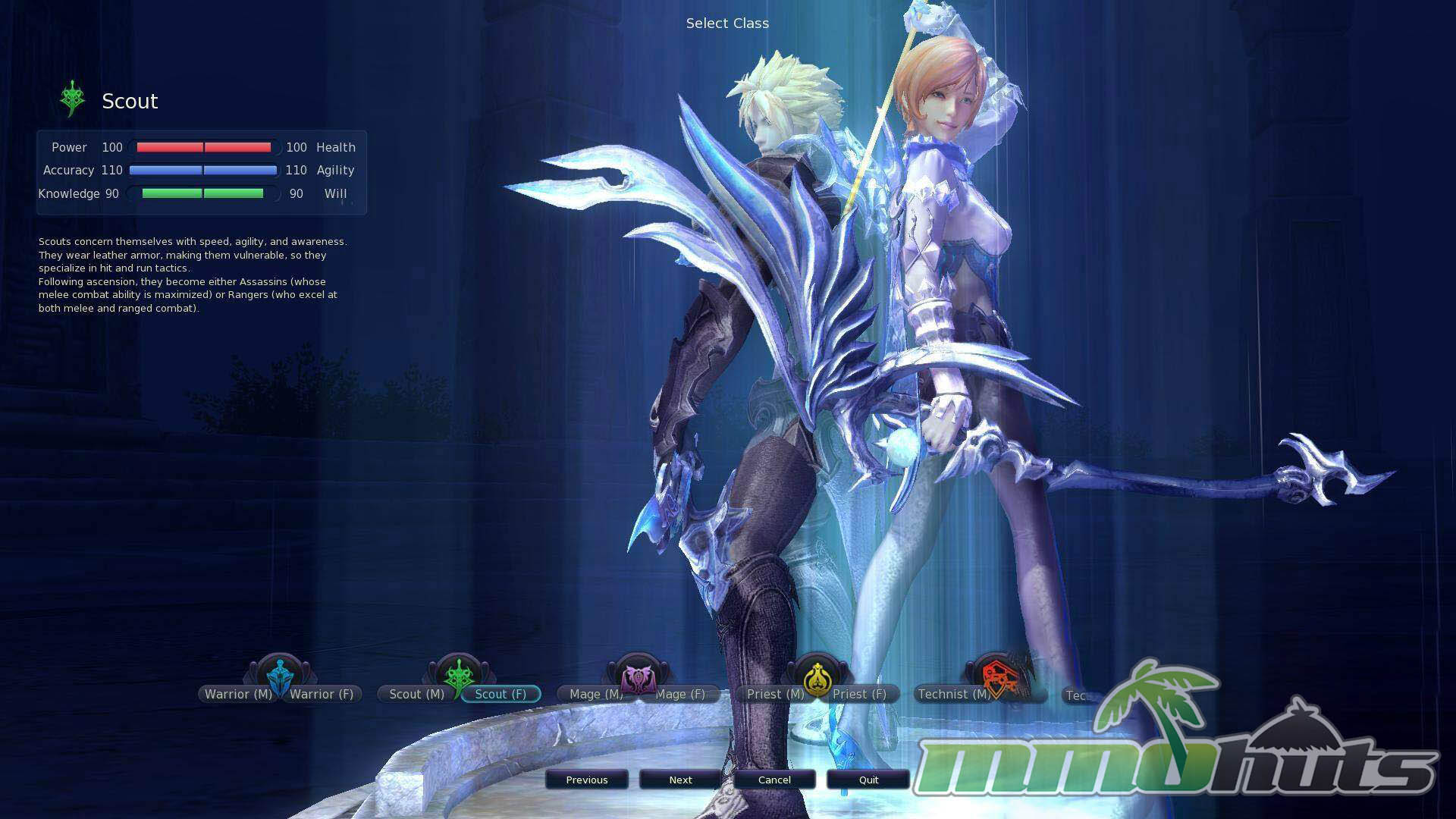
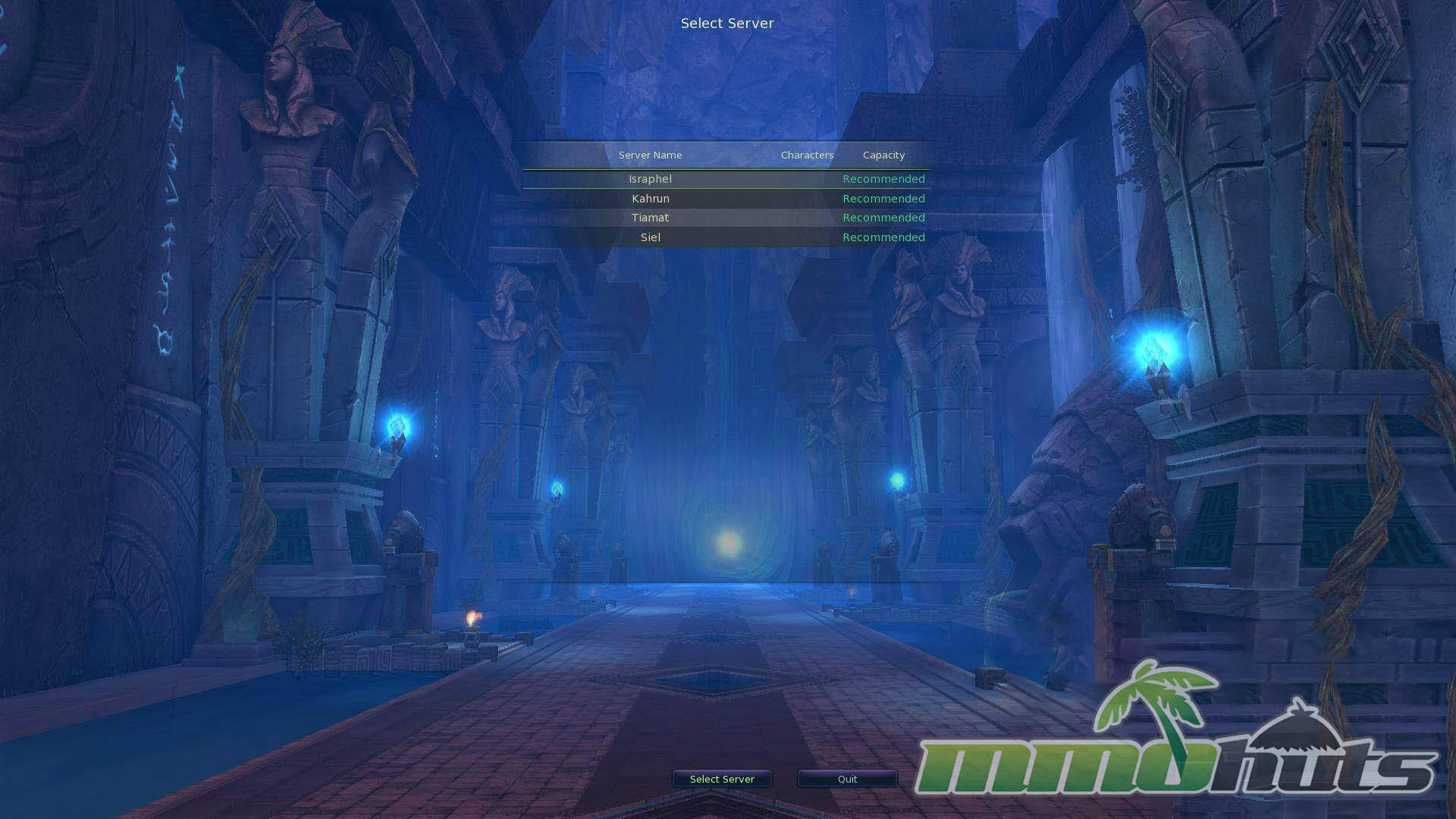
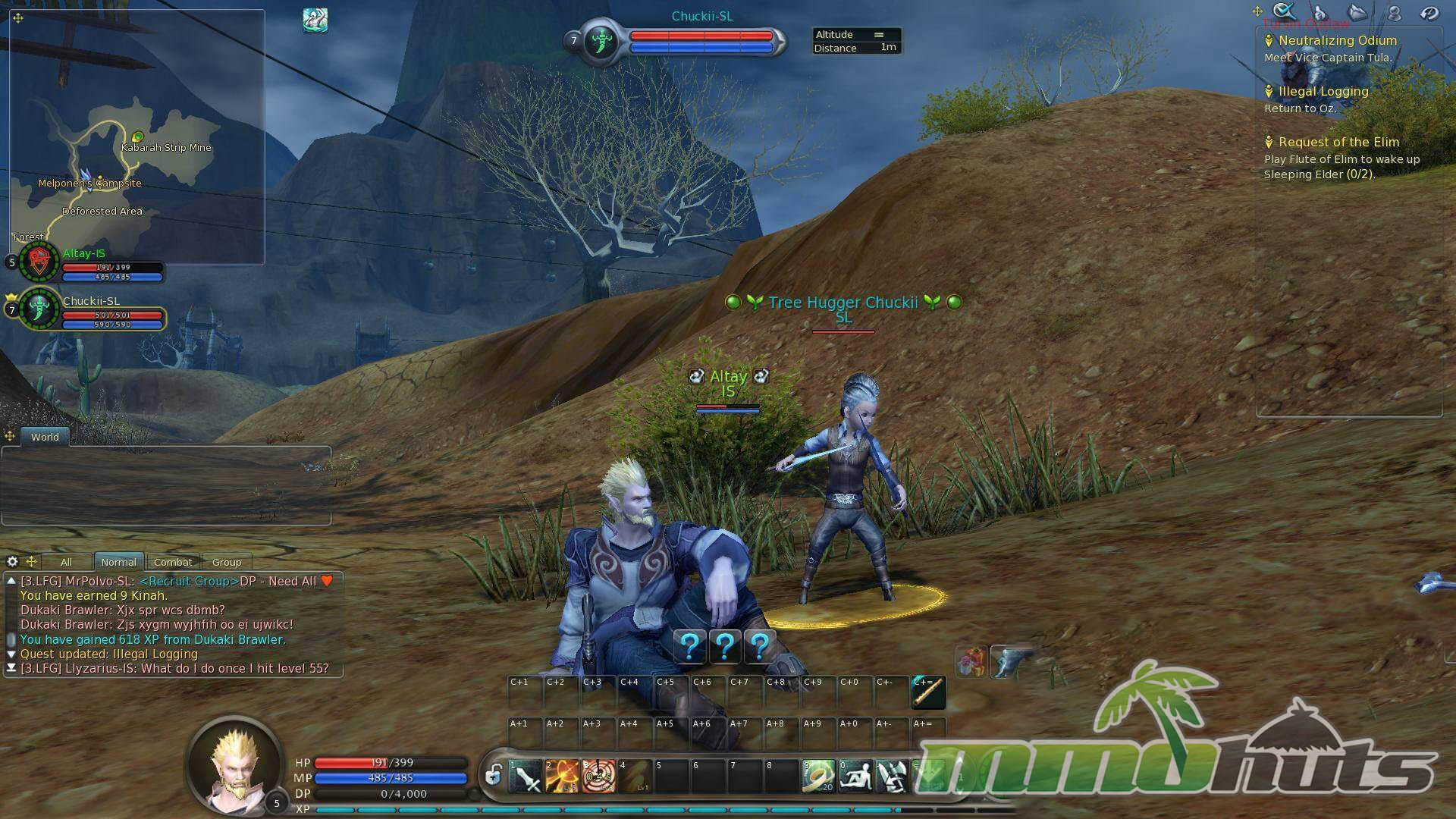
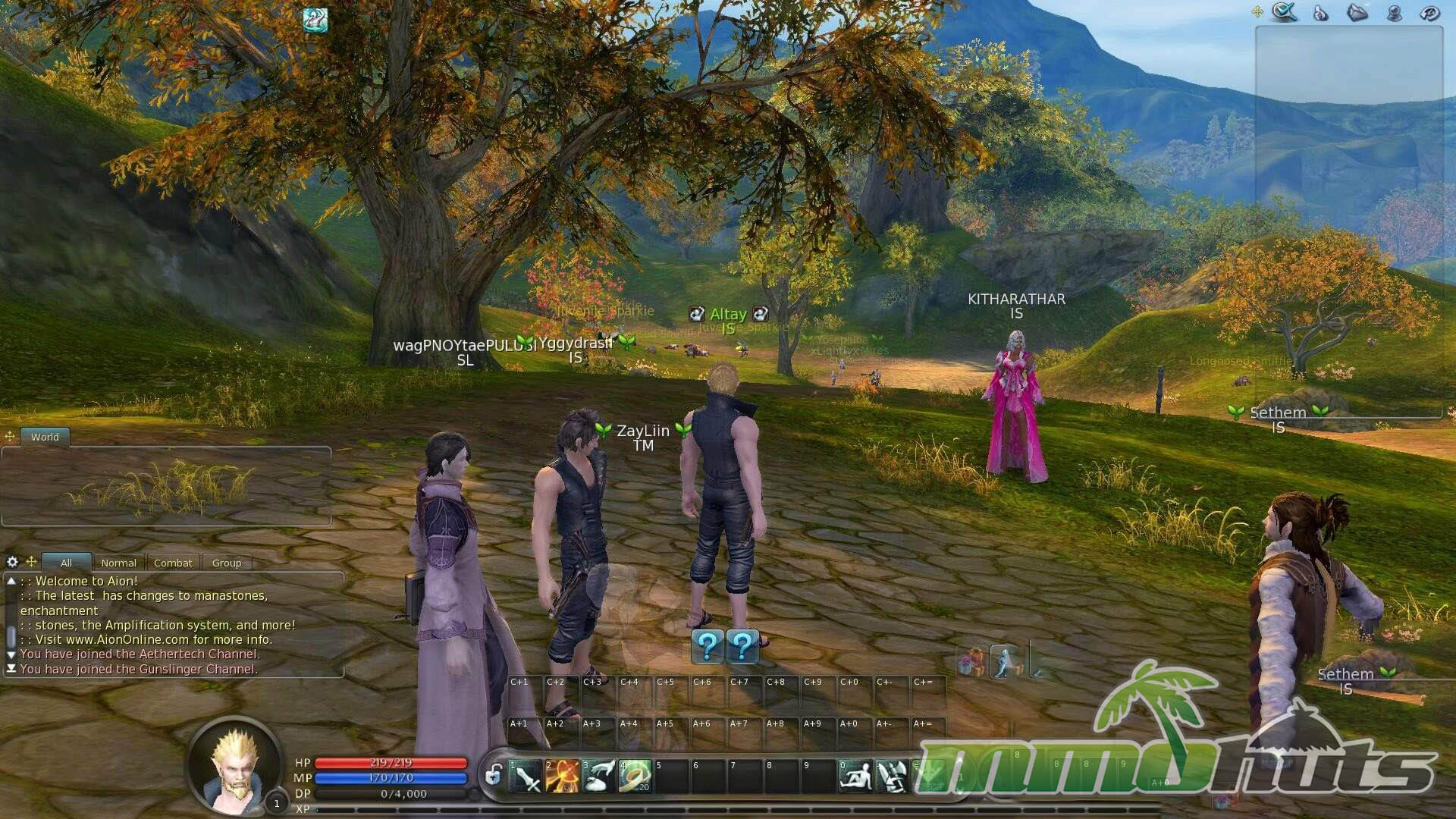
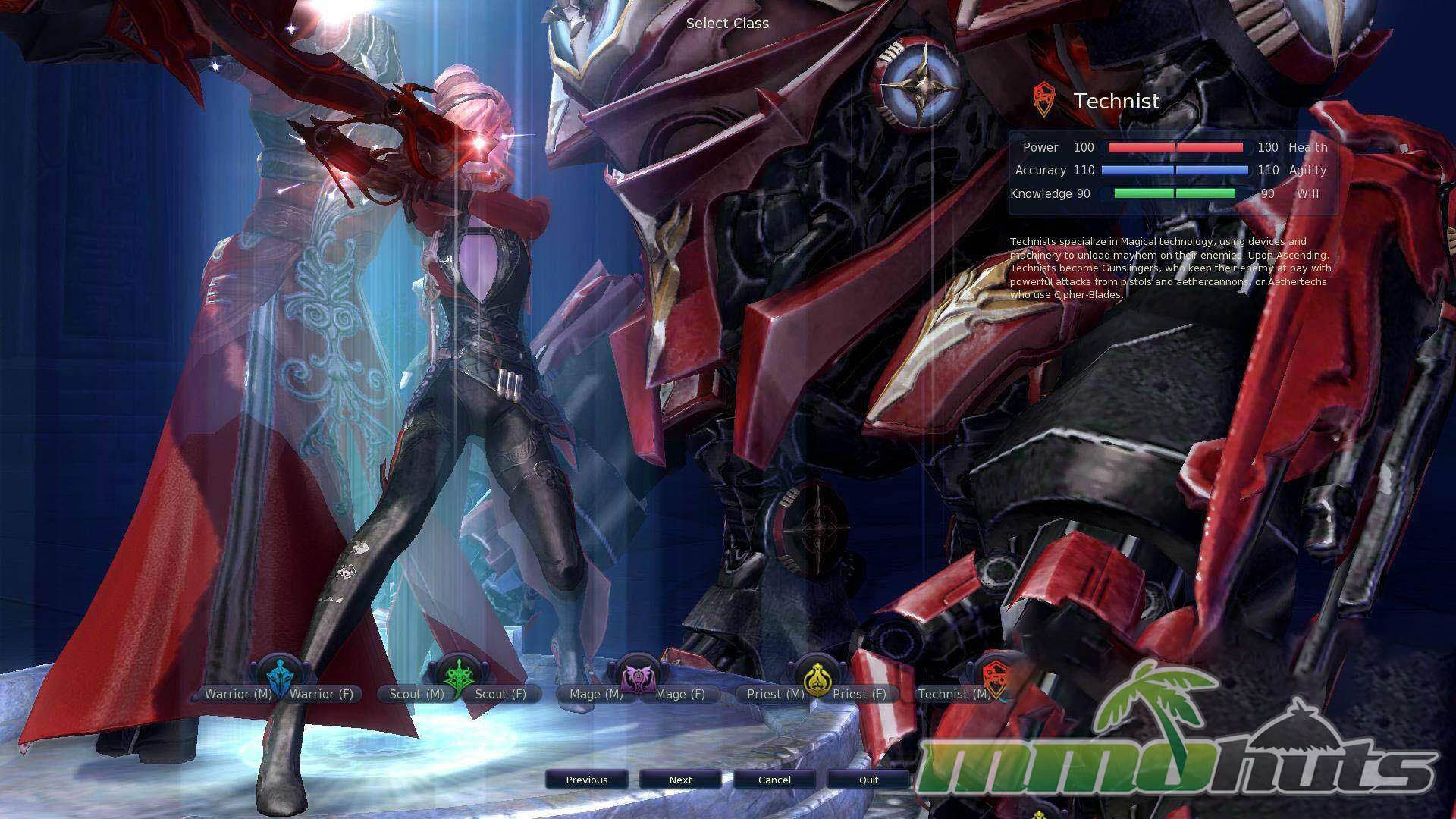
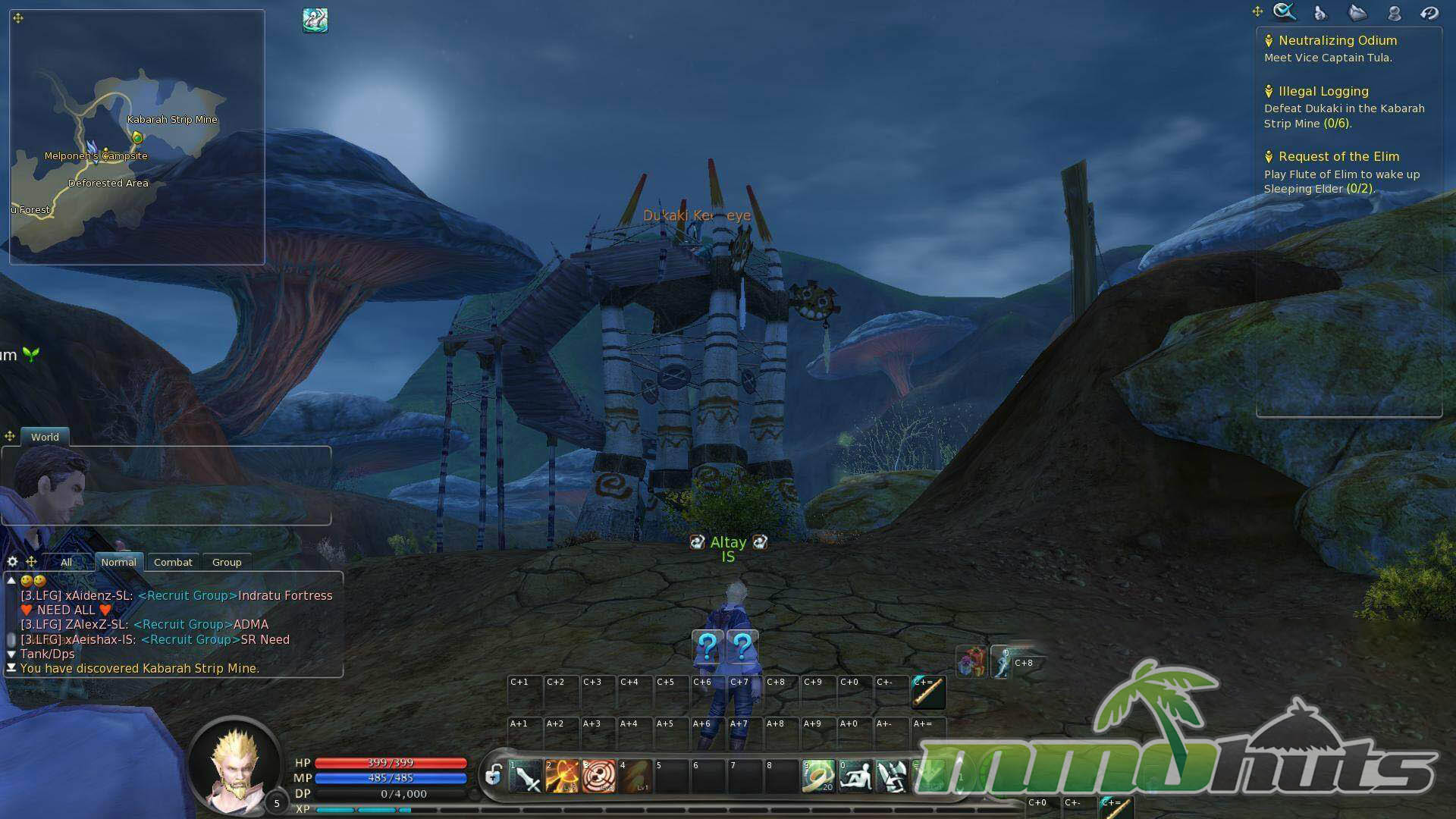
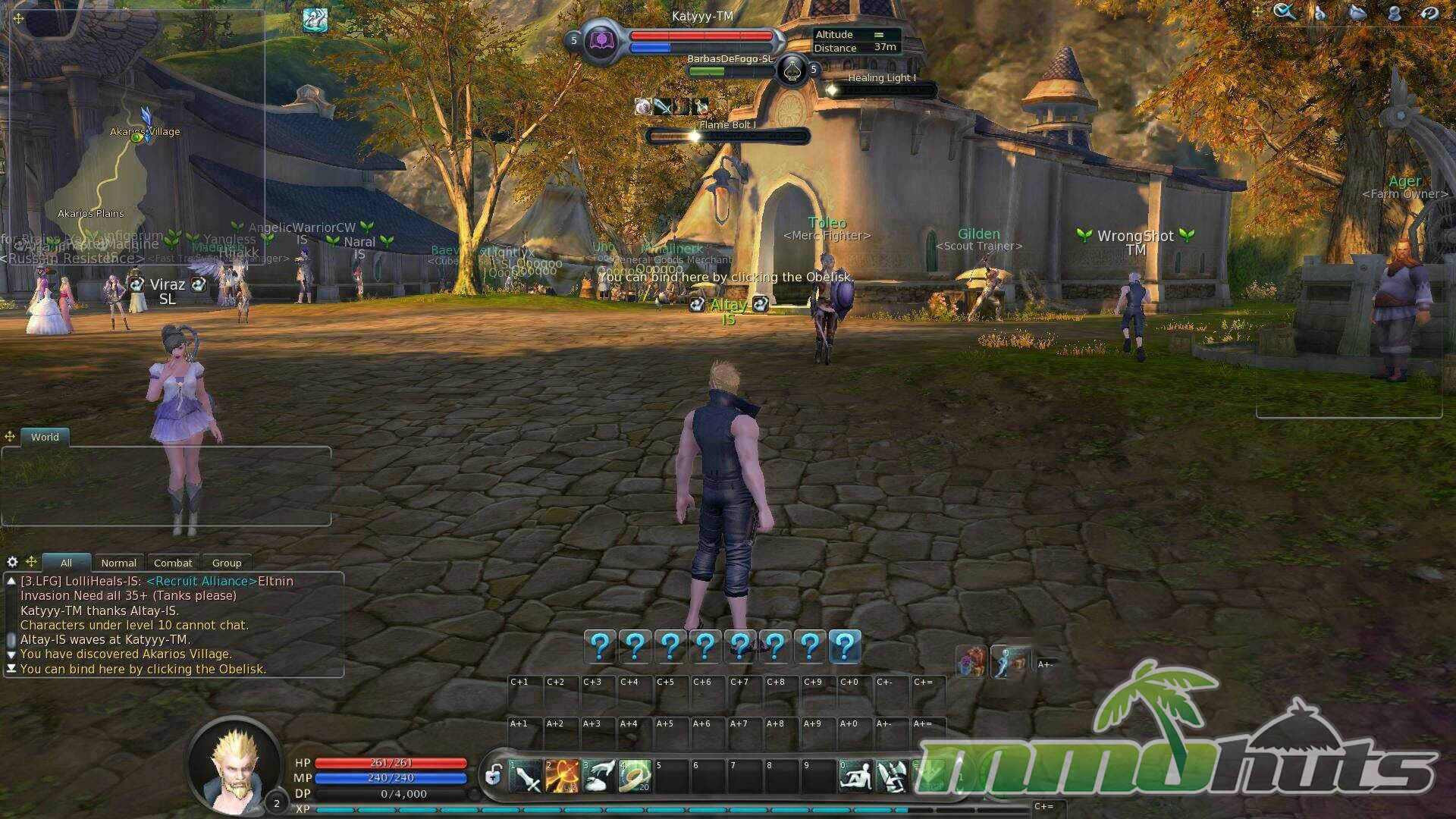
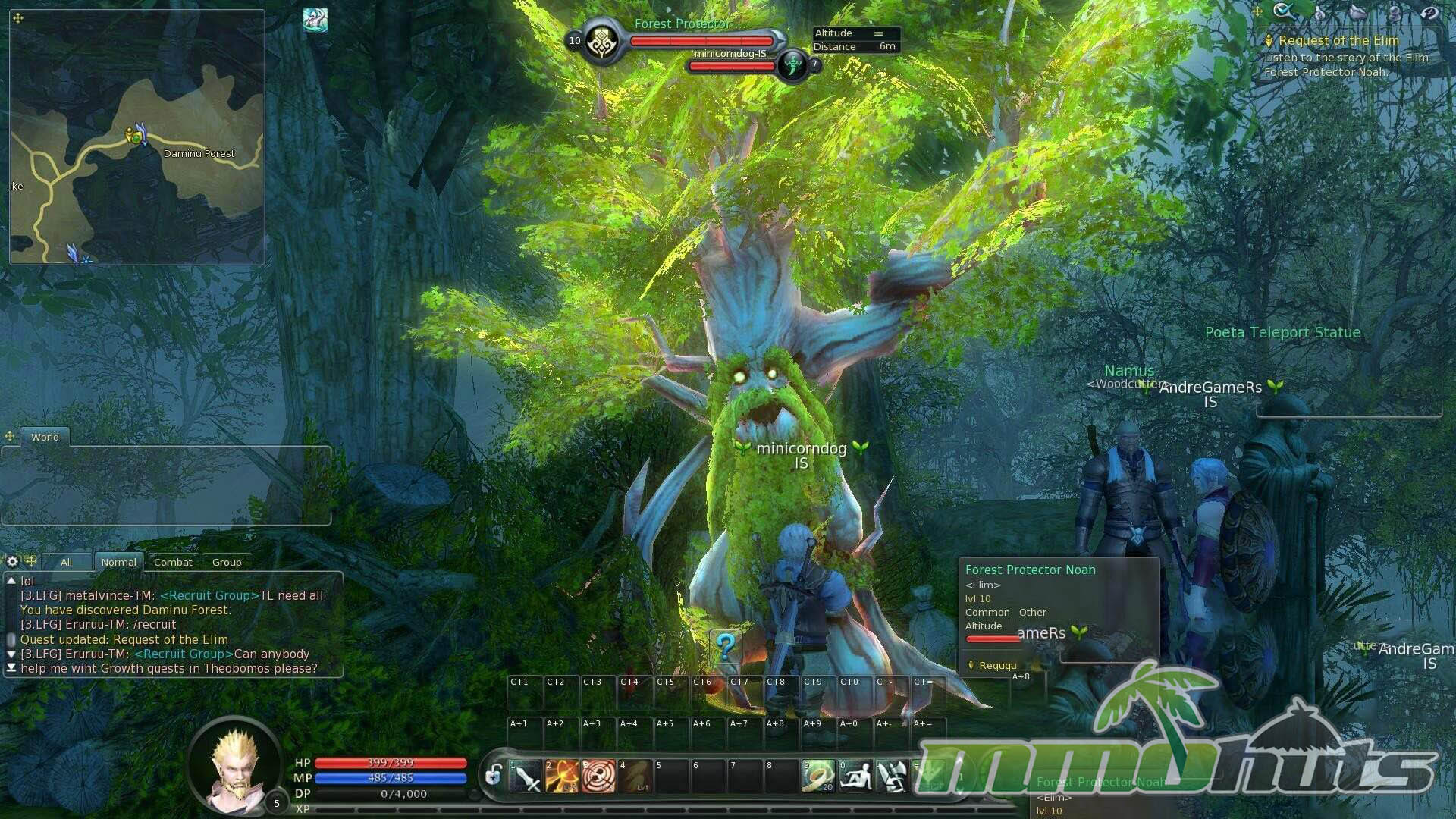

Aion Featured Video

Aion Races & Classes
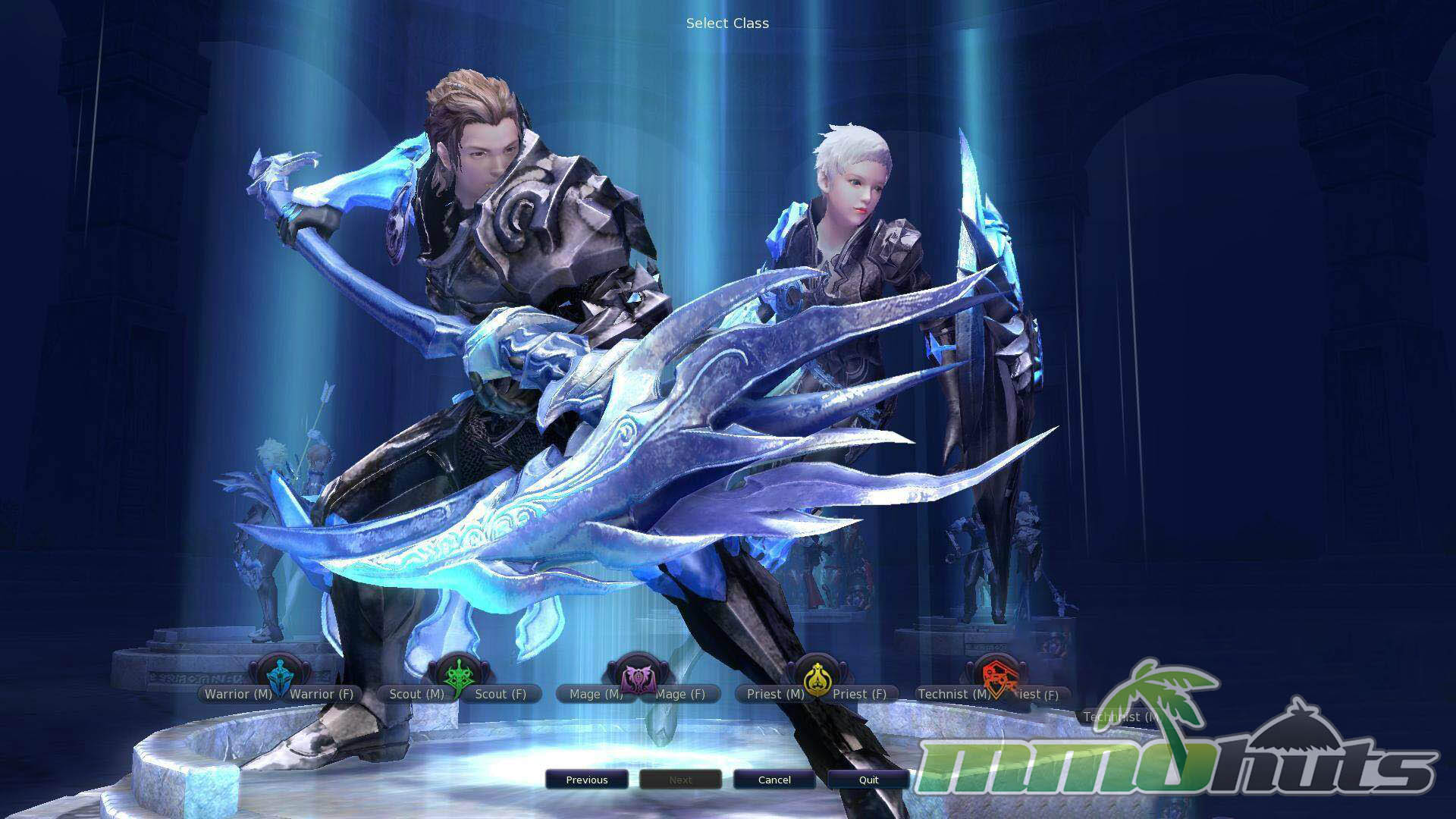
In Aion, your first major decision is faction, you will join either the Elyos or the Asmodians. From there you select one of the base archetypes, then later commit to a more specialized role. There are 6 base classes and 11 primary classes in Aion, with the class advancement happening at Level 10.
- Warrior – Warriors thrive in melee, leaning on raw physical power and weapon variety to pressure enemies.
- Gladiator – a close-range damage specialist with broad weapon access and strong area attacks.
- Templar – the dedicated tank option, built around defensive tools and mitigation, but typically lower damage output.
- Scout – quick and tactical, Scouts win by positioning, timing, and control rather than durability.
- Assassin – a stealth-focused burst class that excels at opening hard and disrupting targets.
- Ranger – the main ranged weapon user, focused on consistent DPS with utility through buffs and disables.
- Mages – spellcasters that channel elemental power to control space and deal heavy magical damage.
- Sorcerer – a crowd control standout with some of the strongest offensive spells in the roster.
- Spiritmaster – a debuff and damage-over-time expert that also fights alongside summoned companions.
- Priest – support anchors for parties, providing healing, protection, and team stability.
- Cleric – the primary healer, with single-target and AoE recovery options and the ability to remove multiple debuff types.
- Chanter – a hybrid support that can heal, but is best known for party buffs and mantras that raise group effectiveness.
- Muse – introduced in the 4.0 era, Muses blend damage, support, and healing into a flexible kit.
- Songweaver – uses musical instruments to weave effects that can harm and hinder enemies or restore and empower allies.
- Technist – also added around the 4.0 timeframe, Technists use technology-driven tools to deliver high damage and utility.
- Gunslinger – a burst-oriented DPS class using pistols and aethercannons, backed by multiple crowd control options.
- Aethertechs – pilots mechanical mounts called Bastions, pairing strong survivability with explosive damage windows.
Aion Review
Aion (also known as The Tower of AION in Japan) is a 3D fantasy MMORPG developed by NCsoft and published by NA NCsoft in North America, Gameforge in Europe, SK NCsoft in South Korea, and Innova in Russia. It launched on November 25, 2008 in South Korea and later arrived in the West in September 2009. The business model also changed significantly over time, with Europe moving to free-to-play on February 29, 2012 (with limits on systems like gathering, trade, and chat), and North America following on April 11, 2012 with the “Truly Free” approach that avoided those same restrictions. Across its lifespan, the game received multiple expansions and major updates, including Assault on Balaurea (September 7, 2010), The Promised Lands/3.0 Ascension (October 19, 2011) and Dark Betrayal/Aion 4.0 (June 26, 2013). Aion Upheaval launched in June 17, 2015, bringing additional zones, new stigma abilities per class, and other changes.
First Steps in Atreia
The setting is one of Aion’s strongest hooks. Atreia is essentially split into opposing halves that face each other, once linked by the Tower of Eternity. After the tower’s destruction, the world’s central conflict sharpened, and The Abyss became the focal point for much of the struggle between the Asmodians and the Elyos. Even if you are not deeply invested in lore, the layout of the world and its “two sides with a contested center” structure provides a clear framework for PvE progression and faction PvP.
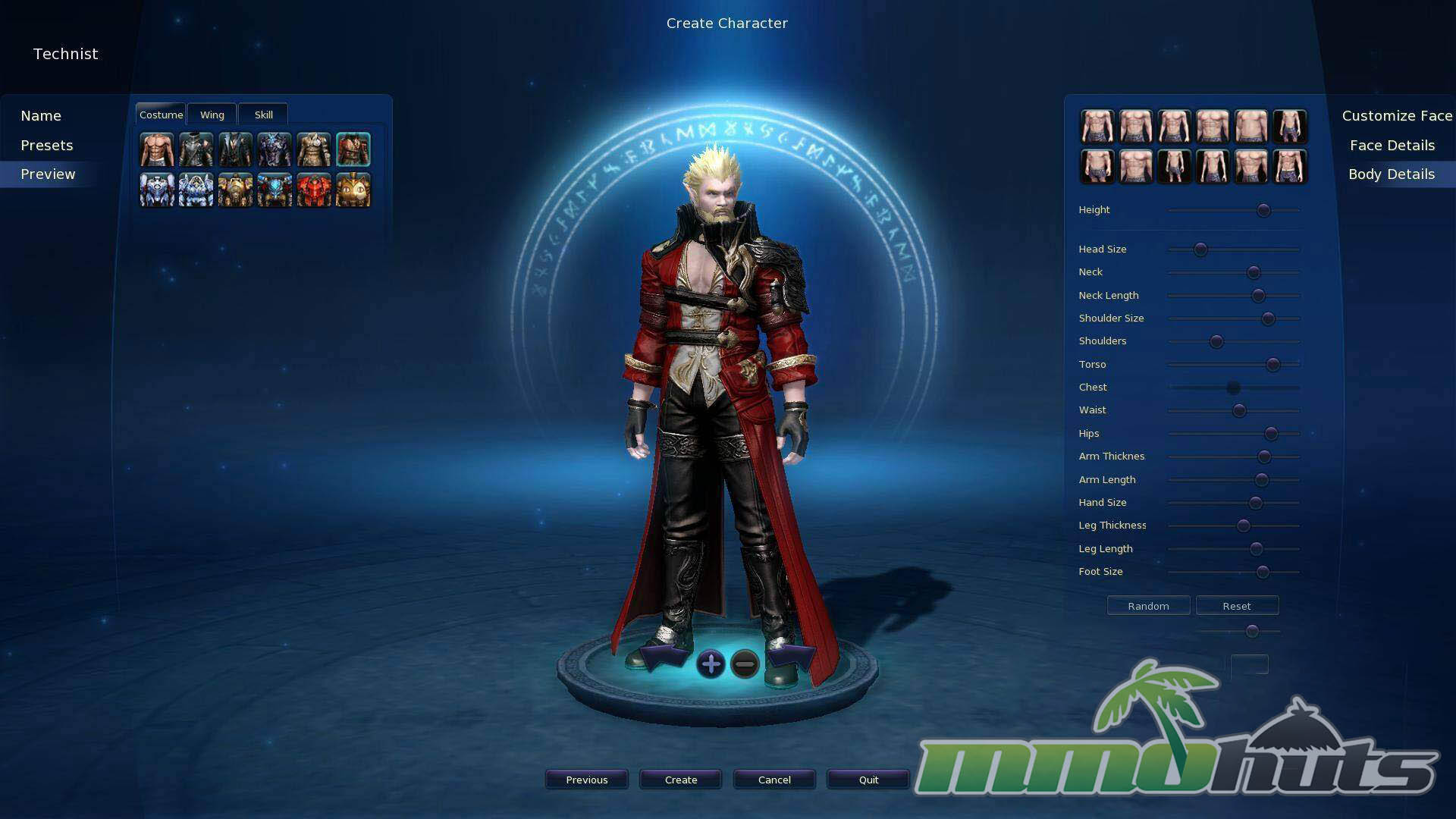
Before any of that, Aion invites you to spend time in character creation. It is not just a list of heads and hairstyles, it is a full set of sliders and proportions that let you sculpt a look that feels personal. For players who enjoy roleplay, screenshots, or simply standing out in a crowded hub, this is a genuine advantage.
Class choice starts broad and becomes defined after you reach Level 10 and complete the Ascension quest. You begin with six base options: Warriors, Scouts, Mages, Priests, Muses, and Technists. Ascension both unlocks flight and pushes you into a specialization path, with two advanced choices for most base classes and one for Muses. These roles are recognizable and easy to understand (damage, tanking, healing, support), but the commitment matters because once you pick your advanced class, you cannot freely reverse it later.
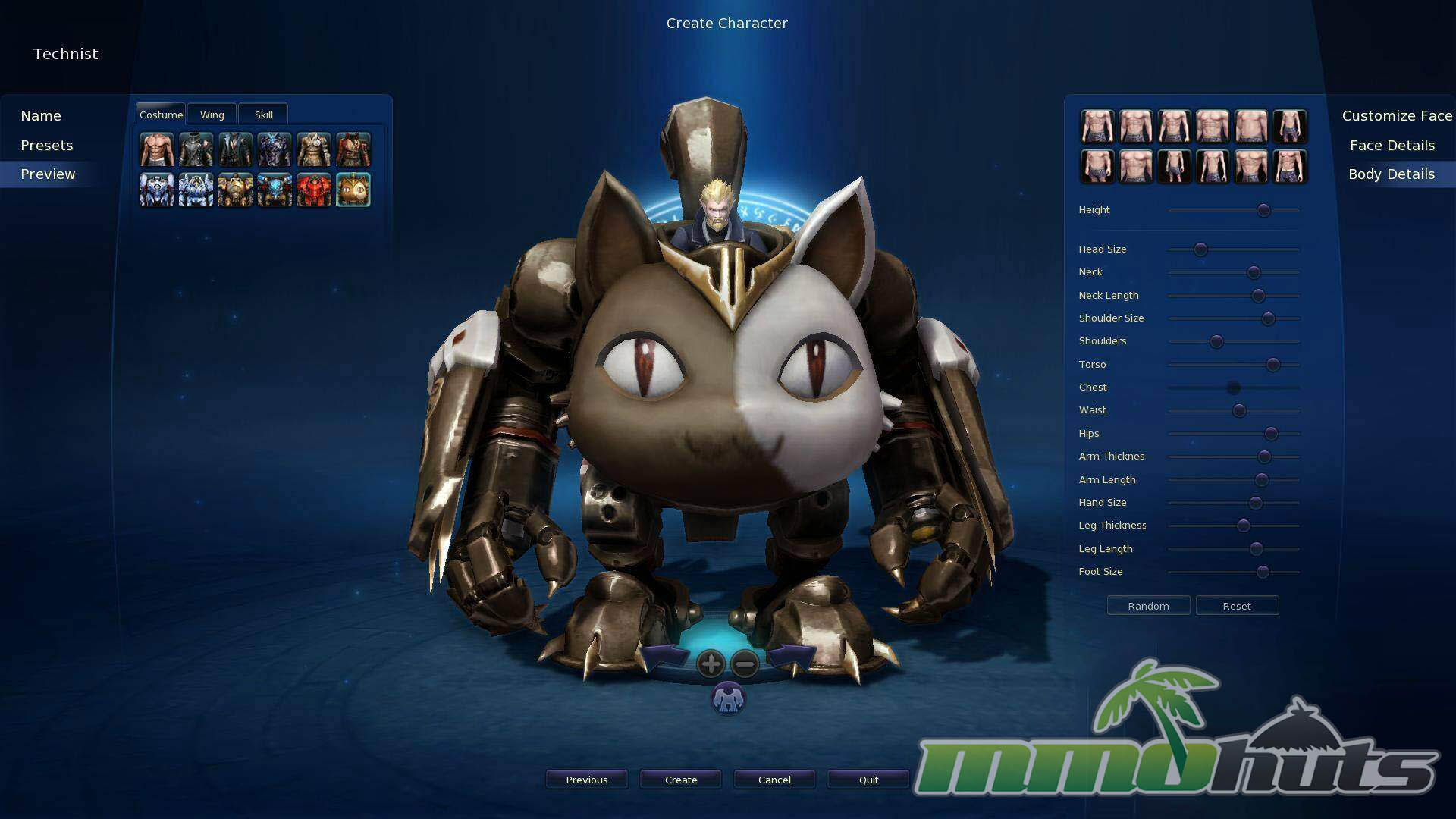
Progression is also tied to Aion’s skill systems. Core abilities are learned through skillbooks, which you can buy from trainers starting early (as soon as Level 3) and also acquire through drops or quests. Some books require reagents from vendors, adding another small layer of preparation. On top of that, the stigma system acts as a major customization layer. You unlock stigma slots at specific level milestones (2 at Level 20, 3 at Level 30, 4 at Level 40, 5 at Level 50, and 6 at Level 55), and you can also work toward Greater Stigma slots (six total) through PvP currency. Stigmas and Greater Stigmas change what your character can do in meaningful ways, but managing them requires visits to specific NPCs and consumable shards, which makes build changes feel more deliberate than in many modern MMOs.
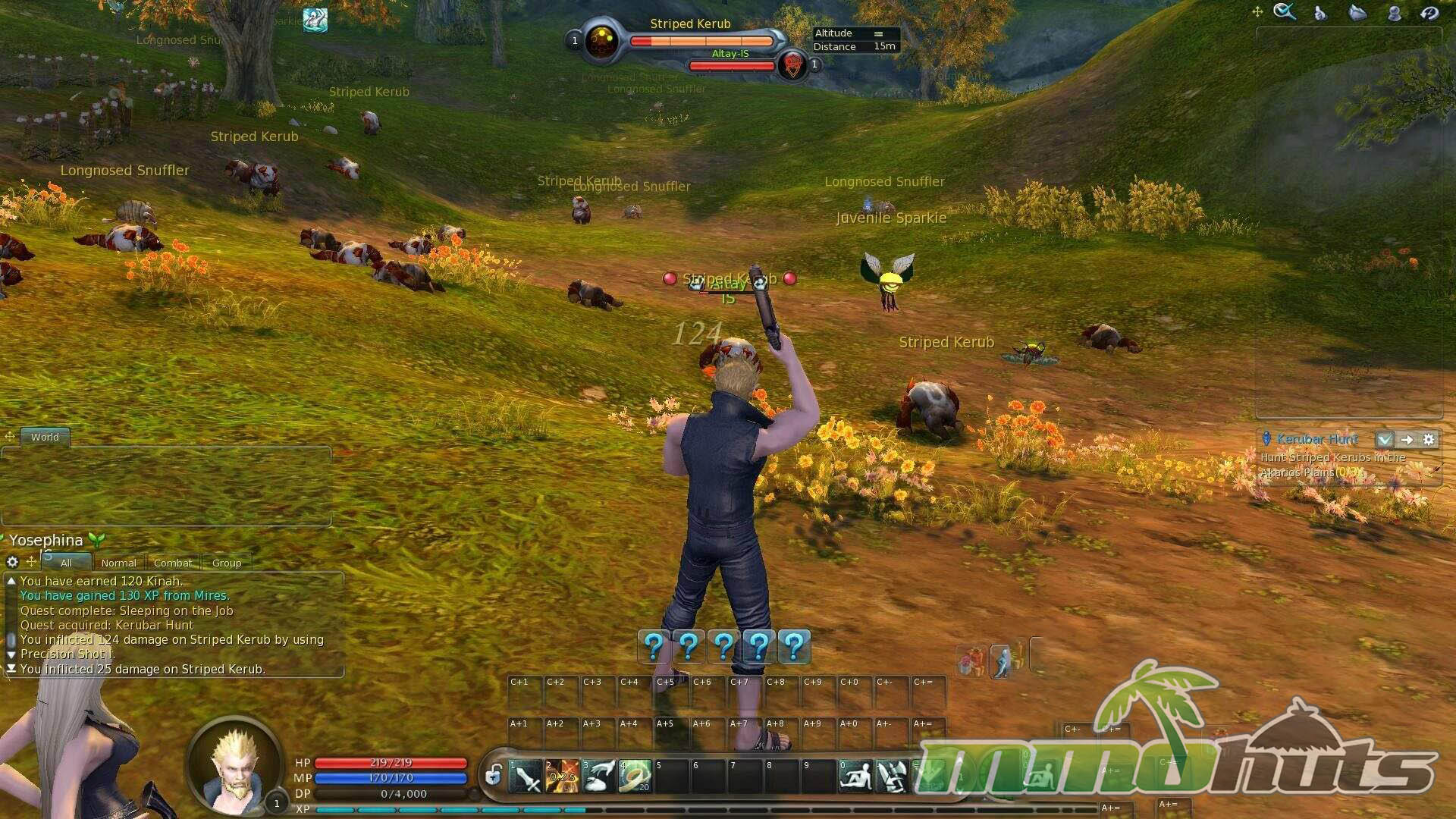
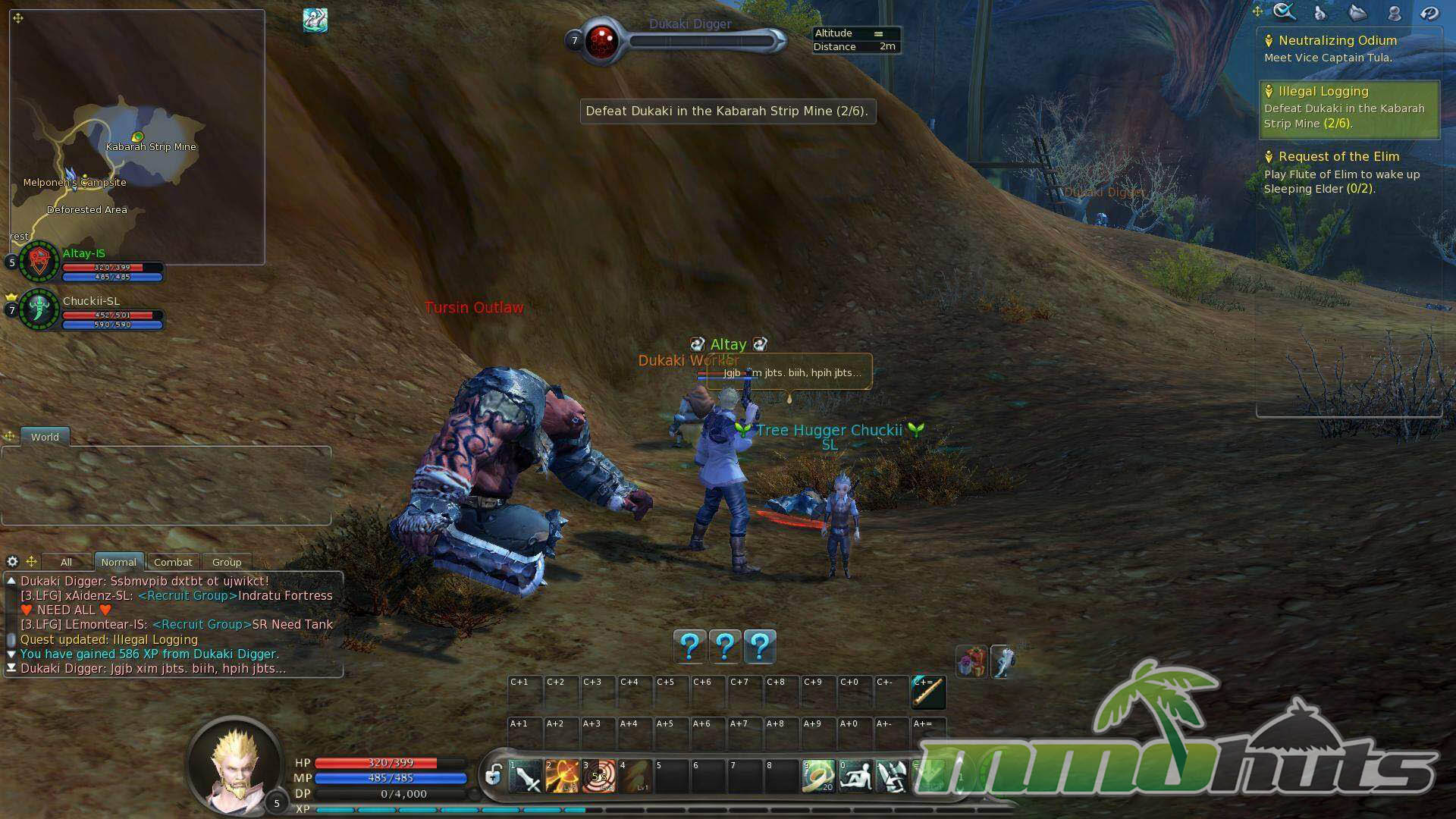
In moment-to-moment play, Aion uses familiar MMO controls (WASD movement with hotkeys and tab targeting), with mouse buttons handling movement/attacks and camera control. Targeting can feel inconsistent at times, but the UI is generally responsive and readable. The early game leans heavily on quests, and because the experience curve has been reduced compared to older MMO standards, you typically spend more time completing objectives than grinding pure mob kills.
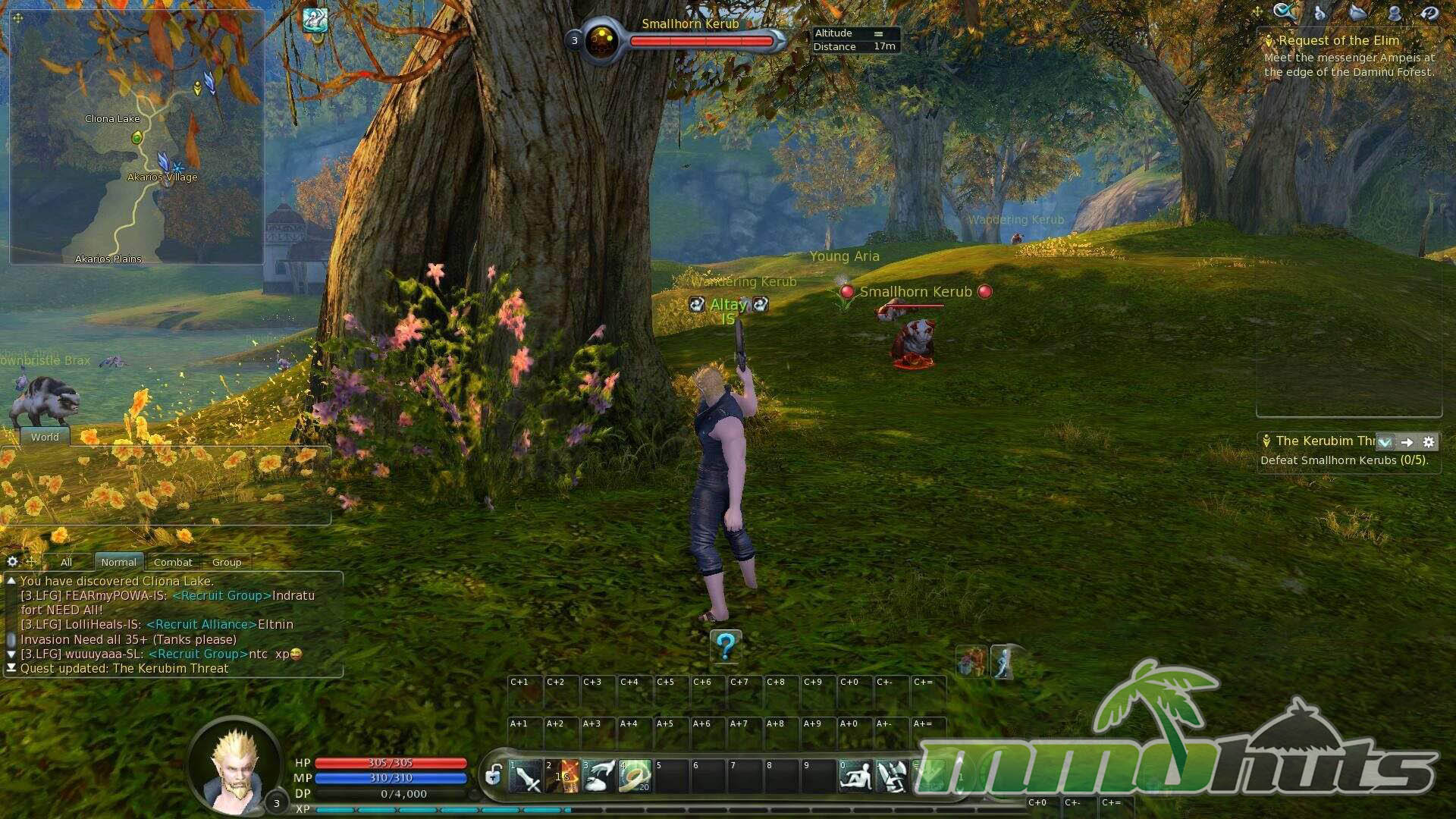
Questing and Leveling, Then and Now
Like many long-running MMORPGs, Aion has reworked its leveling experience over the years, making the journey to higher levels faster than it was at launch. That said, the questing experience shows its age in several ways: navigation and tracking can be clunky, finding exact objectives can require extra menu interaction, and the volume of quest text is not always matched by convenience features that newer games take for granted.
One feature that helps is the availability of Fast Track servers, where experience gain is higher. For players returning after a long break, or for anyone mainly interested in endgame instances and faction conflict, that option reduces the “catch up” burden and makes the game easier to approach.
Visuals and Audio
Aion’s presentation is a mixed bag in 2025 terms. The art direction still has attractive zones and strong atmosphere, but the overall graphical feel is clearly from an earlier era, even when pushed to high settings. Character models and effects can look good in motion, yet environments and interface elements reveal their age, especially if you compare it directly to newer MMORPG releases.
Where Aion consistently holds up is sound. The soundtrack is a real asset, it gives regions identity and helps the game maintain a sense of scale and drama even when the underlying mechanics feel older.
Ascension and Flight
The Level 10 Ascension is a defining milestone. It transforms your character into a Daeva, grants wings, and establishes the idea that verticality matters in Aion. Flight is not unlimited, you begin with roughly a minute of airtime, then extend that through progression and upgrades. This system shapes exploration and PvP pacing in a way that ground-only MMORPGs cannot quite replicate, especially when fights break into three-dimensional positioning.
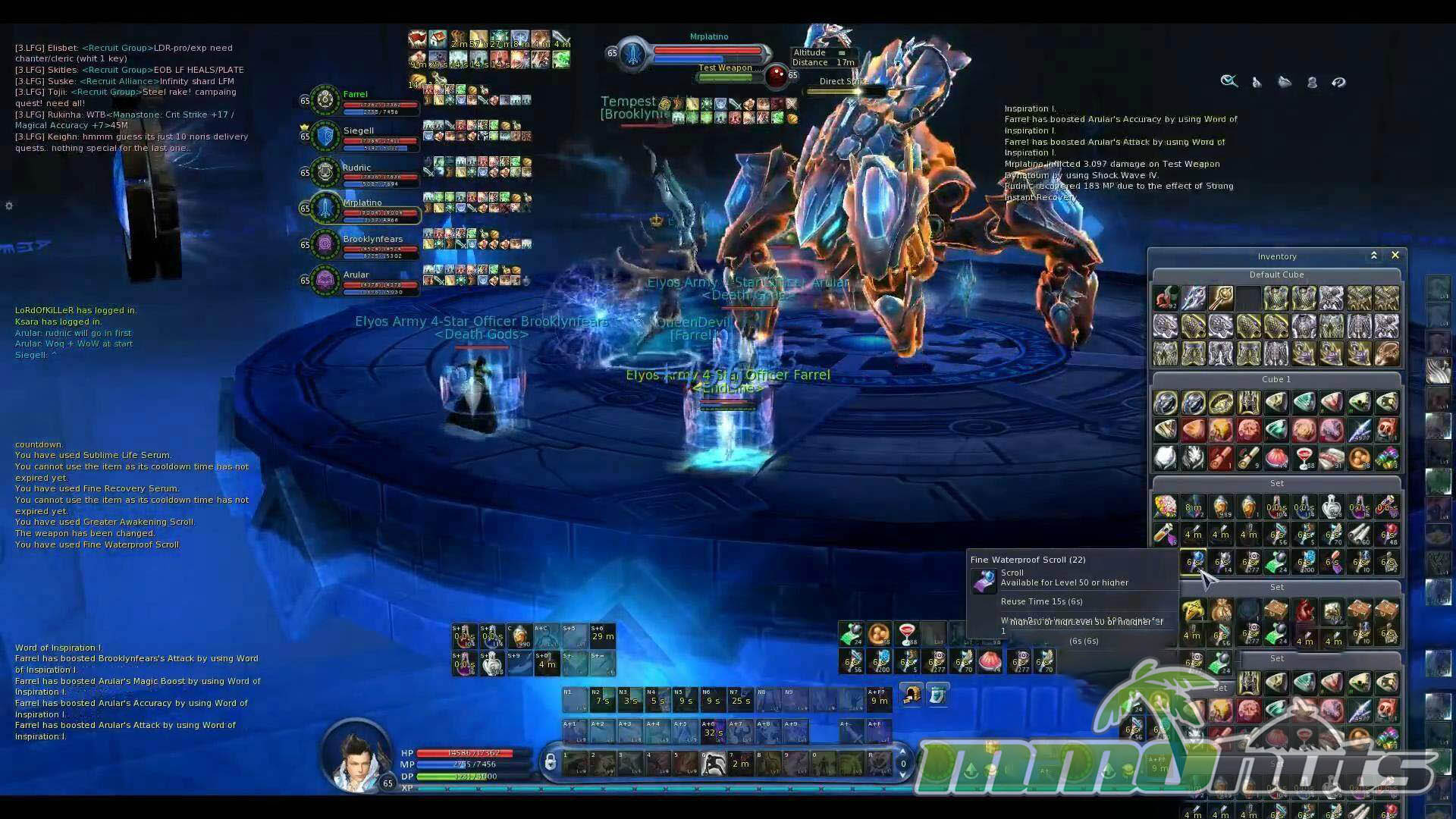
PvPvE in The Abyss
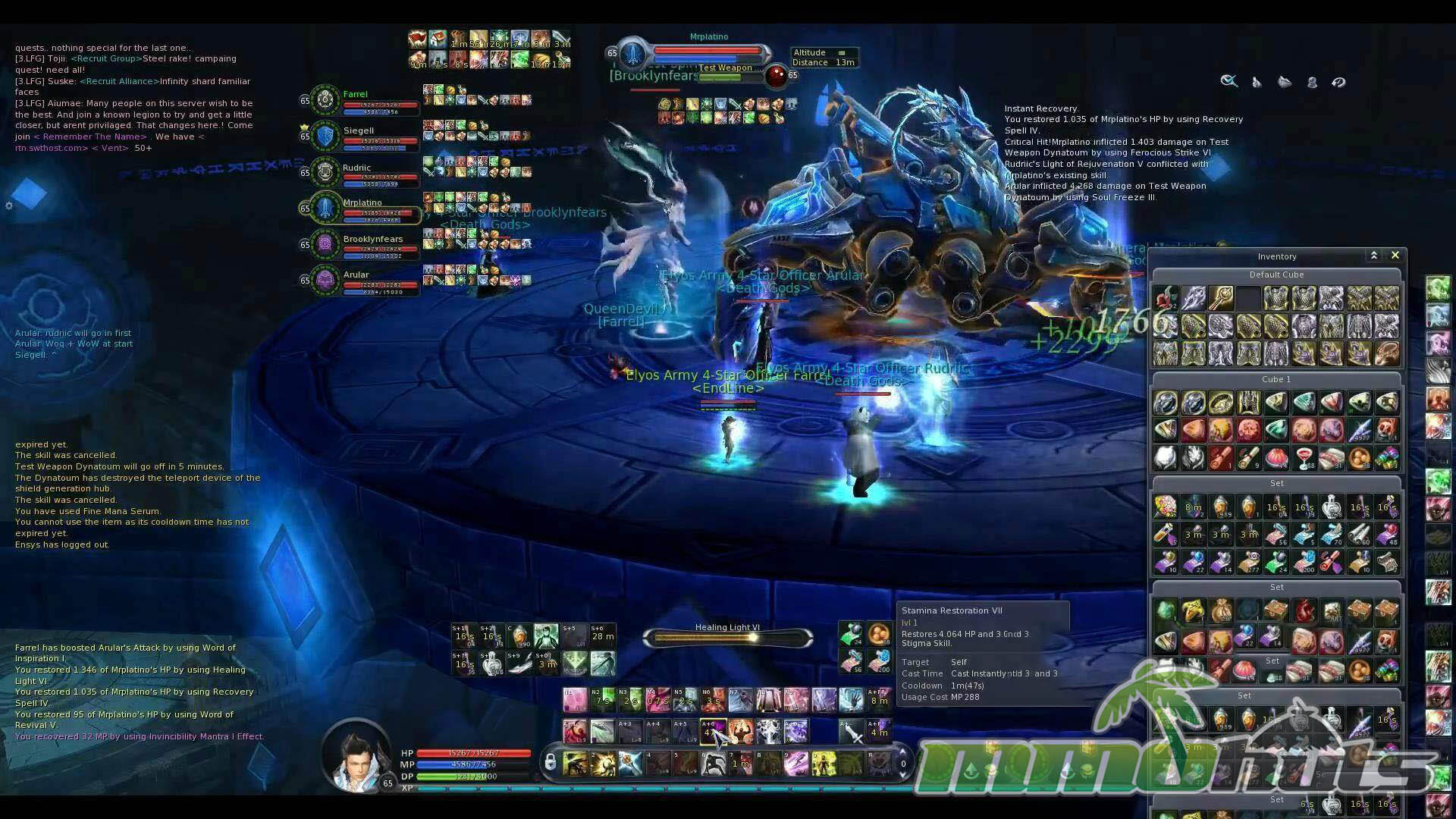
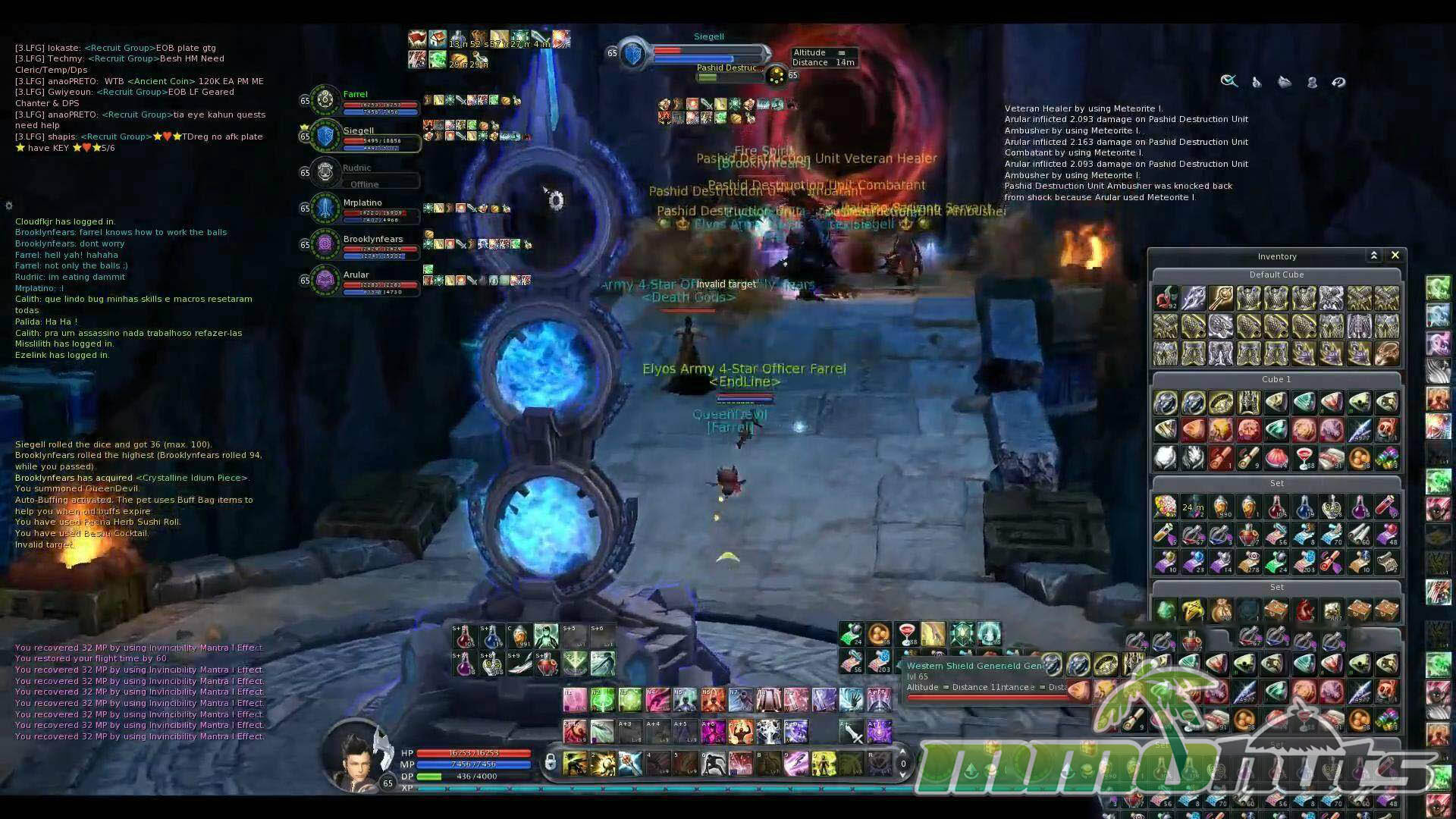
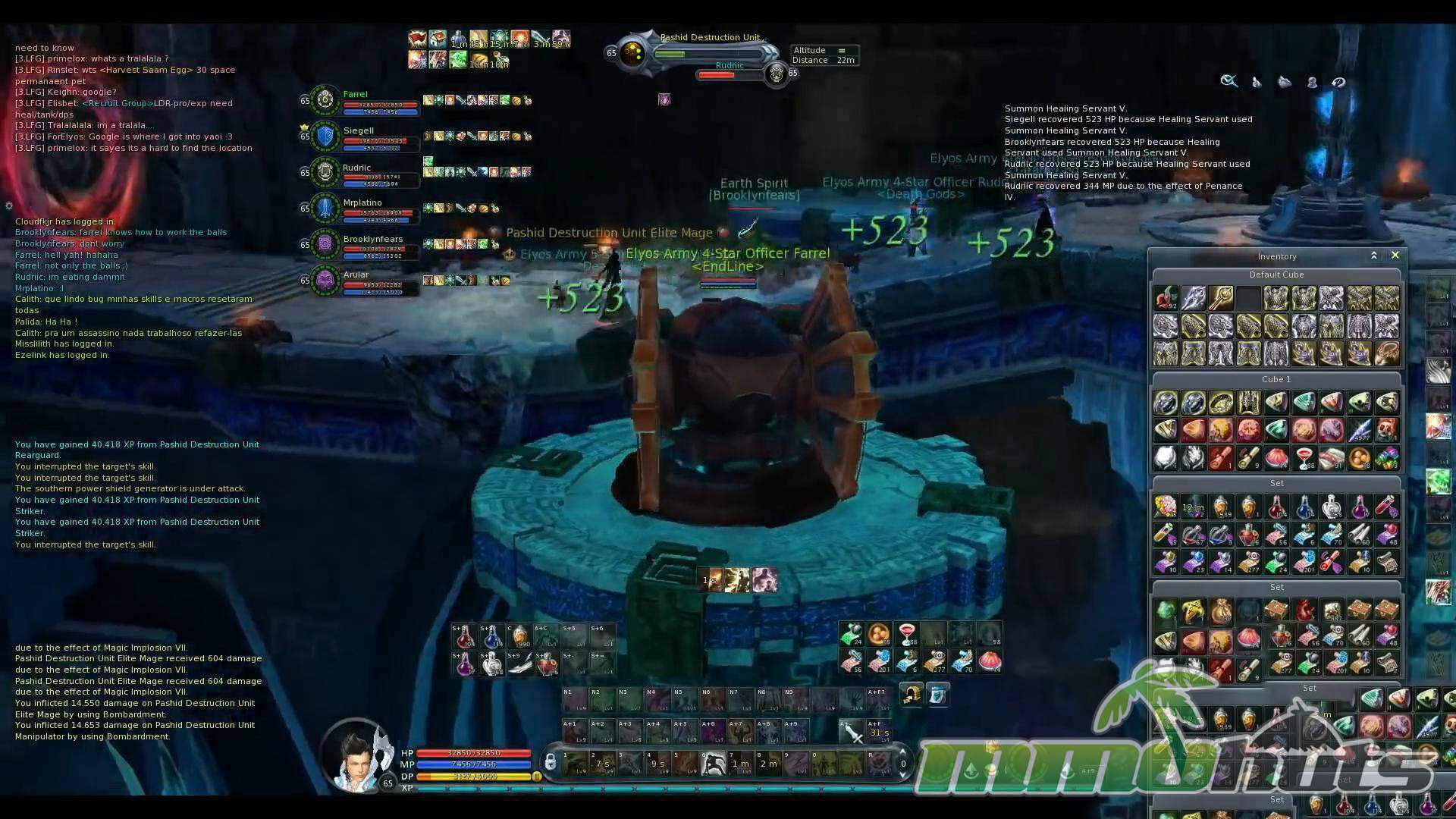
Aion’s standout feature remains its PvPvE structure, most notably in The Abyss (Level 25+). Instead of separating PvE and PvP cleanly, the game pushes both factions into shared spaces where objectives matter, NPC defenders and elite enemies are involved, and large fights can break out around fortresses, artifacts, and Dredgions. Fortresses function like siege targets with NPC participation, artifacts provide benefits to the side that controls them, and Dredgions add an instanced competitive layer where both PvE and PvP pressure players at the same time.
Success in these battles rewards Abyss Points, which function as PvP currency and also feed into Abyss Rank. Ranking up is more than a number, it ties into gear access and even changes wing visuals, which gives PvP progression a clear identity. The risk is that Abyss Points can be lost when you are defeated, so there is a constant tension between pushing for objectives and protecting your progress.
Beyond The Abyss, PvP also includes duels and rifting. Duels cover friendly sparring within your own faction. Rifting, meanwhile, enables cross-faction invasions into opposing territories, which can lead to chaotic skirmishes and, at times, heavy ganking that disrupts questing. Rifts open on a schedule and remain active for an hour, with fixed entry locations and a small set of possible exit locations. If you want to focus on leveling without constant interruptions, the Fast Track server option can be a practical workaround.
Systems and Side Activities
Aion offers a surprisingly wide set of account and character features for a game of its era. Between professions (ten total), instanced dungeons, mounts, pets, and cosmetic services like appearance changes, there is a lot to tinker with outside of pure leveling. Player housing also adds a longer-term goal for collectors and decorators, giving social hubs a more personal angle than the typical “stand in town and queue” routine.
Content cadence has historically leaned on expansions and large patches that add zones, classes, and higher level caps, which helps explain why Aion still feels dense. The flip side is that returning players may feel they are stepping into a long-running timeline with many systems layered on top of one another.
Cash Shop and Regional Differences
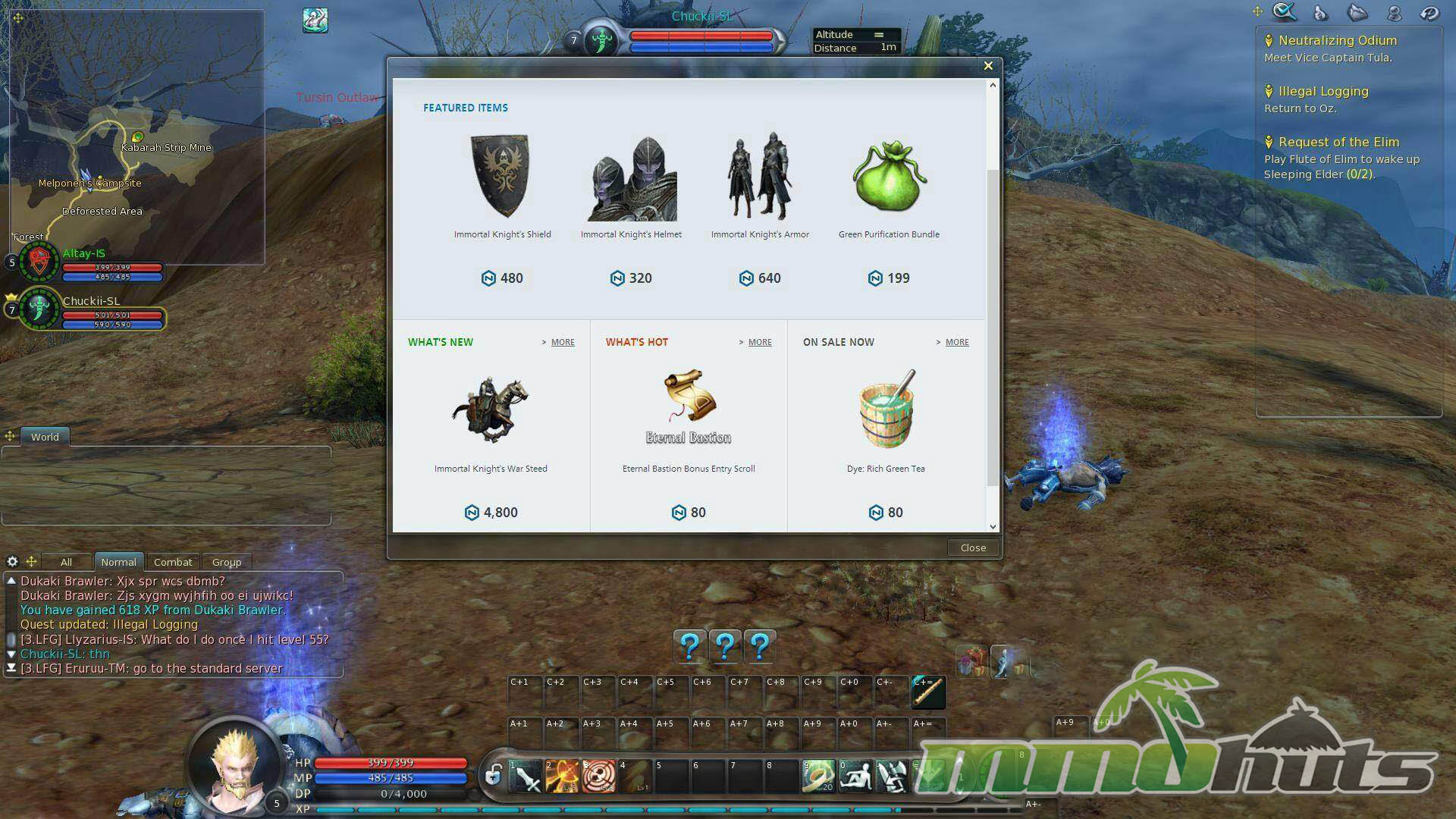
This is the area where your experience can vary the most depending on region. In North America, the “Truly Free” model avoids many gameplay restrictions and generally keeps monetization feeling more cosmetic-focused, which makes it easier to recommend to players who dislike heavy pay advantages.
In Europe, the picture is less friendly. Access to all content can require a subscription, and the shop can provide tangible advantages through item improvement tools, drop-rate boosts, dungeon refresh effects, and other power-adjacent benefits. It is possible to remove some limitations using in-game gold, but the time investment is significant (around 12 hours of farming by common estimates), which effectively pushes players toward either long grinds or spending.
Final Verdict – Great
Aion remains a compelling MMORPG largely because it offers things that many competitors still do not combine as effectively: faction identity, vertical combat, and PvPvE objectives that create natural conflict. Its huge amount of content and loyal community also give it staying power.
At the same time, its age shows through in questing convenience, UI expectations, and certain mechanical rough edges, and regional monetization can strongly affect whether the experience feels fair. For players who value PvP-driven endgame, distinctive flight mechanics, and deep character customization, Aion is still worth the time, especially in regions where the free-to-play approach is less restrictive.
Aion Links
Aion Official Website
Aion Wikia [Database/Guides]
Aion Wikipedia Entry
Aion Subreddit
Aion Metacritic Page
Aion GameRankings Page
Aion System Requirements
Minimum Requirements:
Operation System: Windows XP (SP3) / Windows XP x64 (SP2)
CPU: Intel Pentium 4 2.8 Ghz / AMD Sempron+ 2800 (With SSE2)
Video Card: nVidia GeForce 6800 GT / AMD Radeon X800 XL
RAM: 1 GB
Hard Disk Space: 40 GB
Recommended Requirements:
Operation System: Windows 7
CPU: Intel Pentium Core 2 Duo 2.9 GHz / AMD Athlon II x2 2.9 GHz or better
Video Card: nVidia GeForce 9800 GT / AMD Radeon HD 4850 or better
RAM: 4 GB or more
Hard Disk Space: 40 GB or more
Aion Additional Information
Developer: NCsoft – Aion Team Development Dept
Lead Designer: Yongchan Jee
Composers: Yang Bang-Ean, Inro Joo, Wonki Kim
Game Engine: CryEngine
Closed Beta Date: Q4 2007
Open Beta Date: November 2008
Free to Play Date: April 11, 2012 (North America), February 29, 2012 (Europe)
Steam Release Date: October 29, 2015
Expansions:
- Aion: Assault of Balaurea (September 7, 2010) – increased level cap from 50 to 55. Also added pets, new instances, and zones in the Balaur homeland of Balaurea.
- Aion: The Promised Lands / 3.0 Ascension (October 19, 2011) – increased level cap from 55 to 60. Added additional quests and zones in Balaurea. Also added Tiamaranta area and the Dragon Lord Tiamat raid boss.
- Aion 4.0: Dark Betrayal (June 26, 2013) – increased level cap from 60 to 65. Also added the Gunslighter and Songweaver classes. Also added three new zones: Katalam, Danaria, and Idian Depths.
- Aion 4.5: Steel Cavalry (January 29, 2004) – major patch which added the Aethertech class.
Foreign Release(s):
Korea: November 25, 2008 (South Korea NCsoft)
Japan: July 17, 2009 (NCsoft Japan)
China: April 16, 2009 (Shanda Interactive Entertainment)
Taiwan: July 21, 2009 (NCsoft)
Australia: September 23, 2009 (QV Software/Steam)
Europe: September 25, 2009 (Gameforge)
Russia: December 27, 2009 (Innova)
Development History / Background:
Aion debuted publicly at E3 in May 2006, then released first in South Korea on November 25, 2008. Localization for Western audiences began afterward, including casting and voice production handled by Blindlight. North American closed beta testing started in June 2009, leading into the regional launch on September 22, 2009. The game originally used a monthly subscription, later transitioning to free-to-play on April 11, 2012 in North America. Europe adopted free-to-play earlier on February 29, 2012, but implemented additional restrictions for free accounts. Aion later arrived on Steam on October 29, 2015.
At launch, Aion was among the biggest MMORPG releases of its time, with over 400,000 pre-orders in the United States. It earned $32.7 million in revenue during its first three months in Asia, and its China launch saw over 1 million logins within four days. On November 9, 2009, it was reported that Aion had surpassed 1 million copies sold in the West, including 500,000 in the US and 470,000 in Europe.