
theHunter
theHunter is a detailed hunting simulation built around careful movement, tracking, and smart shot placement, supporting sessions of up to 8 players. Across 9 reserves inspired by real-world regions, you can pursue 22 animal species, with the focus placed firmly on patience and fieldcraft rather than constant action.
|
Publisher: Expansive Worlds Playerbase: Medium Type: MMO Shooter Release Date: March 2009 Pros: +Strong visuals and atmosphere. +Authentic-feeling hunting systems. +Absorbing pace and sound design. +Optional hunting dog companion. +Large amount of huntable content. +Subscription cost is fairly reasonable. Cons: -Can become pricey depending on what you buy. -Character models can look a bit toy-like. -A handful of species are locked behind additional purchases. |

theHunter Overview
theHunter, now maintained by Expansive Worlds, sets out to deliver a hunting sim with a level of detail that most online shooters never attempt. You can pursue 22 animal species (127 total when you include variations) spread across ten different reserves. Each reserve is modeled after a real location, with dense vegetation, convincing lighting, and especially strong ambient audio that makes simply moving through the wilderness feel like part of the challenge. Successful hunts rely on reading calls, interpreting tracks, controlling noise, and choosing your approach, then documenting the result with trophy shots that upload to a deep player profile packed with hunt stats.
theHunter Key Features:
- Believable animal behavior – wildlife reacts to sound and visibility in ways that encourage careful movement.
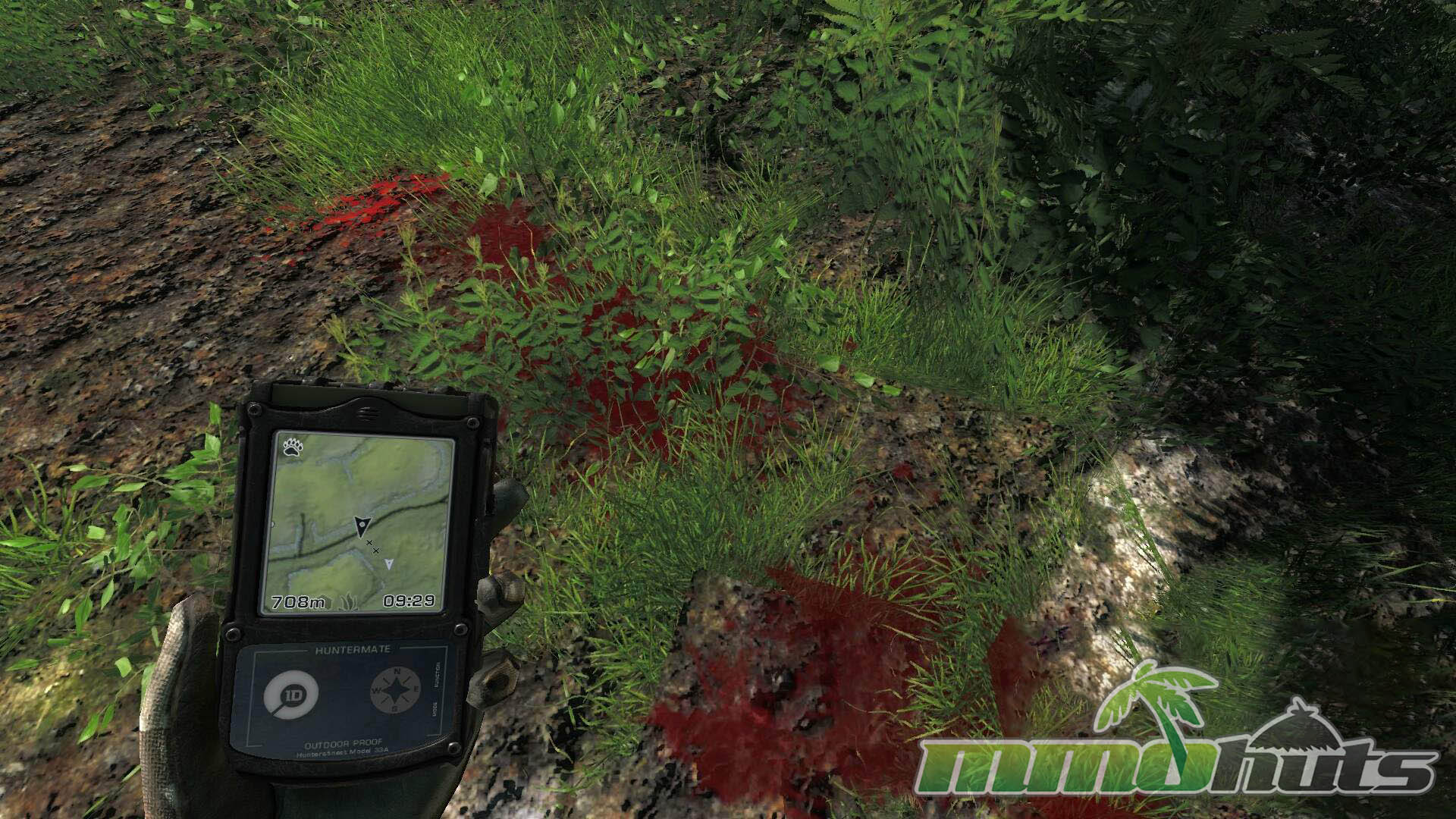
- Trail-based hunting – follow signs using the HunterMate and piece together where your target is heading.
- Over 22 species of animals – pursue a broad mix of game, from smaller birds to large trophy animals.
- Detailed hunter profile – review your hunts with breakdowns of time, kills, weapon accuracy, and more.
- Reserves inspired by real places – environments feel grounded and are packed with foliage that affects sightlines.
theHunter Screenshots

theHunter Featured Video

theHunter Review
theHunter takes a niche idea and commits to it, offering a realistic hunting experience in an online, free-to-play format where sessions support up to 8 players. Instead of chasing constant firefights, you spend most of your time moving slowly, studying the environment, and waiting for a clean opportunity. The game includes 22 animal species, a substantial selection of firearms and ammunition types, plus a range of tools that support different hunting styles. Hunts take place across nine reserves, each with its own terrain, visibility challenges, and target animals, with a tenth reserve planned.
Learning to Slow Down
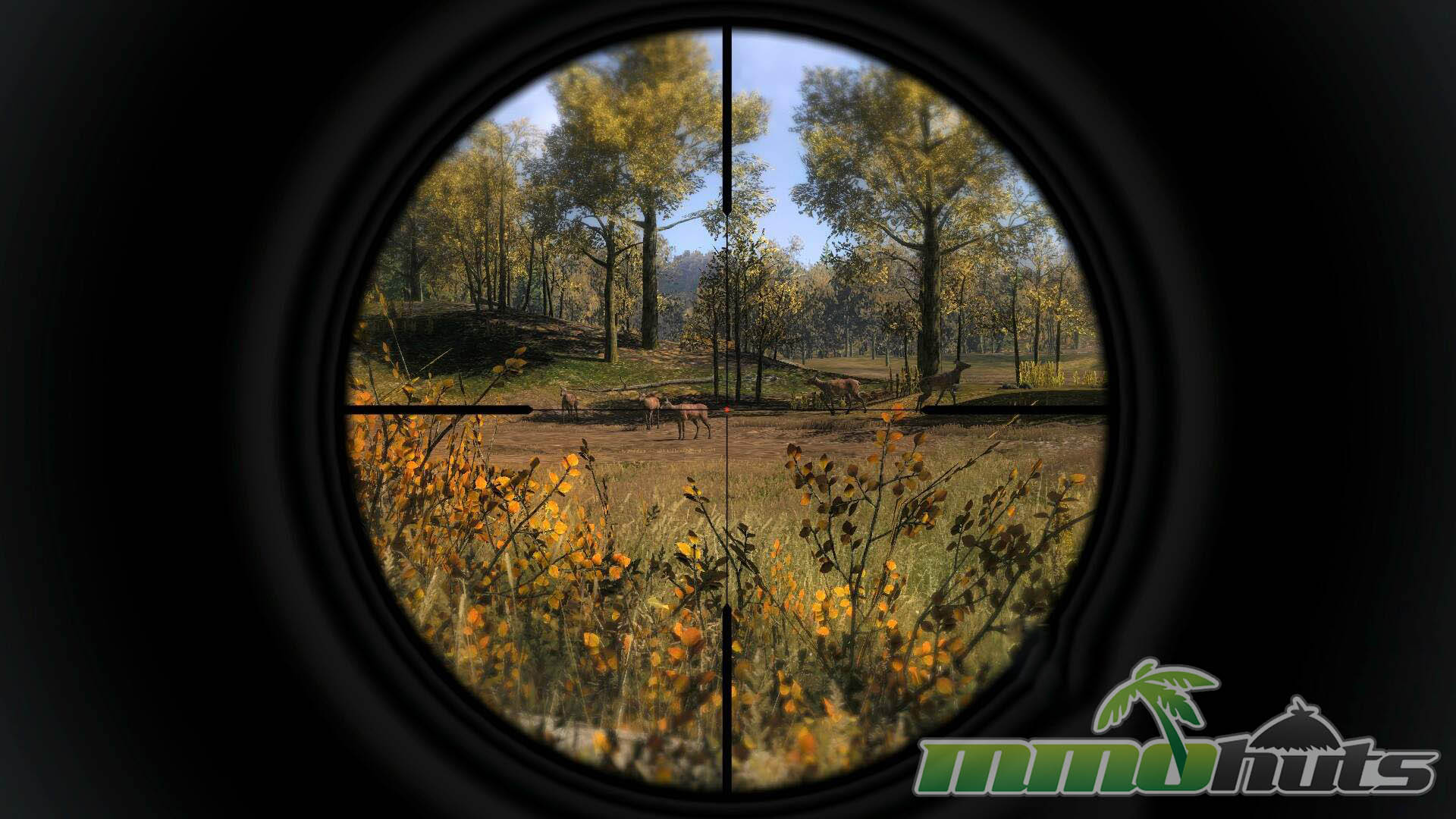
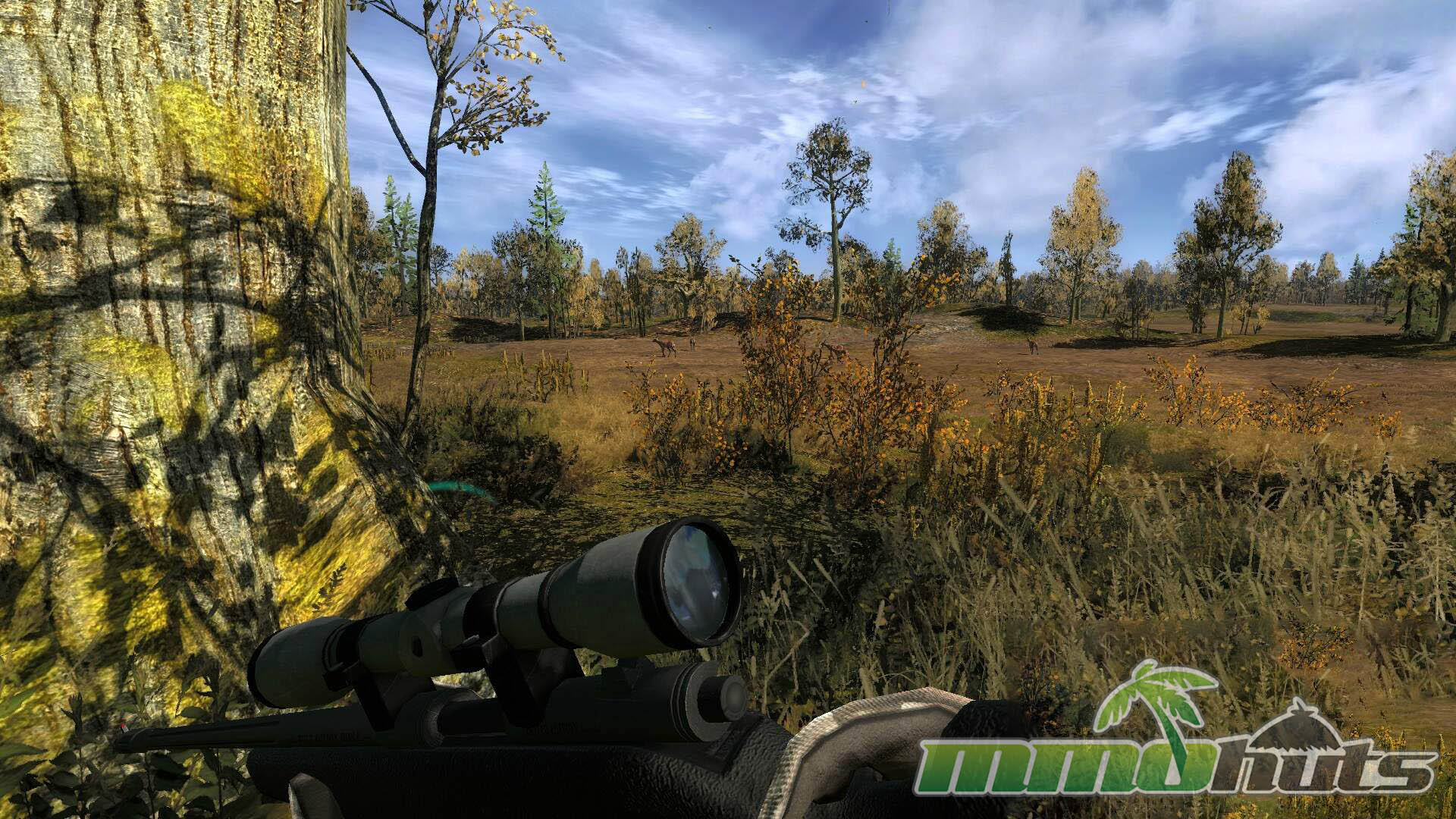
The first hours can feel unusual if you arrive expecting a standard FPS loop. Controls are familiar, but the tempo is not. theHunter rewards restraint, planning, and long stretches of quiet. You can actively stalk animals and take a shot from around 100 meters, or you can set up in a stand and let wildlife come through naturally. Either way, the game asks you to commit to the slow burn, because rushing generally ends with empty forests.
A big part of that adjustment is understanding how sight and sound work. Animals react differently depending on species, and the margin for error changes with each target. Crouching is usually the safest approach, but it is also time-consuming, and you will quickly learn when it is worth the trade. Some animals will spook at surprising distances, while others may wander close if wind, cover, and your movement line up.
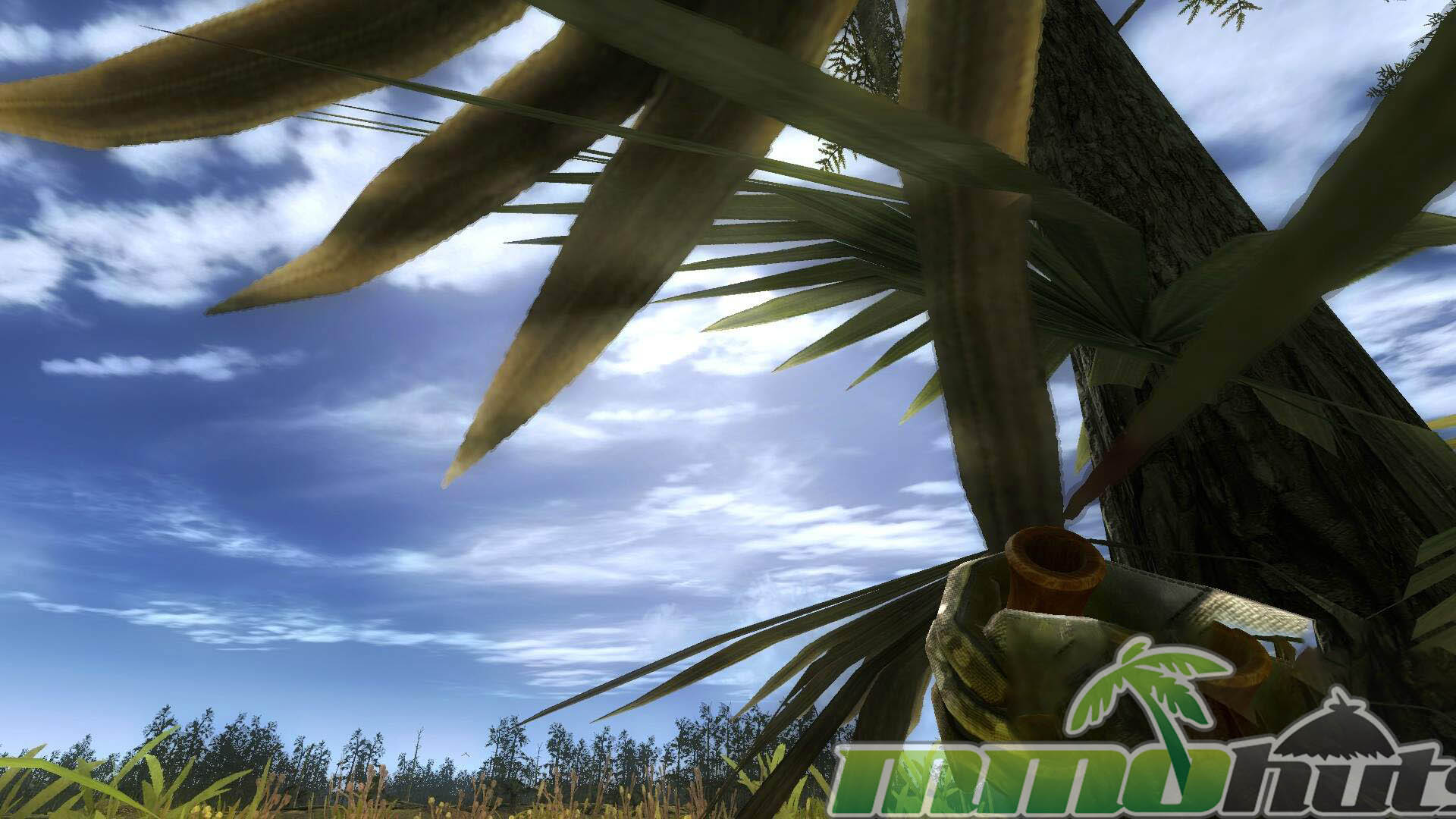
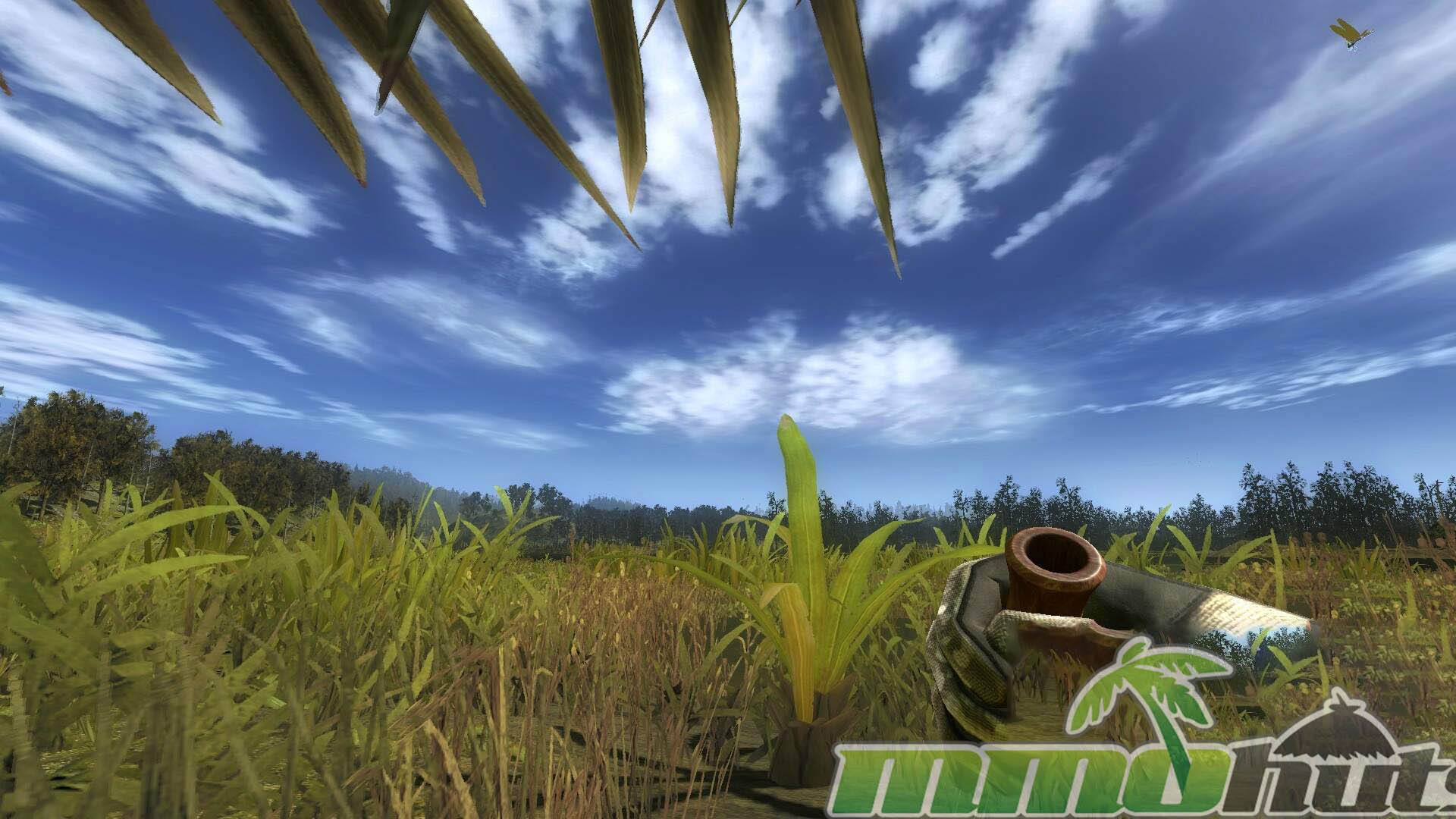
Bird hunting pushes this even further, because the rules change depending on what you are after. Pheasants, for instance, require careful positioning and a deliberate flush using a whistle so you have a proper shot window. If you mishandle the approach, you can end up with birds that never present a clear target. Geese and mallards play differently, leaning on setups like decoys, calls, and blinds to bring them in, then timing your actions so the game properly registers the hunt. This is where the toolset matters, and where preparation often decides whether a trip is productive.
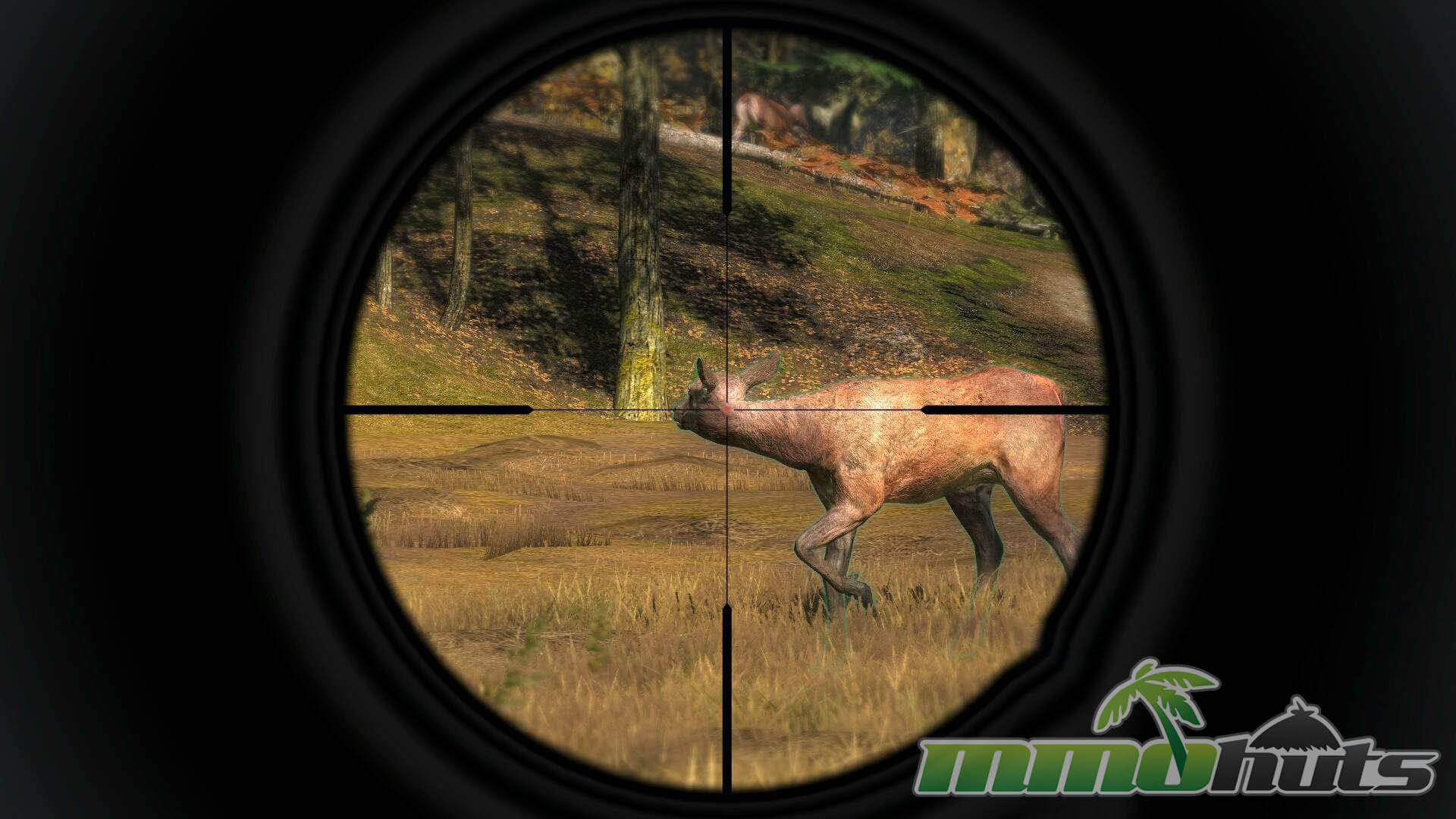
Even once you have an animal lined up, the shot itself is not arcade-like. theHunter strongly favors ethical, effective placement. Headshots are generally a poor choice, and random hits are unlikely to end well. The chest area, particularly the lungs, is the reliable option, while spine shots can drop an animal instantly but are much less forgiving.
Reserves Built for Real Hunting
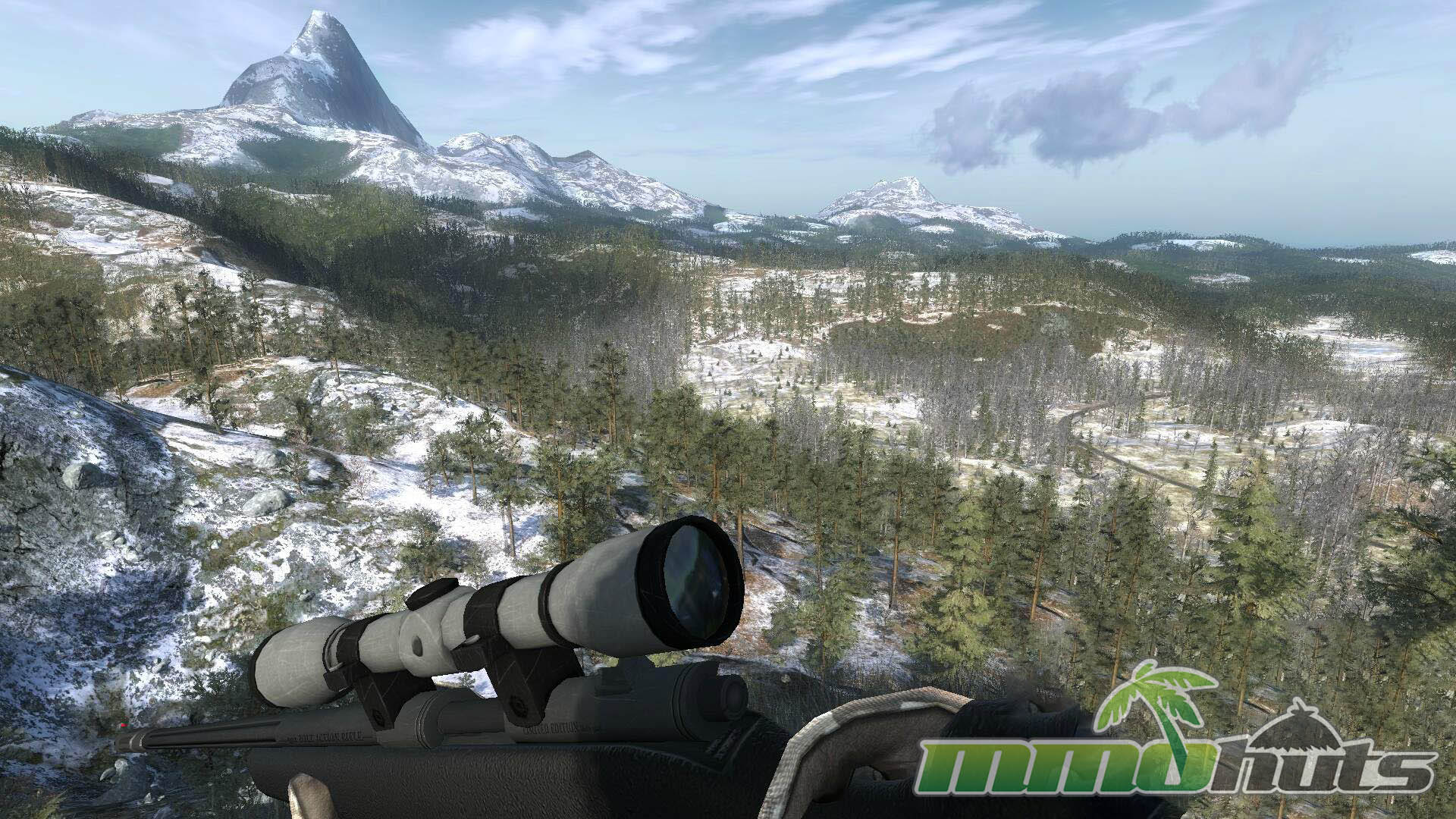
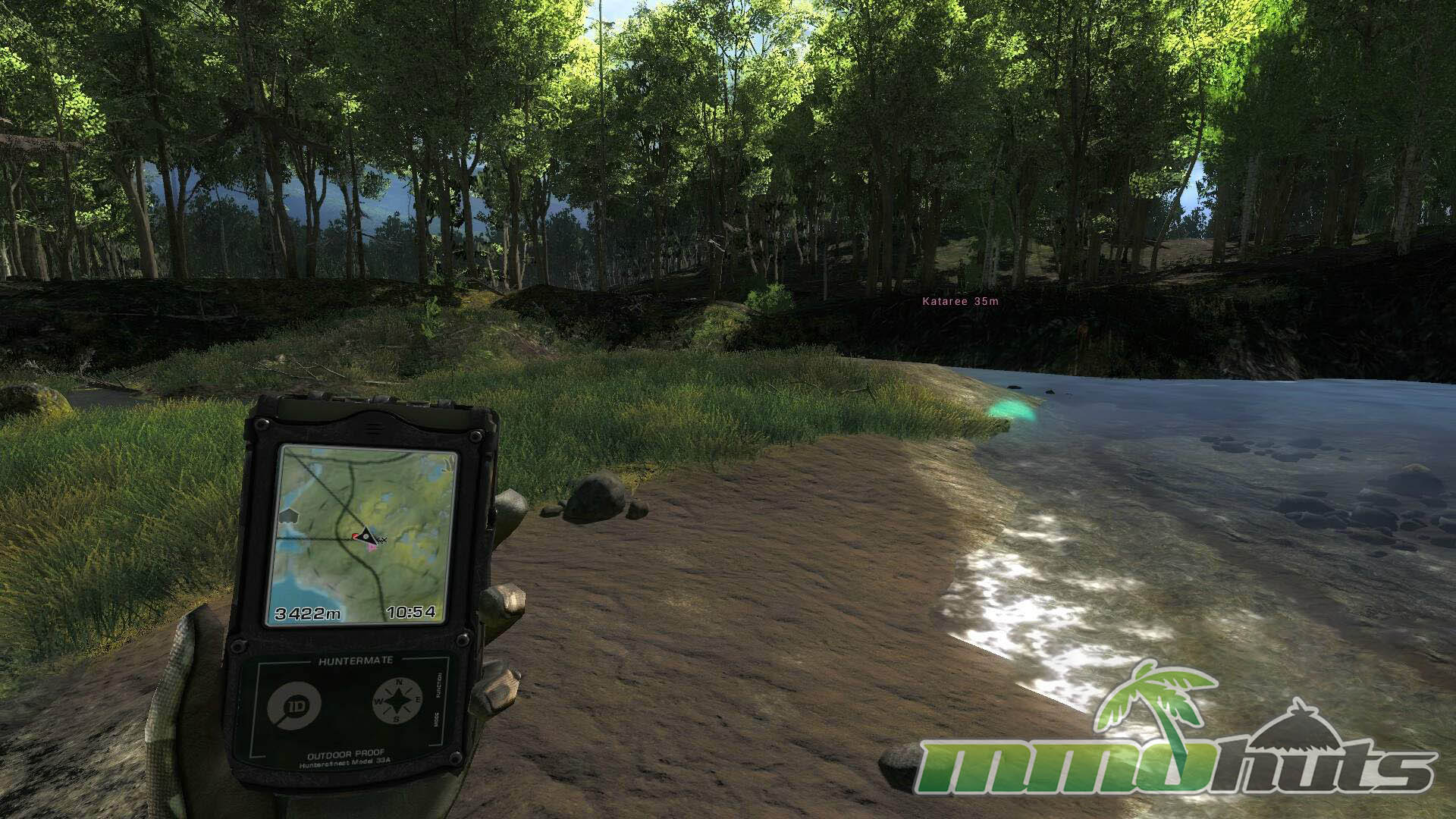
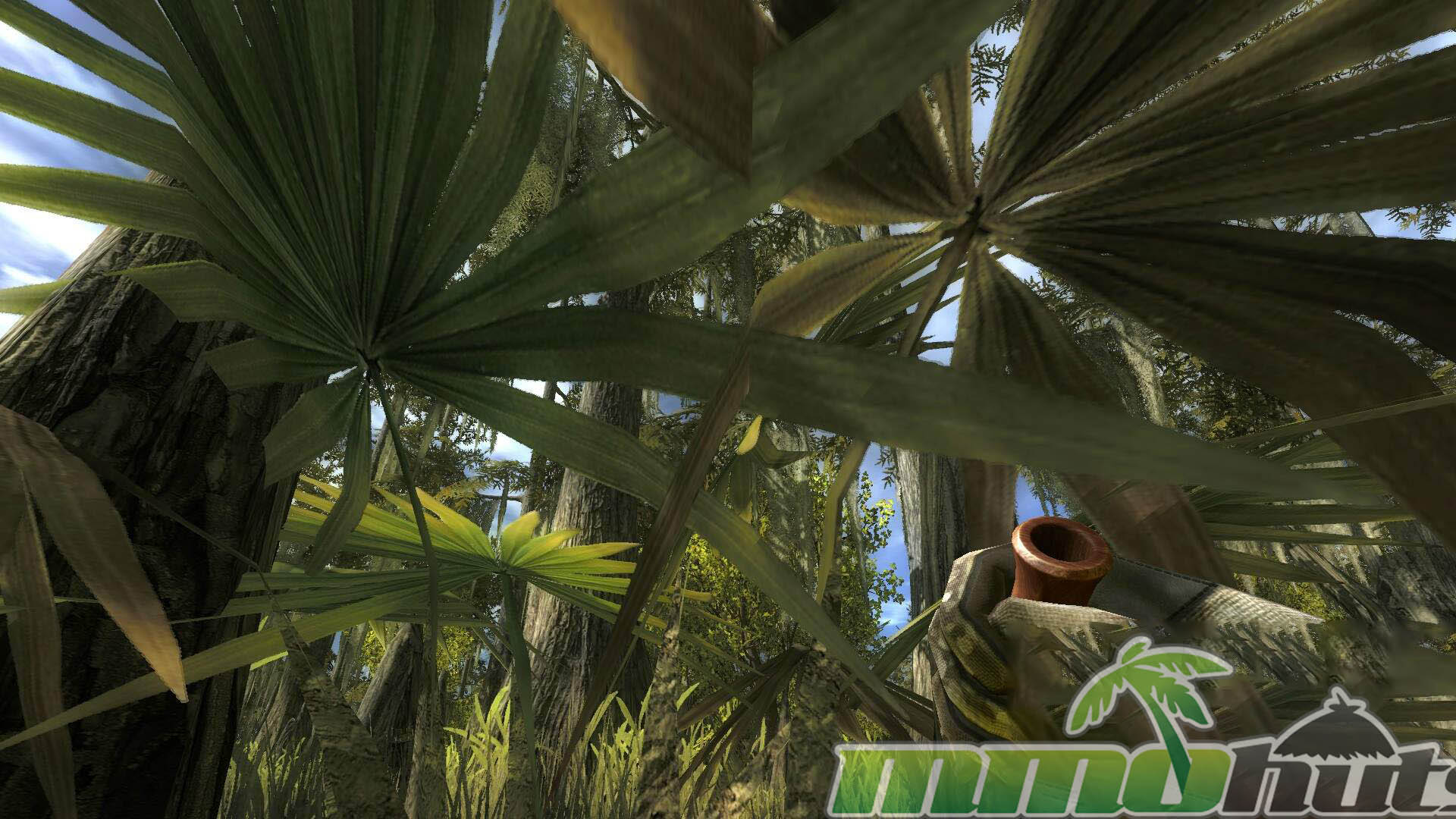
One of the game’s strongest qualities is how its reserves shape moment-to-moment play. The maps are dense, with tall grass, brush, and trees that constantly interrupt visibility and force you to think about approach angles. That target you were tracking can vanish behind cover quickly, and even large animals can be hidden by a slight dip in terrain or a single tree trunk at the wrong moment.
Environmental details also influence how you hunt. Rain can remove signs that would otherwise be easy to follow, water crossings can break trails, and camouflage choices are not just cosmetic. These small systems add up, and they do a good job of making the world feel consistent, even when the underlying mechanics are designed to stay readable for players.
Atmosphere That Carries the Experience
theHunter’s immersion comes from how well it sells being alone in a living environment. Ambient sounds are layered in a way that makes each reserve feel active, even when you are not seeing animals every minute. Wind, insects, distant birds, rain, and footstep audio all contribute to the tension of moving too fast. Weather effects and visibility changes also do a lot of work, from snowfall and rainfall to haze that can interfere with long-range spotting.
Weapon handling also supports the tone. Guns have distinctive reload animations and convincing audio, and those sounds matter. Reloading can be loud enough to ruin an approach, and gunshots are powerful and abrupt, which helps keep the act of taking a shot feeling consequential.
If you plan to spend time with the game, headphones are genuinely useful. With practice, you can estimate direction and distance from calls and movement, which becomes part of the skill curve and a big part of why the game feels more “sim” than “shooter.”
Following the Signs
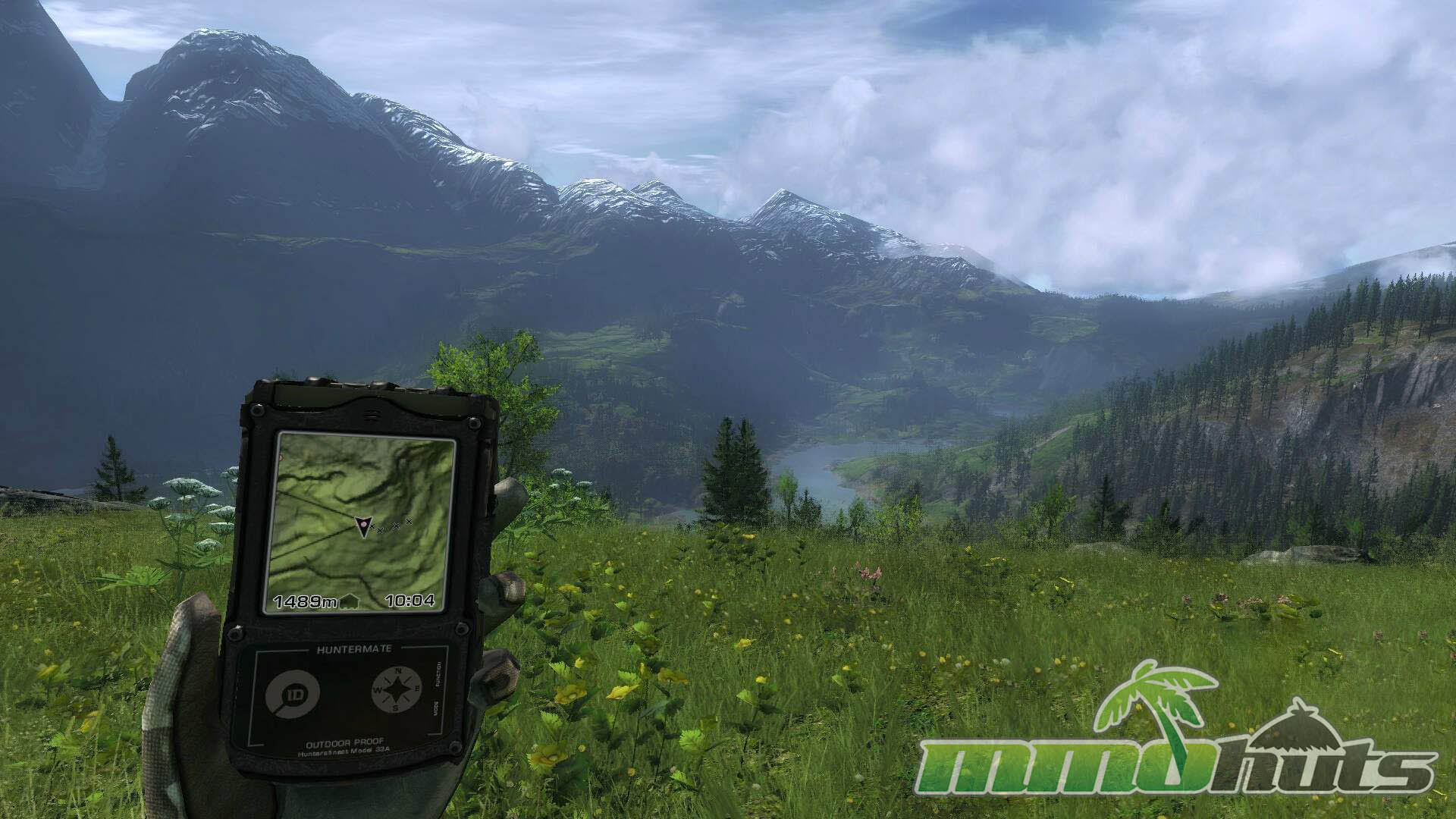
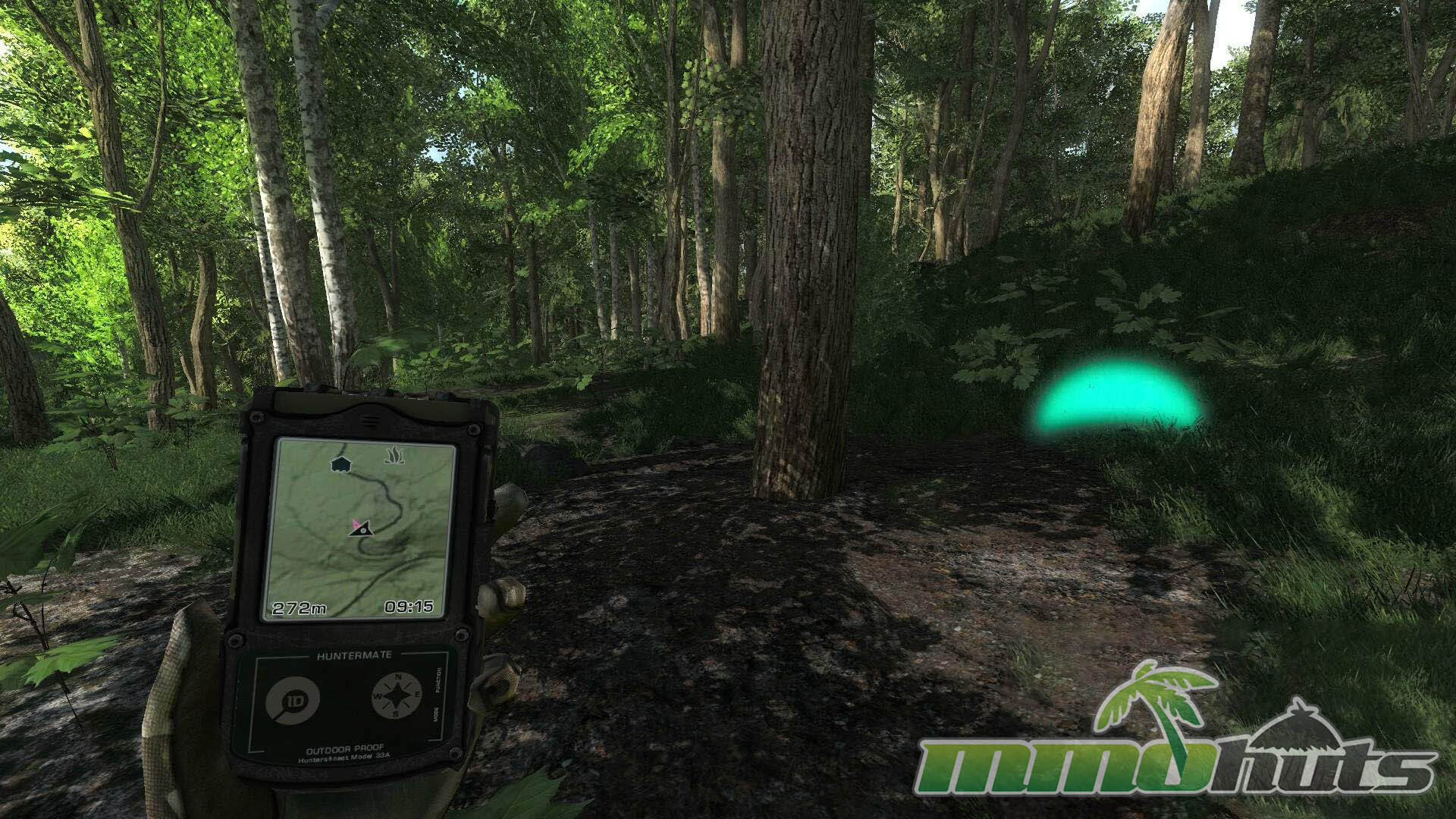
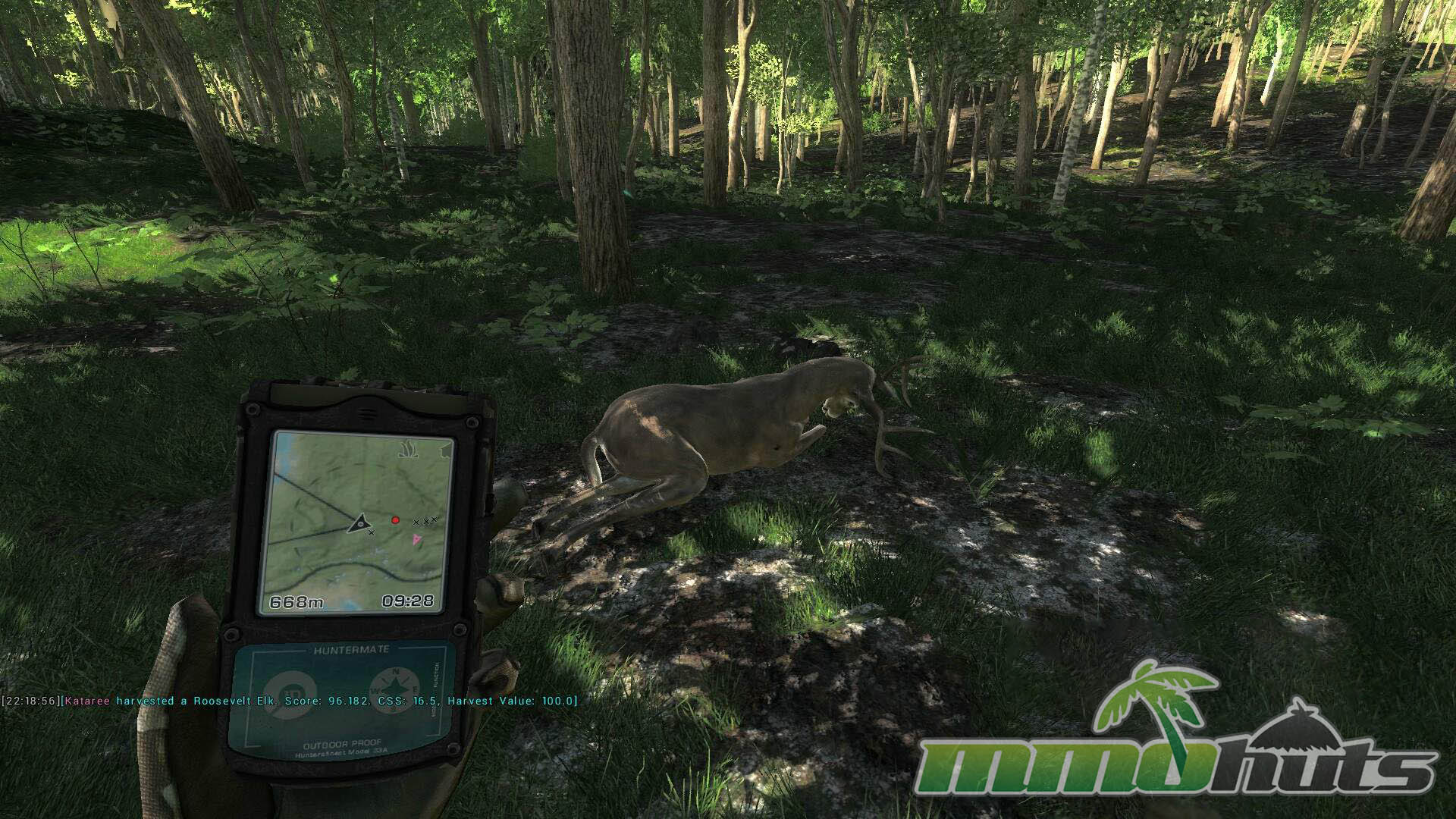
Tracking in theHunter aims for a balance between authenticity and usability. The HunterMate functions like a GPS and field assistant, providing a minimap with topographical lines and the ability to identify tracks and calls quickly. Interacting with tracks is straightforward, you equip the HunterMate and register tracks by clicking on them while standing over the sign. Tracks are highlighted with a crescent-style marker, and the visuals change depending on whether the sign is part of your active trail. You can also adjust marker colors for clarity when you are juggling multiple clues.
While it is not a pure simulation approach, it works well for an online game, because it keeps the “hunt” readable without removing the need for skill. Your tracking ability improves as you spend time following the same species, and those upgrades help you interpret trails and anticipate where the next sign will be. Since track markers only show at a limited distance, wandering between clues without a plan can waste time, but the HunterMate at least records registered track locations so you can keep a clean route.
Progression and Long-Term Goals
Progression is present, but it is not the kind that turns the game into a power grind. TheHunter includes tracking skills (which directly improve how well you read and follow animals) and a Hunter Score that functions like an overall level. Hunter Score increases through achievements tied to specific species and activities, such as reaching confirmed kill milestones. Unlike tracking skills, the score is mainly a measure of experience and commitment rather than a stat that changes the core feel of hunting.
Profiles, Stats, and Trophies
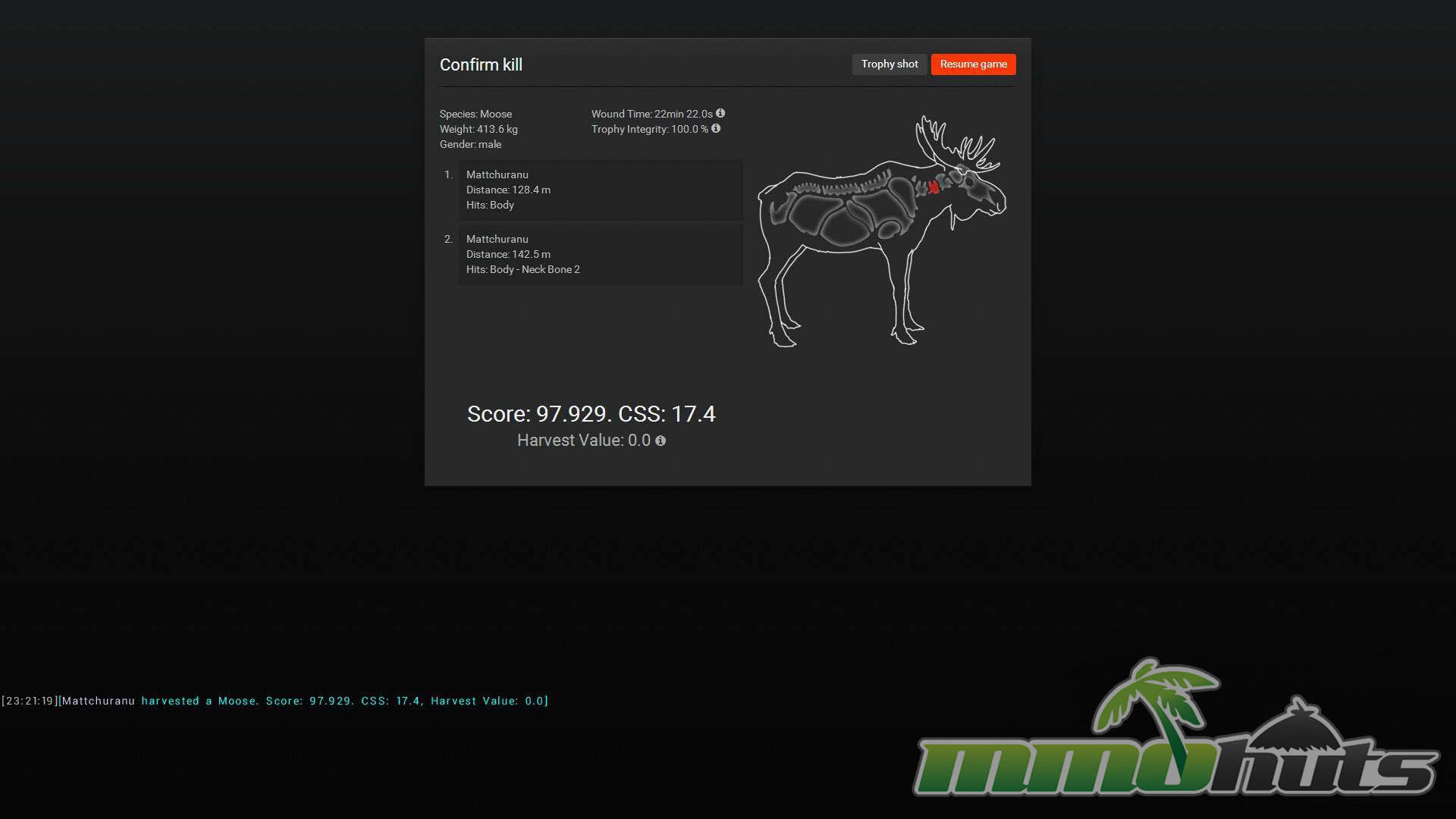
Social features are familiar, including a friends list and the ability to limit groups to friends, but the standout is the profile system. Your hunter profile is more than a name and score, it is essentially a record book. It tracks accuracy ratings across weapon and ammunition combinations, confirmed kills, and detailed summaries of your hunts. Other players can review where you hit animals, what you hunted, and what you encountered during each trip.
Confirming kills also ties into presentation. You can take trophy shots that upload automatically and store the animal type and score, and you can take additional photos using the in-game camera. It is a clean way to preserve memorable hunts without needing external tools.
For players who enjoy self-improvement, these statistics are surprisingly engaging. You can review time played, animals tracked, spotted, and taken down, distance walked, and plenty more. Even if you are not constantly browsing other people’s profiles, it is easy to check your own performance and notice patterns, such as which weapons you shoot best with or which animals you tend to spook.
Monetization and What You Actually Need
theHunter’s business model is often the first sticking point. It is free-to-play, but hunting access is limited, and hosting sessions is tied to a subscription, with an item shop layered on top. On paper, that sounds harsh, but the practical cost depends heavily on how you approach the game.
If you want specialized setups for every reserve, you can spend a lot. Camo sets are tied to environments, different firearms are suitable for different animals, and there are various tools and conveniences (including more recently added markers). Chasing the “perfect” loadout for everything can get expensive quickly, but it is not mandatory to enjoy the core loop.
For a straightforward, functional setup that covers the classic hunt roster, a bundle can smooth out the early experience. The $15 Wayfarer bundle provides a baseline loadout with extra tools for deer and turkey, plus three months of subscription time. If you are confident you will stick with the game, the $50 Trailrunner bundle offers a year of subscription and broader flexibility, including access to the .300 Bolt Action Rifle. With that rifle, a shotgun, and the subscription-provided birdshot, you can hunt most animals without additional spending, excluding geese, ibex, and mallards. Keeping that access requires the ongoing subscription cost of $10 every three months.
Some species still sit behind extra purchases, notably geese, ibex, and mallards. The good news is that those add-ons can be found for relatively low prices if you choose carefully, sometimes around $2 to $3 per animal. More expensive options can offer stronger performance, but the cheaper entries are typically enough to participate effectively. Framed as small content packs, the pricing is easier to swallow, even if it is still a point of friction for budget-minded players.
If you prefer to stay free-to-play long term, missions can reward in-game currency that can be used to purchase month-long licenses for a single species. That route still leaves certain restrictions in place, including the inability to host your own sessions, but it does provide a path to keep playing without constant real-money spending.
Hunting Dogs
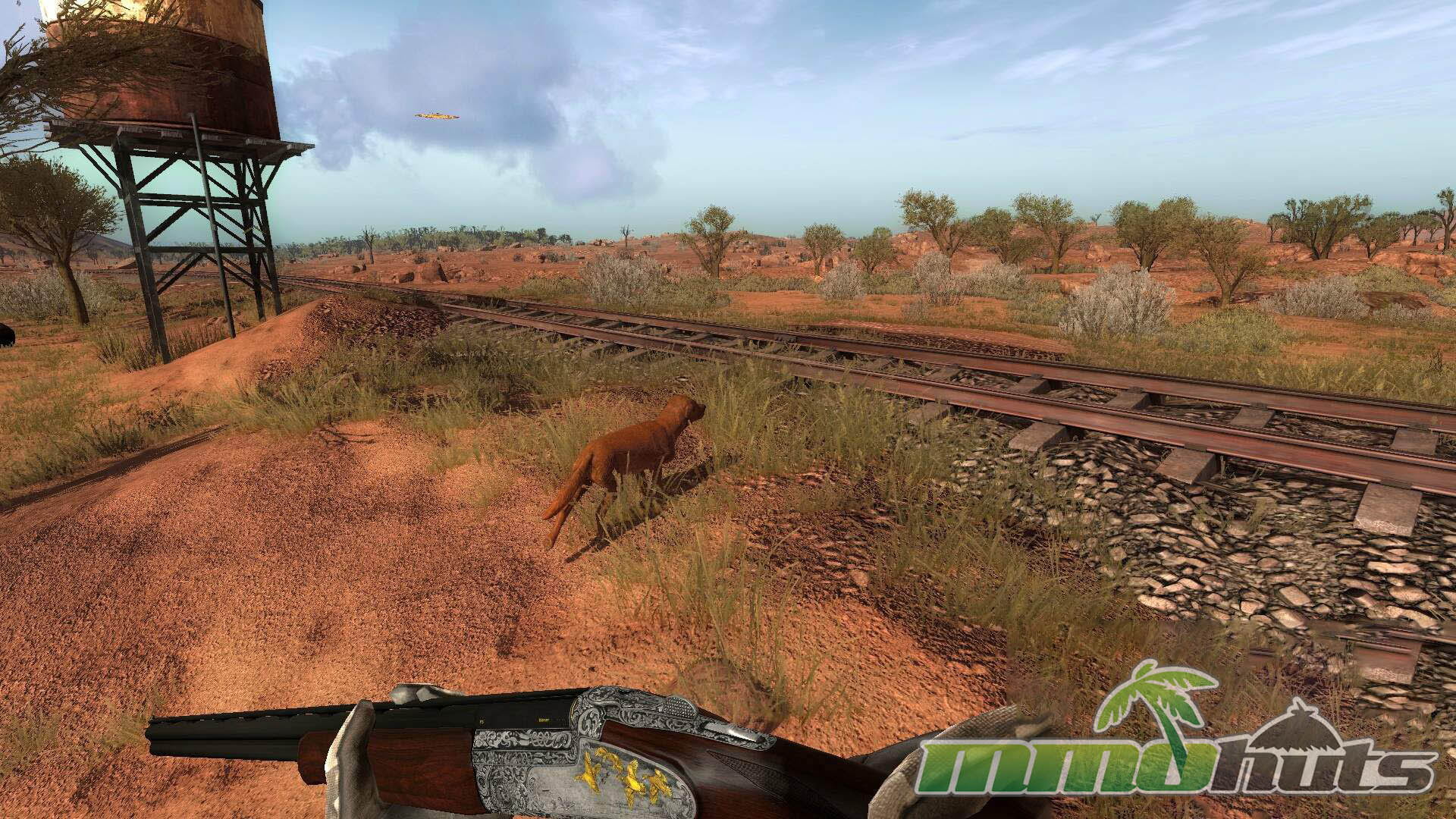
One of the more enjoyable additions is the option to buy hunting dogs for about $10 each. They are not just cosmetic companions, they come with their own training loop. You reinforce behavior through positive feedback, including treats you can buy for training, and until your dog is properly trained, mistakes can happen. A poorly managed companion can spook animals at the wrong time, which fits the game’s overall emphasis on discipline.
In practical terms, dogs are especially useful for retrieving certain game like mallards, geese, rabbits, and pheasants. Even outside those specific roles, they add personality to long hunts and make solo sessions feel less quiet without breaking the sim tone.
Final Verdict – Great
theHunter can be costly compared to many online games, particularly if you try to unlock every convenience and specialty tool. Once you settle on a dependable all-around loadout and choose the camouflage you want, the ongoing cost is mostly the roughly $3 per month subscription and the occasional add-on when you want access to new animals. With steady updates, including new species, additional reserves, and larger features like hunting dogs, the game has continued to evolve, and it generally justifies its price for players who truly want a hunting sim rather than a typical shooter. If you are looking for the most convincing hunting experience available, theHunter remains one of the strongest options, and it often looks excellent while delivering it.
theHunter Links
theHunter Official Site
theHunter Steam Store
theHunter Wikipedia
theHunter Developer’s Website
theHunter Developer’s Blog
theHunter Wiki
theHunter System Requirements
Minimum Requirements:
Operating System: Windows XP, Vista, 7, or 8
CPU: Intel Core 2 Duo 2 GHz or AMD Dual Core
Video Card: nVidia GeForce 8800 or ATI Radeon HD 2400 with 256 MB VRAM
RAM: 2 GB
Hard Disk Space: 1.5 GB
theHunter Music & Soundtrack
Coming Soon!
theHunter Additional Information
Developer(s): Emote Games (pre-2010), Avalanche Studios, Expansive Worlds (subsidiary of Avalanche Studios)
Publisher(s): Expansive Worlds
Game Engine: Avalanche Engine 2
Steam Greenlight: September 04, 2012
Beta Release Date: April 23, 2014
Multiplayer Release date: June 3, 2013
Release Date: March 05, 2009
Steam Release Date: June 03, 2014
Development History / Background:
theHunter was built on Avalanche Engine 2 and originally launched in March 2009 through Emote Games and Avalanche Studios (known for Just Cause). On February 18, 2010, Avalanche Studios announced it had acquired full rights to theHunter and created Expansive Worlds, an online-focused division, to continue developing and operating the game. Although it began as a single-player experience, the multiplayer component arrived on June 3, 2013. theHunter also went through Steam Greenlight on September 04, 2012, and later launched on Steam on June 03, 2014.