
Phantasy Star Online 2
Phantasy Star Online 2 is a hub-and-mission action RPG where you deploy from a central lobby to take on instanced quests against the Darker threat. It emphasizes responsive, combo-driven combat, party play, and the long chase for better gear, with plenty of style and customization for players who like to fine-tune both builds and looks.

|
Publisher: Sega Playerbase: Medium Type: MMORPG Release Date: July 04, 2012 (JP), May 27, 2020 (NA) Pros: +Weapon swapping mid-fight keeps battles dynamic. +One character can learn and level multiple classes. +Combat looks and feels fluid thanks to strong animations. +Robust character creator with lots of options. Cons: -Progression leans heavily on repetition and farming. -Menus and navigation can feel awkward and dated. |

Phantasy Star Online 2 Overview
Phantasy Star Online 2 is a fast-moving, action-first MMORPG in Sega’s long-running Phantasy Star universe. Rather than one continuous open world, you work from ARKS facilities and launch into mission instances, completing objectives, battling enemies, then returning to restock, chat, and line up the next run.
At the start you select from four races and five classes, then join ARKS on operations that take you to places like Naberius. Combat favors active control, smart positioning, and well-timed ability use, and it focuses on chaining attacks together instead of leaning on automated rotations. Between quests you return to the ARK campship, a large shared hub where you can manage progression, interact with other players, and accept new missions.
One of PSO2’s most newcomer-friendly elements is how open-ended the class system is. You can change your class back in the lobby at any time; each one has its own level progression, encouraging you to try different styles while also extending the grind. Loadouts also allow three weapon slots, and changing weapons on the fly is central to staying flexible in combat.
Phantasy Star Online 2: New Genesis went live on June 9, 2021 as a huge overhaul, positioned as a connected “shared universe” experience alongside PSO2. Along with upgrades that affect the original game, it also opened up its own distinct region/expansion space that operates separately from classic PSO2 content.
Phantasy Star Online 2 Key Features:
- Central Lobby – use the ARK campship as your home base for socializing, stores, and mission pick-up.
- Switch Classes – swap classes whenever you are in the hub, with separate leveling and experience for each.
- Active Combat – real-time action that emphasizes input, rhythm, and ability timing for better damage.
- Voice Acting – many story scenes and NPC interactions are fully voiced, helping the setting feel more alive.
- Extensive Character Creation – build an avatar with detailed customization so your character looks distinctly yours.
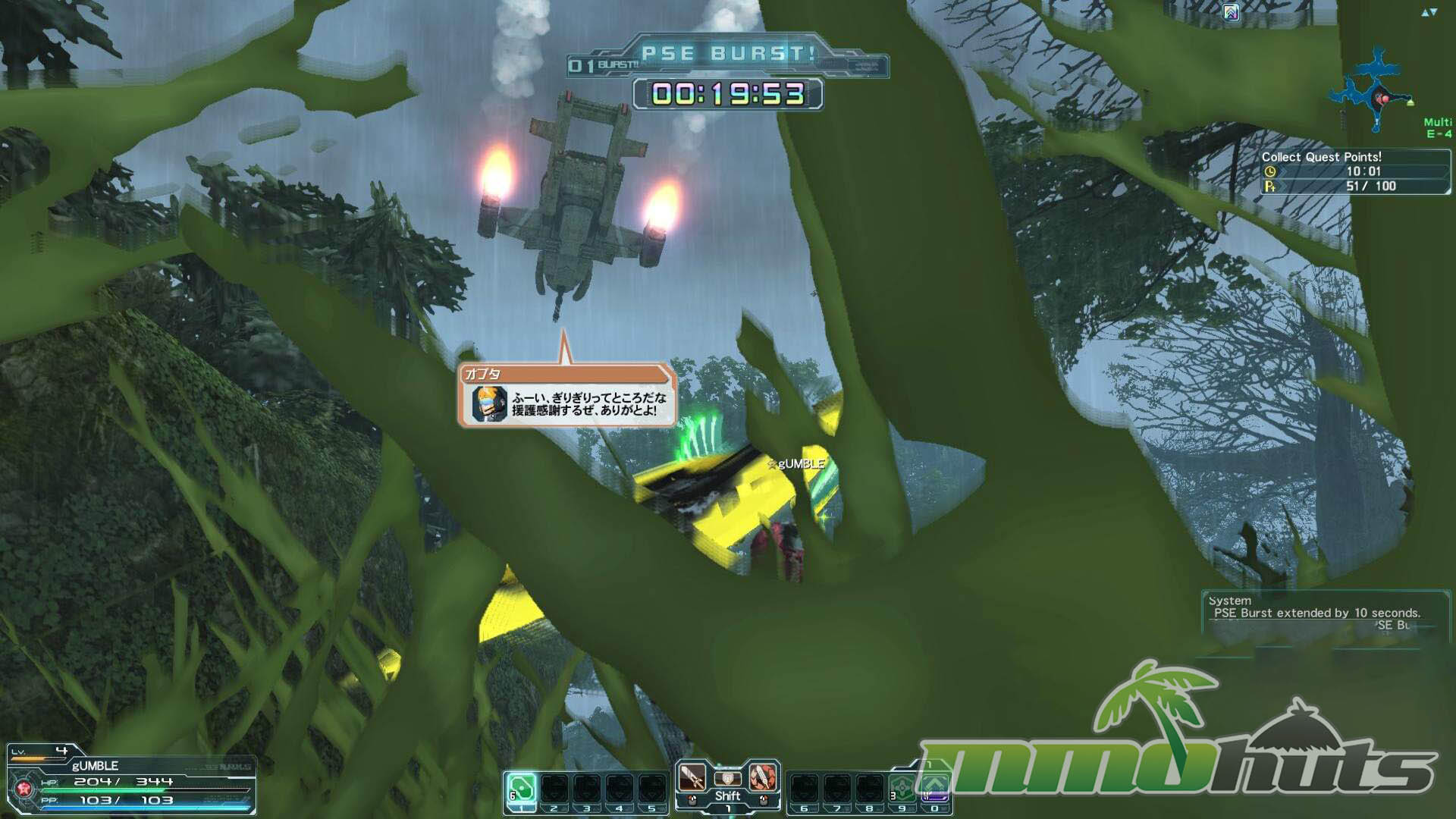
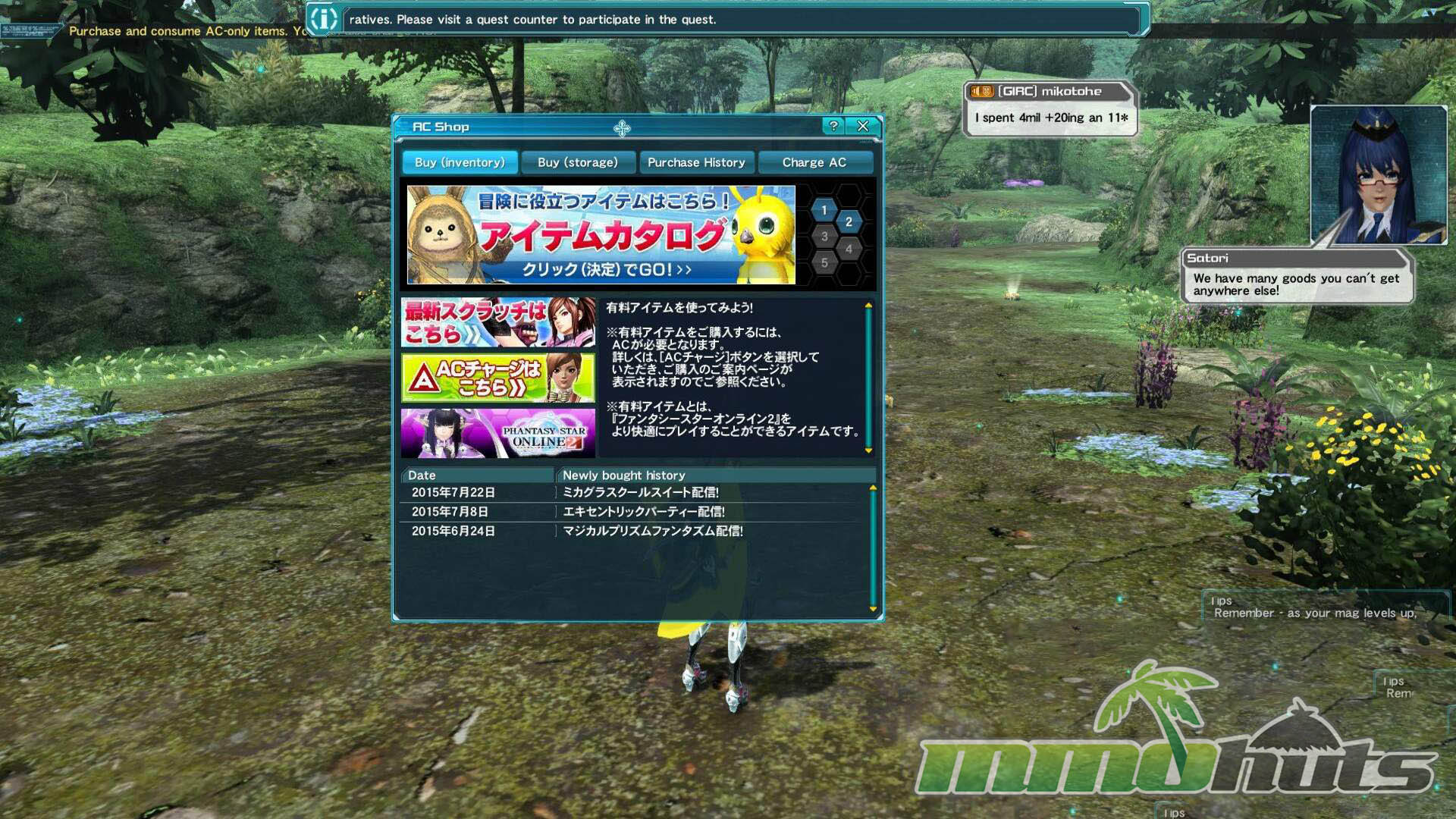
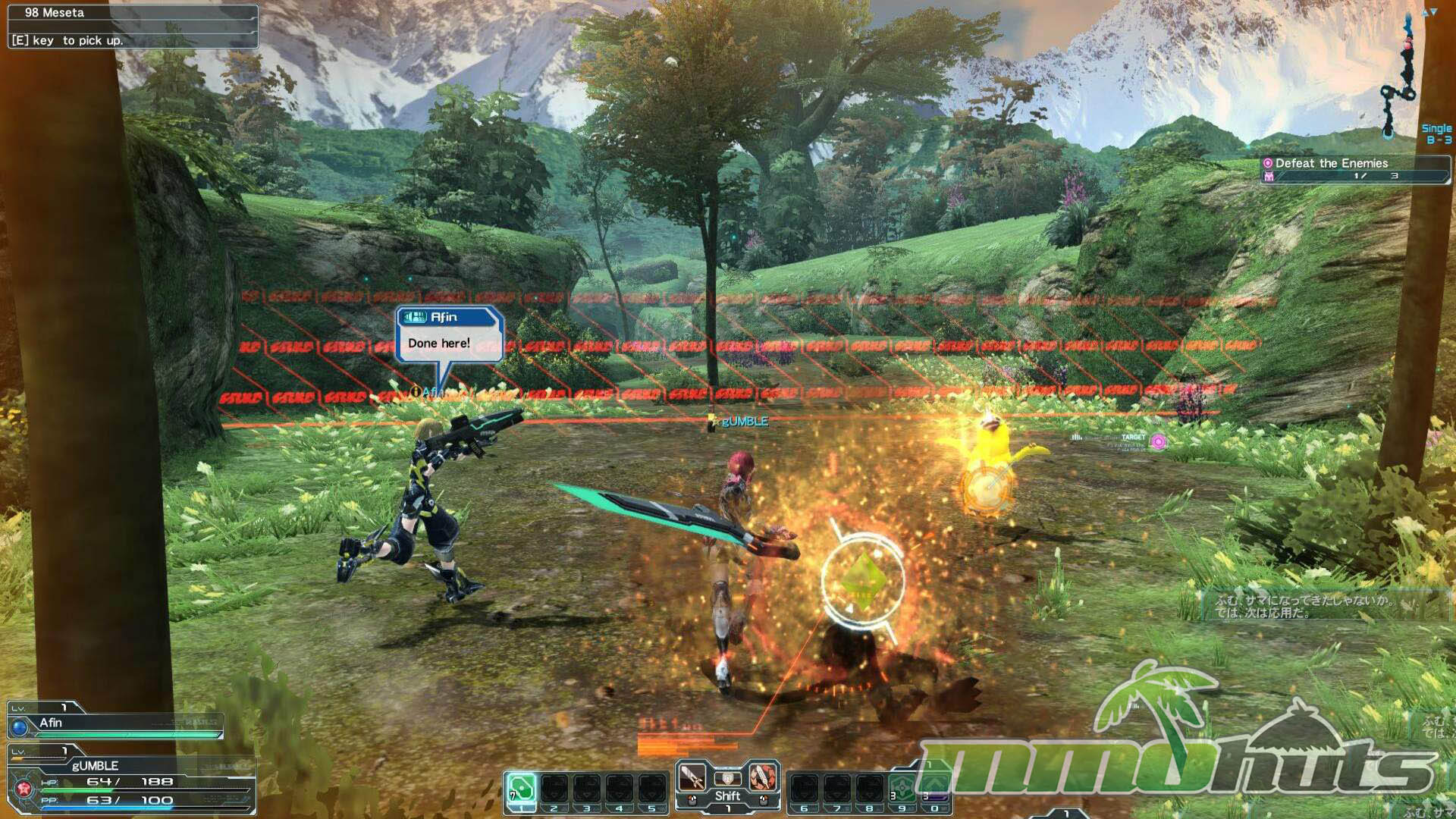
Phantasy Star Online 2 Screenshots


Phantasy Star Online 2 Featured Video

Phantasy Star Online 2 Review
Getting into Phantasy Star Online 2 has historically been as notable as playing it. For years, many players outside Japan had to jump through extra hoops to experience the game, and that friction shaped how approachable PSO2 felt compared to other mainstream MMORPGs. When you do get past the barriers, the core loop is clear: launch from a hub, clear an instanced zone full of enemies and objectives, then head back to the lobby to cash in rewards and prepare for another run.
Character Building With a Strong Style Focus
PSO2 leans hard into its anime sci-fi identity, and the character creator is a big reason it developed a dedicated fanbase. You pick from Human, Newman, Cast, and Dewman, choose male or female, then select one of five starting classes: Hunter, Ranger, Force, Braver, or Bouncer. From there, the customization tools let you shape proportions, facial features, and overall presentation to a degree that still competes well with many modern online games, especially for players who like experimenting with fashion and cosmetics.
Class choice is not a permanent commitment, which is great because the feel of each class can be very different. In the ARK lobby, you can switch to another class through the class counter NPC, and each class maintains its own leveling track. That freedom is genuinely player-friendly, even if it also means you will revisit familiar missions repeatedly while bringing alternative classes up to speed.
Combat That Rewards Rhythm and Input
The strongest argument for PSO2 is how it plays moment to moment. Attacks map cleanly to controls, animations have real weight, and the game consistently pushes you to stay engaged instead of letting rotations run on autopilot. Basic attacks are only the start; the better flow comes from weaving skills, managing positioning, and making use of timing windows that boost effectiveness if you keep your rhythm.
That timing-driven approach helps combat feel more deliberate than many MMORPGs from the same era. It also keeps early encounters entertaining, even when mission objectives are straightforward. The drawback is that some weapon patterns can feel repetitive over long sessions, particularly if you stick to one setup.
Weapon swapping is the key to avoiding that stagnation. With three weapon slots available, you can pivot mid-fight to a different set of moves, which adds variety and gives you tools for different enemy behaviors. It is also one of the systems that makes group play more interesting, since different weapon choices can complement a party’s needs without forcing you into a single narrow role.
Loot ties directly into the fun. Finding an oversized, flashy weapon that noticeably improves damage output is a classic PSO2 moment, and the game’s presentation sells it, big effects, crisp audio cues, and satisfying hit feedback that make upgrades feel immediately meaningful.
A Mission Structure Instead of a Seamless World
Players expecting a wide, continuous landscape will quickly notice that PSO2 is built around instances. Zones are relatively compact, often maze-like, and designed to be run many times. Visual variety exists, but the repetition can stand out, especially in early forest environments where you see similar layouts and scenery while chasing the same objectives.
The upside is focus. Because areas are made for quick deployments, the pace stays brisk, and the game rarely asks you to spend long stretches traveling just to find something to fight. That structure also pairs neatly with the lobby, where you are always only a short step away from the next mission.
The game frequently interrupts missions with optional story and NPC moments, often initiated by floating interaction markers. These scenes help establish tone and introduce characters, but the frequency can feel heavy during the opening hours. Once you settle into the routine, the experience becomes more about chaining missions efficiently than stopping for constant dialogue.
Hub Life, Quests, and Friction Points
The ARK lobby is the center of PSO2’s social and progression experience. You will see players forming parties, using shops and services, and showing off outfits and emotes. As a hub, it is functional and thematically consistent with ARKS being a large organization staging operations from a ship.
Quest selection is handled through NPC counters where you pick the mission and difficulty, then proceed through a short sequence to deploy. The process works, but the game can lean on multiple transitions between areas. Those extra steps add flavor, but they also make the overall loop feel more segmented than it needs to be, particularly when you are trying to turn in quests and immediately start another run.
Presentation: Music and Story Delivery
PSO2 treats its story and characters with a level of production that was not guaranteed for online games in 2012. Many major NPCs have fully voiced scenes, and the game regularly uses cinematics to deliver narrative beats between missions.
The soundtrack is another highlight, blending orchestral energy with more atmospheric tracks depending on the location and situation. Even if you only dabble in the game, the music is worth sampling on its own, it does a lot to reinforce PSO2’s “space opera adventure” mood.
Language, Accessibility, and Regional Realities
For a long time, one of the biggest hurdles for Western audiences was that PSO2 was not readily available in English, leading many to rely on unofficial solutions on Japanese or SEA servers. That approach carried obvious downsides, from navigating unfamiliar menus to the risk of violating server rules. Even when fan translations helped, it was easy to feel like you were playing through a layer of friction that most MMORPGs do not impose on their audience.
The eventual English release improved accessibility significantly, but it is still important to understand the game’s history, and why older impressions often mention complications that newer players may not experience in the same way.
Final Verdict – Good
Phantasy Star Online 2 is at its best when you are in the middle of a mission, swapping weapons, timing attacks, and watching enemies melt under fluid, stylish animations. Its lobby-and-deployment format will appeal to players who enjoy repeatable runs and clear progression loops, but it can also feel repetitive if you want exploration-heavy MMO worlds.
If you are drawn to action combat and character customization (and you do not mind a grind), PSO2 has a lot to offer. Players who prioritize seamless open environments or streamlined menus may find it harder to stick with long term, even with the game’s strong core gameplay.
Phantasy Star Online 2 Links
Phantasy Star Online 2 Official Site
Phantasy Star Online 2 Wikipedia
Phantasy Star Online 2 Subreddit
Phantasy Star Online 2 Wikia (Database / Guides)
Phantasy Star Online 2 Gamepedia (Database / Guides)
Phantasy Star Online 2 Registration Guide (for Japanese Version)
Phantasy Star Online 2 System Requirements
Minimum Requirements:
Operating System: Windows XP
CPU: Core 2 Duo E6300 1.86GHz or Athlon 64 X2 Dual Core 4800+
Video Card: GeForce 7800 GT or Radeon HD 3600 Series
RAM: 1.5 GB
Hard Disk Space: 8 GB
Recommended Requirements:
Operating System: Windows 7 64 bit
CPU: Core 2 Duo E7600 3.06GHz or Athlon II X2 270
Video Card: GeForce GTS 250 or Radeon HD 6670
RAM: 3 GB
Hard Disk Space: 8 GB
Phantasy Star Online 2 Music & Soundtrack
Phantasy Star Online 2 Additional Information
Developer(s): Sega
Publisher(s): Sega (Japan), AsiaSoft (SEA)
Distributor(s): Asiasoft
Director(s): Yu Suganuma
Producer(s): Satoshi Sakai
Artist(s): Akikazu Mizuno
Composer(s): Hideaki Kobayashi, Kenichi Tokoi, Tadashi Kinukawa
Other Platform(s): Playstation Vita
Open Beta: June 21, 2012
Open Beta End Date: July 02, 2012
Playstation Vita Release Date: February 28, 2013 (JP)
Release Date: July 04 2012 (JP)
Episode Releases:
- Episode 2: July 21, 2013
- Episode 3: August 27, 2014
- Reborn:Episode 4: January 27, 2016
Southeast Asia Closed Beta Date: April 10, 2014
Southeast Asia Release Date: May 29, 2014
Southeast Asia Shutdown Date: May 26, 2017
Global English Release (NA): May 27, 2020 (PC)
Phantasy Star Online 2: New Genesis Release Date: June 9, 2021
Development History / Background:
Phantasy Star Online 2 came from Sega, the Japanese multinational that both built and published the title. According to COO Naoya Tsurumi, development lasted five years, and early messaging also highlighted an intended cross-platform direction spanning PC, handheld, and mobile devices. Sega revealed plans for a PlayStation Vita version on March 9, 2012, though the JP Vita release did not arrive until February 28, 2013. The PC open beta ran from June 21, 2012 through July 2, 2012, and the full JP launch followed shortly after on July 04, 2012. Episode 2 arrived as a free update on July 21, 2013, adding the Duman race and the Braver class. Episode 3 followed on August 27, 2014, bringing in the Bouncer class along with an in-game Casino. Later, on January 27, 2016, Reborn:Episode 4 released, adding the Summoner class, fresh customization features, a “new experience” angle, and the setting of planet Earth.
On July 09, 2012 Sega said it was targeting a western release sometime in 2013. After that 2012 statement, additional concrete updates on an English launch did not materialize for years. On July 20, 2015 the regional IP block affecting western countries was briefly removed, only to be restored about 48 hours later; Sega clarified that the temporary change was meant to help SEA players and was not a signal of a western rollout.
AsiaSoft handled a Southeast Asian edition, which entered Closed Beta on April 10, 2014 and later launched on May 29, 2014. That SEA version gained a reputation for poor localization—most famously renaming the “Force” class to “Wizard,” and turning items like Monomate/Dimate/Trimate into generic “Health Drinks.” Performance lagged behind the Japanese service, and AsiaSoft announced on April 5, 2017 that the servers would close on May 26, 2017. At that point in time (as of April 5, 2017), it stood as the only officially released international version.
An official English PC launch finally arrived on May 27, 2020. In western regions, Microsoft distributed the game on PC and Xbox One.
PSO2: New Genesis released worldwide on June 9, 2021 as a large-scale update to the overall PSO2 ecosystem.
On August 6, 2021, Sega reported that Phantasy Star Online 2 had generated 100B Yen (approx. $910M USD) in revenue since launching in 2012.