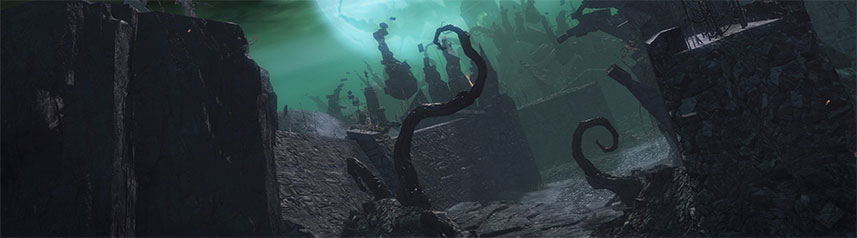
Eternal Arena blends stage-based action RPG progression with MOBA-style lanes and skills, built specifically for mobile play. It leans heavily into quick missions, flashy 3D visuals, and constant hero upgrading, while also offering 1 vs 1 PVP that can be played asynchronously or in real time. A big twist is party control, you bring three Heroes into battle and swap between them on the fly while AI handles the rest.
 | Publisher: NetEase Games Type: Mobile MOBA/RPG Release Date: November 12, 2015 Shut Down: January 31, 2018 Pros: +Sharp, colorful visuals for a mobile title. +Fast, action-focused battles. +Simple to learn and jump into. +Good variety across mission types. Cons: -Core loop can start to feel samey. -Monetization gives spenders an edge. –Skill aiming can feel awkward on touch controls. |
Eternal Arena Shut Down on January 31, 2018
Eternal Arena Overview
Eternal Arena is a 3D mobile title from NetEase Games that tries to sit between an action RPG and a traditional MOBA. Instead of focusing purely on long competitive matches, it structures much of its content around short stages, frequent rewards, and constant team building. Over the course of play you recruit and develop a roster of more than 35 Heroes, then assemble a three-Hero lineup for missions and PVP, swapping control between them whenever you want while the other two operate under AI.
The game supports a lengthy single-player campaign and a wide selection of side activities, with competitive options that include both asynchronous battles and real-time matches. Between fights you strengthen your squad through equipment, upgrades, and training systems, and the Guild feature provides a social layer for players who want a more community-driven experience. The overall pitch is straightforward, take MOBA-flavored skills and lane objectives, combine them with stage progression and RPG growth, and deliver it in a mobile-friendly format.
Eternal Arena Features:
- Stage-based Levels – Push through hundreds of missions that mix multiple rule sets, including action RPG maps and MOBA-style objectives.
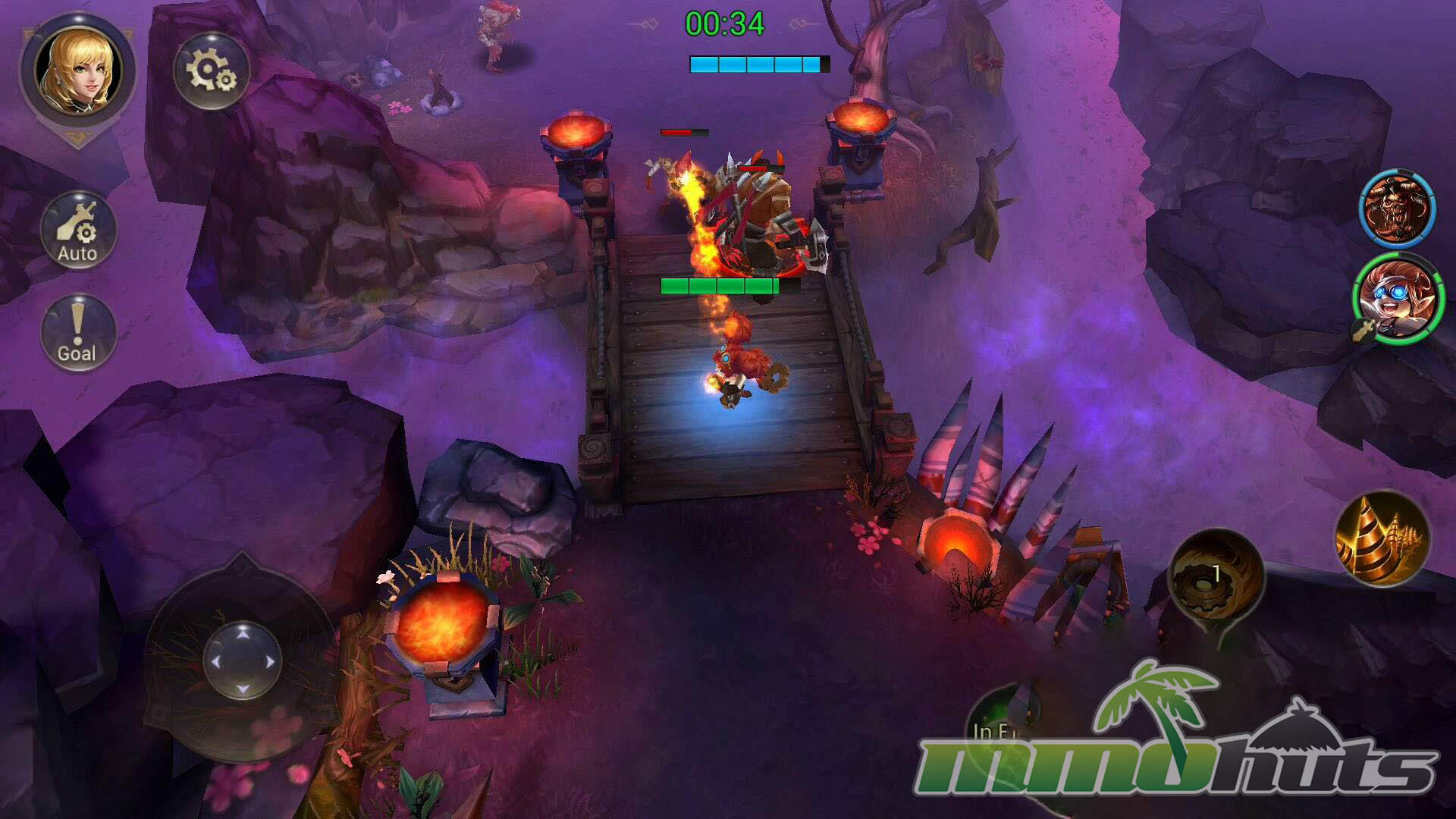
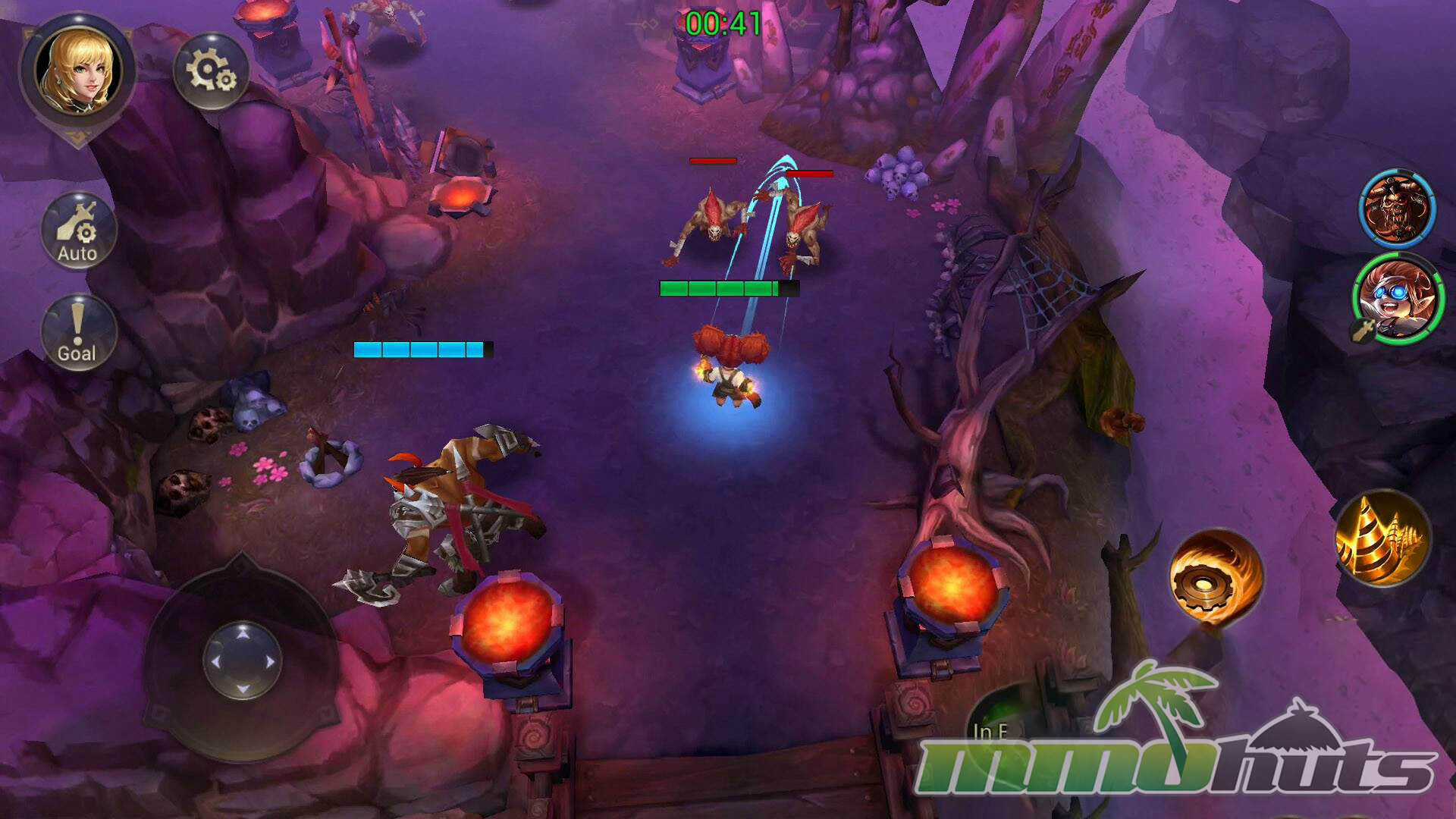
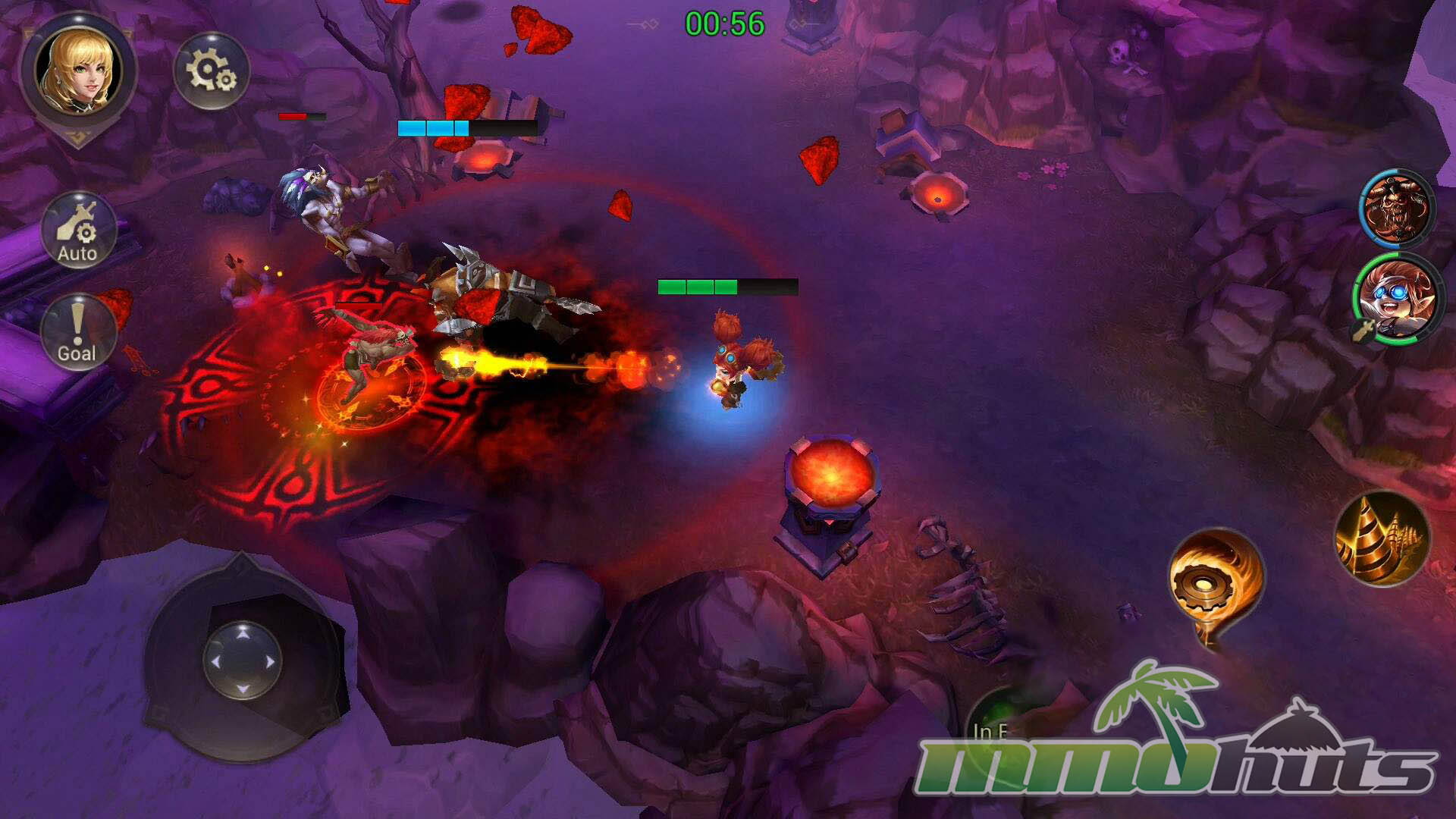
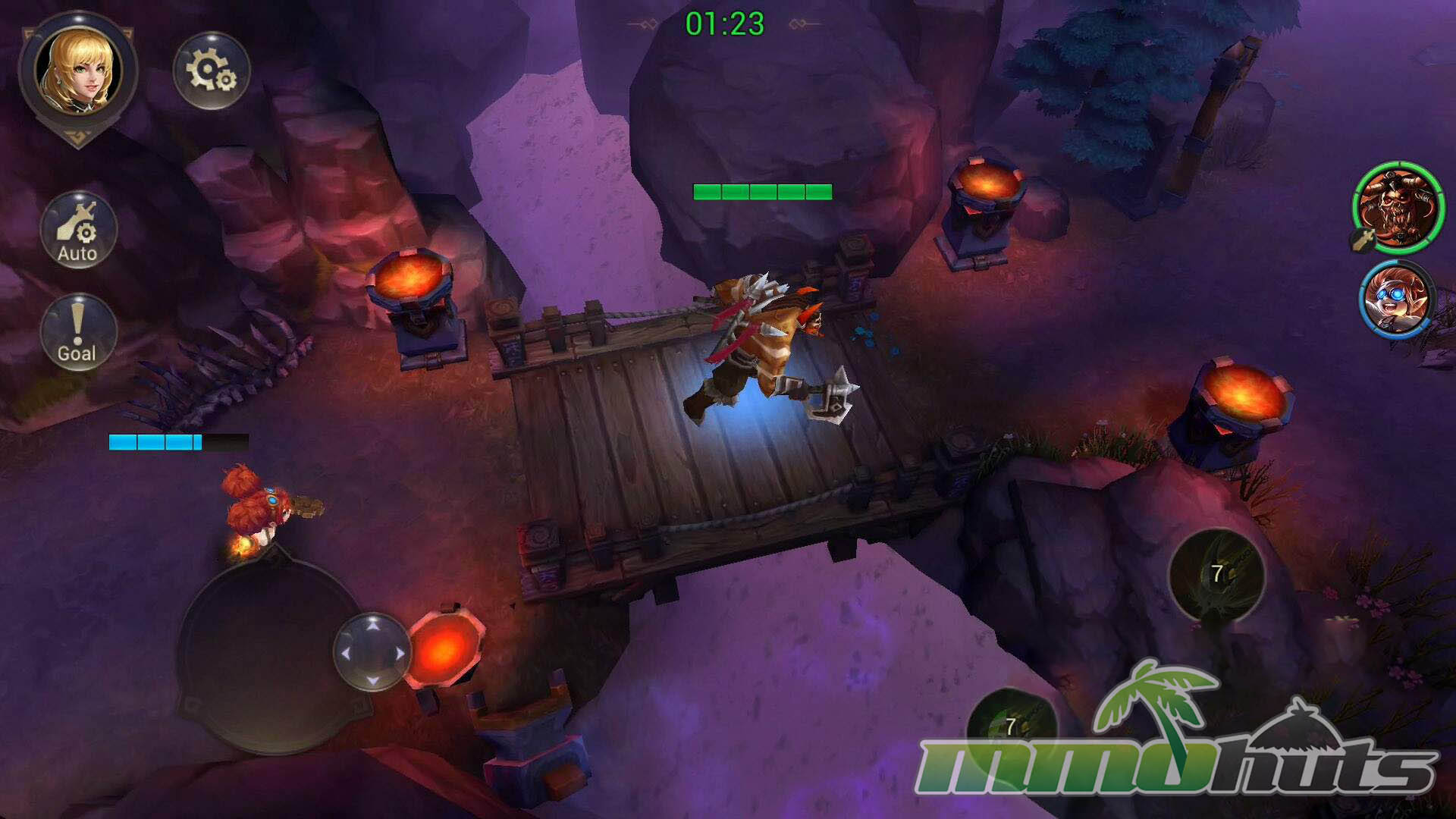
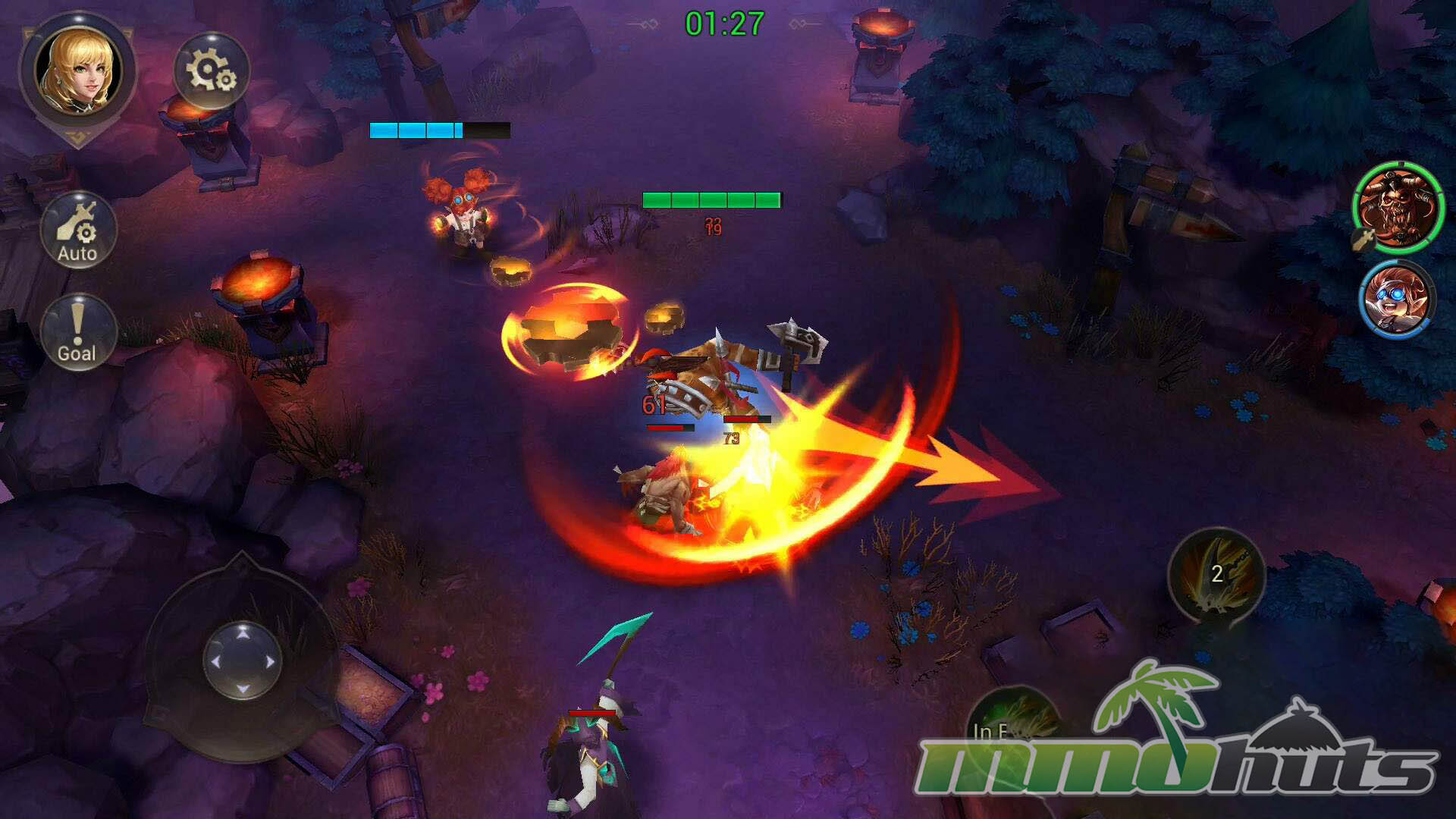
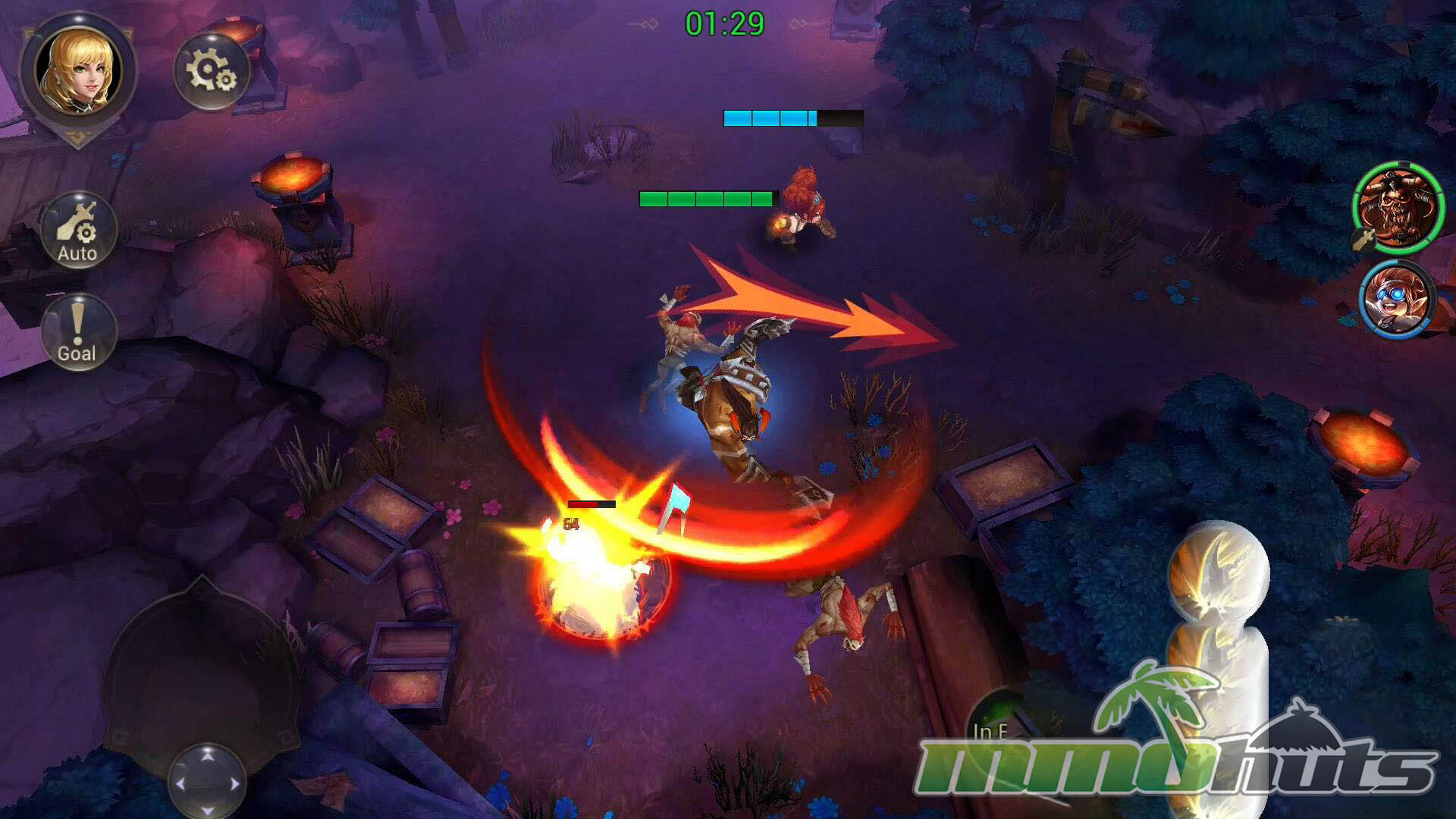
- High Quality Graphics – Bright, stylized 3D presentation with detailed arenas, flashy ability effects, and generally smooth animation work.
- MOBA-Oriented Action Combat – Real-time hack-and-slash fundamentals paired with MOBA-like abilities that emphasize timing, placement, and area control.
- Many Heroes to Collect – Build a roster of 35+ Heroes, each bringing different kits and roles, then level and evolve them over time.
- PVP and Additional Modes – 1vs1 battles offered in asynchronous and real-time formats, plus a broad set of solo modes for extra rewards.
Eternal Arena Screenshots


Eternal Arena Featured Video

Eternal Arena Review
Eternal Arena is a free-to-play mobile action RPG with clear MOBA DNA, developed and published by NetEase Games. It arrived on Android and iOS on November 12, 2015, after being shown publicly at PAX Prime 2015, and it set out to offer something slightly different from the usual mobile lane battler. Rather than asking players to commit only to match-based competition, it puts substantial emphasis on PVE progression, stage variety, and collecting a sizable cast of Heroes, with PVP positioned as a parallel track.
A Campaign Built Around Short Missions
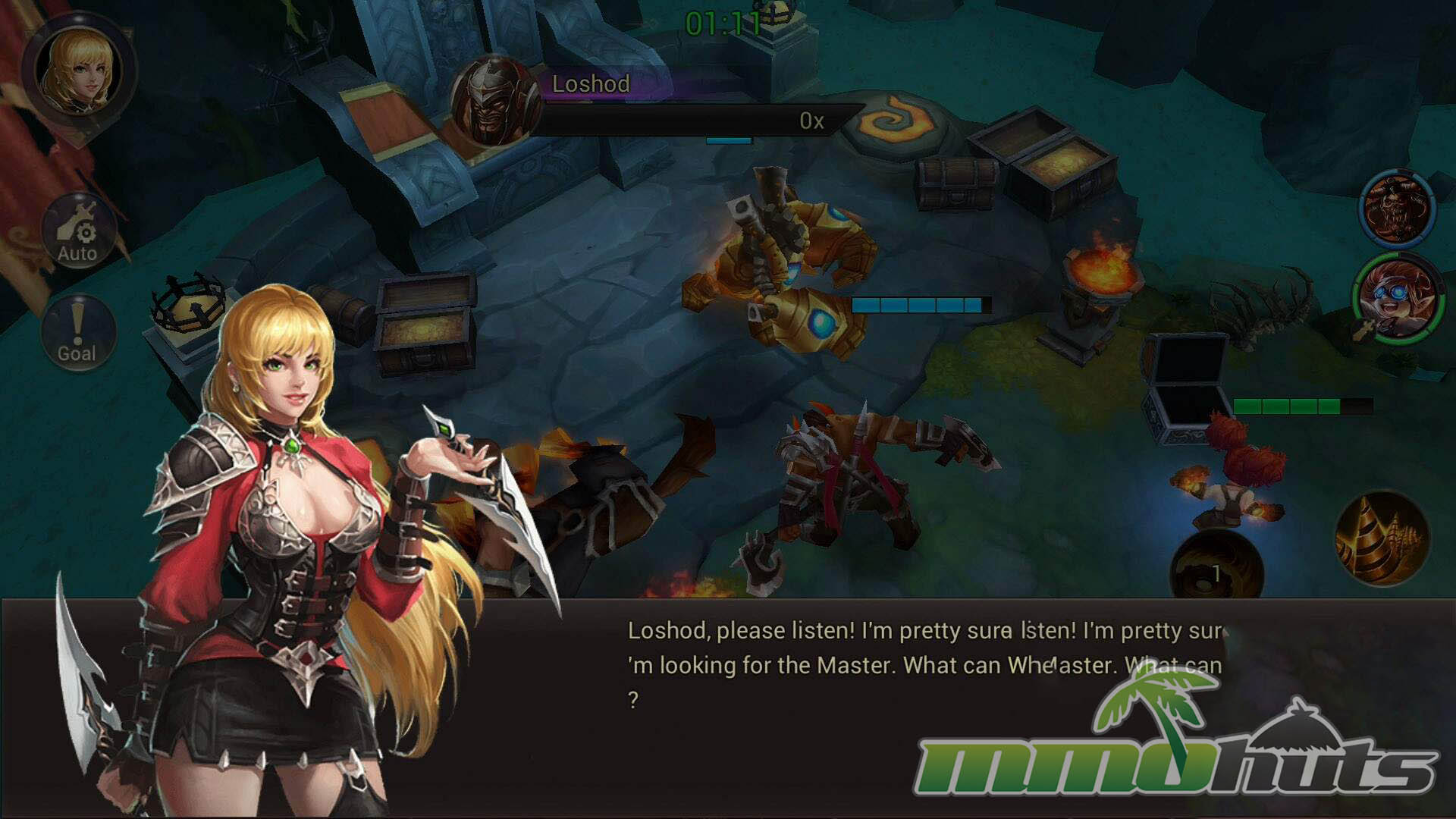
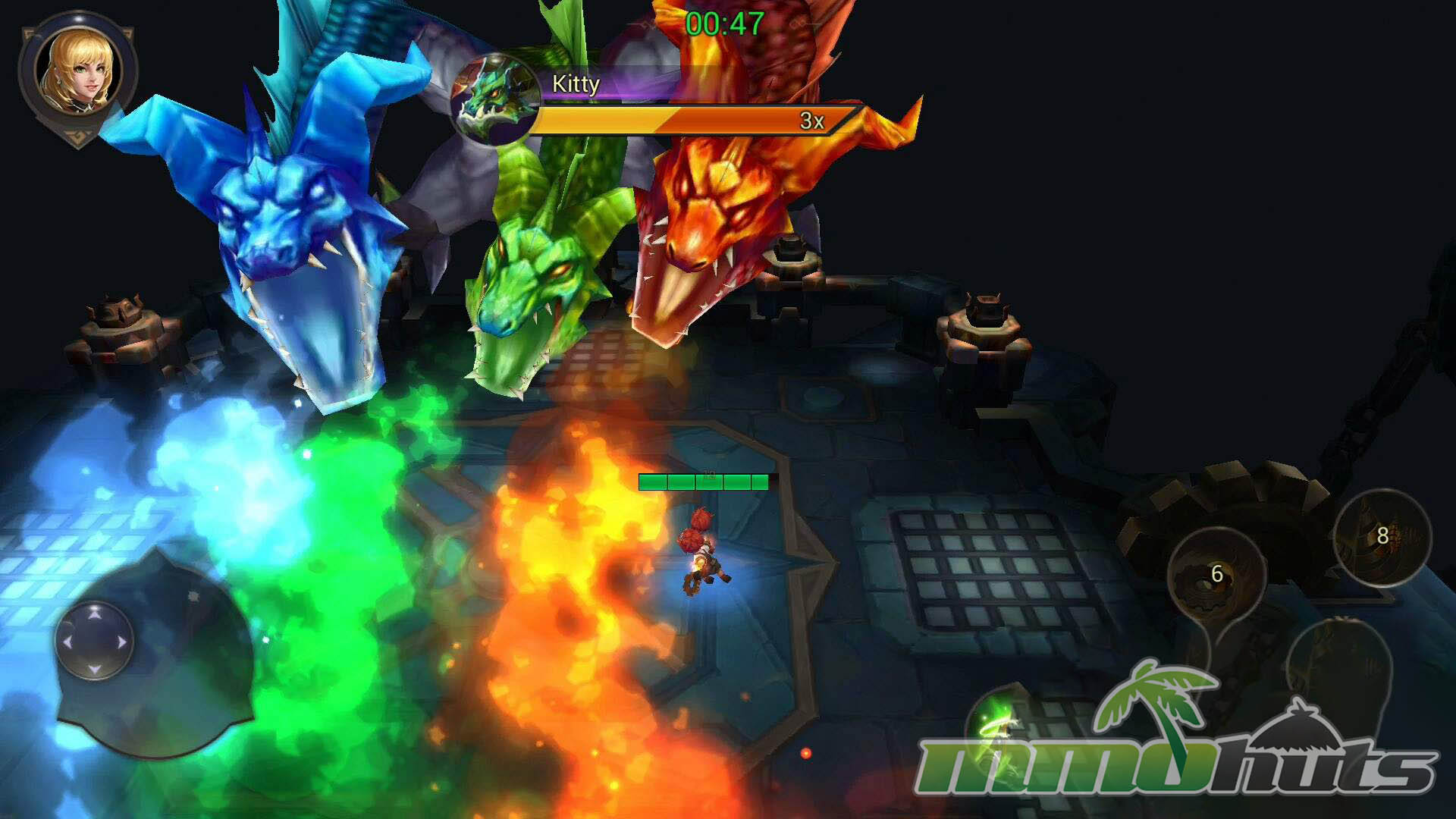
At its core, Eternal Arena is driven by a single-player campaign made up of well over 100 stages. What helps it stand out, at least initially, is that stages do not all play the same way. Some missions are closer to a classic mobile action RPG: you move through a larger area, clear packs of enemies, and finish with a boss. Other missions shift into MOBA-inspired formats with lanes, towers, minions, and opposing Heroes, creating a different rhythm and a different set of priorities than simple monster clearing.
There is also a wave-based survival style stage that keeps you in a tighter arena while you handle repeated enemy spawns. That rotation of rule sets gives the campaign a sense of unpredictability, even when the underlying goals are still about earning resources and improving your team. Story presentation exists through brief dialogue snippets, but it is not the main attraction, it functions more as connective tissue between fights than a compelling narrative hook. Rewards are the real motivation, stages feed you gold, experience, equipment, and other materials to keep progression moving.
Real-Time Action With MOBA-Like Skills
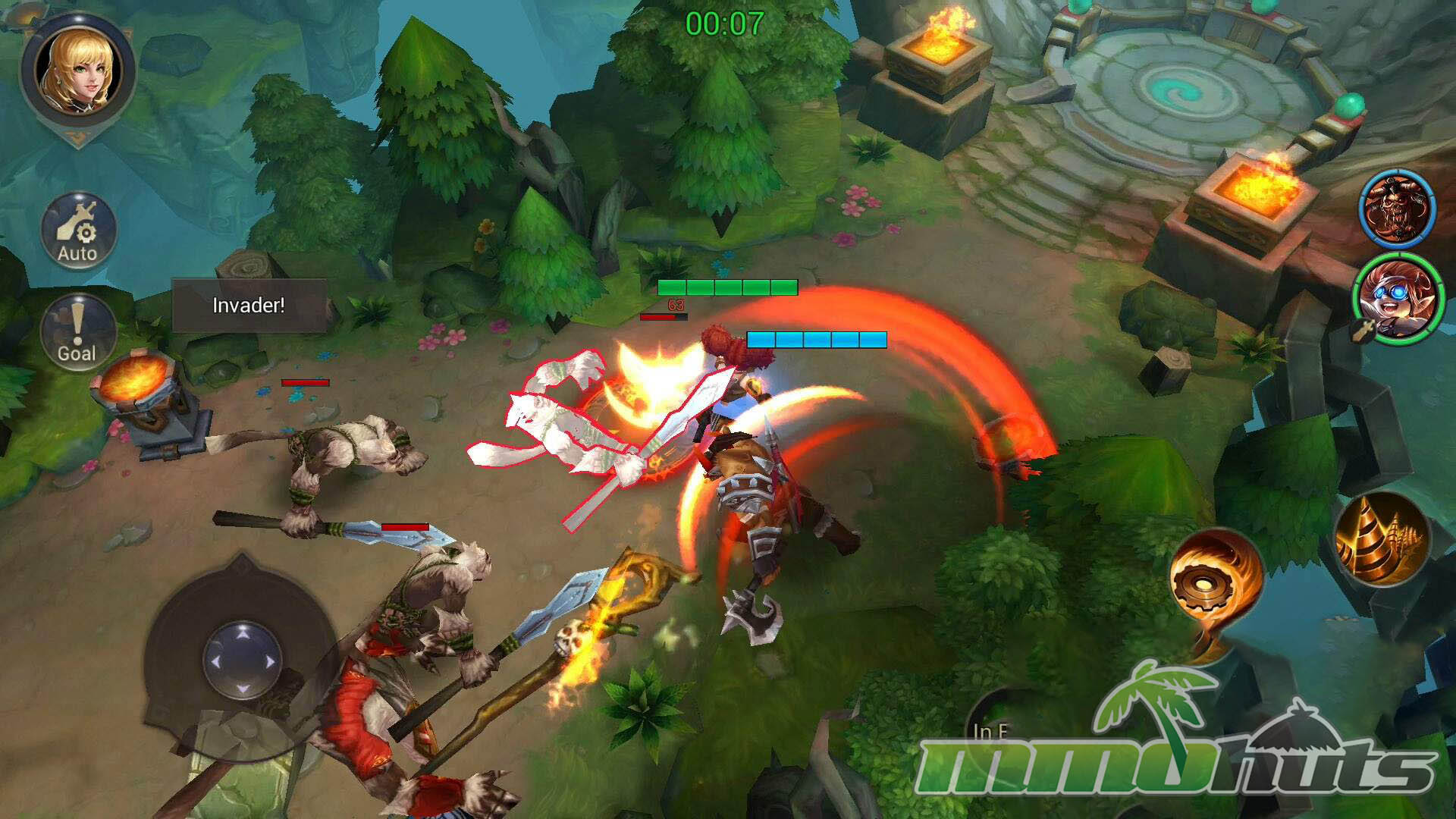
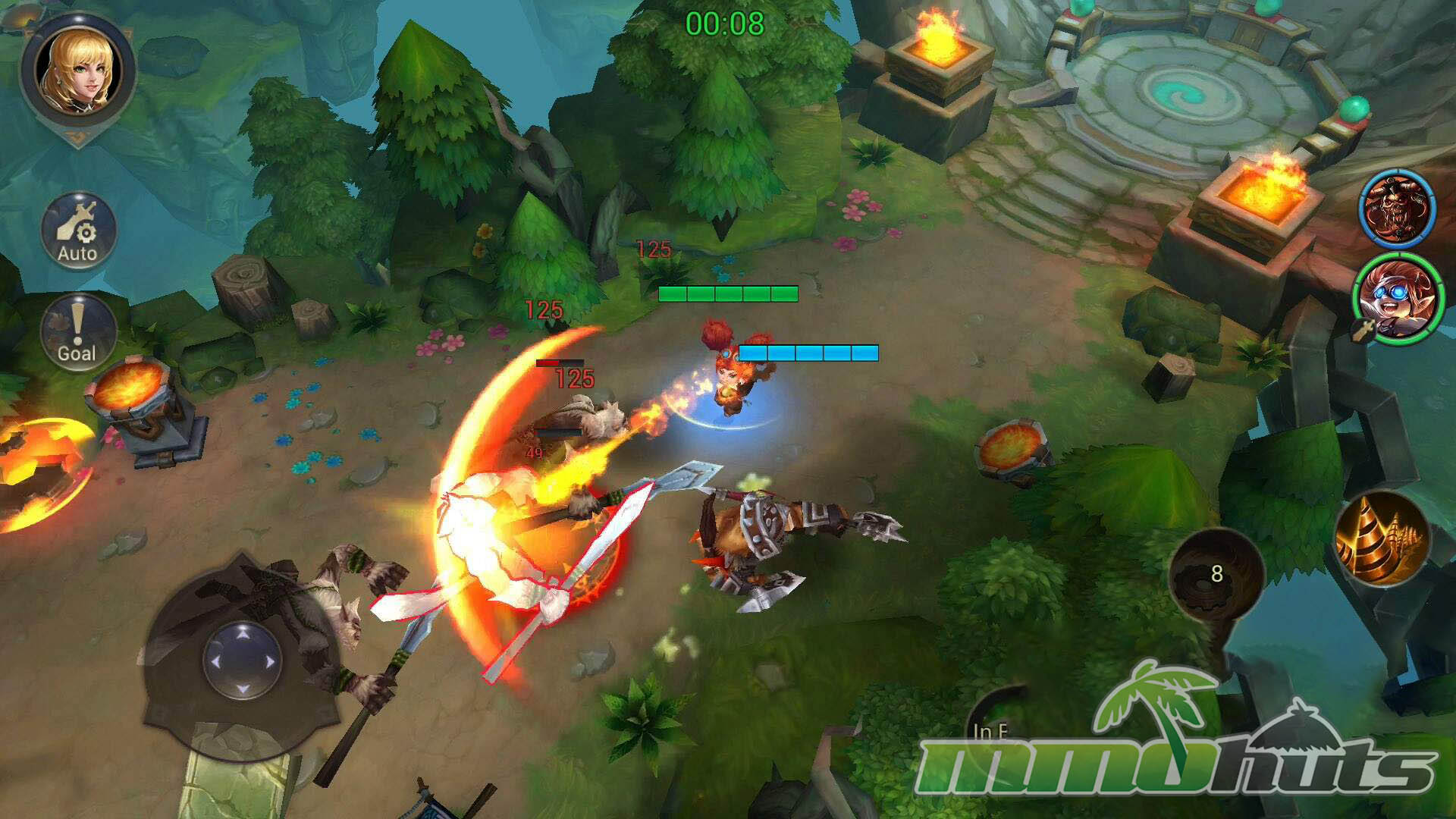
Moment to moment, combat uses a familiar mobile layout: a virtual joystick for movement, a basic attack button, and skill buttons for abilities. Where Eternal Arena leans into the MOBA side is in how those abilities behave. Many skills feel like they were designed with lane combat in mind, relying on area-of-effect placement, directional shots, or targeted zones that reward good timing and positioning.
In practice, that design clashes a bit with the control scheme. The game includes an auto-aim behavior that tries to help by snapping abilities toward nearby threats, but it does not always choose the target or direction you intended. Manual aiming is possible, yet it can feel imprecise, especially when fights get crowded and you need to adjust quickly. When everything lines up, battles are fluid and satisfying, helped by strong effects and responsive movement. The main frustration is that skill execution can occasionally feel like you are wrestling the interface rather than outplaying the encounter.
A distinctive feature is the three-Hero party system. You actively control one Hero at a time and swap instantly via icons, while the other two are driven by AI. It is not the same as commanding a full squad in an RTS sense, but it does create tactical options: you can rotate cooldowns, switch to a sturdier frontliner when under pressure, or bring in a burst-focused Hero to finish a target.
How the MOBA Pieces Differ Here
The MOBA segments follow recognizable rules, but with a few twists that fit the game’s broader RPG structure. PVP is built around 1 vs 1, with each player bringing a three-Hero lineup. Since you can only directly pilot one Hero at a time, the match becomes a hybrid of individual skill usage and managing the AI behavior of your other two characters.
AI competence is adequate rather than impressive. Allies and opponents tend to play aggressively, throw out abilities frequently, and retreat when they dip low, sometimes escaping more reliably than you would expect. Power-ups periodically appear, including health and stat boosts, which can swing a fight if you pick them up at the right moment. Progress within a match is tied to a Power meter that improves your team as you defeat minions, jungle enemies, and enemy Heroes, essentially filling the role that item purchasing would normally cover in a standard MOBA.
Lane structure remains familiar: maps use either one or two lanes, towers must be pushed through, minions soak damage, and the ultimate objective is destroying the enemy Core. It is recognizable enough for MOBA players to understand quickly, but streamlined to fit shorter mobile sessions.
Building a Roster and Choosing Roles
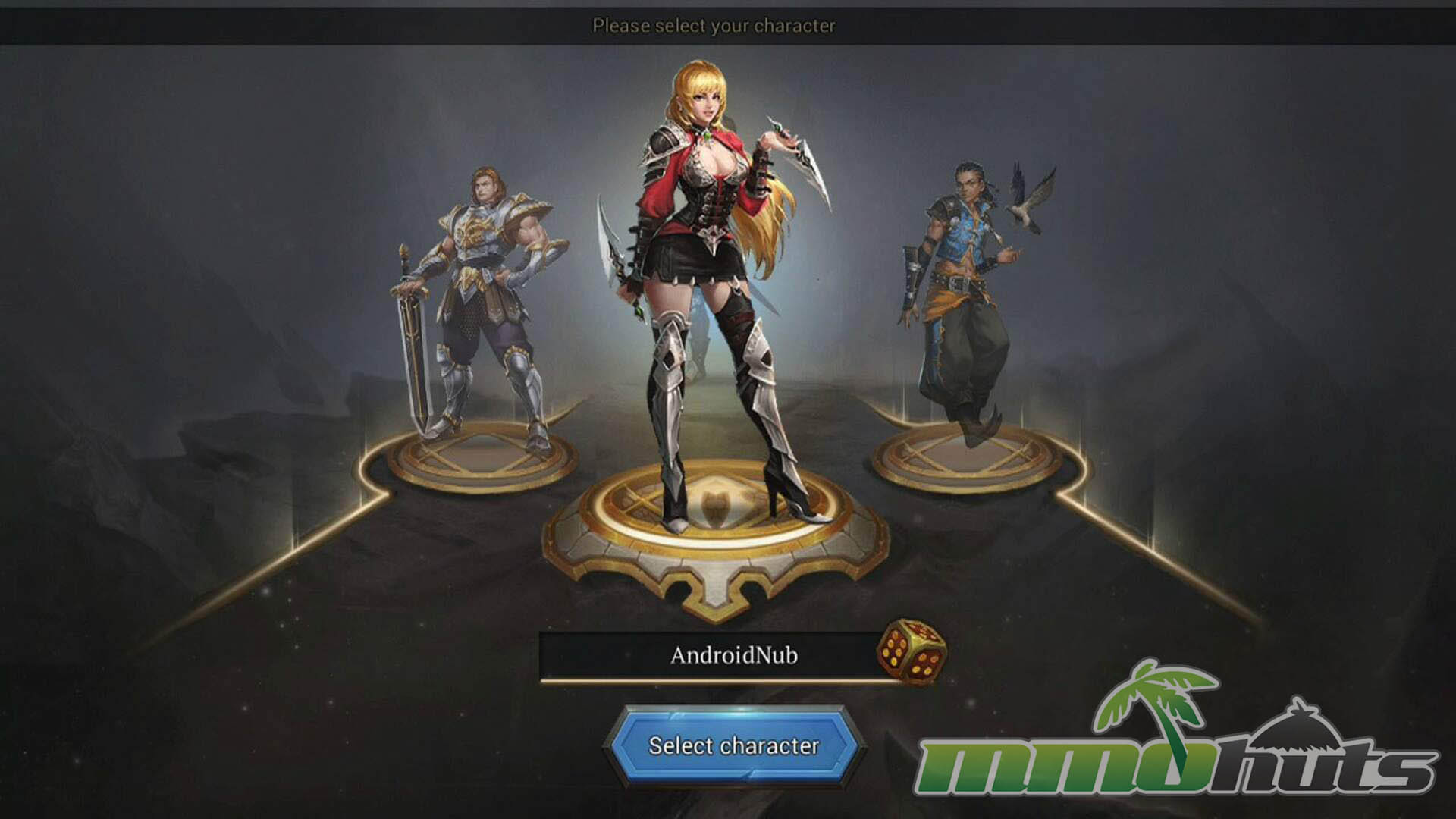
Collection and progression are major pillars. Eternal Arena offers more than 35 Heroes, sorted broadly into Tank, Warrior, Mage, and Support archetypes. Tanks function as durable melee anchors, Warriors are more balanced brawlers, Mages provide ranged damage, and Supports focus on healing or buffs. Even with these labels, kits are varied enough that a Hero’s practical job in combat can differ from what the class name suggests, which keeps team building from feeling too rigid.
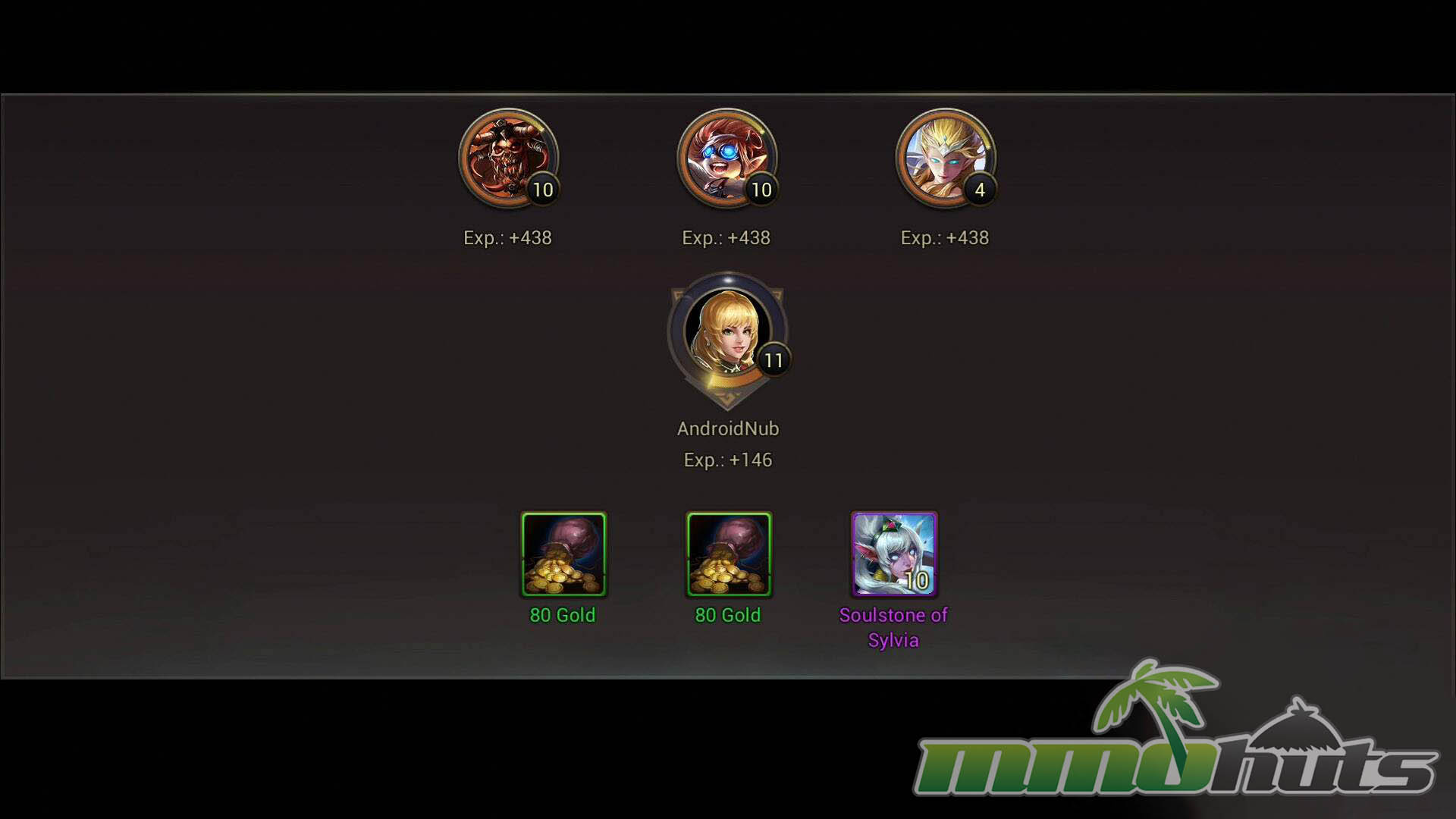
Heroes begin at 1 to 3 stars and can be advanced up to 5 stars using Soul Essences tied to each specific character. These are earned through things like login rewards, clearing particular stages, or pulling duplicates from summons. Once you have enough, the Hero ranks up automatically, improving stats and opening additional skills, which makes star progression feel like a meaningful power jump rather than a purely cosmetic number.
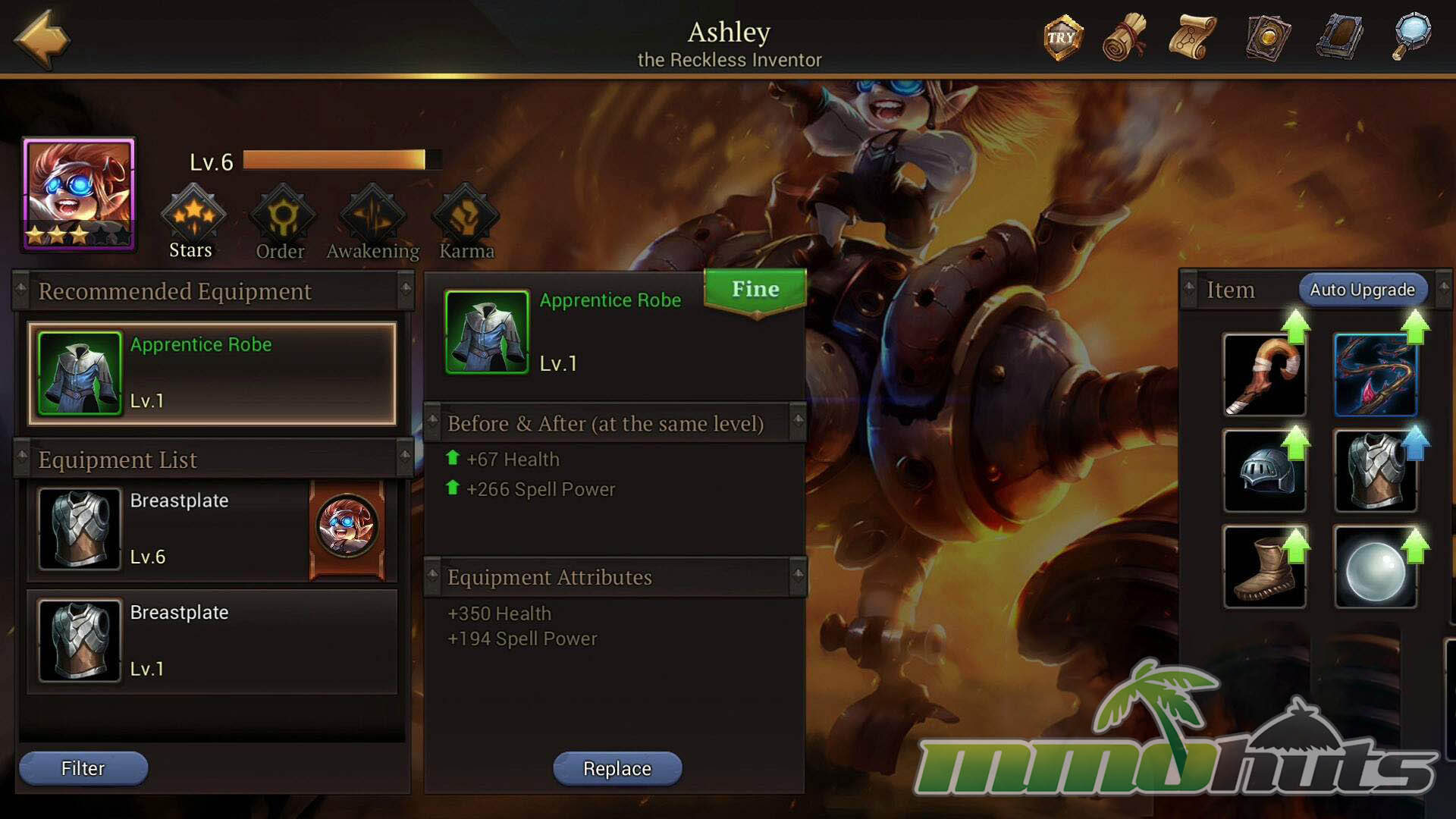
Equipment also plays a major role. Gear ranges from 1 to 5 stars and can be upgraded using in-game gold, creating another steady progression track alongside leveling and evolution. The presentation adds personality too, Heroes have voice lines during movement and attacks, which helps them feel more distinct as you expand your roster.
Extra Modes Beyond the Campaign
Outside the story stages, Eternal Arena includes a substantial list of additional activities designed to break up routine and provide targeted rewards. Modes such as Goblin Hunt and Monster Hunt are essentially short, repeatable challenges: Goblin Hunt focuses on earning gold by defeating as many goblins as possible within two minutes, while Monster Hunt is a damage check against a boss with rewards based on performance.
Wanted tasks you with completing a map or taking down a boss for specific payouts. Invocation adds a cooperative option, letting you team up with up to four friends in real-time to fight bosses together. Rune War is a quick, automated PVP format that runs across three rounds, while Trials leans into survival with a ten-wave structure. Challenge, meanwhile, pits you against boss-like versions of AI-controlled Heroes.
Most of these modes are limited in how often you can run them per day, a common mobile pacing mechanism, but they do provide a reason to log in regularly and they help keep progression from relying on the campaign alone.
Cash Shop/In-App Purchases (IAP)
Monetization centers on summoning and stamina. Premium currency (Gems) can be used to roll for random Heroes and for equipment, with the familiar incentive of better odds or guarantees when summoning in bulk. Summoning duplicates feeds into progression by providing Rank up Experience, making repeated pulls valuable for improving star ratings over time.
This structure naturally advantages paying players. More summons means faster access to stronger lineups and better gear, plus quicker star progression through duplicates. Free players are not completely locked out, the game offers a free Hero summon and a free equipment summon each day, but the gap is noticeable, particularly in competitive play where raw stats and higher-rarity options can decide fights. Gems can also be spent on energy, letting players play longer and progress faster in a given session.
Overall, Eternal Arena lands in the “somewhat pay-to-win” category. Spending can provide a meaningful edge in PVP, especially earlier on, even if long-term grinding allows non-paying players to narrow the difference with enough time.
Final Verdict – Good
Eternal Arena delivers an enjoyable mix of action RPG pacing and MOBA-style objectives, with strong visuals and a surprisingly broad set of modes for a mobile release. Its biggest issues are the occasional awkwardness of skill aiming and a monetization model that can tilt competitive play toward players willing to spend. If you were looking for a stage-driven PVE experience with MOBA flavor and a roster to build, it offered a solid package for its era.
Eternal Arena Links
Eternal Arena Google Play
Eternal Arena iOS
Eternal Arena Official Facebook
Eternal Arena Forum
Eternal Arena System Requirements
Minimum Requirements:
Android 2.3 and up / iOS 5.1.1 or later
Eternal Arena Music & Soundtrack
Coming soon!
Eternal Arena Additional Information
Developer: NetEase Games
Publisher: NetEase Games
Platforms: Android, iOS
Release Date: November 12, 2015
Shut Down: January 31, 2018
Eternal Arena was developed and published by NetEase Games. It is a mobile action RPG and MOBA hybrid that was first shown at PAX Prime 2015 and drew notable interest ahead of launch. After release, it appeared on Google Play’s “New + Updated Games” list for one week and surpassed 100,000 downloads within its first week. NetEase Games is also known for publishing multiple PC MMORPGs, including the The World and Westward Journey Online series. The final official social media post related to Eternal Arena was made on January 18, 2018, and the game shut down shortly after without an official notice.